
Add from NASA
Explore NASA’s Image and Video Library and suggest an object for Interstellar Minds.
New Marvel suggestions are paused.
NASA image records
JPL · 2020-01-22 · PIA23644
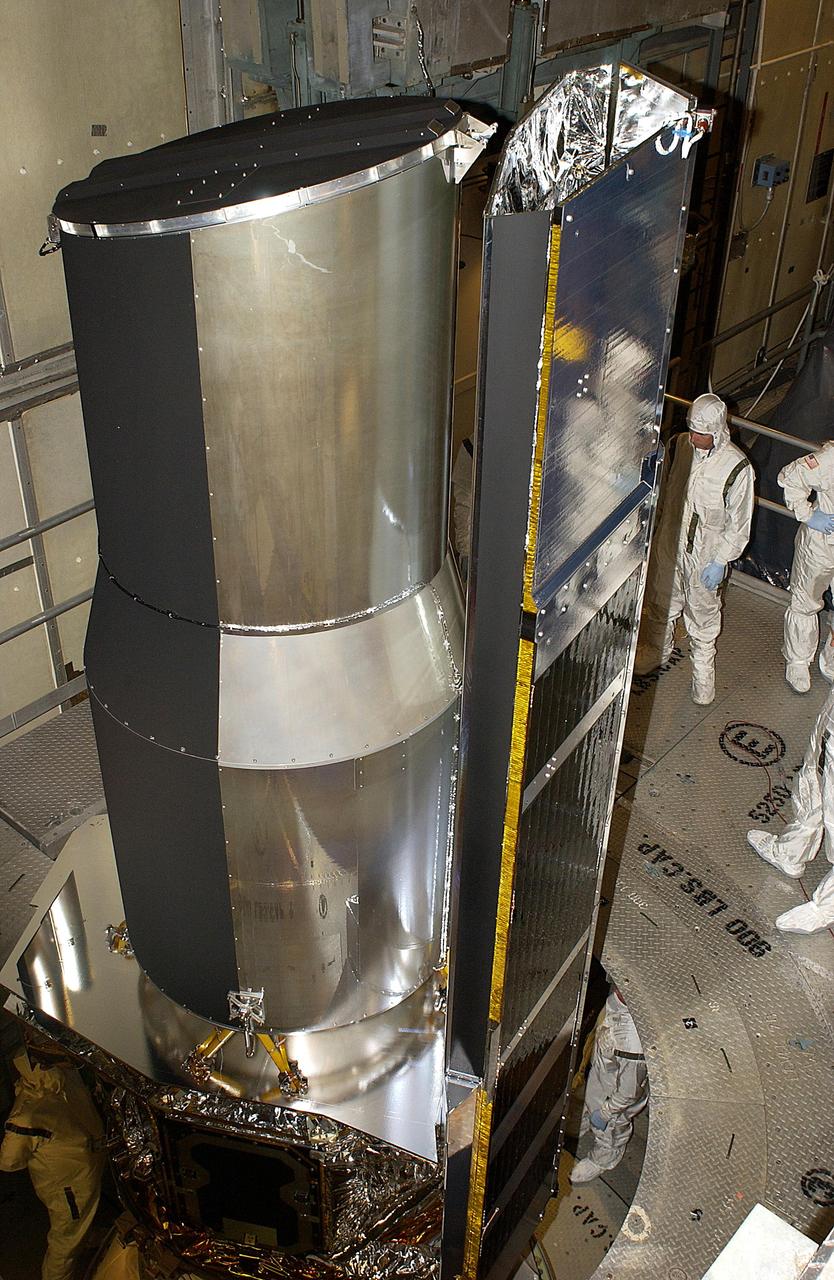
Spitzer Space Telescope Ready for Launch
The Spitzer Space Telescope (formerly the Space Infrared Telescope Facility or SIRTF) is readied for launch at Cape Canaveral Air Force Station, in 2003. https://photojournal.jpl.nasa.gov/catalog/PIA23644
Inspect NASA record
The Spitzer Space Telescope (formerly the Space Infrared Telescope Facility or SIRTF) is readied for launch at Cape Canaveral Air Force Station, in 2003. https://photojournal.jpl.nasa.gov/catalog/PIA23644
- Record ID
- PIA23644
- NASA center
- JPL
- Date
- 2020-01-22
- Credit
- NASA
- Keywords
- Spitzer Space Telescope

JPL · 2004-05-26 · PIA05982
Saturn from Far and Near Hubble Space Telescope
Saturn from Far and Near Hubble Space Telescope
Inspect NASA record
Saturn from Far and Near Hubble Space Telescope
- Record ID
- PIA05982
- NASA center
- JPL
- Date
- 2004-05-26
- Credit
- NASA, ESA and Erich Karkoschka University of Arizona
- Keywords
- Saturn, Hubble Space Telescope

JPL · 1998-05-02 · PIA01267
Hubble Space Telescope Resolves Volcanoes on Io
Hubble Space Telescope Resolves Volcanoes on Io
Inspect NASA record
Hubble Space Telescope Resolves Volcanoes on Io
- Record ID
- PIA01267
- NASA center
- JPL
- Date
- 1998-05-02
- Credit
- JPL/NASA/STScI
- Keywords
- Jupiter, Hubble Space Telescope

JPL · 2020-01-22 · PIA23643
Spitzer Space Telescope (Illustration)
In this artist's rendering of NASA's Spitzer Space Telescope in space, the background is shown in infrared light. https://photojournal.jpl.nasa.gov/catalog/PIA23643
Inspect NASA record
In this artist's rendering of NASA's Spitzer Space Telescope in space, the background is shown in infrared light. https://photojournal.jpl.nasa.gov/catalog/PIA23643
- Record ID
- PIA23643
- NASA center
- JPL
- Date
- 2020-01-22
- Credit
- NASA/JPL-Caltech
- Keywords
- Spitzer Space Telescope
GSFC · 2016-01-03 · by-the-dozen-nasas-james-webb-space-telescope-mirrors_23607727573_o
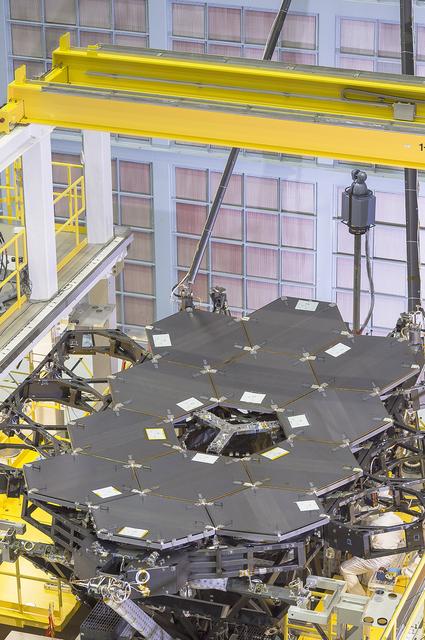
By the Dozen: NASA's James Webb Space Telescope Mirrors
A view of the one dozen (out of 18) flight mirror segments that make up the primary mirror on NASA's James Webb Space Telescope have been installed at…
Inspect NASA record
A view of the one dozen (out of 18) flight mirror segments that make up the primary mirror on NASA's James Webb Space Telescope have been installed at NASA's Goddard Space Flight Center. Credits: NASA/Chris Gunn More: Since December 2015, the team of scientists and engineers have been working tirelessly to install all the primary mirror segments onto the telescope structure in the large clean room at NASA's Goddard Space Flight Center in Greenbelt, Maryland. The twelfth mirror was installed on January 2, 2016. "This milestone signifies that all of the hexagonal shaped mirrors on the fixed central section of the telescope structure are installed and only the 3 mirrors on each wing are left for installation," said Lee Feinberg, NASA's Optical Telescope Element Manager at NASA Goddard. "The incredibly skilled and dedicated team assembling the telescope continues to find ways to do things faster and more efficiently." Each hexagonal-shaped segment measures just over 4.2 feet (1.3 meters) across and weighs approximately 88 pounds (40 kilograms). After being pieced together, the 18 primary mirror segments will work together as one large 21.3-foot (6.5-meter) mirror. The primary mirror will unfold and adjust to shape after launch. The mirrors are made of ultra-lightweight beryllium. The mirrors are placed on the telescope's backplane using a robotic arm, guided by engineers. The full installation is expected to be completed in a few months. The mirrors were built by Ball Aerospace & Technologies Corp., Boulder, Colorado. Ball is the principal subcontractor to Northrop Grumman for the optical technology and lightweight mirror system. The installation of the mirrors onto the telescope structure is performed by Harris Corporation of Rochester, New York. Harris Corporation leads integration and testing for the telescope. While the mirror assembly is a very significant milestone, there are many more steps involved in assembling the Webb telescope. The primary mirror and the tennis-court-sized sunshield are the largest and most visible components of the Webb telescope. However, there are four smaller components that are less visible, yet critical. The instruments that will fly aboard Webb - cameras and spectrographs with detectors able to record extremely faint signals — are part of the Integrated Science Instrument Module (ISIM), which is currently undergoing its final cryogenic vacuum test and will be integrated with the mirror later this year.
- Record ID
- by-the-dozen-nasas-james-webb-space-telescope-mirrors_23607727573_o
- NASA center
- GSFC
- Date
- 2016-01-03
- Credit
- Chris Gunn
- Keywords
- JWST, James Webb Space Telescope, Mirror
JPL · 2003-03-19 · PIA04265
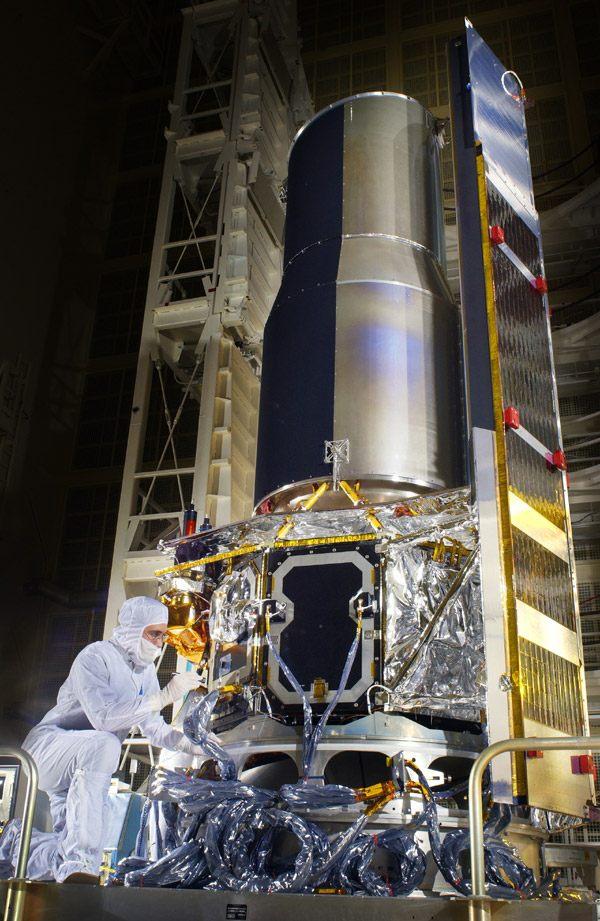
Finishing Touches for Space Infrared Telescope Facility SIRTF
Technicians put final touches on NASA Space Infrared Telescope Facility at Lockheed Martin Aeronautics in Sunnyvale, Calif., which launched on August 25, 2003. The telescope is now known…
Inspect NASA record
Technicians put final touches on NASA Space Infrared Telescope Facility at Lockheed Martin Aeronautics in Sunnyvale, Calif., which launched on August 25, 2003. The telescope is now known as the Spitzer Space Telescope.
- Record ID
- PIA04265
- NASA center
- JPL
- Date
- 2003-03-19
- Credit
- NASA
- Keywords
- Spitzer Space Telescope
GSFC · 2016-01-03 · by-the-dozen-nasas-james-webb-space-telescope-mirrors_23938941370_o
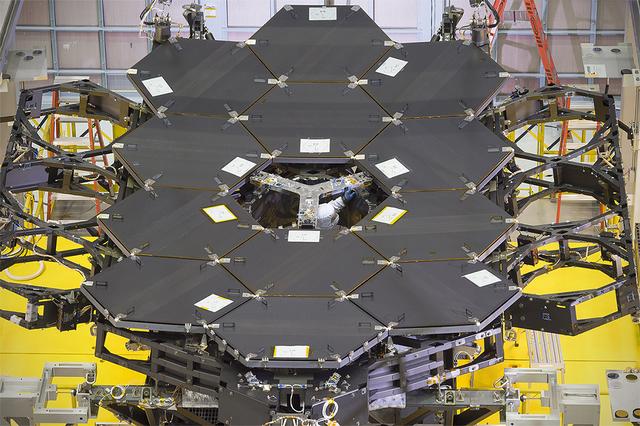
By the Dozen: NASA's James Webb Space Telescope Mirrors
Caption: One dozen (out of 18) flight mirror segments that make up the primary mirror on NASA's James Webb Space Telescope have been installed at NASA's Goddard Space…
Inspect NASA record
Caption: One dozen (out of 18) flight mirror segments that make up the primary mirror on NASA's James Webb Space Telescope have been installed at NASA's Goddard Space Flight Center. Credits: NASA/Chris Gunn More: Since December 2015, the team of scientists and engineers have been working tirelessly to install all the primary mirror segments onto the telescope structure in the large clean room at NASA's Goddard Space Flight Center in Greenbelt, Maryland. The twelfth mirror was installed on January 2, 2016. "This milestone signifies that all of the hexagonal shaped mirrors on the fixed central section of the telescope structure are installed and only the 3 mirrors on each wing are left for installation," said Lee Feinberg, NASA's Optical Telescope Element Manager at NASA Goddard. "The incredibly skilled and dedicated team assembling the telescope continues to find ways to do things faster and more efficiently." Each hexagonal-shaped segment measures just over 4.2 feet (1.3 meters) across and weighs approximately 88 pounds (40 kilograms). After being pieced together, the 18 primary mirror segments will work together as one large 21.3-foot (6.5-meter) mirror. The primary mirror will unfold and adjust to shape after launch. The mirrors are made of ultra-lightweight beryllium. The mirrors are placed on the telescope's backplane using a robotic arm, guided by engineers. The full installation is expected to be completed in a few months. The mirrors were built by Ball Aerospace & Technologies Corp., Boulder, Colorado. Ball is the principal subcontractor to Northrop Grumman for the optical technology and lightweight mirror system. The installation of the mirrors onto the telescope structure is performed by Harris Corporation of Rochester, New York. Harris Corporation leads integration and testing for the telescope. While the mirror assembly is a very significant milestone, there are many more steps involved in assembling the Webb telescope. The primary mirror and the tennis-court-sized sunshield are the largest and most visible components of the Webb telescope. However, there are four smaller components that are less visible, yet critical. The instruments that will fly aboard Webb - cameras and spectrographs with detectors able to record extremely faint signals — are part of the Integrated Science Instrument Module (ISIM), which is currently undergoing its final cryogenic vacuum test and will be integrated with the mirror later this year.
- Record ID
- by-the-dozen-nasas-james-webb-space-telescope-mirrors_23938941370_o
- NASA center
- GSFC
- Date
- 2016-01-03
- Keywords
- James Webb Space Telescope, JWST, Goddrad, James Webb
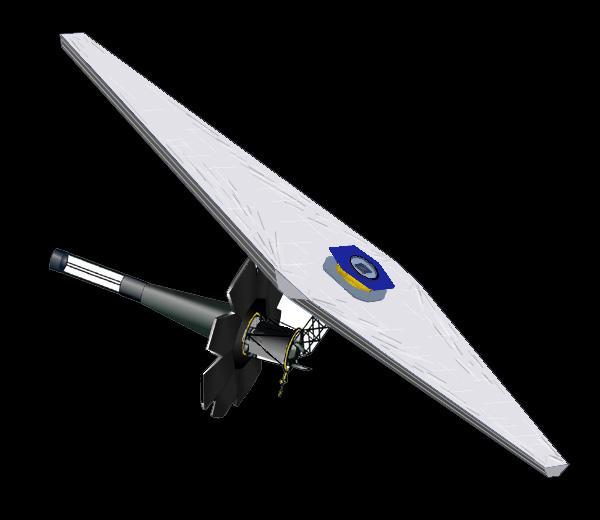
JPL · 2002-12-21 · PIA04243
Artist Concept of Next Generation Space Telescope
Artist concept of Next Generation Space Telescope from December, 2002. http://photojournal.jpl.nasa.gov/catalog/PIA04243
Inspect NASA record
Artist concept of Next Generation Space Telescope from December, 2002. http://photojournal.jpl.nasa.gov/catalog/PIA04243
- Record ID
- PIA04243
- NASA center
- JPL
- Date
- 2002-12-21
- Credit
- NASA/JPL
- Keywords
- Next Generation Space Telescope, artist concept
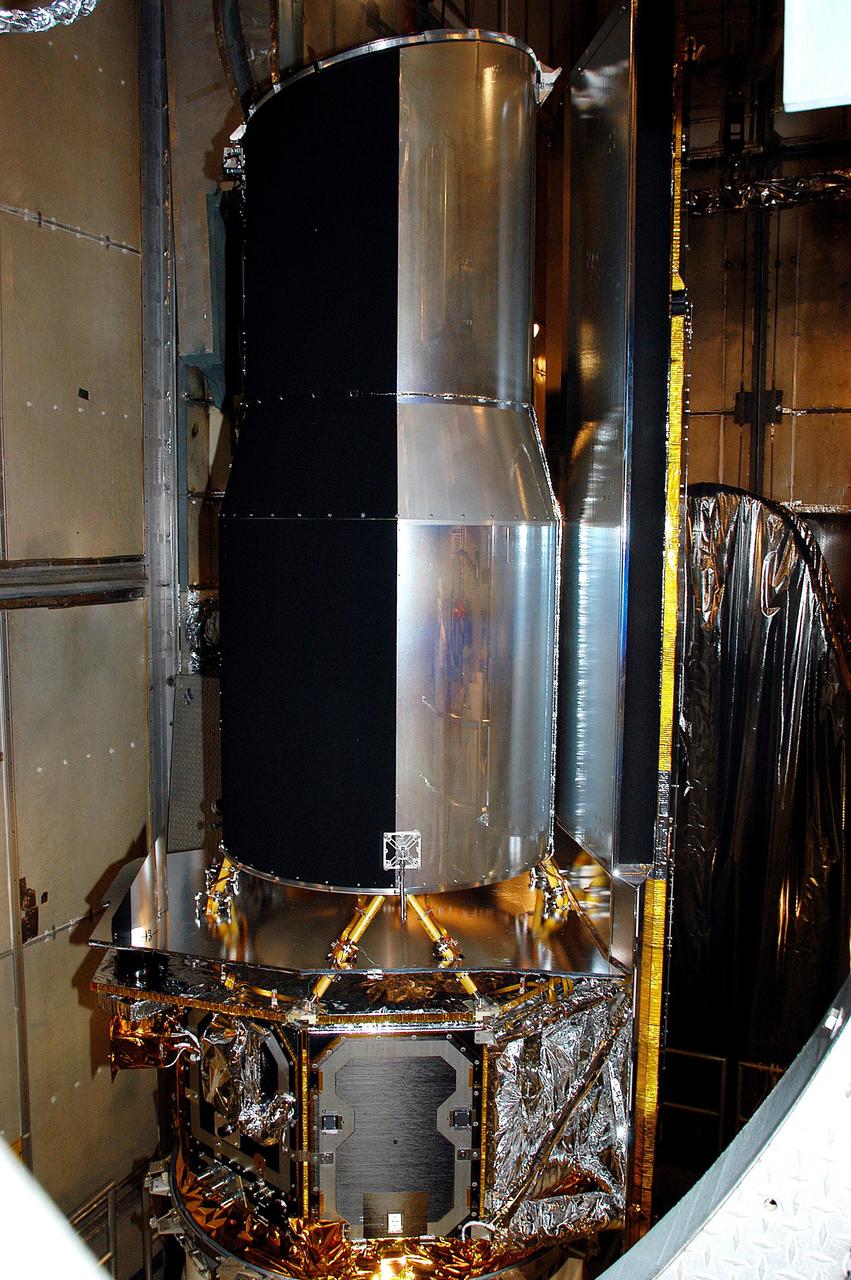
JPL · 2020-01-30 · PIA23649
Space Infrared Telescope Facility (SIRTF) Before Launch
At the time of launch, the Spitzer Space Telescope bore its original name: the Space Infrared Telescope Facility (SIRTF). It's shown here in the mobile service tower on…
Inspect NASA record
At the time of launch, the Spitzer Space Telescope bore its original name: the Space Infrared Telescope Facility (SIRTF). It's shown here in the mobile service tower on Launch Pad 17-B, Cape Canaveral Air Force Station, waiting for encapsulation. https://photojournal.jpl.nasa.gov/catalog/PIA23649
- Record ID
- PIA23649
- NASA center
- JPL
- Date
- 2020-01-30
- Credit
- NASA
- Keywords
- Spitzer Space Telescope
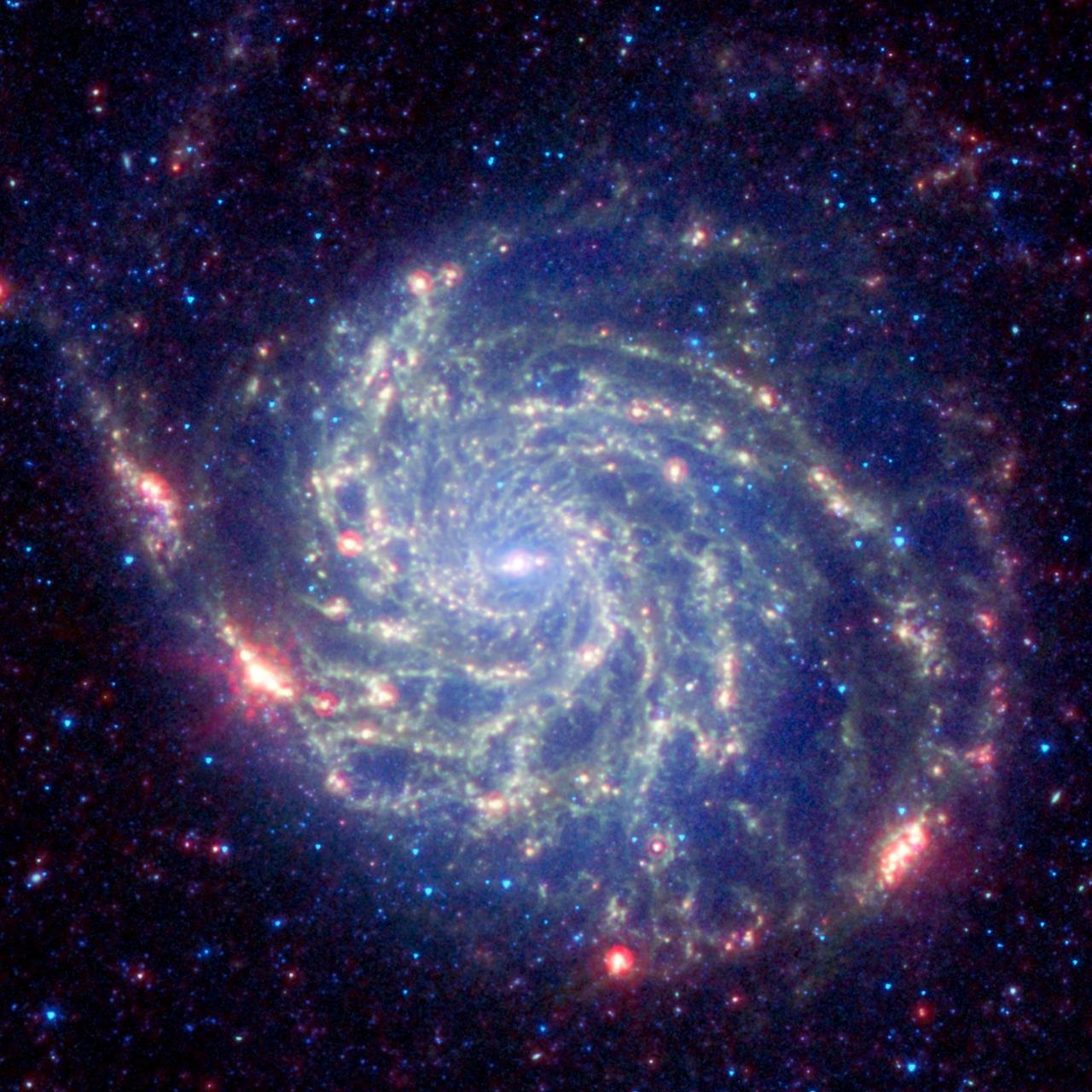
JPL · 2009-02-10 · PIA11796
Spitzer Space Telescope View of Galaxy Messier 101
The galaxy Messier 101 is a swirling spiral of stars, gas, and dust. Messier 101 is nearly twice as wide as our Milky Way galaxy in this image…
Inspect NASA record
The galaxy Messier 101 is a swirling spiral of stars, gas, and dust. Messier 101 is nearly twice as wide as our Milky Way galaxy in this image as seen by NASA Spitzer Space Telescope.
- Record ID
- PIA11796
- NASA center
- JPL
- Date
- 2009-02-10
- Credit
- NASA/JPL-Caltech/STScI
- Keywords
- Messier 101, Hubble Space Telescope,Spitzer Space Telescope
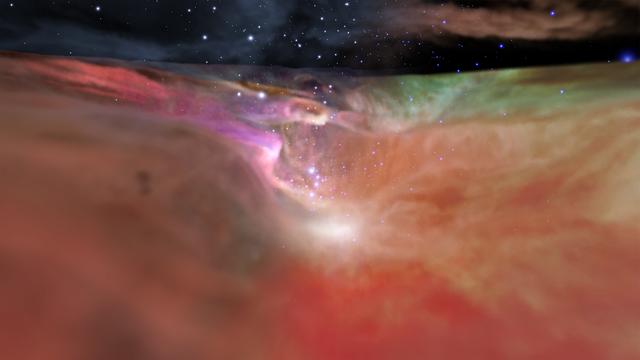
JPL · 2018-01-11 · PIA22089
Hubble Space Telescope,Spitzer Space Telescope
This image showcases both the visible and infrared visualizations of the Orion Nebula. This view from a movie sequence looks down the 'valley' leading to the star cluster…
Inspect NASA record
This image showcases both the visible and infrared visualizations of the Orion Nebula. This view from a movie sequence looks down the 'valley' leading to the star cluster at the far end. The left side of the image shows the visible-light visualization, which fades to the infrared-light visualization on the right. These two contrasting models derive from observations by the Hubble and Spitzer space telescopes. An animation is available at https://photojournal.jpl.nasa.gov/catalog/PIA22089
- Record ID
- PIA22089
- NASA center
- JPL
- Date
- 2018-01-11
- Credit
- NNASA/ESA, F. Summers, G. Bacon, Z. Levay, J. DePasquale, L. Frattare, M. Robberto and M. Gennaro (STScI), and R. Hurt (Caltech/IPAC)
- Keywords
- Hubble Space Telescope, Spitzer Space Telescope, Orion Nebula
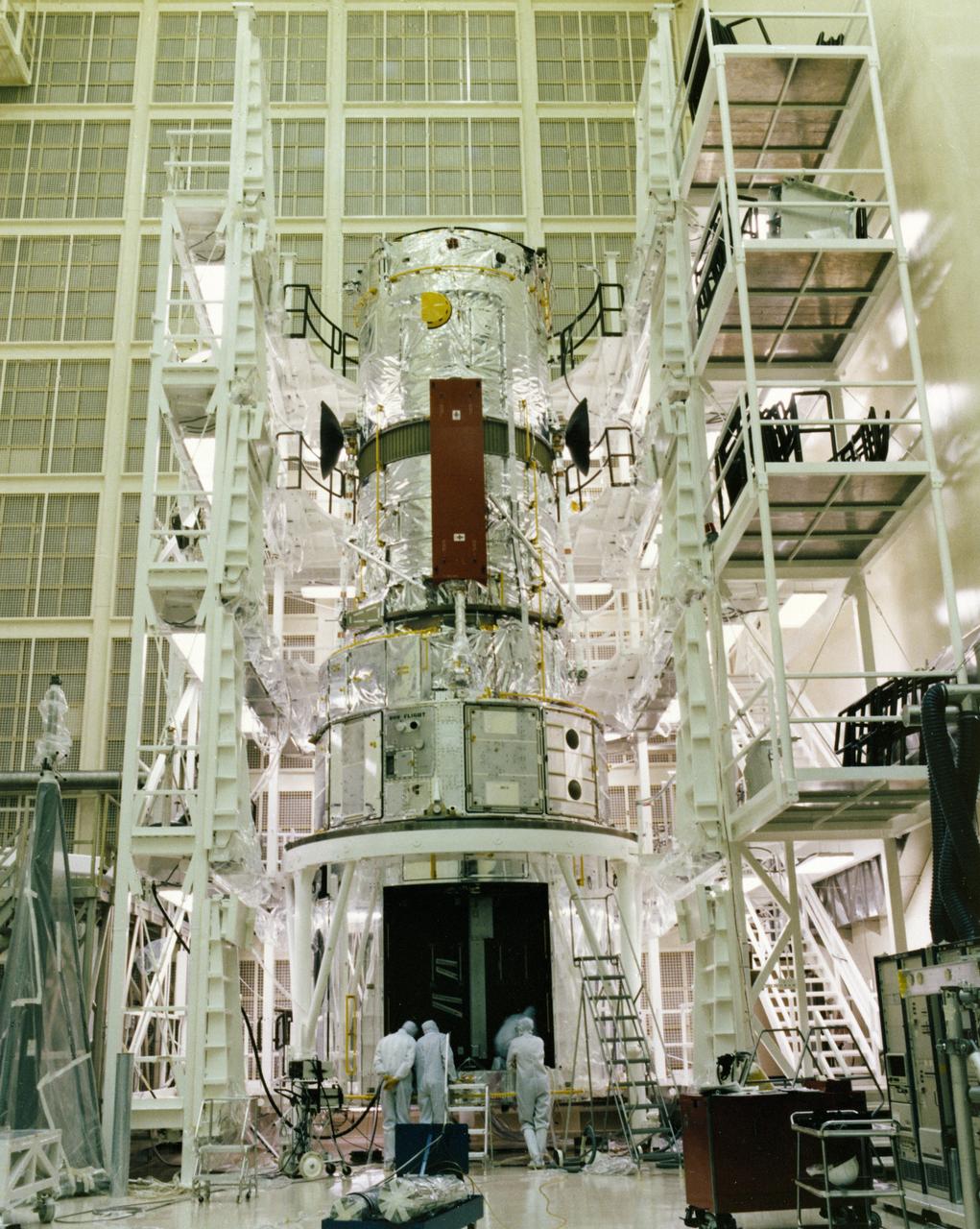
MSFC · 1986-01-01 · 8663388
History of Hubble Space Telescope (HST)
This photograph shows the Hubble Space Telescope (HST) flight article assembly with multilayer insulation, high gain anterna, and solar arrays in a clean room of the Lockheed Missile…
Inspect NASA record
This photograph shows the Hubble Space Telescope (HST) flight article assembly with multilayer insulation, high gain anterna, and solar arrays in a clean room of the Lockheed Missile and Space Company. The HST is the first of NASA's great observatories and the most complex and sensitive optical telescope ever made. The purpose of the HST is to study the cosmos from a low-Earth orbit by placing the telescope in space, enabling astronomers to collect data that is free of the Earth's atmosphere. The HST was deployed from the Space Shuttle Discovery (STS-31 mission) into Earth orbit in April 1990. The Marshall Space Flight Center had overall responsibility for design, development, and construction of the HST. The Perkin-Elmer Corporation, in Danbury, Connecticut, developed the optical system and guidance sensors. The Lockheed Missile and Space Company, Sunnyvale, California, produced the protective outer shroud and spacecraft systems, and assembled and tested the finished telescope.
- Record ID
- 8663388
- NASA center
- MSFC
- Date
- 1986-01-01
- Keywords
- Hubble Space Telescope, HST