
Add from NASA
Explore NASA’s Image and Video Library and suggest an object for Interstellar Minds.
New Marvel suggestions are paused.
NASA image records
KSC · 1999-01-05 · KSC-99pc12
KSC-99pc12
The first stage of a Boeing Delta II rocket is in position on the mobile tower (at right) at Launch Complex 17. At left is the launch tower.…
Inspect NASA record
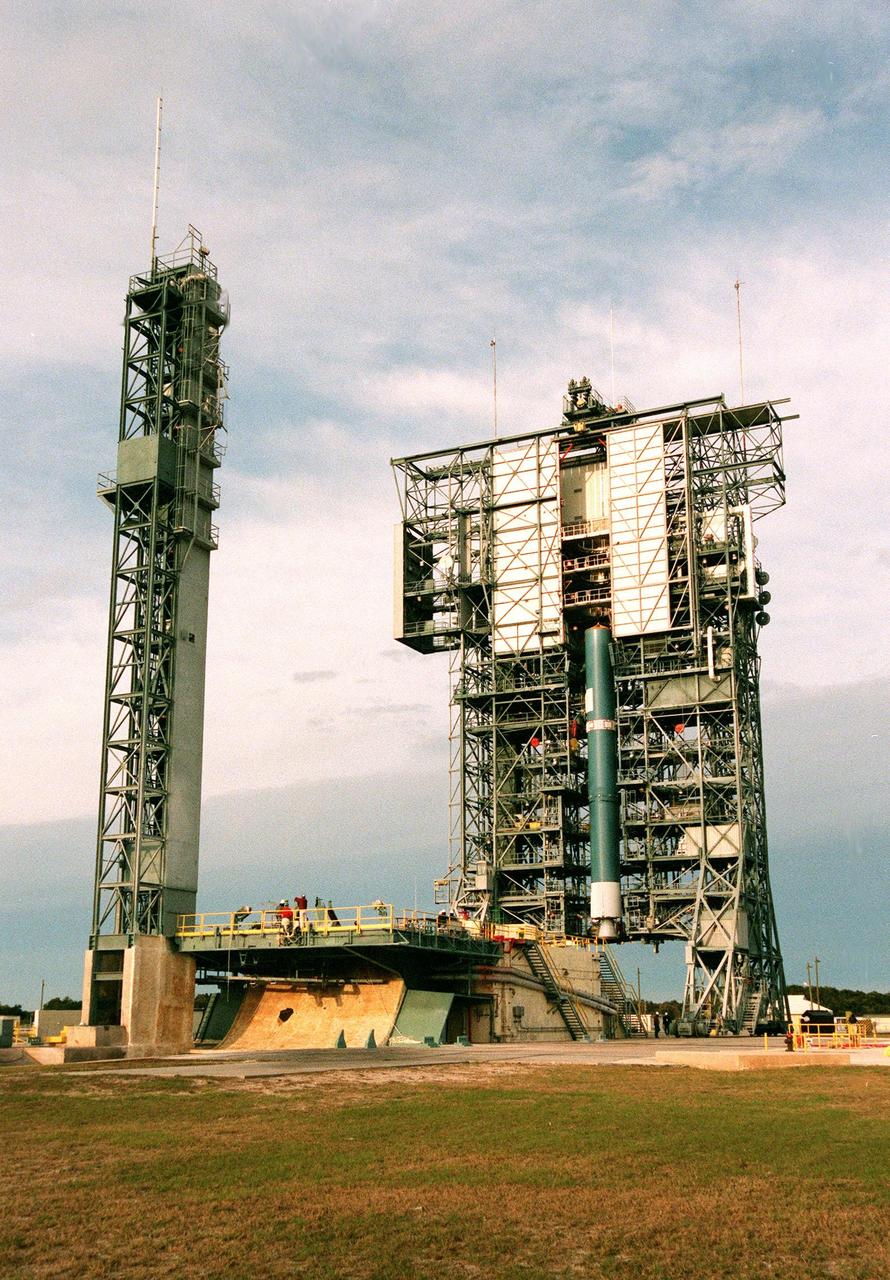
The first stage of a Boeing Delta II rocket is in position on the mobile tower (at right) at Launch Complex 17. At left is the launch tower. The rocket will carry the Stardust spacecraft into space for a close encounter with the comet Wild 2 in January 2004. Using a medium called aerogel, it will capture comet particles flying off the nucleus of the comet, plus collect interstellar dust for later analysis. The collected samples will return to Earth in a Sample Return Capsule to be jettisoned as Stardust swings by Earth in January 2006. Stardust is scheduled to be launched on Feb. 6, 1999
- Record ID
- KSC-99pc12
- NASA center
- KSC
- Date
- 1999-01-05
KSC · 1999-01-28 · KSC-99pd0129
KSC-99pd0129
Workers inside the launch tower at Pad 17-A, Cape Canaveral Air Station, guide the third stage of a Boeing Delta II rocket, and the Stardust spacecraft connected to…
Inspect NASA record
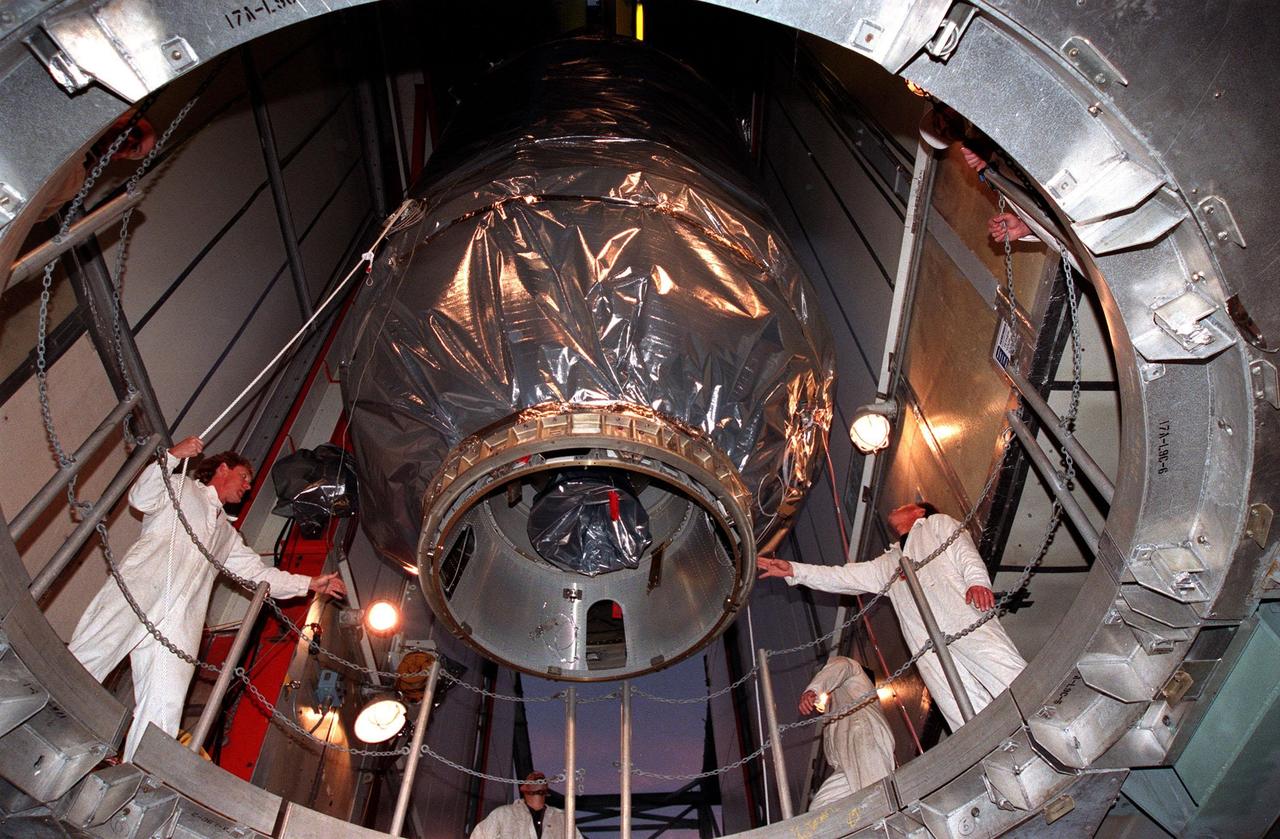
Workers inside the launch tower at Pad 17-A, Cape Canaveral Air Station, guide the third stage of a Boeing Delta II rocket, and the Stardust spacecraft connected to it, through an opening to the second stage of the rocket below. The second and third stages of teh rocket will be mated next as preparations continue for liftoff on Feb. 6. Stardust is destined for a close encounter with the comet Wild 2 in January 2004. Using a silicon-based substance called aerogel, Stardust will capture comet particles flying off the nucleus of the comet. The spacecraft also will bring back samples of interstellar dust. These materials consist of ancient pre-solar interstellar grains and other remnants left over from the formation of the solar system. Scientists expect their analysis to provide important insights into the evolution of the sun and planets and possibly into the origin of life itself. The collected samples will return to Earth in a sample return capsule to be jettisoned as Stardust swings by Earth in January 2006
- Record ID
- KSC-99pd0129
- NASA center
- KSC
- Date
- 1999-01-28

KSC · 1999-02-07 · KSC-99pc0155
KSC-99pc0155
As tower rollback begins, the Boeing Delta II rocket carrying the Stardust spacecraft waits on Launch Pad 17-A, Cape Canaveral Air Station, for the second launch attempt at…
Inspect NASA record
As tower rollback begins, the Boeing Delta II rocket carrying the Stardust spacecraft waits on Launch Pad 17-A, Cape Canaveral Air Station, for the second launch attempt at 4:04 p.m. EST. The original launch was scrubbed on Feb. 6 for 24 hours. Stardust is destined for a close encounter with the comet Wild 2 in January 2004. Using a silicon-based substance called aerogel, Stardust will capture comet particles flying off the nucleus of the comet. The spacecraft also will bring back samples of interstellar dust. These materials consist of ancient pre-solar interstellar grains and other remnants left over from the formation of the solar system. Scientists expect their analysis to provide important insights into the evolution of the sun and planets and possibly into the origin of life itself. The collected samples will return to Earth in a sample return capsule to be jettisoned as Stardust swings by Earth in January 2006
- Record ID
- KSC-99pc0155
- NASA center
- KSC
- Date
- 1999-02-07
KSC · 1999-01-22 · KSC-99pc0093
KSC-99pc0093
The cover is removed from the Stardust spacecraft in the Payload Hazardous Servicing Facility prior to a media presentation. Stardust is targeted for launch on Feb. 6 aboard…
Inspect NASA record
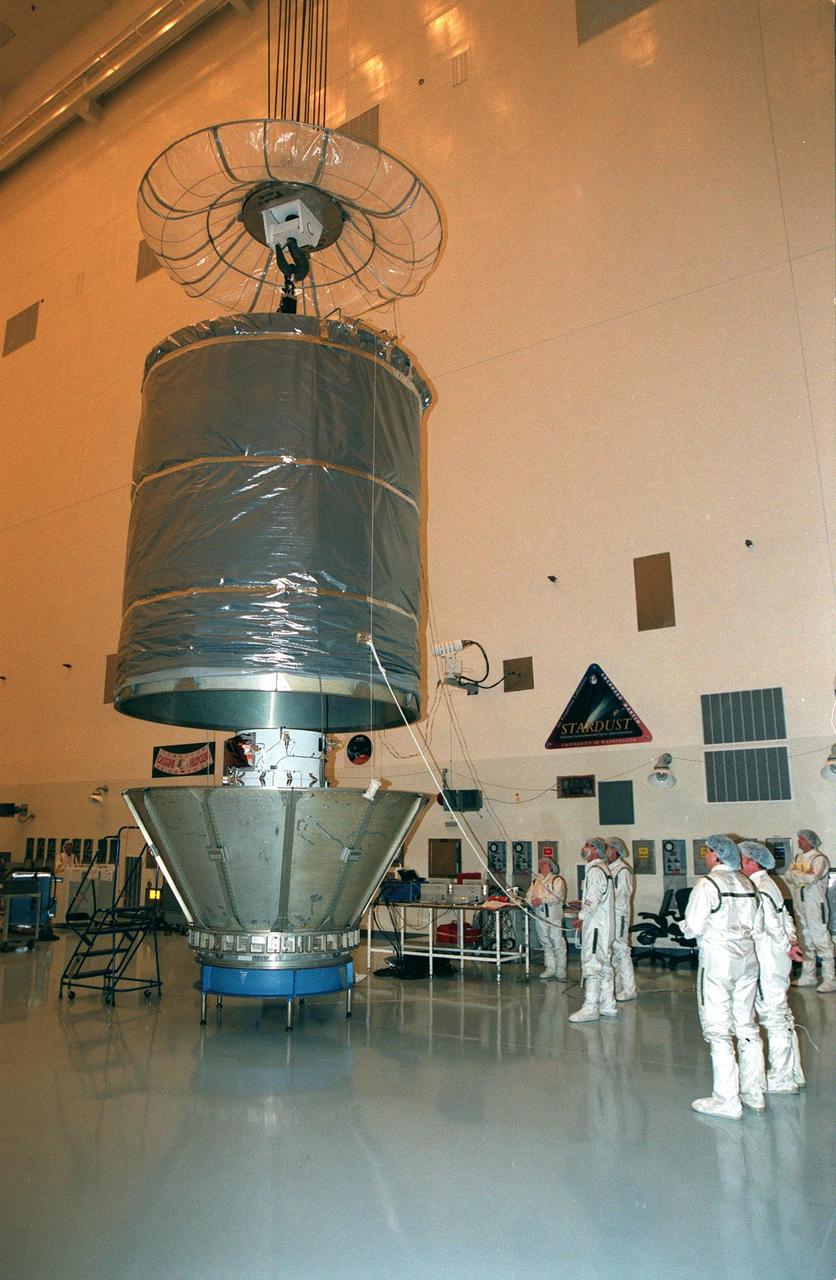
The cover is removed from the Stardust spacecraft in the Payload Hazardous Servicing Facility prior to a media presentation. Stardust is targeted for launch on Feb. 6 aboard a Boeing Delta II rocket from Launch Pad 17-A, Cape Canaveral Air Station. The spacecraft is destined for a close encounter with the comet Wild 2 in January 2004. Using a silicon-based substance called aerogel, Stardust will capture comet particles flying off the nucleus of the comet. The spacecraft also will bring back samples of interstellar dust. These materials consist of ancient pre-solar interstellar grains and other remnants left over from the formation of the solar system. Scientists expect their analysis to provide important insights into the evolution of the sun and planets and possibly into the origin of life itself. The collected samples will return to Earth in a sample return capsule (the white-topped, blunt-nosed cone seen on the top of the spacecraft) to be jettisoned as Stardust swings by Earth in January 2006
- Record ID
- KSC-99pc0093
- NASA center
- KSC
- Date
- 1999-01-22
KSC · 1999-02-06 · KSC-99pc0152
KSC-99pc0152
At Launch Pad 17-A, Cape Canaveral Air Station, as tower rollback begins, a Boeing Delta II rocket undergoes final preparations for launch. The targeted launch time is 4:06…
Inspect NASA record
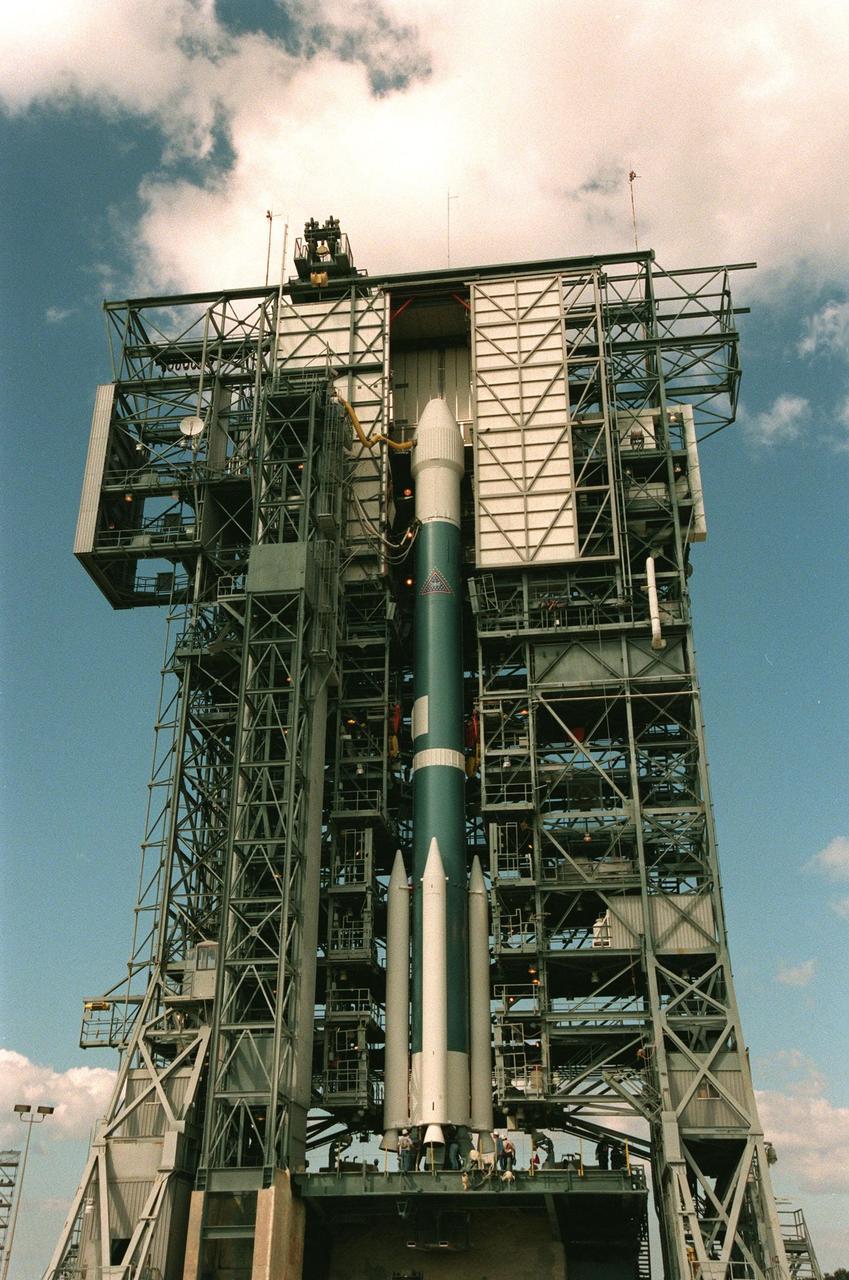
At Launch Pad 17-A, Cape Canaveral Air Station, as tower rollback begins, a Boeing Delta II rocket undergoes final preparations for launch. The targeted launch time is 4:06 p.m. EST. The Delta II rocket is carrying the Stardust spacecraft, destined for a close encounter with the comet Wild 2 in January 2004. Using a silicon-based substance called aerogel, Stardust will capture comet particles flying off the nucleus of the comet. The spacecraft also will bring back samples of interstellar dust. These materials consist of ancient pre-solar interstellar grains and other remnants left over from the formation of the solar system. Scientists expect their analysis to provide important insights into the evolution of the sun and planets and possibly into the origin of life itself. The collected samples will return to Earth in a sample return capsule to be jettisoned as Stardust swings by Earth in January 2006
- Record ID
- KSC-99pc0152
- NASA center
- KSC
- Date
- 1999-02-06

KSC · 1999-01-28 · KSC-99pc0127
KSC-99pc0127
At Launch Pad 17-A, Cape Canaveral Air Station, the Stardust spacecraft, attached to the third stage of a Boeing Delta II rocket, is lifted up the launch tower.…
Inspect NASA record
At Launch Pad 17-A, Cape Canaveral Air Station, the Stardust spacecraft, attached to the third stage of a Boeing Delta II rocket, is lifted up the launch tower. The second and third stages of the rocket will be mated next as preparations continue for liftoff on Feb. 6. Stardust is destined for a close encounter with the comet Wild 2 in January 2004. Using a silicon-based substance called aerogel, Stardust will capture comet particles flying off the nucleus of the comet. The spacecraft also will bring back samples of interstellar dust. These materials consist of ancient pre-solar interstellar grains and other remnants left over from the formation of the solar system. Scientists expect their analysis to provide important insights into the evolution of the sun and planets and possibly into the origin of life itself. The collected samples will return to Earth in a sample return capsule to be jettisoned as Stardust swings by Earth in January 2006
- Record ID
- KSC-99pc0127
- NASA center
- KSC
- Date
- 1999-01-28
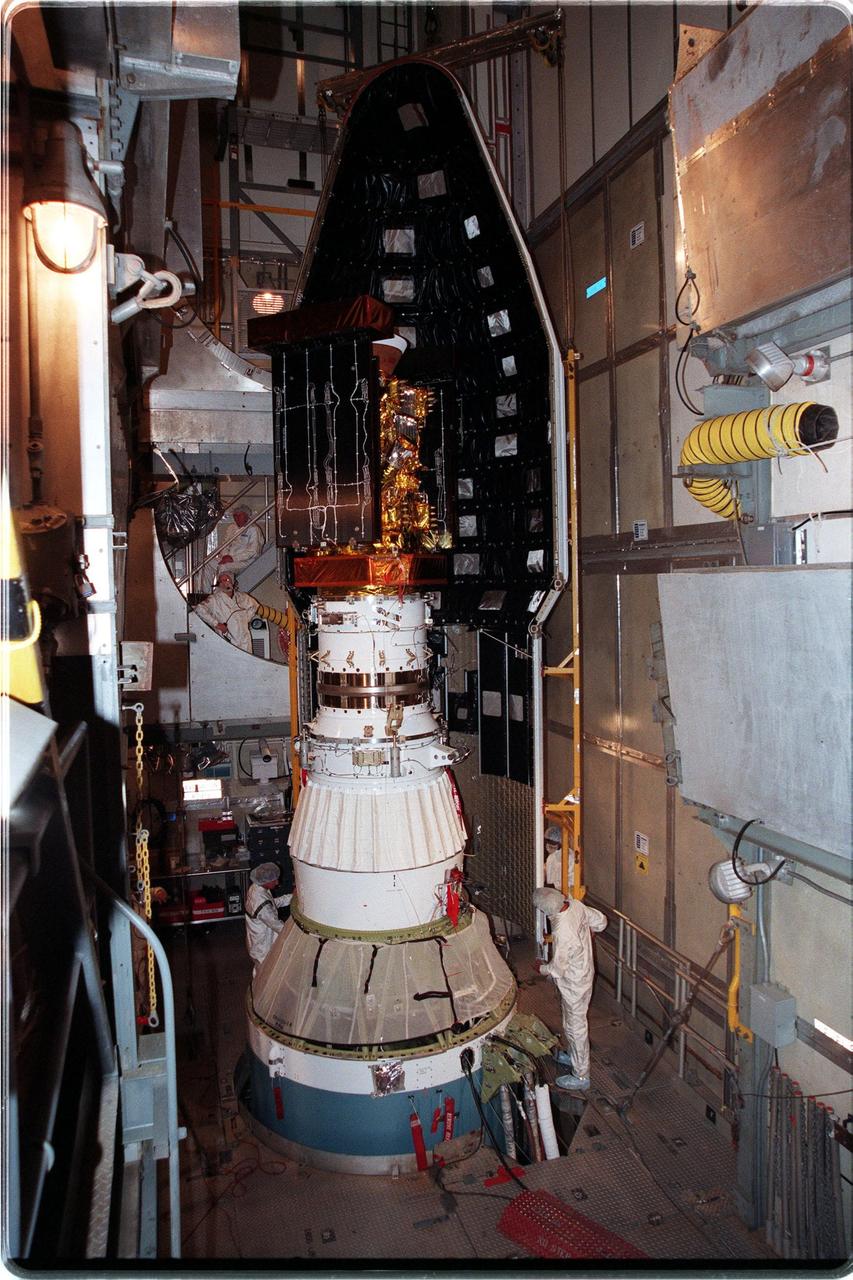
KSC · 1999-02-02 · KSC-99pc0146
KSC-99pc0146
At Launch Pad 17-A, Cape Canaveral Air Station, workers begin placing the fairing around the Stardust spacecraft and upper stage of the Boeing Delta II rocket. Targeted for…
Inspect NASA record
At Launch Pad 17-A, Cape Canaveral Air Station, workers begin placing the fairing around the Stardust spacecraft and upper stage of the Boeing Delta II rocket. Targeted for launch at 4:06:42 p.m. on Feb. 6, Stardust is destined for a close encounter with the comet Wild 2 in January 2004. Using a silicon-based substance called aerogel, Stardust will capture comet particles flying off the nucleus of the comet. The spacecraft also will bring back samples of interstellar dust. These materials consist of ancient pre-solar interstellar grains and other remnants left over from the formation of the solar system. Scientists expect their analysis to provide important insights into the evolution of the sun and planets and possibly into the origin of life itself. The collected samples will return to Earth in a sample return capsule to be jettisoned as Stardust swings by Earth in January 2006
- Record ID
- KSC-99pc0146
- NASA center
- KSC
- Date
- 1999-02-02
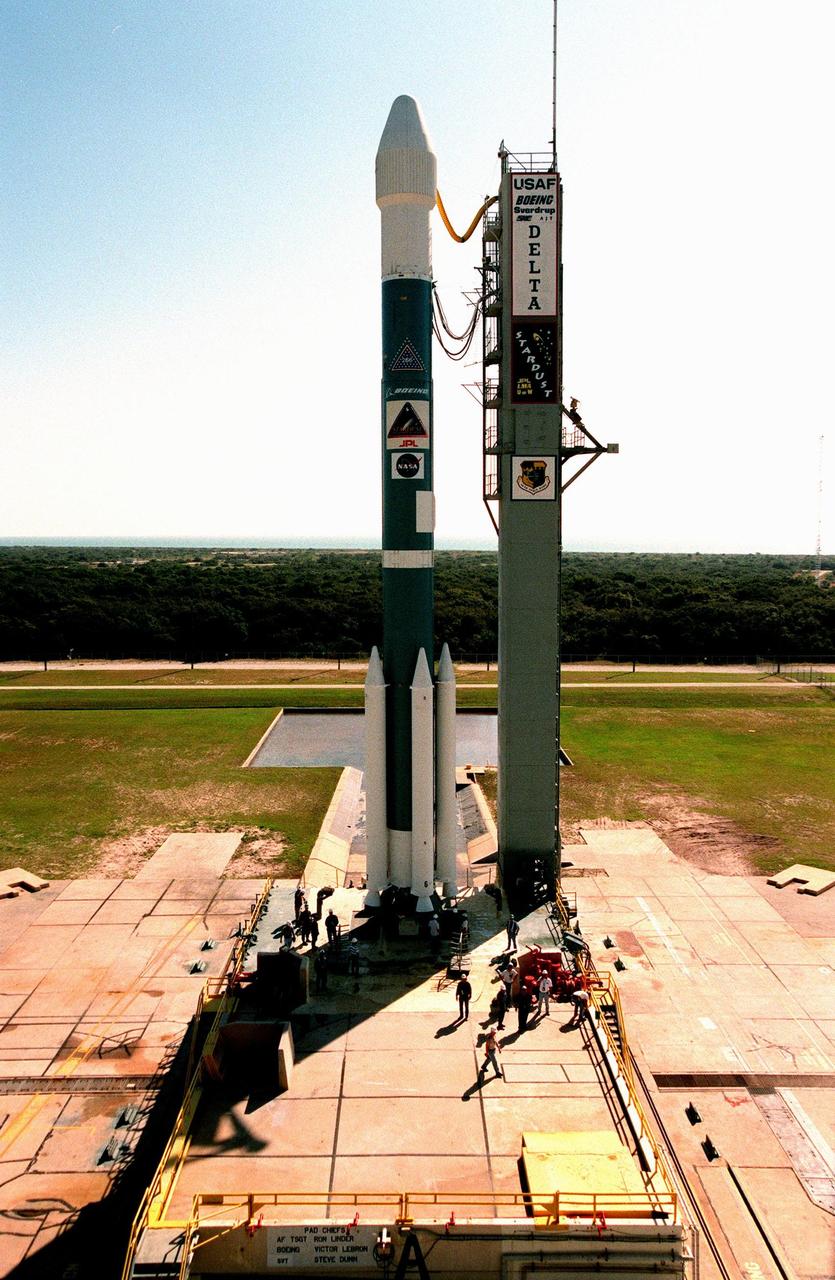
KSC · 1999-02-07 · KSC-99pc0157
KSC-99pc0157
In the late morning light at Launch Pad 17-A, Cape Cananveral Air Station, the fixed utility tower (right) casts a long shadow across the base of the Boeing…
Inspect NASA record
In the late morning light at Launch Pad 17-A, Cape Cananveral Air Station, the fixed utility tower (right) casts a long shadow across the base of the Boeing Delta II rocket (left) waiting to launch the Stardust spacecraft. After a 24-hour scrub, the new targeted launch time is 4:04 p.m. EST. Stardust is destined for a close encounter with the comet Wild 2 in January 2004. Using a silicon-based substance called aerogel, Stardust will capture comet particles flying off the nucleus of the comet. The spacecraft also will bring back samples of interstellar dust. These materials consist of ancient pre-solar interstellar grains and other remnants left over from the formation of the solar system. Scientists expect their analysis to provide important insights into the evolution of the sun and planets and possibly into the origin of life itself. The collected samples will return to Earth in a sample return capsule to be jettisoned as Stardust swings by Earth in January 2006
- Record ID
- KSC-99pc0157
- NASA center
- KSC
- Date
- 1999-02-07
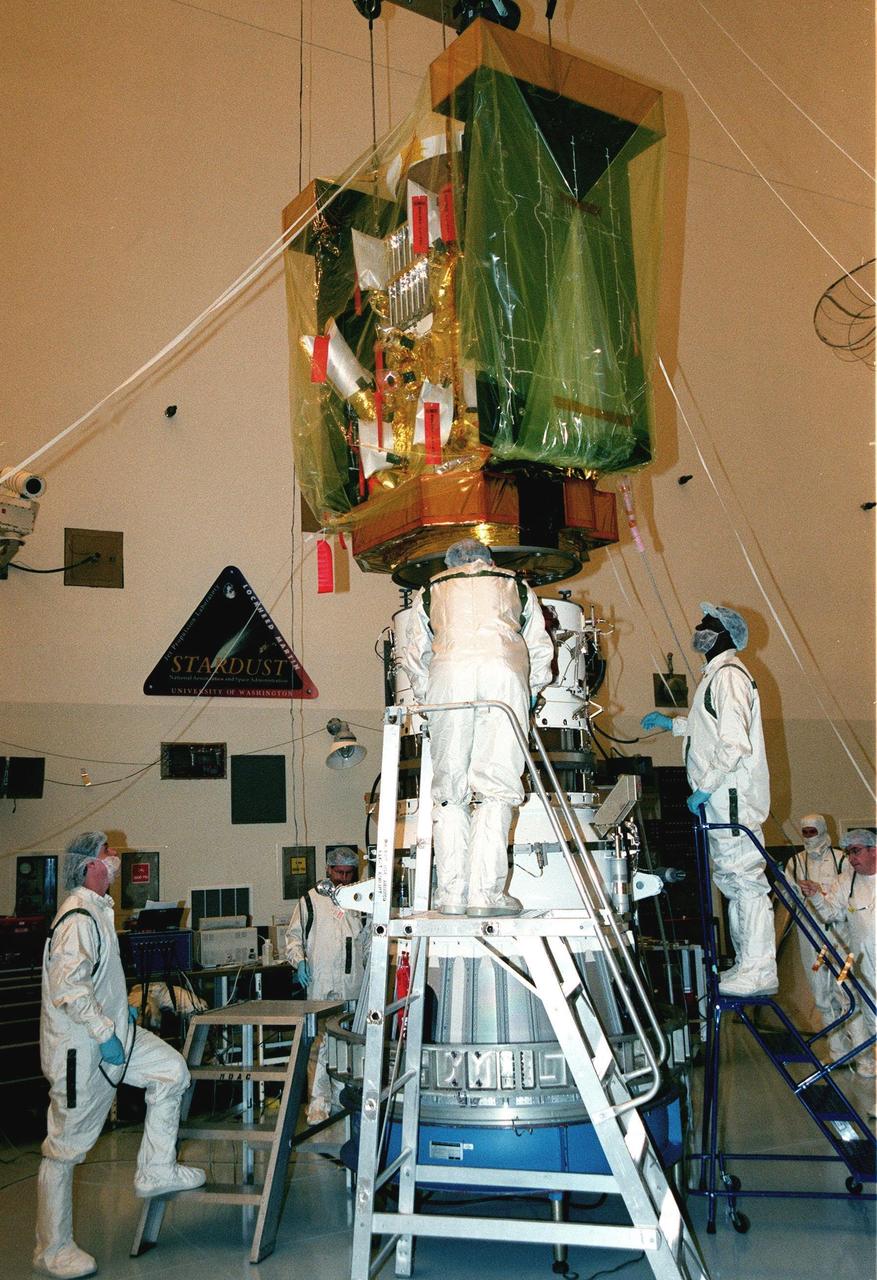
KSC · 1999-01-26 · KSC-99pc0101
KSC-99pc0101
In the Payload Hazardous Servicing Facility, workers help guide the spacecraft Stardust being lowered in order to mate it with the third stage of a Boeing Delta II…
Inspect NASA record
In the Payload Hazardous Servicing Facility, workers help guide the spacecraft Stardust being lowered in order to mate it with the third stage of a Boeing Delta II rocket. Targeted for launch Feb. 6 from Launch Pad 17-A, Cape Canaveral Air Station, aboard the Delta II rocket, the spacecraft is destined for a close encounter with the comet Wild 2 in January 2004. Using a silicon-based substance called aerogel, Stardust will capture comet particles flying off the nucleus of the comet. The spacecraft also will bring back samples of interstellar dust. These materials consist of ancient pre-solar interstellar grains and other remnants left over from the formation of the solar system. Scientists expect their analysis to provide important insights into the evolution of the sun and planets and possibly into the origin of life itself. The collected samples will return to Earth in a sample return capsule to be jettisoned as Stardust swings by Earth in January 2006
- Record ID
- KSC-99pc0101
- NASA center
- KSC
- Date
- 1999-01-26
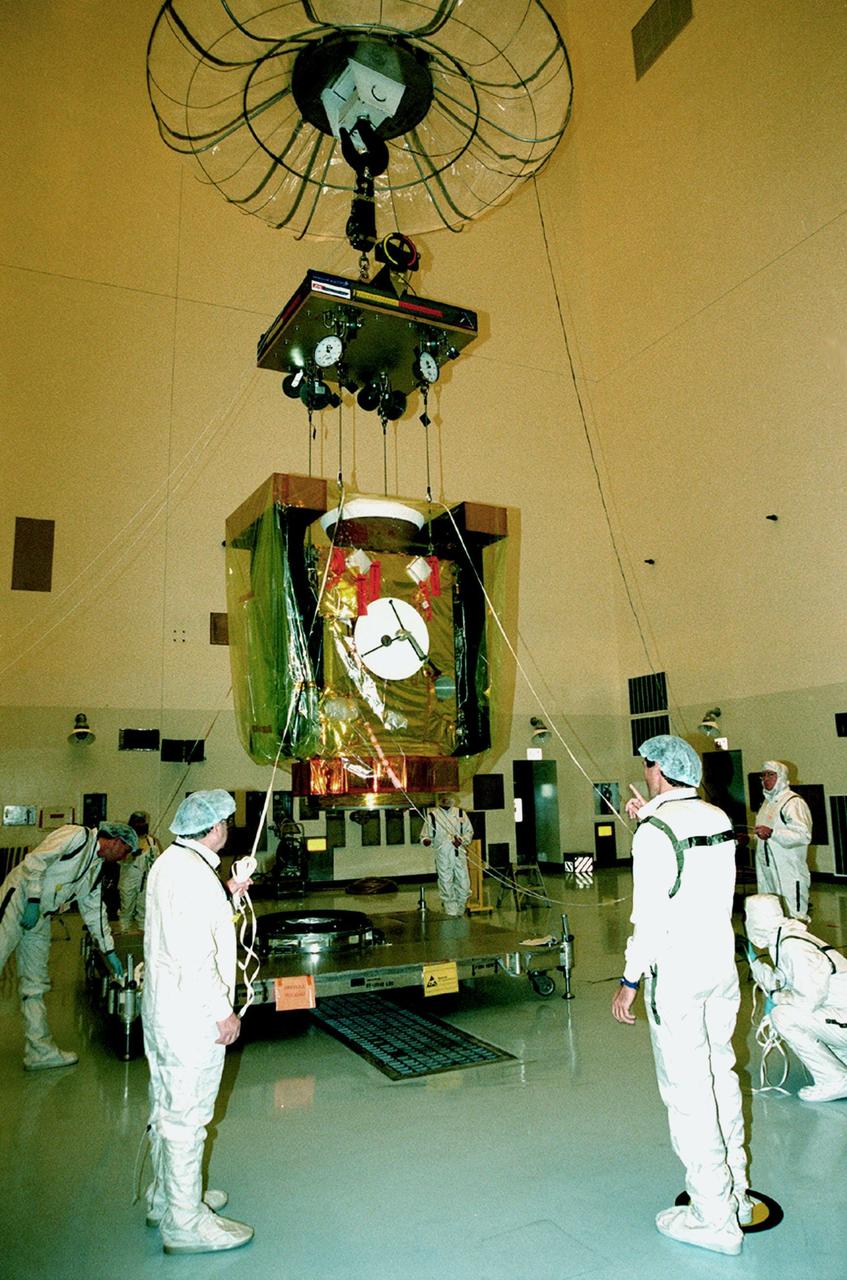
KSC · 1999-01-26 · KSC-99pc0100
KSC-99pc0100
In the Payload Hazardous Servicing Facility, workers help guide the overhead crane lifting the Stardust spacecraft. Stardust is being moved in order to mate it with the third…
Inspect NASA record
In the Payload Hazardous Servicing Facility, workers help guide the overhead crane lifting the Stardust spacecraft. Stardust is being moved in order to mate it with the third stage of a Boeing Delta II rocket. Targeted for launch Feb. 6 from Launch Pad 17-A, Cape Canaveral Air Station, aboard the Delta II rocket, the spacecraft is destined for a close encounter with the comet Wild 2 in January 2004. Using a silicon-based substance called aerogel, Stardust will capture comet particles flying off the nucleus of the comet. The spacecraft also will bring back samples of interstellar dust. These materials consist of ancient pre-solar interstellar grains and other remnants left over from the formation of the solar system. Scientists expect their analysis to provide important insights into the evolution of the sun and planets and possibly into the origin of life itself. The collected samples will return to Earth in a sample return capsule to be jettisoned as Stardust swings by Earth in January 2006
- Record ID
- KSC-99pc0100
- NASA center
- KSC
- Date
- 1999-01-26
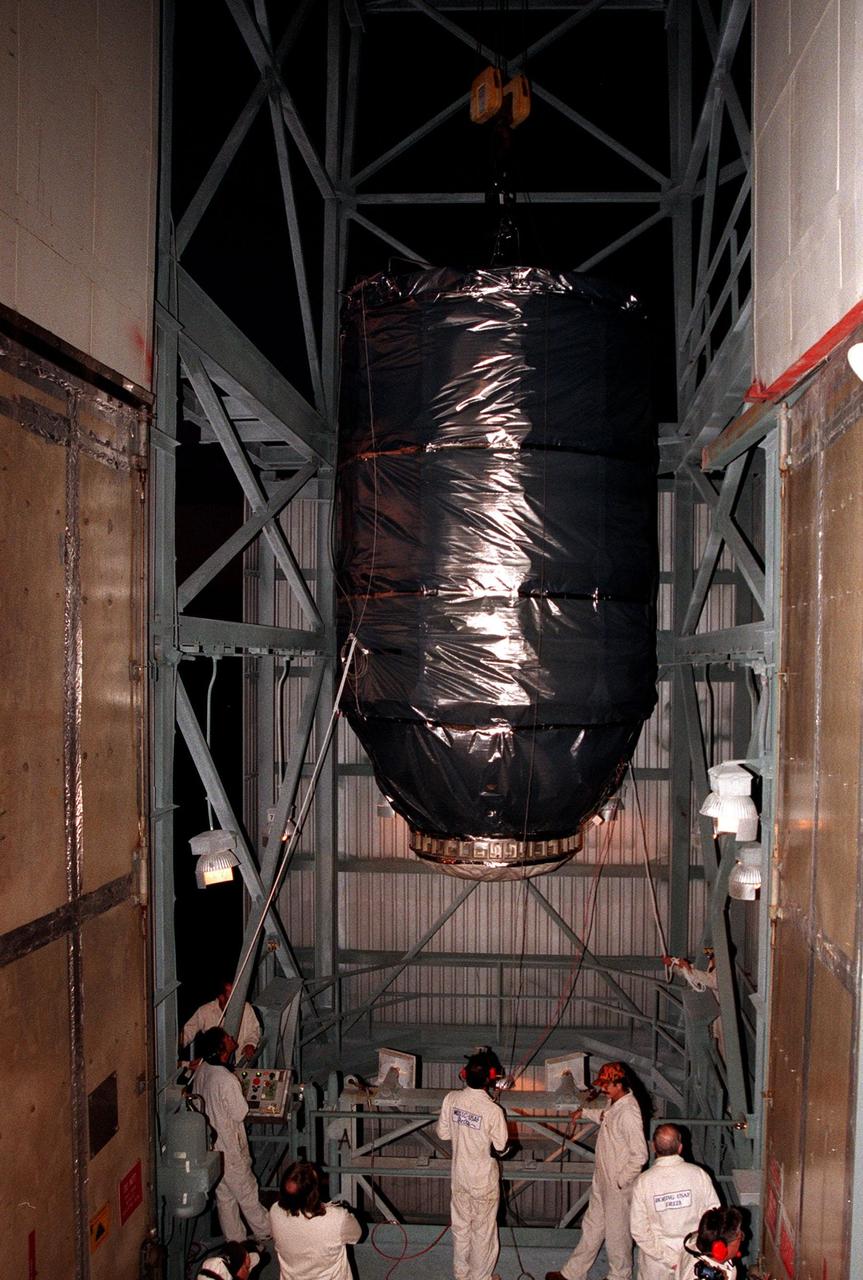
KSC · 1999-01-28 · KSC-99pc0128
KSC-99pc0128
Inside the launch tower at Pad 17-A, Cape Canaveral Air Station, workers guide the Stardust spacecraft toward an opening to a Boeing Delta II rocket below. The spacecraft…
Inspect NASA record
Inside the launch tower at Pad 17-A, Cape Canaveral Air Station, workers guide the Stardust spacecraft toward an opening to a Boeing Delta II rocket below. The spacecraft is already connected to the third stage of the rocket that will be mated with the second stage in preparation for liftoff on Feb. 6. Stardust is destined for a close encounter with the comet Wild 2 in January 2004. Using a silicon-based substance called aerogel, Stardust will capture comet particles flying off the nucleus of the comet. The spacecraft also will bring back samples of interstellar dust. These materials consist of ancient pre-solar interstellar grains and other remnants left over from the formation of the solar system. Scientists expect their analysis to provide important insights into the evolution of the sun and planets and possibly into the origin of life itself. The collected samples will return to Earth in a sample return capsule to be jettisoned as Stardust swings by Earth in January 2006
- Record ID
- KSC-99pc0128
- NASA center
- KSC
- Date
- 1999-01-28
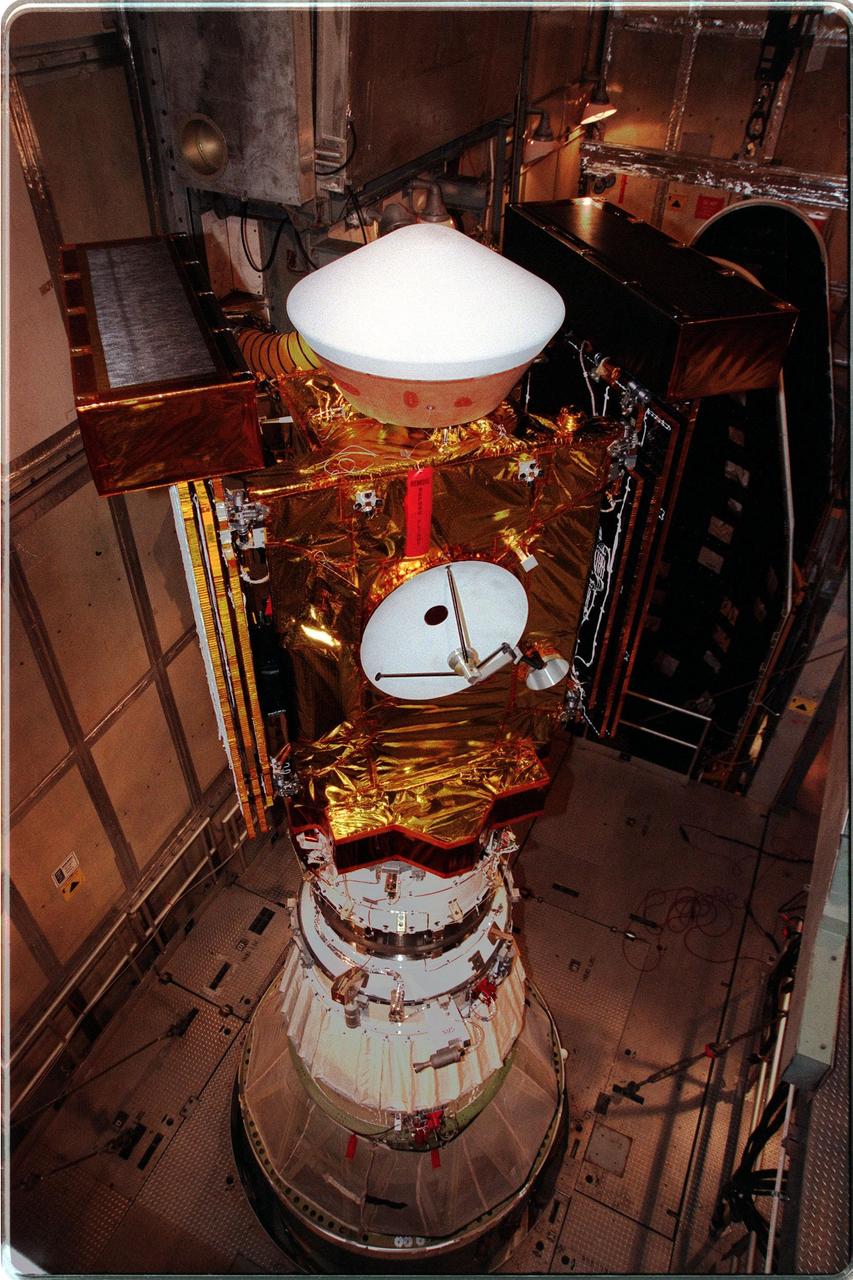
KSC · 1999-02-02 · KSC-99pc0148
KSC-99pc0148
At Launch Pad 17-A, Cape Canaveral Air Station, the Stardust spacecraft waits for installation of the fairing (behind, right) that will enclose the spacecraft and the upper stage…
Inspect NASA record
At Launch Pad 17-A, Cape Canaveral Air Station, the Stardust spacecraft waits for installation of the fairing (behind, right) that will enclose the spacecraft and the upper stage of the Boeing Delta II rocket. Targeted for launch at 4:06:42 p.m. on Feb. 6, Stardust is destined for a close encounter with the comet Wild 2 in January 2004. Using a silicon-based substance called aerogel, Stardust will capture comet particles flying off the nucleus of the comet. The spacecraft also will bring back samples of interstellar dust. These materials consist of ancient pre-solar interstellar grains and other remnants left over from the formation of the solar system. Scientists expect their analysis to provide important insights into the evolution of the sun and planets and possibly into the origin of life itself. The collected samples will return to Earth in a sample return capsule to be jettisoned as Stardust swings by Earth in January 2006
- Record ID
- KSC-99pc0148
- NASA center
- KSC
- Date
- 1999-02-02