
Update Site (from NASA)
Explore NASA’s Image and Video Library.
Suggest one object per day for the Interstellar Minds collection. We review each suggestion before adding it.
Sign in to suggest a Marvel.
Find a NASA image ID. Open a NASA record and copy its ID from the end of the details URL.
NASA image records
JSC · 2026-04-01 · jsc2026e019542
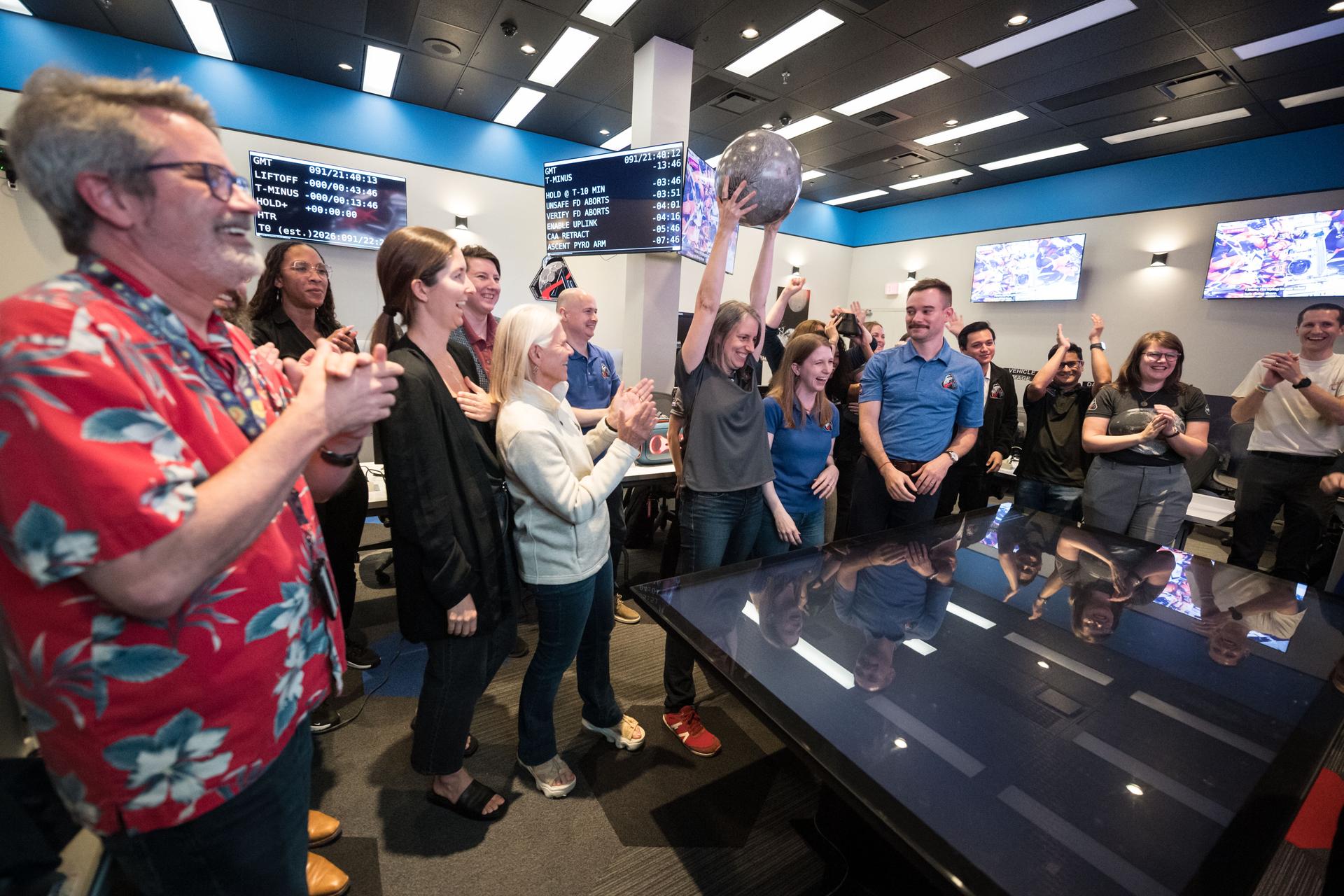
Artemis II lunar science team members watch launch -- jsc2026e019542
Members of the Artemis lunar science team cheer as they gather to watch the Artemis II launch broadcast from the Science Evaluation Room (SER) in Mission Control at…
Inspect NASA record
Members of the Artemis lunar science team cheer as they gather to watch the Artemis II launch broadcast from the Science Evaluation Room (SER) in Mission Control at NASA's Johnson Space Center in Houston. The SER supports lunar science and planetary observations for the Artemis science officer in the mission’s main flight control room. Built specifically for Artemis missions with these science priorities in mind, the SER is equipped to support rapid data interpretation, collaborative analysis, real-time decision making, and seamless coordination between the science and operations teams. Credits: NASA/Mark Sowa.
- Record ID
- jsc2026e019542
- NASA center
- JSC
- Date
- 2026-04-01
- Credit
- Mark Sowa - NASA - JSC
KSC · 2014-11-03 · KSC-2014-4371
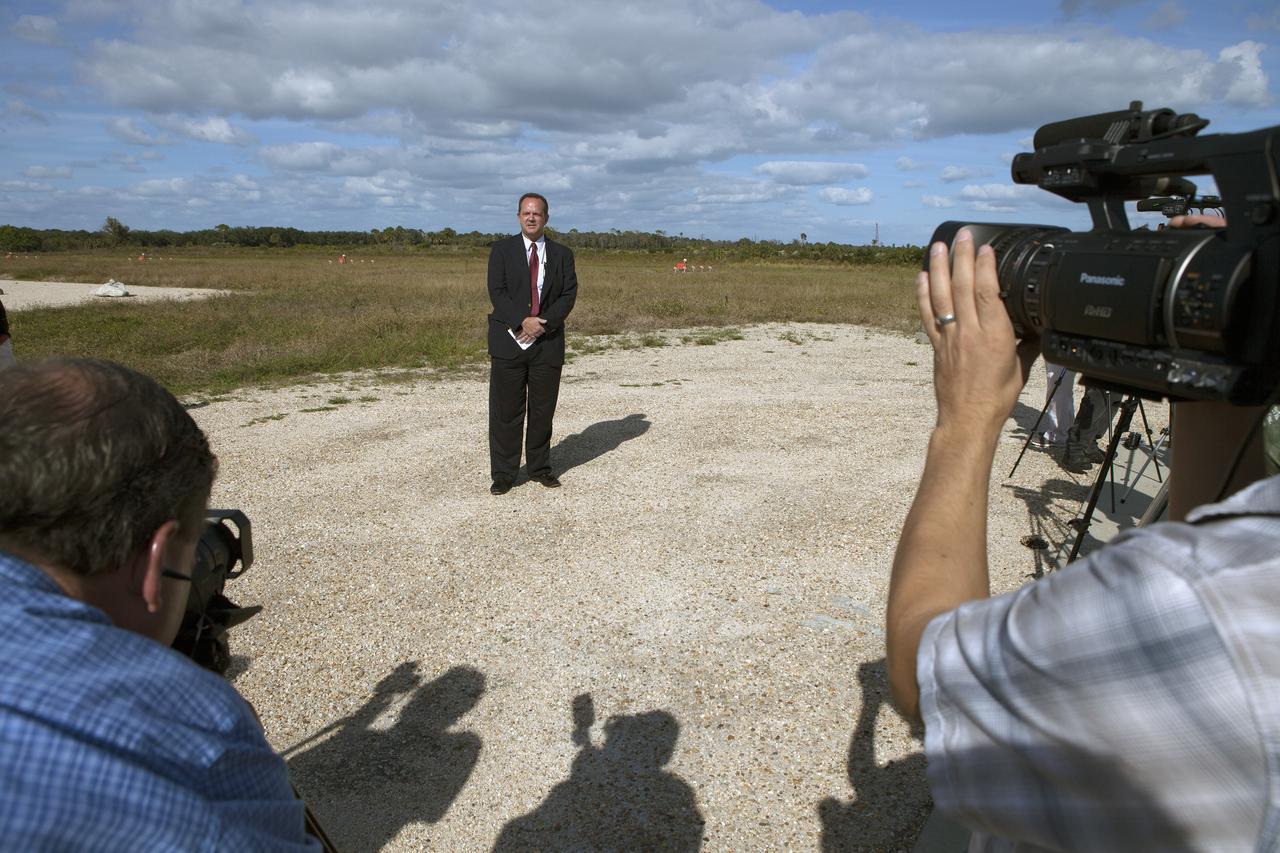
KSC-2014-4371
CAPE CANAVERAL, Fla. - Tom Engler, deputy director of Center Planning and Development at NASA's Kennedy Space Center in Florida, speaks to members of the media during an…
Inspect NASA record
CAPE CANAVERAL, Fla. - Tom Engler, deputy director of Center Planning and Development at NASA's Kennedy Space Center in Florida, speaks to members of the media during an event to announce the agency's Lunar Cargo Transportation and Landing by Soft Touchdown, or Lunar CATALYST, initiative and introduced one of the partners, Moon Express Inc. of Moffett Field, California. The event took place at Kennedy's automated landing and hazard avoidance technology, or ALHAT, hazard field at the north end of the Shuttle Landing Facility. Moon Express is developing a lander with capabilities that will enable delivery of payloads to the surface of the moon, as well as new science and exploration missions of interest to NASA and scientific and academic communities. Moon Express will base its activities at Kennedy and utilize the Morpheus ALHAT field and a hangar nearby for CATALYST testing. The Advanced Exploration Systems Division of NASA's Human Exploration and Operations Mission Directorate manages Lunar CATALYST. Photo credit: NASA/Ben Smegelsky
- Record ID
- KSC-2014-4371
- NASA center
- KSC
- Date
- 2014-11-03
- Keywords
- Moon Express, ALHAT, CATALYST
KSC · 2020-09-25 · KSC-20200925-PH-GEB02_0063
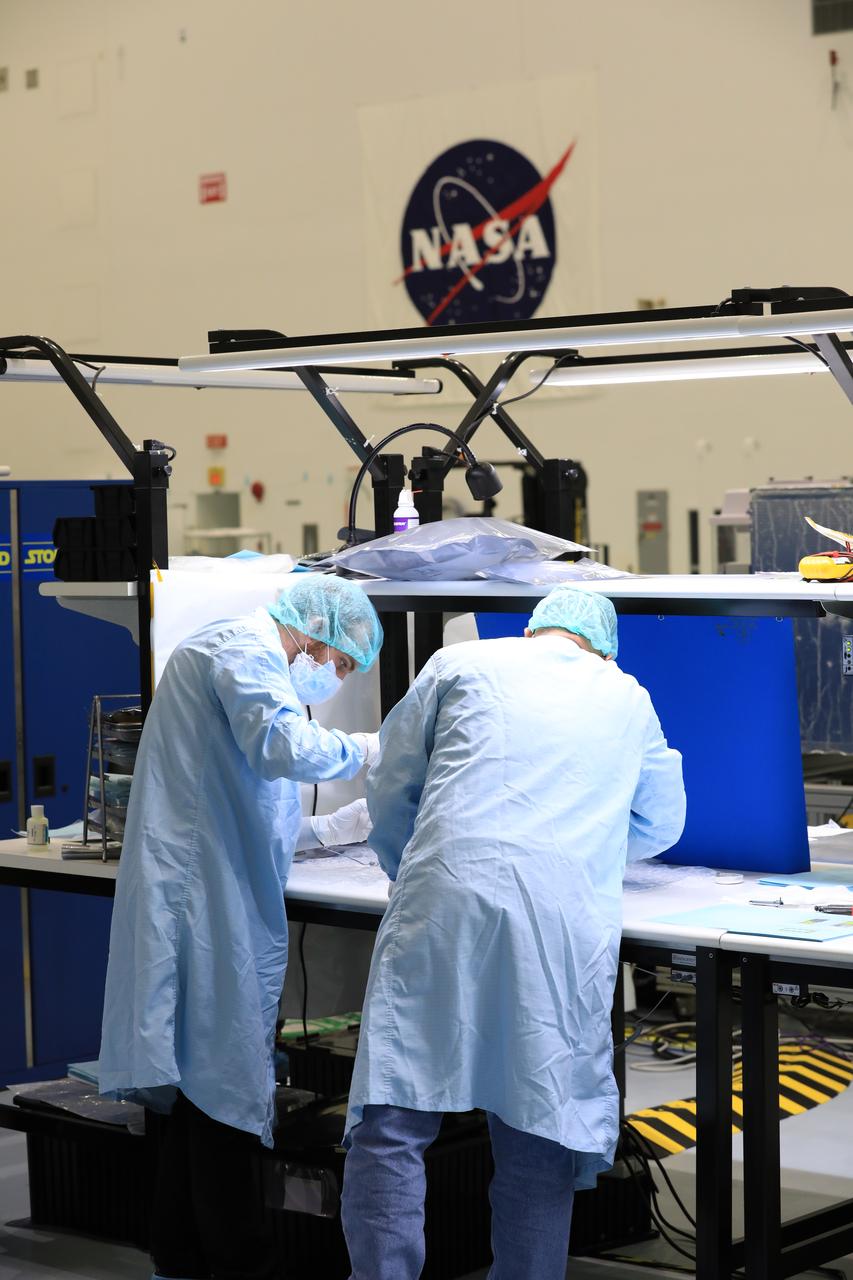
MSolo Radiator Work
Engineers and technicians at NASA’s Kennedy Space Center in Florida install the radiator for the Mass Spectrometer Observing Lunar Operations (MSolo) instrument inside the Space Station Processing Facility…
Inspect NASA record
Engineers and technicians at NASA’s Kennedy Space Center in Florida install the radiator for the Mass Spectrometer Observing Lunar Operations (MSolo) instrument inside the Space Station Processing Facility on Sept. 25, 2020. MSolo will help analyze the chemical makeup of landing sites on the Moon, as well as study water on the lunar surface. The radiator will help keep the instrument’s temperature stable in the extreme heat and cold it will encounter. MSolo instruments are scheduled to launch on multiple robotic missions as part of NASA’s Commercial Lunar Payload Services (CLPS), with the first of these missions exploring Lacus Mortis, a large crater on the near side of the Moon, beginning in 2021. MSolo also will be one of three instruments on the agency’s water-hunting Volatiles Investigating Polar Exploration Rover, VIPER, scheduled to launch to the Moon’s South Pole in late 2023.
- Record ID
- KSC-20200925-PH-GEB02_0063
- NASA center
- KSC
- Date
- 2020-09-25
- Credit
- NASA/Glenn Benson
- Keywords
- NASA, Kennedy Space Center, KSC, Space Station Processing Facility, SSPF, space exploration, science, lunar instruments, Mass Spectrometer Observing Lunar Operations, MSOLO, Commercial Lunar Payload Services, CLPS
KSC · 2020-09-25 · KSC-20200925-PH-GEB02_0055
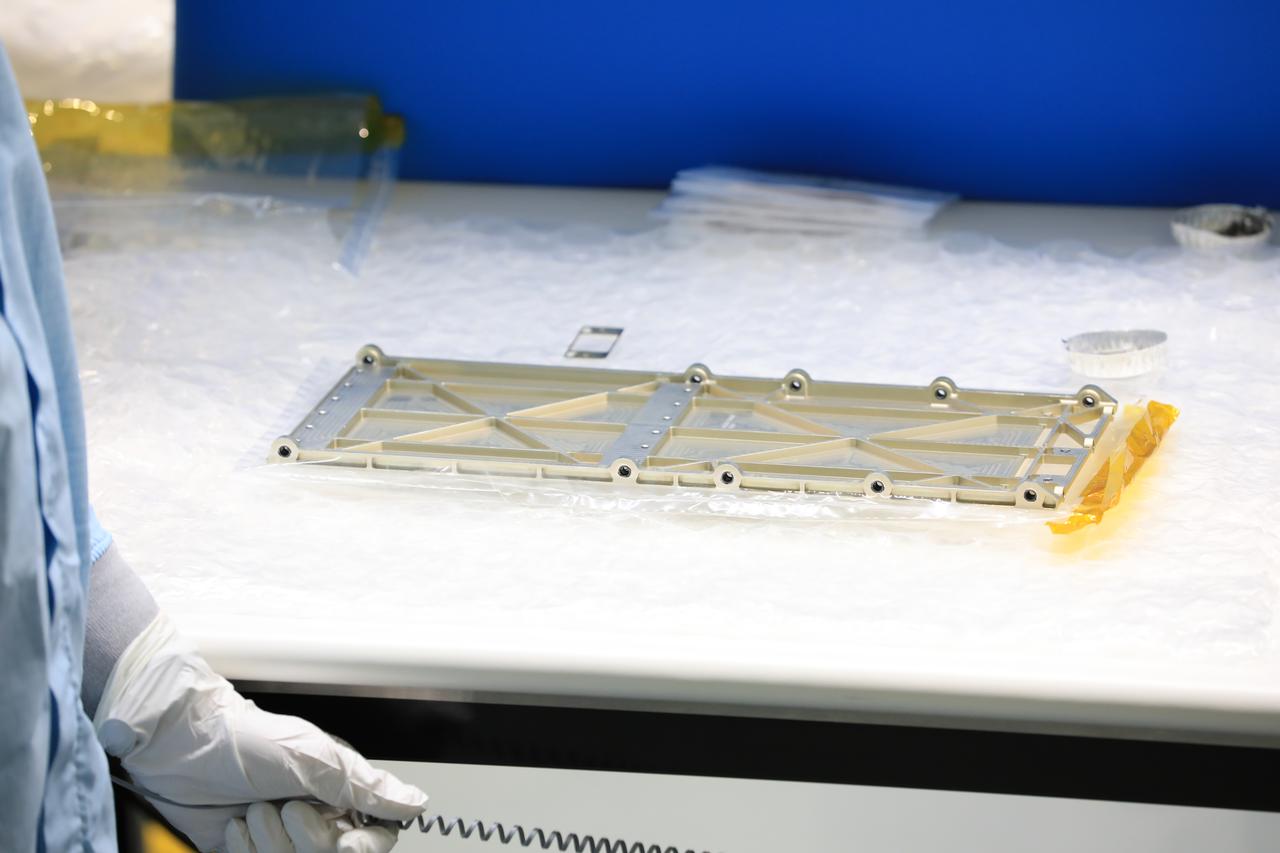
MSolo Radiator Work
Engineers and technicians at NASA’s Kennedy Space Center in Florida have prepped the Mass Spectrometer Observing Lunar Operations (MSolo) instrument’s radiator for installation inside the Space Station Processing…
Inspect NASA record
Engineers and technicians at NASA’s Kennedy Space Center in Florida have prepped the Mass Spectrometer Observing Lunar Operations (MSolo) instrument’s radiator for installation inside the Space Station Processing Facility on Sept. 25, 2020. MSolo will help analyze the chemical makeup of landing sites on the Moon, as well as study water on the lunar surface. The radiator will help keep the instrument’s temperature stable in the extreme heat and cold it will encounter. MSolo instruments are scheduled to launch on multiple robotic missions as part of NASA’s Commercial Lunar Payload Services (CLPS), with the first of these missions exploring Lacus Mortis, a large crater on the near side of the Moon, beginning in 2021. MSolo also will be one of three instruments on the agency’s water-hunting Volatiles Investigating Polar Exploration Rover, VIPER, scheduled to launch to the Moon’s South Pole in late 2023.
- Record ID
- KSC-20200925-PH-GEB02_0055
- NASA center
- KSC
- Date
- 2020-09-25
- Credit
- NASA/Glenn Benson
- Keywords
- NASA, Kennedy Space Center, KSC, Space Station Processing Facility, SSPF, space exploration, science, lunar instruments, Mass Spectrometer Observing Lunar Operations, MSOLO, Commercial Lunar Payload Services, CLPS
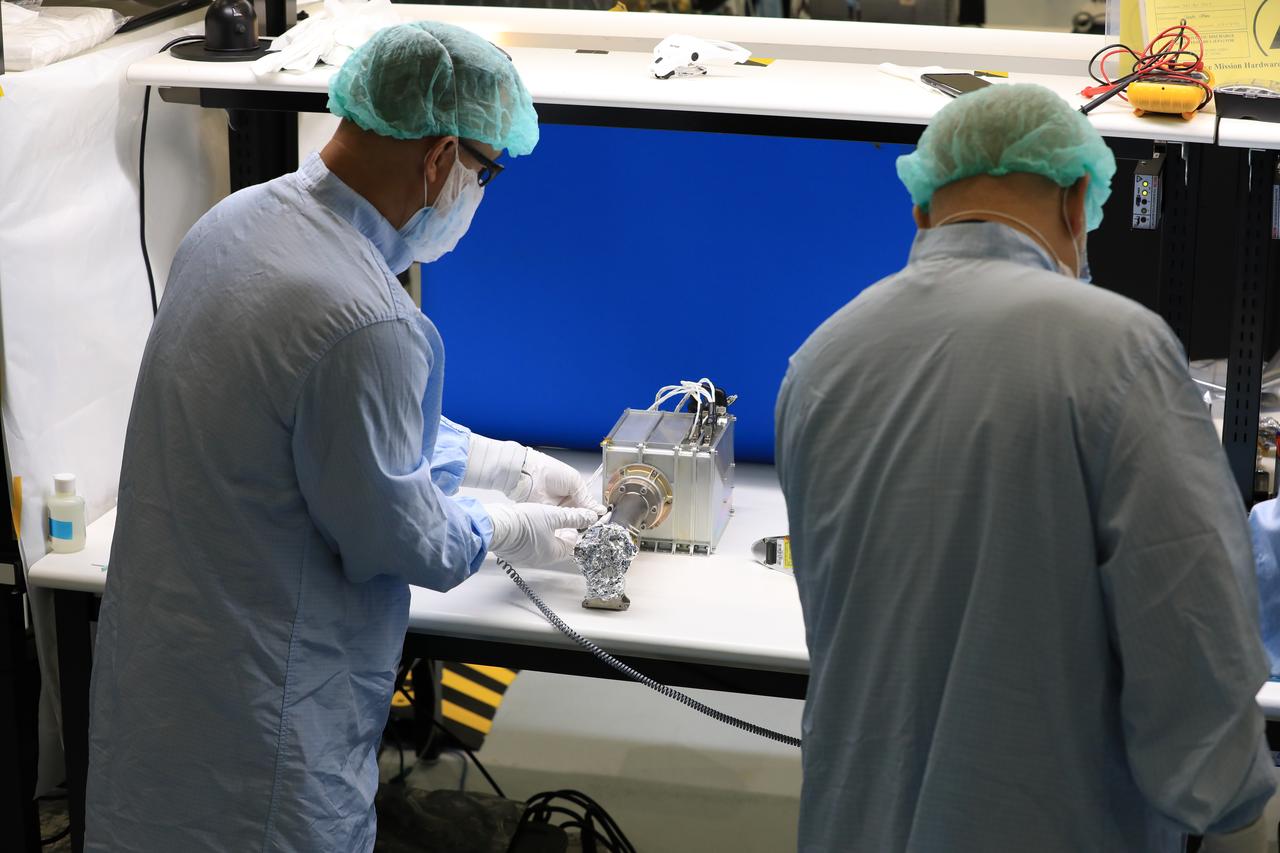
KSC · 2020-09-25 · KSC-20200925-PH-GEB01_0069
MSolo Instrument Work
Engineers and technicians at NASA’s Kennedy Space Center in Florida work with instruments for Mass Spectrometer observing lunar operations (MSolo) inside the Space Station Processing on Sept. 25,…
Inspect NASA record
Engineers and technicians at NASA’s Kennedy Space Center in Florida work with instruments for Mass Spectrometer observing lunar operations (MSolo) inside the Space Station Processing on Sept. 25, 2020. MSolo is a commercial off-the-shelf mass spectrometer modified to work in space and it will help analyze the chemical makeup of landing sites on the Moon, as well as study water on the lunar surface. This work is preparing MSolo hardware for a robotic mission as part of the Commercial Lunar Payload Services (CLPS) launching to exploring Lacus Mortis, a large crater on the near side of the Moon in 2021. A future mission will send a mobile robot named the Volatiles Investigating Polar Exploration Rover (VIPER) to the Moon to prospect for water. VIPER will have several instruments that will allow it to detect and sample water including MSolo, the Neutron Spectrometer System, the Near Infrared Volatiles Spectrometer System and The Regolith and Ice Drill for Exploring New Terrain (TRIDENT).
- Record ID
- KSC-20200925-PH-GEB01_0069
- NASA center
- KSC
- Date
- 2020-09-25
- Credit
- NASA/Glenn Benson
- Keywords
- NASA, Kennedy Space Center, KSC, Space Station Processing Facility, SSPF, space exploration, science, lunar instruments, Mass Spectrometer Observing Lunar Operations, MSOLO, Commercial Lunar Payload Services, CLPS
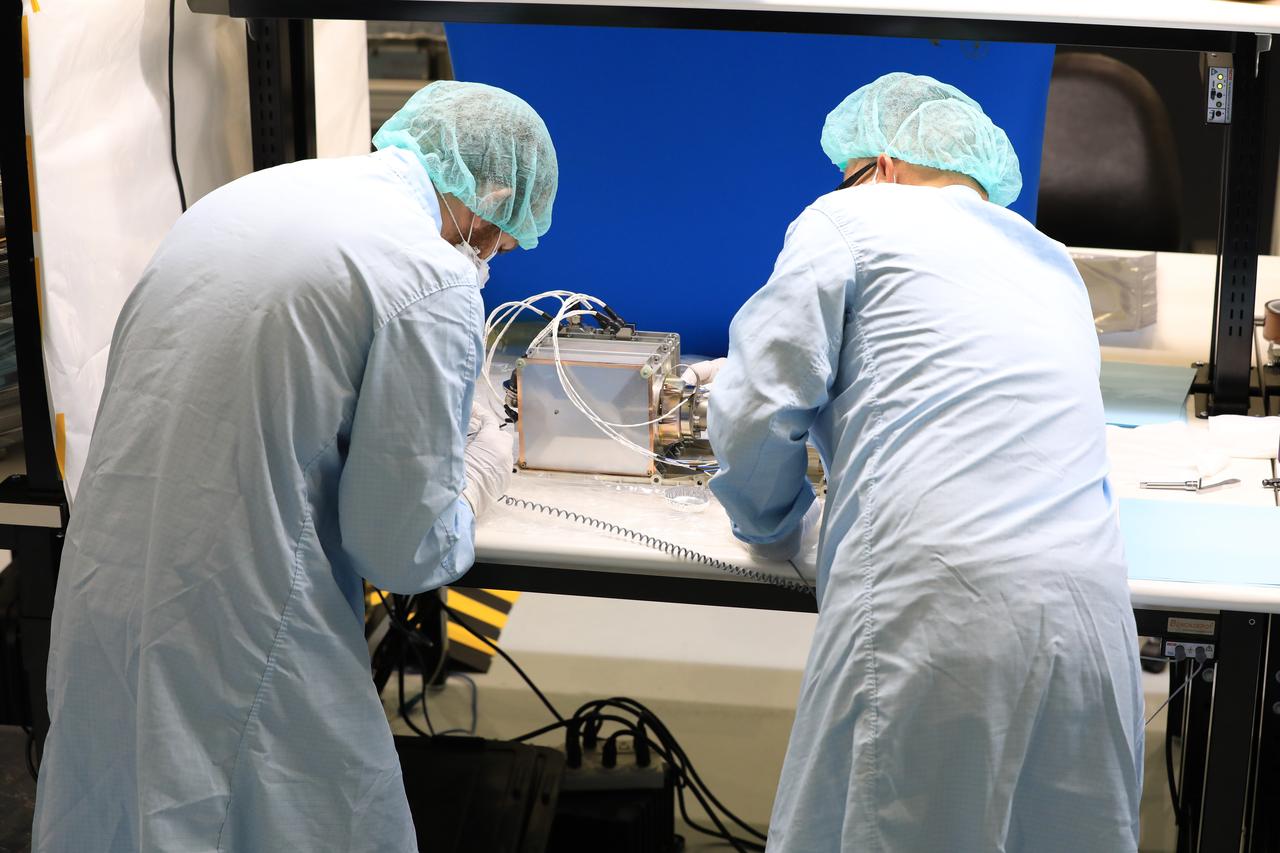
KSC · 2020-09-25 · KSC-20200925-PH-GEB02_0065
MSolo Radiator Work
Engineers and technicians at NASA’s Kennedy Space Center in Florida install the radiator for the Mass Spectrometer Observing Lunar Operations (MSolo) instrument inside the Space Station Processing Facility…
Inspect NASA record
Engineers and technicians at NASA’s Kennedy Space Center in Florida install the radiator for the Mass Spectrometer Observing Lunar Operations (MSolo) instrument inside the Space Station Processing Facility on Sept. 25, 2020. MSolo will help analyze the chemical makeup of landing sites on the Moon, as well as study water on the lunar surface. The radiator will help keep the instrument’s temperature stable in the extreme heat and cold it will encounter. MSolo instruments are scheduled to launch on multiple robotic missions as part of NASA’s Commercial Lunar Payload Services (CLPS), with the first of these missions exploring Lacus Mortis, a large crater on the near side of the Moon, beginning in 2021. MSolo also will be one of three instruments on the agency’s water-hunting Volatiles Investigating Polar Exploration Rover, VIPER, scheduled to launch to the Moon’s South Pole in late 2023.
- Record ID
- KSC-20200925-PH-GEB02_0065
- NASA center
- KSC
- Date
- 2020-09-25
- Credit
- NASA/Glenn Benson
- Keywords
- NASA, Kennedy Space Center, KSC, Space Station Processing Facility, SSPF, space exploration, science, lunar instruments, Mass Spectrometer Observing Lunar Operations, MSOLO, Commercial Lunar Payload Services, CLPS
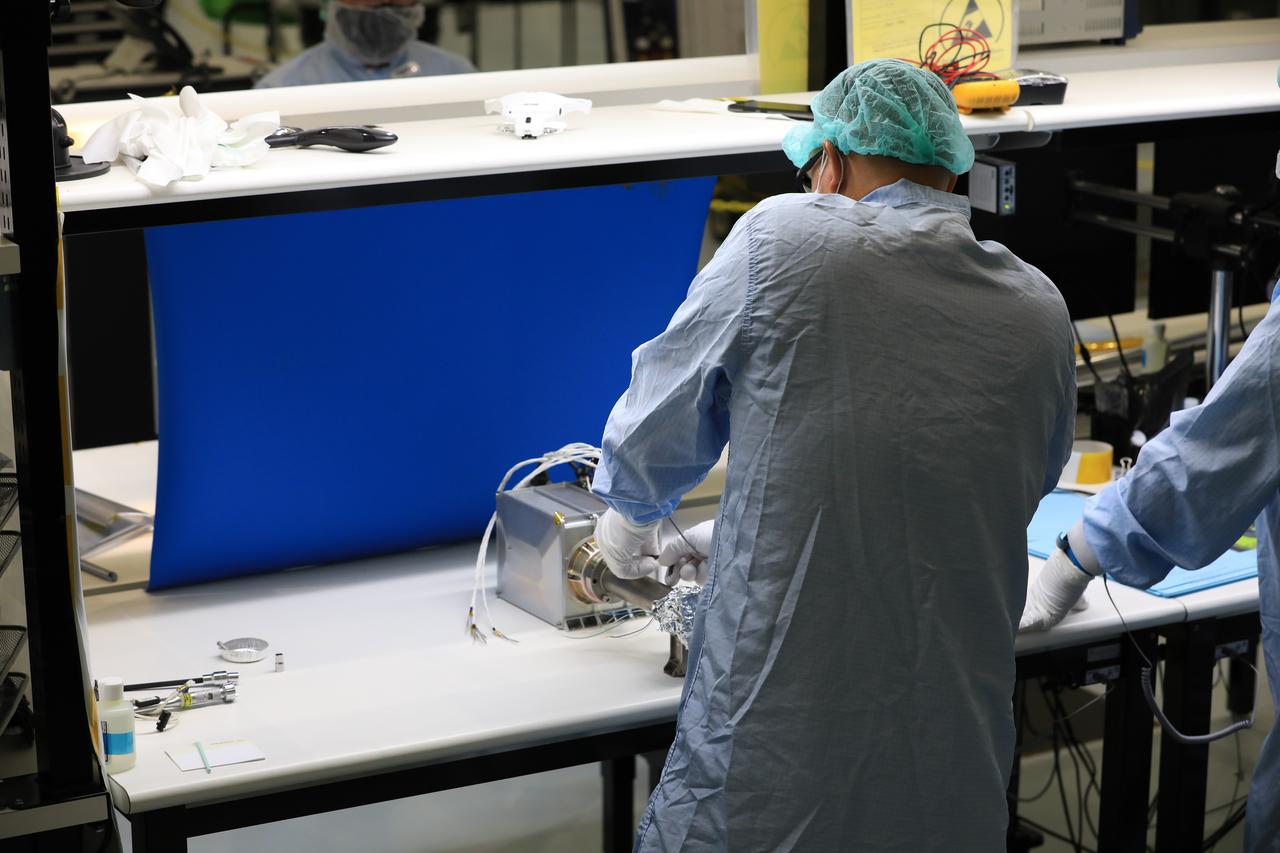
KSC · 2020-09-25 · KSC-20200925-PH-GEB01_0060
MSolo Instrument Work
Engineers and technicians at NASA’s Kennedy Space Center in Florida work with instruments for Mass Spectrometer observing lunar operations (MSolo) inside the Space Station Processing on Sept. 25,…
Inspect NASA record
Engineers and technicians at NASA’s Kennedy Space Center in Florida work with instruments for Mass Spectrometer observing lunar operations (MSolo) inside the Space Station Processing on Sept. 25, 2020. MSolo is a commercial off-the-shelf mass spectrometer modified to work in space and it will help analyze the chemical makeup of landing sites on the Moon, as well as study water on the lunar surface. This work is preparing MSolo hardware for a robotic mission as part of the Commercial Lunar Payload Services (CLPS) launching to exploring Lacus Mortis, a large crater on the near side of the Moon in 2021. A future mission will send a mobile robot named the Volatiles Investigating Polar Exploration Rover (VIPER) to the Moon to prospect for water. VIPER will have several instruments that will allow it to detect and sample water including MSolo, the Neutron Spectrometer System, the Near Infrared Volatiles Spectrometer System and The Regolith and Ice Drill for Exploring New Terrain (TRIDENT).
- Record ID
- KSC-20200925-PH-GEB01_0060
- NASA center
- KSC
- Date
- 2020-09-25
- Credit
- NASA/Glenn Benson
- Keywords
- NASA, Kennedy Space Center, KSC, Space Station Processing Facility, SSPF, space exploration, science, lunar instruments, Mass Spectrometer Observing Lunar Operations, MSOLO, Commercial Lunar Payload Services, CLPS
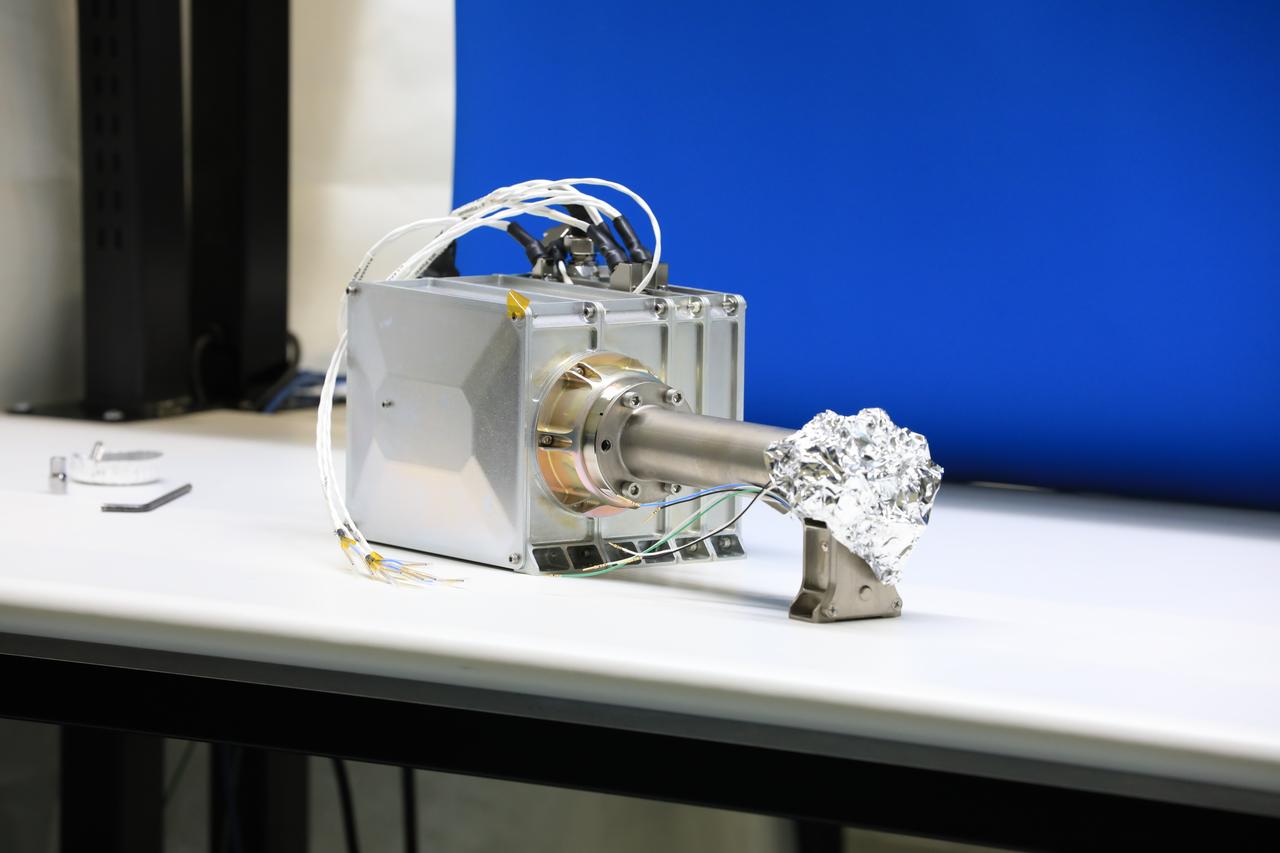
KSC · 2020-09-25 · KSC-20200925-PH-GEB01_0043
MSolo Instrument Work
Engineers and technicians at NASA’s Kennedy Space Center in Florida are preparing the Mass Spectrometer observing lunar operations (MSolo) for launch inside the Space Station Processing Facility at…
Inspect NASA record
Engineers and technicians at NASA’s Kennedy Space Center in Florida are preparing the Mass Spectrometer observing lunar operations (MSolo) for launch inside the Space Station Processing Facility at NASA’s Kennedy Space Center in Florida on Sept. 25, 2020. MSolo is a commercial off-the-shelf mass spectrometer modified to work in space and it will help analyze the chemical makeup of landing sites on the Moon, as well as study water on the lunar surface. MSolo hardware is a payload for a robotic mission to the Moon as part of the Commercial Lunar Payload Services (CLPS) launching to exploring Lacus Mortis, a large crater on the near side of the Moon in 2021. A future mission will send a mobile robot named the Volatiles Investigating Polar Exploration Rover (VIPER) to the Moon to prospect for water. VIPER will have several instruments that will allow it to detect and sample water including MSolo, the Neutron Spectrometer System, the Near Infrared Volatiles Spectrometer System and The Regolith and Ice Drill for Exploring New Terrain (TRIDENT).
- Record ID
- KSC-20200925-PH-GEB01_0043
- NASA center
- KSC
- Date
- 2020-09-25
- Credit
- NASA/Glenn Benson
- Keywords
- NASA, Kennedy Space Center, KSC, Space Station Processing Facility, SSPF, space exploration, science, lunar instruments, Mass Spectrometer Observing Lunar Operations, MSOLO, Commercial Lunar Payload Services, CLPS
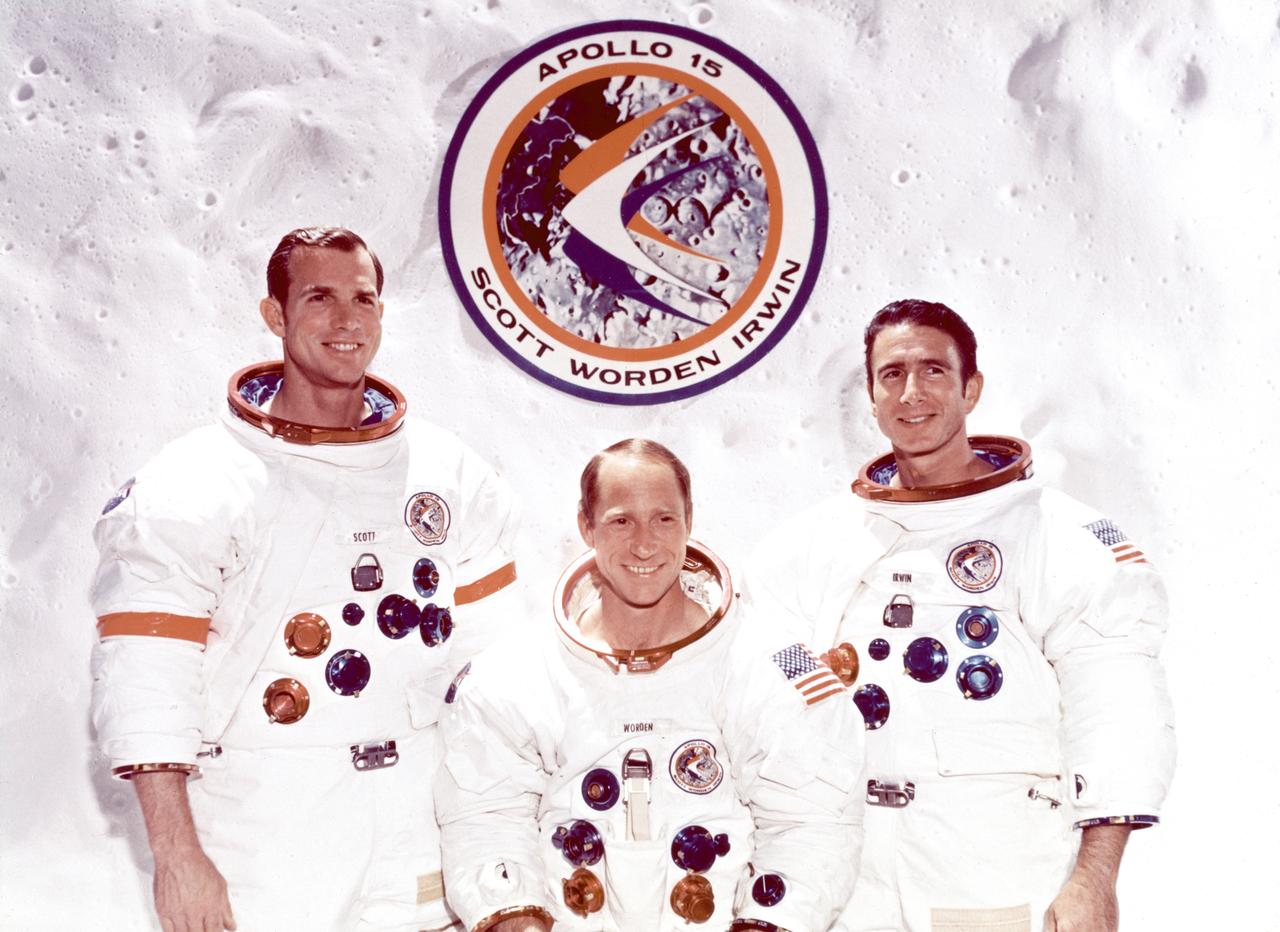
MSFC · 1971-01-01 · 7120051
Saturn Apollo Program
This is the official three-member crew portrait of the Apollo 15 (SA-510). Pictured from left to right are: David R. Scott, Mission Commander; Alfred M. Worden Jr., Command…
Inspect NASA record
This is the official three-member crew portrait of the Apollo 15 (SA-510). Pictured from left to right are: David R. Scott, Mission Commander; Alfred M. Worden Jr., Command Module pilot; and James B. Irwin, Lunar Module pilot. The fifth marned lunar landing mission, Apollo 15 (SA-510), lifted off on July 26, 1971. Astronauts Scott and Irwin were the first to use a wheeled surface vehicle, the Lunar Roving Vehicle (LRV), or the Rover, which was designed and developed by the Marshall Space Flight Center, and built by the Boeing Company. The astronauts spent 13 days, nearly 67 hours, on the Moon's surface to inspect a wide variety of its geological features.
- Record ID
- 7120051
- NASA center
- MSFC
- Date
- 1971-01-01
- Keywords
- Apollo 15, SA-510, Crew Portrait, Scott, Worden, Irwin

MSFC · 1971-07-26 · 0302334
Wernher von Braun
During the Apollo 15 launch activities in the launch control center's firing room 1 at Kennedy Space Center, Dr. Wernher von Braun, NASA's Deputy Associate Administrator for planning,…
Inspect NASA record
During the Apollo 15 launch activities in the launch control center's firing room 1 at Kennedy Space Center, Dr. Wernher von Braun, NASA's Deputy Associate Administrator for planning, takes a closer look at the launch pad through binoculars. The fifth manned lunar landing mission, Apollo 15 (SA-510), carrying a crew of three astronauts: Mission commander David R. Scott, Lunar Module pilot James B. Irwin, and Command Module pilot Alfred M. Worden Jr., lifted off on July 26, 1971. Astronauts Scott and Irwin were the first to use a wheeled surface vehicle, the Lunar Roving Vehicle, or the Rover, which was designed and developed by the Marshall Space Flight Center, and built by the Boeing Company. Astronauts spent 13 days, nearly 67 hours, on the Moon's surface to inspect a wide variety of its geological features.
- Record ID
- 0302334
- NASA center
- MSFC
- Date
- 1971-07-26
- Keywords
- Apollo 15, Launch, Wernher von Braun
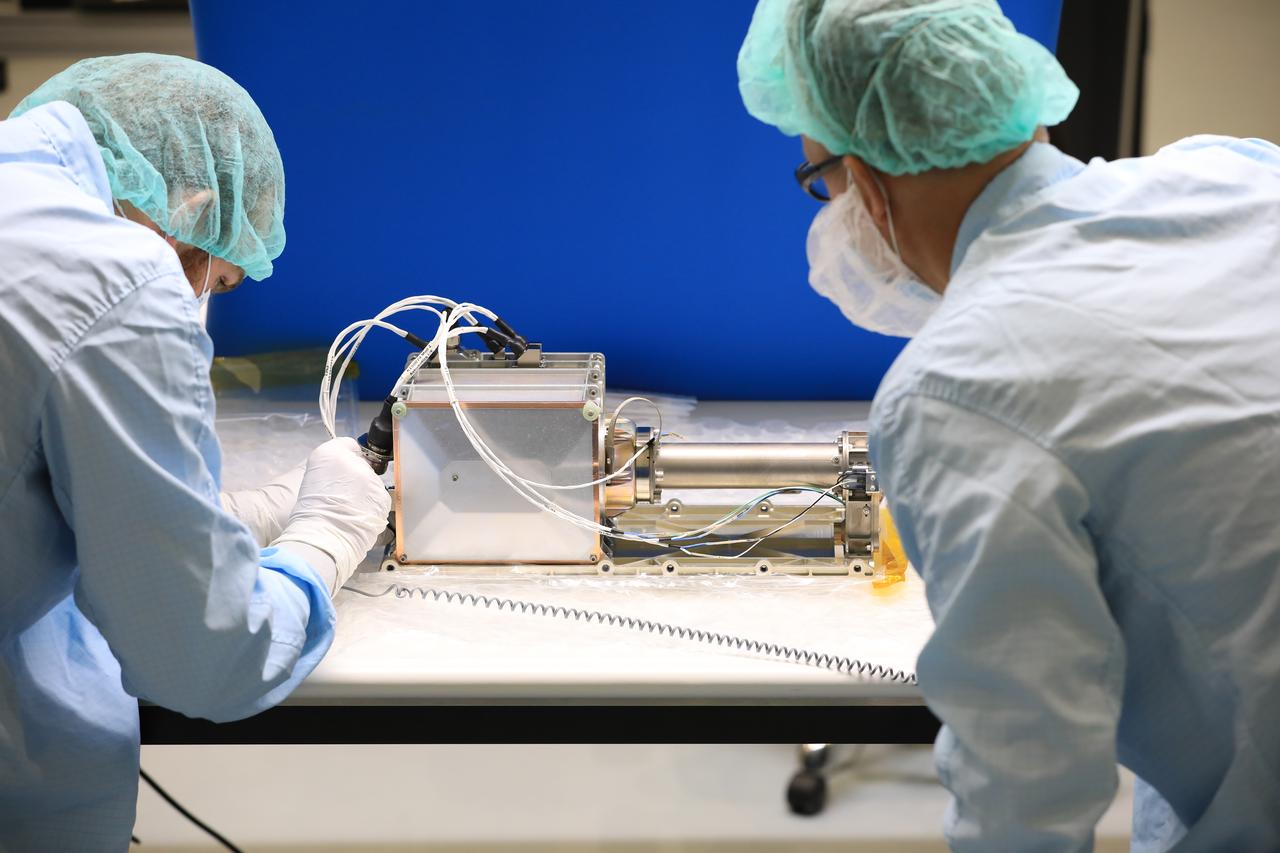
KSC · 2020-09-25 · KSC-20200925-PH-GEB02_0074
MSolo Radiator Work
Engineers and technicians at NASA’s Kennedy Space Center in Florida install the radiator for the Mass Spectrometer Observing Lunar Operations (MSolo) instrument inside the Space Station Processing Facility…
Inspect NASA record
Engineers and technicians at NASA’s Kennedy Space Center in Florida install the radiator for the Mass Spectrometer Observing Lunar Operations (MSolo) instrument inside the Space Station Processing Facility on Sept. 25, 2020. MSolo will help analyze the chemical makeup of landing sites on the Moon, as well as study water on the lunar surface. The radiator will help keep the instrument’s temperature stable in the extreme heat and cold it will encounter. MSolo instruments are scheduled to launch on multiple robotic missions as part of NASA’s Commercial Lunar Payload Services (CLPS), with the first of these missions exploring Lacus Mortis, a large crater on the near side of the Moon, beginning in 2021. MSolo also will be one of three instruments on the agency’s water-hunting Volatiles Investigating Polar Exploration Rover, VIPER, scheduled to launch to the Moon’s South Pole in late 2023.
- Record ID
- KSC-20200925-PH-GEB02_0074
- NASA center
- KSC
- Date
- 2020-09-25
- Credit
- NASA/Glenn Benson
- Keywords
- NASA, Kennedy Space Center, KSC, Space Station Processing Facility, SSPF, space exploration, science, lunar instruments, Mass Spectrometer Observing Lunar Operations, MSOLO, Commercial Lunar Payload Services, CLPS
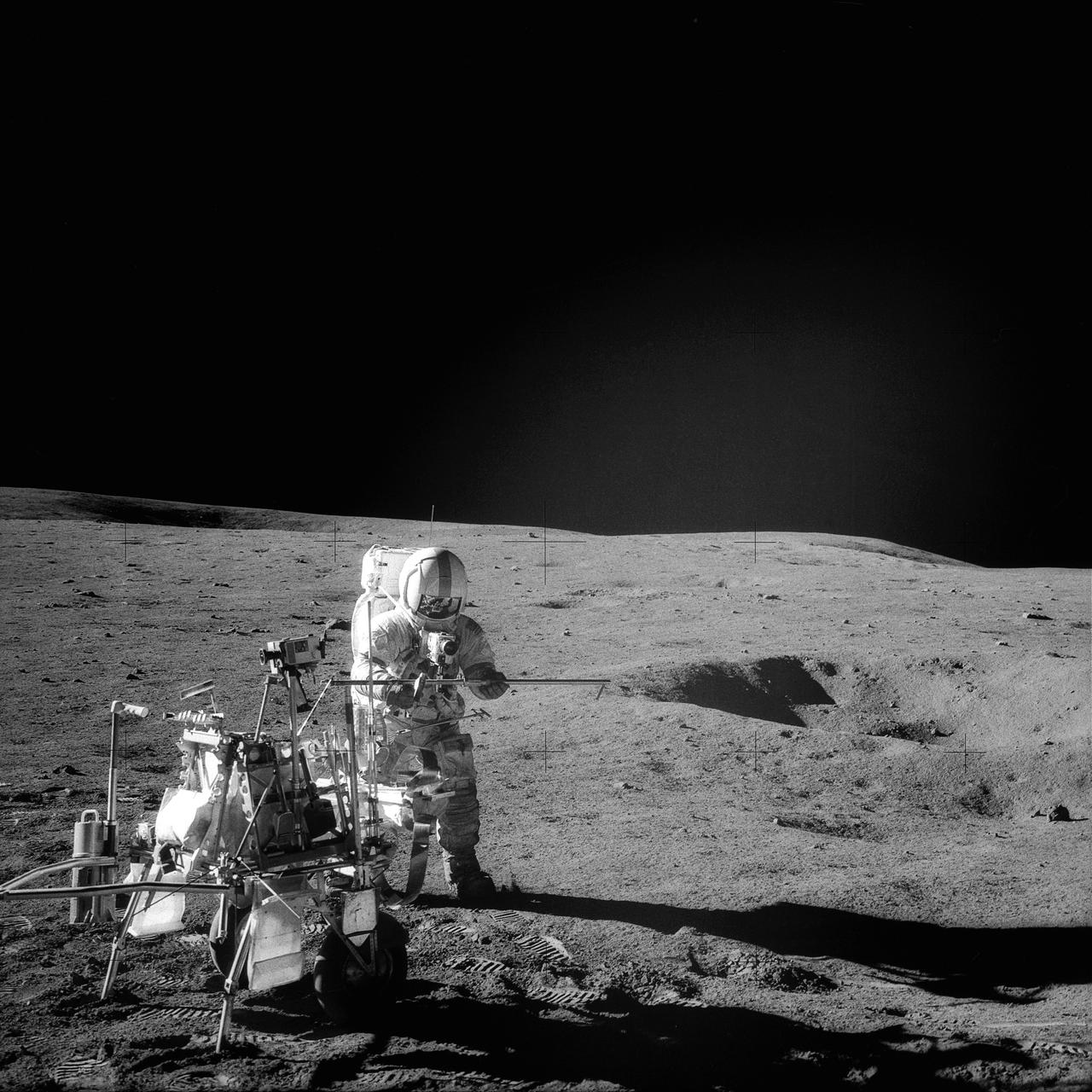
JSC · 1971-02-05 · AS14-68-9405
View of the Central Station of the ALSEP deploy by Apollo 14 astronauts
AS14-68-9405 (6 Feb. 1971) --- Astronaut Alan B. Shepard Jr., Apollo 14 commander, assembles a double core tube as he stands beside the rickshaw-type portable workbench or modularized…
Inspect NASA record
AS14-68-9405 (6 Feb. 1971) --- Astronaut Alan B. Shepard Jr., Apollo 14 commander, assembles a double core tube as he stands beside the rickshaw-type portable workbench or modularized equipment transporter (MET) unique to this mission. The photograph was taken by astronaut Edgar D. Mitchell, lunar module pilot, standing some 170 meters northeast of the Lunar Module (LM), during the mission's second extravehicular activity (EVA) on Feb. 6, 1971. While astronauts Shepard and Mitchell descended in the LM "Antares" to explore the Fra Mauro region of the moon, astronaut Stuart A. Roosa, command module pilot, remained with the Command and Service Modules (CSM) "Kitty Hawk" in lunar orbit.
- Record ID
- AS14-68-9405
- NASA center
- JSC
- Date
- 1971-02-05
- Keywords
- APOLLO 14, APOLLO PROJECT, EQUIPMENT, EXTRAVEHICULAR ACTIVITY, LUNAR SURFACE SPACEBORNE EXPERIMENTS