
Update Site (from NASA)
Explore NASA’s Image and Video Library.
Suggest one object per day for the Interstellar Minds collection. We review each suggestion before adding it.
Sign in to suggest a Marvel.
Find a NASA image ID. Open a NASA record and copy its ID from the end of the details URL.
NASA image records
KSC · 2026-08-25 · KSC-20260825-PH-SER01_0002
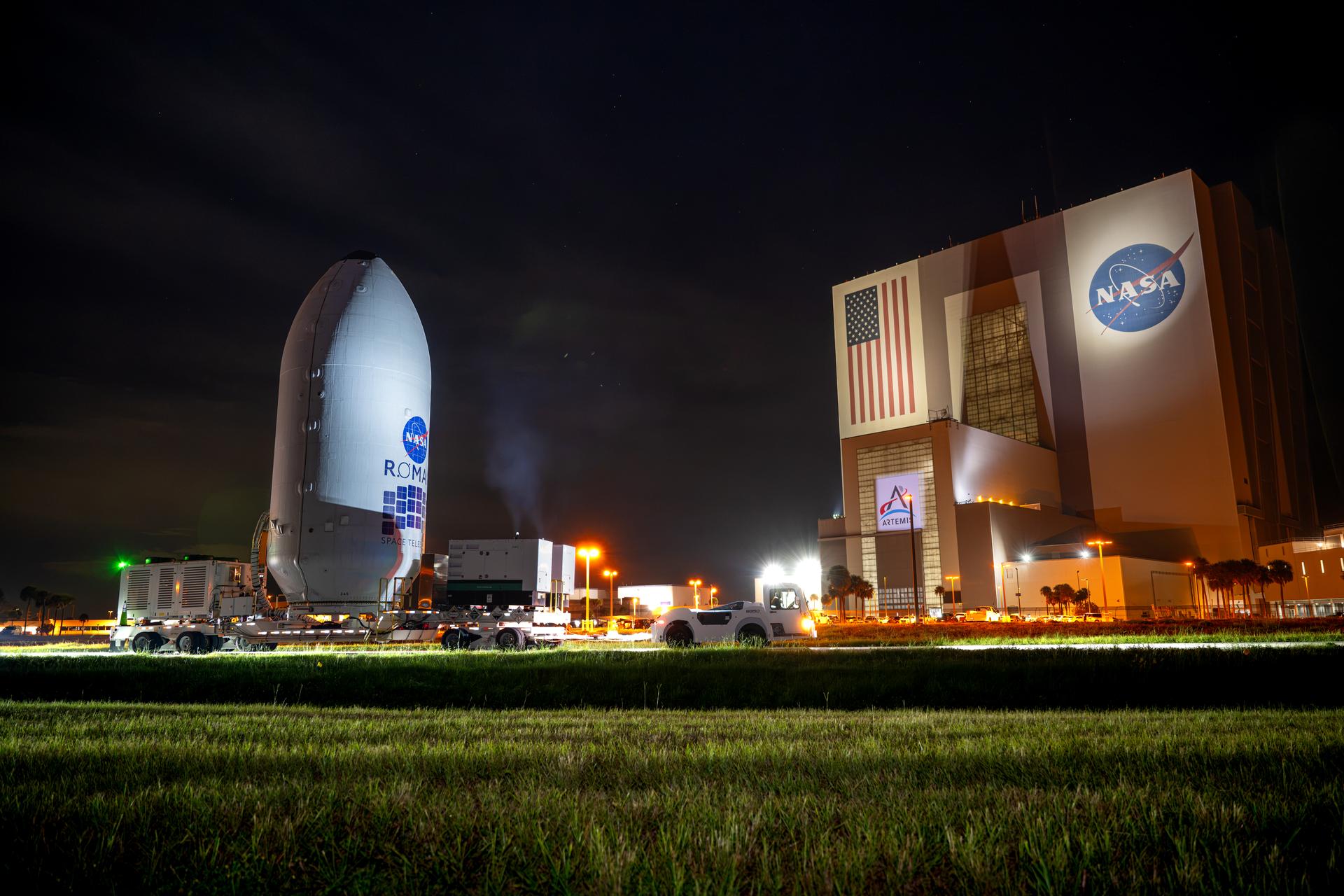
Roman Space Telescope Transport from PHSF to LC 39A
NASA’s Nancy Grace Roman Space Telescope, encapsulated in its payload fairing, travels from the Payload Hazardous Servicing Facility to the SpaceX hangar at Launch Complex 39A at NASA’s…
Inspect NASA record
NASA’s Nancy Grace Roman Space Telescope, encapsulated in its payload fairing, travels from the Payload Hazardous Servicing Facility to the SpaceX hangar at Launch Complex 39A at NASA’s Kennedy Space Center on Tuesday, Aug. 25, 2026, ahead of mating to a SpaceX Falcon Heavy rocket. Roman’s science instruments are designed to help researchers understand dark energy, the mysterious force accelerating the universe’s expansion. The observatory also will map how galaxies form, cluster, and evolve by tracing the influence of dark matter. Liftoff from NASA Kennedy is targeted no earlier than Sunday, Aug. 30, 2026.
- Record ID
- KSC-20260825-PH-SER01_0002
- NASA center
- KSC
- Date
- 2026-08-25
- Credit
- Sydney Rohde (Rocz)
- Keywords
- Nancy Grace Roman Space Telescope, Roman, RST, Payload Hazardous Servicing Facility, PHSF, KSC, Kennedy Space Center, LSP, Launch Services Program, preparations, GSFC, SpaceX
KSC · 2026-08-30 · KSC-20260830-PH-CSH01-0019
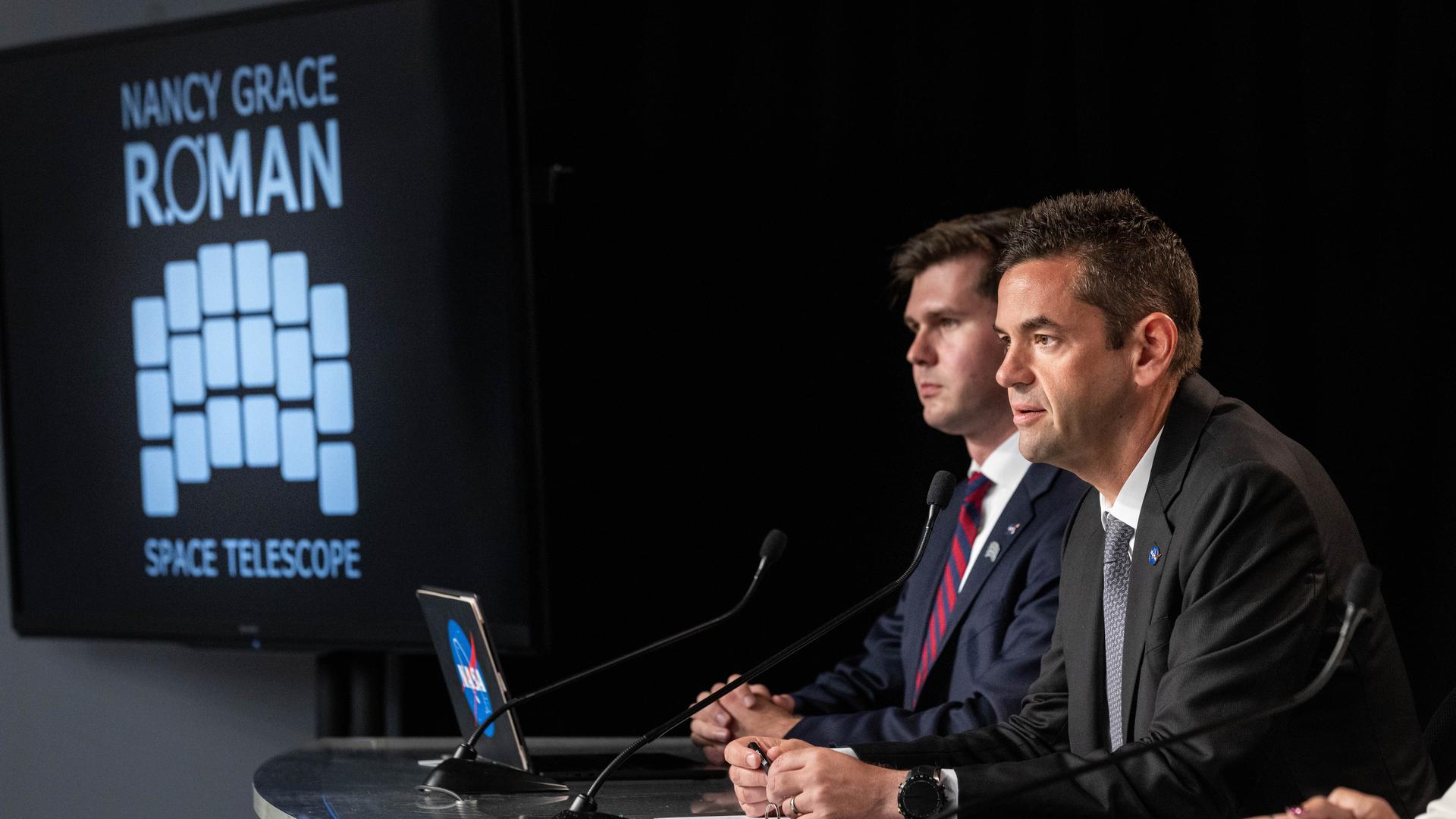
Nancy Grace Roman Space Telescope Post Launch Press Conference
From left, George Alderman, NASA Deputy Press Secretary, and NASA Administrator Jared Isaacman participate in a postlaunch news conference for NASA’s Nancy Grace Roman Space Telescope inside the…
Inspect NASA record
From left, George Alderman, NASA Deputy Press Secretary, and NASA Administrator Jared Isaacman participate in a postlaunch news conference for NASA’s Nancy Grace Roman Space Telescope inside the NASA News Center’s John Holliman Auditorium at Kennedy Space Center in Florida, on Sunday, Aug. 30, 2026. Roman will investigate dark energy and dark matter, conduct a statistical census of planetary systems, and enable a broad range of additional astrophysics research. Liftoff of Roman atop a SpaceX Falcon Heavy rocket occurred at 7:26 a.m. EDT Sunday, Aug. 30, from Kennedy’s Launch Complex 39A.
- Record ID
- KSC-20260830-PH-CSH01-0019
- NASA center
- KSC
- Date
- 2026-08-30
- Credit
- NASA/Cory S Huston
- Keywords
- Nancy Grace Roman Space Telescope, Roman, RST, Payload Hazardous Servicing Facility, PHSF, KSC, Kennedy Space Center, LSP, Launch Services Program, astrophysics, science, launch
KSC · 2026-08-30 · KSC-20260830-PH-CSH01-0002
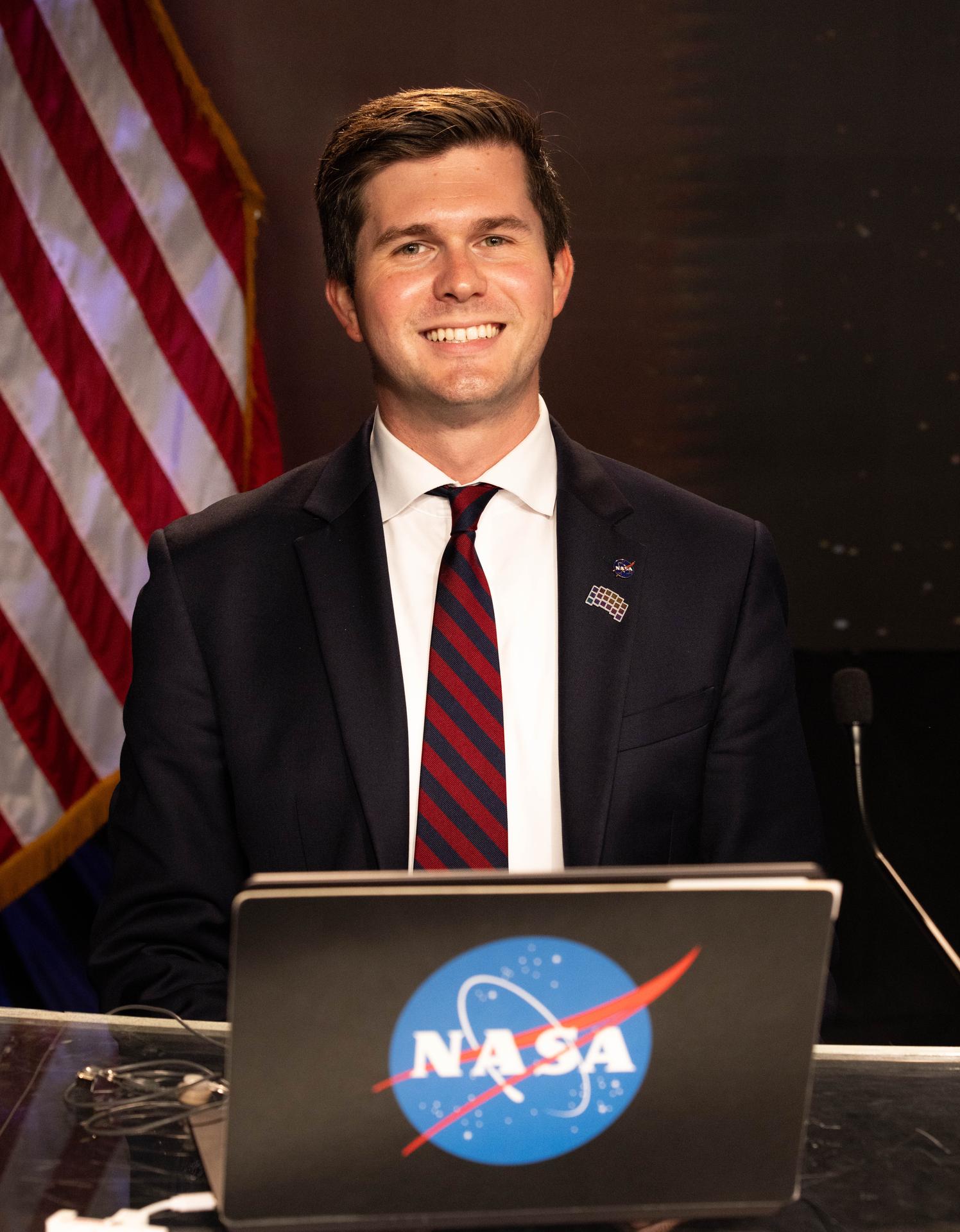
Nancy Grace Roman Space Telescope Post Launch Press Conference
NASA Deputy Press Secretary George Alderman participates in a postlaunch news conference for the agency’s Nancy Grace Roman Space Telescope inside the NASA News Center’s John Holliman Auditorium…
Inspect NASA record
NASA Deputy Press Secretary George Alderman participates in a postlaunch news conference for the agency’s Nancy Grace Roman Space Telescope inside the NASA News Center’s John Holliman Auditorium at Kennedy Space Center in Florida, on Sunday, Aug. 30, 2026. Roman will investigate dark energy and dark matter, conduct a statistical census of planetary systems, and enable a broad range of additional astrophysics research. Liftoff of Roman atop a SpaceX Falcon Heavy rocket occurred at 7:26 a.m. EDT Sunday, Aug. 30, from Kennedy’s Launch Complex 39A.
- Record ID
- KSC-20260830-PH-CSH01-0002
- NASA center
- KSC
- Date
- 2026-08-30
- Credit
- NASA/Cory S Huston
- Keywords
- Nancy Grace Roman Space Telescope, Roman, RST, Payload Hazardous Servicing Facility, PHSF, KSC, Kennedy Space Center, LSP, Launch Services Program, astrophysics, science, launch

KSC · 2026-08-30 · KSC-20260830-PH-CSH01-0009
Nancy Grace Roman Space Telescope Post Launch Press Conference
Nicky Fox, associate administrator, Science Mission Directorate, NASA Headquarters in Washington, participates in a postlaunch news conference for the agency’s Nancy Grace Roman Space Telescope inside the NASA…
Inspect NASA record
Nicky Fox, associate administrator, Science Mission Directorate, NASA Headquarters in Washington, participates in a postlaunch news conference for the agency’s Nancy Grace Roman Space Telescope inside the NASA News Center’s John Holliman Auditorium at Kennedy Space Center in Florida, on Sunday, Aug. 30, 2026. Roman will investigate dark energy and dark matter, conduct a statistical census of planetary systems, and enable a broad range of additional astrophysics research. Liftoff of Roman atop a SpaceX Falcon Heavy rocket occurred at 7:26 a.m. EDT Sunday, Aug. 30, from Kennedy’s Launch Complex 39A.
- Record ID
- KSC-20260830-PH-CSH01-0009
- NASA center
- KSC
- Date
- 2026-08-30
- Credit
- NASA/Cory S Huston
- Keywords
- Nancy Grace Roman Space Telescope, Roman, RST, Payload Hazardous Servicing Facility, PHSF, KSC, Kennedy Space Center, LSP, Launch Services Program, astrophysics, science, launch
KSC · 2026-08-30 · KSC-20260830-PH-CSH01-0004
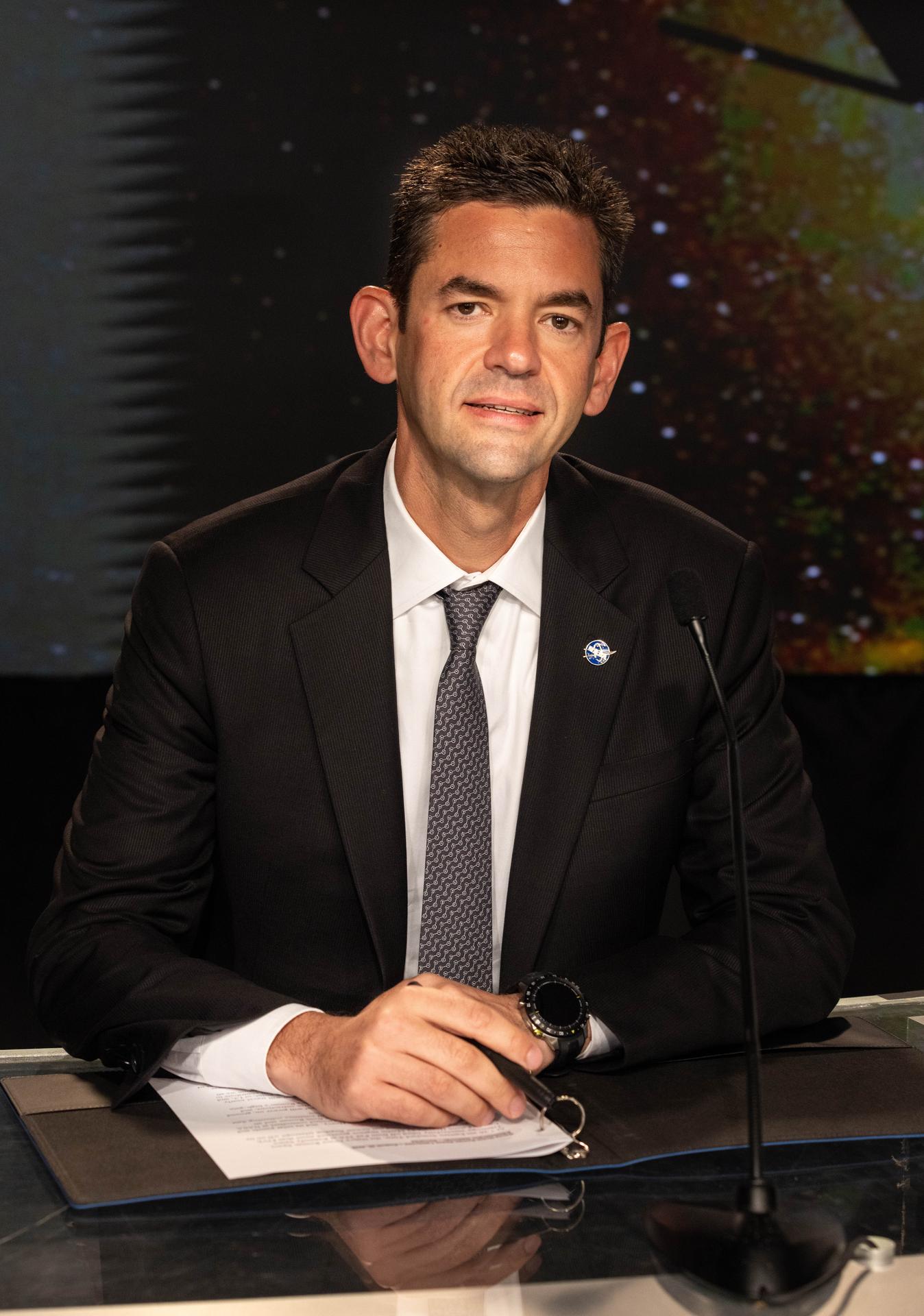
Nancy Grace Roman Space Telescope Post Launch Press Conference
NASA Administrator Jared Isaacman participates in a postlaunch news conference for the agency’s Nancy Grace Roman Space Telescope inside the NASA News Center’s John Holliman Auditorium at Kennedy…
Inspect NASA record
NASA Administrator Jared Isaacman participates in a postlaunch news conference for the agency’s Nancy Grace Roman Space Telescope inside the NASA News Center’s John Holliman Auditorium at Kennedy Space Center in Florida, on Sunday, Aug. 30, 2026. Roman will investigate dark energy and dark matter, conduct a statistical census of planetary systems, and enable a broad range of additional astrophysics research. Liftoff of Roman atop a SpaceX Falcon Heavy rocket occurred at 7:26 a.m. EDT Sunday, Aug. 30, from Kennedy’s Launch Complex 39A.
- Record ID
- KSC-20260830-PH-CSH01-0004
- NASA center
- KSC
- Date
- 2026-08-30
- Credit
- NASA/Cory S Huston
- Keywords
- Nancy Grace Roman Space Telescope, Roman, RST, Payload Hazardous Servicing Facility, PHSF, KSC, Kennedy Space Center, LSP, Launch Services Program, astrophysics, science, launch
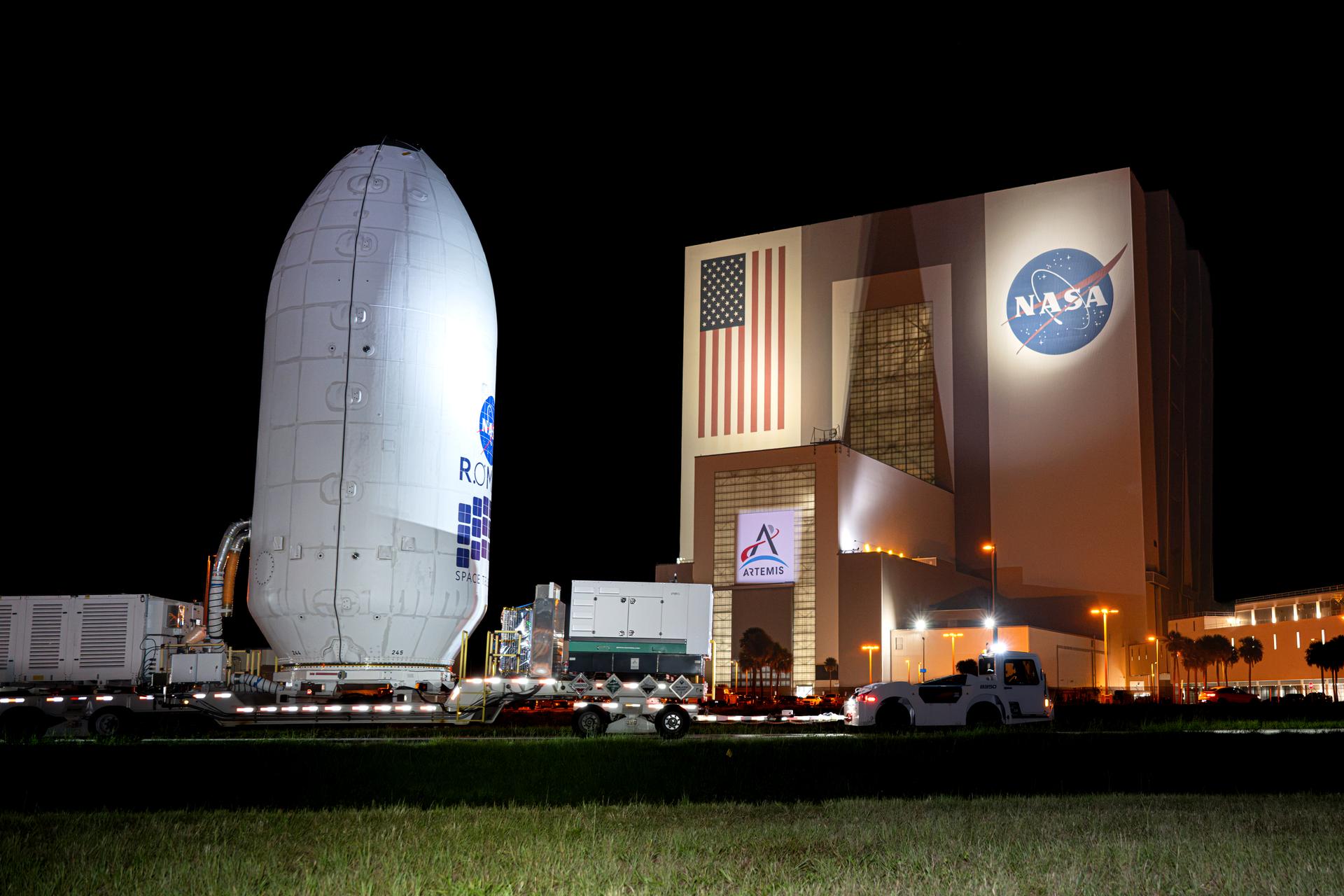
KSC · 2026-08-25 · KSC-20260825-PH-SER01_0001
Roman Space Telescope Transport from PHSF to LC 39A
NASA’s Nancy Grace Roman Space Telescope, encapsulated in its payload fairing, travels from the Payload Hazardous Servicing Facility to the SpaceX hangar at Launch Complex 39A at NASA’s…
Inspect NASA record
NASA’s Nancy Grace Roman Space Telescope, encapsulated in its payload fairing, travels from the Payload Hazardous Servicing Facility to the SpaceX hangar at Launch Complex 39A at NASA’s Kennedy Space Center on Tuesday, Aug. 25, 2026, ahead of mating to a SpaceX Falcon Heavy rocket. Roman’s science instruments are designed to help researchers understand dark energy, the mysterious force accelerating the universe’s expansion. The observatory also will map how galaxies form, cluster, and evolve by tracing the influence of dark matter. Liftoff from NASA Kennedy is targeted no earlier than Sunday, Aug. 30, 2026.
- Record ID
- KSC-20260825-PH-SER01_0001
- NASA center
- KSC
- Date
- 2026-08-25
- Credit
- Sydney Rohde (Rocz)
- Keywords
- Nancy Grace Roman Space Telescope, Roman, RST, Payload Hazardous Servicing Facility, PHSF, KSC, Kennedy Space Center, LSP, Launch Services Program, preparations, GSFC, SpaceX

HQ · 2022-07-12 · NHQ202207120032
JWST’s First Full-Color Images Media Briefing
NASA James Webb Space Telescope Deputy Project Scientist for Exoplanet Science Knicole Colón, center, answers a question from a member of the media alongside NASA James Webb Space…
Inspect NASA record
NASA James Webb Space Telescope Deputy Project Scientist for Exoplanet Science Knicole Colón, center, answers a question from a member of the media alongside NASA James Webb Space Telescope Program Scientist and Astrophysics Division Chief Scientist Eric Smith, left, and NASA James Webb Space Telescope Project Scientist at ESA (European Space Agency) Christopher Evans, during a briefing following the release of the first full-color images from NASA’s James Webb Space Telescope, Tuesday, July 12, 2022, at NASA’s Goddard Space Flight Center in Greenbelt, Md. The first full-color images and spectroscopic data from the James Webb Space Telescope, a partnership with ESA (European Space Agency) and the Canadian Space Agency (CSA), are a demonstration of the power of Webb as the telescope begins its science mission to unfold the infrared universe. Photo Credit: (NASA/Bill Ingalls)
- Record ID
- NHQ202207120032
- NASA center
- HQ
- Date
- 2022-07-12
- Credit
- NASA/Bill Ingalls
- Keywords
- Canadian Space Agency (CSA), ESA (European Space Agency), Goddard Space Flight Center, Greenbelt, James Webb Space Telescope (JWST), Knicole Colón, Maryland, Northrop Grumman, Space Telescope Science Institute (STScI)
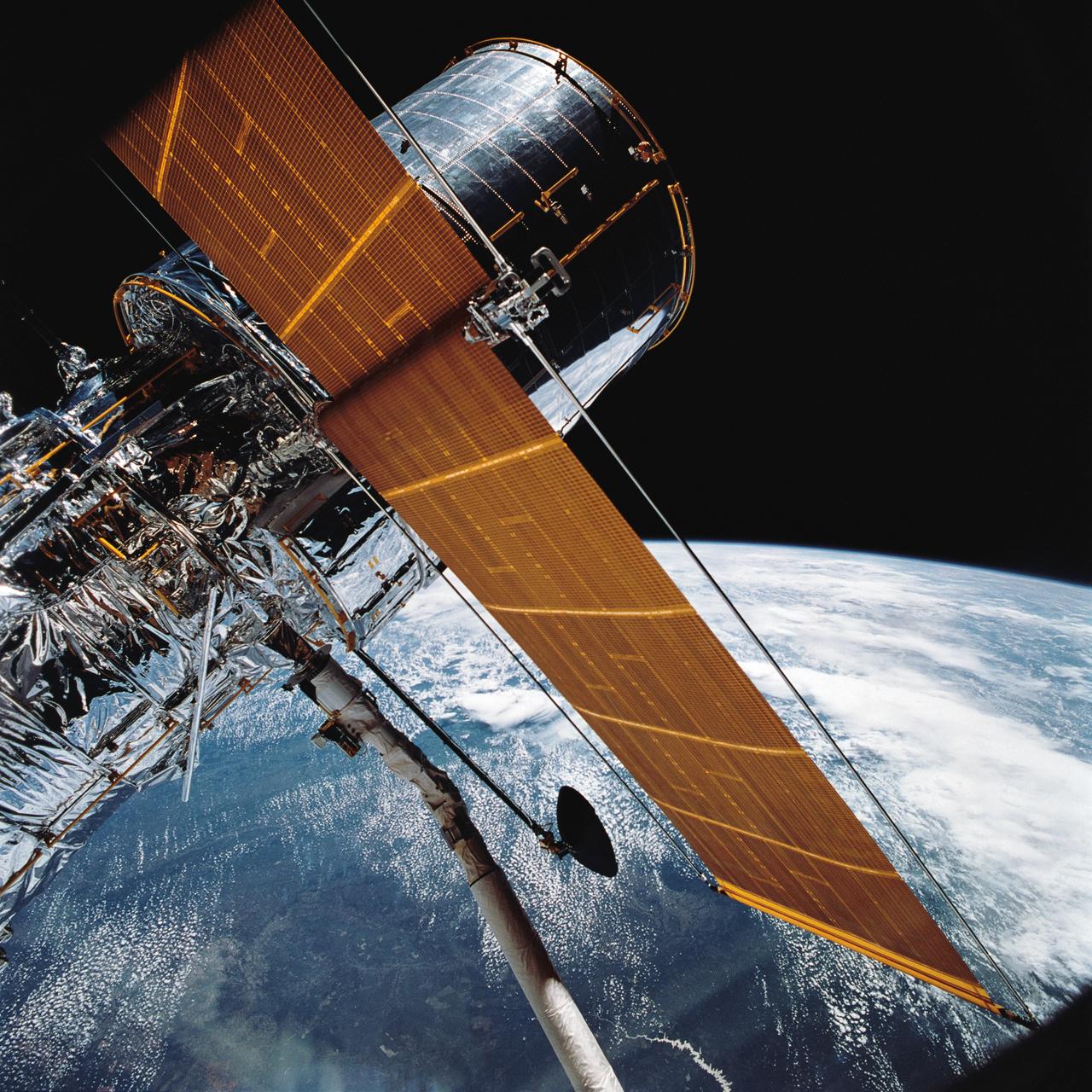
JSC · 1990-04-24 · S31-76-026
STS-31 Hubble Space Telescope (HST) (SA & HGA deployed) is grappled by RMS
STS031-76-026 (25 April 1990) --- Most of the giant Hubble Space Telescope (HST) can be seen as it is suspended in space by Discovery's Remote Manipulator System (RMS)…
Inspect NASA record
STS031-76-026 (25 April 1990) --- Most of the giant Hubble Space Telescope (HST) can be seen as it is suspended in space by Discovery's Remote Manipulator System (RMS) following the deployment of part of its solar panels and antennae. The photo was taken with a handheld Hasselblad camera. This was among the first photos NASA released on April 30, 1990, from the five-day STS 31 mission.
- Record ID
- S31-76-026
- NASA center
- JSC
- Date
- 1990-04-24
- Keywords
- ANTENNAS, DISCOVERY (ORBITER), EARTH LIMB, END EFFECTORS, SOLAR ARRAYS, HUBBLE SPACE TELESCOPE, REMOTE MANIPULATOR SYSTEM, SPACECRAFT ANTENNAS STS-31
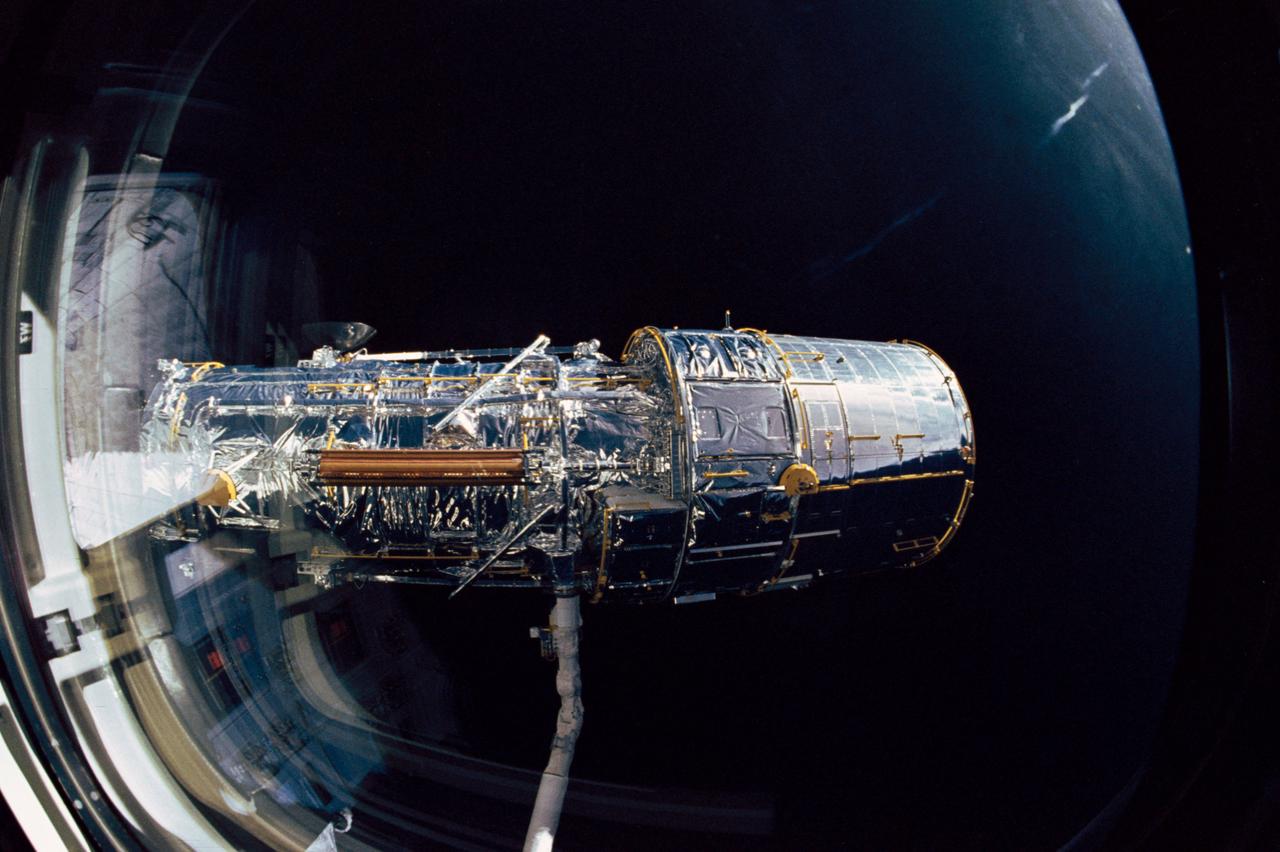
JSC · 1990-04-25 · s31-10-019
Hubble Space Telescope (HST) grappled by OV-103's RMS during STS-31 checkout
The Hubble Space Telescope (HST), grappled by Discovery's, Orbiter Vehicle (OV) 103's, remote manipulator system (RMS), is held in a pre-deployment position. During STS-31 checkout procedures, the solar…
Inspect NASA record
The Hubble Space Telescope (HST), grappled by Discovery's, Orbiter Vehicle (OV) 103's, remote manipulator system (RMS), is held in a pre-deployment position. During STS-31 checkout procedures, the solar array (SA) panels and the high gain antennae (HGA) will be deployed. The starboard SA (center) and the two HGA are stowed along side the Support System Module (SSM) forward shell. The sun highlights HST against the blackness of space.
- Record ID
- s31-10-019
- NASA center
- JSC
- Date
- 1990-04-25
- Keywords
- ANTENNAS, DISCOVERY (ORBITER), HUBBLE SPACE TELESCOPE, SOLAR ARRAYS, STS-31, PAYLOAD DEPLOYMENT & RETRIEVAL SYSTEM, REMOTE MANIPULATOR SYSTEM
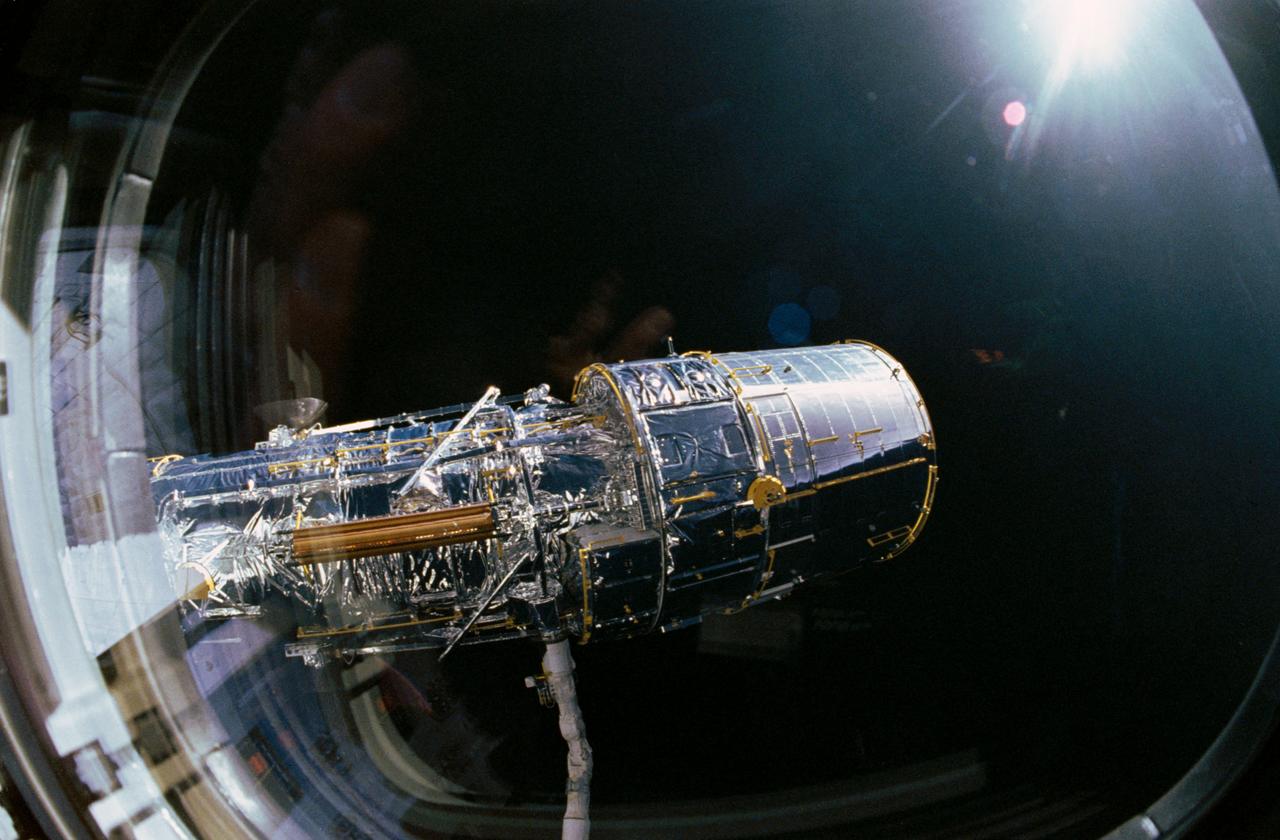
JSC · 1990-04-25 · s31-10-016
STS-31 pre-deployment checkout of the Hubble Space Telescope (HST) on OV-103
View taken through overhead window W7 aboard Discovery, Orbiter Vehicle (OV) 103, shows the Hubble Space Telescope (HST) grappled by the remote manipulator system (RMS) and held in…
Inspect NASA record
View taken through overhead window W7 aboard Discovery, Orbiter Vehicle (OV) 103, shows the Hubble Space Telescope (HST) grappled by the remote manipulator system (RMS) and held in a 90 degree pitch position against the blackness of space. The solar array (SA) panel (center) and the high gain antennae (HGA) (on either side) are visible along the Support System Module (SSM) forward shell prior to deployment during STS-31.
- Record ID
- s31-10-016
- NASA center
- JSC
- Date
- 1990-04-25
- Keywords
- ANTENNAS, DISCOVERY (ORBITER), END EFFECTORS, HUBBLE SPACE TELESCOPE, STS-31 PAYLOAD DEPLOYMENT & RETRIEVAL SYSTEM, REMOTE MANIPULATOR SYSTEM, SUN SOLAR ARRAYS
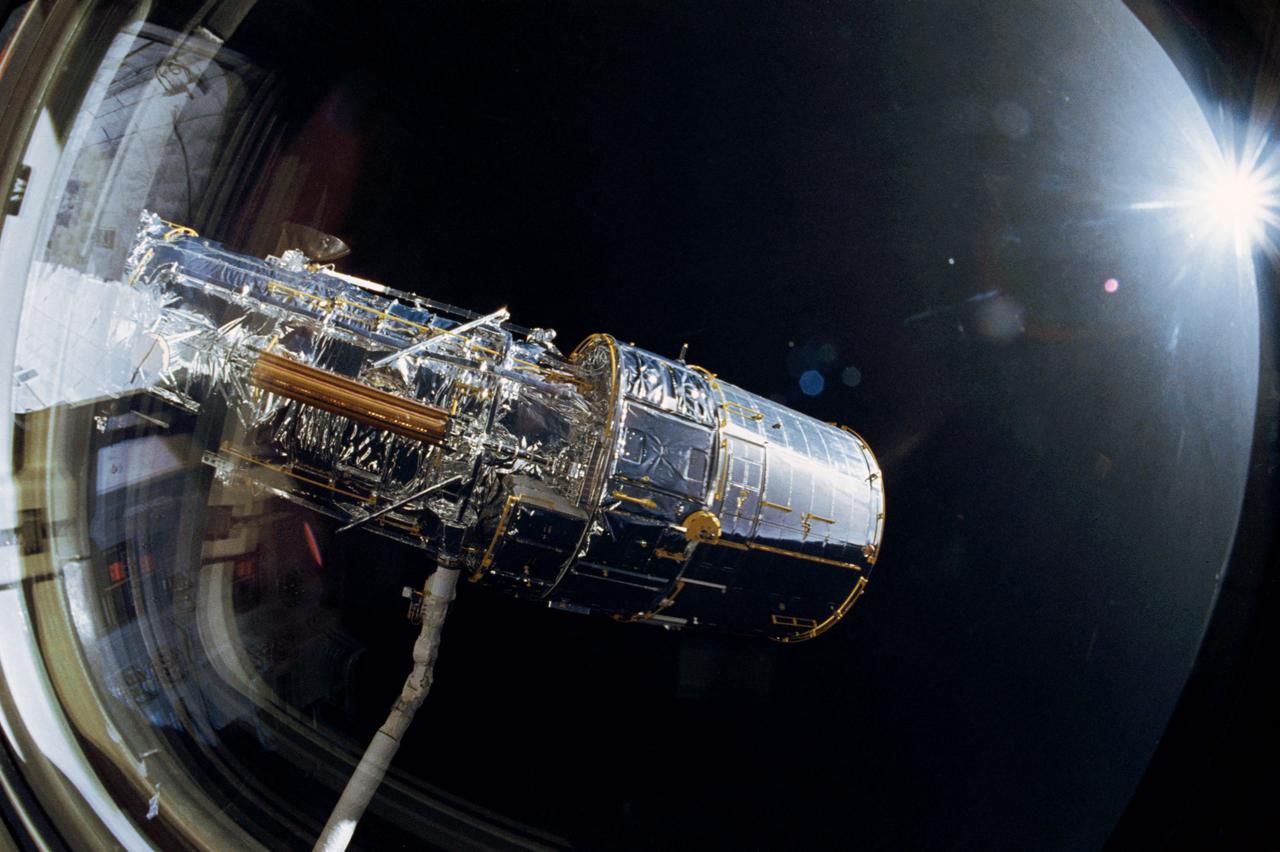
JSC · 1990-04-25 · s31-10-017
STS-31 pre-deployment checkout of the Hubble Space Telescope (HST) on OV-103
The Hubble Space Telescope (HST), grappled by Discovery's, Orbiter Vehicle (OV) 103's, remote manipulator system (RMS), is oriented in a 90 degree pitch position during STS-31 pre-deployment checkout…
Inspect NASA record
The Hubble Space Telescope (HST), grappled by Discovery's, Orbiter Vehicle (OV) 103's, remote manipulator system (RMS), is oriented in a 90 degree pitch position during STS-31 pre-deployment checkout procedures. The solar array (SA) panel (center) and high gain antennae (HGA) (on either side) are stowed along the Support System Module (SSM) forward shell prior to deployment. The sun highlights HST against the blackness of space.
- Record ID
- s31-10-017
- NASA center
- JSC
- Date
- 1990-04-25
- Keywords
- ANTENNAS, DISCOVERY (ORBITER), HUBBLE SPACE TELESCOPE, SOLAR ARRAYS, STS-31, PAYLOAD DEPLOYMENT & RETRIEVAL SYSTEM, REMOTE MANIPULATOR SYSTEM
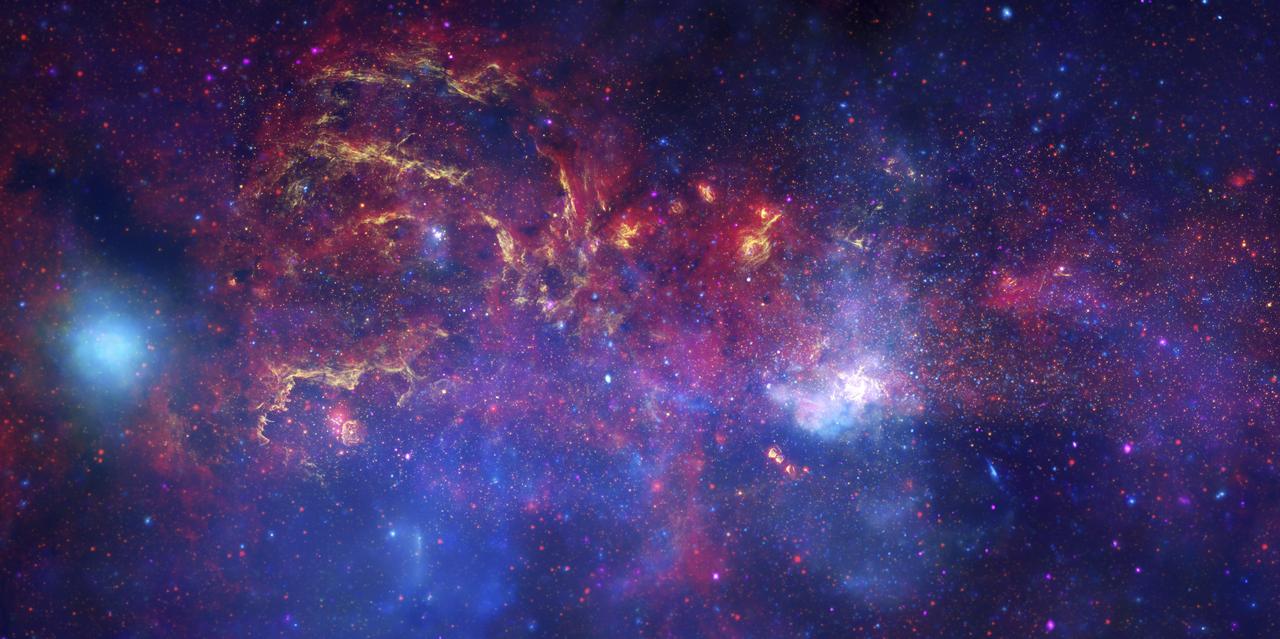
JPL · 2009-11-10 · PIA12348
Great Observatories Unique Views of the Milky Way
In celebration of the International Year of Astronomy 2009, NASA's Great Observatories -- the Hubble Space Telescope, the Spitzer Space Telescope, and the Chandra X-ray Observatory -- have…
Inspect NASA record
In celebration of the International Year of Astronomy 2009, NASA's Great Observatories -- the Hubble Space Telescope, the Spitzer Space Telescope, and the Chandra X-ray Observatory -- have produced a matched trio of images of the central region of our Milky Way galaxy. Each image shows the telescope's different wavelength view of the galactic center region, illustrating the unique science each observatory conducts. In this spectacular image, observations using infrared light and X-ray light see through the obscuring dust and reveal the intense activity near the galactic core. Note that the center of the galaxy is located within the bright white region to the right of and just below the middle of the image. The entire image width covers about one-half a degree, about the same angular width as the full moon. Spitzer's infrared-light observations provide a detailed and spectacular view of the galactic center region [Figure 1 (top frame of poster)]. The swirling core of our galaxy harbors hundreds of thousands of stars that cannot be seen in visible light. These stars heat the nearby gas and dust. These dusty clouds glow in infrared light and reveal their often dramatic shapes. Some of these clouds harbor stellar nurseries that are forming new generations of stars. Like the downtown of a large city, the center of our galaxy is a crowded, active, and vibrant place. Although best known for its visible-light images, Hubble also observes over a limited range of infrared light [Figure 2 (middle frame of poster)]. The galactic center is marked by the bright patch in the lower right. Along the left side are large arcs of warm gas that have been heated by clusters of bright massive stars. In addition, Hubble uncovered many more massive stars across the region. Winds and radiation from these stars create the complex structures seen in the gas throughout the image.This sweeping panorama is one of the sharpest infrared pictures ever made of the galactic center region. X-rays detected by Chandra expose a wealth of exotic objects and high-energy features [Figure 3 (bottom frame of poster)]. In this image, pink represents lower energy X-rays and blue indicates higher energy. Hundreds of small dots show emission from material around black holes and other dense stellar objects. A supermassive black hole -- some four million times more massive than the Sun -- resides within the bright region in the lower right. The diffuse X-ray light comes from gas heated to millions of degrees by outflows from the supermassive black hole, winds from giant stars, and stellar explosions. This central region is the most energetic place in our galaxy. http://photojournal.jpl.nasa.gov/catalog/PIA12348
- Record ID
- PIA12348
- NASA center
- JPL
- Date
- 2009-11-10
- Credit
- NASA/JPL-Caltech/ESA/CXC/STScI
- Keywords
- Chandra X-ray Observatory,Hubble Space Telescope,Spitzer Space T, milky way