
Update Site (from NASA)
Explore NASA’s Image and Video Library.
Suggest one object per day for the Interstellar Minds collection. We review each suggestion before adding it.
Sign in to suggest a Marvel.
Find a NASA image ID. Open a NASA record and copy its ID from the end of the details URL.
NASA image records
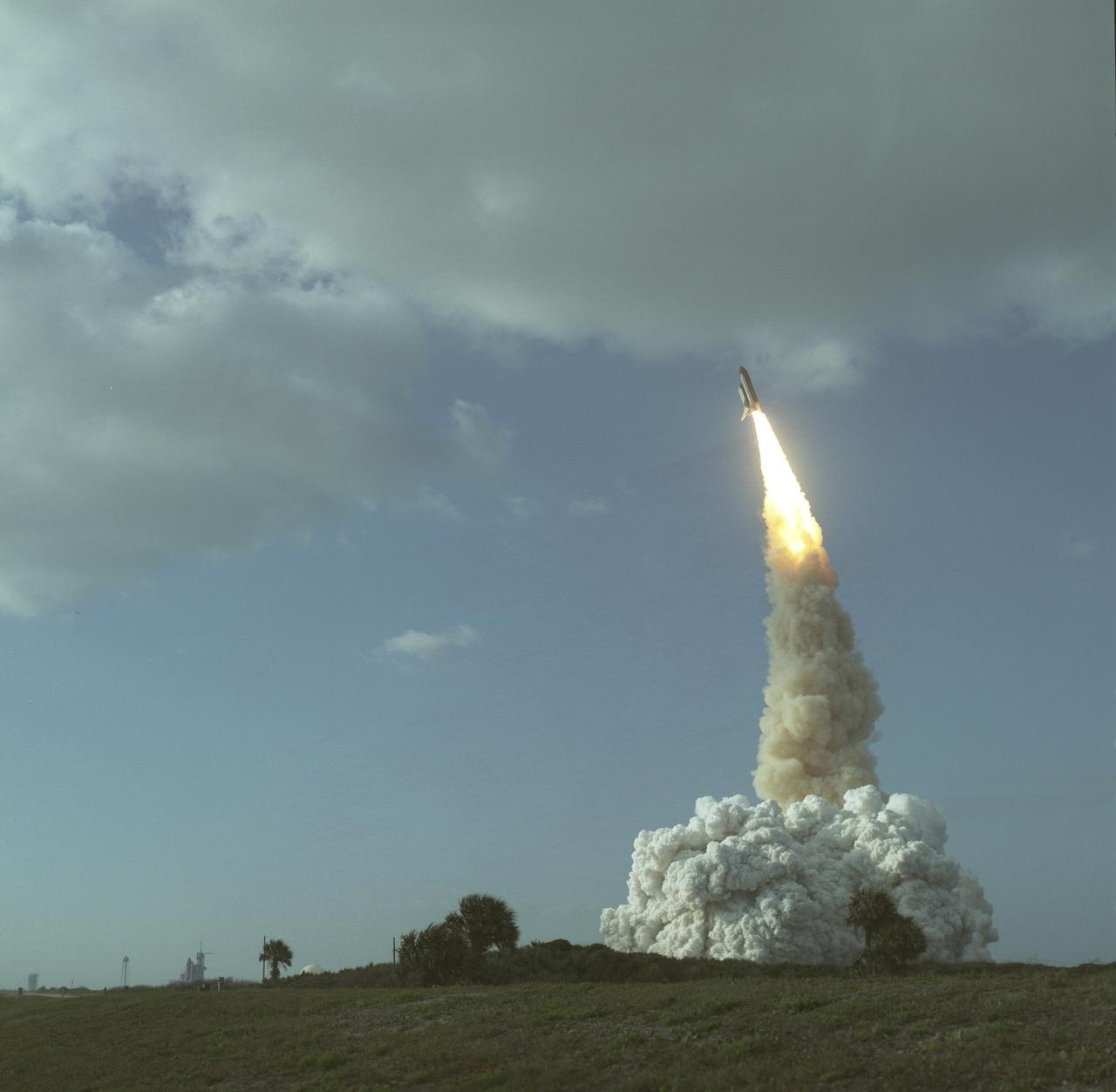
MSFC · 1990-04-24 · 9013799
History of Hubble Space Telescope (HST)
The STS-31 crew launched aboard the Space Shuttle Discovery on April 24, 1990 at 8:33:51am (EDT). Included in the crew of five were Loren J. Shriver, commander; Charles…
Inspect NASA record
The STS-31 crew launched aboard the Space Shuttle Discovery on April 24, 1990 at 8:33:51am (EDT). Included in the crew of five were Loren J. Shriver, commander; Charles F. Bolden, pilot; and Steven A. Hawley, Bruce McCandless, and Kathryn D. Sullivan, all mission specialists. The primary goal of the mission was the deployment of the Hubble Space Telescope (HST) which was a Marshall Space Flight Center (MSFC) managed program.
- Record ID
- 9013799
- NASA center
- MSFC
- Date
- 1990-04-24
- Keywords
- STS-31 Launch
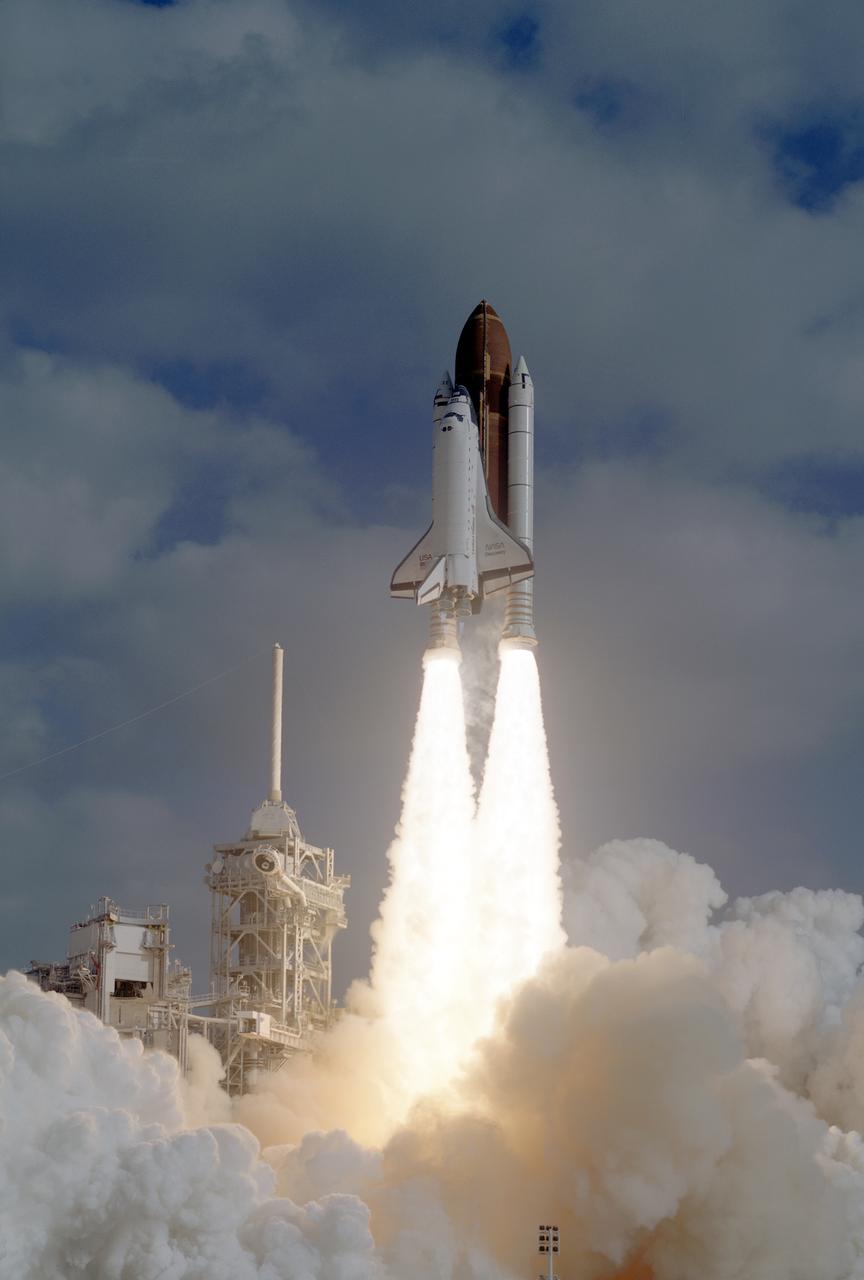
MSFC · 1990-04-24 · 9009635
History of Hubble Space Telescope (HST)
The STS-31 crew launched aboard the Space Shuttle Discovery on April 24, 1990 at 8:33:51am (EDT). Included in the crew of five were Loren J. Shriver, commander; Charles…
Inspect NASA record
The STS-31 crew launched aboard the Space Shuttle Discovery on April 24, 1990 at 8:33:51am (EDT). Included in the crew of five were Loren J. Shriver, commander; Charles F. Bolden, pilot; and Steven A. Hawley, Bruce McCandless, and Kathryn D. Sullivan, all mission specialists. The primary goal of the mission was the deployment of the Hubble Space Telescope (HST) which was a Marshall Space Flight Center (MSFC) managed program.
- Record ID
- 9009635
- NASA center
- MSFC
- Date
- 1990-04-24
- Keywords
- STS-31, Launch
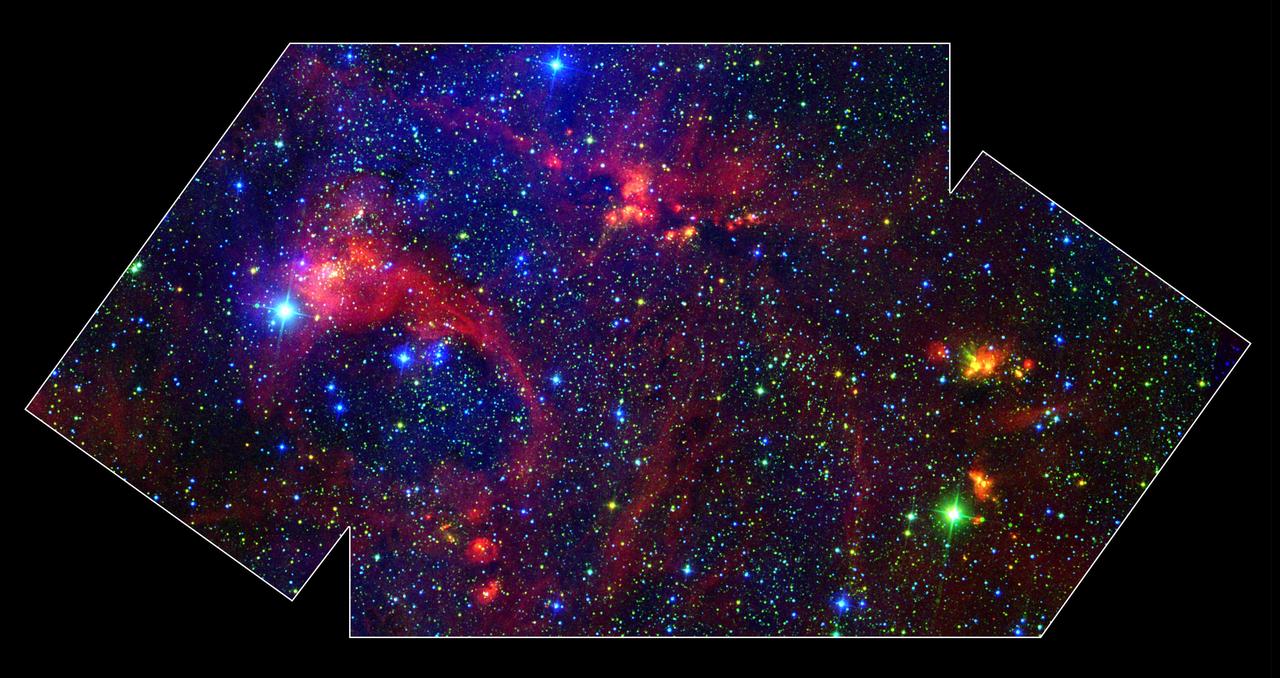
JPL · 2004-04-13 · PIA05734
Spitzer Makes Invisible Visible
Hidden behind a shroud of dust in the constellation Cygnus is a stellar nursery called DR21, which is giving birth to some of the most massive stars in…
Inspect NASA record
Hidden behind a shroud of dust in the constellation Cygnus is a stellar nursery called DR21, which is giving birth to some of the most massive stars in our galaxy. Visible light images reveal no trace of this interstellar cauldron because of heavy dust obscuration. In fact, visible light is attenuated in DR21 by a factor of more than 10,000,000,000,000,000,000,000,000,000,000,000,000,000 (ten thousand trillion heptillion). New images from NASA's Spitzer Space Telescope allow us to peek behind the cosmic veil and pinpoint one of the most massive natal stars yet seen in our Milky Way galaxy. The never-before-seen star is 100,000 times as bright as the Sun. Also revealed for the first time is a powerful outflow of hot gas emanating from this star and bursting through a giant molecular cloud. The colorful image is a large-scale composite mosaic assembled from data collected at a variety of different wavelengths. Views at visible wavelengths appear blue, near-infrared light is depicted as green, and mid-infrared data from the InfraRed Array Camera (IRAC) aboard NASA's Spitzer Space Telescope is portrayed as red. The result is a contrast between structures seen in visible light (blue) and those observed in the infrared (yellow and red). A quick glance shows that most of the action in this image is revealed to the unique eyes of Spitzer. The image covers an area about two times that of a full moon. http://photojournal.jpl.nasa.gov/catalog/PIA05734
- Record ID
- PIA05734
- NASA center
- JPL
- Date
- 2004-04-13
- Credit
- NASA/JPL-Caltech
- Keywords
- Spitzer Space Telescope, Milky Way
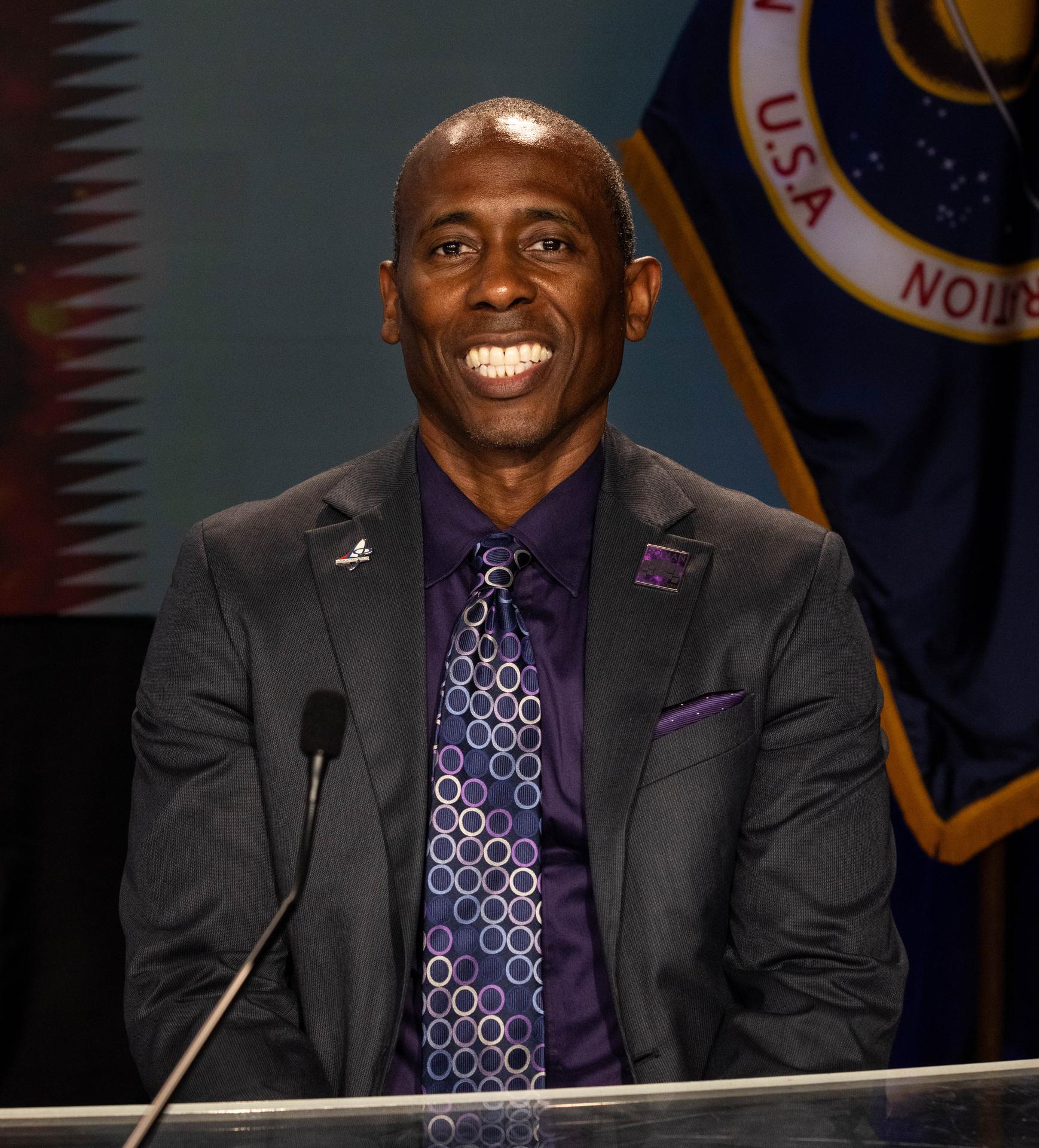
KSC · 2026-08-30 · KSC-20260830-PH-CSH01-0016
Nancy Grace Roman Space Telescope Post Launch Press Conference
Denton Gibson, launch director, NASA’s Launch Services Program, Kennedy Space Center in Florida, participates in a postlaunch news conference for the agency’s Nancy Grace Roman Space Telescope inside…
Inspect NASA record
Denton Gibson, launch director, NASA’s Launch Services Program, Kennedy Space Center in Florida, participates in a postlaunch news conference for the agency’s Nancy Grace Roman Space Telescope inside the NASA News Center’s John Holliman Auditorium at Kennedy Space Center in Florida, on Sunday, Aug. 30, 2026. Roman will investigate dark energy and dark matter, conduct a statistical census of planetary systems, and enable a broad range of additional astrophysics research. Liftoff of Roman atop a SpaceX Falcon Heavy rocket occurred at 7:26 a.m. EDT Sunday, Aug. 30, from Kennedy’s Launch Complex 39A.
- Record ID
- KSC-20260830-PH-CSH01-0016
- NASA center
- KSC
- Date
- 2026-08-30
- Credit
- NASA/Cory S Huston
- Keywords
- Nancy Grace Roman Space Telescope, Roman, RST, Payload Hazardous Servicing Facility, PHSF, KSC, Kennedy Space Center, LSP, Launch Services Program, astrophysics, science, launch
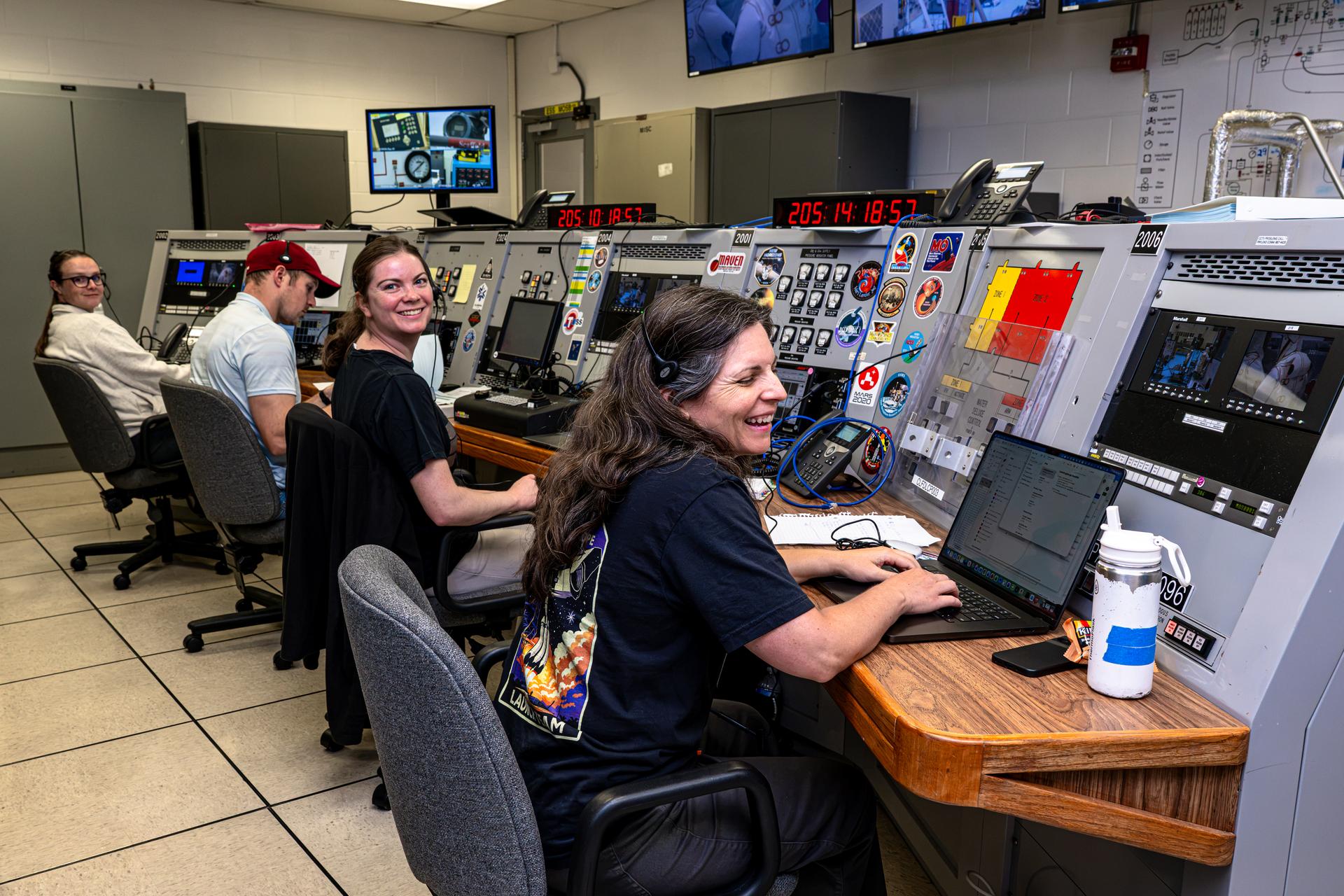
KSC · 2026-07-24 · KSC-20260724-PH-SER01_0001
Roman Space Telescope Propulsion Milestones
Technicians monitor propellant loading from a control room in the Multi Operations Support Building at NASA’s Kennedy Space Center in Florida Friday, July 24, 2026. With fuel tanks…
Inspect NASA record
Technicians monitor propellant loading from a control room in the Multi Operations Support Building at NASA’s Kennedy Space Center in Florida Friday, July 24, 2026. With fuel tanks capable of carrying about 290 gallons (roughly 1,100 liters) of hydrazine – a monopropellant not requiring a second chemical to combust – Roman’s primary mission is to settle essential questions about dark energy, exoplanets, and infrared astrophysics by conducting wide-field surveys that explore the universe’s structure, evolution, and composition. Liftoff atop a SpaceX Falcon Heavy rocket from NASA Kennedy’s Launch Complex 39A is targeted no earlier than Sunday, Aug. 30, 2026.
- Record ID
- KSC-20260724-PH-SER01_0001
- NASA center
- KSC
- Date
- 2026-07-24
- Credit
- NASA/Sydney Rohde (Rocz)
- Keywords
- Launch Services Program, Payload Hazardous Servicing Facility, GSFC, Kennedy Space Center, preparations, Goddard Space Flight Center, Nancy Grace Roman Space Telescope, KSC, LSP, PHSF, processing, RST
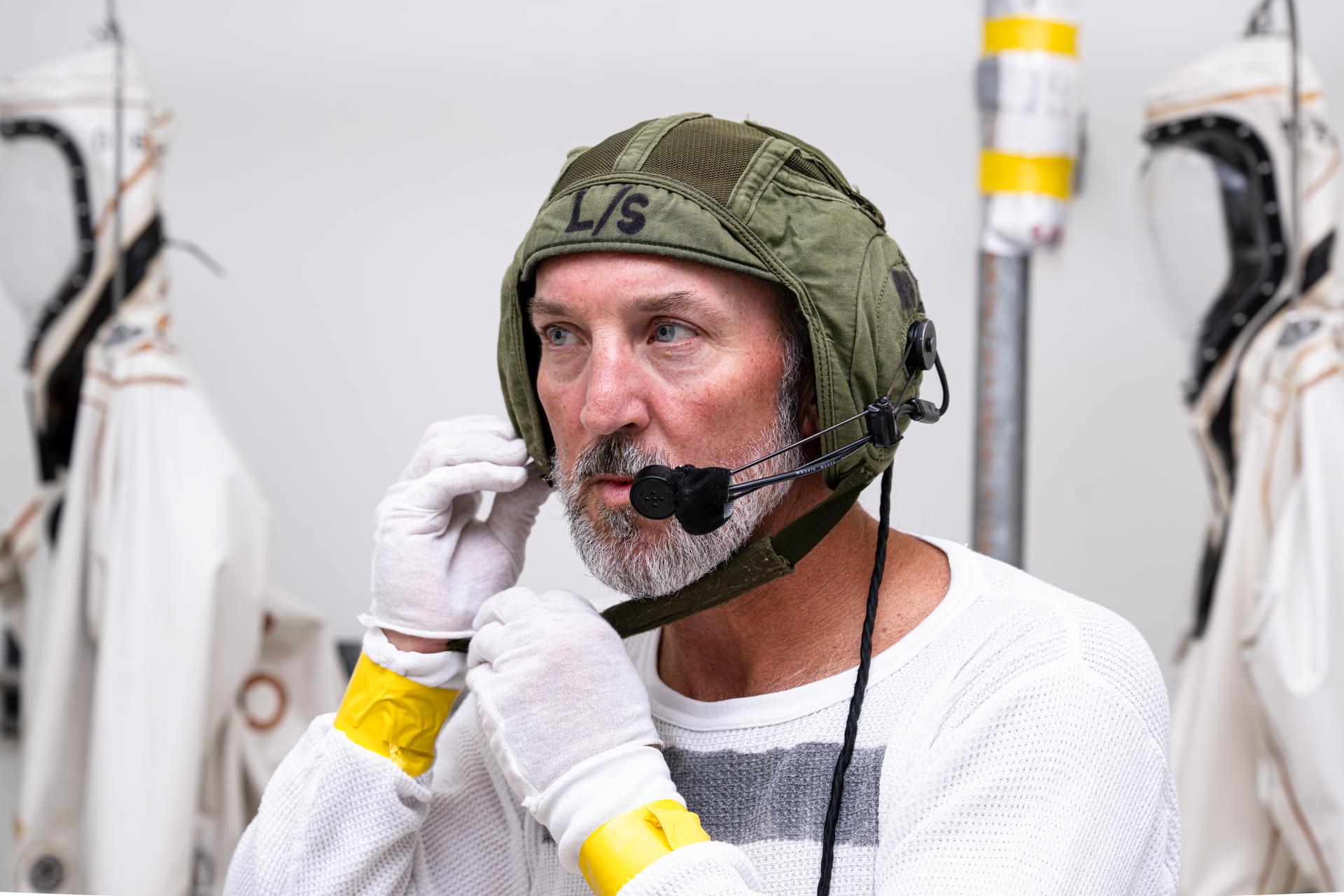
KSC · 2026-07-23 · KSC-20260723-PH-SER01_0005
Roman Space Telescope Propulsion Milestones
Ryan Renehan, technician, wears a Self-Contained Atmospheric Protective Ensemble (SCAPE) suit as he prepares to perform propellant loading operations inside the Payload Hazardous Servicing Facility at NASA’s Kennedy…
Inspect NASA record
Ryan Renehan, technician, wears a Self-Contained Atmospheric Protective Ensemble (SCAPE) suit as he prepares to perform propellant loading operations inside the Payload Hazardous Servicing Facility at NASA’s Kennedy Space Center in Florida Thursday, July 23, 2026. With fuel tanks capable of carrying about 290 gallons (roughly 1,100 liters) of hydrazine – a monopropellant not requiring a second chemical to combust – Roman’s primary mission is to settle essential questions about dark energy, exoplanets, and infrared astrophysics by conducting wide-field surveys that explore the universe’s structure, evolution, and composition. Liftoff atop a SpaceX Falcon Heavy rocket from NASA Kennedy’s Launch Complex 39A is targeted no earlier than Sunday, Aug. 30, 2026.
- Record ID
- KSC-20260723-PH-SER01_0005
- NASA center
- KSC
- Date
- 2026-07-23
- Credit
- NASA/Sydney Rohde (Rocz)
- Keywords
- Launch Services Program, Payload Hazardous Servicing Facility, GSFC, Kennedy Space Center, preparations, Goddard Space Flight Center, Nancy Grace Roman Space Telescope, KSC, LSP, PHSF, processing, RST
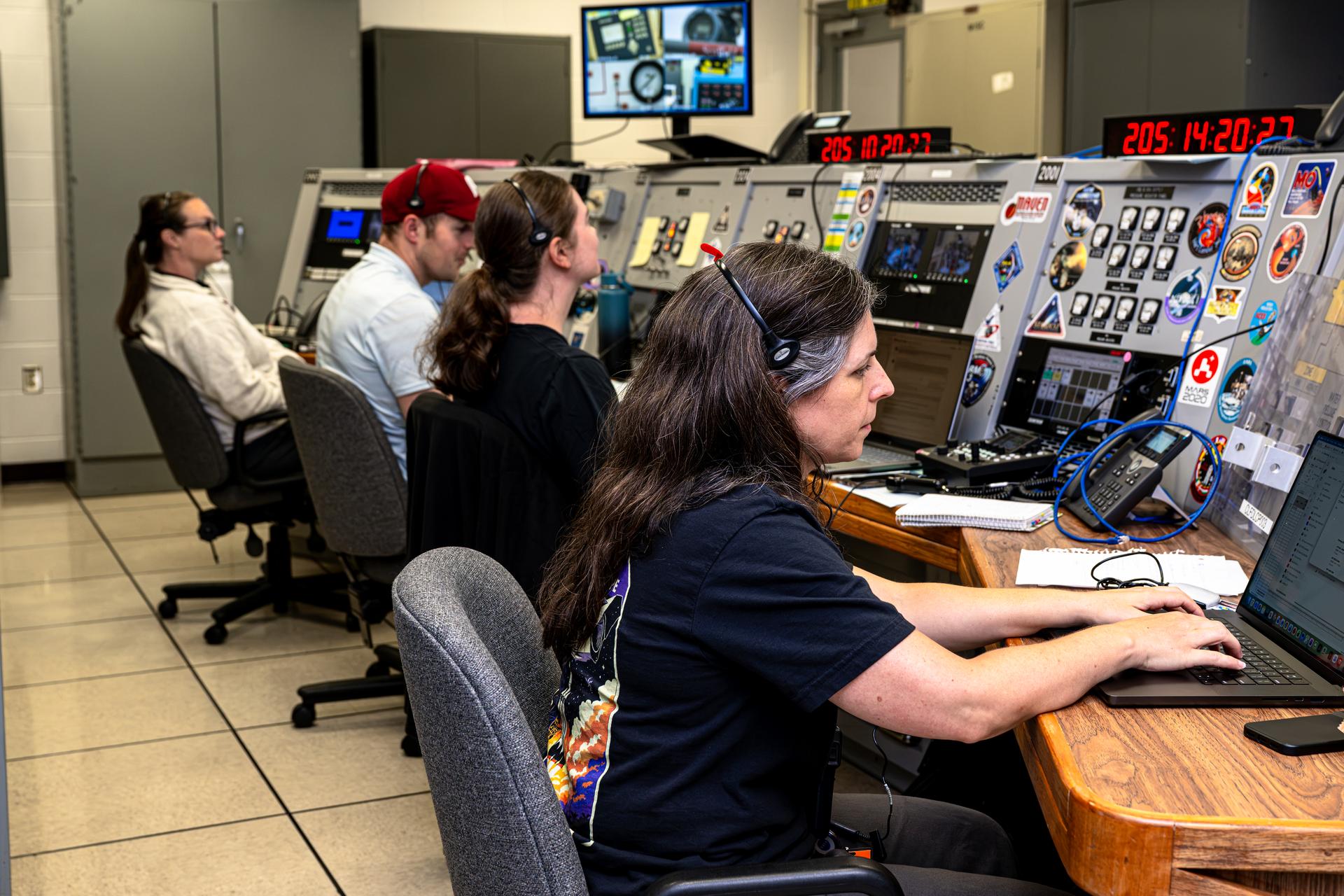
KSC · 2026-07-24 · KSC-20260724-PH-SER01_0002
Roman Space Telescope Propulsion Milestones
Technicians monitor propellant loading from a control room in the Multi Operations Support Building at NASA’s Kennedy Space Center in Florida Friday, July 24, 2026. With fuel tanks…
Inspect NASA record
Technicians monitor propellant loading from a control room in the Multi Operations Support Building at NASA’s Kennedy Space Center in Florida Friday, July 24, 2026. With fuel tanks capable of carrying about 290 gallons (roughly 1,100 liters) of hydrazine – a monopropellant not requiring a second chemical to combust – Roman’s primary mission is to settle essential questions about dark energy, exoplanets, and infrared astrophysics by conducting wide-field surveys that explore the universe’s structure, evolution, and composition. Liftoff atop a SpaceX Falcon Heavy rocket from NASA Kennedy’s Launch Complex 39A is targeted no earlier than Sunday, Aug. 30, 2026.
- Record ID
- KSC-20260724-PH-SER01_0002
- NASA center
- KSC
- Date
- 2026-07-24
- Credit
- NASA/Sydney Rohde (Rocz)
- Keywords
- Launch Services Program, Payload Hazardous Servicing Facility, GSFC, Kennedy Space Center, preparations, Goddard Space Flight Center, Nancy Grace Roman Space Telescope, KSC, LSP, PHSF, processing, RST
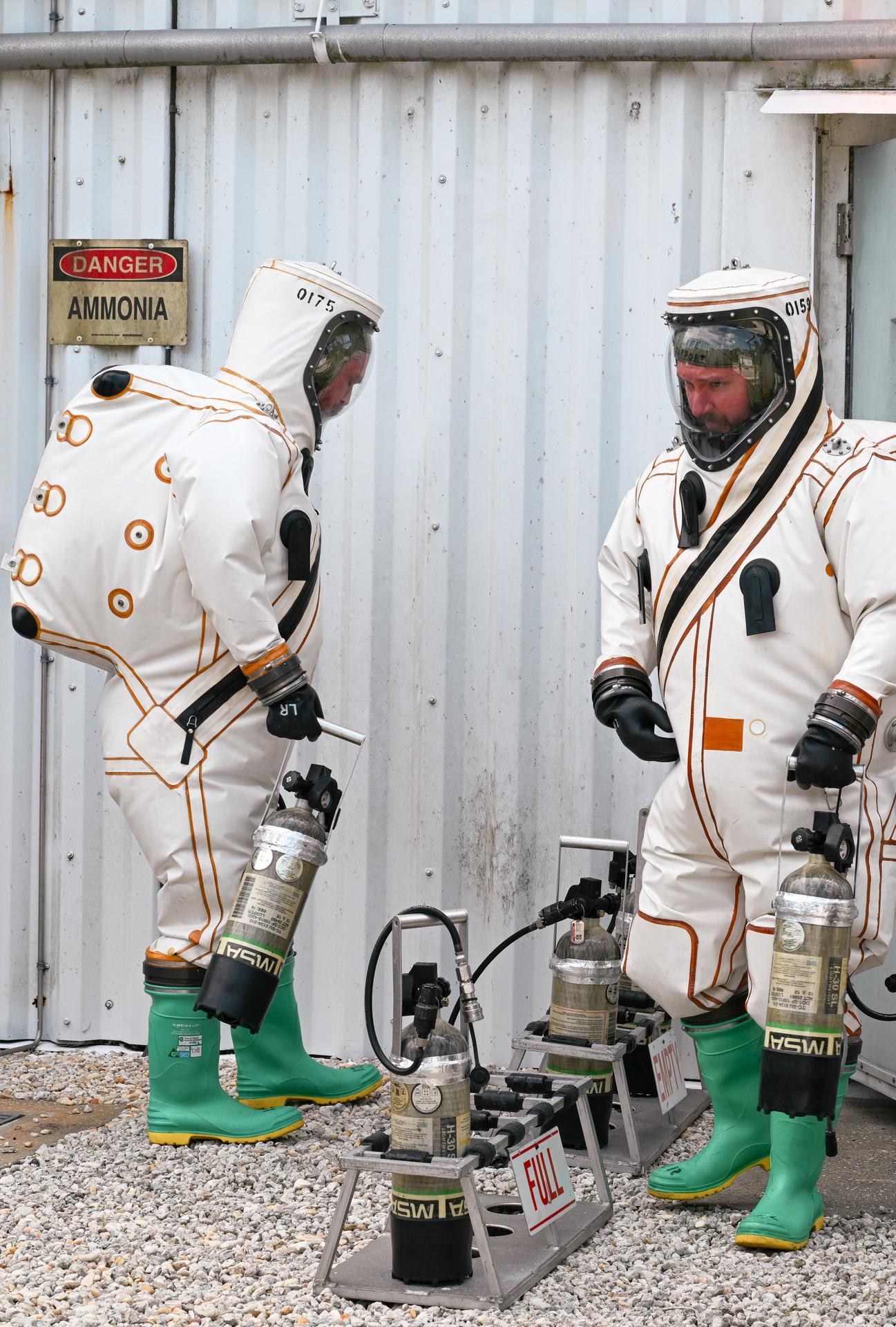
KSC · 2026-07-24 · KSC-20260724-PH-SER01_0004
Roman Space Telescope Propulsion Milestones
Technicians wear Self-Contained Atmospheric Protective Ensemble (SCAPE) suits as they prepare to perform propellant loading operations inside the Payload Hazardous Servicing Facility at NASA’s Kennedy Space Center in…
Inspect NASA record
Technicians wear Self-Contained Atmospheric Protective Ensemble (SCAPE) suits as they prepare to perform propellant loading operations inside the Payload Hazardous Servicing Facility at NASA’s Kennedy Space Center in Florida Friday, July 24, 2026. With fuel tanks capable of carrying about 290 gallons (roughly 1,100 liters) of hydrazine – a monopropellant not requiring a second chemical to combust – Roman’s primary mission is to settle essential questions about dark energy, exoplanets, and infrared astrophysics by conducting wide-field surveys that explore the universe’s structure, evolution, and composition. Liftoff atop a SpaceX Falcon Heavy rocket from NASA Kennedy’s Launch Complex 39A is targeted no earlier than Sunday, Aug. 30, 2026.
- Record ID
- KSC-20260724-PH-SER01_0004
- NASA center
- KSC
- Date
- 2026-07-24
- Credit
- NASA/Sydney Rohde (Rocz)
- Keywords
- Launch Services Program, Payload Hazardous Servicing Facility, GSFC, Kennedy Space Center, preparations, Goddard Space Flight Center, Nancy Grace Roman Space Telescope, KSC, LSP, PHSF, processing, RST
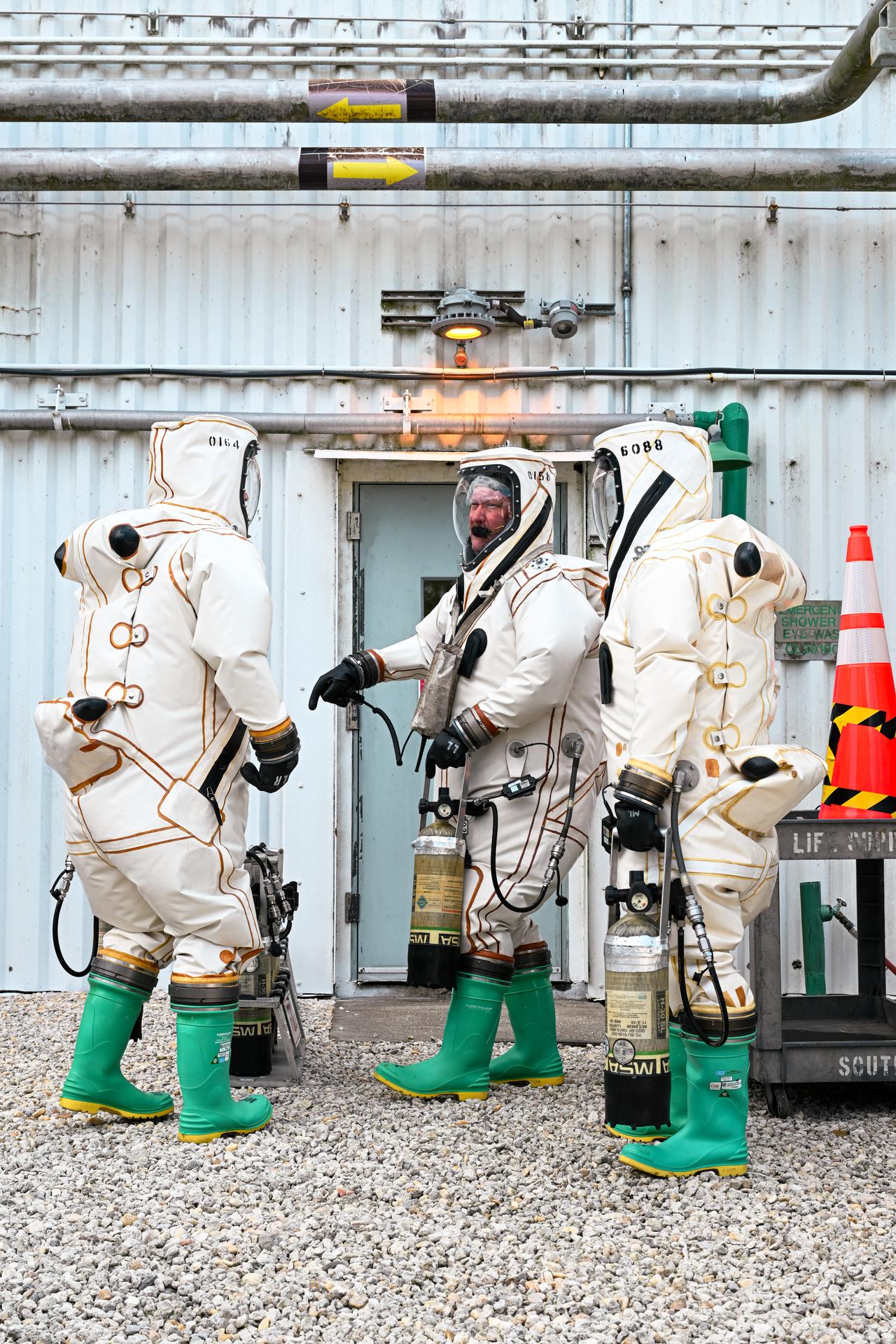
KSC · 2026-07-24 · KSC-20260724-PH-SER01_0003
Roman Space Telescope Propulsion Milestones
Technicians wear Self-Contained Atmospheric Protective Ensemble (SCAPE) suits as they prepare to perform propellant loading operations inside the Payload Hazardous Servicing Facility at NASA’s Kennedy Space Center in…
Inspect NASA record
Technicians wear Self-Contained Atmospheric Protective Ensemble (SCAPE) suits as they prepare to perform propellant loading operations inside the Payload Hazardous Servicing Facility at NASA’s Kennedy Space Center in Florida Friday, July 24, 2026. With fuel tanks capable of carrying about 290 gallons (roughly 1,100 liters) of hydrazine – a monopropellant not requiring a second chemical to combust – Roman’s primary mission is to settle essential questions about dark energy, exoplanets, and infrared astrophysics by conducting wide-field surveys that explore the universe’s structure, evolution, and composition. Liftoff atop a SpaceX Falcon Heavy rocket from NASA Kennedy’s Launch Complex 39A is targeted no earlier than Sunday, Aug. 30, 2026.
- Record ID
- KSC-20260724-PH-SER01_0003
- NASA center
- KSC
- Date
- 2026-07-24
- Credit
- NASA/Sydney Rohde (Rocz)
- Keywords
- Launch Services Program, Payload Hazardous Servicing Facility, GSFC, Kennedy Space Center, preparations, Goddard Space Flight Center, Nancy Grace Roman Space Telescope, KSC, LSP, PHSF, processing, RST
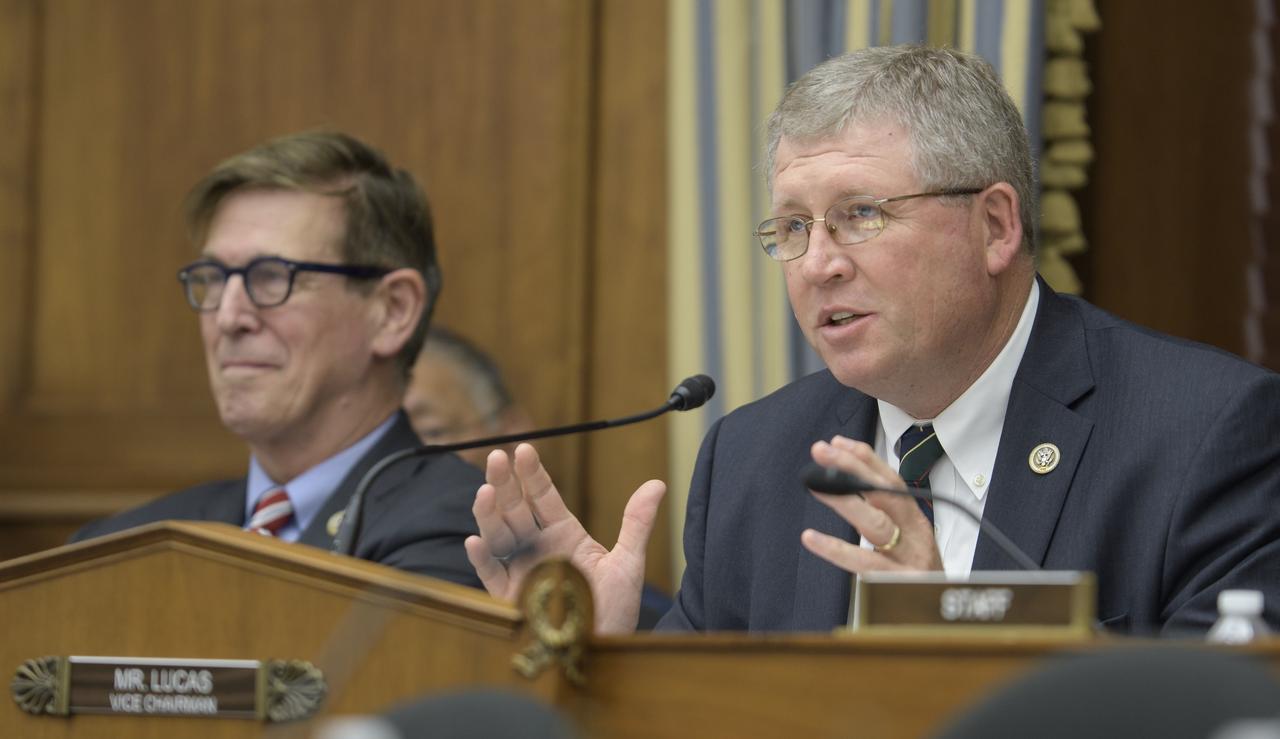
HQ · 2018-07-25 · NHQ201807250018
Hearing on James Webb Space Telescope
Rep. Frank Lucas, R-Oklahoma, Vice Chairman of the House Committee on Science, Space, and Technology is seen during a hearing on the James Webb Space Telescope, Wednesday, July…
Inspect NASA record
Rep. Frank Lucas, R-Oklahoma, Vice Chairman of the House Committee on Science, Space, and Technology is seen during a hearing on the James Webb Space Telescope, Wednesday, July 25, 2018 at the Rayburn House Office Building in Washington. Witnesses: NASA Administrator Jim Bridenstine and Mr. Tom Young, chairman, JWST Independent Review Board. Photo Credit: (NASA/Bill Ingalls)
- Record ID
- NHQ201807250018
- NASA center
- HQ
- Date
- 2018-07-25
- Credit
- NASA/Bill Ingalls
- Keywords
- Committee on Science Space and Technology, DC, Donald Beyer, Frank Lucas, House Hearing, Rayburn House Office Building, U.S. Representative, Washington
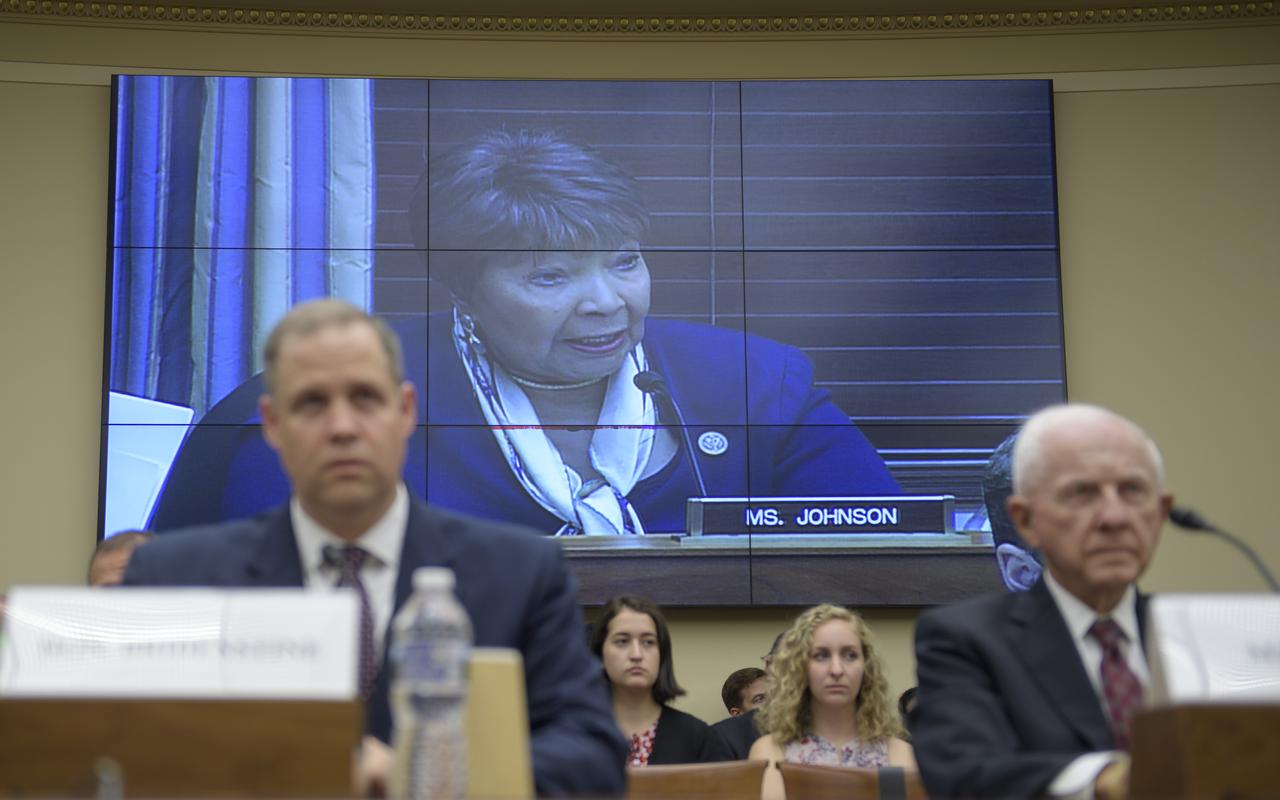
HQ · 2018-07-25 · NHQ201807250004
Hearing on James Webb Space Telescope
Rep. Eddie Bernice Johnson, D-Texas is seen on a monitor as she questions witnesses; NASA Administrator Jim Bridenstine, left, and Tom Young, chairman, JWST Independent Review Board, during…
Inspect NASA record
Rep. Eddie Bernice Johnson, D-Texas is seen on a monitor as she questions witnesses; NASA Administrator Jim Bridenstine, left, and Tom Young, chairman, JWST Independent Review Board, during a House Committee on Science, Space, and Technology hearing on the James Webb Space Telescope, Wednesday, July 25, 2018 at the Rayburn House Office Building in Washington. Photo Credit: (NASA/Bill Ingalls)
- Record ID
- NHQ201807250004
- NASA center
- HQ
- Date
- 2018-07-25
- Credit
- NASA/Bill Ingalls
- Keywords
- Committee on Science Space and Technology, DC, Eddie Bernice Johnson, House Hearing, Jim Bridenstine, NASA Administrator, Rayburn House Office Building, Tom Young, U.S. Representative, Washington

HQ · 2018-07-25 · NHQ201807250003
Hearing on James Webb Space Telescope
NASA Administrator Jim Bridenstine, left, and Tom Young, chairman, JWST Independent Review Board are seen before they testify before the House Committee on Science, Space, and Technology during…
Inspect NASA record
NASA Administrator Jim Bridenstine, left, and Tom Young, chairman, JWST Independent Review Board are seen before they testify before the House Committee on Science, Space, and Technology during a hearing on the James Webb Space Telescope, Wednesday, July 25, 2018 at the Rayburn House Office Building in Washington. Photo Credit: (NASA/Bill Ingalls)
- Record ID
- NHQ201807250003
- NASA center
- HQ
- Date
- 2018-07-25
- Credit
- NASA/Bill Ingalls
- Keywords
- Committee on Science Space and Technology, DC, House Hearing, Jim Bridenstine, NASA Administrator, Rayburn House Office Building, Tom Young, Washington