
Update Site (from NASA)
Explore NASA’s Image and Video Library.
Suggest one object per day for the Interstellar Minds collection. We review each suggestion before adding it.
Sign in to suggest a Marvel.
Find a NASA image ID. Open a NASA record and copy its ID from the end of the details URL.
NASA image records

KSC · 2026-08-30 · KSC-20260830-PH-SPX02_0006
NASA's Nancy Grace Roman Space Telescope Liftoff, Launch Comple
NASA’s Nancy Grace Roman Space Telescope rises to space atop a SpaceX Falcon Heavy rocket from Launch Complex 39A at the agency’s Kennedy Space Center in Florida on…
Inspect NASA record
NASA’s Nancy Grace Roman Space Telescope rises to space atop a SpaceX Falcon Heavy rocket from Launch Complex 39A at the agency’s Kennedy Space Center in Florida on Sunday, Aug. 30, 2026. The milestone begins the observatory’s journey to explore the large‑scale structure of the universe. Roman will investigate dark energy and dark matter, conduct a statistical census of planetary systems, and enable a broad range of additional astrophysics research.
- Record ID
- KSC-20260830-PH-SPX02_0006
- NASA center
- KSC
- Date
- 2026-08-30
- Credit
- SpaceX
- Keywords
- John. F. Kennedy Space Center, Kennedy, Kennedy Space Center, KSC, Spaceport, Cape Canaveral, NASA, rocket ranch, Florida, multi-user spaceport, premier spaceport, space coast
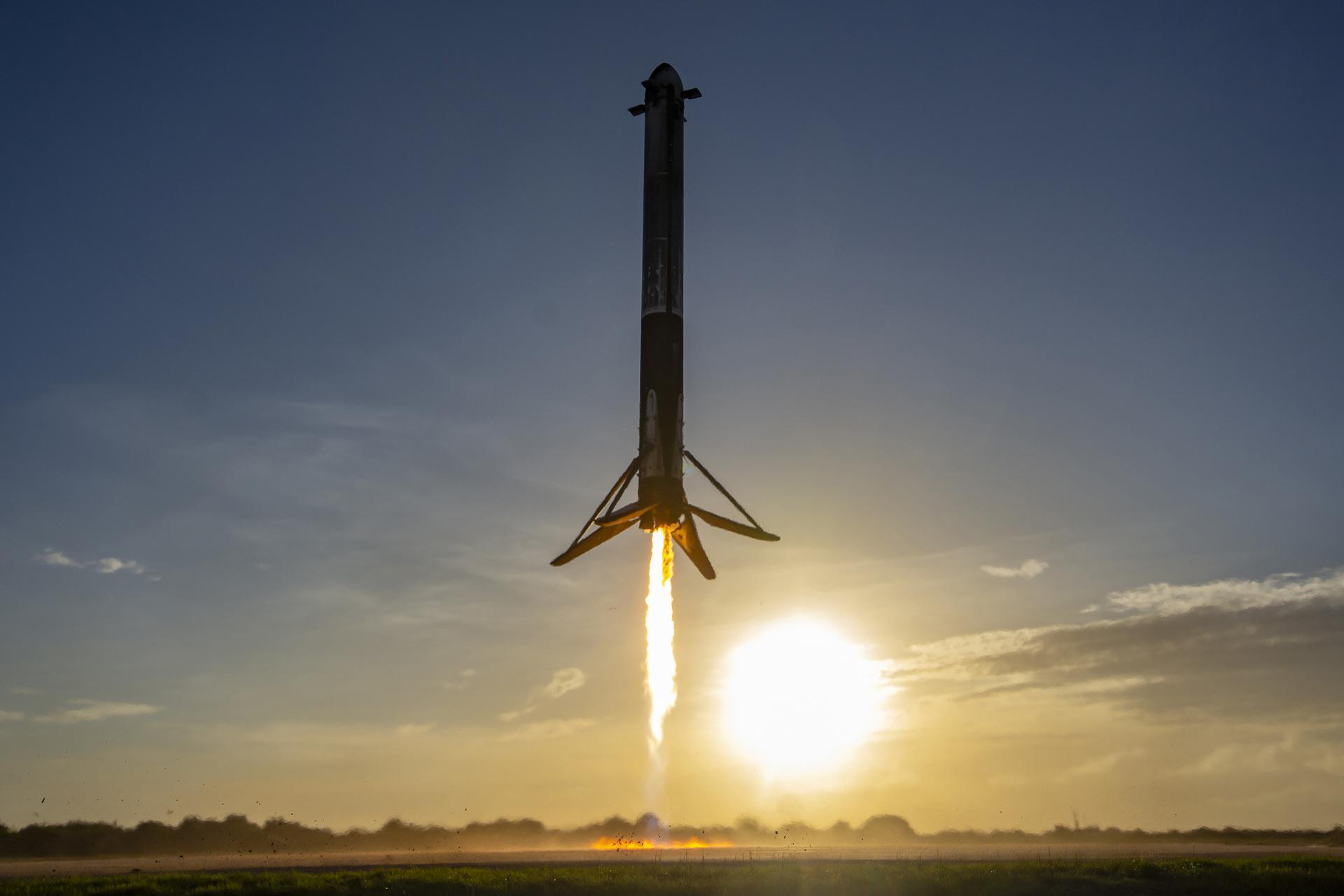
KSC · 2026-08-30 · KSC-20260830-PH-SPX02_0003
NASA's Nancy Grace Roman Space Telescope Liftoff, Launch Comple
One of SpaceX’s Falcon Heavy side boosters that launched NASA’s Nancy Grace Roman Space Telescope from Launch Complex 39A at the agency’s Kennedy Space Center in Florida on…
Inspect NASA record
One of SpaceX’s Falcon Heavy side boosters that launched NASA’s Nancy Grace Roman Space Telescope from Launch Complex 39A at the agency’s Kennedy Space Center in Florida on Sunday, Aug. 30, 2026, returns to land at Landing Zone 2 at nearby Cape Canaveral Space Force Station. Roman will investigate dark energy and dark matter, conduct a statistical census of planetary systems, and enable a broad range of additional astrophysics research.
- Record ID
- KSC-20260830-PH-SPX02_0003
- NASA center
- KSC
- Date
- 2026-08-30
- Credit
- SpaceX
- Keywords
- John. F. Kennedy Space Center, Kennedy, Kennedy Space Center, KSC, Spaceport, Cape Canaveral, NASA, rocket ranch, Florida, multi-user spaceport, premier spaceport, space coast
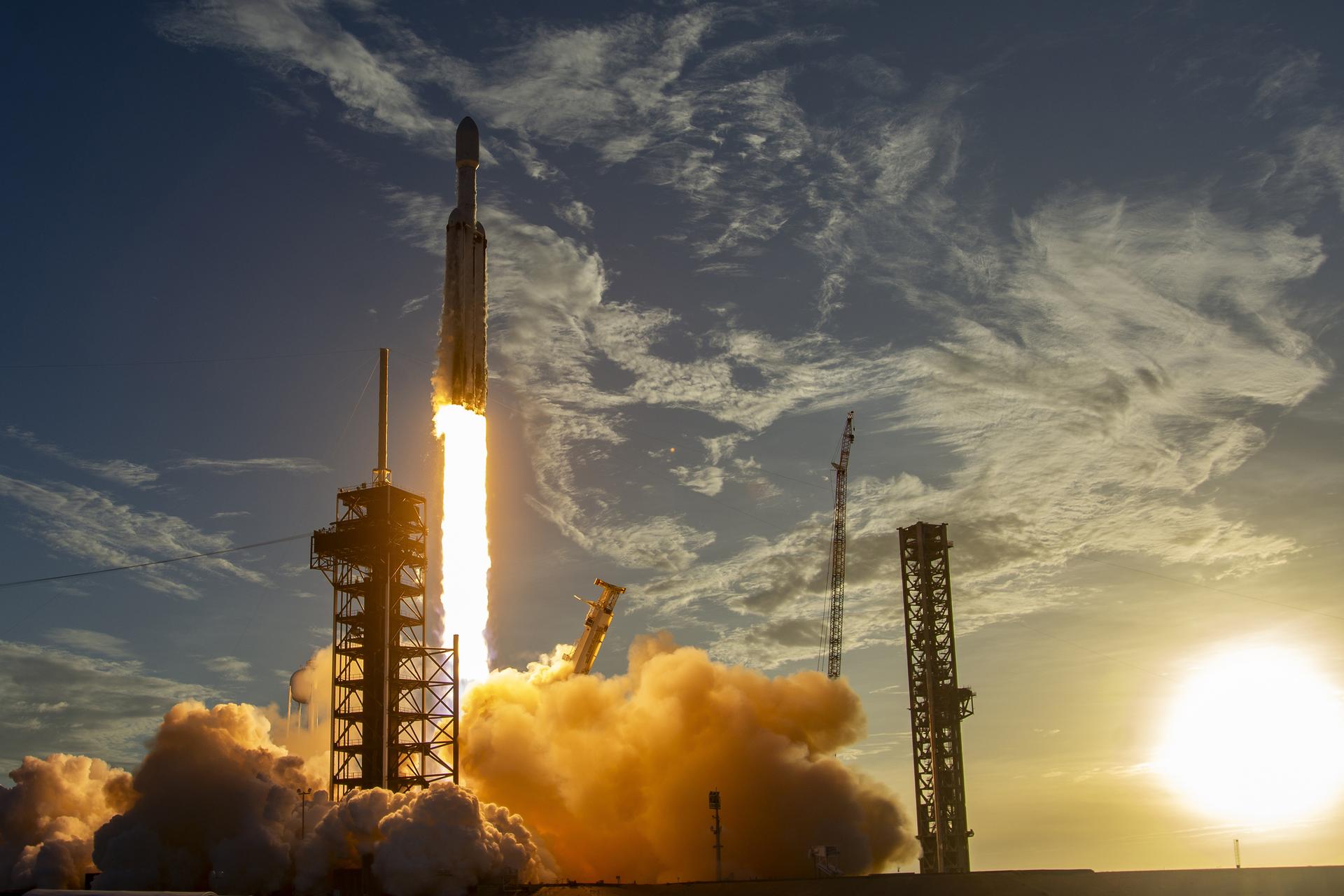
KSC · 2026-08-30 · KSC-20260830-PH-SPX02_0001
NASA's Nancy Grace Roman Space Telescope Liftoff, Launch Comple
NASA’s Nancy Grace Roman Space Telescope rises to space atop a SpaceX Falcon Heavy rocket from Launch Complex 39A at the agency’s Kennedy Space Center in Florida on…
Inspect NASA record
NASA’s Nancy Grace Roman Space Telescope rises to space atop a SpaceX Falcon Heavy rocket from Launch Complex 39A at the agency’s Kennedy Space Center in Florida on Sunday, Aug. 30, 2026. The milestone begins the observatory’s journey to explore the large‑scale structure of the universe. Roman will investigate dark energy and dark matter, conduct a statistical census of planetary systems, and enable a broad range of additional astrophysics research.
- Record ID
- KSC-20260830-PH-SPX02_0001
- NASA center
- KSC
- Date
- 2026-08-30
- Credit
- SpaceX
- Keywords
- John. F. Kennedy Space Center, Kennedy, Kennedy Space Center, KSC, Spaceport, Cape Canaveral, NASA, rocket ranch, Florida, multi-user spaceport, premier spaceport, space coast
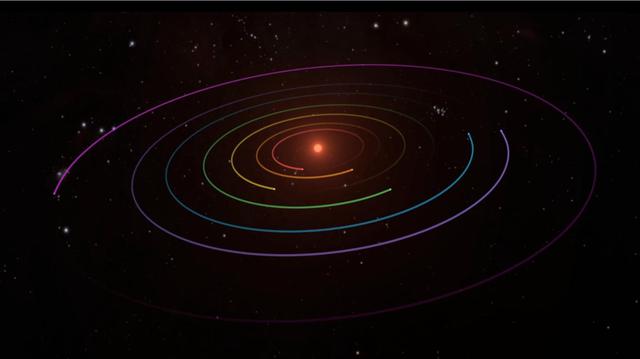
JPL · 2017-02-22 · PIA21427
TRAPPIST-1 Planetary Orbits and Transits
This frame from a video details a system of seven planets orbiting TRAPPIST-1, an ultra-cool dwarf star. Spitzer was able to identify a total of seven rocky worlds,…
Inspect NASA record
This frame from a video details a system of seven planets orbiting TRAPPIST-1, an ultra-cool dwarf star. Spitzer was able to identify a total of seven rocky worlds, including three in the habitable zone where liquid water might be found. A study established the planets' size, distance from their sun and, for some of them, their approximate mass and density. It also established that some, if not all, of these planets are tidally locked, meaning one face of the planet permanently faces their sun. The system has been revealed through observations from NASA's Spitzer Space Telescope and the ground-based TRAPPIST (TRAnsiting Planets and PlanetesImals Small Telescope) telescope, as well as other ground-based observatories. The system was named for the TRAPPIST telescope. A video is available at http://photojournal.jpl.nasa.gov/catalog/PIA21427
- Record ID
- PIA21427
- NASA center
- JPL
- Date
- 2017-02-22
- Credit
- NASA/JPL-Caltech
- Keywords
- Spitzer Space Telescope, Trappist-1
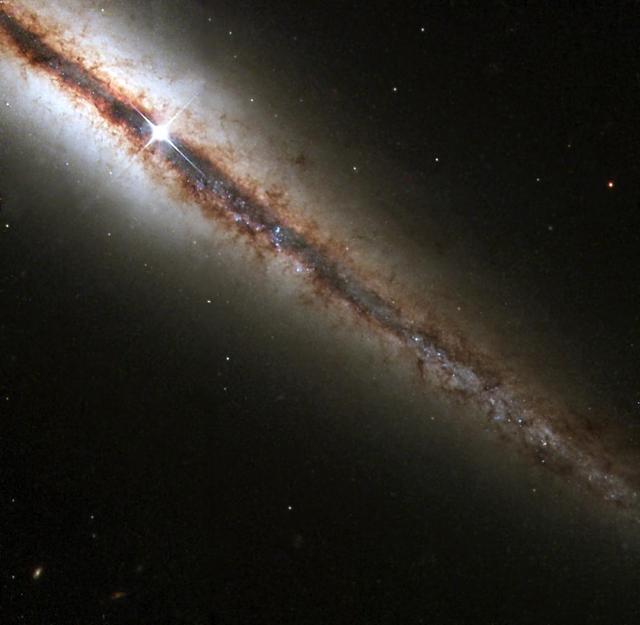
JPL · 1999-12-15 · PIA04217
Galaxy NGC 4013
An amazing edge-on view of a spiral galaxy 55 million light years from Earth has been captured by the Hubble Space Telescope. The image reveals in great detail…
Inspect NASA record
An amazing edge-on view of a spiral galaxy 55 million light years from Earth has been captured by the Hubble Space Telescope. The image reveals in great detail huge clouds of dust and gas extending along and above the galaxy main disk.
- Record ID
- PIA04217
- NASA center
- JPL
- Date
- 1999-12-15
- Credit
- NASA and the Hubble Heritage Team STSci/AURA
- Keywords
- Galaxy NGC 4013, Hubble Space Telescope

JPL · 2011-11-16 · PIA15079
30 Doradus: The Growing Tarantula Within
About 2,400 massive stars in the center of 30 Doradus, the Tarantula Nebula, produce intense radiation and powerful winds as they blow off material seen as infrared emission…
Inspect NASA record
About 2,400 massive stars in the center of 30 Doradus, the Tarantula Nebula, produce intense radiation and powerful winds as they blow off material seen as infrared emission from NASA Spitzer Space Telescope and X-rays from Chandra X-ray Observatory.
- Record ID
- PIA15079
- NASA center
- JPL
- Date
- 2011-11-16
- Credit
- X-ray: NASA/CXC/PSU/L. Townsley et al.; Infrared: NASA/JPL/PSU/L. Townsley et al.
- Keywords
- Chandra X-ray Observatory,Spitzer Space Telescope

JPL · 2017-08-17 · PIA21752
Brown Dwarf Weather (Artist's Concept)
This artist's concept animation shows a brown dwarf with bands of clouds, thought to resemble those seen on Neptune and the other outer planets in the solar system.…
Inspect NASA record
This artist's concept animation shows a brown dwarf with bands of clouds, thought to resemble those seen on Neptune and the other outer planets in the solar system. By using NASA's Spitzer Space Telescope, astronomers have found that the varying glow of brown dwarfs over time can be explained by bands of patchy clouds rotating at different speeds. Videos are available at https://photojournal.jpl.nasa.gov/catalog/PIA21752
- Record ID
- PIA21752
- NASA center
- JPL
- Date
- 2017-08-17
- Credit
- NASA/JPL-Caltech
- Keywords
- Spitzer Space Telescope, artist concept, brown dwarf
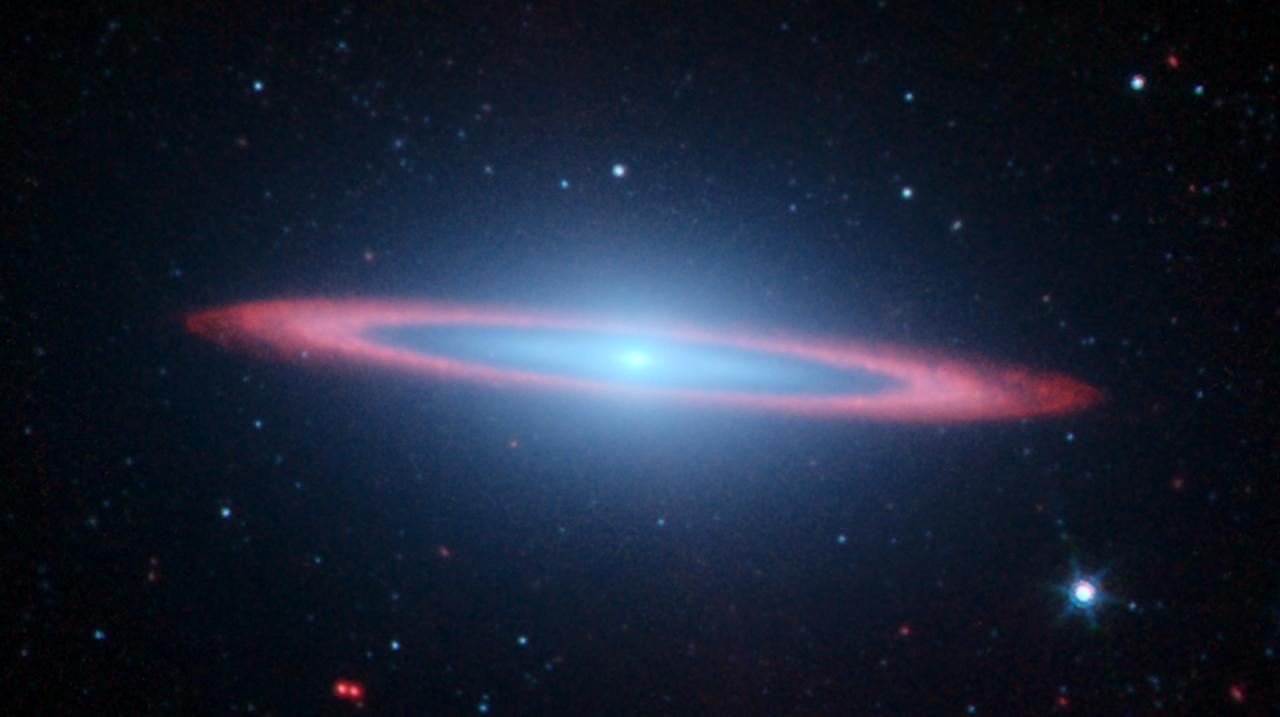
JPL · 2005-05-04 · PIA07899
Spitzer Spies Spectacular Sombrero
NASA's Spitzer Space Telescope set its infrared eyes on one of the most famous objects in the sky, Messier 104, also called the Sombrero galaxy. In this striking…
Inspect NASA record
NASA's Spitzer Space Telescope set its infrared eyes on one of the most famous objects in the sky, Messier 104, also called the Sombrero galaxy. In this striking infrared picture, Spitzer sees an exciting new view of a galaxy that in visible light has been likened to a "sombrero," but here looks more like a "bulls-eye." Recent observations using Spitzer's infrared array camera uncovered the bright, smooth ring of dust circling the galaxy, seen in red. In visible light, because this galaxy is seen nearly edge-on, only the near rim of dust can be clearly seen in silhouette. Spitzer's full view shows the disk is warped, which is often the result of a gravitational encounter with another galaxy, and clumpy areas spotted in the far edges of the ring indicate young star-forming regions. Spitzer's infrared view of the starlight from this galaxy, seen in blue, can pierce through obscuring murky dust that dominates in visible light. As a result, the full extent of the bulge of stars and an otherwise hidden disk of stars within the dust ring are easily seen. The Sombrero galaxy is located some 28 million light years away. Viewed from Earth, it is just six degrees south of its equatorial plane. Spitzer detected infrared emission not only from the ring, but from the center of the galaxy too, where there is a huge black hole, believed to be a billion times more massive than our Sun. This picture is composed of four images taken at 3.6 (blue), 4.5 (green), 5.8 (orange), and 8.0 (red) microns. The contribution from starlight (measured at 3.6 microns) has been subtracted from the 5.8 and 8-micron images to enhance the visibility of the dust features. http://photojournal.jpl.nasa.gov/catalog/PIA07899
- Record ID
- PIA07899
- NASA center
- JPL
- Date
- 2005-05-04
- Credit
- NASA/JPL-Caltech/University of Arizona;Figures 1 and 2: NASA/JPL-Caltech/University of Arizona/STScI;Figure 3: NASA/STScI/AURA;Animation: NASA/JPL-Caltech/University of Arizona/STScI
- Keywords
- Messier 104, Hubble Space Telescope,Spitzer Space Telescope

JPL · 2015-06-11 · PIA19345
How to Make a Helium Atmosphere
This diagram illustrates how hypothetical helium atmospheres might form. These would be on planets about the mass of Neptune, or smaller, which orbit tightly to their stars, whipping…
Inspect NASA record
This diagram illustrates how hypothetical helium atmospheres might form. These would be on planets about the mass of Neptune, or smaller, which orbit tightly to their stars, whipping around in just days. They are thought to have cores of water or rock, surrounded by thick atmospheres of gas. Radiation from their nearby stars would boil off hydrogen and helium, but because hydrogen is lighter, more hydrogen would escape. It's also possible that planetary bodies, such as asteroids, could impact the planet, sending hydrogen out into space. Over time, the atmospheres would become enriched in helium. With less hydrogen in the planets' atmospheres, the concentration of methane and water would go down. Both water and methane consist in part of hydrogen. Eventually, billions of years later (a "Gyr" equals one billion years), the abundances of the water and methane would be greatly reduced. Since hydrogen would not be abundant, the carbon would be forced to pair with oxygen, forming carbon monoxide. NASA's Spitzer Space Telescope observed a proposed helium planet, GJ 436b, with these traits: it lacks methane, and appears to contain carbon monoxide. Future observations are needed to detect helium itself in the atmospheres of these planets, and confirm this theory. http://photojournal.jpl.nasa.gov/catalog/PIA19345
- Record ID
- PIA19345
- NASA center
- JPL
- Date
- 2015-06-11
- Credit
- NASA/JPL-Caltech
- Keywords
- Spitzer Space Telescope
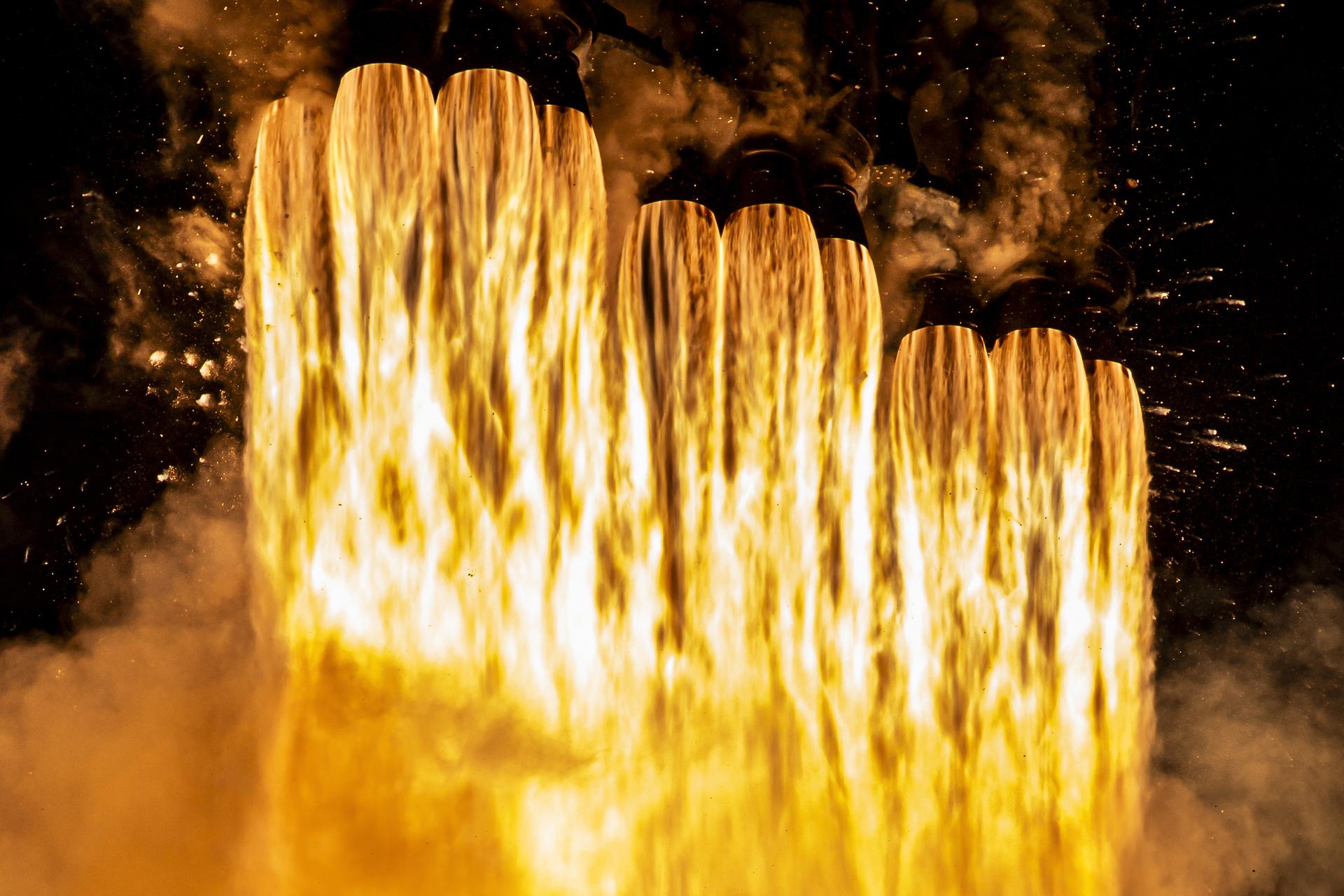
KSC · 2026-08-30 · KSC-20260830-PH-SPX02_0005
NASA's Nancy Grace Roman Space Telescope Liftoff, Launch Comple
A close view shows the 27 Merlin engines of the SpaceX Falcon Heavy rocket that launched NASA’s Nancy Grace Roman Space Telescope from Launch Complex 39A at the…
Inspect NASA record
A close view shows the 27 Merlin engines of the SpaceX Falcon Heavy rocket that launched NASA’s Nancy Grace Roman Space Telescope from Launch Complex 39A at the agency’s Kennedy Space Center in Florida on Sunday, Aug. 30, 2026. The milestone begins the observatory’s journey to explore the large‑scale structure of the universe. Roman will investigate dark energy and dark matter, conduct a statistical census of planetary systems, and enable a broad range of additional astrophysics research.
- Record ID
- KSC-20260830-PH-SPX02_0005
- NASA center
- KSC
- Date
- 2026-08-30
- Credit
- SpaceX
- Keywords
- John. F. Kennedy Space Center, Kennedy, Kennedy Space Center, KSC, Spaceport, Cape Canaveral, NASA, rocket ranch, Florida, multi-user spaceport, premier spaceport, space coast
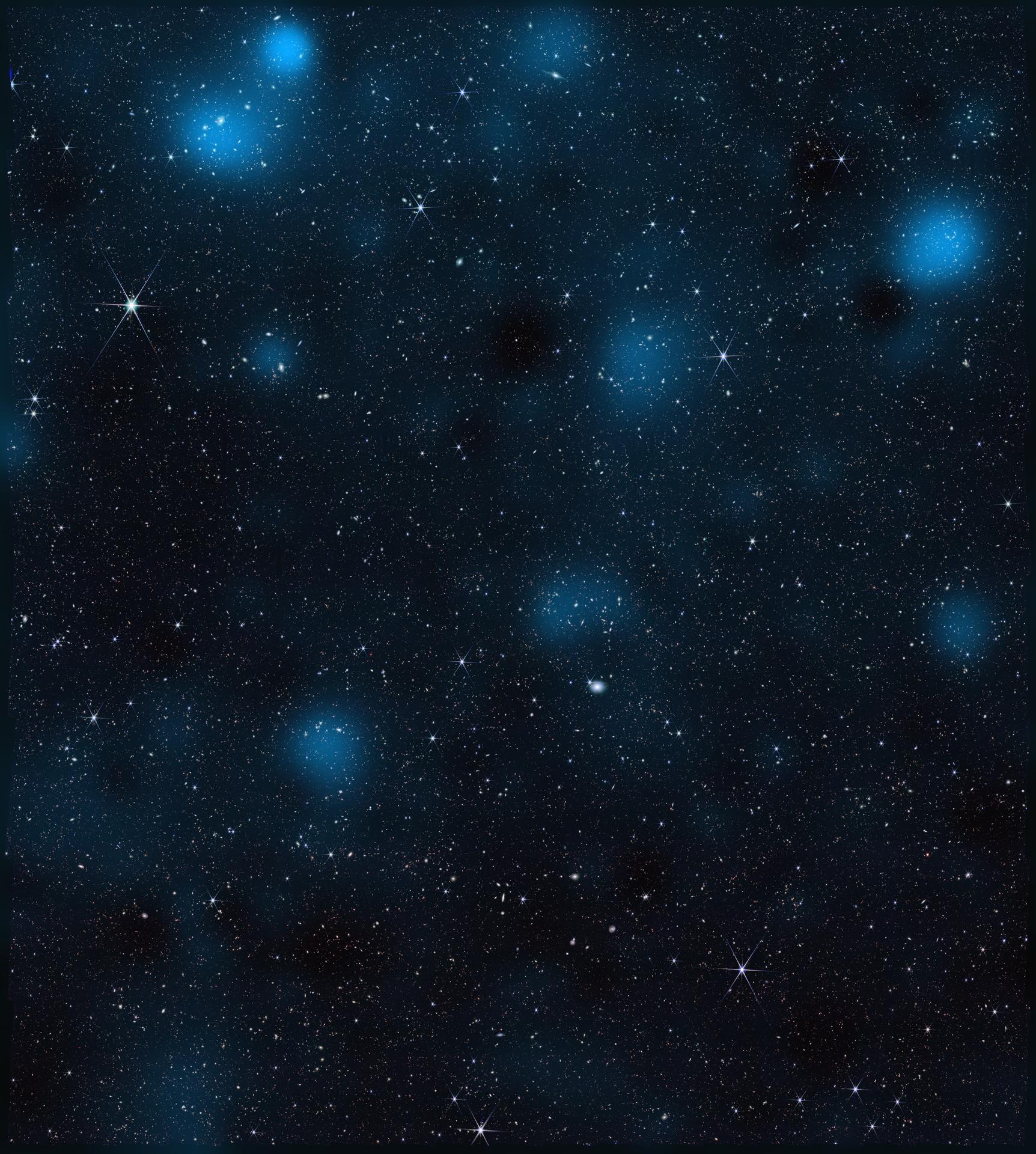
JPL · 2026-01-26 · PIA26702
Webb Data Reveals Dark Matter
This image from NASA’s James Webb Space Telescope, containing nearly 800,000 galaxies, is overlaid with a map of dark matter, represented in blue. Brighter blue areas indicate a…
Inspect NASA record
This image from NASA’s James Webb Space Telescope, containing nearly 800,000 galaxies, is overlaid with a map of dark matter, represented in blue. Brighter blue areas indicate a higher density of dark matter. Researchers used Webb data to find the dark matter — which is invisible — via its gravitational influence on regular matter. The area of sky shown here is 0.54 square degrees (about 2½ times the size of the full Moon) and located in the constellation Sextans. Webb’s Near-Infrared Camera (NIRCam) peered at this region for a total of about 255 hours. Dark matter doesn’t emit, reflect, absorb, or even block light, and is therefore not visible to the human eye or traditional telescopes. But it does interact with the universe through gravity, and large clumps or clusters of dark matter have enough mass to curve space itself. Light traveling to Earth from distant galaxies becomes slightly distorted as it passes through the curved fabric of spacetime. In some cases, the warping is significant enough that it is apparent to the naked eye, almost as if the galaxy were being viewed through a warped windowpane, an effect called strong gravitational lensing. In the case of the dark matter map shown here, scientists inferred dark matter’s distribution by relying instead on an effect called weak gravitational lensing, which leads to much more subtle distortions of the light from thousands of galaxies. The dark matter in this area of sky was also mapped in 2007 using data from NASA’s Hubble Space Telescope. The Webb map contains about 10 times more galaxies than do maps of the area made by ground-based observatories and twice as many as Hubble’s map. It reveals new clumps of dark matter and captures a higher-resolution view compared to the Hubble map. Both the Hubble and Webb dark matter maps are part of a project called the Cosmic Evolution Survey (COSMOS). The full COSMOS “field” is 2 square degrees (about 10 times the size of the full Moon) and has been imaged by at least 15 telescopes in space and on the ground. Observing the same region with many different telescopes allows scientists to combine complementary views to understand how galaxies grow and how dark matter influences their evolution. Only Webb and Hubble data have been used to map dark matter in the region. To refine measurements of the distance to many galaxies for the map, the team used Webb’s Mid-Infrared Instrument (MIRI), designed and managed through launch by the agency’s Jet Propulsion Laboratory, along with other space- and ground-based telescopes. The wavelengths that MIRI detects also make it adept at detecting galaxies obscured by cosmic dust clouds. The James Webb Space Telescope is solving mysteries in our solar system, looking beyond to distant worlds around other stars, and probing the mysterious structures and origins of our universe and our place in it. Webb is an international program led by NASA with its partners, ESA (European Space Agency) and CSA (Canadian Space Agency). Webb’s MIRI was developed through a 50-50 partnership between NASA and ESA. A division of Caltech in Pasadena, California, JPL led the U.S. contribution to MIRI. JPL also led development of MIRI’s cryocooler, done in collaboration with Northrop Grumman in Redondo Beach, California, and NASA’s Goddard Space Flight Center in Greenbelt, Maryland. To learn more about Webb, visit: https://science.nasa.gov/webb
- Record ID
- PIA26702
- NASA center
- JPL
- Date
- 2026-01-26
- Credit
- NASA/STScI/J. DePasquale/A. Pagan
- Keywords
- Webb, Dark Matter, James Webb Space Telescope

GSFC · 2017-12-08 · GSFC_20171208_Archive_e001567
NASA Space Telescopes See Weather Patterns in Brown Dwarf
JANUARY 8, 2013: Astronomers using NASA's Hubble and Spitzer space telescopes have probed the stormy atmosphere of a brown dwarf named 2MASSJ22282889-431026, creating the most detailed "weather map"…
Inspect NASA record
JANUARY 8, 2013: Astronomers using NASA's Hubble and Spitzer space telescopes have probed the stormy atmosphere of a brown dwarf named 2MASSJ22282889-431026, creating the most detailed "weather map" yet for this class of cool, star-like orbs. The forecast shows wind-driven, planet-sized clouds enshrouding these strange worlds. Brown dwarfs form out of condensing gas, as stars do, but lack the mass to fuse atoms and produce energy. Instead, these objects, which some call failed stars, are more similar to gas planets with their complex, varied atmospheres. The new research is a stepping stone toward a better understanding not only brown dwarfs, but also of the atmospheres of planets beyond our solar system. Hubble and Spitzer simultaneously watched the brown dwarf as its light varied in time, brightening and dimming about every 90 minutes as the body rotated. Astronomers found the timing of this change in brightness depended on whether they looked using different wavelengths of infrared light. The variations are the result of different layers or patches of material swirling around in the brown dwarf in windy storms as large as Earth itself. Spitzer and Hubble see different atmospheric layers because certain infrared wavelengths are blocked by vapors of water and methane high up, while other infrared wavelengths emerge from much deeper layers. Daniel Apai, the principal investigator of the research from the University of Arizona, Tucson, presented the results at the American Astronomical Society meeting on January 8 in Long Beach, Calif. A study describing the results, led by Esther Buenzli, also of the University of Arizona, is published in the Astrophysical Journal Letters. For more information about this study, visit www.nasa.gov/spitzer . NASA image use policy. NASA Goddard Space Flight Center enables NASA’s mission through four scientific endeavors: Earth Science, Heliophysics, Solar System Exploration, and Astrophysics. Goddard plays a leading role in NASA’s accomplishments by contributing compelling scientific knowledge to advance the Agency’s mission. Follow us on Twitter Like us on Facebook Find us on Instagram
- Record ID
- GSFC_20171208_Archive_e001567
- NASA center
- GSFC
- Date
- 2017-12-08
- Keywords
- NASA Space Telescopes See Weather Patterns in Brown Dwarf, space, nasa, galaxy, hubble, hst