
Update Site (from NASA)
Explore NASA’s Image and Video Library.
Suggest one object per day for the Interstellar Minds collection. We review each suggestion before adding it.
Sign in to suggest a Marvel.
Find a NASA image ID. Open a NASA record and copy its ID from the end of the details URL.
NASA image records
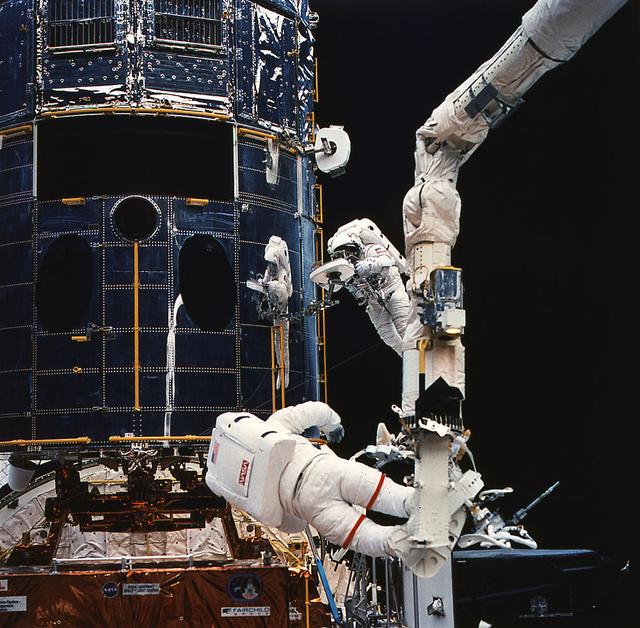
MSFC · 1993-12-07 · 9400252
History of Hubble Space Telescope (HST)
Anchored on the end of orbiter Endeavour's remote manipulator system arm, astronaut Jeffrey Hoffman (foreground) prepares to install the new wide field planetary camera into the empty cavity…
Inspect NASA record
Anchored on the end of orbiter Endeavour's remote manipulator system arm, astronaut Jeffrey Hoffman (foreground) prepares to install the new wide field planetary camera into the empty cavity of the Hubble Space Telescope (HST). Astronaut Story Musgrave works with a portable foot restraint.
- Record ID
- 9400252
- NASA center
- MSFC
- Date
- 1993-12-07
- Keywords
- Around Marshall, STS Missions, STS-61 HST repair
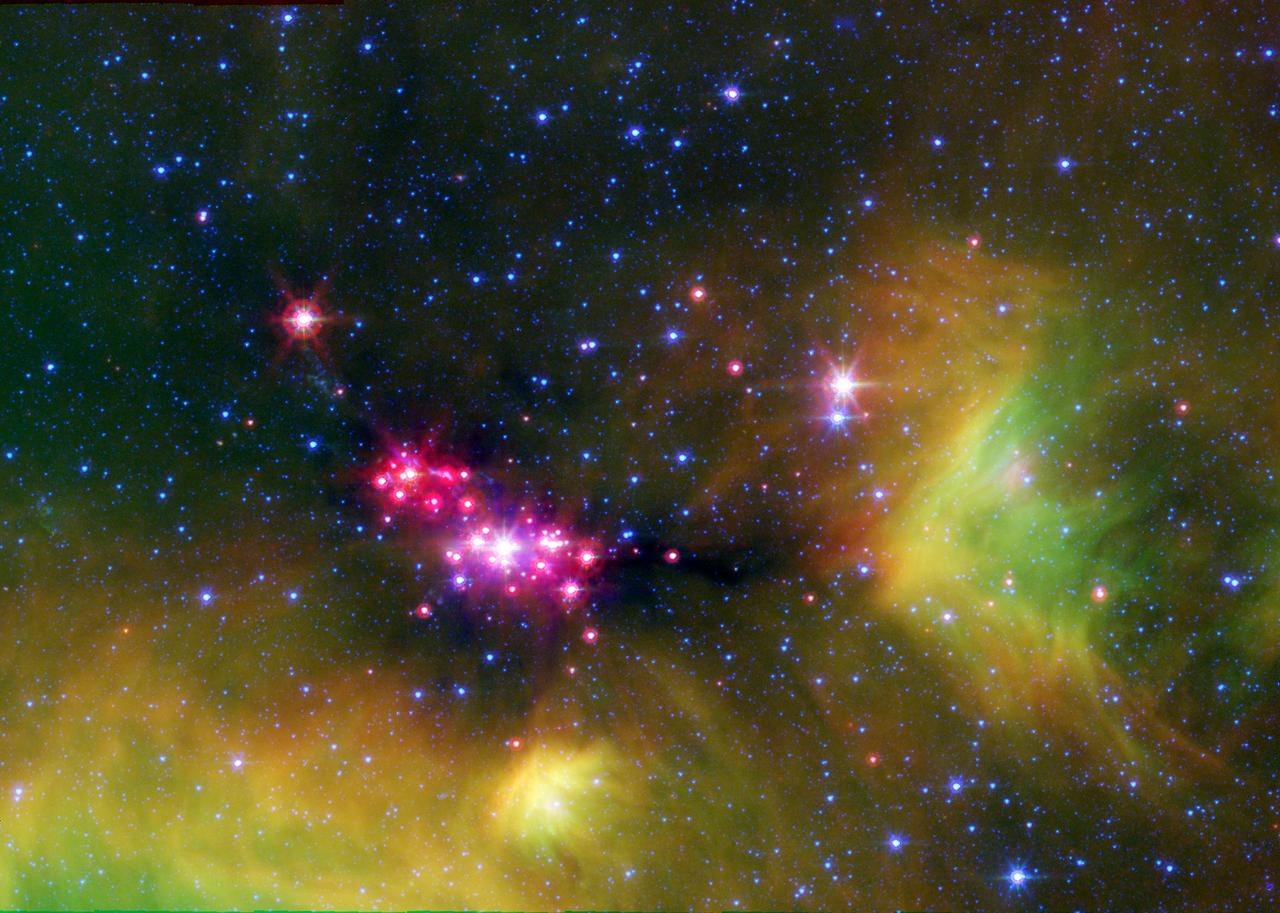
JPL · 2006-12-08 · PIA09072
Seeing Stars in Serpens
Infant stars are glowing gloriously in this image of the Serpens star-forming region, captured by NASA Spitzer Space Telescope. The reddish-pink dots are baby stars deeply embedded in…
Inspect NASA record
Infant stars are glowing gloriously in this image of the Serpens star-forming region, captured by NASA Spitzer Space Telescope. The reddish-pink dots are baby stars deeply embedded in the cosmic cloud of gas and dust that collapsed to create it.
- Record ID
- PIA09072
- NASA center
- JPL
- Date
- 2006-12-08
- Credit
- NASA/JPL-Caltech/UT Austin
- Keywords
- Spitzer Space Telescope
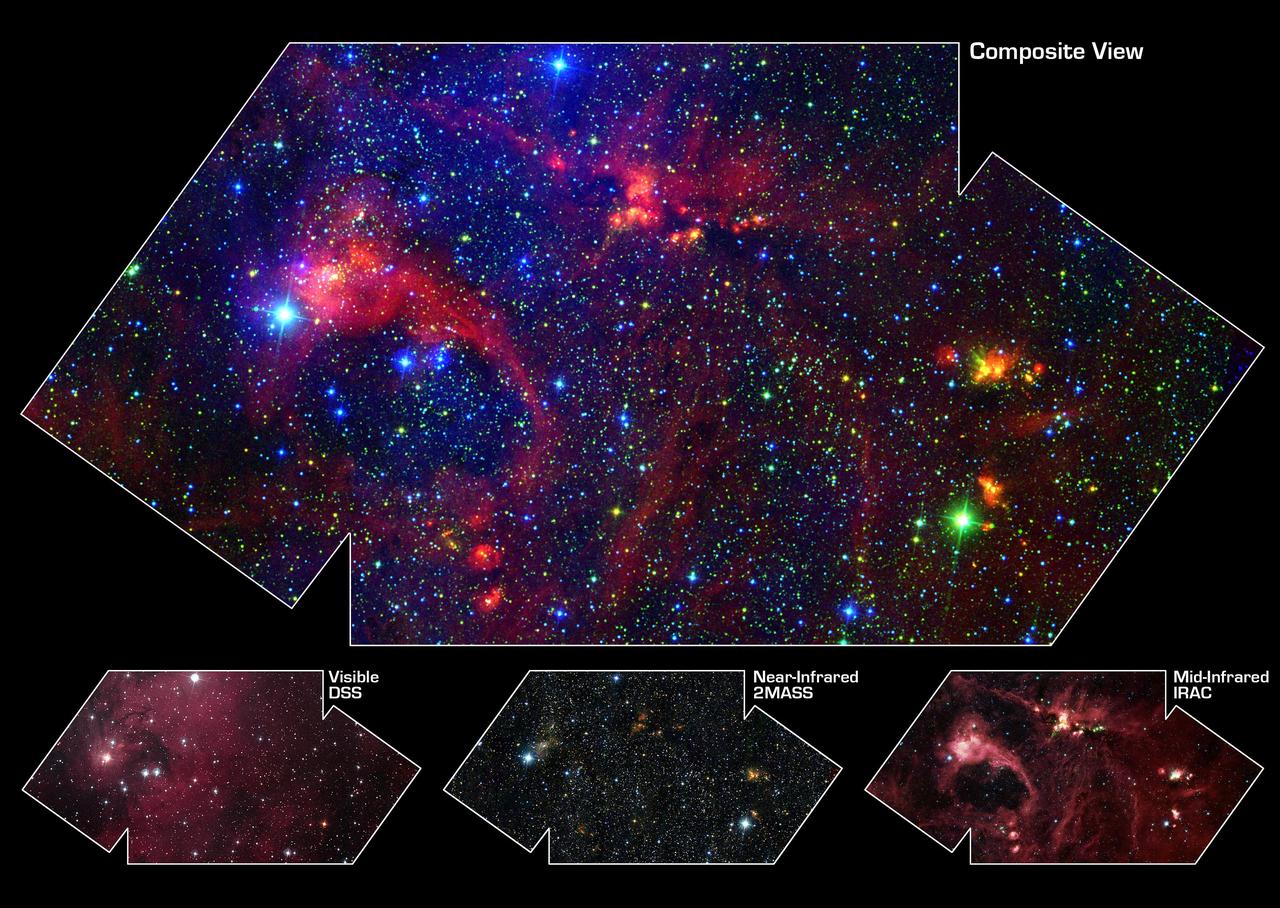
JPL · 2004-04-13 · PIA05735
Star Formation in the DR21 Region A
Hidden behind a shroud of dust in the constellation Cygnus is a stellar nursery called DR21, which is giving birth to some of the most massive stars in…
Inspect NASA record
Hidden behind a shroud of dust in the constellation Cygnus is a stellar nursery called DR21, which is giving birth to some of the most massive stars in our galaxy. Visible light images reveal no trace of this interstellar cauldron because of heavy dust obscuration. In fact, visible light is attenuated in DR21 by a factor of more than 10,000,000,000,000,000,000,000,000,000,000,000,000,000 (ten thousand trillion heptillion). New images from NASA's Spitzer Space Telescope allow us to peek behind the cosmic veil and pinpoint one of the most massive natal stars yet seen in our Milky Way galaxy. The never-before-seen star is 100,000 times as bright as the Sun. Also revealed for the first time is a powerful outflow of hot gas emanating from this star and bursting through a giant molecular cloud. The colorful image (top panel) is a large-scale composite mosaic assembled from data collected at a variety of different wavelengths. Views at visible wavelengths appear blue, near-infrared light is depicted as green, and mid-infrared data from the InfraRed Array Camera (IRAC) aboard NASA's Spitzer Space Telescope is portrayed as red. The result is a contrast between structures seen in visible light (blue) and those observed in the infrared (yellow and red). A quick glance shows that most of the action in this image is revealed to the unique eyes of Spitzer. The image covers an area about two times that of a full moon. Each of the constituent images is shown below the large mosaic. The Digital Sky Survey (DSS) image (lower left) provides a familiar view of deep space, with stars scattered around a dark field. The reddish hue is from gas heated by foreground stars in this region. This fluorescence fades away in the near-infrared Two-Micron All-Sky Survey (2MASS) image (lower center), but other features start to appear through the obscuring clouds of dust, now increasingly transparent. Many more stars are discerned in this image because near-infrared light pierces through some of the obscuration of the interstellar dust. Note that some stars seen as very bright in the visible image are muted in the near-infrared image, whereas other stars become more prominent. Embedded nebulae revealed in the Spitzer image are only hinted at in this picture. The Spitzer image (lower right) provides a vivid contrast to the other component images, revealing star-forming complexes and large-scale structures otherwise hidden from view. The Spitzer image is composed of photographs obtained at four wavelengths: 3.6 microns (blue), 4.5 microns (green), 5.8 microns (orange) and 8 microns (red). The brightest infrared cloud near the top center corresponds to DR21, which presumably contains a cluster of newly forming stars at a distance of nearly 10,000 light-years. The red filaments stretching across the Spitzer image denote the presence of polycyclic aromatic hydrocarbons. These organic molecules, comprised of carbon and hydrogen, are excited by surrounding interstellar radiation and become luminescent at wavelengths near 8 microns. The complex pattern of filaments is caused by an intricate combination of radiation pressure, gravity, and magnetic fields. The result is a tapestry in which winds, outflows, and turbulence move and shape the interstellar medium. http://photojournal.jpl.nasa.gov/catalog/PIA05735
- Record ID
- PIA05735
- NASA center
- JPL
- Date
- 2004-04-13
- Credit
- NASA/JPL-Caltech
- Keywords
- Spitzer Space Telescope

MSFC · 1995-12-01 · 9601396
History of Hubble Space Telescope (HST)
This deepest-ever view of the universe unveils myriad galaxies back to the begirning of time. Several hundred, never-before-seen, galaxies are visible in this view of the universe, called…
Inspect NASA record
This deepest-ever view of the universe unveils myriad galaxies back to the begirning of time. Several hundred, never-before-seen, galaxies are visible in this view of the universe, called Hubble Deep Field (HDF). Besides the classical spiral and elliptical shaped galaxies, there is a bewildering variety of other galaxy shapes and colors that are important clues to understanding the evolution of the universe. Some of the galaxies may have formed less than one-billion years after the Big Bang. The image was assembled from many separate exposures with the Wide Field/Planetary Camera 2 (WF/PC2), for ten consecutive days between December 18, 1995 and December 28, 1995. This true-color view was assembled from separate images taken with blue, red, and infrared light. By combining these separate images into a single color picture, astronomers will be able to infer, at least statistically, the distance, age, and composition of galaxies in the field. Blue objects contain young stars and/or are relatively close, while redder objects contain older stellar populations and/or are farther away.
- Record ID
- 9601396
- NASA center
- MSFC
- Date
- 1995-12-01
- Keywords
- Hubble Space Telescope, HST, Image, Wide Field/Planetary Camera, WF/PC2

MSFC · 2016-11-10 · 9401031
STS-61
This is a Space Shuttle mission STS-61 onboard view showing astronauts Story Musgrave and Jeffrey Hoffman preforming repairs to the Hubble Space Telescope (HST) during their Extra Vehicular…
Inspect NASA record
This is a Space Shuttle mission STS-61 onboard view showing astronauts Story Musgrave and Jeffrey Hoffman preforming repairs to the Hubble Space Telescope (HST) during their Extra Vehicular Activity (EVA). Astronauts' work was made easier by the HST's many crew aids. Astronaut Musgrave makes use of one of the spacecraft's handholds. Launched on December 1, 1993, the Space Shuttle Orbiter Endeavor STS-061 mission was the 59th Shuttle flight.
- Record ID
- 9401031
- NASA center
- MSFC
- Date
- 2016-11-10
- Credit
- UNKNOWN
- Keywords
- STS-61; STORY MUSGRAVE; JEFFREY HOFFMAN; HUBBLE; HST; EVA
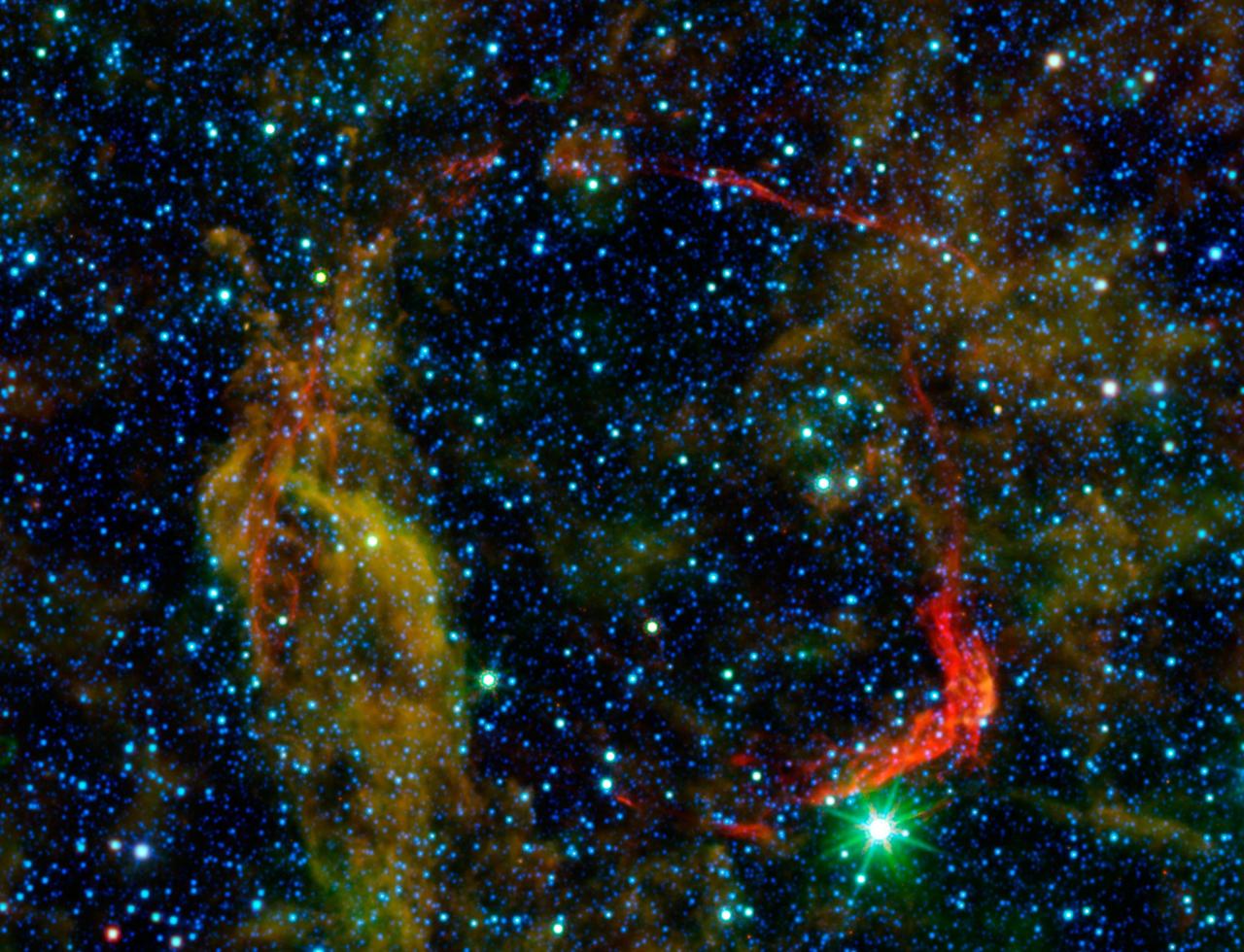
JPL · 2011-10-24 · PIA14871
All That Remains of Exploded Star
Infrared images from NASA Spitzer Space Telescope and Wide-field Infrared Survey Explorer are combined in this image of RCW 86, the dusty remains of the oldest documented example…
Inspect NASA record
Infrared images from NASA Spitzer Space Telescope and Wide-field Infrared Survey Explorer are combined in this image of RCW 86, the dusty remains of the oldest documented example of an exploding star, or supernova.
- Record ID
- PIA14871
- NASA center
- JPL
- Date
- 2011-10-24
- Credit
- NASA/JPL-Caltech/UCLA
- Keywords
- Spitzer Space Telescope,Wide-field Infrared Survey Explorer WIS
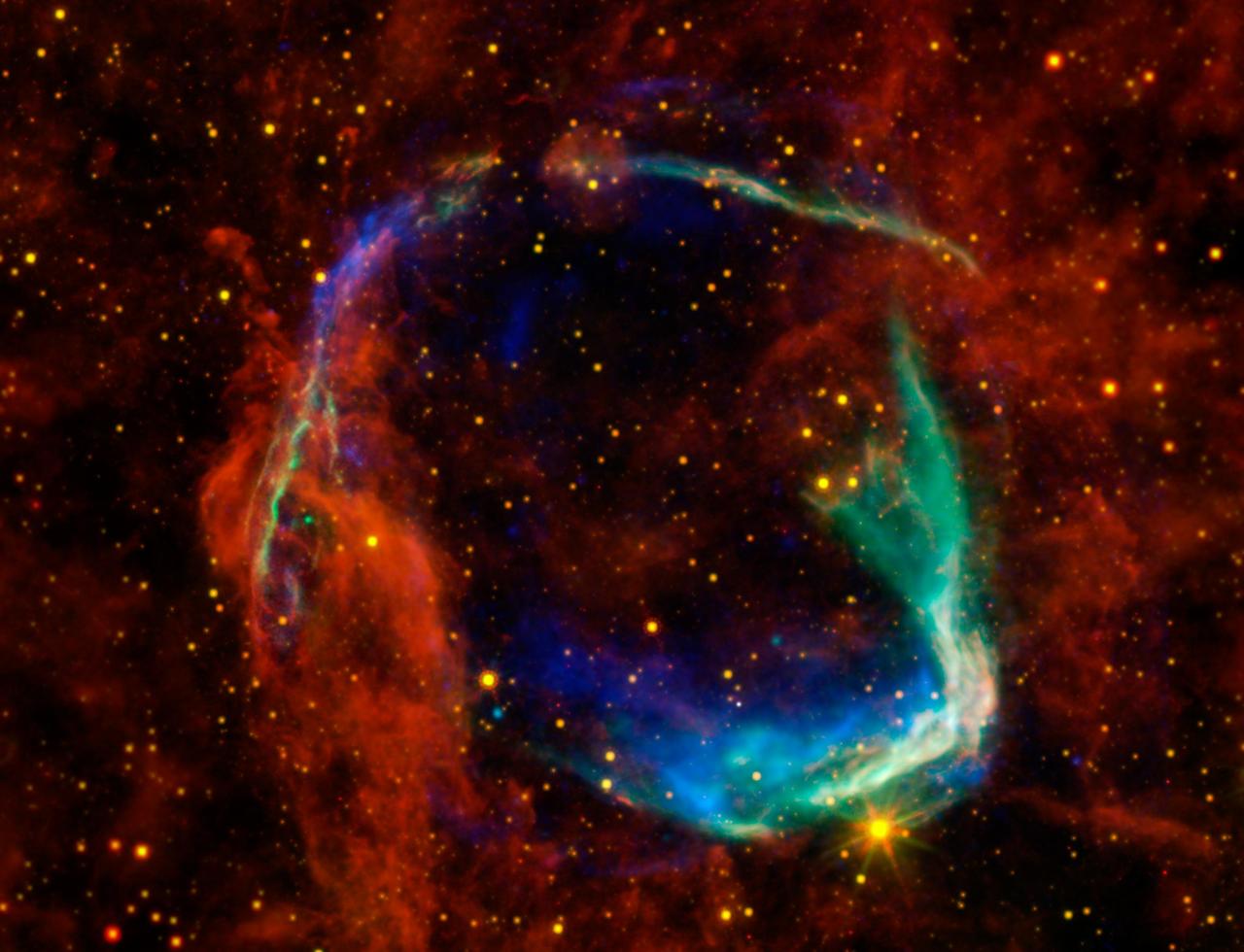
JPL · 2011-10-24 · PIA14872
All Eyes on Oldest Recorded Supernova
This image combines data from four different space telescopes to create a multi-wavelength view of all that remains of the oldest documented example of a supernova, called RCW…
Inspect NASA record
This image combines data from four different space telescopes to create a multi-wavelength view of all that remains of the oldest documented example of a supernova, called RCW 86.
- Record ID
- PIA14872
- NASA center
- JPL
- Date
- 2011-10-24
- Credit
- NASA/ESA/JPL-Caltech/UCLA/CXC/SAO
- Keywords
- Chandra X-Ray Observatory,Spitzer Space Telescope,Wide-field Inf
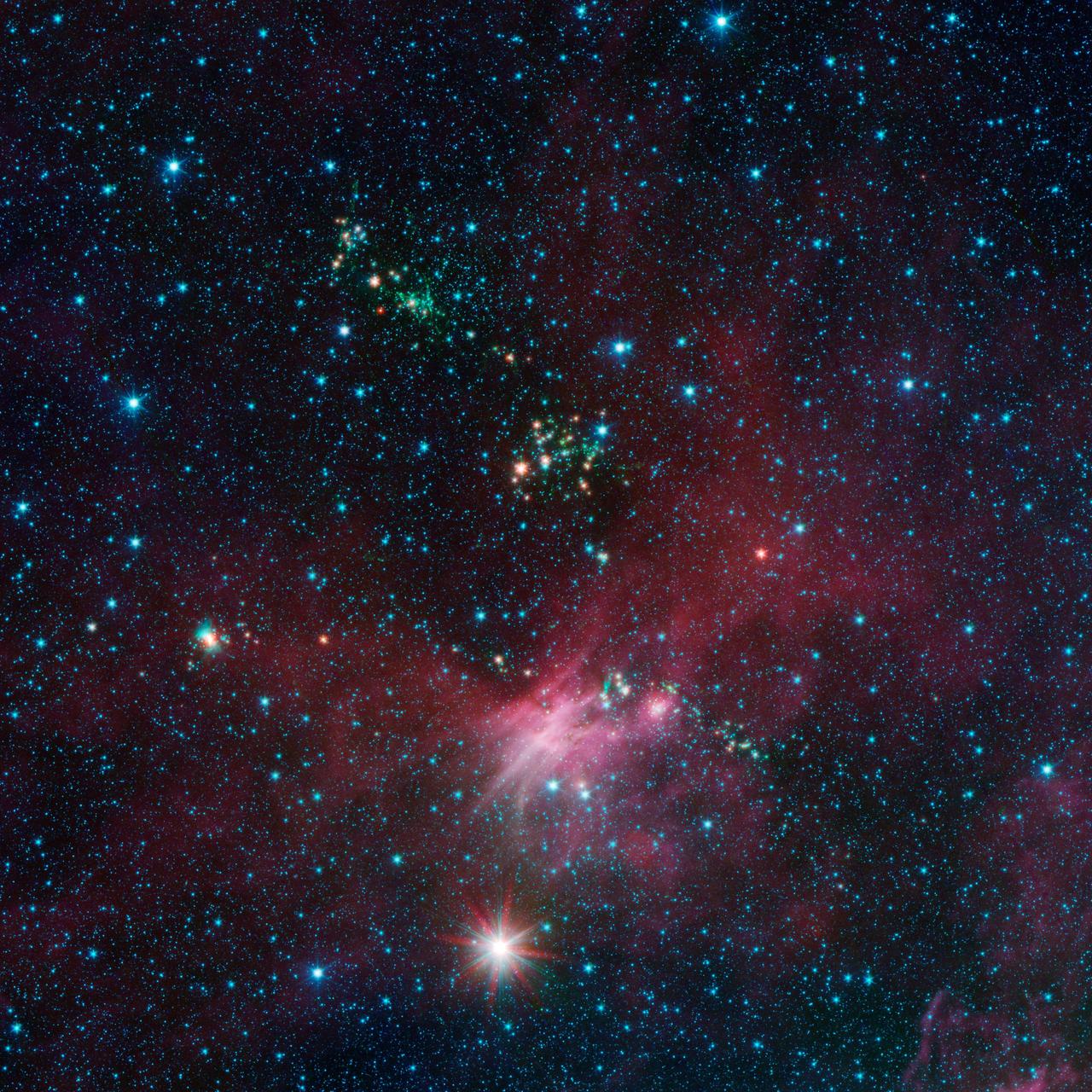
JPL · 2013-06-05 · PIA17018
Stars Shoot Jets in Cosmic Playground
Dozens of newborn stars sprouting jets from their dusty cocoons have been spotted in images from NASA Spitzer Space Telescope. This view shows a portion of sky near…
Inspect NASA record
Dozens of newborn stars sprouting jets from their dusty cocoons have been spotted in images from NASA Spitzer Space Telescope. This view shows a portion of sky near Canis Major.
- Record ID
- PIA17018
- NASA center
- JPL
- Date
- 2013-06-05
- Credit
- NASA/JPL-Caltech/University of Wisconsin
- Keywords
- Spitzer Space Telescope,Wide-field Infrared Survey Explorer WIS
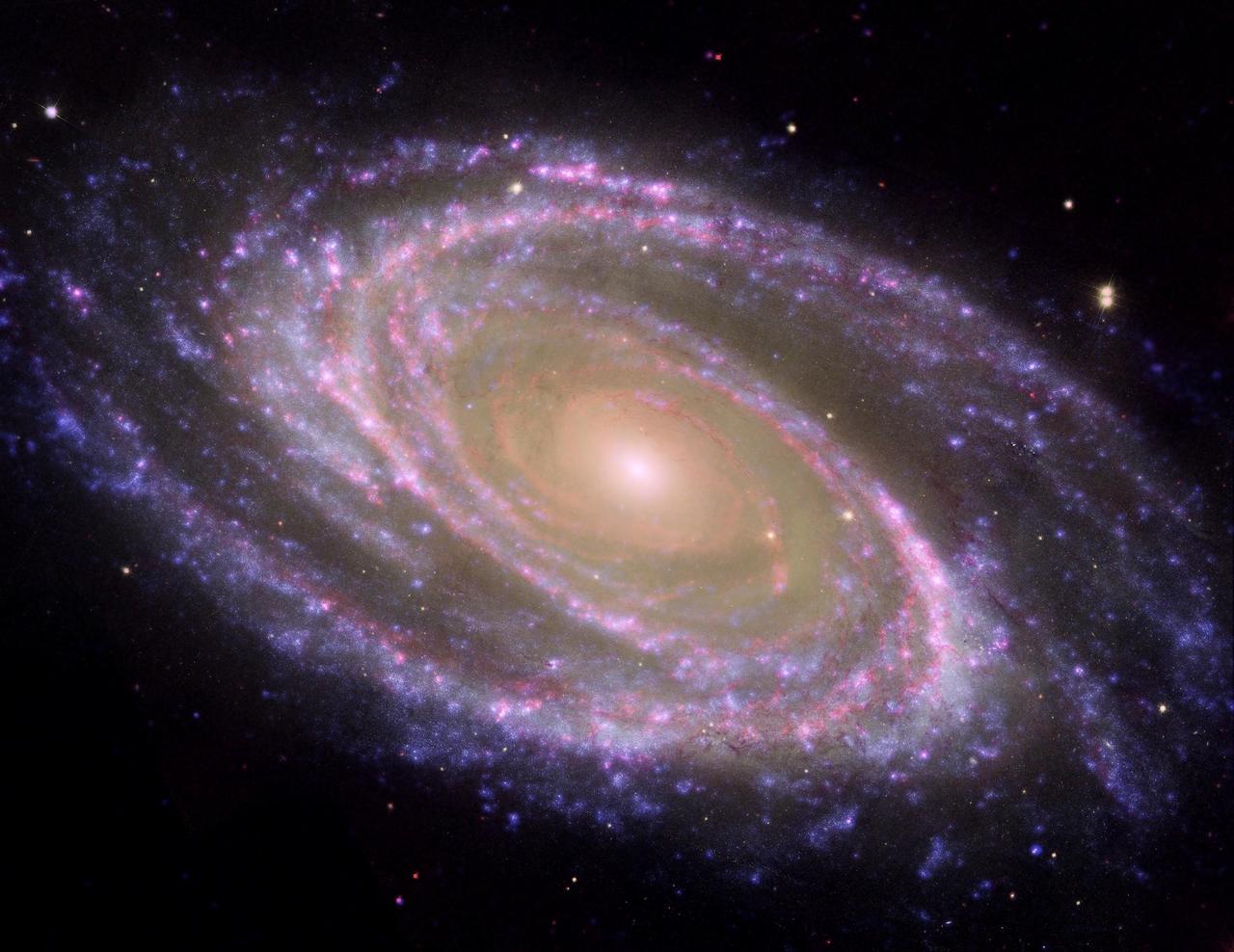
JPL · 2007-06-01 · PIA09579
M81 Galaxy is Pretty in Pink
The perfectly picturesque spiral galaxy known as Messier 81, or M81, looks sharp in this new composite from NASA Spitzer and Hubble space telescopes and NASA Galaxy Evolution…
Inspect NASA record
The perfectly picturesque spiral galaxy known as Messier 81, or M81, looks sharp in this new composite from NASA Spitzer and Hubble space telescopes and NASA Galaxy Evolution Explorer.
- Record ID
- PIA09579
- NASA center
- JPL
- Date
- 2007-06-01
- Credit
- NASA/JPL-Caltech/ESA/Harvard-Smithsonian CfA
- Keywords
- Messier 81, Galaxy Evolution Explorer GALEX,Hubble Space Telescope,Spitzer
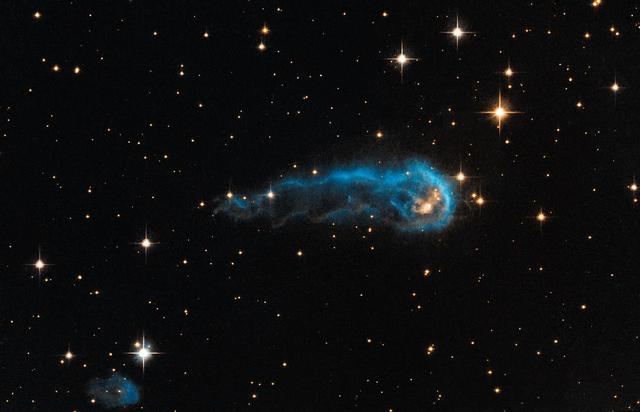
JPL · 2014-04-14 · PIA18168
The Tadpole and the Wriggler
A bright blue tadpole appears to swim through the inky blackness of space. Known as IRAS 20324+4057, but dubbed "the Tadpole," this clump of gas and dust has…
Inspect NASA record
A bright blue tadpole appears to swim through the inky blackness of space. Known as IRAS 20324+4057, but dubbed "the Tadpole," this clump of gas and dust has given birth to a bright, "protostar," one of the earliest steps in building a star. This image was taken by NASA's Hubble Space Telescope, and released publicly, in 2012. There are actually multiple protostars within this tadpole's 'head," but the glowing yellow one in this image is the most luminous and massive. When this protostar has gathered together enough mass from its surroundings, it will eventually emerge as a fully-fledged young star. The intense blue glow is caused by nearby stars firing ultraviolet radiation at IRAS 20324+4057, which also sculpts its tail into a long, wiggly shape. In total, this clump spans roughly a light-year from head to tail-tip, and contains gas weighing almost four times the mass of the sun. Framed against a background of distant stars, IRAS 20324+4057 is making its way through the Cygnus OB2 association, a loose cluster of stars some 4,700 light-years from Earth in the constellation Cygnus. This association is one of the largest clusters known, and is famed for its heavyweight members. It contains some of the hottest, most massive and most luminous stars known, some of which are about two million times more luminous than the sun. The Tadpole is not alone in this interstellar pond. Just out of view, to the bottom right of this image, lies another curious object dubbed "the Goldfish" by astronomers. The Goldfish is about half the length of IRAS 20324+4057, and is also thought to be a globule of gas that is being both lit up and sculpted by radiation from cluster stars. Completing this trio is a small clump of blue gas, informally nicknamed "the Wriggler" by some astronomers, visible in the bottom left of this Hubble image. All three objects have the same orientation in the sky and appear to be brighter on their northern sides, leading astronomers to believe they are being shaped by aggressive winds and radiation flowing from hot Cygnus OB2 stars towards the top right of the frame. http://photojournal.jpl.nasa.gov/catalog/PIA18168
- Record ID
- PIA18168
- NASA center
- JPL
- Date
- 2014-04-14
- Credit
- NASA/JPL-Caltech/ESA, the Hubble Heritage Team STScI/AURA and IPHAS
- Keywords
- Hubble Space Telescope
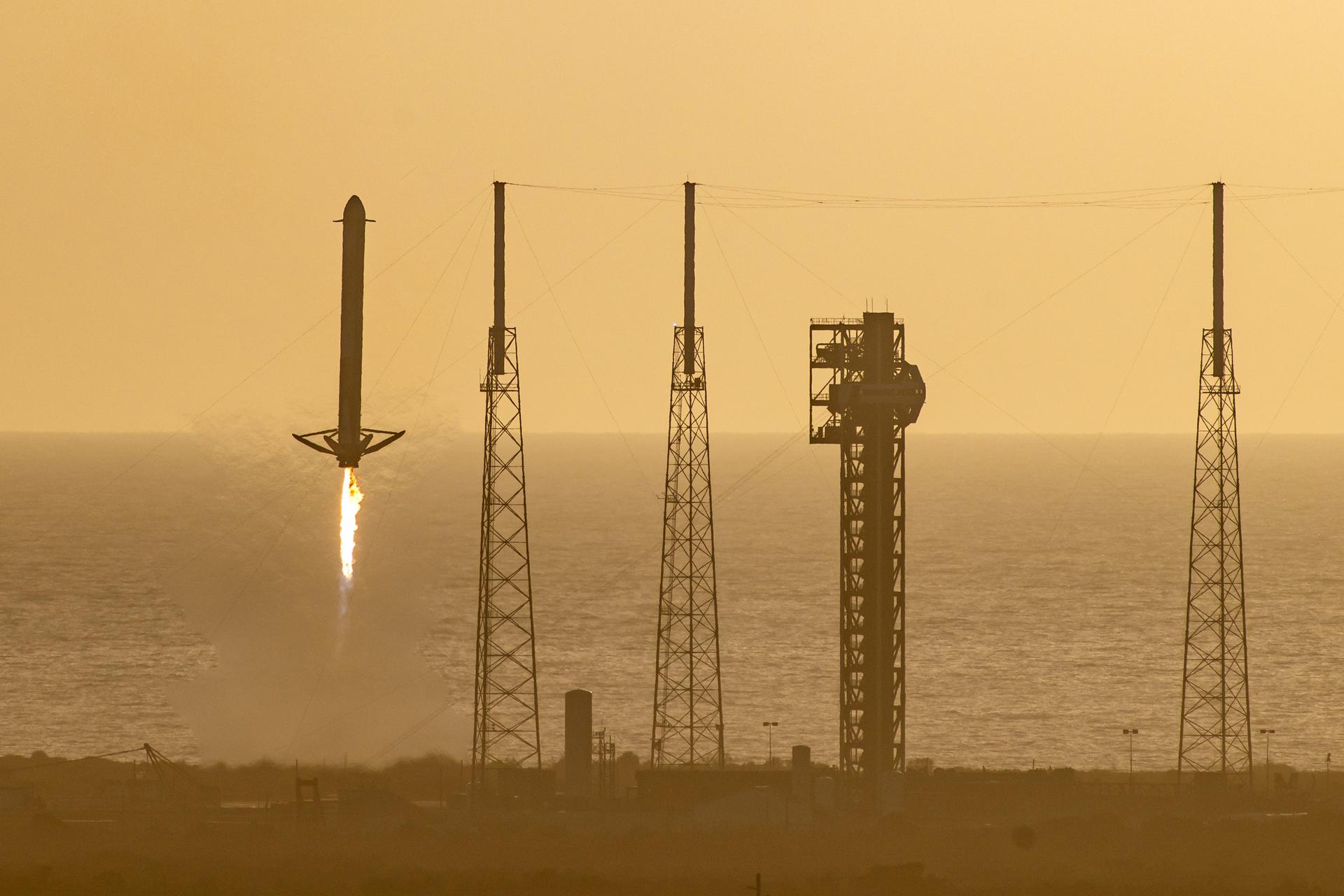
KSC · 2026-08-30 · KSC-20260830-PH-SPX02_0002
NASA's Nancy Grace Roman Space Telescope Liftoff, Launch Comple
One of SpaceX’s Falcon Heavy side boosters that launched NASA’s Nancy Grace Roman Space Telescope from Launch Complex 39A at the agency’s Kennedy Space Center in Florida on…
Inspect NASA record
One of SpaceX’s Falcon Heavy side boosters that launched NASA’s Nancy Grace Roman Space Telescope from Launch Complex 39A at the agency’s Kennedy Space Center in Florida on Sunday, Aug. 30, 2026, returns to land at Landing Zone 40 at nearby Cape Canaveral Space Force Station. Roman will investigate dark energy and dark matter, conduct a statistical census of planetary systems, and enable a broad range of additional astrophysics research.
- Record ID
- KSC-20260830-PH-SPX02_0002
- NASA center
- KSC
- Date
- 2026-08-30
- Credit
- SpaceX
- Keywords
- John. F. Kennedy Space Center, Kennedy, Kennedy Space Center, KSC, Spaceport, Cape Canaveral, NASA, rocket ranch, Florida, multi-user spaceport, premier spaceport, space coast

KSC · 2026-08-30 · KSC-20260830-PH-SPX02_0004
NASA's Nancy Grace Roman Space Telescope Liftoff, Launch Comple
NASA’s Nancy Grace Roman Space Telescope rises to space atop a SpaceX Falcon Heavy rocket from Launch Complex 39A at the agency’s Kennedy Space Center in Florida on…
Inspect NASA record
NASA’s Nancy Grace Roman Space Telescope rises to space atop a SpaceX Falcon Heavy rocket from Launch Complex 39A at the agency’s Kennedy Space Center in Florida on Sunday, Aug. 30, 2026. The milestone begins the observatory’s journey to explore the large‑scale structure of the universe. Roman will investigate dark energy and dark matter, conduct a statistical census of planetary systems, and enable a broad range of additional astrophysics research.
- Record ID
- KSC-20260830-PH-SPX02_0004
- NASA center
- KSC
- Date
- 2026-08-30
- Credit
- SpaceX
- Keywords
- John. F. Kennedy Space Center, Kennedy, Kennedy Space Center, KSC, Spaceport, Cape Canaveral, NASA, rocket ranch, Florida, multi-user spaceport, premier spaceport, space coast