
Update Site (from NASA)
Explore NASA’s Image and Video Library.
Suggest one object per day for the Interstellar Minds collection. We review each suggestion before adding it.
Sign in to suggest a Marvel.
Find a NASA image ID. Open a NASA record and copy its ID from the end of the details URL.
NASA image records
KSC · 2003-06-08 · KSC-03pd1851
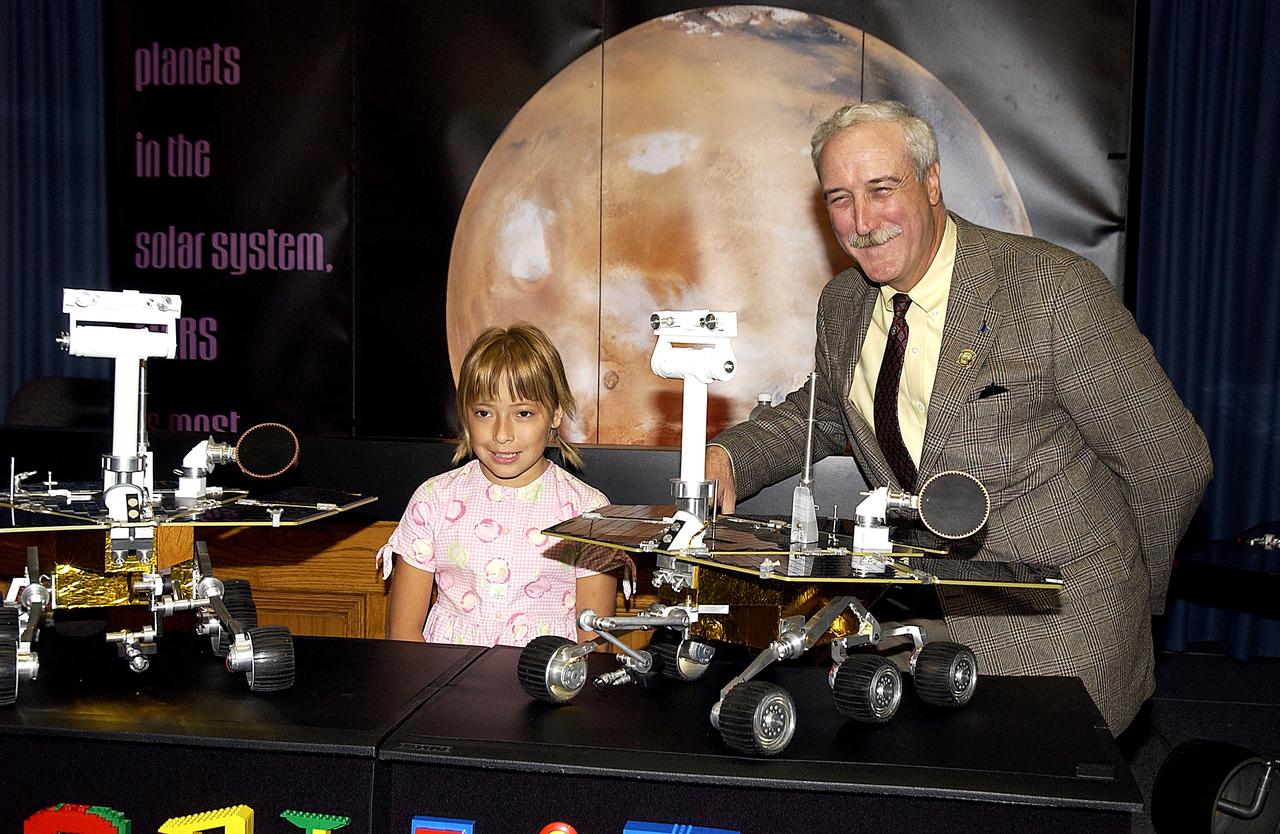
KENNEDY SPACE CENTER, FLA. - Nine-year-old Sofi Collis (left) is introduced to the media by NASA Administrator Sean O'Keefe at a press conference. The Siberian-born Arizona resident wrote the winning entry in the Name the Rovers Contest sponsored by NASA and the Lego Co., a Denmark-based toymaker, with collaboration from the Planetary Society, Pasadena, Calif. The names she selected for the Mars Exploration Rovers are "Spirit" and "Opportunity." The third grader's essay was chosen from more than 10,000 American student entries. NASA's twin Mars Exploration Rovers are designed to study the history of water on Mars. These robotic geologists are equipped with a robotic arm, a drilling tool, three spectrometers, and four pairs of cameras that allow them to have a human-like, 3D view of the terrain. Each rover could travel as far as 100 meters in one day to act as Mars scientists' eyes and hands, exploring an environment where humans are not yet able to go. MER-A, with the rover Spirit aboard, is scheduled to launch on June 8 at 2:06 p.m. EDT, with two launch opportunities each day during a launch period that closes on June 24.
KENNEDY SPACE CENTER, FLA. - Nine-year-old Sofi Collis (left) is introduced to the media by NASA Administrator Sean O'Keefe at a press conference. The Siberian-born Arizona resident wrote…
Inspect NASA record
KENNEDY SPACE CENTER, FLA. - Nine-year-old Sofi Collis (left) is introduced to the media by NASA Administrator Sean O'Keefe at a press conference. The Siberian-born Arizona resident wrote the winning entry in the Name the Rovers Contest sponsored by NASA and the Lego Co., a Denmark-based toymaker, with collaboration from the Planetary Society, Pasadena, Calif. The names she selected for the Mars Exploration Rovers are "Spirit" and "Opportunity." The third grader's essay was chosen from more than 10,000 American student entries. NASA's twin Mars Exploration Rovers are designed to study the history of water on Mars. These robotic geologists are equipped with a robotic arm, a drilling tool, three spectrometers, and four pairs of cameras that allow them to have a human-like, 3D view of the terrain. Each rover could travel as far as 100 meters in one day to act as Mars scientists' eyes and hands, exploring an environment where humans are not yet able to go. MER-A, with the rover Spirit aboard, is scheduled to launch on June 8 at 2:06 p.m. EDT, with two launch opportunities each day during a launch period that closes on June 24.
- Record ID
- KSC-03pd1851
- NASA center
- KSC
- Date
- 2003-06-08
JPL · 2024-09-09 · PIA26441
Preparing for Planetary Protection Analysis
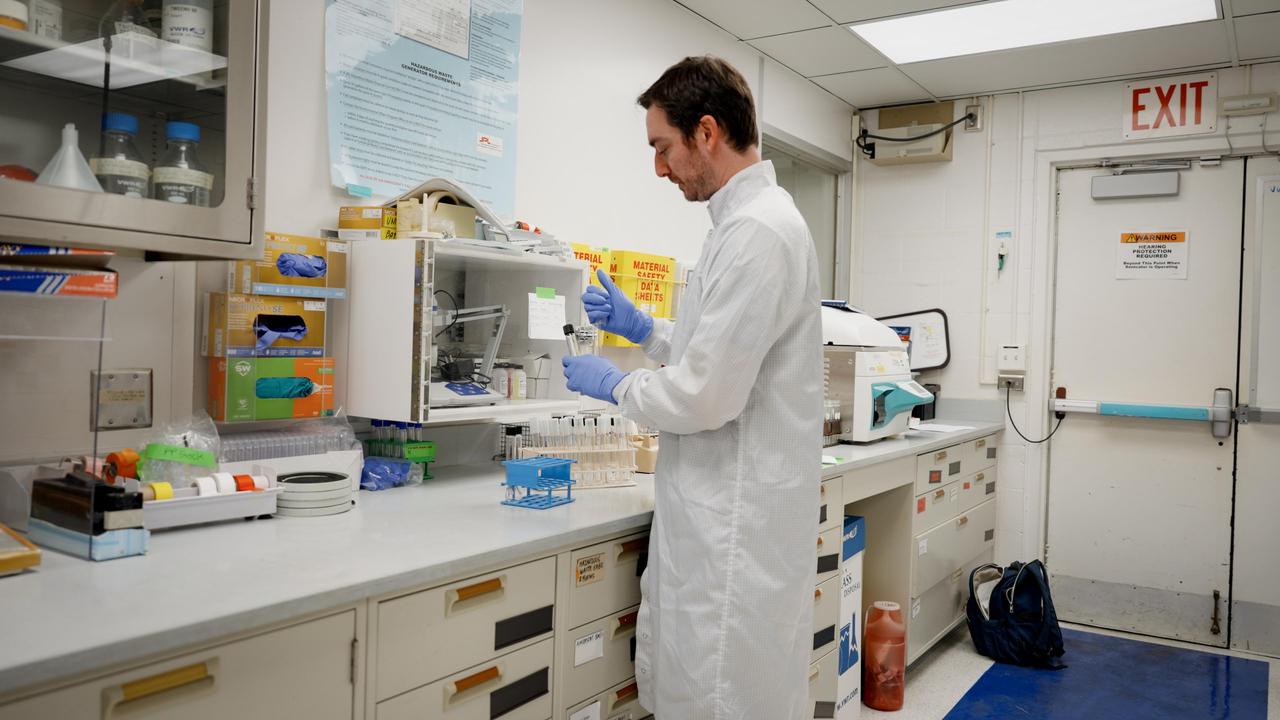
A planetary protection engineer at NASA's Jet Propulsion Laboratory prepares samples for analysis on March 20, 2024. The samples, swabbed from the surfaces of the agency's Europa Clipper…
Inspect NASA record
A planetary protection engineer at NASA's Jet Propulsion Laboratory prepares samples for analysis on March 20, 2024. The samples, swabbed from the surfaces of the agency's Europa Clipper spacecraft during its construction, were collected to help monitor the mission's adherence to strict standards for biological cleanliness. Created in keeping with the international 1967 Outer Space Treaty, the mission's planetary protection protocols are designed to minimize the chance that microbes brought from Earth could compromise future scientific investigations at its target destination: Jupiter's icy moon Europa. Europa Clipper's three main science objectives are to determine the thickness of the moon's icy shell and its interactions with the ocean below, to investigate its composition, and to characterize its geology. The mission's detailed exploration of Europa will help scientists better understand the astrobiological potential for habitable worlds beyond our planet. https://photojournal.jpl.nasa.gov/catalog/PIA26441
- Record ID
- PIA26441
- NASA center
- JPL
- Date
- 2024-09-09
- Credit
- NASA/JPL-Caltech
- Keywords
- Europa Clipper, Europa
JPL · 2024-10-29 · PIA26453
NASA's Lunar Trailblazer in Orbit Around the Moon (Artist's Concept)
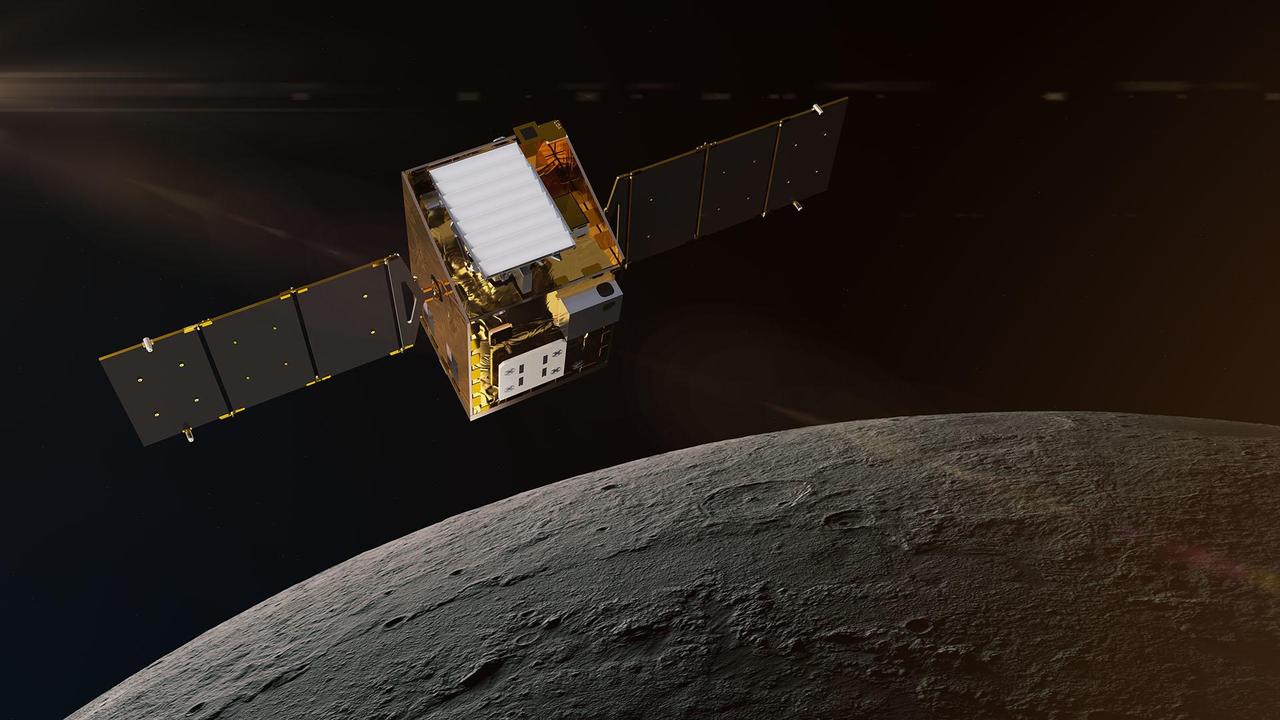
This artist's concept depicts NASA's Lunar Trailblazer in lunar orbit about 60 miles (100 kilometers) from the surface of the Moon. The spacecraft weighs only 440 pounds (200…
Inspect NASA record
This artist's concept depicts NASA's Lunar Trailblazer in lunar orbit about 60 miles (100 kilometers) from the surface of the Moon. The spacecraft weighs only 440 pounds (200 kilograms) and measures 11.5 feet (3.5 meters) wide when its solar panels are fully deployed. Lunar Trailblazer is managed by NASA's Jet Propulsion Laboratory, and its science investigation and mission operations are led by Caltech with the mission operations center at IPAC. Managed for NASA by Caltech, JPL also provides system engineering, mission assurance, the HVM3 instrument, as well as mission design and navigation. Lockheed Martin Space provides the spacecraft, integrates the flight system, and supports operations under contract with Caltech. Lunar Trailblazer is part of NASA's Small Innovative Missions for Planetary Exploration (SIMPLEx) program, which is managed by the Planetary Missions Program Office at NASA's Marshall Space Flight Center in Huntsville, Alabama, as part of the Discovery Program at NASA Headquarters in Washington. The program conducts space science investigations in the Planetary Science Division of NASA's Science Mission Directorate at NASA Headquarters. https://photojournal.jpl.nasa.gov/catalog/PIA26453
- Record ID
- PIA26453
- NASA center
- JPL
- Date
- 2024-10-29
- Credit
- Lockheed Martin Space
- Keywords
- Lunar Trailblazer
JPL · 2022-12-22 · PIA25255
A Closer View of NASA Lunar Trailblazer's HVM³ Imaging Spectrometer
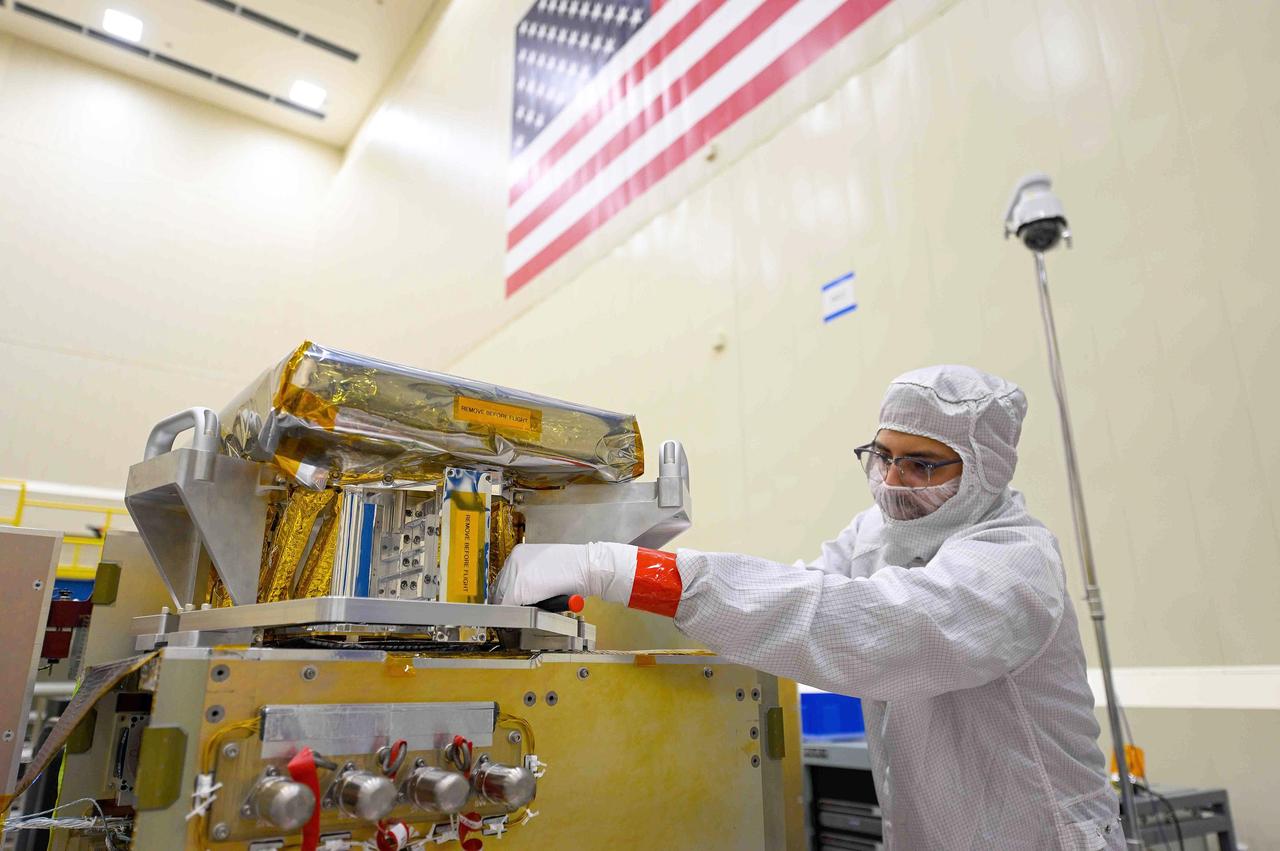
An engineer works on the High-resolution Volatiles and Minerals Moon Mapper (HVM³) for NASA's Lunar Trailblazer spacecraft in a clean room at Lockheed Martin Space in Littleton, Colorado,…
Inspect NASA record
An engineer works on the High-resolution Volatiles and Minerals Moon Mapper (HVM³) for NASA's Lunar Trailblazer spacecraft in a clean room at Lockheed Martin Space in Littleton, Colorado, shortly after the instrument delivered in December 2022. HVM³ is an imaging spectrometer that was developed at NASA's Jet Propulsion Laboratory in Southern California. It was shipped from JPL to Lockheed Martin Space, where it was integrated with the spacecraft. HVM³ is one of two instruments that will be used by the mission to detect and map water on the Moon's surface to determine its abundance, location, form, and how it changes over time. Lunar Trailblazer was selected under NASA's Small Innovative Missions for Planetary Exploration (SIMPLEx) program in 2019. The Lunar Trailblazer mission is managed by JPL and its science investigation is led by Caltech in Pasadena, California. Managed for NASA by Caltech, JPL also provides system engineering, mission assurance, the HVM³ instrument, as well as navigation. Lockheed Martin Space provides the spacecraft and integrates the flight system, under contract with Caltech. SIMPLEx mission investigations are managed by the Planetary Missions Program Office at NASA's Marshall Space Flight Center in Huntsville, Alabama, as part of the Discovery Program at NASA Headquarters in Washington. The program conducts space science investigations in the Planetary Science Division of NASA's Science Mission Directorate at NASA Headquarters. https://photojournal.jpl.nasa.gov/catalog/PIA25255
- Record ID
- PIA25255
- NASA center
- JPL
- Date
- 2022-12-22
- Credit
- Lockheed Martin Space
- Keywords
- Lunar Trailblazer
JPL · 2022-06-22 · PIA25256
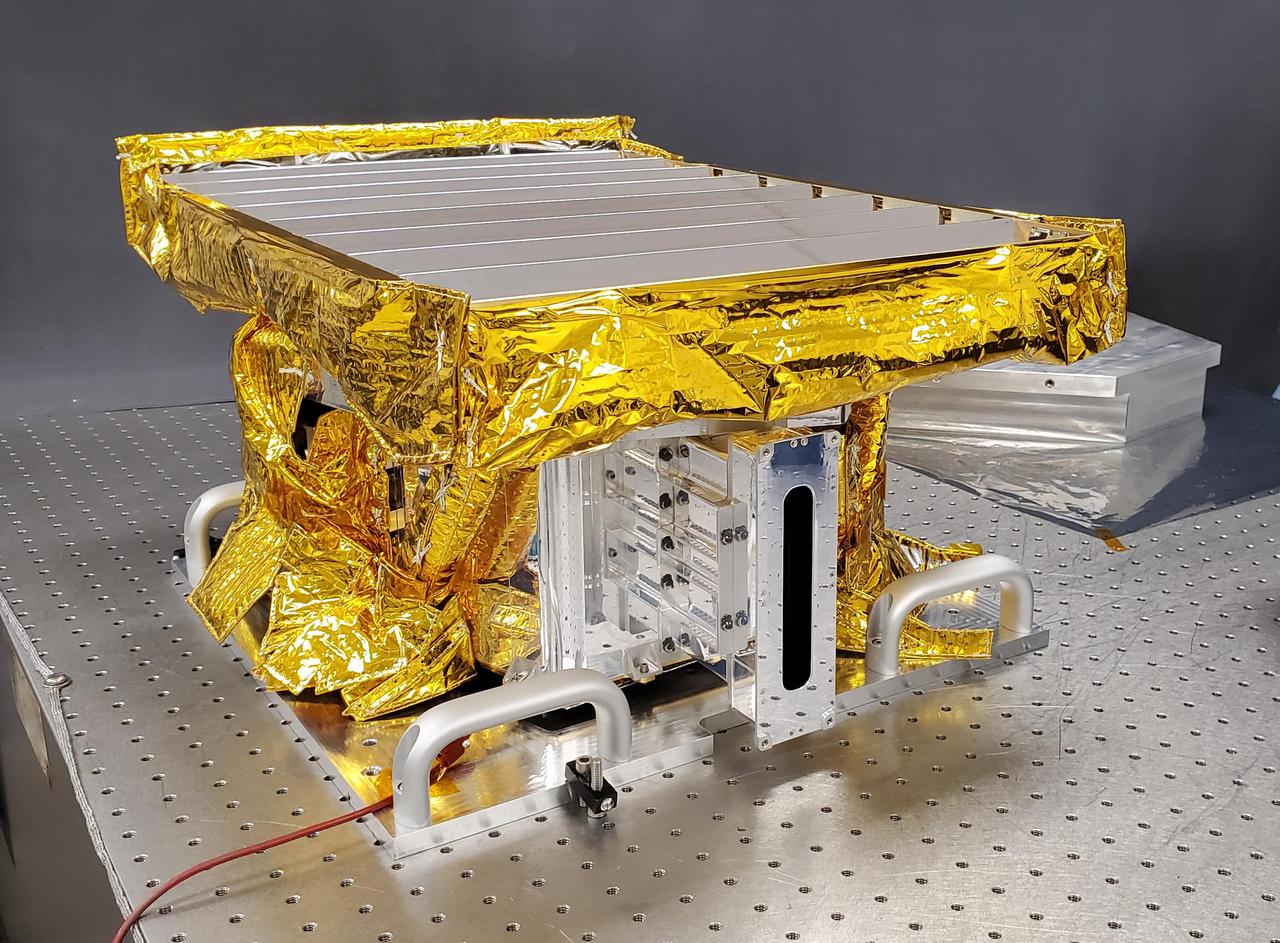
Lunar Trailblazer's HVM³ Imaging Spectrometer Before Spacecraft Integration
The High-resolution Volatiles and Minerals Moon Mapper (HVM³) sits in a clean room at NASA's Jet Propulsion Laboratory in Southern California in early December 2022. The JPL-built instrument…
Inspect NASA record
The High-resolution Volatiles and Minerals Moon Mapper (HVM³) sits in a clean room at NASA's Jet Propulsion Laboratory in Southern California in early December 2022. The JPL-built instrument was later shipped to Lockheed Martin Space in Littleton, Colorado, to be integrated with NASA's Lunar Trailblazer spacecraft. HVM³ is an imaging spectrometer that will detect and map water on the Moon's surface to determine its abundance, location, form, and how it changes over time. A second instrument, the Lunar Thermal Mapper infrared multispectral imager, is being developed by the University of Oxford in the U.K. and is scheduled for delivery and integration in early 2023. Lunar Trailblazer was selected under NASA's Small Innovative Missions for Planetary Exploration (SIMPLEx) program in 2019. The Lunar Trailblazer mission is managed by JPL and its science investigation is led by Caltech in Pasadena, California. Managed for NASA by Caltech, JPL also provides system engineering, mission assurance, the HVM³ instrument, as well as navigation. Lockheed Martin Space provides the spacecraft and integrates the flight system, under contract with Caltech. SIMPLEx mission investigations are managed by the Planetary Missions Program Office at NASA's Marshall Space Flight Center in Huntsville, Alabama, as part of the Discovery Program at NASA Headquarters in Washington. The program conducts space science investigations in the Planetary Science Division of NASA's Science Mission Directorate at NASA Headquarters. https://photojournal.jpl.nasa.gov/catalog/PIA25256
- Record ID
- PIA25256
- NASA center
- JPL
- Date
- 2022-06-22
- Credit
- NASA/JPL-Caltech
- Keywords
- Lunar Trailblazer
HQ · 2012-06-15 · 201206150002HQ
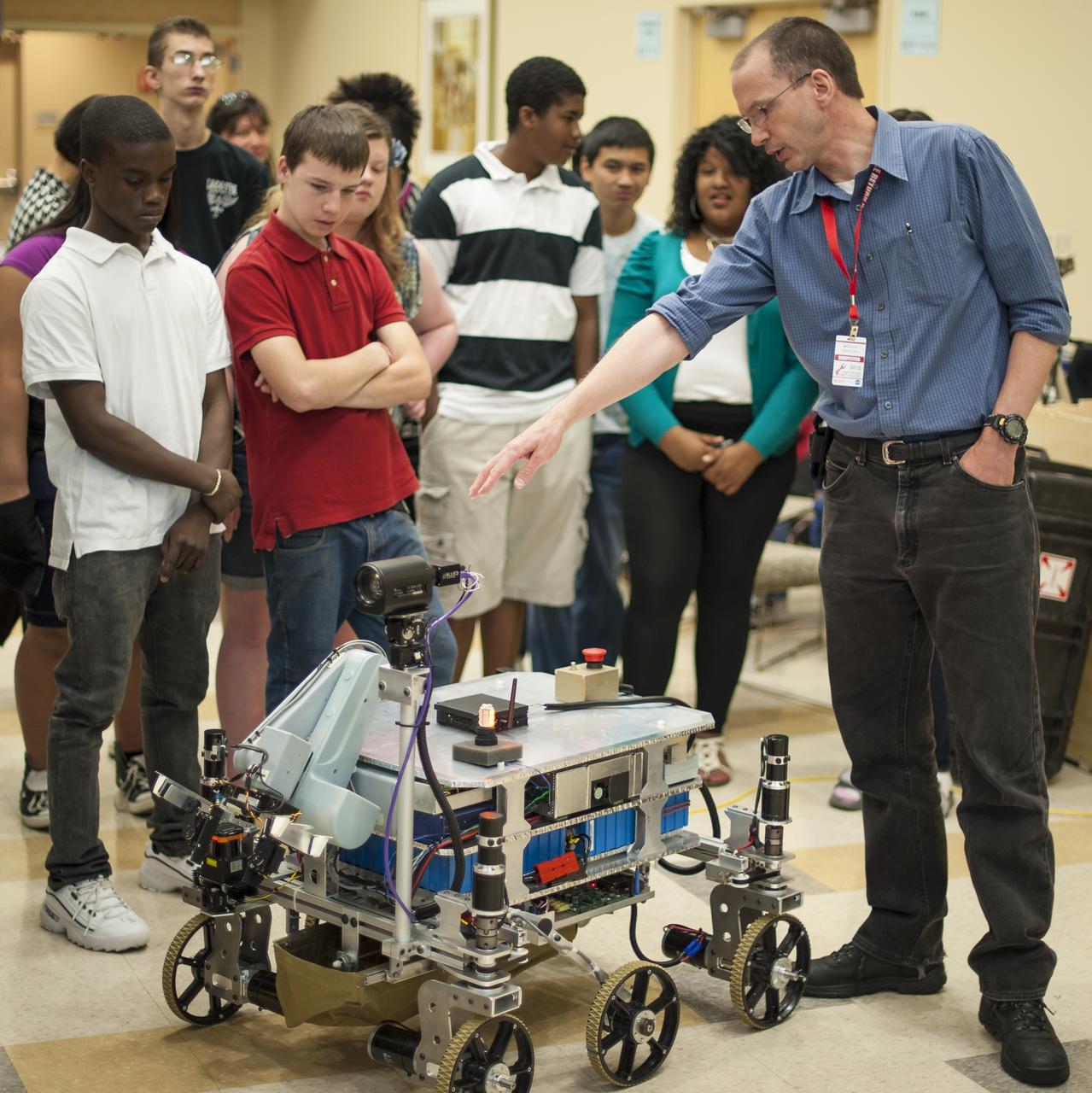
Sample Return Robot Centennial Challenge
Intrepid Systems Team member Mark Curry, right, answers questions from 8th grade Sullivan Middle School (Mass.) students about his robot named "MXR - Mark's Exploration Robot" on Friday,…
Inspect NASA record
Intrepid Systems Team member Mark Curry, right, answers questions from 8th grade Sullivan Middle School (Mass.) students about his robot named "MXR - Mark's Exploration Robot" on Friday, June 15, 2012, at the Worcester Polytechnic Institute (WPI) in Worcester, Mass. Curry's robot team will compete for a $1.5 million NASA prize in the NASA-WPI Sample Return Robot Centennial Challenge at WPI. Teams have been challenged to build autonomous robots that can identify, collect and return samples. NASA needs autonomous robotic capability for future planetary exploration. Photo Credit: (NASA/Bill Ingalls)
- Record ID
- 201206150002HQ
- NASA center
- HQ
- Date
- 2012-06-15
- Credit
- NASA/Bill Ingalls
- Keywords
- Mark Curry, Mark's Exploration Robot (MXR), Massachusetts, Robot, Sample Return Robot Challenge, Worcester, Worcester Polytechnic Institute (WPI)

HQ · 2012-06-15 · 201206150006HQ
Sample Return Robot Centennial Challenge
Intrepid Systems robot "MXR - Mark's Exploration Robot" takes to the practice field and tries to capture the white object in the foreground on Friday, June 15, 2012…
Inspect NASA record
Intrepid Systems robot "MXR - Mark's Exploration Robot" takes to the practice field and tries to capture the white object in the foreground on Friday, June 15, 2012 at the Worcester Polytechnic Institute (WPI) in Worcester, Mass. Intrepid Systems' robot team will compete for a $1.5 million NASA prize in the NASA-WPI Sample Return Robot Centennial Challenge at WPI. Teams have been challenged to build autonomous robots that can identify, collect and return samples. NASA needs autonomous robotic capability for future planetary exploration. Photo Credit: (NASA/Bill Ingalls)
- Record ID
- 201206150006HQ
- NASA center
- HQ
- Date
- 2012-06-15
- Credit
- NASA/Bill Ingalls
- Keywords
- Mark's Exploration Robot (MXR), Massachusetts, Robot, Sample Return Robot Challenge, Worcester, Worcester Polytechnic Institute (WPI)

KSC · 1999-06-07 · KSC-99pp0657
KSC-99pp0657
Workers oversee the mating of the second stage with the first stage of a Boeing Delta II rocket, which will launch the NASA's Far Ultraviolet Spectroscopic Explorer (FUSE)…
Inspect NASA record
Workers oversee the mating of the second stage with the first stage of a Boeing Delta II rocket, which will launch the NASA's Far Ultraviolet Spectroscopic Explorer (FUSE) satellite. FUSE is NASA's Far Ultraviolet Spectroscopic Explorer satellite developed by The Johns Hopkins University under contract to Goddard Space Flight Center, Greenbelt, Md., to investigate the origin and evolution of the lightest elements in the universe hydrogen and deuterium. In addition, the FUSE satellite will examine the forces and process involved in the evolution of the galaxies, stars and planetary systems by investigating light in the far ultraviolet portion of the electromagnetic spectrum. FUSE is scheduled to launch June 23 at Launch Pad 17A, Cape Canaveral Air Station
- Record ID
- KSC-99pp0657
- NASA center
- KSC
- Date
- 1999-06-07
HQ · 2012-06-16 · 201206160001HQ
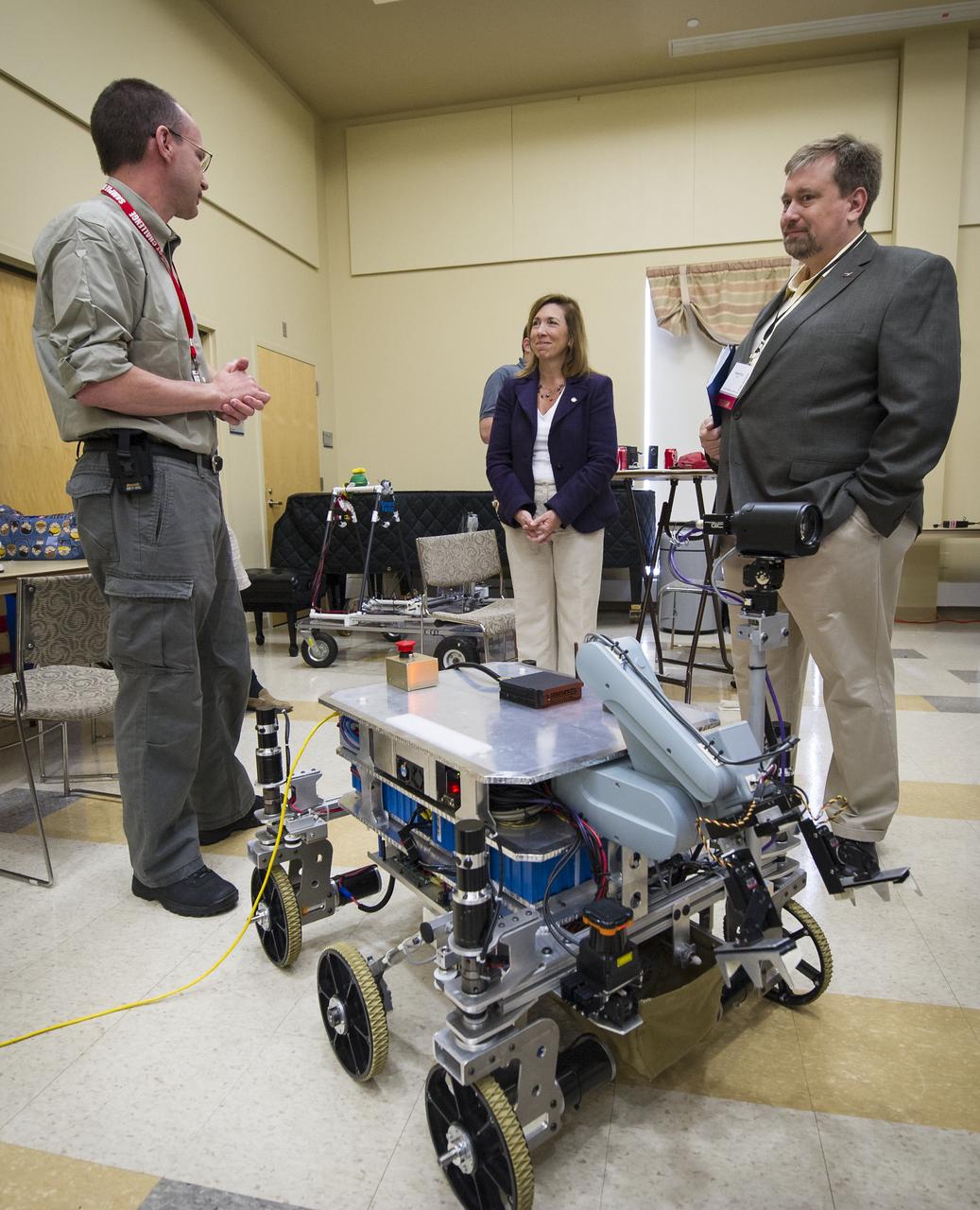
Sample Return Robot Centennial Challenge
Intrepid Systems Team member Mark Curry, left, talks with NASA Deputy Administrator Lori Garver and NASA Chief Technologist Mason Peck, right, about his robot named "MXR - Mark's…
Inspect NASA record
Intrepid Systems Team member Mark Curry, left, talks with NASA Deputy Administrator Lori Garver and NASA Chief Technologist Mason Peck, right, about his robot named "MXR - Mark's Exploration Robot" on Saturday, June 16, 2012 at the Worcester Polytechnic Institute (WPI) in Worcester, Mass. Curry's robot team was one of the final teams participating in the NASA-WPI Sample Return Robot Centennial Challenge at WPI. Teams were challenged to build autonomous robots that can identify, collect and return samples. NASA needs autonomous robotic capability for future planetary exploration. Photo Credit: (NASA/Bill Ingalls)
- Record ID
- 201206160001HQ
- NASA center
- HQ
- Date
- 2012-06-16
- Credit
- NASA/Bill Ingalls
- Keywords
- Lori Garver, Mark Curry, Mark's Exploration Robot (MXR), Mason Peck, Massachusetts, Sample Return Robot Challenge, Worcester, Worcester Polytechnic Institute (WPI)
KSC · 2012-02-17 · KSC-2012-1865
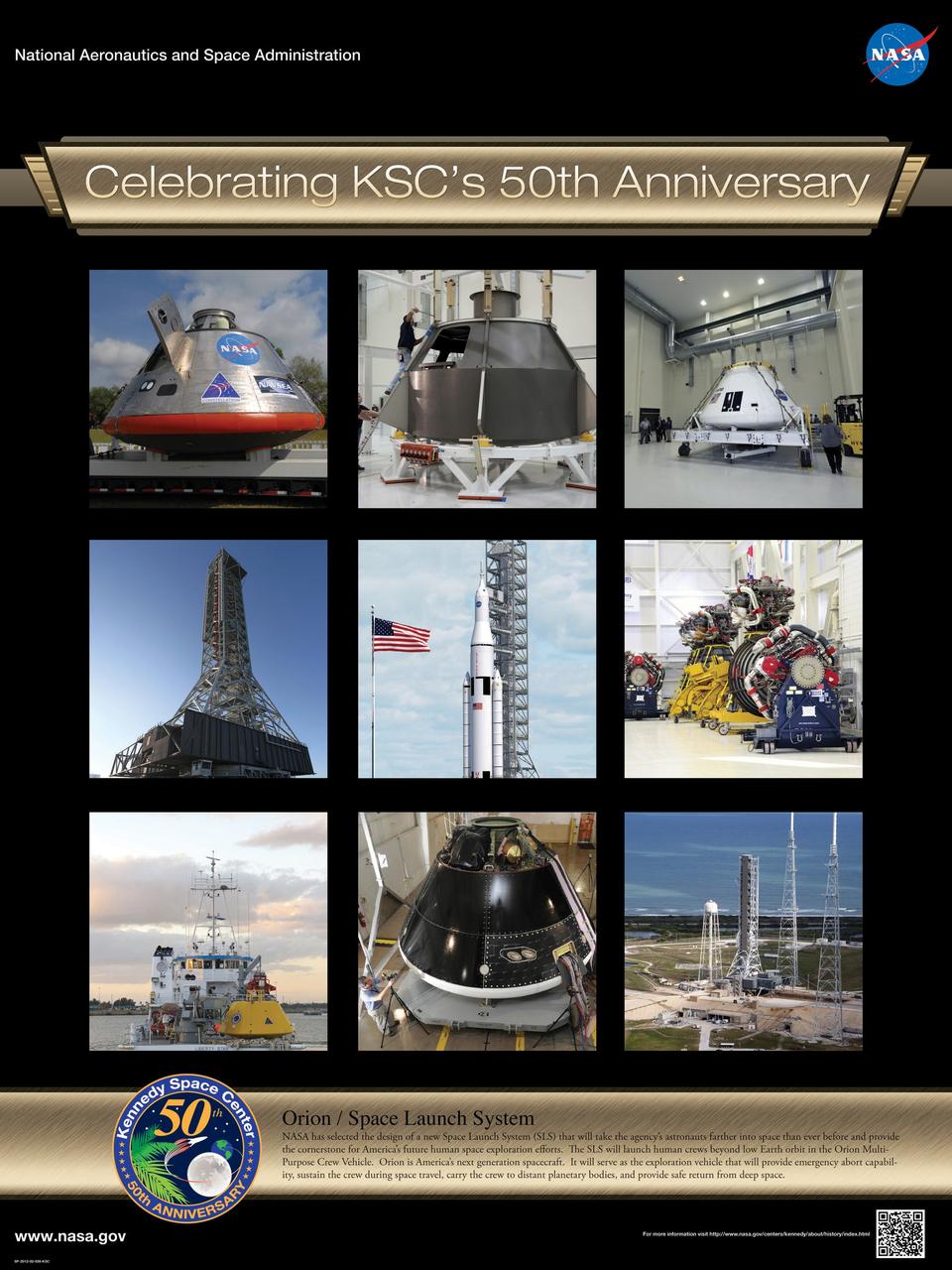
KSC-2012-1865
Orion / Space Launch System: NASA has selected the design of a new Space Launch System SLS that will take the agency's astronauts farther into space than ever…
Inspect NASA record
Orion / Space Launch System: NASA has selected the design of a new Space Launch System SLS that will take the agency's astronauts farther into space than ever before and provide the cornerstone for America's future human space exploration efforts. The SLS will launch human crews beyond low Earth orbit in the Orion Multi-Purpose Crew Vehicle. Orion is America’s next generation spacecraft. It will serve as the exploration vehicle that will provide emergency abort capability, sustain the crew during space travel, carry the crew to distant planetary bodies, and provide safe return from deep space. Poster designed by Kennedy Space Center Graphics Department/Greg Lee. Credit: NASA
- Record ID
- KSC-2012-1865
- NASA center
- KSC
- Date
- 2012-02-17
HQ · 2012-06-16 · 201206160012HQ
Sample Return Robot Centennial Challenge
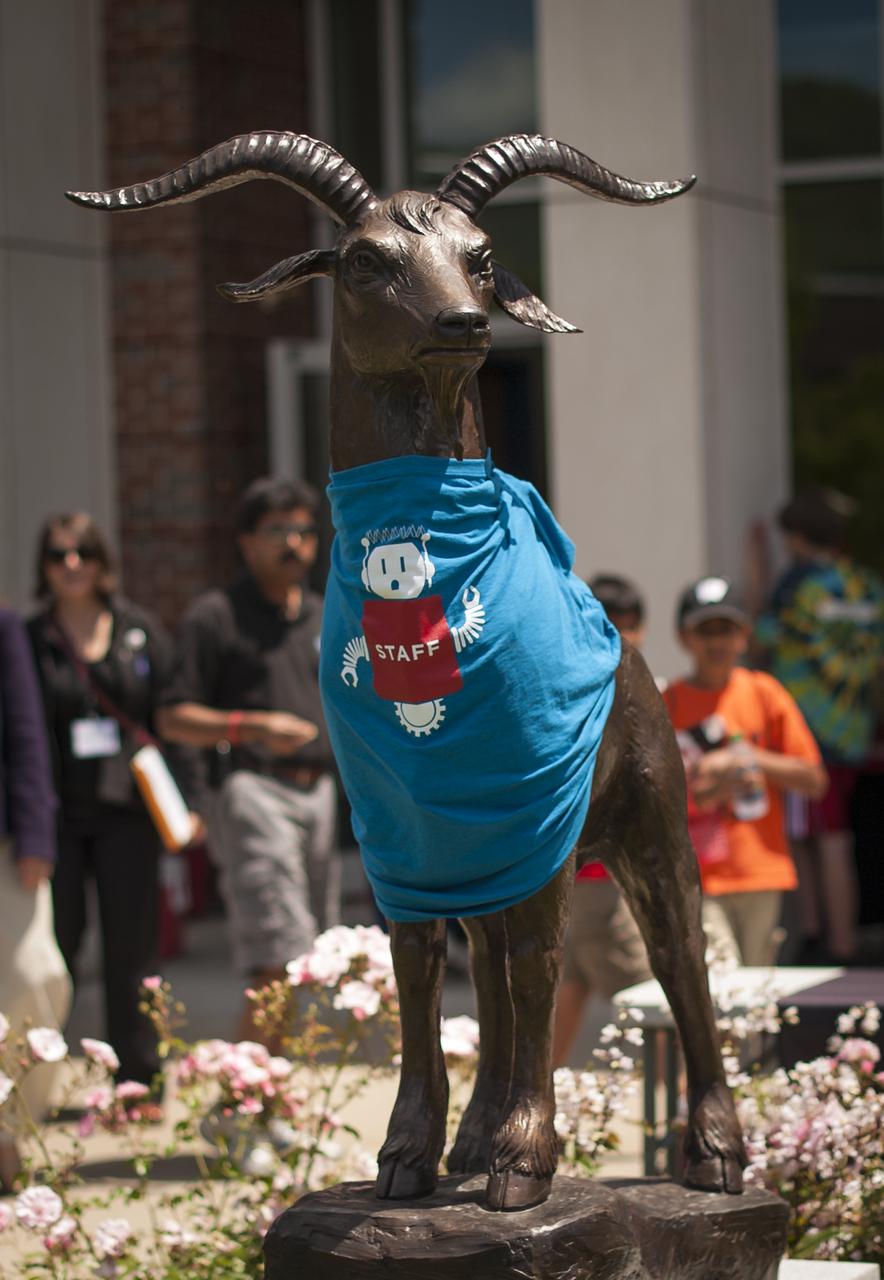
The bronze statue of the goat mascot for Worcester Polytechnic Institute (WPI) named "Gompei" is seen wearing a staff t-shirt for the "TouchTomorrow" education and outreach event that…
Inspect NASA record
The bronze statue of the goat mascot for Worcester Polytechnic Institute (WPI) named "Gompei" is seen wearing a staff t-shirt for the "TouchTomorrow" education and outreach event that was held in tandem with the NASA-WPI Sample Return Robot Centennial Challenge on Saturday, June 16, 2012 in Worcester, Mass. The challenge tasked robotic teams to build autonomous robots that can identify, collect and return samples. NASA needs autonomous robotic capability for future planetary exploration. Photo Credit: (NASA/Bill Ingalls)
- Record ID
- 201206160012HQ
- NASA center
- HQ
- Date
- 2012-06-16
- Credit
- NASA/Bill Ingalls
- Keywords
- Goat, Gompei, Mascot, Massachusetts, Sample Return Robot Challenge, Worcester, Worcester Polytechnic Institute (WPI)
JSC · 2022-02-07 · iss066e136658
iss066e136658
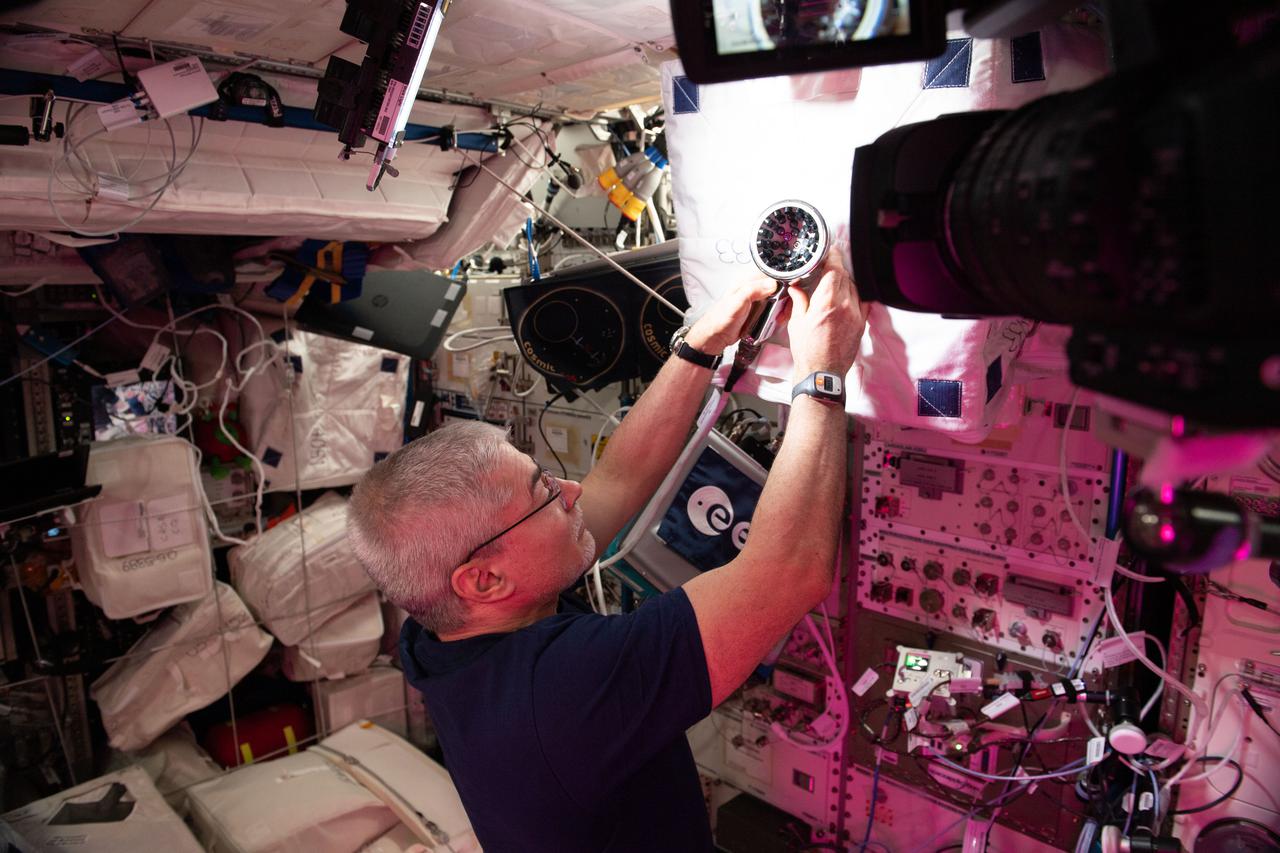
iss066e136658 (Feb. 7, 2022) --- NASA astronaut and Expedition 66 Flight Engineer Mark Vande Hei conducts research operations for the Ultrasonic Tweezers study using acoustics to manipulate objects…
Inspect NASA record
iss066e136658 (Feb. 7, 2022) --- NASA astronaut and Expedition 66 Flight Engineer Mark Vande Hei conducts research operations for the Ultrasonic Tweezers study using acoustics to manipulate objects remotely and without physical contact. Vande Hei was assisting ESA (European Space Agency) Flight Engineer Matthias Maurer (out of frame) during the experiment that explores using ultrasonics to trap and isolate objects to study samples and avoid contamination on planetary surfaces.
- Record ID
- iss066e136658
- NASA center
- JSC
- Date
- 2022-02-07