
Update Site (from NASA)
Explore NASA’s Image and Video Library.
Suggest one object per day for the Interstellar Minds collection. We review each suggestion before adding it.
Sign in to suggest a Marvel.
Find a NASA image ID. Open a NASA record and copy its ID from the end of the details URL.
NASA image records

KSC · 1999-02-07 · KSC-99pc0156
KSC-99pc0156
After a 24-hour postponement, the Boeing Delta II rocket carrying the Stardust spacecraft waits on Launch Pad 17-A, Cape Canaveral Air Station, for its scheduled launch at 4:04…
Inspect NASA record
After a 24-hour postponement, the Boeing Delta II rocket carrying the Stardust spacecraft waits on Launch Pad 17-A, Cape Canaveral Air Station, for its scheduled launch at 4:04 p.m. EST. Umbilical lines (at top) still attached to the fixed utility tower (at right) feed electricity, air conditioning and coolants for the Stardust spacecraft inside the fairing (enclosing the upper stage) before launch. Stardust is destined for a close encounter with the comet Wild 2 in January 2004. Using a silicon-based substance called aerogel, Stardust will capture comet particles flying off the nucleus of the comet. The spacecraft also will bring back samples of interstellar dust. These materials consist of ancient pre-solar interstellar grains and other remnants left over from the formation of the solar system. Scientists expect their analysis to provide important insights into the evolution of the sun and planets and possibly into the origin of life itself. The collected samples will return to Earth in a sample return capsule to be jettisoned as Stardust swings by Earth in January 2006
- Record ID
- KSC-99pc0156
- NASA center
- KSC
- Date
- 1999-02-07
KSC · 1999-01-26 · KSC-99pc0116
KSC-99pc0116
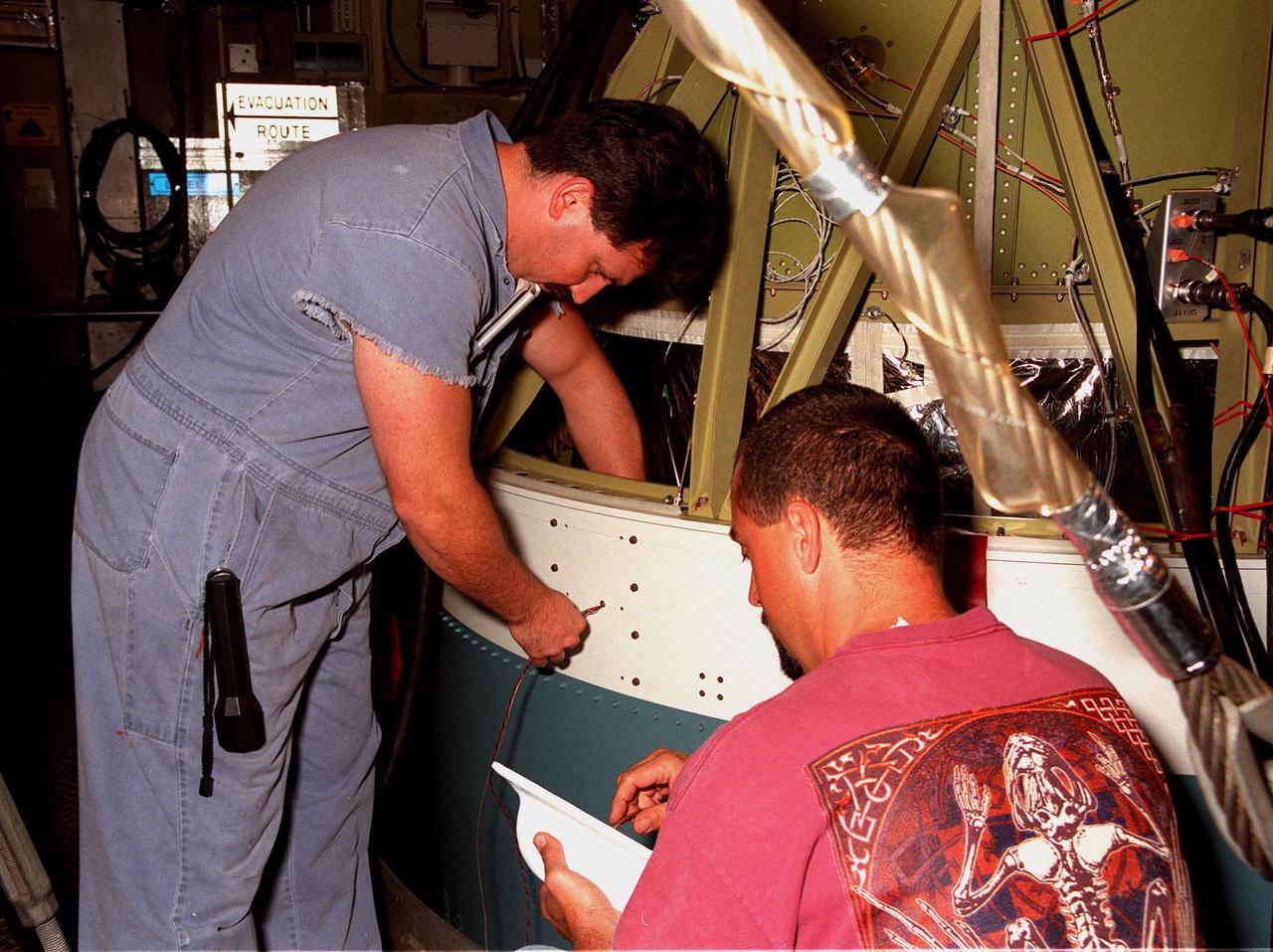
At Launch Pad 17-A, Cape Canaveral Air Station, a worker (left) runs a wire through a mounting hole on the second stage of a Boeing Delta II rocket…
Inspect NASA record
At Launch Pad 17-A, Cape Canaveral Air Station, a worker (left) runs a wire through a mounting hole on the second stage of a Boeing Delta II rocket in order to affix an external video camera held by the worker at right. The Delta II will launch the Stardust spacecraft on Feb. 6. Looking toward Earth, the camera will record the liftoff and separation of the first stage. Stardust is destined for a close encounter with the comet Wild 2 in January 2004. Using a silicon-based substance called aerogel, Stardust will capture comet particles flying off the nucleus of the comet. The spacecraft also will bring back samples of interstellar dust. These materials consist of ancient pre-solar interstellar grains and other remnants left over from the formation of the solar system. Scientists expect their analysis to provide important insights into the evolution of the sun and planets and possibly into the origin of life itself. The collected samples will return to Earth in a sample return capsule to be jettisoned as Stardust swings by Earth in January 2006
- Record ID
- KSC-99pc0116
- NASA center
- KSC
- Date
- 1999-01-26
KSC · 1999-02-06 · KSC-99pc0153
KSC-99pc0153
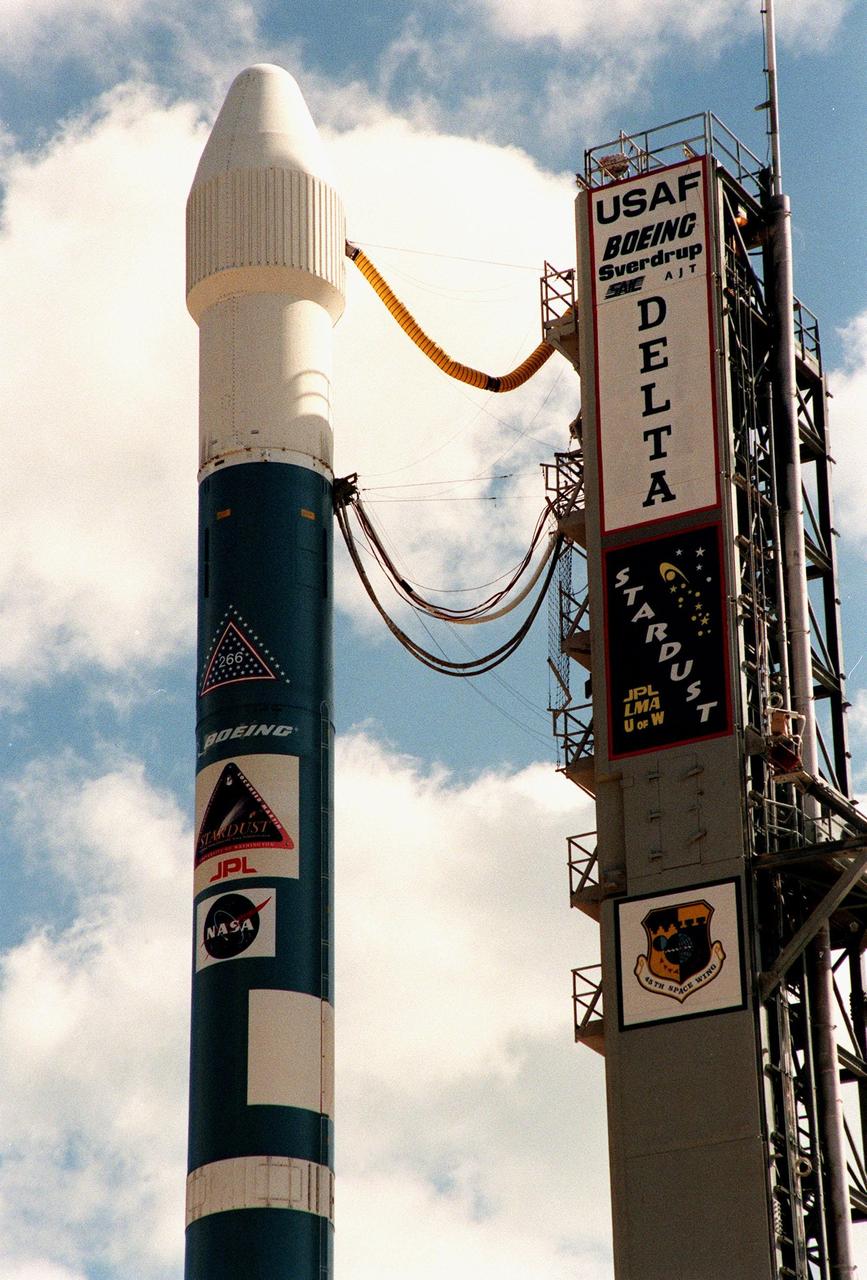
At Launch Pad 17-A, Cape Canaveral Air Station, a Boeing Delta II rocket is poised for liftoff after tower rollback. Umbilical lines (at top) still attached to the…
Inspect NASA record
At Launch Pad 17-A, Cape Canaveral Air Station, a Boeing Delta II rocket is poised for liftoff after tower rollback. Umbilical lines (at top) still attached to the fixed utility tower (at right) feed electricity, air conditioning and coolants for the Stardust spacecraft inside the fairing (enclosing the upper stage) before launch. The targeted launch time is 4:06 p.m. EST. Stardust is destined for a close encounter with the comet Wild 2 in January 2004. Using a silicon-based substance called aerogel, Stardust will capture comet particles flying off the nucleus of the comet. The spacecraft also will bring back samples of interstellar dust. These materials consist of ancient pre-solar interstellar grains and other remnants left over from the formation of the solar system. Scientists expect their analysis to provide important insights into the evolution of the sun and planets and possibly into the origin of life itself. The collected samples will return to Earth in a sample return capsule to be jettisoned as Stardust swings by Earth in January 2006
- Record ID
- KSC-99pc0153
- NASA center
- KSC
- Date
- 1999-02-06
KSC · 1999-01-22 · KSC-99pc0095
KSC-99pc0095
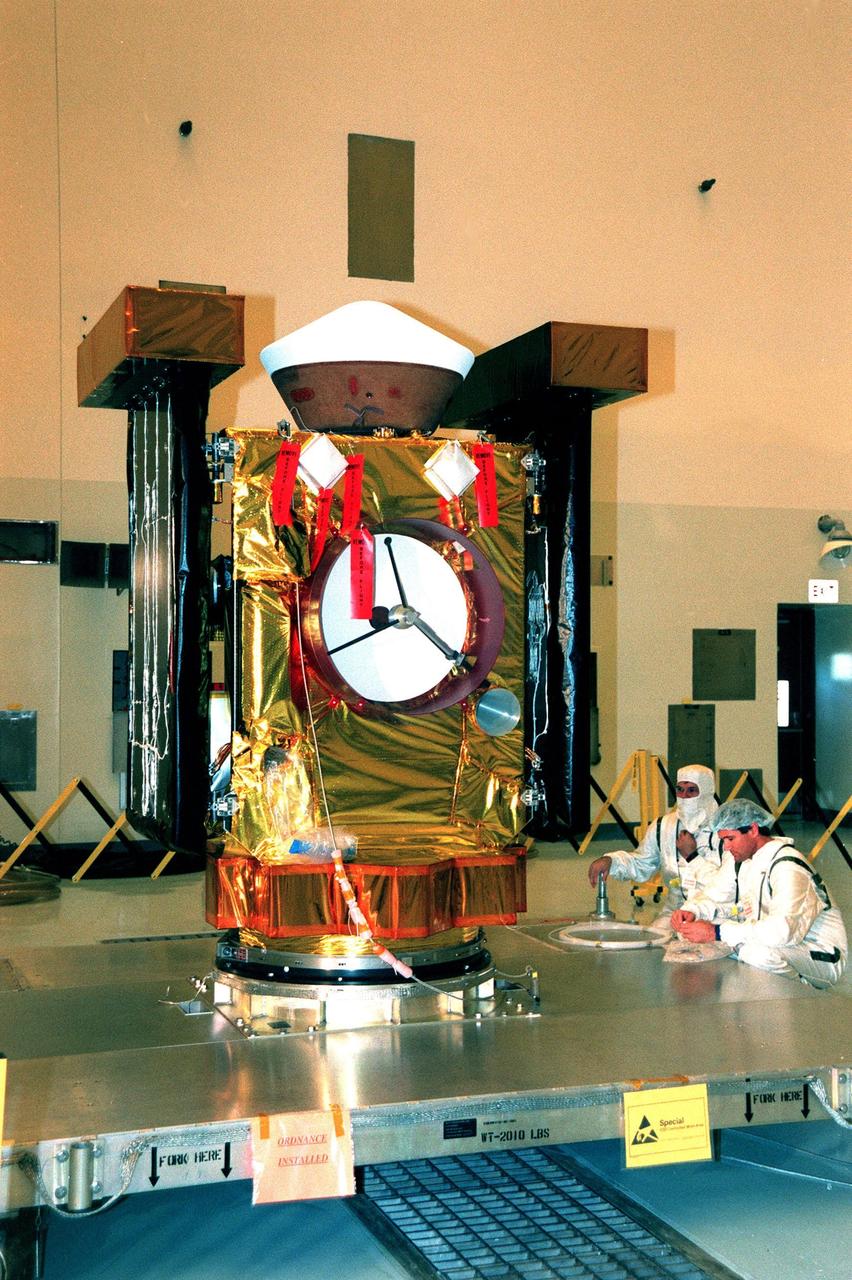
In the Payload Hazardous Servicing Facility, Casey McClellan (right), with Lockheed Martin, and an unidentified worker look over the spacecraft Stardust before a media presentation. Stardust is targeted…
Inspect NASA record
In the Payload Hazardous Servicing Facility, Casey McClellan (right), with Lockheed Martin, and an unidentified worker look over the spacecraft Stardust before a media presentation. Stardust is targeted for launch on Feb. 6 aboard a Boeing Delta II rocket from Launch Pad 17-A, Cape Canaveral Air Station. The spacecraft is destined for a close encounter with the comet Wild 2 in January 2004. Using a silicon-based substance called aerogel, Stardust will capture comet particles flying off the nucleus of the comet. The spacecraft also will bring back samples of interstellar dust. These materials consist of ancient pre-solar interstellar grains and other remnants left over from the formation of the solar system. Scientists expect their analysis to provide important insights into the evolution of the sun and planets and possibly into the origin of life itself. The collected samples will return to Earth in a sample return capsule (the white-topped, blunt-nosed cone seen on the top of the spacecraft) to be jettisoned as Stardust swings by Earth in January 2006
- Record ID
- KSC-99pc0095
- NASA center
- KSC
- Date
- 1999-01-22

KSC · 1999-01-22 · KSC-99pc0097
KSC-99pc0097
In the Payload Hazardous Servicing Facility, Casey McClellan (left) and Denise Kato (right), with Lockheed Martin, prepare the spacecraft Stardust for a media presentation. Stardust is targeted for…
Inspect NASA record
In the Payload Hazardous Servicing Facility, Casey McClellan (left) and Denise Kato (right), with Lockheed Martin, prepare the spacecraft Stardust for a media presentation. Stardust is targeted for launch on Feb. 6 aboard a Boeing Delta II rocket from Launch Pad 17-A, Cape Canaveral Air Station. The spacecraft is destined for a close encounter with the comet Wild 2 in January 2004. Using a silicon-based substance called aerogel, Stardust will capture comet particles flying off the nucleus of the comet. The spacecraft also will bring back samples of interstellar dust. These materials consist of ancient pre-solar interstellar grains and other remnants left over from the formation of the solar system. Scientists expect their analysis to provide important insights into the evolution of the sun and planets and possibly into the origin of life itself. The collected samples will return to Earth in a sample return capsule (the white-topped, blunt-nosed cone seen on the top of the spacecraft) to be jettisoned as Stardust swings by Earth in January 2006
- Record ID
- KSC-99pc0097
- NASA center
- KSC
- Date
- 1999-01-22
KSC · 1999-01-11 · KSC-99pc46
KSC-99pc46
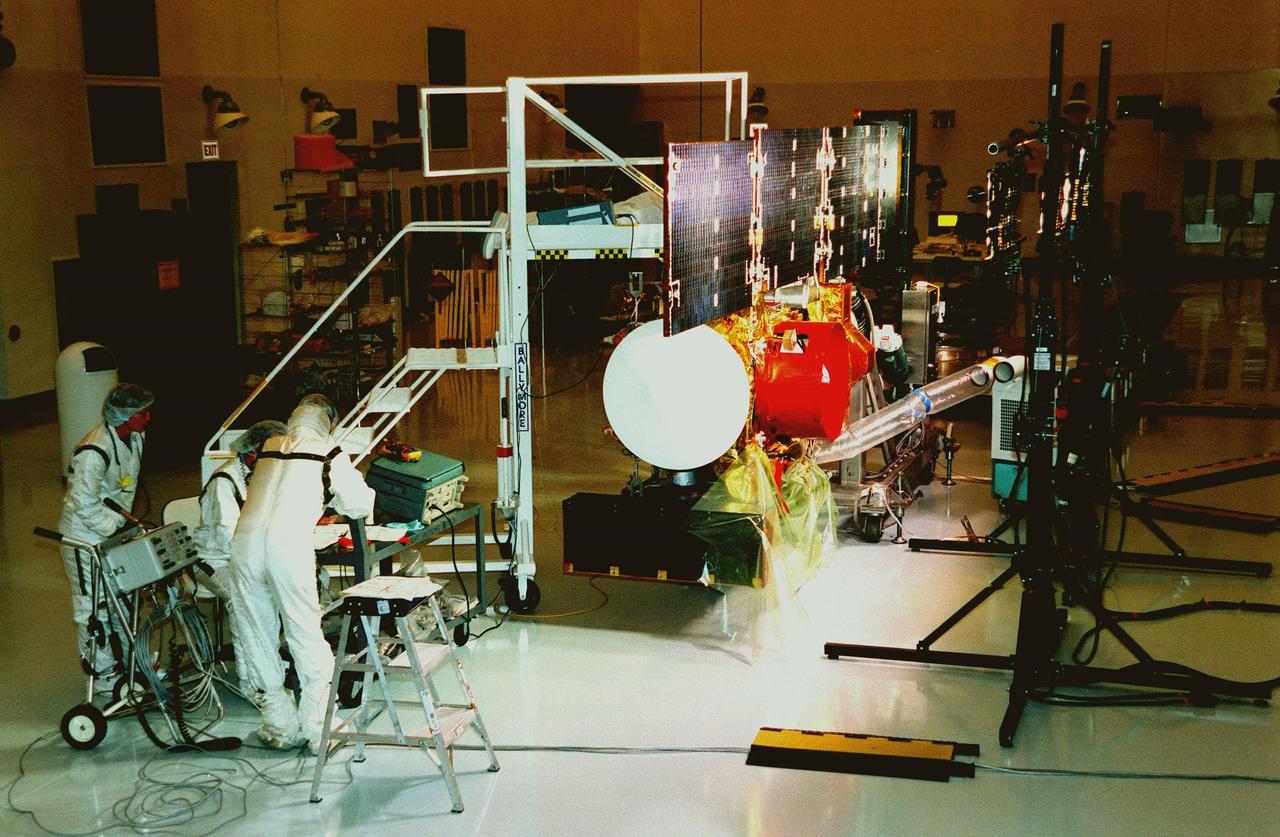
In the Payload Hazardous Servicing Facility, workers at left check instruments during a lighting test on the solar panels of the Stardustspacecraft. Stardust is scheduled to be launched…
Inspect NASA record
In the Payload Hazardous Servicing Facility, workers at left check instruments during a lighting test on the solar panels of the Stardustspacecraft. Stardust is scheduled to be launched aboard a Boeing Delta II rocket from Launch Pad 17A, Cape Canaveral Air Station, on Feb. 6, 1999, for a rendezvous with the comet Wild 2 in January 2004. Stardust will use a substance called aerogel to capture comet particles flying off the nucleus of the comet, plus collect interstellar dust for later analysis. The collected samples will return to Earth in a sample return capsule (its white cap is seen on the near end of the spacecraft) to be jettisoned as it swings by Earth in January 2006
- Record ID
- KSC-99pc46
- NASA center
- KSC
- Date
- 1999-01-11
KSC · 1998-11-12 · KSC-98pc1631
KSC-98pc1631
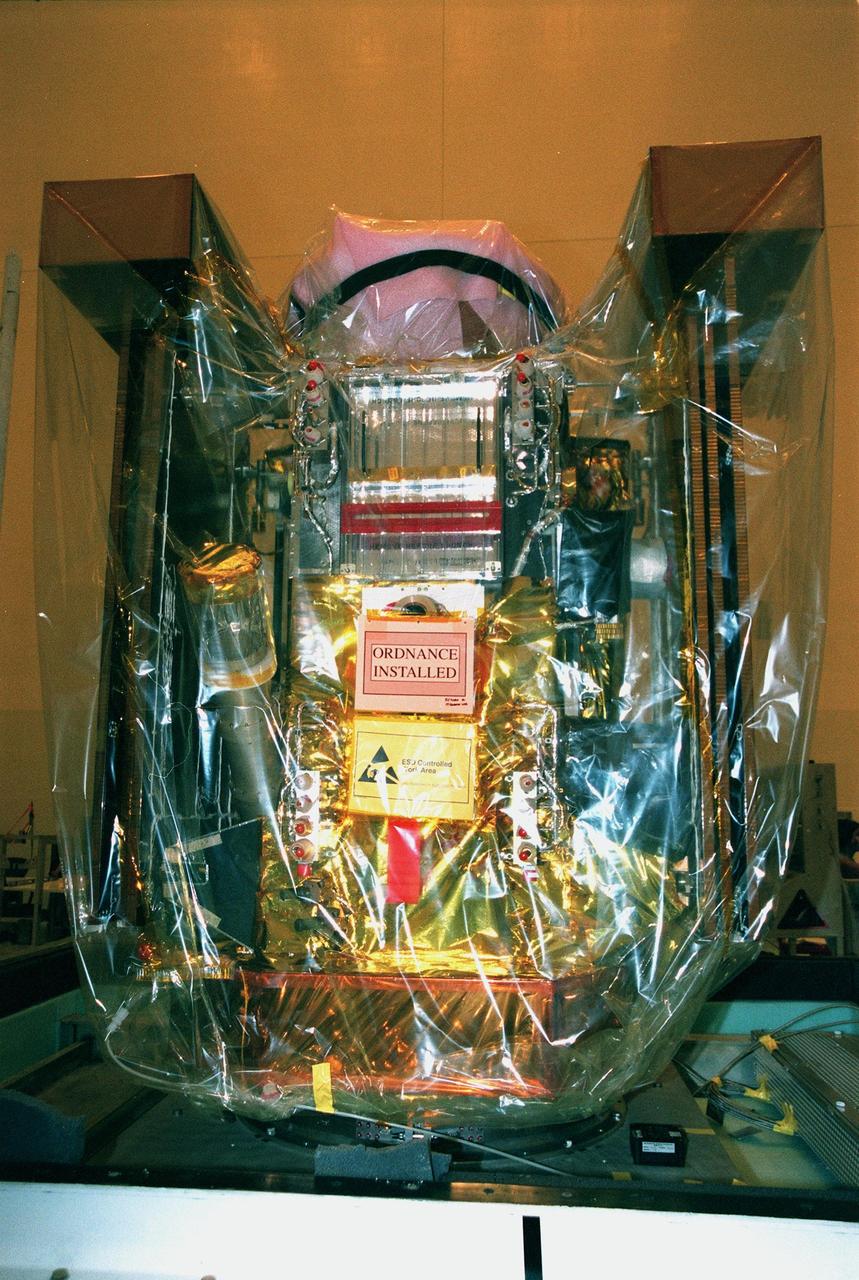
In the Payload Hazardous Service Facility, the Stardust spacecraft sits wrapped in plastic covering. Built by Lockheed Martin Astronautics near Denver, Colo., for the Jet Propulsion Laboratory (JPL)…
Inspect NASA record
In the Payload Hazardous Service Facility, the Stardust spacecraft sits wrapped in plastic covering. Built by Lockheed Martin Astronautics near Denver, Colo., for the Jet Propulsion Laboratory (JPL) and NASA, the spacecraft Stardust will use a unique medium called aerogel to capture comet particles and interstellar dust for later analysis. Stardust will be launched aboard a Boeing Delta 7426 rocket targeted for Feb. 6, 1999. The collected samples will return to Earth in a re-entry capsule to be jettisoned from Stardust as it swings by Earth in January 2006
- Record ID
- KSC-98pc1631
- NASA center
- KSC
- Date
- 1998-11-12
KSC · 1998-11-12 · KSC-98pc1637
KSC-98pc1637
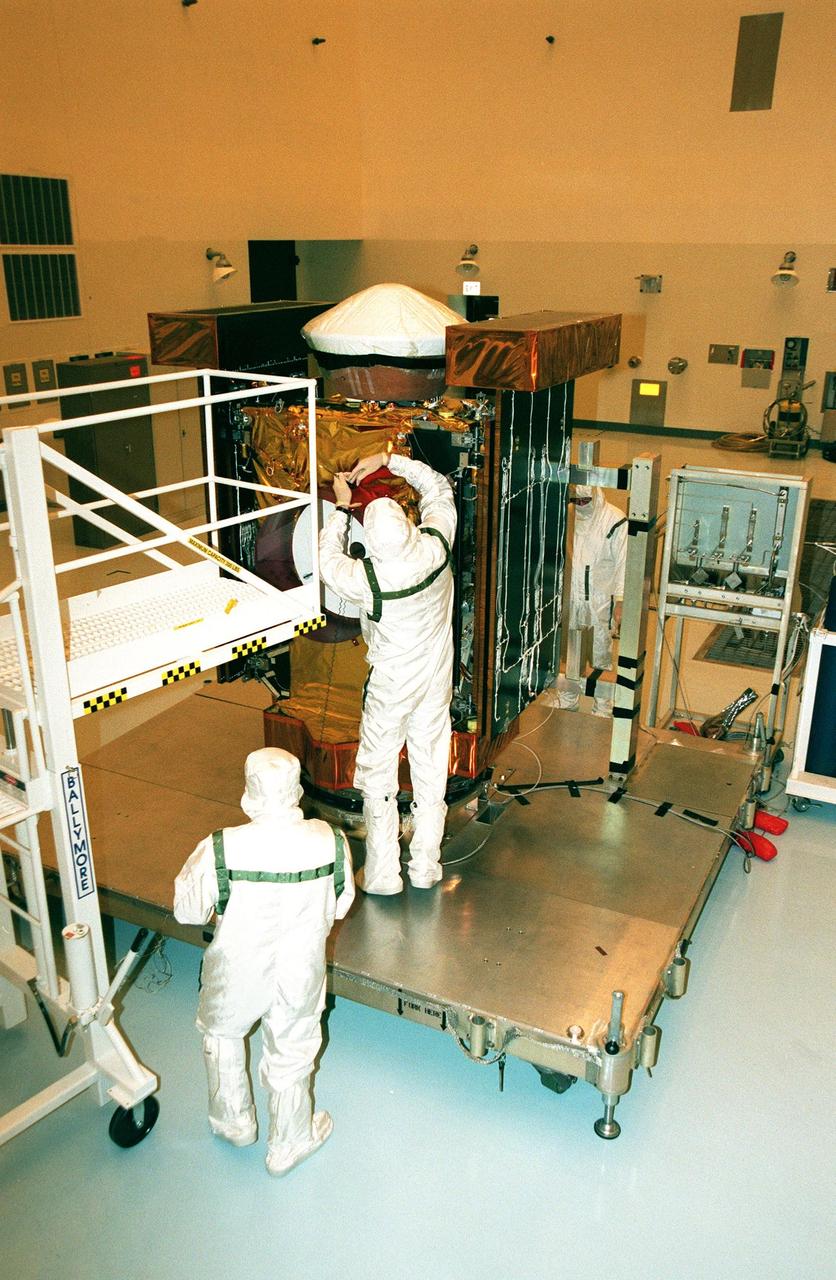
In the Payload Hazardous Service Facility, workers begin checking the Stardust spacecraft after removing its protective cover. The spacecraft will undergo installation and testing of the solar arrays,…
Inspect NASA record
In the Payload Hazardous Service Facility, workers begin checking the Stardust spacecraft after removing its protective cover. The spacecraft will undergo installation and testing of the solar arrays, plus final installation and testing of spacecraft instruments followed by an overall spacecraft functional test. Built by Lockheed Martin Astronautics near Denver, Colo., for the Jet Propulsion Laboratory (JPL) and NASA, the spacecraft Stardust will use a unique medium called aerogel to capture comet particles flying off the nucleus of comet Wild 2 in January 2004, plus collect interstellar dust for later analysis. Stardust will be launched aboard a Boeing Delta 7426 rocket from Complex 17, Cape Canaveral Air Station, targeted for Feb. 6, 1999. The collected samples will return to Earth in a re-entry capsule to be jettisoned from Stardust as it swings by Earth in January 2006
- Record ID
- KSC-98pc1637
- NASA center
- KSC
- Date
- 1998-11-12
KSC · 1998-11-12 · KSC-98pc1638
KSC-98pc1638
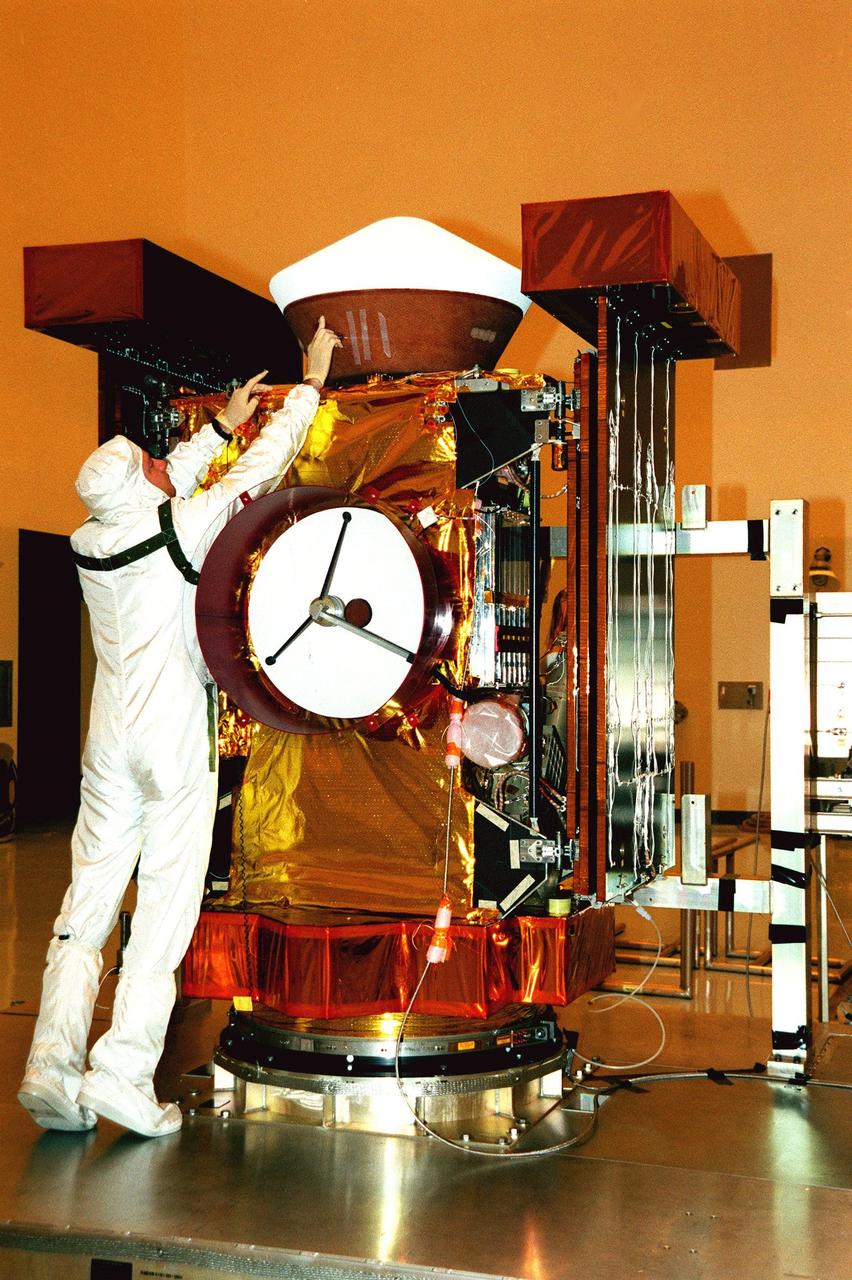
In the Payload Hazardous Service Facility, a worker looks over the re-entry capsule on top of the Stardust spacecraft. The spacecraft will undergo installation and testing of the…
Inspect NASA record
In the Payload Hazardous Service Facility, a worker looks over the re-entry capsule on top of the Stardust spacecraft. The spacecraft will undergo installation and testing of the solar arrays, plus final installation and testing of spacecraft instruments followed by an overall spacecraft functional test. Built by Lockheed Martin Astronautics near Denver, Colo., for the Jet Propulsion Laboratory (JPL) and NASA, the spacecraft Stardust will use a unique medium called aerogel to capture comet particles flying off the nucleus of comet Wild 2 in January 2004, plus collect interstellar dust for later analysis. Stardust will be launched aboard a Boeing Delta 7426 rocket from Complex 17, Cape Canaveral Air Station, targeted for Feb. 6, 1999. The collected samples will return to Earth in the re-entry capsule to be jettisoned from Stardust as it swings by Earth in January 2006
- Record ID
- KSC-98pc1638
- NASA center
- KSC
- Date
- 1998-11-12
KSC · 1998-11-12 · KSC-98pc1636
KSC-98pc1636
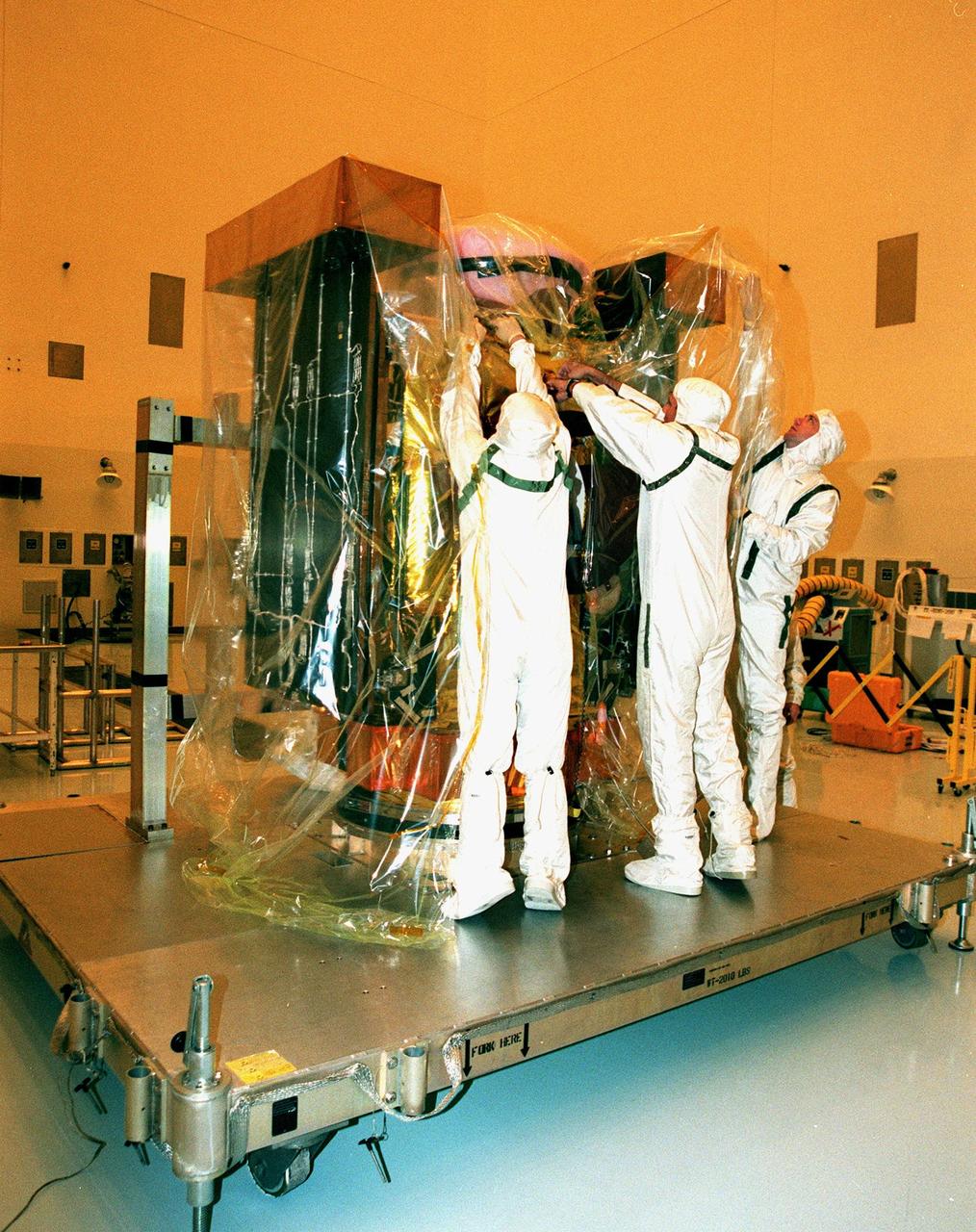
In the Payload Hazardous Service Facility, workers begin removing the protective plastic covering of the Stardust spacecraft. The spacecraft will undergo installation and testing of the solar arrays,…
Inspect NASA record
In the Payload Hazardous Service Facility, workers begin removing the protective plastic covering of the Stardust spacecraft. The spacecraft will undergo installation and testing of the solar arrays, plus final installation and testing of spacecraft instruments followed by an overall spacecraft functional test. Built by Lockheed Martin Astronautics near Denver, Colo., for the Jet Propulsion Laboratory (JPL) and NASA, the spacecraft Stardust will use a unique medium called aerogel to capture comet particles flying off the nucleus of comet Wild 2 in January 20004, plus collect interstellar dust for later analysis. Stardust will be launched aboard a Boeing Delta 7426 rocket from Complex 17, Cape Canaveral Air Station, targeted for Feb. 6, 1999. The collected samples will return to Earth in a re-entry capsule to be jettisoned from Stardust as it swings by Earth in January 2006
- Record ID
- KSC-98pc1636
- NASA center
- KSC
- Date
- 1998-11-12
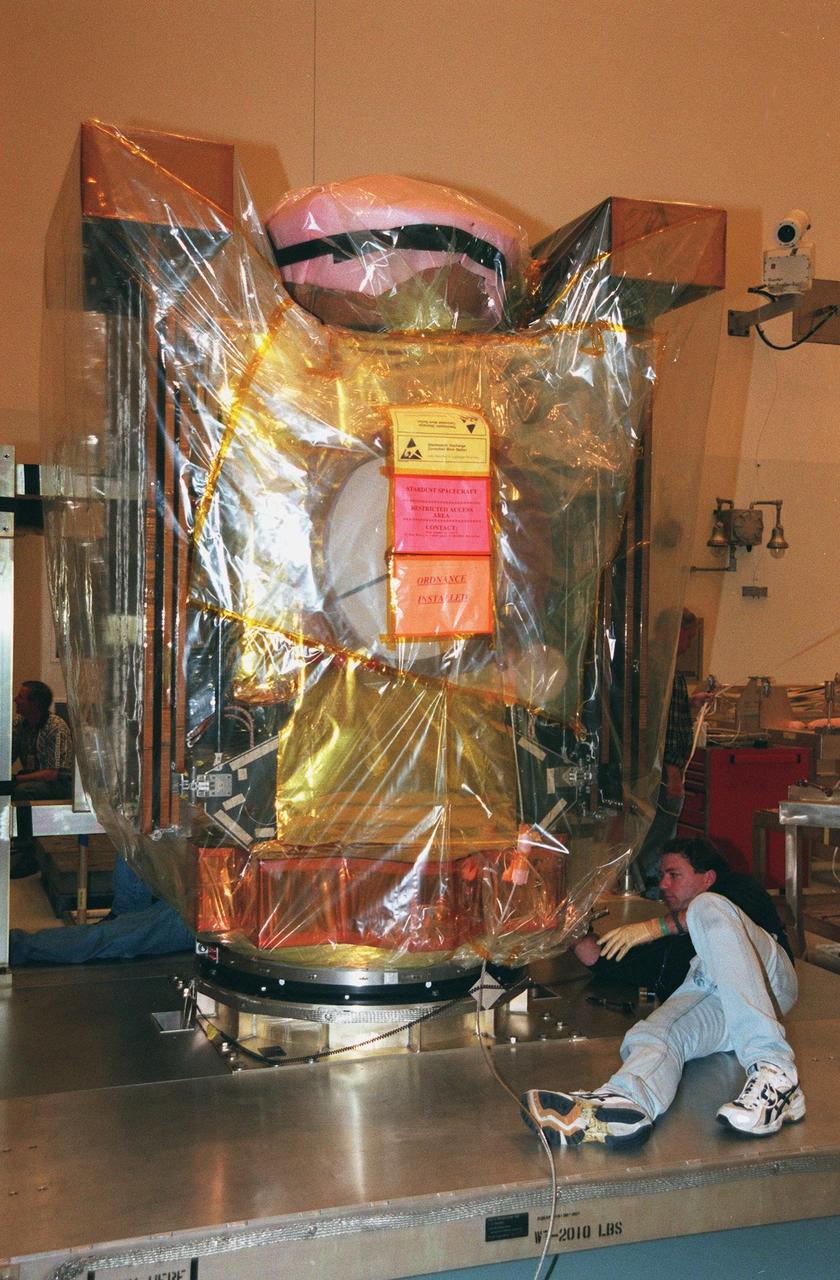
KSC · 1998-11-12 · KSC-98pc1633
KSC-98pc1633
In the Payload Hazardous Service Facility, workers lower the Stardust spacecraft onto a workstand. The spacecraft will undergo installation and testing of the solar arrays, plus final installation…
Inspect NASA record
In the Payload Hazardous Service Facility, workers lower the Stardust spacecraft onto a workstand. The spacecraft will undergo installation and testing of the solar arrays, plus final installation and testing of spacecraft instruments followed by an overall spacecraft functional test. Built by Lockheed Martin Astronautics near Denver, Colo., for the Jet Propulsion Laboratory (JPL) and NASA, the spacecraft Stardust will use a unique medium called aerogel to capture comet particles flying off the nucleus of comet Wild 2 in January 2004, plus collect interstellar dust for later analysis. Stardust will be launched aboard a Boeing Delta 7426 rocket from Complex 17, Cape Canaveral Air Station, targeted for Feb. 6, 1999. The collected samples will return to Earth in a re-entry capsule to be jettisoned from Stardust as it swings by Earth in January 2006
- Record ID
- KSC-98pc1633
- NASA center
- KSC
- Date
- 1998-11-12

KSC · 1998-11-12 · KSC-98pc1639
KSC-98pc1639
The Stardust spacecraft sits in the Payload Hazardous Service Facility waiting to undergo installation and testing of the solar arrays, plus final installation and testing of spacecraft instruments…
Inspect NASA record
The Stardust spacecraft sits in the Payload Hazardous Service Facility waiting to undergo installation and testing of the solar arrays, plus final installation and testing of spacecraft instruments followed by an overall spacecraft functional test. At the top is the re-entry capsule. Built by Lockheed Martin Astronautics near Denver, Colo., for the Jet Propulsion Laboratory (JPL) and NASA, the spacecraft Stardust will use a unique medium called aerogel to capture comet particles flying off the nucleus of comet Wild 2 in January 2004, plus collect interstellar dust for later analysis. Stardust will be launched aboard a Boeing Delta 7426 rocket from Complex 17, Cape Canaveral Air Station, targeted for Feb. 6, 1999. The collected samples will return to Earth in the re-entry capsule to be jettisoned from Stardust as it swings by Earth in January 2006
- Record ID
- KSC-98pc1639
- NASA center
- KSC
- Date
- 1998-11-12