
Update Site (from NASA)
Explore NASA’s Image and Video Library.
Suggest one object per day for the Interstellar Minds collection. We review each suggestion before adding it.
Sign in to suggest a Marvel.
Find a NASA image ID. Open a NASA record and copy its ID from the end of the details URL.
NASA image records
JPL · 2013-09-27 · PIA17465
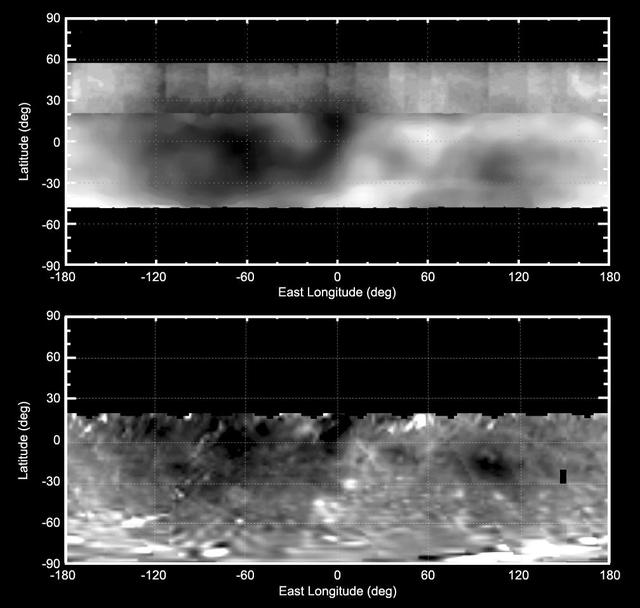
Two Views of Vesta Bright and Dark
These two maps of the giant asteroid Vesta show patterns of brightness from NASA Hubble Space Telescope top and NASA Dawn spacecraft bottom. Hubble view is from an…
Inspect NASA record
These two maps of the giant asteroid Vesta show patterns of brightness from NASA Hubble Space Telescope top and NASA Dawn spacecraft bottom. Hubble view is from an orbit around Earth. Dawn went into orbit around Vesta from 2011 to 2012.
- Record ID
- PIA17465
- NASA center
- JPL
- Date
- 2013-09-27
- Credit
- NASA/ESA/PSI/MIT and NASA/JPL-Caltech/UCLA/MPS/DLR/IDA
- Keywords
- Vesta, Dawn,Hubble Space Telescope

JPL · 2006-01-11 · PIA03652
Comet Bites the Dust Around Dead Star Artist Concept
This artist concept illustrates a comet being torn to shreds around a dead star, or white dwarf, called G29-38. NASA Spitzer Space Telescope observed a cloud of dust…
Inspect NASA record
This artist concept illustrates a comet being torn to shreds around a dead star, or white dwarf, called G29-38. NASA Spitzer Space Telescope observed a cloud of dust around this white dwarf that may have been generated from comet disruption.
- Record ID
- PIA03652
- NASA center
- JPL
- Date
- 2006-01-11
- Credit
- Main image: NASA/JPL-CaltechGraph: NASA/JPL-Caltech/GSFC
- Keywords
- G29-38, Spitzer Space Telescope

JPL · 1999-12-01 · PIA04215
Horsehead Nebula
Rising from a sea of dust and gas like a giant seahorse, the Horsehead nebula is one of the most photographed objects in the sky. NASA Hubble Space…
Inspect NASA record
Rising from a sea of dust and gas like a giant seahorse, the Horsehead nebula is one of the most photographed objects in the sky. NASA Hubble Space Telescope took a close-up look at this heavenly icon, revealing the cloud intricate structure.
- Record ID
- PIA04215
- NASA center
- JPL
- Date
- 1999-12-01
- Credit
- JPL/NASA, NOAO, ESA and The Hubble Heritage Team, STScI/AURA
- Keywords
- Horsehead Nebula, Hubble Space Telescope
JPL · 2007-11-28 · PIA10118
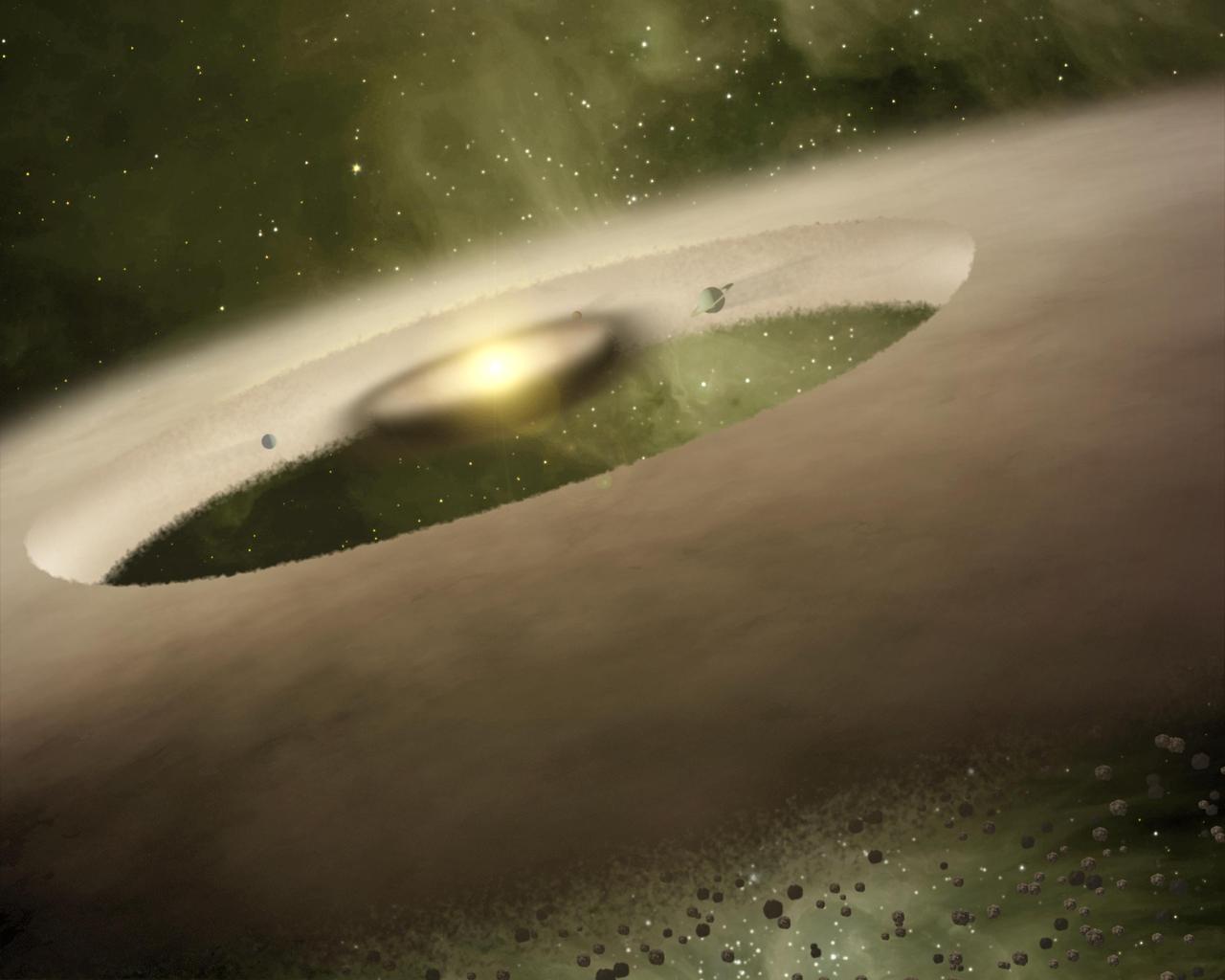
UX Tau A Artist Concept
This artist concept is of the one-million-year-old star system called UX Tau A, approximately 450 light-years away. NASA Spitzer Space Telescope showed a gap in the dusty planet-forming…
Inspect NASA record
This artist concept is of the one-million-year-old star system called UX Tau A, approximately 450 light-years away. NASA Spitzer Space Telescope showed a gap in the dusty planet-forming disk swirling around the system central sun-like star.
- Record ID
- PIA10118
- NASA center
- JPL
- Date
- 2007-11-28
- Credit
- NASA/JPL-Caltech
- Keywords
- UX Tau A, Spitzer Space Telescope
JPL · 2009-03-12 · PIA11827
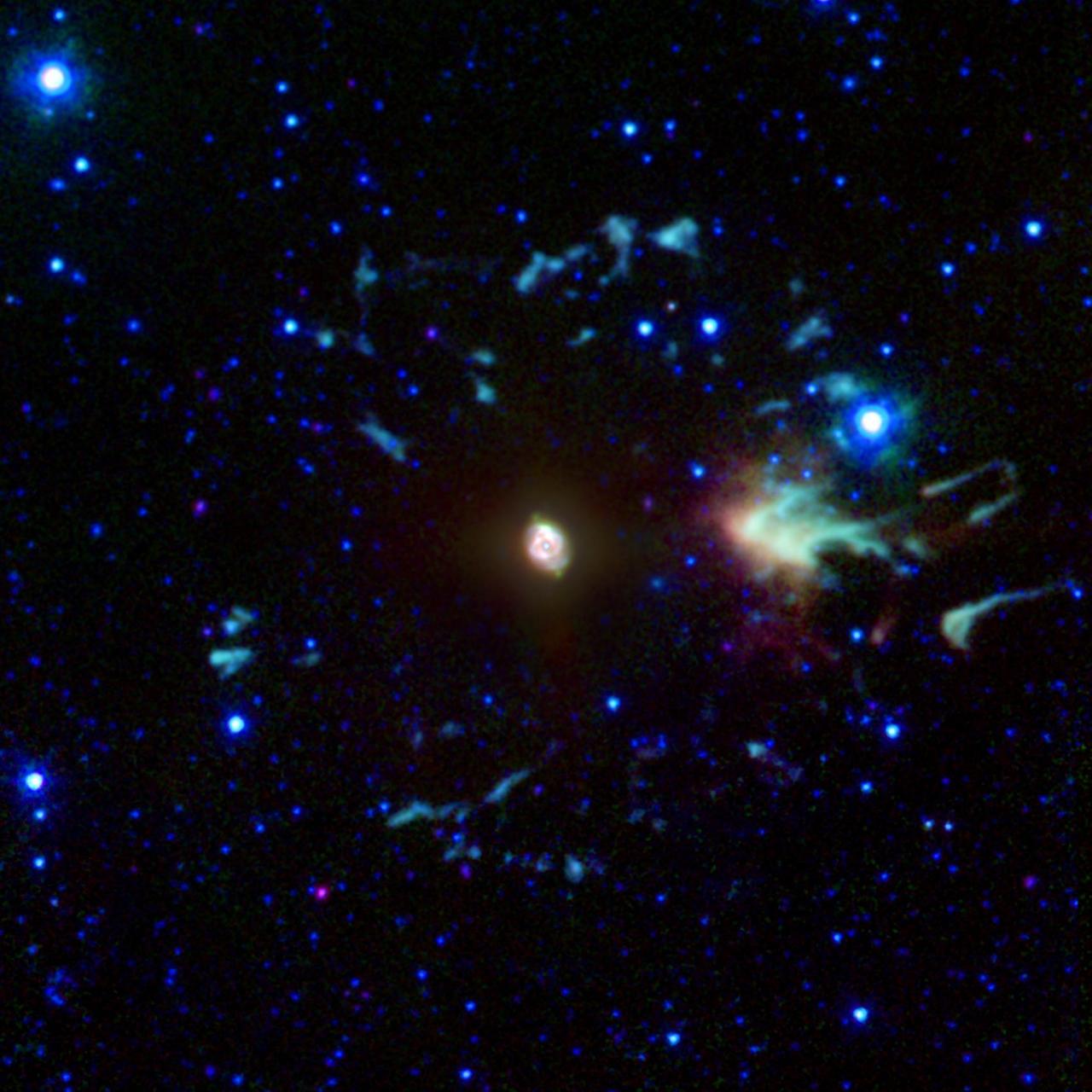
Galactic Dust Bunnies Found to Contain Carbon After All
NASA’s Spitzer Space Telescope captured the Cat’s Eye nebula, or NGC 6543, is a well-studied example of a planetary nebula. Such objects are the glowing remnants of dust…
Inspect NASA record
NASA’s Spitzer Space Telescope captured the Cat’s Eye nebula, or NGC 6543, is a well-studied example of a planetary nebula. Such objects are the glowing remnants of dust and gas expelled from moderate-sized stars during their last stages of life.
- Record ID
- PIA11827
- NASA center
- JPL
- Date
- 2009-03-12
- Credit
- NASA/JPL-Caltech
- Keywords
- NGC 6543, Spitzer Space Telescope
JPL · 2012-08-15 · PIA15909
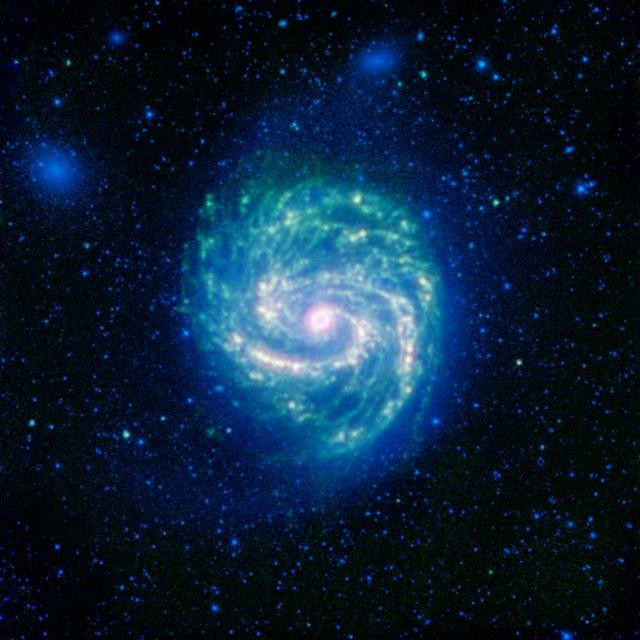
Hot and Cold in the M100 Galaxy
The galaxy Messier 100, or M100, shows its swirling spiral in this infrared image from NASA Spitzer Space Telescope. The arcing spiral arms of dust and gas that…
Inspect NASA record
The galaxy Messier 100, or M100, shows its swirling spiral in this infrared image from NASA Spitzer Space Telescope. The arcing spiral arms of dust and gas that harbor star forming regions glow vividly when seen in the infrared.
- Record ID
- PIA15909
- NASA center
- JPL
- Date
- 2012-08-15
- Credit
- NASA/JPL-Caltech
- Keywords
- Messier 100, Spitzer Space Telescope

JPL · 2005-12-13 · PIA03239
A Glimpse of the Milky Way
In visible light, the bulk of our Milky Way galaxy stars are eclipsed behind thick clouds of galactic dust and gas. But to the infrared eyes of NASA…
Inspect NASA record
In visible light, the bulk of our Milky Way galaxy stars are eclipsed behind thick clouds of galactic dust and gas. But to the infrared eyes of NASA Spitzer Space Telescope, distant stars and dust clouds shine with unparalleled clarity and color.
- Record ID
- PIA03239
- NASA center
- JPL
- Date
- 2005-12-13
- Credit
- NASA/JPL-Caltech/University of Wisconsin
- Keywords
- Milky Way, Spitzer Space Telescope
JPL · 2007-12-18 · PIA10204
Anomalous Arms
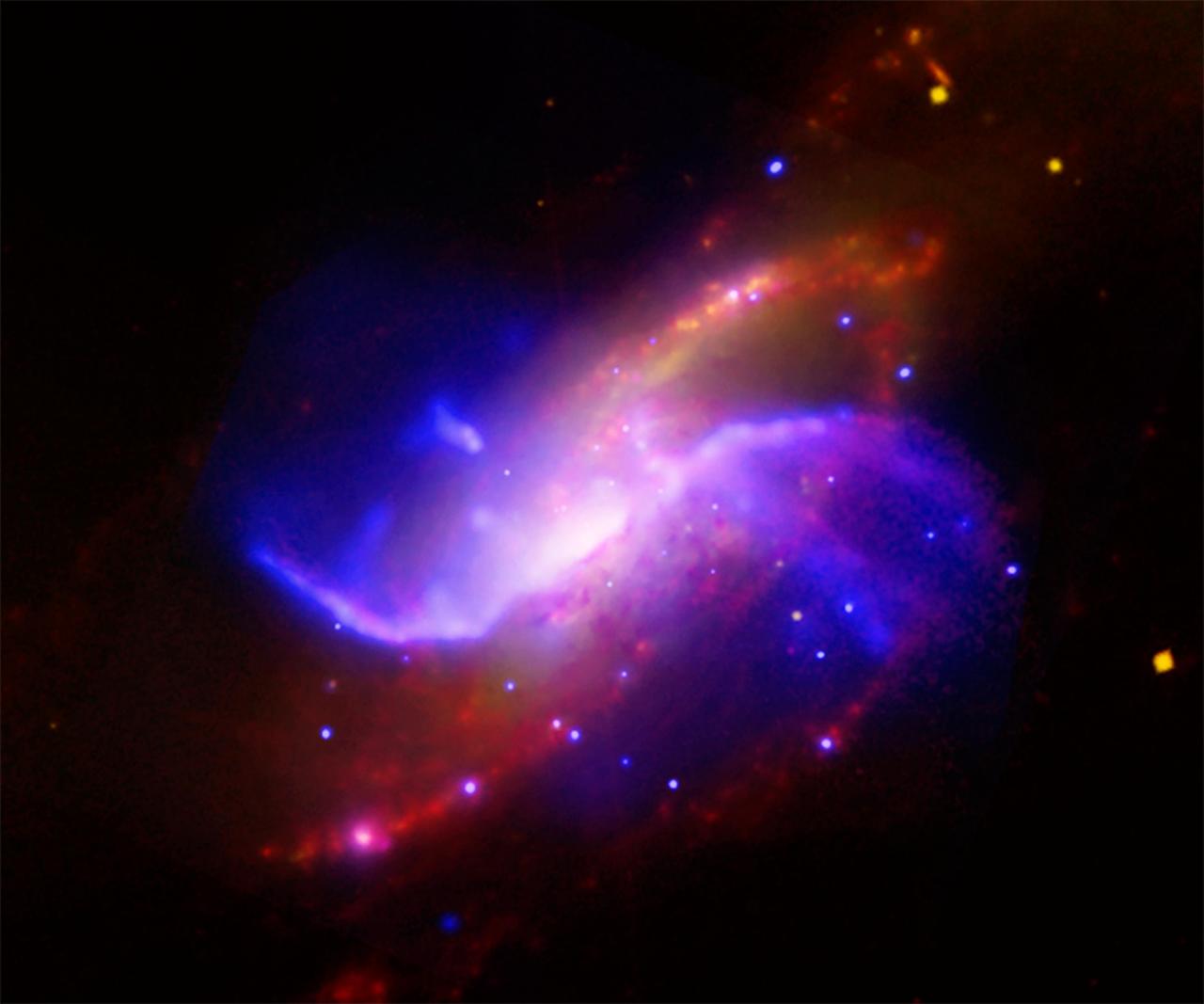
This composite image is of spiral galaxy M106 NGC 4258; optical data from the Digitized Sky Survey is yellow, radio data from the Very Large Array is purple,…
Inspect NASA record
This composite image is of spiral galaxy M106 NGC 4258; optical data from the Digitized Sky Survey is yellow, radio data from the Very Large Array is purple, X-ray data from Chandra is blue, and infrared data from the Spitzer Space Telescope is red.
- Record ID
- PIA10204
- NASA center
- JPL
- Date
- 2007-12-18
- Credit
- NASA/JPL-Caltech; X-ray: CXC/Univ. of Maryland/A.S. Wilson et al.; Optical: Pal.Obs. DSS; IR: VLA: NRAO/AUI/NSF
- Keywords
- NGC 4258, Spitzer Space Telescope

JPL · 2006-01-10 · PIA03653
The Milky Way Center Aglow with Dust
Our Milky Way is a dusty place. So dusty that we cannot see the center of the galaxy in visible light. Thanks to NASA Spitzer Space Telescope excellent…
Inspect NASA record
Our Milky Way is a dusty place. So dusty that we cannot see the center of the galaxy in visible light. Thanks to NASA Spitzer Space Telescope excellent resolution, the dusty features within the galactic center are seen in unprecedented detail.
- Record ID
- PIA03653
- NASA center
- JPL
- Date
- 2006-01-10
- Credit
- NASA/JPL-Caltech
- Keywords
- Milky Way, Spitzer Space Telescope
JPL · 2007-05-09 · PIA09376
First Map of Alien World animation
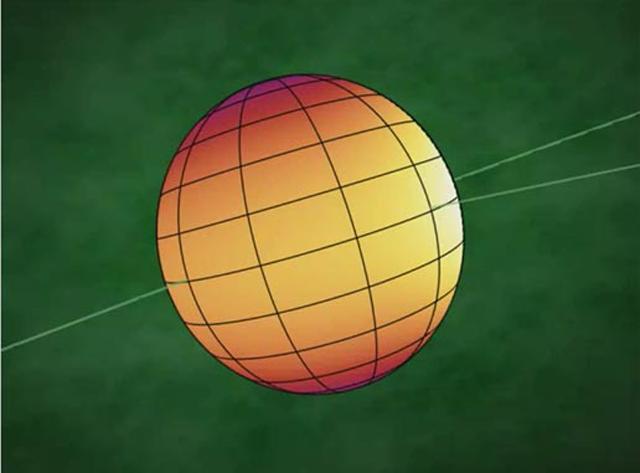
This image shows the first-ever map of the surface of an exoplanet, or a planet beyond our solar system. Showing temperature variations across the cloudy tops of a…
Inspect NASA record
This image shows the first-ever map of the surface of an exoplanet, or a planet beyond our solar system. Showing temperature variations across the cloudy tops of a gas giant called HD 189733b, the infrared data is taken by NASA Spitzer Space Telescope.
- Record ID
- PIA09376
- NASA center
- JPL
- Date
- 2007-05-09
- Credit
- NASA/JPL-Caltech/Harvard-Smithsonian CfA
- Keywords
- HD 189733b, Spitzer Space Telescope
JPL · 2016-01-06 · PIA20294
WFPC2 Image of the Variable Star Eta Carinae
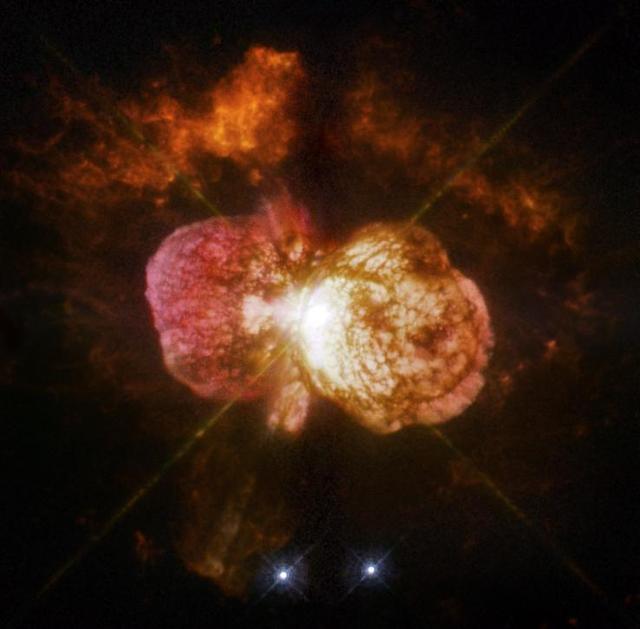
The discovery of likely Eta Carinae twins in other galaxies will help scientists better understand this brief phase in the life of a massive star with images such…
Inspect NASA record
The discovery of likely Eta Carinae twins in other galaxies will help scientists better understand this brief phase in the life of a massive star with images such as this from NASA Hubble Space Telescope. Astronomers cannot yet explain what caused the titanic eruption of star Eta Carinae in the 1840s. The discovery of likely Eta Carinae "twins" in other galaxies will help scientists better understand this brief phase in the life of a massive star. http://photojournal.jpl.nasa.gov/catalog/PIA20294
- Record ID
- PIA20294
- NASA center
- JPL
- Date
- 2016-01-06
- Credit
- NASA, ESA and the Hubble SM4 ERO Team
- Keywords
- Hubble Space Telescope, Eta Carinae
JPL · 2018-11-16 · PIA22569
Supernova Remnant G54
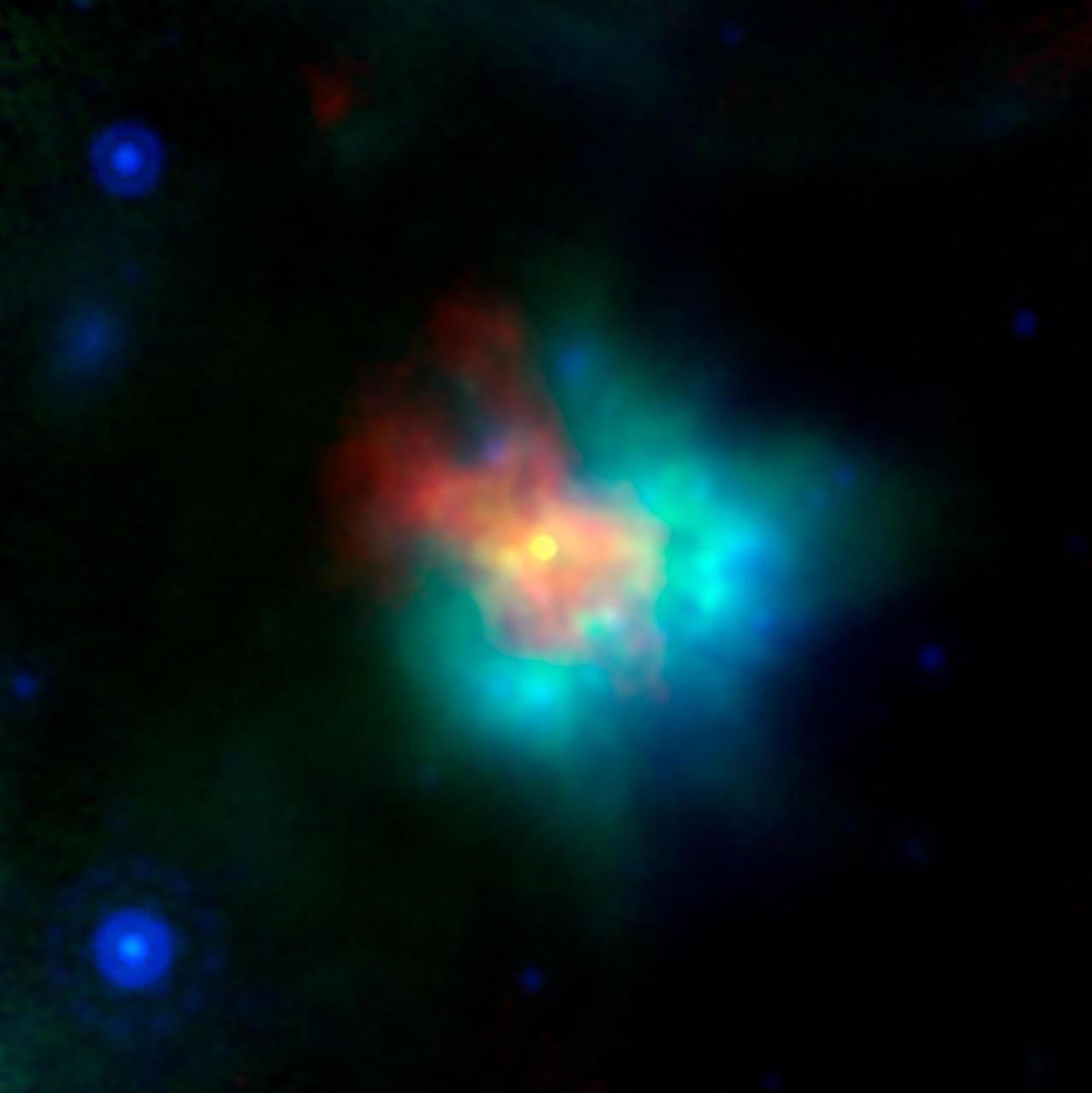
This image of supernova remnant G54.1+0.3 includes radio, infrared and X-ray light. The saturated yellow point at the center of the image indicates strong X-ray source at the…
Inspect NASA record
This image of supernova remnant G54.1+0.3 includes radio, infrared and X-ray light. The saturated yellow point at the center of the image indicates strong X-ray source at the center of the supernova remnant. This is an incredibly dense object called a neutron star, which can form as a star runs out of fuel to keep it inflated, and the unsupported material collapses down on to the star's core. G54.1+0.3 contains a special type of neutron star called a pulsar, which emits particularly bright radio and X-ray emissions. The blue and green emissions show the presence of dust, including silica. The red hues correspond to radio data from the Karl G. Jansky Very Large Array; green corresponds to 70 µm wavelength infrared light from the European Space Agency's Herschel Space Observatory; blue corresponds to 24 µm wavelength infrared light from the Multiband Imaging Photometer (MIPS) instrument on NASA's Spitzer Space Telescope; yellow corresponds to X-ray data from the Chandra X-ray Observatory. https://photojournal.jpl.nasa.gov/catalog/PIA22569
- Record ID
- PIA22569
- NASA center
- JPL
- Date
- 2018-11-16
- Credit
- NASA/JPL-Caltech/CXC/ESA/NRAO/J. Rho (SETI Institute)
- Keywords
- Spitzer Space Telescope