
Update Site (from NASA)
Explore NASA’s Image and Video Library.
Suggest one object per day for the Interstellar Minds collection. We review each suggestion before adding it.
Sign in to suggest a Marvel.
Find a NASA image ID. Open a NASA record and copy its ID from the end of the details URL.
NASA image records
JSC · 1972-08-28 · S72-48729
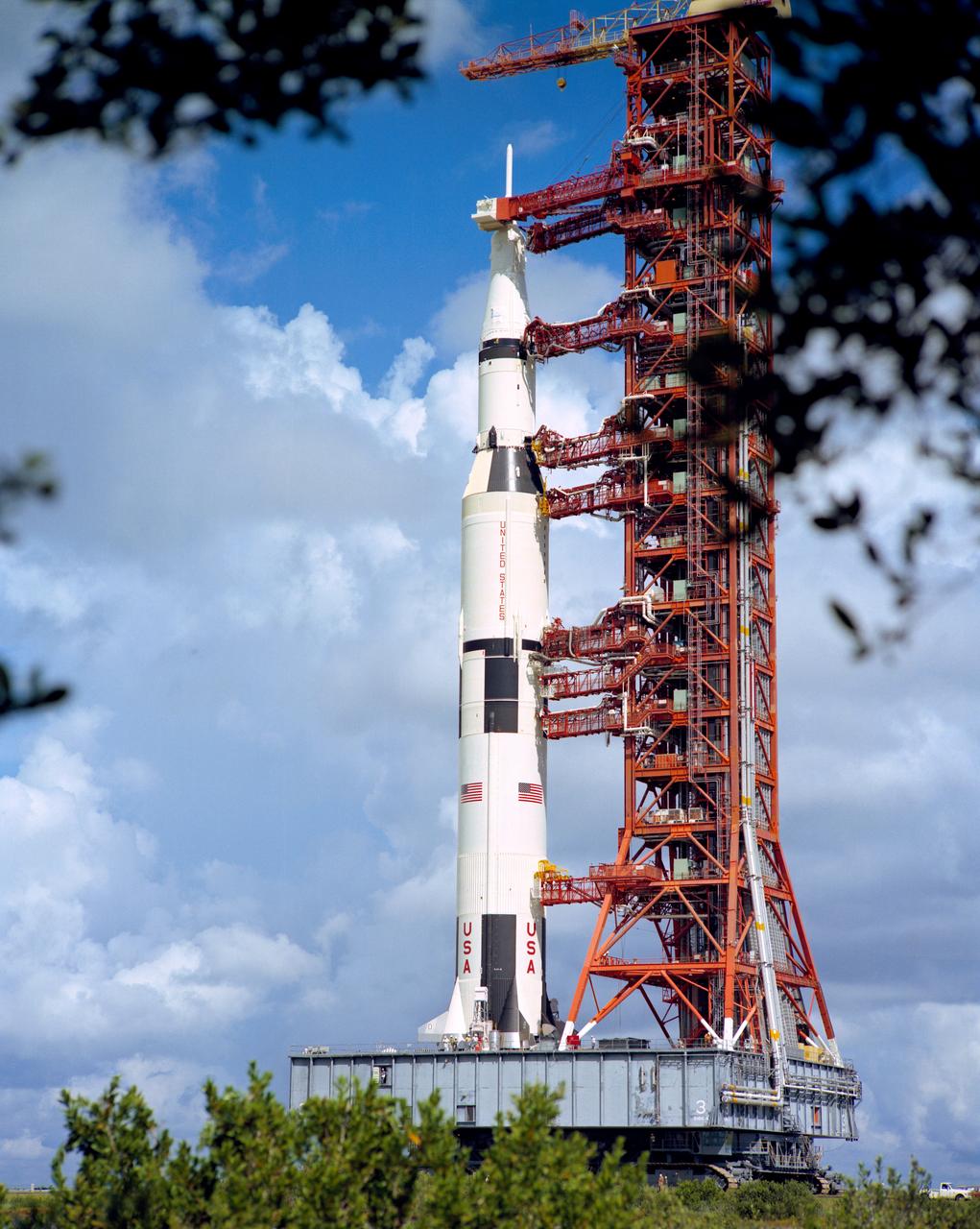
Apollo 17 rollout to launch pad
S72-48729 (28 Aug. 1972) --- A ground-level view of the huge Apollo 17 (Spacecraft 114/Lunar Module 12/ Saturn 512) space vehicle on its way to Pad A, Launch…
Inspect NASA record
S72-48729 (28 Aug. 1972) --- A ground-level view of the huge Apollo 17 (Spacecraft 114/Lunar Module 12/ Saturn 512) space vehicle on its way to Pad A, Launch Complex 39, Kennedy Space Center (KSC). The Saturn V stack and its mobile launch tower are atop a mammoth crawler-transporter. The prime crew for the Apollo 17 lunar landing mission will be astronauts Eugene A. Cernan, commander; Ronald E. Evans, command module pilot; and scientist-astronaut Harrison H. Schmitt, lunar module pilot.
- Record ID
- S72-48729
- NASA center
- JSC
- Date
- 1972-08-28
JSC · 1969-10-23 · S69-55553
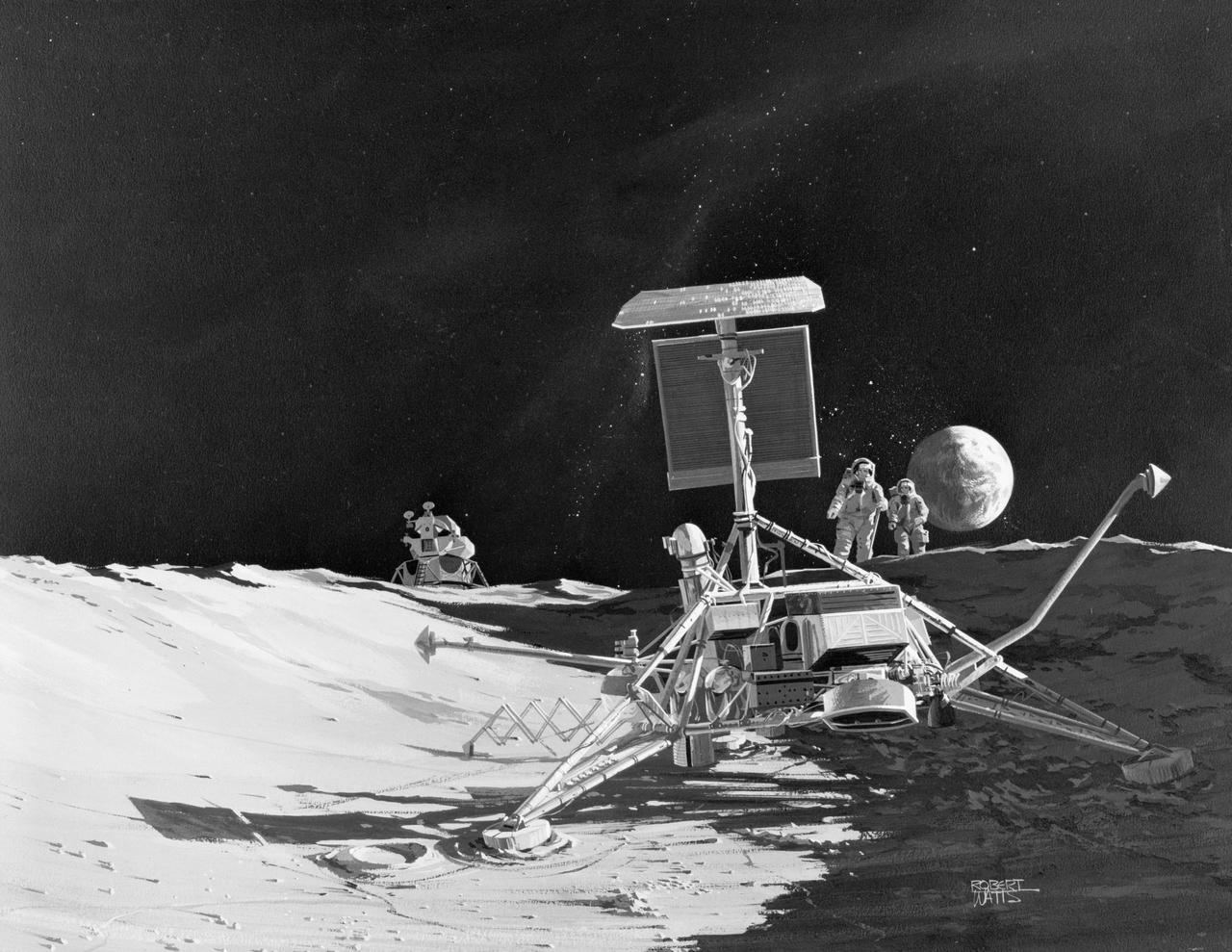
ARTIST CONCEPT - SURVEYOR III - OCEAN OF STORM
S69-55553 (October 1969) --- Ryan Aeronautical Company artist's concept depicting a close-up view of Surveyor 3 resting in the Ocean of Storms on the lunar nearside. Two Apollo…
Inspect NASA record
S69-55553 (October 1969) --- Ryan Aeronautical Company artist's concept depicting a close-up view of Surveyor 3 resting in the Ocean of Storms on the lunar nearside. Two Apollo 12 astronauts are seen approaching in the background. The Apollo 12 Lunar Module (LM) is in the left background. The Earth is in the right background. The inspection of Surveyor 3, which has been resting on the moon since April 1967, is an important objective of the Apollo 12 lunar landing mission. Selected pieces of Surveyor 3 will be brought back to Earth for scientific examination. Ryan landing radar has guided both Surveyor and Apollo spacecraft to soft landings on the moon.
- Record ID
- S69-55553
- NASA center
- JSC
- Date
- 1969-10-23
JSC · 1969-07-07 · S69-38667
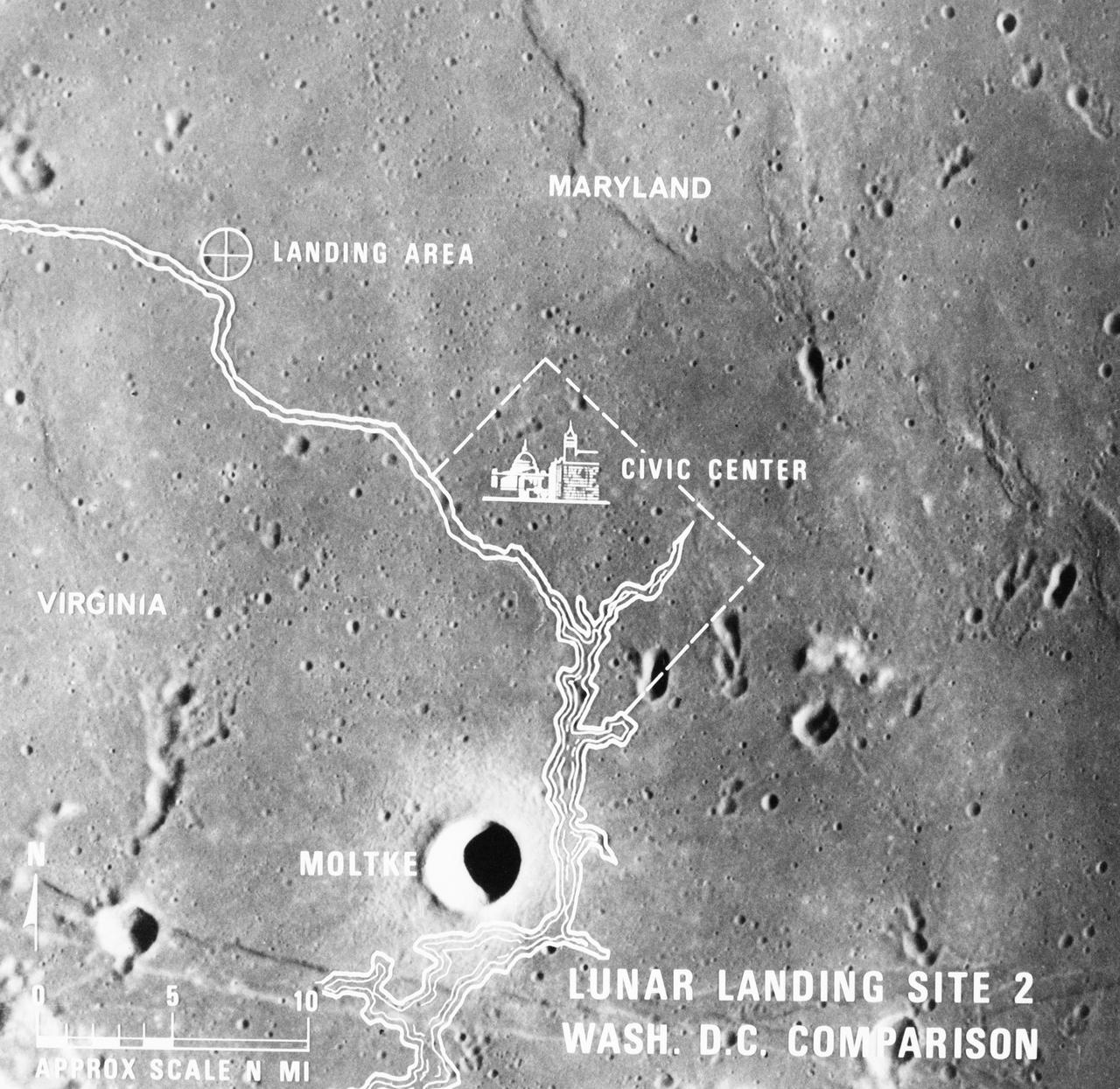
Lunar Landing Site 2 - Comparisons - Various Metropolitan Areas
S69-38667 (July 1969) --- A photographic illustration comparing the size of Apollo Landing Site 2 with that of the metropolitan Washington, D.C. area. Site 2 is one of…
Inspect NASA record
S69-38667 (July 1969) --- A photographic illustration comparing the size of Apollo Landing Site 2 with that of the metropolitan Washington, D.C. area. Site 2 is one of three Apollo 11 lunar landing sites. This will be the landing site if Apollo 11 is launched on July 16, 1969, as scheduled. Site 2 is located at 23 degrees 42 minutes 28 seconds east longitude and 0 degrees 42 minutes 50 seconds north latitude in southwestern Mare Tranquillitatis (Sea of Tranquility). (The white overlay is printed over a lunar surface photograph taken from Apollo 10 during its lunar orbit mission and is numbered AS10-31-4537.)
- Record ID
- S69-38667
- NASA center
- JSC
- Date
- 1969-07-07
JSC · 1972-02-11 · S72-19795
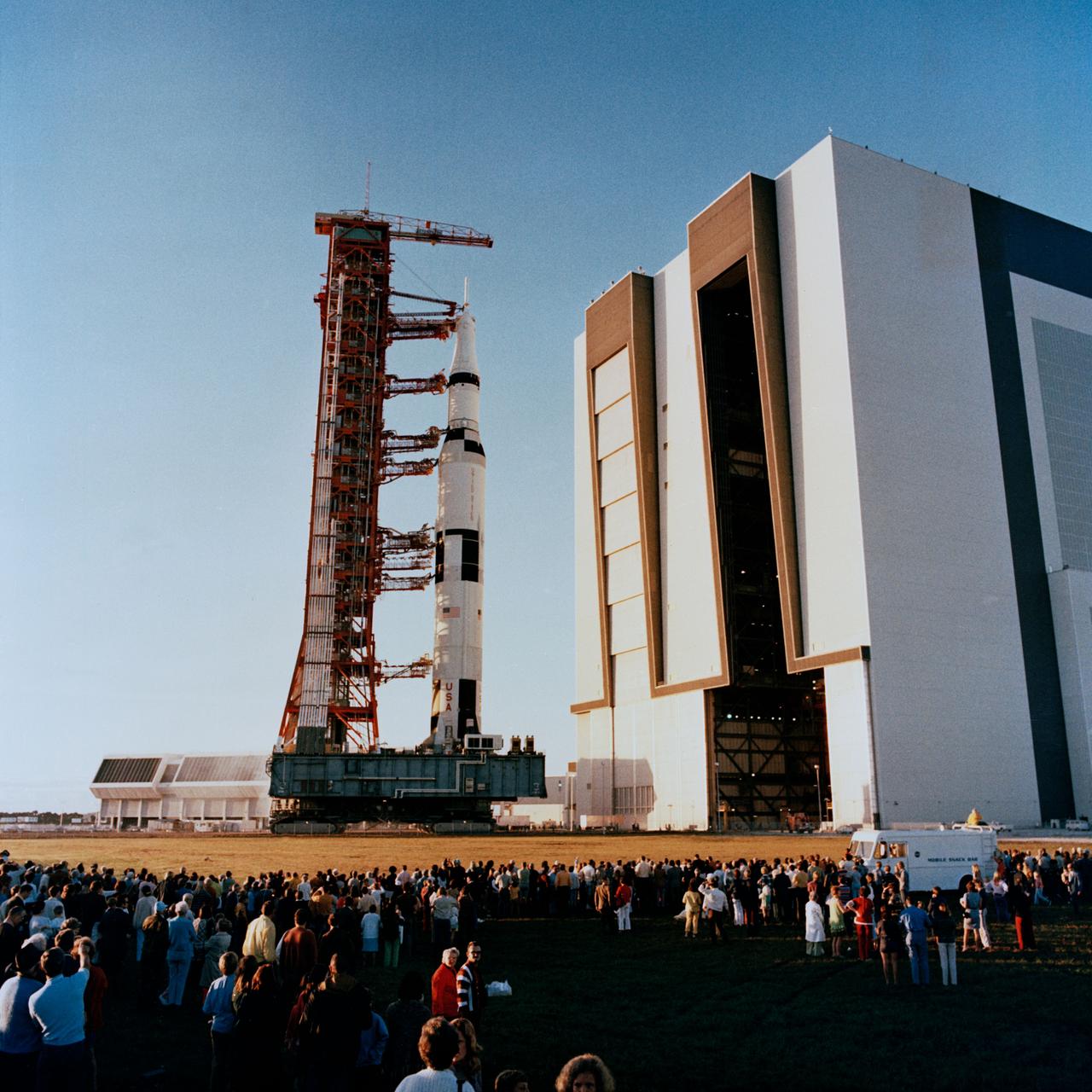
View of Apollo 16 space vehicle on way from VAB to Pad A, Launch Complex 39
S72-19795 (13 Dec. 1971) --- A large crowd of spectators look on as the 363-feet tall Apollo 16 (Spacecraft 113/Lunar Module 11/Saturn 511) space vehicle moves out of…
Inspect NASA record
S72-19795 (13 Dec. 1971) --- A large crowd of spectators look on as the 363-feet tall Apollo 16 (Spacecraft 113/Lunar Module 11/Saturn 511) space vehicle moves out of the Vehicle Assembly Building (VAB) at the Kennedy Space Center's (KSC) Launch Complex 39 toward Pad A. The Saturn V stack and its mobile launch tower are atop a huge crawler-transporter. The prime crew men of the scheduled Apollo 16 lunar landing mission are astronauts John W. Young, commander; Thomas K. Mattingly, command module pilot; and Charles M. Duke Jr., lunar module pilot.
- Record ID
- S72-19795
- NASA center
- JSC
- Date
- 1972-02-11
- Credit
- N/A

KSC · 2009-02-20 · KSC-2009-1755
KSC-2009-1755
CAPE CANAVERAL, Fla. – The Russian AH-124-100 aircraft arrives at Cape Canaveral Air Force Station's skid strip in Florida carrying the Centaur stage of the Atlas V rocket…
Inspect NASA record
CAPE CANAVERAL, Fla. – The Russian AH-124-100 aircraft arrives at Cape Canaveral Air Force Station's skid strip in Florida carrying the Centaur stage of the Atlas V rocket that will launch NASA's Lunar Reconnaissance Orbiter, or LRO, and NASA's Lunar CRater Observation and Sensing Satellite, known as LCROSS. The two spacecraft will be integrated with the Atlas V and tested for final flight worthiness. Launch is scheduled for the spring. LCROSS and LRO are the first missions in NASA's plan to return humans to the moon and begin establishing a lunar outpost by 2020. Photo credit: NASA/Troy Cryder
- Record ID
- KSC-2009-1755
- NASA center
- KSC
- Date
- 2009-02-20
- Keywords
- moon mission, LRO, LCROSS,
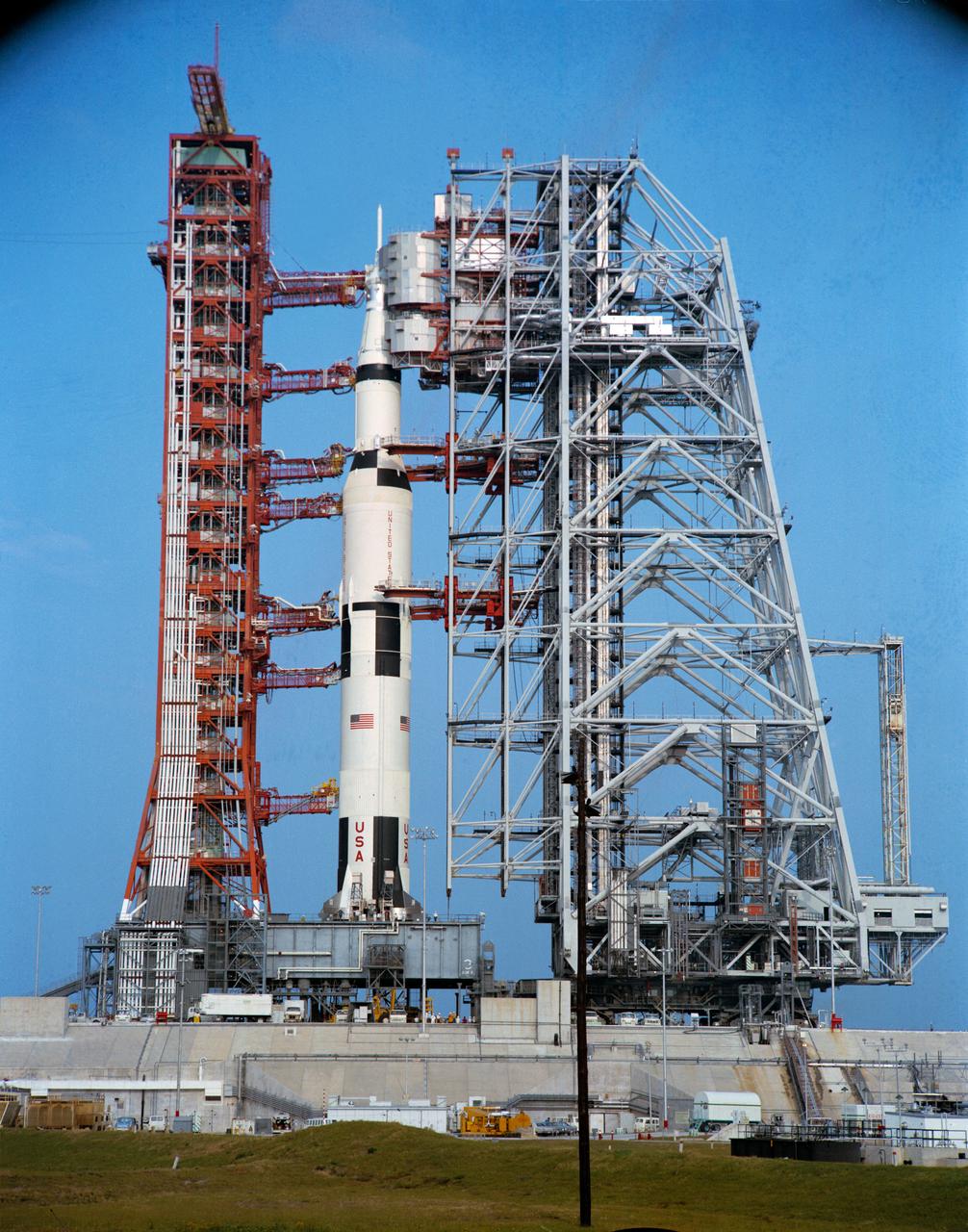
JSC · 1972-03-29 · S72-34473
View of Apollo 16 space vehicle at Pad A, Launch Complex 39
S72-34473 (29 March 1972) --- A ground-level view of Pad A, Launch Complex 39, Kennedy Space Center (KSC), showing the 363-feet tall Apollo 16 (Spacecraft 113/Lunar Module 11/Saturn…
Inspect NASA record
S72-34473 (29 March 1972) --- A ground-level view of Pad A, Launch Complex 39, Kennedy Space Center (KSC), showing the 363-feet tall Apollo 16 (Spacecraft 113/Lunar Module 11/Saturn 511) space vehicle during a Countdown Demonstration Test (CDDT). The CDDT was part of the preflight preparations for the Apollo 16 lunar landing mission. The crew of Apollo 16, scheduled for launch on April 16, 1972, are astronauts John W. Young, commander; Thomas K. (Ken) Mattingly II, command module pilot; and Charles M. Duke Jr., lunar module pilot.
- Record ID
- S72-34473
- NASA center
- JSC
- Date
- 1972-03-29
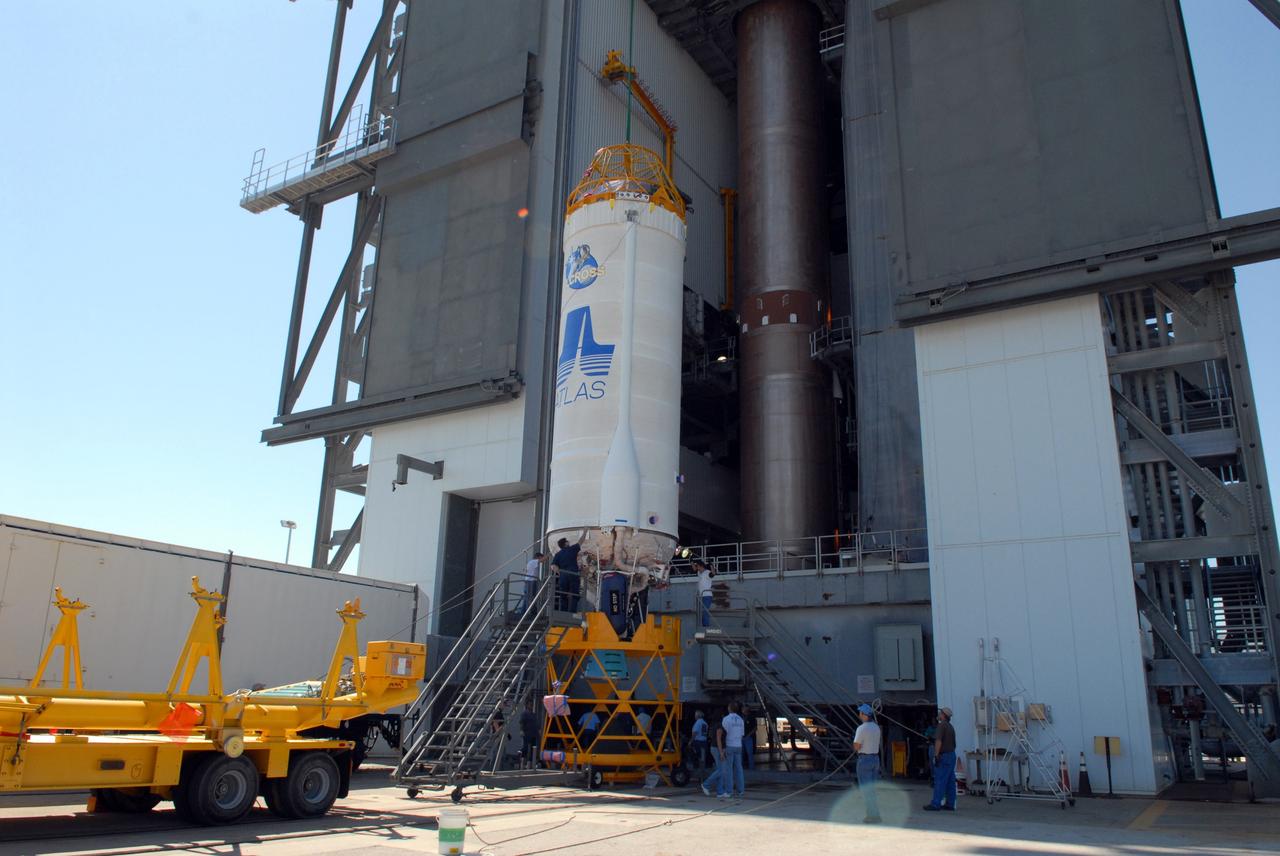
KSC · 2009-04-30 · KSC-2009-2910
KSC-2009-2910
CAPE CANAVERAL, Fla. –– On Cape Canaveral Air Force Station's Launch Complex 41, the crane begins lifting the Centaur upper stage into the Vertical Integration Facility for installation…
Inspect NASA record
CAPE CANAVERAL, Fla. –– On Cape Canaveral Air Force Station's Launch Complex 41, the crane begins lifting the Centaur upper stage into the Vertical Integration Facility for installation onto the Atlas V first stage, already in the tower. The Atlas V/Centaur is the launch vehicle for NASA's Lunar Reconnaissance Orbiter, or LRO, and NASA's Lunar CRater Observation and Sensing Satellite, known as LCROSS. LCROSS and LRO are the first missions in NASA's plan to return humans to the moon and begin establishing a lunar outpost by 2020. Photo credit: NASA/Jack Pfaller
- Record ID
- KSC-2009-2910
- NASA center
- KSC
- Date
- 2009-04-30
- Keywords
- LRO, LCROSS, VIF, CCAFS, Atlas V, Centaur
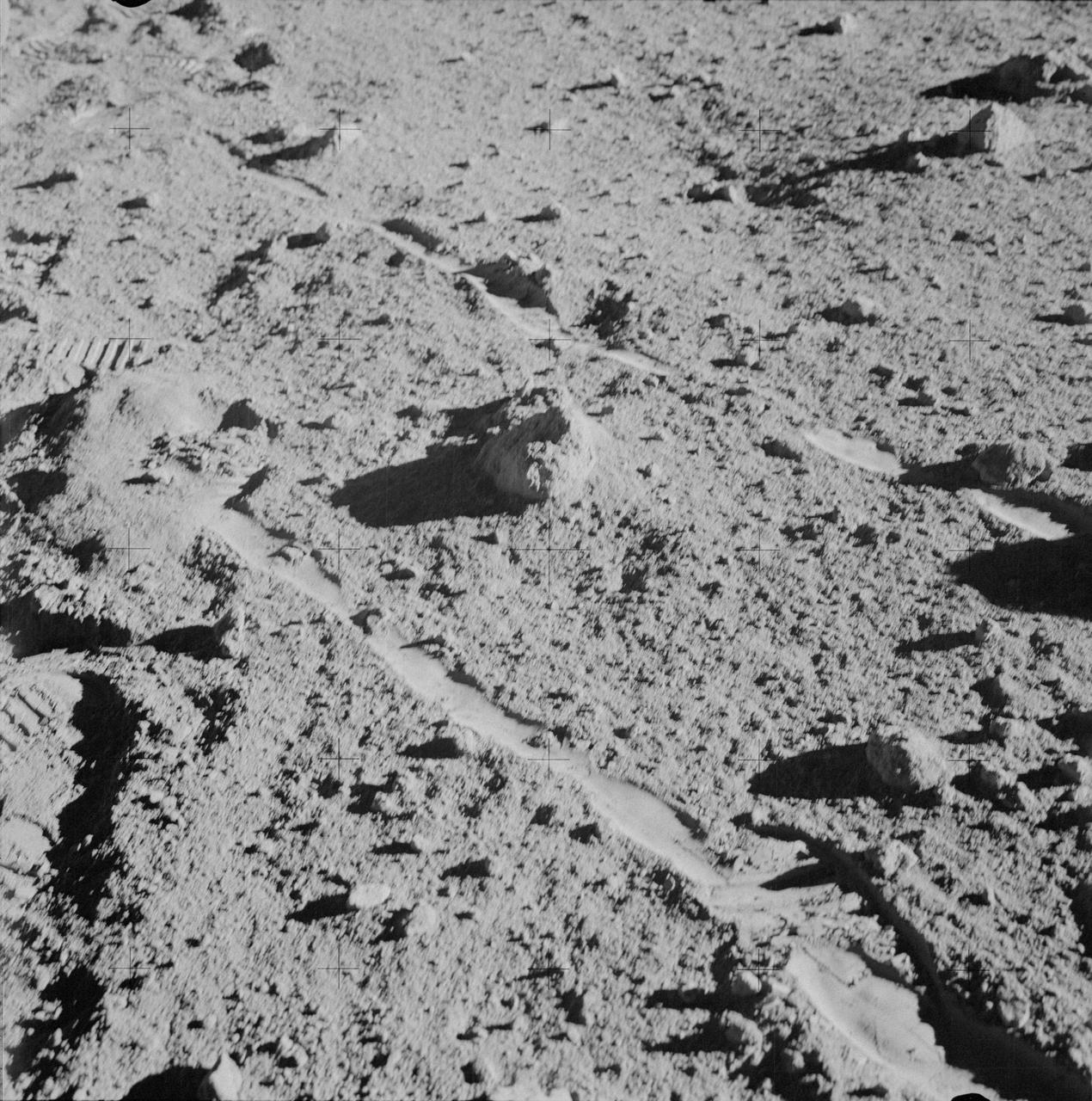
JSC · 1971-02-06 · as14-64-9129
Apollo 14 Mission image - Pan of the Gnomon during EVA 2.
AS14-64-9129 (6 Feb. 1971) --- The two moon-exploring crew men of the Apollo 14 lunar landing mission, photographed and collected the large rock pictured just above the exact…
Inspect NASA record
AS14-64-9129 (6 Feb. 1971) --- The two moon-exploring crew men of the Apollo 14 lunar landing mission, photographed and collected the large rock pictured just above the exact center of this picture. (Hold picture with the NASA photographic number at lower right hand corner.) The rock, casting a shadow off to the left, is lunar sample number 14321, referred to as a basketball-sized rock by newsmen and nicknamed "Big Bertha" by principal investigators. It lies between the wheel tracks made by the modular equipment transporter (MET) or rickshaw-type portable workbench. A few prints of the lunar overshoes of the crew members are at the left. This photo was made near the boulder field near the rim of Cone Crater.
- Record ID
- as14-64-9129
- NASA center
- JSC
- Date
- 1971-02-06
- Keywords
- Apollo, Apollo 14, Moon
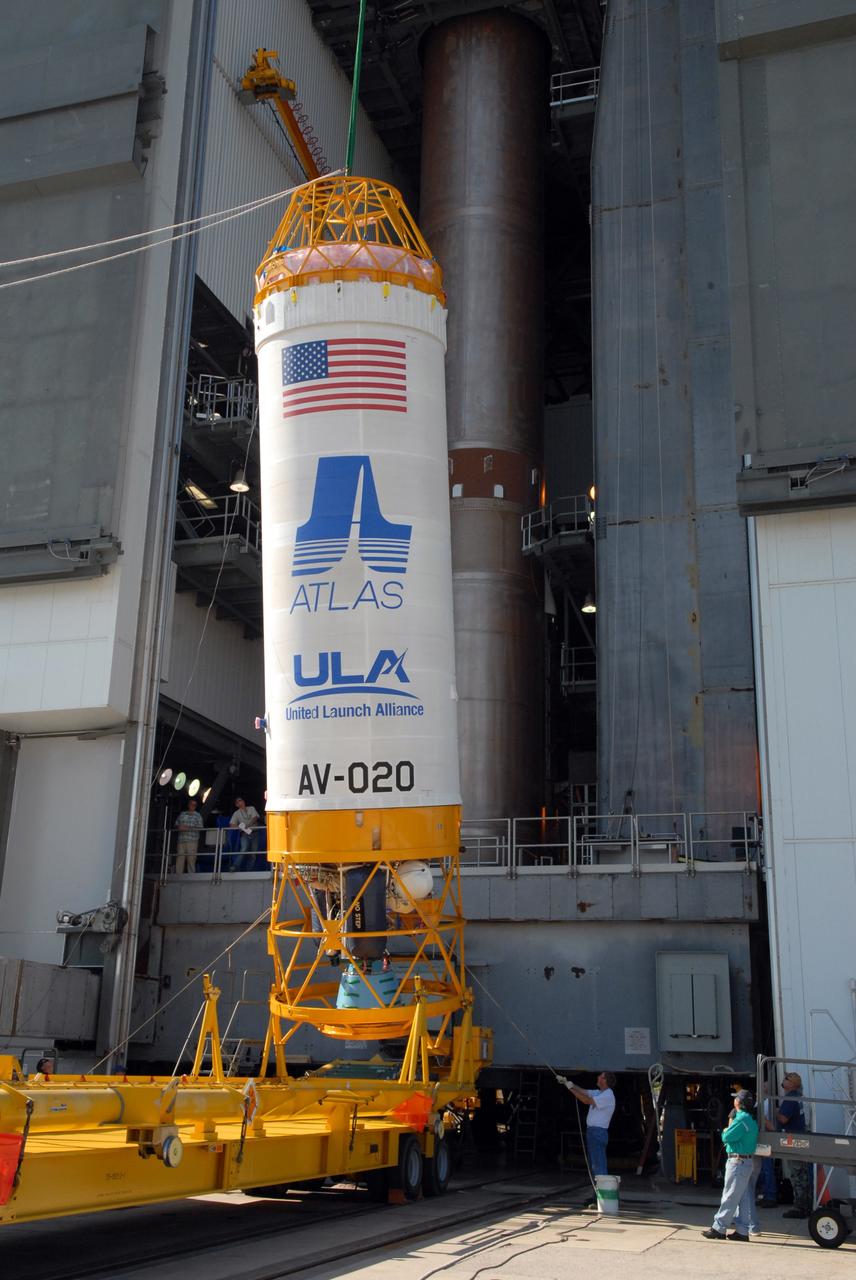
KSC · 2009-04-30 · KSC-2009-2909
KSC-2009-2909
CAPE CANAVERAL, Fla. –– On Cape Canaveral Air Force Station's Launch Complex 41, the Centaur upper stage is nearly vertical. It will be lifted into the Vertical Integration…
Inspect NASA record
CAPE CANAVERAL, Fla. –– On Cape Canaveral Air Force Station's Launch Complex 41, the Centaur upper stage is nearly vertical. It will be lifted into the Vertical Integration Facility for installation onto the Atlas V first stage, already in the tower. The Atlas V/Centaur is the launch vehicle for NASA's Lunar Reconnaissance Orbiter, or LRO, and NASA's Lunar CRater Observation and Sensing Satellite, known as LCROSS. LCROSS and LRO are the first missions in NASA's plan to return humans to the moon and begin establishing a lunar outpost by 2020. Photo credit: NASA/Jack Pfaller
- Record ID
- KSC-2009-2909
- NASA center
- KSC
- Date
- 2009-04-30
- Keywords
- LRO, LCROSS, VIF, CCAFS, Atlas V, Centaur
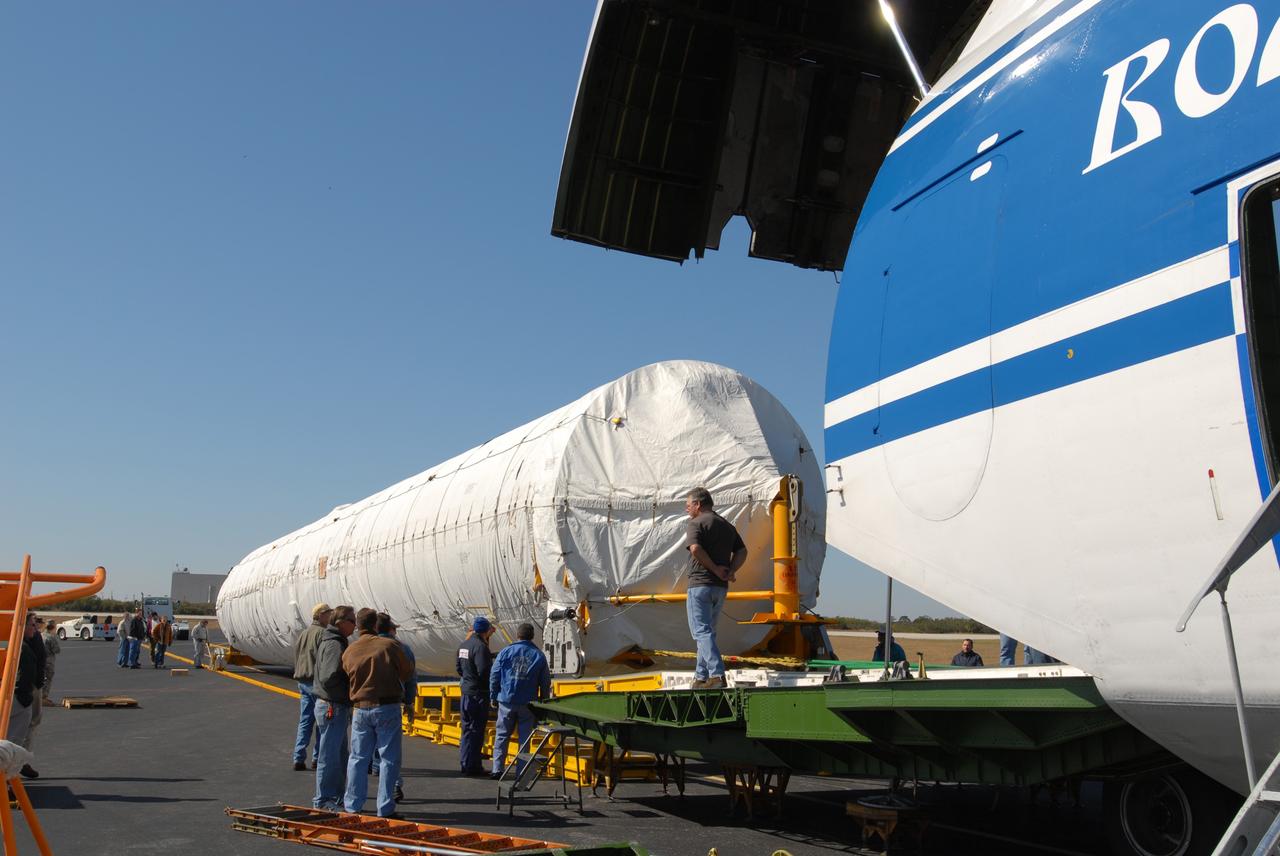
KSC · 2009-03-03 · KSC-2009-1926
KSC-2009-1926
CAPE CANAVERAL, Fla. – On Cape Canaveral Air Force Station's skid strip in Florida, the shrouded Atlas V first stage booster has been moved out of the Russian…
Inspect NASA record
CAPE CANAVERAL, Fla. – On Cape Canaveral Air Force Station's skid strip in Florida, the shrouded Atlas V first stage booster has been moved out of the Russian AH-124-100 aircraft onto a transporter. The Atlas V is the launch vehicle for NASA's Lunar Reconnaissance Orbiter, or LRO, and NASA's Lunar CRater Observation and Sensing Satellite, known as LCROSS. The booster will be taken to the Atlas Space Operations Center on CCAFS.Launch is scheduled no earlier than May 20. LCROSS and LRO are the first missions in NASA's plan to return humans to the moon and begin establishing a lunar outpost by 2020. Photo credit: NASA/Jim Grossmann
- Record ID
- KSC-2009-1926
- NASA center
- KSC
- Date
- 2009-03-03
- Keywords
- LRO, LCRPSS. Atlas V, booster, CCAFS
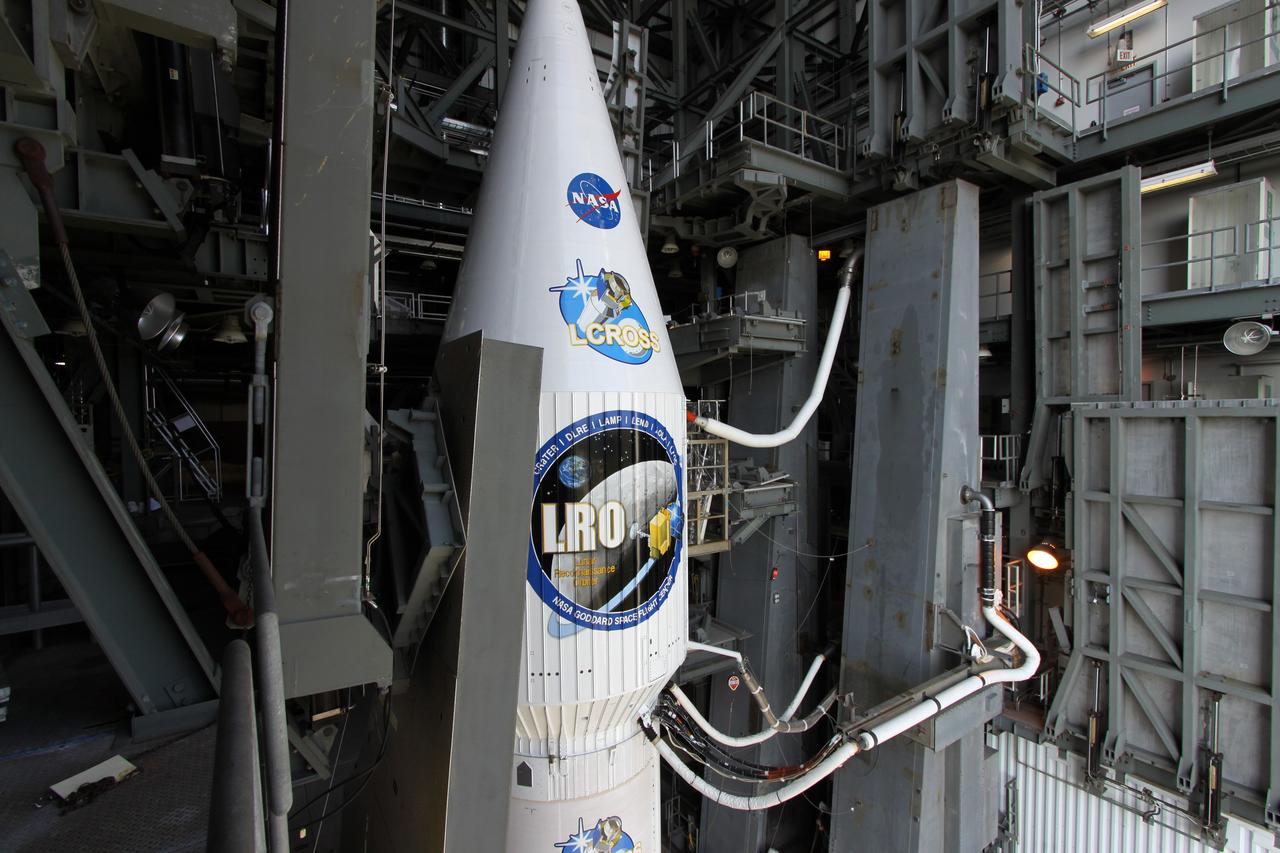
KSC · 2009-06-17 · KSC-2009-3740
KSC-2009-3740
CAPE CANAVERAL, Fla. – On Launch Complex-41 on Cape Canaveral Air Force Station in Florida, NASA's Lunar Reconnaissance Orbiter, or LRO, and NASA's Lunar Crater Observation and Sensing…
Inspect NASA record
CAPE CANAVERAL, Fla. – On Launch Complex-41 on Cape Canaveral Air Force Station in Florida, NASA's Lunar Reconnaissance Orbiter, or LRO, and NASA's Lunar Crater Observation and Sensing Satellite, known as LCROSS, are ready to roll out to the launch pad atop the Atlas V/Centaur rocket. LRO and LCROSS are the first missions in NASA's plan to return humans to the moon and begin establishing a lunar outpost by 2020. The LRO also includes seven instruments that will help NASA characterize the moon's surface: DIVINER, LAMP, LEND, LOLA, CRATER, Mini-RF and LROC. Launch is scheduled for 5:22 p.m. EDT June 18 . Photo credit: NASA/Jack Pfaller
- Record ID
- KSC-2009-3740
- NASA center
- KSC
- Date
- 2009-06-17
- Keywords
- LRO, LCROSS, CCAFS, ELV
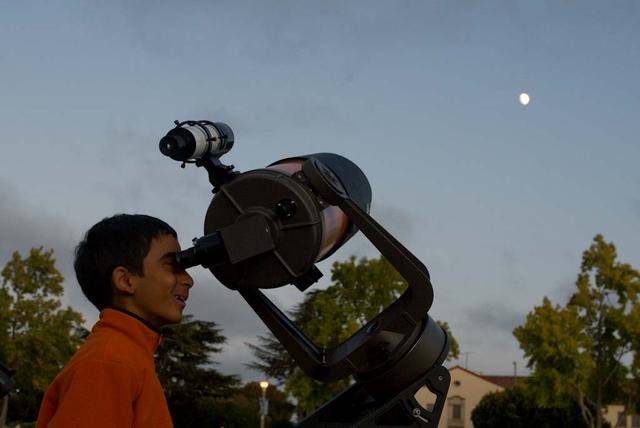
ARC · 2009-08-01 · ARC-2009-ACD09-0160-007
ARC-2009-ACD09-0160-007
International Year of Asronomy 'Observe the Moon Night' public event on Shenandoah Plaza, located in NASA Research Park at NASA's Ames Research Center, Moffett Field, Calif. The moon…
Inspect NASA record
International Year of Asronomy 'Observe the Moon Night' public event on Shenandoah Plaza, located in NASA Research Park at NASA's Ames Research Center, Moffett Field, Calif. The moon observation eent featured dozens of telescopes set up by local amateur astronomers and astronomy clubs for the public to view the surface o the moon and other celestial objects. NASA experts will be on hand to provide information about NASA's plans for lunar exploration, including the recently launch Lunar Crater Observation Sensing Satellite (LCROSS) and Lunar Reconnaissance Obriter (LRO) missions.
- Record ID
- ARC-2009-ACD09-0160-007
- NASA center
- ARC
- Date
- 2009-08-01
- Credit
- Eric James
- Keywords
- LCROSS