
Update Site (from NASA)
Explore NASA’s Image and Video Library.
Suggest one object per day for the Interstellar Minds collection. We review each suggestion before adding it.
Sign in to suggest a Marvel.
Find a NASA image ID. Open a NASA record and copy its ID from the end of the details URL.
NASA image records
JPL · 2010-03-29 · PIA12982
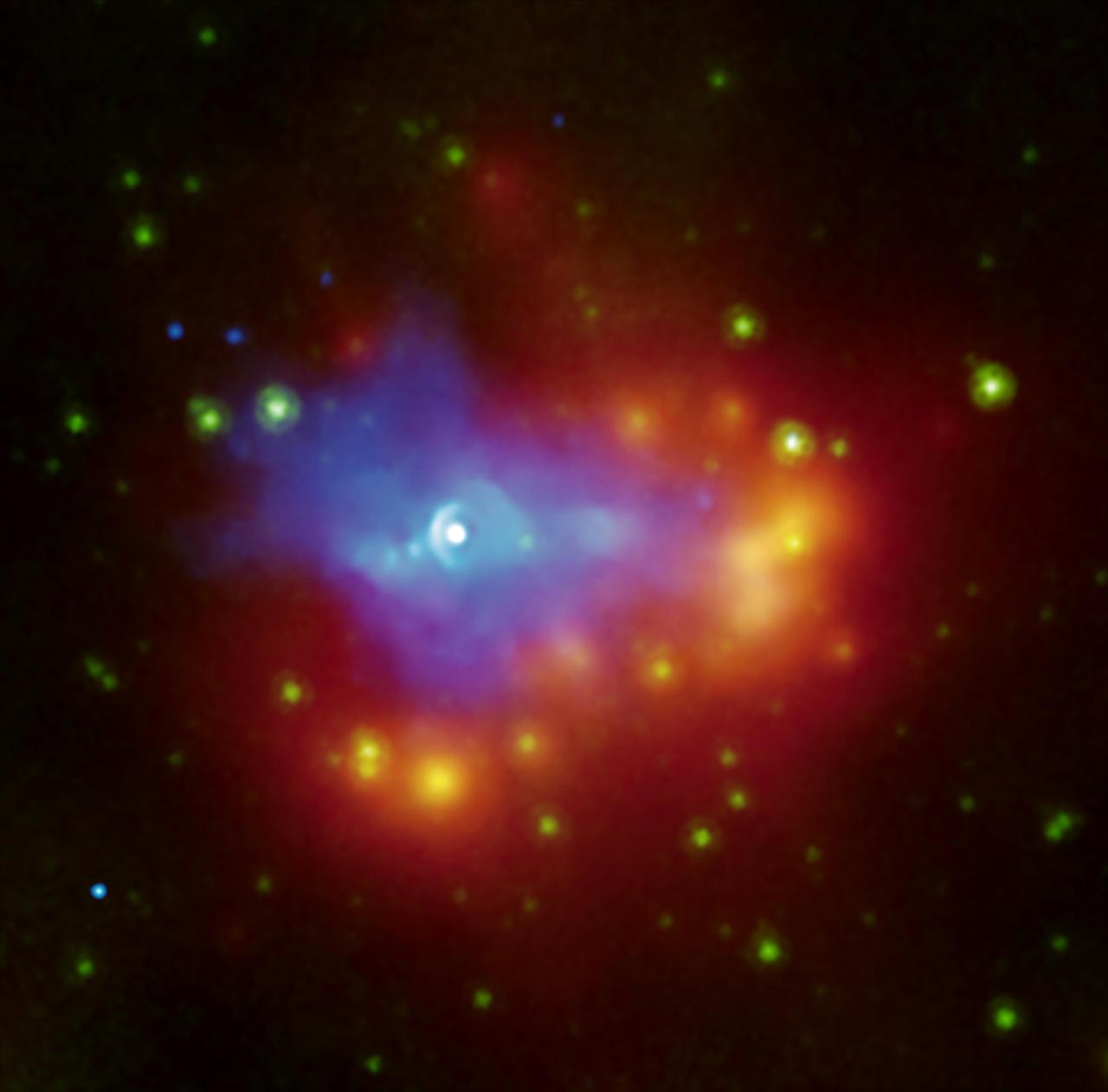
Dusty Dead Star
A composite image from NASA Chandra and Spitzer space telescopes shows the dusty remains of a collapsed star, a supernova remnant called G54.1+0.3. The white source at the…
Inspect NASA record
A composite image from NASA Chandra and Spitzer space telescopes shows the dusty remains of a collapsed star, a supernova remnant called G54.1+0.3. The white source at the center is a dead star called a pulsar.
- Record ID
- PIA12982
- NASA center
- JPL
- Date
- 2010-03-29
- Credit
- NASA/CXC/JPL-Caltech/Harvard-Smithsonian CfA
- Keywords
- Chandra X-ray Observatory,Spitzer Space Telescope
JPL · 2006-05-05 · PIA08438
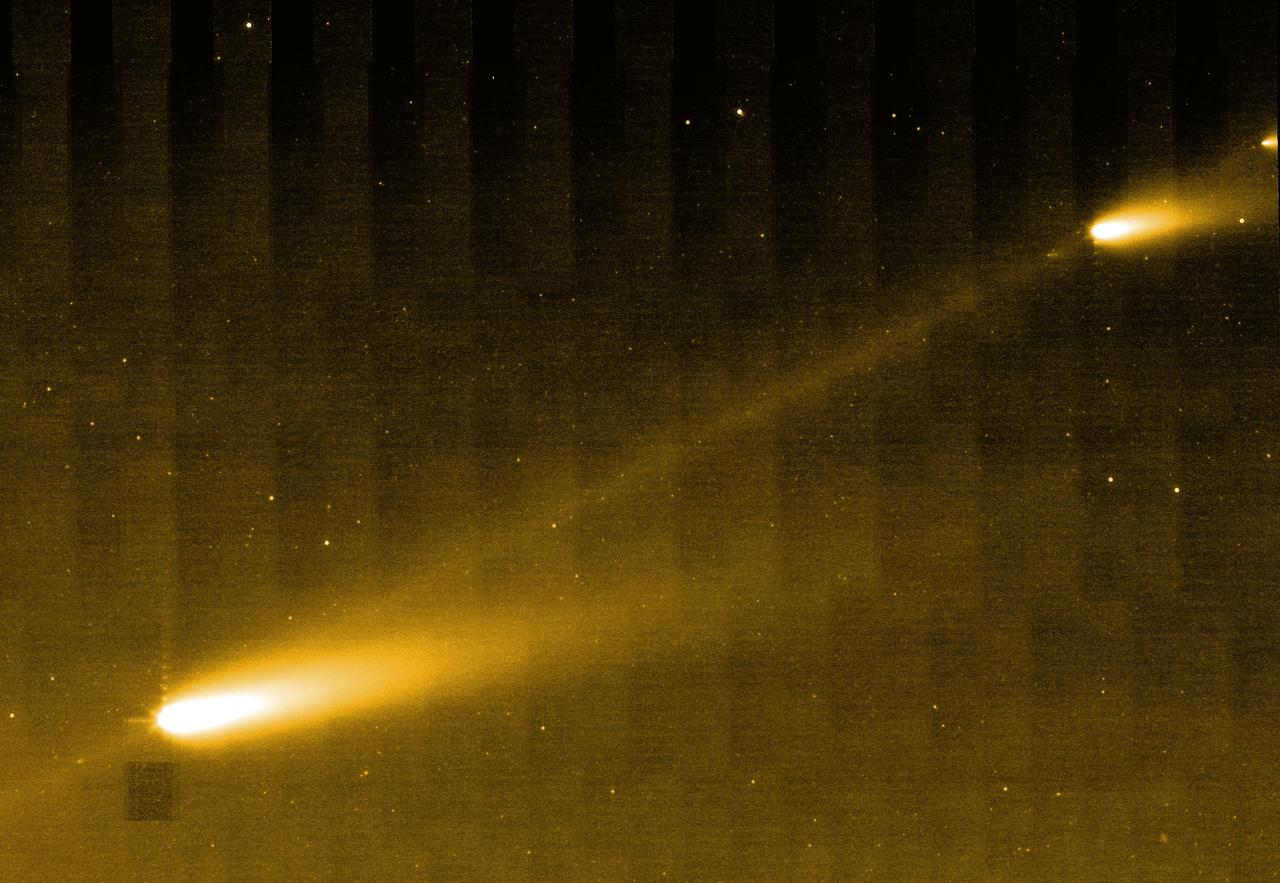
Comet Stepping Stones
NASA Spitzer Space Telescope shows three of the many fragments making up Comet 73P/Schwassman-Wachmann 3. The picture also provides the best look yet at the crumbling comet trail…
Inspect NASA record
NASA Spitzer Space Telescope shows three of the many fragments making up Comet 73P/Schwassman-Wachmann 3. The picture also provides the best look yet at the crumbling comet trail of debris.
- Record ID
- PIA08438
- NASA center
- JPL
- Date
- 2006-05-05
- Credit
- NASA/JPL-Caltech
- Keywords
- Schwassmann-Wachmann 3, Spitzer Space Telescope
JPL · 2024-10-11 · PIA26462
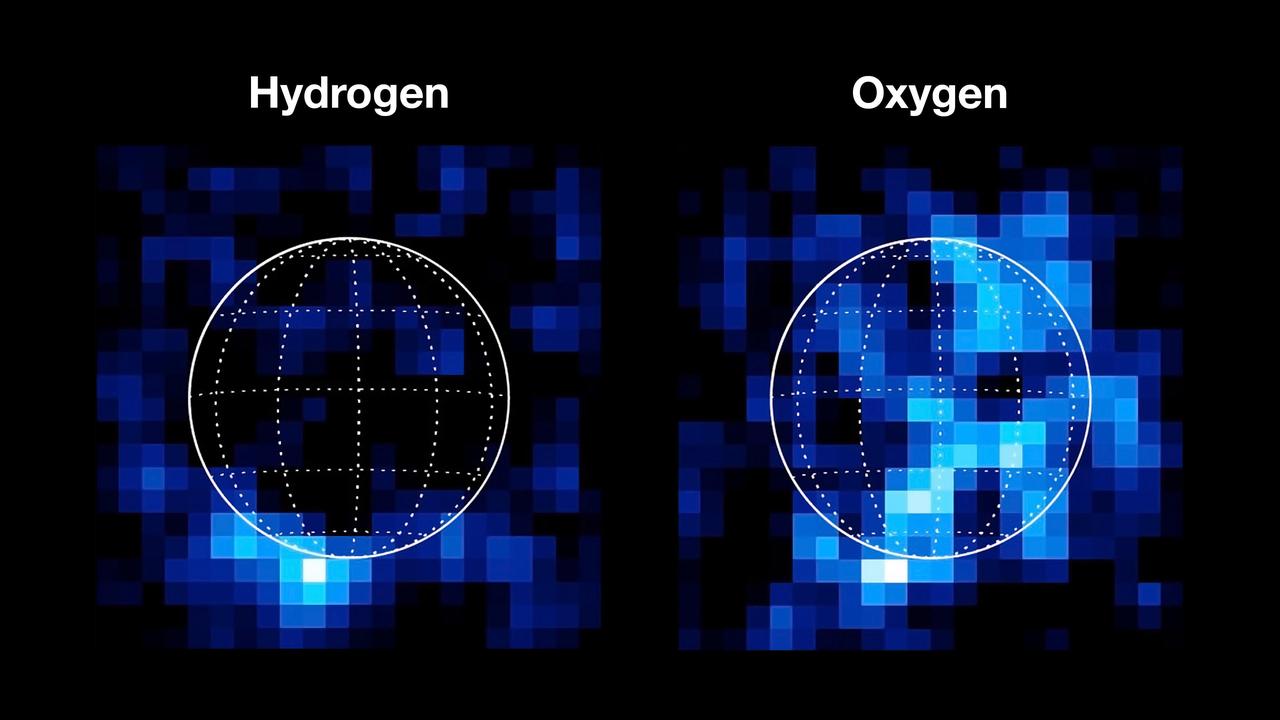
Hubble's Ultraviolet Observations Reveal Hydrogen and Oxygen at Europa
Ultraviolet observations made by NASA's Hubble Space Telescope in 2012 illustrate two key elements in the thin atmosphere of Jupiter's moon Europa: hydrogen and oxygen. A white circle…
Inspect NASA record
Ultraviolet observations made by NASA's Hubble Space Telescope in 2012 illustrate two key elements in the thin atmosphere of Jupiter's moon Europa: hydrogen and oxygen. A white circle indicates the outline of Europa. The hydrogen data could potentially be evidence of an active plume venting water from the ocean beneath Europa's icy crust. If plumes do exist at the Jovian moon, the ultraviolet spectrograph on NASA's Europa Clipper spacecraft (Europa-UVS) could detect their activity at much higher resolution. Europa Clipper's three main science objectives are to determine the thickness of the moon's icy shell and its interactions with the ocean below, to investigate its composition, and to characterize its geology. The mission's detailed exploration of Europa will help scientists better understand the astrobiological potential for habitable worlds beyond our planet. https://photojournal.jpl.nasa.gov/catalog/PIA26462
- Record ID
- PIA26462
- NASA center
- JPL
- Date
- 2024-10-11
- Credit
- NASA/ESA/JPL-Caltech/SwRI
- Keywords
- Hubble Space Telescope, Europa

JPL · 2015-08-20 · PIA19872
NASA Spitzer 12th Anniversary Space Calendar
NASA Spitzer Space Telescope celebrated its 12th anniversary with a new digital calendar showcasing some of the mission most notable discoveries and popular cosmic eye candy. The digital…
Inspect NASA record
NASA Spitzer Space Telescope celebrated its 12th anniversary with a new digital calendar showcasing some of the mission most notable discoveries and popular cosmic eye candy. The digital calendar is online at http://www.jpl.nasa.gov/images/spitzer/20150820/Spitzer12thAnniversaryCalendar.pdf The calendar follows the life of the mission, with each month highlighting top infrared images and discoveries from successive years -- everything from a dying star resembling the eye of a monster to a star-studded, swirling galaxy. The final month includes a brand new image of the glittery star-making factory known as the Monkey Head nebula. Spitzer, which launched into space on August 25, 2003, from Cape Canaveral, Florida, is still going strong. It continues to use its ultra-sensitive infrared vision to probe asteroids, comets, exoplanets (planets outside our solar system) and some of the farthest known galaxies. Recently, Spitzer helped discover the closest known rocky exoplanet to us, named HD219134b, at 21 light-years away. In fact, Spitzer's exoplanet studies continue to surprise the astronomy community. The telescope wasn't originally designed to study exoplanets, but as luck -- and some creative engineering -- would have it, Spitzer has turned out to be a critical tool in the field, probing the climates and compositions of these exotic worlds. This pioneering work began in 2005, when Spitzer became the first telescope to detect light from an exoplanet. http://photojournal.jpl.nasa.gov/catalog/PIA19872
- Record ID
- PIA19872
- NASA center
- JPL
- Date
- 2015-08-20
- Credit
- NASA/JPL-Caltech
- Keywords
- Spitzer Space Telescope, calendar
JPL · 2014-08-21 · PIA18468
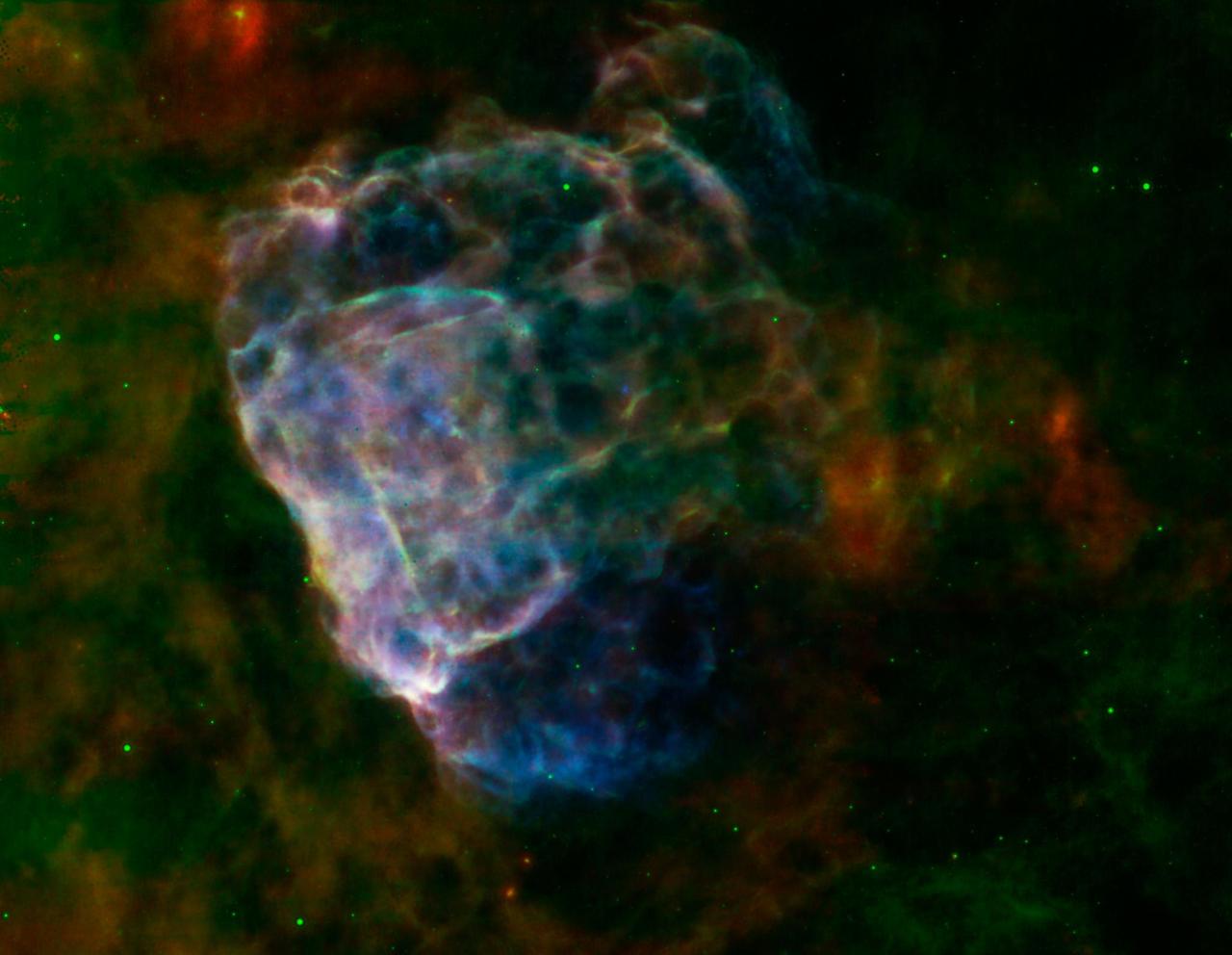
Supernova Seen In Two Lights
Puppis A, around 7,000 light-years away, is seen in this image from NASA Spitzer Space Telescope and Chandra X-Ray Observatory, and the European Space Agency XMM-Newton.
Inspect NASA record
Puppis A, around 7,000 light-years away, is seen in this image from NASA Spitzer Space Telescope and Chandra X-Ray Observatory, and the European Space Agency XMM-Newton.
- Record ID
- PIA18468
- NASA center
- JPL
- Date
- 2014-08-21
- Credit
- NASA/ESA/JPL-Caltech/GSFC/IAFE
- Keywords
- Chandra X-Ray Observatory,Spitzer Space Telescope,XMM-Newton

JSC · 2002-03-03 · S109E5072
-V3 view of Hubble Space Telescope
STS109-E-5072 (3 March 2002) --- The top portion of the Hubble Space Telescope is backdropped against dark space, just after the Space Shuttle Columbia used its 50-foot-long robotic…
Inspect NASA record
STS109-E-5072 (3 March 2002) --- The top portion of the Hubble Space Telescope is backdropped against dark space, just after the Space Shuttle Columbia used its 50-foot-long robotic arm to lower the telescope into its cargo bay. The image was one of a series recorded with a digital still camera during and just after capture activities
- Record ID
- S109E5072
- NASA center
- JSC
- Date
- 2002-03-03
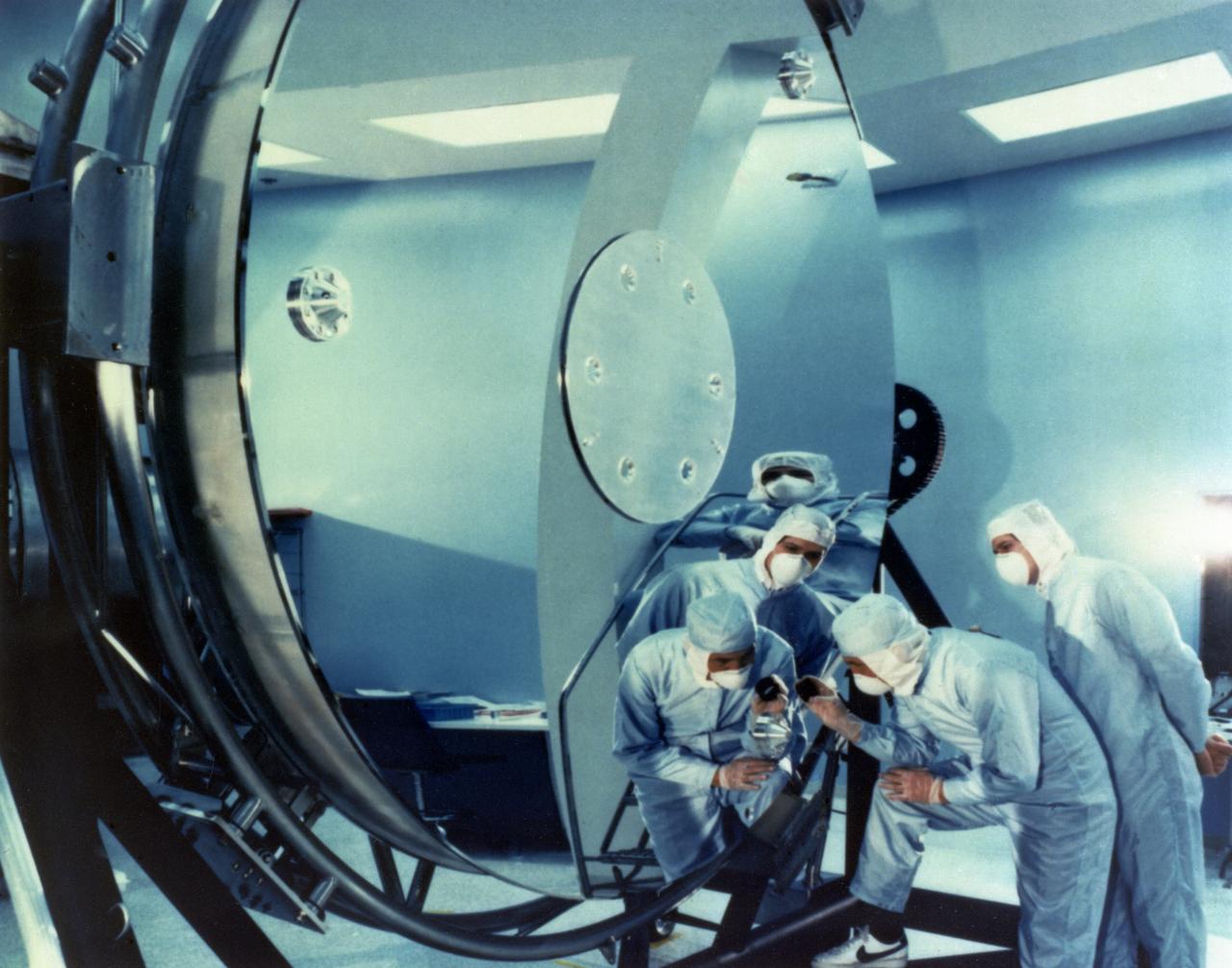
MSFC · 1982-01-01 · 8218871
History of Hubble Space Telescope (HST)
Prior to installation, technicians inspect the primary mirror of the Hubble Space Telescope (HST). The first in a series of great observatories launched by NASA, the HST was…
Inspect NASA record
Prior to installation, technicians inspect the primary mirror of the Hubble Space Telescope (HST). The first in a series of great observatories launched by NASA, the HST was designed to last approximately 15 years. The Marshall Space Flight Center had management responsibility for the development of the HST and played a major role in ground tests and orbital checkout of the telescope. The HST was launched April 24, 1990 aboard Space Shuttle Discovery's STS-31 mission.
- Record ID
- 8218871
- NASA center
- MSFC
- Date
- 1982-01-01
- Keywords
- Hubble Telescope, Primary Mirror
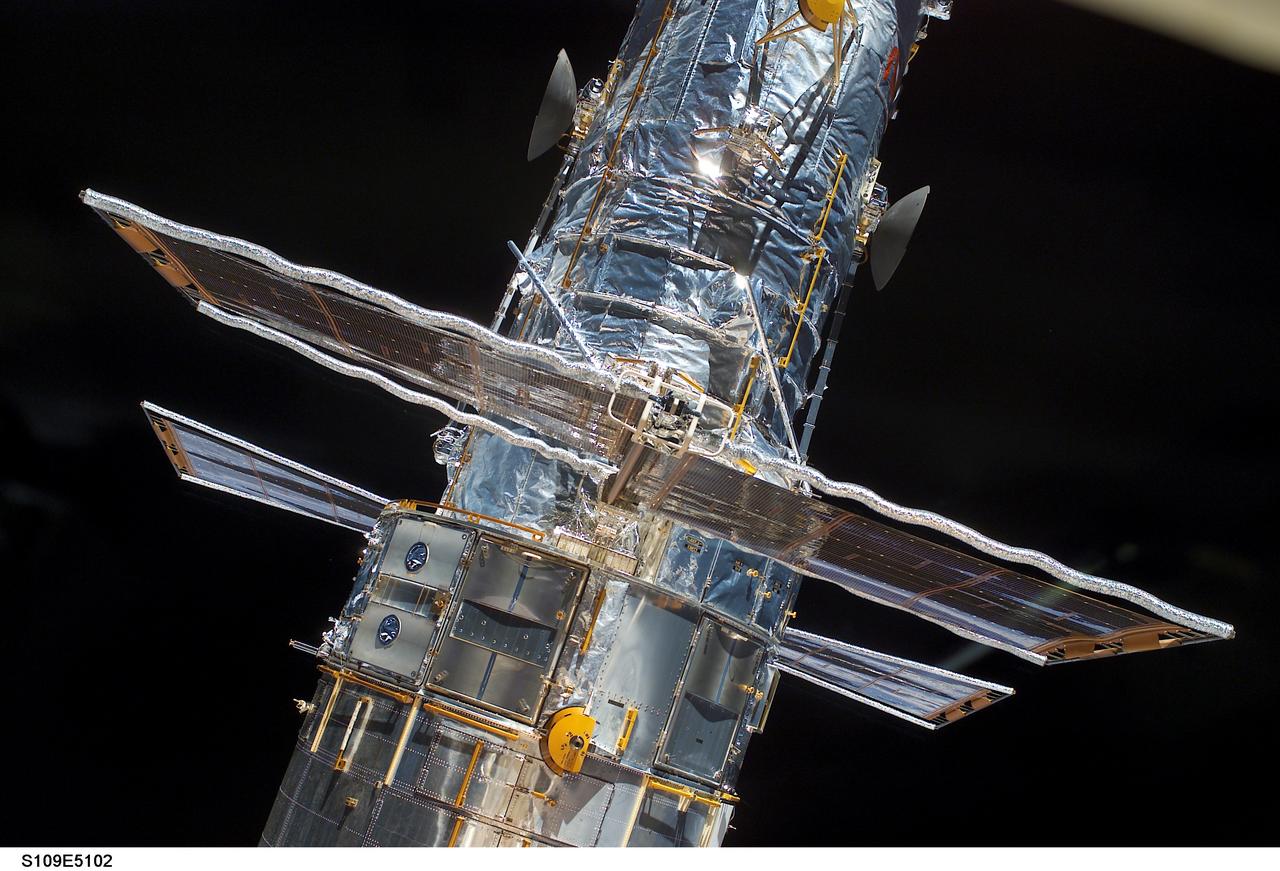
JSC · 2002-03-03 · s109e5102
-V2 plane on the Hubble Space Telescope
STS109-E-5102 (3 March 2002) --- The Hubble Space Telescope is seen in the cargo bay of the Space Shuttle Columbia. Each present set of solar array panels will…
Inspect NASA record
STS109-E-5102 (3 March 2002) --- The Hubble Space Telescope is seen in the cargo bay of the Space Shuttle Columbia. Each present set of solar array panels will be replaced during one of the space walks planned for the coming week. The crew aimed various cameras, including the digital still camera used for this frame, out the shuttle's aft flight deck windows to take a series of survey type photos, the first close-up images of the telescope since December of 1999.
- Record ID
- s109e5102
- NASA center
- JSC
- Date
- 2002-03-03
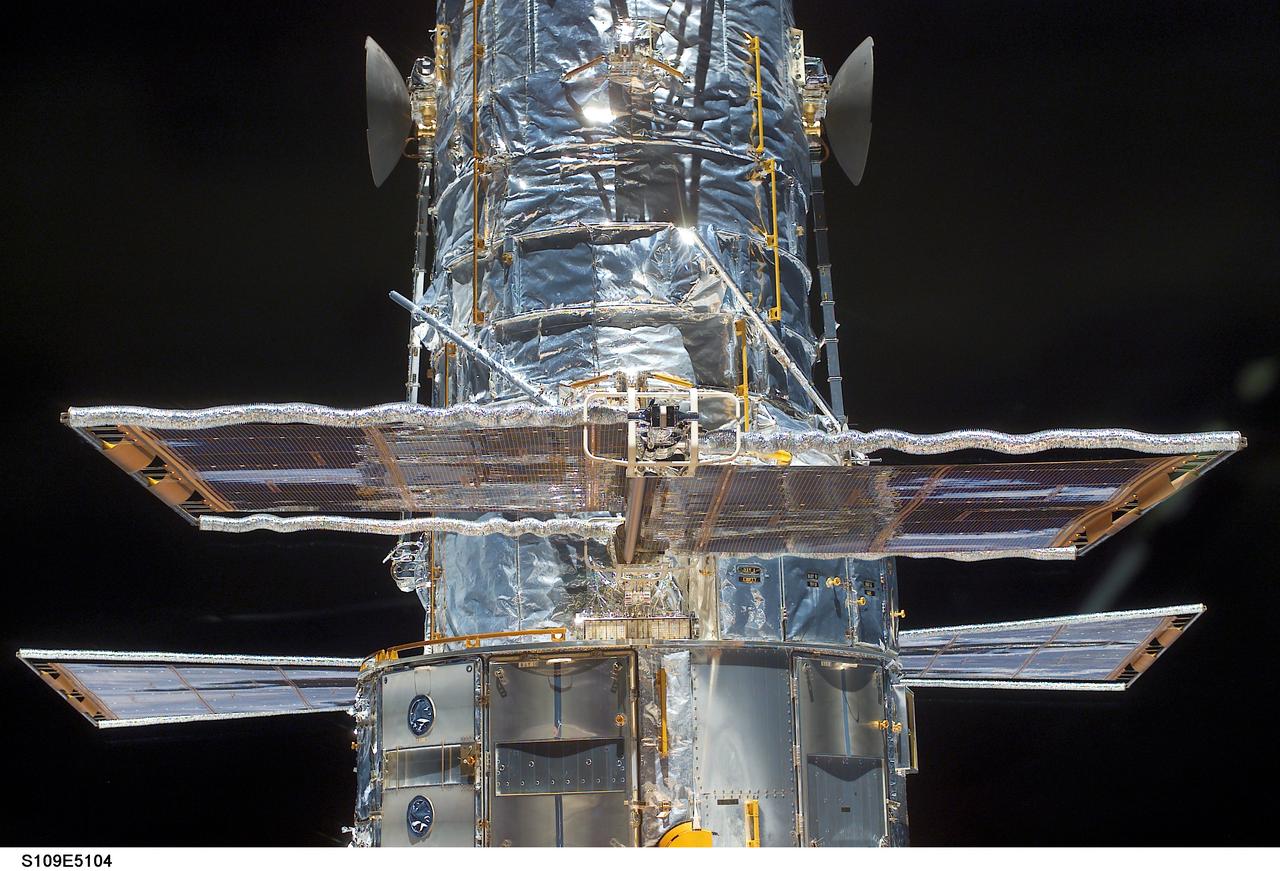
JSC · 2002-03-03 · s109e5104
-V2 plane on the Hubble Space Telescope
STS109-E-5104 (3 March 2002) --- The Hubble Space Telescope is seen in the cargo bay of the Space Shuttle Columbia. Each present set of solar array panels will…
Inspect NASA record
STS109-E-5104 (3 March 2002) --- The Hubble Space Telescope is seen in the cargo bay of the Space Shuttle Columbia. Each present set of solar array panels will be replaced during one of the space walks planned for the coming week. The crew aimed various cameras, including the digital still camera used for this frame, out the shuttle's aft flight deck windows to take a series of survey type photos, the first close-up images of the telescope since December of 1999.
- Record ID
- s109e5104
- NASA center
- JSC
- Date
- 2002-03-03
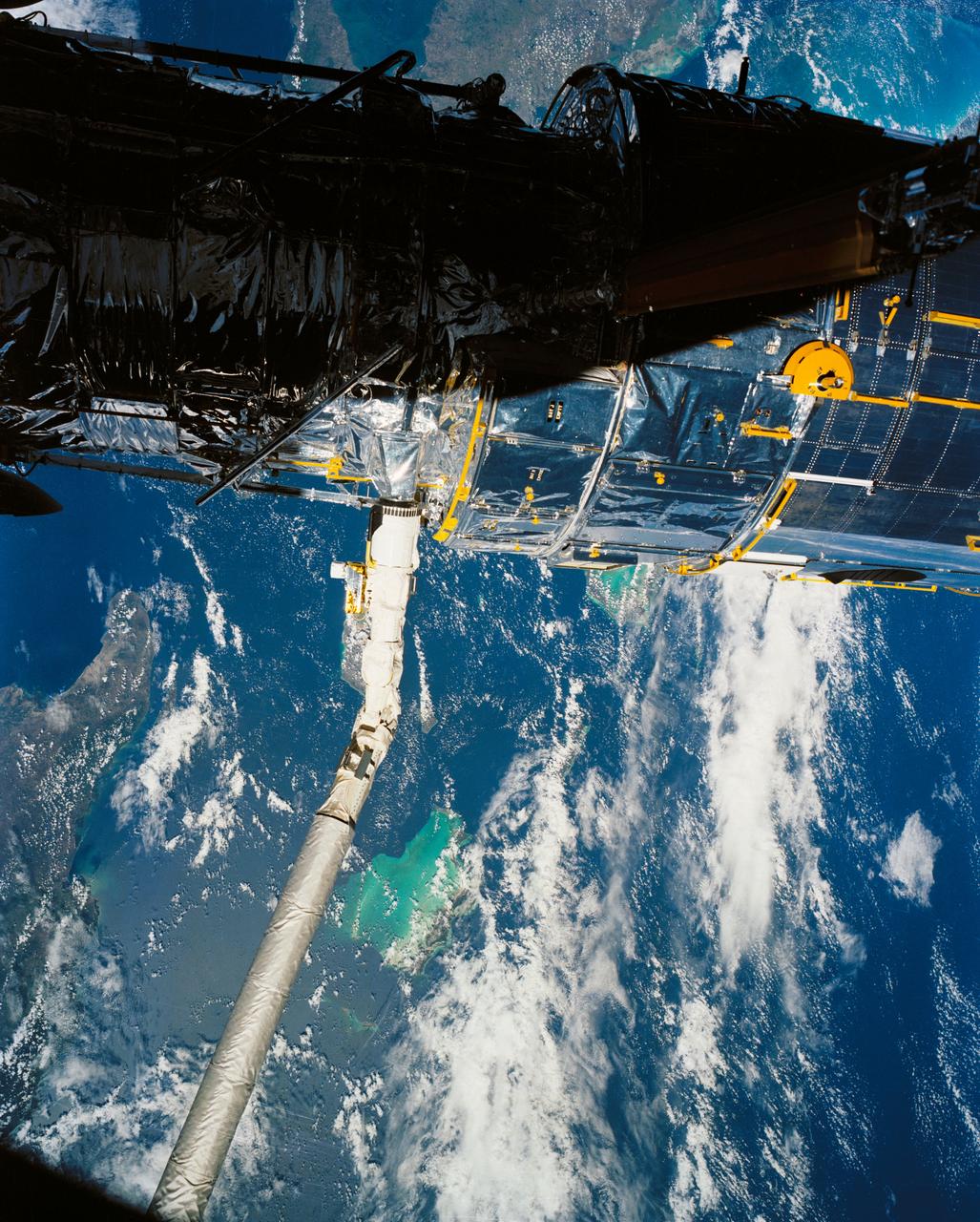
JSC · 1990-04-29 · s31-151-008
Hubble Space Telescope Deploy, Eastern Cuba, Haiti
A close up deploy view of the Hubble Space Telescope on the end of the space shuttle remote manipulator system (RMS) with Eastern Cuba, (20.0N, 74.0W) seen on…
Inspect NASA record
A close up deploy view of the Hubble Space Telescope on the end of the space shuttle remote manipulator system (RMS) with Eastern Cuba, (20.0N, 74.0W) seen on the left side of the telescope and northern Haiti seen on the right side of the telescope. The light colored blue feature in the water north of Haiti is the shallow waters of the Caicos Bank.
- Record ID
- s31-151-008
- NASA center
- JSC
- Date
- 1990-04-29
- Keywords
- CUBA, EARTH OBSERVATIONS (FROM SPACE), HAITI, ISLANDS, OCEANS, STS-31
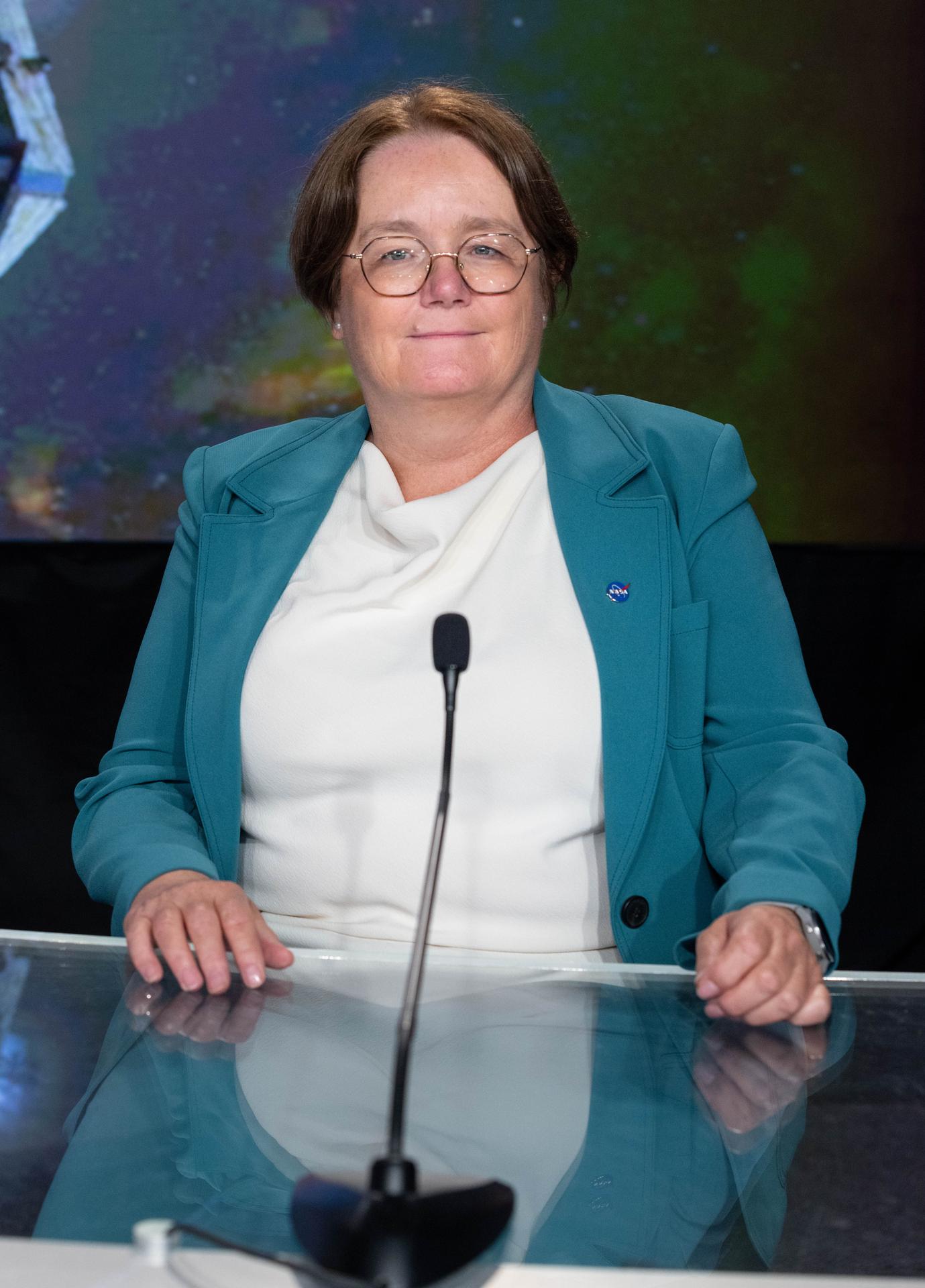
KSC · 2026-08-30 · KSC-20260830-PH-CSH01-0014
Nancy Grace Roman Space Telescope Post Launch Press Conference
Julie McEnery, Roman telescope senior project scientist, NASA’s Goddard Space Flight Center in Greenbelt, Maryland, participates in a postlaunch news conference for the agency’s Nancy Grace Roman Space…
Inspect NASA record
Julie McEnery, Roman telescope senior project scientist, NASA’s Goddard Space Flight Center in Greenbelt, Maryland, participates in a postlaunch news conference for the agency’s Nancy Grace Roman Space Telescope inside the NASA News Center’s John Holliman Auditorium at Kennedy Space Center in Florida, on Sunday, Aug. 30, 2026. Roman will investigate dark energy and dark matter, conduct a statistical census of planetary systems, and enable a broad range of additional astrophysics research. Liftoff of Roman atop a SpaceX Falcon Heavy rocket occurred at 7:26 a.m. EDT Sunday, Aug. 30, from Kennedy’s Launch Complex 39A.
- Record ID
- KSC-20260830-PH-CSH01-0014
- NASA center
- KSC
- Date
- 2026-08-30
- Credit
- NASA/Cory S Huston
- Keywords
- Nancy Grace Roman Space Telescope, Roman, RST, Payload Hazardous Servicing Facility, PHSF, KSC, Kennedy Space Center, LSP, Launch Services Program, astrophysics, science, launch
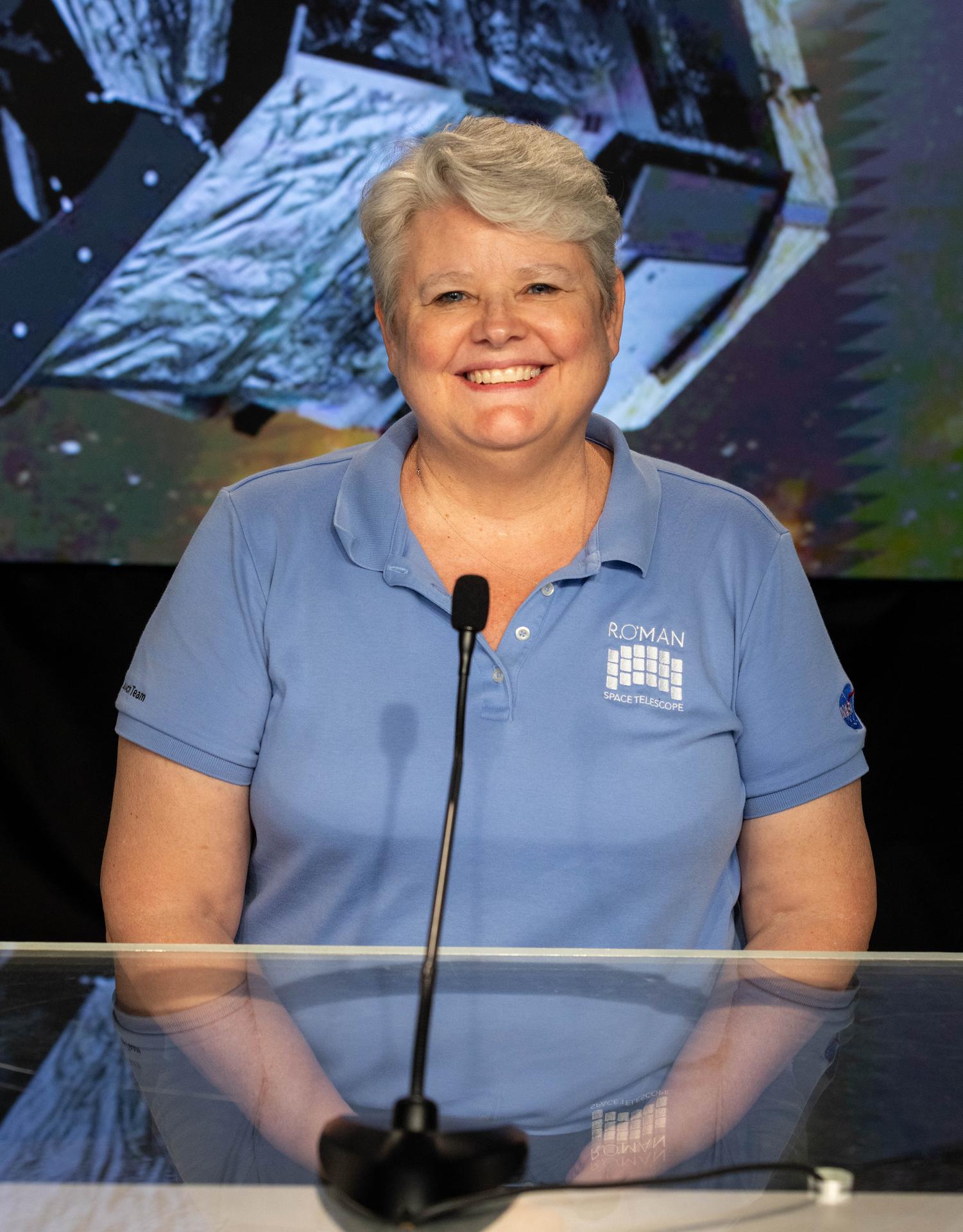
KSC · 2026-08-30 · KSC-20260830-PH-CSH01-0012
Nancy Grace Roman Space Telescope Post Launch Press Conference
Jackie Townsend, Roman telescope project manager, NASA’s Goddard Space Flight Center in Greenbelt, Maryland, participates in a postlaunch news conference for the agency’s Nancy Grace Roman Space Telescope…
Inspect NASA record
Jackie Townsend, Roman telescope project manager, NASA’s Goddard Space Flight Center in Greenbelt, Maryland, participates in a postlaunch news conference for the agency’s Nancy Grace Roman Space Telescope inside the NASA News Center’s John Holliman Auditorium at Kennedy Space Center in Florida, on Sunday, Aug. 30, 2026. Roman will investigate dark energy and dark matter, conduct a statistical census of planetary systems, and enable a broad range of additional astrophysics research. Liftoff of Roman atop a SpaceX Falcon Heavy rocket occurred at 7:26 a.m. EDT Sunday, Aug. 30, from Kennedy’s Launch Complex 39A
- Record ID
- KSC-20260830-PH-CSH01-0012
- NASA center
- KSC
- Date
- 2026-08-30
- Credit
- NASA/Cory S Huston
- Keywords
- Nancy Grace Roman Space Telescope, Roman, RST, Payload Hazardous Servicing Facility, PHSF, KSC, Kennedy Space Center, LSP, Launch Services Program, astrophysics, science, launch