
Update Site (from NASA)
Explore NASA’s Image and Video Library.
Suggest one object per day for the Interstellar Minds collection. We review each suggestion before adding it.
Sign in to suggest a Marvel.
Find a NASA image ID. Open a NASA record and copy its ID from the end of the details URL.
NASA image records
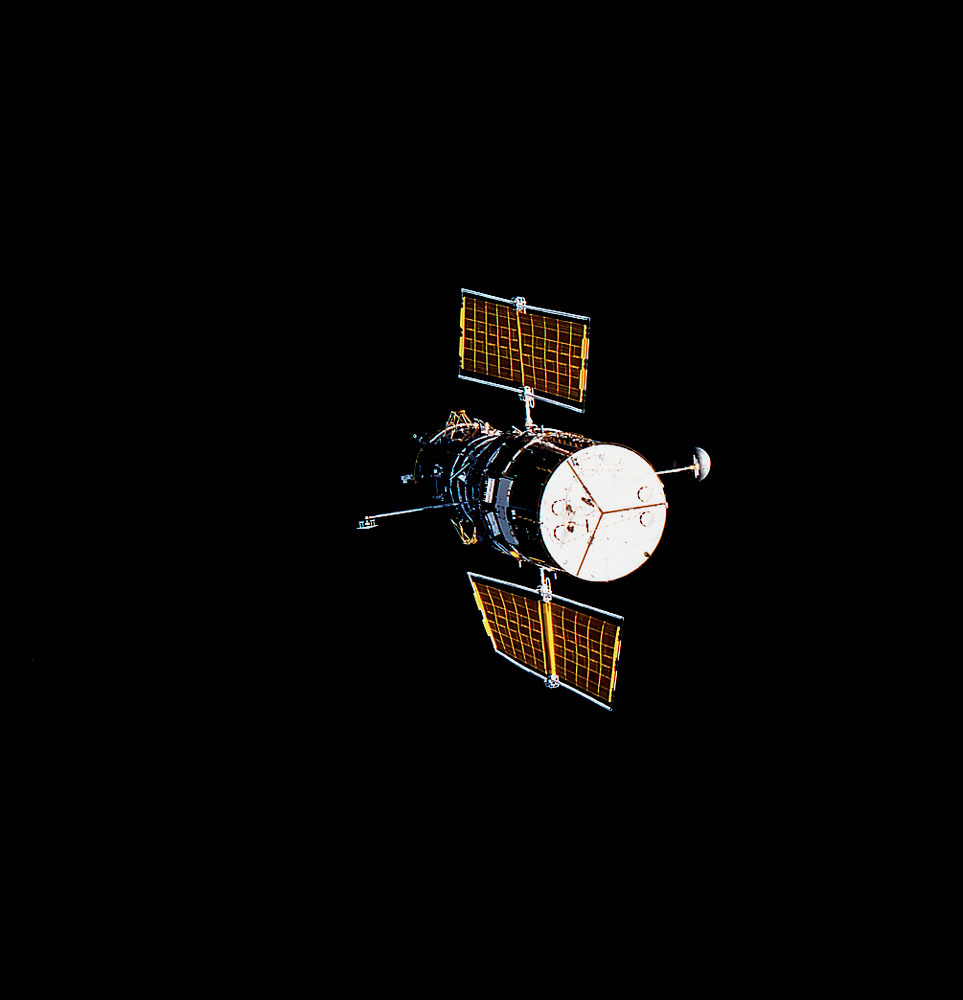
MSFC · 1993-12-09 · 9400255
History of Hubble Space Telescope (HST)
The Hubble Space Telescope (HST) begins its separation from the space shuttle Endeavour following a week and a half of repairs while in the space vehicle's cargo bay.
Inspect NASA record
The Hubble Space Telescope (HST) begins its separation from the space shuttle Endeavour following a week and a half of repairs while in the space vehicle's cargo bay.
- Record ID
- 9400255
- NASA center
- MSFC
- Date
- 1993-12-09
- Keywords
- Around Marshall, STS Missions, STS-61 HST release from orbiter
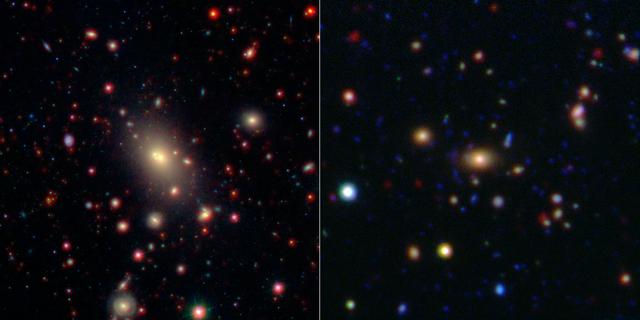
JPL · 2013-08-01 · PIA17253
Monster in the Middle: Brightest Cluster Galaxy
This image shows two of the galaxy clusters observed by NASA WISE and Spitzer Space Telescope missions. Galaxy clusters are among the most massive structures in the universe.
Inspect NASA record
This image shows two of the galaxy clusters observed by NASA WISE and Spitzer Space Telescope missions. Galaxy clusters are among the most massive structures in the universe.
- Record ID
- PIA17253
- NASA center
- JPL
- Date
- 2013-08-01
- Credit
- NASA/JPL-Caltech/SDSS/NOAO
- Keywords
- Spitzer Space Telescope,Wide-field Infrared Survey Explorer WIS
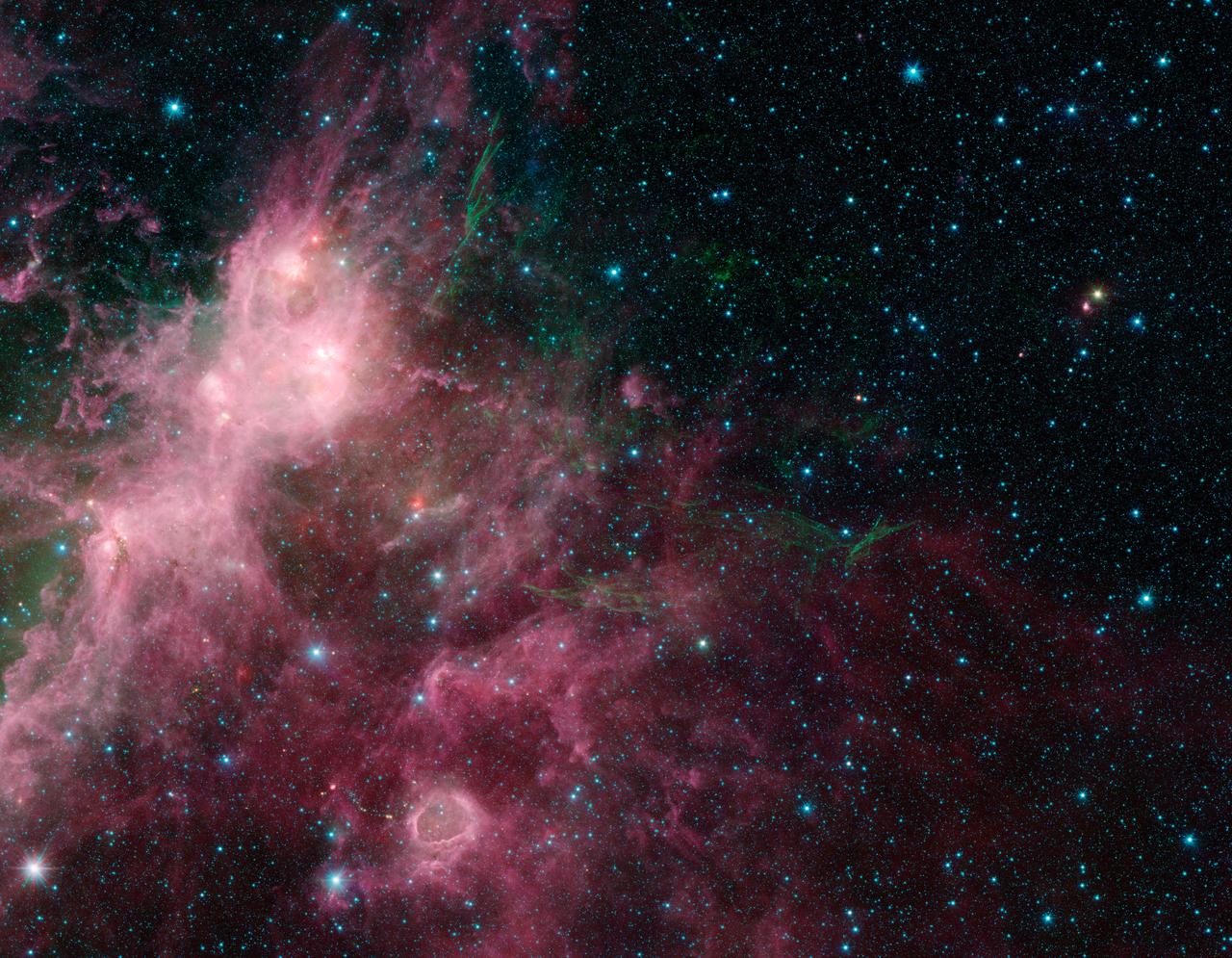
JPL · 2013-06-05 · PIA17019
Life and Death Intermingled
In what may look to some like an undersea image of coral and seaweed, a new image from NASA Spitzer Space Telescope is showing the birth and death…
Inspect NASA record
In what may look to some like an undersea image of coral and seaweed, a new image from NASA Spitzer Space Telescope is showing the birth and death of stars.
- Record ID
- PIA17019
- NASA center
- JPL
- Date
- 2013-06-05
- Credit
- NASA/JPL-Caltech/University of Wisconsin
- Keywords
- Spitzer Space Telescope,Wide-field Infrared Survey Explorer WIS

JPL · 2013-10-09 · PIA18153
NASA Hubble Sees Comet ISON Intact
This image from NASA Hubble Space Telescope of the sunward plunging comet ISON suggests that the comet is intact despite some predictions that the fragile icy nucleus might…
Inspect NASA record
This image from NASA Hubble Space Telescope of the sunward plunging comet ISON suggests that the comet is intact despite some predictions that the fragile icy nucleus might disintegrate as the sun warms it. In this NASA Hubble Space Telescope image taken on October 9, 2013 the comet's solid nucleus is unresolved because it is so small. If the nucleus broke apart then Hubble would have likely seen evidence for multiple fragments. Moreover, the coma or head surrounding the comet's nucleus is symmetric and smooth. This would probably not be the case if clusters of smaller fragments were flying along. What's more, a polar jet of dust first seen in Hubble images taken in April is no longer visible and may have turned off. This color composite image was assembled using two filters. The comet's coma appears cyan, a greenish-blue color due to gas, while the tail is reddish due to dust streaming off the nucleus. The tail forms as dust particles are pushed away from the nucleus by the pressure of sunlight. The comet was inside Mars' orbit and 177 million miles from Earth when photographed. Comet ISON is predicted to make its closest approach to Earth on 26 December, at a distance of 39.9 million miles. http://photojournal.jpl.nasa.gov/catalog/PIA18153
- Record ID
- PIA18153
- NASA center
- JPL
- Date
- 2013-10-09
- Credit
- NASA
- Keywords
- ISON, Hubble Space Telescope

JPL · 2006-04-05 · PIA08041
Circle of Ashes
This plot shows that a pulsar, the remnant of a stellar explosion, is surrounded by a disk of its own ashes. The disk, revealed by the two data…
Inspect NASA record
This plot shows that a pulsar, the remnant of a stellar explosion, is surrounded by a disk of its own ashes. The disk, revealed by the two data points at the far right from NASA Spitzer Space Telescope, is the first ever found around a pulsar.
- Record ID
- PIA08041
- NASA center
- JPL
- Date
- 2006-04-05
- Credit
- NASA/JPL-Caltech/MIT
- Keywords
- Spitzer Space Telescope,W. M. Keck Observatory
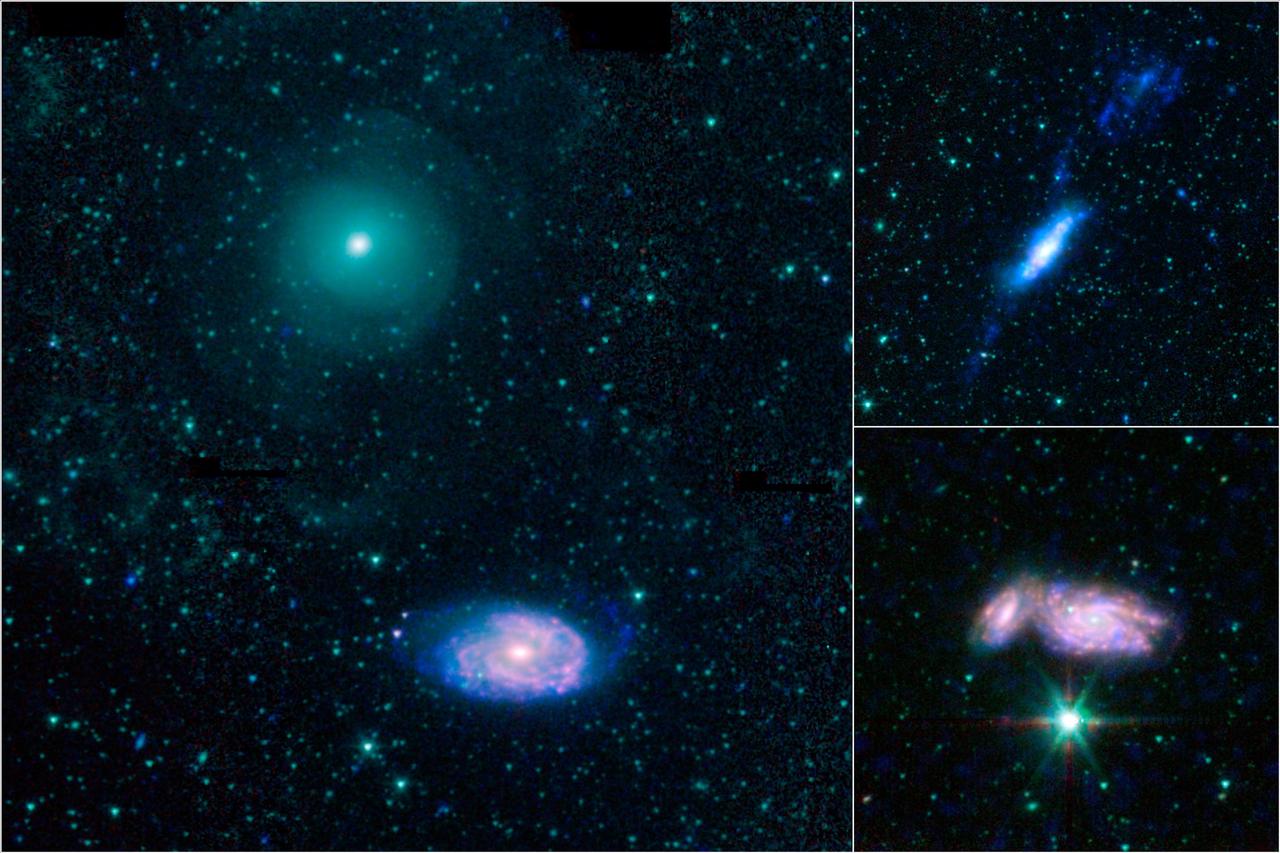
JPL · 2011-05-25 · PIA14097
Galactic Train Wrecks
This montage combines observations from NASA Spitzer Space Telescope and NASA Galaxy Evolution Explorer GALEX spacecraft showing three examples of colliding galaxies from a new photo atlas of…
Inspect NASA record
This montage combines observations from NASA Spitzer Space Telescope and NASA Galaxy Evolution Explorer GALEX spacecraft showing three examples of colliding galaxies from a new photo atlas of galactic train wrecks.
- Record ID
- PIA14097
- NASA center
- JPL
- Date
- 2011-05-25
- Credit
- NASA/JPL-Caltech/Harvard-Smithsonian CfA
- Keywords
- Galaxy Evolution Explorer GALEX,Spitzer Space Telescope
JPL · 2013-12-12 · PIA17660
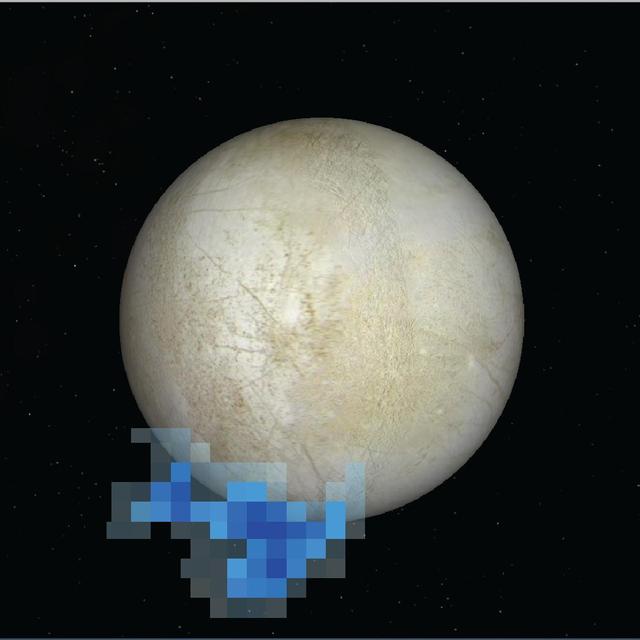
Water Vapor Over Europa
This graphic shows the location of water vapor detected over Europa south pole in observations taken by NASA Hubble Space Telescope in December 2012. This is the first…
Inspect NASA record
This graphic shows the location of water vapor detected over Europa south pole in observations taken by NASA Hubble Space Telescope in December 2012. This is the first strong evidence of water plumes erupting off Europa surface.
- Record ID
- PIA17660
- NASA center
- JPL
- Date
- 2013-12-12
- Credit
- NASA/ESA/L. Roth/SWRI/University of Cologne
- Keywords
- Europa, Galileo,Hubble Space Telescope,Voyager

JPL · 1999-12-03 · PIA04221
Galaxy NGC 1850
By spying on a neighboring galaxy, NASA Hubble Space Telescope has captured an image of a young, globular-like star cluster—a type of object unknown in our Milky Way…
Inspect NASA record
By spying on a neighboring galaxy, NASA Hubble Space Telescope has captured an image of a young, globular-like star cluster—a type of object unknown in our Milky Way Galaxy.
- Record ID
- PIA04221
- NASA center
- JPL
- Date
- 1999-12-03
- Credit
- NASA, ESA, and Martino Romaniello European Southern Observatory, Germany
- Keywords
- Galaxy NGC 1850, Hubble Space Telescope
JPL · 2006-05-10 · PIA08452
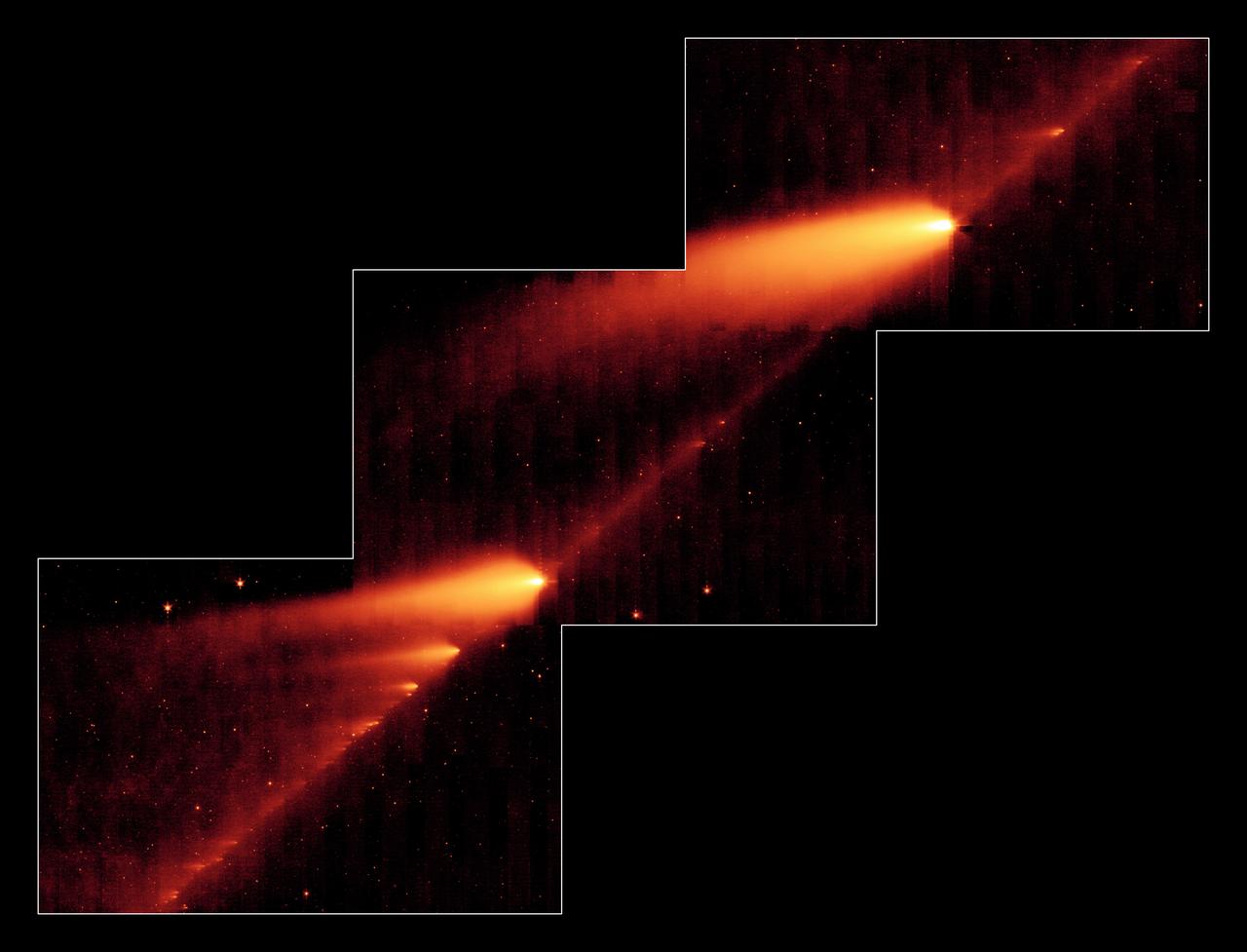
A Million Comet Pieces
This infrared image from NASA Spitzer Space Telescope shows the broken Comet 73P/Schwassman-Wachmann 3 skimming along a trail of debris left during its multiple trips around the sun.
Inspect NASA record
This infrared image from NASA Spitzer Space Telescope shows the broken Comet 73P/Schwassman-Wachmann 3 skimming along a trail of debris left during its multiple trips around the sun.
- Record ID
- PIA08452
- NASA center
- JPL
- Date
- 2006-05-10
- Credit
- NASA/JPL-Caltech
- Keywords
- Schwassmann-Wachmann 3, Spitzer Space Telescope
JPL · 2007-11-08 · PIA10111
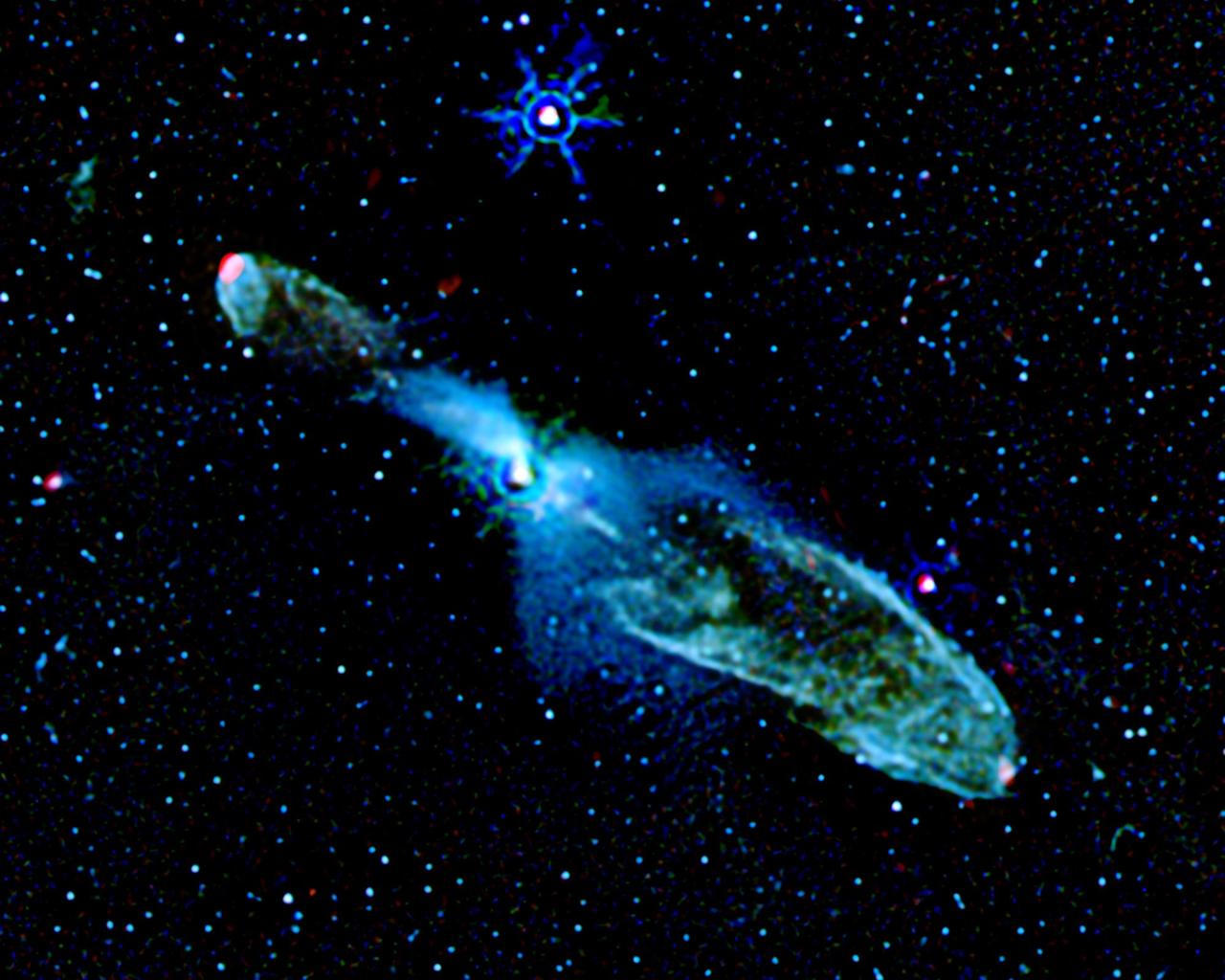
Bubbly Little Star
In this processed Spitzer Space Telescope image, baby star HH 46/47 can be seen blowing two massive bubbles. The star is 1,140 light-years away from Earth.
Inspect NASA record
In this processed Spitzer Space Telescope image, baby star HH 46/47 can be seen blowing two massive bubbles. The star is 1,140 light-years away from Earth.
- Record ID
- PIA10111
- NASA center
- JPL
- Date
- 2007-11-08
- Credit
- NASA/JPL-Caltech
- Keywords
- HH 46/47, Spitzer Space Telescope
JPL · 2014-07-02 · PIA18462
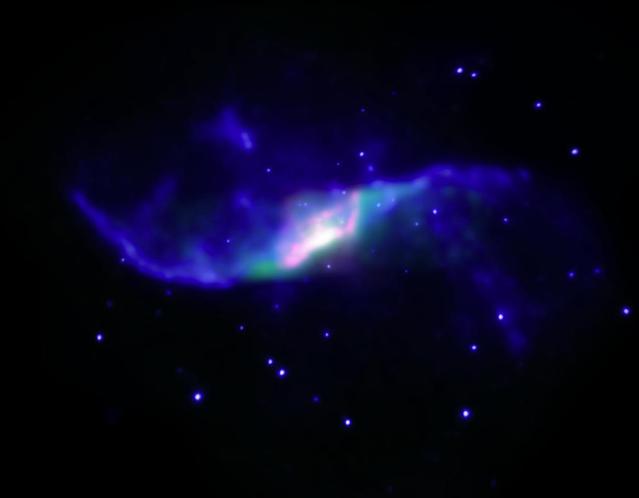
Black Hole Jets Make Shock Waves
A composite image of the spiral galaxy NGC 4258 showing X-ray emission observed with NASA Chandra X-ray Observatory blue and infrared emission observed with NASA Spitzer Space Telescope…
Inspect NASA record
A composite image of the spiral galaxy NGC 4258 showing X-ray emission observed with NASA Chandra X-ray Observatory blue and infrared emission observed with NASA Spitzer Space Telescope red and green.
- Record ID
- PIA18462
- NASA center
- JPL
- Date
- 2014-07-02
- Credit
- X-ray: NASA/CXC/NASA/JPL-Caltech
- Keywords
- Chandra X-ray Observatory,Spitzer Space Telescope
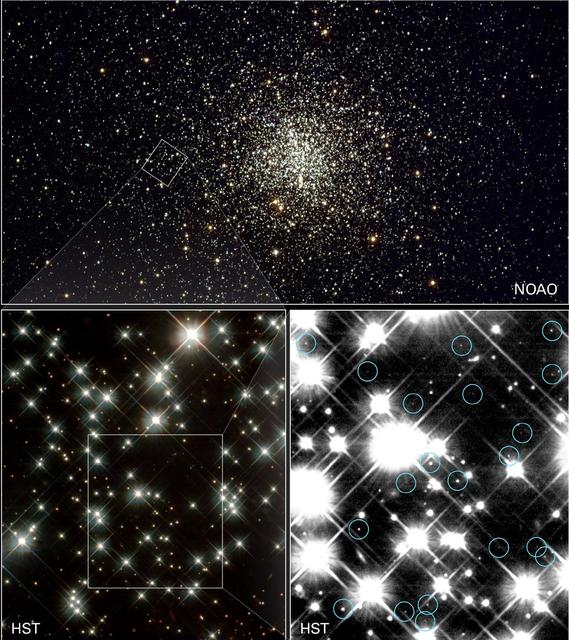
JPL · 1999-12-01 · PIA04231
White Dwarf Stars
Peering deep inside a cluster of several hundred thousand stars, NASA Hubble Space Telescope has uncovered the oldest burned-out stars in our Milky Way Galaxy, giving astronomers a…
Inspect NASA record
Peering deep inside a cluster of several hundred thousand stars, NASA Hubble Space Telescope has uncovered the oldest burned-out stars in our Milky Way Galaxy, giving astronomers a fresh reading on the age of the universe.
- Record ID
- PIA04231
- NASA center
- JPL
- Date
- 1999-12-01
- Credit
- NASA and H. Richer University of British Columbia, credit for ground-based photo: NOAO/AURA/NSF
- Keywords
- Globular cluster M4, Hubble Space Telescope