
Update Site (from NASA)
Explore NASA’s Image and Video Library.
Suggest one object per day for the Interstellar Minds collection. We review each suggestion before adding it.
Sign in to suggest a Marvel.
Find a NASA image ID. Open a NASA record and copy its ID from the end of the details URL.
NASA image records
JPL · 2010-09-23 · PIA13409
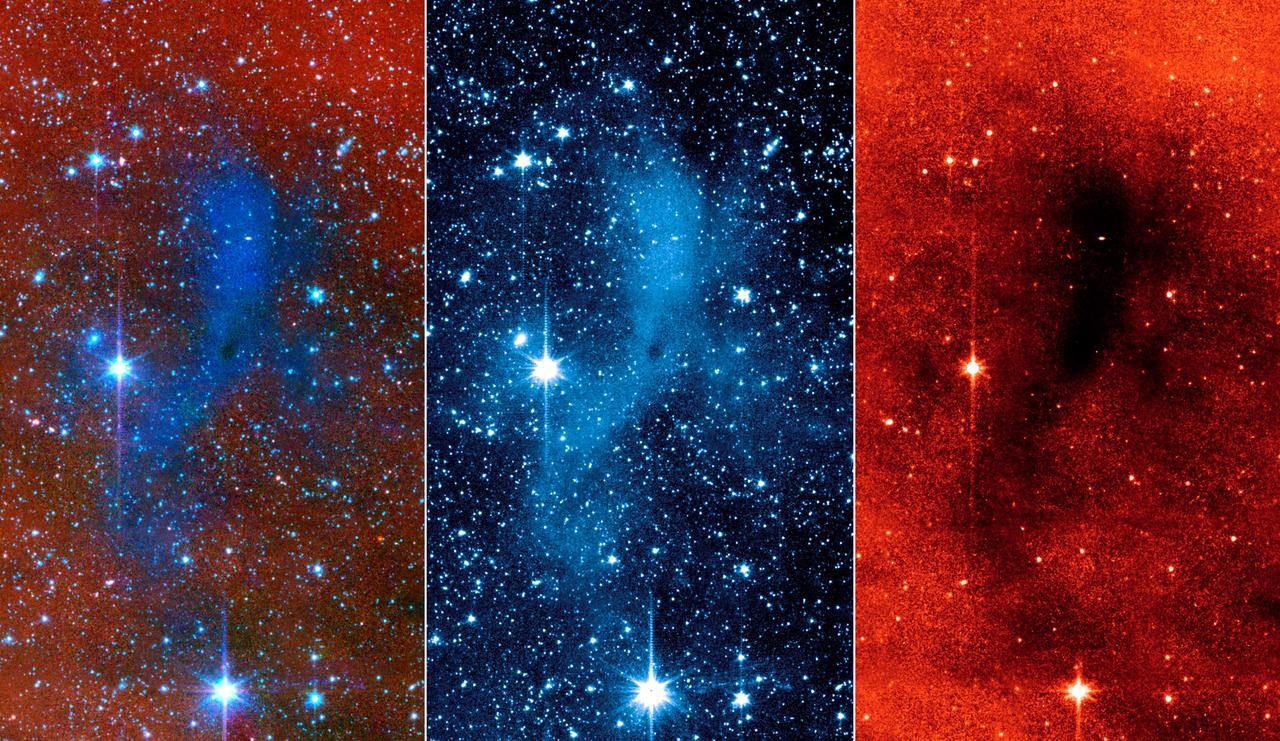
An Unexpected Scattering of Light
This series of images from NASA Spitzer Space Telescope shows a dark mass of gas and dust, called a core, where new stars and planets will likely spring…
Inspect NASA record
This series of images from NASA Spitzer Space Telescope shows a dark mass of gas and dust, called a core, where new stars and planets will likely spring up. This particular core lies deep within a larger dark cloud called L183.
- Record ID
- PIA13409
- NASA center
- JPL
- Date
- 2010-09-23
- Credit
- NASA/JPL-Caltech/Observatoire de Paris/CNRS
- Keywords
- Spitzer Space Telescope
JPL · 2007-07-24 · PIA09939
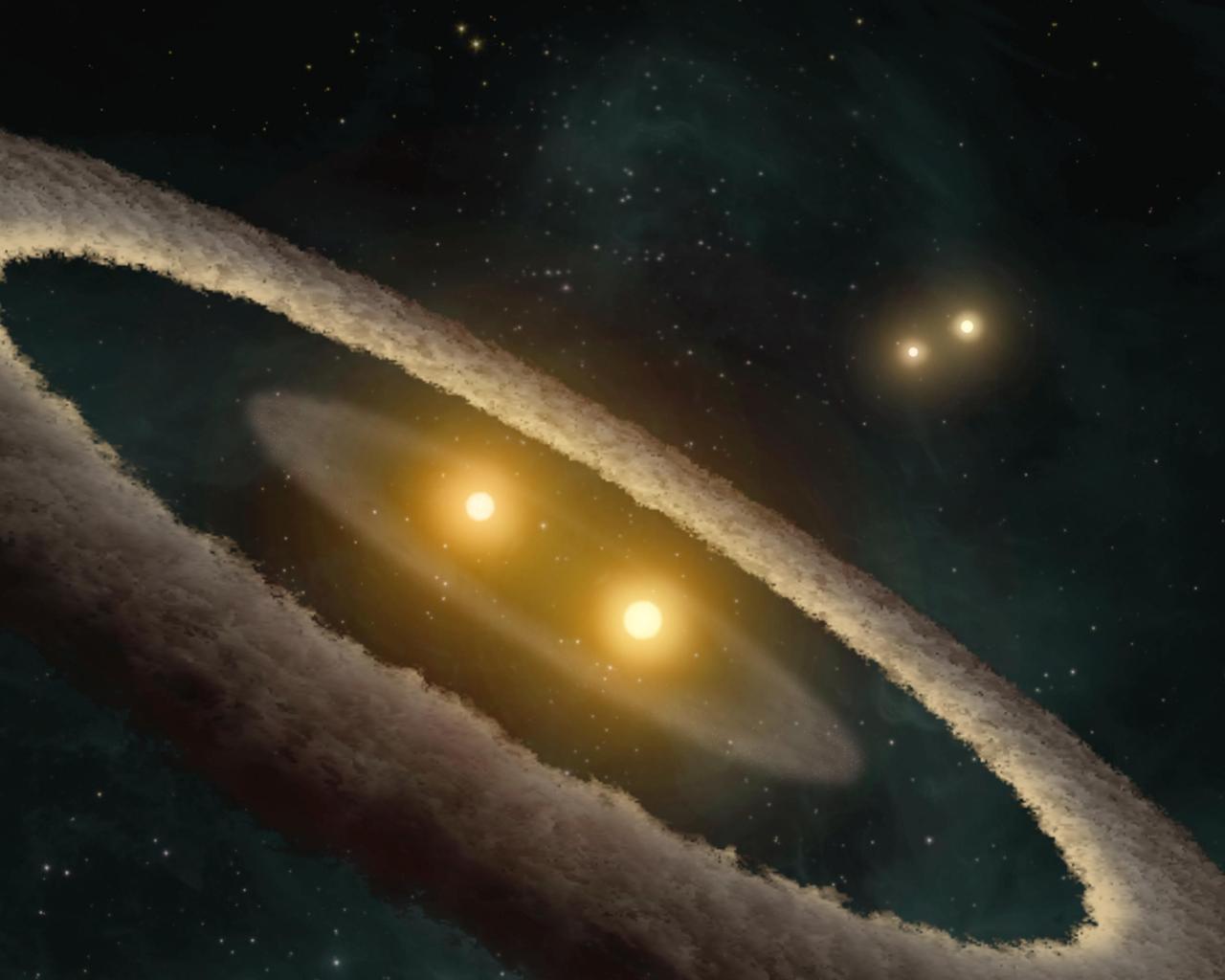
Evidence for Strange Stellar Family Artist Concept
This artist concept based on data from NASA Spitzer Space Telescope, depicts a quadruple-star system called HD 98800. The system is approximately 10 million years old, and is…
Inspect NASA record
This artist concept based on data from NASA Spitzer Space Telescope, depicts a quadruple-star system called HD 98800. The system is approximately 10 million years old, and is located 150 light-years away in the constellation TW Hydrae.
- Record ID
- PIA09939
- NASA center
- JPL
- Date
- 2007-07-24
- Credit
- NASA/JPL-Caltech/UCLA
- Keywords
- Spitzer Space Telescope
JPL · 2006-10-12 · PIA01937
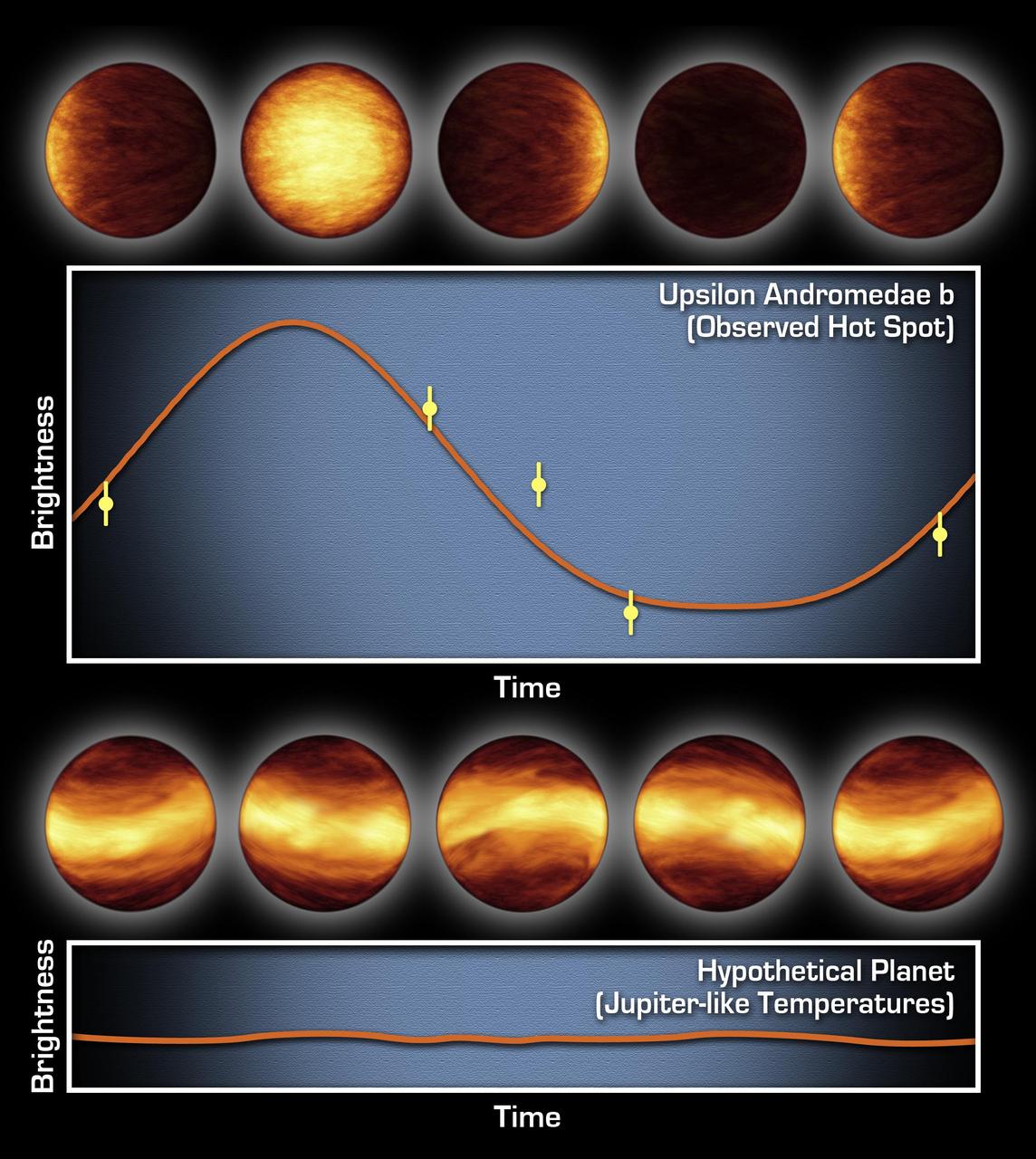
The Light and Dark Sides of a Distant Planet
The top graph consists of infrared data from NASA Spitzer Space Telescope. It tells astronomers that a distant planet, called Upsilon Andromedae b, always has a giant hot…
Inspect NASA record
The top graph consists of infrared data from NASA Spitzer Space Telescope. It tells astronomers that a distant planet, called Upsilon Andromedae b, always has a giant hot spot on the side that faces the star, while the other side is cold and dark.
- Record ID
- PIA01937
- NASA center
- JPL
- Date
- 2006-10-12
- Credit
- NASA/JPL-Caltech
- Keywords
- Spitzer Space Telescope

JPL · 2011-02-10 · PIA13844
An Extended Stellar Family
This visible light/infrared image from NASA Spitzer Space Telescope shows a swirling landscape of stars known as the North America nebula. Clusters of young stars about one million…
Inspect NASA record
This visible light/infrared image from NASA Spitzer Space Telescope shows a swirling landscape of stars known as the North America nebula. Clusters of young stars about one million years old can be found throughout the image.
- Record ID
- PIA13844
- NASA center
- JPL
- Date
- 2011-02-10
- Credit
- NASA/JPL-Caltech
- Keywords
- Spitzer Space Telescope
JPL · 2009-01-06 · PIA11747
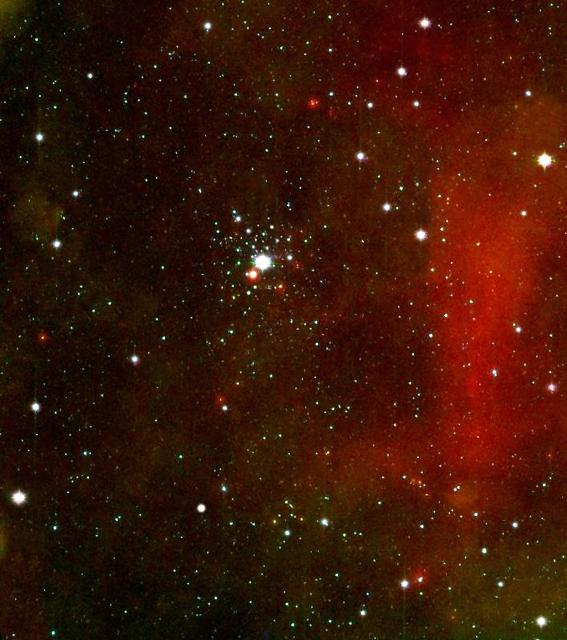
Baby Jupiters Must Gain Weight Fast
This photograph from NASA Spitzer Space Telescope shows the young star cluster NGC 2362. By studying it, astronomers found that gas giant planet formation happens very rapidly and…
Inspect NASA record
This photograph from NASA Spitzer Space Telescope shows the young star cluster NGC 2362. By studying it, astronomers found that gas giant planet formation happens very rapidly and efficiently, within less than 5 million years.
- Record ID
- PIA11747
- NASA center
- JPL
- Date
- 2009-01-06
- Credit
- NASA/JPL-Caltech/Harvard-Smithsonian CfA
- Keywords
- Spitzer Space Telescope

JPL · 1998-08-02 · PIA01284
Neptune in Primary Colors
These two NASA Hubble Space Telescope images provide views of weather on opposite hemispheres of Neptune. Taken Aug. 13, 1996; these composite images blend information from different wavelengths…
Inspect NASA record
These two NASA Hubble Space Telescope images provide views of weather on opposite hemispheres of Neptune. Taken Aug. 13, 1996; these composite images blend information from different wavelengths to bring out features of Neptune blustery weather.
- Record ID
- PIA01284
- NASA center
- JPL
- Date
- 1998-08-02
- Credit
- NASA/JPL/STScI
- Keywords
- Neptune, Hubble Space Telescope
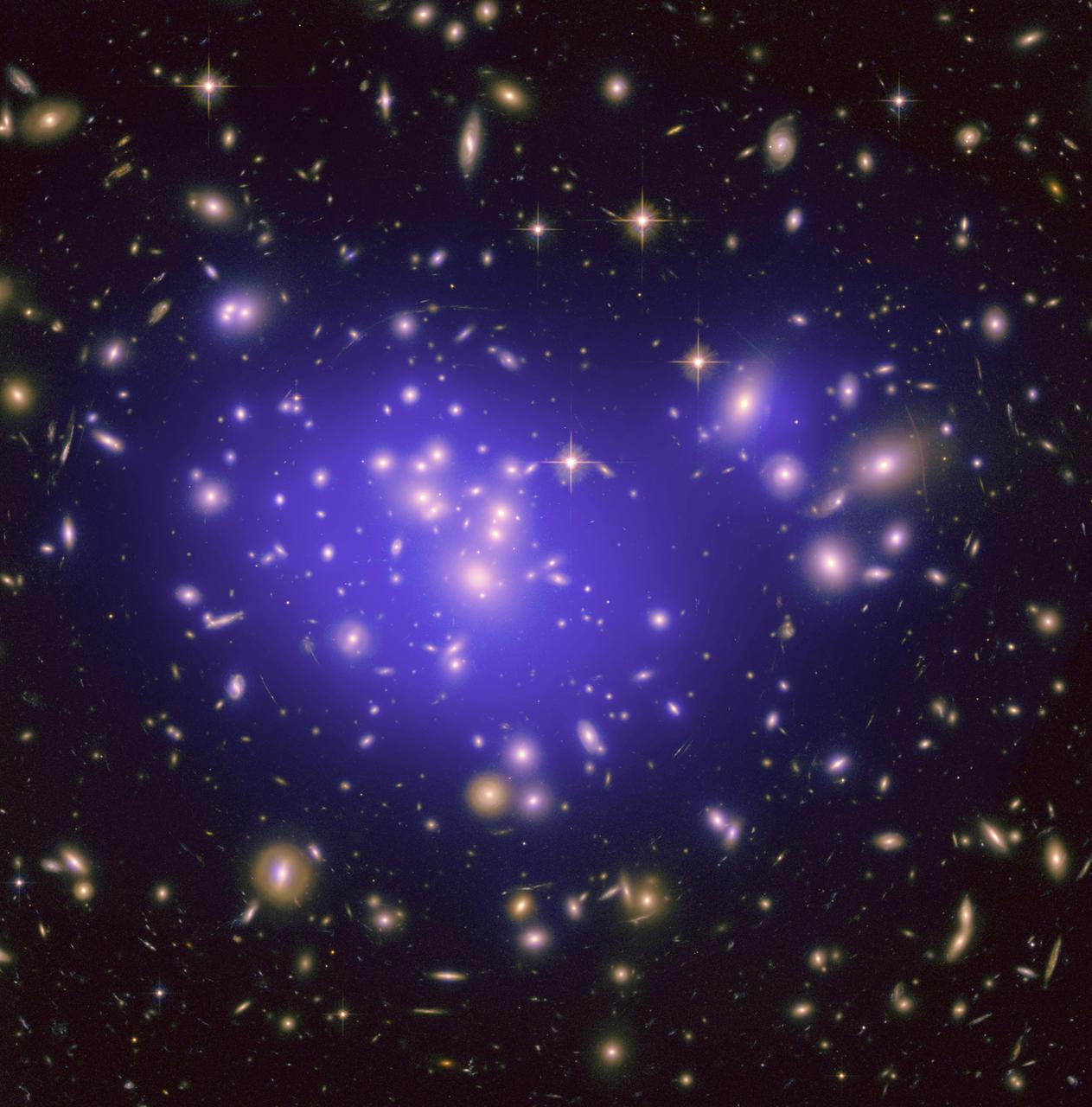
JPL · 2010-08-19 · PIA13339
Fun House Mirror in Space
NASA Hubble Space Telescope shows the inner region of Abell 1689, an immense cluster of galaxies located 2.2 billion light-years away. The cluster gravitational field is warping light…
Inspect NASA record
NASA Hubble Space Telescope shows the inner region of Abell 1689, an immense cluster of galaxies located 2.2 billion light-years away. The cluster gravitational field is warping light from background galaxies, causing them to appear as arcs.
- Record ID
- PIA13339
- NASA center
- JPL
- Date
- 2010-08-19
- Credit
- NASA/ESA/JPL-Caltech/Yale/CNRS
- Keywords
- Hubble Space Telescope
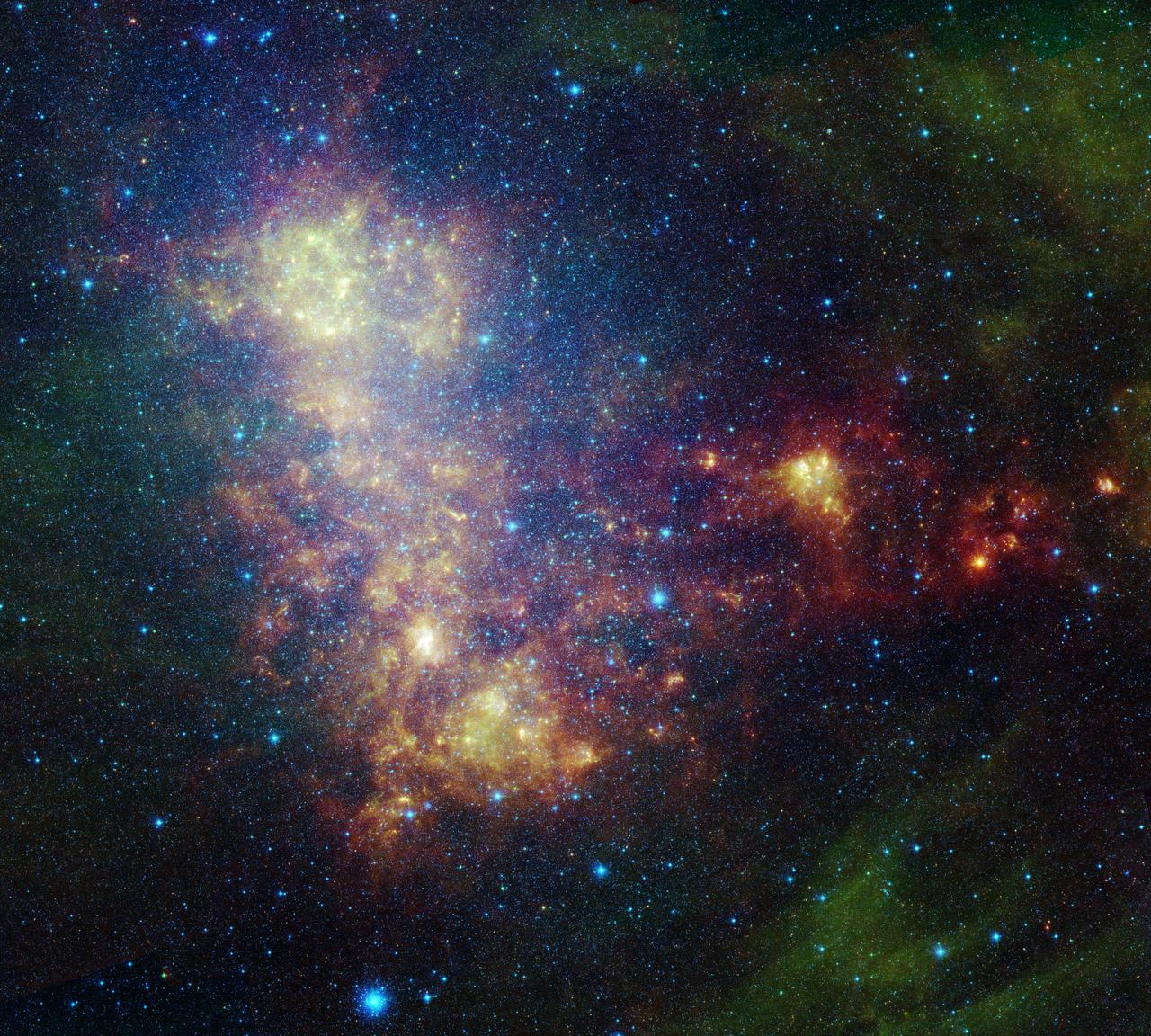
JPL · 2010-01-05 · PIA12485
Little Galaxy Explored
This infrared portrait of the Small Magellanic Cloud, taken by NASA Spitzer Space Telescope, reveals the stars and dust in this galaxy as never seen before. This nearby…
Inspect NASA record
This infrared portrait of the Small Magellanic Cloud, taken by NASA Spitzer Space Telescope, reveals the stars and dust in this galaxy as never seen before. This nearby satellite galaxy to our Milky Way galaxy is some 200,000 light-years away.
- Record ID
- PIA12485
- NASA center
- JPL
- Date
- 2010-01-05
- Credit
- NASA/JPL-Caltech/STScI
- Keywords
- Spitzer Space Telescope
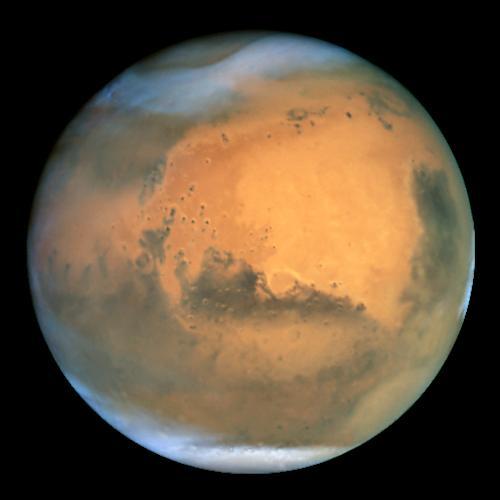
JPL · 2001-06-26 · PIA18184
Mars at 43 Million Miles From Earth
NASA Earth-orbiting Hubble Space Telescope took the picture on June 26, 2001 when Mars was approximately 43 million miles 68 million km from Earth -- the closest Mars…
Inspect NASA record
NASA Earth-orbiting Hubble Space Telescope took the picture on June 26, 2001 when Mars was approximately 43 million miles 68 million km from Earth -- the closest Mars has ever been to Earth since 1988.
- Record ID
- PIA18184
- NASA center
- JPL
- Date
- 2001-06-26
- Credit
- NASA/The Hubble Heritage Team STScI/AURA
- Keywords
- Mars, Hubble Space Telescope
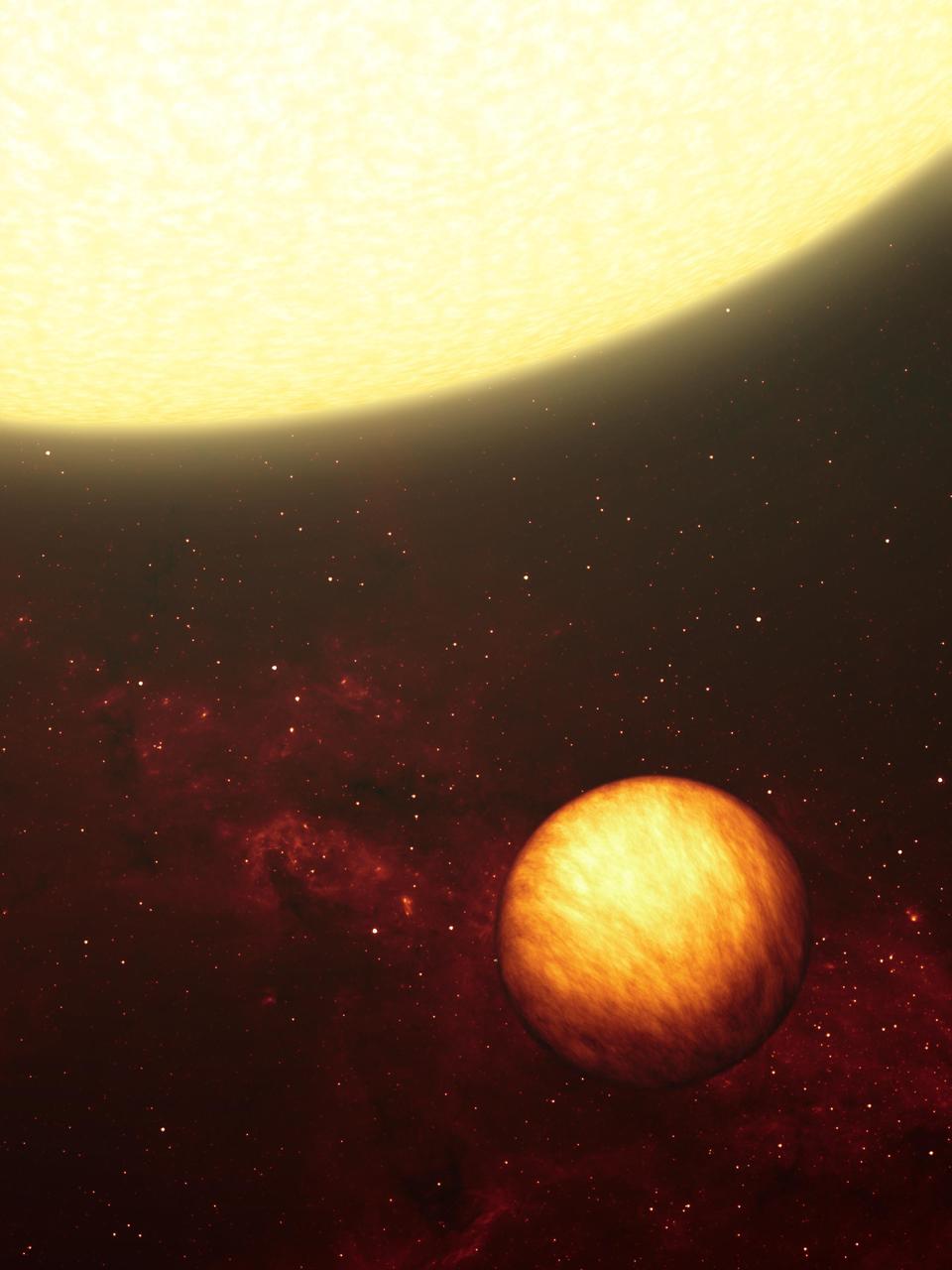
JPL · 2006-10-12 · PIA01938
Exotic World Blisters Under the Sun Artist Concept
This artist concept shows a Jupiter-like planet soaking up the scorching rays of its nearby un. This NASA Spitzer Space Telescope illustration portrays how the planet would appear…
Inspect NASA record
This artist concept shows a Jupiter-like planet soaking up the scorching rays of its nearby un. This NASA Spitzer Space Telescope illustration portrays how the planet would appear to infrared eyes, showing temperature variations across its surface.
- Record ID
- PIA01938
- NASA center
- JPL
- Date
- 2006-10-12
- Credit
- NASA/JPL-Caltech
- Keywords
- Spitzer Space Telescope
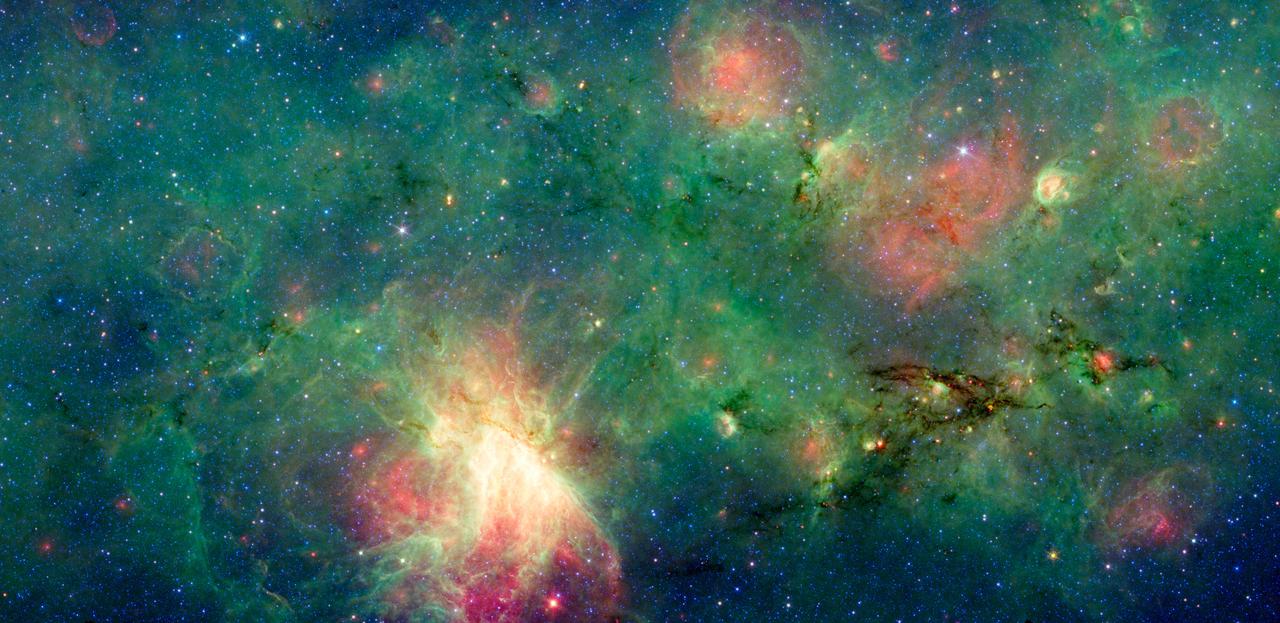
JPL · 2010-07-07 · PIA13241
The Invisible Dragon
A dragon-shaped cloud of dust seems to fly out from a bright explosion in this infrared light image from NASA Spitzer Space Telescope. These views have revealed that…
Inspect NASA record
A dragon-shaped cloud of dust seems to fly out from a bright explosion in this infrared light image from NASA Spitzer Space Telescope. These views have revealed that this dark cloud, called M17 SWex, is forming stars at a furious rate.
- Record ID
- PIA13241
- NASA center
- JPL
- Date
- 2010-07-07
- Credit
- NASA/JPL-Caltech
- Keywords
- Spitzer Space Telescope
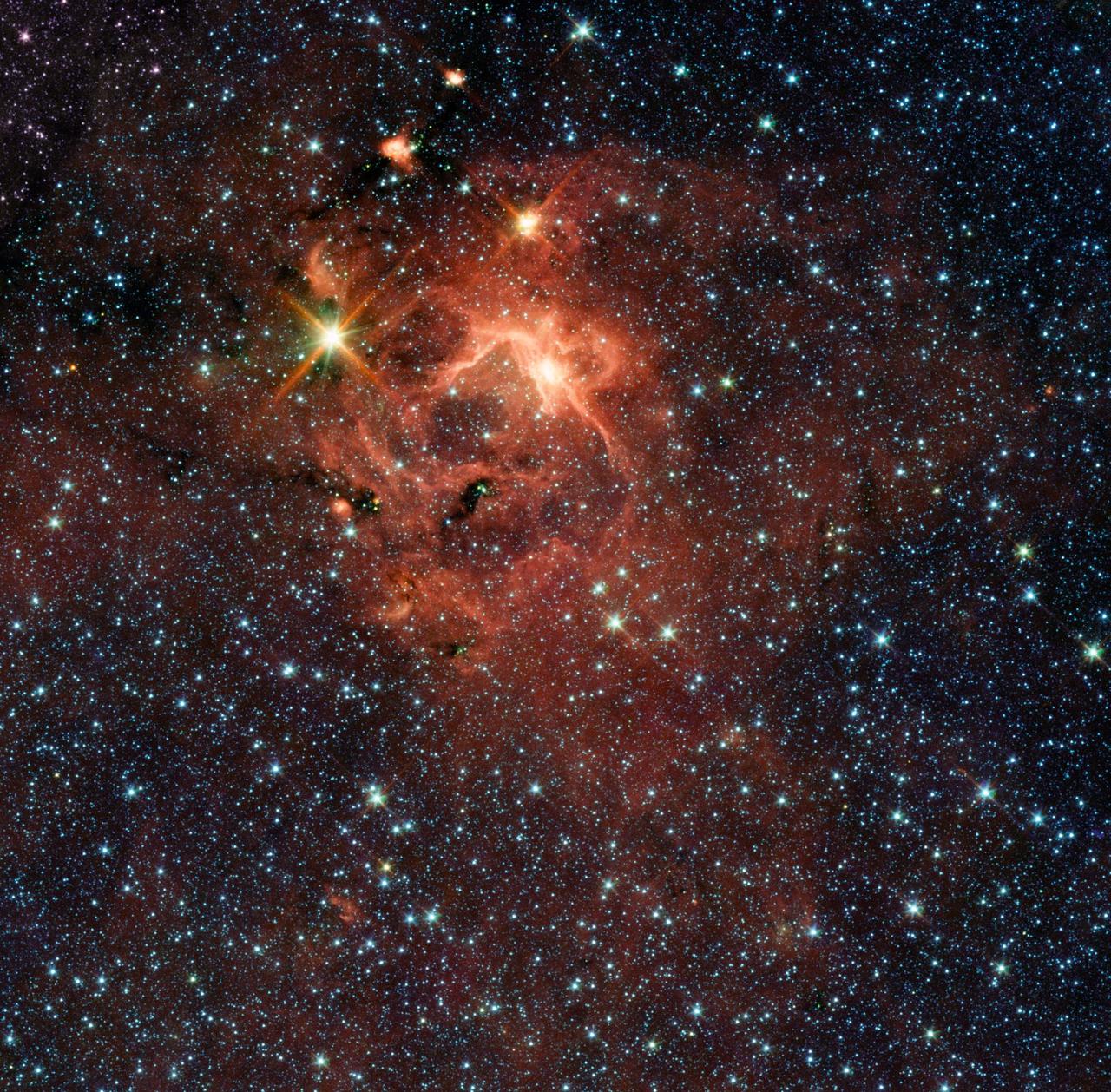
JPL · 2010-07-14 · PIA13276
Massive Young Star and its Cradle
This star-forming region, captured by NASA Spitzer Space Telescope, is dominated by the bright, young star IRAS 13481-6124; it is the first massive baby star for which astronomers…
Inspect NASA record
This star-forming region, captured by NASA Spitzer Space Telescope, is dominated by the bright, young star IRAS 13481-6124; it is the first massive baby star for which astronomers could obtain a detailed look at the dusty disk closely encircling it.
- Record ID
- PIA13276
- NASA center
- JPL
- Date
- 2010-07-14
- Credit
- NASA/JPL-Caltech/ESO/Univ. of Michigan
- Keywords
- Spitzer Space Telescope