
Update Site (from NASA)
Explore NASA’s Image and Video Library.
Suggest one object per day for the Interstellar Minds collection. We review each suggestion before adding it.
Sign in to suggest a Marvel.
Find a NASA image ID. Open a NASA record and copy its ID from the end of the details URL.
NASA image records
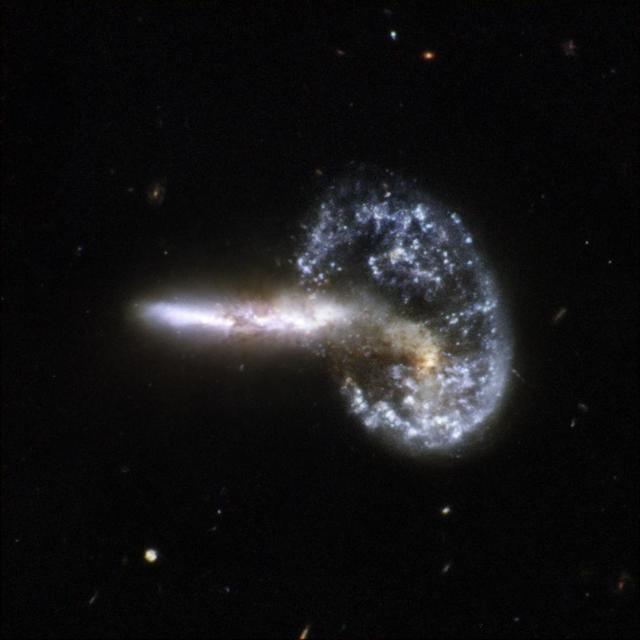
JPL · 2008-04-24 · PIA10385
Arp 148& - Mayall Object
Arp 148 is nicknamed Mayall object and is located in the constellation of Ursa Major, the Great Bear, about 500 million light-years away. This image is part of…
Inspect NASA record
Arp 148 is nicknamed Mayall object and is located in the constellation of Ursa Major, the Great Bear, about 500 million light-years away. This image is part of a large collection of images of merging galaxies taken by NASA Hubble Space Telescope.
- Record ID
- PIA10385
- NASA center
- JPL
- Date
- 2008-04-24
- Credit
- NASA, ESA, the Hubble Heritage Team STScI/AURA-ESA/Hubble Collaboration, A. Evans University of Virginia, Charlottesville/NRAO/Stony Brook University, K. Noll STScI, and J. Westphal Caltech
- Keywords
- Hubble Space Telescope
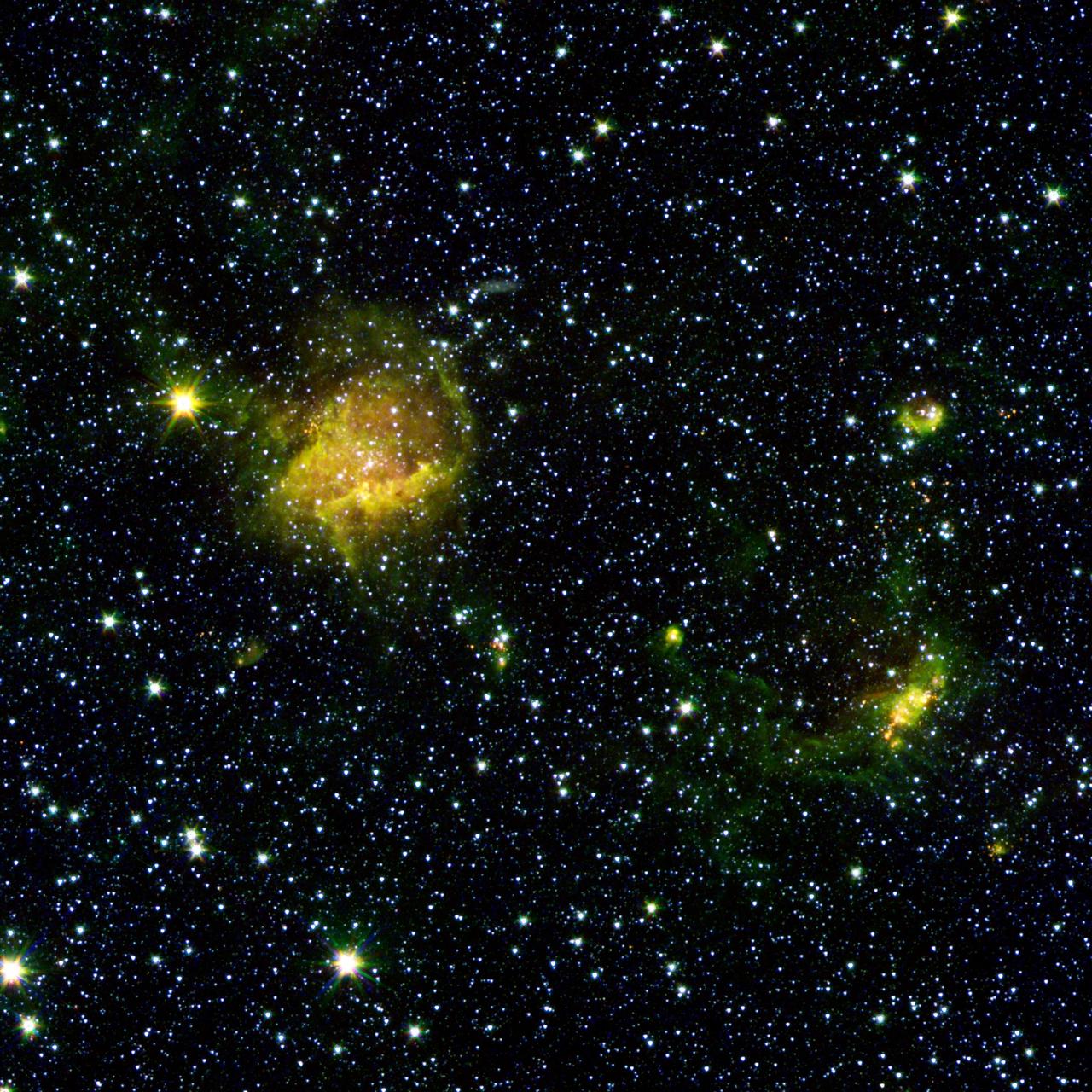
JPL · 2010-07-28 · PIA13303
Beastly Stars and a Bubble
A star-forming region shines from the considerable distance of more than 30,000 light-years away in the upper left of this image from NASA Spitzer Space Telescope. This image…
Inspect NASA record
A star-forming region shines from the considerable distance of more than 30,000 light-years away in the upper left of this image from NASA Spitzer Space Telescope. This image is a combination of data from Spitzer and the Two Micron All Sky Survey.
- Record ID
- PIA13303
- NASA center
- JPL
- Date
- 2010-07-28
- Credit
- NASA/JPL-Caltech/2MASS/SSI/University of Wisconsin
- Keywords
- Spitzer Space Telescope
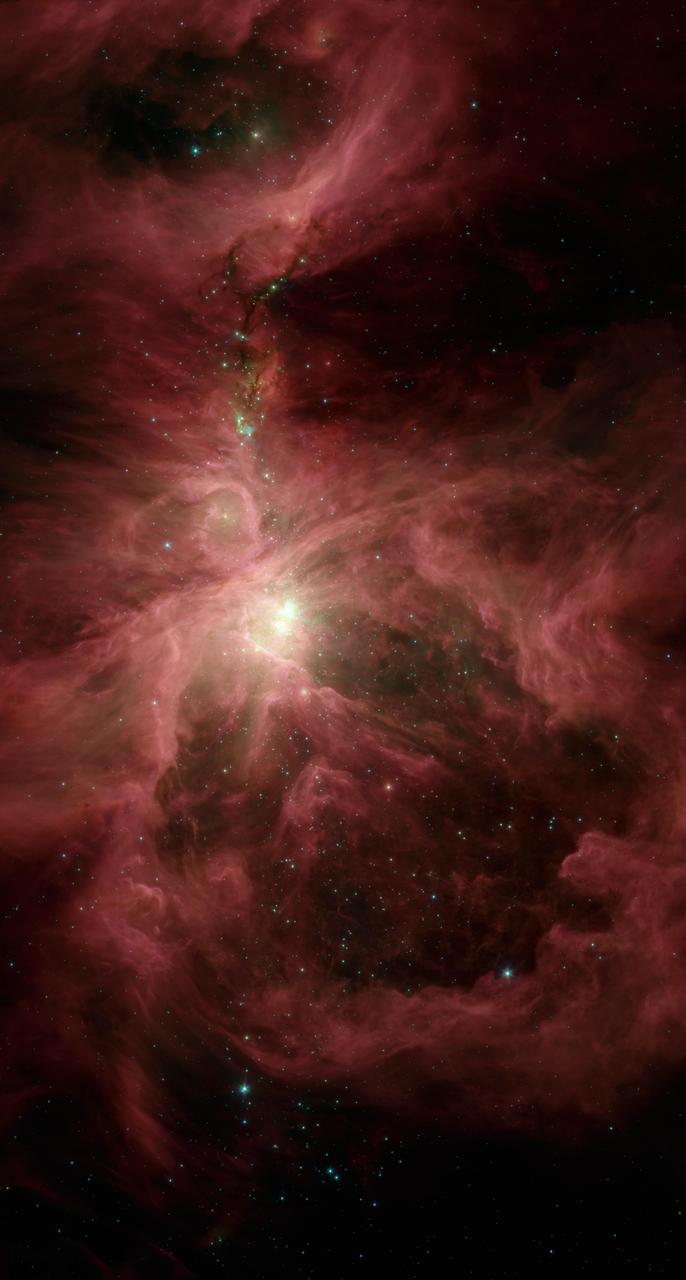
JPL · 2006-08-15 · PIA08653
The Sword of Orion
This image from NASA Spitzer Space Telescope shows the Orion nebula, our closest massive star-making factory, 1,450 light-years from Earth. The nebula is close enough to appear to…
Inspect NASA record
This image from NASA Spitzer Space Telescope shows the Orion nebula, our closest massive star-making factory, 1,450 light-years from Earth. The nebula is close enough to appear to the naked eye as a fuzzy star in the sword of the constellation.
- Record ID
- PIA08653
- NASA center
- JPL
- Date
- 2006-08-15
- Credit
- NASA/JPL-Caltech/Univ. of Toledo
- Keywords
- Orion, Spitzer Space Telescope

JPL · 2006-04-05 · PIA08040
Stellar Rubble May be Planetary Building Blocks Artist Concept
This artist concept depicts a type of dead star called a pulsar and the surrounding disk of rubble discovered by NASA Spitzer Space Telescope. The pulsar, called 4U…
Inspect NASA record
This artist concept depicts a type of dead star called a pulsar and the surrounding disk of rubble discovered by NASA Spitzer Space Telescope. The pulsar, called 4U 0142+61, was once a massive star until about 100,000 years ago.
- Record ID
- PIA08040
- NASA center
- JPL
- Date
- 2006-04-05
- Credit
- NASA/JPL-Caltech
- Keywords
- Spitzer Space Telescope
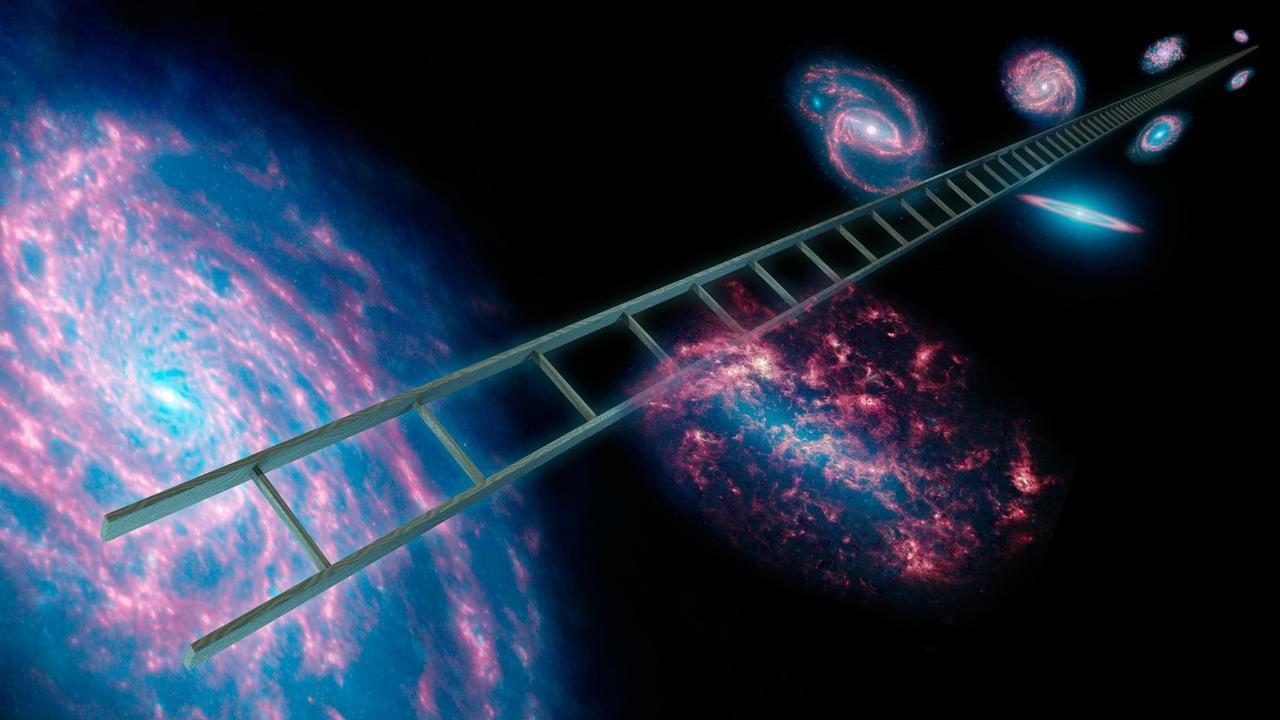
JPL · 2012-10-03 · PIA15818
Climbing the Cosmic Distance Ladder Artist Concept
Astronomers using NASA Spitzer Space Telescope have greatly improved the cosmic distance ladder used to measure the expansion rate of the universe, its size and age. This artist…
Inspect NASA record
Astronomers using NASA Spitzer Space Telescope have greatly improved the cosmic distance ladder used to measure the expansion rate of the universe, its size and age. This artist concept symbolically shows a series of stars that have known distances.
- Record ID
- PIA15818
- NASA center
- JPL
- Date
- 2012-10-03
- Credit
- NASA/JPL-Caltech
- Keywords
- Spitzer Space Telescope
JPL · 2008-04-24 · PIA10387
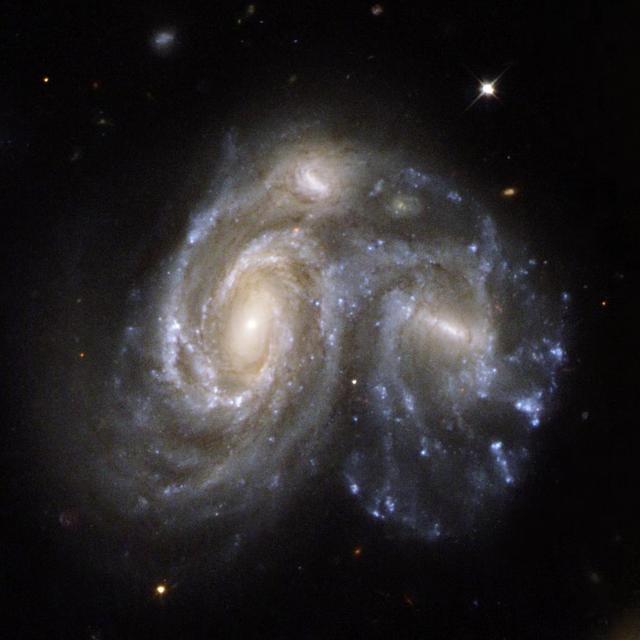
Collision Between Two Spiral Galaxies
NGC 6050/IC 1179 Arp 272 is a remarkable collision between two spiral galaxies, NGC 6050 and IC 1179, and is part of the Hercules Galaxy Cluster, located in…
Inspect NASA record
NGC 6050/IC 1179 Arp 272 is a remarkable collision between two spiral galaxies, NGC 6050 and IC 1179, and is part of the Hercules Galaxy Cluster, located in the constellation of Hercules. This image is from NASA Hubble Space Telescope.
- Record ID
- PIA10387
- NASA center
- JPL
- Date
- 2008-04-24
- Credit
- NASA, ESA, the Hubble Heritage Team STScI/AURA-ESA/Hubble Collaboration, and K. Noll STScI
- Keywords
- Hubble Space Telescope
JPL · 2005-07-27 · PIA03537
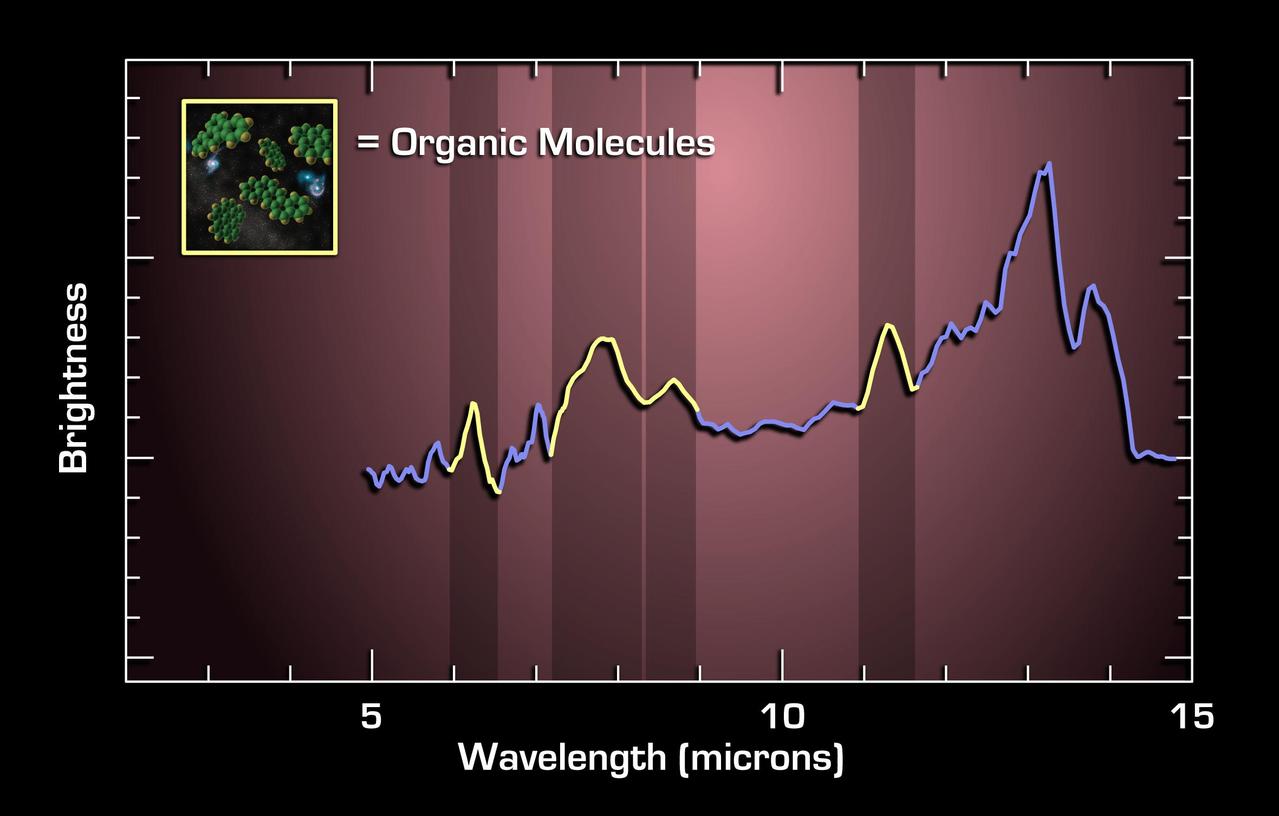
Charting Ingredients for Life
This graph, or spectrum, from NASA Spitzer Space Telescope, charts light from a faraway galaxy located 10 billion light years from Earth. It tracks mid-infrared light from an…
Inspect NASA record
This graph, or spectrum, from NASA Spitzer Space Telescope, charts light from a faraway galaxy located 10 billion light years from Earth. It tracks mid-infrared light from an extremely luminous galaxy when the universe was only 1/4 of its current age.
- Record ID
- PIA03537
- NASA center
- JPL
- Date
- 2005-07-27
- Credit
- NASA/JPL-Caltech
- Keywords
- Spitzer Space Telescope

JPL · 2010-12-08 · PIA13691
Hot, Carbon-Rich Planet Artist Concept
This artist concept shows the searing-hot gas planet WASP-12b orange orb and its star. NASA Spitzer Space Telescope discovered that the planet has more carbon than oxygen, making…
Inspect NASA record
This artist concept shows the searing-hot gas planet WASP-12b orange orb and its star. NASA Spitzer Space Telescope discovered that the planet has more carbon than oxygen, making it the first carbon-rich planet ever observed.
- Record ID
- PIA13691
- NASA center
- JPL
- Date
- 2010-12-08
- Credit
- NASA/JPL-Caltech
- Keywords
- Spitzer Space Telescope
JPL · 2008-04-24 · PIA10393
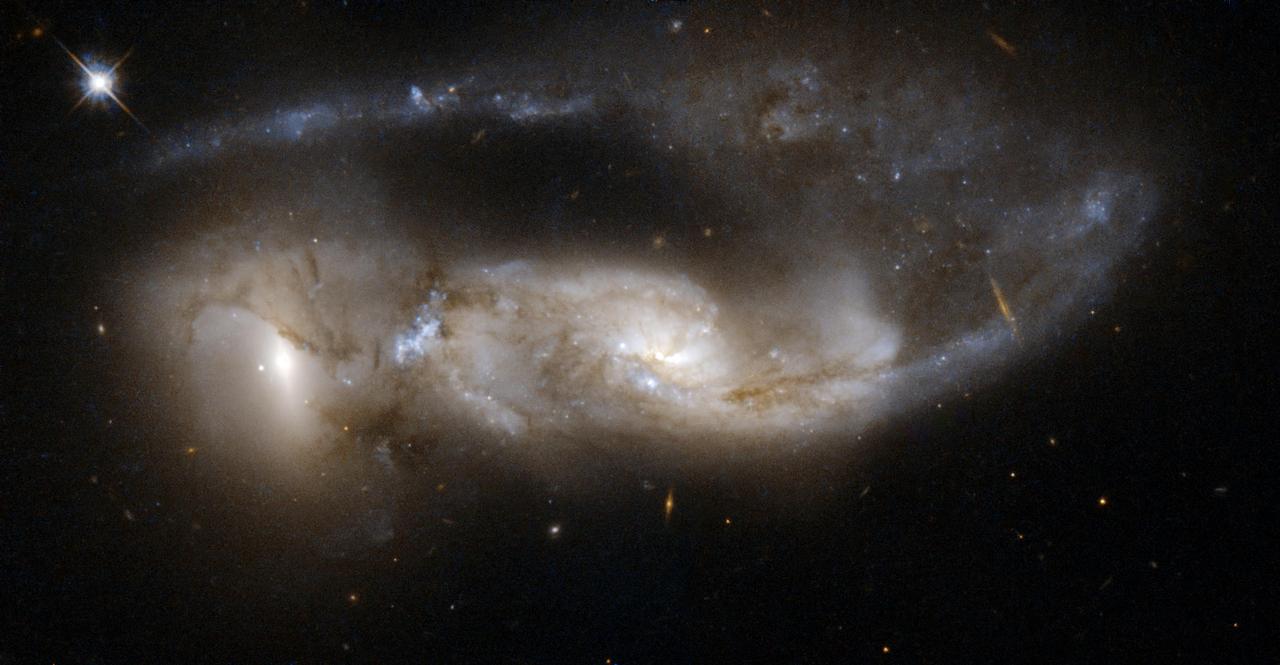
NGC 6621/2
NGC 6621/2 VV 247, Arp 81 is a strongly interacting pair of galaxies, seen about 100 million years after their closest approach. This image is part of a…
Inspect NASA record
NGC 6621/2 VV 247, Arp 81 is a strongly interacting pair of galaxies, seen about 100 million years after their closest approach. This image is part of a large collection of images of merging galaxies taken by NASA Hubble Space Telescope.
- Record ID
- PIA10393
- NASA center
- JPL
- Date
- 2008-04-24
- Credit
- NASA, ESA, the Hubble Heritage Team STScI/AURA-ESA/Hubble and W. Keel University of Alabama, Tuscaloosa
- Keywords
- Hubble Space Telescope
JPL · 2008-05-29 · PIA10724
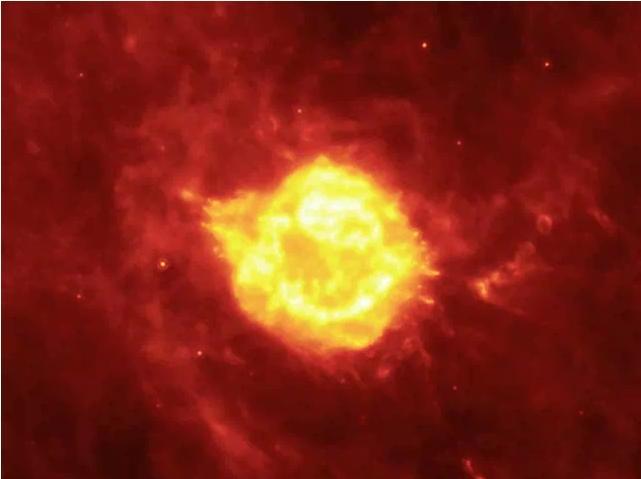
Cauldron of Light
A seething cauldron of light appears to bubble and ooze around the remains of a giant star that astronomers have been watching tear itself apart for the last…
Inspect NASA record
A seething cauldron of light appears to bubble and ooze around the remains of a giant star that astronomers have been watching tear itself apart for the last 300 years. Different observations taken over three years by NASA Spitzer Space Telescope.
- Record ID
- PIA10724
- NASA center
- JPL
- Date
- 2008-05-29
- Credit
- NASA/JPL-Caltech/MPIA
- Keywords
- Cassiopeia A, Spitzer Space Telescope
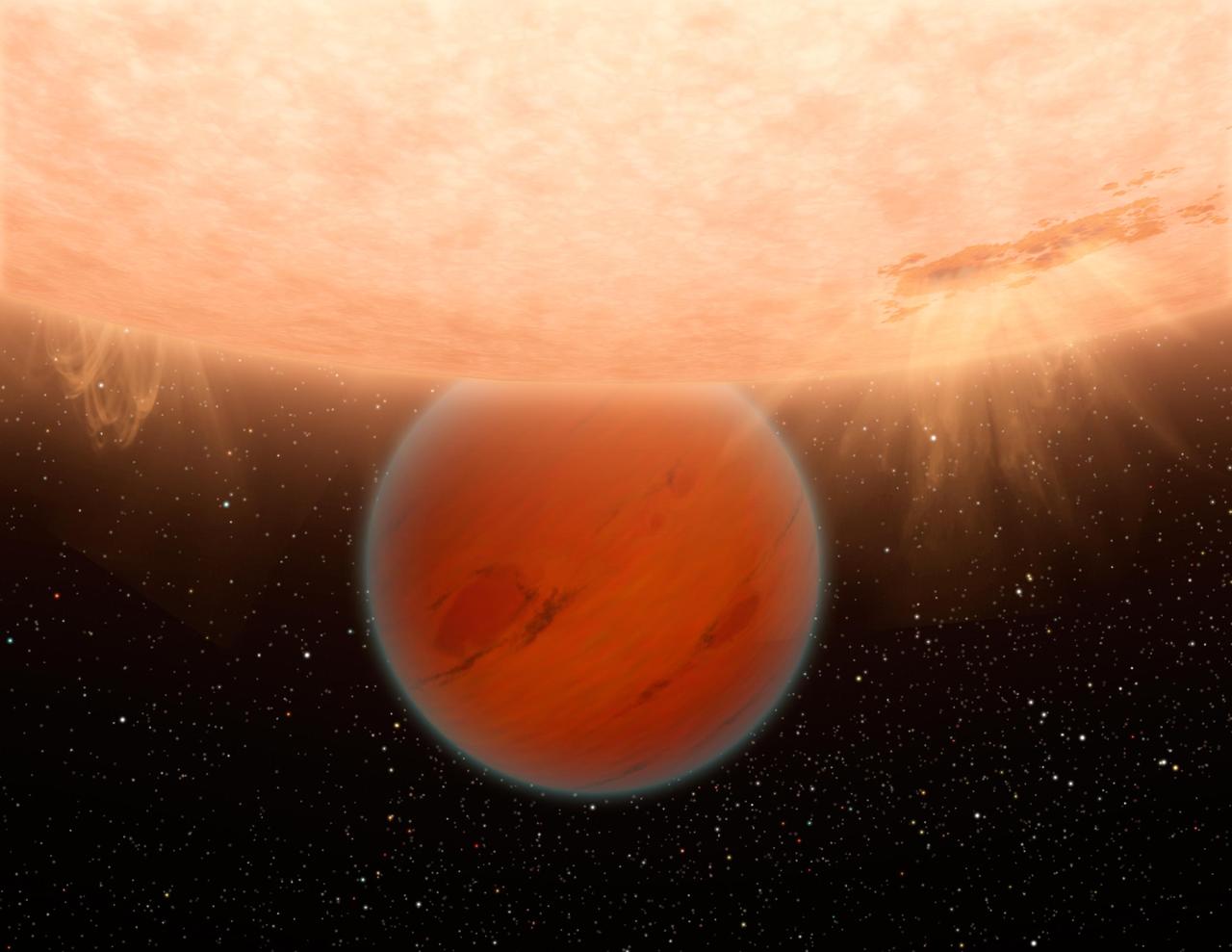
JPL · 2010-04-21 · PIA13054
Exotic Exoplanet Artist Concept
This artist concept illustrates a hot, Neptune-sized planet called GJ 436b. NASA Spitzer Space Telescope has found evidence that GJ 436b, orbiting a star beyond our sun lacks…
Inspect NASA record
This artist concept illustrates a hot, Neptune-sized planet called GJ 436b. NASA Spitzer Space Telescope has found evidence that GJ 436b, orbiting a star beyond our sun lacks methane -- an ingredient common to many planets in our own solar system.
- Record ID
- PIA13054
- NASA center
- JPL
- Date
- 2010-04-21
- Credit
- NASA/JPL-Caltech
- Keywords
- Spitzer Space Telescope

JPL · 1999-05-18 · PIA01544
Venus Cloud Tops Viewed by Hubble
Venus Cloud Tops Viewed by Hubble. This is a NASA Hubble Space Telescope ultraviolet-light image of the planet Venus, taken on January 24 1995, when Venus was at…
Inspect NASA record
Venus Cloud Tops Viewed by Hubble. This is a NASA Hubble Space Telescope ultraviolet-light image of the planet Venus, taken on January 24 1995, when Venus was at a distance of 70.6 million miles 113.6 million kilometers from Earth.
- Record ID
- PIA01544
- NASA center
- JPL
- Date
- 1999-05-18
- Credit
- NASA/JPL
- Keywords
- Venus, Hubble Space Telescope