
Update Site (from NASA)
Explore NASA’s Image and Video Library.
Suggest one object per day for the Interstellar Minds collection. We review each suggestion before adding it.
Sign in to suggest a Marvel.
Find a NASA image ID. Open a NASA record and copy its ID from the end of the details URL.
NASA image records
HQ · 2022-06-29 · NHQ202206290025
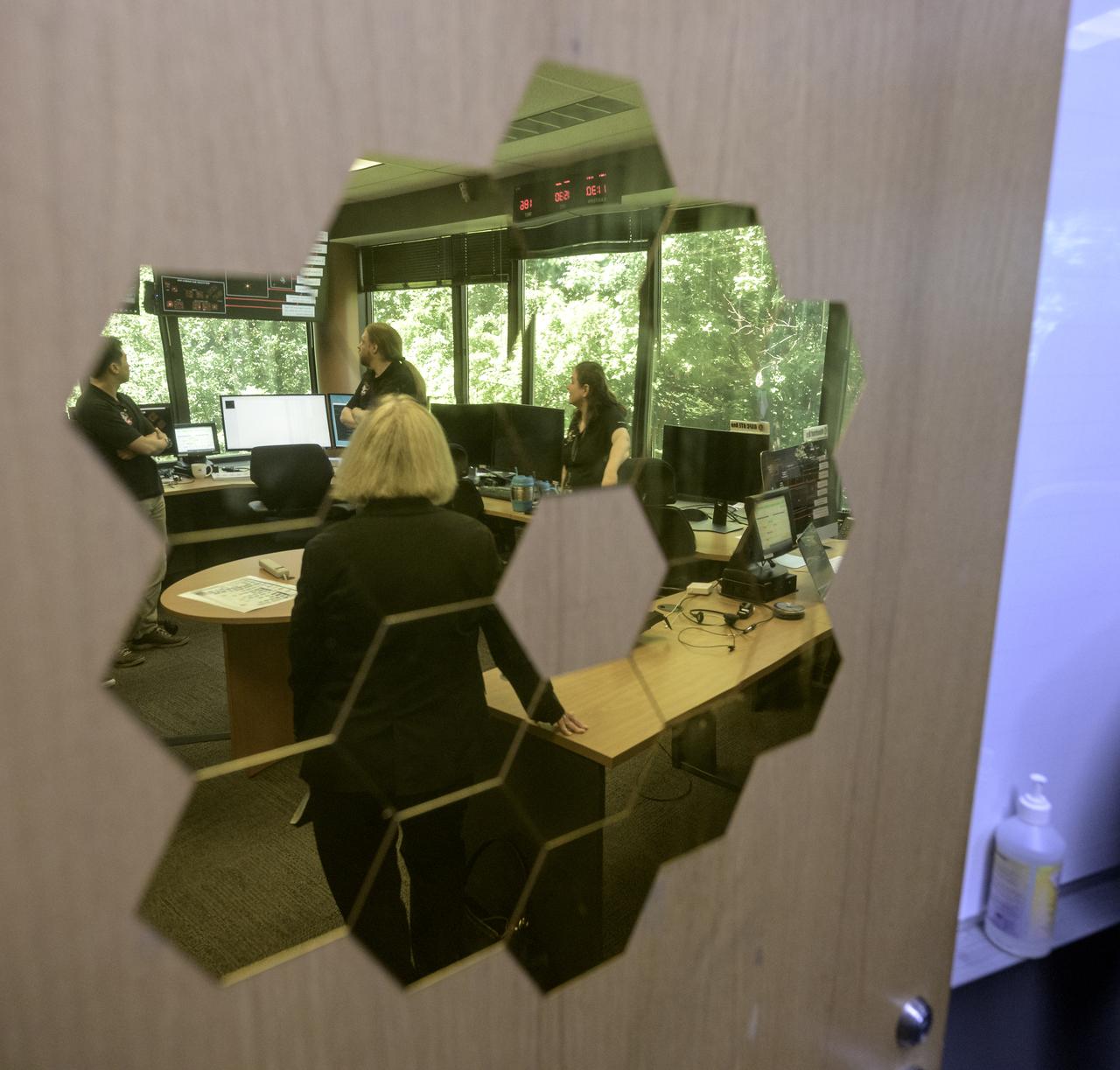
James Webb Space Telescope Briefing
NASA Deputy Administrator Pam Melroy, back to camera, is seen reflected in a door mirror decoration as she meets with members of the NASA James Webb Space Telescope…
Inspect NASA record
NASA Deputy Administrator Pam Melroy, back to camera, is seen reflected in a door mirror decoration as she meets with members of the NASA James Webb Space Telescope wavefront sensing and control analysis office, Wednesday, June 29, 2022, at the Space Telescope Science Institute (STScI) in Baltimore. Prior to the tour the deputy spoke at a briefing that focused on the status of NASA’s James Webb Space Telescope in its final weeks of preparing for its science mission, as well as overviews of planned science for Webb’s first year of operations. Photo Credit: (NASA/Bill Ingalls)
- Record ID
- NHQ202206290025
- NASA center
- HQ
- Date
- 2022-06-29
- Credit
- NASA/Bill Ingalls
- Keywords
- Baltimore, Canadian Space Agency (CSA), ESA (European Space Agency), James Webb Space Telescope (JWST), Maryland, NASA, NASA Deputy Administrator, Northrop Grumman, Pam Melroy, Space Telescope Science Institute (STScI)
MSFC · 1981-01-01 · 8113713
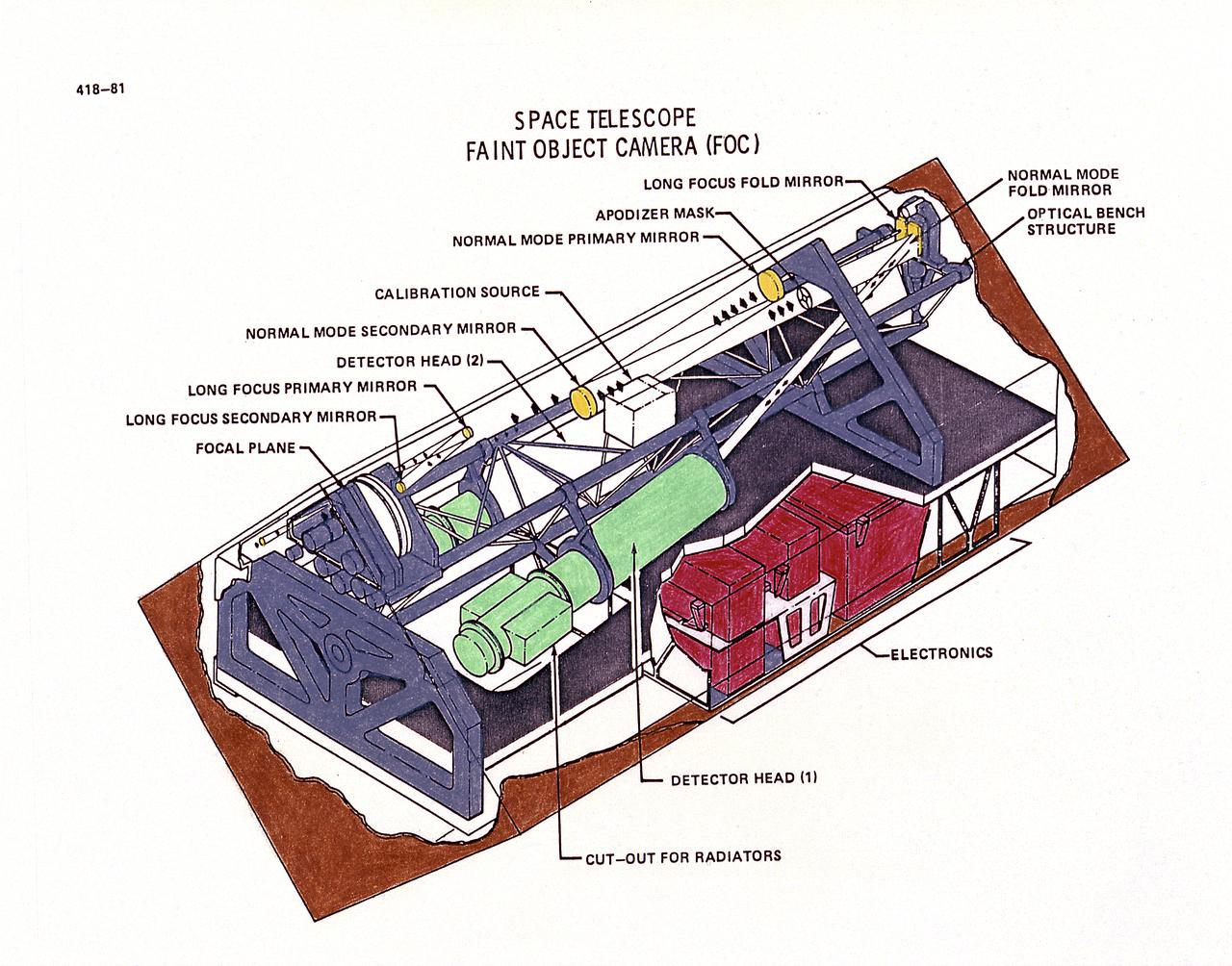
History of Hubble Space Telescope (HST)
This drawing illustrates Hubble Space Telescope's (HST's), Faint Object Camera (FOC). The FOC reflects light down one of two optical pathways. The light enters a detector after passing…
Inspect NASA record
This drawing illustrates Hubble Space Telescope's (HST's), Faint Object Camera (FOC). The FOC reflects light down one of two optical pathways. The light enters a detector after passing through filters or through devices that can block out light from bright objects. Light from bright objects is blocked out to enable the FOC to see background images. The detector intensifies the image, then records it much like a television camera. For faint objects, images can be built up over long exposure times. The total image is translated into digital data, transmitted to Earth, and then reconstructed. The purpose of the HST, the most complex and sensitive optical telescope ever made, is to study the cosmos from a low-Earth orbit. By placing the telescope in space, astronomers are able to collect data that is free of the Earth's atmosphere. The HST detects objects 25 times fainter than the dimmest objects seen from Earth and provides astronomers with an observable universe 250 times larger than visible from ground-based telescopes, perhaps as far away as 14 billion light-years. The HST views galaxies, stars, planets, comets, possibly other solar systems, and even unusual phenomena such as quasars, with 10 times the clarity of ground-based telescopes. The HST was deployed from the Space Shuttle Discovery (STS-31 mission) into Earth orbit in April 1990. The Marshall Space Flight Center had responsibility for design, development, and construction of the HST. The Perkin-Elmer Corporation, in Danbury, Cornecticut, developed the optical system and guidance sensors.
- Record ID
- 8113713
- NASA center
- MSFC
- Date
- 1981-01-01
- Keywords
- Hubble Space Telescope, Faint Object Camera, FOC
MSFC · 1990-04-25 · 9015550
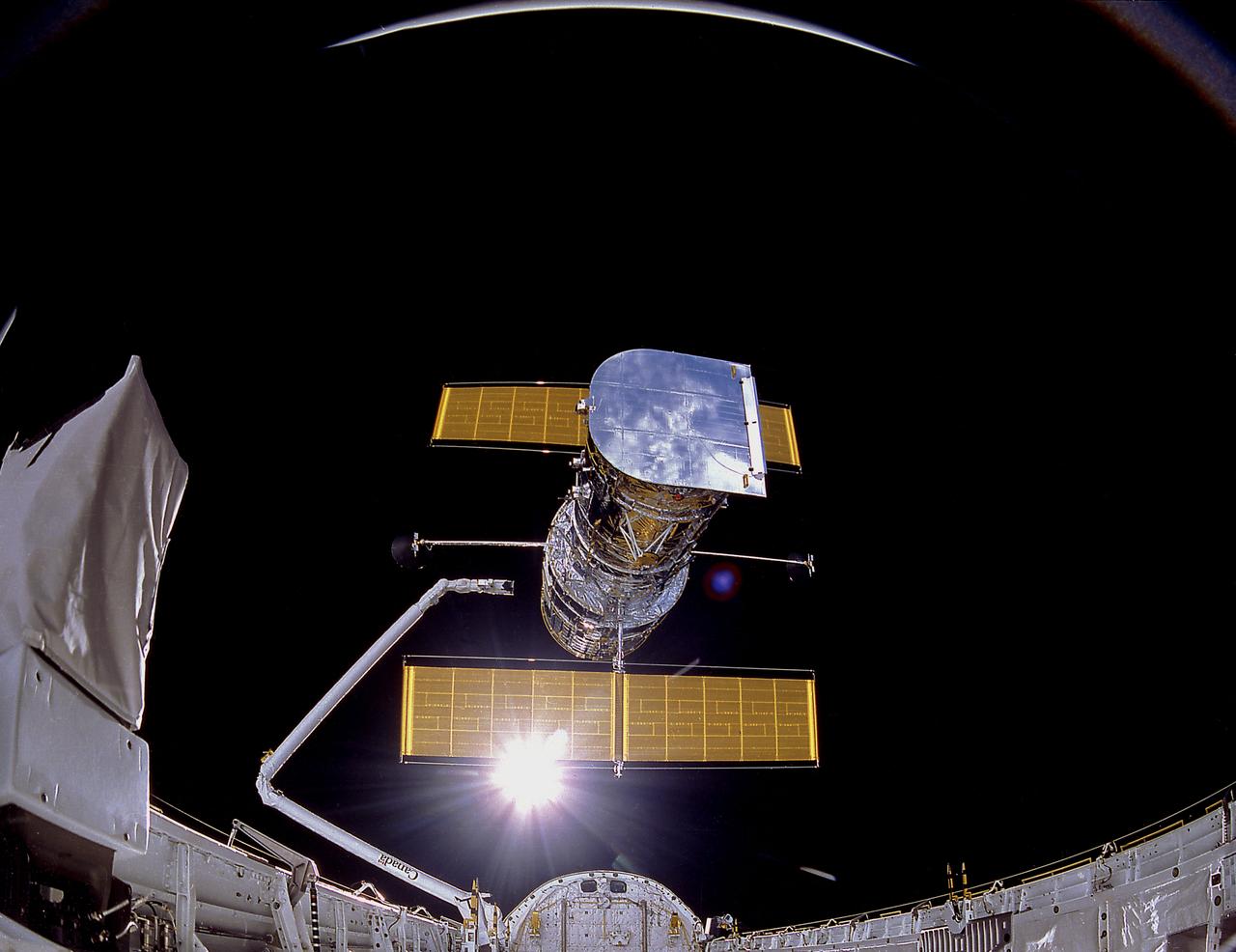
History of Hubble Space Telescope (HST)
In this photograph, the Hubble Space Telescope (HST) was being deployed on April 25, 1990. The photograph was taken by the IMAX Cargo Bay Camera (ICBC) mounted in…
Inspect NASA record
In this photograph, the Hubble Space Telescope (HST) was being deployed on April 25, 1990. The photograph was taken by the IMAX Cargo Bay Camera (ICBC) mounted in a container on the port side of the Space Shuttle orbiter Discovery (STS-31 mission). The purpose of the HST, the most complex and sensitive optical telescope ever made, is to study the cosmos from a low-Earth orbit for 15 years or more. The HST provides fine detail imaging, produces ultraviolet images and spectra, and detects very faint objects. Two months after its deployment in space, scientists detected a 2-micron spherical aberration in the primary mirror of the HST that affected the telescope's ability to focus faint light sources into a precise point. This imperfection was very slight, one-fiftieth of the width of a human hair. A scheduled Space Service servicing mission (STS-61) in 1993 permitted scientists to correct the problem. During four spacewalks, new instruments were installed into the HST that had optical corrections. The Marshall Space Flight Center had responsibility for design, development, and construction of the HST. The Perkin-Elmer Corporation, in Danbury, Cornecticut, developed the optical system and guidance sensors. Photo Credit: NASA/Smithsonian Institution/Lockheed Corporation.
- Record ID
- 9015550
- NASA center
- MSFC
- Date
- 1990-04-25
- Keywords
- STS-31, Hubble Space Telescope, HST
JPL · 2013-09-24 · PIA17444
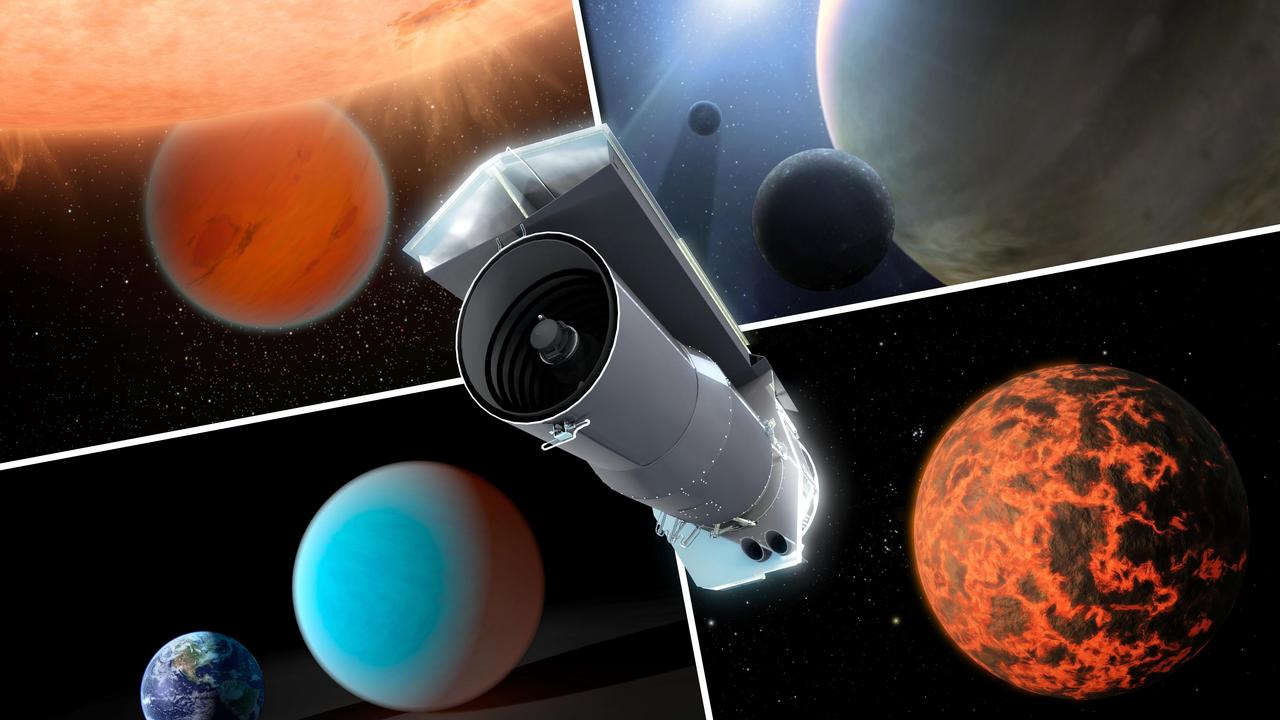
Spitzer Trains Its Eyes on Exoplanets Artist Concept
This artist concept shows NASA Spitzer Space Telescope surrounded by examples of exoplanets the telescope has examined in over its ten years in space.
Inspect NASA record
This artist concept shows NASA Spitzer Space Telescope surrounded by examples of exoplanets the telescope has examined in over its ten years in space.
- Record ID
- PIA17444
- NASA center
- JPL
- Date
- 2013-09-24
- Credit
- NASA/JPL-Caltech
- Keywords
- Spitzer Space Telescope
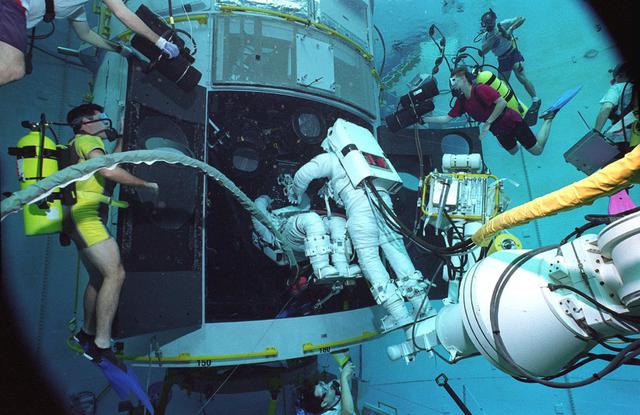
MSFC · 1995-10-23 · 9514850
History of Hubble Space Telescope (HST)
Astronauts Greg Harbaugh and Steve Smith conduct Hubble Space Telescope (HST) training in Marshall's Neutral Buoyancy Simulator (NBS).
Inspect NASA record
Astronauts Greg Harbaugh and Steve Smith conduct Hubble Space Telescope (HST) training in Marshall's Neutral Buoyancy Simulator (NBS).
- Record ID
- 9514850
- NASA center
- MSFC
- Date
- 1995-10-23
- Keywords
- History, Neutral Buoyancy Simulator, Hubble Space Telescope Training
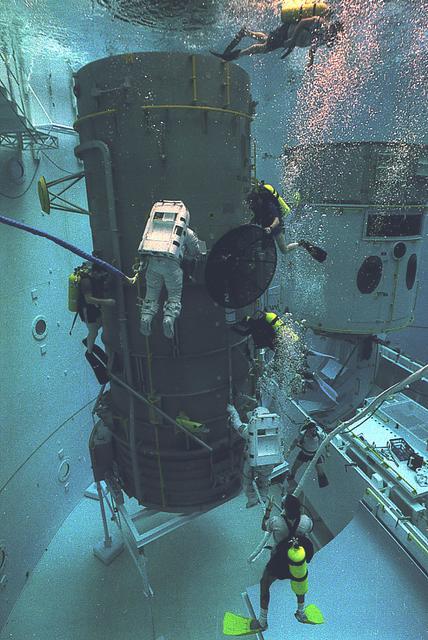
MSFC · 1992-08-15 · 9263956
History of Hubble Space Telescope (HST)
Underwater training is conducted in Marshall's Neutral Buoyancy Simulator (NBS) in preparation for on-orbit Hubble Space Telescope operations.
Inspect NASA record
Underwater training is conducted in Marshall's Neutral Buoyancy Simulator (NBS) in preparation for on-orbit Hubble Space Telescope operations.
- Record ID
- 9263956
- NASA center
- MSFC
- Date
- 1992-08-15
- Keywords
- History, Neutral Buoyancy Simulator, Hubble Space Telescope Training
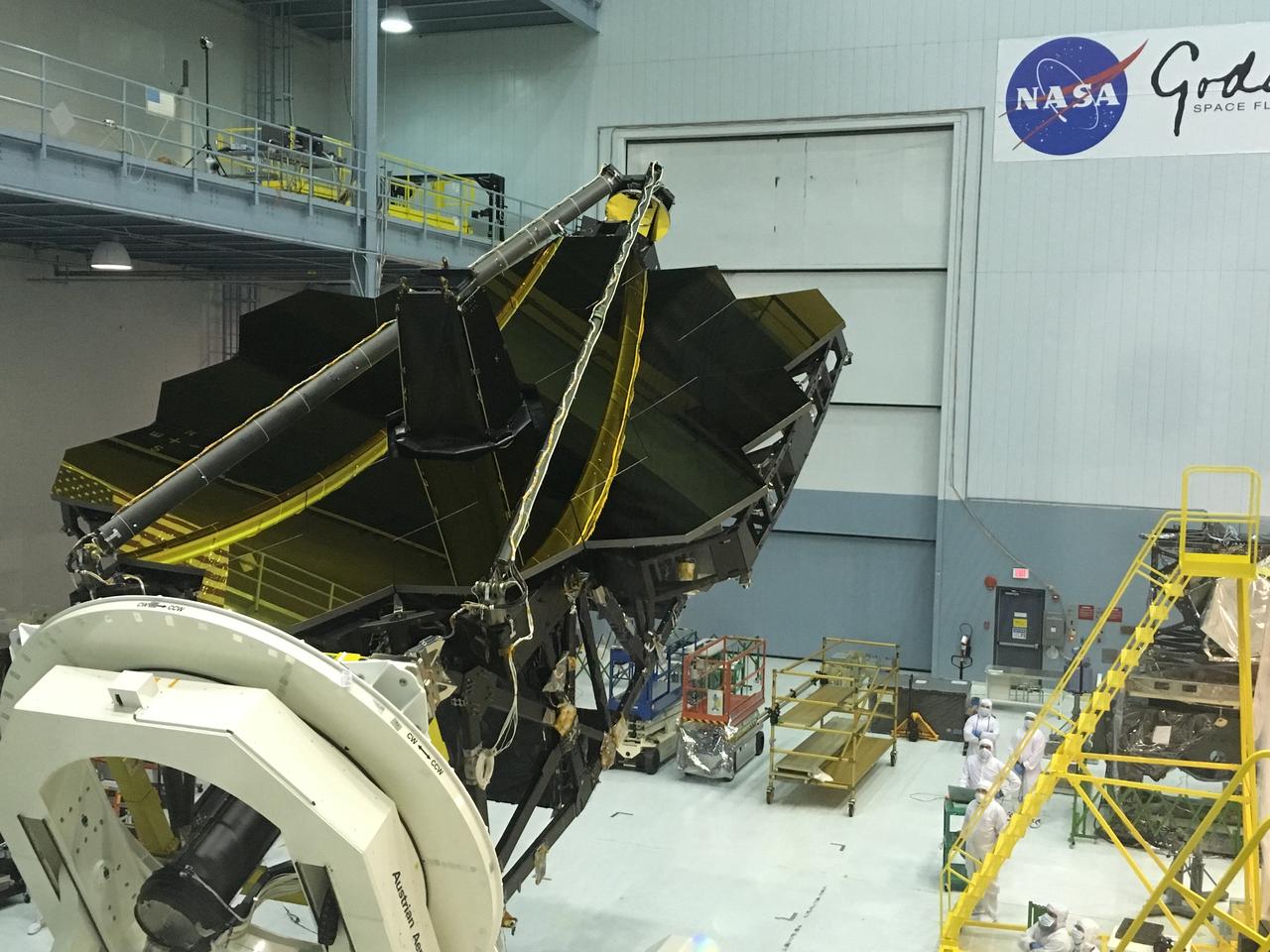
GSFC · 2017-12-08 · GSFC_20171208_Archive_e000360
James Webb Space Telescope Revealed
A rare view of the James Webb Space Telescope face-on, from the NASA Goddard cleanroom observation window.
Inspect NASA record
A rare view of the James Webb Space Telescope face-on, from the NASA Goddard cleanroom observation window.
- Record ID
- GSFC_20171208_Archive_e000360
- NASA center
- GSFC
- Date
- 2017-12-08
- Keywords
- James Webb Space Telescope Revealed, nasa, cleanroom, jwst, jameswebbspacetelescope, nasagoddard
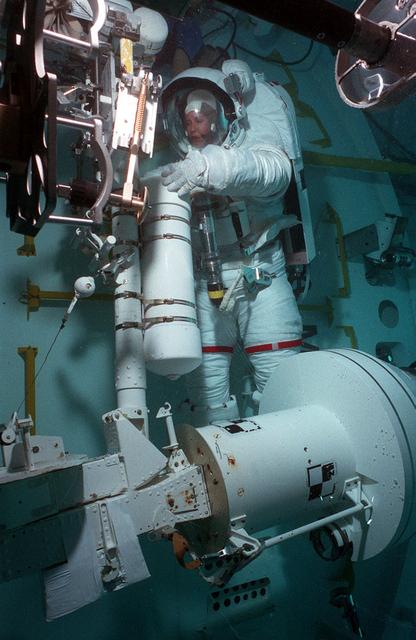
MSFC · 1993-10-15 · 9311946
History of Hubble Space Telescope (HST)
Astronaut Kathy Thornton conducts Hubble Space Telescope training in Marshall's Neutral Buoyancy Simulator (NBS).
Inspect NASA record
Astronaut Kathy Thornton conducts Hubble Space Telescope training in Marshall's Neutral Buoyancy Simulator (NBS).
- Record ID
- 9311946
- NASA center
- MSFC
- Date
- 1993-10-15
- Keywords
- History, Neutral Buoyancy Simulator, Hubble Space Telescope Training
MSFC · 1995-02-09 · 9501881
History of Hubble Space Telescope (HST)
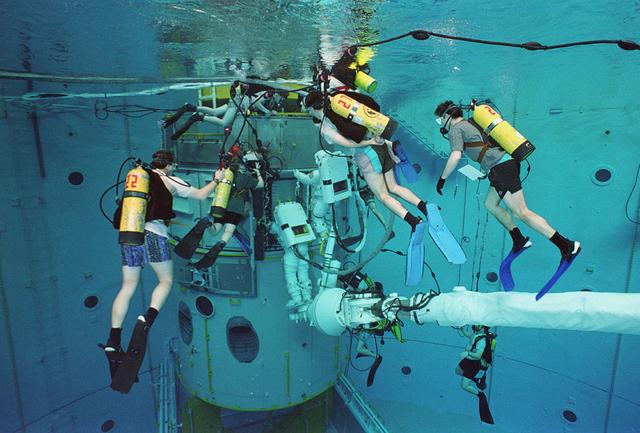
Underwater training is conducted in Marshall's Neutral Buoyancy Simulator (NBS) in preparation for on-orbit Hubble Space Telescope operations.
Inspect NASA record
Underwater training is conducted in Marshall's Neutral Buoyancy Simulator (NBS) in preparation for on-orbit Hubble Space Telescope operations.
- Record ID
- 9501881
- NASA center
- MSFC
- Date
- 1995-02-09
- Keywords
- History, Neutral Buoyancy Simulator, Hubble Space Telescope Training
HQ · 2022-06-29 · NHQ202206290023
James Webb Space Telescope Briefing
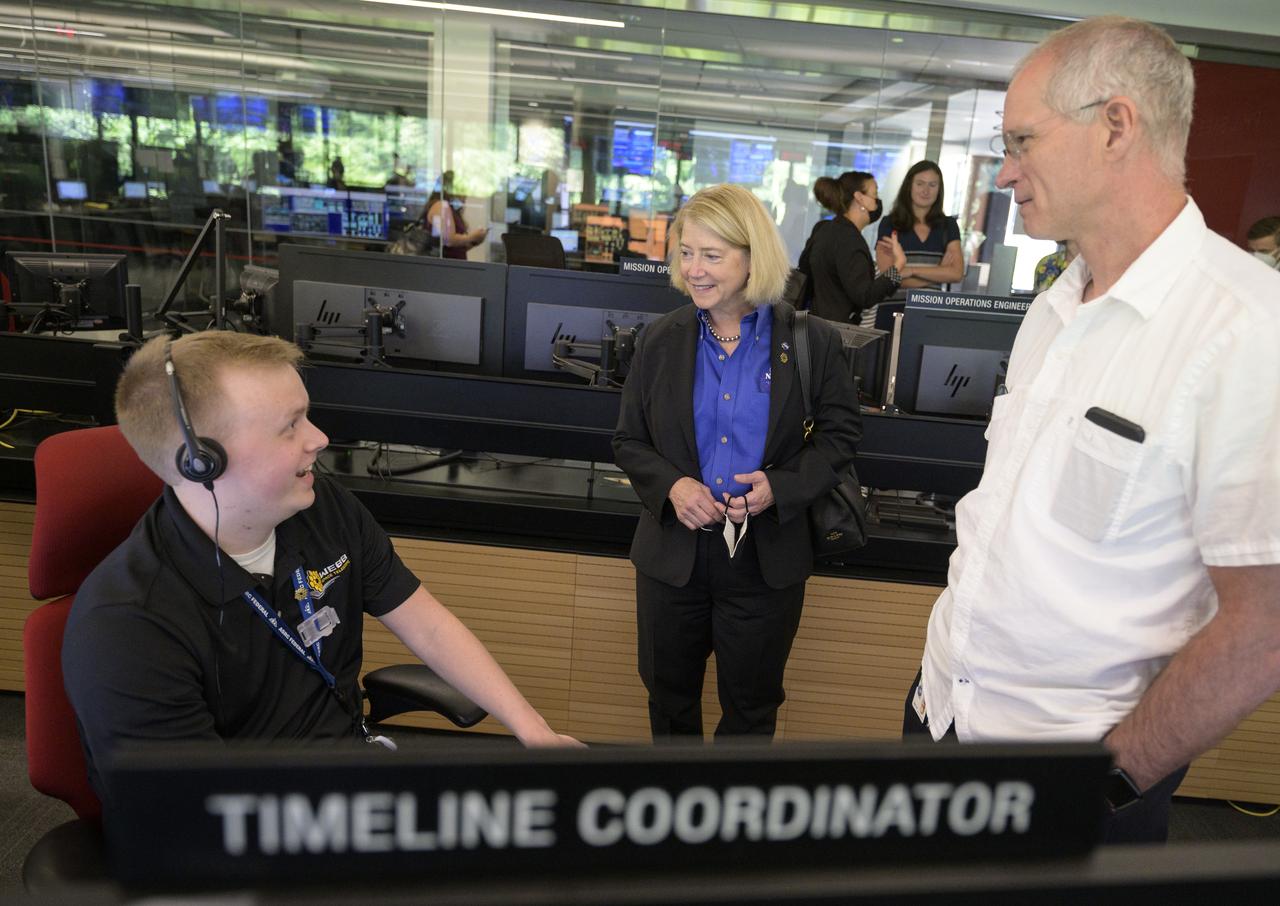
NASA Deputy Administrator Pam Melroy, center, meets with NASA James Webb Space Telescope Timeline Controller Matt Wasiak, left, and NASA James Webb Space Telescope Deputy Mission Operations Manager…
Inspect NASA record
NASA Deputy Administrator Pam Melroy, center, meets with NASA James Webb Space Telescope Timeline Controller Matt Wasiak, left, and NASA James Webb Space Telescope Deputy Mission Operations Manager Ron Jones, right, during a tour of the NASA James Webb Space Telescope Mission Operations Center, Wednesday, June 29, 2022, at the Space Telescope Science Institute (STScI) in Baltimore. Prior to the tour the deputy spoke at a briefing that focused on the status of NASA’s James Webb Space Telescope in its final weeks of preparing for its science mission, as well as overviews of planned science for Webb’s first year of operations. Photo Credit: (NASA/Bill Ingalls)
- Record ID
- NHQ202206290023
- NASA center
- HQ
- Date
- 2022-06-29
- Credit
- NASA/Bill Ingalls
- Keywords
- Baltimore, Canadian Space Agency (CSA), ESA (European Space Agency), James Webb Space Telescope (JWST), Maryland, Matt Wasiak, Mission Operations Center (MOC), NASA, NASA Deputy Administrator, Northrop Grumman, Pam Melroy, Ron Jones
MSFC · 1998-01-07 · 0302061
History of Hubble Space Telescope (HST)
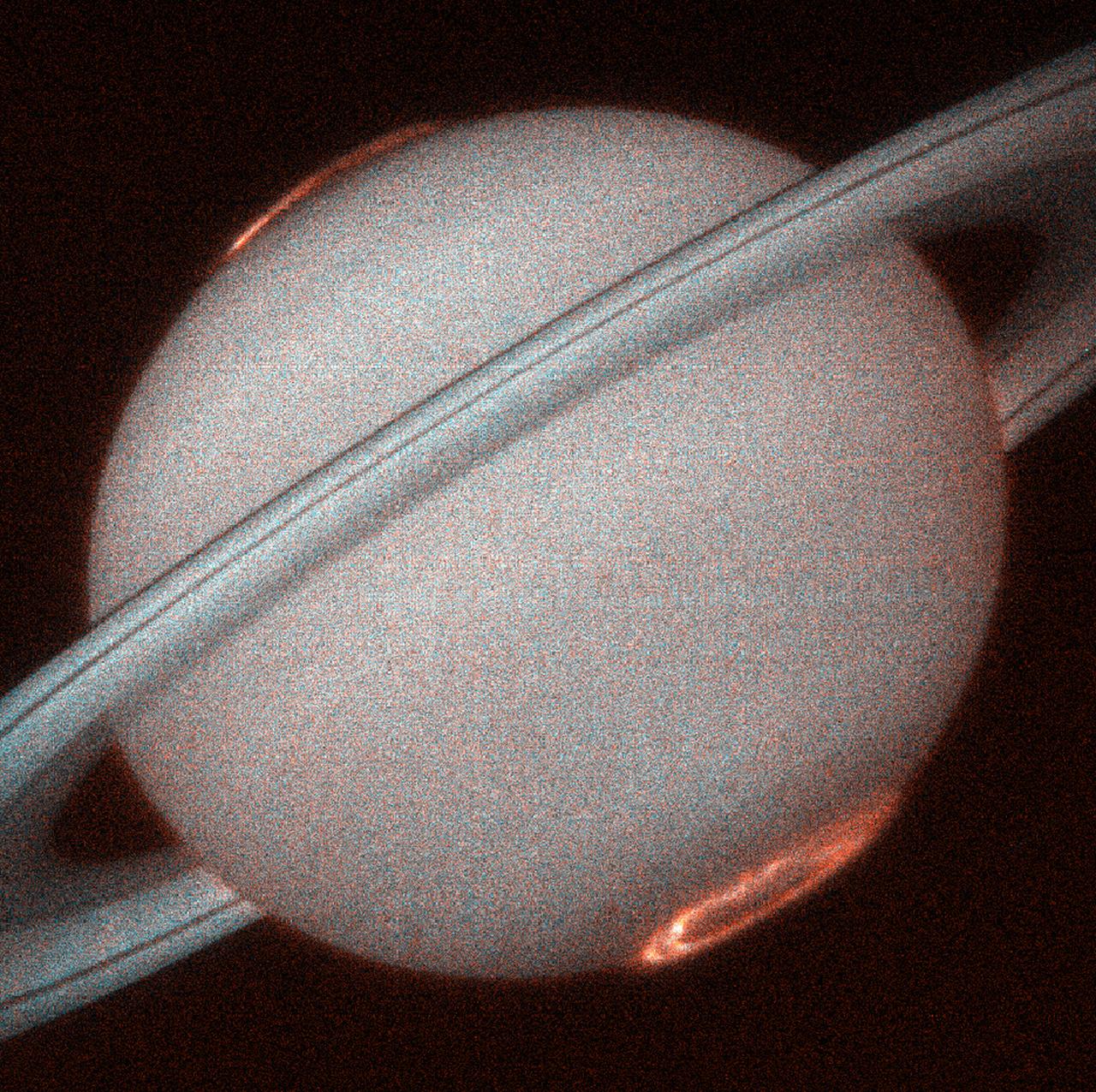
This is the first image of Saturn's ultraviolet aurora taken by the Space Telescope Imaging Spectrograph (STIS) on board the Hubble Space Telescope (HST) in October 1998, when…
Inspect NASA record
This is the first image of Saturn's ultraviolet aurora taken by the Space Telescope Imaging Spectrograph (STIS) on board the Hubble Space Telescope (HST) in October 1998, when Saturn was a distance of 810 million miles (1.3 billion kilometers) from Earth. The new instrument, used as a camera, provides more than 10 times the sensitivity of the previous HST instruments in the ultraviolet. STIS images reveal exquisite detail never before seen in the spectacular auroral curtains of light that encircle Saturn's north and south poles which rise more than a thousand miles above the cloud tops. Saturn's auroral displays are caused by an energetic wind from the Sun that sweeps over the planet, much like the Earth's aurora that is occasionally seen in the nighttime sky. Unlike the Earth, Saturn's aurora is only seen in ultraviolet light that is invisible from the Earth's surface, hence can only be observed from space.
- Record ID
- 0302061
- NASA center
- MSFC
- Date
- 1998-01-07
- Keywords
- Saturn, Aurora, Hubble Space Telescope, HST

MSFC · 1980-10-01 · 0102551
History of Hubble Space Telescope (HST)
This illustration depicts the design features of the Hubble Space Telescope's (HST's) Support Systems Module (SSM). The SSM is one of the three major elements of the HST…
Inspect NASA record
This illustration depicts the design features of the Hubble Space Telescope's (HST's) Support Systems Module (SSM). The SSM is one of the three major elements of the HST and encloses the other two elements, the Optical Telescope Assembly (OTA) and the Scientific Instruments (SI's). The purpose of the HST, the most complex and sensitive optical telescope ever made, is to study the cosmos from a low-Earth orbit. By placing the telescope in space, astronomers are able to collect data that is free of the Earth's atmosphere. The HST detects objects 25 times fainter than the dimmest objects seen from Earth and provides astronomers with an observable universe 250 times larger than visible from ground-based telescopes, perhaps as far away as 14 billion light-years. The HST views galaxies, stars, planets, comets, possibly other solar systems, and even unusual phenomena such as quasars, with 10 times the clarity of ground-based telescopes. The spacecraft is 42.5-feet (13-meters) long and weighs 25,000 pounds (11,600 kilograms). Two communication anternas, two solar array panels that collect energy for the HST, and storage bays for electronic gear are on the outside. The HST was deployed from the Space Shuttle Discovery (STS-31 mission) into Earth orbit in April 1990. The Marshall Space Flight Center had responsibility for design, development, and construction of the HST. The Perkin-Elmer Corporation, in Danbury, Connecticut, developed the optical system and guidance sensors. The Lockheed Missile and Space Company of Sunnyvale, California produced the protective outer shroud and spacecraft systems, and assembled and tested the finished telescope.
- Record ID
- 0102551
- NASA center
- MSFC
- Date
- 1980-10-01
- Keywords
- Hubble Space Telescope, HST, Support Systems Module, SSM