
Update Site (from NASA)
Explore NASA’s Image and Video Library.
Suggest one object per day for the Interstellar Minds collection. We review each suggestion before adding it.
Sign in to suggest a Marvel.
Find a NASA image ID. Open a NASA record and copy its ID from the end of the details URL.
NASA image records
JPL · 2009-11-23 · PIA12376
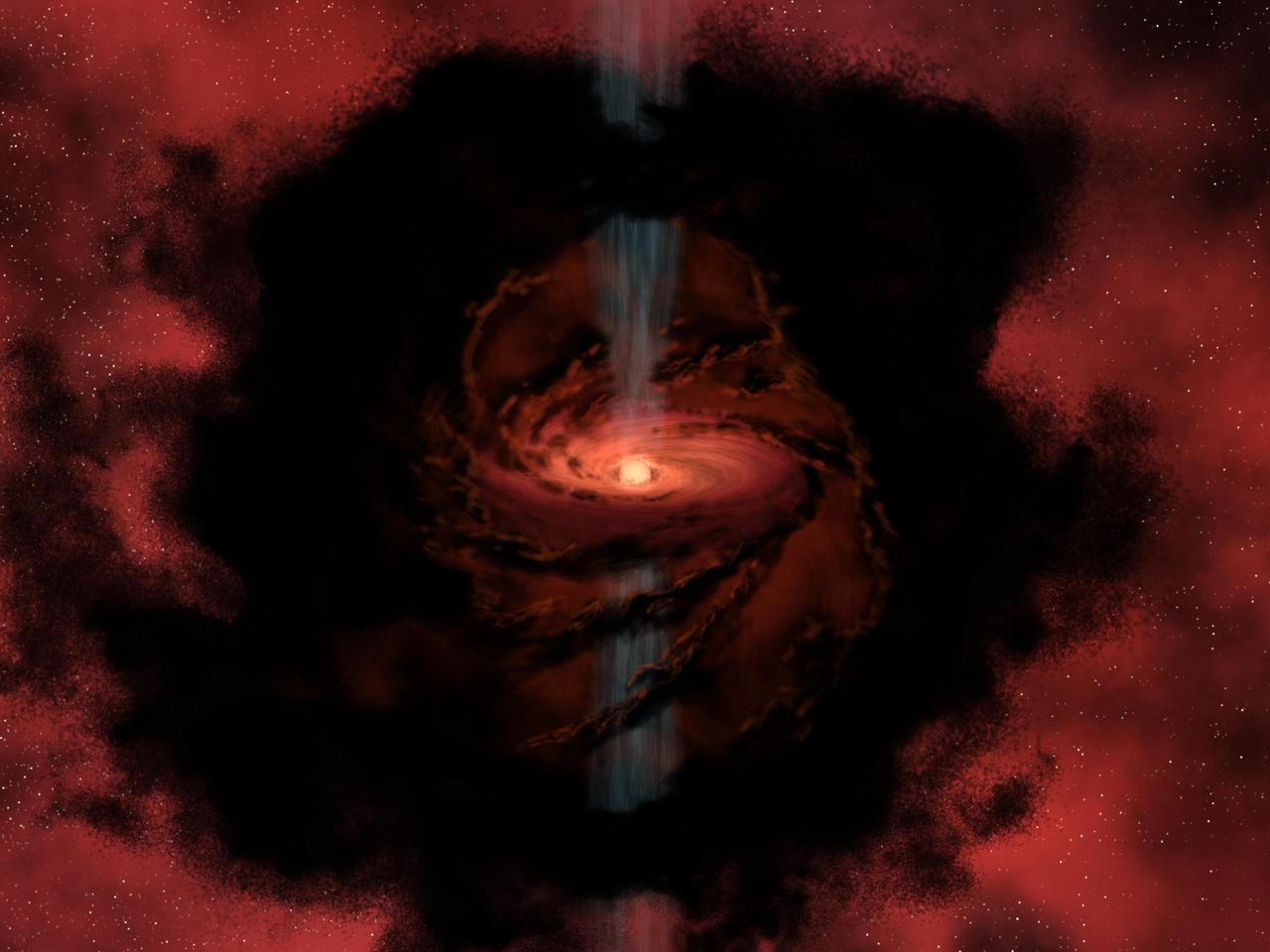
Dusty Beginnings of a Star
Are brown dwarfs born like stars, as in this rendering, or do they form like planets orbiting another star? A study by researchers using data from NASA Spitzer…
Inspect NASA record
Are brown dwarfs born like stars, as in this rendering, or do they form like planets orbiting another star? A study by researchers using data from NASA Spitzer Space Telescope has led to the preliminary conclusion that they are formed much like a star.
- Record ID
- PIA12376
- NASA center
- JPL
- Date
- 2009-11-23
- Credit
- NASA/JPL-Caltech
- Keywords
- Spitzer Space Telescope
JPL · 2014-06-04 · PIA18009
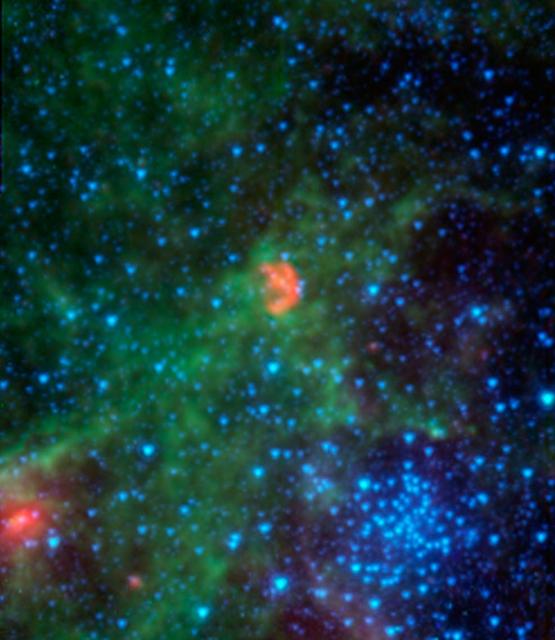
Dissecting Dust from Detonation of Dead Star
This infrared image from NASA Spitzer Space Telescope shows N103B -- all that remains from a supernova that exploded a millennium ago in the Large Magellanic Cloud, a…
Inspect NASA record
This infrared image from NASA Spitzer Space Telescope shows N103B -- all that remains from a supernova that exploded a millennium ago in the Large Magellanic Cloud, a satellite galaxy 160,000 light-years away from our own Milky Way.
- Record ID
- PIA18009
- NASA center
- JPL
- Date
- 2014-06-04
- Credit
- NASA/JPL-Caltech/Goddard
- Keywords
- Spitzer Space Telescope

JPL · 1998-08-02 · PIA01285
Hubble View of Neptune
These NASA Hubble Space Telescope views of the blue-green planet Neptune provide three snapshots of changing weather conditions. The images were taken in 1994 on 3 separate days…
Inspect NASA record
These NASA Hubble Space Telescope views of the blue-green planet Neptune provide three snapshots of changing weather conditions. The images were taken in 1994 on 3 separate days when Neptune was 2.8 billion miles 4.5 billion kilometers from Earth.
- Record ID
- PIA01285
- NASA center
- JPL
- Date
- 1998-08-02
- Credit
- NASA/JPL/STScI
- Keywords
- Neptune, Hubble Space Telescope

JPL · 2014-09-19 · PIA17808
Hubble Feathers the Peacock
This picture, taken by the NASA/ESA Hubble Space Telescope WFPC2, shows a galaxy known as NGC 6872 in the constellation of Pavo The Peacock. Its unusual shape is…
Inspect NASA record
This picture, taken by the NASA/ESA Hubble Space Telescope WFPC2, shows a galaxy known as NGC 6872 in the constellation of Pavo The Peacock. Its unusual shape is caused by its interactions with the smaller galaxy that can be seen just above NGC 6872.
- Record ID
- PIA17808
- NASA center
- JPL
- Date
- 2014-09-19
- Credit
- ESA/NASA/STScI
- Keywords
- Hubble Space Telescope
JPL · 2006-07-24 · PIA08626
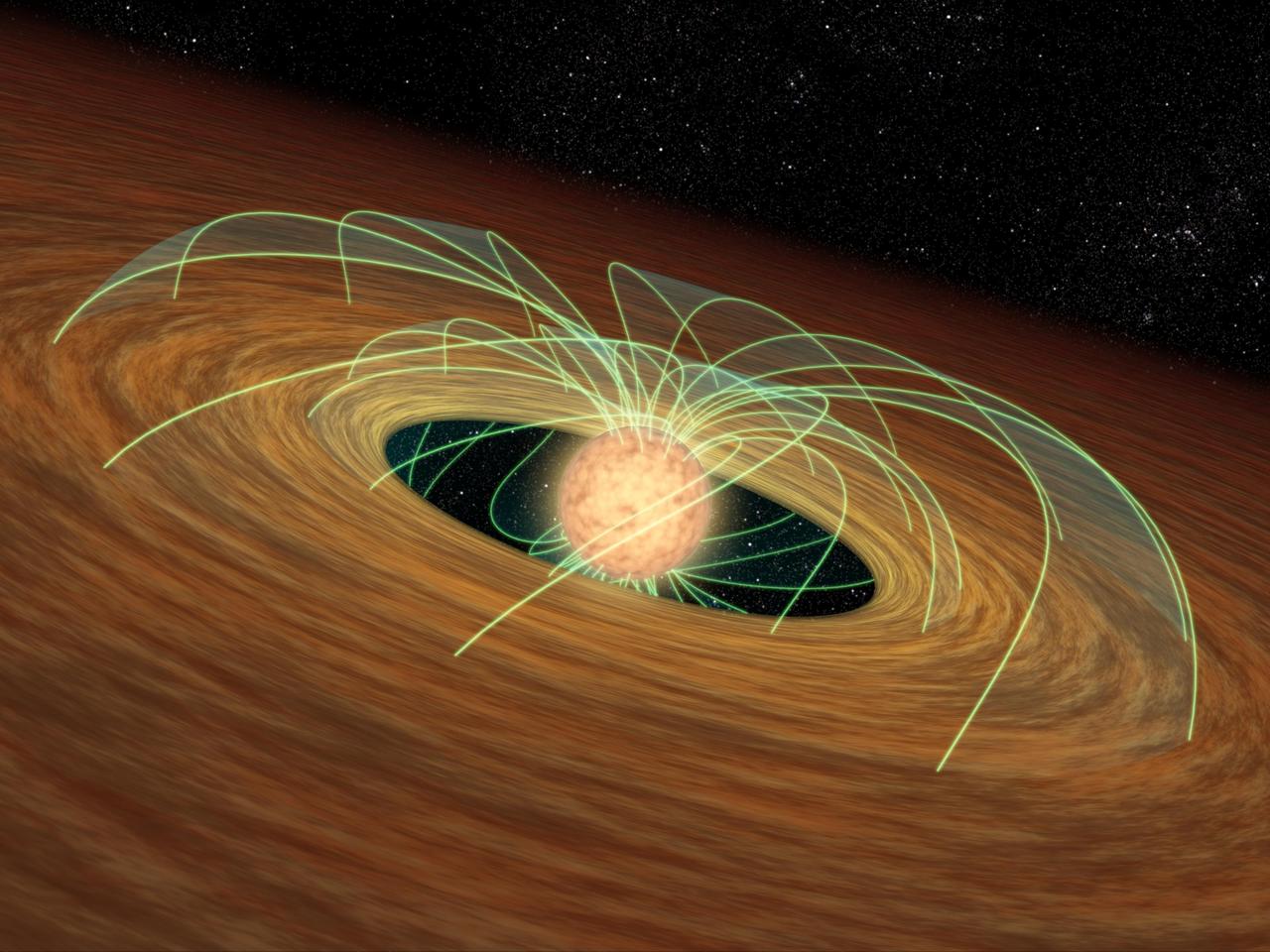
Stars Cant Spin Out of Control Artist Animation
This artist concept demonstrates how a dusty planet-forming disk can slow down a whirling young star, essentially saving the star from spinning itself to death. Evidence for this…
Inspect NASA record
This artist concept demonstrates how a dusty planet-forming disk can slow down a whirling young star, essentially saving the star from spinning itself to death. Evidence for this phenomenon comes from NASA Spitzer Space Telescope.
- Record ID
- PIA08626
- NASA center
- JPL
- Date
- 2006-07-24
- Credit
- NASA/JPL-Caltech
- Keywords
- Spitzer Space Telescope
JPL · 2008-12-16 · PIA11726
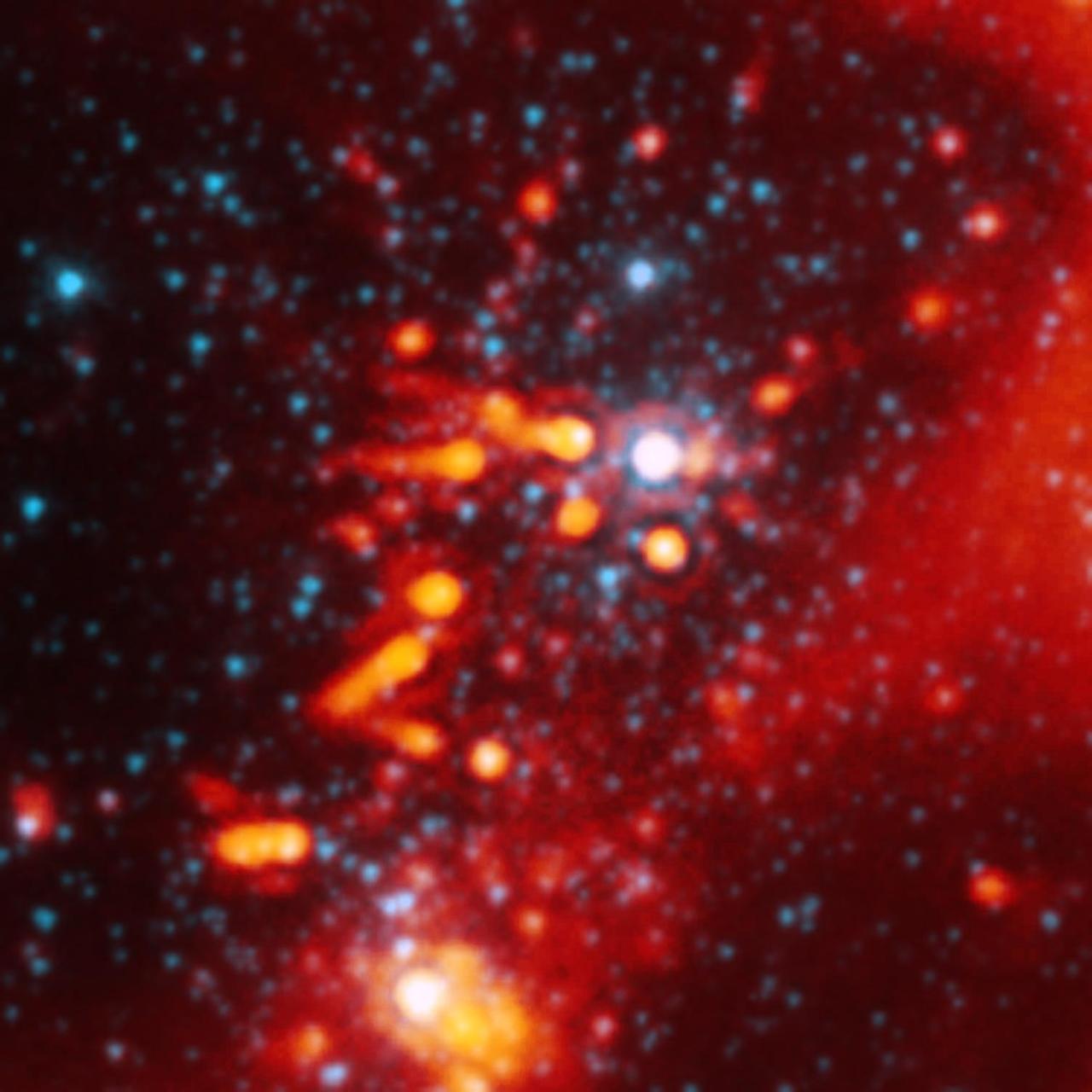
Devastated Stellar Neighborhood
This image from NASA Spitzer Space Telescope shows the nasty effects of living near a group of massive stars: radiation and winds from the massive stars white spot…
Inspect NASA record
This image from NASA Spitzer Space Telescope shows the nasty effects of living near a group of massive stars: radiation and winds from the massive stars white spot in center are blasting planet-making material away from stars like our sun.
- Record ID
- PIA11726
- NASA center
- JPL
- Date
- 2008-12-16
- Credit
- NASA/JPL-Caltech/Harvard-Smithsonian CfA
- Keywords
- Spitzer Space Telescope
JPL · 2010-10-19 · PIA13495
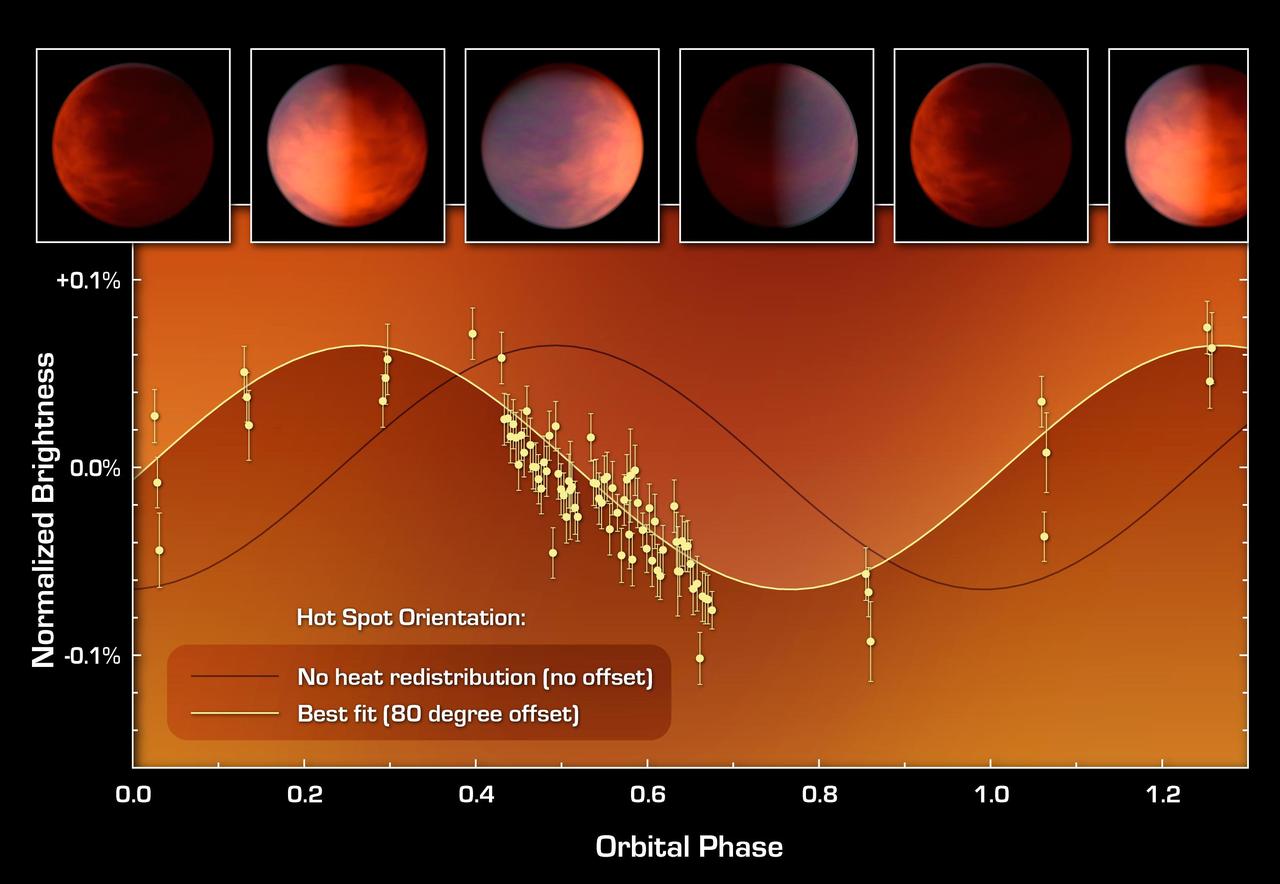
How to Find a Planetary Hot Spot
This graph of data from NASA Spitzer Space Telescope shows how astronomers located a hot spot on a distant gas planet named upsilon Andromedae b. Termed an exoplanet,…
Inspect NASA record
This graph of data from NASA Spitzer Space Telescope shows how astronomers located a hot spot on a distant gas planet named upsilon Andromedae b. Termed an exoplanet, it orbits a star beyond our sun, and whips around very closely to its star.
- Record ID
- PIA13495
- NASA center
- JPL
- Date
- 2010-10-19
- Credit
- NASA/JPL-Caltech/UCLA
- Keywords
- Spitzer Space Telescope

JPL · 2013-12-18 · PIA17565
Galactic Metropolis
The collection of red dots seen here show one of several very distant galaxy clusters discovered by combining ground-based optical data from the NOAO Kitt Peak National Observatory…
Inspect NASA record
The collection of red dots seen here show one of several very distant galaxy clusters discovered by combining ground-based optical data from the NOAO Kitt Peak National Observatory with infrared data from NASA Spitzer Space Telescope.
- Record ID
- PIA17565
- NASA center
- JPL
- Date
- 2013-12-18
- Credit
- NASA/JPL-Caltech/KPNO/University of Missouri-Kansas City
- Keywords
- Spitzer Space Telescope

JPL · 2007-01-26 · PIA09119
Luminous Blue Variable: Destined To Be a Supernova?
Tipped toward Earth and illuminated by the star, these rings look like ellipses in images taken with NASA Spitzer Space Telescope. The massive star at the center, which…
Inspect NASA record
Tipped toward Earth and illuminated by the star, these rings look like ellipses in images taken with NASA Spitzer Space Telescope. The massive star at the center, which lies within the constellation Sagittarius, is about 7,200 light-years from Earth.
- Record ID
- PIA09119
- NASA center
- JPL
- Date
- 2007-01-26
- Credit
- NASA/JPL-Caltech/UC Berkeley
- Keywords
- Spitzer Space Telescope
JPL · 2006-04-26 · PIA08098
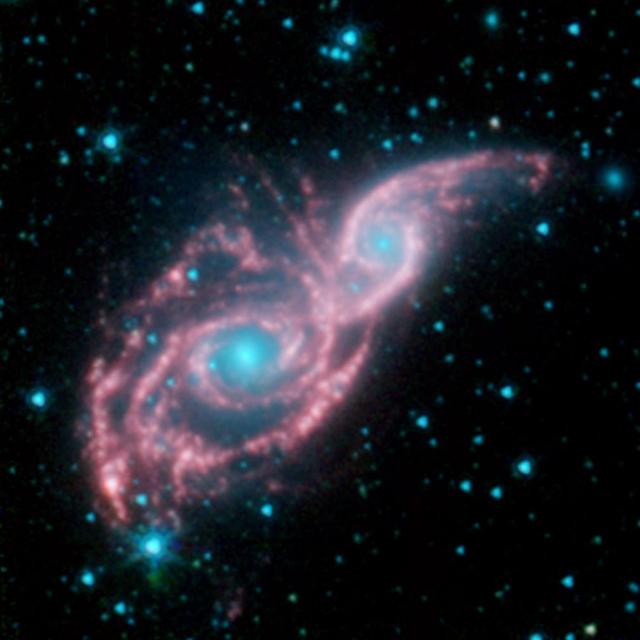
Ready for the Cosmic Ball
Something appears to be peering through a shiny red mask, in this new false-colored image from NASA Spitzer Space Telescope. The mysterious blue eyes are actually starlight from…
Inspect NASA record
Something appears to be peering through a shiny red mask, in this new false-colored image from NASA Spitzer Space Telescope. The mysterious blue eyes are actually starlight from the cores of two merging galaxies, called NGC 2207 and IC 2163.
- Record ID
- PIA08098
- NASA center
- JPL
- Date
- 2006-04-26
- Credit
- NASA/JPL-Caltech/Vassar
- Keywords
- Spitzer Space Telescope
JPL · 2012-05-08 · PIA15623
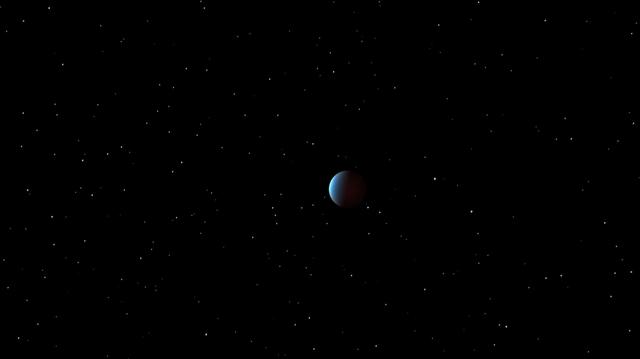
Super Earth Reveals Itself to Spitzer Artist Animation
This artist concept depicts 55 Cancri e as it orbits its star. NASA Spitzer Space Telescope has, for the first time, captured the light emanating from a distant…
Inspect NASA record
This artist concept depicts 55 Cancri e as it orbits its star. NASA Spitzer Space Telescope has, for the first time, captured the light emanating from a distant super Earth, a planet more massive than Earth but lighter than Neptune.
- Record ID
- PIA15623
- NASA center
- JPL
- Date
- 2012-05-08
- Credit
- NASA/JPL-Caltech
- Keywords
- Spitzer Space Telescope
JPL · 2004-10-18 · PIA06939
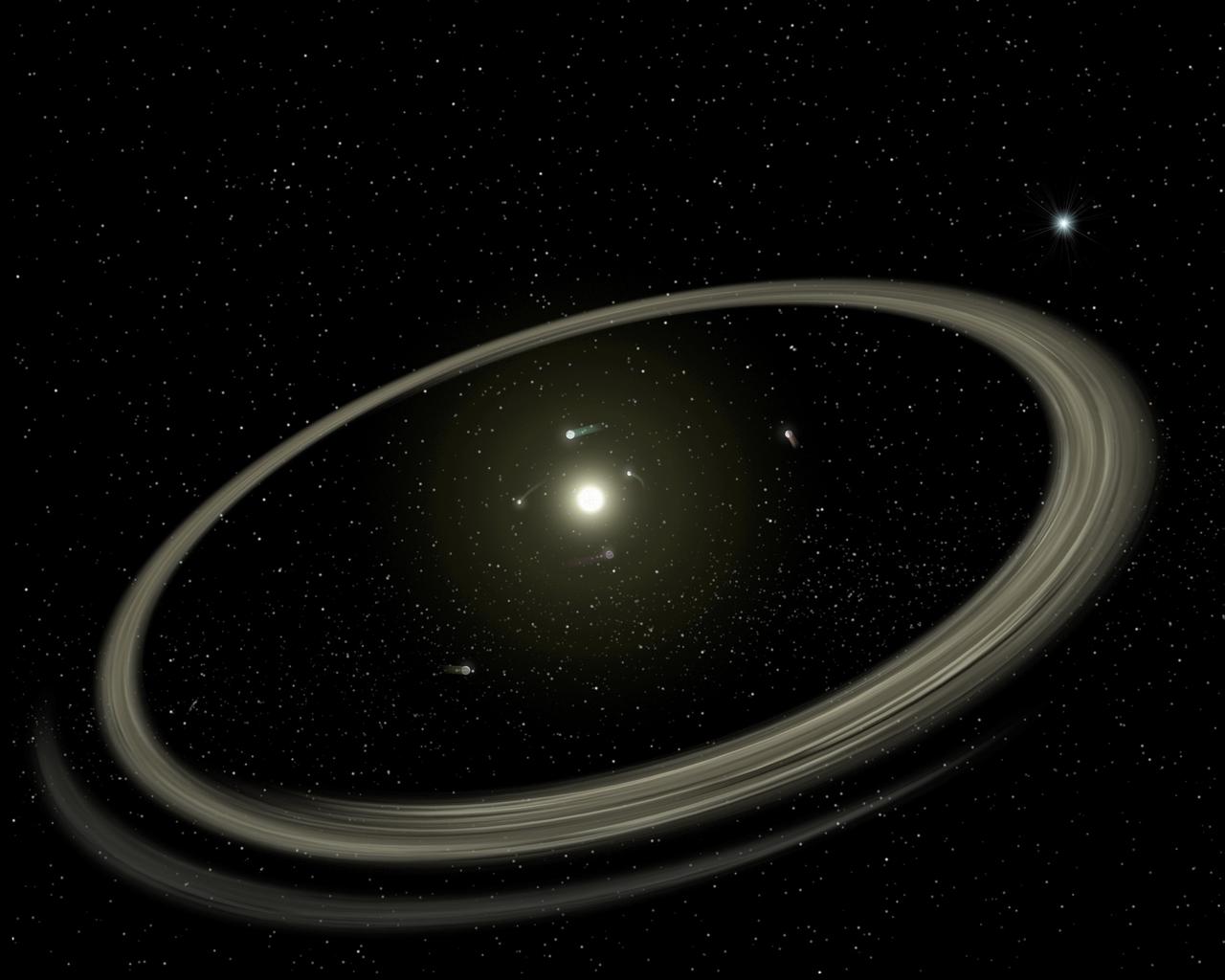
The Rocky World of Young Planetary Systems Artist Concept
This artist concept illustrates how planetary systems arise out of massive collisions between rocky bodies. NASA Spitzer Space Telescope show that these catastrophes continue to occur around stars…
Inspect NASA record
This artist concept illustrates how planetary systems arise out of massive collisions between rocky bodies. NASA Spitzer Space Telescope show that these catastrophes continue to occur around stars even after they have developed full-sized planets.
- Record ID
- PIA06939
- NASA center
- JPL
- Date
- 2004-10-18
- Credit
- NASA/JPL-Caltech
- Keywords
- Spitzer Space Telescope