
Update Site (from NASA)
Explore NASA’s Image and Video Library.
Suggest one object per day for the Interstellar Minds collection. We review each suggestion before adding it.
Sign in to suggest a Marvel.
Find a NASA image ID. Open a NASA record and copy its ID from the end of the details URL.
NASA image records
JPL · 2025-02-11 · PIA26428
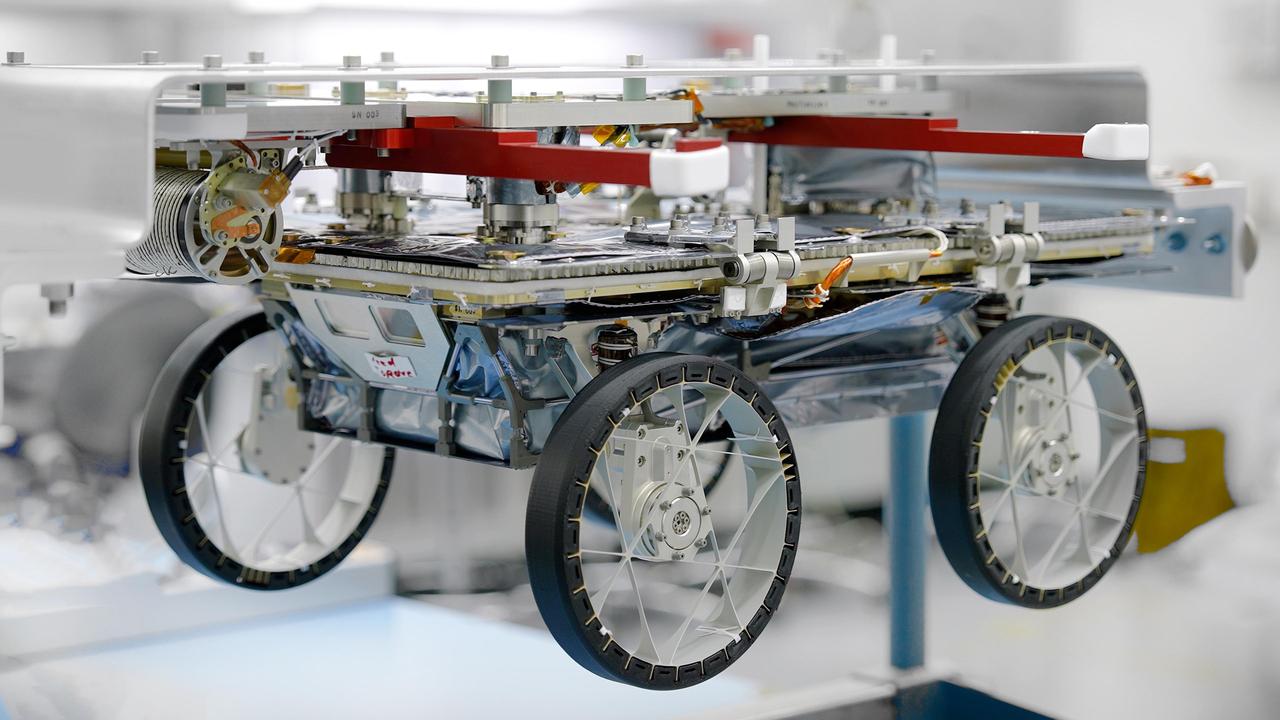
CADRE Rover Awaits Shipping
One of three small lunar rovers that are part of a NASA technology demonstration called CADRE (Cooperative Autonomous Distributed Robotic Exploration) is attached to a fixture in a…
Inspect NASA record
One of three small lunar rovers that are part of a NASA technology demonstration called CADRE (Cooperative Autonomous Distributed Robotic Exploration) is attached to a fixture in a clean room at the agency's Jet Propulsion Laboratory in Southern California on Jan. 29, 2025. Less than two weeks later, the rover had been packed up and shipped off in preparation for launch. CADRE aims to prove that a group of robots can collaborate to gather data without receiving direct commands from mission controllers on Earth. Its trio of rovers will use their cameras and ground-penetrating radars to send back imagery of the lunar surface and subsurface while testing out the novel software systems that enable them to work together as a team autonomously. Before embarking on the first leg of a multistage journey to the Moon, each rover was mated to its deployer system, which will lower it via tether from an Intuitive Machines lander onto the dusty lunar surface. Engineers flipped each rover-deployer pair over and attached it to an aluminum plate for safe transit. The rovers were then sealed into protective metal-frame enclosures that were fitted snuggly into metal shipping containers and loaded onto a truck for the drive to Intuitive Machines' Houston facility. A division of Caltech in Pasadena, California, JPL manages CADRE for the Game Changing Development program within NASA's Space Technology Mission Directorate in Washington. The technology demonstration was selected under the agency's Lunar Surface Innovation Initiative, which was established to expedite the development of technologies for sustained presence on the lunar surface. CADRE will launch as a payload on the third lunar lander mission by Intuitive Machines, called IM-3, under NASA's CLPS (Commercial Lunar Payload Services) initiative, which is managed by the agency's Science Mission Directorate, also in Washington. The agency's Glenn Research Center in Cleveland and its Ames Research Center in Silicon Valley, California, both supported the project. Motiv Space Systems designed and built key hardware elements at the company's Pasadena facility. Clemson University in South Carolina contributed research in support of the project. For more about CADRE, go to: https://go.nasa.gov/cadre https://photojournal.jpl.nasa.gov/catalog/PIA26428
- Record ID
- PIA26428
- NASA center
- JPL
- Date
- 2025-02-11
- Credit
- NASA/JPL-Caltech
- Keywords
- CADRE
JPL · 2025-02-11 · PIA26426
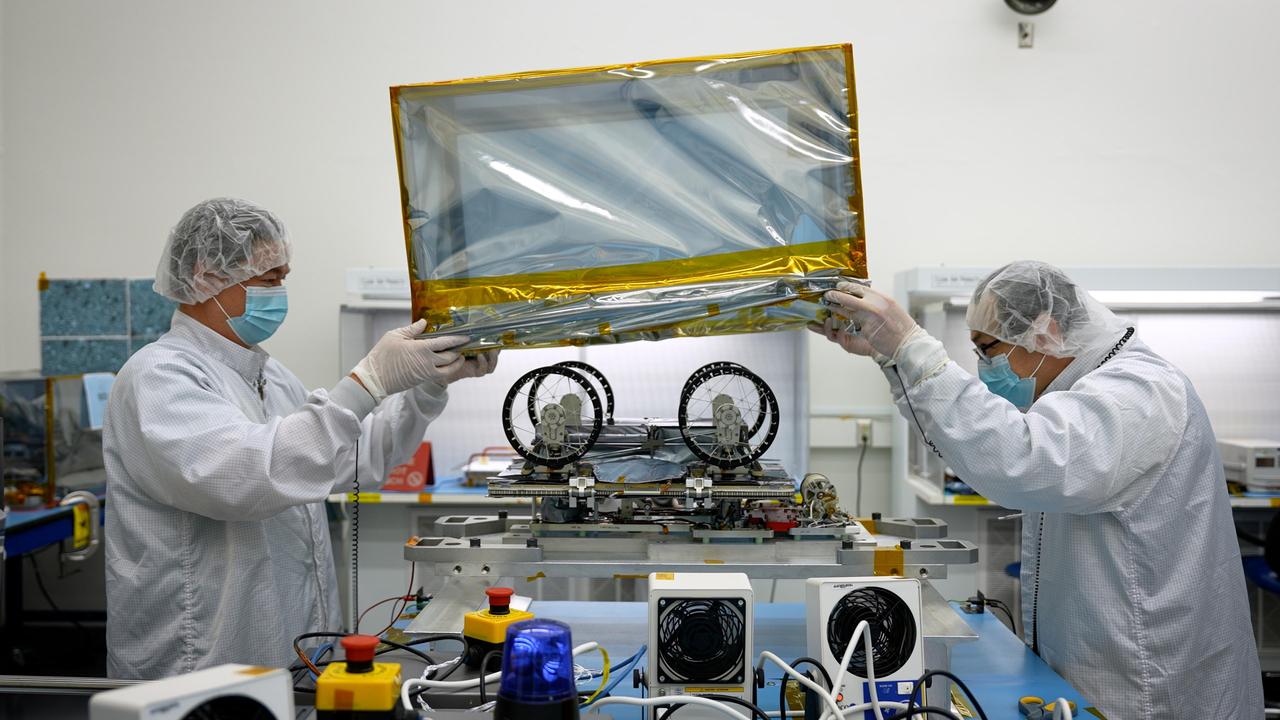
Packing Up a CADRE Rover
Engineers and technicians prepare one of three small lunar rovers that are part of a NASA technology demonstration called CADRE (Cooperative Autonomous Distributed Robotic Exploration). Mechanical engineer Kristopher…
Inspect NASA record
Engineers and technicians prepare one of three small lunar rovers that are part of a NASA technology demonstration called CADRE (Cooperative Autonomous Distributed Robotic Exploration). Mechanical engineer Kristopher Sherrill, left, and technician Leroy Montalvo lower an enclosure over the upside-down rover in a clean room at the agency's Jet Propulsion Laboratory in Southern California on Jan. 29, 2025. CADRE aims to prove that a group of robots can collaborate to gather data without receiving direct commands from mission controllers on Earth. Its trio of rovers will use their cameras and ground-penetrating radars to send back imagery of the lunar surface and subsurface while testing out the novel software systems that enable them to work together as a team autonomously. Before embarking on the first leg of a multistage journey to the Moon, each rover was mated to its deployer system, which will lower it via tether from an Intuitive Machines lander onto the dusty lunar surface. Engineers flipped each rover-deployer pair over and attached it to an aluminum plate for safe transit. The rovers were then sealed into protective metal-frame enclosures that were fitted snuggly into metal shipping containers and loaded onto a truck for the drive to Intuitive Machines' Houston facility. A division of Caltech in Pasadena, California, JPL manages CADRE for the Game Changing Development program within NASA's Space Technology Mission Directorate in Washington. The technology demonstration was selected under the agency's Lunar Surface Innovation Initiative, which was established to expedite the development of technologies for sustained presence on the lunar surface. CADRE will launch as a payload on the third lunar lander mission by Intuitive Machines, called IM-3, under NASA's CLPS (Commercial Lunar Payload Services) initiative, which is managed by the agency's Science Mission Directorate, also in Washington. The agency's Glenn Research Center in Cleveland and its Ames Research Center in Silicon Valley, California, both supported the project. Motiv Space Systems designed and built key hardware elements at the company's Pasadena facility. Clemson University in South Carolina contributed research in support of the project. For more about CADRE, go to: https://go.nasa.gov/cadre https://photojournal.jpl.nasa.gov/catalog/PIA26426
- Record ID
- PIA26426
- NASA center
- JPL
- Date
- 2025-02-11
- Credit
- NASA/JPL-Caltech
- Keywords
- CADRE
KSC · 2022-11-08 · KSC-20221108-PH-KLS01_0053
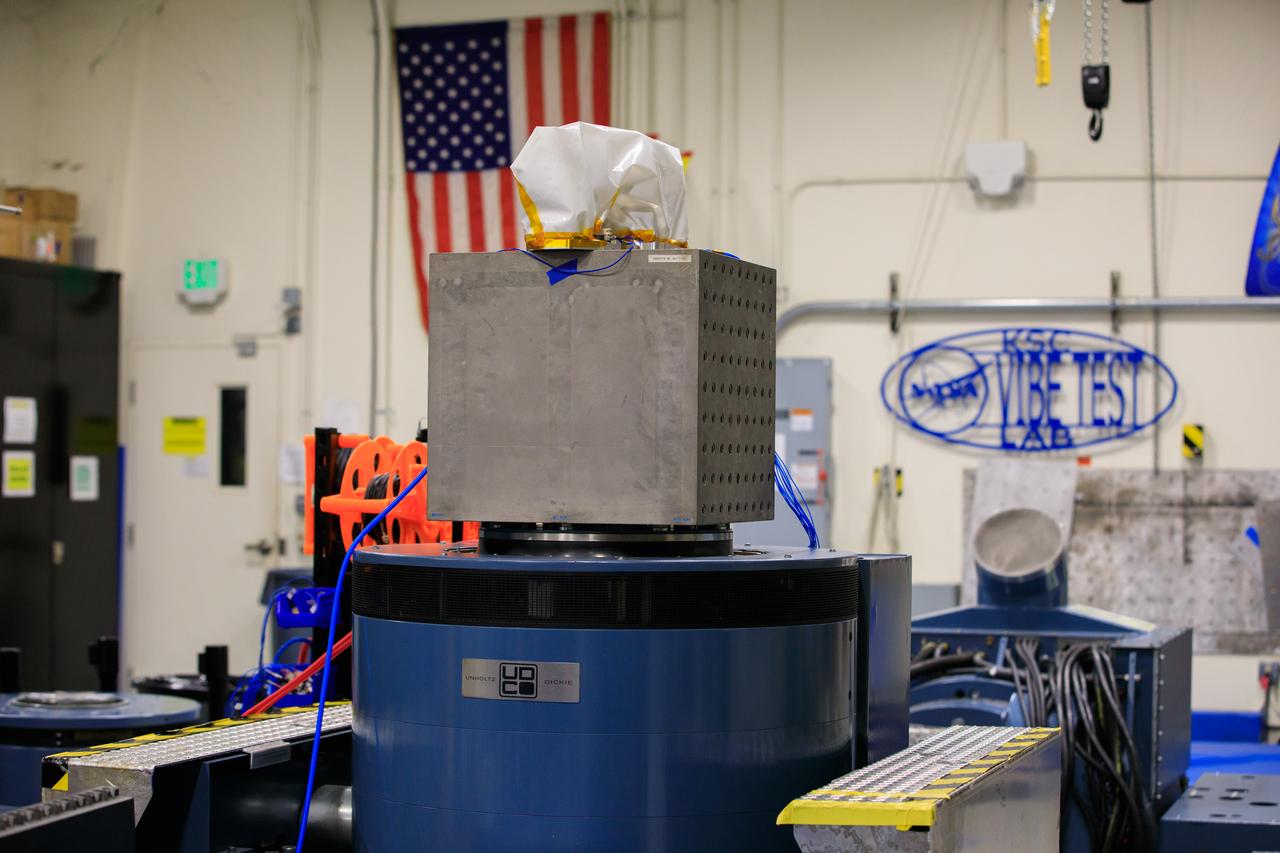
VIPER MSolo Vibe Test
The Mass Spectrometer Observing Lunar Operations (MSolo) for NASA’s VIPER mission is being prepared for a vibration test inside a laboratory in the Neil Armstrong Operations and Checkout…
Inspect NASA record
The Mass Spectrometer Observing Lunar Operations (MSolo) for NASA’s VIPER mission is being prepared for a vibration test inside a laboratory in the Neil Armstrong Operations and Checkout Building at NASA’s Kennedy Space Center in Florida on Nov. 8, 2022. Exposing the instrument to vibration environments that it might see during launch helps engineers to find issues prior to liftoff. MSolo is a commercial off-the-shelf mass spectrometer modified to work in space and it will help analyze the chemical makeup of landing sites on the Moon, as well as study water on the lunar surface. MSolo will be part of NASA’s first Commercial Lunar Payload Delivery Service (CLPS) mission where under the Artemis program, commercial deliveries will be used to perform science experiments, test technologies and demonstrate capabilities to help NASA explore the Moon and prepare for human missions.
- Record ID
- KSC-20221108-PH-KLS01_0053
- NASA center
- KSC
- Date
- 2022-11-08
- Credit
- NASA/Kim Shiflett
- Keywords
- CLPS, KSC, Kennedy Space Center, MSolo, Mass Spectrometer Observing Lunar Operations, NASA, Science, VIPER, Volatiles Investigating Polar Exploration Rover, lunar, lunar instruments, moon
KSC · 2023-02-21 · KSC-20230221-PH-KLS01_0104
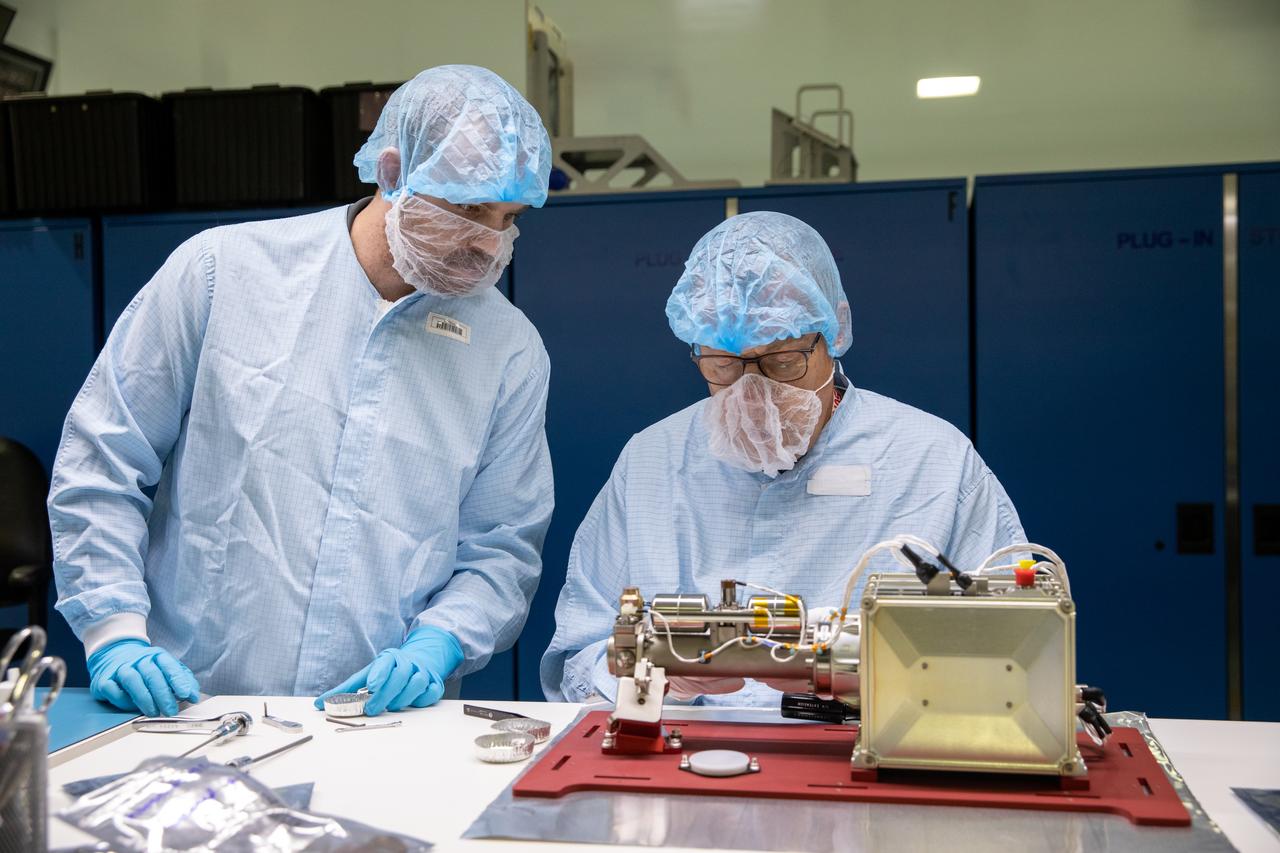
VIPER MSolo Preparation for Packing
Technicians prepare the Mass Spectrometer Observing Lunar Operations (MSolo) for NASA’s Volatile Investigating Polar Exploration Rover (VIPER) mission for packing inside a laboratory in the Space Station Processing…
Inspect NASA record
Technicians prepare the Mass Spectrometer Observing Lunar Operations (MSolo) for NASA’s Volatile Investigating Polar Exploration Rover (VIPER) mission for packing inside a laboratory in the Space Station Processing Facility at NASA’s Kennedy Space Center in Florida on Feb. 21, 2023. MSolo will be shipped to Johnson Space Center in Houston for integration into VIPER. MSolo is a commercial off-the-shelf mass spectrometer modified to work in space and it will help analyze the chemical makeup of landing sites on the Moon, as well as study water on the lunar surface. MSolo will be part of NASA’s first Commercial Lunar Payload Delivery Service (CLPS) mission where under the Artemis program, commercial deliveries will be used to perform science experiments, test technologies, and demonstrate capabilities to help NASA explore the Moon and prepare for human missions. VIPER is scheduled to be delivered to the Moon’s South Pole in late 2024 by Astrobotic’s Griffin lander as part of the CLPS initiative.
- Record ID
- KSC-20230221-PH-KLS01_0104
- NASA center
- KSC
- Date
- 2023-02-21
- Credit
- NASA/Kim Shiflett
- Keywords
- CLPS, KSC, Kennedy Space Center, Mass Spectrometer Observing Lunar Operations, Moon, Msolo, NASA, VIPER, Volatiles Investigating Polar Exploration Rover, lunar, lunar instruments, science
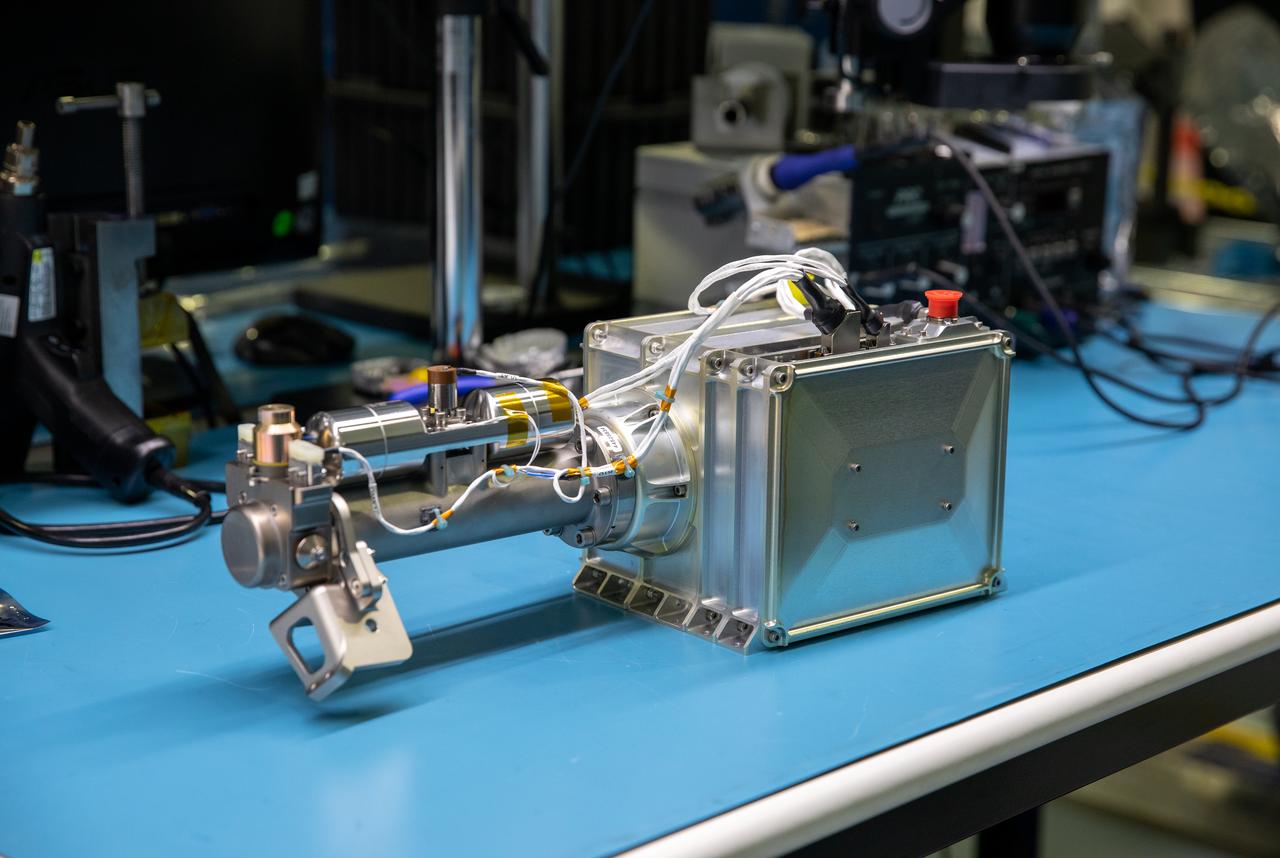
KSC · 2023-02-21 · KSC-20230221-PH-KLS01_0016
VIPER MSolo Preparation for Packing
The Mass Spectrometer Observing Lunar Operations (MSolo) for NASA’s Volatile Investigating Polar Exploration Rover (VIPER) mission is prepared for packing inside a laboratory in the Space Station Processing…
Inspect NASA record
The Mass Spectrometer Observing Lunar Operations (MSolo) for NASA’s Volatile Investigating Polar Exploration Rover (VIPER) mission is prepared for packing inside a laboratory in the Space Station Processing Facility at NASA’s Kennedy Space Center in Florida on Feb. 21, 2023. MSolo will be shipped to Johnson Space Center in Houston for integration into VIPER. MSolo is a commercial off-the-shelf mass spectrometer modified to work in space and it will help analyze the chemical makeup of landing sites on the Moon, as well as study water on the lunar surface. MSolo will be part of NASA’s first Commercial Lunar Payload Delivery Service (CLPS) mission where under the Artemis program, commercial deliveries will be used to perform science experiments, test technologies, and demonstrate capabilities to help NASA explore the Moon and prepare for human missions. VIPER is scheduled to be delivered to the Moon’s South Pole in late 2024 by Astrobotic’s Griffin lander as part of the CLPS initiative.
- Record ID
- KSC-20230221-PH-KLS01_0016
- NASA center
- KSC
- Date
- 2023-02-21
- Credit
- NASA/Kim Shiflett
- Keywords
- CLPS, KSC, Kennedy Space Center, Mass Spectrometer Observing Lunar Operations, Moon, Msolo, NASA, VIPER, Volatiles Investigating Polar Exploration Rover, lunar, lunar instruments, science
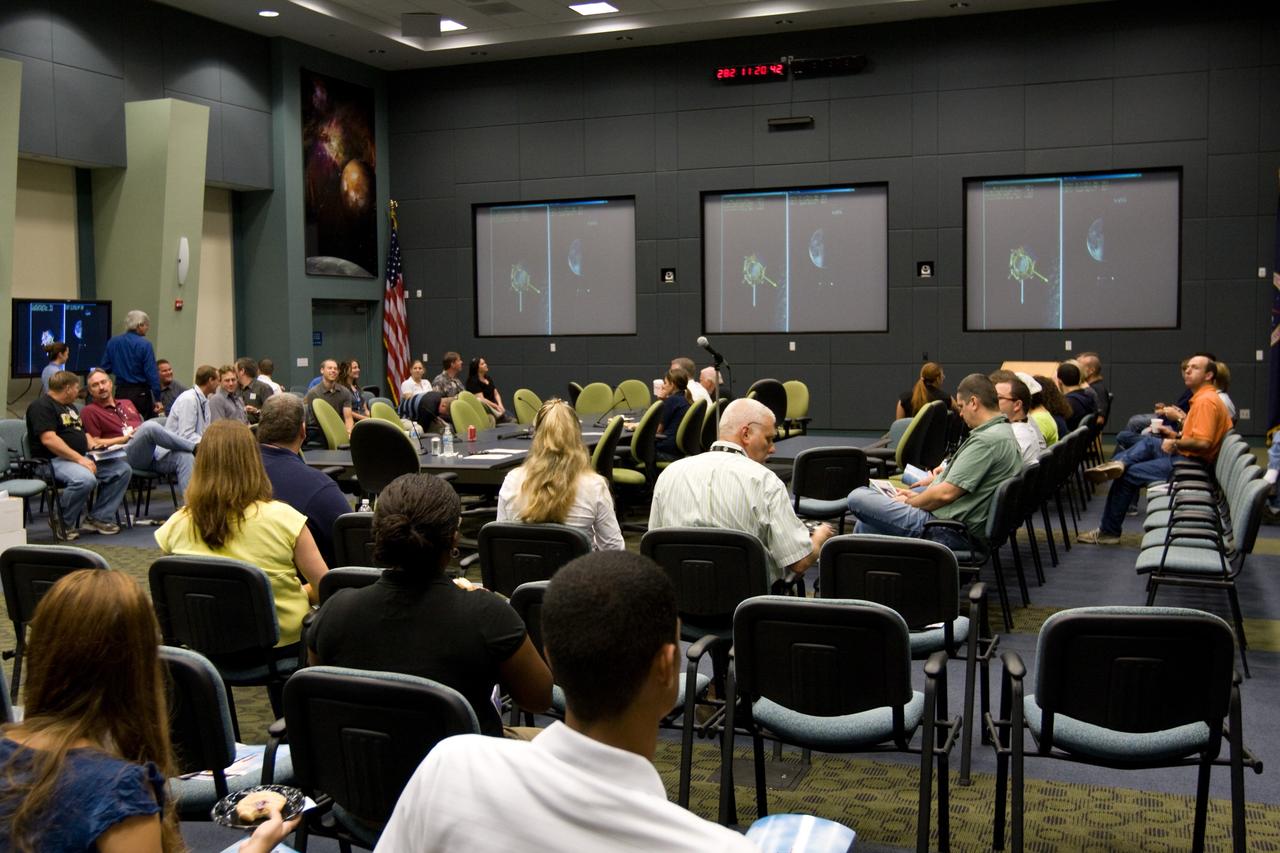
KSC · 2009-10-09 · KSC-2009-5400
KSC-2009-5400
CAPE CANAVERAL, Fla. – Employees at NASA's Kennedy Space Center take advantage of an early morning opportunity to watch the Lunar Crater Observation and Sensing Satellite, or LCROSS,…
Inspect NASA record
CAPE CANAVERAL, Fla. – Employees at NASA's Kennedy Space Center take advantage of an early morning opportunity to watch the Lunar Crater Observation and Sensing Satellite, or LCROSS, and its spent Centaur upper stage impact the lunar surface live on NASA Television. The employees seen here are in the 5th Floor Conference Room of Operations Support Building II; another group of employees viewed the impact on screens in the Operations and Checkout Building's Mission Briefing Room. The employee event was sponsored by the NASA Exchange, the External Relations Directorate and KSC Launching Leaders. The goal of the LCROSS mission is to search for water ice on the moon, in support of future human lunar exploration. For additional information on the LCROSS mission, visit http://www.nasa.gov/LCROSS. Photo credit: NASA/Dimitri Gerondidakis
- Record ID
- KSC-2009-5400
- NASA center
- KSC
- Date
- 2009-10-09
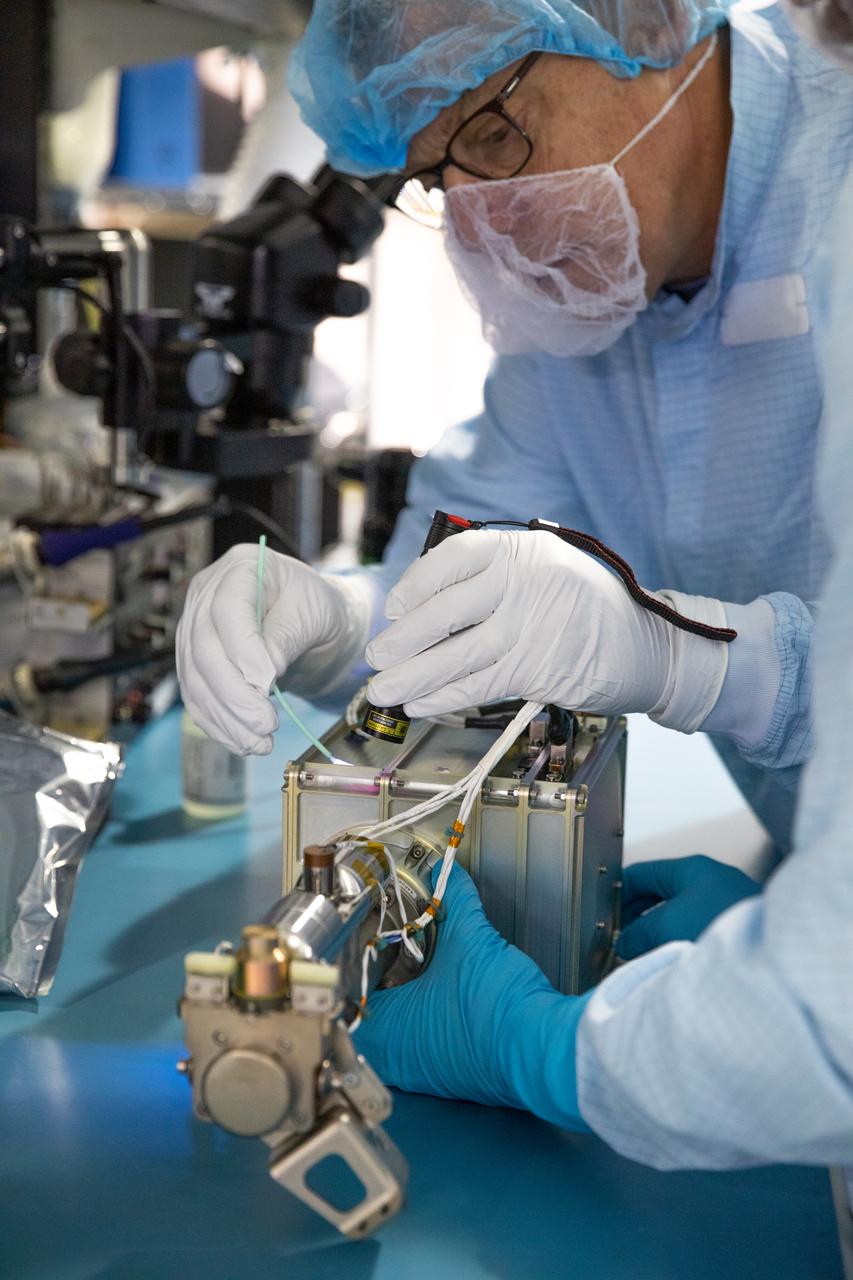
KSC · 2023-02-21 · KSC-20230221-PH-KLS01_0029
VIPER MSolo Preparation for Packing
Technicians prepare the Mass Spectrometer Observing Lunar Operations (MSolo) for NASA’s Volatile Investigating Polar Exploration Rover (VIPER) mission for packing inside a laboratory in the Space Station Processing…
Inspect NASA record
Technicians prepare the Mass Spectrometer Observing Lunar Operations (MSolo) for NASA’s Volatile Investigating Polar Exploration Rover (VIPER) mission for packing inside a laboratory in the Space Station Processing Facility at NASA’s Kennedy Space Center in Florida on Feb. 21, 2023. MSolo will be shipped to Johnson Space Center in Houston for integration into VIPER. MSolo is a commercial off-the-shelf mass spectrometer modified to work in space and it will help analyze the chemical makeup of landing sites on the Moon, as well as study water on the lunar surface. MSolo will be part of NASA’s first Commercial Lunar Payload Delivery Service (CLPS) mission where under the Artemis program, commercial deliveries will be used to perform science experiments, test technologies, and demonstrate capabilities to help NASA explore the Moon and prepare for human missions. VIPER is scheduled to be delivered to the Moon’s South Pole in late 2024 by Astrobotic’s Griffin lander as part of the CLPS initiative.
- Record ID
- KSC-20230221-PH-KLS01_0029
- NASA center
- KSC
- Date
- 2023-02-21
- Credit
- NASA/Kim Shiflett
- Keywords
- CLPS, KSC, Kennedy Space Center, Mass Spectrometer Observing Lunar Operations, Moon, Msolo, NASA, VIPER, Volatiles Investigating Polar Exploration Rover, lunar, lunar instruments, science
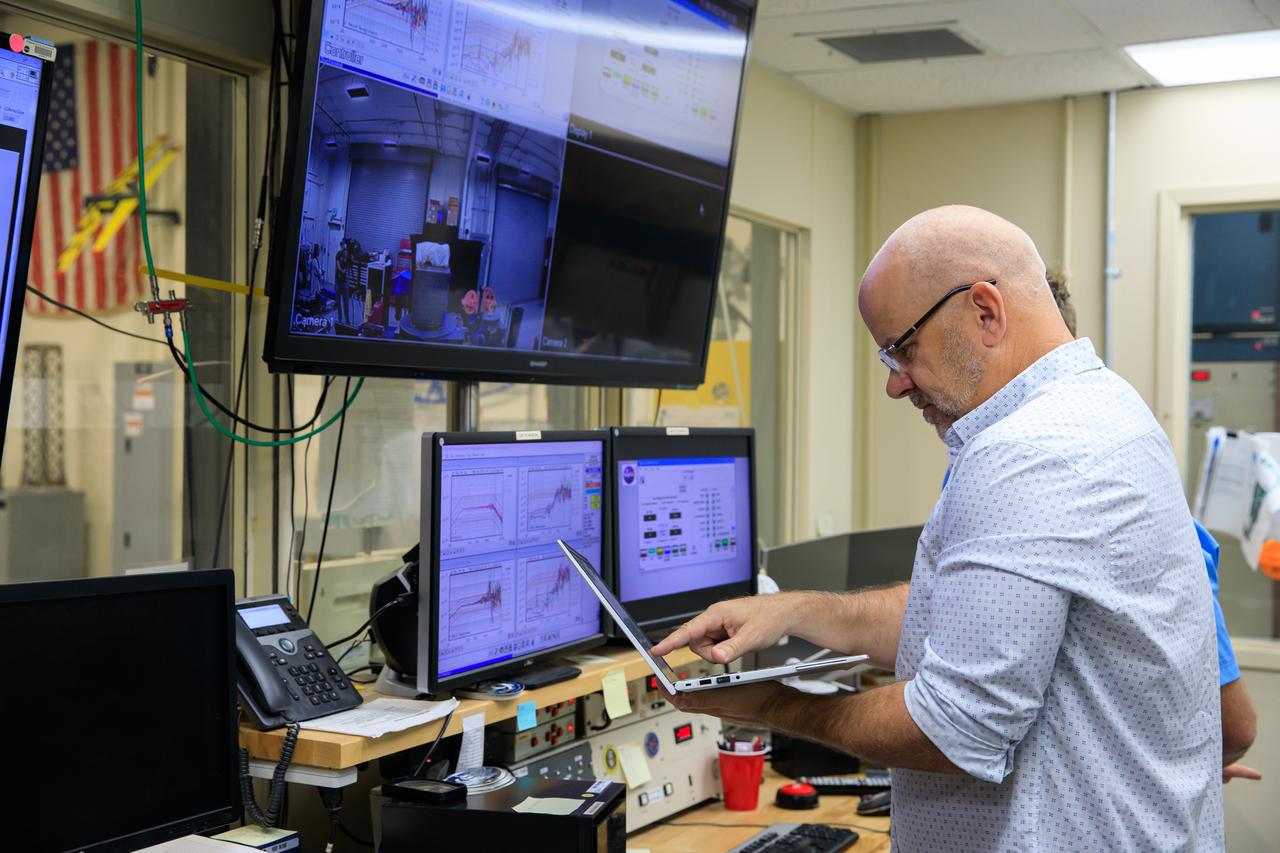
KSC · 2022-11-08 · KSC-20221108-PH-KLS01_0008
VIPER MSolo Vibe Test
Preparations are underway to conduct a vibration test on the Mass Spectrometer Observing Lunar Operations (MSolo) for NASA’s VIPER mission inside a laboratory in the Neil Armstrong Operations…
Inspect NASA record
Preparations are underway to conduct a vibration test on the Mass Spectrometer Observing Lunar Operations (MSolo) for NASA’s VIPER mission inside a laboratory in the Neil Armstrong Operations and Checkout Building at NASA’s Kennedy Space Center in Florida on Nov. 8, 2022. Exposing the instrument to vibration environments that it might see during launch helps engineers to find issues prior to liftoff. MSolo is a commercial off-the-shelf mass spectrometer modified to work in space and it will help analyze the chemical makeup of landing sites on the Moon, as well as study water on the lunar surface. MSolo will be part of NASA’s first Commercial Lunar Payload Delivery Service (CLPS) mission where under the Artemis program, commercial deliveries will be used to perform science experiments, test technologies and demonstrate capabilities to help NASA explore the Moon and prepare for human missions.
- Record ID
- KSC-20221108-PH-KLS01_0008
- NASA center
- KSC
- Date
- 2022-11-08
- Credit
- NASA/Kim Shiflett
- Keywords
- CLPS, KSC, Kennedy Space Center, MSolo, Mass Spectrometer Observing Lunar Operations, NASA, Science, VIPER, Volatiles Investigating Polar Exploration Rover, lunar, lunar instruments, moon
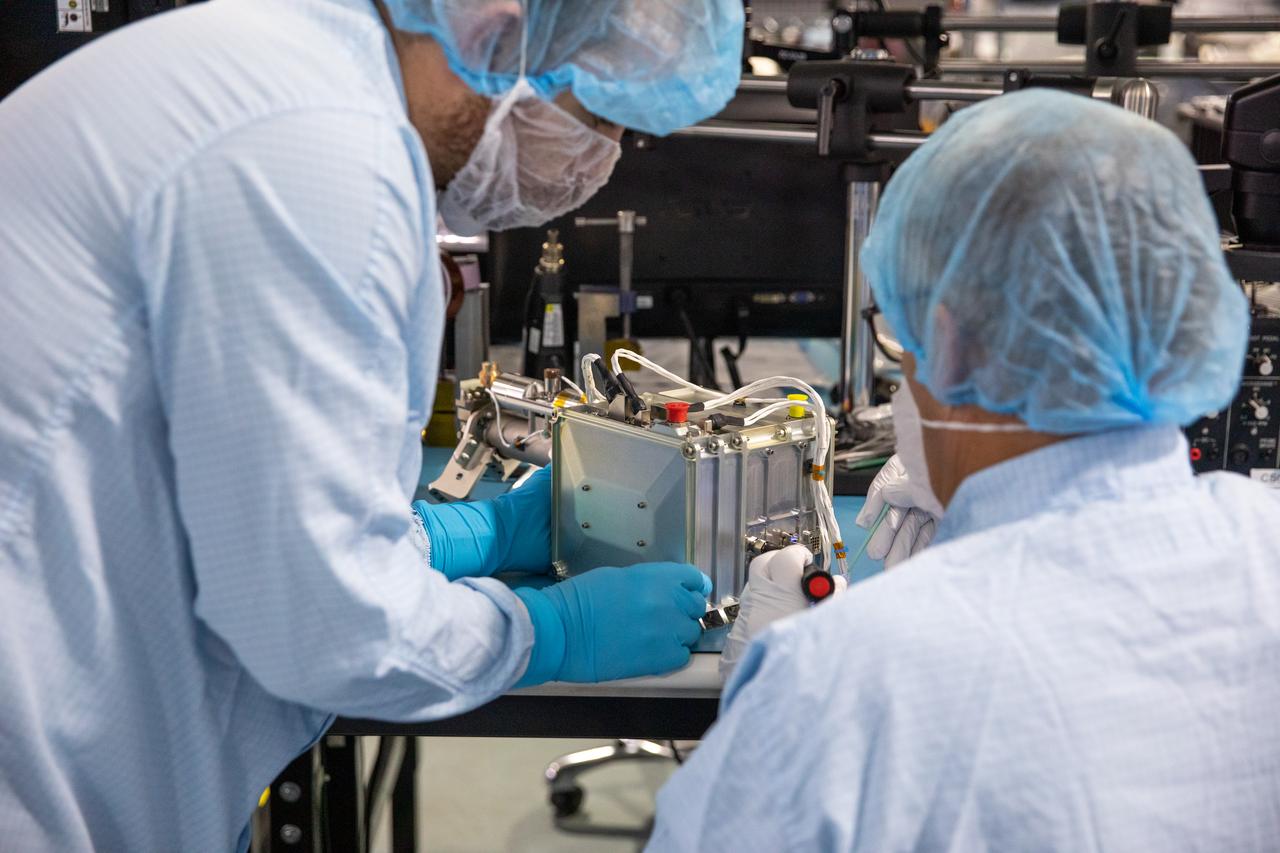
KSC · 2023-02-21 · KSC-20230221-PH-KLS01_0064
VIPER MSolo Preparation for Packing
Technicians prepare the Mass Spectrometer Observing Lunar Operations (MSolo) for NASA’s Volatile Investigating Polar Exploration Rover (VIPER) mission for packing inside a laboratory in the Space Station Processing…
Inspect NASA record
Technicians prepare the Mass Spectrometer Observing Lunar Operations (MSolo) for NASA’s Volatile Investigating Polar Exploration Rover (VIPER) mission for packing inside a laboratory in the Space Station Processing Facility at NASA’s Kennedy Space Center in Florida on Feb. 21, 2023. MSolo will be shipped to Johnson Space Center in Houston for integration into VIPER. MSolo is a commercial off-the-shelf mass spectrometer modified to work in space and it will help analyze the chemical makeup of landing sites on the Moon, as well as study water on the lunar surface. MSolo will be part of NASA’s first Commercial Lunar Payload Delivery Service (CLPS) mission where under the Artemis program, commercial deliveries will be used to perform science experiments, test technologies, and demonstrate capabilities to help NASA explore the Moon and prepare for human missions. VIPER is scheduled to be delivered to the Moon’s South Pole in late 2024 by Astrobotic’s Griffin lander as part of the CLPS initiative.
- Record ID
- KSC-20230221-PH-KLS01_0064
- NASA center
- KSC
- Date
- 2023-02-21
- Credit
- NASA/Kim Shiflett
- Keywords
- CLPS, KSC, Kennedy Space Center, Mass Spectrometer Observing Lunar Operations, Moon, Msolo, NASA, VIPER, Volatiles Investigating Polar Exploration Rover, lunar, lunar instruments, science
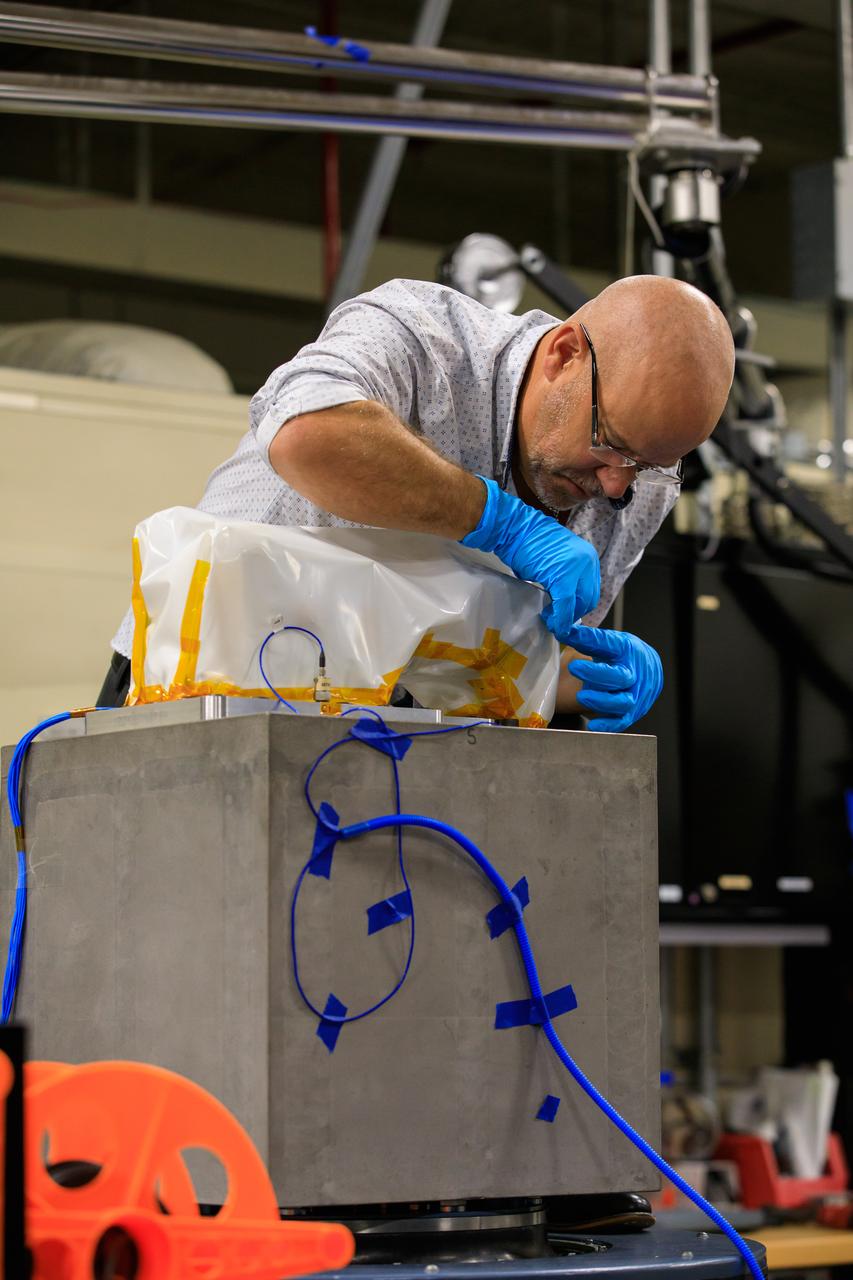
KSC · 2022-11-08 · KSC-20221108-PH-KLS01_0044
VIPER MSolo Vibe Test
Preparations are underway to conduct a vibration test on the Mass Spectrometer Observing Lunar Operations (MSolo) for NASA’s VIPER mission inside a laboratory in the Neil Armstrong Operations…
Inspect NASA record
Preparations are underway to conduct a vibration test on the Mass Spectrometer Observing Lunar Operations (MSolo) for NASA’s VIPER mission inside a laboratory in the Neil Armstrong Operations and Checkout Building at NASA’s Kennedy Space Center in Florida on Nov. 8, 2022. Exposing the instrument to vibration environments that it might see during launch helps engineers to find issues prior to liftoff. MSolo is a commercial off-the-shelf mass spectrometer modified to work in space and it will help analyze the chemical makeup of landing sites on the Moon, as well as study water on the lunar surface. MSolo will be part of NASA’s first Commercial Lunar Payload Delivery Service (CLPS) mission where under the Artemis program, commercial deliveries will be used to perform science experiments, test technologies and demonstrate capabilities to help NASA explore the Moon and prepare for human missions.
- Record ID
- KSC-20221108-PH-KLS01_0044
- NASA center
- KSC
- Date
- 2022-11-08
- Credit
- NASA/Kim Shiflett
- Keywords
- CLPS, KSC, Kennedy Space Center, MSolo, Mass Spectrometer Observing Lunar Operations, NASA, Science, VIPER, Volatiles Investigating Polar Exploration Rover, lunar, lunar instruments, moon

JSC · 1969-11-14 · S69-58884
APOLLO XII - LAUNCH DAY ACTIVITIES - LAUNCH COMPLEX 39A - KSC
S69-58884 (14 Nov. 1969) --- The huge, 363-feet tall Apollo 12 (Spacecraft 108/Lunar Module 6/Saturn 507) space vehicle is launched from Pad A, Launch Complex 39, Kennedy Space…
Inspect NASA record
S69-58884 (14 Nov. 1969) --- The huge, 363-feet tall Apollo 12 (Spacecraft 108/Lunar Module 6/Saturn 507) space vehicle is launched from Pad A, Launch Complex 39, Kennedy Space Center (KSC), at 11:22 a.m. (EST), Nov. 14, 1969. Aboard the Apollo 12 spacecraft were astronauts Charles Conrad Jr., commander; Richard F. Gordon Jr., command module pilot; and Alan L. Bean, lunar module pilot. Apollo 12 is the United States' second lunar landing mission.
- Record ID
- S69-58884
- NASA center
- JSC
- Date
- 1969-11-14