
Update Site (from NASA)
Explore NASA’s Image and Video Library.
Suggest one object per day for the Interstellar Minds collection. We review each suggestion before adding it.
Sign in to suggest a Marvel.
Find a NASA image ID. Open a NASA record and copy its ID from the end of the details URL.
NASA image records
JPL · 2022-06-22 · PIA25256
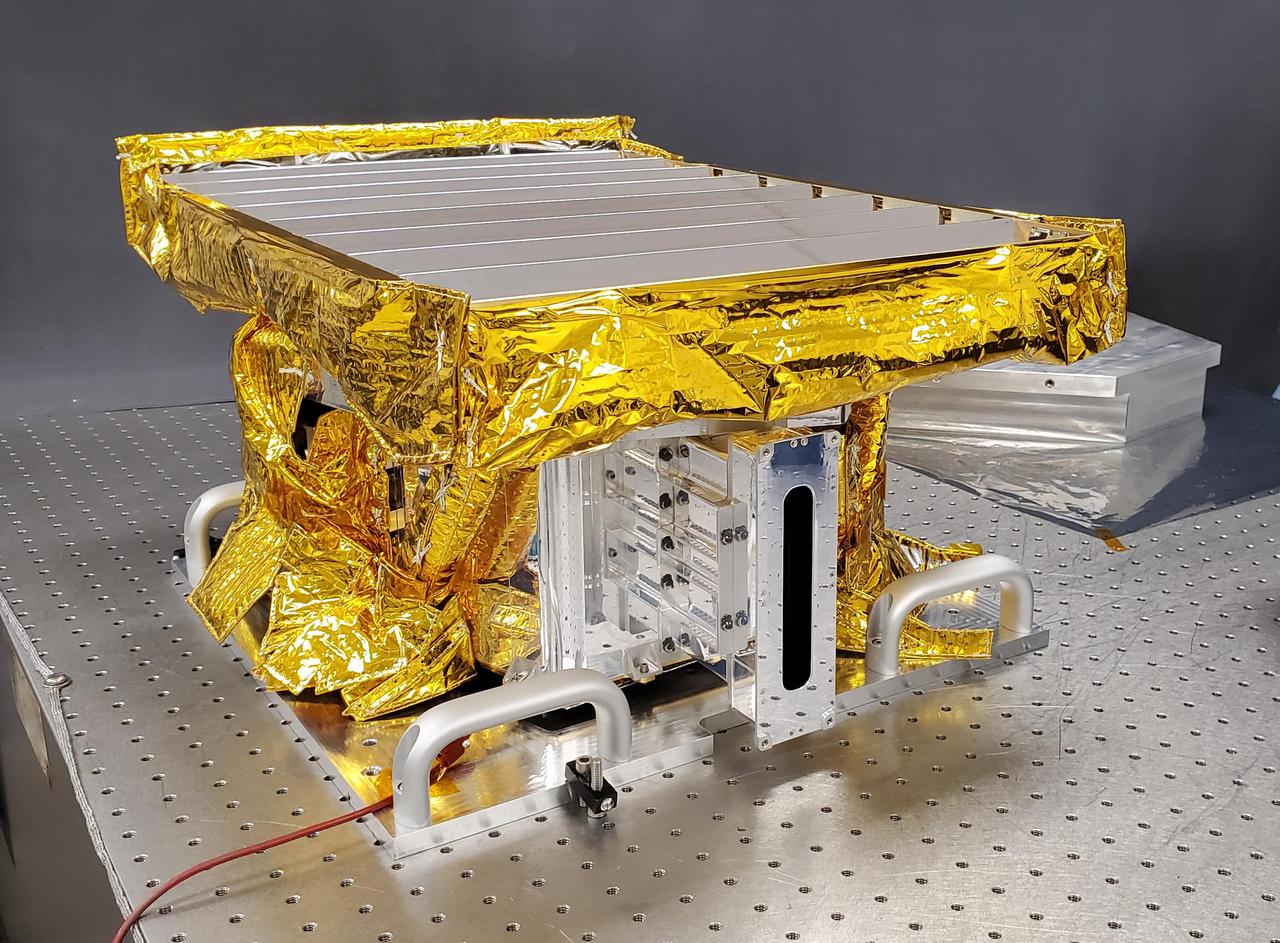
Lunar Trailblazer's HVM³ Imaging Spectrometer Before Spacecraft Integration
The High-resolution Volatiles and Minerals Moon Mapper (HVM³) sits in a clean room at NASA's Jet Propulsion Laboratory in Southern California in early December 2022. The JPL-built instrument…
Inspect NASA record
The High-resolution Volatiles and Minerals Moon Mapper (HVM³) sits in a clean room at NASA's Jet Propulsion Laboratory in Southern California in early December 2022. The JPL-built instrument was later shipped to Lockheed Martin Space in Littleton, Colorado, to be integrated with NASA's Lunar Trailblazer spacecraft. HVM³ is an imaging spectrometer that will detect and map water on the Moon's surface to determine its abundance, location, form, and how it changes over time. A second instrument, the Lunar Thermal Mapper infrared multispectral imager, is being developed by the University of Oxford in the U.K. and is scheduled for delivery and integration in early 2023. Lunar Trailblazer was selected under NASA's Small Innovative Missions for Planetary Exploration (SIMPLEx) program in 2019. The Lunar Trailblazer mission is managed by JPL and its science investigation is led by Caltech in Pasadena, California. Managed for NASA by Caltech, JPL also provides system engineering, mission assurance, the HVM³ instrument, as well as navigation. Lockheed Martin Space provides the spacecraft and integrates the flight system, under contract with Caltech. SIMPLEx mission investigations are managed by the Planetary Missions Program Office at NASA's Marshall Space Flight Center in Huntsville, Alabama, as part of the Discovery Program at NASA Headquarters in Washington. The program conducts space science investigations in the Planetary Science Division of NASA's Science Mission Directorate at NASA Headquarters. https://photojournal.jpl.nasa.gov/catalog/PIA25256
- Record ID
- PIA25256
- NASA center
- JPL
- Date
- 2022-06-22
- Credit
- NASA/JPL-Caltech
- Keywords
- Lunar Trailblazer
MSFC · 1970-11-17 · 7012082
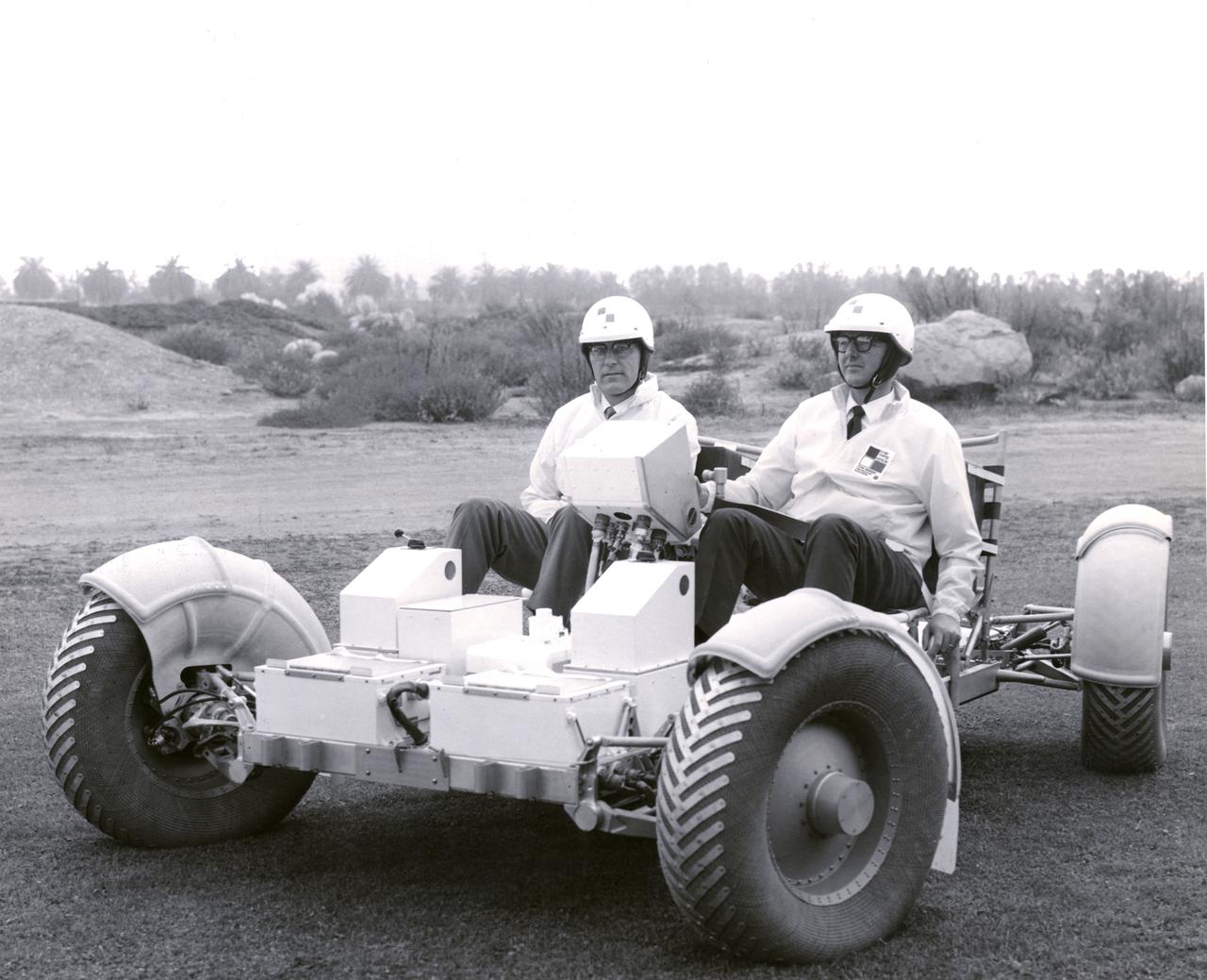
Saturn Apollo Program
Delco engineers are operating this Lunar Roving Vehicle (LRV) Trainer. Built by by Delco Electronics Division of the General Motors Corporation, the trainer was shipped to NASA’s Manned…
Inspect NASA record
Delco engineers are operating this Lunar Roving Vehicle (LRV) Trainer. Built by by Delco Electronics Division of the General Motors Corporation, the trainer was shipped to NASA’s Manned Spacecraft Center in Houston, Texas for an astronaut training program. Under the direction of Marshall Space Flight Center (MSFC), the LRV was designed to allow Apollo astronauts a greater range of mobility during lunar exploration missions. The LRVs were deployed during the last three Apollo missions; Apollo 15, Apollo 16, and Apollo 17.
- Record ID
- 7012082
- NASA center
- MSFC
- Date
- 1970-11-17
- Keywords
- Lunar Roving Vehicle, LRV, Trainer, Delco

HQ · 2026-04-06 · jsc2026e021376
jsc2026e021376
jsc2026e021376 (April 6, 2026) - Nicky Fox, associate administrator for NASA's Science Mission Directorate and Brad Bailey, assistant deputy associate administrator for exploration, observe and celebrate a successful…
Inspect NASA record
jsc2026e021376 (April 6, 2026) - Nicky Fox, associate administrator for NASA's Science Mission Directorate and Brad Bailey, assistant deputy associate administrator for exploration, observe and celebrate a successful lunar flyby with the Artemis II lunar science team in the Science Evaluation Room in Mission Control at NASA's Johnson Space Center in Houston. Credits: NASA/Luna Posadas Nava
- Record ID
- jsc2026e021376
- NASA center
- HQ
- Date
- 2026-04-06
- Credit
- NASA/PHOTO_ LUNA_POSADAS_N
JSC · 1972-12-07 · as17-162-24050
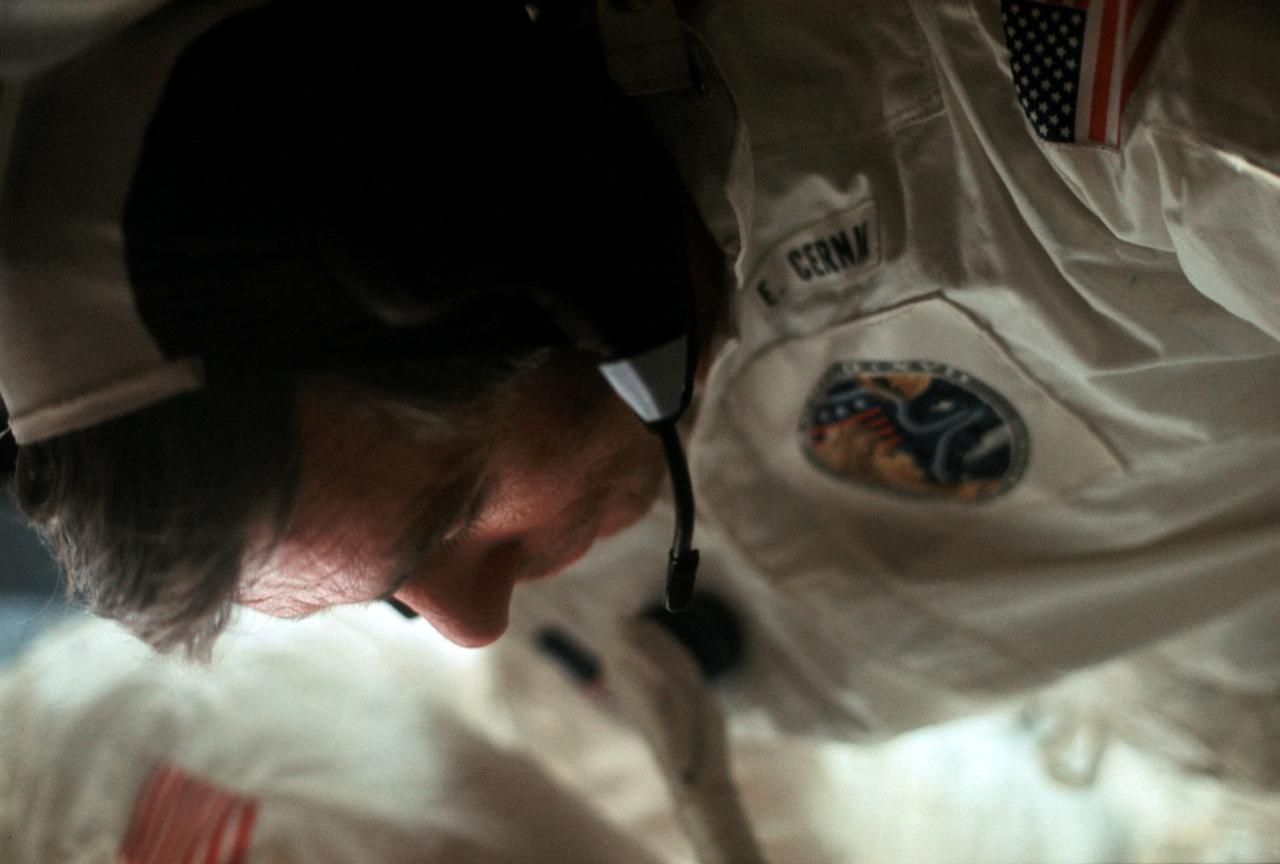
Apollo 17,Eugene A. Cernan inside the Command Module
AS17-162-24050 (7-19 Dec. 1972) --- Astronaut Eugene A. Cernan appears to be relaxing in this candid photograph taken by a fellow crewman aboard the Apollo 17 spacecraft during…
Inspect NASA record
AS17-162-24050 (7-19 Dec. 1972) --- Astronaut Eugene A. Cernan appears to be relaxing in this candid photograph taken by a fellow crewman aboard the Apollo 17 spacecraft during the final lunar landing mission in NASA's Apollo program. Also, aboard Apollo 17 were astronaut Ronald E. Evans, command module pilot, and scientist-astronaut Harrison H. "Jack" Schmitt, lunar module pilot. Cernan was the mission commander.
- Record ID
- as17-162-24050
- NASA center
- JSC
- Date
- 1972-12-07
- Keywords
- Apollo, Apollo 17
JSC · 1969-11-24 · S69-22876
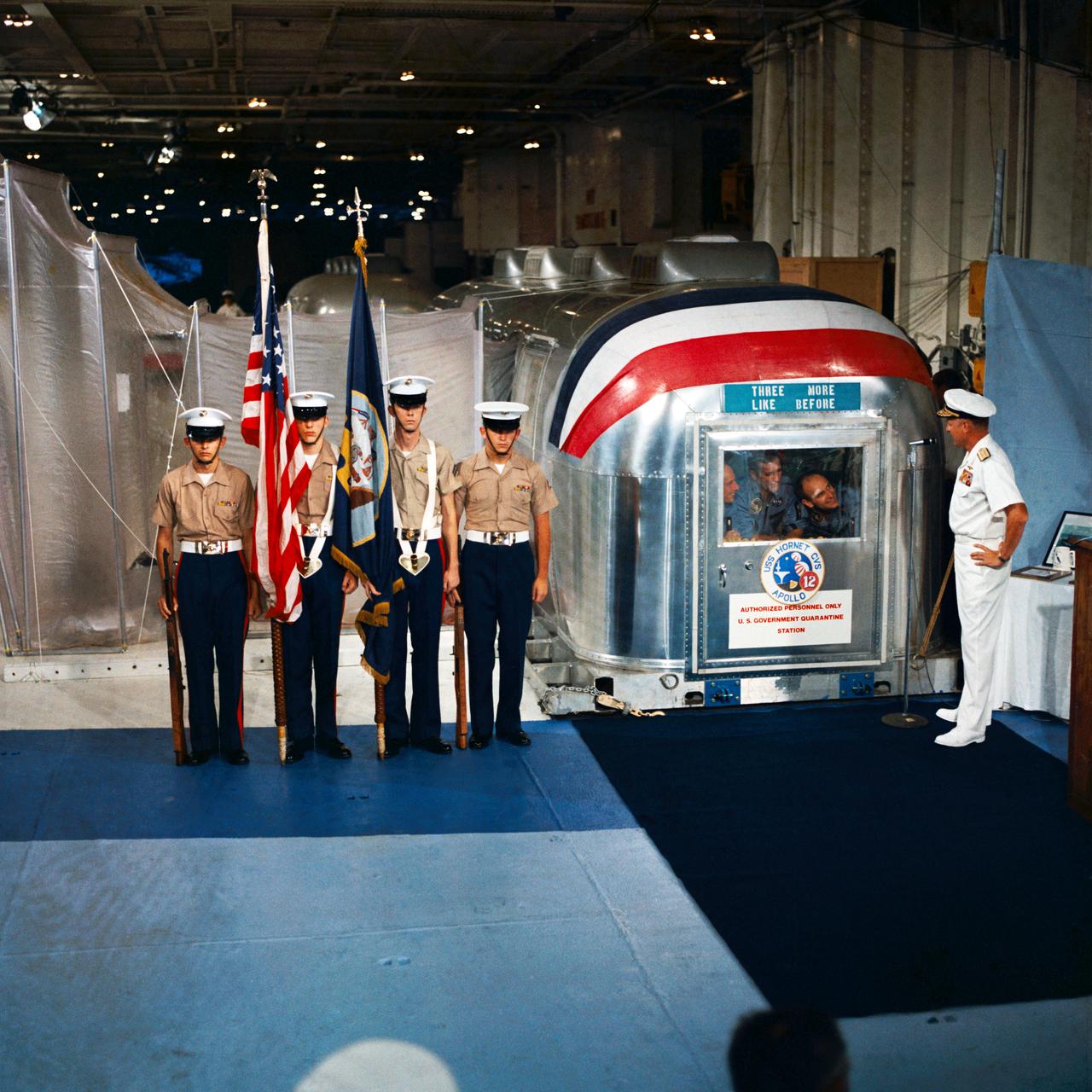
APOLLO XII CREW - WELCOME - USS HORNET - REAR ADMIRAL DONALD DAVID
S69-22876 (24 Nov. 1969) --- Rear Admiral Donald C. David, Commander, Manned Spacecraft Recovery Force, Pacific, welcomes the crew of the Apollo 12 lunar landing mission aboard the…
Inspect NASA record
S69-22876 (24 Nov. 1969) --- Rear Admiral Donald C. David, Commander, Manned Spacecraft Recovery Force, Pacific, welcomes the crew of the Apollo 12 lunar landing mission aboard the USS Hornet, prime recovery vessel for the mission. A color guard was also on hand for the welcoming ceremonies. Inside the Mobile Quarantine Facility (MQF) are (left to right) astronauts Charles Conrad Jr., commander; Richard F. Gordon Jr., command module pilot; and Alan L. Bean, lunar module pilot.
- Record ID
- S69-22876
- NASA center
- JSC
- Date
- 1969-11-24
- Keywords
- APOLLO 12 FLIGHT, ASTRONAUTS

MSFC · 1967-11-01 · 6762209
n/a
Workmen at the Kennedy Space Center position the nose cone for the 204LM-1, an unmanned Apollo mission that tested the Apollo Lunar Module (LM) in Earth orbit. Also…
Inspect NASA record
Workmen at the Kennedy Space Center position the nose cone for the 204LM-1, an unmanned Apollo mission that tested the Apollo Lunar Module (LM) in Earth orbit. Also known as Apollo 5, the spacecraft was launched on the fourth Saturn IBC launch vehicle. Developed by the Marshall Space Flight Center (MSFC) as an interim vehicle in MSFC's "building block" approach to the Saturn rocket development, the Saturn IBC utilized Saturn I technology to further develop and refine a larger booster and the Apollo spacecraft capabilities required for the manned lunar missions.
- Record ID
- 6762209
- NASA center
- MSFC
- Date
- 1967-11-01
- Keywords
- Saturn IBC, Apollo 5, Lunar Module, LM, 204LM-1
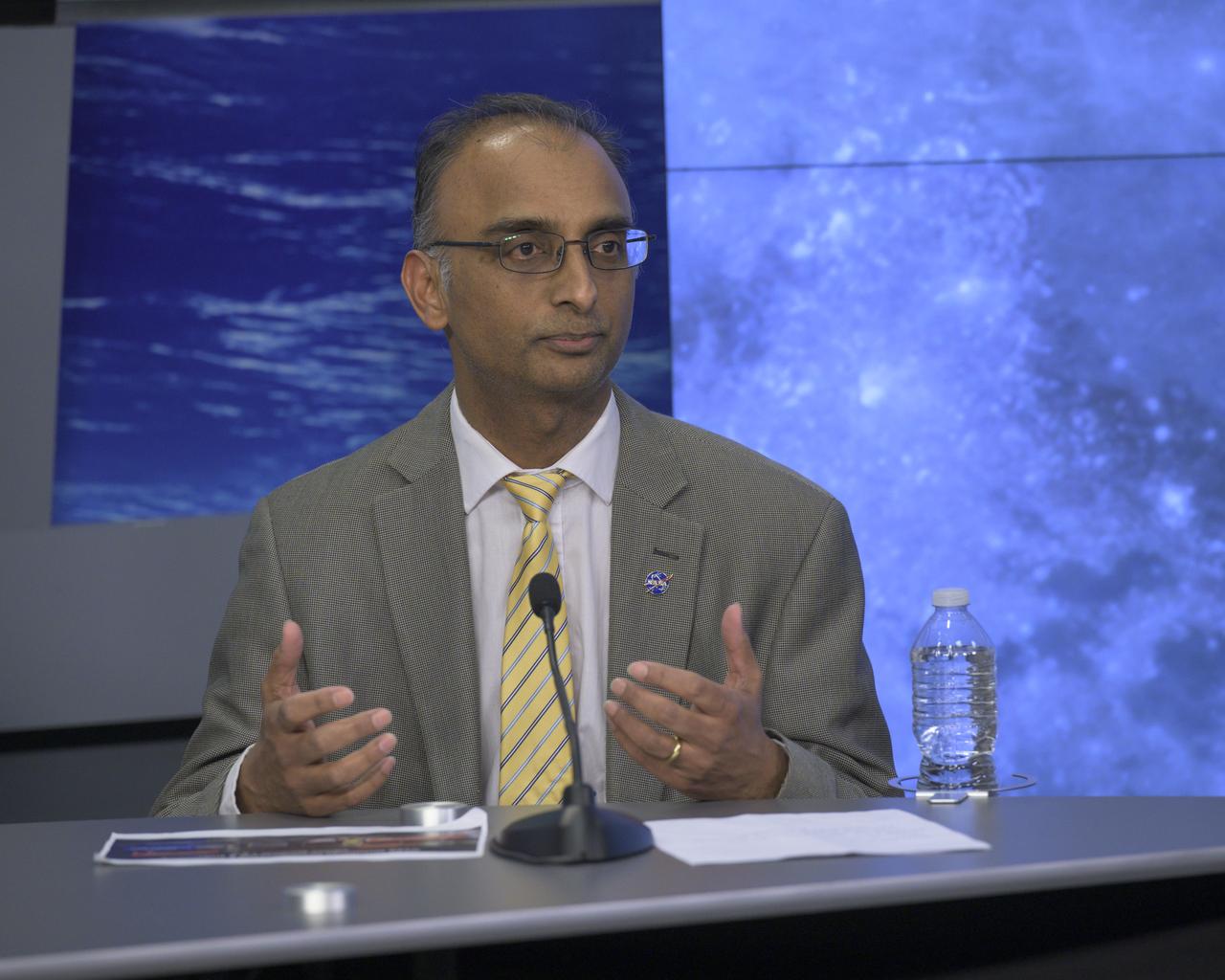
JSC · 2024-02-23 · RGM_4369
News Conference on Intuitive Machines' First Lunar Landing
Prasun Desai, deputy associate administrator, Space Technology Mission Directorate at NASA Headquarters, participates in a news conference Feb. 23, 2024, at the agency’s Johnson Space Center in Houston.…
Inspect NASA record
Prasun Desai, deputy associate administrator, Space Technology Mission Directorate at NASA Headquarters, participates in a news conference Feb. 23, 2024, at the agency’s Johnson Space Center in Houston. Desai was on hand to discuss the NASA science and technology aboard the Intuitive Machine’s Nova-C lander, called Odysseus, and its successful soft landing on the Moon Feb. 22, 2024. The mission is the first landing under NASA’s CLPS (Commercial Lunar Payload Services) initiative, and the first American lunar landing in more than 50 years.
- Record ID
- RGM_4369
- NASA center
- JSC
- Date
- 2024-02-23
- Credit
- ROBERT MARKOWITZ NASA-JSC
- Keywords
- NASA, Commercial Lunar Payload Services, CLPS, IM-1, Intuitive Machines, Moon landing, Odysseus, Nova-C lander
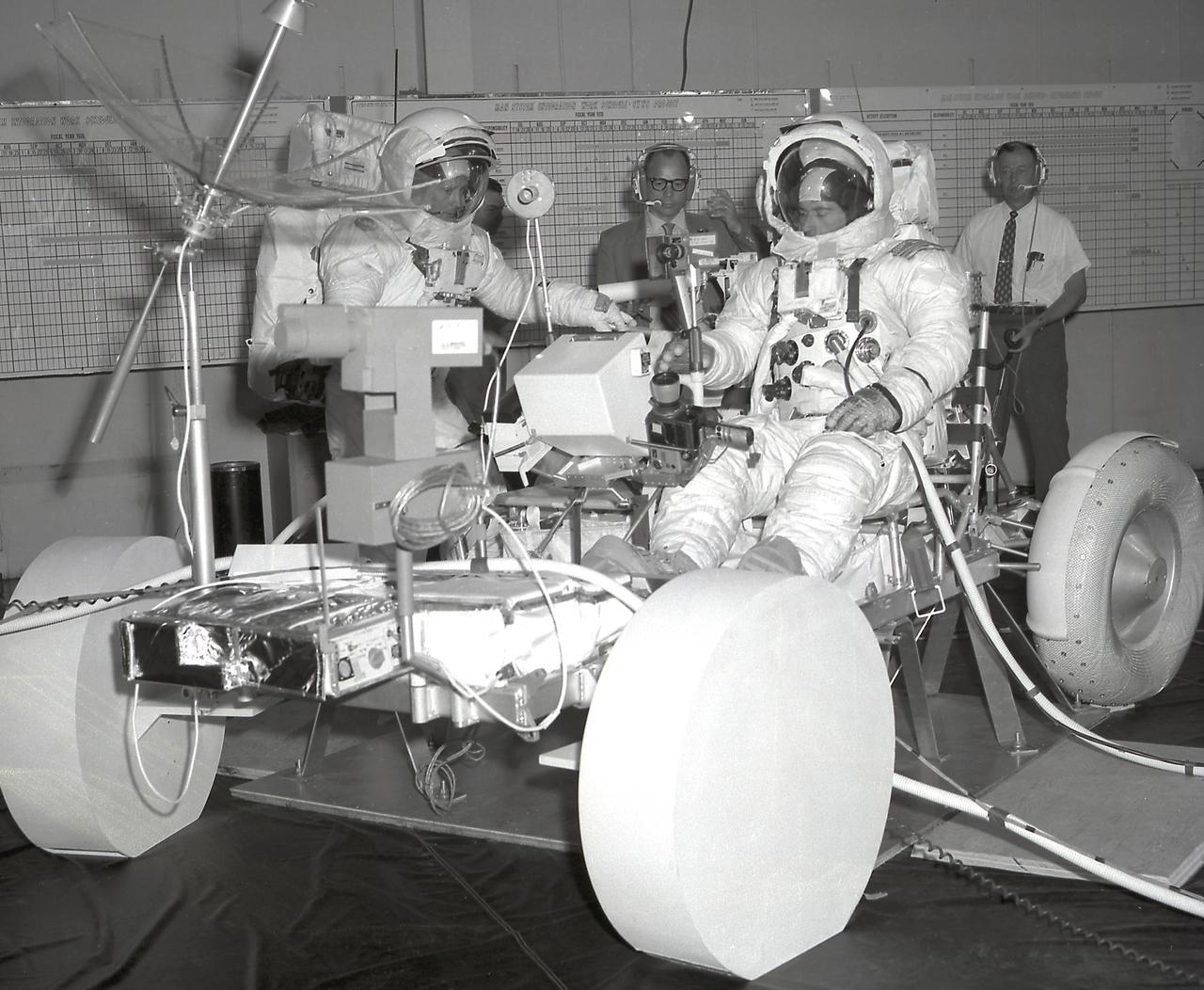
MSFC · 1970-06-01 · 7008918
Saturn Apollo Program
This image depicts the Apollo 16 mission astronauts John Young (right) and Charles Duke (left) in pressure suits during a final crew training on the Lunar Roving Vehicle…
Inspect NASA record
This image depicts the Apollo 16 mission astronauts John Young (right) and Charles Duke (left) in pressure suits during a final crew training on the Lunar Roving Vehicle (LRV) at the Marshall Space Flight Center (MSFC), building 4619. Developed by the MSFC, the LRV was the lightweight electric car designed to increase the range of mobility and productivity of astronauts on the lunar surface. It was used on the last three Apollo missions; Apollo 15, Apollo 16, and Apollo 17.
- Record ID
- 7008918
- NASA center
- MSFC
- Date
- 1970-06-01
- Keywords
- Astronauts, Training, Lunar Roving Vehicle, LRV

JSC · 2026-04-07 · jsc2026e021440
Artemis II lunar science team -- jsc2026e021440
Artemis II lunar science team members, from left, Ryan Ewing, and Barbara Cohen, react to crew observations during the lunar flyby on April 6, 2026. The team worked…
Inspect NASA record
Artemis II lunar science team members, from left, Ryan Ewing, and Barbara Cohen, react to crew observations during the lunar flyby on April 6, 2026. The team worked in the Science Evaluation Room (SER) in Mission Control at NASA’s Johnson Space Center in Houston. Built specifically for Artemis missions with these science priorities in mind, the SER is equipped to support rapid data interpretation, collaborative analysis, real-time decision making, and seamless coordination between the science and operations teams. Credits: NASA/Luna Posadas Nava
- Record ID
- jsc2026e021440
- NASA center
- JSC
- Date
- 2026-04-07
- Credit
- Luna Posadas Nava - NASA - JSC
- Keywords
- Artemis, Artemis II, lunar science, lunar geography, Science Evaluation Room, Moon, Moon Joy
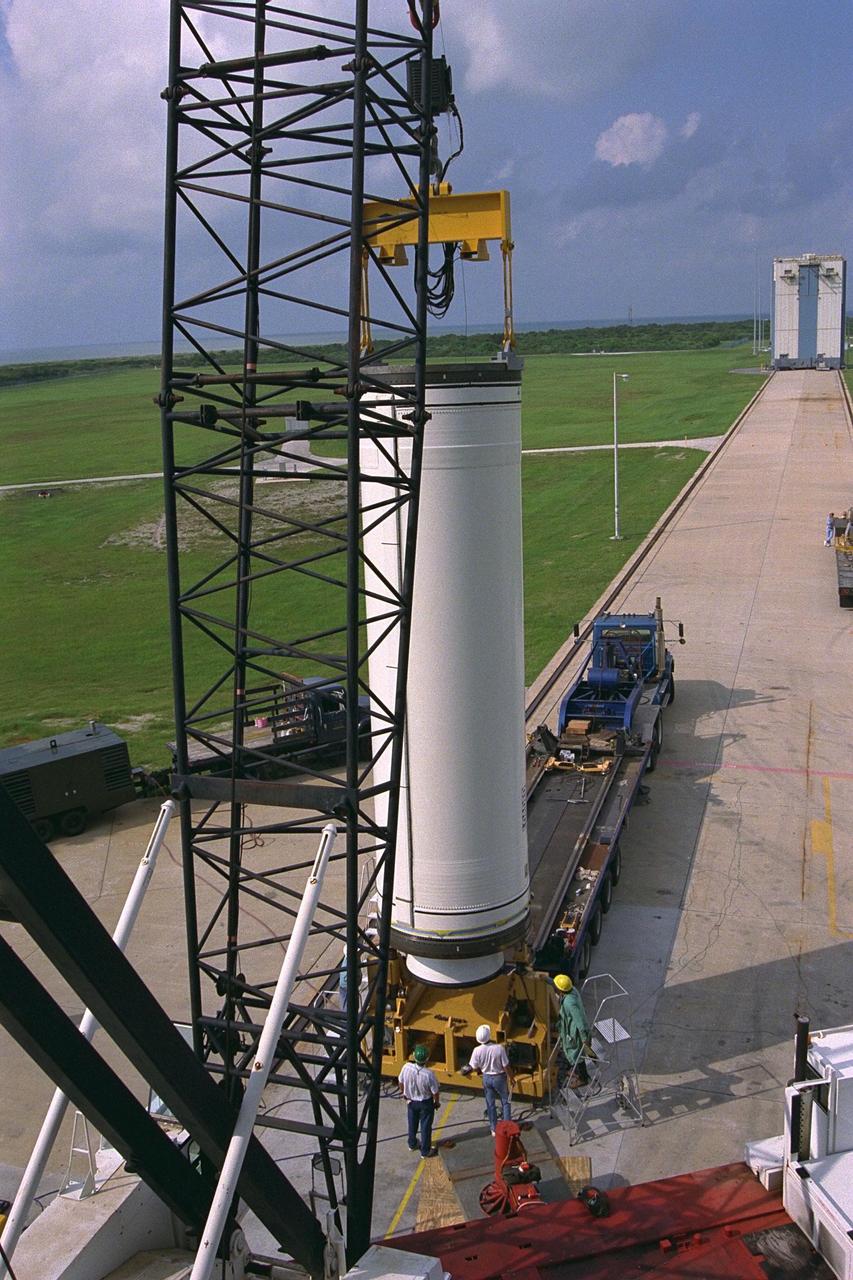
KSC · 1997-07-13 · KSC-97pc1043
KSC-97pc1043
Workers hoist the first stage of a Lockheed Martin Launch Vehicle-2 (LMLV-2) for placement at Launch Complex 46 at Cape Canaveral Air Station (CCAS), Fla. The Lunar Prospector…
Inspect NASA record
Workers hoist the first stage of a Lockheed Martin Launch Vehicle-2 (LMLV-2) for placement at Launch Complex 46 at Cape Canaveral Air Station (CCAS), Fla. The Lunar Prospector spacecraft is scheduled to launch aboard the LMLV-2 from CCAS in October for an 18-month mission that will orbit the Earth’s Moon to collect data from the lunar surface. Information gathered during the mission will allow construction of a detailed map of the surface composition of the Moon and will improve our understanding of its origin, evolution, current state, and resources
- Record ID
- KSC-97pc1043
- NASA center
- KSC
- Date
- 1997-07-13
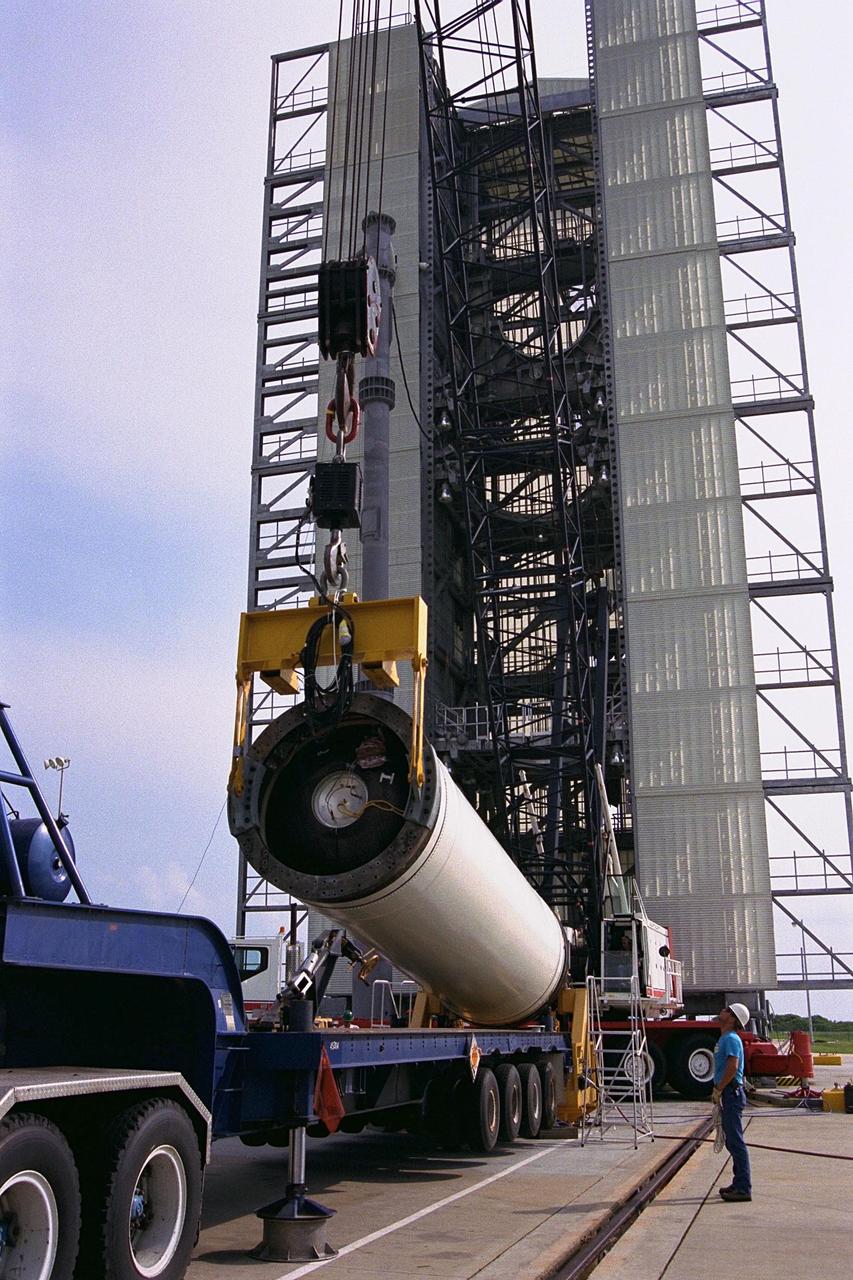
KSC · 1997-07-13 · KSC-97pc1042
KSC-97pc1042
Workers hoist the first stage of a Lockheed Martin Launch Vehicle-2 (LMLV-2) for placement at Launch Complex 46 at Cape Canaveral Air Station (CCAS), Fla. The Lunar Prospector…
Inspect NASA record
Workers hoist the first stage of a Lockheed Martin Launch Vehicle-2 (LMLV-2) for placement at Launch Complex 46 at Cape Canaveral Air Station (CCAS), Fla. The Lunar Prospector spacecraft is scheduled to launch aboard the LMLV-2 from CCAS in October for an 18-month mission that will orbit the Earth’s Moon to collect data from the lunar surface. Information gathered during the mission will allow construction of a detailed map of the surface composition of the Moon and will improve our understanding of its origin, evolution, current state, and resources
- Record ID
- KSC-97pc1042
- NASA center
- KSC
- Date
- 1997-07-13
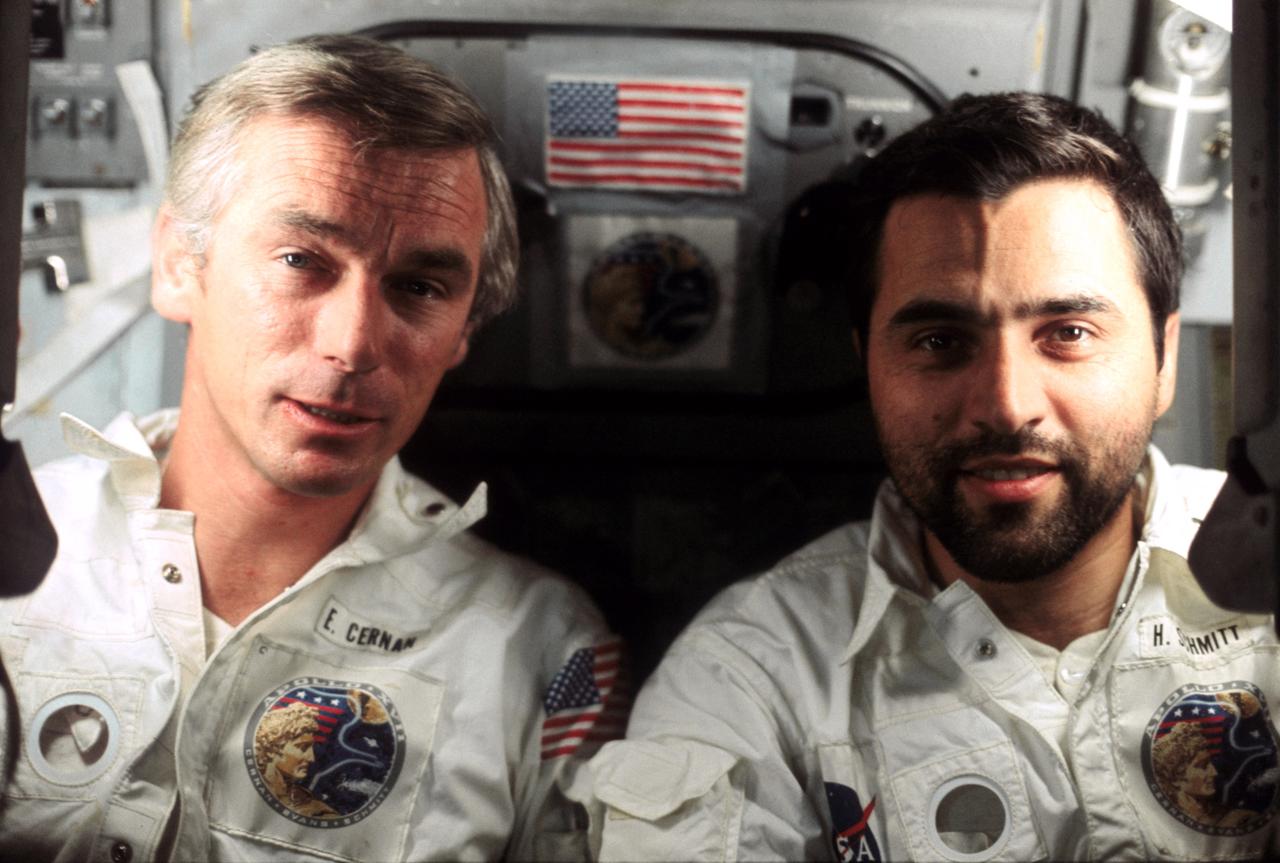
JSC · 1972-12-17 · as17-163-24148
Candid photo of Astronauts Cernan and Schmitt aboard Apollo 17 spacecraft
AS17-163-24148 (7-19 Dec. 1972) --- Astronaut Eugene A. Cernan (left) and scientist-astronaut Harrison H. "Jack" Schmitt are photographed by the third crew man aboard the Apollo 17 spacecraft…
Inspect NASA record
AS17-163-24148 (7-19 Dec. 1972) --- Astronaut Eugene A. Cernan (left) and scientist-astronaut Harrison H. "Jack" Schmitt are photographed by the third crew man aboard the Apollo 17 spacecraft during the final lunar landing mission in NASA's Apollo program. Astronaut Ronald E. Evans, command module pilot, took this picture. Cernan was the mission commander. Schmitt served as the lunar module pilot.
- Record ID
- as17-163-24148
- NASA center
- JSC
- Date
- 1972-12-17
- Keywords
- APOLLO 17 FLIGHT, APOLLO PROJECT, ASTRONAUTS, COMMAND MODULES, PORTRAIT, SPACECRAFT CABINS