
Update Site (from NASA)
Explore NASA’s Image and Video Library.
Suggest one object per day for the Interstellar Minds collection. We review each suggestion before adding it.
Sign in to suggest a Marvel.
Find a NASA image ID. Open a NASA record and copy its ID from the end of the details URL.
NASA image records

JPL · 2008-01-25 · PIA10227
Celestial Cities and the Roads That Connect Them
Observations from NASA Spitzer Space Telescope show that filamentary galaxies form stars at twice the rate of their densely clustered counterparts. This is a representation of galaxies in…
Inspect NASA record
Observations from NASA Spitzer Space Telescope show that filamentary galaxies form stars at twice the rate of their densely clustered counterparts. This is a representation of galaxies in and surrounding a galaxy cluster called Abell 1763.
- Record ID
- PIA10227
- NASA center
- JPL
- Date
- 2008-01-25
- Credit
- NASA/JPL-Caltech
- Keywords
- Abell 1763, Spitzer Space Telescope
JPL · 2009-06-10 · PIA12074
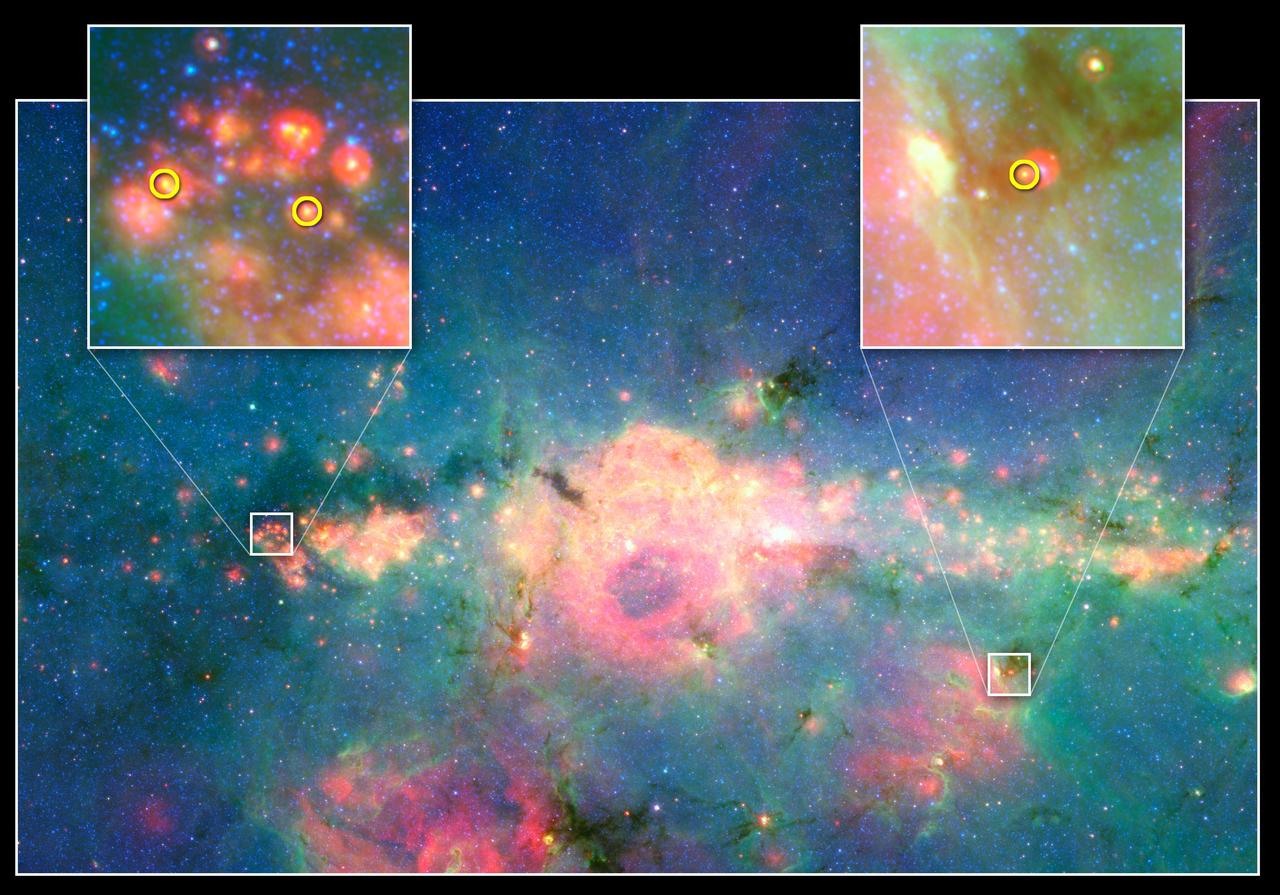
Baby Stars Finally Found in Jumbled Galactic Center
This infrared image from NASA Spitzer Space Telescope shows three baby stars in the bustling center of our Milky Way galaxy. The three stars are the first to…
Inspect NASA record
This infrared image from NASA Spitzer Space Telescope shows three baby stars in the bustling center of our Milky Way galaxy. The three stars are the first to be discovered in the region.
- Record ID
- PIA12074
- NASA center
- JPL
- Date
- 2009-06-10
- Credit
- NASA/JPL-Caltech
- Keywords
- Milky Way, Spitzer Space Telescope
JPL · 2007-08-06 · PIA09955
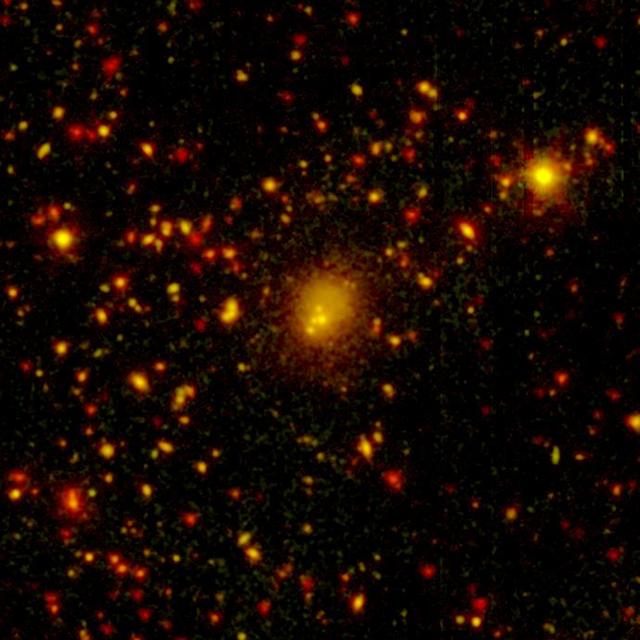
Fearsome Foursome
NASA Spitzer Space Telescope spotted a four-way collision, or merger, in a giant cluster of galaxies, called CL0958+4702, located nearly five billion light-years away.
Inspect NASA record
NASA Spitzer Space Telescope spotted a four-way collision, or merger, in a giant cluster of galaxies, called CL0958+4702, located nearly five billion light-years away.
- Record ID
- PIA09955
- NASA center
- JPL
- Date
- 2007-08-06
- Credit
- NASA/JPL-Caltech/CXO/WIYN/Harvard-Smithsonian CfA
- Keywords
- CL0958+4702, Spitzer Space Telescope
JPL · 2008-03-27 · PIA10364
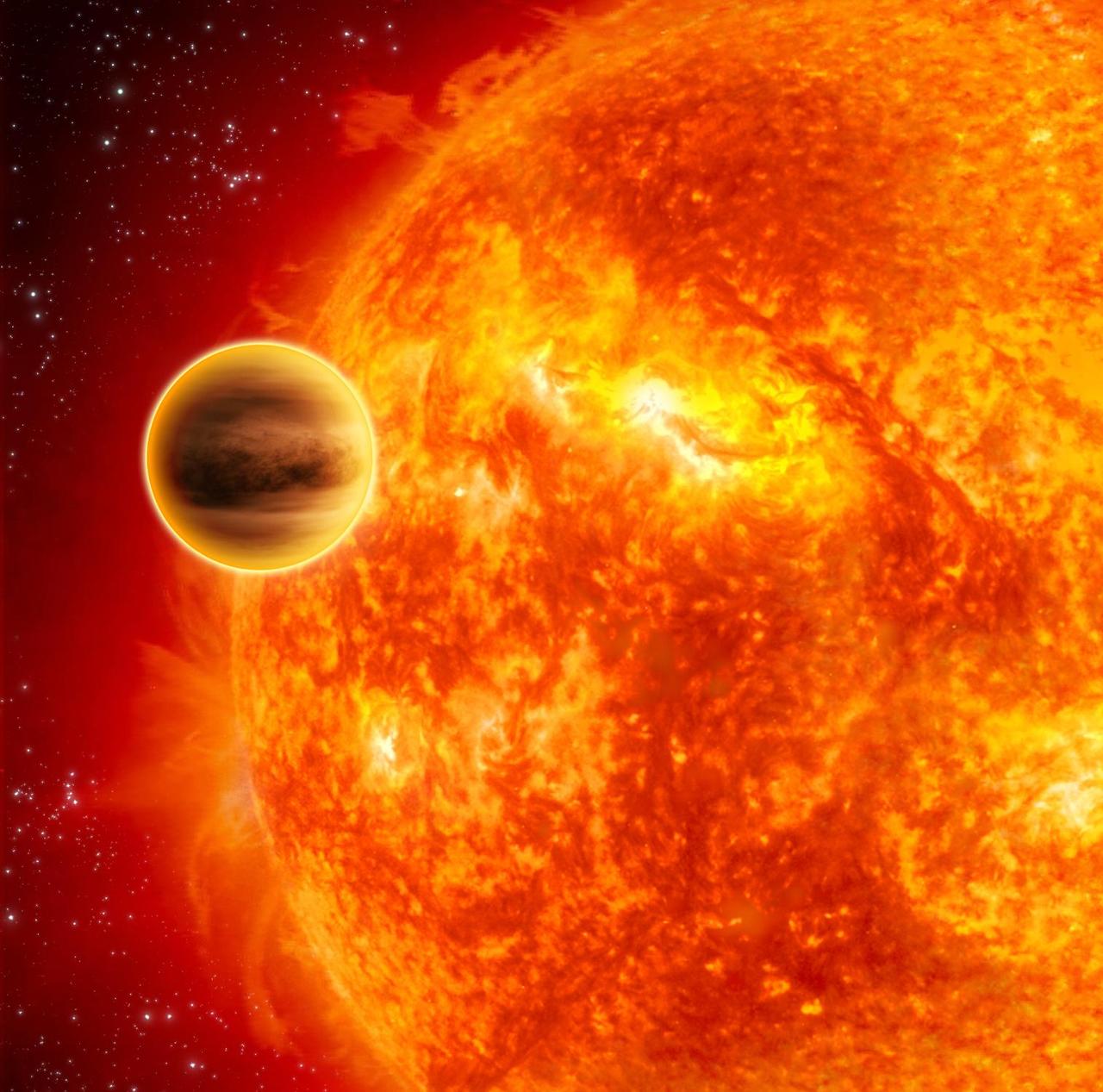
NASA Spitzer Finds Water Vapor on Hot, Alien Planet Artist Concept
This artist impression shows a gas-giant exoplanet transiting across the face of its star. Infrared analysis by NASA Spitzer Space Telescope of this type of system provided the…
Inspect NASA record
This artist impression shows a gas-giant exoplanet transiting across the face of its star. Infrared analysis by NASA Spitzer Space Telescope of this type of system provided the breakthrough.
- Record ID
- PIA10364
- NASA center
- JPL
- Date
- 2008-03-27
- Credit
- ESA/C. Carreau
- Keywords
- HD 189733b, Spitzer Space Telescope
JPL · 2008-02-11 · PIA10182
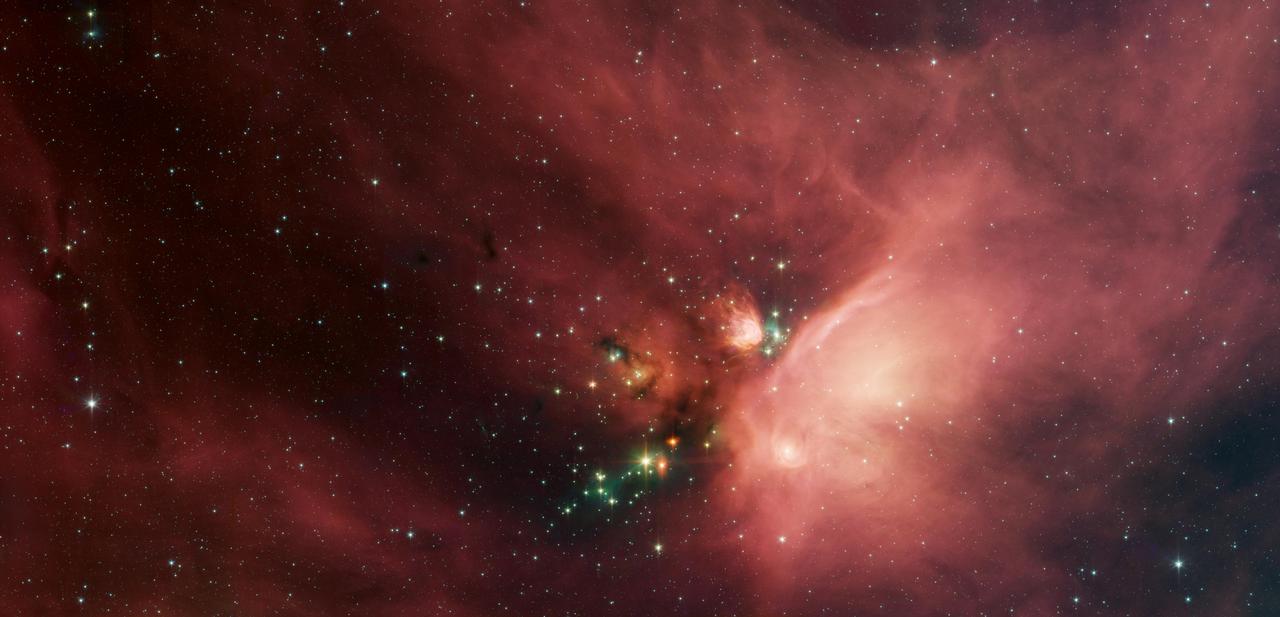
Young Stars in Their Baby Blanket of Dust
Newborn stars peek out from beneath their natal blanket of dust in this dynamic image of the Rho Ophiuchi dark cloud from NASA Spitzer Space Telescope. This nebula…
Inspect NASA record
Newborn stars peek out from beneath their natal blanket of dust in this dynamic image of the Rho Ophiuchi dark cloud from NASA Spitzer Space Telescope. This nebula is about 407 light years away from Earth.
- Record ID
- PIA10182
- NASA center
- JPL
- Date
- 2008-02-11
- Credit
- NASA/JPL-Caltech/Harvard-Smithsonian CfA
- Keywords
- Rho Ophiuchi, Spitzer Space Telescope

JPL · 1999-12-10 · PIA04222
Hubble-V
Resembling curling flames from a campfire, a magnificent nebula in a nearby galaxy observed by NASA Hubble Space Telescope provides new insight into the fierce birth of stars…
Inspect NASA record
Resembling curling flames from a campfire, a magnificent nebula in a nearby galaxy observed by NASA Hubble Space Telescope provides new insight into the fierce birth of stars as it may have occurred in the early universe.
- Record ID
- PIA04222
- NASA center
- JPL
- Date
- 1999-12-10
- Credit
- NASA, ESA and The Hubble Heritage Team STScI/AURA Acknowledgment: C. R. ODell Vanderbilt University and L. Bianchi Johns Hopkins University and Osservatorio Astronomico, Torinese, Italy
- Keywords
- Hubble -V, Hubble Space Telescope

JPL · 2007-02-12 · PIA09178
Comets Kick up Dust in Helix Nebula
This infrared image from NASA Spitzer Space Telescope shows the Helix nebula, a cosmic starlet often photographed by amateur astronomers for its vivid colors and eerie resemblance to…
Inspect NASA record
This infrared image from NASA Spitzer Space Telescope shows the Helix nebula, a cosmic starlet often photographed by amateur astronomers for its vivid colors and eerie resemblance to a giant eye.
- Record ID
- PIA09178
- NASA center
- JPL
- Date
- 2007-02-12
- Credit
- NASA/JPL-Caltech/Univ.of Ariz.
- Keywords
- Helix Nebula, Spitzer Space Telescope
JPL · 2005-04-20 · PIA07854
Band of Rubble Artist Concept
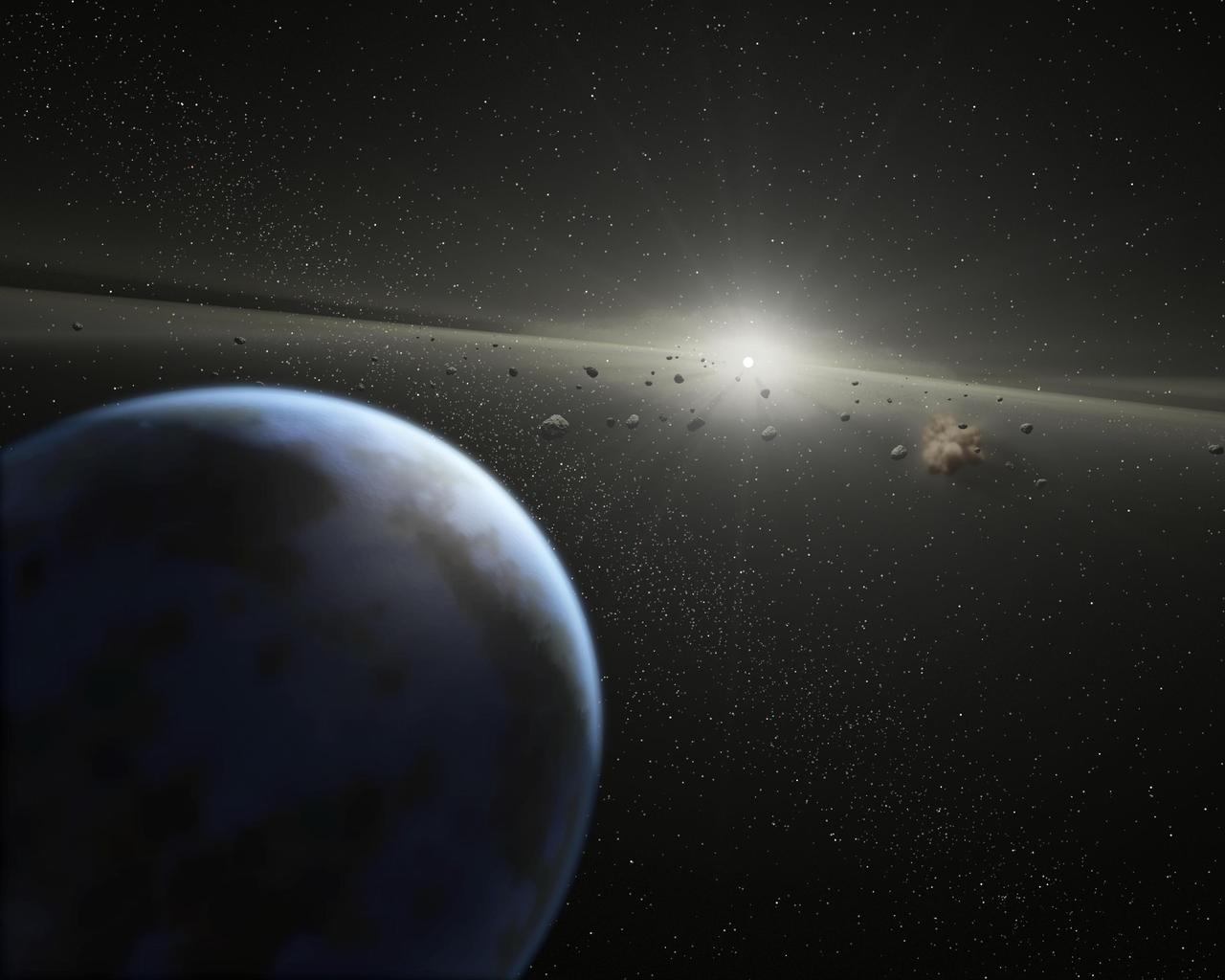
Evidence for this possible belt was discovered by NASA Spitzer Space Telescope when it spotted warm dust around the star, presumably from asteroids smashing together. This is an…
Inspect NASA record
Evidence for this possible belt was discovered by NASA Spitzer Space Telescope when it spotted warm dust around the star, presumably from asteroids smashing together. This is an artist concept.
- Record ID
- PIA07854
- NASA center
- JPL
- Date
- 2005-04-20
- Credit
- NASA/JPL-Caltech
- Keywords
- HD 69830, Spitzer Space Telescope
JPL · 2006-02-08 · PIA08006
Supersized Disk Artist Concept
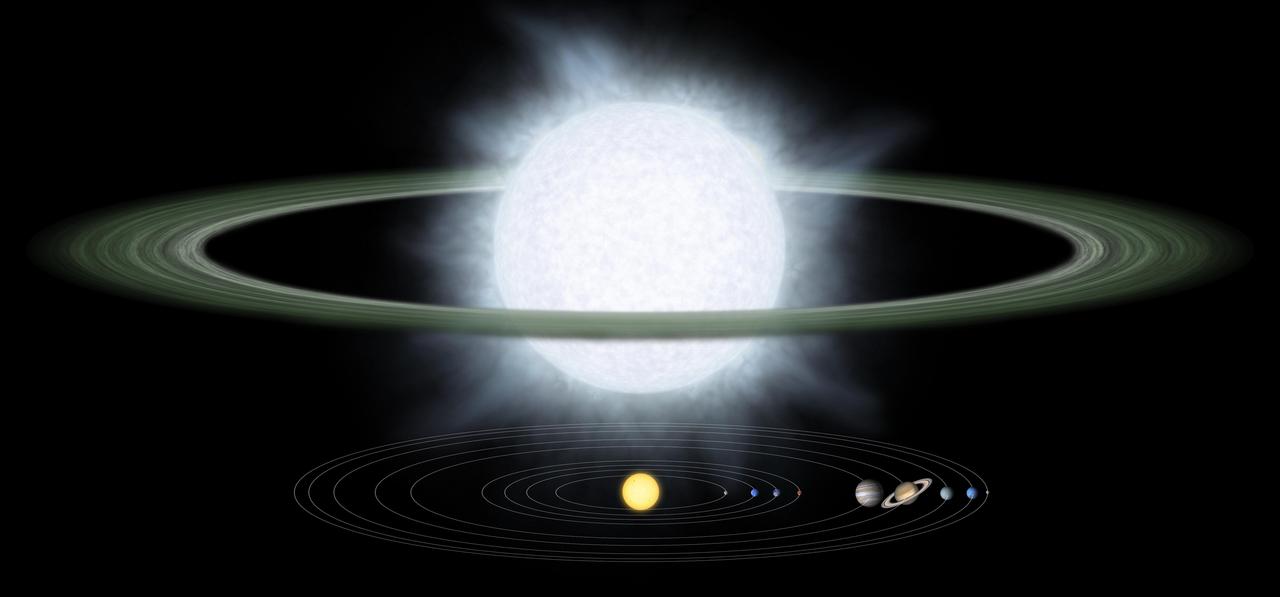
This illustration compares the size of a gargantuan star and its surrounding dusty disk top to that of our solar system. Monstrous disks like this one were discovered…
Inspect NASA record
This illustration compares the size of a gargantuan star and its surrounding dusty disk top to that of our solar system. Monstrous disks like this one were discovered around two hypergiant stars by NASA Spitzer Space Telescope.
- Record ID
- PIA08006
- NASA center
- JPL
- Date
- 2006-02-08
- Credit
- Artist Concept: NASA/JPL-Caltech Graph: NASA/JPL-Caltech/University of Rochester
- Keywords
- R 66, Spitzer Space Telescope

JSC · 1993-03-15 · s93-33257
STS-61 Hubble Space Telescope Mirrors for Wide Field/Planetary Camera
S93-33257 (15 Mar 1993) --- This close-up view features tiny articulating fold mirrors that will go into a replacement camera for the Wide Field\Planetary Camera (WF\PC-1) currently on…
Inspect NASA record
S93-33257 (15 Mar 1993) --- This close-up view features tiny articulating fold mirrors that will go into a replacement camera for the Wide Field\Planetary Camera (WF\PC-1) currently on the Hubble Space Telescope (HST). A team of NASA astronauts will pay a visit to the HST later this year, carrying with them the new WF/PC-2 to replace the one currently on the HST. The Jet Propulsion Laboratory (JPL) in Pasadena, California has been working on the replacement system for several months. See NASA photo S93-33258 for an optical schematic diagram of one of the four channels of the WF\PC-2 showing the path taken by beams from the HST before an image is formed at the camera's charge-coupled devices.
- Record ID
- s93-33257
- NASA center
- JSC
- Date
- 1993-03-15
- Keywords
- MIRRORS, STS-61, HUBBLE SPACE TELESCOPE, PHOTOGRAPHIC EQUIPMENT, CAMERAS
JPL · 2019-03-27 · PIA23121
Space Butterfly
What looks like a red butterfly in space is in reality a nursery for hundreds of baby stars, revealed in this infrared image from NASA's Spitzer Space Telescope.…
Inspect NASA record
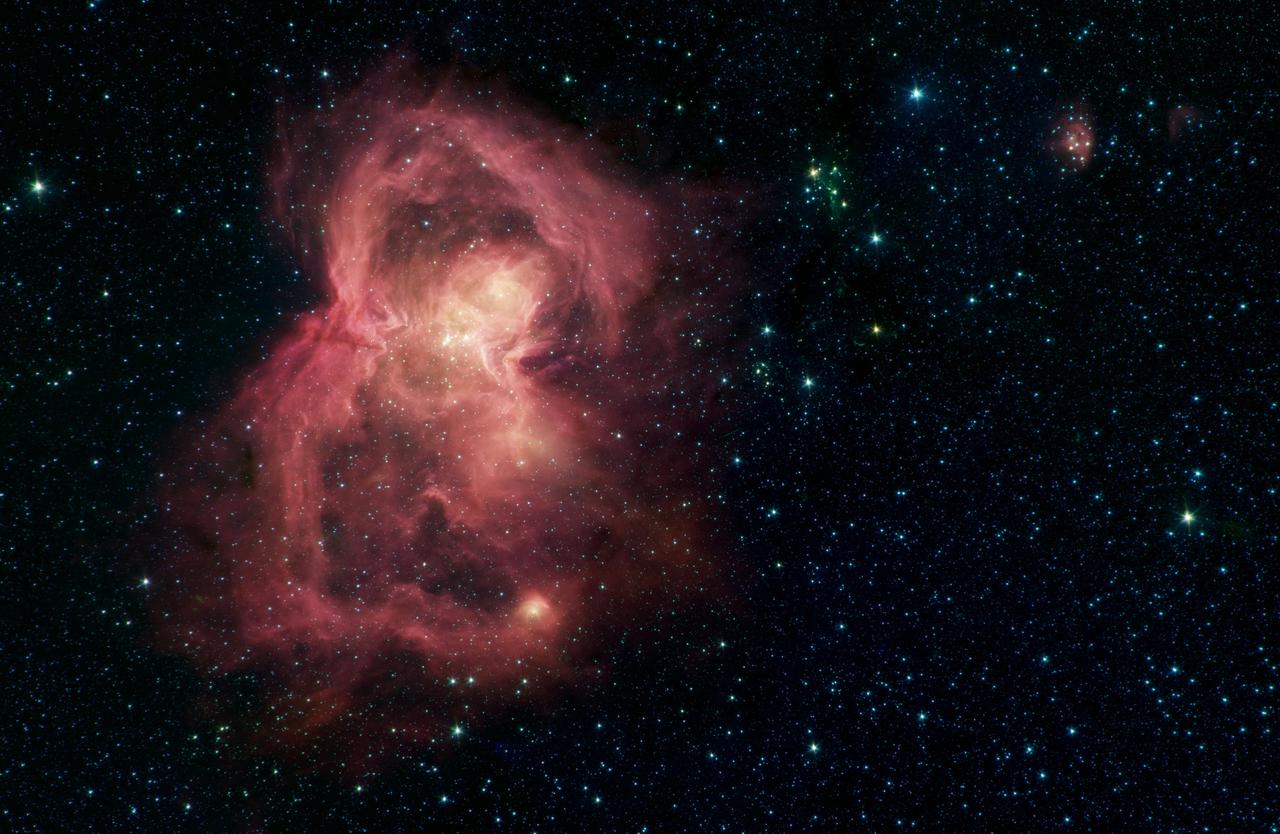
What looks like a red butterfly in space is in reality a nursery for hundreds of baby stars, revealed in this infrared image from NASA's Spitzer Space Telescope. Officially named W40, the butterfly is a nebula - a giant cloud of gas and dust in space where new stars may form. The butterfly's two "wings" are giant bubbles of hot, interstellar gas blowing from the hottest, most massive stars in this region. The material that forms W40's wings was ejected from a dense cluster of stars that lies between the wings in the image. The hottest, most massive of these stars, W40 IRS 1a, lies near the center of the star cluster. W40 is about 1,400 light-years from the Sun, about the same distance as the well-known Orion nebula, although the two are almost 180 degrees apart in the sky. They are two of the nearest regions in which massive stars - with masses upwards of 10 times that of the Sun - have been observed to be forming. The W40 star-forming region was observed as part of a Spitzer Legacy Survey, and the resulting mosaic image was published as part of the MYStIX (Massive Young stellar clusters Study in Infrared and X-rays) survey of young stellar objects. The Spitzer picture is composed of four images taken with the telescope's Infrared Array Camera (IRAC) in different wavelengths of infrared light: 3.6, 4.5, 5.8 and 8.0 µm (shown as blue, green, orange and red). Organic molecules made of carbon and hydrogen, called polycyclic aromatic hydrocarbons (PAHs), are excited by interstellar radiation and become luminescent at wavelengths near 8.0 microns, giving the nebula its reddish features. Stars are brighter at the shorter wavelengths, giving them a blue tint. Some of the youngest stars are surrounded by dusty disks of material, which glow with a yellow or red hue. https://photojournal.jpl.nasa.gov/catalog/PIA23121
- Record ID
- PIA23121
- NASA center
- JPL
- Date
- 2019-03-27
- Credit
- NASA/JPL-Caltech
- Keywords
- Spitzer Space Telescope

JPL · 2024-05-09 · PIA26276
The Infrared Face of the Andromeda Galaxy
This image from NASA's retired Spitzer Space Telescope highlights the stars and dust clouds in the Andromeda galaxy. One of Earth's nearest galactic neighbors, Andromeda spans a swath…
Inspect NASA record
This image from NASA's retired Spitzer Space Telescope highlights the stars and dust clouds in the Andromeda galaxy. One of Earth's nearest galactic neighbors, Andromeda spans a swath of sky nearly 3.8 degrees across, which is close to the width of eight full Moons lined up side by side. The area around the galaxy includes data from NASA's Wide-field Infrared Survey Explorer (WISE). Spitzer observed infrared light, a range of wavelengths longer than what human eyes can detect. In this image, starlight glows blue and cyan (representing infrared wavelengths of 3.6 and 4.5 microns). Dust dominates the galaxy in red (8 microns). The longest wavelength detected by Spitzer (24 microns) gives an indication of the dust's temperature and is represented in green; it combines with the red to create orange and yellow, indicating regions where stars are forming. https://photojournal.jpl.nasa.gov/catalog/PIA26276
- Record ID
- PIA26276
- NASA center
- JPL
- Date
- 2024-05-09
- Credit
- NASA/JPL-Caltech
- Keywords
- Spitzer Space Telescope, Andromeda