
Update Site (from NASA)
Explore NASA’s Image and Video Library.
Suggest one object per day for the Interstellar Minds collection. We review each suggestion before adding it.
Sign in to suggest a Marvel.
Find a NASA image ID. Open a NASA record and copy its ID from the end of the details URL.
NASA image records
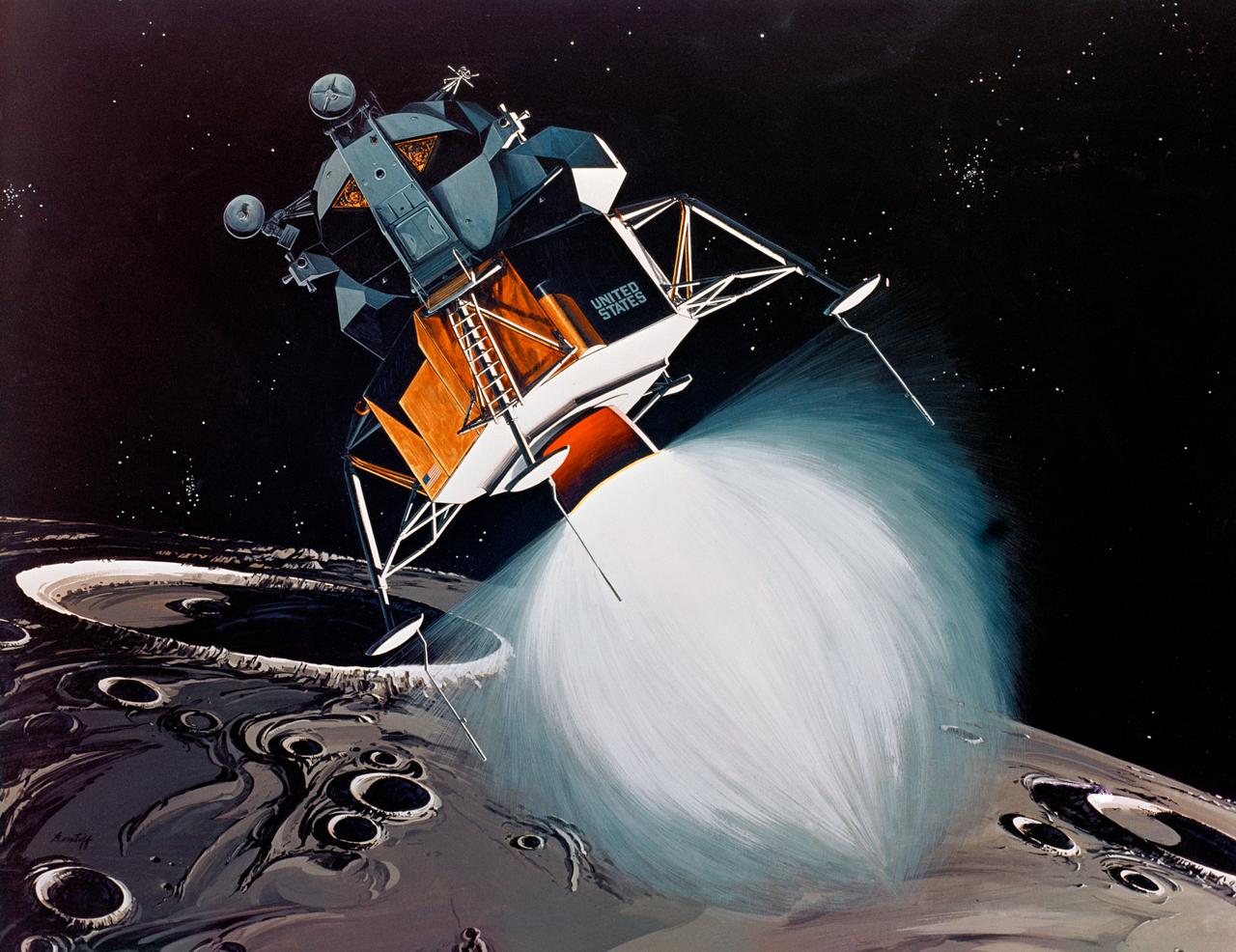
JSC · 1969-05-19 · S69-33765
LUNAR LANDING - ART CONCEPT
S69-33765 (12 May 1969) --- Artist's concept depicting the firing of the Apollo 10 Lunar Module descent engine for 42 seconds to propel "Snoopy" back into a higher…
Inspect NASA record
S69-33765 (12 May 1969) --- Artist's concept depicting the firing of the Apollo 10 Lunar Module descent engine for 42 seconds to propel "Snoopy" back into a higher lunar orbit for rendezvous and docking with the Command and Service Modules. Earlier, the LM descent engine will be fired for 27 seconds to take astronauts Thomas P. Stafford, Apollo 10 commander; and Eugene A. Cernan, lunar module pilot, to within 10 miles of the moon's surface. Astronauts John W. Young, command module pilot, will remain in the Command Module, "Charlie Brown," in lunar orbit. Developed by TRW's Systems Group at Redondo Beach, California, under Grumman subcontract, the throttleable descent engine will be used to soft land the LM on the lunar surface during Apollo 11 and subsequent Apollo missions.
- Record ID
- S69-33765
- NASA center
- JSC
- Date
- 1969-05-19

JSC · 1969-07-16 · S69-39527
APOLLO XI - LAUNCH
S69-39527 (16 July 1969) --- The huge, 363-feet tall Apollo 11 (Spacecraft 107/ Lunar Module 5/Saturn 506) space vehicle is launched from Pad A, Launch Complex 39, Kennedy…
Inspect NASA record
S69-39527 (16 July 1969) --- The huge, 363-feet tall Apollo 11 (Spacecraft 107/ Lunar Module 5/Saturn 506) space vehicle is launched from Pad A, Launch Complex 39, Kennedy Space Center (KSC), at 9:32 a.m. (EDT), July 16, 1969. Aboard the Apollo 11 spacecraft are astronauts Neil A. Armstrong, commander; Michael Collins, command module pilot; and Edwin E. Aldrin Jr., lunar module pilot. Apollo 11 is the United States' first lunar landing mission. While Armstrong and Aldrin descend in the Lunar Module (LM) "Eagle" to explore the Sea of Tranquility region of the moon, astronaut Collins will remain with the Command and Service Modules (CSM) "Columbia" in lunar orbit.
- Record ID
- S69-39527
- NASA center
- JSC
- Date
- 1969-07-16

MSFC · 1971-01-31 · 9309375
Saturn Apollo Program
Stuart A. Roosa, Apollo 14 Command Module pilot, undergoes a final space suit check prior to liftoff. The Apollo 14, carrying a crew of three astronauts: Roosa; Alan…
Inspect NASA record
Stuart A. Roosa, Apollo 14 Command Module pilot, undergoes a final space suit check prior to liftoff. The Apollo 14, carrying a crew of three astronauts: Roosa; Alan B. Shepard, Jr., Mission Commander; and Edgar D. Mitchell, Lunar Module pilot, lifted off from launch complex 39A at KSC on January 31, 1971. It was the third manned lunar landing, the first manned landing in exploration of the lunar highlands, and it demonstrated pinpoint landing capability. The major goal of Apollo 14 was the scientific exploration of the Moon in the foothills of the rugged Fra Mauro region. The lunar surface extravehicular activity (EVA) of astronauts Shepard and Mitchell included setting up an automated scientific laboratory called Apollo Lunar Scientific Experiments Package (ALSEP), and collecting a total of about 95 pounds (43 kilograms) of Moon rock and soil for a geological investigation back on the Earth. Apollo 14 safely returned to Earth on February 9, 1971.
- Record ID
- 9309375
- NASA center
- MSFC
- Date
- 1971-01-31
- Keywords
- Apollo 14, Roosa
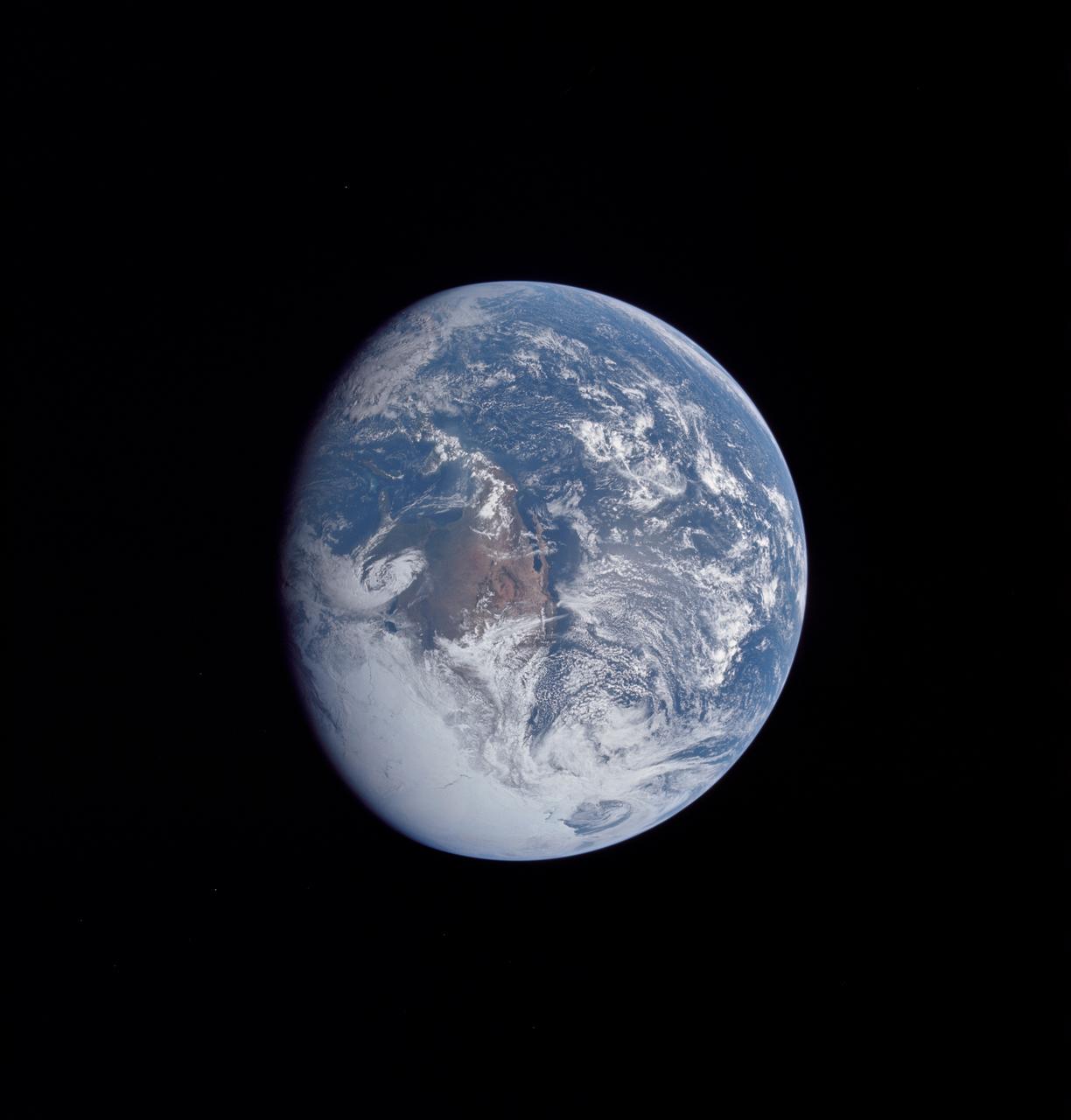
JSC · 1972-04-16 · as16-118-18885
Apollo 16 view of the earth from translunar injection
AS16-118-18885 (16 April 1972) --- A good view of Earth photographed about one and one-half hours after trans-lunar injection on April 16, 1972. Although there is much cloud…
Inspect NASA record
AS16-118-18885 (16 April 1972) --- A good view of Earth photographed about one and one-half hours after trans-lunar injection on April 16, 1972. Although there is much cloud cover, the United States in large part, most of Mexico and some parts of Central America are clearly visible. Note Lake Michigan and Lake Superior and the Bahama Banks (see different shade of blue below Florida). Just beginning man's fifth lunar landing mission were astronauts John W. Young, commander; Thomas K. Mattingly, II, command module pilot and Charles M. Duke Jr., lunar module pilot. While astronauts Young and Duke descended in the Lunar Module (LM) "Orion" to explore the Descartes highlands region of the moon, astronaut Mattingly remained with the Command and Service Modules (CSM) "Casper" in lunar orbit.
- Record ID
- as16-118-18885
- NASA center
- JSC
- Date
- 1972-04-16
- Keywords
- APOLLO 16 FLIGHT, APOLLO PROJECT, CLOUDS, EARTH (PLANET), ONBOARD ACTIVITIES EARTH OBSERVATIONS (FROM SPACE), PHOTOGRAPHY
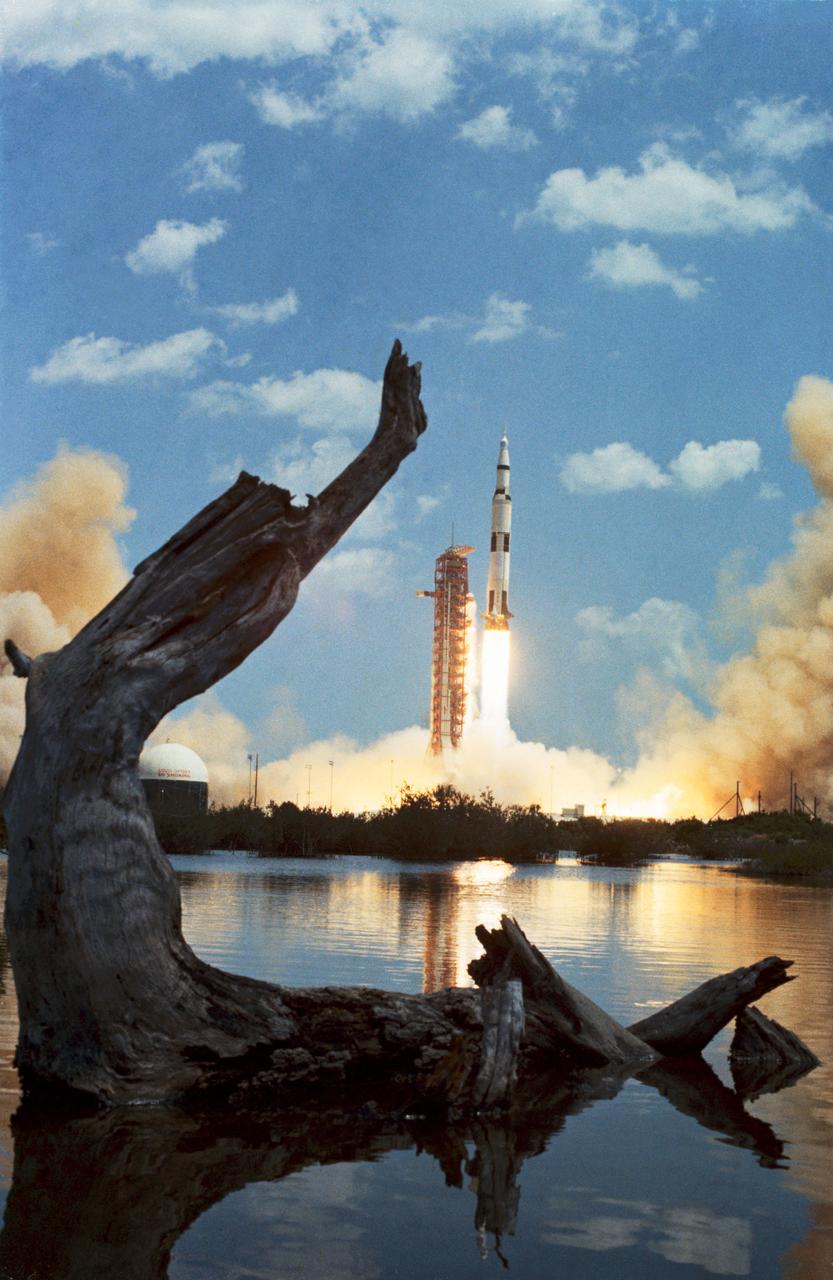
JSC · 1972-04-16 · S72-35347
Apollo 16 liftoff
S72-35347 (16 April 1972) --- The huge, 363-feet tall Apollo 16 (Spacecraft 113/Lunar Module 11/ Saturn 511) space vehicle is launched from Pad A, Launch Complex 39, Kennedy…
Inspect NASA record
S72-35347 (16 April 1972) --- The huge, 363-feet tall Apollo 16 (Spacecraft 113/Lunar Module 11/ Saturn 511) space vehicle is launched from Pad A, Launch Complex 39, Kennedy Space Center (KSC), Florida, at 12:54:00.569 p.m. (EST), April 16, 1972, on a lunar landing mission. Aboard the Apollo 16 spacecraft were astronauts John W. Young, commander; Thomas K. Mattingly II, command module pilot; and Charles M. Duke Jr., lunar module pilot. While astronauts Young and Duke descended in the Lunar Module (LM) "Orion" to explore the Descartes highlands region of the moon, astronaut Mattingly remained with the Command and Service Modules (CSM) "Casper" in lunar orbit.
- Record ID
- S72-35347
- NASA center
- JSC
- Date
- 1972-04-16
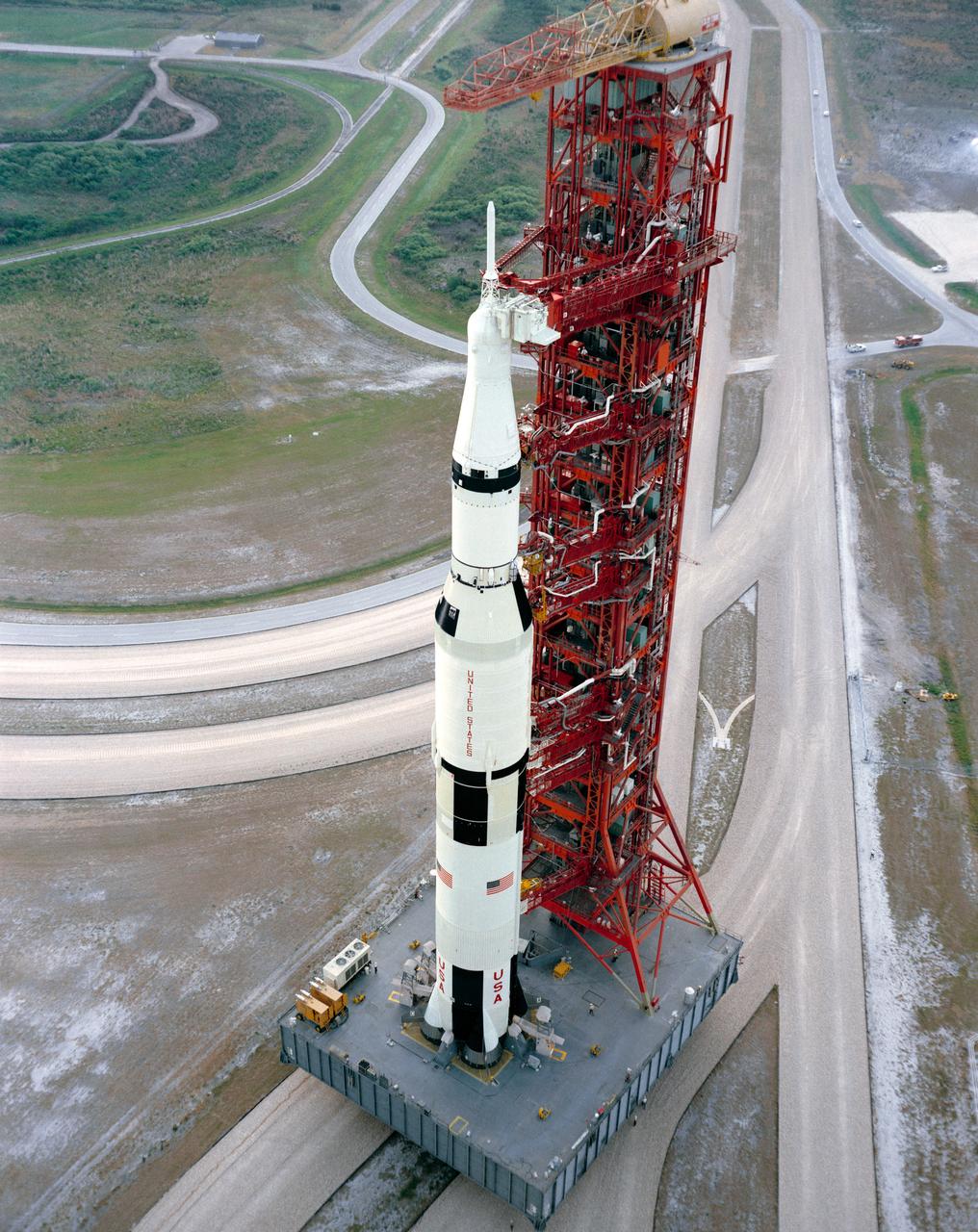
JSC · 1971-05-11 · S71-33781
View of Apollo 15 space vehicle on way from VAB to Pad A, Launch Complex 39
S71-33781 (11 May 1971) --- High angle view showing the Apollo 15 (Spacecraft 112/Lunar Module 10/Saturn 510) space vehicle on the way from the Vehicle Assembly Building (VAB)…
Inspect NASA record
S71-33781 (11 May 1971) --- High angle view showing the Apollo 15 (Spacecraft 112/Lunar Module 10/Saturn 510) space vehicle on the way from the Vehicle Assembly Building (VAB) to Pad A, Launch Complex 39, Kennedy Space Center (KSC). The Saturn V stack and its mobile launch tower are atop a huge crawler-transporter. Apollo 15 is scheduled as the fourth manned lunar landing mission by the National Aeronautics and Space Administration (NASA). The crew men will be astronauts David R. Scott, commander; Alfred M. Worden, command module pilot; and James B. Irwin, lunar module pilot. While astronauts Scott and Irwin descend in the Lunar Module (LM) to explore the moon, astronaut Worden will remain with the Command and Service Modules (CSM) in lunar orbit.
- Record ID
- S71-33781
- NASA center
- JSC
- Date
- 1971-05-11
- Keywords
- APOLLO 15 FLIGHT, APOLLO PROJECT, APOLLO SPACECRAFT, FACILITIES, FLORIDA, KENNEDY SPACE CENTER, LAUNCHING SITES, SATURN LAUNCH VEHICLES TRANSPORT VEHICLES, TRANSPORTATION
JSC · 1969-11-20 · as12-57-8455
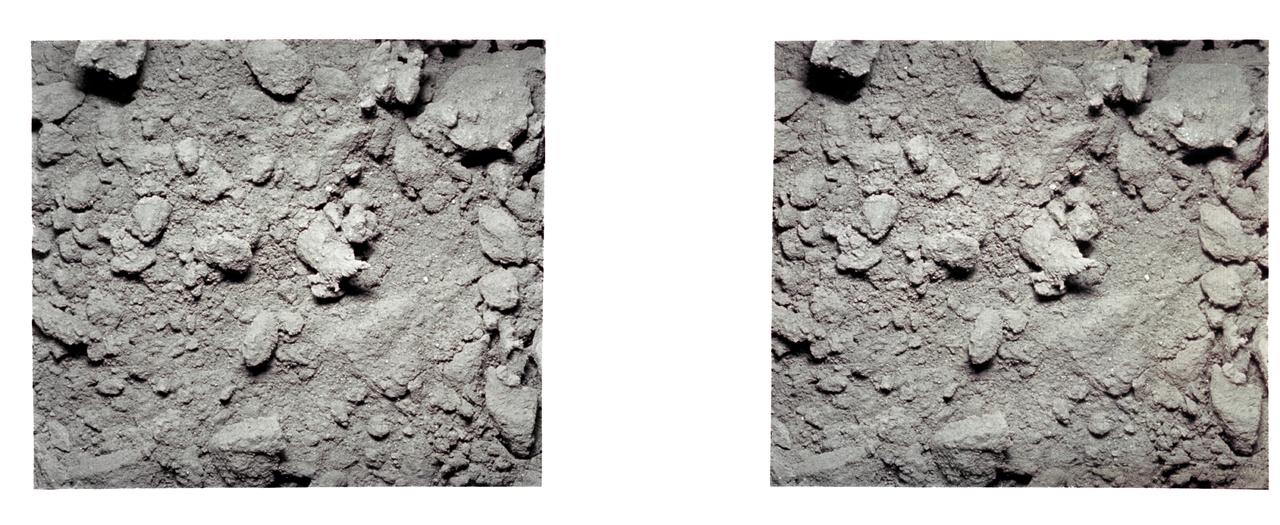
Apollo 12 stereo view of lunar surface
AS12-57-8455 (19-20 Nov. 1969) --- An Apollo 12 stereo view showing a three-inch square of the lunar surface. The exposure was made with an Apollo 35mm stereo close-up…
Inspect NASA record
AS12-57-8455 (19-20 Nov. 1969) --- An Apollo 12 stereo view showing a three-inch square of the lunar surface. The exposure was made with an Apollo 35mm stereo close-up camera during extravehicular activity of the Apollo 12 lunar landing mission. The camera was developed to get the highest possible resolution of a small area. The three-inch square is photographed with a flash illumination and at a fixed distance. The camera is mounted on a walking stick, and the astronauts use it by holding it up against the object to be photographed and pulling the trigger. Astronauts Charles Conrad Jr., commander, and Alan L. Bean, lunar module pilot, descended in the Apollo 12 Lunar Module to explore the moon while astronaut Richard F. Gordon Jr. remained with the Command and Service Modules in lunar orbit in the capacity of command module pilot.
- Record ID
- as12-57-8455
- NASA center
- JSC
- Date
- 1969-11-20
- Keywords
- APOLLO 12 FLIGHT, APOLLO PROJECT, EXTRAVEHICULAR ACTIVITY, LUNAR PHOTOGRAPHS LUNAR SOIL, LUNAR SURFACE, PHOTOGRAPHIC EQUIPMENT, PHOTOGRAPHY
JSC · 1972-04-21 · as16-113-18347
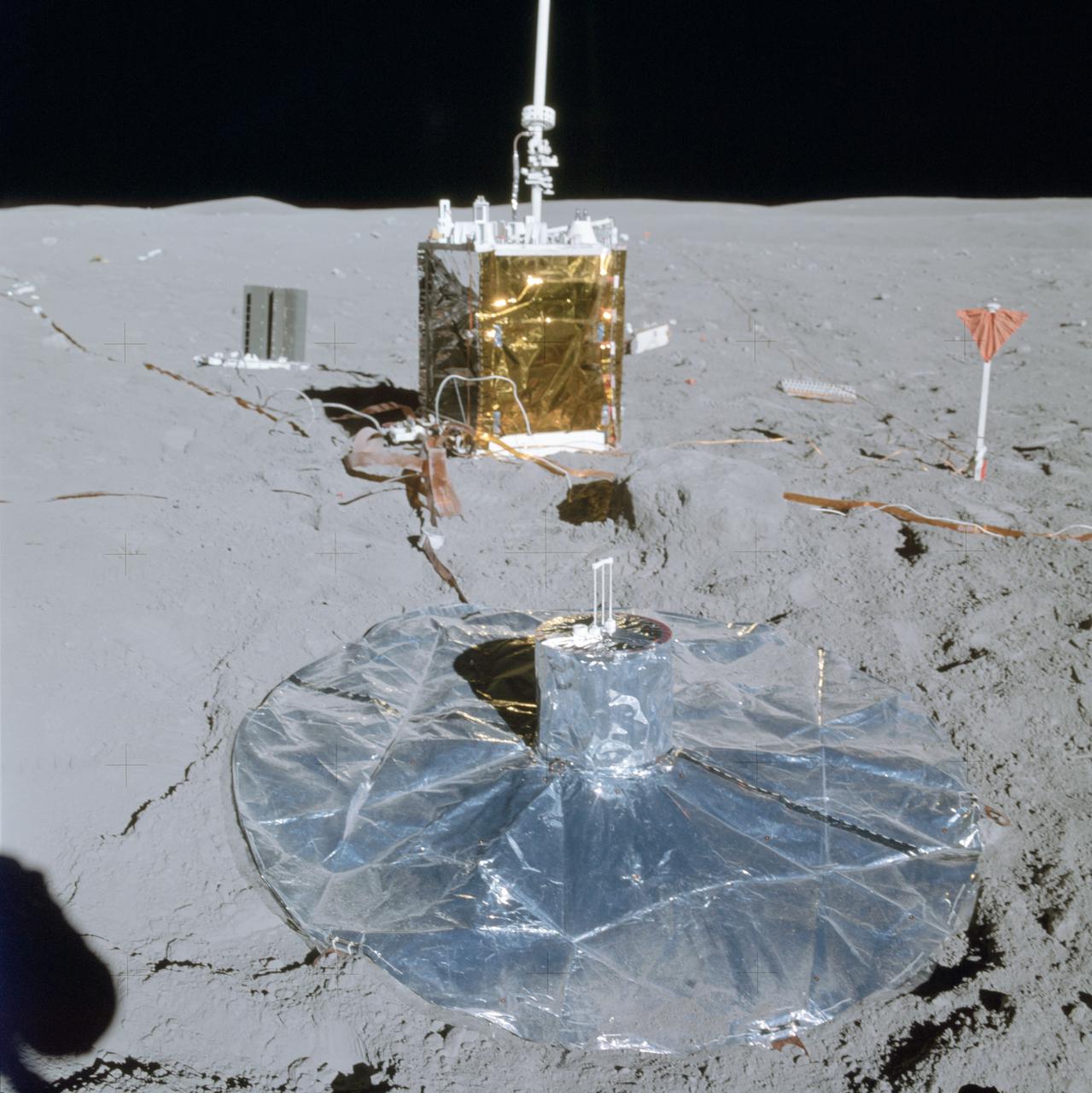
Partial view of the deployed Apollo Lunar Surface Experiments Package
AS16-113-18347 (21 April 1972) --- A partial view of the Apollo 16 Apollo Lunar Surface Experiments Package (ALSEP) in deployed configuration on the lunar surface as photographed during…
Inspect NASA record
AS16-113-18347 (21 April 1972) --- A partial view of the Apollo 16 Apollo Lunar Surface Experiments Package (ALSEP) in deployed configuration on the lunar surface as photographed during the mission's first extravehicular activity (EVA), on April 21, 1972. The Passive Seismic Experiment (PSE) is in the foreground center; Central Station (C/S) is in center background, with the Radioisotope Thermoelectric Generator (RTG) to the left. One of the anchor flags for the Active Seismic Experiment (ASE) is at right. While astronauts John W. Young, commander; and Charles M. Duke Jr., lunar module pilot; descended in the Apollo 16 Lunar Module (LM) "Orion" to explore the Descartes highlands landing site on the moon, astronaut Thomas K. Mattingly II, command module pilot, remained with the Command and Service Modules (CSM) "Casper" in lunar orbit.
- Record ID
- as16-113-18347
- NASA center
- JSC
- Date
- 1972-04-21
- Keywords
- APOLLO 16 FLIGHT, APOLLO PROJECT, DEPLOYMENT, EXTRAVEHICULAR ACTIVITY, GENERATORS, LUNAR SURFACE, SEISMOGRAPHS, SPACEBORNE EXPERIMENTS
JSC · 1969-07-16 · s69-39525
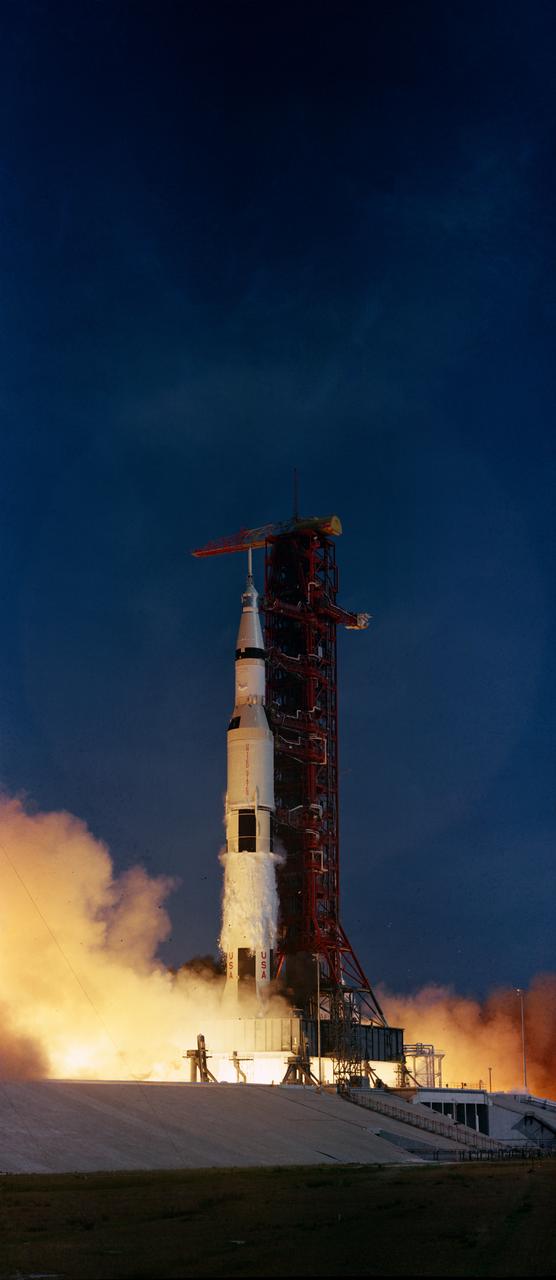
APOLLO XI - LAUNCH - KSC
S69-39525 (16 July 1969) --- The huge, 363-feet tall Apollo 11 (Spacecraft 107/Lunar Module 5/Saturn 506) space vehicle is launched from Pad A, Launch Complex 39, Kennedy Space…
Inspect NASA record
S69-39525 (16 July 1969) --- The huge, 363-feet tall Apollo 11 (Spacecraft 107/Lunar Module 5/Saturn 506) space vehicle is launched from Pad A, Launch Complex 39, Kennedy Space Center (KSC), at 9:32 a.m. (EDT), July 16, 1969. Onboard the Apollo 11 spacecraft were astronauts Neil A. Armstrong, commander; Michael Collins, command module pilot; and Edwin E. Aldrin Jr., lunar module pilot. Apollo 11 is the United States first lunar landing mission. While astronauts Armstrong and Aldrin descend in the Lunar Module (LM) "Eagle" to explore the Sea of Tranquility region of the moon, astronaut Collins will remain with the Command and Service Modules (CSM) "Columbia" in lunar orbit.
- Record ID
- s69-39525
- NASA center
- JSC
- Date
- 1969-07-16
JSC · 1972-04-16 · as16-118-18873
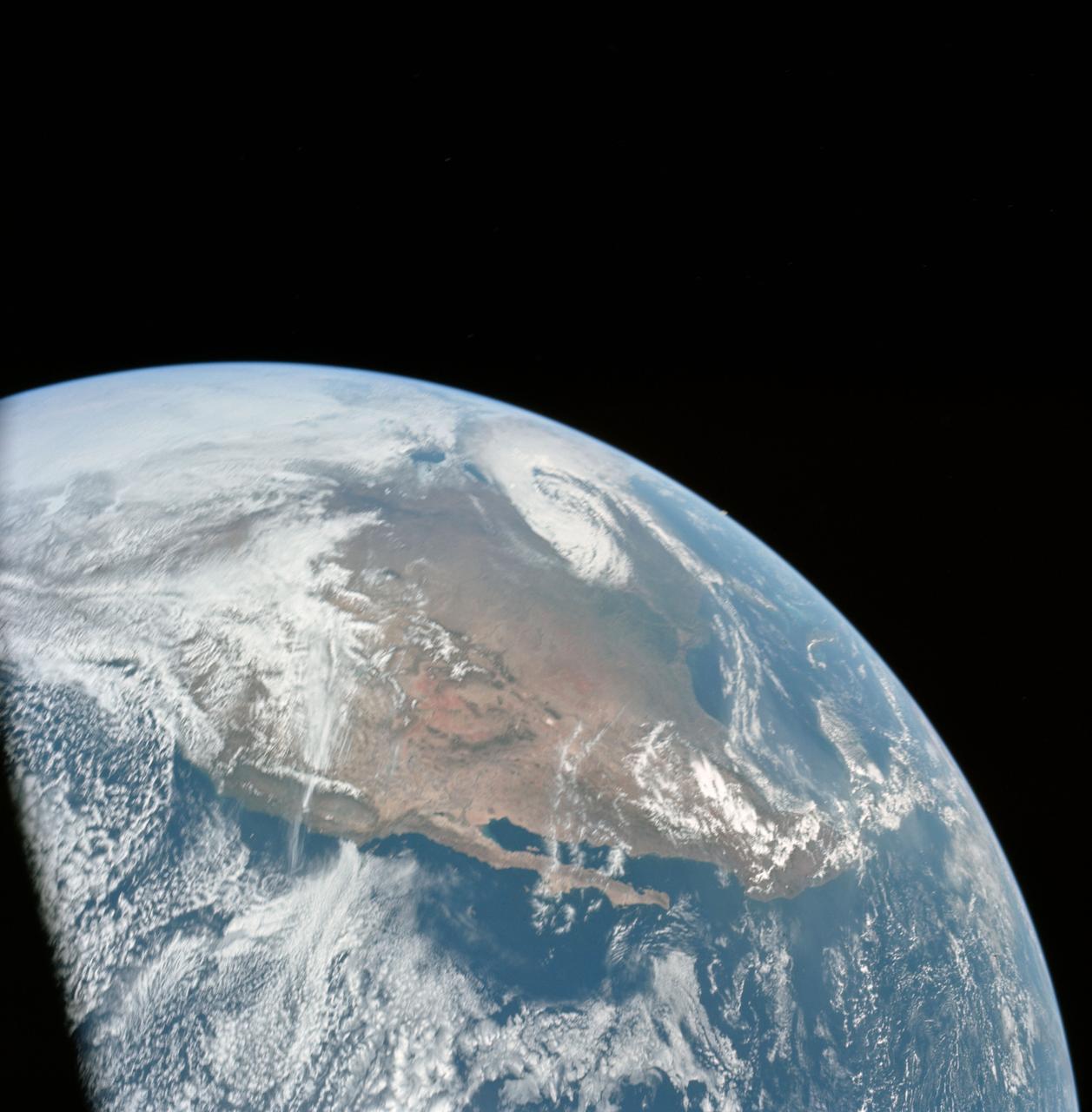
Apollo 16 view of the earth from translunar injection
AS16-118-18873 (16 April 1972) --- A good view of Earth photographed shortly after trans-lunar injection of April 16, 1972. Although there is much cloud cover (over Canada and…
Inspect NASA record
AS16-118-18873 (16 April 1972) --- A good view of Earth photographed shortly after trans-lunar injection of April 16, 1972. Although there is much cloud cover (over Canada and the oceans), the United States in large part, most of Mexico and some parts of Central America are clearly visible. Note Lake Michigan and Lake Superior, also note the Bahama Banks at upper right part of the sphere. A large part of the Rocky Mountain Range is also visible. Just beginning man's fifth lunar landing mission were astronauts John W. Young, commander; Thomas K. Mattingly II, command module pilot; and Charles M. Duke Jr., lunar module pilot. While astronauts Young and Duke descended in the Lunar Module (LM) to explore the moon, astronaut Mattingly remained with the Command and Service Modules (CSM) in lunar orbit.
- Record ID
- as16-118-18873
- NASA center
- JSC
- Date
- 1972-04-16
- Keywords
- APOLLO 16 FLIGHT, APOLLO PROJECT, CLOUDS, EARTH (PLANET), ONBOARD ACTIVITIES EARTH OBSERVATIONS (FROM SPACE), PHOTOGRAPHY
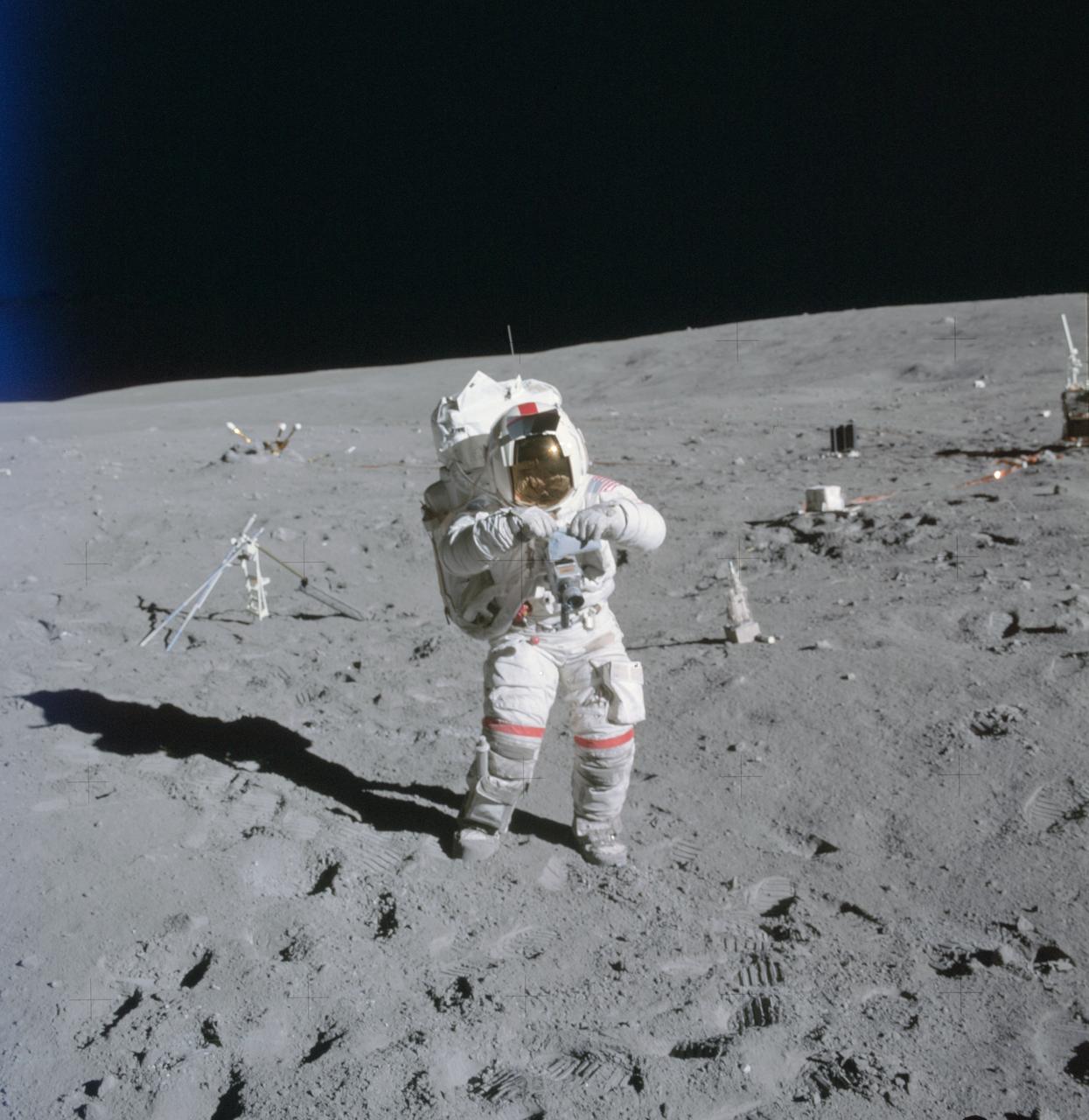
JSC · 1972-04-21 · as16-114-18388
Astronaut John Young stands at ALSEP deployment site during first EVA
AS16-114-18388 (21 April 1972) --- Astronaut John W. Young, commander of the Apollo 16 lunar landing mission, stands at the Apollo Lunar Surface Experiments Package (ALSEP) deployment site…
Inspect NASA record
AS16-114-18388 (21 April 1972) --- Astronaut John W. Young, commander of the Apollo 16 lunar landing mission, stands at the Apollo Lunar Surface Experiments Package (ALSEP) deployment site during the first Apollo 16 extravehicular activity (EVA) at the Descartes landing site. The components of the ALSEP are in the background. The lunar surface drill is just behind and to the right of astronaut Young. The drill's rack and bore stems are to the left. The three-sensor Lunar Surface Magnetometer is beyond the rack. The dark object in the right background is the Radioisotope Thermoelectric Generator (RTG). Between the RTG and the drill is the Heat Flow Experiment. A part of the Central Station is at the right center edge of the picture. This photograph was taken by astronaut Charles M. Duke Jr., lunar module pilot.
- Record ID
- as16-114-18388
- NASA center
- JSC
- Date
- 1972-04-21
- Keywords
- APOLLO 16 FLIGHT, APOLLO PROJECT, ASTRONAUTS, DEPLOYMENT, LUNAR SURFACE, EXTRAVEHICULAR ACTIVITY, SPACEBORNE EXPERIMENTS

JSC · 1969-07-16 · S69-39526
APOLLO XI - LAUNCH - KSC
S69-39526 (16 July 1969) --- The huge, 363-feet tall Apollo 11 (Spacecraft 107/Lunar Module 5/Saturn 506) space vehicle is launched from Pad A, Launch Complex 39 Kennedy Space…
Inspect NASA record
S69-39526 (16 July 1969) --- The huge, 363-feet tall Apollo 11 (Spacecraft 107/Lunar Module 5/Saturn 506) space vehicle is launched from Pad A, Launch Complex 39 Kennedy Space Center (KSC), at 9:32 a.m. (EDT), July 16, 1969. Onboard the Apollo 11 spacecraft were astronauts Neil A. Armstrong, commander; Michael Collins, command module pilot; and Edwin E. Aldrin Jr., lunar module pilot. Apollo 11 is the United States first lunar landing mission. Astronauts Armstrong and Aldrin will descend in the Lunar Module (LM) "Eagle" to explore the Sea of Tranquility region of the moon, while astronaut Collins remains with the Command and Service Modules (CSM) "Columbia" in lunar orbit.
- Record ID
- S69-39526
- NASA center
- JSC
- Date
- 1969-07-16