
Update Site (from NASA)
Explore NASA’s Image and Video Library.
Suggest one object per day for the Interstellar Minds collection. We review each suggestion before adding it.
Sign in to suggest a Marvel.
Find a NASA image ID. Open a NASA record and copy its ID from the end of the details URL.
NASA image records
KSC · 2020-10-29 · KSC-20201029-PH-CSH01_0035
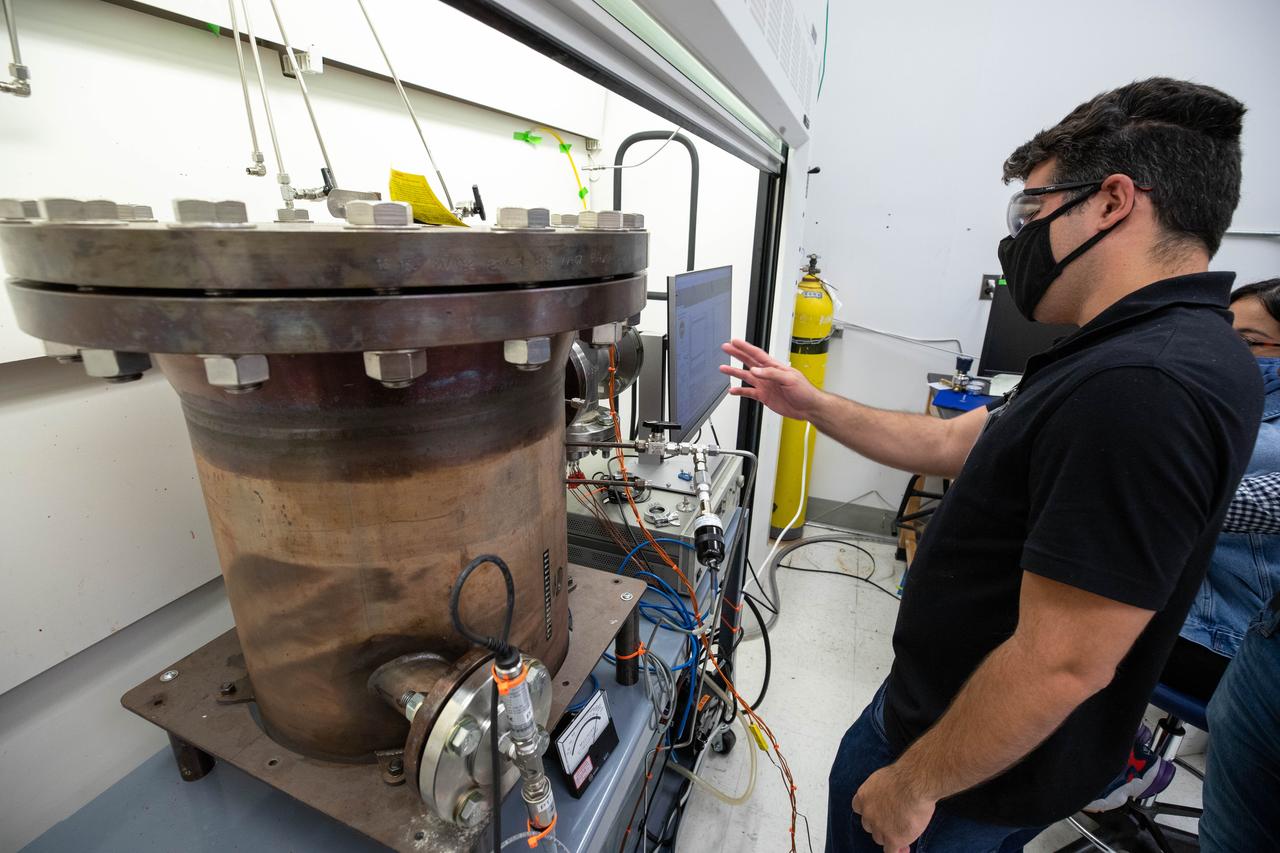
GALORE Testing - Regolith Melt Testing
Jaime Toro, a mechanical engineer supporting the Gaseous Lunar Oxygen from Regolith Electrolysis (GaLORE) project at NASA’s Kennedy Space Center in Florida, checks the hardware that will be…
Inspect NASA record
Jaime Toro, a mechanical engineer supporting the Gaseous Lunar Oxygen from Regolith Electrolysis (GaLORE) project at NASA’s Kennedy Space Center in Florida, checks the hardware that will be used to melt lunar regolith – dirt and dust on the Moon made from crushed rock – simulants during a test inside a laboratory at Kennedy’s Neil Armstrong Operations and Checkout Building on Oct. 29, 2020. GaLORE was selected as an Early Career Initiative project by the agency’s Space Technology Mission directorate, and the team was tasked with developing a device that could melt lunar regolith and turn it into oxygen. As NASA prepares to land the first woman and the next man on the Moon in 2024 as part of the Artemis program, technology such as this can assist with sustainable human lunar exploration and long-duration missions to Mars.
- Record ID
- KSC-20201029-PH-CSH01_0035
- NASA center
- KSC
- Date
- 2020-10-29
- Credit
- NASA/Cory Huston
- Keywords
- NASA, Kennedy Space Center, KSC, Early Career Initiative, ECI, GaLORE, Gaseous Lunar Oxygen for Regolith Electrolysis
KSC · 2020-10-29 · KSC-20201029-PH-CSH01_0038
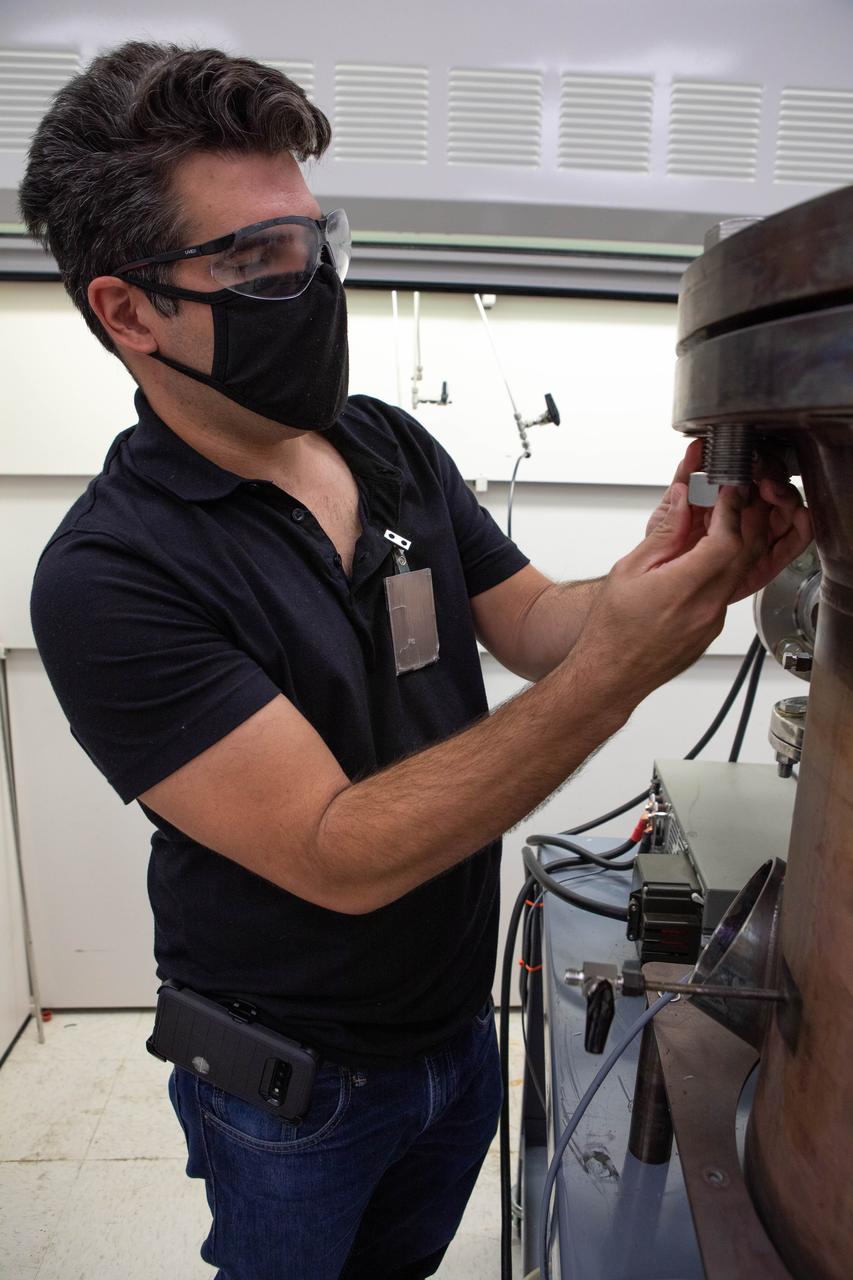
GALORE Testing - Regolith Melt Testing
Jaime Toro, a mechanical engineer supporting the Gaseous Lunar Oxygen from Regolith Electrolysis (GaLORE) project at NASA’s Kennedy Space Center in Florida, checks the hardware that will be…
Inspect NASA record
Jaime Toro, a mechanical engineer supporting the Gaseous Lunar Oxygen from Regolith Electrolysis (GaLORE) project at NASA’s Kennedy Space Center in Florida, checks the hardware that will be used to melt lunar regolith – dirt and dust on the Moon made from crushed rock – simulants during a test inside a laboratory at Kennedy’s Neil Armstrong Operations and Checkout Building on Oct. 29, 2020. GaLORE was selected as an Early Career Initiative project by the agency’s Space Technology Mission directorate, and the team was tasked with developing a device that could melt lunar regolith and turn it into oxygen. As NASA prepares to land the first woman and the next man on the Moon in 2024 as part of the Artemis program, technology such as this can assist with sustainable human lunar exploration and long-duration missions to Mars.
- Record ID
- KSC-20201029-PH-CSH01_0038
- NASA center
- KSC
- Date
- 2020-10-29
- Credit
- NASA/Cory Huston
- Keywords
- NASA, Kennedy Space Center, KSC, Early Career Initiative, ECI, GaLORE, Gaseous Lunar Oxygen for Regolith Electrolysis
JSC · 1972-03-14 · S72-31047
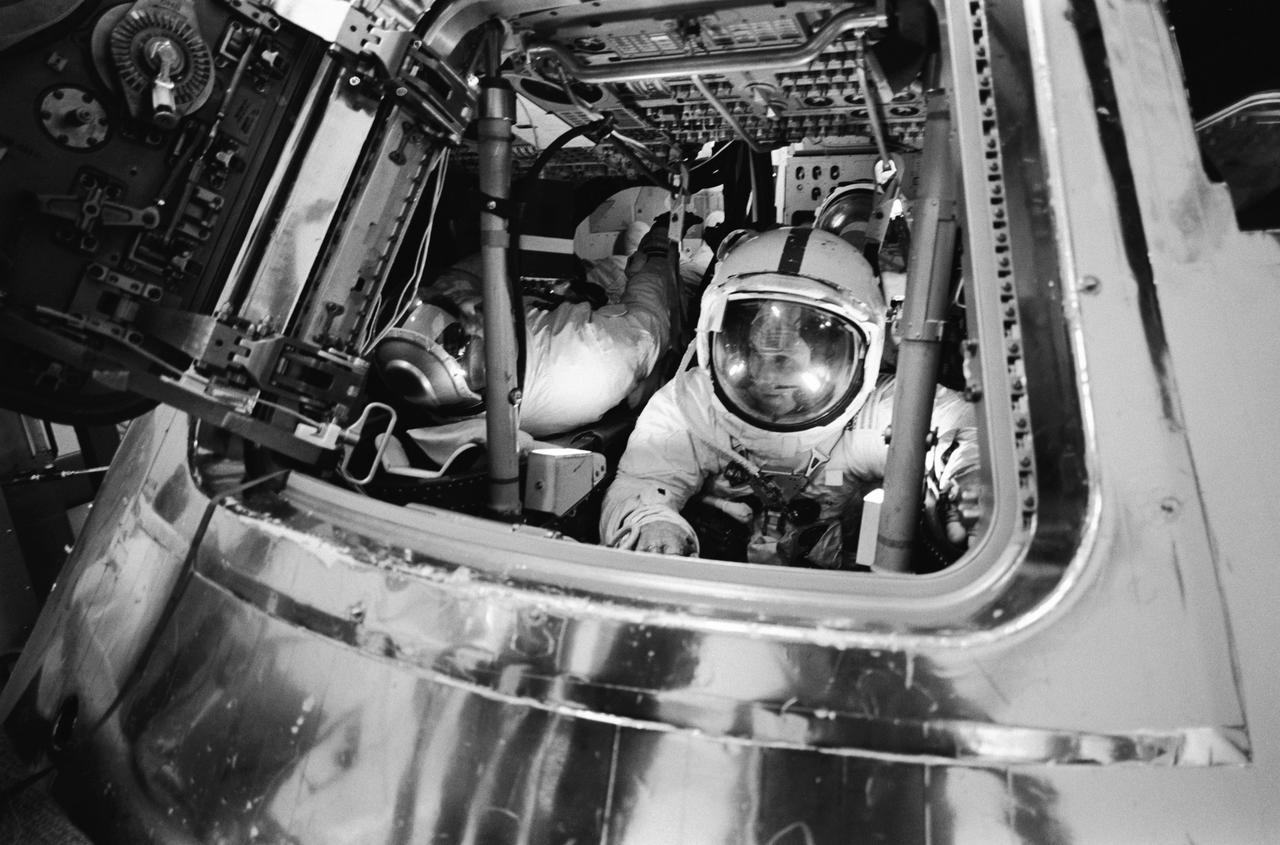
Apollo 16 astronauts in Apollo Command Module Mission Simulator
S72-31047 (March 1972) --- Astronaut Thomas K. Mattingly II (right foreground), command module pilot of the Apollo 16 lunar landing mission, participates in extravehicular activity (EVA) training in…
Inspect NASA record
S72-31047 (March 1972) --- Astronaut Thomas K. Mattingly II (right foreground), command module pilot of the Apollo 16 lunar landing mission, participates in extravehicular activity (EVA) training in Building 5 at the Manned Spacecraft Center (MSC). Mattingly is scheduled to perform EVA during the Apollo 16 journey home from the moon. Astronaut John W. Young, commander, can be seen in the left background. In the right background is astronaut Charles M. Duke Jr., lunar module pilot. They are inside the Apollo Command Module Mission Simulator. While Mattingly remains with the Apollo 16 Command and Service Modules (CSM) in lunar orbit, Young and Duke will descend in the Lunar Module (LM) to the moon's Descartes landing site.
- Record ID
- S72-31047
- NASA center
- JSC
- Date
- 1972-03-14
KSC · 2020-10-29 · KSC-20201029-PH-CSH01_0002
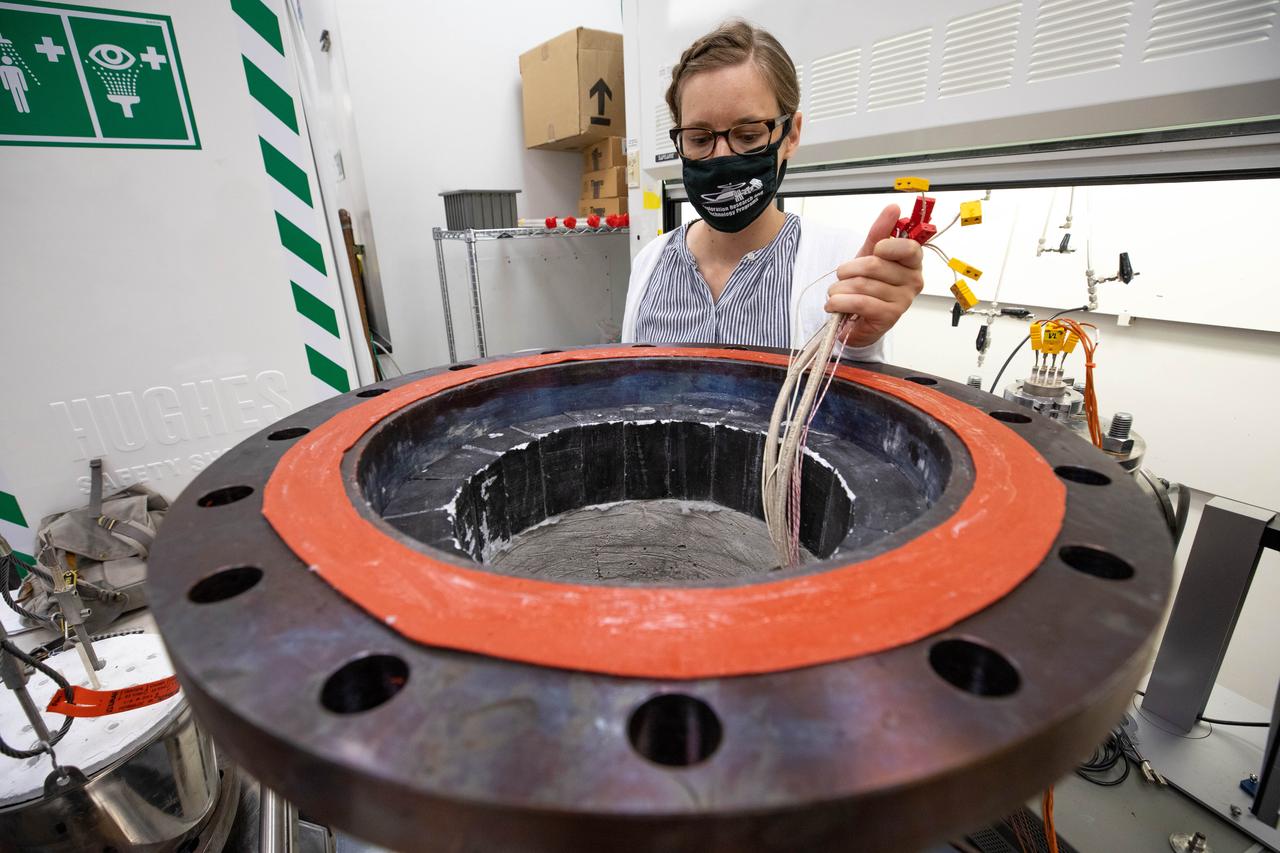
GALORE Testing - Regolith Melt Testing
Elspeth Petersen, a chemical engineer and member of the Gaseous Lunar Oxygen from Regolith Electrolysis (GaLORE) project team at NASA’s Kennedy Space Center in Florida, inspects hardware before…
Inspect NASA record
Elspeth Petersen, a chemical engineer and member of the Gaseous Lunar Oxygen from Regolith Electrolysis (GaLORE) project team at NASA’s Kennedy Space Center in Florida, inspects hardware before a test to melt lunar regolith – dirt and dust on the Moon made from crushed rock – simulants inside a laboratory at Kennedy’s Neil Armstrong Operations and Checkout Building on Oct. 29, 2020. GaLORE was selected as an Early Career Initiative project by the agency’s Space Technology Mission directorate, and the team was tasked with developing a device that could melt lunar regolith and turn it into oxygen. As NASA prepares to land the first woman and the next man on the Moon in 2024 as part of the Artemis program, technology such as this can assist with sustainable human lunar exploration and long-duration missions to Mars.
- Record ID
- KSC-20201029-PH-CSH01_0002
- NASA center
- KSC
- Date
- 2020-10-29
- Credit
- NASA/Cory Huston
- Keywords
- NASA, Kennedy Space Center, KSC, Early Career Initiative, ECI, GaLORE, Gaseous Lunar Oxygen for Regolith Electrolysis
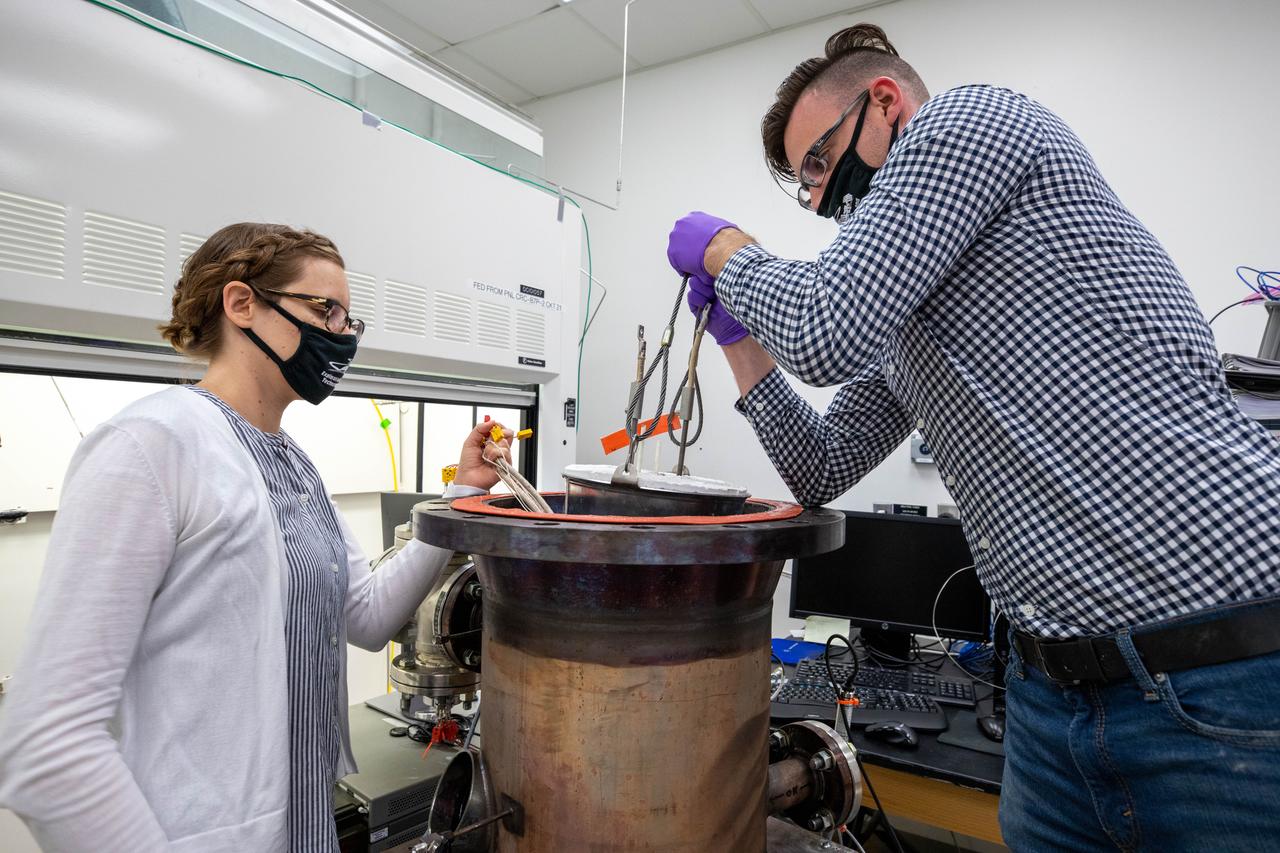
KSC · 2020-10-29 · KSC-20201029-PH-CSH01_0003
GALORE Testing - Regolith Melt Testing
Elspeth Petersen, left, a chemical engineer and member of the Gaseous Lunar Oxygen from Regolith Electrolysis (GaLORE) project team, and Kevin Grossman, GaLORE principal investigator, inspect a reactor…
Inspect NASA record
Elspeth Petersen, left, a chemical engineer and member of the Gaseous Lunar Oxygen from Regolith Electrolysis (GaLORE) project team, and Kevin Grossman, GaLORE principal investigator, inspect a reactor before a test to melt lunar regolith – dirt and dust on the Moon made from crushed rock – simulants inside a laboratory at Kennedy’s Neil Armstrong Operations and Checkout Building on Oct. 29, 2020. GaLORE was selected as an Early Career Initiative project by the agency’s Space Technology Mission directorate, and the team was tasked with developing a device that could melt lunar regolith and turn it into oxygen. As NASA prepares to land the first woman and the next man on the Moon in 2024 as part of the Artemis program, technology such as this can assist with sustainable human lunar exploration and long-duration missions to Mars.
- Record ID
- KSC-20201029-PH-CSH01_0003
- NASA center
- KSC
- Date
- 2020-10-29
- Credit
- NASA/Cory Huston
- Keywords
- NASA, Kennedy Space Center, KSC, Early Career Initiative, ECI, GaLORE, Gaseous Lunar Oxygen for Regolith Electrolysis
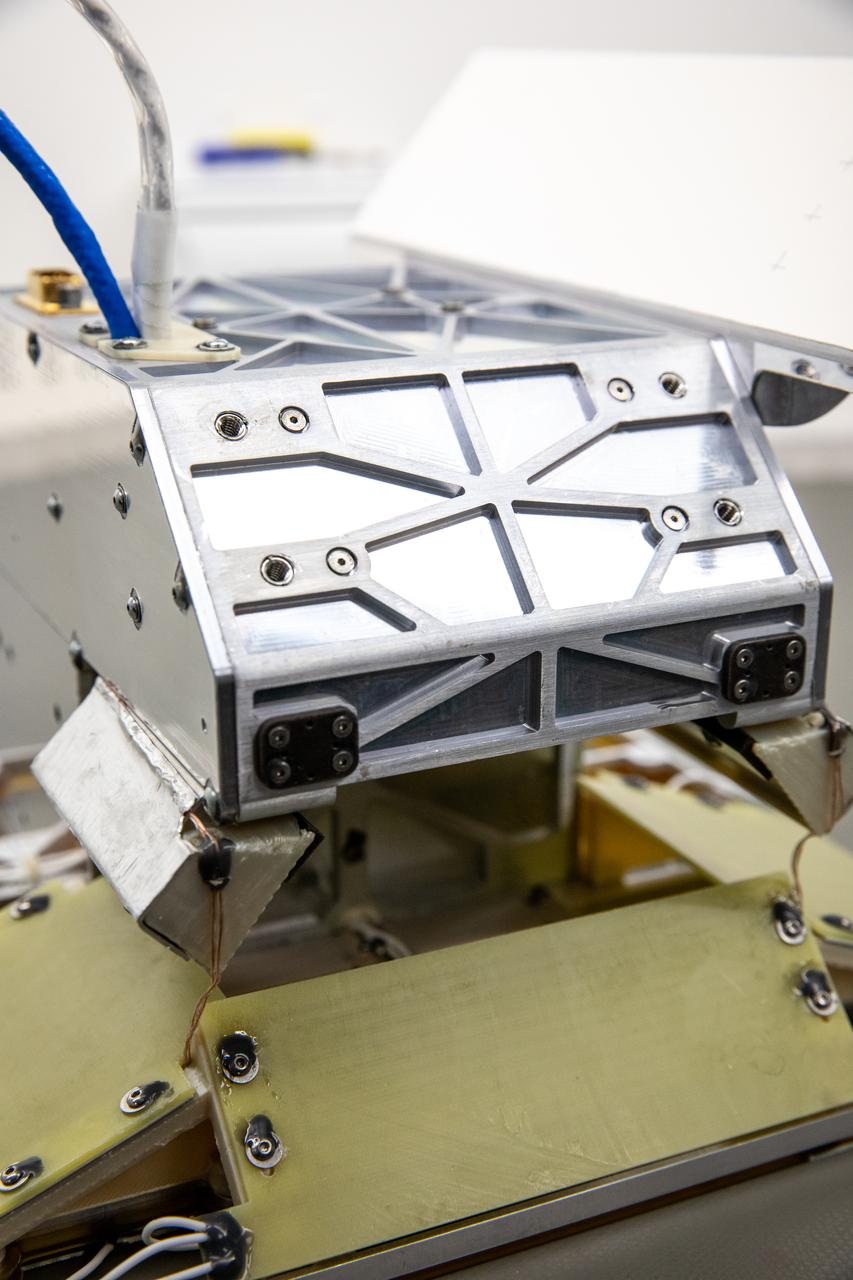
KSC · 2023-01-18 · KSC-20230118-PH-CSH01_0008
Electrodynamic Dust Shield
Inside of the Electrostatics and Surface Physics Laboratory at NASA’s Kennedy Space Center in Florida, an electrodynamic dust shield (EDS) is in view on Jan. 18, 2023. The…
Inspect NASA record
Inside of the Electrostatics and Surface Physics Laboratory at NASA’s Kennedy Space Center in Florida, an electrodynamic dust shield (EDS) is in view on Jan. 18, 2023. The dust shield is one of the payloads that will fly aboard Firefly Aerospace’s Blue Ghost lunar lander as part of NASA’s Commercial Lunar Payload Services (CLPS) initiative. During the mission, EDS will generate a non-uniform electric field using varying high voltage on multiple electrodes. This traveling field, in turn, carries away the particles and has potential applications in thermal radiators, spacesuit fabrics, visors, camera lenses, solar panels, and many other technologies. The CLPS initiative is a key part of NASA’s Artemis lunar exploration efforts. The science and technology payloads sent to the Moon’s surface as part of the initiative will help lay the foundation for human missions and a sustainable human presence on the lunar surface.
- Record ID
- KSC-20230118-PH-CSH01_0008
- NASA center
- KSC
- Date
- 2023-01-18
- Credit
- NASA/Cory Huston
- Keywords
- CLPS, Commercial Lunar Payload Services, EDS, Electrodynamic Dust Shield, dust mitigation technology, electric fields
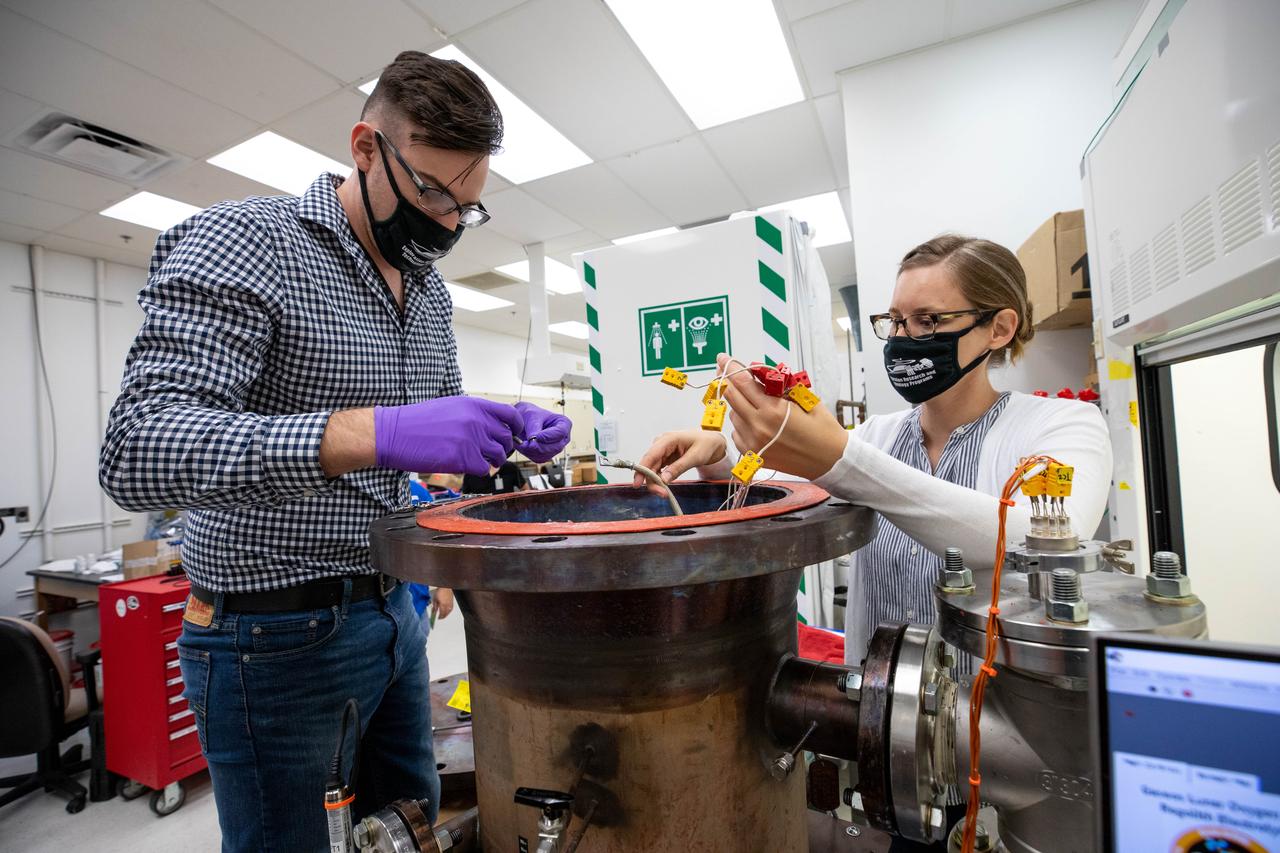
KSC · 2020-10-29 · KSC-20201029-PH-CSH01_0009
GALORE Testing - Regolith Melt Testing
Kevin Grossman, left, principal investigator of the Gaseous Lunar Oxygen from Regolith Electrolysis (GaLORE) project, and Elspeth Petersen, a chemical engineer and member of the GaLORE team, check…
Inspect NASA record
Kevin Grossman, left, principal investigator of the Gaseous Lunar Oxygen from Regolith Electrolysis (GaLORE) project, and Elspeth Petersen, a chemical engineer and member of the GaLORE team, check some of the project’s hardware that will be used to melt lunar regolith – dirt and dust on the Moon made from crushed rock – simulants during a test inside a laboratory at Kennedy’s Neil Armstrong Operations and Checkout Building on Oct. 29, 2020. GaLORE was selected as an Early Career Initiative project by the agency’s Space Technology Mission directorate, and the team was tasked with developing a device that could melt lunar regolith and turn it into oxygen. As NASA prepares to land the first woman and the next man on the Moon in 2024 as part of the Artemis program, technology such as this can assist with sustainable human lunar exploration and long-duration missions to Mars.
- Record ID
- KSC-20201029-PH-CSH01_0009
- NASA center
- KSC
- Date
- 2020-10-29
- Credit
- NASA/Cory Huston
- Keywords
- NASA, Kennedy Space Center, KSC, Early Career Initiative, ECI, GaLORE, Gaseous Lunar Oxygen for Regolith Electrolysis
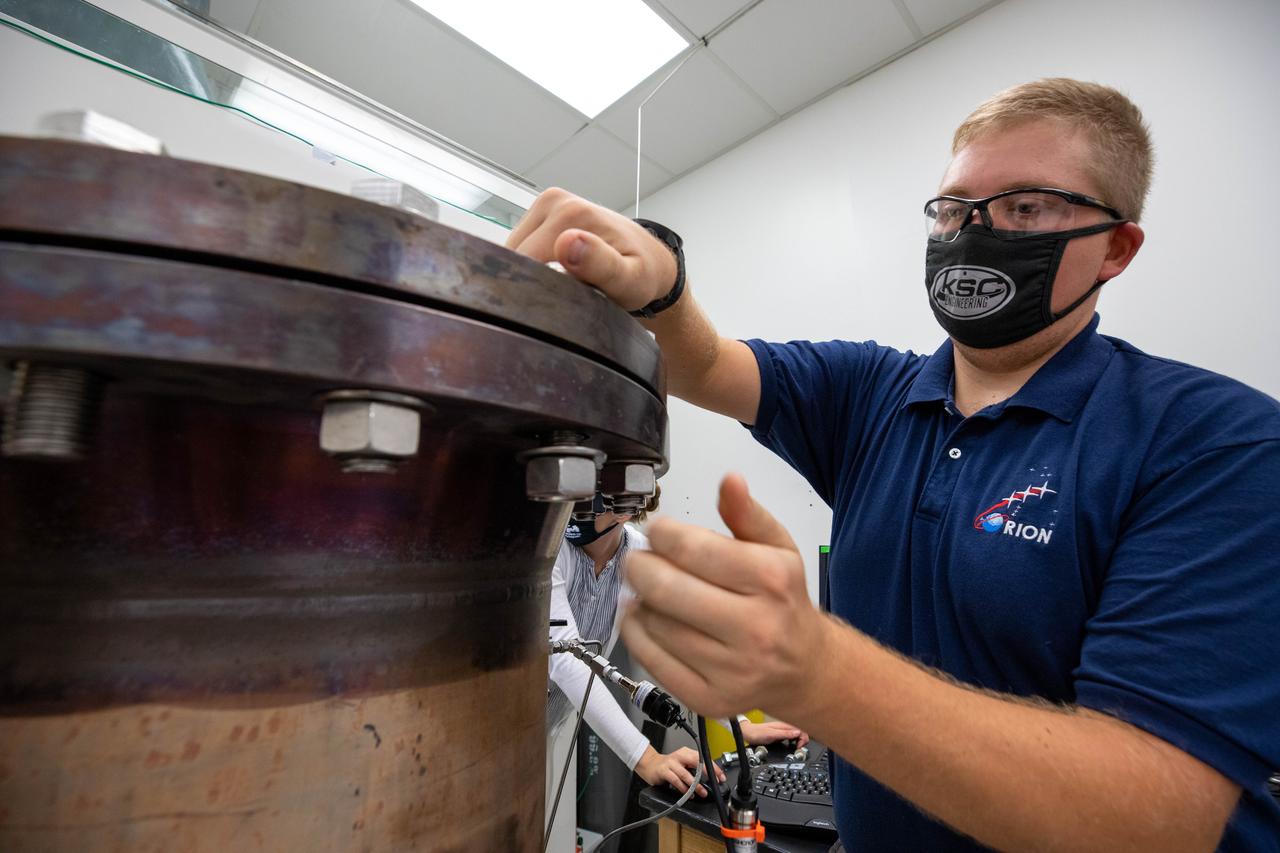
KSC · 2020-10-29 · KSC-20201029-PH-CSH01_0025
GALORE Testing - Regolith Melt Testing
Evan Bell, a mechanical engineer and member of the Gaseous Lunar Oxygen from Regolith Electrolysis (GaLORE) project team at NASA’s Kennedy Space Center in Florida, checks the hardware…
Inspect NASA record
Evan Bell, a mechanical engineer and member of the Gaseous Lunar Oxygen from Regolith Electrolysis (GaLORE) project team at NASA’s Kennedy Space Center in Florida, checks the hardware that will be used to melt lunar regolith – dirt and dust on the Moon made from crushed rock – simulants during a test inside a laboratory at Kennedy’s Neil Armstrong Operations and Checkout Building on Oct. 29, 2020. GaLORE was selected as an Early Career Initiative project by the agency’s Space Technology Mission directorate, and the team was tasked with developing a device that could melt lunar regolith and turn it into oxygen. As NASA prepares to land the first woman and the next man on the Moon in 2024 as part of the Artemis program, technology such as this can assist with sustainable human lunar exploration and long-duration missions to Mars.
- Record ID
- KSC-20201029-PH-CSH01_0025
- NASA center
- KSC
- Date
- 2020-10-29
- Credit
- NASA/Cory Huston
- Keywords
- NASA, Kennedy Space Center, KSC, Early Career Initiative, ECI, GaLORE, Gaseous Lunar Oxygen for Regolith Electrolysis
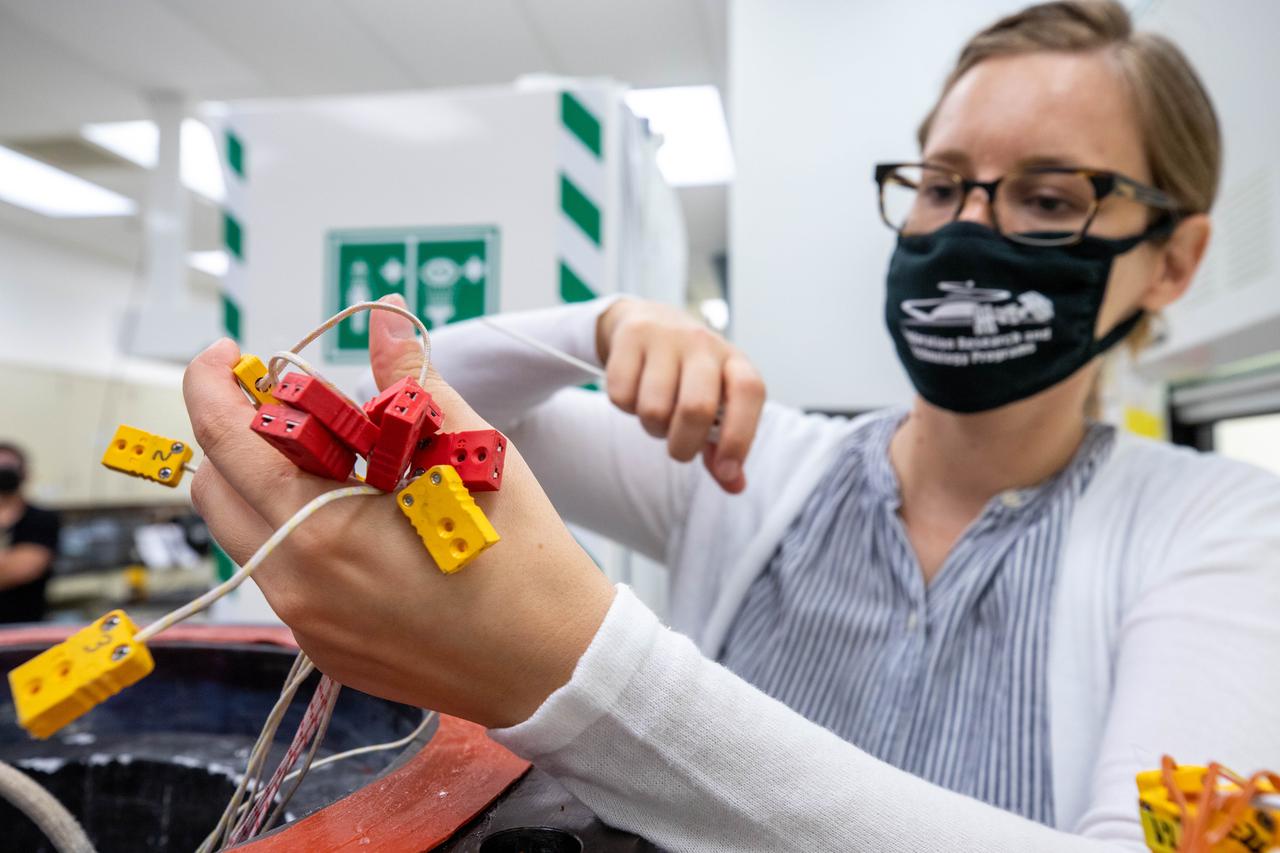
KSC · 2020-10-29 · KSC-20201029-PH-CSH01_0015
GALORE Testing - Regolith Melt Testing
Elspeth Petersen, a chemical engineer and member of the Gaseous Lunar Oxygen from Regolith Electrolysis (GaLORE) project team at NASA’s Kennedy Space Center in Florida, inspects some of…
Inspect NASA record
Elspeth Petersen, a chemical engineer and member of the Gaseous Lunar Oxygen from Regolith Electrolysis (GaLORE) project team at NASA’s Kennedy Space Center in Florida, inspects some of the GaLORE hardware that will be used to melt lunar regolith – dirt and dust on the Moon made from crushed rock – simulants during a test inside a laboratory at Kennedy’s Neil Armstrong Operations and Checkout Building on Oct. 29, 2020. GaLORE was selected as an Early Career Initiative project by the agency’s Space Technology Mission directorate, and the team was tasked with developing a device that could melt lunar regolith and turn it into oxygen. As NASA prepares to land the first woman and the next man on the Moon in 2024 as part of the Artemis program, technology such as this can assist with sustainable human lunar exploration and long-duration missions to Mars.
- Record ID
- KSC-20201029-PH-CSH01_0015
- NASA center
- KSC
- Date
- 2020-10-29
- Credit
- NASA/Cory Huston
- Keywords
- NASA, Kennedy Space Center, KSC, Early Career Initiative, ECI, GaLORE, Gaseous Lunar Oxygen for Regolith Electrolysis
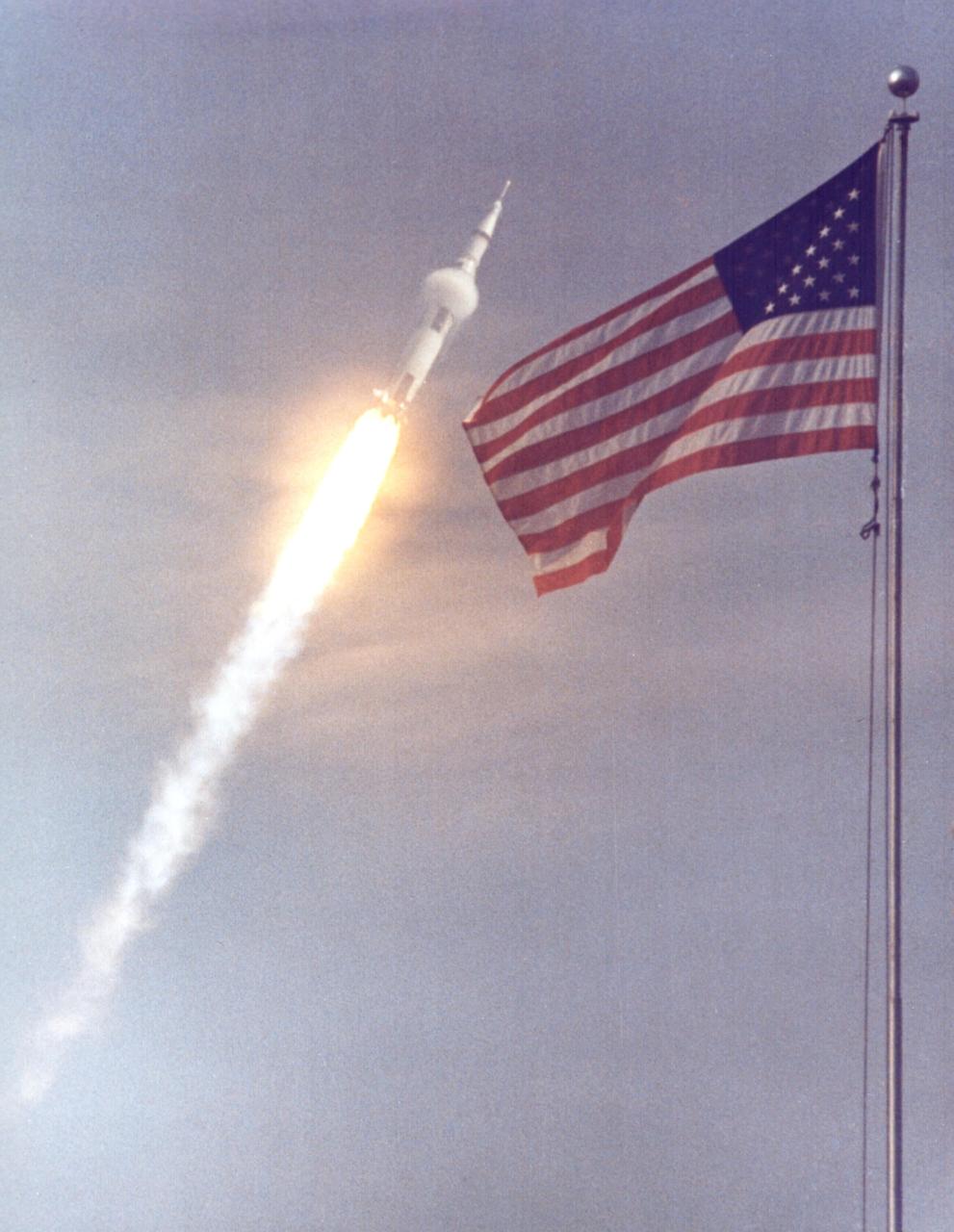
KSC · 1969-07-16 · KSC-69PC-397
KSC-69PC-397
KENNEDY SPACE CENTER, FLA. - The American flag heralds the flight of Apollo 11, man's first lunar landing mission. The Apollo 11 Saturn V space vehicle lifted off…
Inspect NASA record
KENNEDY SPACE CENTER, FLA. - The American flag heralds the flight of Apollo 11, man's first lunar landing mission. The Apollo 11 Saturn V space vehicle lifted off with astronauts Neil A. Armstrong, Michael Collins and Edwin E. Aldrin Jr. at 9:32 a.m. EDT from KSC's Launch Complex 39A. During the planned eight-day mission, Armstrong and Aldrin will descend in a Lunar Module (LM) to the Moon's surface while Collins orbits overhead in the Command Module. The two astronauts are to spend 22 hours on the Moon, including two-and-one-half hours outside the LM. They will gather samples of lunar material and will deploy scientific experiments that will transmit data about the lunar environment. They will rejoin Collins in the Command Module for the return trip to Earth.
- Record ID
- KSC-69PC-397
- NASA center
- KSC
- Date
- 1969-07-16
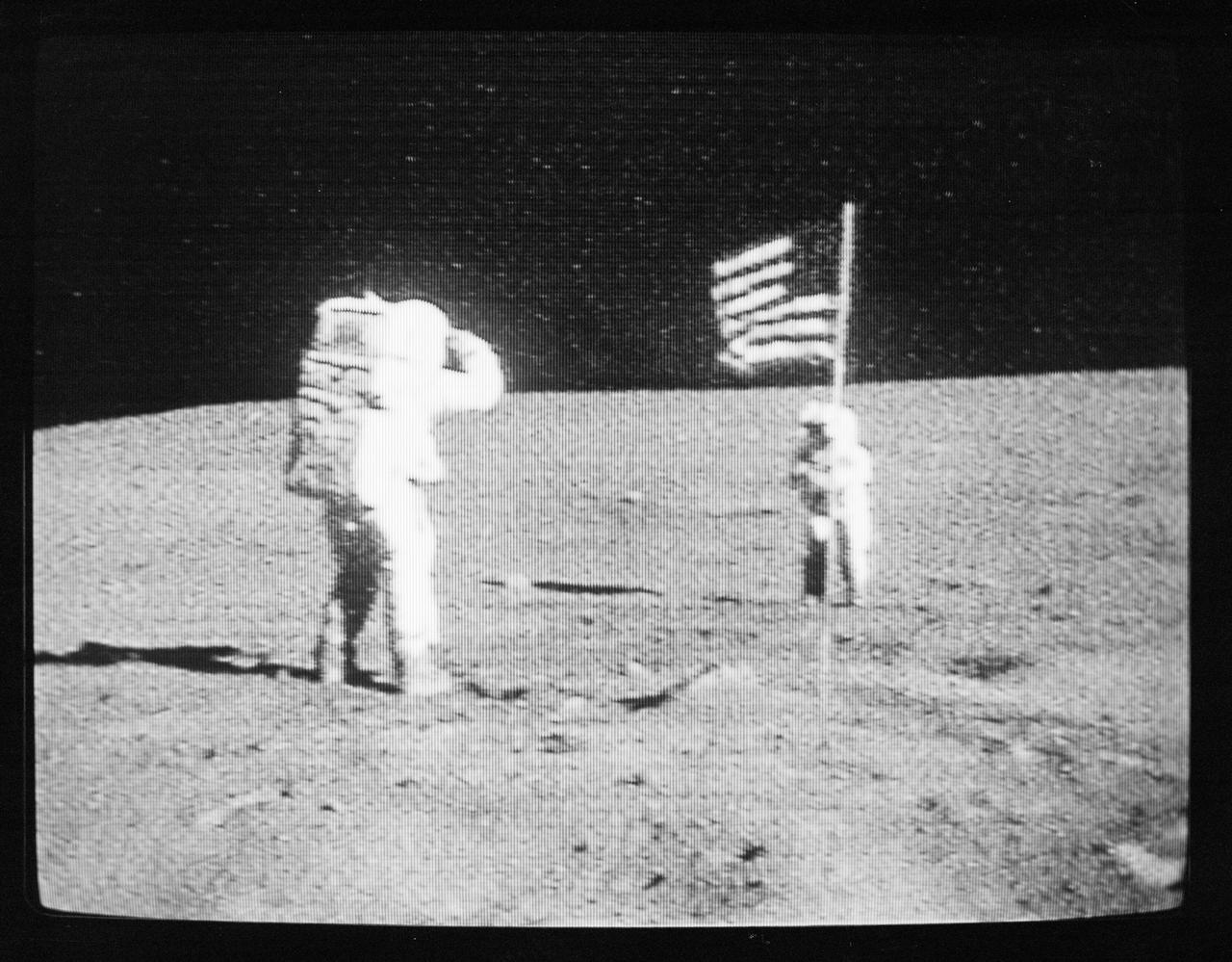
JSC · 1972-04-22 · S72-35595
TV Transmission Images - Apollo-Saturn (AS)-XVI Crewmen - Lunar Surface (Poor Quality)
S72-35595 (21 April 1972) --- Astronaut Charles M. Duke Jr., lunar module pilot, salutes the United States flag during the first Apollo 16 extravehicular activity (EVA) on the…
Inspect NASA record
S72-35595 (21 April 1972) --- Astronaut Charles M. Duke Jr., lunar module pilot, salutes the United States flag during the first Apollo 16 extravehicular activity (EVA) on the moon, as seen in this black & white reproduction taken from a color television transmission made by the color TV camera mounted on the Lunar Roving Vehicle (LRV). Astronaut John W. Young, commander of the Apollo 16 lunar landing mission, stands beside the flag. While astronauts Young and Duke descended in the Apollo 16 Lunar Module (LM) "Orion" to explore the Descartes highlands landing site on the moon, astronaut Thomas K. Mattingly II, command module pilot, remained with the Command and Service Modules (CSM) "Casper" in lunar orbit.
- Record ID
- S72-35595
- NASA center
- JSC
- Date
- 1972-04-22
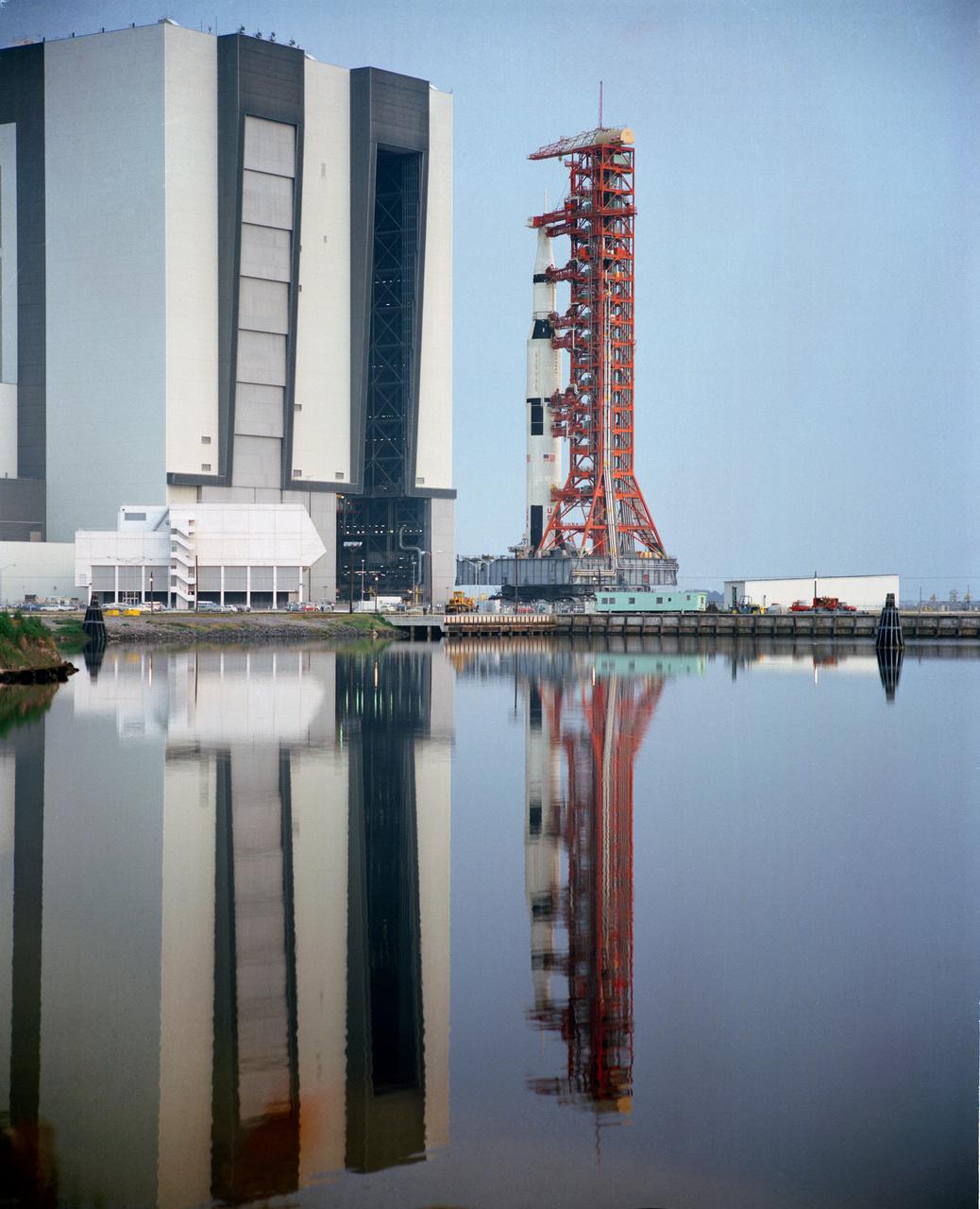
JSC · 1971-05-11 · S71-33786
View of Apollo 15 space vehicle leaving VAB to Pad A, Launch Complex 39
S71-33786 (11 May 1971) --- The 363-feet tall Apollo (Spacecraft 112/Lunar Module 10/Saturn 510) space vehicle which leaves the Vehicle Assembly Building (VAB) to Pad A, Launch Complex…
Inspect NASA record
S71-33786 (11 May 1971) --- The 363-feet tall Apollo (Spacecraft 112/Lunar Module 10/Saturn 510) space vehicle which leaves the Vehicle Assembly Building (VAB) to Pad A, Launch Complex 39, Kennedy Space Center (KSC). The Saturn V stack and its mobile launch tower are atop a huge crawler-transporter. Apollo 15 is scheduled as the fourth manned lunar landing mission by the National Aeronautics and Space Administration (NASA) and is scheduled to lift off on July 26, 1971. The crew men will be astronauts David R. Scott, commander; Alfred M. Worden, command module pilot; and James B. Irwin, lunar module pilot. While astronaut Scott and Irwin will descend in the Lunar Module (LM) to explore the moon, astronaut Worden will remain with the Command and Service Modules (CSM) in lunar orbit.
- Record ID
- S71-33786
- NASA center
- JSC
- Date
- 1971-05-11
- Keywords
- APOLLO 15 FLIGHT, APOLLO PROJECT, APOLLO SPACECRAFT, FACILITIES, FLORIDA, KENNEDY SPACE CENTER, LAUNCHING SITES, SATURN LAUNCH VEHICLES TRANSPORT VEHICLES, TRANSPORTATION