
Update Site (from NASA)
Explore NASA’s Image and Video Library.
Suggest one object per day for the Interstellar Minds collection. We review each suggestion before adding it.
Sign in to suggest a Marvel.
Find a NASA image ID. Open a NASA record and copy its ID from the end of the details URL.
NASA image records
KSC · 2020-10-29 · KSC-20201029-PH-CSH01_0027
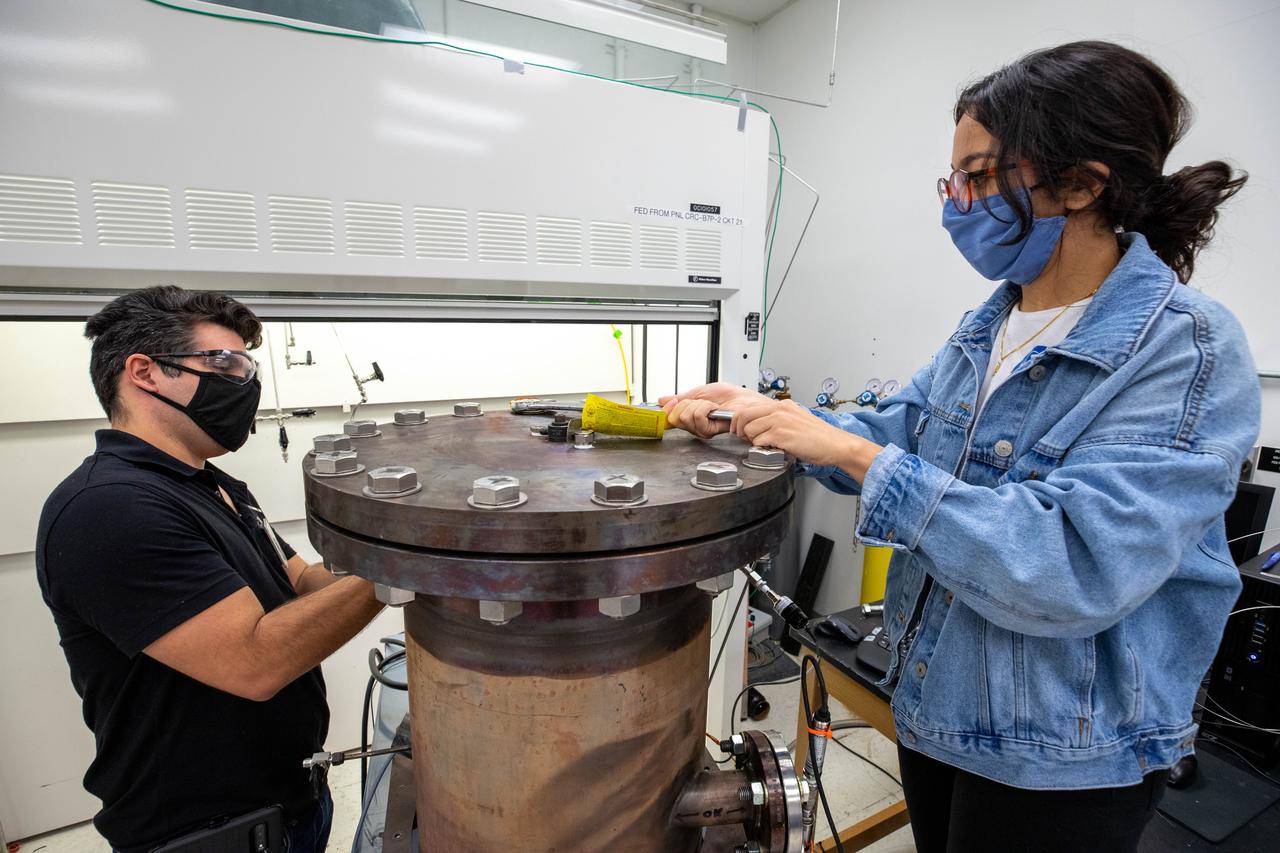
GALORE Testing - Regolith Melt Testing
Members of the Gaseous Lunar Oxygen from Regolith Electrolysis (GaLORE) project team inspect hardware that will be used to melt lunar regolith – dirt and dust on the…
Inspect NASA record
Members of the Gaseous Lunar Oxygen from Regolith Electrolysis (GaLORE) project team inspect hardware that will be used to melt lunar regolith – dirt and dust on the Moon made from crushed rock – simulants during a test inside a laboratory in the Neil Armstrong Operations and Checkout Building at NASA’s Kennedy Space Center in Florida on Oct. 29, 2020. GaLORE was selected as an Early Career Initiative project by the agency’s Space Technology Mission directorate, and the team was tasked with developing a device that could melt lunar regolith and turn it into oxygen. As NASA prepares to land the first woman and the next man on the Moon in 2024 as part of the Artemis program, technology such as this can assist with sustainable human lunar exploration and long-duration missions to Mars.
- Record ID
- KSC-20201029-PH-CSH01_0027
- NASA center
- KSC
- Date
- 2020-10-29
- Credit
- NASA/Cory Huston
- Keywords
- NASA, Kennedy Space Center, KSC, Early Career Initiative, ECI, GaLORE, Gaseous Lunar Oxygen for Regolith Electrolysis
KSC · 2020-10-29 · KSC-20201029-PH-CSH01_0023
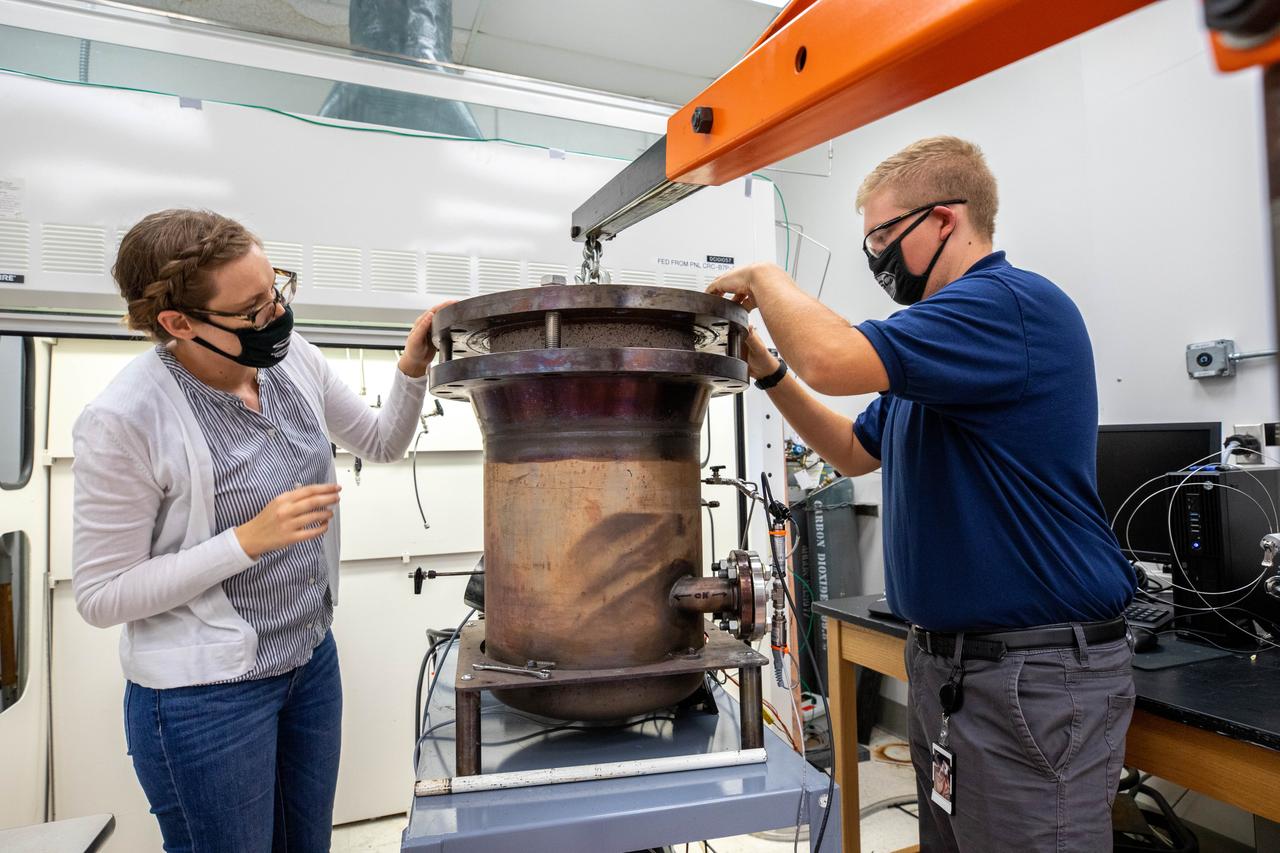
GALORE Testing - Regolith Melt Testing
Elspeth Petersen, left, a chemical engineer and member of the Gaseous Lunar Oxygen from Regolith Electrolysis (GaLORE) project team at NASA’s Kennedy Space Center in Florida, and Evan…
Inspect NASA record
Elspeth Petersen, left, a chemical engineer and member of the Gaseous Lunar Oxygen from Regolith Electrolysis (GaLORE) project team at NASA’s Kennedy Space Center in Florida, and Evan Bell, GaLORE mechanical engineer, inspect hardware that will be used to melt lunar regolith – dirt and dust on the Moon made from crushed rock – stimulants during a test inside a laboratory at Kennedy’s Neil Armstrong Operations and Checkout Building on Oct. 29, 2020. GaLORE was selected as an Early Career Initiative project by the agency’s Space Technology Mission directorate, and the team was tasked with developing a device that could melt lunar regolith and turn it into oxygen. As NASA prepares to land the first woman and the next man on the Moon in 2024 as part of the Artemis program, technology such as this can assist with sustainable human lunar exploration and long-duration missions to Mars.
- Record ID
- KSC-20201029-PH-CSH01_0023
- NASA center
- KSC
- Date
- 2020-10-29
- Credit
- NASA/Cory Huston
- Keywords
- NASA, Kennedy Space Center, KSC, Early Career Initiative, ECI, GaLORE, Gaseous Lunar Oxygen for Regolith Electrolysis
HQ · 2021-08-23 · NHQ202108230025
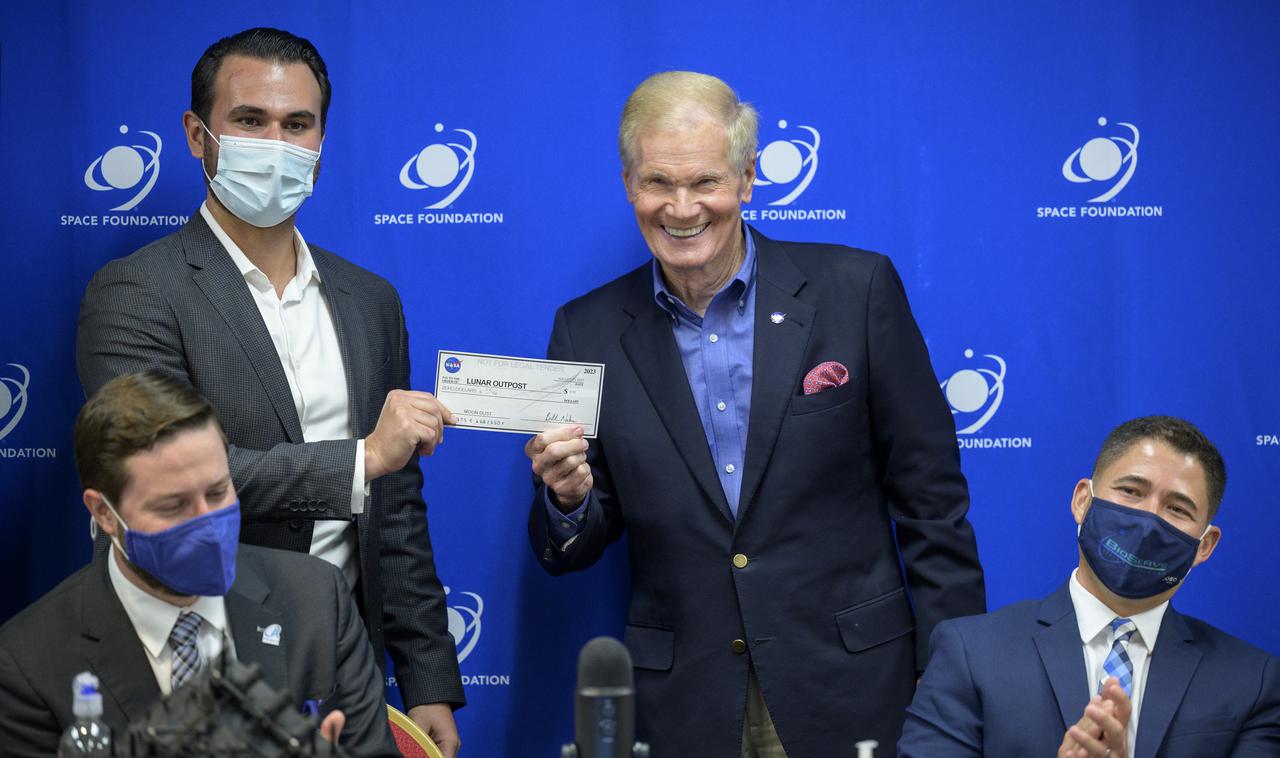
Space Symposium Media Briefing
NASA Administrator Bill Nelson presents Justin Cyrus, CEO, Lunar Outpost of Golden, Colorado a check for $0.10 during an event to introduce media to three local Colorado companies…
Inspect NASA record
NASA Administrator Bill Nelson presents Justin Cyrus, CEO, Lunar Outpost of Golden, Colorado a check for $0.10 during an event to introduce media to three local Colorado companies and university partners that help make NASA’s missions possible, Monday, Aug. 23, 2021, during the 36th Space Symposium in Colorado Springs, Colorado. Lunar Outpost is one of four companies that will collect space resources and transfer ownership to NASA; Lunar Outpost proposed collection for $1 following arrival of a lander to the lunar South Pole in 2023 and is on track to accomplish this a year early as part of the Intuitive Machines 2 Mission in 2022. They recently passed their first milestone and is the first of the four proposals selected to do so, and will receive a payment of $0.10. Photo Credit: (NASA/Bill Ingalls)
- Record ID
- NHQ202108230025
- NASA center
- HQ
- Date
- 2021-08-23
- Credit
- NASA/Bill Ingalls
- Keywords
- Bill Nelson, Bradley Cheetham, Broadmoor Hotel, Colorado, Colorado Springs, Justin Cyrus, Luis Zea, NASA Administrator, Space Symposium
JSC · 1972-04-21 · as16-116-18599
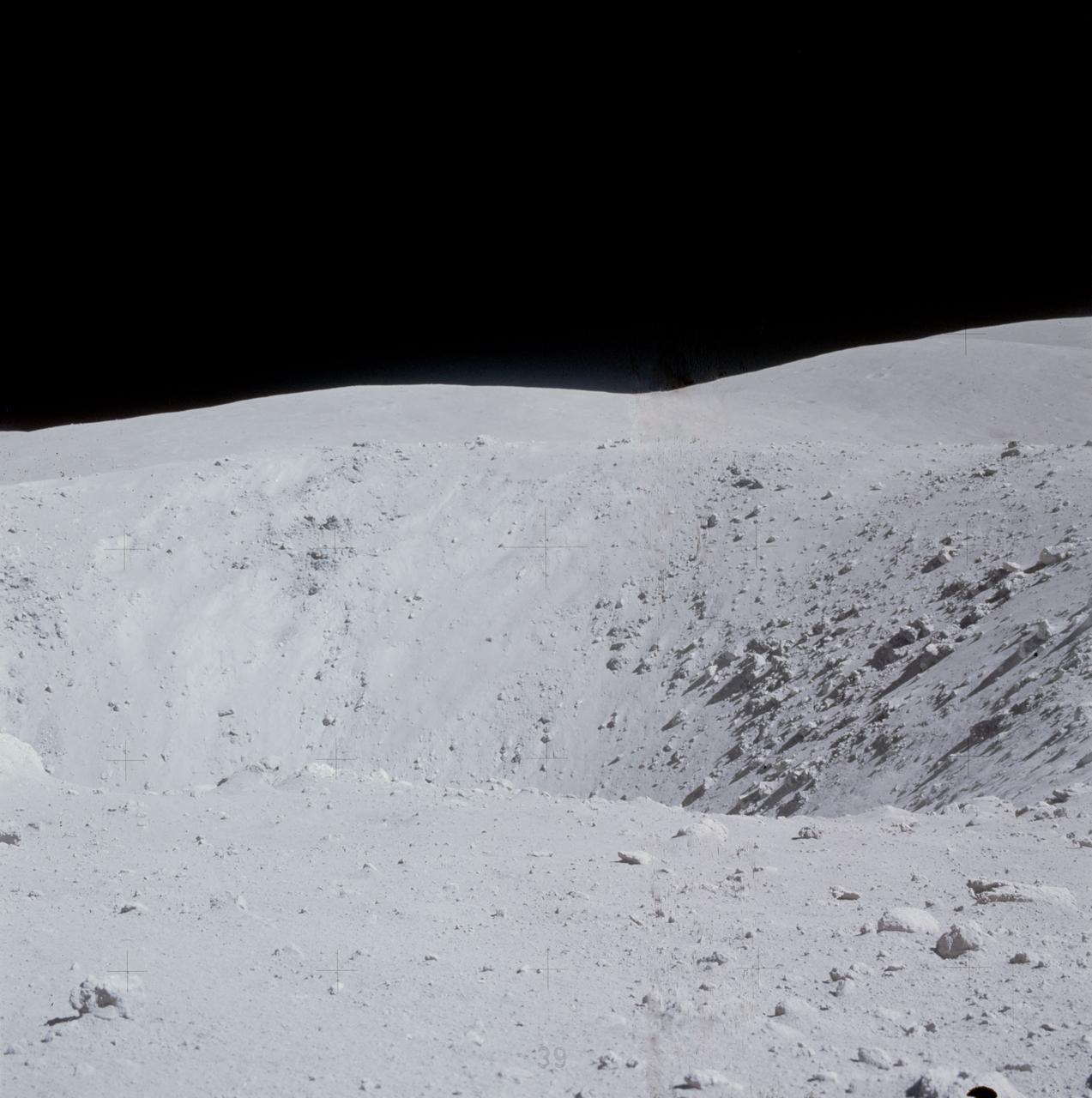
View of lunar surface at Apollo 16 station 11
AS16-116-18599 (21 April 1972) --- A close-up view of Buster Crater, which was visited by the two moon-exploring crew men of the Apollo 16 lunar landing mission, during…
Inspect NASA record
AS16-116-18599 (21 April 1972) --- A close-up view of Buster Crater, which was visited by the two moon-exploring crew men of the Apollo 16 lunar landing mission, during the first extravehicular activity (EVA), April 21, 1972. Astronaut Charles M. Duke Jr. said the crater appeared to be larger than 50 meters, and he called it a very spectacular crater. This was the second stop for astronauts John W. Young and Duke on the mission's first EVA. Young exposed this view with his 70mm Hasselblad camera. While astronauts Young, commander; and Duke, lunar module pilot; descended in the Apollo 16 Lunar Module (LM) "Orion" to explore the Descartes highlands landing site on the moon, astronaut Thomas K. Mattingly II, command module pilot, remained with the Command and Service Modules (CSM) "Casper" in lunar orbit.
- Record ID
- as16-116-18599
- NASA center
- JSC
- Date
- 1972-04-21
- Keywords
- APOLLO 16 FLIGHT, APOLLO PROJECT, CRATERS, EXTRAVEHICULAR ACTIVITY, LUNAR PHOTOGRAPHY, LUNAR SURFACE, LUNAR TOPOGRAPHY
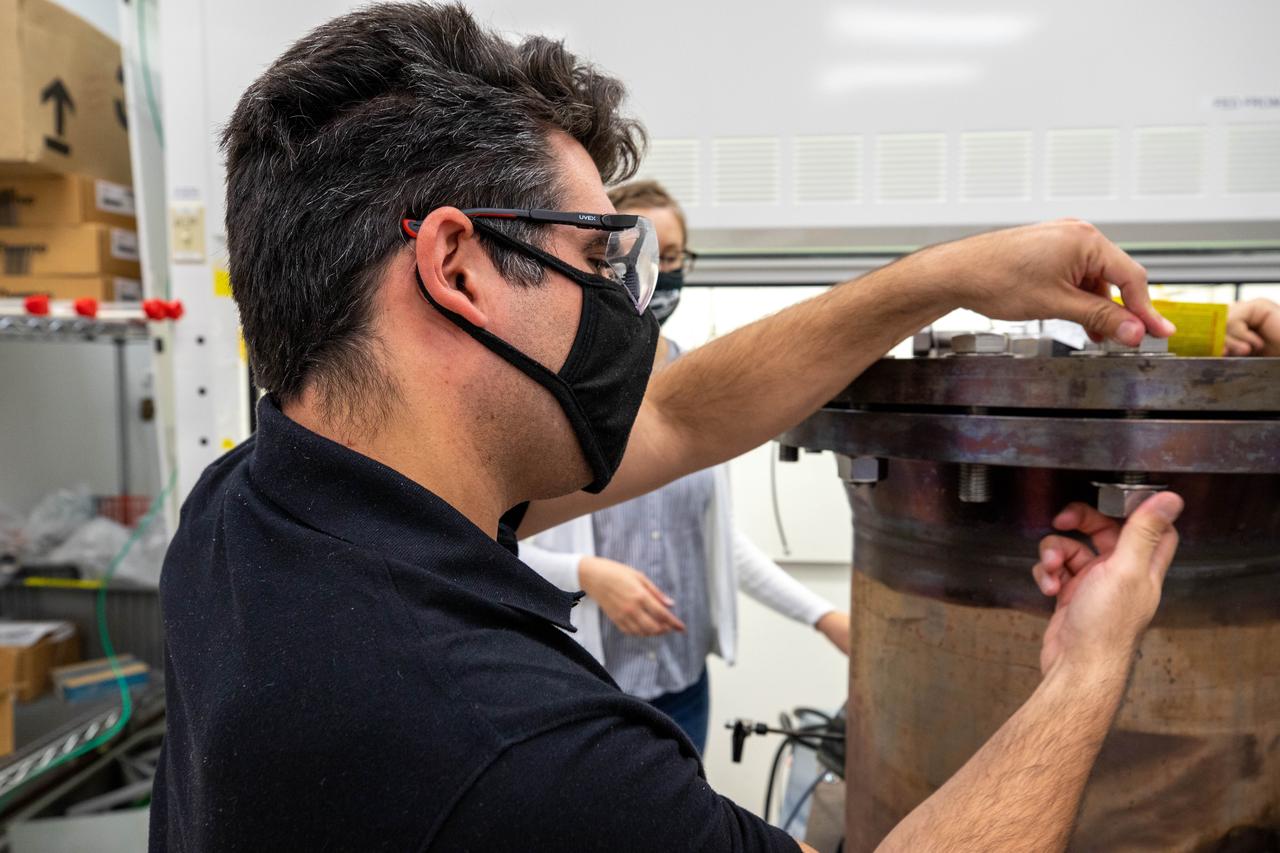
KSC · 2020-10-29 · KSC-20201029-PH-CSH01_0024
GALORE Testing - Regolith Melt Testing
Jaime Toro, a mechanical engineer supporting the Gaseous Lunar Oxygen from Regolith Electrolysis (GaLORE) project at NASA’s Kennedy Space Center in Florida, checks the hardware that will be…
Inspect NASA record
Jaime Toro, a mechanical engineer supporting the Gaseous Lunar Oxygen from Regolith Electrolysis (GaLORE) project at NASA’s Kennedy Space Center in Florida, checks the hardware that will be used to melt lunar regolith – dirt and dust on the Moon made from crushed rock – simulants during a test inside a laboratory at Kennedy’s Neil Armstrong Operations and Checkout Building on Oct. 29, 2020. GaLORE was selected as an Early Career Initiative project by the agency’s Space Technology Mission directorate, and the team was tasked with developing a device that could melt lunar regolith and turn it into oxygen. As NASA prepares to land the first woman and the next man on the Moon in 2024 as part of the Artemis program, technology such as this can assist with sustainable human lunar exploration and long-duration missions to Mars.
- Record ID
- KSC-20201029-PH-CSH01_0024
- NASA center
- KSC
- Date
- 2020-10-29
- Credit
- NASA/Cory Huston
- Keywords
- NASA, Kennedy Space Center, KSC, Early Career Initiative, ECI, GaLORE, Gaseous Lunar Oxygen for Regolith Electrolysis
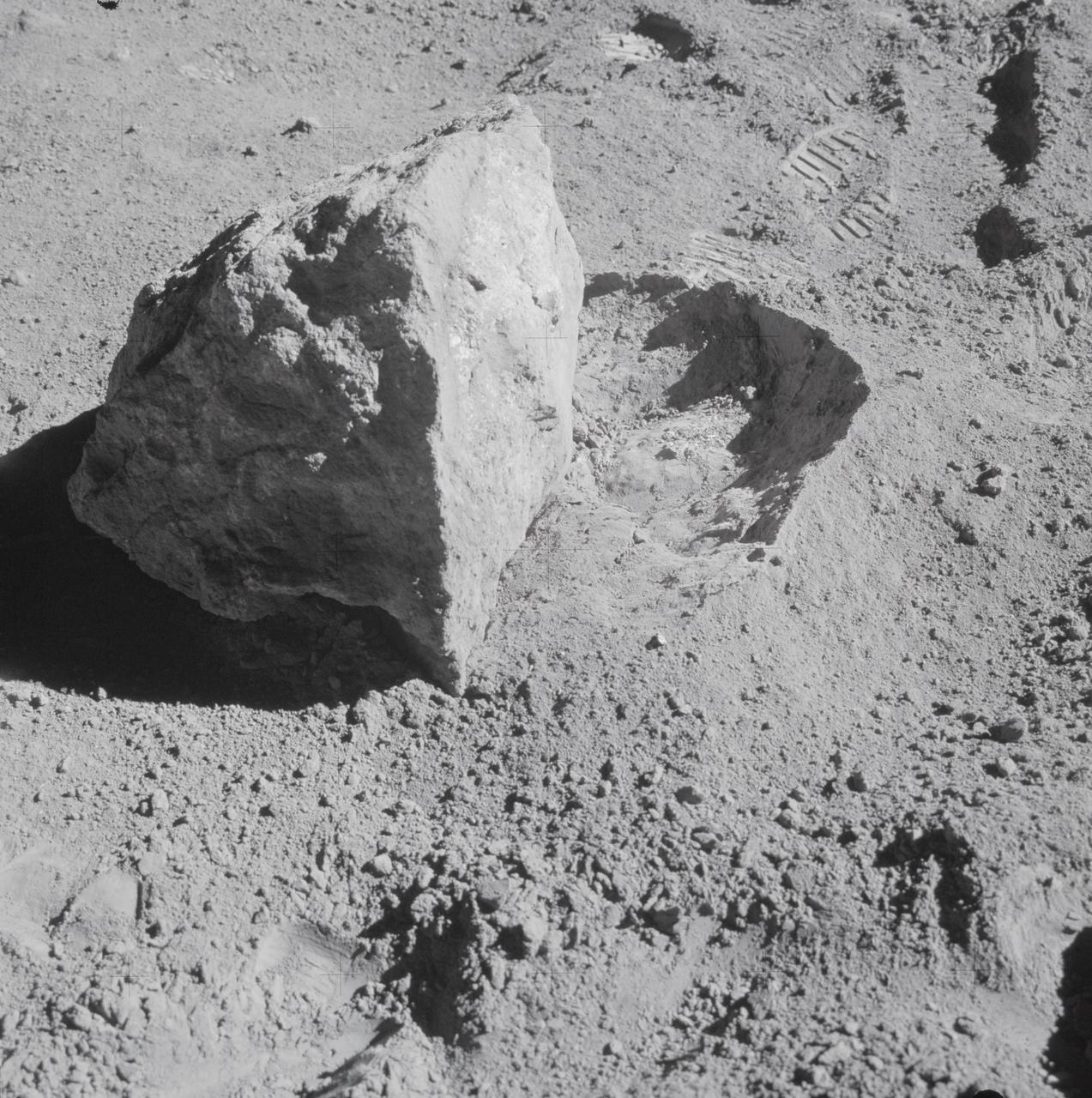
JSC · 1972-04-22 · as16-107-17573
A closeup view of a block found by Apollo 16 crewmen during second EVA
AS16-107-17573 (22 April 1972) --- A close-up view of a block (about 1/2 meter long) found by the two moon-exploring crewmembers of the Apollo 16 lunar landing mission.…
Inspect NASA record
AS16-107-17573 (22 April 1972) --- A close-up view of a block (about 1/2 meter long) found by the two moon-exploring crewmembers of the Apollo 16 lunar landing mission. The block had been rolled over only moments earlier during this Apollo 16 second extravehicular activity (EVA) near South Ray Crater. Astronaut John W. Young, commander, said at the post-mission press conference, "The block has been sitting there evidently since South Ray Crater was formed." While astronauts Young and Charles M. Duke Jr., lunar module pilot; descended in the Apollo 16 Lunar Module (LM) "Orion" to explore the Descartes highlands landing site on the moon, astronaut Thomas K. Mattingly II, command module pilot, remained with the Command and Service Modules (CSM) "Casper" in lunar orbit.
- Record ID
- as16-107-17573
- NASA center
- JSC
- Date
- 1972-04-22
- Keywords
- APOLLO 16 FLIGHT, APOLLO PROJECT, ASTRONAUTS, CRATERS, LUNAR PHOTOGRAPHY, EXTRAVEHICULAR ACTIVITY, LUNAR ROCKS, LUNAR SURFACE
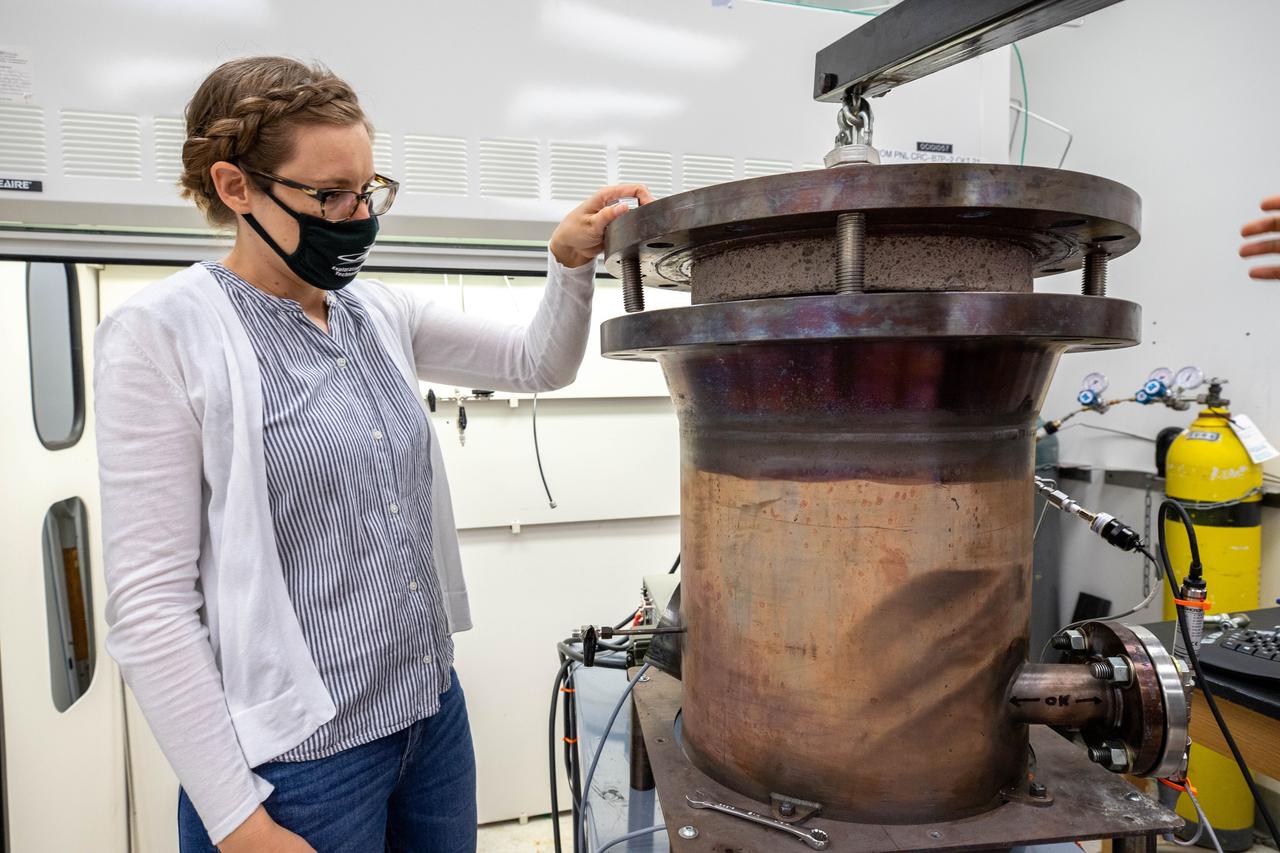
KSC · 2020-10-29 · KSC-20201029-PH-CSH01_0021
GALORE Testing - Regolith Melt Testing
Elspeth Petersen, a chemical engineer and member of the Gaseous Lunar Oxygen from Regolith Electrolysis (GaLORE) project team at NASA’s Kennedy Space Center in Florida, inspects the GaLORE…
Inspect NASA record
Elspeth Petersen, a chemical engineer and member of the Gaseous Lunar Oxygen from Regolith Electrolysis (GaLORE) project team at NASA’s Kennedy Space Center in Florida, inspects the GaLORE hardware that will be used to melt lunar regolith – dirt and dust on the Moon made from crushed rock – simulants during a test inside a laboratory at Kennedy’s Neil Armstrong Operations and Checkout Building on Oct. 29, 2020. GaLORE was selected as an Early Career Initiative project by the agency’s Space Technology Mission directorate, and the team was tasked with developing a device that could melt lunar regolith and turn it into oxygen. As NASA prepares to land the first woman and the next man on the Moon in 2024 as part of the Artemis program, technology such as this can assist with sustainable human lunar exploration and long-duration missions to Mars.
- Record ID
- KSC-20201029-PH-CSH01_0021
- NASA center
- KSC
- Date
- 2020-10-29
- Credit
- NASA/Cory Huston
- Keywords
- NASA, Kennedy Space Center, KSC, Early Career Initiative, ECI, GaLORE, Gaseous Lunar Oxygen for Regolith Electrolysis
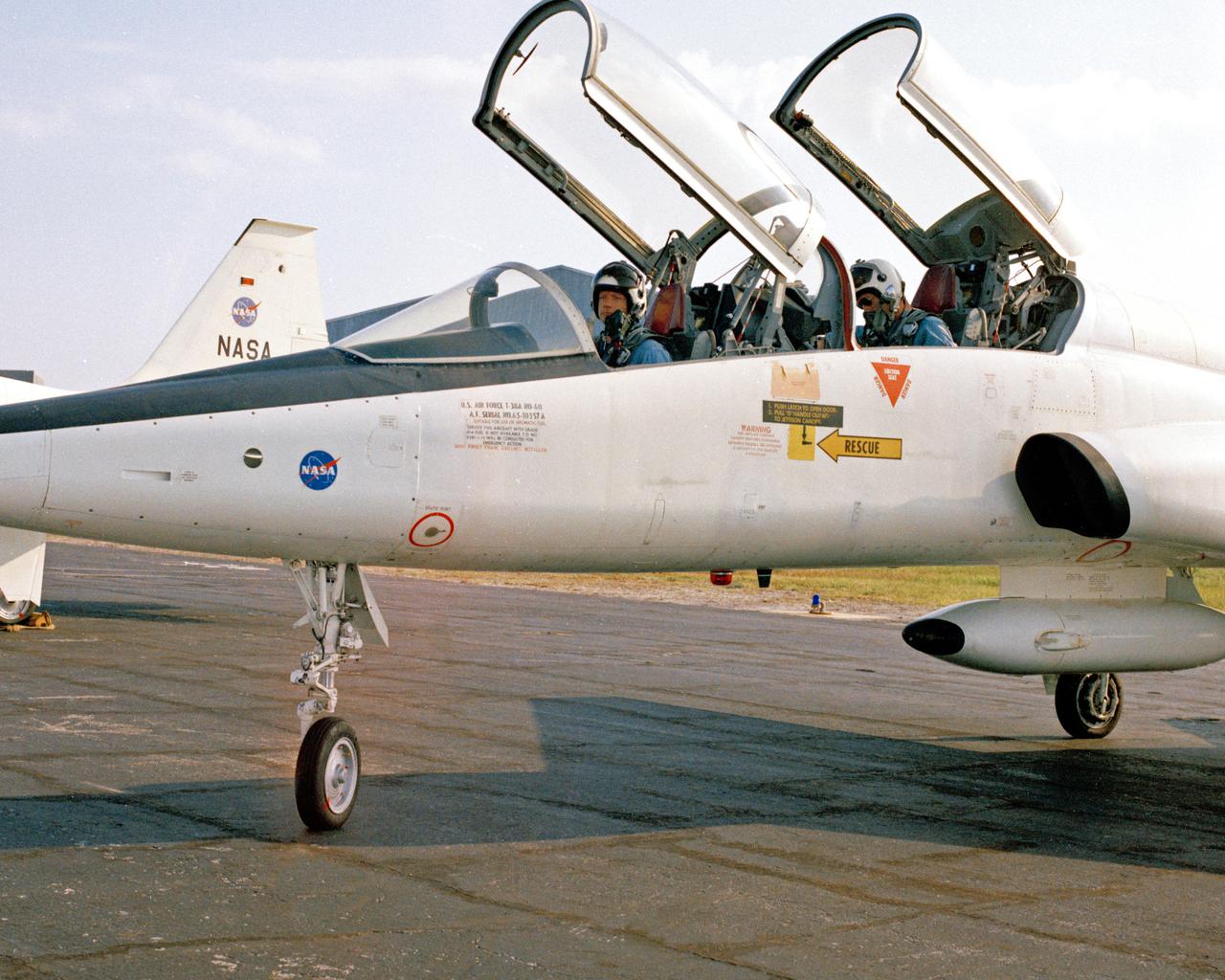
KSC · 1969-07-09 · 108-KSC-69PC-0313
KSC-69PC-0313
PATRICK AFB, Fla. – In preparation of the nation’s first lunar landing mission, Apollo 11 crew members arrive at Patrick Air Force Base, Florida. Mission commander Neil A.…
Inspect NASA record
PATRICK AFB, Fla. – In preparation of the nation’s first lunar landing mission, Apollo 11 crew members arrive at Patrick Air Force Base, Florida. Mission commander Neil A. Armstrong is in the front seat of the T-38 jet, with chief astronaut and director of flight crew operations, Donald K. Slayton, in the back. Lift off atop a Saturn V launch vehicle is scheduled for July 16, 1969. During Apollo 11 the command module, Columbia, will remain in orbit around the moon while the lunar module, Eagle, carrying Armstrong and Aldrin, lands on the lunar surface. During 2½ hours of surface exploration, the crew plans to collect lunar surface material for analysis back on Earth. For more: http:__www-pao.ksc.nasa.gov_history_apollo_apollo-11_apollo-11.htm Photo credit: NASA
- Record ID
- 108-KSC-69PC-0313
- NASA center
- KSC
- Date
- 1969-07-09
- Credit
- NASA
- Keywords
- Kennedy_History, Apollo, KSC_Events, Apollo_11
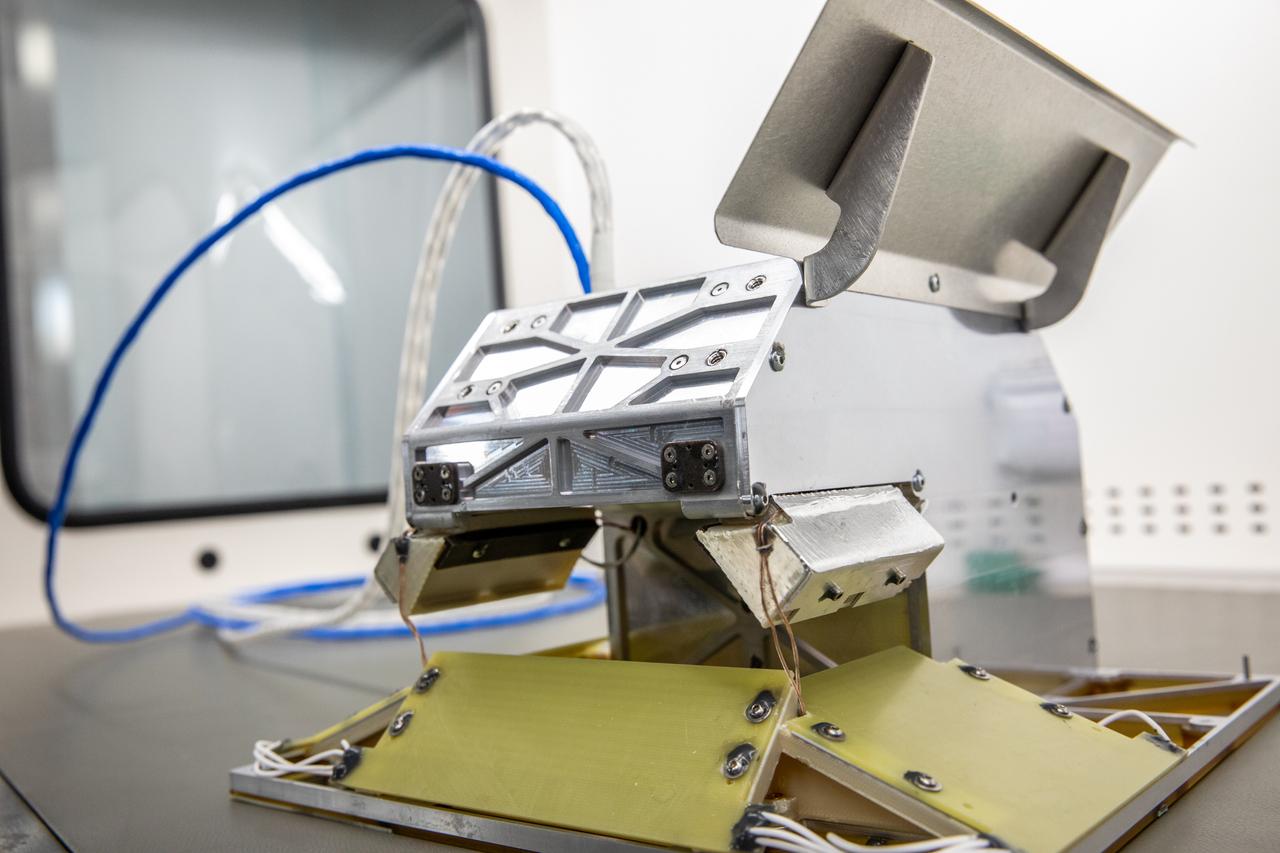
KSC · 2023-01-18 · KSC-20230118-PH-CSH01_0002
Electrodynamic Dust Shield
Inside of the Electrostatics and Surface Physics Laboratory at NASA’s Kennedy Space Center in Florida, an electrodynamic dust shield (EDS) is in view on Jan. 18, 2023. The…
Inspect NASA record
Inside of the Electrostatics and Surface Physics Laboratory at NASA’s Kennedy Space Center in Florida, an electrodynamic dust shield (EDS) is in view on Jan. 18, 2023. The dust shield is one of the payloads that will fly aboard Firefly Aerospace’s Blue Ghost lunar lander as part of NASA’s Commercial Lunar Payload Services (CLPS) initiative. During the mission, EDS will generate a non-uniform electric field using varying high voltage on multiple electrodes. This traveling field, in turn, carries away the particles and has potential applications in thermal radiators, spacesuit fabrics, visors, camera lenses, solar panels, and many other technologies. The CLPS initiative is a key part of NASA’s Artemis lunar exploration efforts. The science and technology payloads sent to the Moon’s surface as part of the initiative will help lay the foundation for human missions and a sustainable human presence on the lunar surface.
- Record ID
- KSC-20230118-PH-CSH01_0002
- NASA center
- KSC
- Date
- 2023-01-18
- Credit
- NASA/Cory Huston
- Keywords
- CLPS, Commercial Lunar Payload Services, EDS, Electrodynamic Dust Shield, dust mitigation technology, electric fields
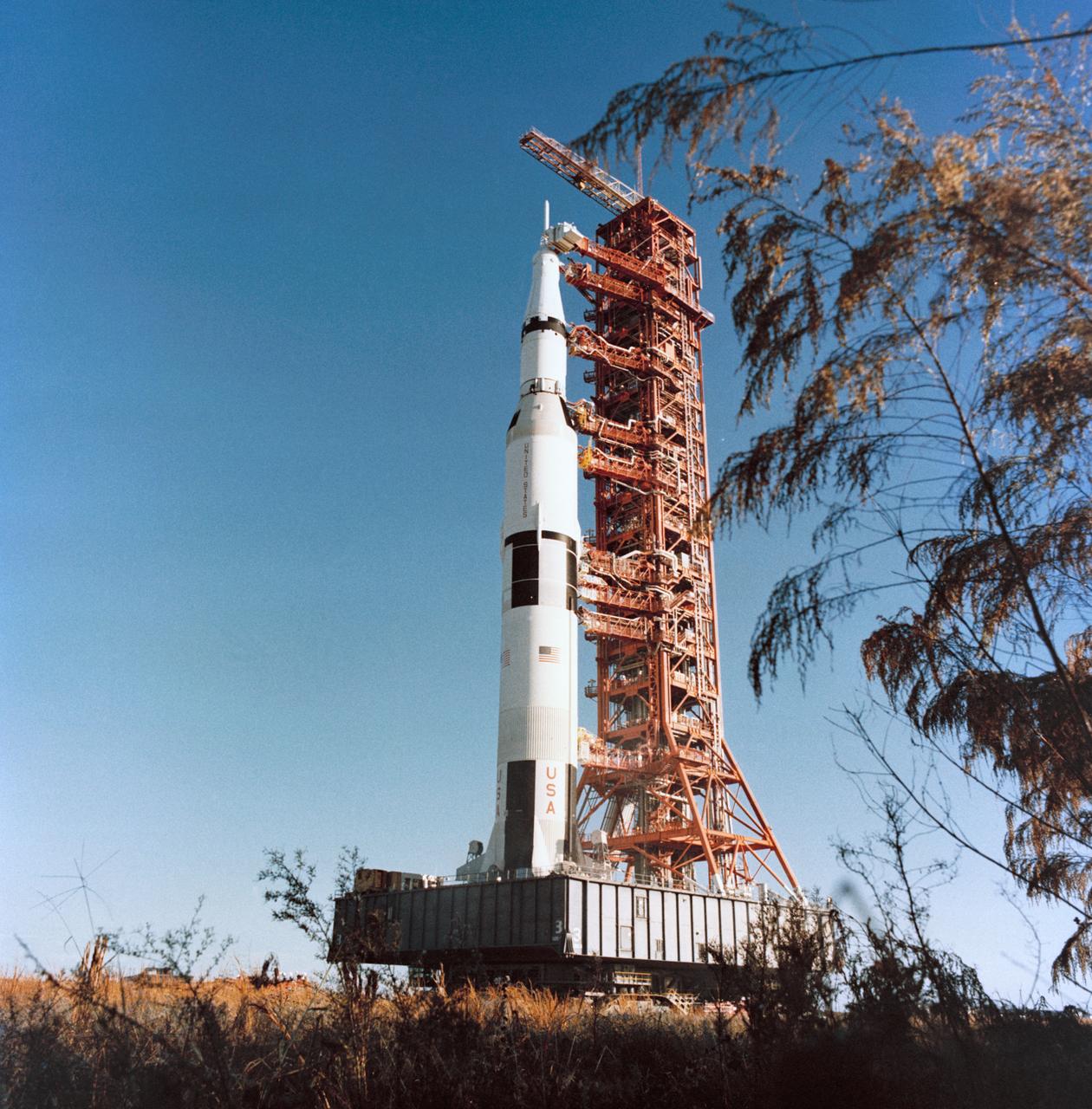
JSC · 1972-02-11 · S72-19794
View of Apollo 16 space vehicle on way from VAB to Pad A, Launch Complex 39
S72-19794 (13 Dec. 1971) --- A ground-level view showing the tall Apollo 16 (Spacecraft 113/Lunar Module 11/Saturn 511) space vehicle at the Kennedy Space Center's (KSC) Launch Complex…
Inspect NASA record
S72-19794 (13 Dec. 1971) --- A ground-level view showing the tall Apollo 16 (Spacecraft 113/Lunar Module 11/Saturn 511) space vehicle at the Kennedy Space Center's (KSC) Launch Complex 39 being moved from the Vehicle Assembly Building (VAB) toward Pad A. The Saturn V stack and its mobile launch tower are atop a huge crawler-transporter. The prime crew men of the scheduled Apollo 16 lunar landing mission are astronauts John W. Young, Apollo 16 lunar landing mission are astronauts John W. Young, commander; Thomas K. Mattingly II, command module pilot; and Charles M. Duke Jr., lunar module pilot.
- Record ID
- S72-19794
- NASA center
- JSC
- Date
- 1972-02-11
- Credit
- N/A