
Update Site (from NASA)
Explore NASA’s Image and Video Library.
Suggest one object per day for the Interstellar Minds collection. We review each suggestion before adding it.
Sign in to suggest a Marvel.
Find a NASA image ID. Open a NASA record and copy its ID from the end of the details URL.
NASA image records
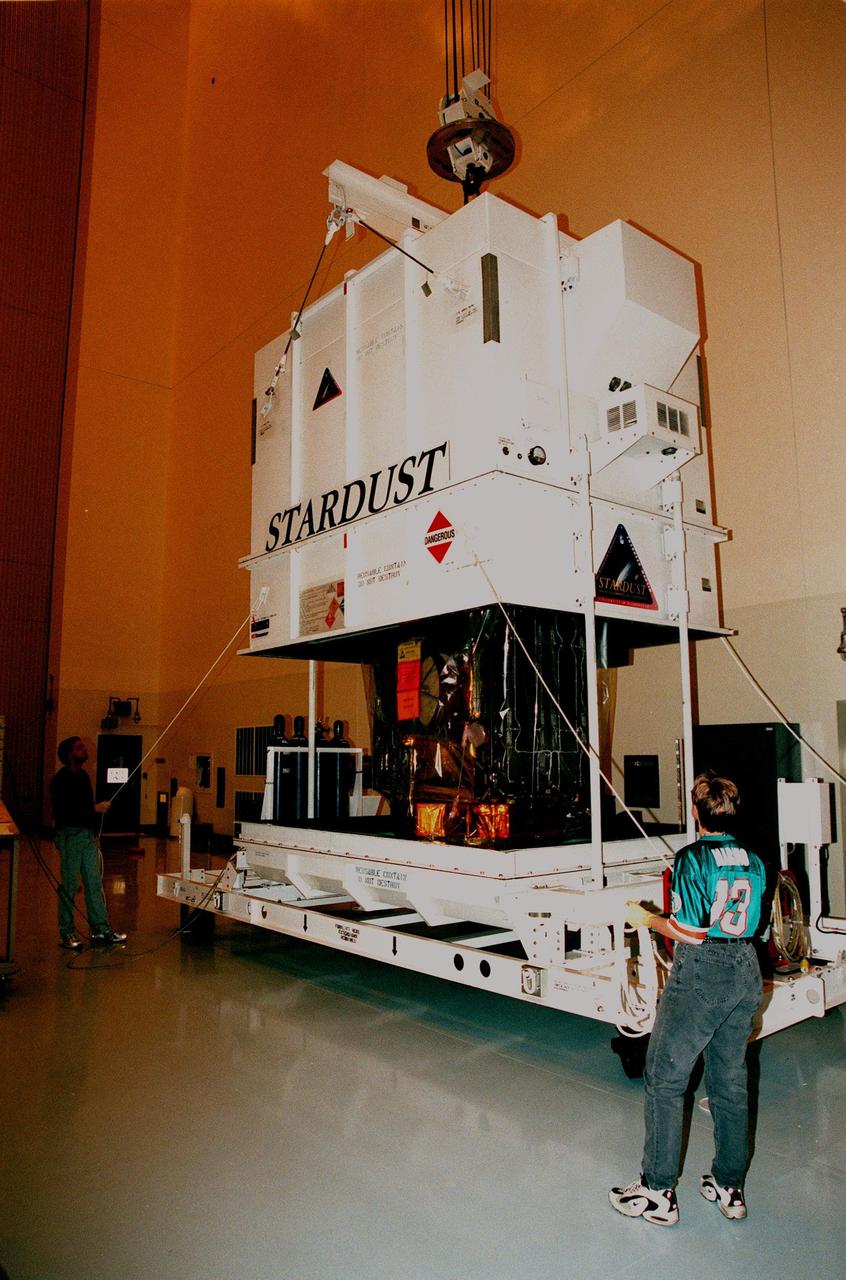
KSC · 1998-11-12 · KSC-98pc1630
KSC-98pc1630
In the Payload Hazardous Service Facility, workers lift the cover that protected the Stardust spacecraft during its journey. Built by Lockheed Martin Astronautics near Denver, Colo., for the…
Inspect NASA record
In the Payload Hazardous Service Facility, workers lift the cover that protected the Stardust spacecraft during its journey. Built by Lockheed Martin Astronautics near Denver, Colo., for the Jet Propulsion Laboratory (JPL) and NASA, the spacecraft Stardust will use a unique medium called aerogel to capture comet particles flying off the nucleus of comet Wild 2 in January 2004, plus collect interstellar dust for later analysis. Stardust will be launched aboard a Boeing Delta 7426 rocket from Complex 17, Cape Canaveral Air Station, targeted for Feb. 6, 1999. The collected samples will return to Earth in a re-entry capsule to be jettisoned from Stardust as it swings by in January 2006
- Record ID
- KSC-98pc1630
- NASA center
- KSC
- Date
- 1998-11-12
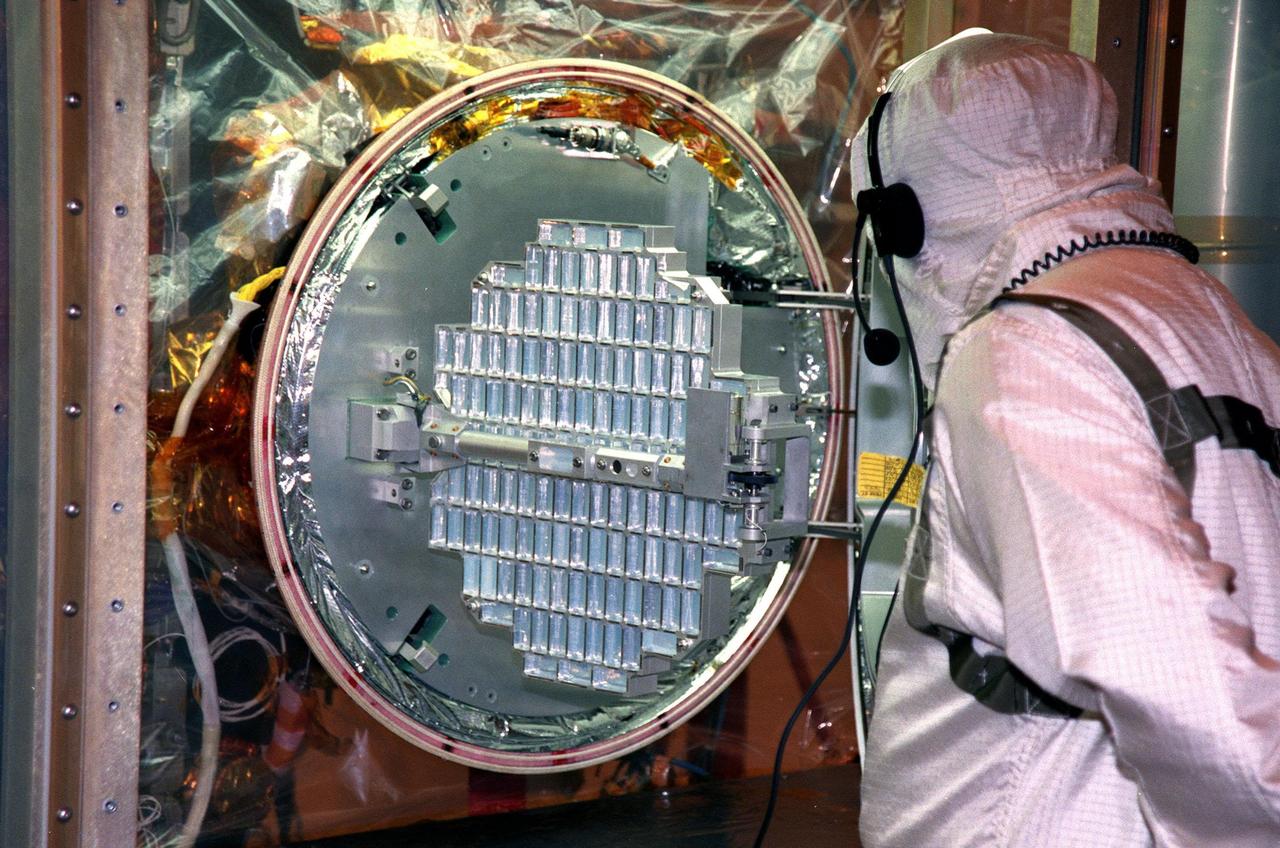
KSC · 1998-12-07 · KSC-98pc1870
KSC-98pc1870
In the Payload Hazardous Servicing Facility, workers deploy an aerogel grid from the Stardust Sample Return Capsule (SRC) in the Class 100 Glove Box. Stardust will use a…
Inspect NASA record
In the Payload Hazardous Servicing Facility, workers deploy an aerogel grid from the Stardust Sample Return Capsule (SRC) in the Class 100 Glove Box. Stardust will use a unique medium called aerogel to capture comet particles flying off the nucleus of comet Wild 2 in January 2004, plus collect interstellar dust for later analysis. The collected samples will return to Earth in the SRC to be jettisoned as it swings by Earth in January 2006. Stardust is scheduled to be launched aboard a Boeing Delta 7426 rocket from Complex 17, Cape Canaveral Air Station, on Feb. 6, 1999
- Record ID
- KSC-98pc1870
- NASA center
- KSC
- Date
- 1998-12-07
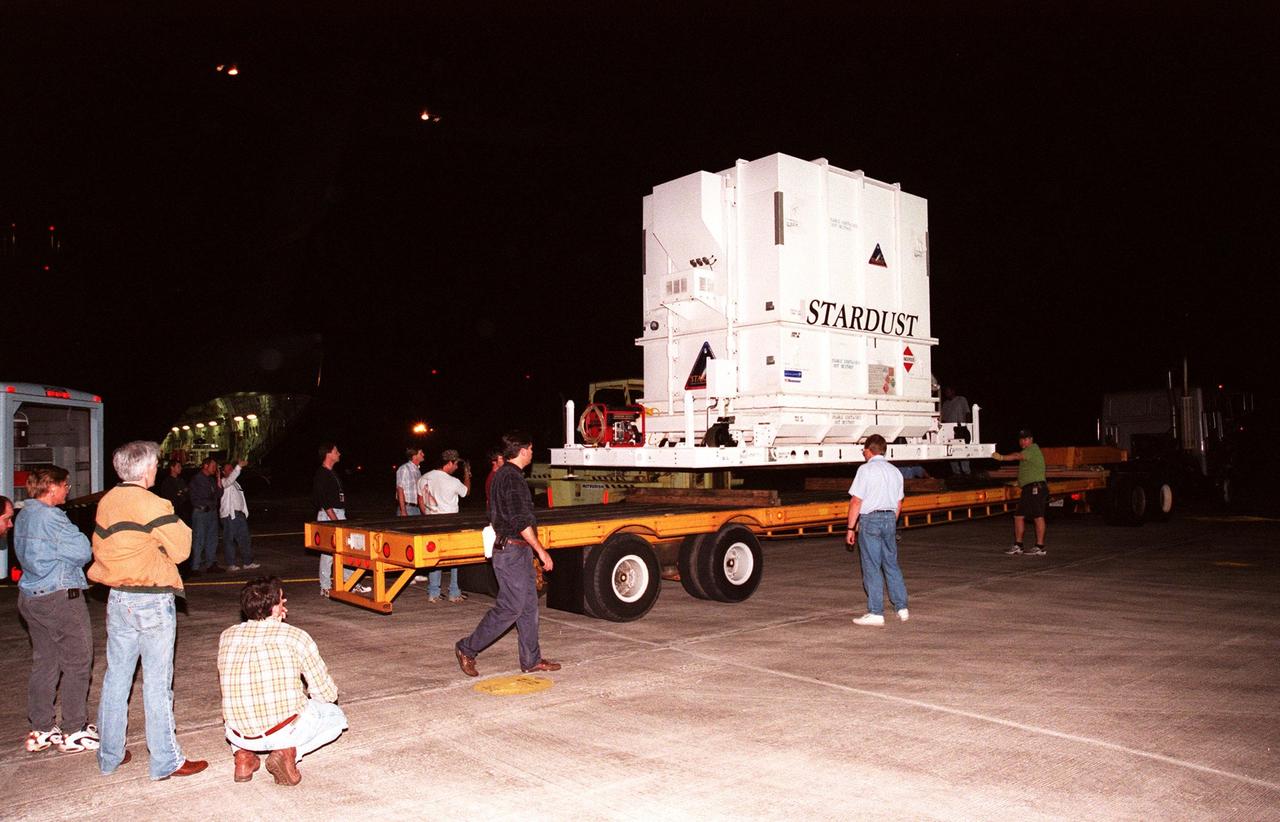
KSC · 1998-11-12 · KSC-98pc1623
KSC-98pc1623
At the Shuttle Landing Facility, workers observe the loading of the crated Stardust spacecraft onto a trailer for transporting to the Payload Hazardous Service Facility. Built by Lockheed…
Inspect NASA record
At the Shuttle Landing Facility, workers observe the loading of the crated Stardust spacecraft onto a trailer for transporting to the Payload Hazardous Service Facility. Built by Lockheed Martin Astronautics near Denver, Colo., for the Jet Propulsion Laboratory (JPL) and NASA, the spacecraft Stardust will use a unique medium called aerogel to capture comet particles flying off the nucleus of comet Wild 2 in January 20004, plus collect interstellar dust for later analysis. Stardust will be launched aboard a Boeing Delta 7426 rocket from Complex 17, Cape Canaveral Air Station, targeted for Feb. 6, 1999. The collected samples will return to Earth in a re-entry capsule to be jettisoned from Stardust as it swings by in January 2006
- Record ID
- KSC-98pc1623
- NASA center
- KSC
- Date
- 1998-11-12
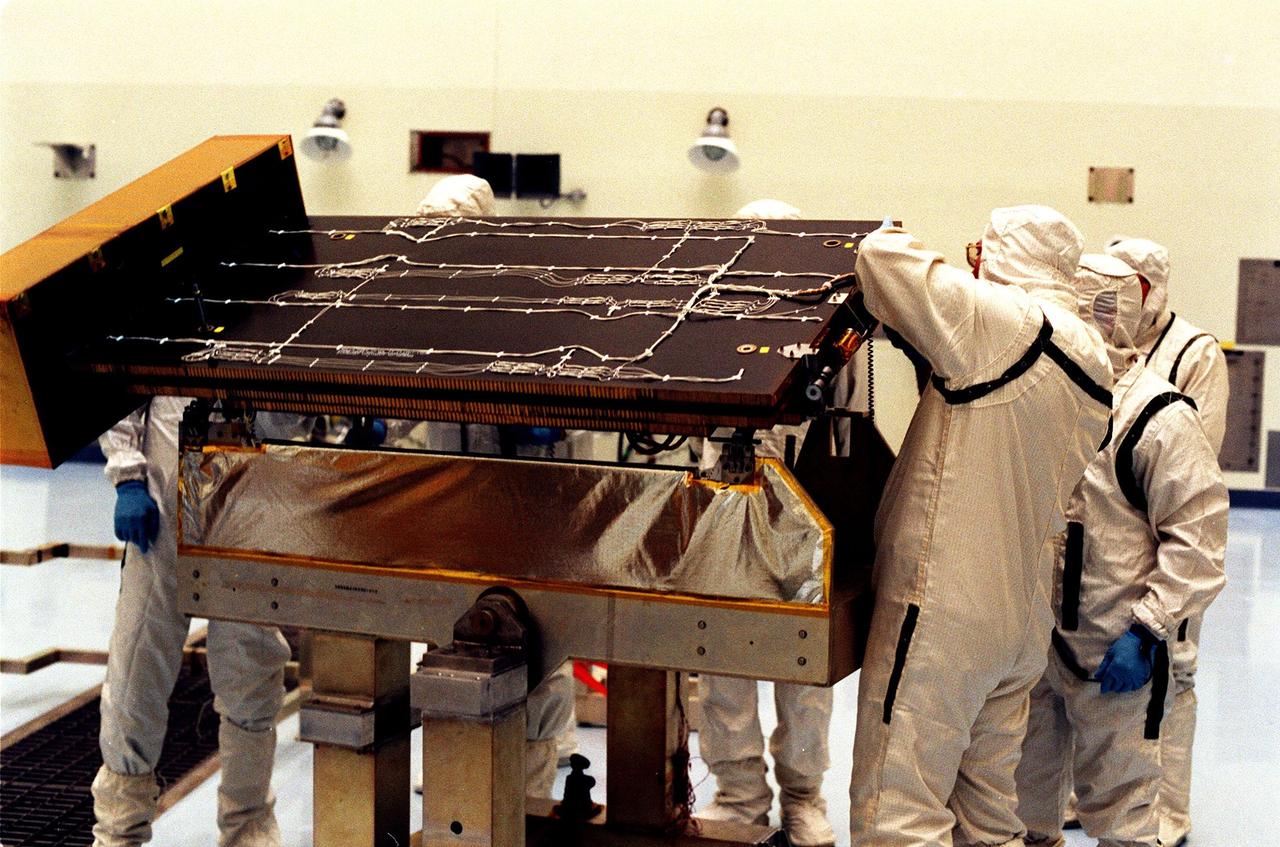
KSC · 1998-11-16 · KSC-98pc1728
KSC-98pc1728
In the Payload Hazardous Servicing Facility, workers place one of the Stardust solar panels on a stand. The panels are being removed for testing. The spacecraft Stardust will…
Inspect NASA record
In the Payload Hazardous Servicing Facility, workers place one of the Stardust solar panels on a stand. The panels are being removed for testing. The spacecraft Stardust will use a unique medium called aerogel to capture comet particles flying off the nucleus of comet Wild 2 in January 2004, plus collect interstellar dust for later analysis. Stardust will be launched aboard a Boeing Delta 7426 rocket from Complex 17, Cape Canaveral Air Station, targeted for Feb. 6, 1999. The collected samples will return to Earth in a re-entry capsule to be jettisoned from Stardust as it swings by Earth in January 2006
- Record ID
- KSC-98pc1728
- NASA center
- KSC
- Date
- 1998-11-16

KSC · 1998-12-21 · KSC-98pc1895
KSC-98pc1895
In the Payload Hazardous Servicing Facility, Randy Scott (left) and Pat Wedeman (right), with Lockheed Martin Astronautics, check the insulation on the Stardust spacecraft. Stardust will use a…
Inspect NASA record
In the Payload Hazardous Servicing Facility, Randy Scott (left) and Pat Wedeman (right), with Lockheed Martin Astronautics, check the insulation on the Stardust spacecraft. Stardust will use a unique medium called aerogel to capture comet particles flying off the nucleus of comet Wild 2 in January 2004, plus collect interstellar dust for later analysis. The collected samples will return to Earth in the SRC to be jettisoned as it swings by Earth in January 2006. Stardust is scheduled to be launched aboard a Boeing Delta 7426 rocket from Complex 17, Cape Canaveral Air Station, on Feb. 6, 1999
- Record ID
- KSC-98pc1895
- NASA center
- KSC
- Date
- 1998-12-21
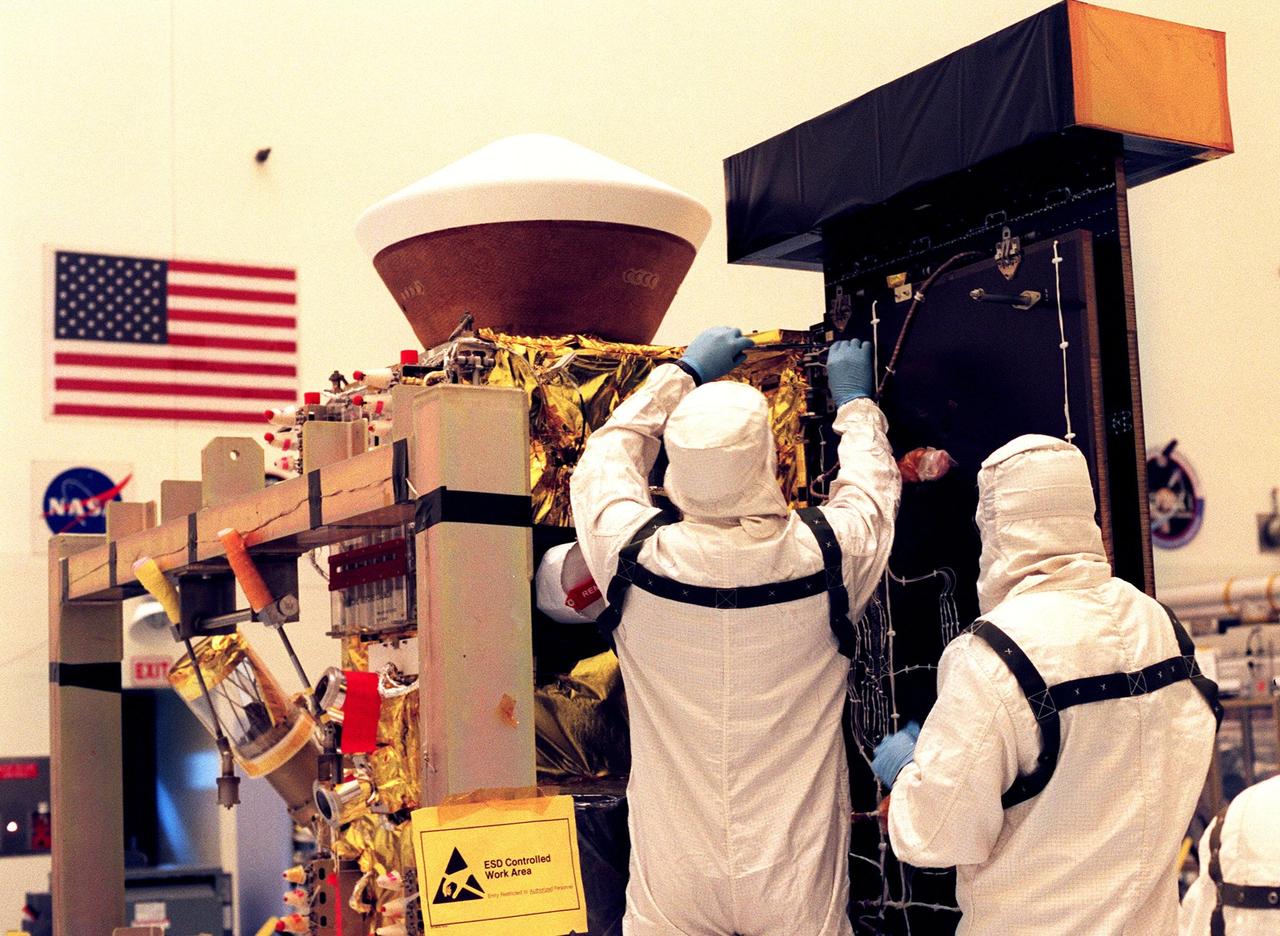
KSC · 1998-11-16 · KSC-98pc1729
KSC-98pc1729
In the Payload Hazardous Servicing Facility, workers remove one of the Stardust solar panels for testing. The spacecraft Stardust will be launched aboard a Boeing Delta 7426 rocket…
Inspect NASA record
In the Payload Hazardous Servicing Facility, workers remove one of the Stardust solar panels for testing. The spacecraft Stardust will be launched aboard a Boeing Delta 7426 rocket from Complex 17, Cape Canaveral Air Station, targeted for Feb. 6, 1999. Stardust will use a unique medium called aerogel to capture comet particles flying off the nucleus of comet Wild 2 in January 2004, plus collect interstellar dust for later analysis. The collected samples will return to Earth in a re-entry capsule (seen on top, next to the solar panel) to be jettisoned from Stardust as it swings by Earth in January 2006
- Record ID
- KSC-98pc1729
- NASA center
- KSC
- Date
- 1998-11-16
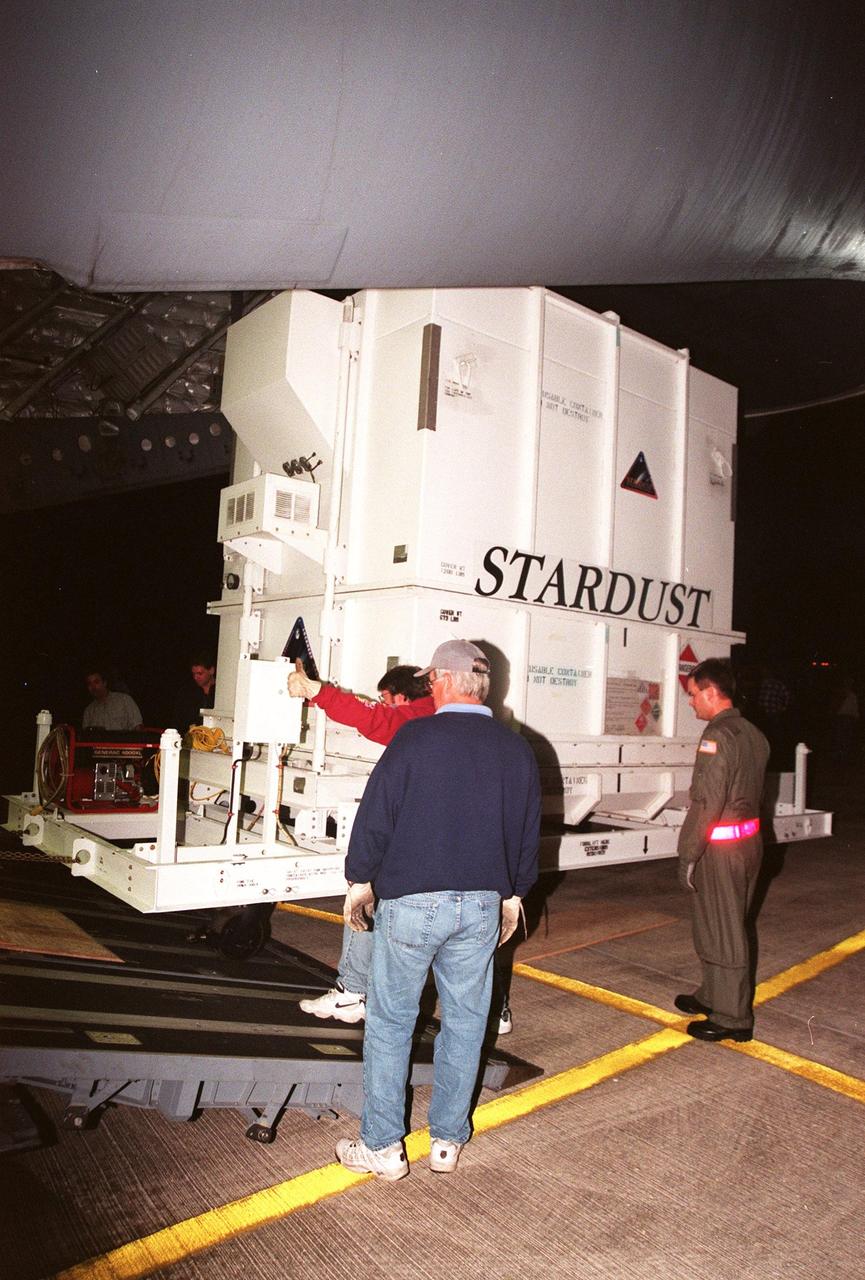
KSC · 1998-11-12 · KSC-98pc1622
KSC-98pc1622
At the Shuttle Landing Facility, workers unload the crated Stardust spacecraft from the airplane before transporting to the Payload Hazardous Service Facility. Built by Lockheed Martin Astronautics near…
Inspect NASA record
At the Shuttle Landing Facility, workers unload the crated Stardust spacecraft from the airplane before transporting to the Payload Hazardous Service Facility. Built by Lockheed Martin Astronautics near Denver, Colo., for the Jet Propulsion Laboratory (JPL) and NASA, the spacecraft Stardust will use a unique medium called aerogel to capture comet particles flying off the nucleus of comet Wild 2 in January 2004, plus collect interstellar dust for later analysis. Stardust will be launched aboard a Boeing Delta 7426 rocket from Complex 17, Cape Canaveral Air Station, targeted for Feb. 6, 1999. The collected samples will return to Earth in a re-entry capsule to be jettisoned from Stardust as it swings by in January 2006
- Record ID
- KSC-98pc1622
- NASA center
- KSC
- Date
- 1998-11-12
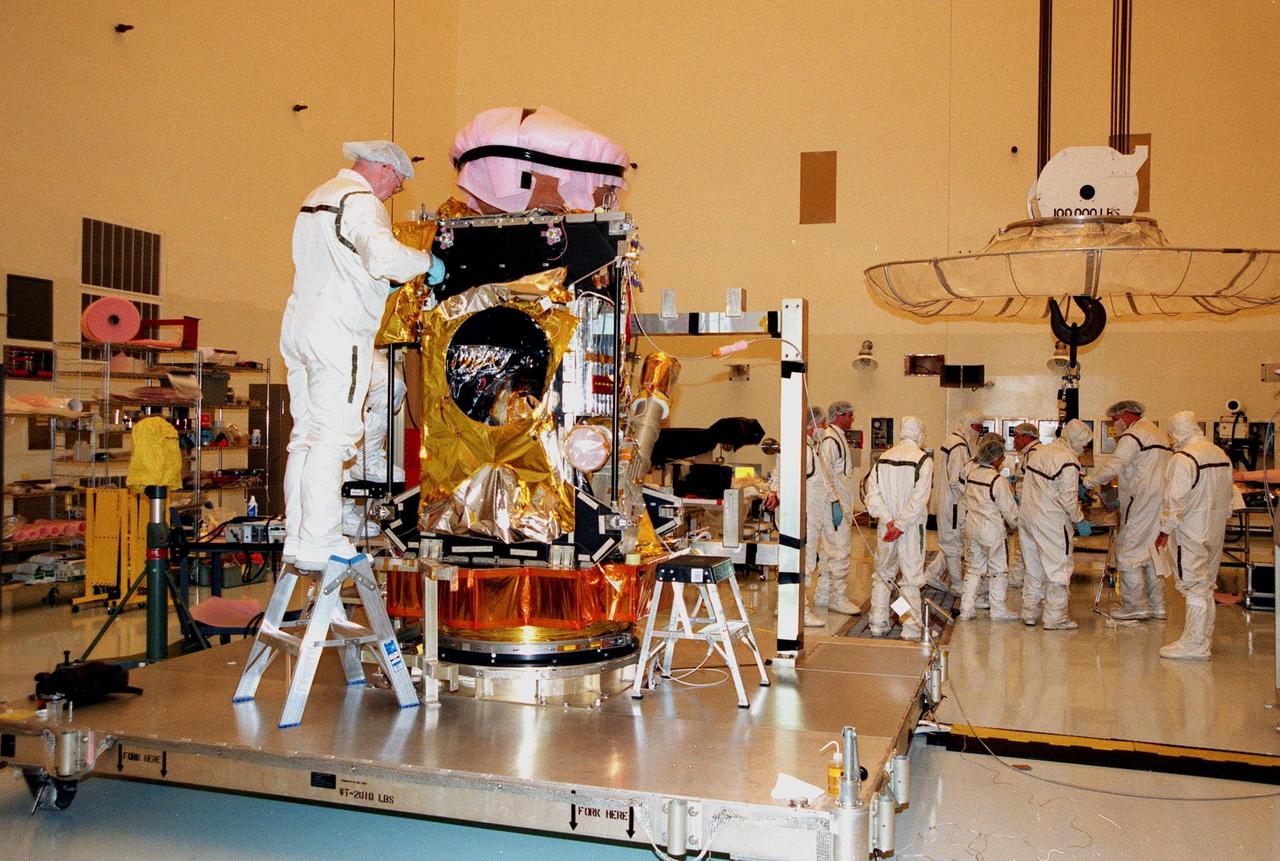
KSC · 1998-12-14 · KSC-98pc1866
KSC-98pc1866
In the Payload Hazardous Servicing Facility, workers oversee closeout operations of the Stardust Sample Return Capsule (SRC) and -X spacecraft panel with the spacecraft bus. Stardust will use…
Inspect NASA record
In the Payload Hazardous Servicing Facility, workers oversee closeout operations of the Stardust Sample Return Capsule (SRC) and -X spacecraft panel with the spacecraft bus. Stardust will use a unique medium called aerogel to capture comet particles flying off the nucleus of comet Wild 2 in January 2004, plus collect interstellar dust for later analysis. The collected samples will return to Earth in the SRC to be jettisoned as it swings by Earth in January 2006. Stardust is scheduled to be launched aboard a Boeing Delta 7426 rocket from Complex 17, Cape Canaveral Air Station, on Feb. 6, 1999
- Record ID
- KSC-98pc1866
- NASA center
- KSC
- Date
- 1998-12-14

KSC · 1998-11-12 · KSC-98pc1621
KSC-98pc1621
After arrival at the Shuttle Landing Facility in the early morning hours, the crated Stardust spacecraft waits to be unloaded from the aircraft. Built by Lockheed Martin Astronautics…
Inspect NASA record
After arrival at the Shuttle Landing Facility in the early morning hours, the crated Stardust spacecraft waits to be unloaded from the aircraft. Built by Lockheed Martin Astronautics near Denver, Colo., for the Jet Propulsion Laboratory (JPL) NASA, the spacecraft Stardust will use a unique medium called aerogel to capture comet particles flying off the nucleus of comet Wild 2 in January 2004, plus collect interstellar dust for later analysis. Stardust will be launched aboard a Boeing Delta 7426 rocket from Complex 17, Cape Canaveral Air Station, targeted for Feb. 6, 1999. The collected samples will return to Earth in a re-entry capsule to be jettisoned from Stardust as it swings by in January 2006
- Record ID
- KSC-98pc1621
- NASA center
- KSC
- Date
- 1998-11-12
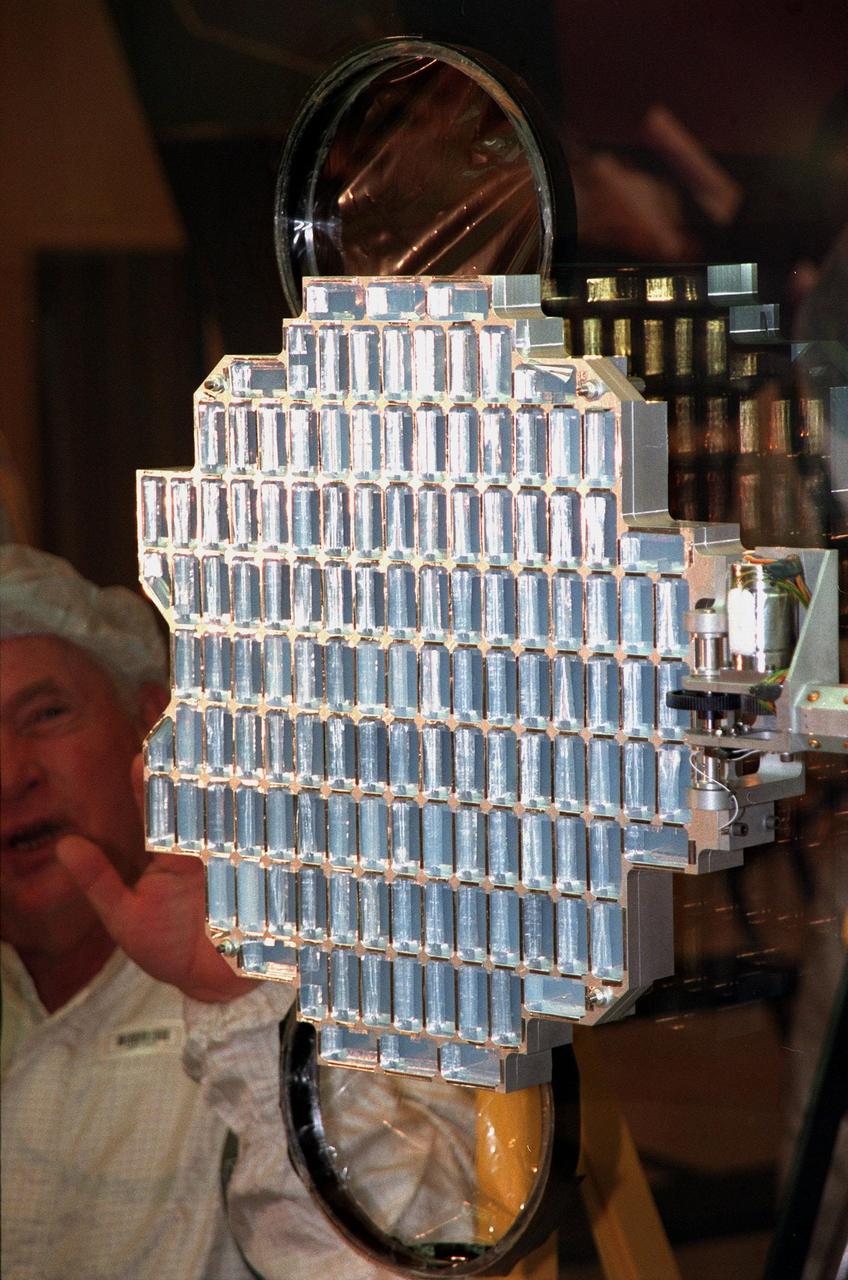
KSC · 1998-12-07 · KSC-98pc1872
KSC-98pc1872
In the Payload Hazardous Servicing Facility, the aerogel grid is fully deployed from the Stardust Sample Return Capsule (SRC) for final closeout. Stardust will use a unique medium…
Inspect NASA record
In the Payload Hazardous Servicing Facility, the aerogel grid is fully deployed from the Stardust Sample Return Capsule (SRC) for final closeout. Stardust will use a unique medium called aerogel to capture comet particles flying off the nucleus of comet Wild 2 in January 2004, plus collect interstellar dust for later analysis. The collected samples will return to Earth in the SRC to be jettisoned as it swings by Earth in January 2006. Stardust is scheduled to be launched aboard a Boeing Delta 7426 rocket from Complex 17, Cape Canaveral Air Station, on Feb. 6, 1999
- Record ID
- KSC-98pc1872
- NASA center
- KSC
- Date
- 1998-12-07

KSC · 1998-11-12 · KSC-98pc1624
KSC-98pc1624
In the Payload Hazardous Service Facility, workers oversee the arrival of the crated Stardust spacecraft. Built by Lockheed Martin Astronautics near Denver, Colo., for the Jet Propulsion Laboratory…
Inspect NASA record
In the Payload Hazardous Service Facility, workers oversee the arrival of the crated Stardust spacecraft. Built by Lockheed Martin Astronautics near Denver, Colo., for the Jet Propulsion Laboratory (JPL) and NASA, the spacecraft Stardust will use a unique medium called aerogel to capture comet particles flying off the nucleus of comet Wild 2 in January 2004, plus collect interstellar dust for later analysis. Stardust will be launched aboard a Boeing Delta 7426 rocket from Complex 17, Cape Canaveral Air Station, targeted for Feb. 6, 1999. The collected samples will return to Earth in a re-entry capsule to be jettisoned from Stardust as it swings by in January 2006
- Record ID
- KSC-98pc1624
- NASA center
- KSC
- Date
- 1998-11-12
KSC · 1998-12-07 · KSC-98pc1869
KSC-98pc1869
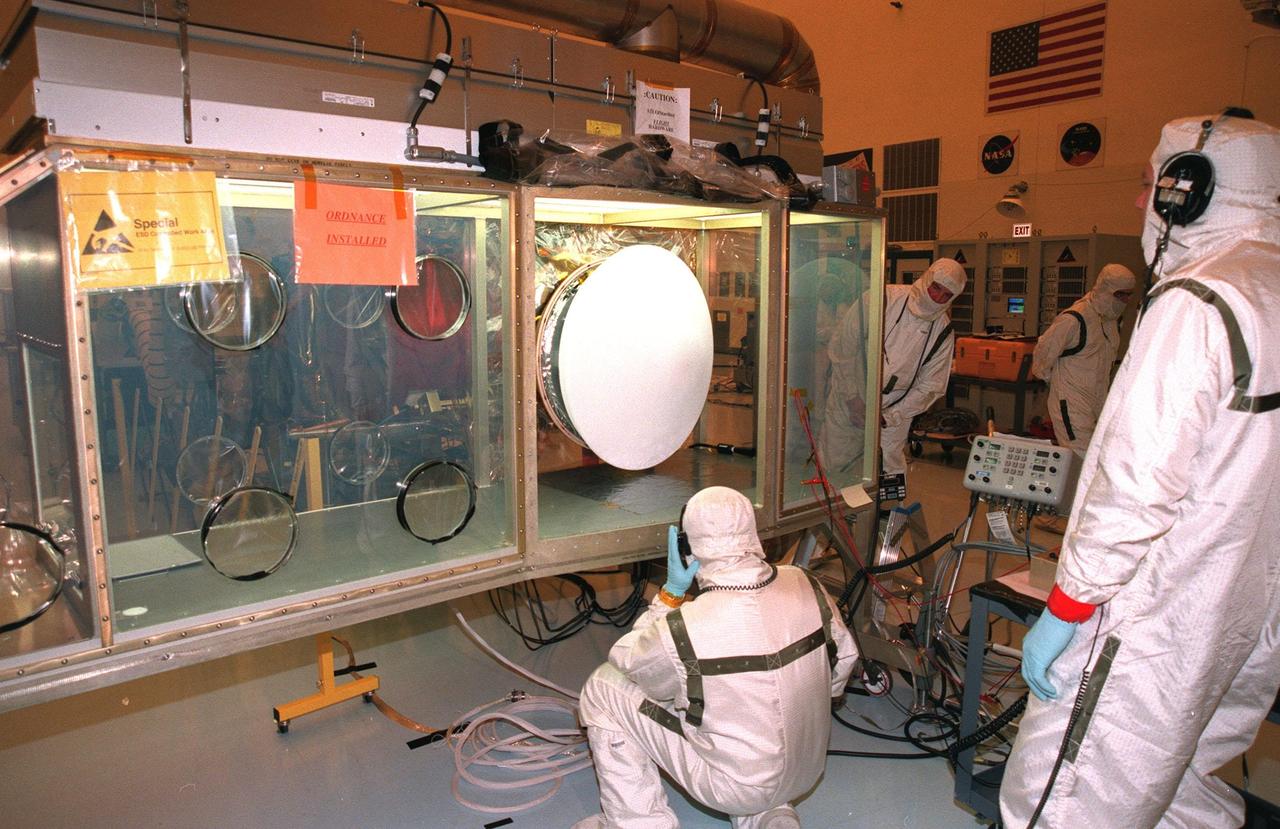
In the Payload Hazardous Servicing Facility, workers prepare to open the Stardust Sample Return Capsule (SRC) residing in a Class 100 glove box. Stardust will use a unique…
Inspect NASA record
In the Payload Hazardous Servicing Facility, workers prepare to open the Stardust Sample Return Capsule (SRC) residing in a Class 100 glove box. Stardust will use a unique medium called aerogel to capture comet particles flying off the nucleus of comet Wild 2 in January 2004, plus collect interstellar dust for later analysis. The collected samples will return to Earth in the SRC to be jettisoned as it swings by Earth in January 2006. Stardust is scheduled to be launched aboard a Boeing Delta 7426 rocket from Complex 17, Cape Canaveral Air Station, on Feb. 6, 1999
- Record ID
- KSC-98pc1869
- NASA center
- KSC
- Date
- 1998-12-07