
Update Site (from NASA)
Explore NASA’s Image and Video Library.
Suggest one object per day for the Interstellar Minds collection. We review each suggestion before adding it.
Sign in to suggest a Marvel.
Find a NASA image ID. Open a NASA record and copy its ID from the end of the details URL.
NASA image records
JPL · 2006-08-15 · PIA08654
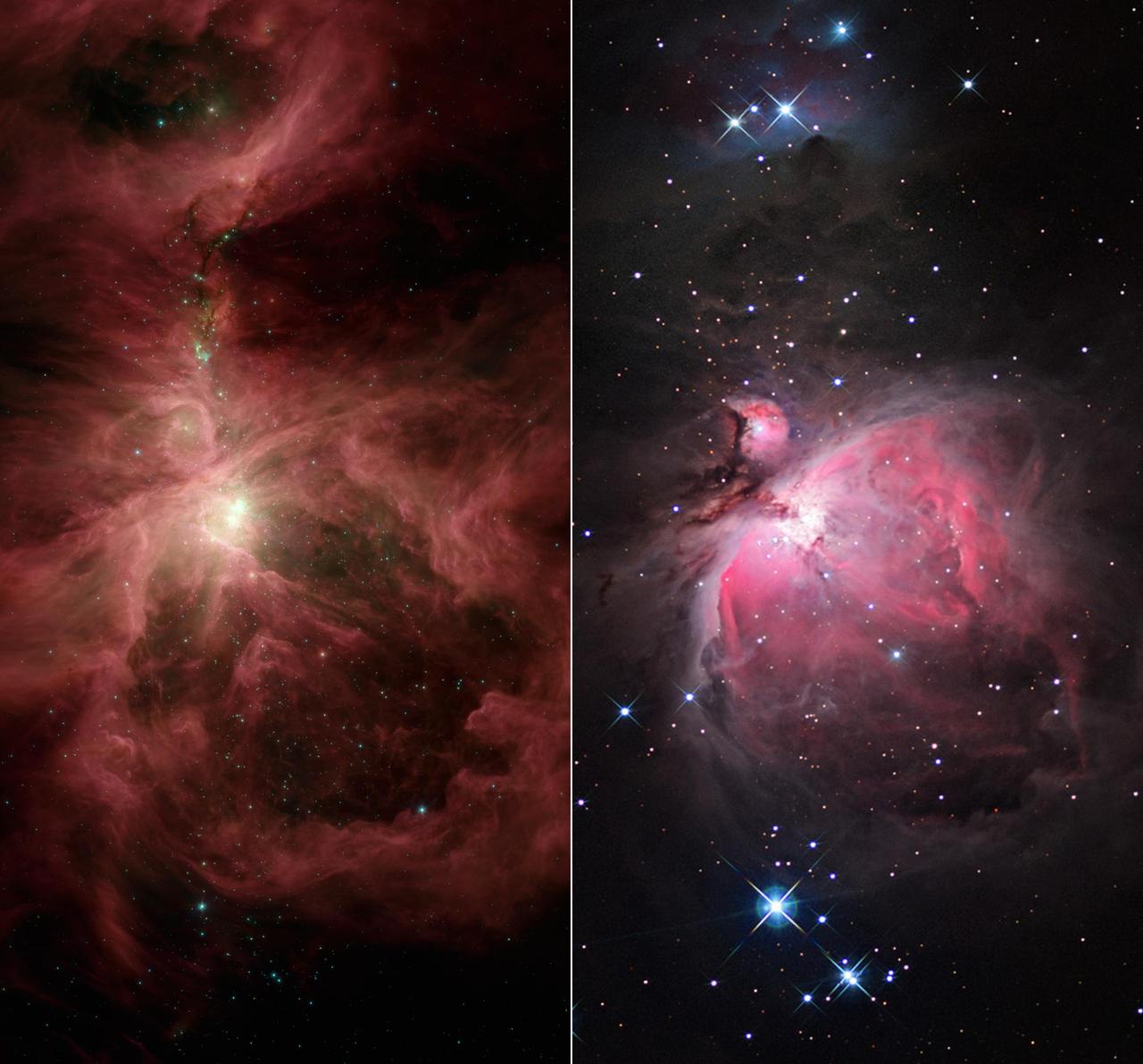
The Infrared Hunter
NASA Spitzer Space Telescope and the National Optical Astronomy Observatory compare infrared and visible views of the famous Orion nebula and its surrounding cloud, an industrious star-making region…
Inspect NASA record
NASA Spitzer Space Telescope and the National Optical Astronomy Observatory compare infrared and visible views of the famous Orion nebula and its surrounding cloud, an industrious star-making region located near the hunter constellation sword.
- Record ID
- PIA08654
- NASA center
- JPL
- Date
- 2006-08-15
- Credit
- NASA/JPL-Caltech/Univ. of Toledo/NOAO
- Keywords
- Orion, Spitzer Space Telescope

JPL · 2006-02-15 · PIA02180
Galactic Hearts of Glass Artist Concept
This artist concept based on data fromNASA Spitzer Space Telescope shows delicate greenish crystals sprinkled throughout the violent core of a pair of colliding galaxies. The white spots…
Inspect NASA record
This artist concept based on data fromNASA Spitzer Space Telescope shows delicate greenish crystals sprinkled throughout the violent core of a pair of colliding galaxies. The white spots represent a thriving population of stars of all sizes and ages.
- Record ID
- PIA02180
- NASA center
- JPL
- Date
- 2006-02-15
- Credit
- Artist Concept: NASA/JPL-CaltechGraph: NASA/JPL-Caltech/Cornell
- Keywords
- Spitzer Space Telescope
JPL · 2011-12-12 · PIA14885
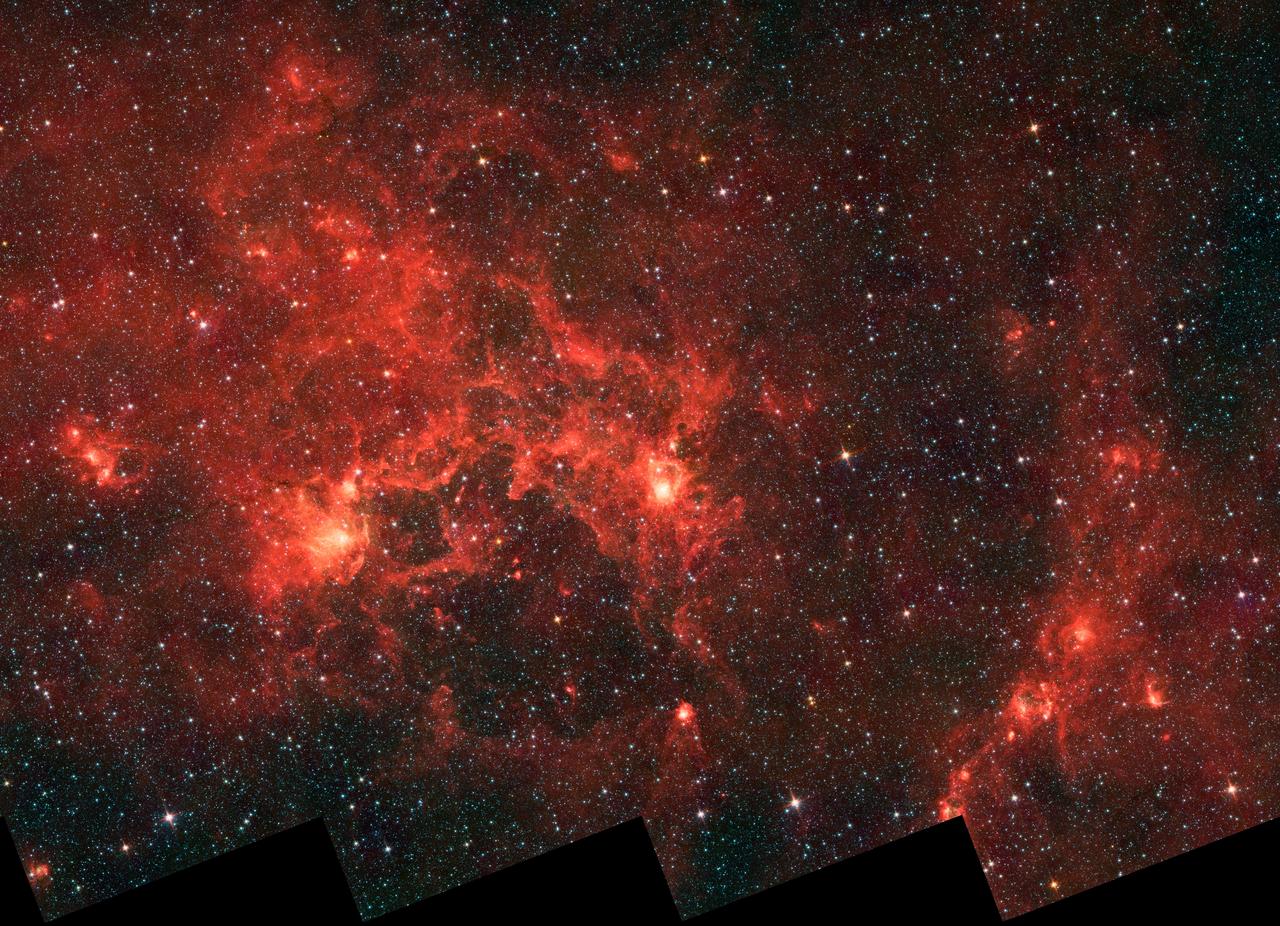
Dragonfish Coming At You in Infrared
This infrared image from NASA Spitzer Space Telescope shows the nebula nicknamed the Dragonfish. This turbulent region, jam-packed with stars, is home to some of the most luminous…
Inspect NASA record
This infrared image from NASA Spitzer Space Telescope shows the nebula nicknamed the Dragonfish. This turbulent region, jam-packed with stars, is home to some of the most luminous massive stars in our Milky Way galaxy.
- Record ID
- PIA14885
- NASA center
- JPL
- Date
- 2011-12-12
- Credit
- NASA/JPL-Caltech/Univ. of Toronto
- Keywords
- Spitzer Space Telescope
JPL · 2013-06-05 · PIA17241
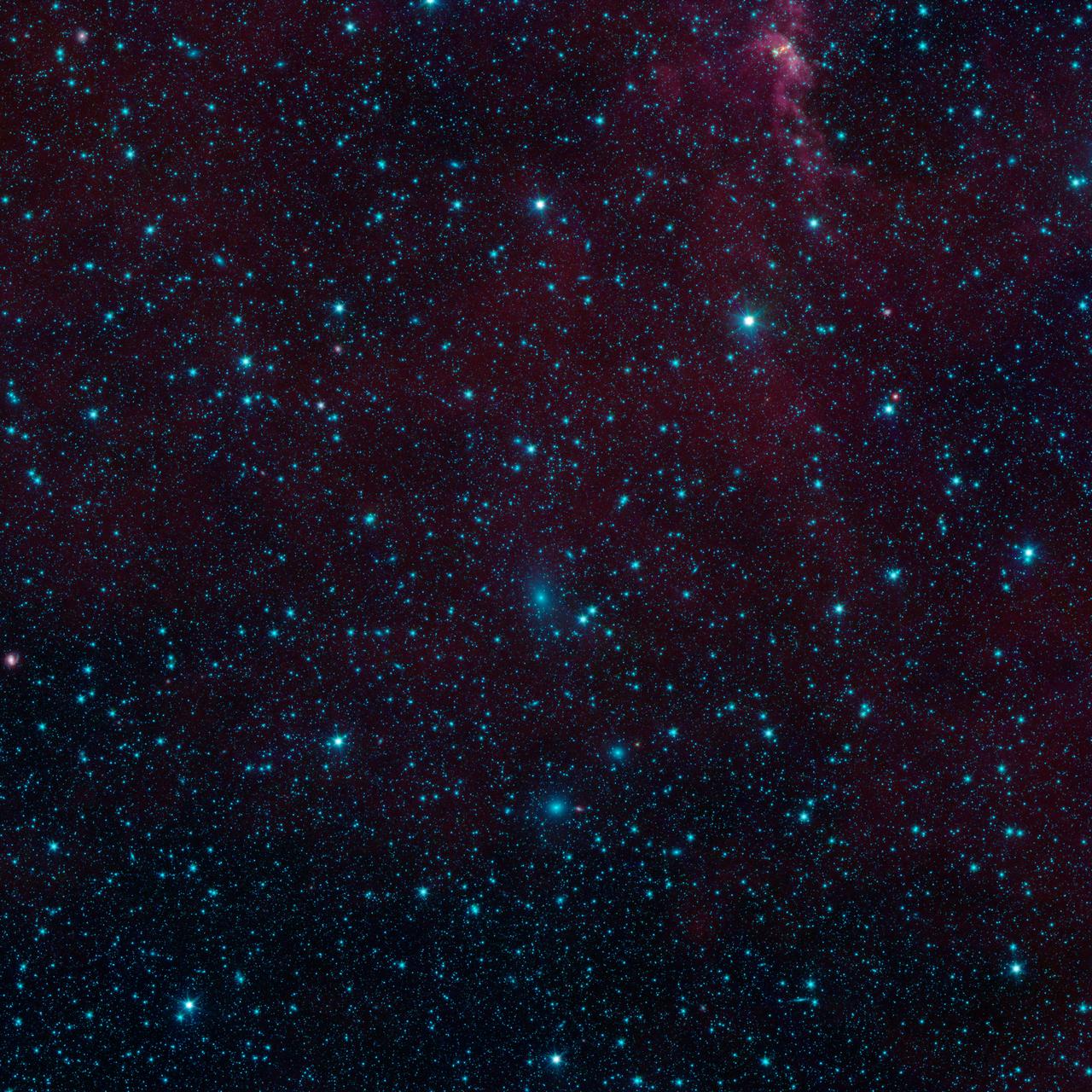
Galaxies in Hiding
There are nearly 200 galaxies within the marked circles in this image from NASA Spitzer Space Telescope. These are part of the Perseus-Pisces supercluster of galaxies located 250…
Inspect NASA record
There are nearly 200 galaxies within the marked circles in this image from NASA Spitzer Space Telescope. These are part of the Perseus-Pisces supercluster of galaxies located 250 million light-years away.
- Record ID
- PIA17241
- NASA center
- JPL
- Date
- 2013-06-05
- Credit
- NASA/JPL-Caltech/University of Wisconsin
- Keywords
- Spitzer Space Telescope

JPL · 2011-02-10 · PIA13843
The Case of the Disappearing Continent
This infrared image from NASA Spitzer Space Telescope shows a swirling landscape of stars known as the North America nebula. Clusters of young stars about one million years…
Inspect NASA record
This infrared image from NASA Spitzer Space Telescope shows a swirling landscape of stars known as the North America nebula. Clusters of young stars about one million years old can be found throughout the image.
- Record ID
- PIA13843
- NASA center
- JPL
- Date
- 2011-02-10
- Credit
- NASA/JPL-Caltech
- Keywords
- Spitzer Space Telescope
JPL · 2005-06-10 · PIA03518
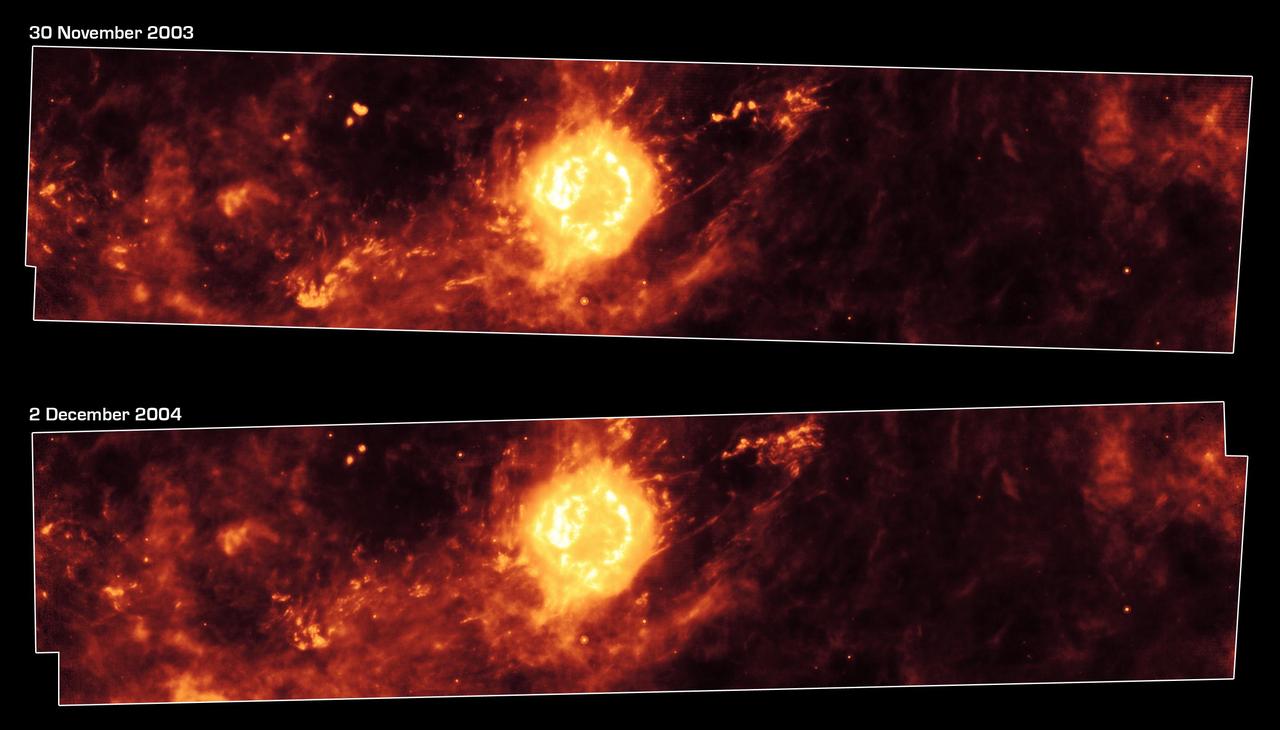
A Year in the Life of an Infrared Echo
These images from NASA Spitzer Space Telescope, taken one year apart, show the supernova remnant Cassiopeia A yellow ball and surrounding clouds of dust reddish orange.
Inspect NASA record
These images from NASA Spitzer Space Telescope, taken one year apart, show the supernova remnant Cassiopeia A yellow ball and surrounding clouds of dust reddish orange.
- Record ID
- PIA03518
- NASA center
- JPL
- Date
- 2005-06-10
- Credit
- NASA/JPL-Caltech/University of Arizona
- Keywords
- Cassiopeia A, Spitzer Space Telescope
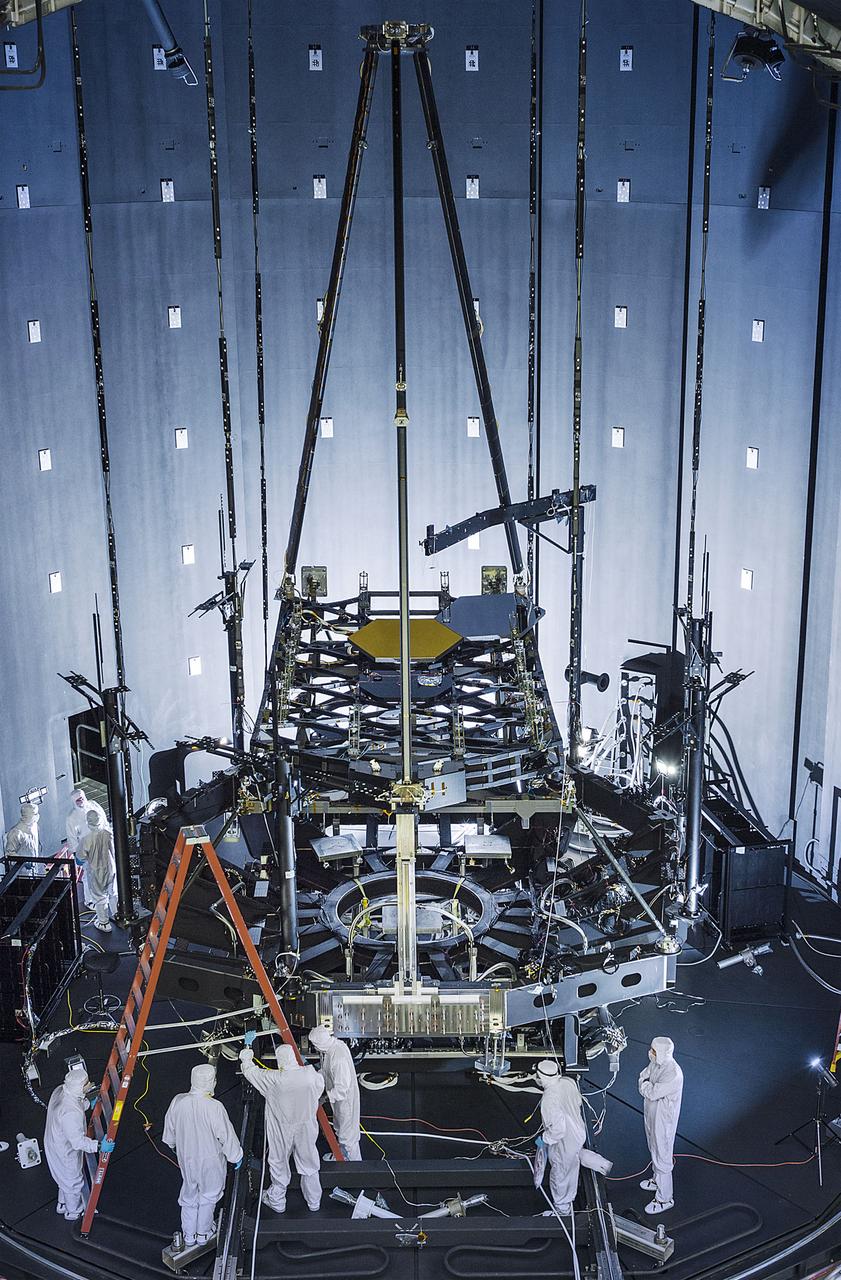
GSFC · 2017-12-08 · GSFC_20171208_Archive_e000745
James Webb Space Telescope in NASA's giant thermal vacuum chamber
Inside NASA's giant thermal vacuum chamber, called Chamber A, at NASA's Johnson Space Center in Houston, the James Webb Space Telescope's Pathfinder backplane test model, is being prepared…
Inspect NASA record
Inside NASA's giant thermal vacuum chamber, called Chamber A, at NASA's Johnson Space Center in Houston, the James Webb Space Telescope's Pathfinder backplane test model, is being prepared for its cryogenic test. Previously used for manned spaceflight missions, this historic chamber is now filled with engineers and technicians preparing for a crucial test. Exelis developed and installed the optical test equipment in the chamber. "The optical test equipment was developed and installed in the chamber by Exelis," said Thomas Scorse, Exelis JWST Program Manager. "The Pathfinder telescope gives us our first opportunity for an end-to-end checkout of our equipment." "This will be the first time on the program that we will be aligning two primary mirror segments together," said Lee Feinberg, NASA Optical Telescope Element Manager. "In the past, we have always tested one mirror at a time but this time we will use a single test system and align both mirrors to it as though they are a single monolithic mirror." The James Webb Space Telescope is the scientific successor to NASA's Hubble Space Telescope. It will be the most powerful space telescope ever built. Webb is an international project led by NASA with its partners, the European Space Agency and the Canadian Space Agency. Image credit: NASA/Chris Gunn Text credit: Laura Betz, NASA's Goddard Space Flight Center, Greenbelt, Maryland NASA image use policy. NASA Goddard Space Flight Center enables NASA’s mission through four scientific endeavors: Earth Science, Heliophysics, Solar System Exploration, and Astrophysics. Goddard plays a leading role in NASA’s accomplishments by contributing compelling scientific knowledge to advance the Agency’s mission. Follow us on Twitter Like us on Facebook Find us on Instagram
- Record ID
- GSFC_20171208_Archive_e000745
- NASA center
- GSFC
- Date
- 2017-12-08
- Keywords
- James Webb Space Telescope in NASA's giant thermal vacuum chamber, nasa, webb, jdub, jwst, jameswebbspacetelescope, nasagoddard, webbtelescope

JPL · 2016-06-08 · PIA20687
Hot Jupiter with Hidden Water (Artist Concept)
Hot Jupiters, exoplanets around the same size as Jupiter that orbit very closely to their stars, often have cloud or haze layers in their atmospheres. This may prevent…
Inspect NASA record
Hot Jupiters, exoplanets around the same size as Jupiter that orbit very closely to their stars, often have cloud or haze layers in their atmospheres. This may prevent space telescopes from detecting atmospheric water that lies beneath the clouds, according to a study in the Astrophysical Journal. As much as half of the water in the atmospheres of these exoplanets may be blocked by these clouds or hazes, research suggests. The study, led by researchers at NASA's Jet Propulsion Laboratory, Pasadena, California, examined hot Jupiters that had been observed with the Hubble Space Telescope. http://photojournal.jpl.nasa.gov/catalog/PIA20687
- Record ID
- PIA20687
- NASA center
- JPL
- Date
- 2016-06-08
- Credit
- NASA/JPL-Caltech
- Keywords
- Hubble Space Telescope
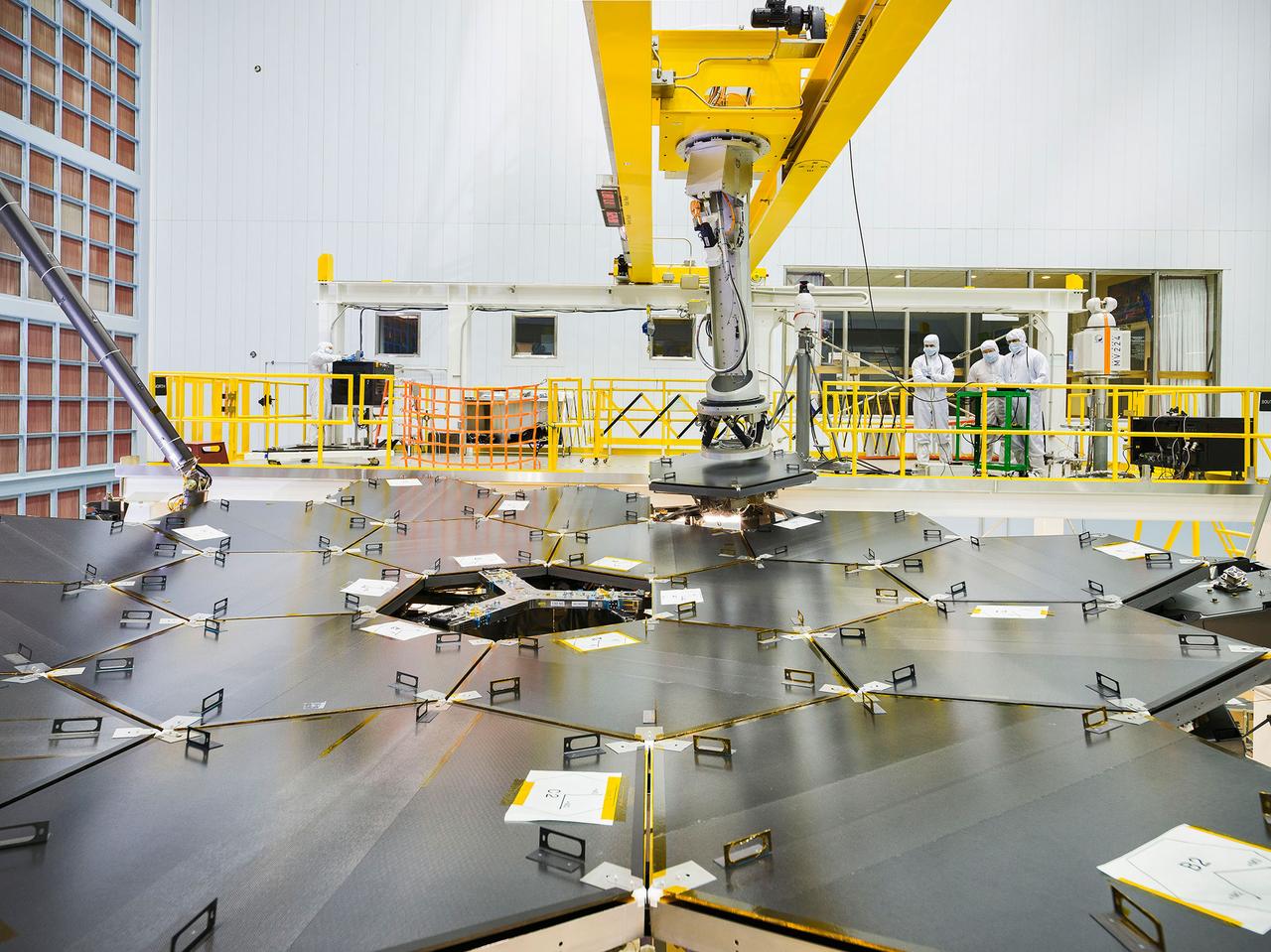
GSFC · 2017-12-08 · GSFC_20171208_Archive_e000422
NASA's James Webb Space Telescope Primary Mirror Fully Assembled
The 18th and final primary mirror segment is installed on what will be the biggest and most powerful space telescope ever launched. The final mirror installation Wednesday at…
Inspect NASA record
The 18th and final primary mirror segment is installed on what will be the biggest and most powerful space telescope ever launched. The final mirror installation Wednesday at NASA’s Goddard Space Flight Center in Greenbelt, Maryland marks an important milestone in the assembly of the agency’s James Webb Space Telescope. “Scientists and engineers have been working tirelessly to install these incredible, nearly perfect mirrors that will focus light from previously hidden realms of planetary atmospheres, star forming regions and the very beginnings of the Universe,” said John Grunsfeld, associate administrator for NASA’s Science Mission Directorate in Washington. “With the mirrors finally complete, we are one step closer to the audacious observations that will unravel the mysteries of the Universe.” Using a robotic arm reminiscent of a claw machine, the team meticulously installed all of Webb's primary mirror segments onto the telescope structure. Each of the hexagonal-shaped mirror segments measures just over 4.2 feet (1.3 meters) across -- about the size of a coffee table -- and weighs approximately 88 pounds (40 kilograms). Once in space and fully deployed, the 18 primary mirror segments will work together as one large 21.3-foot diameter (6.5-meter) mirror. Credit: NASA/Goddard/Chris Gunn Credits: NASA/Chris Gunn
- Record ID
- GSFC_20171208_Archive_e000422
- NASA center
- GSFC
- Date
- 2017-12-08
- Keywords
- NASA's James Webb Space Telescope Primary Mirror Fully Assembled, mirror, nasa, jwst, jameswebbspacetelescope, nasagoddard
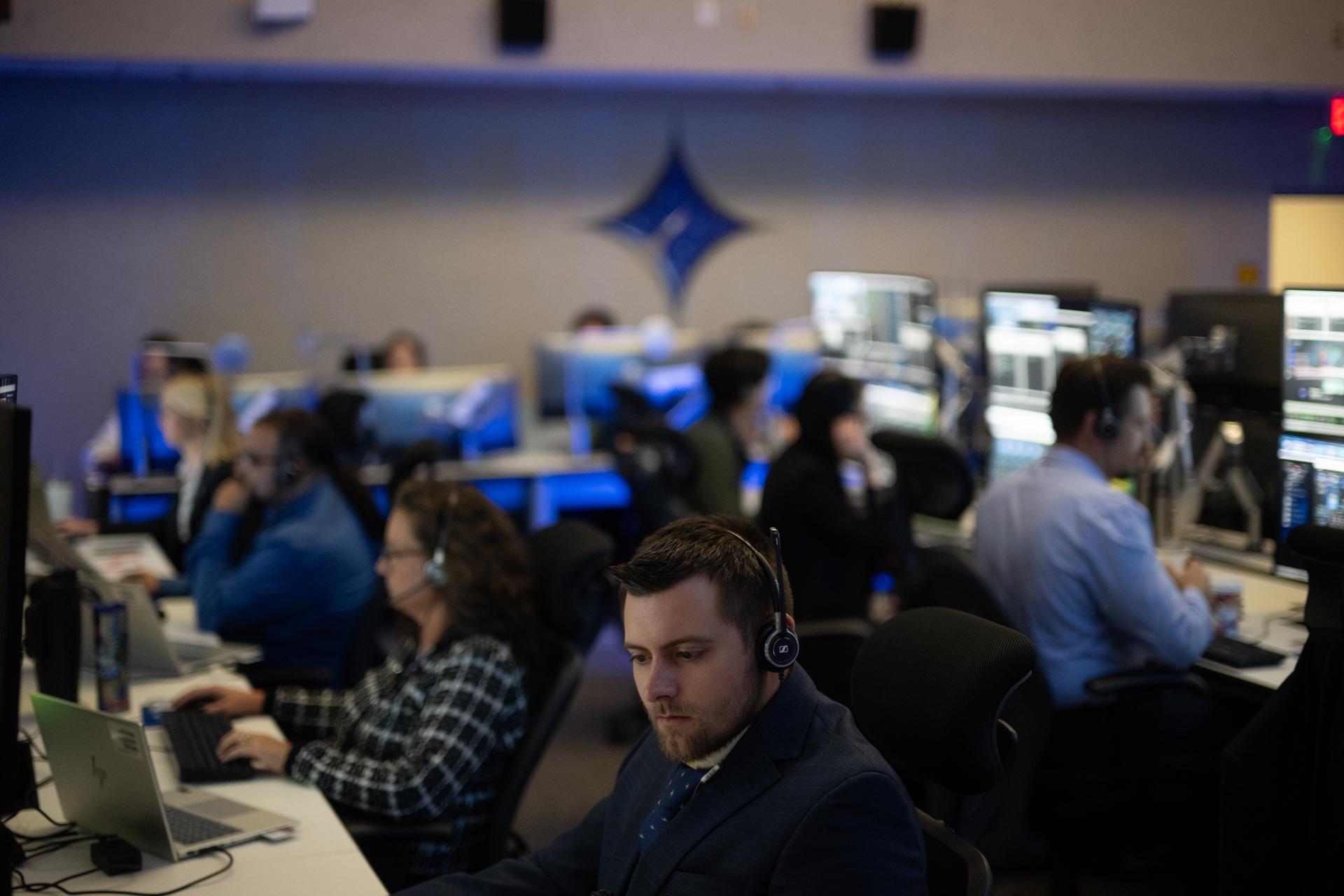
HQ · 2026-08-30 · NHQ202608300062
Nancy Grace Roman Space Telescope Launch
Zach Blanchard, a safety and quality engineer at NASA’s Kennedy Space Center, monitors the countdown inside Hangar AE at Cape Canaveral Space Force Station for the launch of…
Inspect NASA record
Zach Blanchard, a safety and quality engineer at NASA’s Kennedy Space Center, monitors the countdown inside Hangar AE at Cape Canaveral Space Force Station for the launch of a SpaceX Falcon Heavy rocket with NASA’S Nancy Grace Roman Space Telescope from Launch Complex 39A at NASA’s Kennedy Space Center, Sunday, Aug. 30, 2026, in Florida. Roman will investigate dark energy and dark matter, conduct a statistical census of planetary systems, and enable a broad range of additional astrophysics research. Launch occurred at 7:26 a.m. EDT. Photo Credit (NASA/Joel Kowsky)
- Record ID
- NHQ202608300062
- NASA center
- HQ
- Date
- 2026-08-30
- Credit
- NASA/Joel Kowsky
- Keywords
- Cape Canaveral Space Force Station (CCSFS), Falcon Heavy, Florida, Hangar AE, Kennedy Space Center, Launch Complex 39A, Nancy Grace Roman Space Telescope, SpaceX, Zach Blanchard
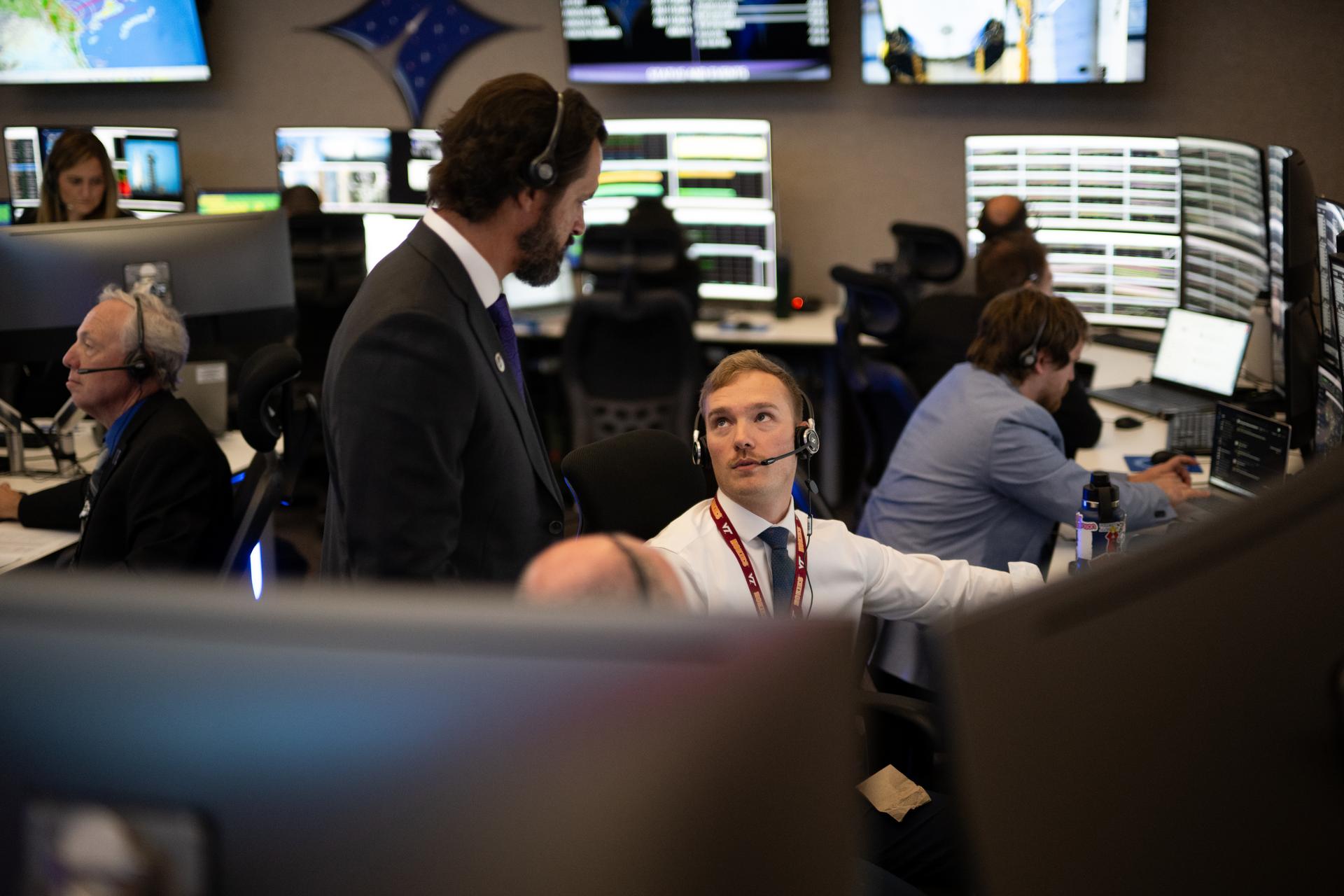
HQ · 2026-08-30 · NHQ202608300061
Nancy Grace Roman Space Telescope Launch
Aaron Smith, senior vehicle systems engineer for NASA’s Launch Services Program, left, talks with Daniel Safewright, a ground systems engineer at NASA’s Kennedy Space Center, as they monitor…
Inspect NASA record
Aaron Smith, senior vehicle systems engineer for NASA’s Launch Services Program, left, talks with Daniel Safewright, a ground systems engineer at NASA’s Kennedy Space Center, as they monitor the countdown inside Hangar AE at Cape Canaveral Space Force Station for the launch of a SpaceX Falcon Heavy rocket with NASA’S Nancy Grace Roman Space Telescope from Launch Complex 39A at NASA’s Kennedy Space Center, Sunday, Aug. 30, 2026, in Florida. Roman will investigate dark energy and dark matter, conduct a statistical census of planetary systems, and enable a broad range of additional astrophysics research. Launch occurred at 7:26 a.m. EDT. Photo Credit (NASA/Joel Kowsky)
- Record ID
- NHQ202608300061
- NASA center
- HQ
- Date
- 2026-08-30
- Credit
- NASA/Joel Kowsky
- Keywords
- Aaron Smith, Cape Canaveral Space Force Station (CCSFS), Daniel Safewright, Falcon Heavy, Florida, Hangar AE, Kennedy Space Center, Launch Complex 39A, Nancy Grace Roman Space Telescope, SpaceX
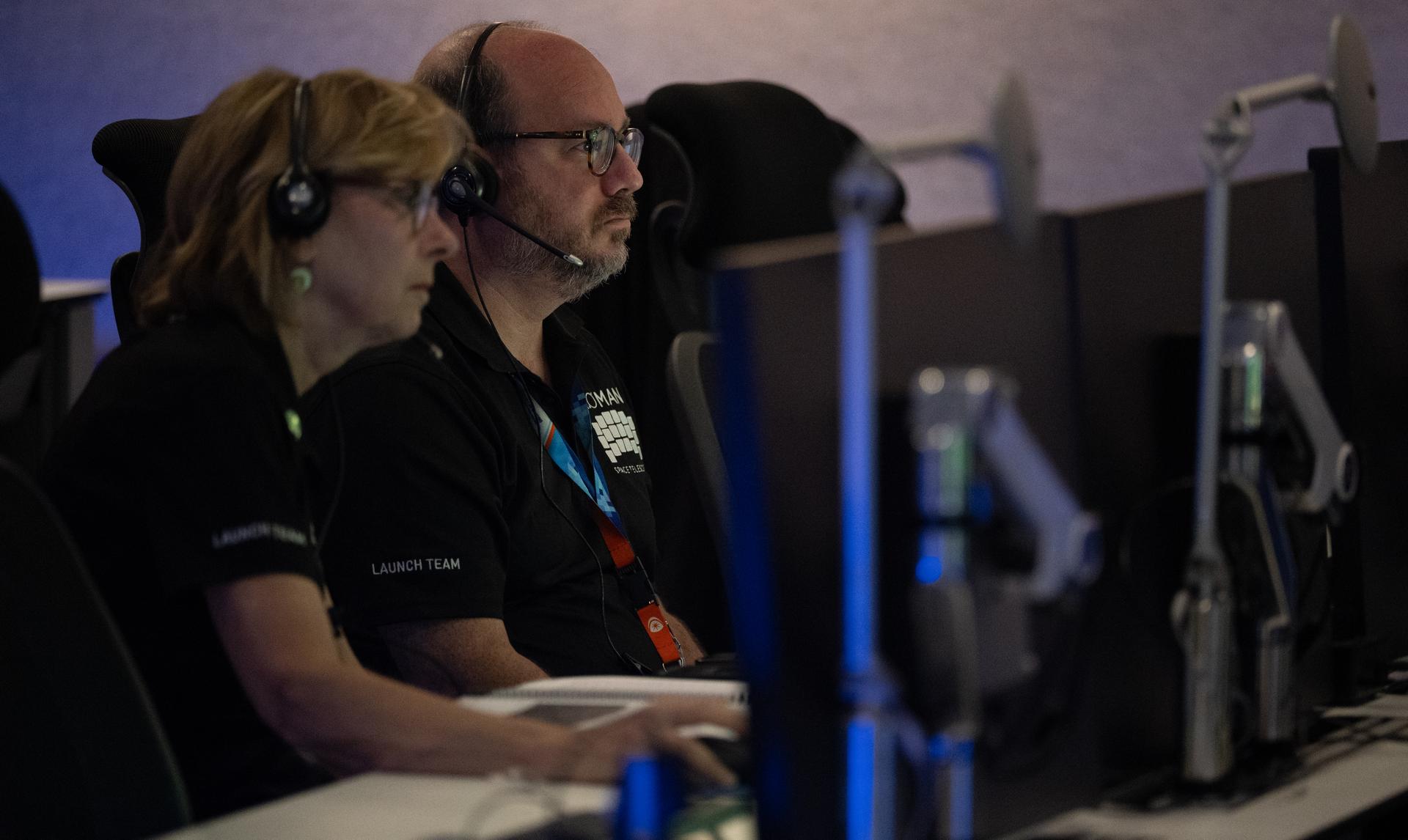
HQ · 2026-08-30 · NHQ202608300066
Nancy Grace Roman Space Telescope Launch
Bradley Smith, manger of the Commercial Access to Space Program in NASA’s Human Spaceflight Mission Directorate, monitors the countdown inside Hangar AE at Cape Canaveral Space Force Station…
Inspect NASA record
Bradley Smith, manger of the Commercial Access to Space Program in NASA’s Human Spaceflight Mission Directorate, monitors the countdown inside Hangar AE at Cape Canaveral Space Force Station for the launch of a SpaceX Falcon Heavy rocket with NASA’S Nancy Grace Roman Space Telescope from Launch Complex 39A at NASA’s Kennedy Space Center, Sunday, Aug. 30, 2026, in Florida. Roman will investigate dark energy and dark matter, conduct a statistical census of planetary systems, and enable a broad range of additional astrophysics research. Launch occurred at 7:26 a.m. EDT. Photo Credit (NASA/Joel Kowsky)
- Record ID
- NHQ202608300066
- NASA center
- HQ
- Date
- 2026-08-30
- Credit
- NASA/Joel Kowsky
- Keywords
- Bradley Smith, Cape Canaveral Space Force Station (CCSFS), Falcon Heavy, Florida, Hangar AE, Kennedy Space Center, Launch Complex 39A, Nancy Grace Roman Space Telescope, SpaceX