
Update Site (from NASA)
Explore NASA’s Image and Video Library.
Suggest one object per day for the Interstellar Minds collection. We review each suggestion before adding it.
Sign in to suggest a Marvel.
Find a NASA image ID. Open a NASA record and copy its ID from the end of the details URL.
NASA image records
KSC · 2005-08-12 · KSC-05pp1877
KSC-05pp1877
KENNEDY SPACE CENTER, FLA. - With the Atlantic Ocean as a backdrop, an Atlas V launch vehicle, 19 stories tall, with a two-ton Mars Reconnaissance Orbiter (MRO) on…
Inspect NASA record
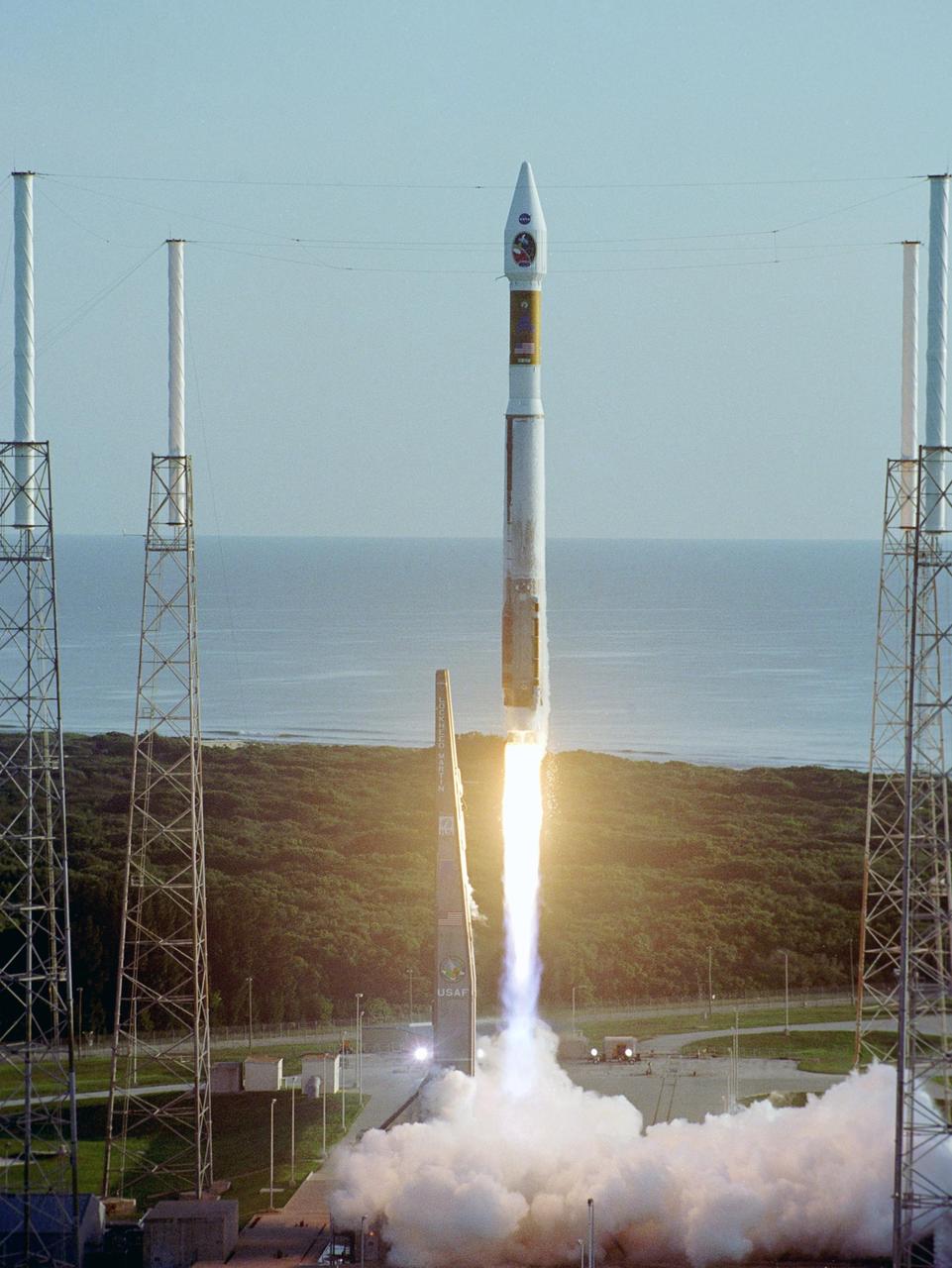
KENNEDY SPACE CENTER, FLA. - With the Atlantic Ocean as a backdrop, an Atlas V launch vehicle, 19 stories tall, with a two-ton Mars Reconnaissance Orbiter (MRO) on top, roars away from Launch Complex 41 at Cape Canaveral Air Force Station at 7:43 a.m. EDT. All systems performed nominally for NASA's first launch of an Atlas V on an interplanetary mission. MRO established radio contact with controllers 61 minutes after launch and within four minutes of separation from the upper stage. Initial contact came through an antenna at the Japan Aerospace Exploration Agency's Uchinoura Space Center in southern Japan. Mars is 72 million miles from Earth today, but the spacecraft will travel more than four times that distance on its outbound-arc trajectory to intercept the red planet on March 10, 2006. The orbiter carries six scientific instruments for examining the surface, atmosphere and subsurface of Mars in unprecedented detail from low orbit. NASA expects to get several times more data about Mars from MRO than from all previous Martian missions combined. Researchers will use the instruments to learn more about the history and distribution of Mars' water. That information will improve understanding of planetary climate change and will help guide the quest to answer whether Mars ever supported life. The orbiter will also evaluate potential landing sites for future missions. (Photo Credit: Pat Corkery/Lockheed Martin)
- Record ID
- KSC-05pp1877
- NASA center
- KSC
- Date
- 2005-08-12
- Keywords
- Mars, MRO, Mars Reconnaissance Orbiter, Atlas, CCAFS, LC-41, lau
GSFC · 2023-10-31 · GSFC_20231031_PACE_030767
GSFC_20231031_PACE_030767
The Hyper-Angular Rainbow Polarimeter #2 (HARP2) instrument (top) and the SPEXone instrument on The Plankton, Aerosol, Cloud, ocean Ecosystem (PACE) in the clean room at NASA's Goddard Space…
Inspect NASA record
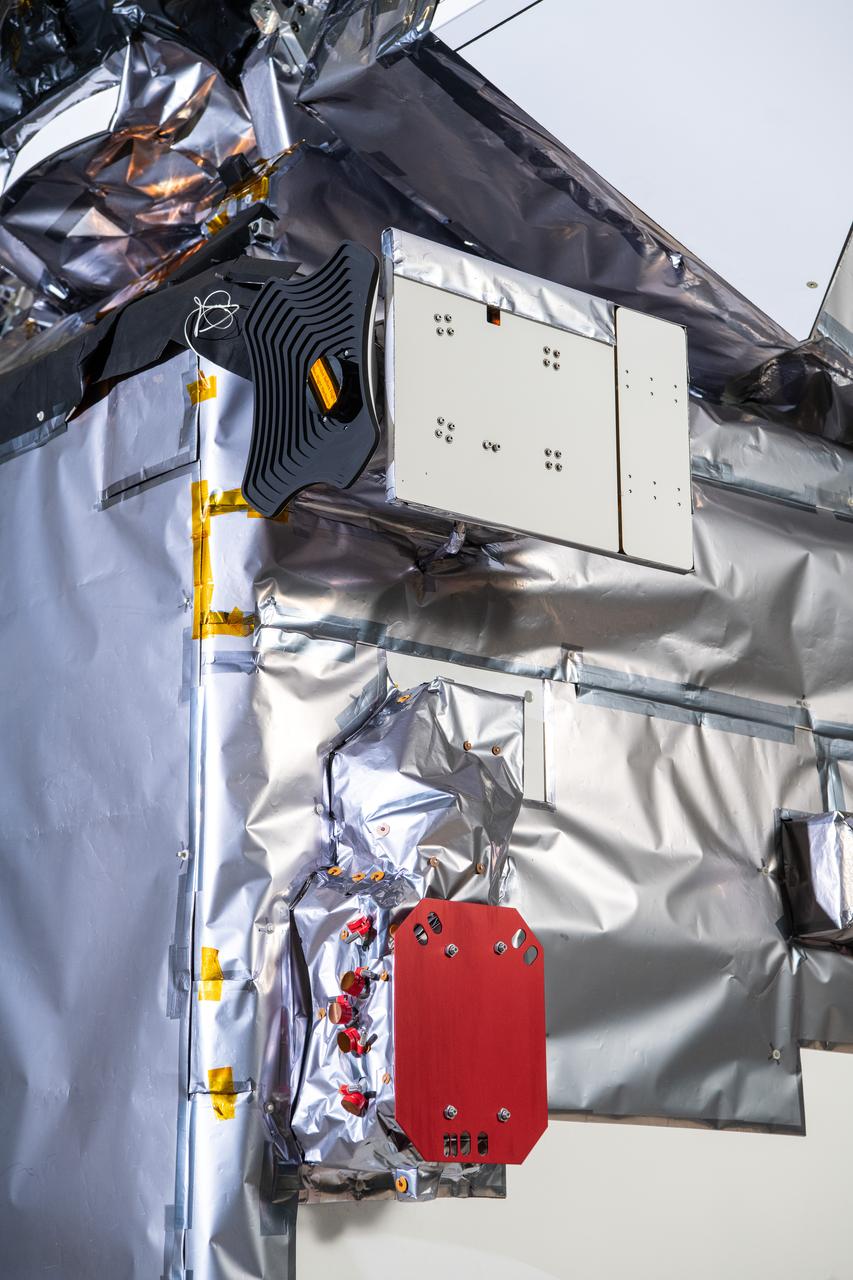
The Hyper-Angular Rainbow Polarimeter #2 (HARP2) instrument (top) and the SPEXone instrument on The Plankton, Aerosol, Cloud, ocean Ecosystem (PACE) in the clean room at NASA's Goddard Space Flight Center in Greenbelt, Maryland on October 31st, 2023. HARP2 is one of three instruments on NASA's PACE observatory, it was designed and built by UMBC's Earth and Space Institute. SPEXone has been developed by a Dutch consortium consisting of SRON Netherlands Institute for Space Research and Airbus Defence and Space Netherlands, supported by opto-mechanical expertise from TNO. SRON and Airbus DS NL are responsible for the design, manufacturing and testing of the instrument. The scientific lead is in the hands of SRON. SPEXone is a public-private initiative, funded by the Netherlands Space Office (NSO), the Netherlands Organization of Scientific Research (NWO), SRON and Airbus DS NL. PACE's unprecedented spectral coverage will provide the first-ever global measurements designed to identify phytoplankton community composition. The mission will make global ocean color measurements, using the Ocean Color Instrument (OCI), to provide extended data records on ocean ecology and global biogeochemistry along with polarimetry measurements, using the Spectro-polarimeter for Planetary Exploration (SPEXone) and the Hyper Angular Research Polarimeter (HARP2) to provide extended data records on clouds and aerosols. The Earth-observing satellite mission, built at Goddard Space Flight Center in Greenbelt, MD, will continue and advance observations of global ocean color, biogeochemistry, and ecology, as well as the carbon cycle, aerosols and clouds.
- Record ID
- GSFC_20231031_PACE_030767
- NASA center
- GSFC
- Date
- 2023-10-31
- Credit
- NASA / Denny Henry
KSC · 2005-08-12 · KSC-05pp1883
KSC-05pp1883
KENNEDY SPACE CENTER, FLA. - Viewed through a break in the greenscape around Launch Complex 41 at Cape Canaveral Air Force Station in Florida, the 19-stories-tall Atlas V…
Inspect NASA record
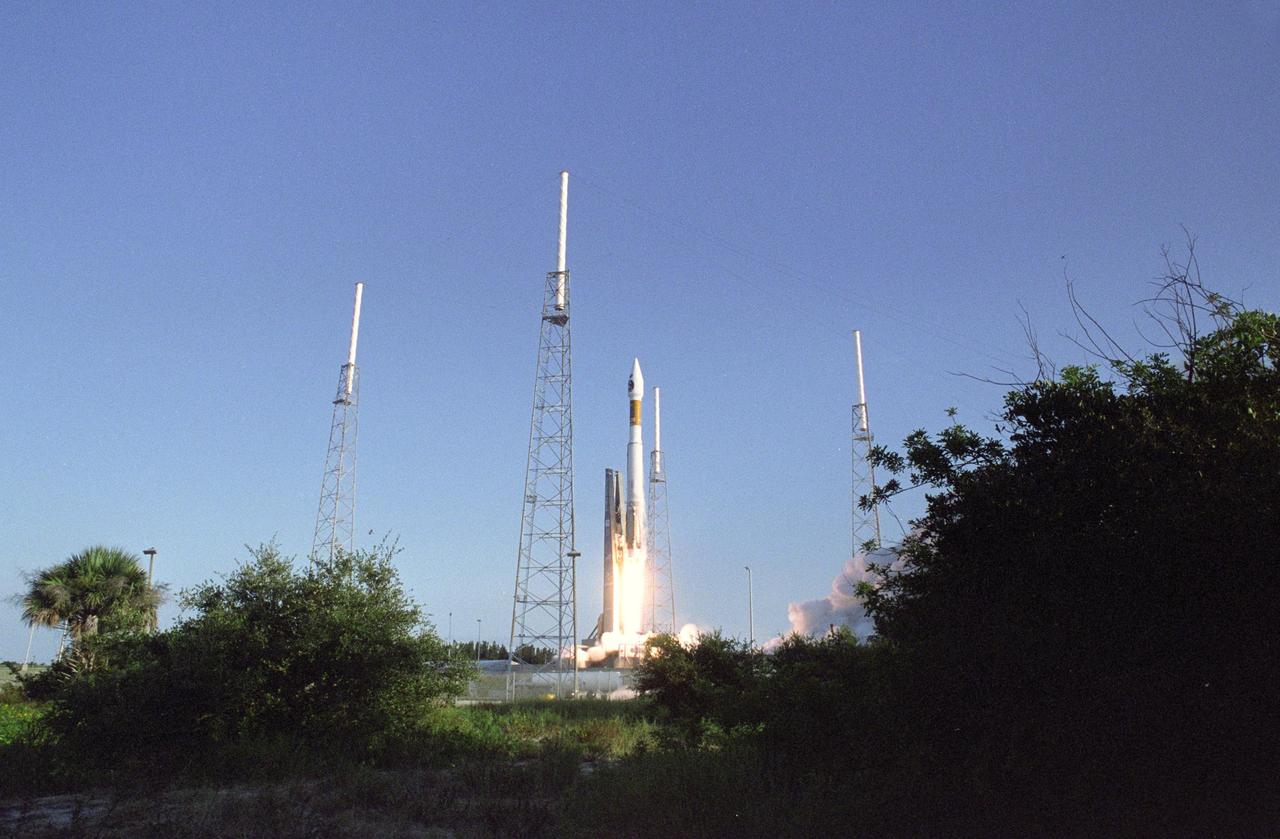
KENNEDY SPACE CENTER, FLA. - Viewed through a break in the greenscape around Launch Complex 41 at Cape Canaveral Air Force Station in Florida, the 19-stories-tall Atlas V launch vehicle roars off the launch pad, propelling the two-ton Mars Reconnaissance Orbiter (MRO) into a clear blue Florida sky and eventual orbit around Mars. Liftoff was at 7:43 a.m. EDT. All systems performed nominally for NASA's first launch of an Atlas V on an interplanetary mission. MRO established radio contact with controllers 61 minutes after launch and within four minutes of separation from the upper stage. Initial contact came through an antenna at the Japan Aerospace Exploration Agency's Uchinoura Space Center in southern Japan. Mars is 72 million miles from Earth today, but the spacecraft will travel more than four times that distance on its outbound-arc trajectory to intercept the red planet on March 10, 2006. The orbiter carries six scientific instruments for examining the surface, atmosphere and subsurface of Mars in unprecedented detail from low orbit. NASA expects to get several times more data about Mars from MRO than from all previous Martian missions combined. Researchers will use the instruments to learn more about the history and distribution of Mars' water. That information will improve understanding of planetary climate change and will help guide the quest to answer whether Mars ever supported life. The orbiter will also evaluate potential landing sites for future missions.
- Record ID
- KSC-05pp1883
- NASA center
- KSC
- Date
- 2005-08-12
- Keywords
- Mars, MRO, Mars Reconnaissance Orbiter, Atlas, CCAFS, LC-41, lau
KSC · 2005-08-12 · KSC-05pp1882
KSC-05pp1882
KENNEDY SPACE CENTER, FLA. - The 19-stories-tall Atlas V launch vehicle leaps above the trees near Launch Complex 41 at Cape Canaveral Air Force Station in Florida, propelling…
Inspect NASA record
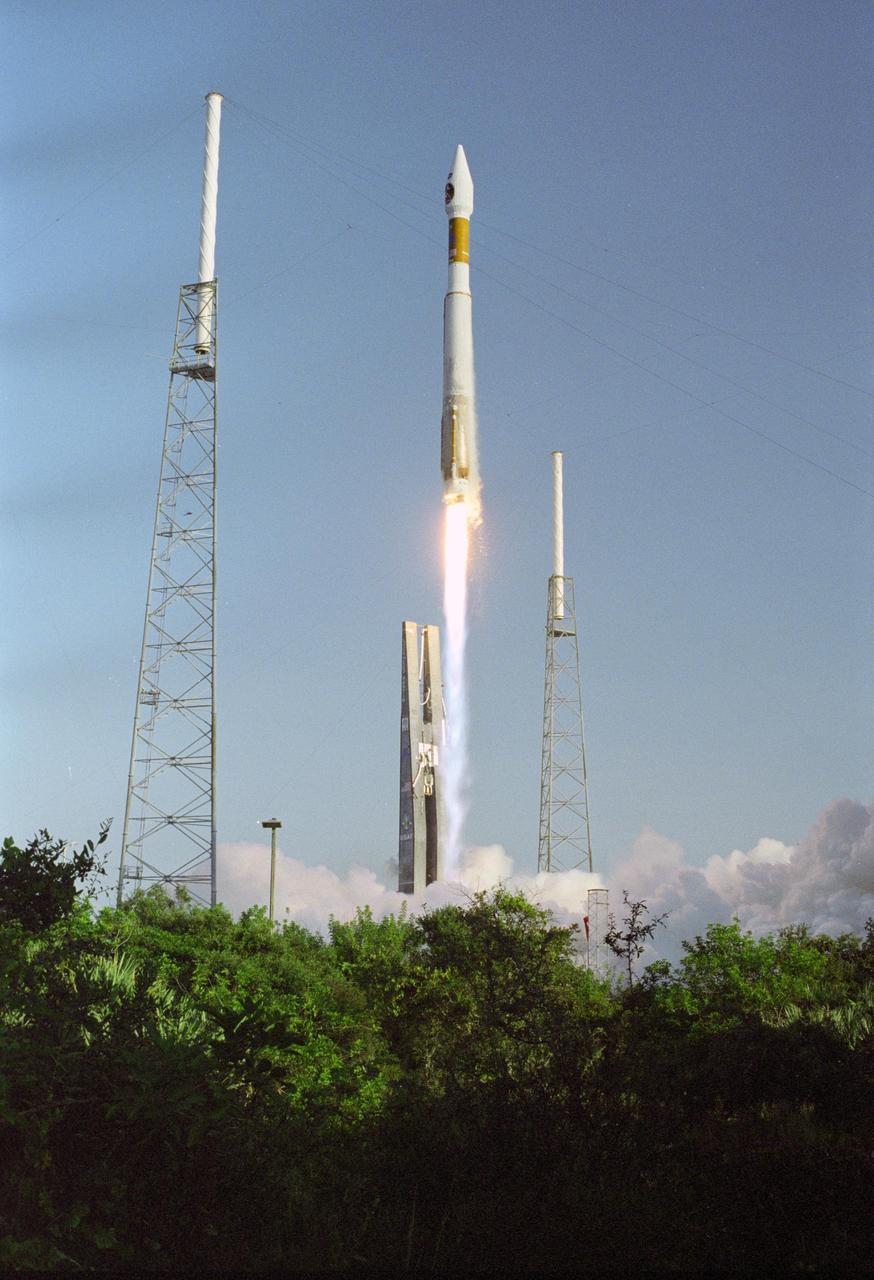
KENNEDY SPACE CENTER, FLA. - The 19-stories-tall Atlas V launch vehicle leaps above the trees near Launch Complex 41 at Cape Canaveral Air Force Station in Florida, propelling the two-ton Mars Reconnaissance Orbiter (MRO) into a clear blue Florida sky and eventual orbit around Mars. Liftoff was at 7:43 a.m. EDT. All systems performed nominally for NASA's first launch of an Atlas V on an interplanetary mission. MRO established radio contact with controllers 61 minutes after launch and within four minutes of separation from the upper stage. Initial contact came through an antenna at the Japan Aerospace Exploration Agency's Uchinoura Space Center in southern Japan. Mars is 72 million miles from Earth today, but the spacecraft will travel more than four times that distance on its outbound-arc trajectory to intercept the red planet on March 10, 2006. The orbiter carries six scientific instruments for examining the surface, atmosphere and subsurface of Mars in unprecedented detail from low orbit. NASA expects to get several times more data about Mars from MRO than from all previous Martian missions combined. Researchers will use the instruments to learn more about the history and distribution of Mars' water. That information will improve understanding of planetary climate change and will help guide the quest to answer whether Mars ever supported life. The orbiter will also evaluate potential landing sites for future missions.
- Record ID
- KSC-05pp1882
- NASA center
- KSC
- Date
- 2005-08-12
- Keywords
- Mars, MRO, Mars Reconnaissance Orbiter, Atlas, CCAFS, LC-41, lau

GSFC · 2017-12-08 · GSFC_20171208_Archive_e000345
NASA's SDO Captures Mercury Transit Time-lapses SDO Captures Mercury Transit Time-lapse
Less than once per decade, Mercury passes between the Earth and the sun in a rare astronomical event known as a planetary transit. The 2016 Mercury transit occurred…
Inspect NASA record
Less than once per decade, Mercury passes between the Earth and the sun in a rare astronomical event known as a planetary transit. The 2016 Mercury transit occurred on May 9th, between roughly 7:12 a.m. and 2:42 p.m. EDT. The images in this video are from NASA’s Solar Dynamics Observatory Music: Encompass by Mark Petrie For more info on the Mercury transit go to: www.nasa.gov/transit This video is public domain and may be downloaded at: svs.gsfc.nasa.gov/12235 NASA image use policy. NASA Goddard Space Flight Center enables NASA’s mission through four scientific endeavors: Earth Science, Heliophysics, Solar System Exploration, and Astrophysics. Goddard plays a leading role in NASA’s accomplishments by contributing compelling scientific knowledge to advance the Agency’s mission. Follow us on Twitter Like us on Facebook Find us on Instagram
- Record ID
- GSFC_20171208_Archive_e000345
- NASA center
- GSFC
- Date
- 2017-12-08
- Keywords
- NASA's SDO Captures Mercury Transit Time-lapses SDO Captures Mercury Transit Time-lapse, sun, mercury, earth, nasa, mercurytransit, nasagoddard
JPL · 2022-07-08 · PIA25252
Key Lunar Trailblazer Instrument Passes Milestone
The High-resolution Volatiles and Minerals Moon Mapper (HVM³), seen here, is one of two instruments that will be carried aboard NASA's Lunar Trailblazer. Launching in 2023, the small…
Inspect NASA record
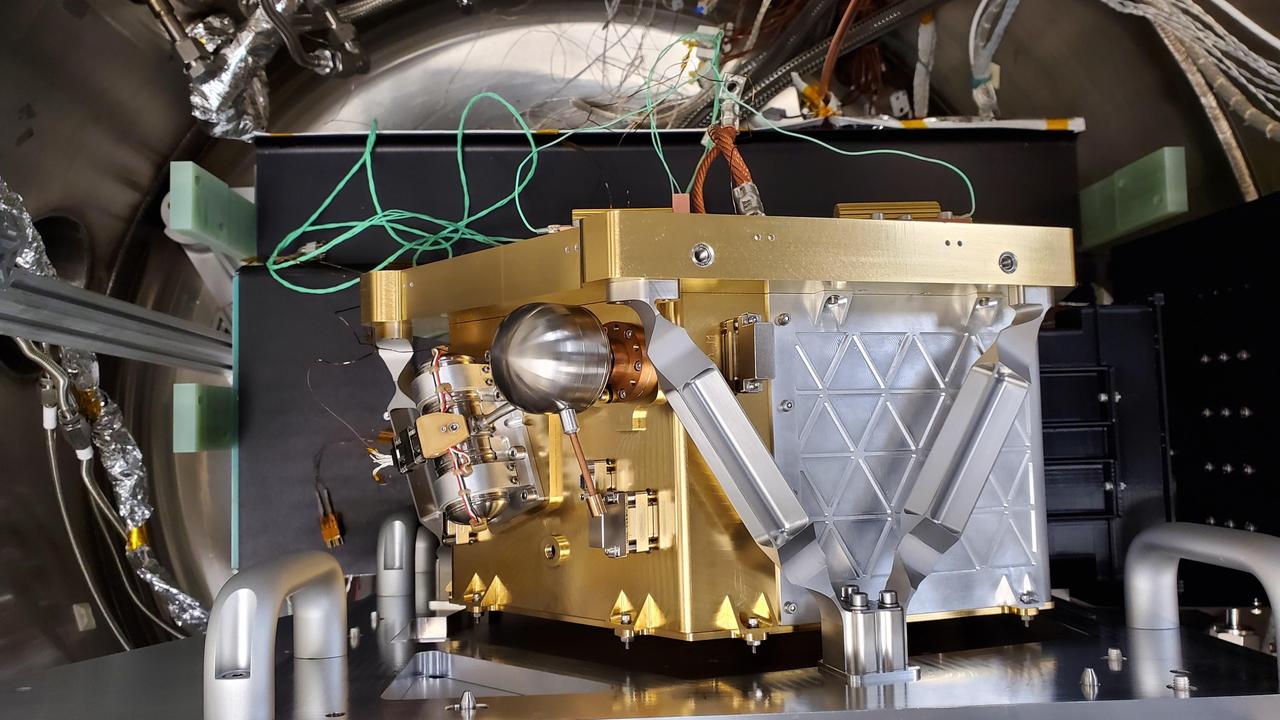
The High-resolution Volatiles and Minerals Moon Mapper (HVM³), seen here, is one of two instruments that will be carried aboard NASA's Lunar Trailblazer. Launching in 2023, the small spacecraft – measuring only 11.5 feet (3.5 meters) wide with its solar panels fully deployed – will detect and map water on the Moon's surface to determine its abundance, location, form, and how it changes over time. HVM³ recently completed a significant milestone in a clean room at NASA's Jet Propulsion Laboratory in Southern California. The high-resolution spectrometer measures the infrared light (with wavelengths from 0.6 to 3.6 microns in size) that is absorbed by water. To make sure the instrument is properly aligned, the Trailblazer team cooled HVM3 down to temperatures it will experience in space and made tiny physical adjustments to make sure all the wavelengths of incoming light arrive at the correct locations on the instrument's detector. Figure A shows several members of the Trailblazer team surrounding the instrument – minus its radiator and electronics – mounted on HVM³'s optical bench assembly while undergoing cold alignment. The assembly was placed inside a thermal vacuum chamber and brought to a cold focal plane operating temperature of about minus 240 degrees Fahrenheit (minus 155 degrees Celsius). The team then measured light of different wavelengths across all of the detector's pixels. Based on the data recorded, the team calculated the small adjustments that needed to be made, took the instrument out of the chamber and made those changes, placed it back into the chamber, and then repeated the steps iteratively until HVM³ was in perfect alignment. With this important step complete, a radiator will next be installed to ensure the instrument maintains optimal operating temperatures while Trailblazer is in orbit around the Moon. Then, vibration tests will be carried out to make sure the spectrometer will stay in alignment after the extreme shaking of launch. Lunar Trailblazer was selected to be part of NASA's SIMPLEx (Small Innovative Missions for Planetary Exploration) program in 2019. The mission is led by Caltech in Pasadena, California, and managed by JPL. https://photojournal.jpl.nasa.gov/catalog/PIA25252
- Record ID
- PIA25252
- NASA center
- JPL
- Date
- 2022-07-08
- Credit
- NASA/JPL-Caltech
- Keywords
- Lunar Trailblazer

GSFC · 2017-12-08 · GSFC_20171208_Archive_e001885
NASA's Hubble Celebrates 21st Anniversary with "Rose" of Galaxies
NASA image release April 20, 2011 To see a video of this image go here: www.flickr.com/photos/gsfc/5637796622 To celebrate the 21st anniversary of the Hubble Space Telescope's deployment into…
Inspect NASA record
NASA image release April 20, 2011 To see a video of this image go here: www.flickr.com/photos/gsfc/5637796622 To celebrate the 21st anniversary of the Hubble Space Telescope's deployment into space, astronomers at the Space Telescope Science Institute in Baltimore, Md., pointed Hubble's eye at an especially photogenic pair of interacting galaxies called Arp 273. The larger of the spiral galaxies, known as UGC 1810, has a disk that is distorted into a rose-like shape by the gravitational tidal pull of the companion galaxy below it, known as UGC 1813. This image is a composite of Hubble Wide Field Camera 3 data taken on December 17, 2010, with three separate filters that allow a broad range of wavelengths covering the ultraviolet, blue, and red portions of the spectrum. Hubble was launched April 24, 1990, aboard Discovery's STS-31 mission. Hubble discoveries revolutionized nearly all areas of current astronomical research from planetary science to cosmology. Credit: NASA, ESA, and the Hubble Heritage Team (STScI/AURA) To read more about this image go here: www.nasa.gov/mission_pages/hubble/science/hubble-rose.html NASA Goddard Space Flight Center enables NASA’s mission through four scientific endeavors: Earth Science, Heliophysics, Solar System Exploration, and Astrophysics. Goddard plays a leading role in NASA’s accomplishments by contributing compelling scientific knowledge to advance the Agency’s mission. Follow us on Twitter Join us on Facebook
- Record ID
- GSFC_20171208_Archive_e001885
- NASA center
- GSFC
- Date
- 2017-12-08
- Keywords
- NASA's Hubble Celebrates 21st Anniversary with "Rose" of Galaxies, 21, space, nasa, telescope, galaxy, hubble, hst, anniversay, goddardspaceflightcenter, arp273, ugc1810

GSFC · 2017-12-08 · GSFC_20171208_Archive_e001500
NASA's Hubble Space Telescope Finds Dead Stars 'Polluted with Planet Debris'
This is an artist’s impression of a white dwarf (burned-out) star accreting rocky debris left behind by the star’s surviving planetary system. It was observed by Hubble in…
Inspect NASA record
This is an artist’s impression of a white dwarf (burned-out) star accreting rocky debris left behind by the star’s surviving planetary system. It was observed by Hubble in the Hyades star cluster. At lower right, an asteroid can be seen falling toward a Saturn-like disk of dust that is encircling the dead star. Infalling asteroids pollute the white dwarf’s atmosphere with silicon. Credit: NASA, ESA, and G. Bacon (STScI) --- NASA's Hubble Space Telescope has found the building blocks for Earth-sized planets in an unlikely place-- the atmospheres of a pair of burned-out stars called white dwarfs. These dead stars are located 150 light-years from Earth in a relatively young star cluster, Hyades, in the constellation Taurus. The star cluster is only 625 million years old. The white dwarfs are being polluted by asteroid-like debris falling onto them. NASA image use policy. NASA Goddard Space Flight Center enables NASA’s mission through four scientific endeavors: Earth Science, Heliophysics, Solar System Exploration, and Astrophysics. Goddard plays a leading role in NASA’s accomplishments by contributing compelling scientific knowledge to advance the Agency’s mission. Follow us on Twitter Like us on Facebook Find us on Instagram
- Record ID
- GSFC_20171208_Archive_e001500
- NASA center
- GSFC
- Date
- 2017-12-08
- Keywords
- NASA's Hubble Space Telescope Finds Dead Stars 'Polluted with Planet Debris', star, space, nasa, goddard, hubble, whitedwaft

JSC · 2010-07-31 · iss024e010403
Earth Observations
ISS024-E-010403 (31 July 2010) --- This detailed image ? photographed by an Expedition 24 crew member on the International Space Station (ISS) ? is centered on the NASA…
Inspect NASA record
ISS024-E-010403 (31 July 2010) --- This detailed image ? photographed by an Expedition 24 crew member on the International Space Station (ISS) ? is centered on the NASA Lyndon B. Johnson Space Center (JSC), located in the southeastern Houston, TX metropolitan area. While initially being represented by a number of temporary locations in Houston, the facility was established in 1961 as the Manned Spacecraft Center and renamed in honor of the late U.S. President Johnson (a Texas native) in 1973. JSC serves as the lead NASA center for both astronaut training and mission control of manned spacecraft - such as the ISS and space shuttle - and has done so throughout the history of the U.S. manned space program. The Center also collaborates with other NASA and international partner facilities in a variety of scientific and engineering programs related to human spaceflight and planetary exploration. JSC is located approximately midway between downtown Houston and Galveston, TX, and is bordered by several smaller municipalities that form a mosaic of urban and suburban land use (grey areas with street grids, and commercial/industrial areas characterized by white rooftops). Large tracts of grassy fields and forests in the area (light to dark green respectively) include nature preserves, grazing lands, and flood control areas. Also visible at upper left is Ellington Field. This airport services a variety of NASA aircraft used for astronaut training, scientific, and cargo transport purposes. Clear Lake, an inlet of Galveston Bay, is located to the immediate southeast of JSC. Both Clear Lake and Galveston Bay appear silver-grey due to sunglint, or light reflected back towards the observer on the ISS that gives the water surface a mirror-like appearance. Several boat wakes are visible in Galveston Bay (right) due to disruption of the water surface that reduces the sunglint effect.
- Record ID
- iss024e010403
- NASA center
- JSC
- Date
- 2010-07-31
KSC · 2005-08-12 · 05pd1873
KSC-05PD-1873
KENNEDY SPACE CENTER, FLA. - At 7:43 a.m. EDT an Atlas V launch vehicle, 19 stories tall, with a two-ton Mars Reconnaissance Orbiter (MRO) on top, lifts off…
Inspect NASA record
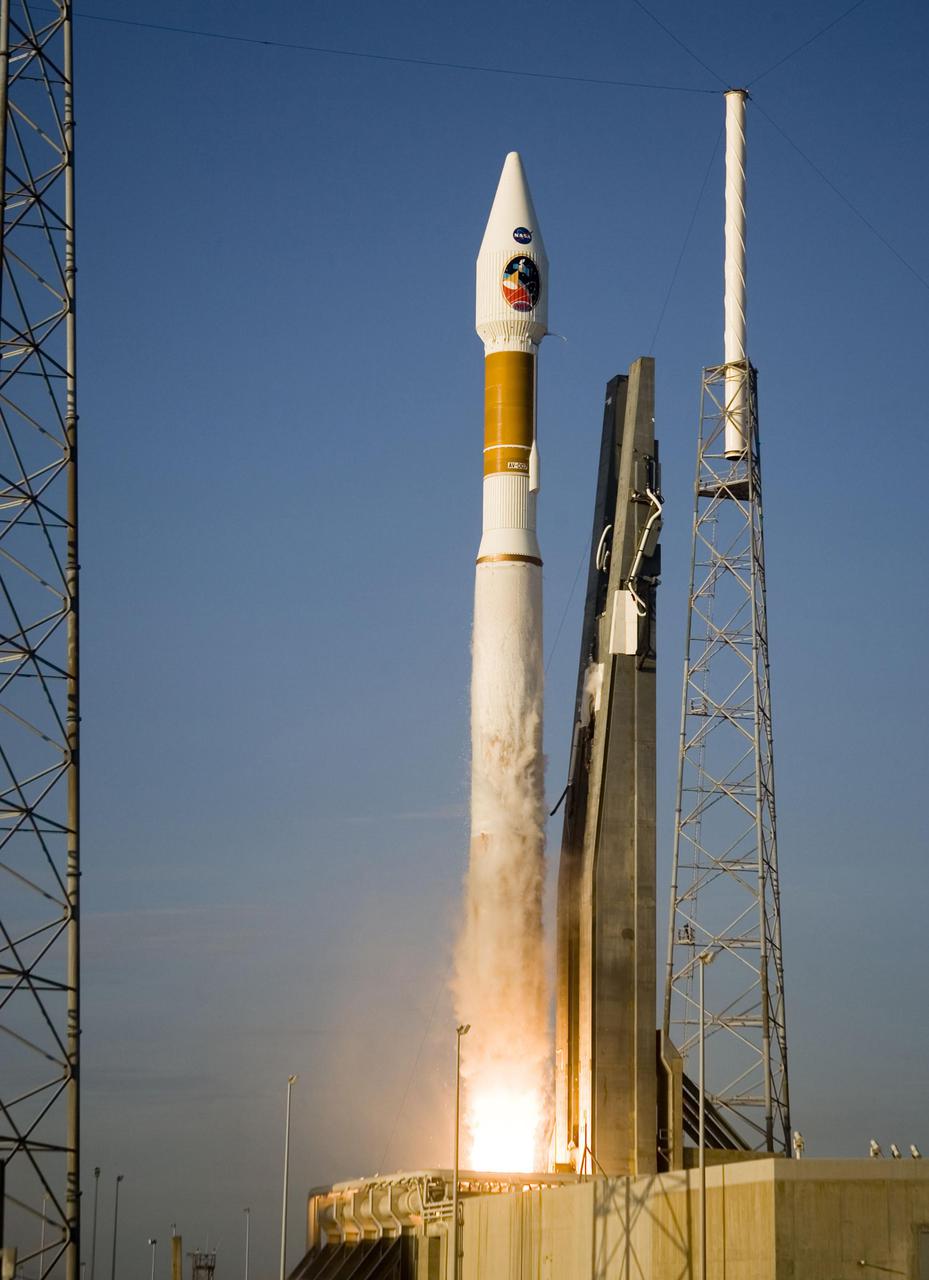
KENNEDY SPACE CENTER, FLA. - At 7:43 a.m. EDT an Atlas V launch vehicle, 19 stories tall, with a two-ton Mars Reconnaissance Orbiter (MRO) on top, lifts off the pad on Launch Complex 41 at Cape Canaveral Air Force Station in Florida. All systems performed nominally for NASA's first launch of an Atlas V on an interplanetary mission. MRO established radio contact with controllers 61 minutes after launch and within four minutes of separation from the upper stage. Initial contact came through an antenna at the Japan Aerospace Exploration Agency's Uchinoura Space Center in southern Japan. Mars is 72 million miles from Earth today, but the spacecraft will travel more than four times that distance on its outbound-arc trajectory to intercept the red planet on March 10, 2006. The orbiter carries six scientific instruments for examining the surface, atmosphere and subsurface of Mars in unprecedented detail from low orbit. NASA expects to get several times more data about Mars from MRO than from all previous Martian missions combined. Researchers will use the instruments to learn more about the history and distribution of Mars' water. That information will improve understanding of planetary climate change and will help guide the quest to answer whether Mars ever supported life. The orbiter will also evaluate potential landing sites for future missions. (Photo Credit: Tom Rogers)
- Record ID
- 05pd1873
- NASA center
- KSC
- Date
- 2005-08-12
- Credit
- NASA or National Aeronautics and Space Administration
- Keywords
- Mars, MRO, Mars_Reconnaissance_Orbiter, Atlas, CCAFS, LC-41, launch

GSFC · 2017-12-08 · GSFC_20171208_Archive_e002086
Dying Star Shrouded by a Blanket of Hailstones Forms the Bug Nebula
Release Date: May 3, 2004 A Dying Star Shrouded by a Blanket of Hailstones Forms the Bug Nebula (NGC 6302) The Bug Nebula, NGC 6302, is one of…
Inspect NASA record
Release Date: May 3, 2004 A Dying Star Shrouded by a Blanket of Hailstones Forms the Bug Nebula (NGC 6302) The Bug Nebula, NGC 6302, is one of the brightest and most extreme planetary nebulae known. The fiery, dying star at its center is shrouded by a blanket of icy hailstones. This NASA Hubble Wide Field Plantery Camera 2 image shows impressive walls of compressed gas, laced with trailing strands and bubbling outflows. Object Names: NGC 6302, Bug Nebula Image Type: Astronomical Credit: NASA, ESA and A.Zijlstra (UMIST, Manchester, UK) To learn more about this image go to: hubblesite.org/gallery/album/nebula/pr2004046a/ NASA image use policy. NASA Goddard Space Flight Center enables NASA’s mission through four scientific endeavors: Earth Science, Heliophysics, Solar System Exploration, and Astrophysics. Goddard plays a leading role in NASA’s accomplishments by contributing compelling scientific knowledge to advance the Agency’s mission. Follow us on Twitter Like us on Facebook Find us on Instagram
- Record ID
- GSFC_20171208_Archive_e002086
- NASA center
- GSFC
- Date
- 2017-12-08
- Keywords
- Dying Star Shrouded by a Blanket of Hailstones Forms the Bug Nebula, star, space, nasa, galaxy, nebula, goddard, gsfc, dyingstar, goddardspaceflightcenter, ngc6302, bugnebula
KSC · 2005-08-12 · KSC-05pp1881
KSC-05pp1881
KENNEDY SPACE CENTER, FLA. - The 19-stories-tall Atlas V launch vehicle, with a two-ton Mars Reconnaissance Orbiter (MRO) on top, leaps away from Launch Complex 41 at Cape…
Inspect NASA record
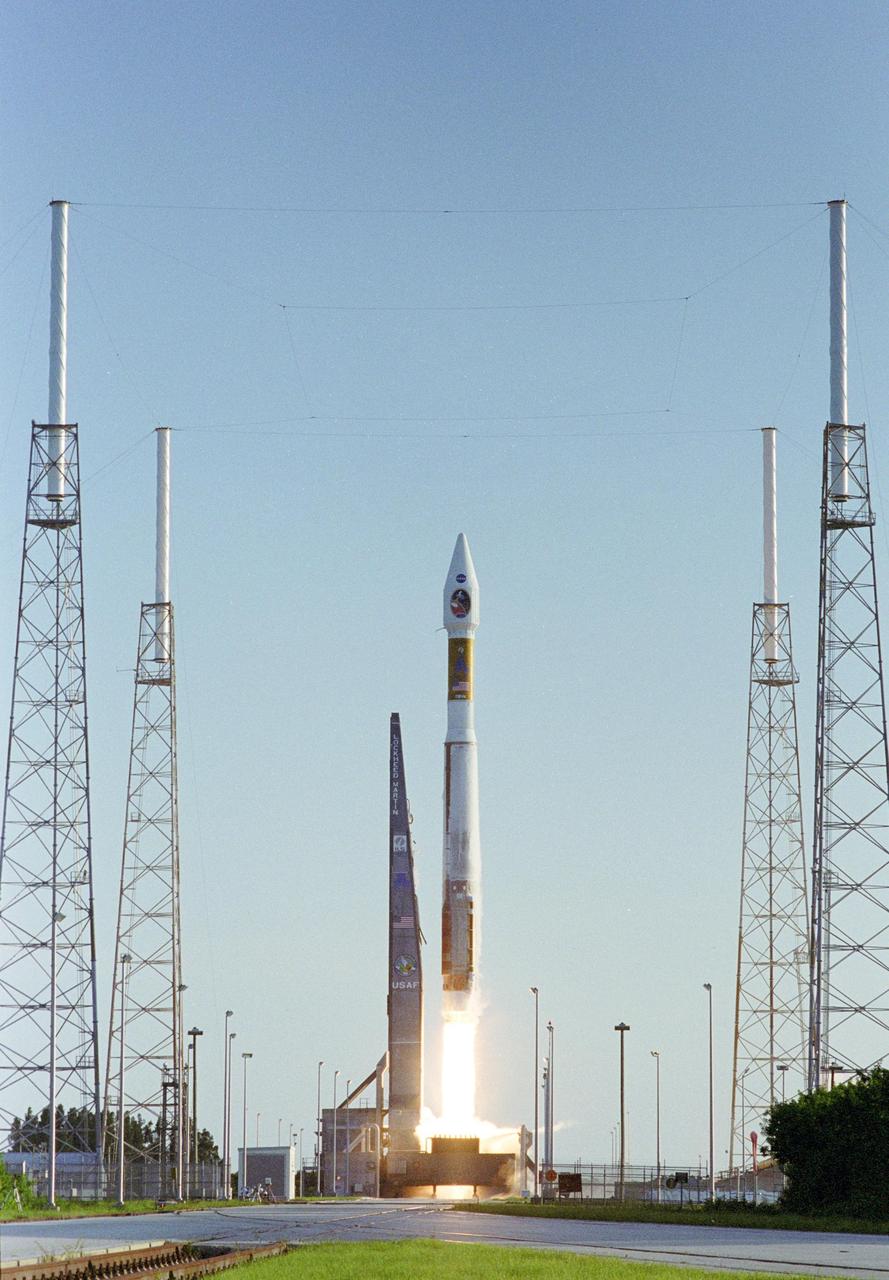
KENNEDY SPACE CENTER, FLA. - The 19-stories-tall Atlas V launch vehicle, with a two-ton Mars Reconnaissance Orbiter (MRO) on top, leaps away from Launch Complex 41 at Cape Canaveral Air Force Station at 7:43 a.m. EDT. All systems performed nominally for NASA's first launch of an Atlas V on an interplanetary mission. MRO established radio contact with controllers 61 minutes after launch and within four minutes of separation from the upper stage. Initial contact came through an antenna at the Japan Aerospace Exploration Agency's Uchinoura Space Center in southern Japan. Mars is 72 million miles from Earth today, but the spacecraft will travel more than four times that distance on its outbound-arc trajectory to intercept the red planet on March 10, 2006. The orbiter carries six scientific instruments for examining the surface, atmosphere and subsurface of Mars in unprecedented detail from low orbit. NASA expects to get several times more data about Mars from MRO than from all previous Martian missions combined. Researchers will use the instruments to learn more about the history and distribution of Mars' water. That information will improve understanding of planetary climate change and will help guide the quest to answer whether Mars ever supported life. The orbiter will also evaluate potential landing sites for future missions.
- Record ID
- KSC-05pp1881
- NASA center
- KSC
- Date
- 2005-08-12
- Keywords
- Mars, MRO, Mars Reconnaissance Orbiter, Atlas, CCAFS, LC-41, lau