
Update Site (from NASA)
Explore NASA’s Image and Video Library.
Suggest one object per day for the Interstellar Minds collection. We review each suggestion before adding it.
Sign in to suggest a Marvel.
Find a NASA image ID. Open a NASA record and copy its ID from the end of the details URL.
NASA image records

JPL · 2008-04-24 · PIA10392
NGC 6090 - a Pair of Spiral Galaxies
NGC 6090 is a beautiful pair of spiral galaxies with an overlapping central region and two long tidal tails formed from material ripped out of the galaxies by…
Inspect NASA record
NGC 6090 is a beautiful pair of spiral galaxies with an overlapping central region and two long tidal tails formed from material ripped out of the galaxies by gravitational interaction. This image is from NASA Hubble Space Telescope.
- Record ID
- PIA10392
- NASA center
- JPL
- Date
- 2008-04-24
- Credit
- NASA, ESA, the Hubble Heritage Team STScI/AURA-ESA/Hubble Collaboration, A. Evans University of Virginia, Charlottesville/NRAO/Stony Brook University, and G. Ostlin Stockholm University
- Keywords
- Hubble Space Telescope

JPL · 2008-07-01 · PIA10926
Hubble Sees Stars and a Stripe in Celestial Fireworks
A delicate ribbon of gas floats eerily in our galaxy. This image, taken by NASA Hubble Space Telescope, is a very thin section of a supernova remnant caused…
Inspect NASA record
A delicate ribbon of gas floats eerily in our galaxy. This image, taken by NASA Hubble Space Telescope, is a very thin section of a supernova remnant caused by a stellar explosion that occurred more than 1,000 years ago.
- Record ID
- PIA10926
- NASA center
- JPL
- Date
- 2008-07-01
- Credit
- NASA, ESA, and the Hubble Heritage Team STScI/AURA Acknowledgment: W. Blair Johns Hopkins University
- Keywords
- Hubble Space Telescope
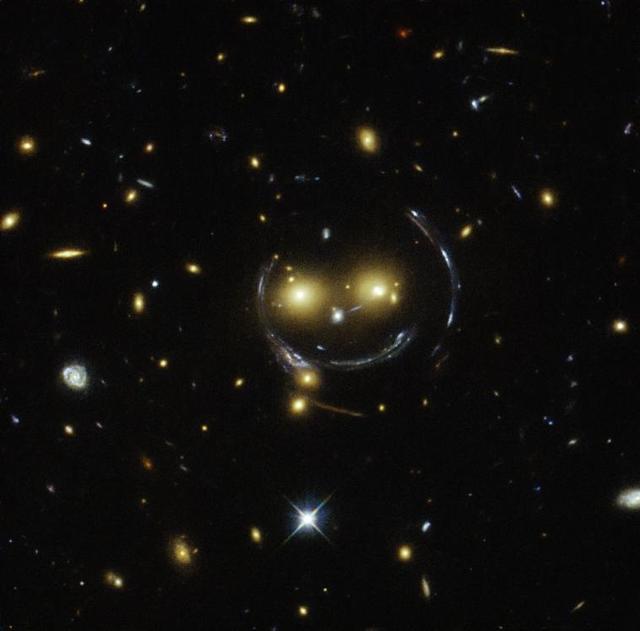
JPL · 2015-02-10 · PIA18794
Smile, and the Universe Smiles With You
This image from the NASA/ESA Hubble Space Telescope shows a galaxy cluster, SDSS J1038+4849, that appears to have two eyes and a nose as part of a happy…
Inspect NASA record
This image from the NASA/ESA Hubble Space Telescope shows a galaxy cluster, SDSS J1038+4849, that appears to have two eyes and a nose as part of a happy face. The face is the result of gravitational lensing.
- Record ID
- PIA18794
- NASA center
- JPL
- Date
- 2015-02-10
- Credit
- NASA/ESA/JPL-Caltech
- Keywords
- Hubble Space Telescope

JPL · 1999-05-21 · PIA01278
Hubble Tracks Clouds on Uranus
Taking its first peek at Uranus, NASA Hubble Space Telescope Near Infrared Camera and Multi-Object Spectrometer NICMOS detected six distinct clouds in images taken July 28,1997.
Inspect NASA record
Taking its first peek at Uranus, NASA Hubble Space Telescope Near Infrared Camera and Multi-Object Spectrometer NICMOS detected six distinct clouds in images taken July 28,1997.
- Record ID
- PIA01278
- NASA center
- JPL
- Date
- 1999-05-21
- Credit
- NASA/JPL/STScI
- Keywords
- Uranus, Hubble Space Telescope
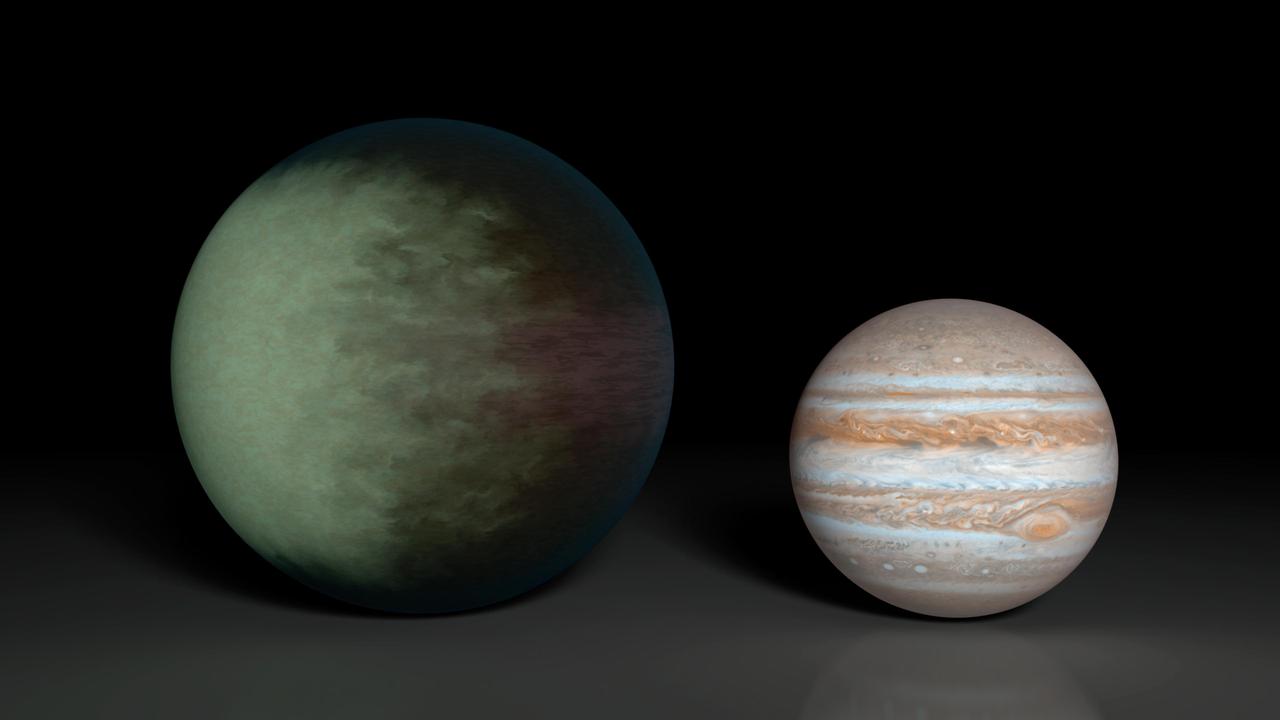
JPL · 2013-09-30 · PIA17445
Partially Cloudy Skies on Kepler-7b Artist Concept
Kepler-7b right, which is 1.5 times the radius of Jupiter left, is the first exoplanet to have its clouds mapped. The cloud map was produced using data from…
Inspect NASA record
Kepler-7b right, which is 1.5 times the radius of Jupiter left, is the first exoplanet to have its clouds mapped. The cloud map was produced using data from NASA Kepler and Spitzer space telescopes.
- Record ID
- PIA17445
- NASA center
- JPL
- Date
- 2013-09-30
- Credit
- NASA/JPL-Caltech/MIT
- Keywords
- Kepler,Spitzer Space Telescope
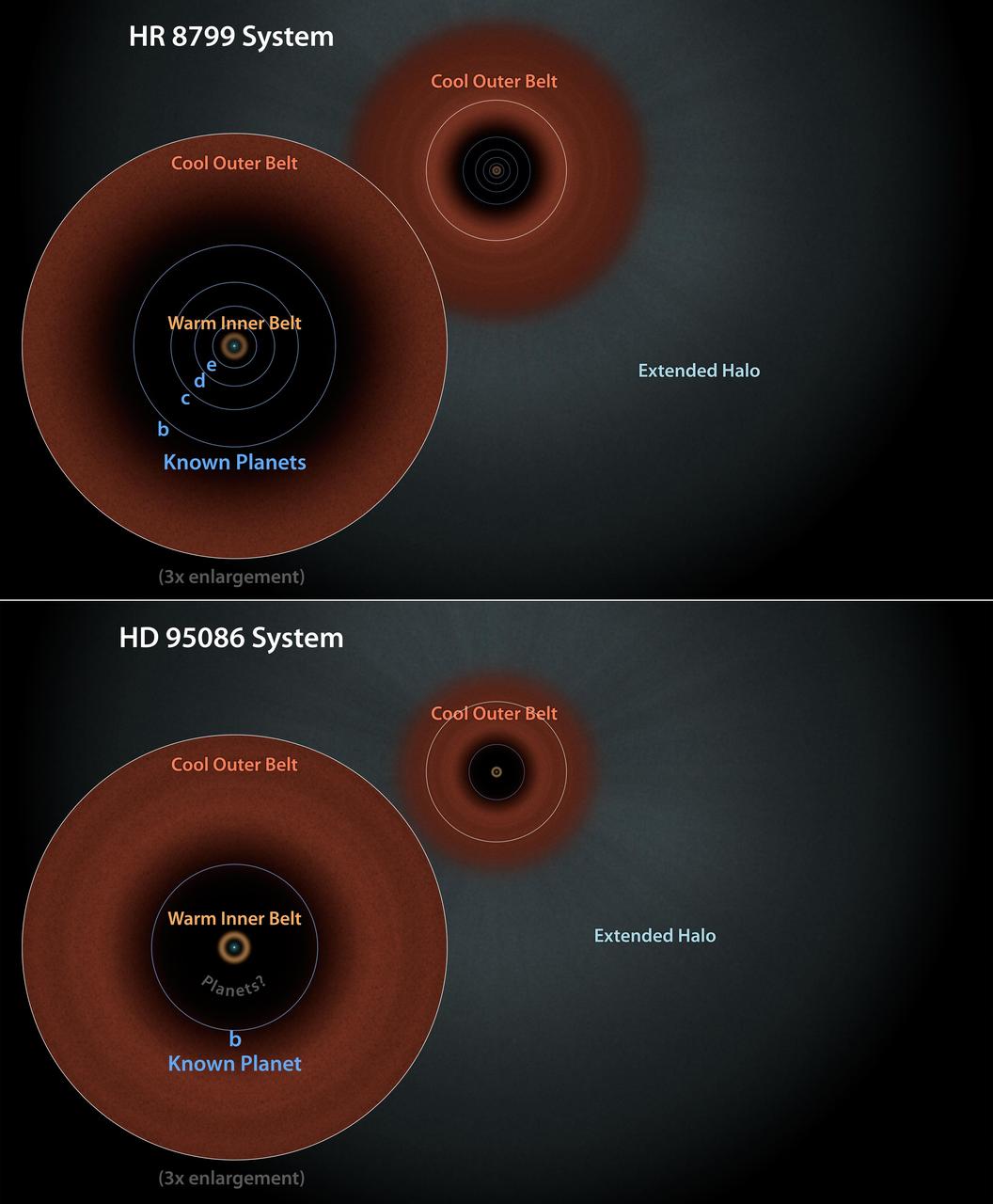
JPL · 2014-11-10 · PIA18900
Sibling Star Systems? Dust Structures Suggest So
This diagram illustrates two similar star systems, HD 95086 and HR 8799. Evidence from NASA Spitzer Space Telescope has pointed to the presence of two dust belts in…
Inspect NASA record
This diagram illustrates two similar star systems, HD 95086 and HR 8799. Evidence from NASA Spitzer Space Telescope has pointed to the presence of two dust belts in each system.
- Record ID
- PIA18900
- NASA center
- JPL
- Date
- 2014-11-10
- Credit
- NASA/JPL-Caltech
- Keywords
- Spitzer Space Telescope
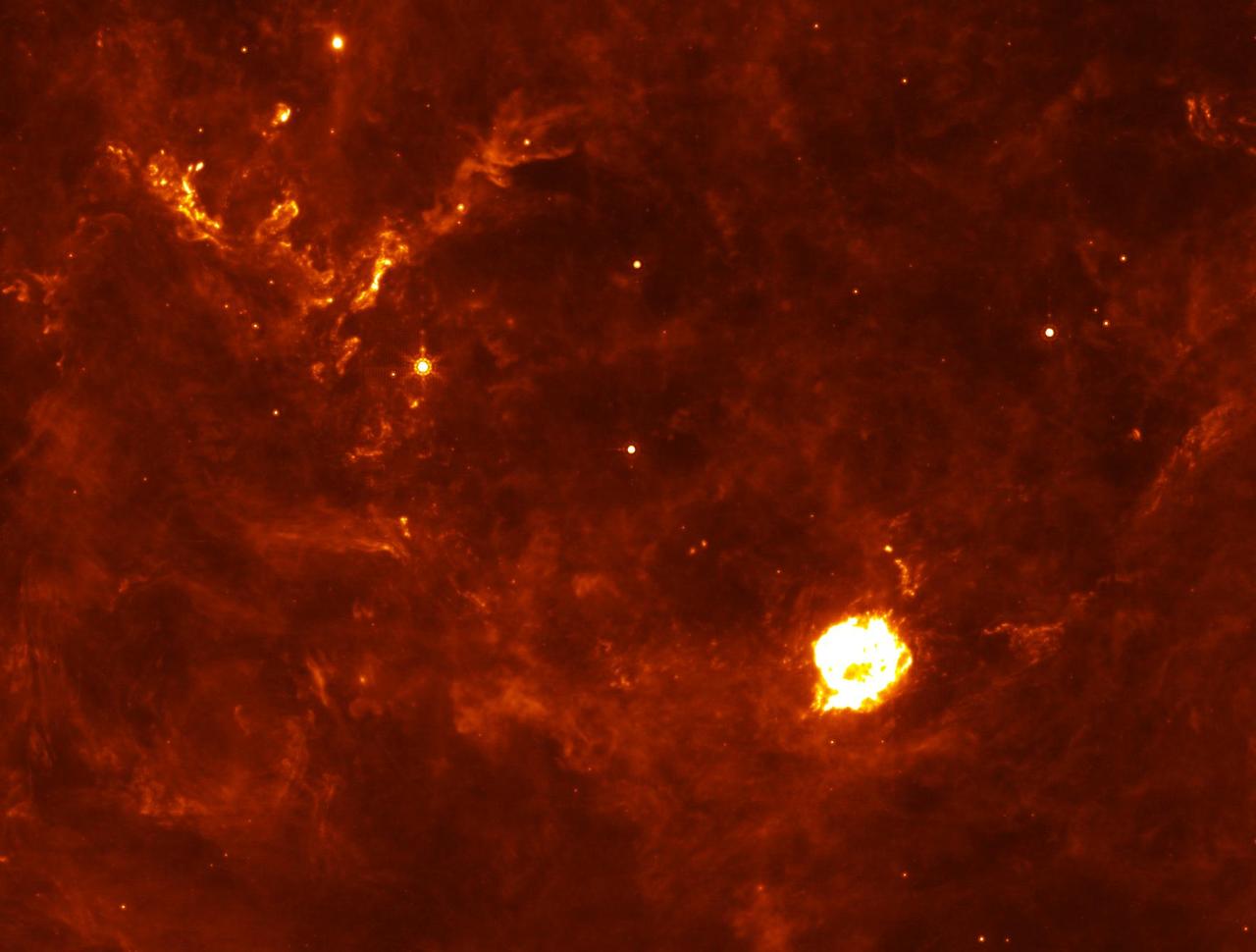
JPL · 2008-10-01 · PIA11213
Supernova Flashback
The Cassiopeia A supernova first flash of radiation makes six clumps of dust circled in annotated version unusually hot. The supernova remnant is the large white ball in…
Inspect NASA record
The Cassiopeia A supernova first flash of radiation makes six clumps of dust circled in annotated version unusually hot. The supernova remnant is the large white ball in the center. This infrared picture was taken by NASA Spitzer Space Telescope.
- Record ID
- PIA11213
- NASA center
- JPL
- Date
- 2008-10-01
- Credit
- NASA/JPL-Caltech/E. Dwek and R. Arendt
- Keywords
- Cassiopeia A, Spitzer Space Telescope
JPL · 2012-10-24 · PIA16216
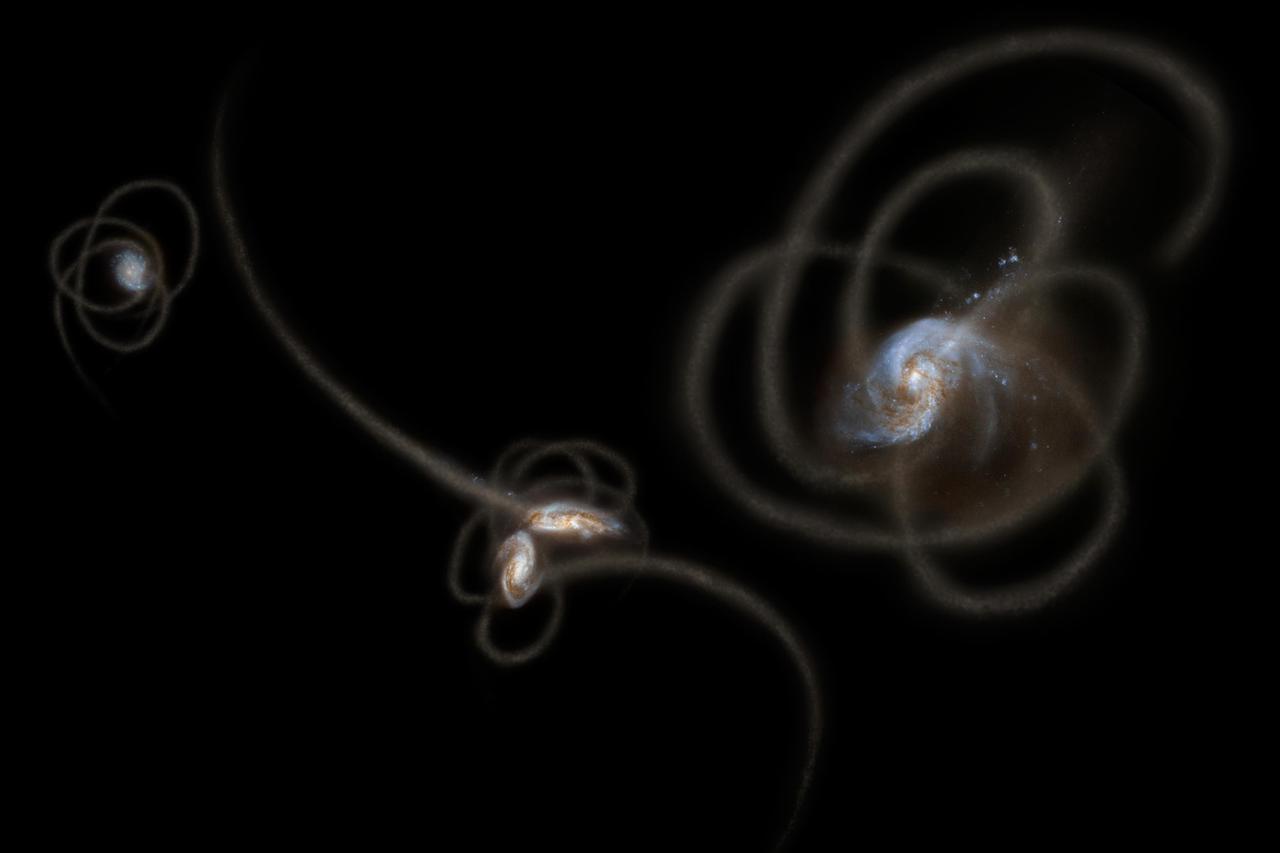
Spitzer Sees Stray Starlight Artist Concept
This artist concepts shows new research from scientists using NASA Spitzer Space Telescope suggests that a mysterious infrared glow across our whole sky is coming from stray stars…
Inspect NASA record
This artist concepts shows new research from scientists using NASA Spitzer Space Telescope suggests that a mysterious infrared glow across our whole sky is coming from stray stars torn from galaxies.
- Record ID
- PIA16216
- NASA center
- JPL
- Date
- 2012-10-24
- Credit
- NASA/JPL-Caltech
- Keywords
- Spitzer Space Telescope
JPL · 2010-08-23 · PIA13346
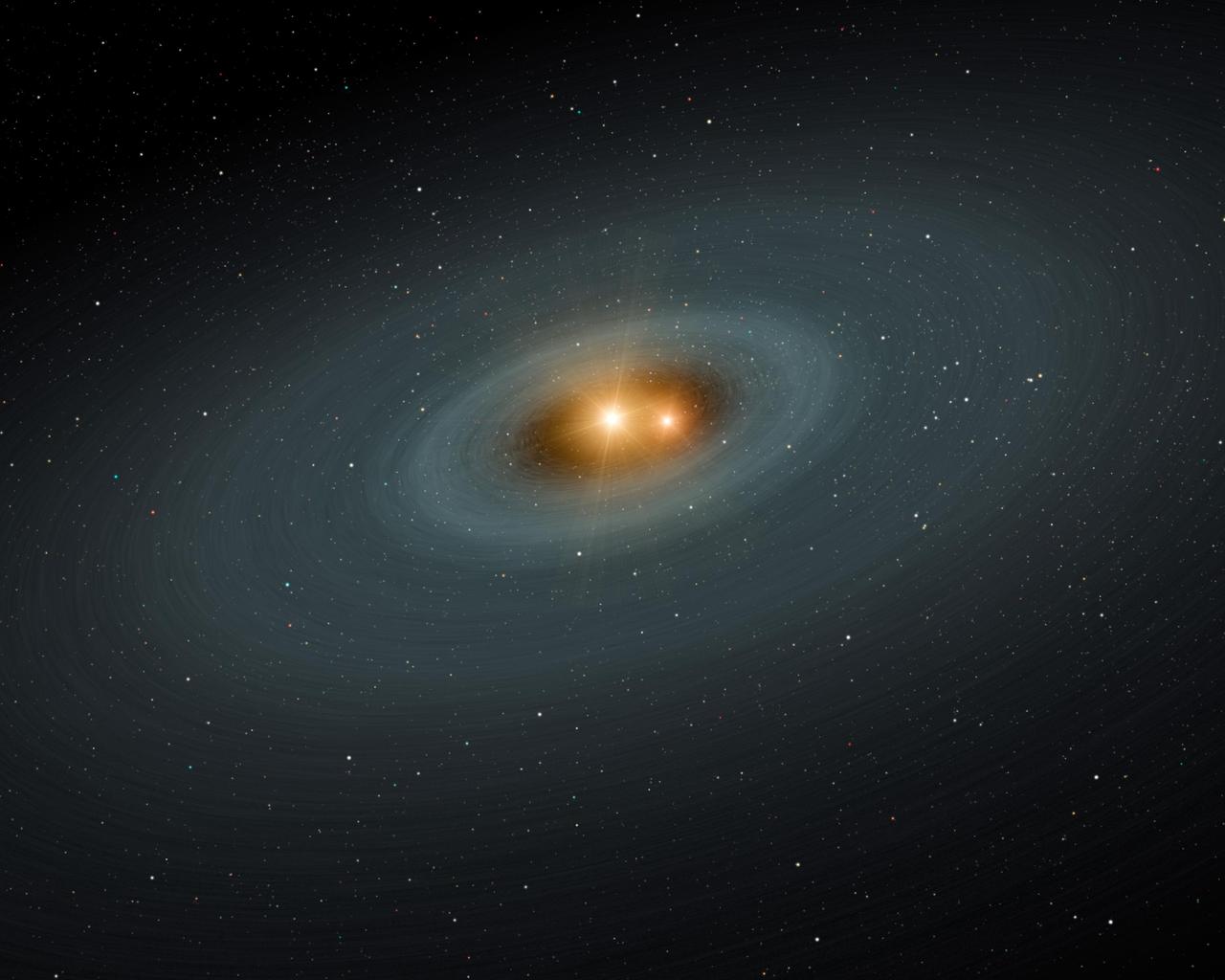
Circle of Planetary Ashes Artist Concept
This artist concept illustrates a tight pair of stars and a surrounding disk of dust, most likely the shattered remains of planetary smashups. Using NASA Spitzer Space Telescope,…
Inspect NASA record
This artist concept illustrates a tight pair of stars and a surrounding disk of dust, most likely the shattered remains of planetary smashups. Using NASA Spitzer Space Telescope, the scientists found dusty evidence for such collisions.
- Record ID
- PIA13346
- NASA center
- JPL
- Date
- 2010-08-23
- Credit
- NASA/JPL-Caltech/Harvard-Smithsonian CfA
- Keywords
- Spitzer Space Telescope
JPL · 2014-07-23 · PIA18463
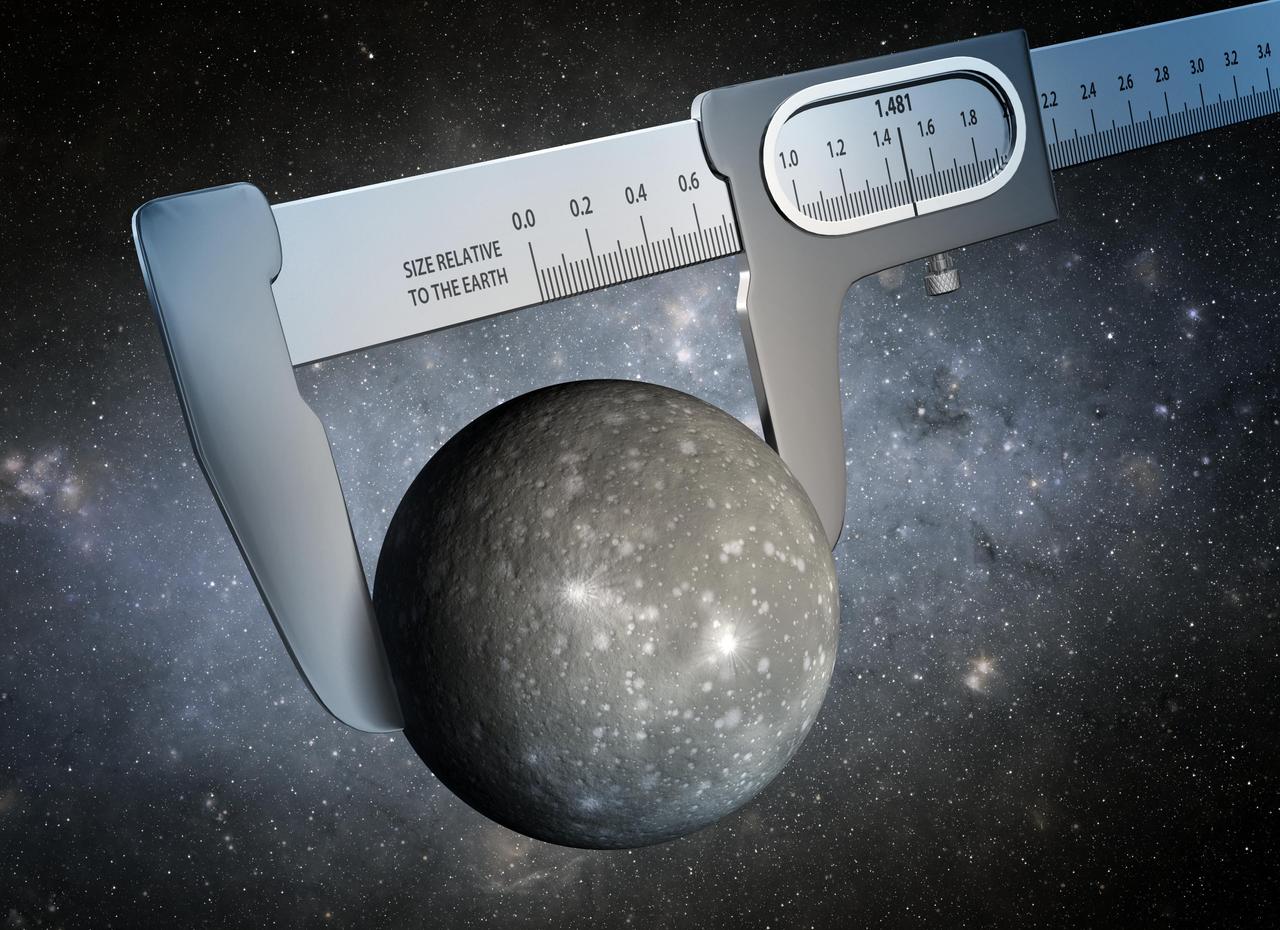
Gauging an Alien World Size Artist Concept
Using data from NASA Kepler and Spitzer Space Telescopes, scientists have made the most precise measurement ever of the size of a world outside our solar system, as…
Inspect NASA record
Using data from NASA Kepler and Spitzer Space Telescopes, scientists have made the most precise measurement ever of the size of a world outside our solar system, as illustrated in this artist conception.
- Record ID
- PIA18463
- NASA center
- JPL
- Date
- 2014-07-23
- Credit
- NASA/JPL-Caltech
- Keywords
- Kepler,Spitzer Space Telescope

JPL · 2016-04-14 · PIA20357
The Spider Nebula
The spider part of The Spider and the Fly nebulae, IC 417 abounds in star formation, as seen in this infrared image from NASA Spitzer Space Telescope and…
Inspect NASA record
The spider part of The Spider and the Fly nebulae, IC 417 abounds in star formation, as seen in this infrared image from NASA Spitzer Space Telescope and the Two Micron All Sky Survey 2MASS.
- Record ID
- PIA20357
- NASA center
- JPL
- Date
- 2016-04-14
- Credit
- NASA/JPL-Caltech/2MASS
- Keywords
- Spitzer Space Telescope

JPL · 2009-01-28 · PIA11390
Light from Red-Hot Planet
This figure charts 30 hours of observations taken by NASA Spitzer Space Telescope of a strongly irradiated exoplanet an planet orbiting a star beyond our own. Spitzer measured…
Inspect NASA record
This figure charts 30 hours of observations taken by NASA Spitzer Space Telescope of a strongly irradiated exoplanet an planet orbiting a star beyond our own. Spitzer measured changes in the planet heat, or infrared light.
- Record ID
- PIA11390
- NASA center
- JPL
- Date
- 2009-01-28
- Credit
- NASA/JPL-Caltech/UCSC
- Keywords
- Spitzer Space Telescope