
Update Site (from NASA)
Explore NASA’s Image and Video Library.
Suggest one object per day for the Interstellar Minds collection. We review each suggestion before adding it.
Sign in to suggest a Marvel.
Find a NASA image ID. Open a NASA record and copy its ID from the end of the details URL.
NASA image records
KSC · 2009-04-30 · KSC-2009-2901
KSC-2009-2901
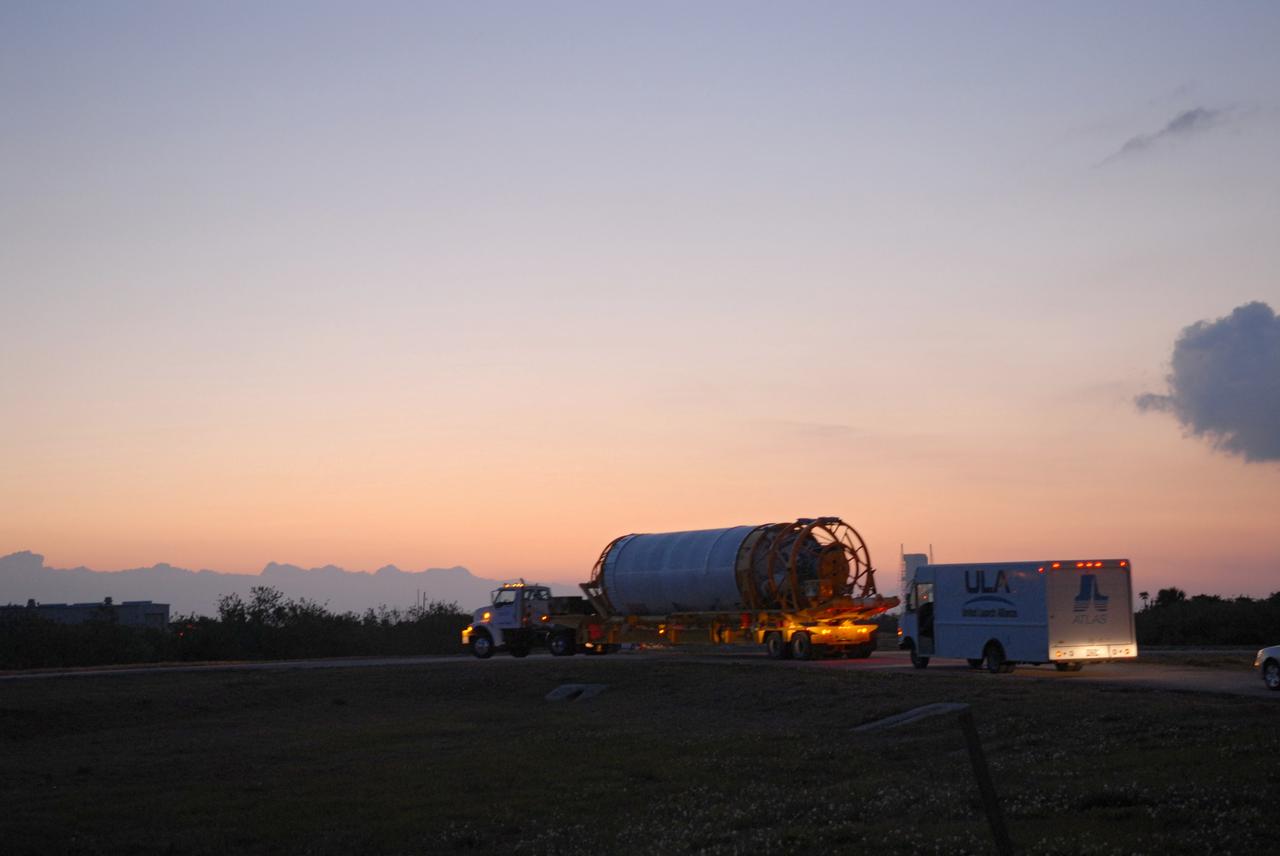
CAPE CANAVERAL, Fla. –– The Centaur upper stage is transported to the Vertical Integration Facility near Cape Canaveral Air Force Station's Launch Complex 41, where it will be…
Inspect NASA record
CAPE CANAVERAL, Fla. –– The Centaur upper stage is transported to the Vertical Integration Facility near Cape Canaveral Air Force Station's Launch Complex 41, where it will be lifted onto the Atlas V first stage. The Atlas V/Centaur is the launch vehicle for NASA's Lunar Reconnaissance Orbiter, or LRO, and NASA's Lunar CRater Observation and Sensing Satellite, known as LCROSS. LCROSS and LRO are the first missions in NASA's plan to return humans to the moon and begin establishing a lunar outpost by 2020. Photo credit: NASA/Jack Pfaller
- Record ID
- KSC-2009-2901
- NASA center
- KSC
- Date
- 2009-04-30
- Keywords
- LRO, LCROSS, VIF, CCAFS, Atlas V, Centaur
HQ · 2019-05-31 · NHQ201905310004
Commercial Lunar Payload Services Announcement
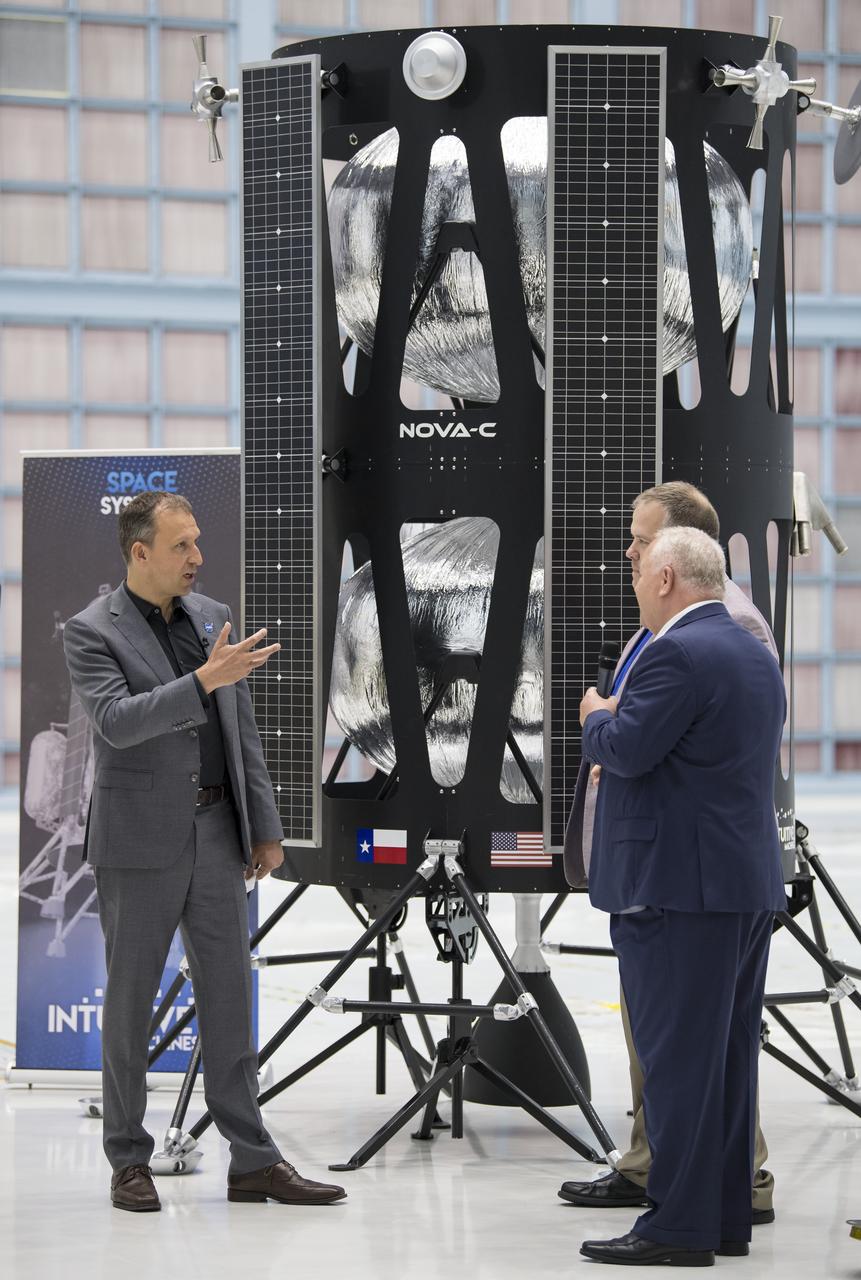
NASA Associate Administrator, Science Mission Directorate, Thomas Zurbuchen, left, speaks to, Chairman of the Board of Intuitive Machines, Kam Ghaffarian, right, and VP of Research and Development of…
Inspect NASA record
NASA Associate Administrator, Science Mission Directorate, Thomas Zurbuchen, left, speaks to, Chairman of the Board of Intuitive Machines, Kam Ghaffarian, right, and VP of Research and Development of Intuitive Machines, Tim Crain, second from right, about their lunar lander, Friday, May 31, 2019, at Goddard Space Flight Center in Md. Astrobotic, Intuitive Machines, and Orbit Beyond have been selected to provide the first lunar landers for the Artemis program's lunar surface exploration. Photo credit: (NASA/Aubrey Gemignani)
- Record ID
- NHQ201905310004
- NASA center
- HQ
- Date
- 2019-05-31
- Credit
- NASA/Aubrey Gemignani
- Keywords
- Commercial Lunar Payload Services (CLPS), Goddard Space Flight Center, Greenbelt, Kam Ghaffarian, MD, Thomas Zurbuchen, Tim Crain
MSFC · 1965-12-01 · 0401768
Saturn Apollo Program
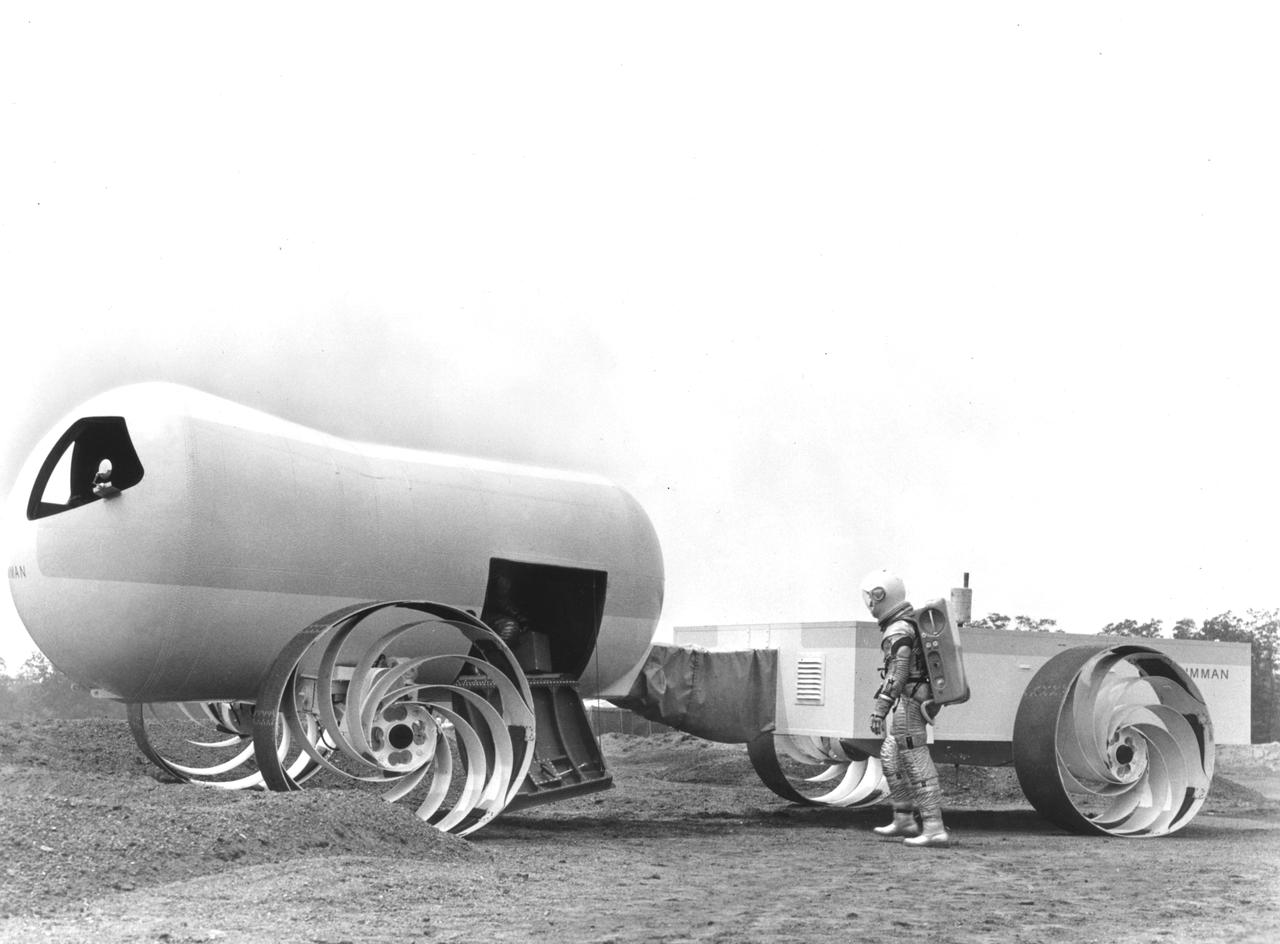
This Mobility Test Article (MTA) was a concept of a possible dual mode Lunar Roving Vehicle (LRV) built by the Grumman Industries for NASA’s Marshall Space Flight Center…
Inspect NASA record
This Mobility Test Article (MTA) was a concept of a possible dual mode Lunar Roving Vehicle (LRV) built by the Grumman Industries for NASA’s Marshall Space Flight Center (MSFC). The data provided by the MTA helped in designing the Lunar Roving Vehicle (LRV), developed under the direction of MSFC. The LRV was designed to allow Apollo astronauts a greater range of mobility during lunar exploration missions.
- Record ID
- 0401768
- NASA center
- MSFC
- Date
- 1965-12-01
- Keywords
- Lunar Roving Vehicle, LRV, Mobile Test Article, MTA, Grumman
JSC · 1972-07-01 · S72-01716
Photograph of Apollo 17 lunar landing site location
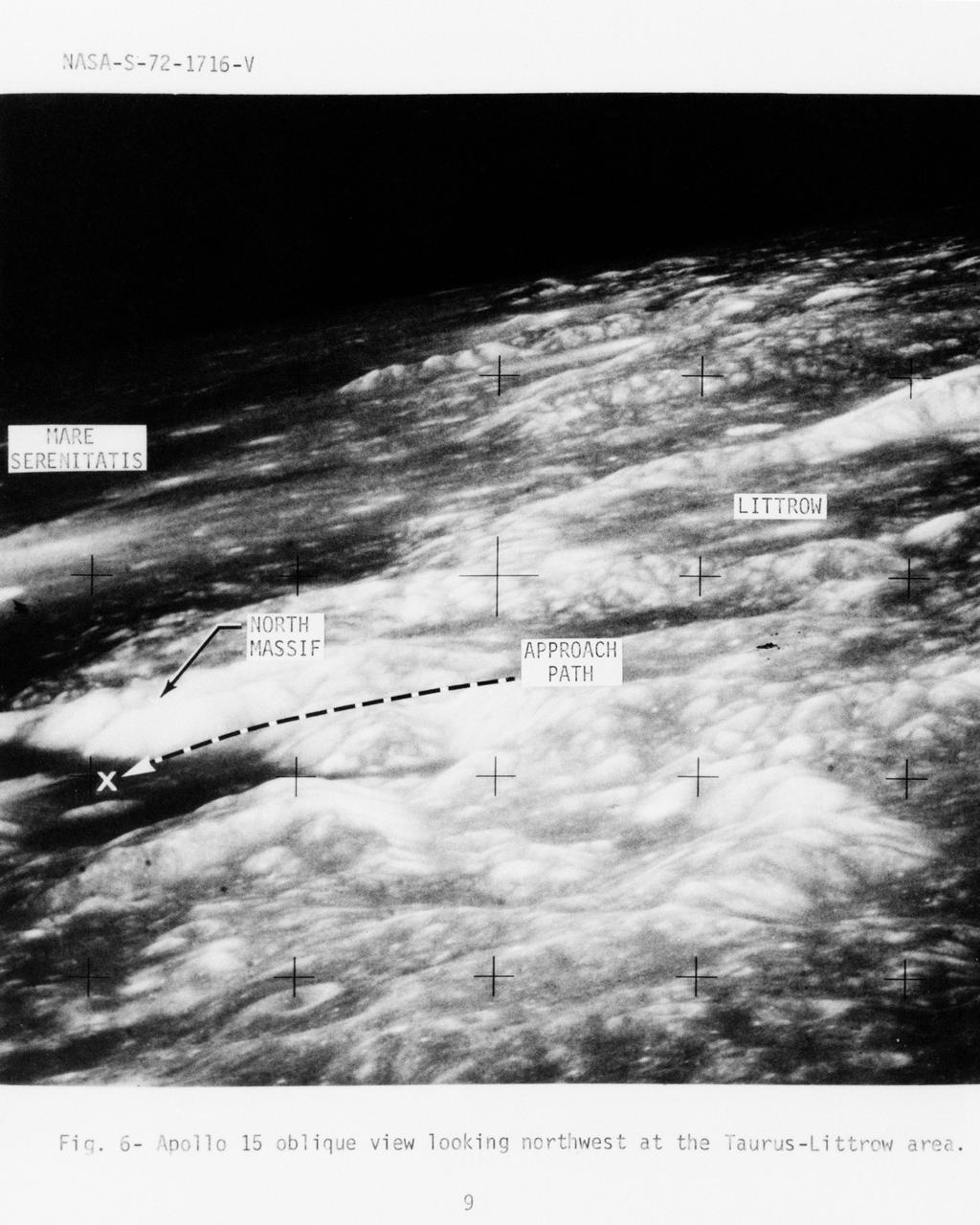
S72-01716 (July 1972) --- An oblique view of the Taurus-Littrow area on the lunar nearside, as photographed from the Apollo 15 spacecraft in lunar orbit. This is an…
Inspect NASA record
S72-01716 (July 1972) --- An oblique view of the Taurus-Littrow area on the lunar nearside, as photographed from the Apollo 15 spacecraft in lunar orbit. This is an enlarged view. The "X" marks the landing site of the scheduled Apollo 17 lunar landing mission. The overlay points out several features in the photograph. The coordinates of the Apollo 17 touchdown point are 30 degrees 44 minutes 58 seconds east longitude and 20 degrees 9 minutes 50 seconds north latitude.
- Record ID
- S72-01716
- NASA center
- JSC
- Date
- 1972-07-01
- Keywords
- APOLLO 17 FLIGHT, APOLLO PROJECT, LUNAR LANDING SITES, LUNAR MAPS, MOSAICS, LUNAR PHOTOGRAPHY, LUNAR SURFACE
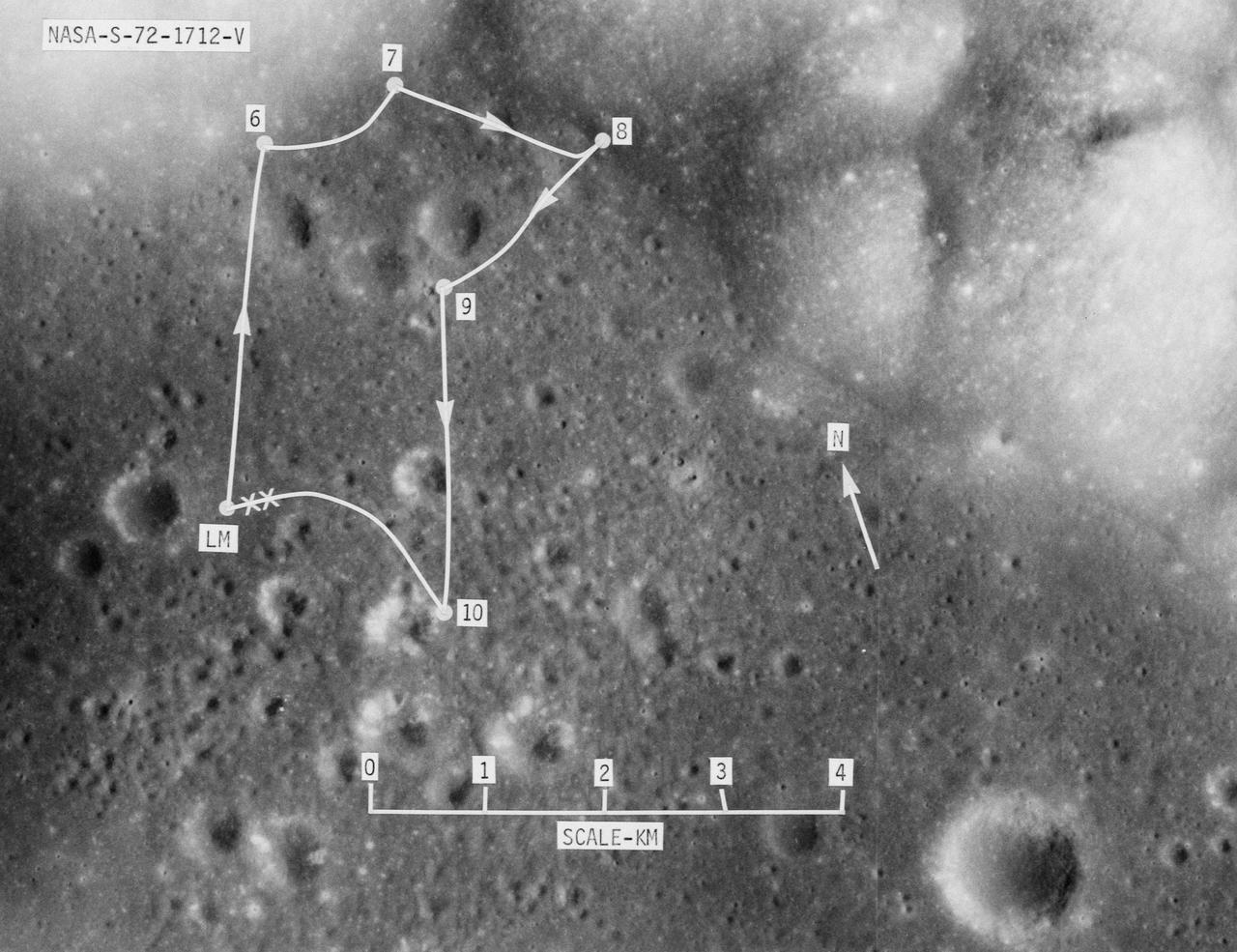
JSC · 2008-08-13 · S72-01712
S72-01712
S72-01712 (July 1972) --- A vertical view of the Apollo 17 landing site in the Taurus-Littrow area of the lunar nearside, with an overlay showing the Lunar Roving…
Inspect NASA record
S72-01712 (July 1972) --- A vertical view of the Apollo 17 landing site in the Taurus-Littrow area of the lunar nearside, with an overlay showing the Lunar Roving Vehicle traverse proposed for the third extravehicular activity. The scale at the bottom is measured in kilometers. One kilometer equals 0.6214 statute miles. The coordinates of the Apollo 17 touchdown point are 30 degrees 44 minutes 58 seconds east longitude and 20 degrees 9 minutes 50 seconds north latitude. This photograph was taken from lunar orbit on an earlier Apollo mission.
- Record ID
- S72-01712
- NASA center
- JSC
- Date
- 2008-08-13
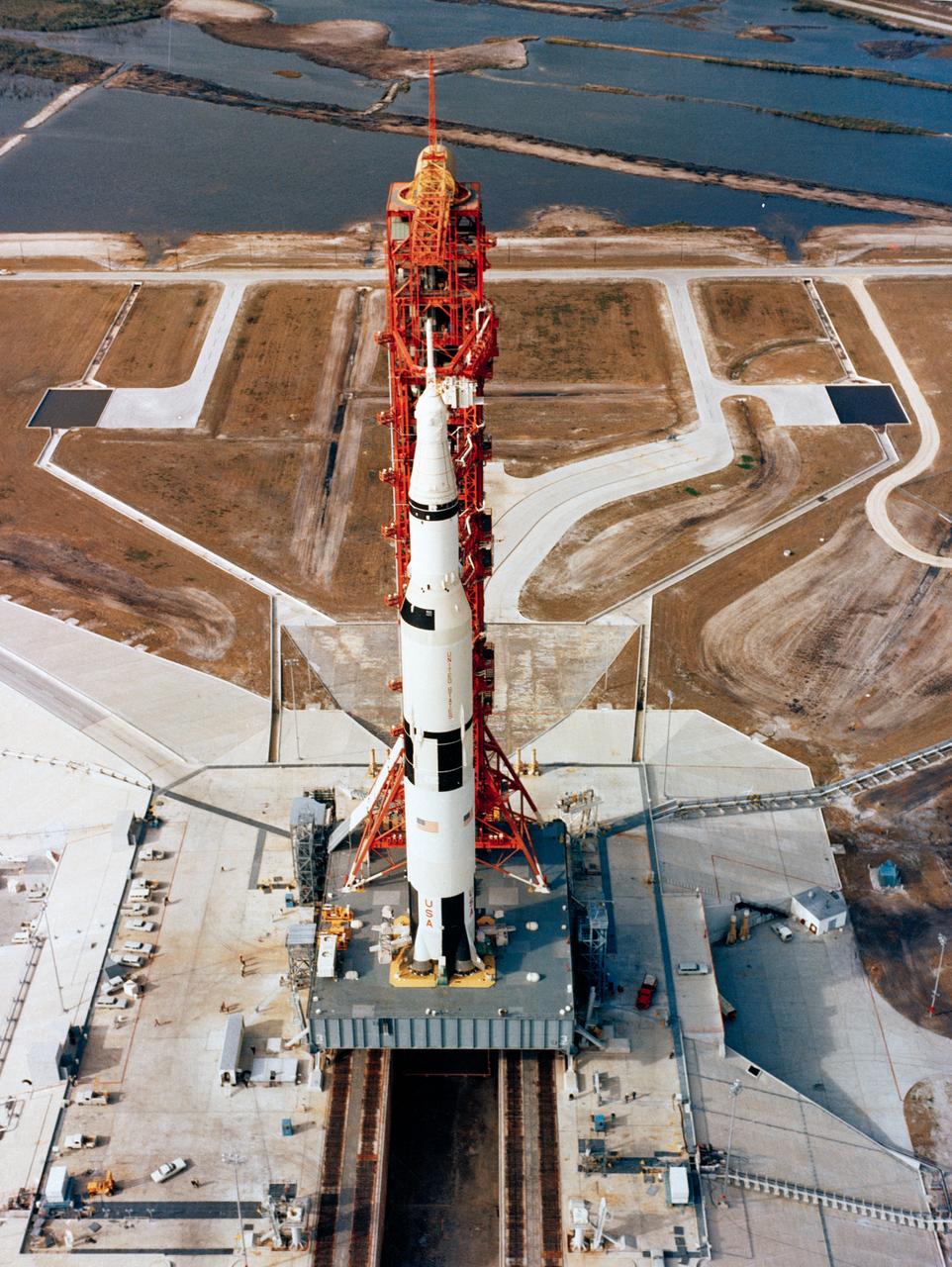
JSC · 1969-05-13 · S69-34327
Aerial, high-angle view of Apollo 10 on Pad B, Launch Complex 39, KSC
S69-34327 (13 May 1969) --- Aerial, high-angle, view of the Apollo 10 (Spacecraft 106/Lunar Module 4/Saturn 505) space vehicle at Pad B, Launch Complex 39, Kennedy Space Center,…
Inspect NASA record
S69-34327 (13 May 1969) --- Aerial, high-angle, view of the Apollo 10 (Spacecraft 106/Lunar Module 4/Saturn 505) space vehicle at Pad B, Launch Complex 39, Kennedy Space Center, Florida. The crew of the Apollo 10 lunar orbit mission will be astronauts Thomas P. Stafford, commander; John W. Young, command module pilot; and Eugene A. Cernan, lunar module pilot.
- Record ID
- S69-34327
- NASA center
- JSC
- Date
- 1969-05-13
- Keywords
- AERIAL PHOTOGRAPHY, APOLLO 10, APOLLO PROJECT, APOLLO SPACECRAFT, COUNTDOWN, FLORIDA, KENNEDY SPACE CENTER, LAUNCHING PADS, LAUNCHING SITES SATURN LAUNCH VEHICLES
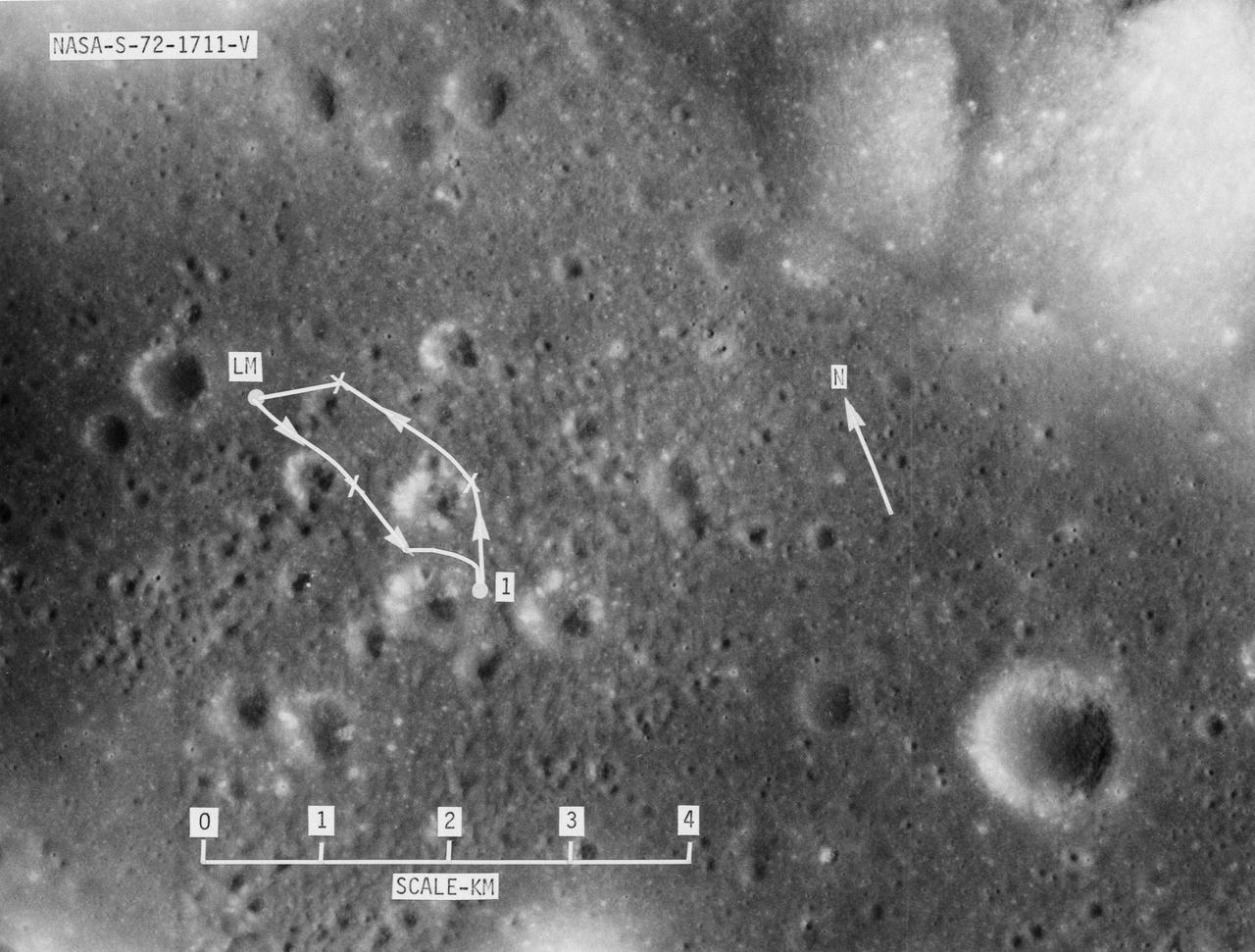
JSC · 2008-08-13 · S72-01711
S72-01711
S72-01711 (July 1972) --- A vertical view of the Apollo 17 landing site in the Taurus-Littrow area of the lunar nearside, with an overlay showing the Lunar Roving…
Inspect NASA record
S72-01711 (July 1972) --- A vertical view of the Apollo 17 landing site in the Taurus-Littrow area of the lunar nearside, with an overlay showing the Lunar Roving Vehicle traverse proposed for the first extravehicular activity. The scale at the bottom is measured in kilometers. One kilometer equals 0.6214 statute mile. The coordinates of the Apollo 17 touchdown point are 30 degrees 44 minutes 58 seconds east longitude and 20 degrees 9 minutes 50 seconds north latitude. This photograph was taken from lunar orbit on an earlier Apollo mission.
- Record ID
- S72-01711
- NASA center
- JSC
- Date
- 2008-08-13
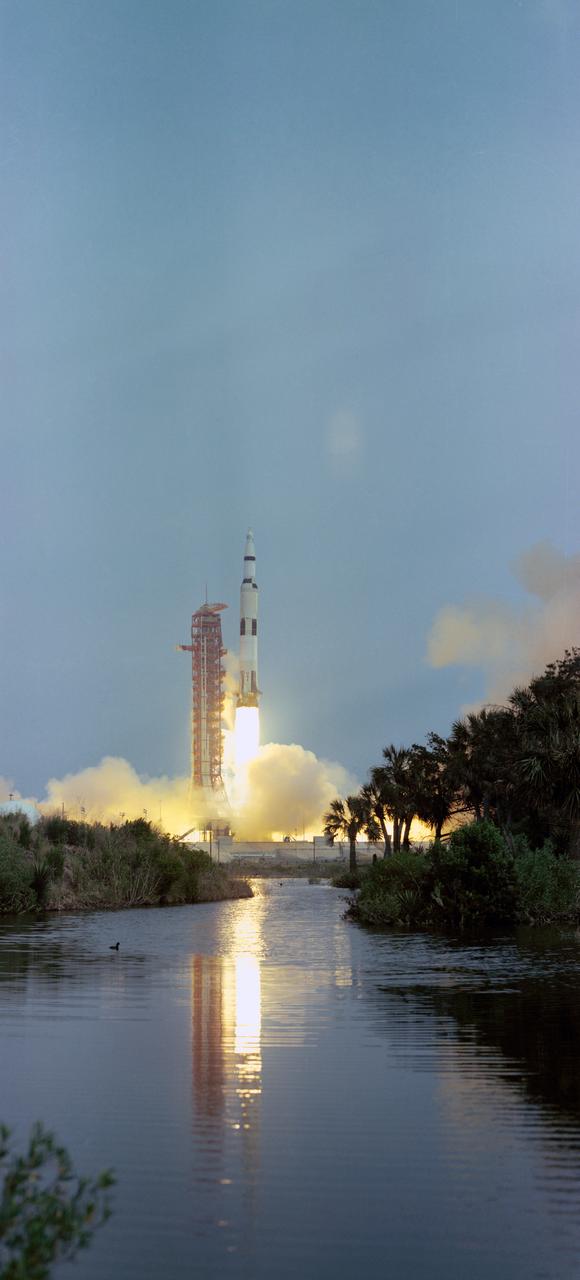
JSC · 1970-05-11 · S70-38747
APOLLO 13 - LAUNCH - KSC
S70-38747 (11 April 1970) --The Apollo 13 (Spacecraft 109/Lunar Module 7/Saturn 508) space vehicle is launched from Pad A, Launch Complex 39, Kennedy Space Center (KSC), at 2:13…
Inspect NASA record
S70-38747 (11 April 1970) --The Apollo 13 (Spacecraft 109/Lunar Module 7/Saturn 508) space vehicle is launched from Pad A, Launch Complex 39, Kennedy Space Center (KSC), at 2:13 p.m. (EST), April 11, 1970. The crew of the National Aeronautics and Space Administration's (NASA) third lunar landing mission is astronauts James A. Lovell Jr., commander; John L. Swigert Jr., command module pilot; and Fred W. Haise Jr., lunar module pilot.
- Record ID
- S70-38747
- NASA center
- JSC
- Date
- 1970-05-11

KSC · 2022-08-30 · KSC-20220830-PH-KLS01_0052
Molten Regolith Electrolysis (MRE) Testing
An engineer conducts testing of the Molten Regolith Electrolysis (MRE) inside a laboratory in the Neil A. Armstrong Operations and Checkout Building at NASA’s Kennedy Space Center in…
Inspect NASA record
An engineer conducts testing of the Molten Regolith Electrolysis (MRE) inside a laboratory in the Neil A. Armstrong Operations and Checkout Building at NASA’s Kennedy Space Center in Florida on Aug. 30, 2022. This is a high-temperature electrolytic process which aims to extract oxygen from the simulated lunar regolith. Extraction of oxygen on the lunar surface is critical to the agency’s Artemis program. Oxygen extracted from the Moon can be utilized for propellent to NASA’s lunar landers., breathable oxygen for astronauts, and a variety of other industrial and scientific applications for NASA’s future missions to the Moon.
- Record ID
- KSC-20220830-PH-KLS01_0052
- NASA center
- KSC
- Date
- 2022-08-30
- Credit
- NASA/Kim Shiflett
- Keywords
- Electrolysis, KSC, Kennedy Space Center, MRE, Molten Regolith Electrolysis, NASA, O&C, regolith, testing
JSC · 1971-08-01 · as15-82-11123
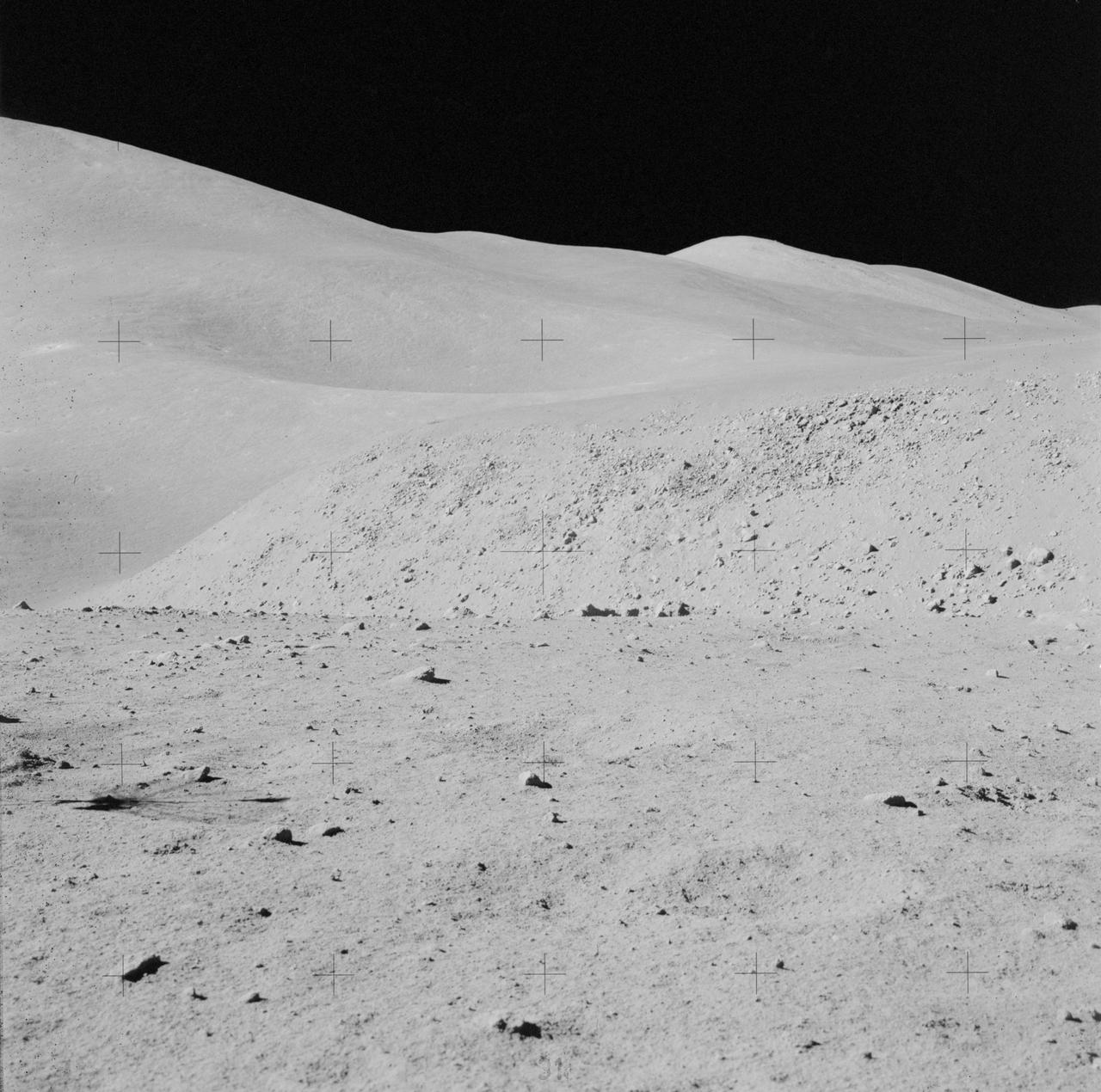
View of St. George crater and rille as seen by Apollo 15
AS15-82-11123 (2 Aug. 1971) --- A view of the "strewn rock" scene encountered by Apollo 15 astronauts David R. Scott, commander, and James B. Irwin, lunar module pilot,…
Inspect NASA record
AS15-82-11123 (2 Aug. 1971) --- A view of the "strewn rock" scene encountered by Apollo 15 astronauts David R. Scott, commander, and James B. Irwin, lunar module pilot, during their third extravehicular activity (EVA) of the mission. Irwin took this photograph with a handheld 70mm camera. While astronauts Scott and Irwin descended in the Lunar Module (LM) "Falcon" to explore the moon, astronaut Alfred M. Worden, command module pilot, remained with the Command and Service Modules (CSM) in lunar orbit.
- Record ID
- as15-82-11123
- NASA center
- JSC
- Date
- 1971-08-01
- Keywords
- APOLLO 15 FLIGHT, APOLLO PROJECT, CRATERS, EXTRAVEHICULAR ACTIVITY, LUNAR SURFACE, LUNAR TOPOGRAPHY, PHOTOGRAPHY
JSC · 1972-12-13 · as17-146-22296
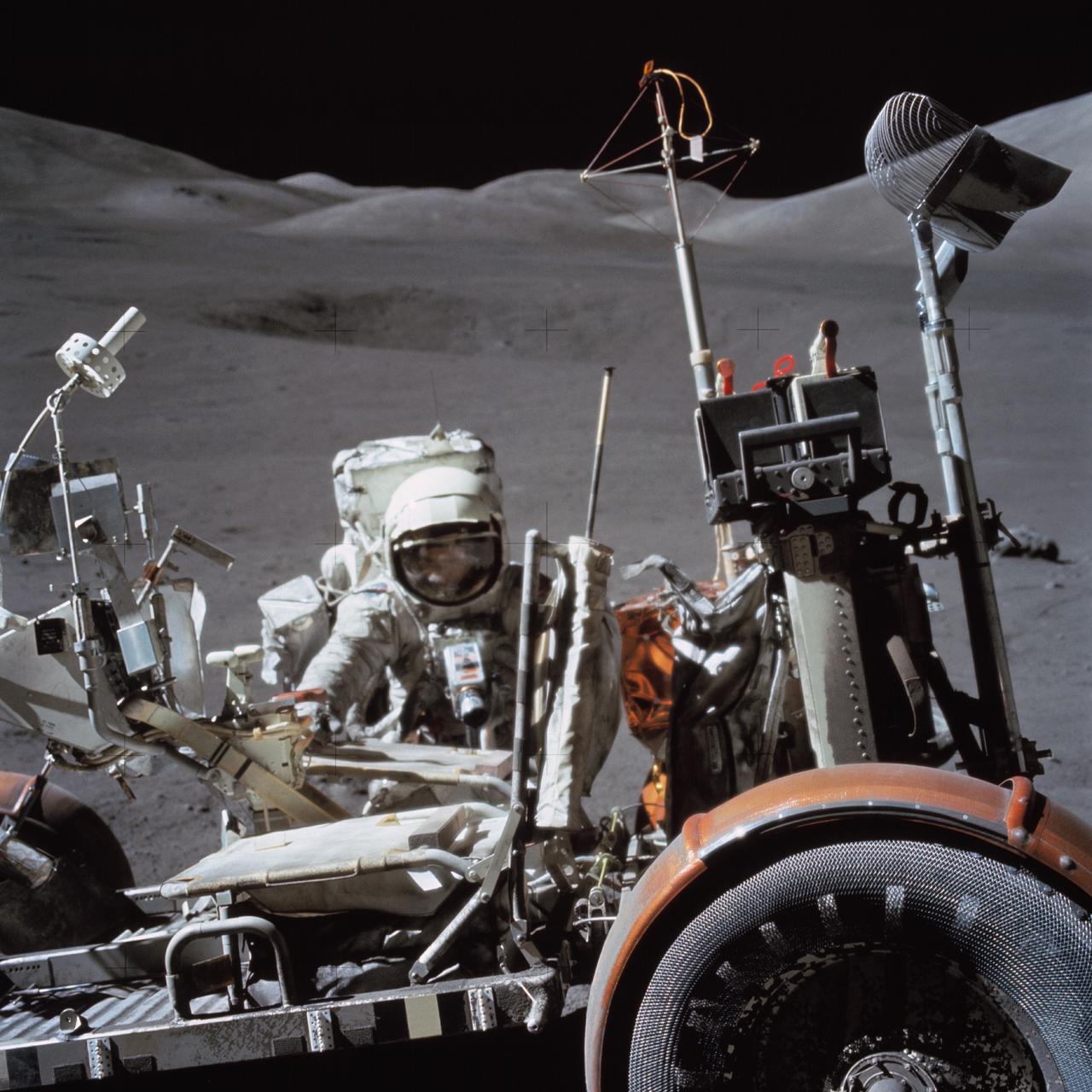
Apollo 17,Lunar Roving Vehicle and Astronaut Harrison Schmitt during EVA 3
AS17-146-22296 (13 Dec. 1972) --- Astronaut Harrison H. Schmitt, lunar module pilot, works near the Lunar Roving Vehicle (LRV) during the third Apollo 17 extravehicular activity (EVA) at…
Inspect NASA record
AS17-146-22296 (13 Dec. 1972) --- Astronaut Harrison H. Schmitt, lunar module pilot, works near the Lunar Roving Vehicle (LRV) during the third Apollo 17 extravehicular activity (EVA) at the Taurus-Littrow site on the lunar surface. The front part of the LRV is out of frame at left, but the seats and several geological tools can be seen. The photo was taken by astronaut Eugene A. Cernan, mission commander.
- Record ID
- as17-146-22296
- NASA center
- JSC
- Date
- 1972-12-13
- Keywords
- Apollo, Apollo 17
KSC · 2009-04-30 · KSC-2009-2911
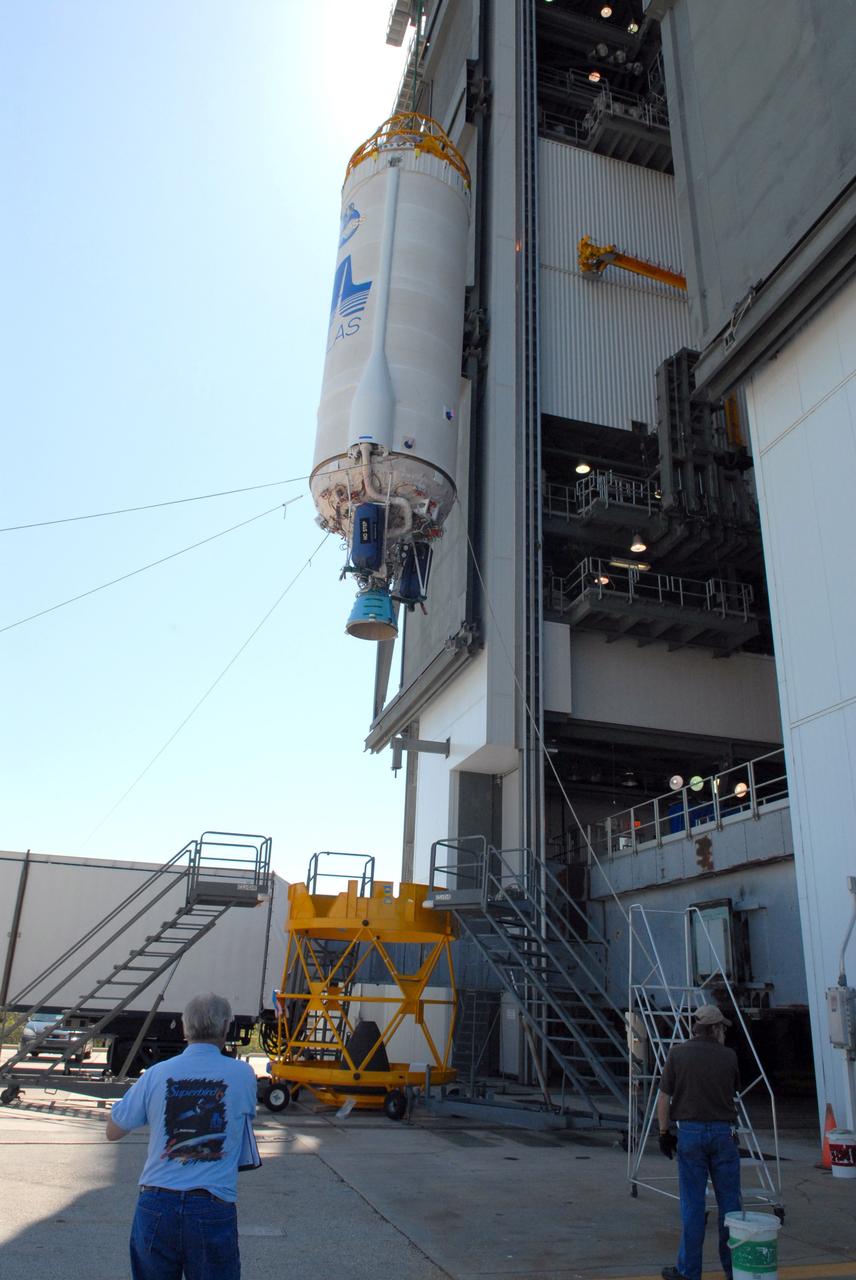
KSC-2009-2911
CAPE CANAVERAL, Fla. –– On Cape Canaveral Air Force Station's Launch Complex 41, the crane lifts the Centaur upper stage into the Vertical Integration Facility for installation onto…
Inspect NASA record
CAPE CANAVERAL, Fla. –– On Cape Canaveral Air Force Station's Launch Complex 41, the crane lifts the Centaur upper stage into the Vertical Integration Facility for installation onto the Atlas V first stage, already in the tower. The Atlas V/Centaur is the launch vehicle for NASA's Lunar Reconnaissance Orbiter, or LRO, and NASA's Lunar CRater Observation and Sensing Satellite, known as LCROSS. LCROSS and LRO are the first missions in NASA's plan to return humans to the moon and begin establishing a lunar outpost by 2020. Photo credit: NASA/Jack Pfaller
- Record ID
- KSC-2009-2911
- NASA center
- KSC
- Date
- 2009-04-30
- Keywords
- LRO, LCROSS, VIF, CCAFS, Atlas V, Centaur