
Update Site (from NASA)
Explore NASA’s Image and Video Library.
Suggest one object per day for the Interstellar Minds collection. We review each suggestion before adding it.
Sign in to suggest a Marvel.
Find a NASA image ID. Open a NASA record and copy its ID from the end of the details URL.
NASA image records
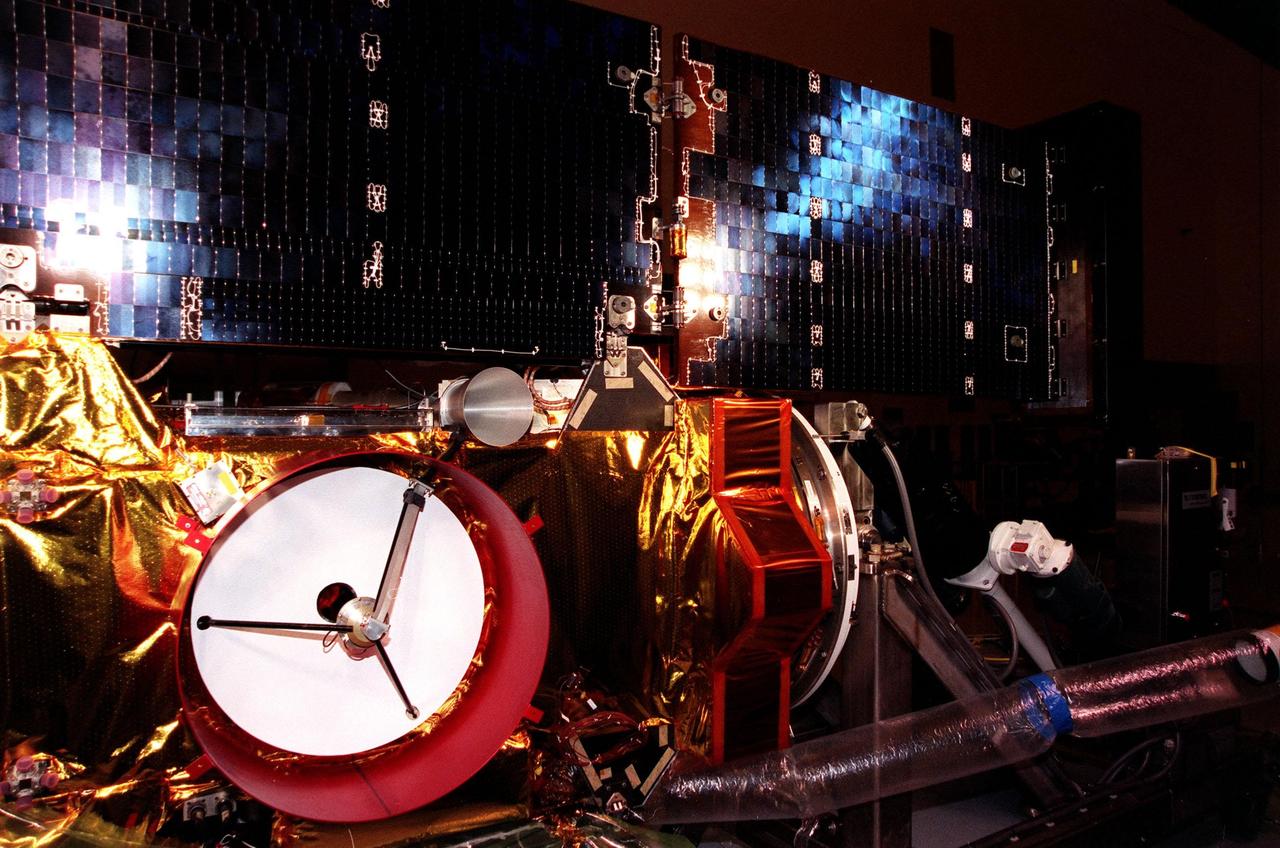
KSC · 1999-01-11 · KSC-99pc45
KSC-99pc45
Bright white light (left) and blue light (upper right) appear on the solar panels of the Stardust spacecraft during lighting tests in the Payload Hazardous Servicing Facility. Stardust…
Inspect NASA record
Bright white light (left) and blue light (upper right) appear on the solar panels of the Stardust spacecraft during lighting tests in the Payload Hazardous Servicing Facility. Stardust is scheduled to be launched aboard a Boeing Delta II rocket from Launch Pad 17A, Cape Canaveral Air Station, on Feb. 6, 1999, for a rendezvous with the comet Wild 2 in January 2004. Stardust will use a substance called aerogel to capture comet particles flying off the nucleus of the comet, plus collect interstellar dust for later analysis. The collected samples will return to Earth in a sample return capsule to be jettisoned as it swings by Earth in January 2006
- Record ID
- KSC-99pc45
- NASA center
- KSC
- Date
- 1999-01-11
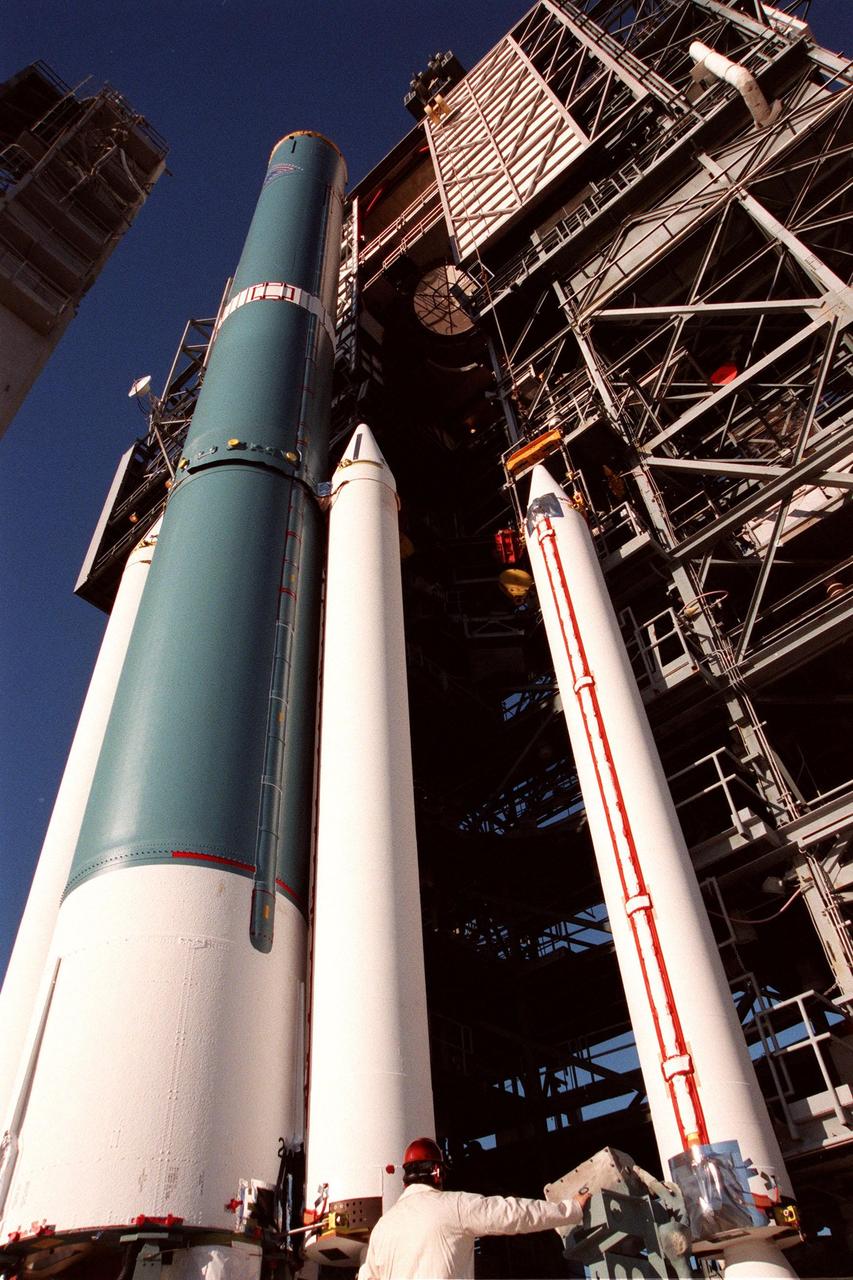
KSC · 1999-01-07 · KSC-99pc34
KSC-99pc34
At Pad 17A, Cape Canaveral Air Station, a fourth and final solid rocket booster (SRB) (right) is moved from the mobile tower by a crane before mating with…
Inspect NASA record
At Pad 17A, Cape Canaveral Air Station, a fourth and final solid rocket booster (SRB) (right) is moved from the mobile tower by a crane before mating with the Delta II rocket (left). The rocket will be aided by four SRBs to carry the Stardust satellite into space for a close encounter with the comet Wild 2 in January 2004. Using a medium called aerogel, Stardust will capture comet particles flying off the nucleus of the comet, plus collect interstellar dust for later analysis. The collected samples will return to Earth in a Sample Return Capsule to be jettisoned as Stardust swings by Earth in January 2006. Stardust is scheduled to be launched on Feb. 6, 1999
- Record ID
- KSC-99pc34
- NASA center
- KSC
- Date
- 1999-01-07
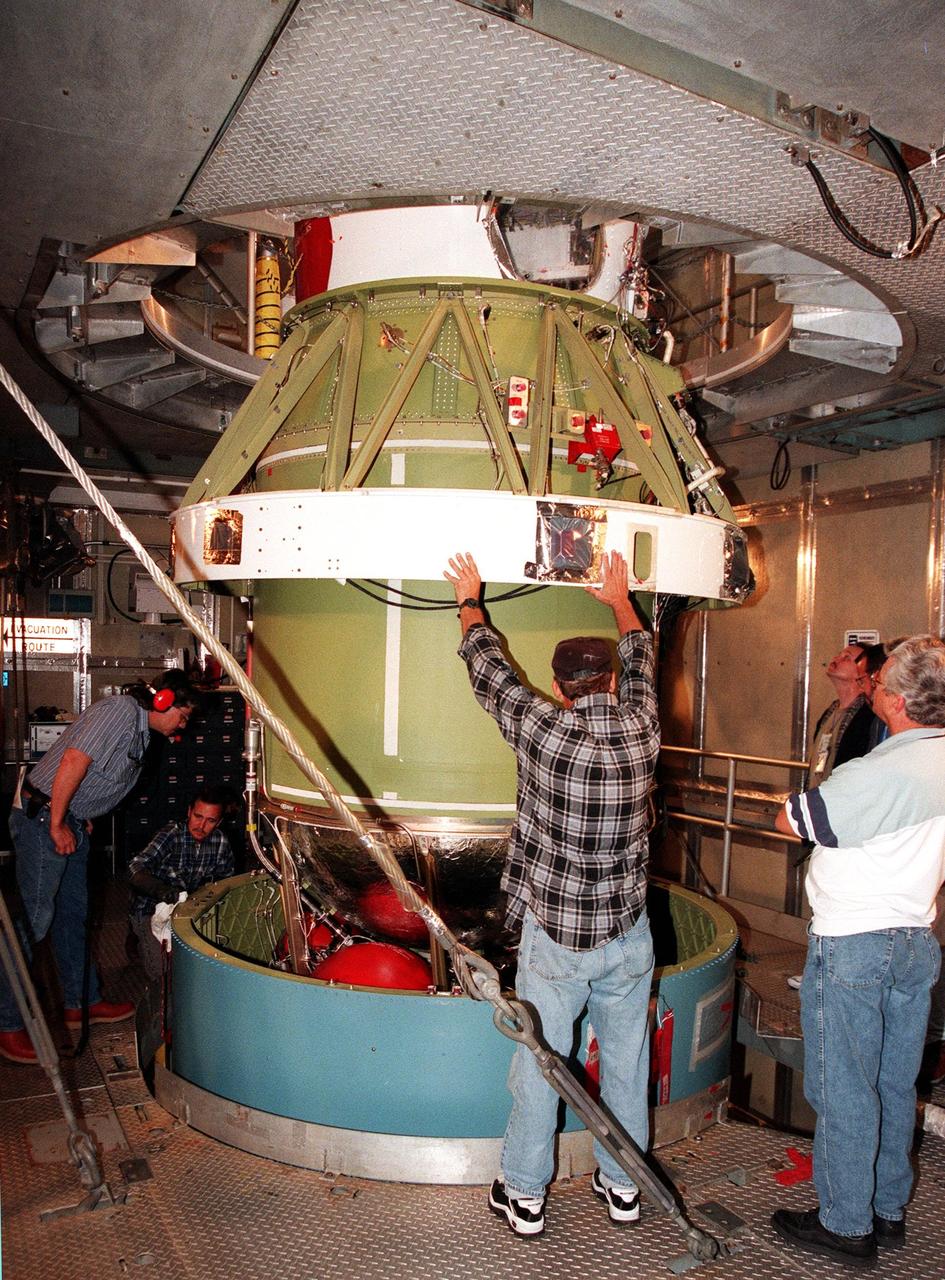
KSC · 1999-01-14 · KSC-99pc60
KSC-99pc60
At Pad 17A, Cape Canaveral Air Station, a worker helps guide the second stage of a Boeing Delta II rocket as it is lowered for mating with the…
Inspect NASA record
At Pad 17A, Cape Canaveral Air Station, a worker helps guide the second stage of a Boeing Delta II rocket as it is lowered for mating with the first stage. The rocket is targeted for launch on Feb. 6, carrying the Stardust spacecraft into space for a close encounter with the comet Wild 2 in January 2004. Using a substance called aerogel, Stardust will capture comet particles flying off the nucleus of the comet, plus collect interstellar dust for later analysis. The collected samples will return to Earth in a sample return capsule to be jettisoned as Stardust swings by Earth in January 2006
- Record ID
- KSC-99pc60
- NASA center
- KSC
- Date
- 1999-01-14
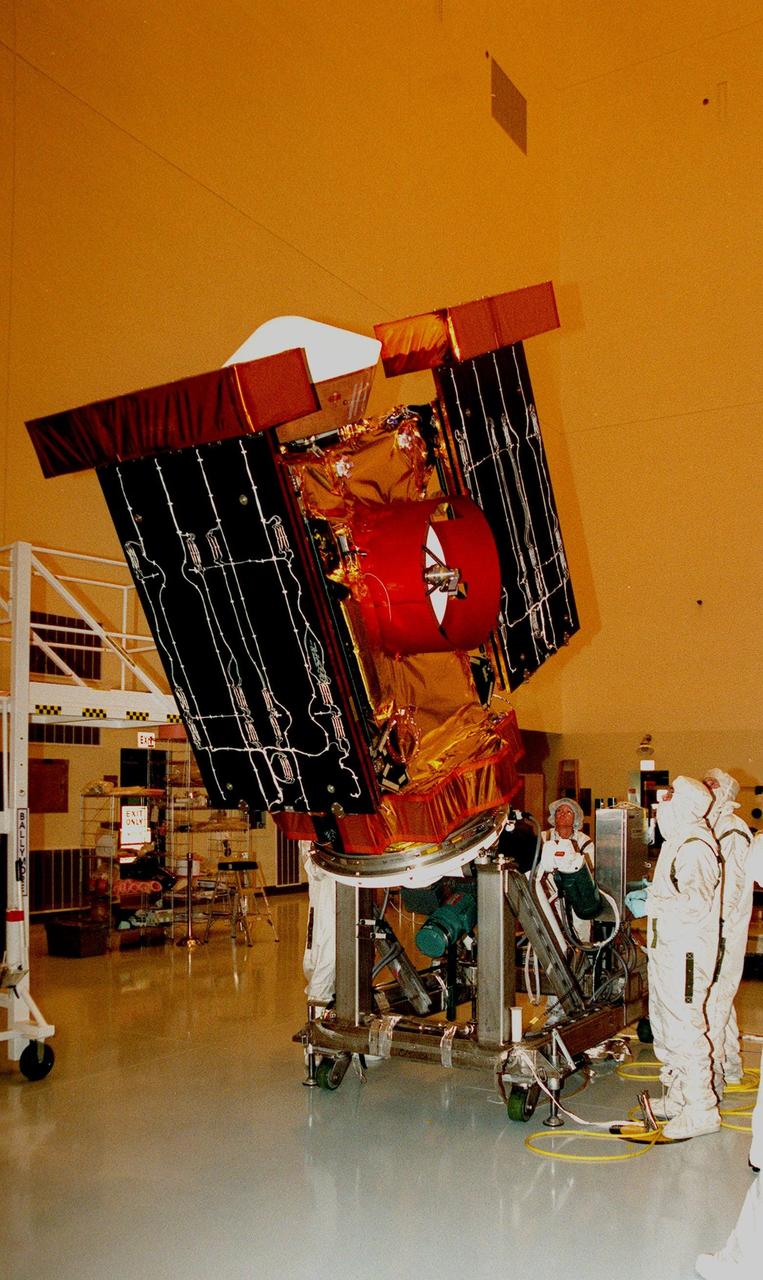
KSC · 1999-01-11 · KSC-99pc48
KSC-99pc48
In the Payload Hazardous Servicing Facility, workers get ready to rotate the Stardust spacecraft before deploying the solar panels (at left and right) for lighting tests. Stardust is…
Inspect NASA record
In the Payload Hazardous Servicing Facility, workers get ready to rotate the Stardust spacecraft before deploying the solar panels (at left and right) for lighting tests. Stardust is scheduled to be launched aboard a Boeing Delta II rocket from Launch Pad 17A, Cape Canaveral Air Station, on Feb. 6, 1999, for a rendezvous with the comet Wild 2 in January 2004. Stardust will use a substance called aerogel to capture comet particles flying off the nucleus of the comet, plus collect interstellar dust for later analysis. The collected samples will return to Earth in a sample return capsule to be jettisoned as it swings by Earth in January 2006
- Record ID
- KSC-99pc48
- NASA center
- KSC
- Date
- 1999-01-11
KSC · 1999-01-11 · KSC-99pc43
KSC-99pc43
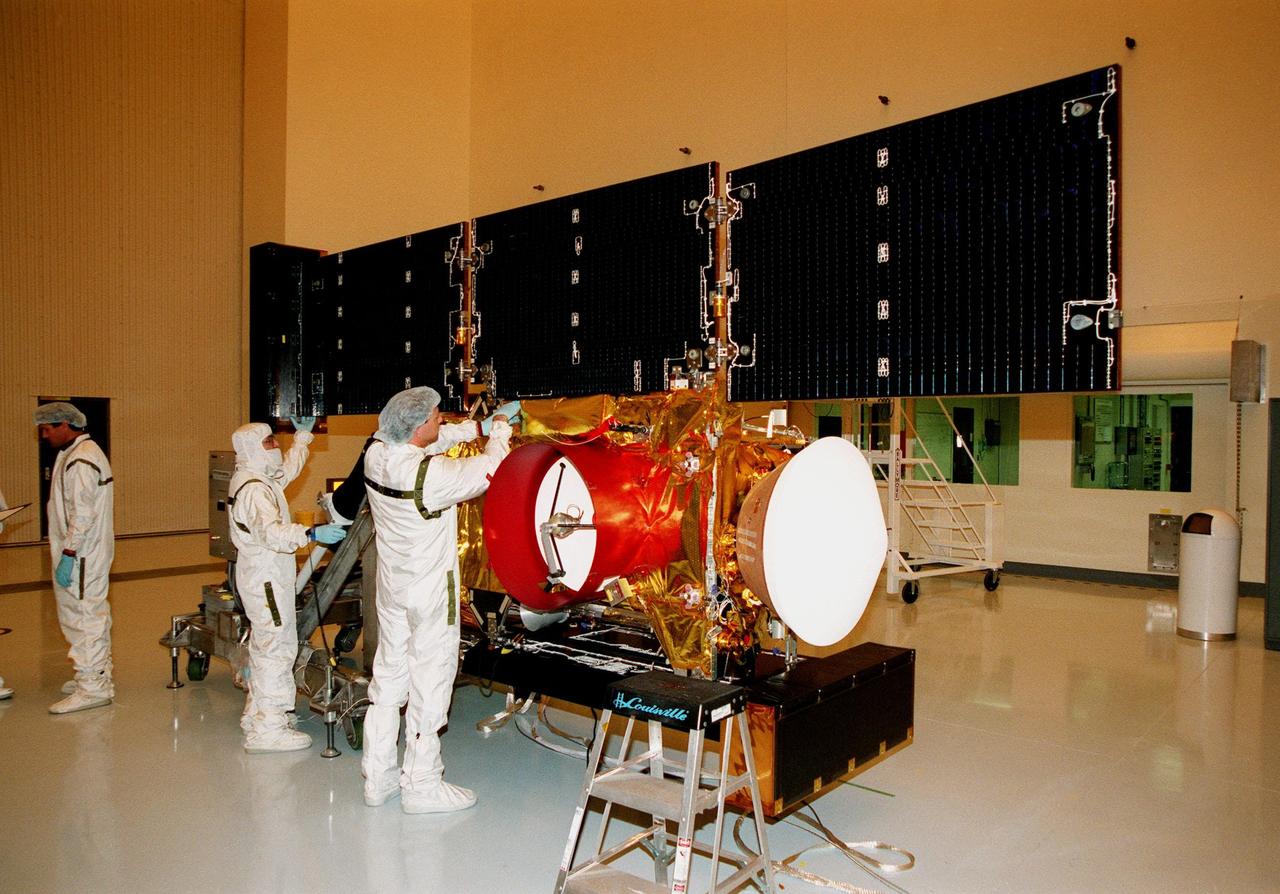
In the Payload Hazardous Servicing Facility, workers adjust the solar panels of the Stardustspacecraft before performing lighting tests. Stardust is scheduled to be launched aboard a Boeing Delta…
Inspect NASA record
In the Payload Hazardous Servicing Facility, workers adjust the solar panels of the Stardustspacecraft before performing lighting tests. Stardust is scheduled to be launched aboard a Boeing Delta II rocket from Launch Pad 17A, Cape Canaveral Air Station, on Feb. 6, 1999, for a rendezvous with the comet Wild 2 in January 2004. Stardust will use a substance called aerogel to capture comet particles flying off the nucleus of the comet, plus collect interstellar dust for later analysis. The collected samples will return to Earth in a sample return capsule to be jettisoned as it swings by Earth in January 2006
- Record ID
- KSC-99pc43
- NASA center
- KSC
- Date
- 1999-01-11
KSC · 1999-01-14 · KSC-99pc58
KSC-99pc58
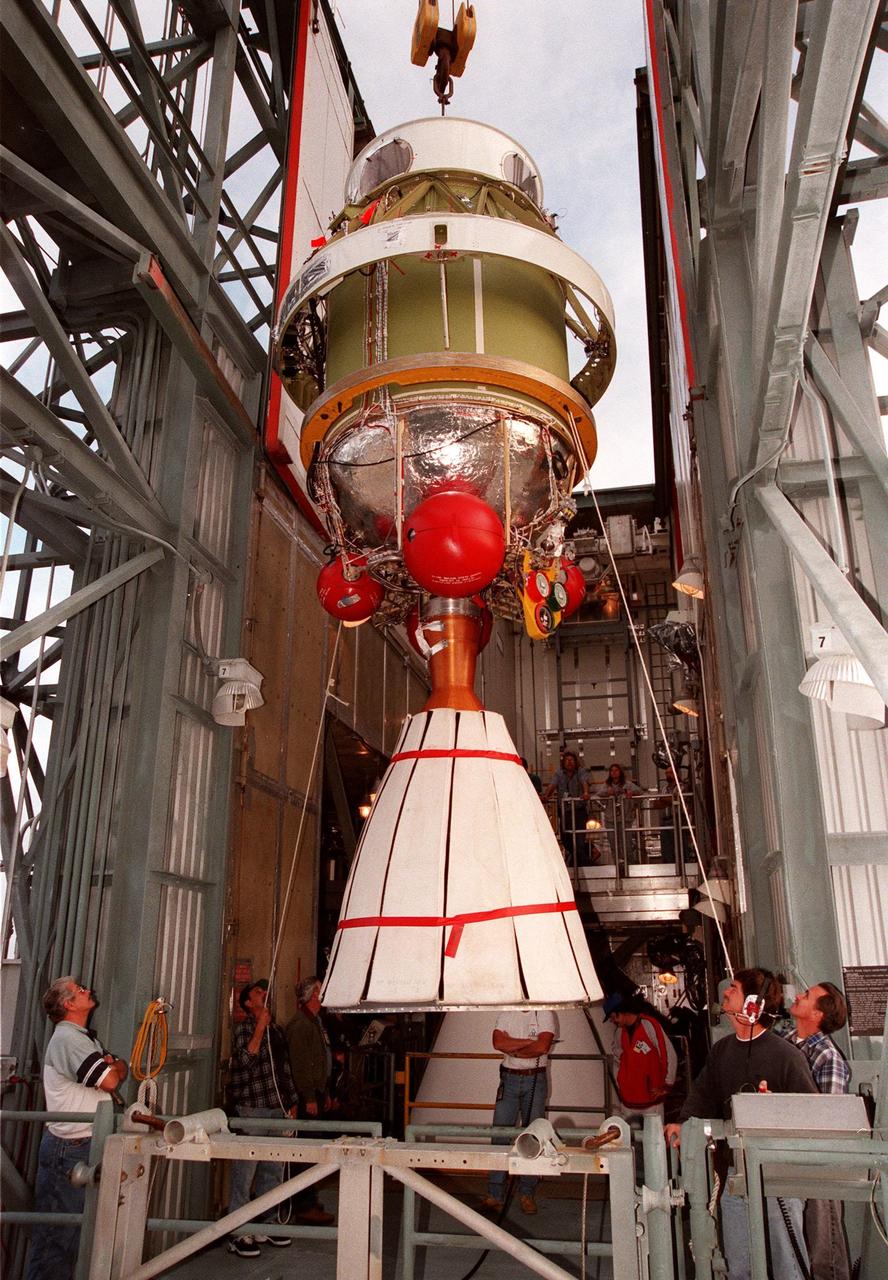
The second stage of a Boeing Delta II rocket arrives at the top of the tower at Pad 17A, Cape Canaveral Air Station for mating with the first…
Inspect NASA record
The second stage of a Boeing Delta II rocket arrives at the top of the tower at Pad 17A, Cape Canaveral Air Station for mating with the first stage. The rocket is targeted for launch on Feb. 6, carrying the Stardust spacecraft into space for a close encounter with the comet Wild 2 in January 2004. Using a substance called aerogel, Stardust will capture comet particles flying off the nucleus of the comet, plus collect interstellar dust for later analysis. The collected samples will return to Earth in a sample return capsule to be jettisoned as Stardust swings by Earth in January 2006
- Record ID
- KSC-99pc58
- NASA center
- KSC
- Date
- 1999-01-14
KSC · 1999-01-06 · KSC-99pc23
KSC-99pc23
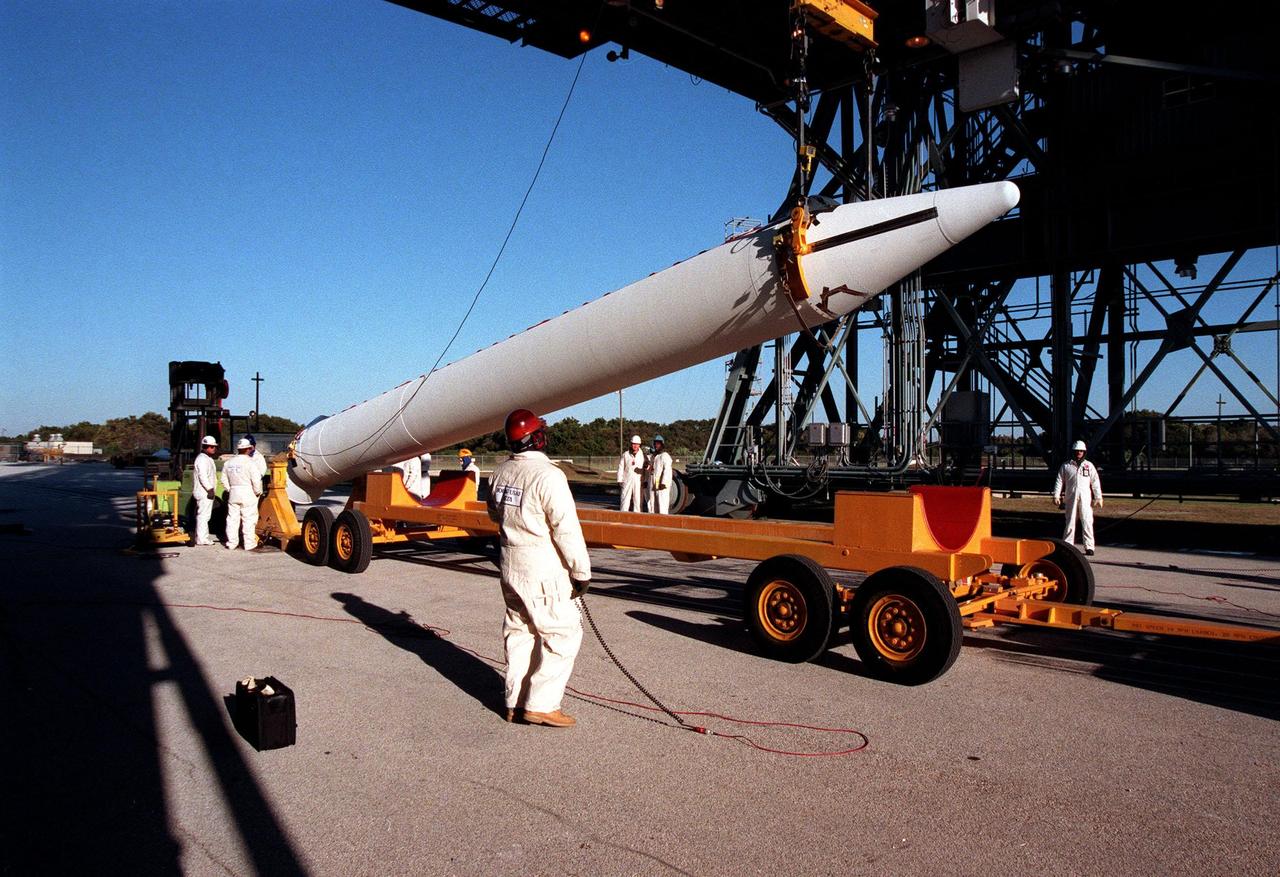
A solid rocket booster is lifted off a transport vehicle for its transfer to the mobile launch tower at Pad 17A, Cape Canaveral Air Station. It will be…
Inspect NASA record
A solid rocket booster is lifted off a transport vehicle for its transfer to the mobile launch tower at Pad 17A, Cape Canaveral Air Station. It will be mated with a Boeing Delta II rocket that will carry the Stardust spacecraft into space for a close encounter with the comet Wild 2 in January 2004. Using a medium called aerogel, Stardust will capture comet particles flying off the nucleus of the comet, plus collect interstellar dust for later analysis. The collected samples will return to Earth in a sample return capsule to be jettisoned as Stardust swings by Earth in January 2006. Stardust is scheduled to be launched on Feb. 6, 1999
- Record ID
- KSC-99pc23
- NASA center
- KSC
- Date
- 1999-01-06
KSC · 1999-01-11 · KSC-99pc37
KSC-99pc37
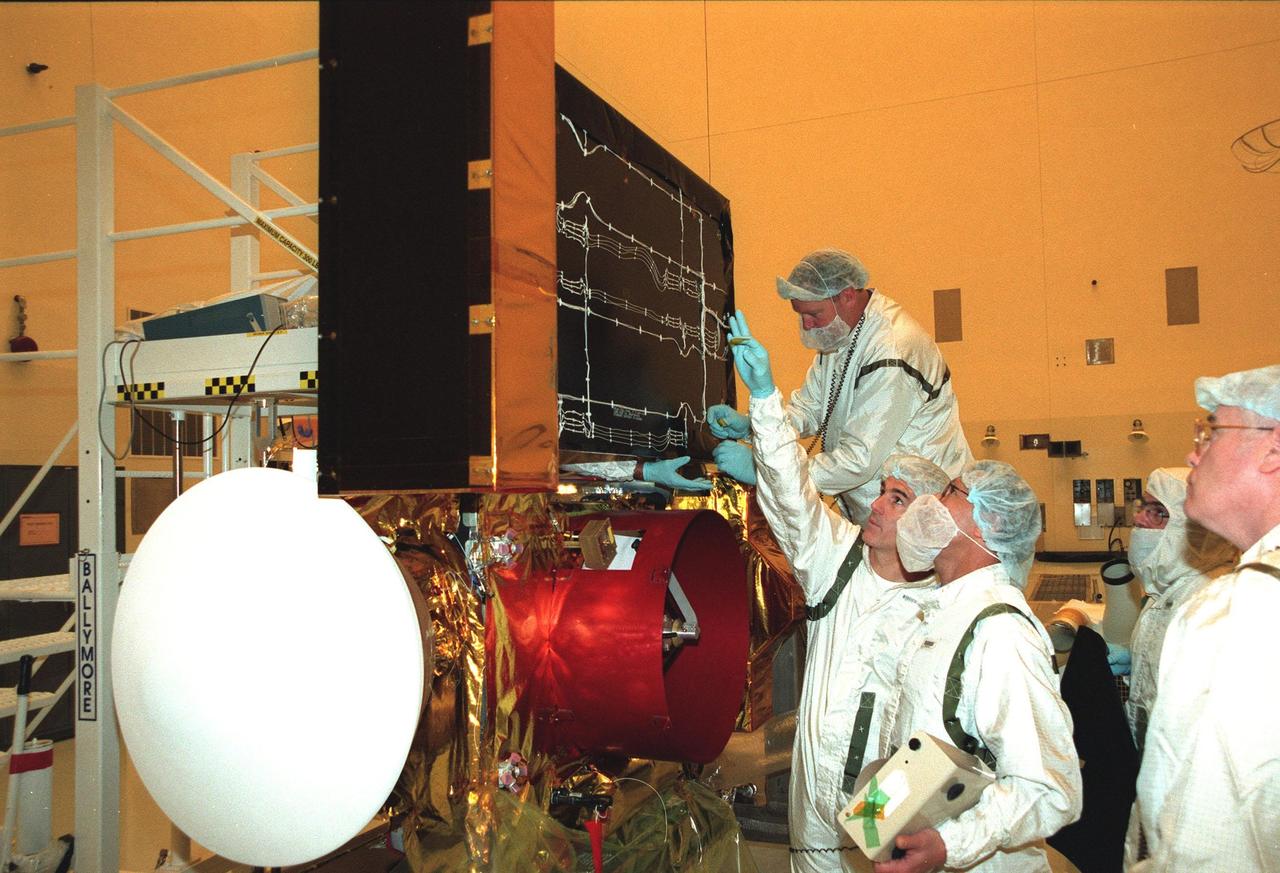
Workers in the Payload Hazardous Servicing Facility check solar panels on the Stardust spacecraft before performing lighting tests. Stardust is scheduled to be launched aboard a Boeing Delta…
Inspect NASA record
Workers in the Payload Hazardous Servicing Facility check solar panels on the Stardust spacecraft before performing lighting tests. Stardust is scheduled to be launched aboard a Boeing Delta II rocket from Launch Pad 17A, Cape Canaveral Air Station, on Feb. 6, 1999, for a rendezvous with the comet Wild 2 in January 2004. Stardust will use a substance called aerogel to capture comet particles flying off the nucleus of the comet, plus collect interstellar dust for later analysis. The collected samples will return to Earth in a sample return capsule (its white cap is seen on the left) to be jettisoned as it swings by Earth in January 2006
- Record ID
- KSC-99pc37
- NASA center
- KSC
- Date
- 1999-01-11
KSC · 1999-01-07 · KSC-99pc36
KSC-99pc36
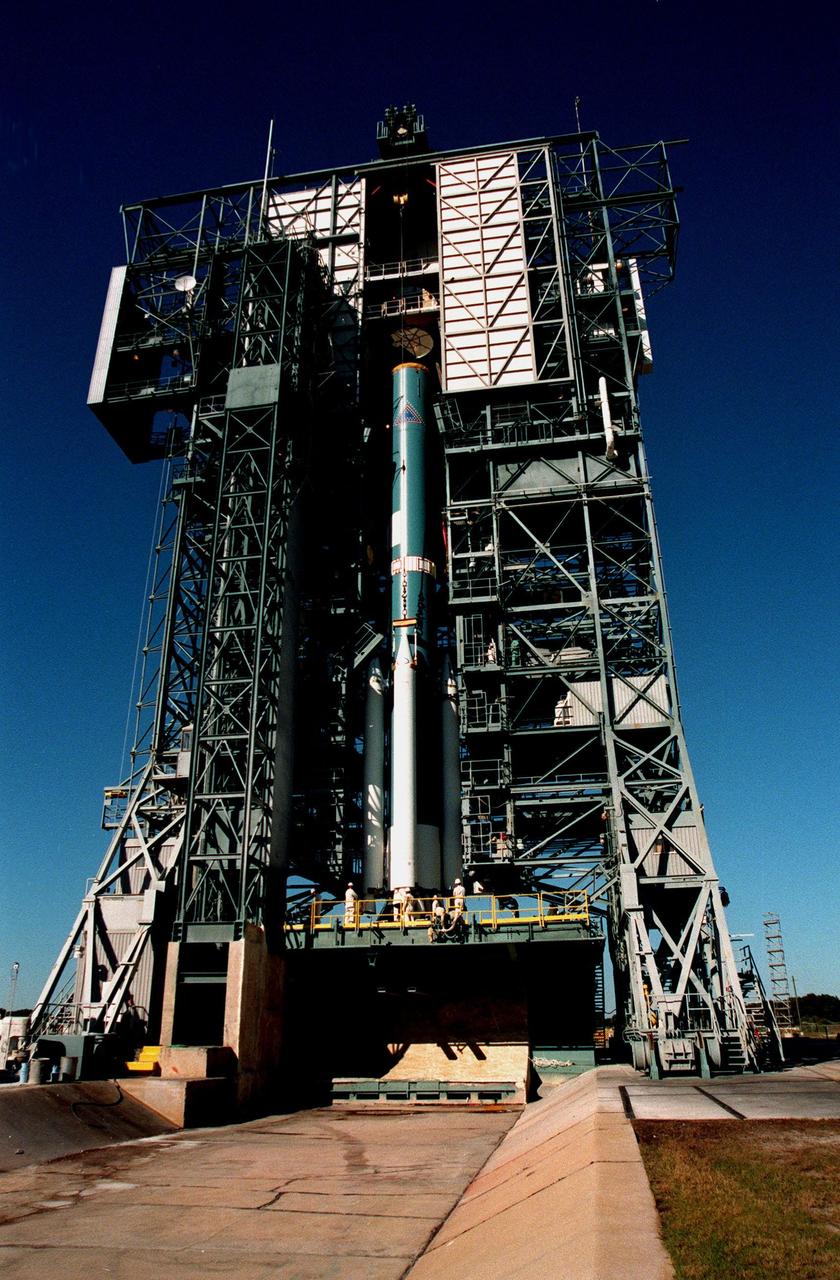
At Pad 17A, Cape Canaveral Air Station, a Boeing Delta II rocket waits with its four solid rocket boosters for final preparations to launch the Stardust satellite on…
Inspect NASA record
At Pad 17A, Cape Canaveral Air Station, a Boeing Delta II rocket waits with its four solid rocket boosters for final preparations to launch the Stardust satellite on Feb. 6, 1999. The rocket will carry Stardust into space for a close encounter with the comet Wild 2 in January 2004. Using a medium called aerogel, Stardust will capture comet particles flying off the nucleus of the comet, plus collect interstellar dust for later analysis. The collected samples will return to Earth in a Sample Return Capsule to be jettisoned as Stardust swings by Earth in January 2006
- Record ID
- KSC-99pc36
- NASA center
- KSC
- Date
- 1999-01-07
KSC · 1999-01-11 · KSC-99pc41
KSC-99pc41
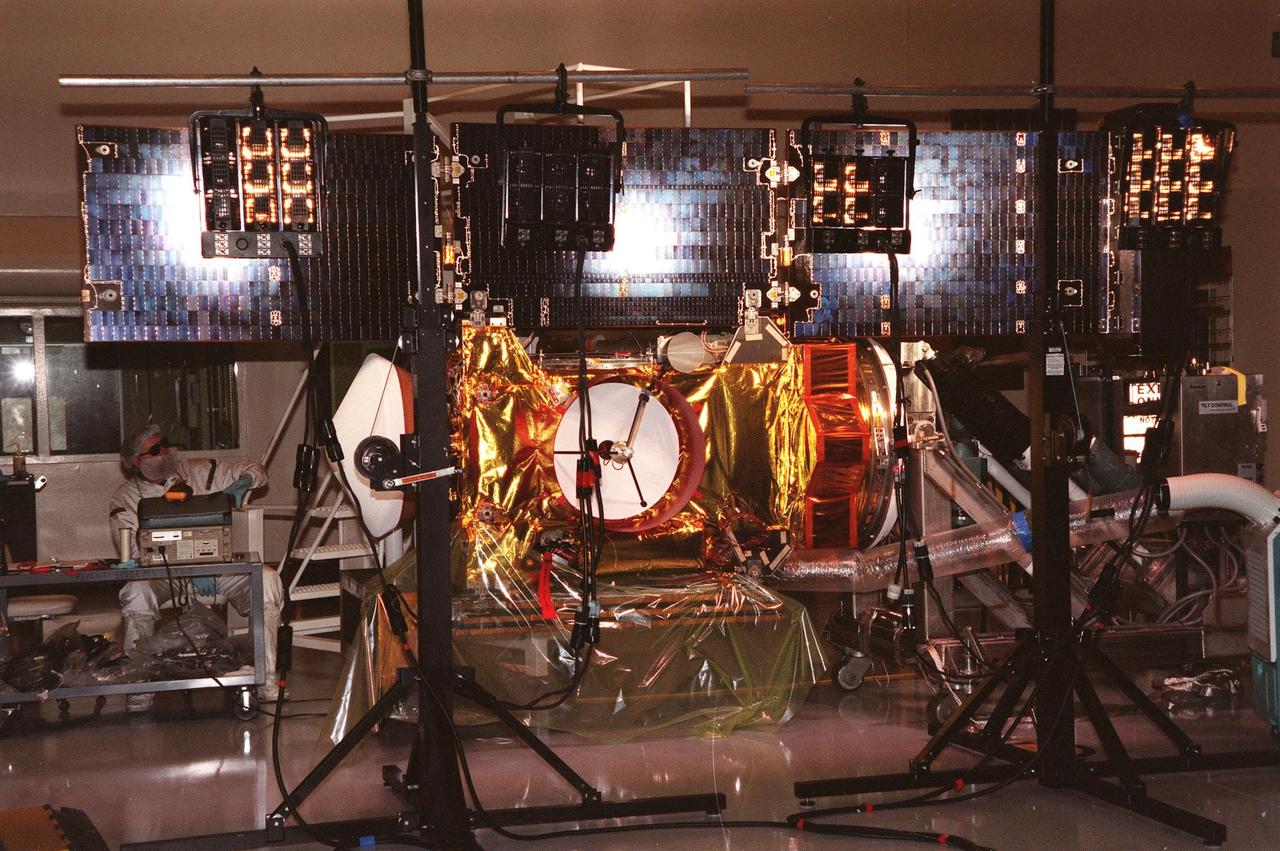
In the Payload Hazardous Servicing Facility, a worker (left) conducts lighting tests on the fully extended solar panels of the Stardustspacecraft. Stardust is scheduled to be launched aboard…
Inspect NASA record
In the Payload Hazardous Servicing Facility, a worker (left) conducts lighting tests on the fully extended solar panels of the Stardustspacecraft. Stardust is scheduled to be launched aboard a Boeing Delta II rocket from Launch Pad 17A, Cape Canaveral Air Station, on Feb. 6, 1999, for a rendezvous with the comet Wild 2 in January 2004. Stardust will use a substance called aerogel to capture comet particles flying off the nucleus of the comet, plus collect interstellar dust for later analysis. The collected samples will return to Earth in a sample return capsule to be jettisoned as it swings by Earth in January 2006
- Record ID
- KSC-99pc41
- NASA center
- KSC
- Date
- 1999-01-11

KSC · 1999-01-03 · KSC-99pc10
KSC-99pc10
The first stage of a Boeing Delta II rocket is guided to its vertical position on the tower at Launch Complex 17, Cape Canaveral Air Station. The rocket…
Inspect NASA record
The first stage of a Boeing Delta II rocket is guided to its vertical position on the tower at Launch Complex 17, Cape Canaveral Air Station. The rocket will carry the Stardust spacecraft into space for a close encounter with the comet Wild 2 in January 2004. Using a medium called aerogel, it will capture comet particles flying off the nucleus of the comet, plus collect interstellar dust for later analysis. The collected samples will return to Earth in a Sample Return Capsule to be jettisoned as Stardust swings by Earth in January 2006. Stardust is scheduled to be launched on Feb. 6, 1999
- Record ID
- KSC-99pc10
- NASA center
- KSC
- Date
- 1999-01-03
KSC · 1998-11-16 · KSC-98pc1725
KSC-98pc1725
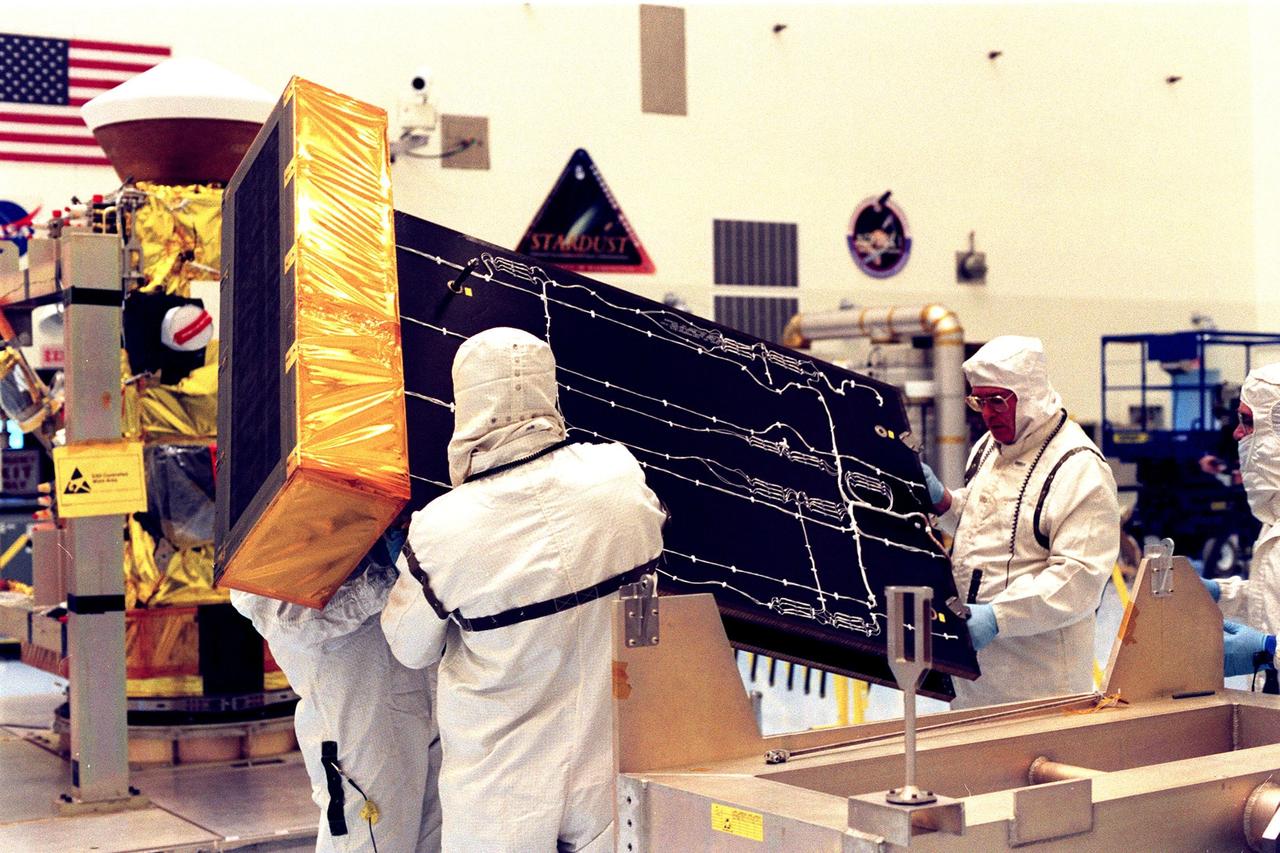
In the Payload Hazardous Servicing Facility, workers carry one of the Stardust solar panels removed for testing. The spacecraft Stardust will use a unique medium called aerogel to…
Inspect NASA record
In the Payload Hazardous Servicing Facility, workers carry one of the Stardust solar panels removed for testing. The spacecraft Stardust will use a unique medium called aerogel to capture comet particles flying off the nucleus of comet Wild 2 in January 2004, plus collect interstellar dust for later analysis. Stardust will be launched aboard a Boeing Delta 7426 rocket from Complex 17, Cape Canaveral Air Station, targeted for Feb. 6, 1999. The collected samples will return to Earth in a re-entry capsule to be jettisoned from Stardust as it swings by Earth in January 2006
- Record ID
- KSC-98pc1725
- NASA center
- KSC
- Date
- 1998-11-16