
Update Site (from NASA)
Explore NASA’s Image and Video Library.
Suggest one object per day for the Interstellar Minds collection. We review each suggestion before adding it.
Sign in to suggest a Marvel.
Find a NASA image ID. Open a NASA record and copy its ID from the end of the details URL.
NASA image records
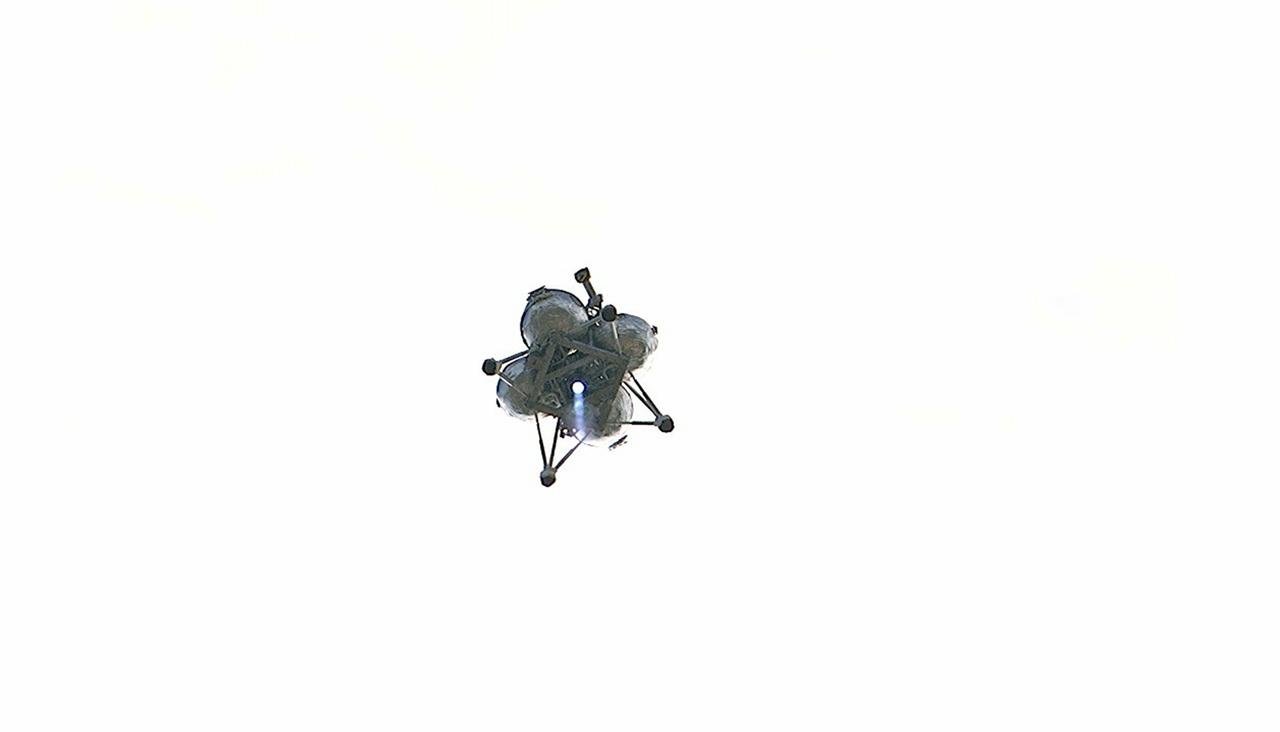
KSC · 2014-03-11 · KSC-2014-1697
KSC-2014-1697
CAPE CANAVERAL, Fla. - The Project Morpheus prototype lander soars high on its seventh free flight test at the north end of the Shuttle Landing Facility at NASA’s…
Inspect NASA record
CAPE CANAVERAL, Fla. - The Project Morpheus prototype lander soars high on its seventh free flight test at the north end of the Shuttle Landing Facility at NASA’s Kennedy Space Center in Florida. The 83-second test began at 3:41 p.m. EDT with the Morpheus lander launching from the ground over a flame trench and ascending to 580 feet, its highest to date. Morpheus then flew its fastest downrange trek at 30 mph, travelling farther than before, 837 feet. The lander performed a 42-foot divert to emulate a hazard avoidance maneuver before descending and touching down on Landing Site 2, at the northern landing pad inside the automated landing and hazard avoidance technology ALHAT hazard field. Morpheus landed within one foot of its intended target. Project Morpheus tests NASA’s ALHAT and an engine that runs on liquid oxygen and methane, or green propellants, into a fully-operational lander that could deliver cargo to other planetary surfaces. The landing facility provides the lander with the kind of field necessary for realistic testing, complete with rocks, craters and hazards to avoid. Morpheus’ ALHAT payload allows it to navigate to clear landing sites amidst rocks, craters and other hazards during its descent. Project Morpheus is being managed under the Advanced Exploration Systems, or AES, Division in NASA’s Human Exploration and Operations Mission Directorate. The efforts in AES pioneer new approaches for rapidly developing prototype systems, demonstrating key capabilities and validating operational concepts for future human missions beyond Earth orbit. For more information on Project Morpheus, visit http://morpheuslander.jsc.nasa.gov/. Photo credit: NASA/Mike Chambers
- Record ID
- KSC-2014-1697
- NASA center
- KSC
- Date
- 2014-03-11
- Keywords
- SLF, ALHAT, free flight test
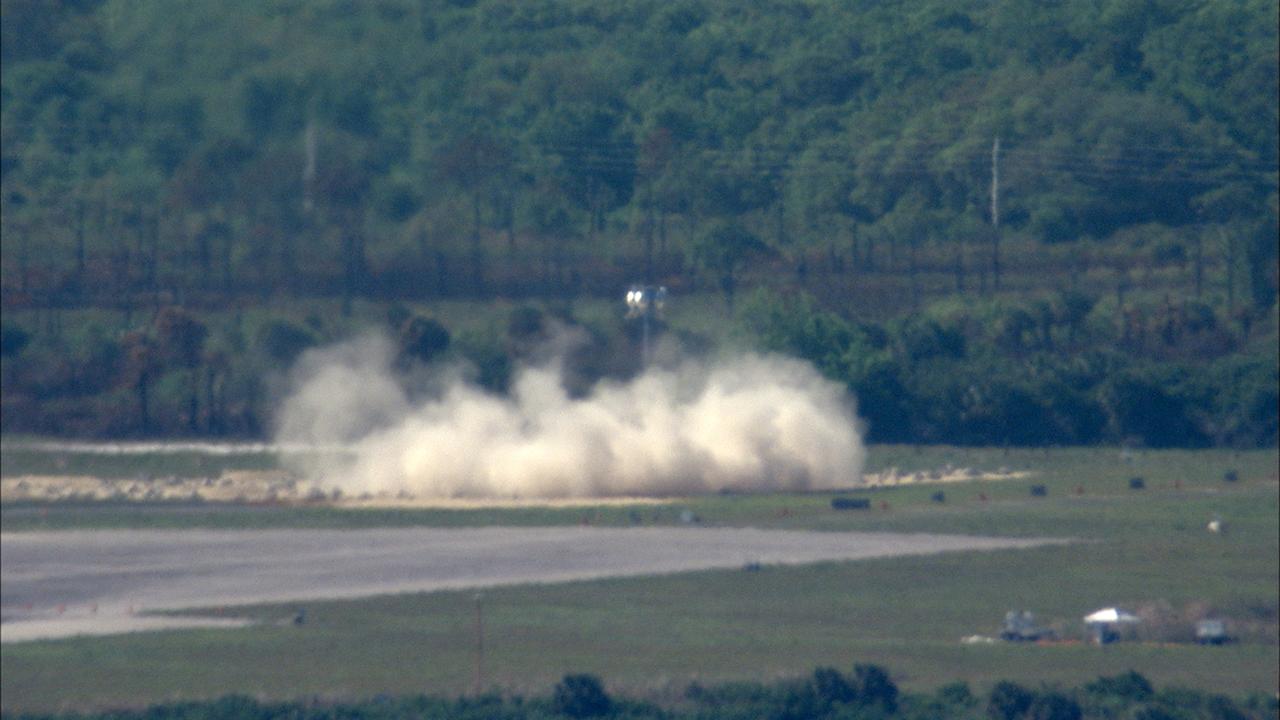
KSC · 2014-04-02 · KSC-2014-1949
KSC-2014-1949
CAPE CANAVERAL, Fla. – NASA's Project Morpheus prototype lander begins its descent toward the autonomous landing and hazard avoidance technology, or ALHAT, hazard field after a free flight…
Inspect NASA record
CAPE CANAVERAL, Fla. – NASA's Project Morpheus prototype lander begins its descent toward the autonomous landing and hazard avoidance technology, or ALHAT, hazard field after a free flight test at the north end of the Shuttle Landing Facility at NASA's Kennedy Space Center in Florida. The 96-second test began at 4:21 p.m. EDT with the Morpheus lander launching from the ground over the flame trench at a new launch site and ascending more than 800 feet at a peak speed of 36 mph. The vehicle with its recently installed autonomous landing and hazard avoidance technology, or ALHAT, sensors surveyed the hazard field to determine safe landing sites. Morpheus then flew forward and downward covering 1,300 feet while performing a 78-foot divert to simulate a hazard avoidance maneuver. The lander descended and landed on a dedicated pad inside the ALHAT field. Project Morpheus tests NASA’s ALHAT, and an engine that runs on liquid oxygen and methane, or green propellants, into a fully-operational lander that could deliver cargo to other planetary surfaces. The landing facility provides the lander with the kind of field necessary for realistic testing, complete with rocks, craters and hazards to avoid. Morpheus’ ALHAT payload allows it to navigate to clear landing sites amidst rocks, craters and other hazards during its descent. Project Morpheus is being managed under the Advanced Exploration Systems, or AES, Division in NASA’s Human Exploration and Operations Mission Directorate. The efforts in AES pioneer new approaches for rapidly developing prototype systems, demonstrating key capabilities and validating operational concepts for future human missions beyond Earth orbit. For more information on Project Morpheus, visit http://morpheuslander.jsc.nasa.gov/. Photo credit: NASA/Frankie Martin
- Record ID
- KSC-2014-1949
- NASA center
- KSC
- Date
- 2014-04-02
- Keywords
- SLF, ALHAT, launch pad, free flight test
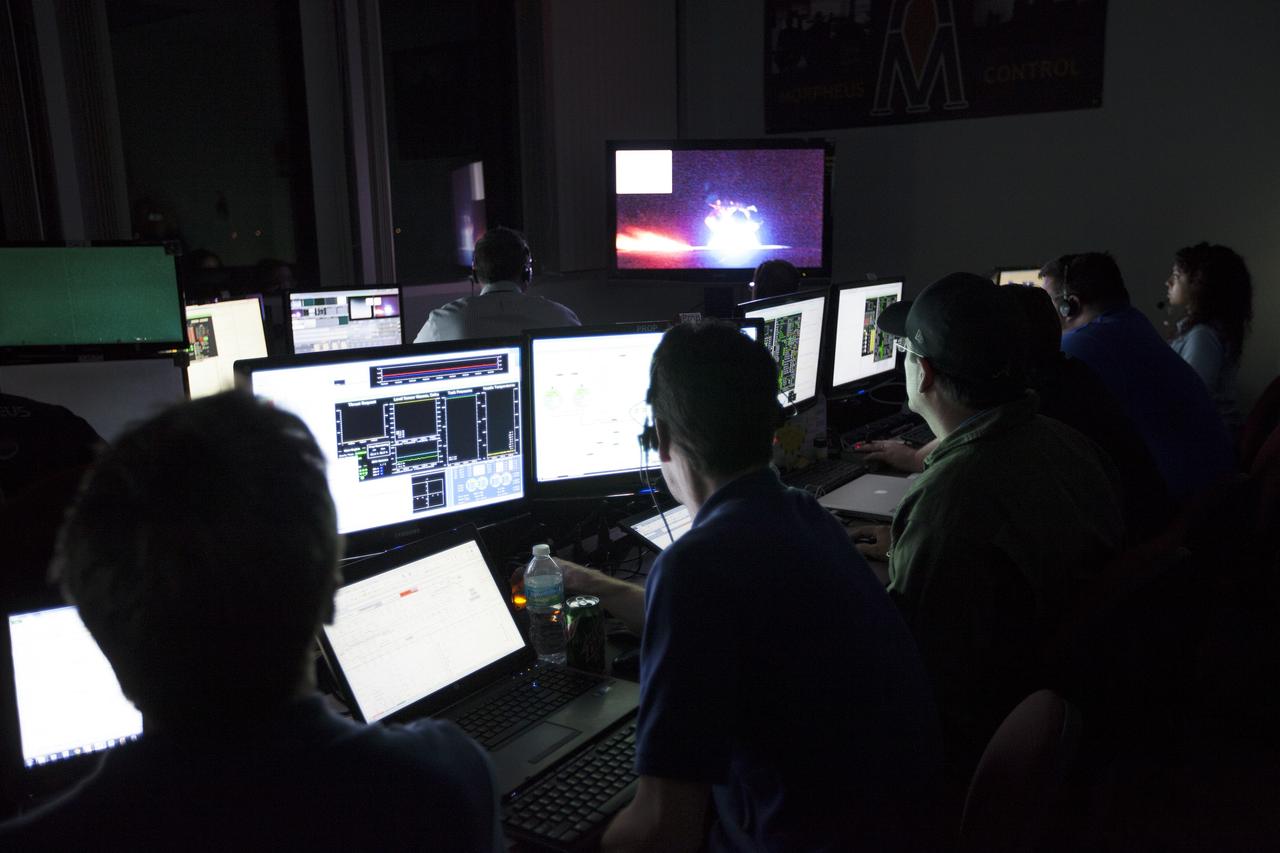
KSC · 2014-05-28 · KSC-2014-2716
KSC-2014-2716
CAPE CANAVERAL, Fla. -- Engineers in the Morpheus Control Room monitor NASA's Project Morpheus prototype lander as it lifts off on the first free flight test at night…
Inspect NASA record
CAPE CANAVERAL, Fla. -- Engineers in the Morpheus Control Room monitor NASA's Project Morpheus prototype lander as it lifts off on the first free flight test at night from a launch pad at the north end of the Shuttle Landing Facility at NASA's Kennedy Space Center in Florida. The 98-second test began at 10:02 p.m. EDT with the Morpheus lander launching from the ground over a flame trench and ascending more than 800 feet. The vehicle, with its autonomous landing and hazard avoidance technology, or ALHAT sensors, surveyed the hazard field to determine safe landing sites. Morpheus then flew forward and downward covering approximately 1,300 feet while performing a 78-foot divert to simulate a hazard avoidance maneuver. The lander then descended and landed on a dedicated pad inside the test field. Project Morpheus tests NASA’s ALHAT and an engine that runs on liquid oxygen and methane, which are green propellants. These new capabilities could be used in future efforts to deliver cargo to planetary surfaces. The landing facility provides the lander with the kind of field necessary for realistic testing, complete with rocks, craters and hazards to avoid. Morpheus’ ALHAT payload allows it to navigate to clear landing sites amidst rocks, craters and other hazards during its descent. Project Morpheus is being managed under the Advanced Exploration Systems, or AES, Division in NASA’s Human Exploration and Operations Mission Directorate. The efforts in AES pioneer new approaches for rapidly developing prototype systems, demonstrating key capabilities and validating operational concepts for future human missions beyond Earth orbit. For more information on Project Morpheus, visit http://morpheuslander.jsc.nasa.gov/. Photo credit: NASA/Kim Shiflett
- Record ID
- KSC-2014-2716
- NASA center
- KSC
- Date
- 2014-05-28
- Keywords
- SLF, ALHAT, launch pad, free flight test
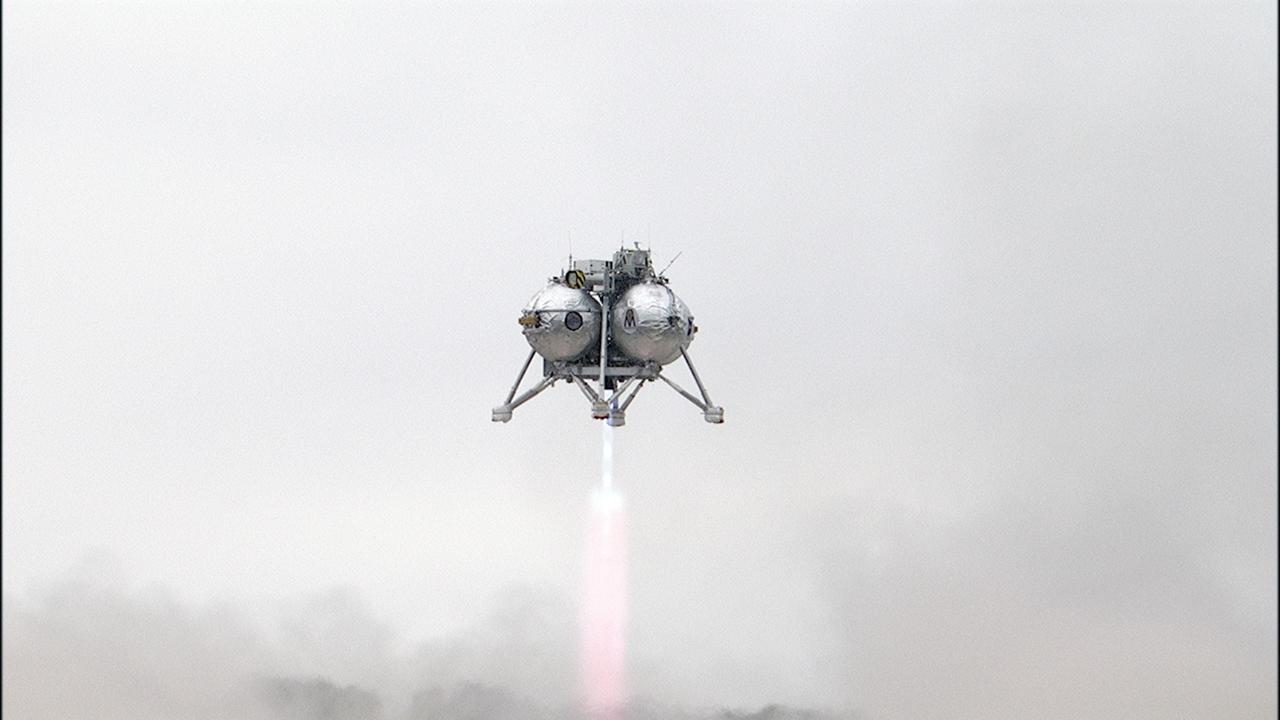
KSC · 2014-03-05 · KSC-2014-1611
KSC-2014-1611
CAPE CANAVERAL, Fla. – The Project Morpheus prototype lander ascends on its sixth free flight test at the north end of the Shuttle Landing Facility at NASA’s Kennedy…
Inspect NASA record
CAPE CANAVERAL, Fla. – The Project Morpheus prototype lander ascends on its sixth free flight test at the north end of the Shuttle Landing Facility at NASA’s Kennedy Space Center in Florida. The 82-second test began at 11:32 a.m. EST with the Morpheus lander launching from the ground over a flame trench and ascending to 465 feet. The lander flew forward, covering 633 feet while performing a 55-foot divert to emulate a hazard avoidance maneuver before descending and landing on a dedicated pad inside the automated landing and hazard avoidance technology, or ALHAT, hazard field. Morpheus landed 10 inches west of its intended target. Project Morpheus tests NASA’s ALHAT and an engine that runs on liquid oxygen and methane, or green propellants, into a fully-operational lander that could deliver cargo to other planetary surfaces. The landing facility provides the lander with the kind of field necessary for realistic testing, complete with rocks, craters and hazards to avoid. Morpheus’ ALHAT payload allows it to navigate to clear landing sites amidst rocks, craters and other hazards during its descent. Project Morpheus is being managed under the Advanced Exploration Systems, or AES, Division in NASA’s Human Exploration and Operations Mission Directorate. The efforts in AES pioneer new approaches for rapidly developing prototype systems, demonstrating key capabilities and validating operational concepts for future human missions beyond Earth orbit. For more information on Project Morpheus, visit http://morpheuslander.jsc.nasa.gov/. Photo credit: NASA/Frankie Martin
- Record ID
- KSC-2014-1611
- NASA center
- KSC
- Date
- 2014-03-05
- Keywords
- SLF, ALHAT, free flight test
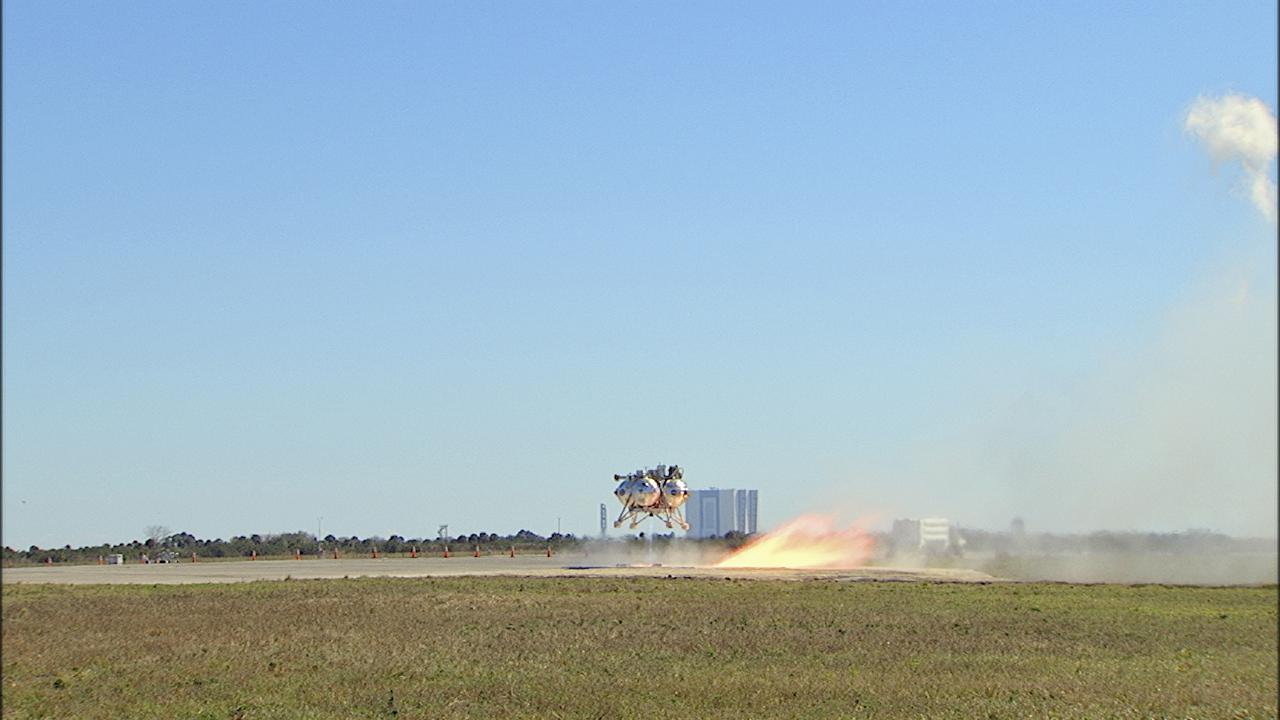
KSC · 2014-02-10 · 2014-1362
KSC-2014-1362
CAPE CANAVERAL, Fla. – The fifth free flight of the Project Morpheus prototype lander was conducted at the north end of the Shuttle Landing Facility at NASA’s Kennedy…
Inspect NASA record
CAPE CANAVERAL, Fla. – The fifth free flight of the Project Morpheus prototype lander was conducted at the north end of the Shuttle Landing Facility at NASA’s Kennedy Space Center in Florida. The 74-second test began at about 1 p.m. EST with the Morpheus lander launching from the ground over a flame trench and ascending about to 476 feet, more than 160 feet higher than its last test. The lander flew forward, covering 637 feet in 30 seconds before descending and landing on target on a dedicated landing pad inside the autonomous landing and hazard avoidance technology, or ALHAT, hazard field. Project Morpheus tests NASA’s ALHAT and an engine that runs on liquid oxygen and methane, or green propellants, into a fully-operational lander that could deliver cargo to other planetary surfaces. The landing facility provides the lander with the kind of field necessary for realistic testing, complete with rocks, craters and hazards to avoid. Morpheus’ ALHAT payload allows it to navigate to clear landing sites amidst rocks, craters and other hazards during its descent. Project Morpheus is being managed under the Advanced Exploration Systems, or AES, Division in NASA’s Human Exploration and Operations Mission Directorate. The efforts in AES pioneer new approaches for rapidly developing prototype systems, demonstrating key capabilities and validating operational concepts for future human missions beyond Earth orbit. For more information on Project Morpheus, visit http:__www.nasa.gov_centers_johnson_exploration_morpheus. Photo credit: NASA_Frankie Martin
- Record ID
- 2014-1362
- NASA center
- KSC
- Date
- 2014-02-10
- Credit
- NASA_Frankie Martin
- Keywords
- SLF, ALHAT, free_flight_test
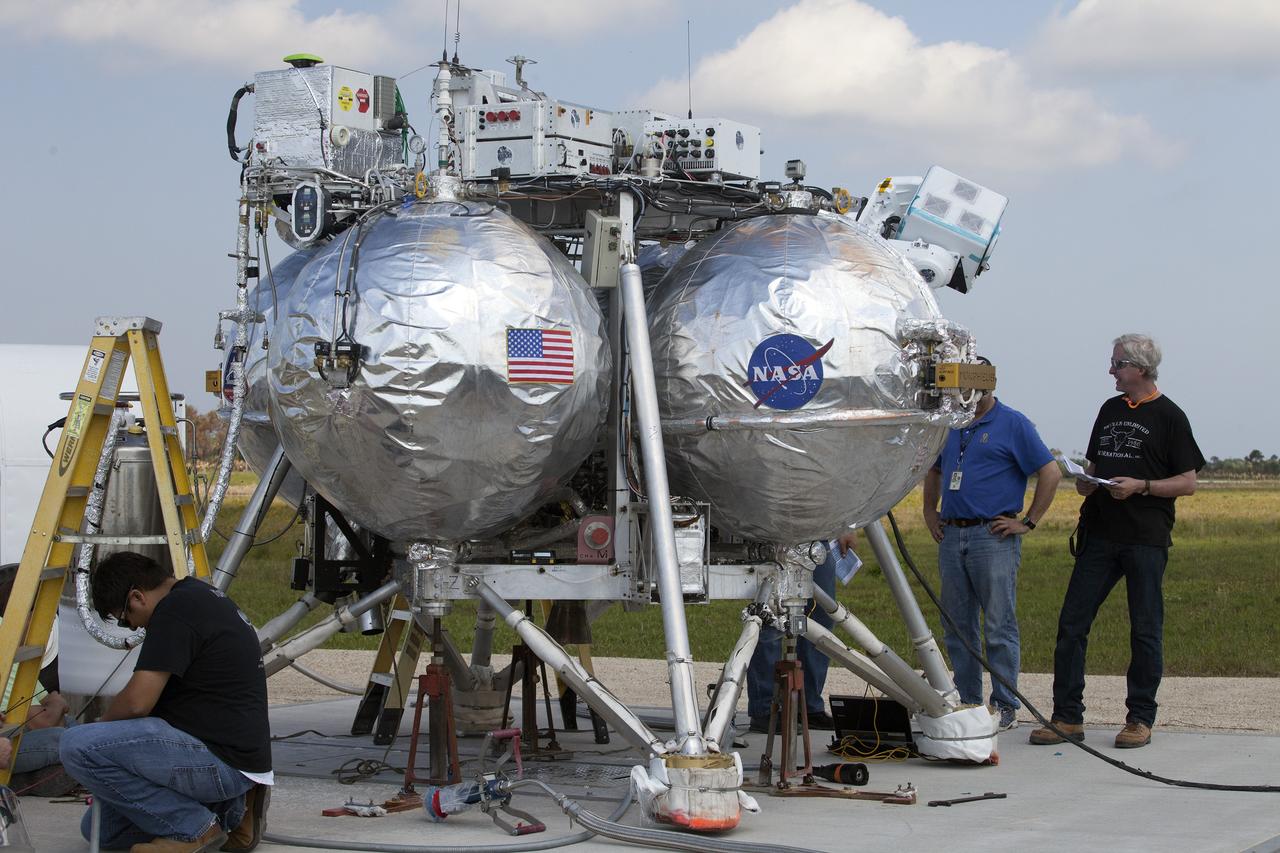
KSC · 2014-04-24 · KSC-2014-2280
KSC-2014-2280
CAPE CANAVERAL, Fla. – Technicians and engineers check the systems on NASA's Project Morpheus prototype lander in preparation for a free flight test from a new launch pad…
Inspect NASA record
CAPE CANAVERAL, Fla. – Technicians and engineers check the systems on NASA's Project Morpheus prototype lander in preparation for a free flight test from a new launch pad at the north end of the Shuttle Landing Facility at NASA's Kennedy Space Center in Florida. The 98-second test began at 3:20 p.m. EDT with the Morpheus lander launching from the ground over a flame trench and ascending more than 800 feet at a peak speed of 36 mph. The vehicle, with its recently installed autonomous landing and hazard avoidance technology ALHAT sensors, surveyed the hazard field to determine safe landing sites. Morpheus then flew forward and downward covering approximately 1300 feet while performing a 78-foot divert to simulate a hazard avoidance maneuver. The lander then descended and landed on a dedicated pad inside the autonomous landing and hazard avoidance technology hazard field. Project Morpheus tests NASA’s ALHAT and an engine that runs on liquid oxygen and methane, which are green propellants. These new capabilities could be used in future efforts to deliver cargo to planetary surfaces. The landing facility provides the lander with the kind of field necessary for realistic testing, complete with rocks, craters and hazards to avoid. Morpheus’ ALHAT payload allows it to navigate to clear landing sites amidst rocks, craters and other hazards during its descent. Project Morpheus is being managed under the Advanced Exploration Systems, or AES, Division in NASA’s Human Exploration and Operations Mission Directorate. The efforts in AES pioneer new approaches for rapidly developing prototype systems, demonstrating key capabilities and validating operational concepts for future human missions beyond Earth orbit. For more information on Project Morpheus, visit http://morpheuslander.jsc.nasa.gov/. Photo credit: NASA/Daniel Casper
- Record ID
- KSC-2014-2280
- NASA center
- KSC
- Date
- 2014-04-24
- Keywords
- SLF, ALHAT, launch pad, free flight test
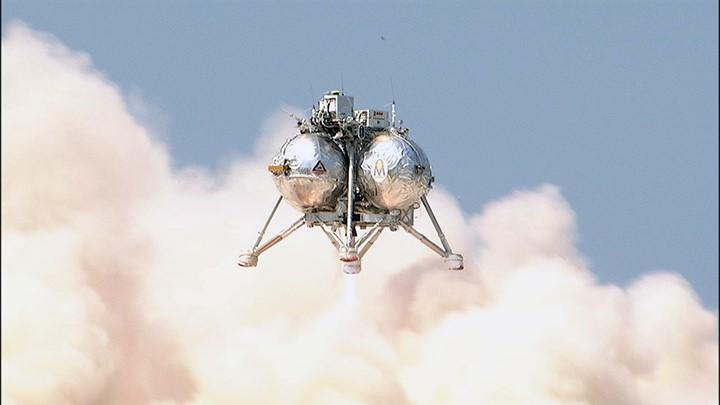
KSC · 2014-04-24 · KSC-2014-2289
KSC-2014-2289
CAPE CANAVERAL, Fla. – NASA's Project Morpheus prototype lander descends toward the autonomous landing and hazard avoidance field after a free-flight test from a new launch pad at…
Inspect NASA record
CAPE CANAVERAL, Fla. – NASA's Project Morpheus prototype lander descends toward the autonomous landing and hazard avoidance field after a free-flight test from a new launch pad at the north end of the Shuttle Landing Facility at NASA's Kennedy Space Center in Florida. The 98-second test began at 3:20 p.m. EDT with the Morpheus lander launching from the ground over a flame trench and ascending more than 800 feet at a peak speed of 36 mph. The vehicle, with its recently installed autonomous landing and hazard avoidance technology ALHAT sensors, surveyed the hazard field to determine safe landing sites. Morpheus then flew forward and downward covering approximately 1300 feet while performing a 78-foot divert to simulate a hazard avoidance maneuver. The lander then descended and landed on a dedicated pad inside the autonomous landing and hazard avoidance technology hazard field. Project Morpheus tests NASA’s ALHAT and an engine that runs on liquid oxygen and methane, which are green propellants. These new capabilities could be used in future efforts to deliver cargo to planetary surfaces. The landing facility provides the lander with the kind of field necessary for realistic testing, complete with rocks, craters and hazards to avoid. Morpheus’ ALHAT payload allows it to navigate to clear landing sites amidst rocks, craters and other hazards during its descent. Project Morpheus is being managed under the Advanced Exploration Systems, or AES, Division in NASA’s Human Exploration and Operations Mission Directorate. The efforts in AES pioneer new approaches for rapidly developing prototype systems, demonstrating key capabilities and validating operational concepts for future human missions beyond Earth orbit. For more information on Project Morpheus, visit http://morpheuslander.jsc.nasa.gov/. Photo credit: NASA/Chris Chamberland
- Record ID
- KSC-2014-2289
- NASA center
- KSC
- Date
- 2014-04-24
- Keywords
- SLF, ALHAT, launch pad, free flight test

KSC · 2014-04-30 · KSC-2014-2328
KSC-2014-2328
CAPE CANAVERAL, Fla. – NASA's Project Morpheus prototype lander lifts off on a free-flight test from a new launch pad at the north end of the Shuttle Landing…
Inspect NASA record
CAPE CANAVERAL, Fla. – NASA's Project Morpheus prototype lander lifts off on a free-flight test from a new launch pad at the north end of the Shuttle Landing Facility at NASA's Kennedy Space Center in Florida. The 98-second test began at 1:57 p.m. EDT with the Morpheus lander launching from the ground over a flame trench and ascending more than 800 feet at a peak speed of 36 mph. The vehicle, with its recently installed autonomous landing and hazard avoidance technology, or ALHAT, sensors surveyed the hazard field to determine safe landing sites. Morpheus then flew forward and downward covering approximately 1300 feet while performing a 78-foot divert to simulate a hazard avoidance maneuver. The lander descended and landed on a dedicated pad inside the ALHAT hazard field. Project Morpheus tests NASA’s ALHAT and an engine that runs on liquid oxygen and methane, which are green propellants. These new capabilities could be used in future efforts to deliver cargo to planetary surfaces. The landing facility provides the lander with the kind of field necessary for realistic testing, complete with rocks, craters and hazards to avoid. Morpheus’ ALHAT payload allows it to navigate to clear landing sites amidst rocks, craters and other hazards during its descent. Project Morpheus is being managed under the Advanced Exploration Systems, or AES, Division in NASA’s Human Exploration and Operations Mission Directorate. The efforts in AES pioneer new approaches for rapidly developing prototype systems, demonstrating key capabilities and validating operational concepts for future human missions beyond Earth orbit. For more information on Project Morpheus, visit http://morpheuslander.jsc.nasa.gov/. Photo credit: NASA/Frankie Martin
- Record ID
- KSC-2014-2328
- NASA center
- KSC
- Date
- 2014-04-30
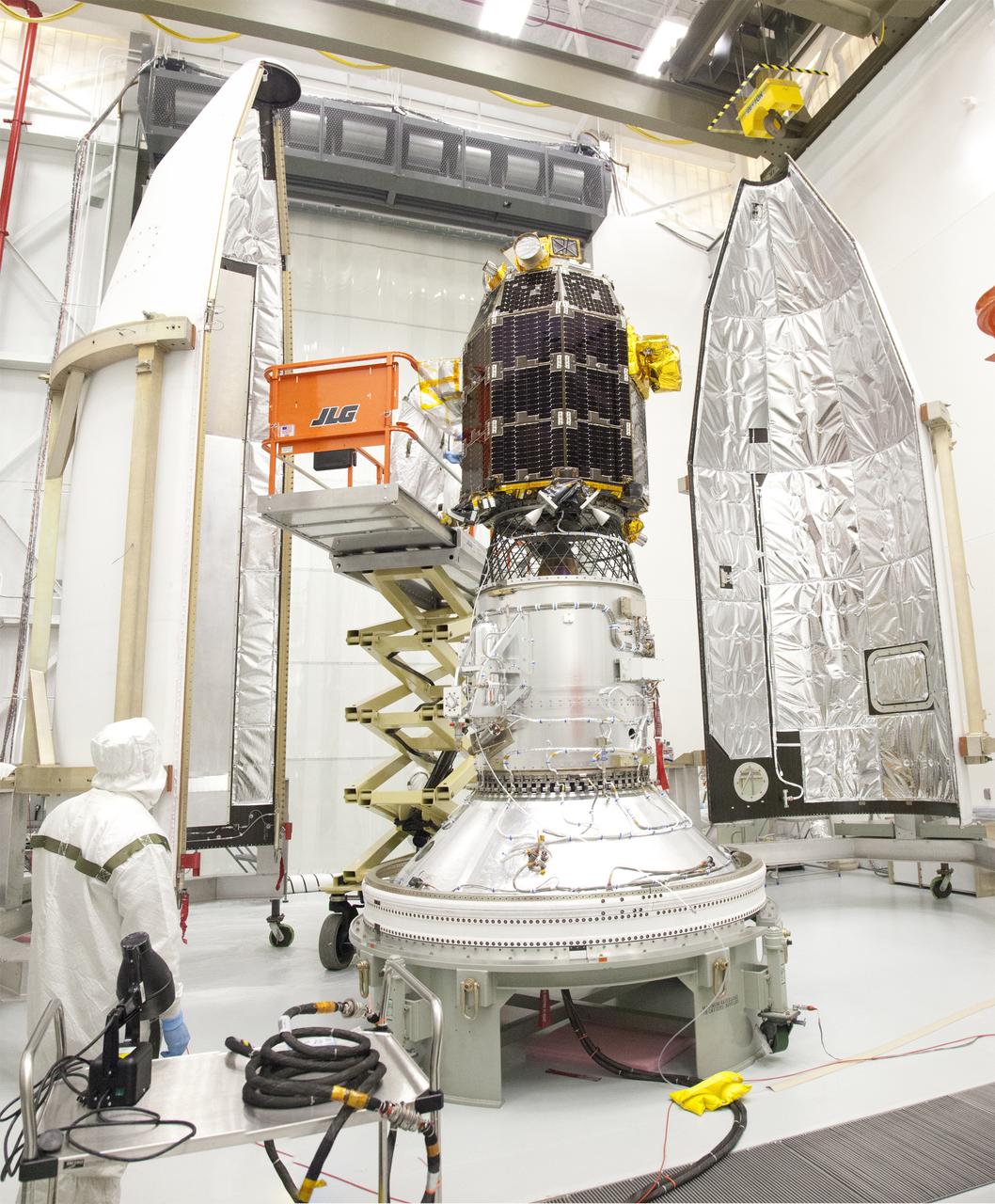
GSFC · 2017-12-08 · GSFC_20171208_Archive_e001392
LADEE Encapsulated in the Fairing
Engineers at NASA's Wallops Flight Facility in Virginia prepare to encapsulate the LADEE spacecraft into the fairing of the Minotaur V launch vehicle nose-cone. Credit: NASA/Wallops/Terry Zaperach -----…
Inspect NASA record
Engineers at NASA's Wallops Flight Facility in Virginia prepare to encapsulate the LADEE spacecraft into the fairing of the Minotaur V launch vehicle nose-cone. Credit: NASA/Wallops/Terry Zaperach ----- What is LADEE? The Lunar Atmosphere and Dust Environment Explorer (LADEE) is designed to study the Moon's thin exosphere and the lunar dust environment. An "exosphere" is an atmosphere that is so thin and tenuous that molecules don't collide with each other. Studying the Moon's exosphere will help scientists understand other planetary bodies with exospheres too, like Mercury and some of Jupiter's bigger moons. The orbiter will determine the density, composition and temporal and spatial variability of the Moon's exosphere to help us understand where the species in the exosphere come from and the role of the solar wind, lunar surface and interior, and meteoric infall as sources. The mission will also examine the density and temporal and spatial variability of dust particles that may get lofted into the atmosphere. The mission also will test several new technologies, including a modular spacecraft bus that may reduce the cost of future deep space missions and demonstrate two-way high rate laser communication for the first time from the Moon. LADEE now is ready to launch when the window opens on Sept. 6, 2013. Read more: www.nasa.gov/ladee NASA image use policy. NASA Goddard Space Flight Center enables NASA’s mission through four scientific endeavors: Earth Science, Heliophysics, Solar System Exploration, and Astrophysics. Goddard plays a leading role in NASA’s accomplishments by contributing compelling scientific knowledge to advance the Agency’s mission. Follow us on Twitter Like us on Facebook Find us on Instagram
- Record ID
- GSFC_20171208_Archive_e001392
- NASA center
- GSFC
- Date
- 2017-12-08
- Keywords
- LADEE Encapsulated in the Fairing, moon, nasa, rocket, launch, goddard, ladee
KSC · 2014-05-28 · KSC-2014-2709
KSC-2014-2709
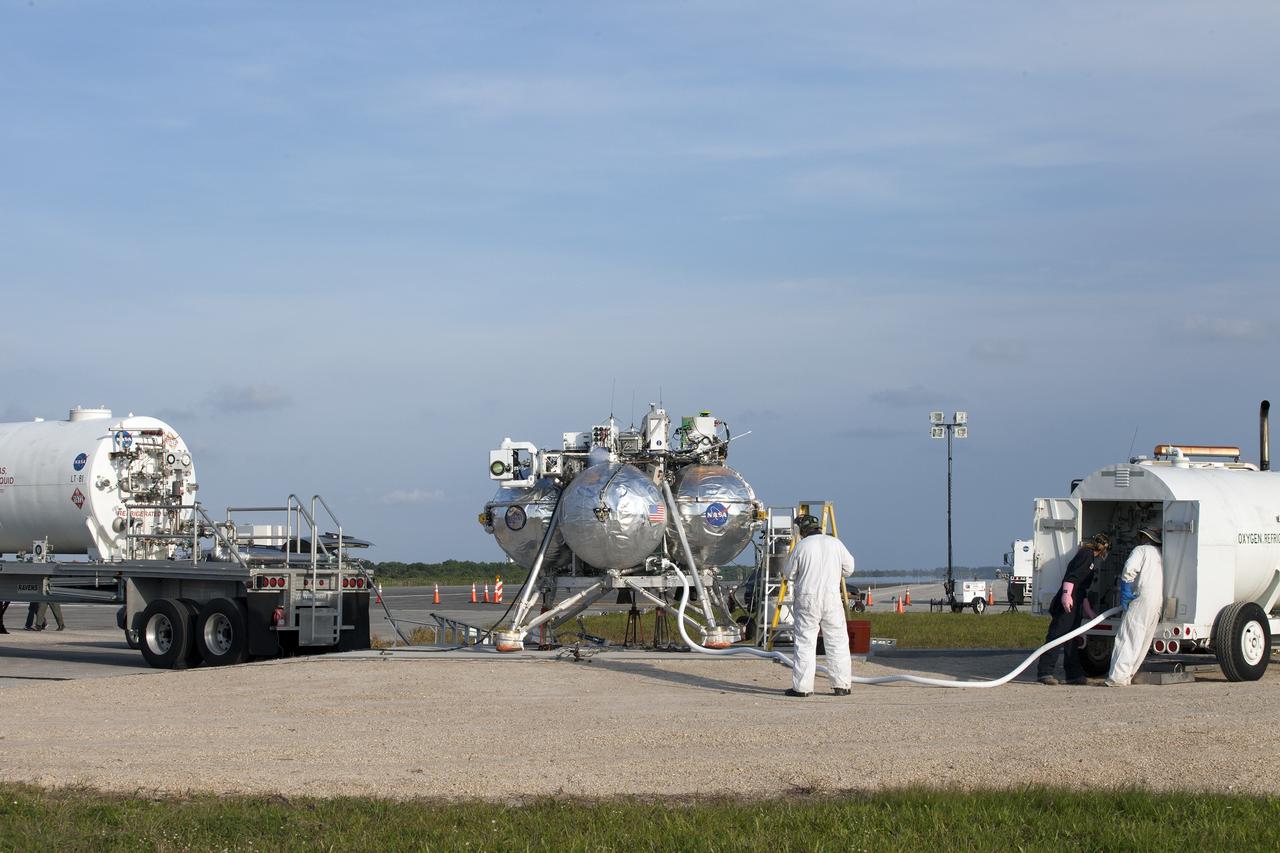
CAPE CANAVERAL, Fla. -- Preparations are underway for the first free-flight test of NASA's Project Morpheus prototype lander at night from a launch pad at the north end…
Inspect NASA record
CAPE CANAVERAL, Fla. -- Preparations are underway for the first free-flight test of NASA's Project Morpheus prototype lander at night from a launch pad at the north end of the Shuttle Landing Facility at NASA’s Kennedy Space Center in Florida. The 98-second test began at 10:02 p.m. EDT with the Morpheus lander launching from the ground over a flame trench and ascending more than 800 feet. The vehicle, with its autonomous landing and hazard avoidance technology, or ALHAT sensors, surveyed the hazard field to determine safe landing sites. Morpheus then flew forward and downward covering approximately 1,300 feet while performing a 78-foot divert to simulate a hazard avoidance maneuver. The lander then descended and landed on a dedicated pad inside the test field. Project Morpheus tests NASA’s ALHAT and an engine that runs on liquid oxygen and methane, which are green propellants. These new capabilities could be used in future efforts to deliver cargo to planetary surfaces. The landing facility provides the lander with the kind of field necessary for realistic testing, complete with rocks, craters and hazards to avoid. Morpheus’ ALHAT payload allows it to navigate to clear landing sites amidst rocks, craters and other hazards during its descent. Project Morpheus is being managed under the Advanced Exploration Systems, or AES, Division in NASA’s Human Exploration and Operations Mission Directorate. The efforts in AES pioneer new approaches for rapidly developing prototype systems, demonstrating key capabilities and validating operational concepts for future human missions beyond Earth orbit. For more information on Project Morpheus, visit http://morpheuslander.jsc.nasa.gov/. Photo credit: NASA/Kim Shiflett
- Record ID
- KSC-2014-2709
- NASA center
- KSC
- Date
- 2014-05-28
- Keywords
- SLF, ALHAT, launch pad, free flight test
KSC · 2014-03-11 · KSC-2014-1696
KSC-2014-1696
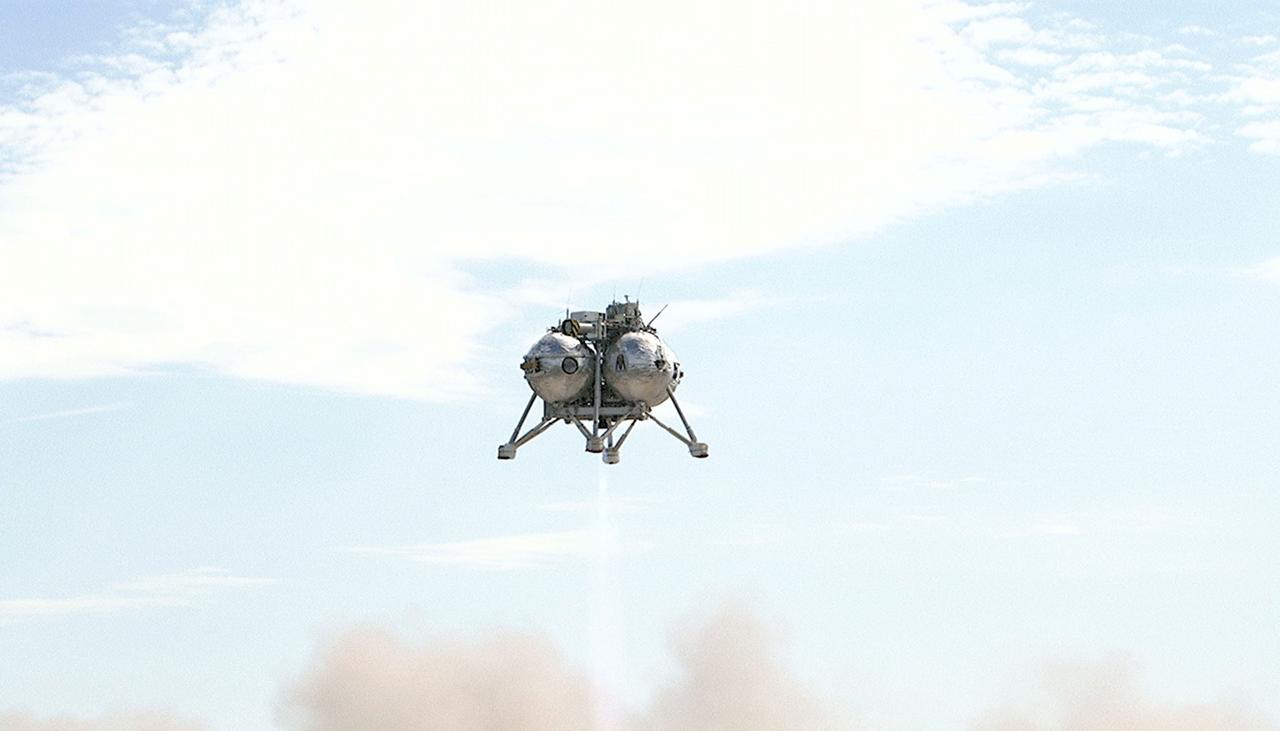
CAPE CANAVERAL, Fla. - The Project Morpheus prototype lander soars high on its seventh free flight test at the north end of the Shuttle Landing Facility at NASA’s…
Inspect NASA record
CAPE CANAVERAL, Fla. - The Project Morpheus prototype lander soars high on its seventh free flight test at the north end of the Shuttle Landing Facility at NASA’s Kennedy Space Center in Florida. The 83-second test began at 3:41 p.m. EDT with the Morpheus lander launching from the ground over a flame trench and ascending to 580 feet, its highest to date. Morpheus then flew its fastest downrange trek at 30 mph, travelling farther than before, 837 feet. The lander performed a 42-foot divert to emulate a hazard avoidance maneuver before descending and touching down on Landing Site 2, at the northern landing pad inside the automated landing and hazard avoidance technology ALHAT hazard field. Morpheus landed within one foot of its intended target. Project Morpheus tests NASA’s ALHAT and an engine that runs on liquid oxygen and methane, or green propellants, into a fully-operational lander that could deliver cargo to other planetary surfaces. The landing facility provides the lander with the kind of field necessary for realistic testing, complete with rocks, craters and hazards to avoid. Morpheus’ ALHAT payload allows it to navigate to clear landing sites amidst rocks, craters and other hazards during its descent. Project Morpheus is being managed under the Advanced Exploration Systems, or AES, Division in NASA’s Human Exploration and Operations Mission Directorate. The efforts in AES pioneer new approaches for rapidly developing prototype systems, demonstrating key capabilities and validating operational concepts for future human missions beyond Earth orbit. For more information on Project Morpheus, visit http://morpheuslander.jsc.nasa.gov/. Photo credit: NASA/Mike Chambers
- Record ID
- KSC-2014-1696
- NASA center
- KSC
- Date
- 2014-03-11
- Keywords
- SLF, ALHAT, free flight test
KSC · 2014-03-27 · KSC-2014-1880
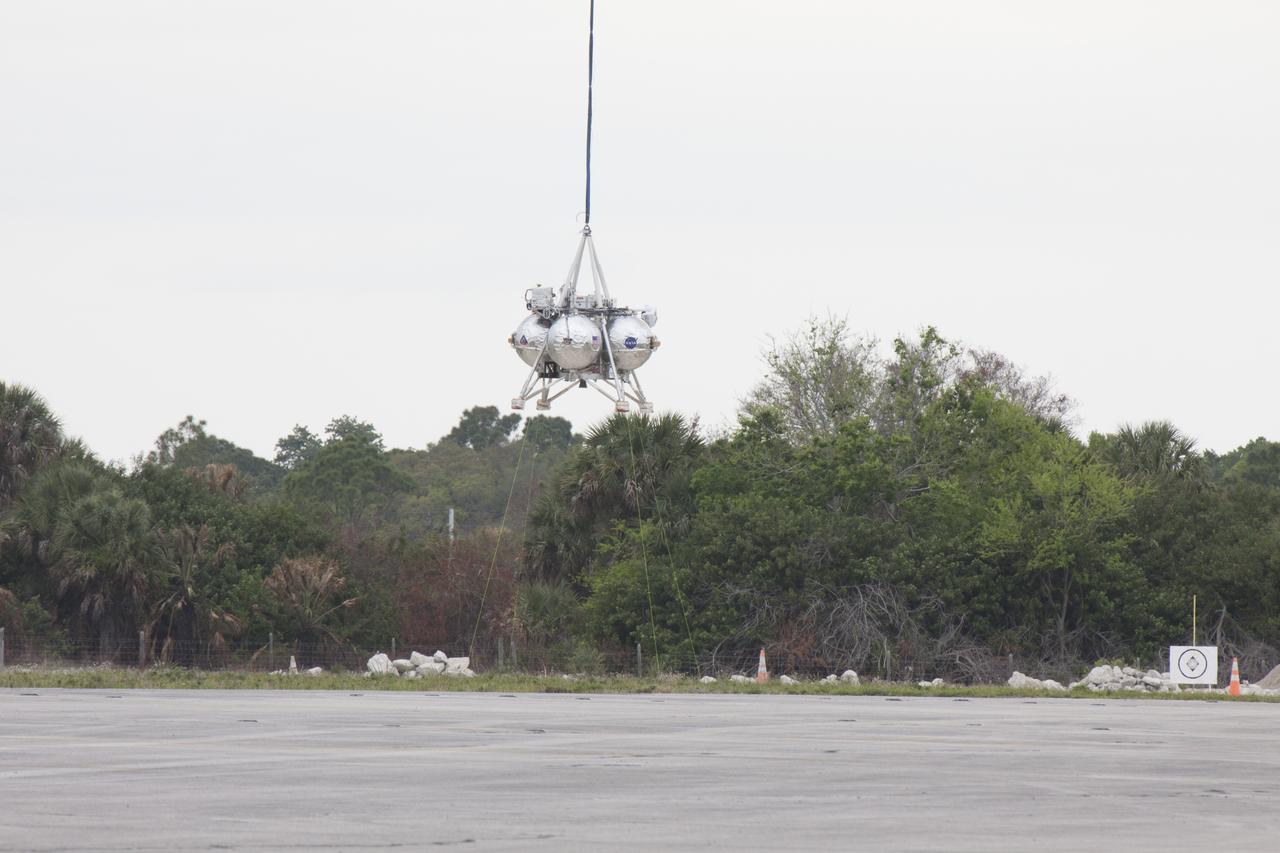
Morpheus Campaign 2A Tether Test
CAPE CANAVERAL, Fla. – NASA's Project Morpheus prototype lander is lifted by crane during a tethered test near a new launch site at the north end of the…
Inspect NASA record
CAPE CANAVERAL, Fla. – NASA's Project Morpheus prototype lander is lifted by crane during a tethered test near a new launch site at the north end of the Shuttle Landing Facility at NASA's Kennedy Space Center in Florida. The launch pad was moved to a different location at the landing facility to support the next phase of flight testing. The test was performed to verify the lander's recently installed autonomous landing and hazard avoidance technology, or ALHAT, sensors and integration systems. During the test, Morpheus was lifted by crane to 20 feet for an engine firing of about 74 seconds and then lowered to the ground. With the successful completion of the test, the Morpheus project team will begin preparing for the first free flight test with ALHAT. Morpheus tests NASA’s ALHAT, and an engine that runs on liquid oxygen and methane, or green propellants, into a fully-operational lander that could deliver cargo to other planetary surfaces. The landing facility provides the lander with the kind of field necessary for realistic testing, complete with rocks, craters and hazards to avoid. Morpheus’ ALHAT payload allows it to navigate to clear landing sites amidst rocks, craters and other hazards during its descent. Project Morpheus is being managed under the Advanced Exploration Systems, or AES, Division in NASA’s Human Exploration and Operations Mission Directorate. The efforts in AES pioneer new approaches for rapidly developing prototype systems, demonstrating key capabilities and validating operational concepts for future human missions beyond Earth orbit. For more information on Project Morpheus, visit http://morpheuslander.jsc.nasa.gov/. Photo credit: NASA/Glenn Benson
- Record ID
- KSC-2014-1880
- NASA center
- KSC
- Date
- 2014-03-27
- Credit
- NASA/KSC - Glenn Benson (IMCS)
- Keywords
- KSC-2014-1880, Project Morpheus, ALHAT