
Update Site (from NASA)
Explore NASA’s Image and Video Library.
Suggest one object per day for the Interstellar Minds collection. We review each suggestion before adding it.
Sign in to suggest a Marvel.
Find a NASA image ID. Open a NASA record and copy its ID from the end of the details URL.
NASA image records
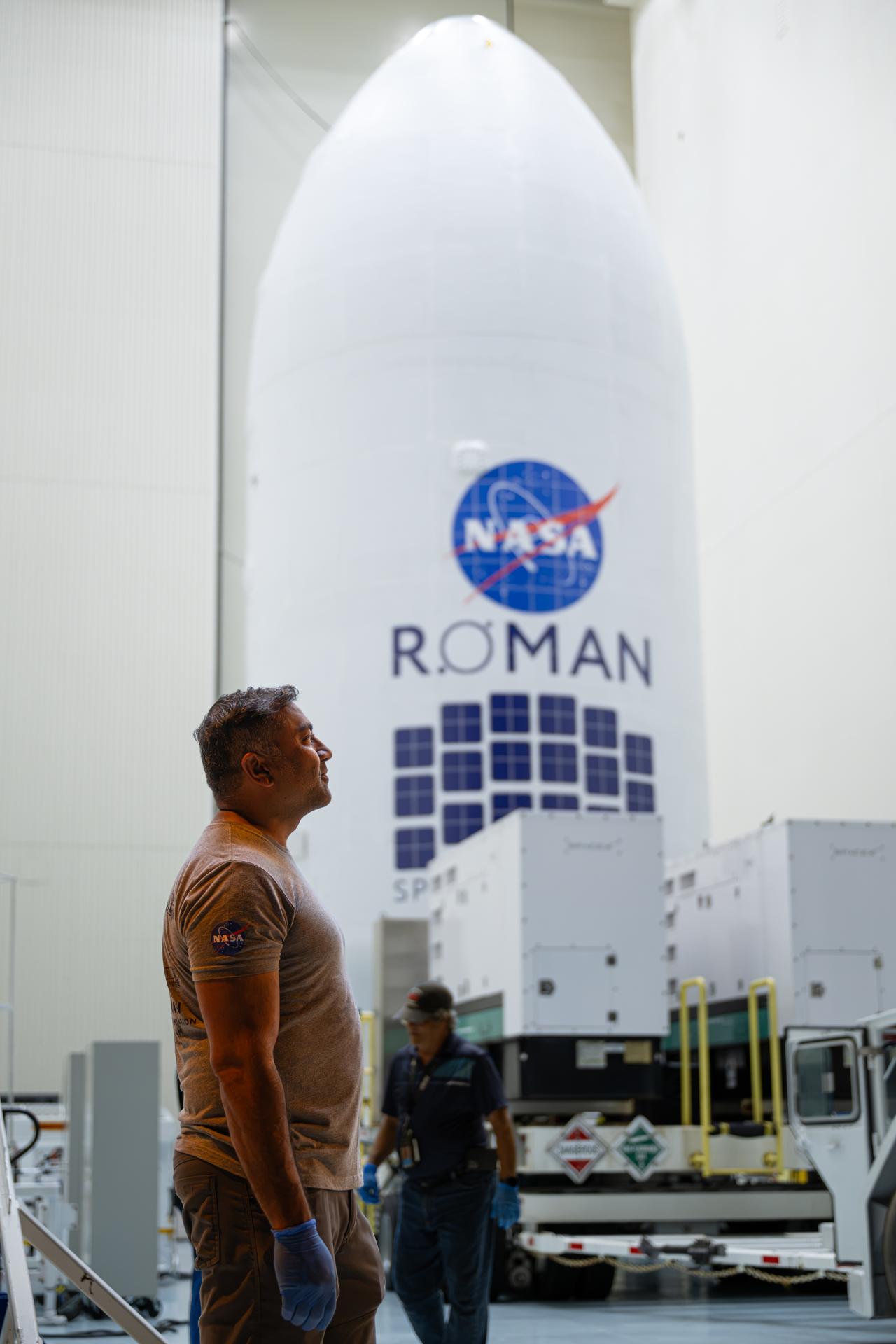
KSC · 2026-08-24 · KSC-20260824-PH-SER01_0002
Roman Space Telescope Transport from PHSF to LC 39A
Teams inside the Payload Hazardous Servicing Facility at NASA’s Kennedy Space Center in Florida encapsulate the agency’s Nancy Grace Roman Space Telescope within the payload fairing on Friday,…
Inspect NASA record
Teams inside the Payload Hazardous Servicing Facility at NASA’s Kennedy Space Center in Florida encapsulate the agency’s Nancy Grace Roman Space Telescope within the payload fairing on Friday, Aug. 21, 2026, ahead of mating to a SpaceX Falcon Heavy rocket. Encapsulation shields the spacecraft during rollout, ascent, and the early phases of flight. Roman will investigate dark energy and dark matter, conduct a statistical census of planetary systems, and enable a broad range of additional astrophysics research. Liftoff from Launch Complex 39A at Kennedy is targeted for no earlier than Sunday, Aug. 30, 2026.
- Record ID
- KSC-20260824-PH-SER01_0002
- NASA center
- KSC
- Date
- 2026-08-24
- Credit
- Sydney Rohde (Rocz)
- Keywords
- Nancy Grace Roman Space Telescope, Roman, RST, Payload Hazardous Servicing Facility, PHSF, KSC, Kennedy Space Center, LSP, Launch Services Program, preparations, GSFC, SpaceX
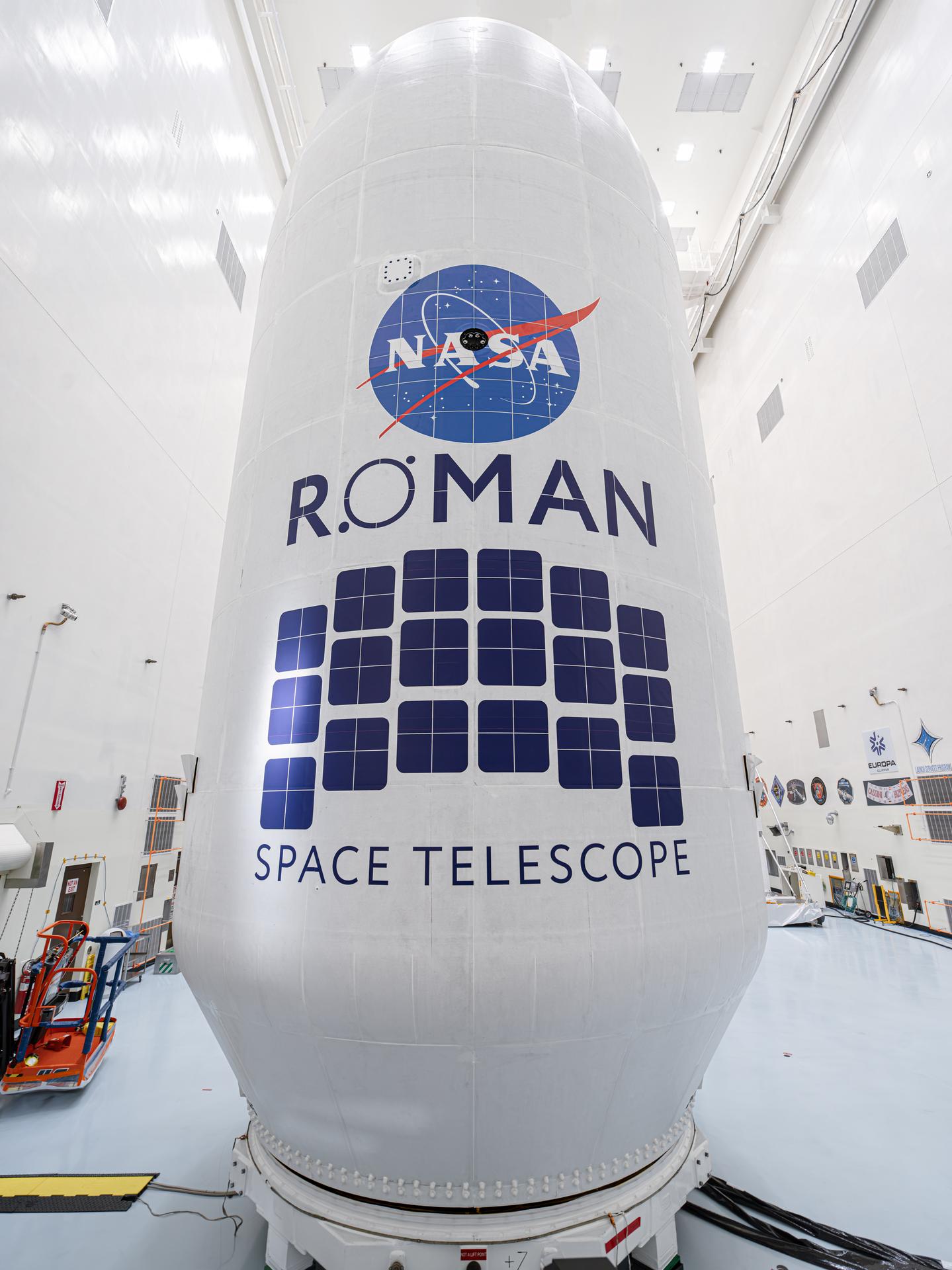
KSC · 2026-08-24 · KSC-20260824-PH-SER01_0001
Roman Space Telescope Transport from PHSF to LC 39A
Teams inside the Payload Hazardous Servicing Facility at NASA’s Kennedy Space Center in Florida encapsulate the agency’s Nancy Grace Roman Space Telescope within the payload fairing on Friday,…
Inspect NASA record
Teams inside the Payload Hazardous Servicing Facility at NASA’s Kennedy Space Center in Florida encapsulate the agency’s Nancy Grace Roman Space Telescope within the payload fairing on Friday, Aug. 21, 2026, ahead of mating to a SpaceX Falcon Heavy rocket. Encapsulation shields the spacecraft during rollout, ascent, and the early phases of flight. Roman will investigate dark energy and dark matter, conduct a statistical census of planetary systems, and enable a broad range of additional astrophysics research. Liftoff from Launch Complex 39A at Kennedy is targeted for no earlier than Sunday, Aug. 30, 2026.
- Record ID
- KSC-20260824-PH-SER01_0001
- NASA center
- KSC
- Date
- 2026-08-24
- Credit
- Sydney Rohde (Rocz)
- Keywords
- Nancy Grace Roman Space Telescope, Roman, RST, Payload Hazardous Servicing Facility, PHSF, KSC, Kennedy Space Center, LSP, Launch Services Program, preparations, GSFC, SpaceX
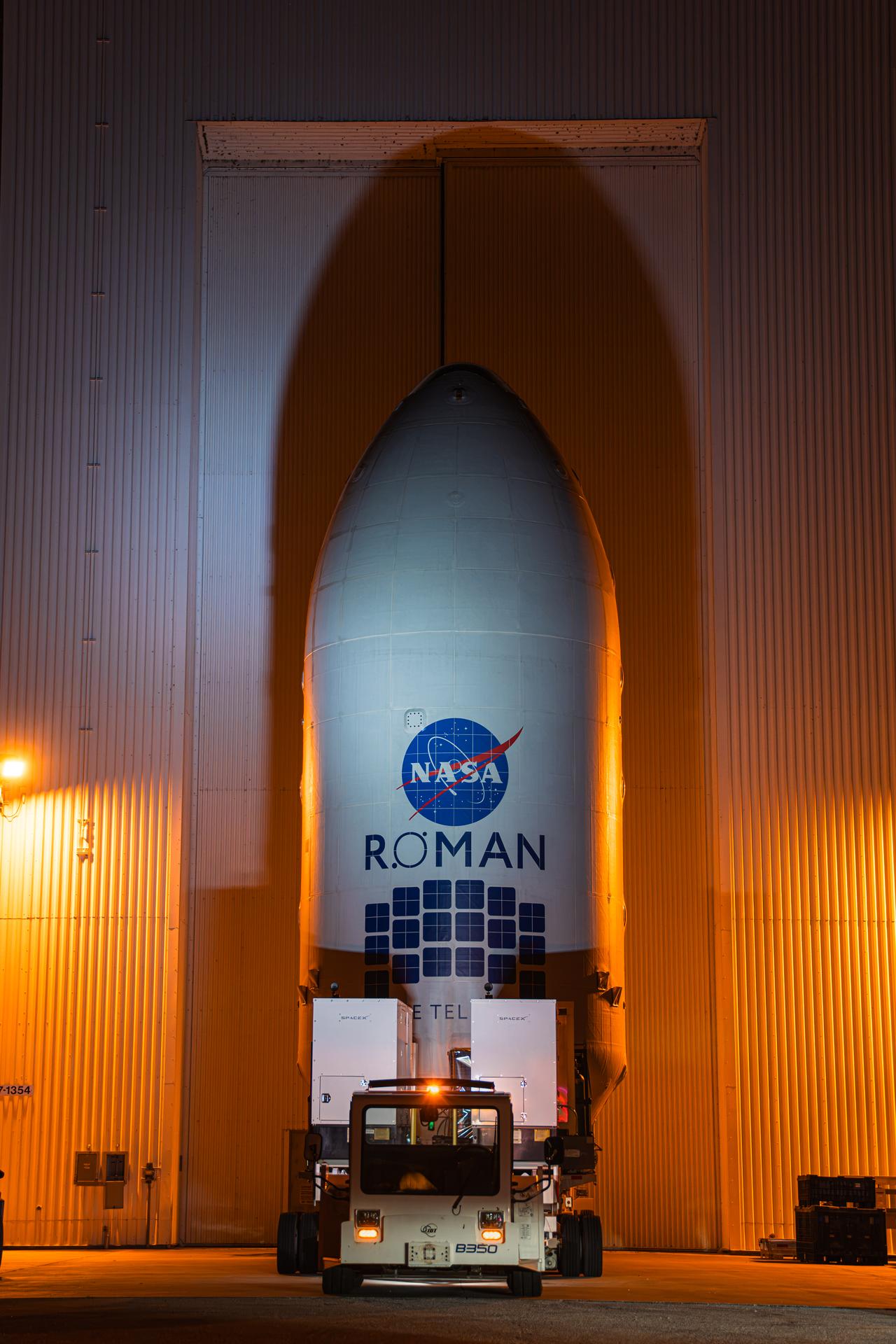
KSC · 2026-08-24 · KSC-20260824-PH-SER01_0006
Roman Space Telescope Transport from PHSF to LC 39A
Teams inside the Payload Hazardous Servicing Facility at NASA’s Kennedy Space Center in Florida encapsulate the agency’s Nancy Grace Roman Space Telescope within the payload fairing on Friday,…
Inspect NASA record
Teams inside the Payload Hazardous Servicing Facility at NASA’s Kennedy Space Center in Florida encapsulate the agency’s Nancy Grace Roman Space Telescope within the payload fairing on Friday, Aug. 21, 2026, ahead of mating to a SpaceX Falcon Heavy rocket. Encapsulation shields the spacecraft during rollout, ascent, and the early phases of flight. Roman will investigate dark energy and dark matter, conduct a statistical census of planetary systems, and enable a broad range of additional astrophysics research. Liftoff from Launch Complex 39A at Kennedy is targeted for no earlier than Sunday, Aug. 30, 2026.
- Record ID
- KSC-20260824-PH-SER01_0006
- NASA center
- KSC
- Date
- 2026-08-24
- Credit
- Sydney Rohde (Rocz)
- Keywords
- Nancy Grace Roman Space Telescope, Roman, RST, Payload Hazardous Servicing Facility, PHSF, KSC, Kennedy Space Center, LSP, Launch Services Program, preparations, GSFC, SpaceX

JPL · 2006-01-19 · PIA03678
The Mark of a Dying Star
Six hundred and fifty light-years away in the constellation Aquarius, a dead star about the size of Earth, is refusing to fade away peacefully. NASA Hubble and Spitzer…
Inspect NASA record
Six hundred and fifty light-years away in the constellation Aquarius, a dead star about the size of Earth, is refusing to fade away peacefully. NASA Hubble and Spitzer Space Telescopes have captured the complex structure of the Helix nebula.
- Record ID
- PIA03678
- NASA center
- JPL
- Date
- 2006-01-19
- Credit
- NASA/JPL-Caltech/ESA
- Keywords
- Helix Nebula, Hubble Space Telescope,Spitzer Space Telescope
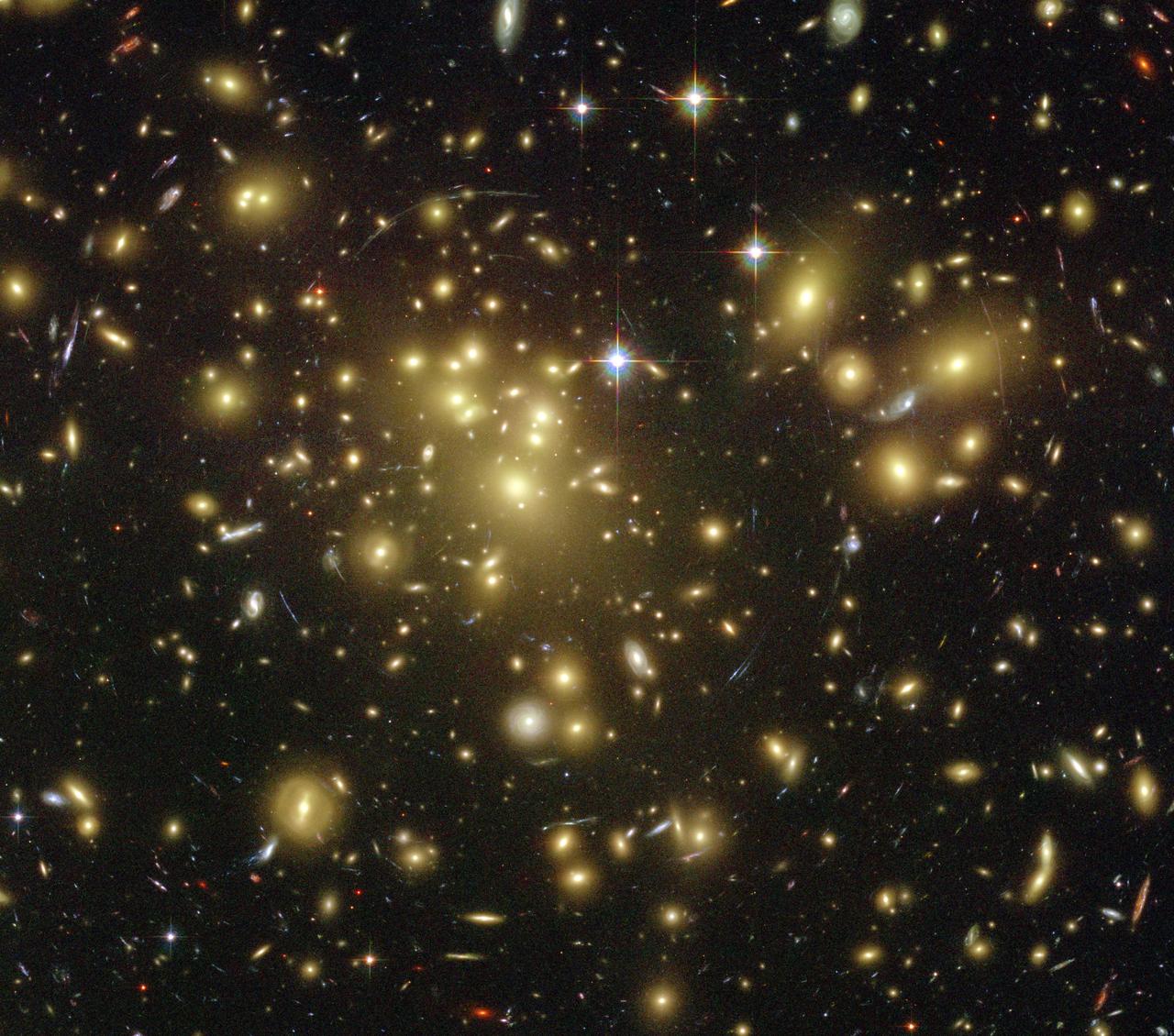
JPL · 2008-02-12 · PIA10237
Astronomers Uncover One of the Youngest and Brightest Galaxies in the Early Universe
A massive cluster of yellowish galaxies is seemingly caught in a spider web of eerily distorted background galaxies in the left-hand image, taken with the Advanced Camera for…
Inspect NASA record
A massive cluster of yellowish galaxies is seemingly caught in a spider web of eerily distorted background galaxies in the left-hand image, taken with the Advanced Camera for Surveys ACS aboard NASA Hubble Space Telescope.
- Record ID
- PIA10237
- NASA center
- JPL
- Date
- 2008-02-12
- Credit
- NASA/ESA/JPL-Caltech/STScI
- Keywords
- Abell 1689, Hubble Space Telescope,Spitzer Space Telescope
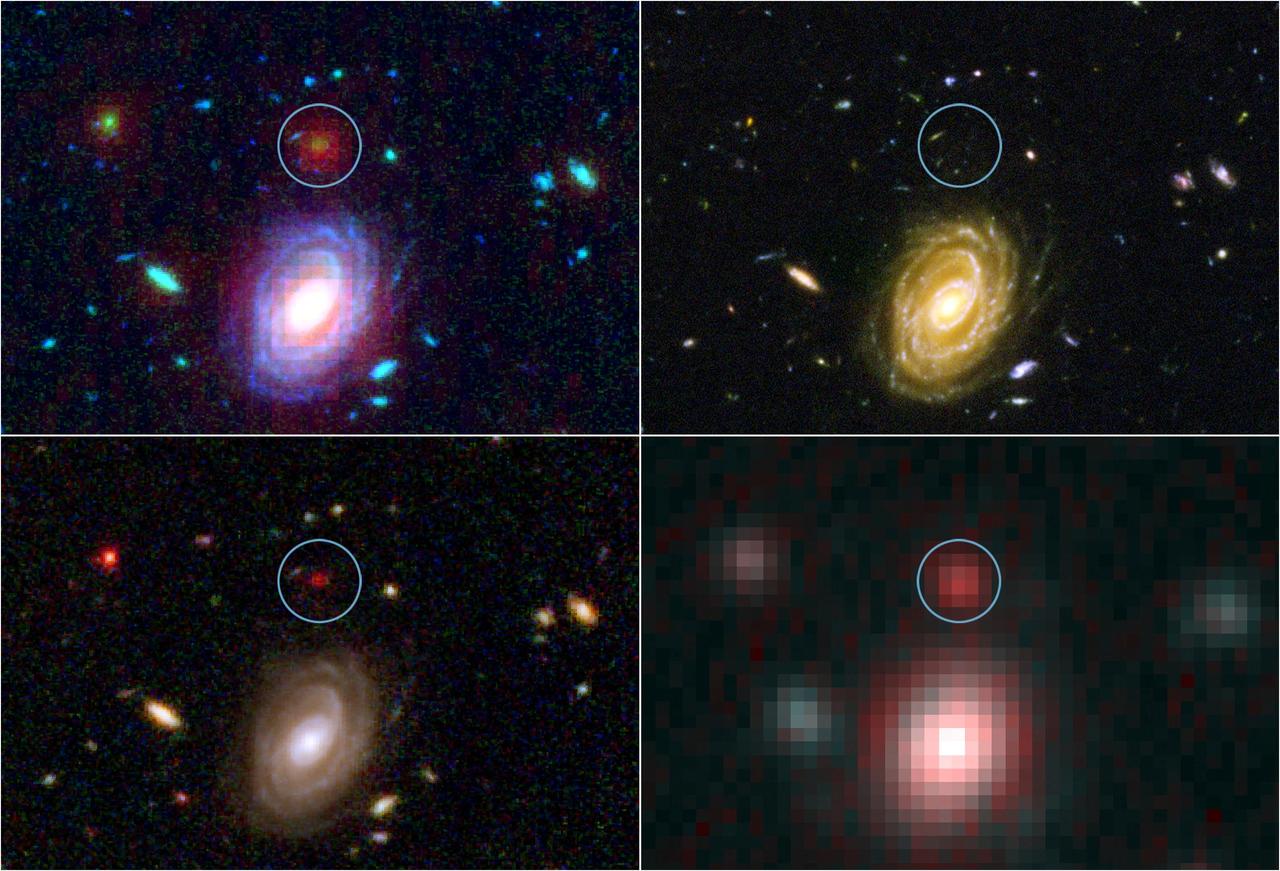
JPL · 2005-09-27 · PIA03542
Big Galaxy in Baby Universe
This image demonstrates how data from two of NASA Great Observatories, the Spitzer and Hubble Space Telescopes, are used to identify one of the most distant galaxies ever…
Inspect NASA record
This image demonstrates how data from two of NASA Great Observatories, the Spitzer and Hubble Space Telescopes, are used to identify one of the most distant galaxies ever seen. This galaxy is named named HUDF-JD2.
- Record ID
- PIA03542
- NASA center
- JPL
- Date
- 2005-09-27
- Credit
- NASA/JPL-Caltech/ESA
- Keywords
- HUDF-JD2, Hubble Space Telescope,Spitzer Space Telescope

HQ · 2026-08-30 · NHQ202608300047
Nancy Grace Roman Space Telescope Launch
Penni Baez, launch operations manager for NASA’s Launch Services Program, monitors the countdown inside SpaceX’s Hangar X for the launch of a SpaceX Falcon Heavy rocket with NASA’S…
Inspect NASA record
Penni Baez, launch operations manager for NASA’s Launch Services Program, monitors the countdown inside SpaceX’s Hangar X for the launch of a SpaceX Falcon Heavy rocket with NASA’S Nancy Grace Roman Space Telescope from Launch Complex 39A at NASA’s Kennedy Space Center, Sunday, Aug. 30, 2026, in Florida. Roman will investigate dark energy and dark matter, conduct a statistical census of planetary systems, and enable a broad range of additional astrophysics research. Launch occurred at 7:26 a.m. EDT. Photo Credit (NASA/Joel Kowsky)
- Record ID
- NHQ202608300047
- NASA center
- HQ
- Date
- 2026-08-30
- Credit
- NASA/Joel Kowsky
- Keywords
- Falcon Heavy, Florida, Hangar X, Kennedy Space Center, Launch Complex 39A, Nancy Grace Roman Space Telescope, Penni Baez, SpaceX
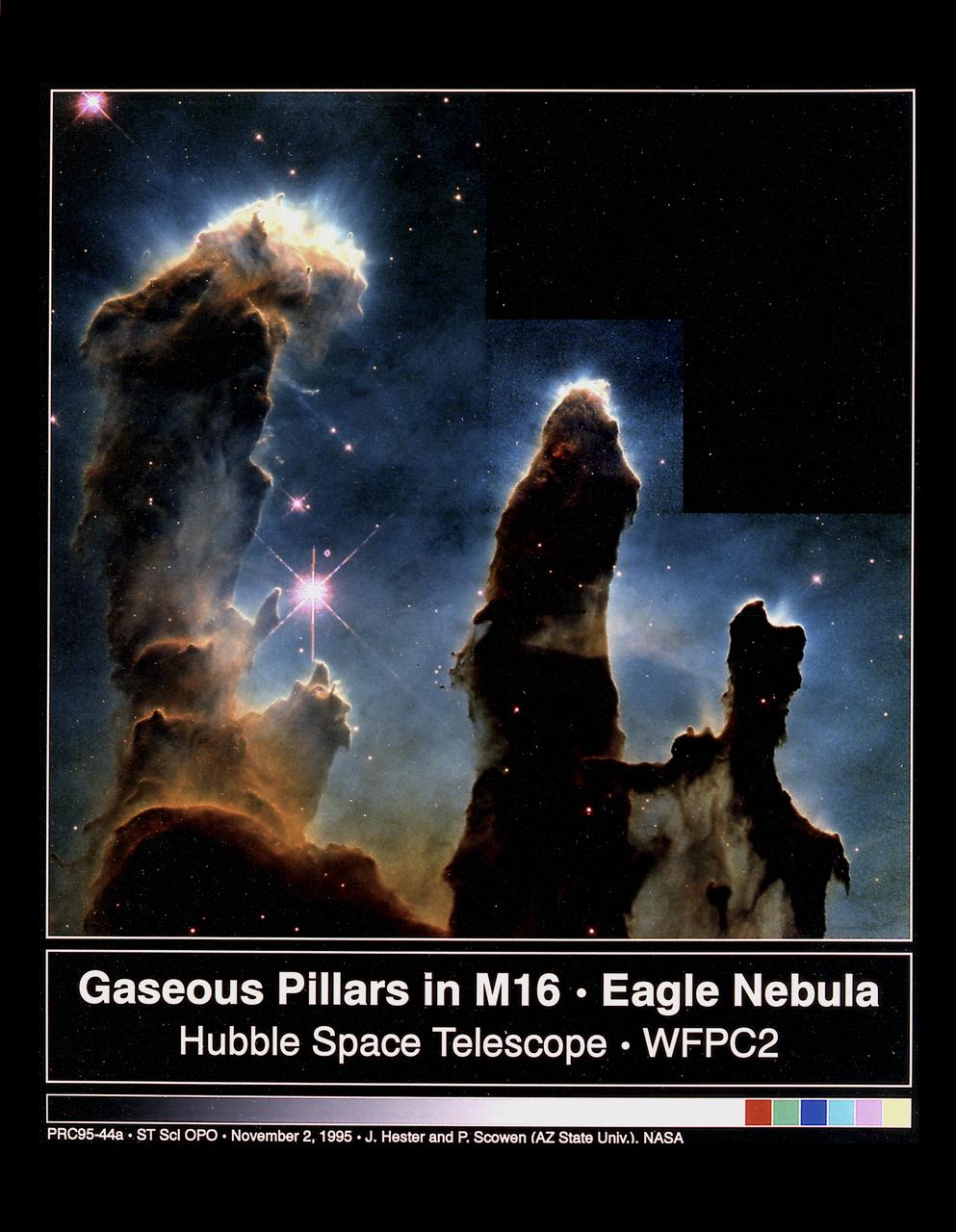
MSFC · 1995-01-01 · 9514774
History of Hubble Space Telescope (HST)
These eerie, dark, pillar-like structures are actually columns of cool interstellar hydrogen gas and dust that are also incubators for new stars. The pillars protrude from the interior…
Inspect NASA record
These eerie, dark, pillar-like structures are actually columns of cool interstellar hydrogen gas and dust that are also incubators for new stars. The pillars protrude from the interior wall of a dark molecular cloud like stalagmites from the floor of a cavern. They are part of the Eagle Nebula (also called M16), a nearby star-forming region 7,000 light-years away, in the constellation Serpens. The ultraviolet light from hot, massive, newborn stars is responsible for illuminating the convoluted surfaces of the columns and the ghostly streamers of gas boiling away from their surfaces, producing the dramatic visual effects that highlight the three-dimensional nature of the clouds. This image was taken on April 1, 1995 with the Hubble Space Telescope Wide Field Planetary Camera 2. The color image is constructed from three separate images taken in the light of emission from different types of atoms. Red shows emissions from singly-ionized sulfur atoms, green shows emissions from hydrogen, and blue shows light emitted by doubly-ionized oxygen atoms.
- Record ID
- 9514774
- NASA center
- MSFC
- Date
- 1995-01-01
- Keywords
- Hubble Space Telescope, HST, Eagle Nebula, M16, Wide Field Planetary Camera 2

JPL · 2017-04-26 · PIA21430
Iceball Planet Artist's Concept
This artist's concept shows OGLE-2016-BLG-1195Lb, a planet discovered through a technique called microlensing. The planet was reported in a 2017 study in the Astrophysical Journal Letters. Study authors…
Inspect NASA record
This artist's concept shows OGLE-2016-BLG-1195Lb, a planet discovered through a technique called microlensing. The planet was reported in a 2017 study in the Astrophysical Journal Letters. Study authors used the Korea Microlensing Telescope Network (KMTNet), operated by the Korea Astronomy and Space Science Institute, and NASA's Spitzer Space Telescope, to track the microlensing event and find the planet. Although OGLE-2016-BLG-1195Lb is about the same mass as Earth, and the same distance from its host star as our planet is from our sun, the similarities may end there. This planet is nearly 13,000 light-years away and orbits a star so small, scientists aren't sure if it's a star at all. https://photojournal.jpl.nasa.gov/catalog/PIA21430
- Record ID
- PIA21430
- NASA center
- JPL
- Date
- 2017-04-26
- Credit
- NASA/JPL-Caltech
- Keywords
- Spitzer Space Telescope, microlensing
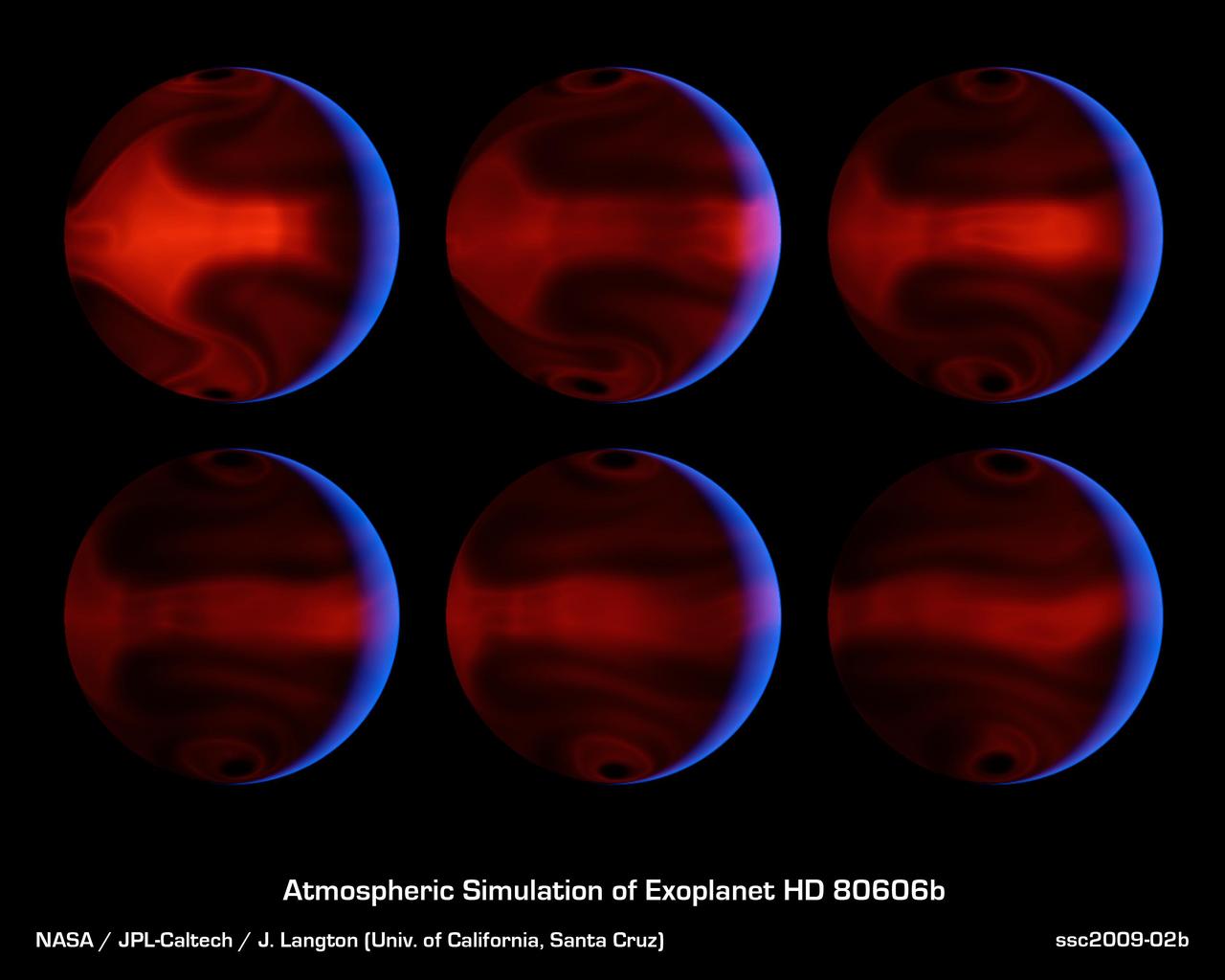
JPL · 2009-01-28 · PIA11391
Severe Exoplanetary Storm
These computer-generated images from NASA Spitzer Space Telescope chart the development of severe weather patterns on the highly eccentric exoplanet HD 80606b during the days after its closest…
Inspect NASA record
These computer-generated images from NASA Spitzer Space Telescope chart the development of severe weather patterns on the highly eccentric exoplanet HD 80606b during the days after its closest approach to its parent star.
- Record ID
- PIA11391
- NASA center
- JPL
- Date
- 2009-01-28
- Credit
- NASA/JPL-Caltech/UCSC
- Keywords
- Spitzer Space Telescope
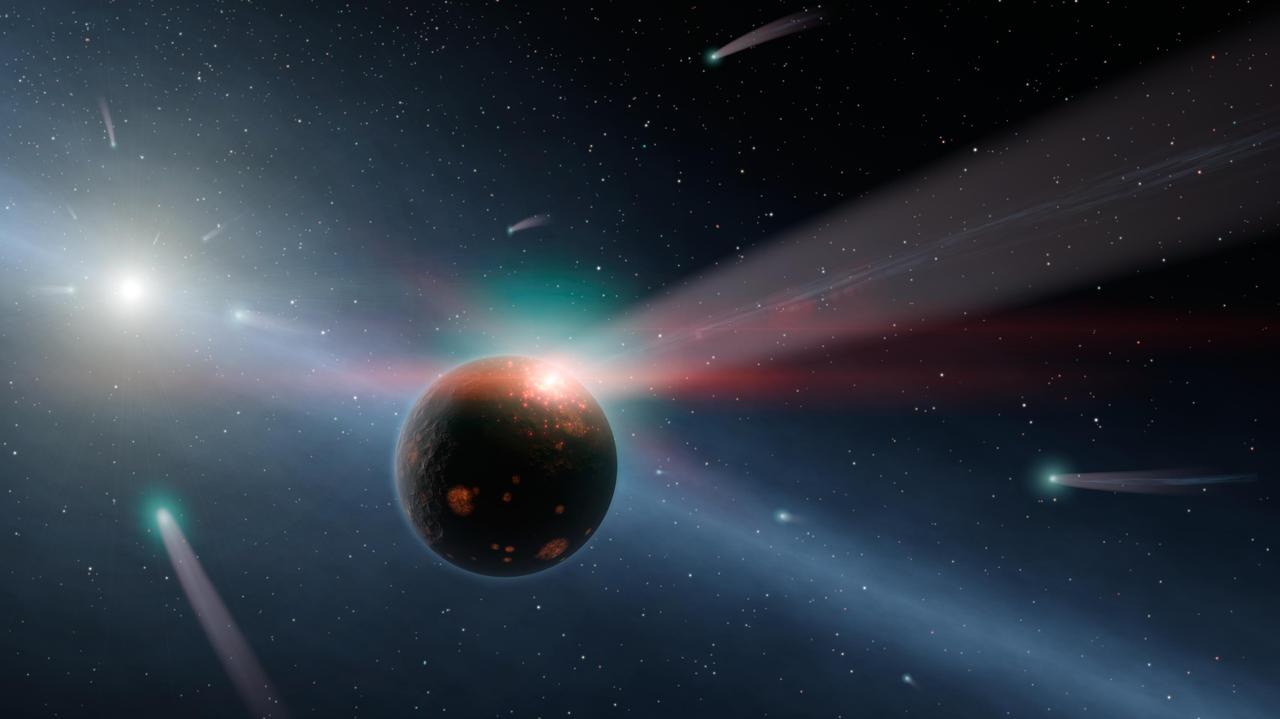
JPL · 2011-10-19 · PIA14739
It Raining Comets Artist Concept
This artist conception illustrates a storm of comets around a star near our own, called Eta Corvi. Evidence for this barrage comes from NASA Spitzer Space Telescope infrared…
Inspect NASA record
This artist conception illustrates a storm of comets around a star near our own, called Eta Corvi. Evidence for this barrage comes from NASA Spitzer Space Telescope infrared detectors.
- Record ID
- PIA14739
- NASA center
- JPL
- Date
- 2011-10-19
- Credit
- NASA/JPL-Caltech
- Keywords
- Spitzer Space Telescope
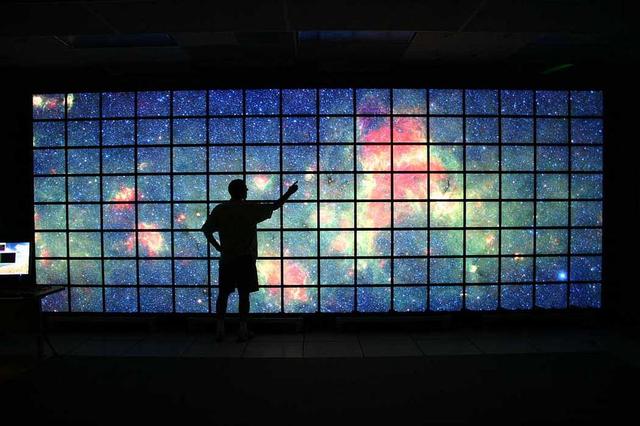
JPL · 2013-10-17 · PIA17446
Big Data on the Big Screen
The center of the Milky Way galaxy imaged by NASA Spitzer Space Telescope is displayed on a quarter-of-a-billion-pixel, high-definition 23-foot-wide 7-meter LCD science visualization screen at NASA Ames…
Inspect NASA record
The center of the Milky Way galaxy imaged by NASA Spitzer Space Telescope is displayed on a quarter-of-a-billion-pixel, high-definition 23-foot-wide 7-meter LCD science visualization screen at NASA Ames Research Center.
- Record ID
- PIA17446
- NASA center
- JPL
- Date
- 2013-10-17
- Credit
- NASA/Ames/JPL-Caltech
- Keywords
- Spitzer Space Telescope