
Add from NASA
Explore NASA’s Image and Video Library.
Suggest one object per day for the Interstellar Minds collection. We review each suggestion before adding it.
Sign in to suggest a Marvel.
NASA image records

SSC · 2009-10-09 · SSC-20091009-S01945H
Stennis engineer part of LCROSS moon mission
Karma Snyder, a project manager at NASA's John C. Stennis Space Center, was a senior design engineer on the RL10 liquid rocket engine that powered the Centaur, the…
Inspect NASA record
Karma Snyder, a project manager at NASA's John C. Stennis Space Center, was a senior design engineer on the RL10 liquid rocket engine that powered the Centaur, the upper stage of the rocket used in NASA's Lunar CRater Observation and Sensing Satellite (LCROSS) mission in October 2009. Part of the LCROSS mission was to search for water on the moon by striking the lunar surface with a rocket stage, creating a plume of debris that could be analyzed for water ice and vapor. Snyder's work on the RL10 took place from 1995 to 2001 when she was a senior design engineer with Pratt & Whitney Rocketdyne. Years later, she sees the project as one of her biggest accomplishments in light of the LCROSS mission. 'It's wonderful to see it come into full service,' she said. 'As one of my co-workers said, the original dream was to get that engine to the moon, and we're finally realizing that dream.'
- Record ID
- SSC-20091009-S01945H
- NASA center
- SSC
- Date
- 2009-10-09
- Keywords
- LCROSS moon mission, Karma Snyder, Stennis engineer, Lunar Crater Observation and Sensing Satellite, moon exploration mission
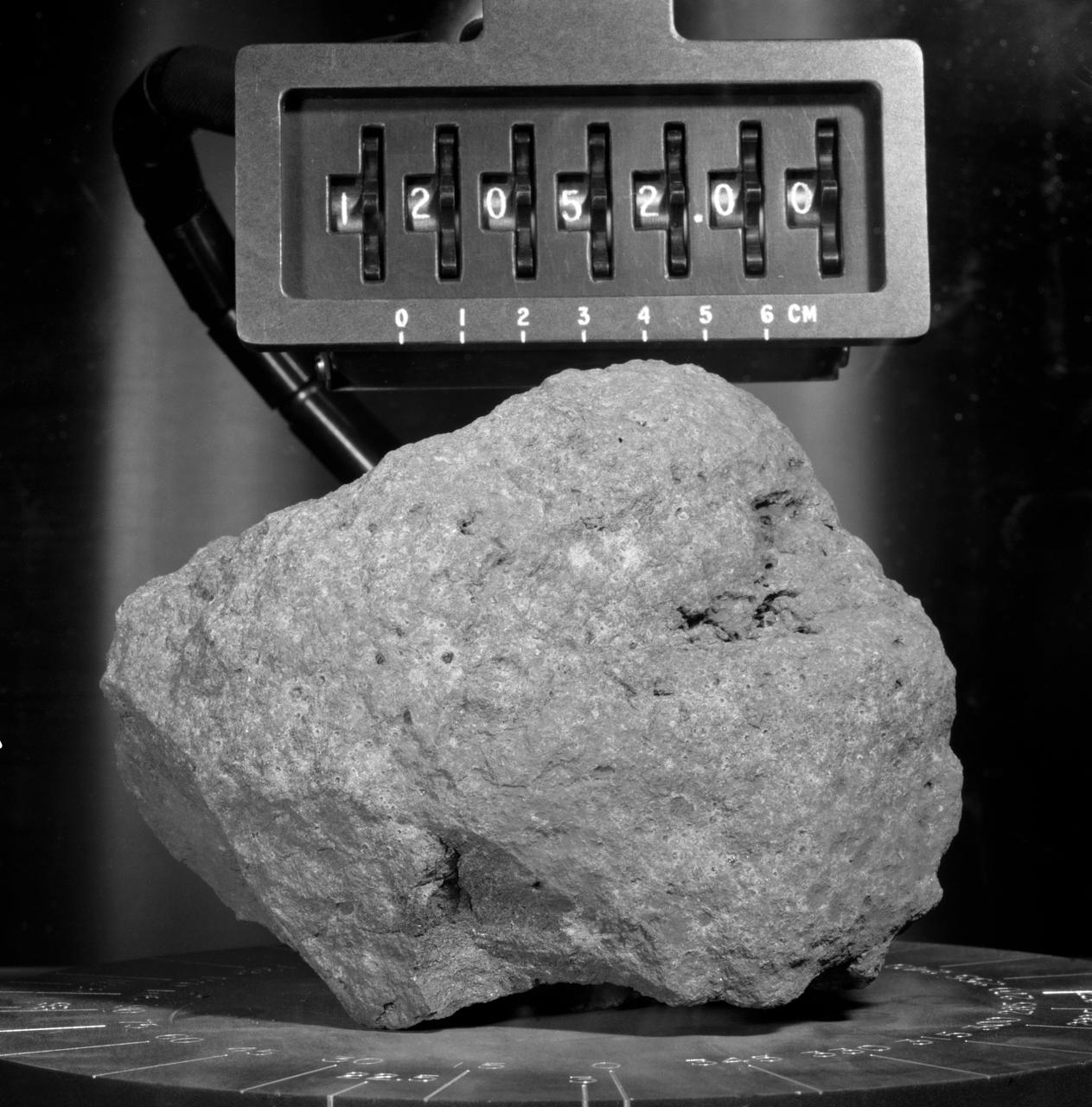
JSC · 1969-12-04 · S69-60909
Rock sample brought to earth from the Apollo 12 lunar landing mission
S69-60909 (November 1969) --- A close-up view of lunar sample 12,052 under observation in the Manned Spacecraft Center's Lunar Receiving Laboratory (LRL). Astronauts Charles Conrad Jr., and Alan…
Inspect NASA record
S69-60909 (November 1969) --- A close-up view of lunar sample 12,052 under observation in the Manned Spacecraft Center's Lunar Receiving Laboratory (LRL). Astronauts Charles Conrad Jr., and Alan L. Bean collected several rocks and samples of finer lunar matter during their Apollo 12 lunar landing mission extravehicular activity (EVA). This particular sample was picked up during the second space walk (EVA) on Nov. 20, 1969. It is a typically fine-grained crystalline rock with a concentration of holes on the left part of the exposed side. These holes are called vesicles and have been identified as gas bubbles formed during the crystallization of the rock. Several glass-lined pits can be seen on the surface of the rock.
- Record ID
- S69-60909
- NASA center
- JSC
- Date
- 1969-12-04
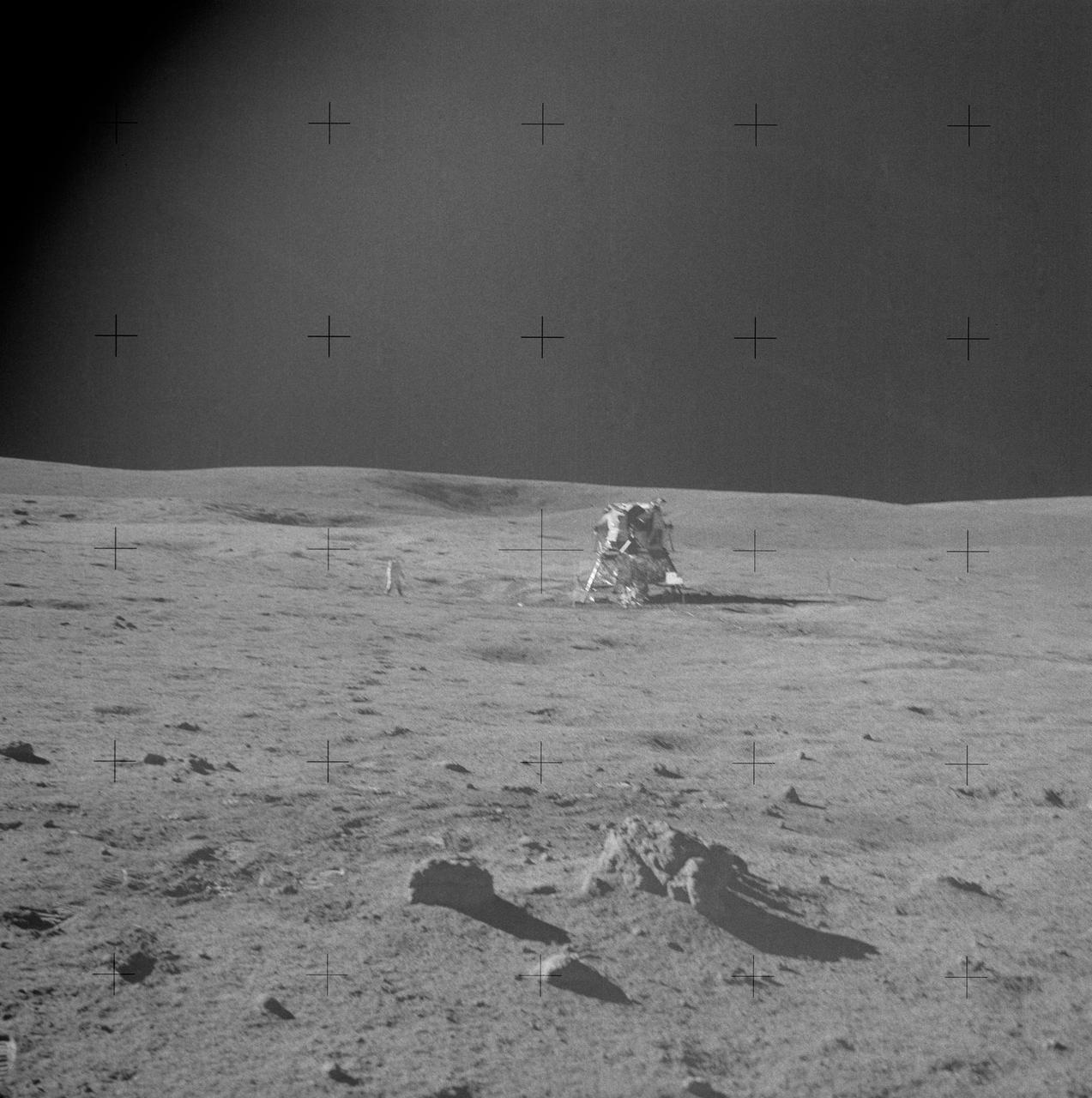
JSC · 2009-02-26 · as14-68-9487
Apollo 14 Mission image - View of the Lunar Module with Triplet and an Astronaut in the background.
AS14-68-9487 (6 Feb. 1971) --- Astronaut Edgar D. Mitchell, lunar module pilot, photographed this sweeping view showing fellow moon-explorer astronaut Alan B. Shepard Jr., mission commander, and the…
Inspect NASA record
AS14-68-9487 (6 Feb. 1971) --- Astronaut Edgar D. Mitchell, lunar module pilot, photographed this sweeping view showing fellow moon-explorer astronaut Alan B. Shepard Jr., mission commander, and the Apollo 14 Lunar Module (LM). A small cluster of rocks and a few prints made by the lunar overshoes of Mitchell are in the foreground. Mitchell was standing in the boulder field, located just north by northwest of the LM, when he took this picture during the second Apollo 14 extravehicular activity (EVA), on Feb. 6, 1971. While astronaut Stuart A. Roosa, command module pilot, remained with the Command and Service Modules (CSM) in lunar orbit, Shepard and Mitchell descended in the LM to explore the moon.
- Record ID
- as14-68-9487
- NASA center
- JSC
- Date
- 2009-02-26
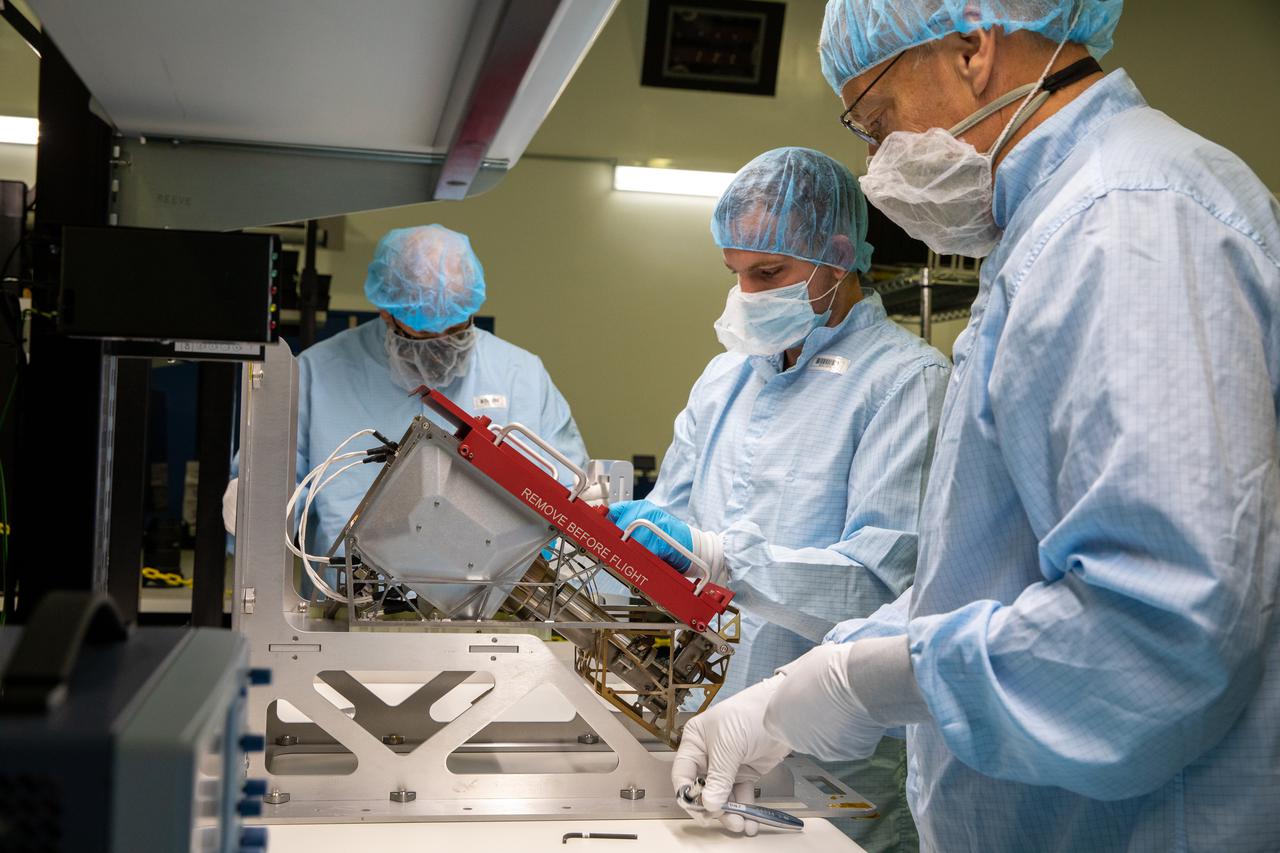
KSC · 2021-09-29 · KSC-20210929-PH-KLS01_0019
MSolo Prep for Packing and Shipping
Inside the Space Station Processing Facility at NASA’s Kennedy Space Center in Florida, members of the Mass Spectrometer observing lunar operations (MSolo) team prepare MSolo flight hardware for…
Inspect NASA record
Inside the Space Station Processing Facility at NASA’s Kennedy Space Center in Florida, members of the Mass Spectrometer observing lunar operations (MSolo) team prepare MSolo flight hardware for shipment in preparation for launch in 2022. MSolo is a commercial off-the-shelf mass spectrometer modified to work in space and it will help analyze the chemical makeup of landing sites on the Moon, as well as study water on the lunar surface. MSolo is part of four of the agency’s Commercial Lunar Payload Delivery Service missions where under the Artemis program, commercial deliveries beginning in 2022 will perform science experiments, test technologies and demonstrate capabilities to help NASA explore the Moon and prepare for human missions.
- Record ID
- KSC-20210929-PH-KLS01_0019
- NASA center
- KSC
- Date
- 2021-09-29
- Credit
- NASA/Kim Shiflett
- Keywords
- Astrobotic, CLPS, Commercial Lunar Payload Services, KSC, Kennedy Space Center, MSOLO, Mass Spectrometer Observing Lunar Operations, Moon, NASA, Peregrine Mission One, SSPF, lunar
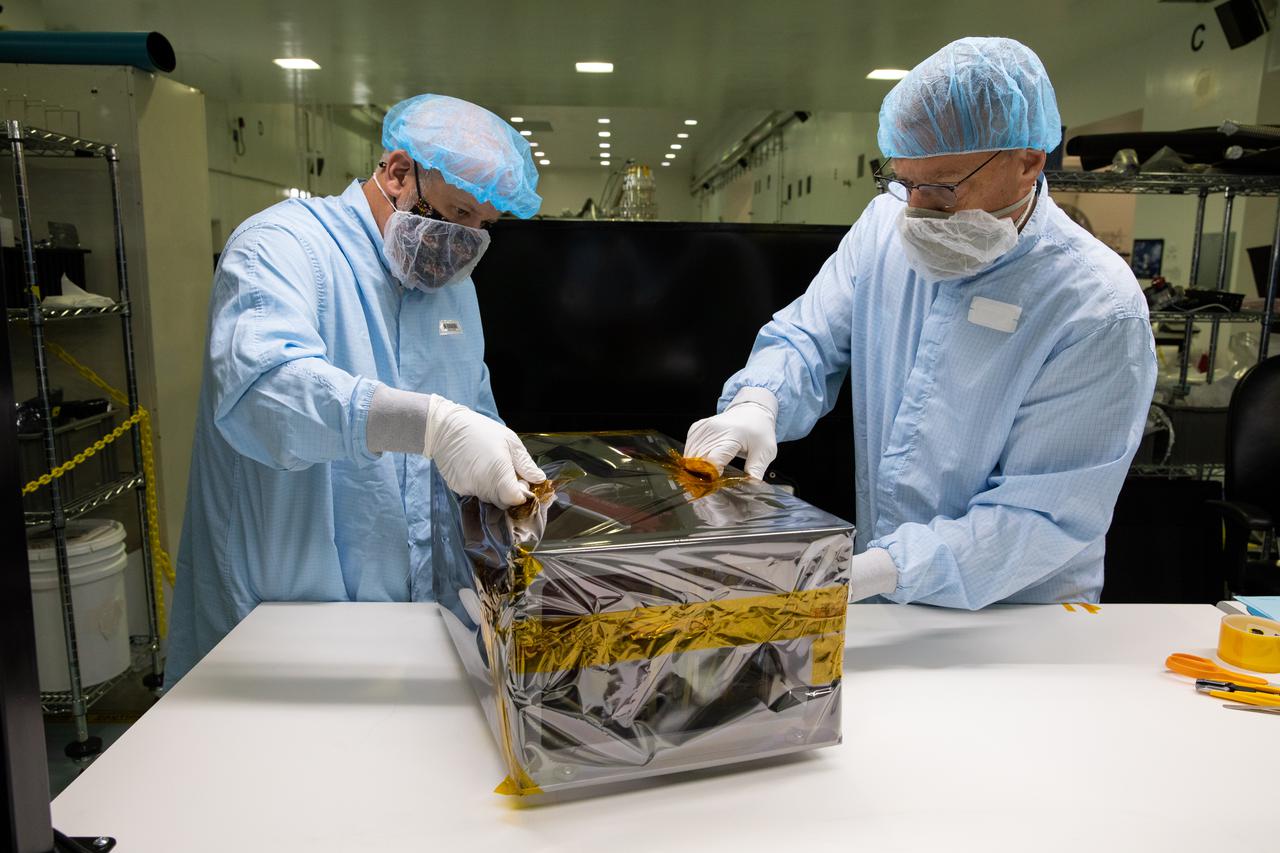
KSC · 2021-09-29 · KSC-20210929-PH-KLS01_0105
MSolo Prep for Packing and Shipping
Inside the Space Station Processing Facility at NASA’s Kennedy Space Center in Florida, members of the Mass Spectrometer observing lunar operations (MSolo) team prepare MSolo flight hardware for…
Inspect NASA record
Inside the Space Station Processing Facility at NASA’s Kennedy Space Center in Florida, members of the Mass Spectrometer observing lunar operations (MSolo) team prepare MSolo flight hardware for shipment in preparation for launch in 2022. MSolo is a commercial off-the-shelf mass spectrometer modified to work in space and it will help analyze the chemical makeup of landing sites on the Moon, as well as study water on the lunar surface. MSolo is part of four of the agency’s Commercial Lunar Payload Delivery Service missions where under the Artemis program, commercial deliveries beginning in 2022 will perform science experiments, test technologies and demonstrate capabilities to help NASA explore the Moon and prepare for human missions.
- Record ID
- KSC-20210929-PH-KLS01_0105
- NASA center
- KSC
- Date
- 2021-09-29
- Credit
- NASA/Kim Shiflett
- Keywords
- Astrobotic, CLPS, Commercial Lunar Payload Services, KSC, Kennedy Space Center, MSOLO, Mass Spectrometer Observing Lunar Operations, Moon, NASA, Peregrine Mission One, SSPF, lunar
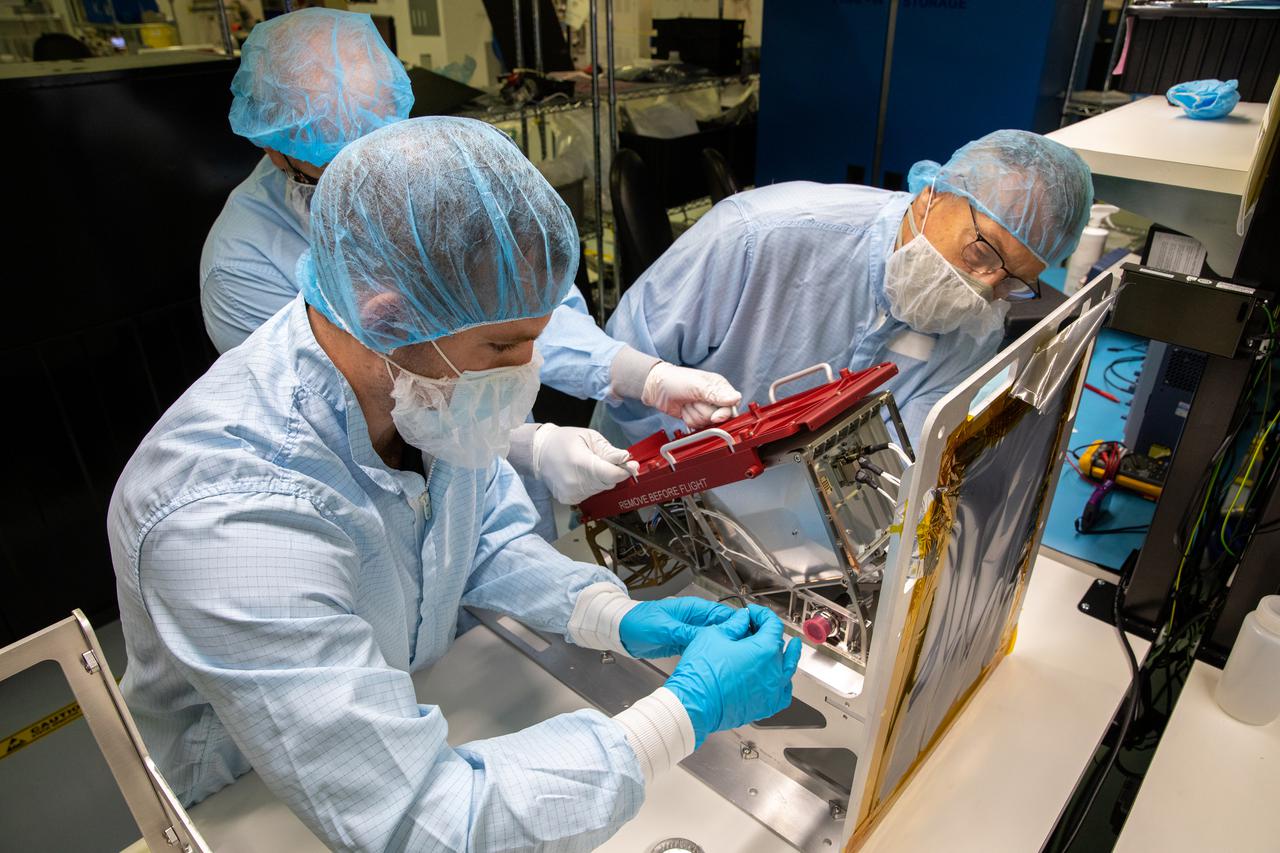
KSC · 2021-09-29 · KSC-20210929-PH-KLS01_0026
MSolo Prep for Packing and Shipping
Inside the Space Station Processing Facility at NASA’s Kennedy Space Center in Florida, members of the Mass Spectrometer observing lunar operations (MSolo) team prepare MSolo flight hardware for…
Inspect NASA record
Inside the Space Station Processing Facility at NASA’s Kennedy Space Center in Florida, members of the Mass Spectrometer observing lunar operations (MSolo) team prepare MSolo flight hardware for shipment in preparation for launch in 2022. MSolo is a commercial off-the-shelf mass spectrometer modified to work in space and it will help analyze the chemical makeup of landing sites on the Moon, as well as study water on the lunar surface. MSolo is part of four of the agency’s Commercial Lunar Payload Delivery Service missions where under the Artemis program, commercial deliveries beginning in 2022 will perform science experiments, test technologies and demonstrate capabilities to help NASA explore the Moon and prepare for human missions.
- Record ID
- KSC-20210929-PH-KLS01_0026
- NASA center
- KSC
- Date
- 2021-09-29
- Credit
- NASA/Kim Shiflett
- Keywords
- Astrobotic, CLPS, Commercial Lunar Payload Services, KSC, Kennedy Space Center, MSOLO, Mass Spectrometer Observing Lunar Operations, Moon, NASA, Peregrine Mission One, SSPF, lunar
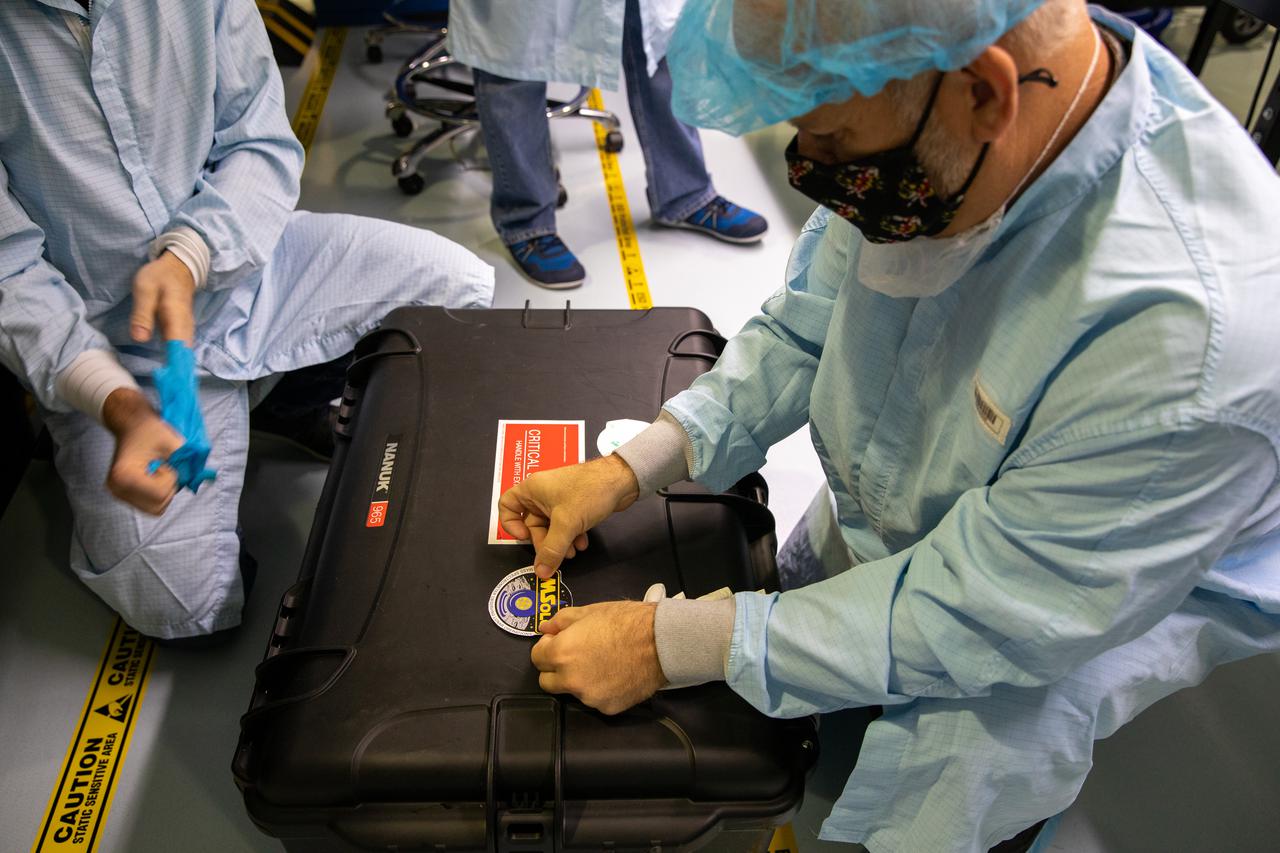
KSC · 2021-09-29 · KSC-20210929-PH-KLS01_0126
MSolo Prep for Packing and Shipping
Inside the Space Station Processing Facility at NASA’s Kennedy Space Center in Florida, members of the Mass Spectrometer observing lunar operations (MSolo) team prepare MSolo flight hardware for…
Inspect NASA record
Inside the Space Station Processing Facility at NASA’s Kennedy Space Center in Florida, members of the Mass Spectrometer observing lunar operations (MSolo) team prepare MSolo flight hardware for shipment in preparation for launch in 2022. MSolo is a commercial off-the-shelf mass spectrometer modified to work in space and it will help analyze the chemical makeup of landing sites on the Moon, as well as study water on the lunar surface. MSolo is part of four of the agency’s Commercial Lunar Payload Delivery Service missions where under the Artemis program, commercial deliveries beginning in 2022 will perform science experiments, test technologies and demonstrate capabilities to help NASA explore the Moon and prepare for human missions.
- Record ID
- KSC-20210929-PH-KLS01_0126
- NASA center
- KSC
- Date
- 2021-09-29
- Credit
- NASA/Kim Shiflett
- Keywords
- Astrobotic, CLPS, Commercial Lunar Payload Services, KSC, Kennedy Space Center, MSOLO, Mass Spectrometer Observing Lunar Operations, Moon, NASA, Peregrine Mission One, SSPF, lunar
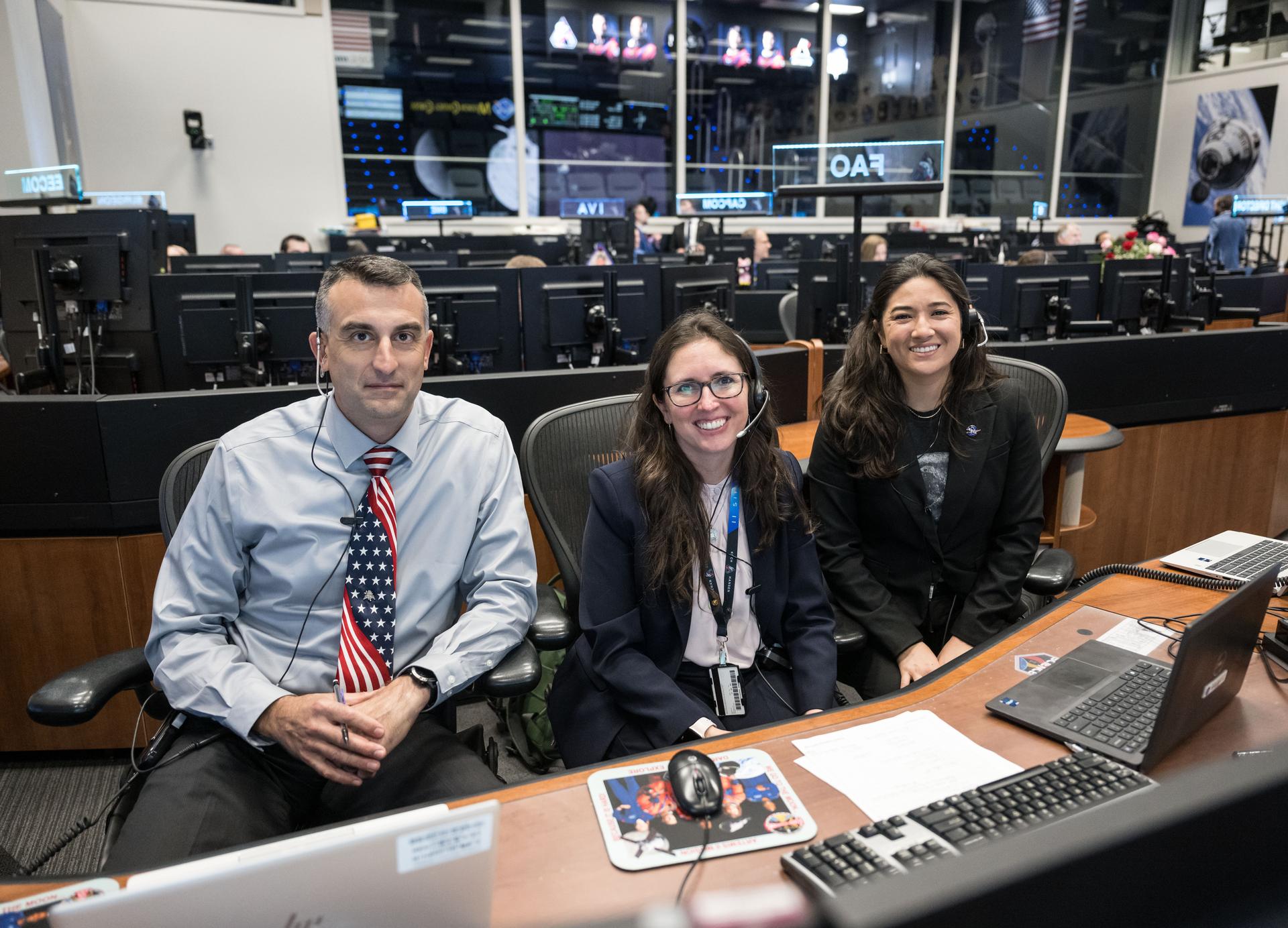
JSC · 2026-04-06 · jsc2026e020487
Artemis II Science Officers -- jsc2026e020487
Artemis II science officers, from left, Trevor Graff, Kelsey Young, and Angela Garcia, are seen at the Science console in the White Flight Control Room in Mission Control…
Inspect NASA record
Artemis II science officers, from left, Trevor Graff, Kelsey Young, and Angela Garcia, are seen at the Science console in the White Flight Control Room in Mission Control at NASA's Johnson Space Center in Houston. Science officers are the senior flight controllers responsible for lunar science and geology objectives during Artemis missions. Credits: NASA/Robert Markowitz
- Record ID
- jsc2026e020487
- NASA center
- JSC
- Date
- 2026-04-06
- Credit
- ROBERT MARKOWITZ NASA-JSC
- Keywords
- Artemis, Artemis II, Science officers, mission control, lunar science, Moon
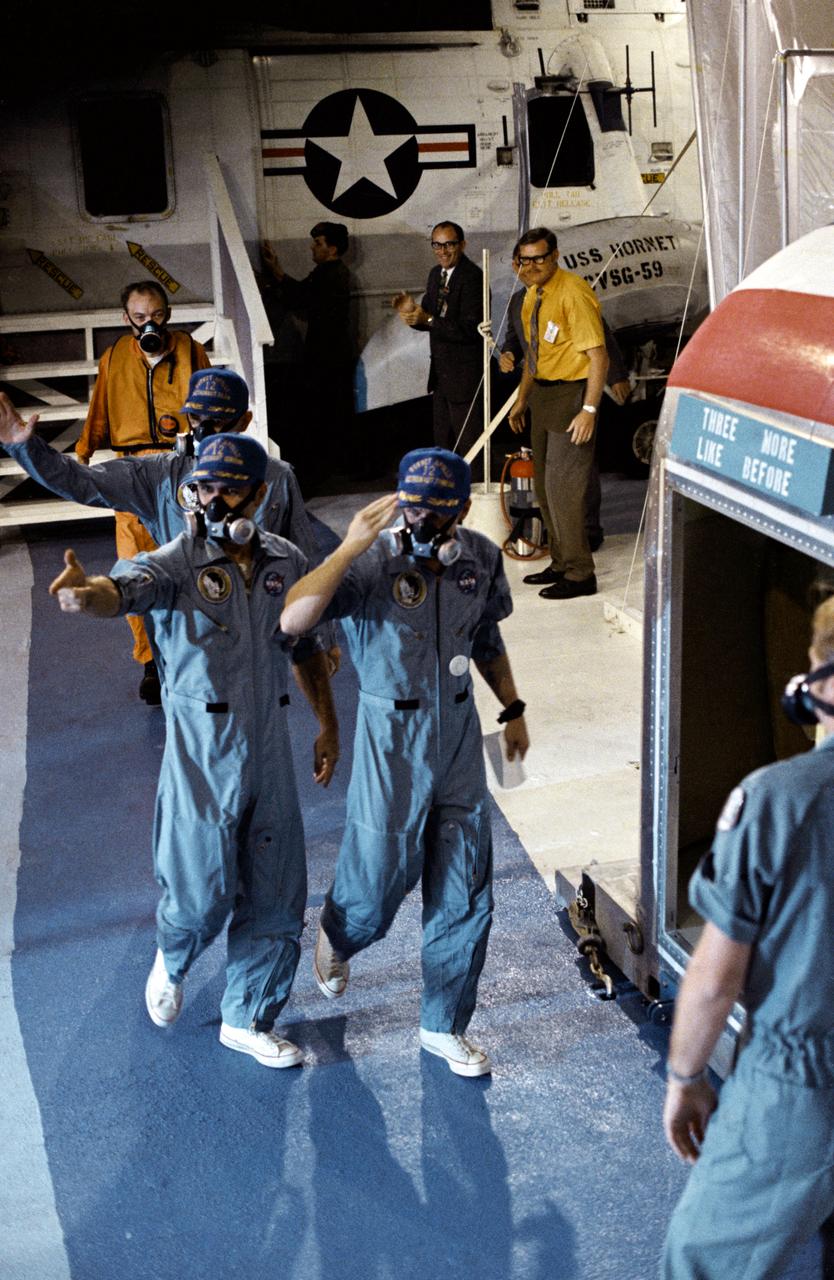
JSC · 1969-11-24 · S69-22849
U.S.S. Hornet crewmen greeted by crew of Apollo 12 lunar landing mission
S69-22849 (24 Nov. 1969) --- USS Hornet crewmen are greeted by the crew of the Apollo 12 lunar landing mission as the three astronauts are transferred from a…
Inspect NASA record
S69-22849 (24 Nov. 1969) --- USS Hornet crewmen are greeted by the crew of the Apollo 12 lunar landing mission as the three astronauts are transferred from a U.S. Navy helicopter to a Mobile Quarantine Facility (MQF) aboard the prime recovery vessel. Charles Conrad Jr., right, commander; Richard F. Gordon Jr., command module pilot, left front; and Alan L. Bean, lunar module pilot, splashed down safely at 2:58 p.m., Nov. 24, 1969.
- Record ID
- S69-22849
- NASA center
- JSC
- Date
- 1969-11-24
- Keywords
- APOLLO 12 FLIGHT, ASTRONAUTS
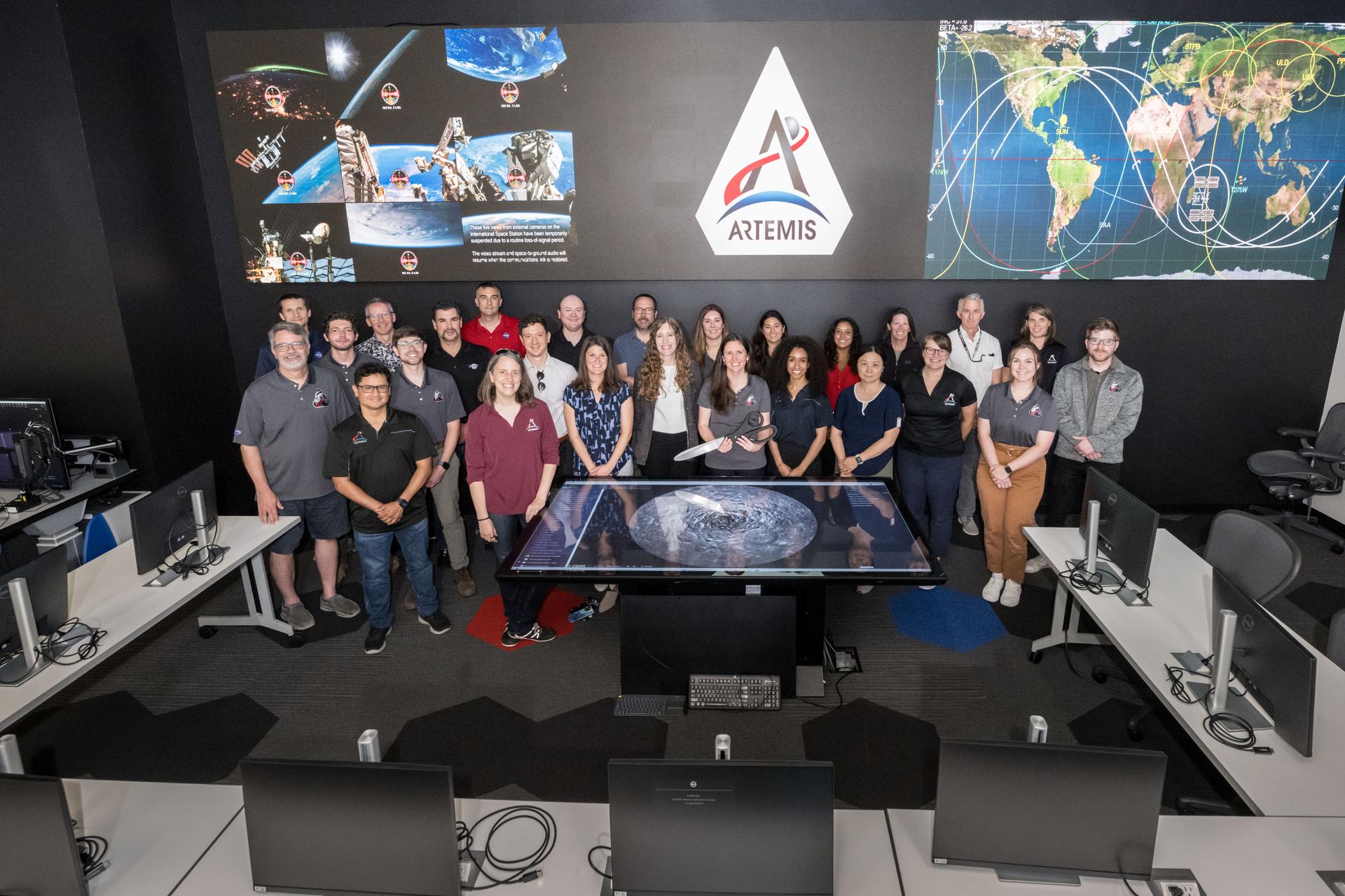
JSC · 2025-06-05 · jsc2025e057255
Artemis Science Evaluation Room (SER) for Mission Control in Houston -- jsc2025e057255
jsc2025e057255 --- NASA’s Artemis III lunar science team is pictured in the Science Evaluation Room (SER) at the agency’s Johnson Space Center in Houston. Located in the Christopher…
Inspect NASA record
jsc2025e057255 --- NASA’s Artemis III lunar science team is pictured in the Science Evaluation Room (SER) at the agency’s Johnson Space Center in Houston. Located in the Christopher C. Kraft Jr. Mission Control Center, the SER supports the mission’s main flight control room for lunar science and planetary observations. Built specifically for Artemis missions with these science priorities in mind, the SER is equipped to support rapid data interpretation, collaborative analysis, real-time decision making, and seamless coordination between the science and operations teams.
- Record ID
- jsc2025e057255
- NASA center
- JSC
- Date
- 2025-06-05
- Credit
- Helen Arase Vargas NASA-JSC
- Keywords
- Artemis, Artemis Science, Science Evaluation Room, SER, Mission Control, Lunar science

KSC · 2023-11-21 · KSC-20231121-PH-ULA01_0002
Astrobotic's Lander Encapsulation
Ahead of launch as part of NASA’s Commercial Lunar Payload Services (CLPS) initiative, Astrobotic’s Peregrine lunar lander is encapsulated in the payload fairing, or nose cone, of United…
Inspect NASA record
Ahead of launch as part of NASA’s Commercial Lunar Payload Services (CLPS) initiative, Astrobotic’s Peregrine lunar lander is encapsulated in the payload fairing, or nose cone, of United Launch Alliance’s Vulcan rocket on Nov. 21, 2023, at Astrotech Space Operations Facility near the agency’s Kennedy Space Center in Florida. Launch of Astrobotic’s Peregrine Mission One will carry NASA and commercial payloads to the Moon in early 2024 to study the lunar exosphere, thermal properties, and hydrogen abundance of the lunar regolith, magnetic fields, and the radiation environment of the lunar surface.
- Record ID
- KSC-20231121-PH-ULA01_0002
- NASA center
- KSC
- Date
- 2023-11-21
- Credit
- United Launch Alliance
- Keywords
- ULA, United Launch Alliance, Vulcan, CLPS, Commercial Lunar Payload Services, Astrobotic's Lander, Moon to Mars, Peregrine Mission-1, PM-1

KSC · 2023-11-21 · KSC-20231121-PH-ULA01_0001
Astrobotic's Lander Encapsulation
Ahead of launch as part of NASA’s Commercial Lunar Payload Services (CLPS) initiative, Astrobotic’s Peregrine lunar lander is encapsulated in the payload fairing, or nose cone, of United…
Inspect NASA record
Ahead of launch as part of NASA’s Commercial Lunar Payload Services (CLPS) initiative, Astrobotic’s Peregrine lunar lander is encapsulated in the payload fairing, or nose cone, of United Launch Alliance’s Vulcan rocket on Nov. 21, 2023, at Astrotech Space Operations Facility near the agency’s Kennedy Space Center in Florida. Launch of Astrobotic’s Peregrine Mission One will carry NASA and commercial payloads to the Moon in early 2024 to study the lunar exosphere, thermal properties, and hydrogen abundance of the lunar regolith, magnetic fields, and the radiation environment of the lunar surface.
- Record ID
- KSC-20231121-PH-ULA01_0001
- NASA center
- KSC
- Date
- 2023-11-21
- Credit
- United Launch Alliance
- Keywords
- ULA, United Launch Alliance, Vulcan, CLPS, Commercial Lunar Payload Services, Astrobotic's Lander, Moon to Mars, Peregrine Mission-1, PM-1