
Add from NASA
Explore NASA’s Image and Video Library.
Suggest one object per day for the Interstellar Minds collection. We review each suggestion before adding it.
Sign in to suggest a Marvel.
NASA image records
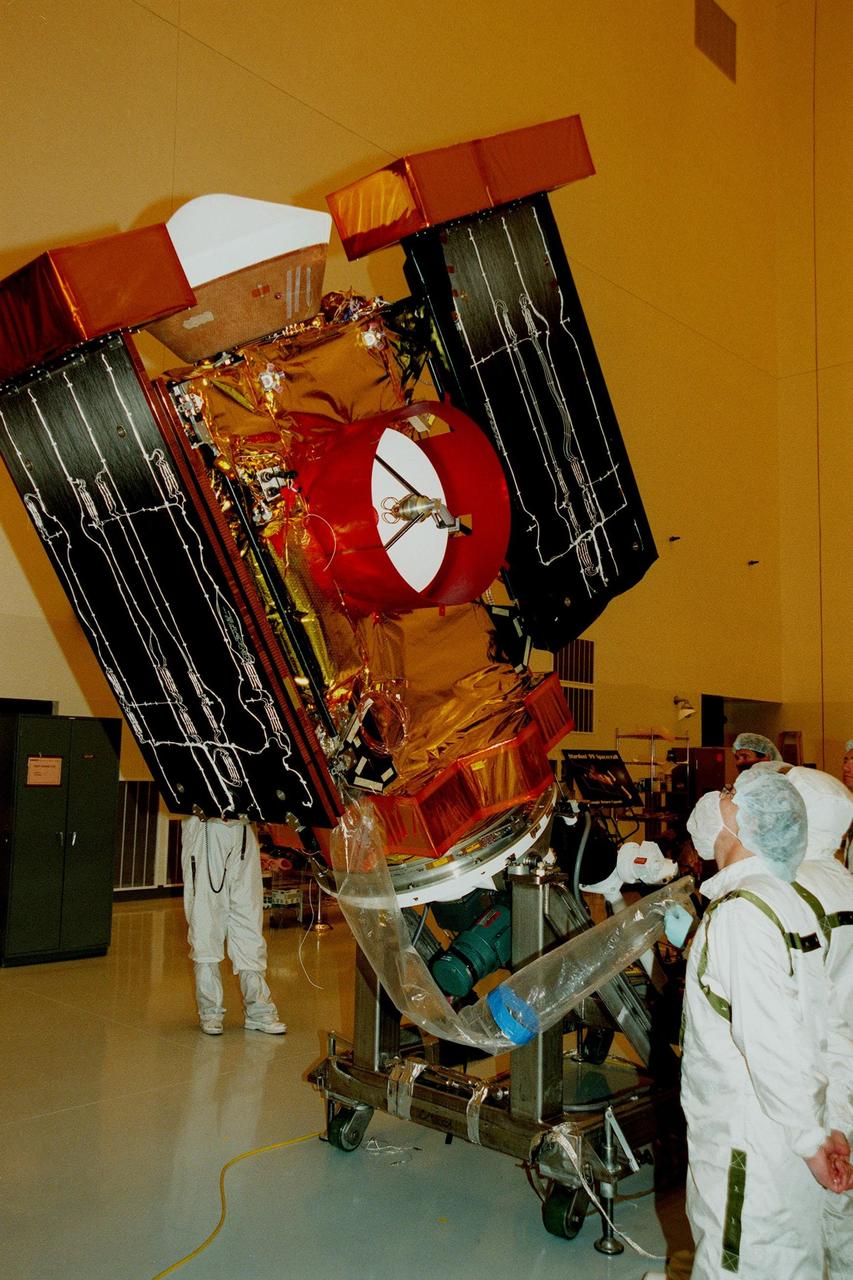
KSC · 1999-01-11 · KSC-99pc40
KSC-99pc40
Workers in the Payload Hazardous Servicing Facility watch as the Stardust spacecraft is rotated and lowered before deploying the solar panels for lighting tests. Stardust is scheduled to…
Inspect NASA record
Workers in the Payload Hazardous Servicing Facility watch as the Stardust spacecraft is rotated and lowered before deploying the solar panels for lighting tests. Stardust is scheduled to be launched aboard a Boeing Delta II rocket from Launch Pad 17A, Cape Canaveral Air Station, on Feb. 6, 1999, for a rendezvous with the comet Wild 2 in January 2004. Stardust will use a substance called aerogel to capture comet particles flying off the nucleus of the comet, plus collect interstellar dust for later analysis. The collected samples will return to Earth in a sample return capsule (seen on top of the spacecraft) to be jettisoned as it swings by Earth in January 2006
- Record ID
- KSC-99pc40
- NASA center
- KSC
- Date
- 1999-01-11

KSC · 1999-01-05 · KSC-99pc11
KSC-99pc11
Workers at Cape Canaveral Air Station help guide the first stage of a Boeing Delta II rocket to its vertical position on the tower at Launch Complex 17.…
Inspect NASA record
Workers at Cape Canaveral Air Station help guide the first stage of a Boeing Delta II rocket to its vertical position on the tower at Launch Complex 17. The rocket will carry the Stardust spacecraft into space for a close encounter with the comet Wild 2 in January 2004. Using a medium called aerogel, it will capture comet particles flying off the nucleus of the comet, plus collect interstellar dust for later analysis. The collected samples will return to Earth in a Sample Return Capsule to be jettisoned as Stardust swings by Earth in January 2006. Stardust is scheduled to be launched on Feb. 6, 1999
- Record ID
- KSC-99pc11
- NASA center
- KSC
- Date
- 1999-01-05

KSC · 1999-01-06 · KSC-99pc25
KSC-99pc25
A solid rocket booster is lifted up the mobile launch tower at Pad 17A, Cape Canaveral Air Station. It will be mated with a Boeing Delta II rocket…
Inspect NASA record
A solid rocket booster is lifted up the mobile launch tower at Pad 17A, Cape Canaveral Air Station. It will be mated with a Boeing Delta II rocket that will carry the Stardust spacecraft into space for a close encounter with the comet Wild 2 in January 2004. Using a medium called aerogel, Stardust will capture comet particles flying off the nucleus of the comet, plus collect interstellar dust for later analysis. The collected samples will return to Earth in a sample return capsule to be jettisoned as Stardust swings by Earth in January 2006. Stardust is scheduled to be launched on Feb. 6, 1999
- Record ID
- KSC-99pc25
- NASA center
- KSC
- Date
- 1999-01-06
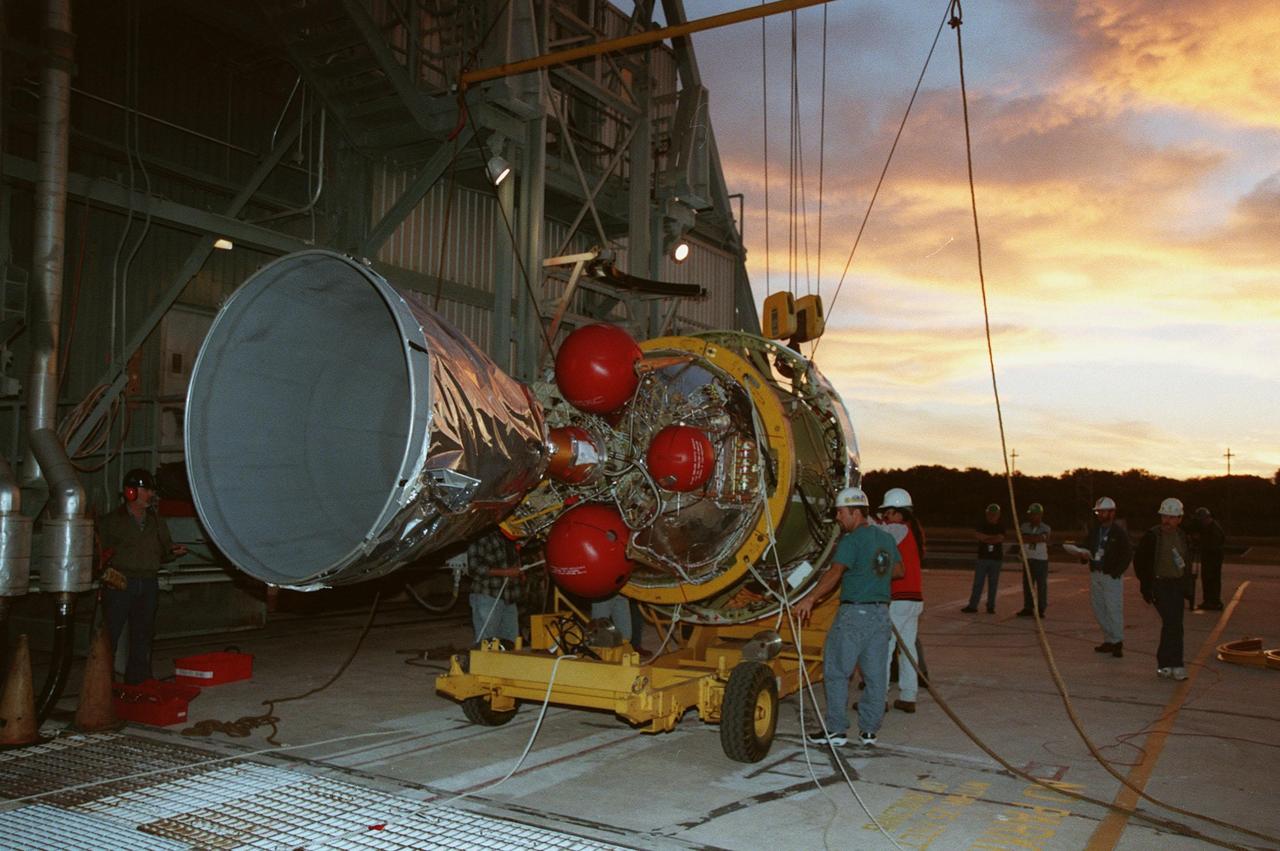
KSC · 1999-01-14 · KSC-99pc56
KSC-99pc56
At Pad 17A, Cape Canaveral Air Station, the second stage of a Boeing Delta II rocket arrives for mating with the first stage. The rocket is targeted for…
Inspect NASA record
At Pad 17A, Cape Canaveral Air Station, the second stage of a Boeing Delta II rocket arrives for mating with the first stage. The rocket is targeted for launch on Feb. 6, carrying the Stardust spacecraft into space for a close encounter with the comet Wild 2 in January 2004. Using a substance called aerogel, Stardust will capture comet particles flying off the nucleus of the comet, plus collect interstellar dust for later analysis. The collected samples will return to Earth in a sample return capsule to be jettisoned as Stardust swings by Earth in January 2006
- Record ID
- KSC-99pc56
- NASA center
- KSC
- Date
- 1999-01-14
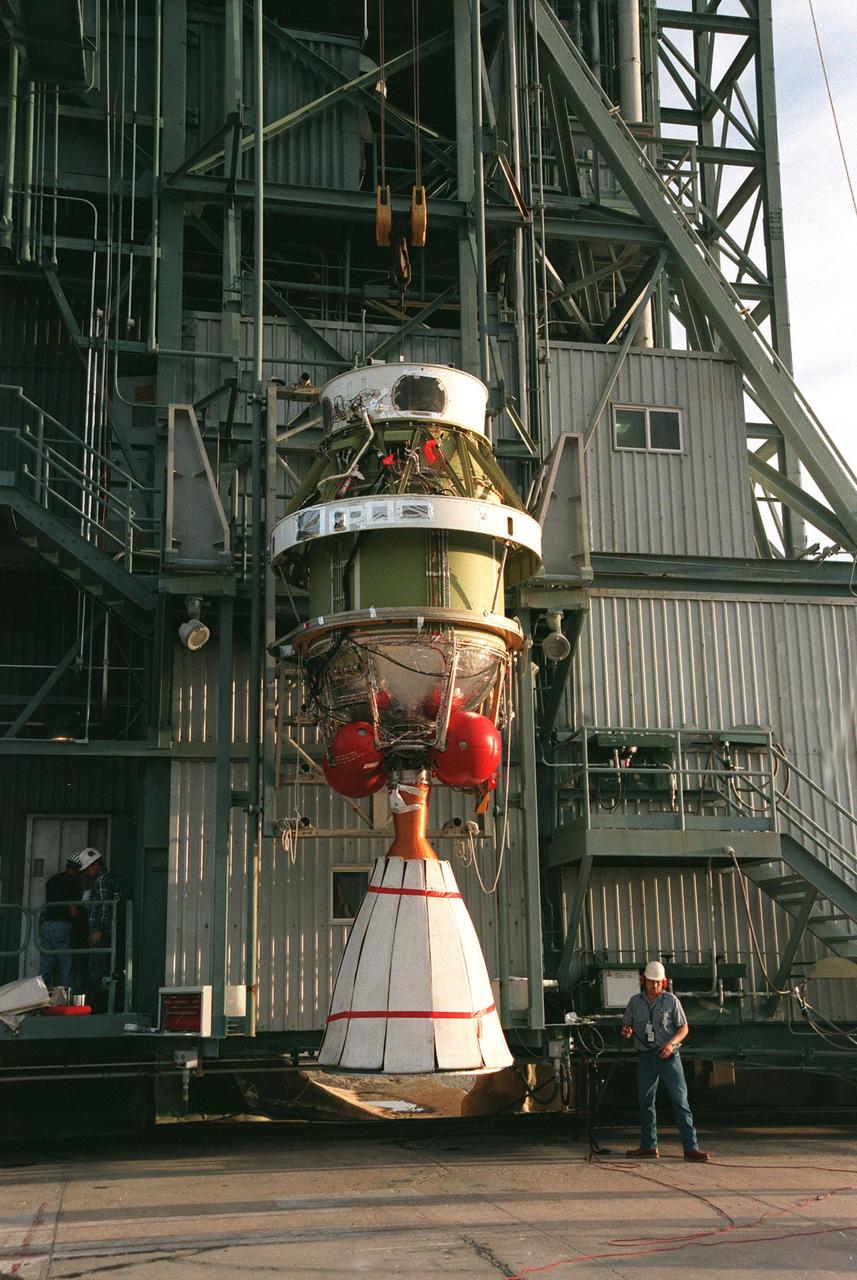
KSC · 1999-01-14 · KSC-99pc57
KSC-99pc57
The second stage of a Boeing Delta II rocket begins its move up the tower at Pad 17A, Cape Canaveral Air Station, for mating with the first stage.…
Inspect NASA record
The second stage of a Boeing Delta II rocket begins its move up the tower at Pad 17A, Cape Canaveral Air Station, for mating with the first stage. The rocket is targeted for launch on Feb. 6, carrying the Stardust spacecraft into space for a close encounter with the comet Wild 2 in January 2004. Using a substance called aerogel, Stardust will capture comet particles flying off the nucleus of the comet, plus collect interstellar dust for later analysis. The collected samples will return to Earth in a sample return capsule to be jettisoned as Stardust swings by Earth in January 2006
- Record ID
- KSC-99pc57
- NASA center
- KSC
- Date
- 1999-01-14
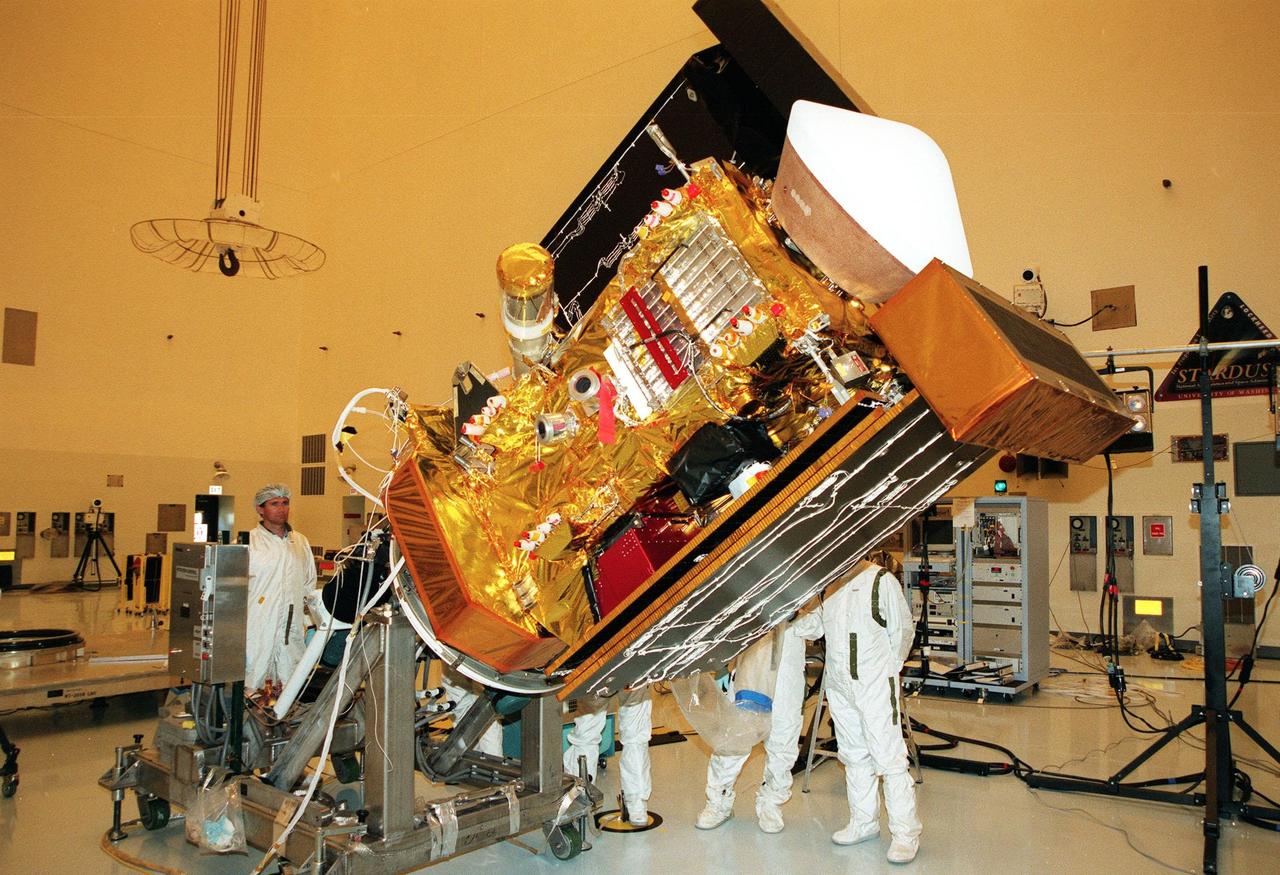
KSC · 1999-01-11 · KSC-99pc39
KSC-99pc39
Workers in the Payload Hazardous Servicing Facility watch as the Stardust spacecraft is lowered before deploying panels for lighting tests. Stardust is scheduled to be launched aboard a…
Inspect NASA record
Workers in the Payload Hazardous Servicing Facility watch as the Stardust spacecraft is lowered before deploying panels for lighting tests. Stardust is scheduled to be launched aboard a Boeing Delta II rocket from Launch Pad 17A, Cape Canaveral Air Station, on Feb. 6, 1999, for a rendezvous with the comet Wild 2 in January 2004. Stardust will use a substance called aerogel to capture comet particles flying off the nucleus of the comet, plus collect interstellar dust for later analysis. The collected samples will return to Earth in a sample return capsule (seen on top of the spacecraft) to be jettisoned as it swings by Earth in January 2006
- Record ID
- KSC-99pc39
- NASA center
- KSC
- Date
- 1999-01-11

KSC · 1999-01-14 · KSC-99pc59
KSC-99pc59
Workers at the top of the tower at Pad 17A, Cape Canaveral Air Station, watch as the second stage of a Boeing Delta II rocket moves toward the…
Inspect NASA record
Workers at the top of the tower at Pad 17A, Cape Canaveral Air Station, watch as the second stage of a Boeing Delta II rocket moves toward the opening through which it will be mated with the first stage. The rocket is targeted for launch on Feb. 6, carrying the Stardust spacecraft into space for a close encounter with the comet Wild 2 in January 2004. Using a substance called aerogel, Stardust will capture comet particles flying off the nucleus of the comet, plus collect interstellar dust for later analysis. The collected samples will return to Earth in a sample return capsule to be jettisoned as Stardust swings by Earth in January 2006
- Record ID
- KSC-99pc59
- NASA center
- KSC
- Date
- 1999-01-14
KSC · 1999-01-11 · KSC-99pc47
KSC-99pc47
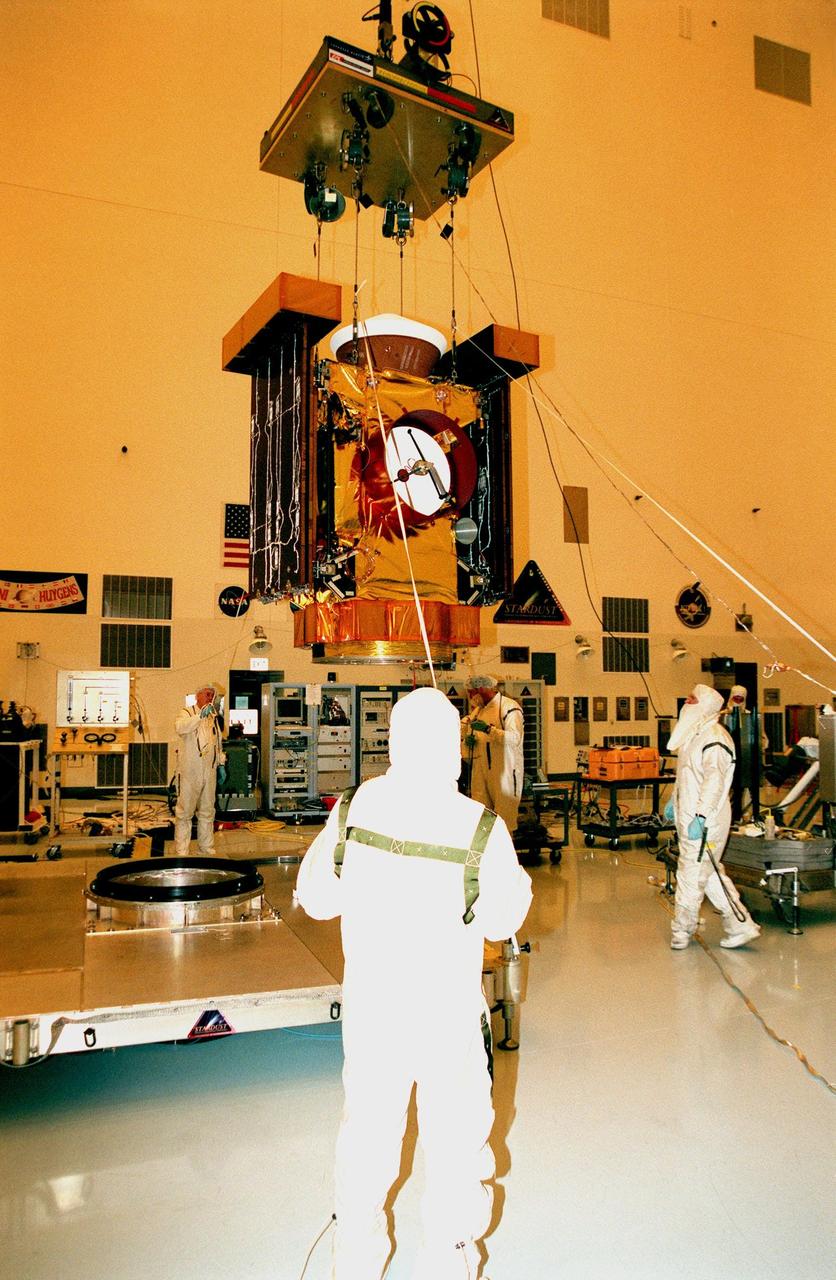
In the Payload Hazardous Servicing Facility, workers raise the Stardust spacecraft from its workstand to move it to another area for lighting tests on the solar panels. Stardust…
Inspect NASA record
In the Payload Hazardous Servicing Facility, workers raise the Stardust spacecraft from its workstand to move it to another area for lighting tests on the solar panels. Stardust is scheduled to be launched aboard a Boeing Delta II rocket from Launch Pad 17A, Cape Canaveral Air Station, on Feb. 6, 1999, for a rendezvous with the comet Wild 2 in January 2004. Stardust will use a substance called aerogel to capture comet particles flying off the nucleus of the comet, plus collect interstellar dust for later analysis. The collected samples will return to Earth in a sample return capsule to be jettisoned as it swings by Earth in January 2006
- Record ID
- KSC-99pc47
- NASA center
- KSC
- Date
- 1999-01-11
KSC · 1999-01-07 · KSC-99pc31
KSC-99pc31
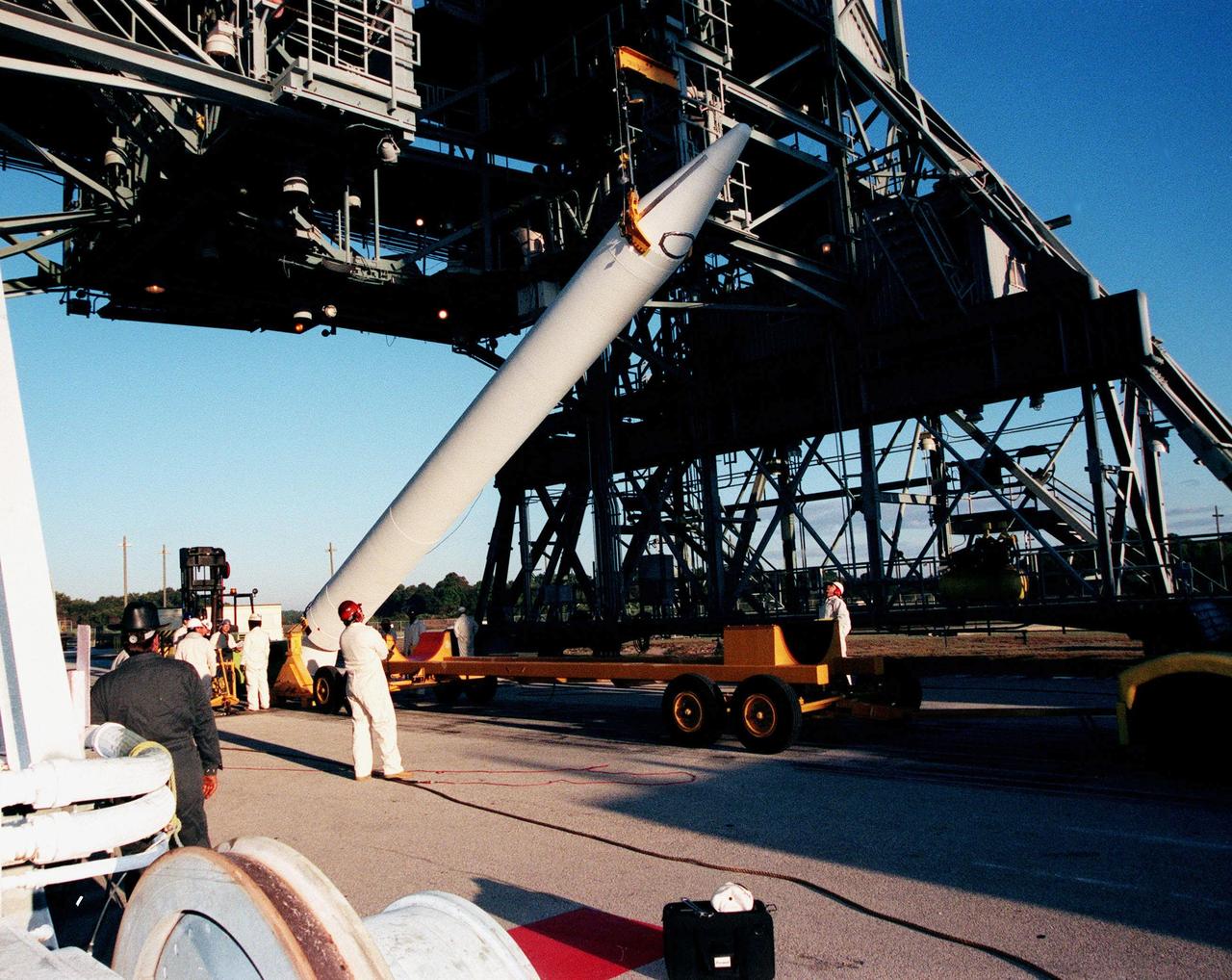
A fourth and final Solid Rocket Booster arrives at Pad 17A, Cape Canaveral Air Station to be mated with a Boeing Delta II rocket. The rocket will carry…
Inspect NASA record
A fourth and final Solid Rocket Booster arrives at Pad 17A, Cape Canaveral Air Station to be mated with a Boeing Delta II rocket. The rocket will carry the Stardust satellite into space for a close encounter with the comet Wild 2 in January 2004. Using a medium called aerogel, Stardust will capture comet particles flying off the nucleus of the comet, plus collect interstellar dust for later analysis. The collected samples will return to Earth in a Sample Return Capsule to be jettisoned as Stardust swings by Earth in January 2006. Stardust is scheduled to be launched on Feb. 6, 1999
- Record ID
- KSC-99pc31
- NASA center
- KSC
- Date
- 1999-01-07
KSC · 1999-01-07 · KSC-99pc33
KSC-99pc33
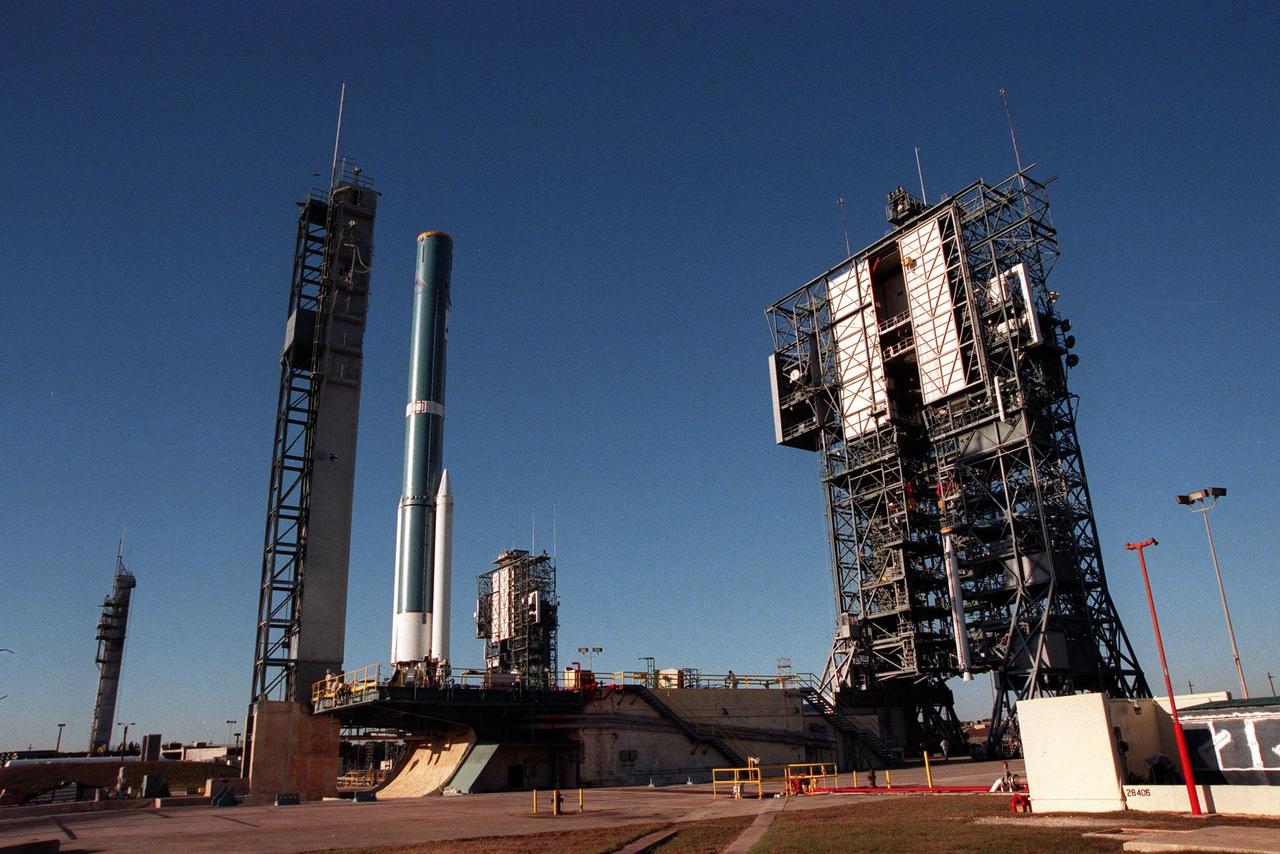
A Boeing Delta II rocket sits on Launch Pad 17A (left), Cape Canaveral Air Station, before mating with its final Solid Rocket Booster, in the tower at right.…
Inspect NASA record
A Boeing Delta II rocket sits on Launch Pad 17A (left), Cape Canaveral Air Station, before mating with its final Solid Rocket Booster, in the tower at right. In the background is Pad 17B with its two launch tower components. The Delta II rocket will carry the Stardust satellite into space for a close encounter with the comet Wild 2 in January 2004. Using a medium called aerogel, Stardust will capture comet particles flying off the nucleus of the comet, plus collect interstellar dust for later analysis. The collected samples will return to Earth in a Sample Return Capsule to be jettisoned as Stardust swings by Earth in January 2006. Stardust is scheduled to be launched on Feb. 6, 1999
- Record ID
- KSC-99pc33
- NASA center
- KSC
- Date
- 1999-01-07
KSC · 1999-01-07 · KSC-99pc32
KSC-99pc32
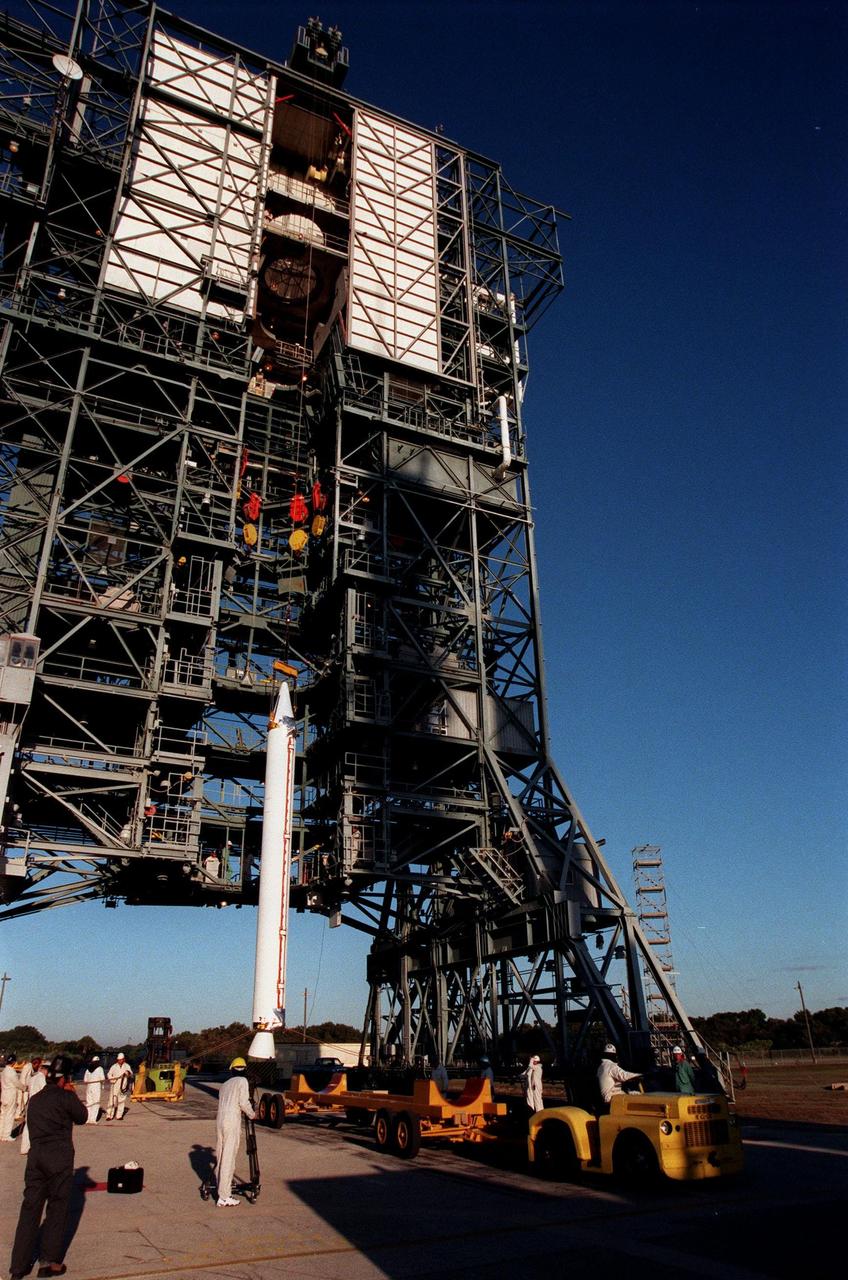
A fourth and final Solid Rocket Booster, to be mated with a Boeing Delta II rocket, starts its lift up the tower at Pad 17A, Cape Canaveral Air…
Inspect NASA record
A fourth and final Solid Rocket Booster, to be mated with a Boeing Delta II rocket, starts its lift up the tower at Pad 17A, Cape Canaveral Air Station. The rocket will carry the Stardust satellite into space for a close encounter with the comet Wild 2 in January 2004. Using a medium called aerogel, Stardust will capture comet particles flying off the nucleus of the comet, plus collect interstellar dust for later analysis. The collected samples will return to Earth in a Sample Return Capsule to be jettisoned as Stardust swings by Earth in January 2006. Stardust is scheduled to be launched on Feb. 6, 1999
- Record ID
- KSC-99pc32
- NASA center
- KSC
- Date
- 1999-01-07
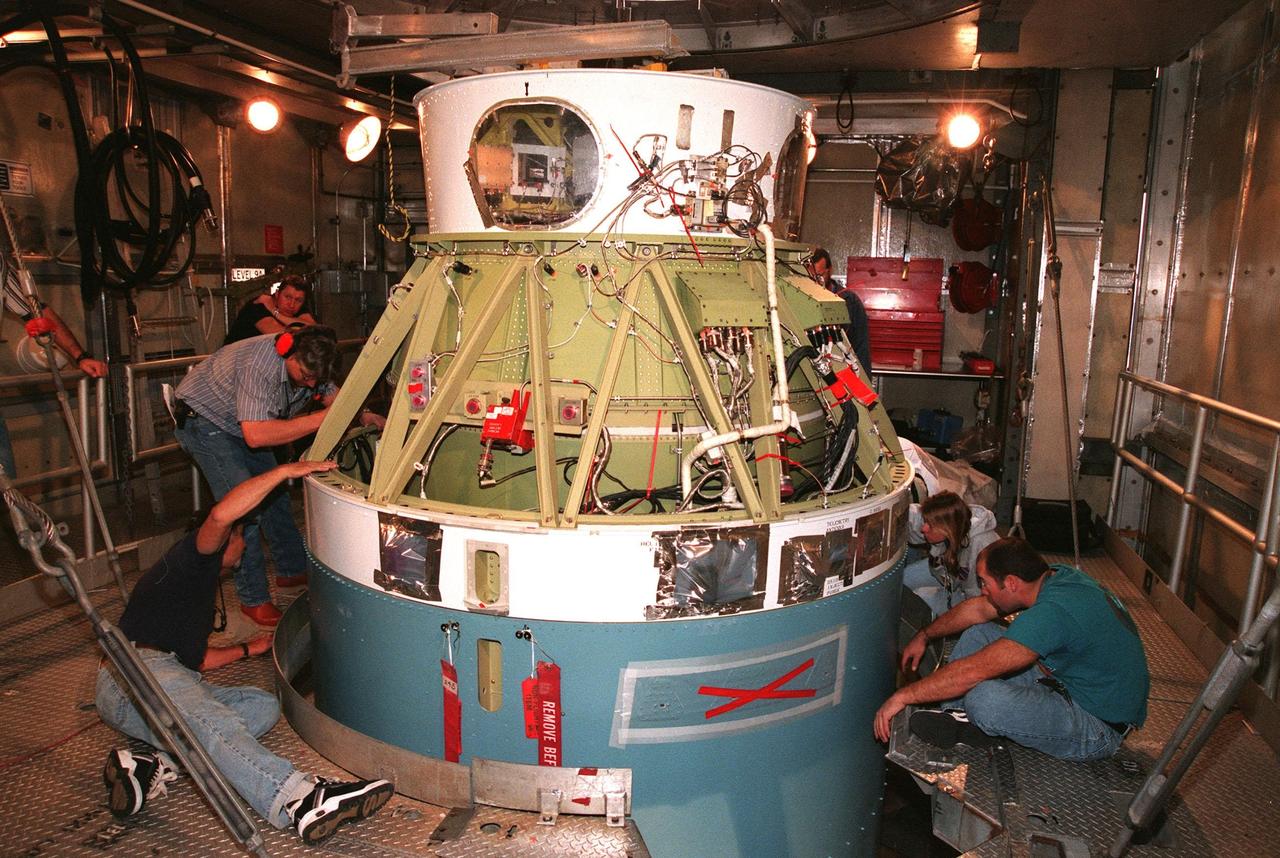
KSC · 1999-01-14 · KSC-99pc61
KSC-99pc61
Workers at Pad 17A, Cape Canaveral Air Station, ensure the successful mating of the second stage of a Boeing Delta II rocket with the first stage below it.…
Inspect NASA record
Workers at Pad 17A, Cape Canaveral Air Station, ensure the successful mating of the second stage of a Boeing Delta II rocket with the first stage below it. The rocket is targeted for launch on Feb. 6, carrying the Stardust spacecraft into space for a close encounter with the comet Wild 2 in January 2004. Using a substance called aerogel, Stardust will capture comet particles flying off the nucleus of the comet, plus collect interstellar dust for later analysis. The collected samples will return to Earth in a sample return capsule to be jettisoned as Stardust swings by Earth in January 2006
- Record ID
- KSC-99pc61
- NASA center
- KSC
- Date
- 1999-01-14