
Update Site (from NASA)
Explore NASA’s Image and Video Library.
Suggest one object per day for the Interstellar Minds collection. We review each suggestion before adding it.
Sign in to suggest a Marvel.
Find a NASA image ID. Open a NASA record and copy its ID from the end of the details URL.
NASA image records
JPL · 2010-07-22 · PIA13287
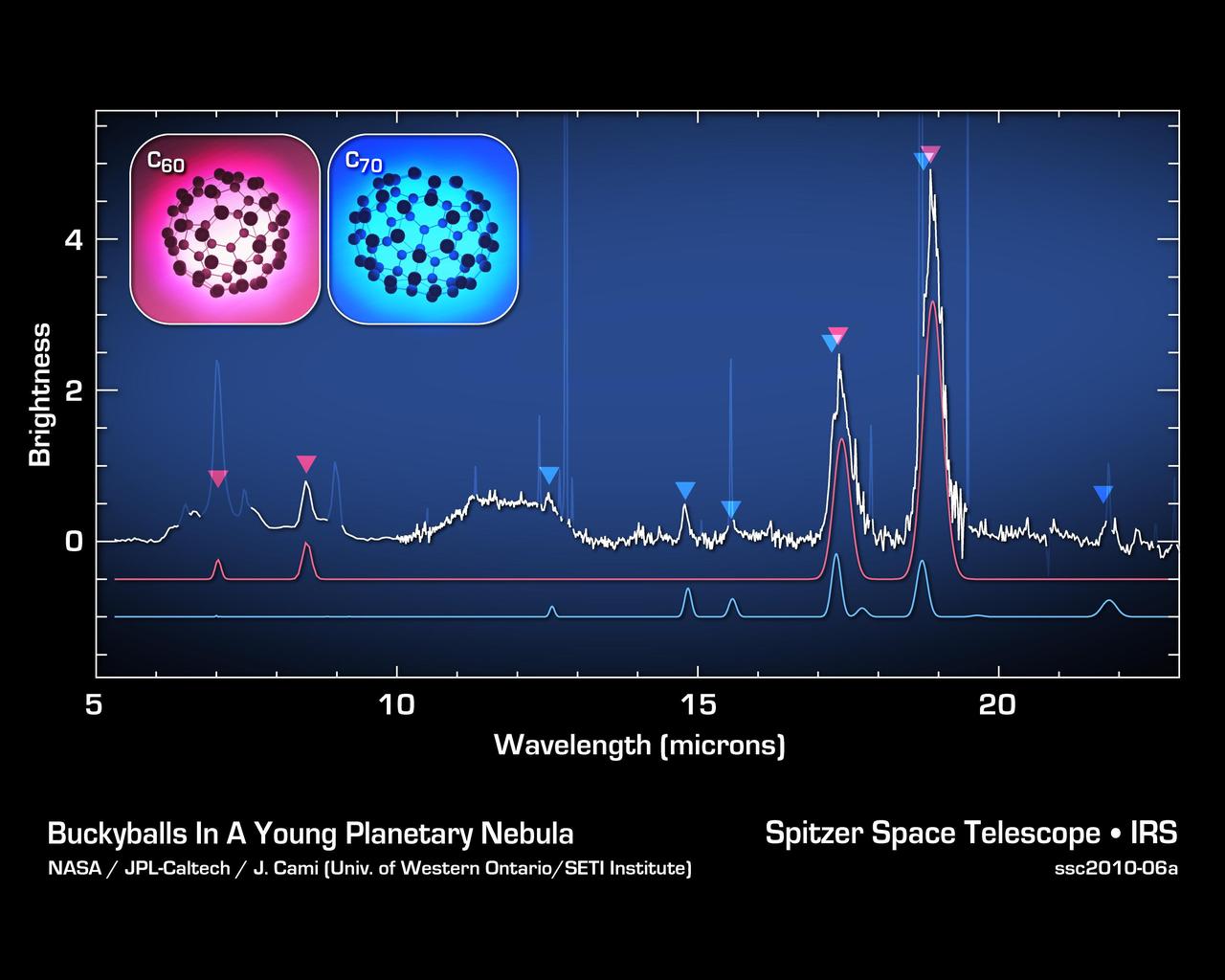
Jiggling Soccer-Ball Molecules in Space
These data from NASA Spitzer Space Telescope show the signatures of buckyballs in space. Buckyballs, also called C60 or buckministerfullerenes, after architect Buckminister Fuller geodesic domes.
Inspect NASA record
These data from NASA Spitzer Space Telescope show the signatures of buckyballs in space. Buckyballs, also called C60 or buckministerfullerenes, after architect Buckminister Fuller geodesic domes.
- Record ID
- PIA13287
- NASA center
- JPL
- Date
- 2010-07-22
- Credit
- NASA/JPL-Caltech/University of Western Ontario
- Keywords
- Spitzer Space Telescope
JPL · 1998-03-28 · PIA00826
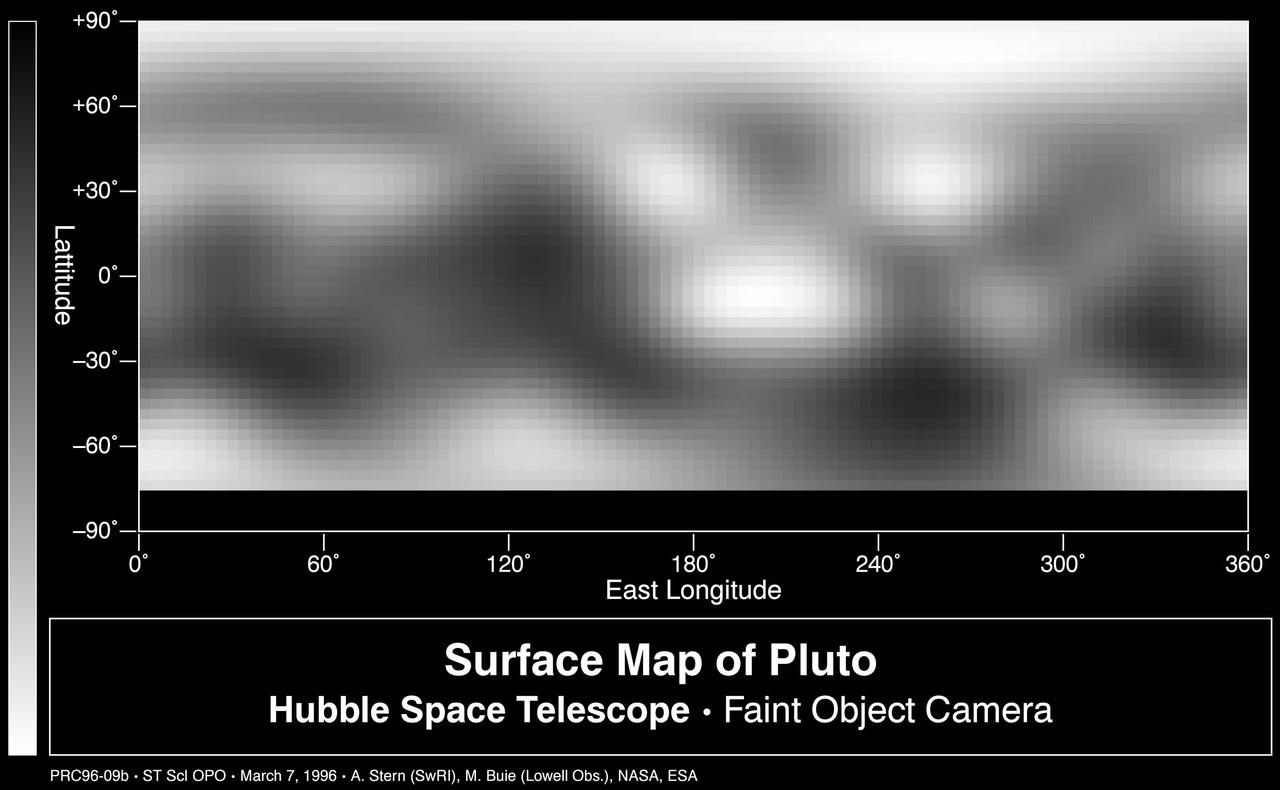
Map of Pluto Surface
This image-based surface map of Pluto was assembled by computer image processing software from four separate images of Pluto disk taken with the European Space Agency Faint Object…
Inspect NASA record
This image-based surface map of Pluto was assembled by computer image processing software from four separate images of Pluto disk taken with the European Space Agency Faint Object Camera aboard NASA Hubble Space Telescope.
- Record ID
- PIA00826
- NASA center
- JPL
- Date
- 1998-03-28
- Credit
- Alan Stern Southwest Research Institute, Marc Buie Lowell Observatory, NASA and ESA
- Keywords
- Pluto, Hubble Space Telescope

JPL · 2006-12-18 · PIA09100
The Universe First Fireworks
This is an image from NASA Spitzer Space Telescope of stars and galaxies in the Ursa Major constellation. This infrared image covers a region of space so large…
Inspect NASA record
This is an image from NASA Spitzer Space Telescope of stars and galaxies in the Ursa Major constellation. This infrared image covers a region of space so large that light would take up to 100 million years to travel across it.
- Record ID
- PIA09100
- NASA center
- JPL
- Date
- 2006-12-18
- Credit
- NASA/JPL-Caltech/GSFC
- Keywords
- Spitzer Space Telescope
JPL · 2014-06-19 · PIA18455
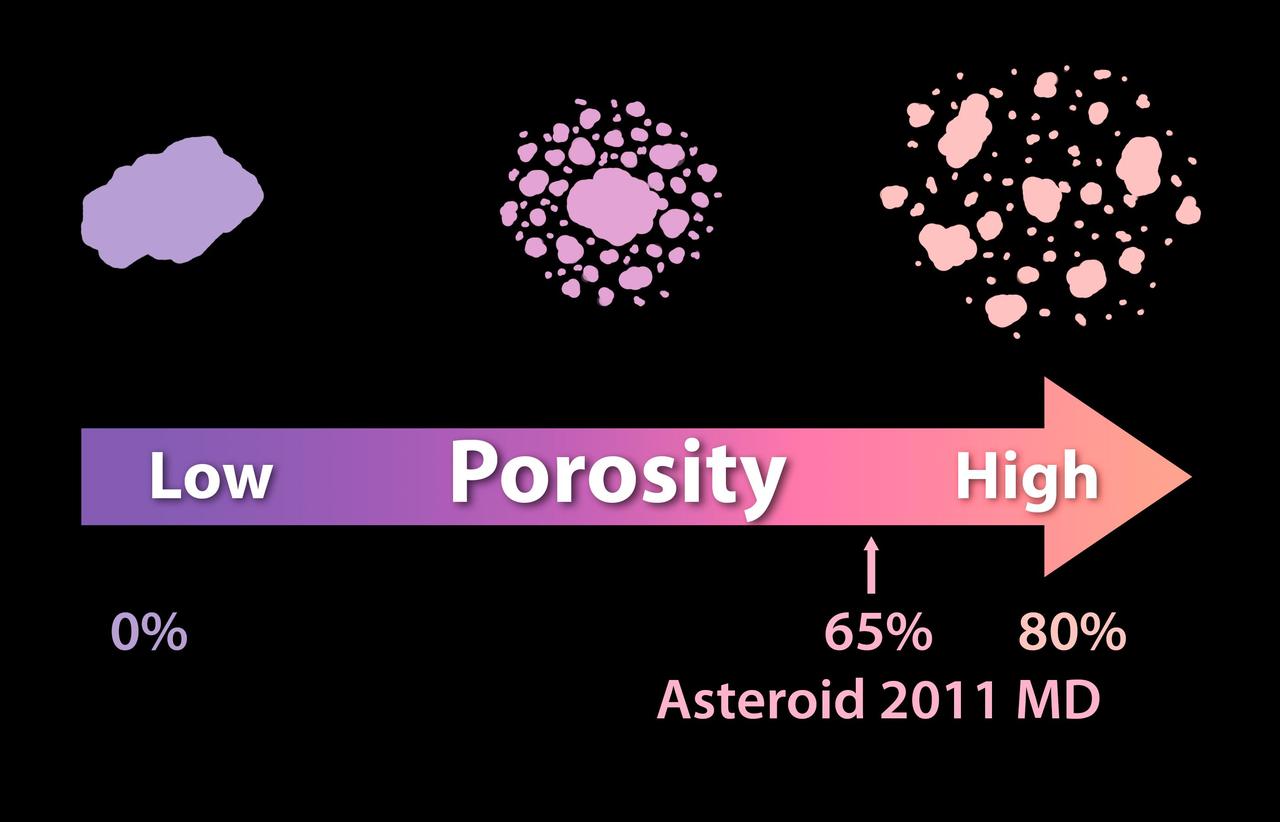
Solid as a Rock? Porosity of Asteroids
Observations from NASA Spitzer Space Telescope, taken in infrared light, have helped to reveal that a small asteroid called 2011 MD is made-up of two-thirds empty space.
Inspect NASA record
Observations from NASA Spitzer Space Telescope, taken in infrared light, have helped to reveal that a small asteroid called 2011 MD is made-up of two-thirds empty space.
- Record ID
- PIA18455
- NASA center
- JPL
- Date
- 2014-06-19
- Credit
- NASA/JPL-Caltech
- Keywords
- Asteroid, Spitzer Space Telescope

JPL · 1999-12-30 · PIA04213
Edge-on Galaxy
NASA Hubble Space Telescope has imaged an unusual edge-on galaxy, revealing remarkable details of its warped dusty disc and showing how colliding galaxies trigger the birth of new…
Inspect NASA record
NASA Hubble Space Telescope has imaged an unusual edge-on galaxy, revealing remarkable details of its warped dusty disc and showing how colliding galaxies trigger the birth of new stars.
- Record ID
- PIA04213
- NASA center
- JPL
- Date
- 1999-12-30
- Credit
- NASA/Space Telescope Science Institute
- Keywords
- Edge-on Galaxy ESO 510 G13, Hubble Space Telescope
KSC · 2026-07-16 · KSC-20260716-PH-SER01_0001
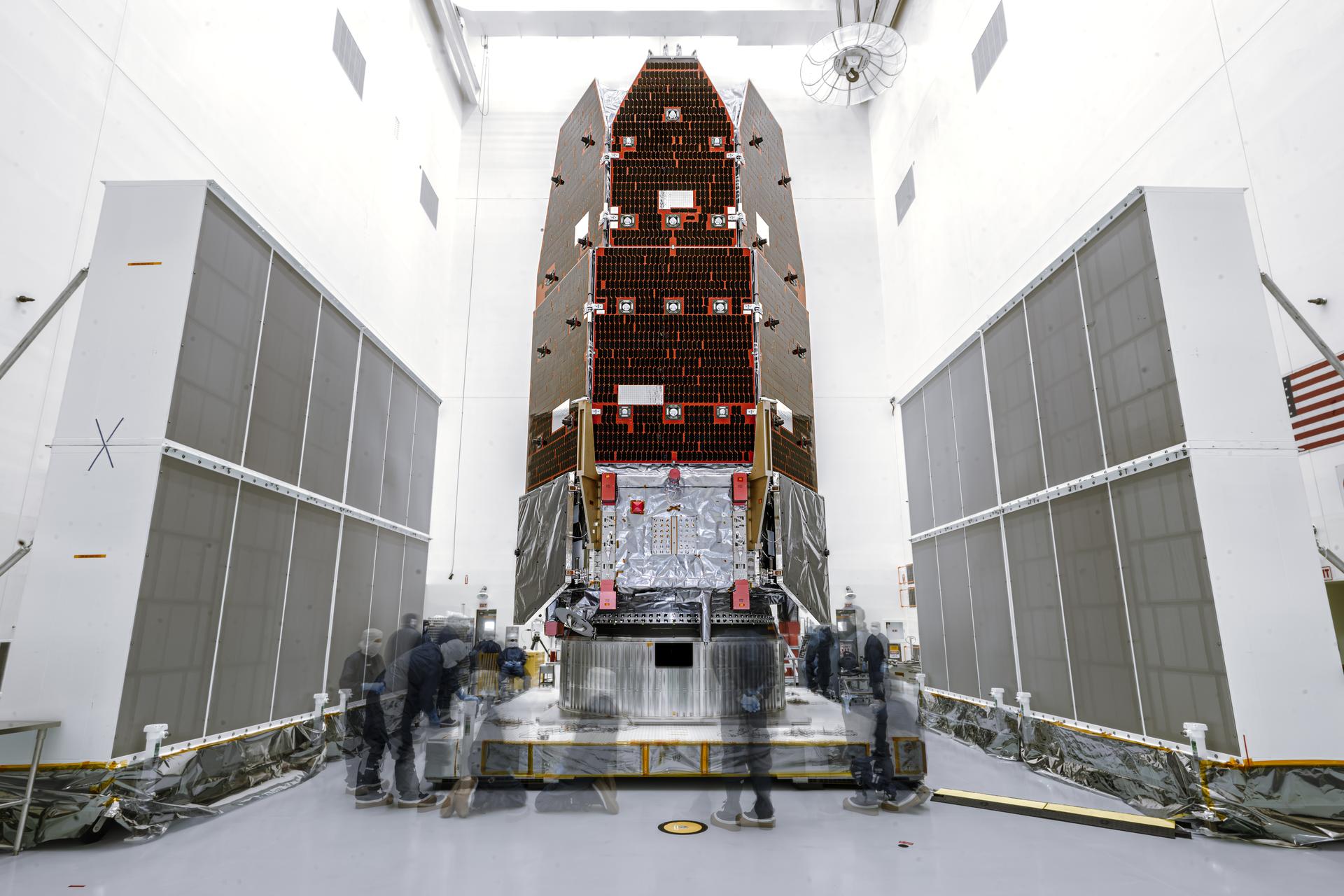
Roman Space Telescope Propulsion Milestones
In this long exposure image, members of NASA's Nancy Grace Roman Space Telescope process the observatory on Thursday, July 16, 2026, inside the Payload Hazardous Servicing Facility at…
Inspect NASA record
In this long exposure image, members of NASA's Nancy Grace Roman Space Telescope process the observatory on Thursday, July 16, 2026, inside the Payload Hazardous Servicing Facility at NASA’s Kennedy Space Center in Florida. Roman’s primary mission is to settle essential questions about dark energy, exoplanets, and infrared astrophysics by conducting wide-field surveys that explore the universe’s structure, evolution, and composition. Liftoff atop a SpaceX Falcon Heavy rocket from NASA Kennedy’s Launch Complex 39A is targeted no earlier than Sunday, Aug. 30, 2026.
- Record ID
- KSC-20260716-PH-SER01_0001
- NASA center
- KSC
- Date
- 2026-07-16
- Credit
- NASA/Sydney Rohde (Rocz)
- Keywords
- Launch Services Program, Payload Hazardous Servicing Facility, GSFC, Kennedy Space Center, preparations, Goddard Space Flight Center, Nancy Grace Roman Space Telescope, KSC, LSP, PHSF, processing, RST
HQ · 2022-02-07 · NHQ202202070003
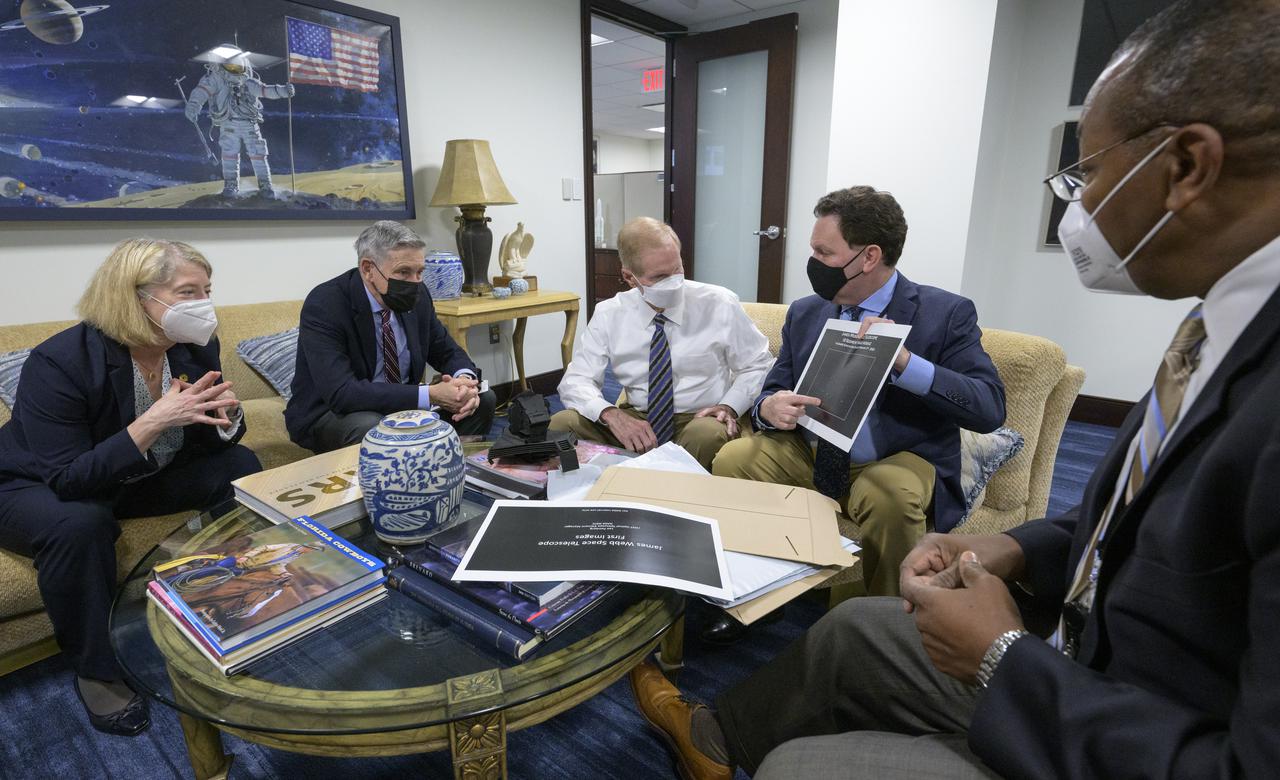
James Webb Space Telescope Alignment Image
NASA Deputy Administrator Pam Melroy, left, NASA Associate Administrator Bob Cabana, and NASA Administrator Bill Nelson are shown an early mirror alignment image from the James Webb Space…
Inspect NASA record
NASA Deputy Administrator Pam Melroy, left, NASA Associate Administrator Bob Cabana, and NASA Administrator Bill Nelson are shown an early mirror alignment image from the James Webb Space Telescope, by NASA Webb Optical Telescope Element Manager Lee Feinberg, as NASA Program Director for the James Webb Space Telescope Program Greg Robinson, right, looks on, Monday, Feb., 7, 2022, at the Mary W. Jackson NASA Headquarters building in Washington. This engineering visual, which features 18 unfocused dots of light, demonstrates that the Webb team has successfully identified starlight through each of Webb’s 18 hexagonal mirror segments – the starting point in a months-long process to progressively align the segments into a single, precise mirror to prepare the telescope for science. Photo Credit: (NASA/Bill Ingalls)
- Record ID
- NHQ202202070003
- NASA center
- HQ
- Date
- 2022-02-07
- Credit
- NASA/Bill Ingalls
- Keywords
- Bill Nelson, Bob Cabana, DC, Greg Robinson, James Webb Space Telescope (JWST), Lee Feinberg, Mary W. Jackson NASA Headquarters, NASA Administrator, NASA Deputy Administrator, Pam Melroy, Washington

JPL · 2015-04-14 · PIA19331
Time Delay in Microlensing Event
This plot shows data obtained from NASA's Spitzer Space Telescope and the Optical Gravitational Lensing Experiment, or OGLE, telescope located in Chile, during a "microlensing" event. Microlensing events…
Inspect NASA record
This plot shows data obtained from NASA's Spitzer Space Telescope and the Optical Gravitational Lensing Experiment, or OGLE, telescope located in Chile, during a "microlensing" event. Microlensing events occur when one star passes another, and the gravity of the foreground star causes the distant star's light to magnify and brighten. This magnification is evident in the plot, as both Spitzer and OGLE register an increase in the star's brightness. If the foreground star is circled by a planet, the planet's gravity can alter the magnification over a shorter period, seen in the plot in the form of spikes and a dip. The great distance between Spitzer, in space, and OGLE, on the ground, meant that Spitzer saw this particular microlensing event before OGLE. The offset in the timing can be used to measure the distance to the planet. In this case, the planet, called OGLE-2014-BLG-0124L, was found to be 13,000 light-years away, near the center of our Milky Way galaxy. The finding was the result of fortuitous timing because Spitzer's overall program to observe microlensing events was only just starting up in the week before the planet's effects were visible from Spitzer's vantage point. While Spitzer sees infrared light of 3.6 microns in wavelength, OGLE sees visible light of 0.8 microns. http://photojournal.jpl.nasa.gov/catalog/PIA19331
- Record ID
- PIA19331
- NASA center
- JPL
- Date
- 2015-04-14
- Credit
- NASA/JPL-Caltech/Warsaw University Observatory
- Keywords
- Spitzer Space Telescope
JPL · 2019-12-19 · PIA23405
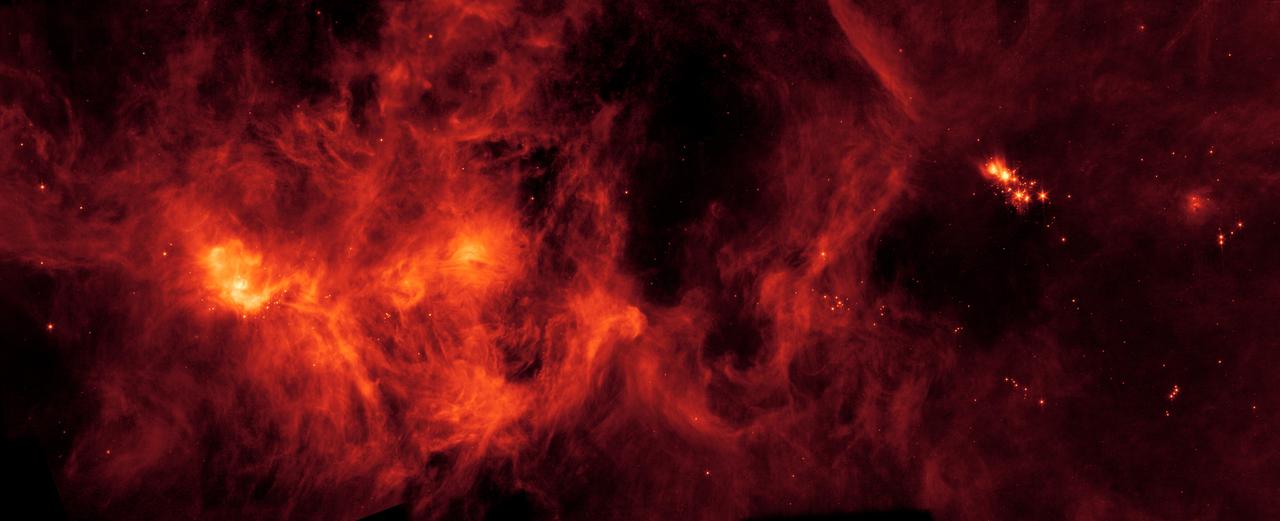
Perseus Molecular Cloud
A collection of gas and dust over 500 light-years across, the Perseus Molecular Cloud hosts an abundance of young stars. It was imaged here by the NASA's Spitzer…
Inspect NASA record
A collection of gas and dust over 500 light-years across, the Perseus Molecular Cloud hosts an abundance of young stars. It was imaged here by the NASA's Spitzer Space Telescope. https://photojournal.jpl.nasa.gov/catalog/PIA23405
- Record ID
- PIA23405
- NASA center
- JPL
- Date
- 2019-12-19
- Credit
- NASA/JPL-Caltech
- Keywords
- Spitzer Space Telescope

HQ · 2026-09-01 · NHQ202609010002
Nancy Grace Roman Space Telescope Celebration
NASA Administrator Jared Isaacman, right, greets Goddard Space Flight Center associate director Ray Rubilotta, left, while Goddard Space Flight Center director Jamie Dunn looks on during an event…
Inspect NASA record
NASA Administrator Jared Isaacman, right, greets Goddard Space Flight Center associate director Ray Rubilotta, left, while Goddard Space Flight Center director Jamie Dunn looks on during an event held to celebrate the launch of NASA’s Nancy Grace Roman Space Telescope, Tuesday, Sept. 1, 2026, at NASA’s Goddard Space Flight Center in Greenbelt, Maryland. Photo Credit: (NASA/Aubrey Gemignani)
- Record ID
- NHQ202609010002
- NASA center
- HQ
- Date
- 2026-09-01
- Credit
- NASA/Aubrey Gemignani
- Keywords
- Goddard Space Flight Center (GSFC), Greenbelt, Jamie Dunn, Jared Isaacman, Maryland, NASA Administrator, Nancy Grace Roman Space Telescope, Ray Rubilotta

MSFC · 1997-01-01 · 9712113
History of Hubble Space Telescope (HST)
Astronomers using the Hubble Space Telescope (HST) have identified what may be the most luminous star known; a celestial mammoth that releases up to 10-million times the power…
Inspect NASA record
Astronomers using the Hubble Space Telescope (HST) have identified what may be the most luminous star known; a celestial mammoth that releases up to 10-million times the power of the Sun and is big enough to fill the diameter of Earth's orbit. The star unleashes as much energy in six seconds as our Sun does in one year. The image, taken by a UCLA-led team with the recently installed Near-Infrared Camera and Multi-Object Spectrometer (NICMOS) aboard the HST, also reveals a bright nebula, created by extremely massive stellar eruptions. The UCLA astronomers estimate that the star, called the Pistol Star, (for the pistol shaped nebula surrounding it), is approximately 25,000 light-years from Earth, near the center of our Milky Way galaxy. The Pistol Star is not visible to the eye, but is located in the direction of the constellation Sagittarius, hidden behind the great dust clouds along the Milky Way
- Record ID
- 9712113
- NASA center
- MSFC
- Date
- 1997-01-01
- Keywords
- Hubble Space Telescope, HST, Near-Infrared Camera and Multi-Object Spectrometer, NICMOS
HQ · 2026-09-01 · NHQ202609010009
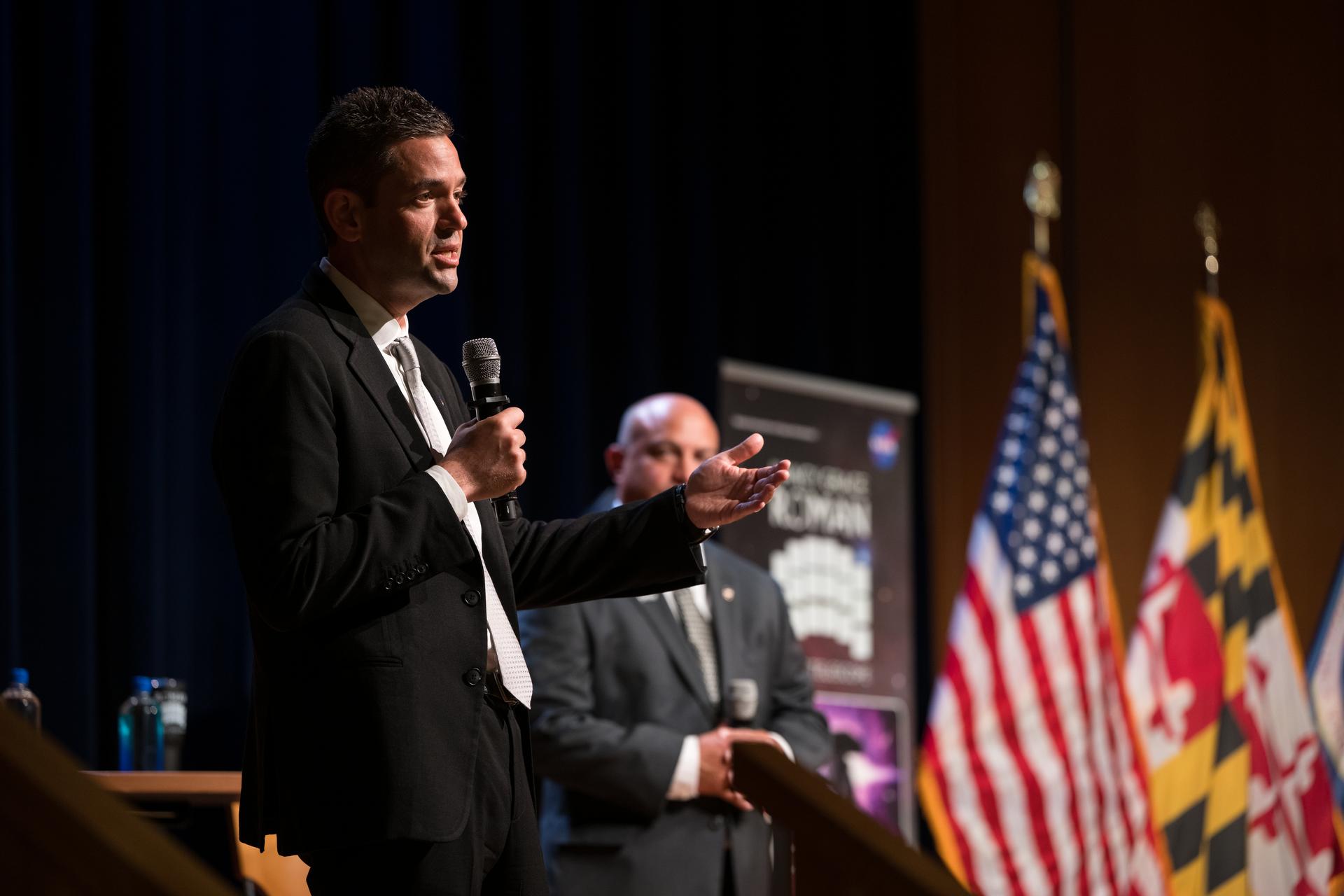
Nancy Grace Roman Space Telescope Celebration
NASA Administrator Jared Isaacman, left, provides remarks while Goddard Space Flight Center director Jamie Dunn looks on during an event held to celebrate the launch of the Nancy…
Inspect NASA record
NASA Administrator Jared Isaacman, left, provides remarks while Goddard Space Flight Center director Jamie Dunn looks on during an event held to celebrate the launch of the Nancy Grace Roman Space Telescope, Tuesday, Sept. 1, 2026, at NASA’s Goddard Space Flight Center in Greenbelt, Maryland. Photo Credit: (NASA/Aubrey Gemignani)
- Record ID
- NHQ202609010009
- NASA center
- HQ
- Date
- 2026-09-01
- Credit
- NASA/Aubrey Gemignani
- Keywords
- Goddard Space Flight Center (GSFC), Greenbelt, Jamie Dunn, Jared Isaacman, Maryland, NASA Administrator, Nancy Grace Roman Space Telescope