
Update Site (from NASA)
Explore NASA’s Image and Video Library.
Suggest one object per day for the Interstellar Minds collection. We review each suggestion before adding it.
Sign in to suggest a Marvel.
Find a NASA image ID. Open a NASA record and copy its ID from the end of the details URL.
NASA image records
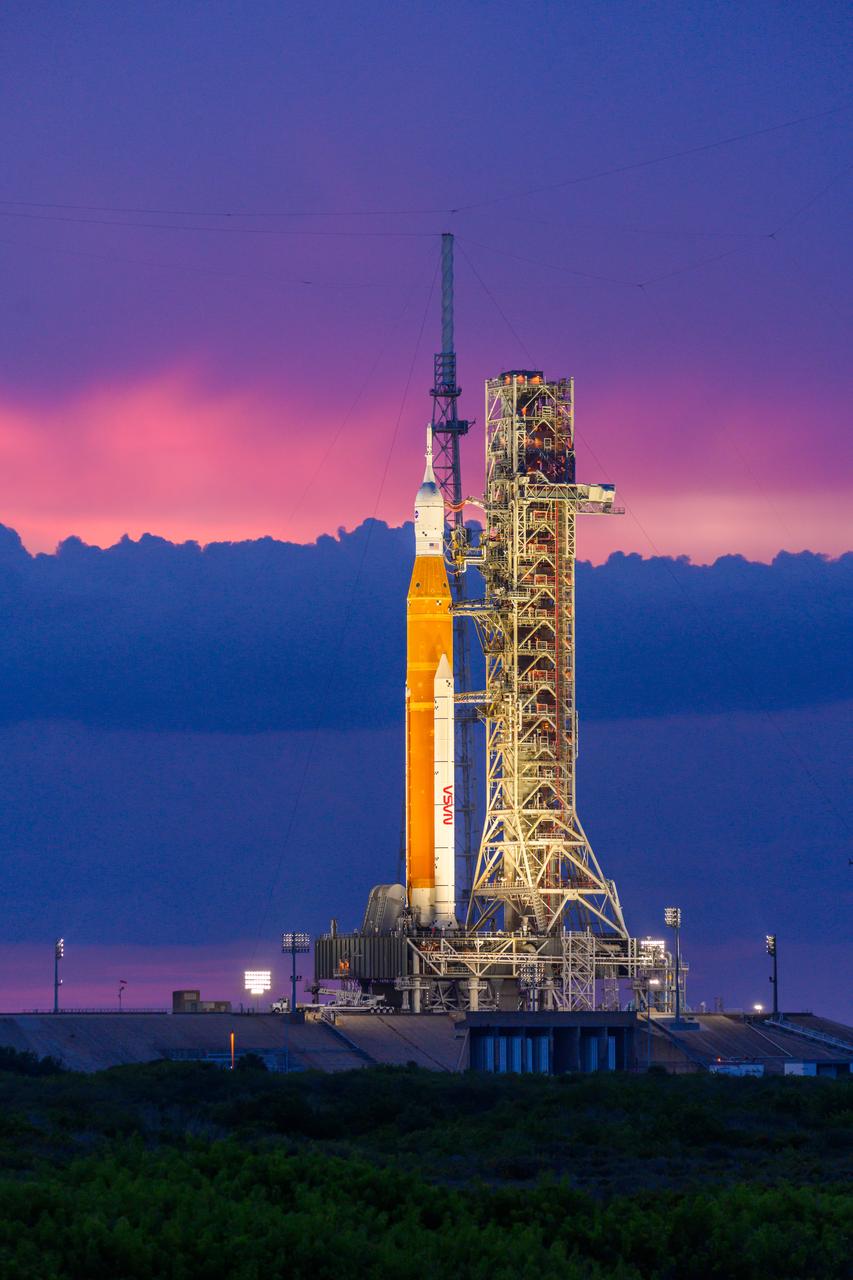
MSFC · 2022-08-30 · MAF_20220830__KSC_Artemis1_epb_008
Artemis I Prelaunch
NASA’s Space Launch System (SLS) rocket with the Orion spacecraft aboard is seen atop the mobile launcher at Launch 39B at NASA’s Kennedy Space Center in Florida. Artemis…
Inspect NASA record
NASA’s Space Launch System (SLS) rocket with the Orion spacecraft aboard is seen atop the mobile launcher at Launch 39B at NASA’s Kennedy Space Center in Florida. Artemis I mission is the first integrated test of the agency’s deep space exploration systems: the Space Launch System rocket, Orion spacecraft, and supporting ground systems. The mission is the first in a series of increasingly complex missions to the Moon. Launch of the uncrewed flight test is targeted for no earlier than Sept. 3 at 2:17 p.m. ET. With Artemis missions, NASA will land the first woman and first person of color on the Moon, using innovative technologies to explore more of the lunar surface than ever before.
- Record ID
- MAF_20220830__KSC_Artemis1_epb_008
- NASA center
- MSFC
- Date
- 2022-08-30
- Credit
- NASA/Eric Bordelon
- Keywords
- Space Launch System, SLS, Artemis, NASA, Marshall Space Flight Center, rocket science, rocket, launch vehicle, Moon, interview

MSFC · 1969-02-25 · 6975097
Saturn Apollo Program
In this photograph, Apollo 11 astronaut Neil A. Armstrong uses a geologist’s hammer in selecting rock specimens during a geological field trip to the Quitman Mountains area near…
Inspect NASA record
In this photograph, Apollo 11 astronaut Neil A. Armstrong uses a geologist’s hammer in selecting rock specimens during a geological field trip to the Quitman Mountains area near the Fort Quitman ruins in far west Texas. Armstrong, alongside astronaut Edwin (Buzz) Aldrin, practiced gathering rock specimens using special lunar geological tools in preparation for the first Lunar landing. Mission was accomplished in July of the same year. Aboard the Marshall Space Fight center (MSFC) developed Saturn V launch vehicle, the Apollo 11 mission launched from The Kennedy Space Center, Florida on July 16, 1969 and safely returned to Earth on July 24, 1969. The 3-man crew aboard the flight consisted of Armstrong, commander; Aldrin, Lunar Module pilot; and a third astronaut Michael Collins, Command Module pilot. Armstrong was the first human to ever stand on the lunar surface, followed by Aldrin, while Collins remained in lunar orbit. The crew collected 47 pounds of lunar surface material which was returned to Earth for analysis. The lunar surface exploration was concluded in 2½ hours.
- Record ID
- 6975097
- NASA center
- MSFC
- Date
- 1969-02-25
- Keywords
- Apollo 11, Lunar Landing, Aldrin, Armstrong, Training, Quitman Mountains
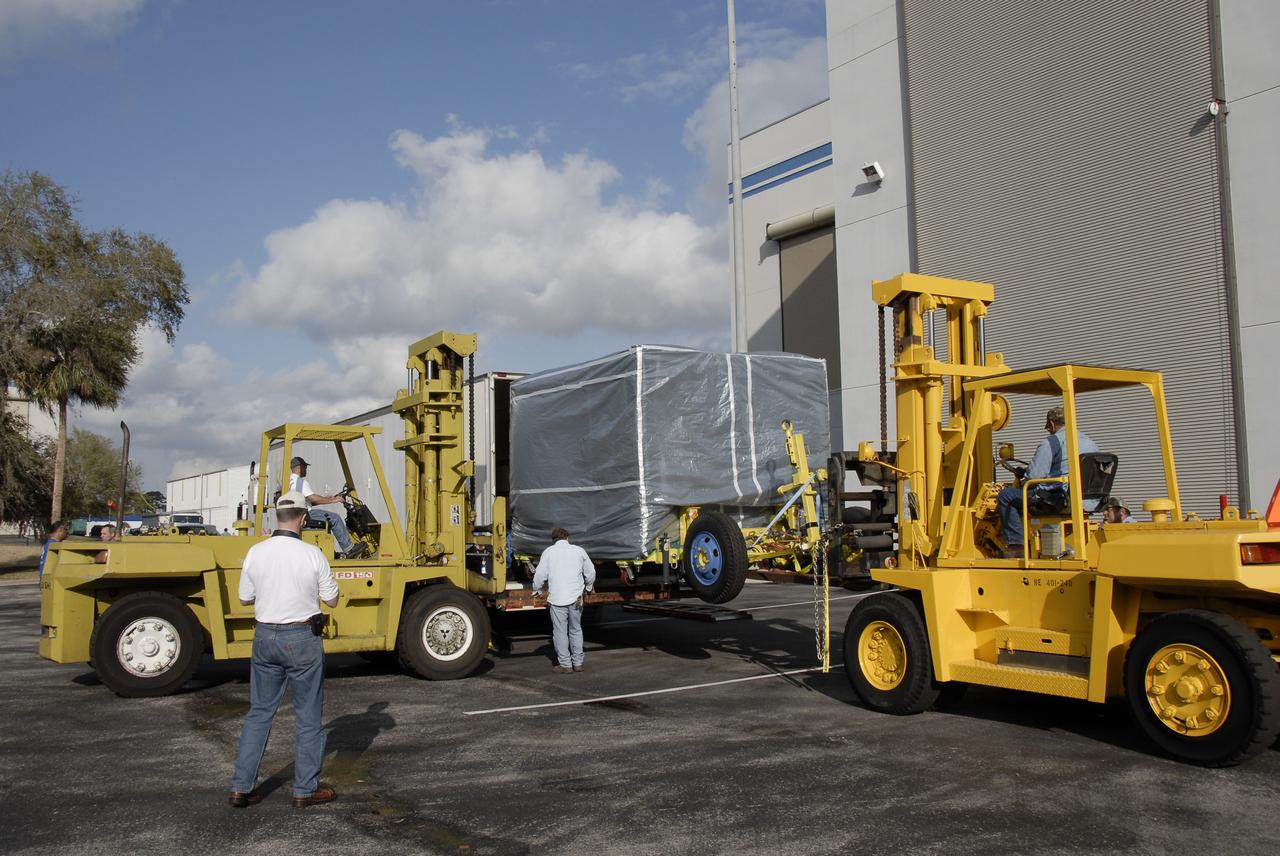
KSC · 2009-02-19 · KSC-2009-1752
KSC-2009-1752
CAPE CANAVERAL, Fla. – At Astrotech in Titusville, Fla., NASA's Lunar CRater Observation and Sensing Satellite, known as LCROSS, is offloaded from the truck after its arrival from…
Inspect NASA record
CAPE CANAVERAL, Fla. – At Astrotech in Titusville, Fla., NASA's Lunar CRater Observation and Sensing Satellite, known as LCROSS, is offloaded from the truck after its arrival from Northrop Grumman's facility in Redondo Beach, Calif. The satellite's primary mission is to search for water ice on the moon in a permanently shadowed crater near one of the lunar poles. LCROSS is a low-cost, accelerated-development, companion mission to NASA's Lunar Reconnaissance Orbiter, or LRO. At Kennedy, the two spacecraft will be integrated with an Atlas V launch vehicle and tested for final flight worthiness. LCROSS and LRO are the first missions in NASA's plan to return humans to the moon and begin establishing a lunar outpost by 2020. Photo credit: NASA/Kim Shiflett
- Record ID
- KSC-2009-1752
- NASA center
- KSC
- Date
- 2009-02-19
- Keywords
- moon mission, LRO, LCROSS,

JSC · 1969-03-06 · as09-20-3154
Astronaut James McDivitt photographed inside Command Module during Apollo 9
AS09-20-3154 (3-13 March 1969) --- This close-up view of astronaut James A. McDivitt shows several days' beard growth. The Apollo 9 mission commander was onboard the Lunar Module…
Inspect NASA record
AS09-20-3154 (3-13 March 1969) --- This close-up view of astronaut James A. McDivitt shows several days' beard growth. The Apollo 9 mission commander was onboard the Lunar Module (LM) "Spider" in Earth orbit, near the end of the flight. He was joined on the mission by astronauts David R. Scott, command module pilot, and Russell L. Schweickart, lunar module pilot. Schweickart took this picture while Scott remained in the Command Module (CM) "Gumdrop." In Earth orbit, the three tested the transposition and docking systems of the lunar module and command module. On a scheduled lunar landing mission later this year, a team of three astronauts and ground controllers will use what this crew and its support staff have learned in handling the systems of the two spacecraft.
- Record ID
- as09-20-3154
- NASA center
- JSC
- Date
- 1969-03-06
- Keywords
- APOLLO 9, APOLLO PROJECT, APOLLO SPACECRAFT, ASTRONAUTS, COMMAND MODULES, PORTRAIT, SPACECRAFT CABINS
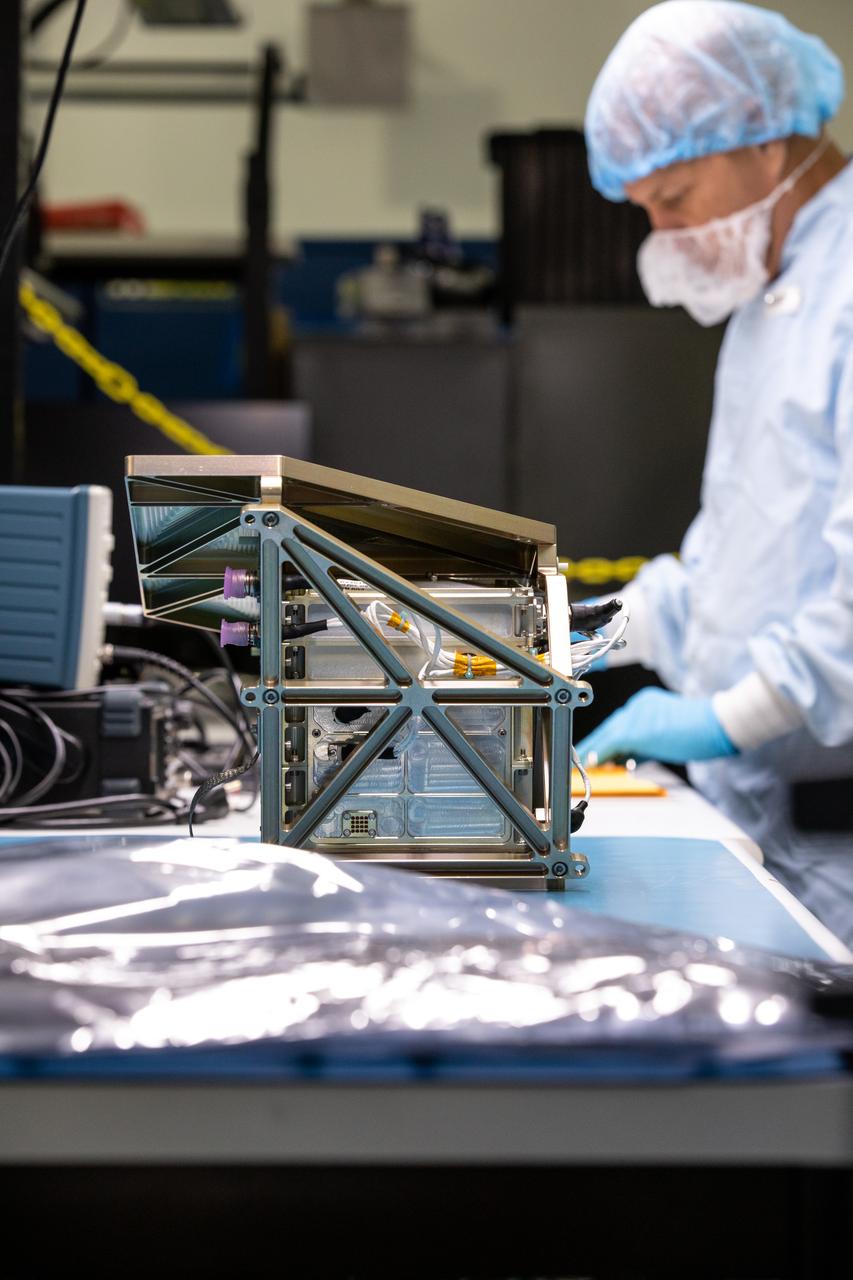
KSC · 2022-10-19 · KSC-20221019-PH-JBS01_0023
PRIME-1 MSolo MLI Install
Engineers prepare the Mass Spectrometer Observing Lunar Operations (MSolo) instrument for the multilayer insulation installation inside Kennedy Space Center’s Space Station Processing Facility on Oct. 19, 2022. The…
Inspect NASA record
Engineers prepare the Mass Spectrometer Observing Lunar Operations (MSolo) instrument for the multilayer insulation installation inside Kennedy Space Center’s Space Station Processing Facility on Oct. 19, 2022. The activity is in preparation for the Polar Resources Ice Mining Experiment-1 (PRIME-1) mission, which will be the first in-situ resource utilization demonstration on the Moon. MSolo is a commercial off-the-shelf mass spectrometer modified to work in space and will help analyze the chemical makeup of landing sites on the Moon, as well as study water on the lunar surface. Researchers and engineers are preparing MSolo instruments to launch on four robotic missions as part of NASA’s Commercial Lunar Payload Services – commercial deliveries beginning in 2023 that will perform science experiments, test technologies, and demonstrate capabilities to help NASA explore the Moon and prepare for crewed missions to the lunar surface.
- Record ID
- KSC-20221019-PH-JBS01_0023
- NASA center
- KSC
- Date
- 2022-10-19
- Credit
- NASA/Ben Smegelsky
- Keywords
- CLPS, IM-2, MLI, Moon to Mars, Msolo, NASA Tech, PRIME-1
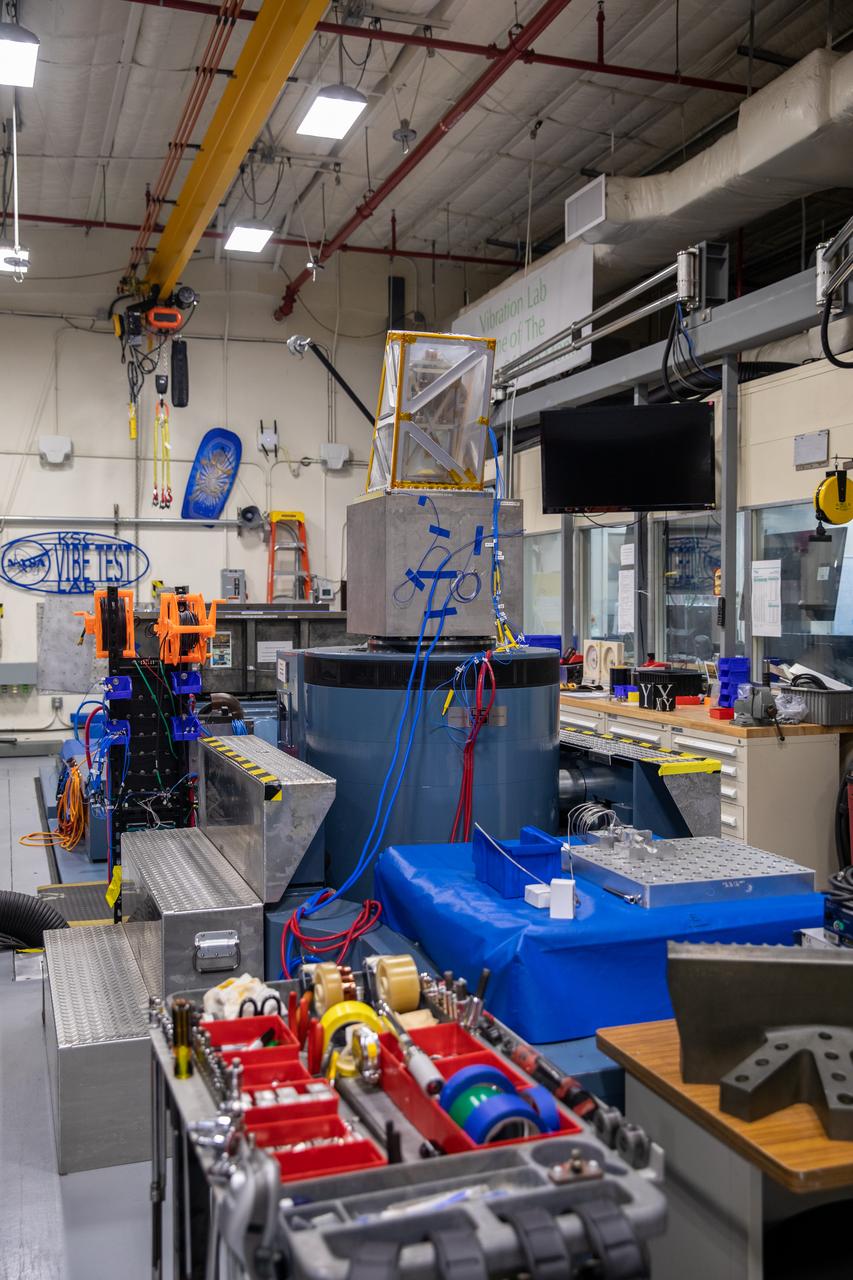
KSC · 2022-08-03 · KSC-20220803-PH-KLS01_0034
MSolo Vibe Test
The Mass Spectrometer observing lunar operations (MSolo) instrument undergoes vibration testing inside the Cryogenics Laboratory at NASA’s Kennedy Space Center in Florida on Aug. 3, 2022. MSolo is…
Inspect NASA record
The Mass Spectrometer observing lunar operations (MSolo) instrument undergoes vibration testing inside the Cryogenics Laboratory at NASA’s Kennedy Space Center in Florida on Aug. 3, 2022. MSolo is a commercial off-the-shelf mass spectrometer modified to work in space and will help analyze the chemical makeup of landing sites on the Moon, as well as study water on the lunar surface. Researchers and engineers are preparing MSolo instruments to launch on four robotic missions as part of NASA’s Commercial Lunar Payload Services (CLPS) – commercial deliveries that will perform science experiments, test technologies, and demonstrate capabilities to help NASA explore the Moon and prepare for crewed missions to the lunar surface. This particular MSolo instrument is slated to fly on the agency’s Polar Resources Ice Mining Experiment-1 (PRIME-1) mission – the first in-situ resource utilization demonstration on the Moon – as part of the agency’s CLPS initiative.
- Record ID
- KSC-20220803-PH-KLS01_0034
- NASA center
- KSC
- Date
- 2022-08-03
- Credit
- NASA/Kim Shiflett
- Keywords
- CLPS, IM-2, Moon to Mars, Msolo, NASA Tech, PRIME-1
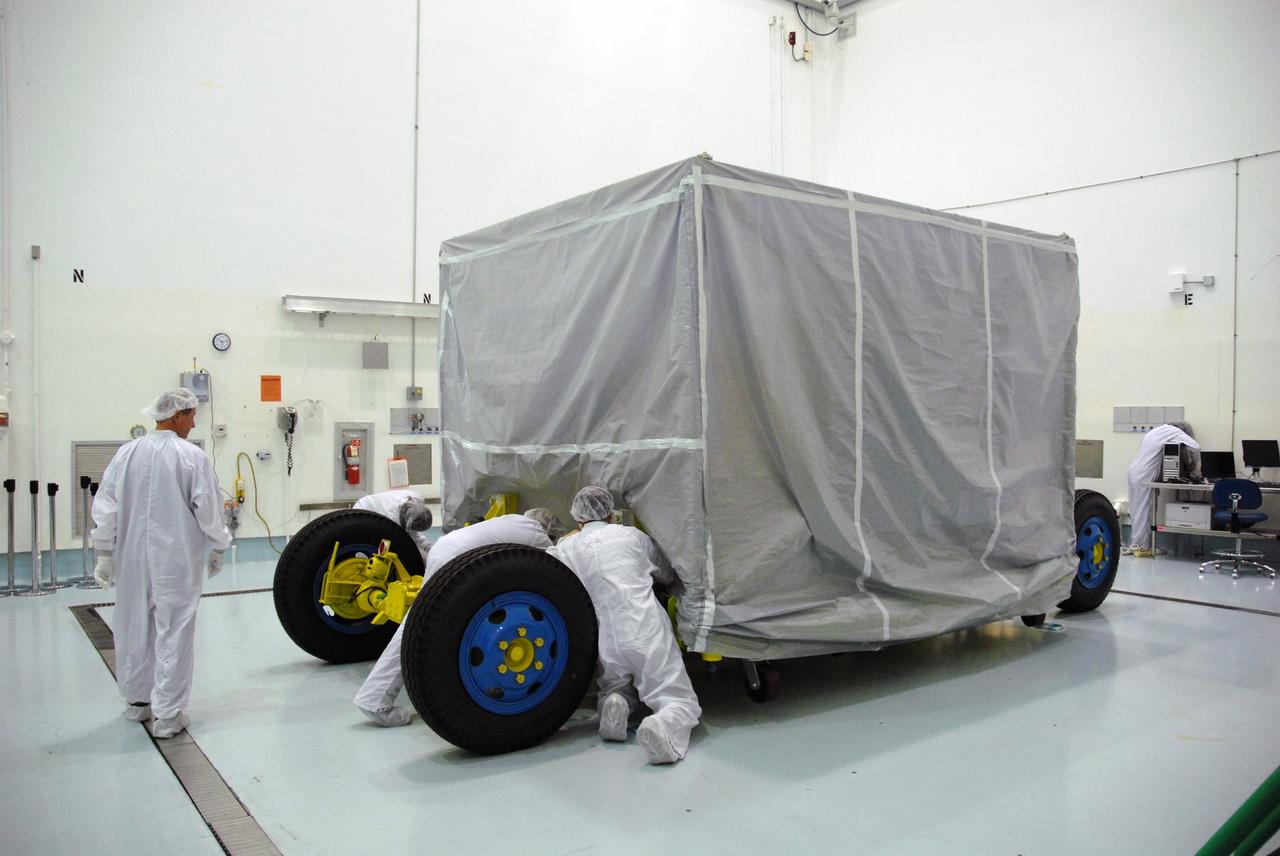
KSC · 2009-02-20 · KSC-2009-1740
KSC-2009-1740
CAPE CANAVERAL, Fla. – At the Astrotech payload processing facility near NASA's Kennedy Space Center in Florida, workers prepare to remove the cover from around NASA's Lunar CRater…
Inspect NASA record
CAPE CANAVERAL, Fla. – At the Astrotech payload processing facility near NASA's Kennedy Space Center in Florida, workers prepare to remove the cover from around NASA's Lunar CRater Observation and Sensing Satellite, known as LCROSS. The satellite's primary mission is to search for water ice on the moon in a permanently shadowed crater near one of the lunar poles. LCROSS is a low-cost, accelerated-development, companion mission to NASA's Lunar Reconnaissance Orbiter, or LRO. At Kennedy, the two spacecraft will be integrated with an Atlas V launch vehicle and tested for final flight worthiness. LCROSS and LRO are the first missions in NASA's plan to return humans to the moon and begin establishing a lunar outpost by 2020. Launch is no earlier than April 24. Photo credit: NASA/Tim Jacobs
- Record ID
- KSC-2009-1740
- NASA center
- KSC
- Date
- 2009-02-20
- Keywords
- moon mission, LRO, LCROSS,

KSC · 2022-08-04 · KSC-20220804-PH-JBS02_0116
MSolo Vibe Fixture Removal
Engineers at NASA’s Kennedy Space Center in Florida remove the vibration fixture on the Mass Spectrometer observing lunar operations (MSolo) instrument on Aug. 4, 2022. The activity followed…
Inspect NASA record
Engineers at NASA’s Kennedy Space Center in Florida remove the vibration fixture on the Mass Spectrometer observing lunar operations (MSolo) instrument on Aug. 4, 2022. The activity followed a vibration test in preparation for the Polar Resources Ice Mining Experiment-1 (PRIME-1) mission, which will be the first in-situ resource utilization demonstration on the Moon. MSolo is a commercial off-the-shelf mass spectrometer modified to work in space and will help analyze the chemical makeup of landing sites on the Moon, as well as study water on the lunar surface. Researchers and engineers are preparing MSolo instruments to launch on four robotic missions as part of NASA’s Commercial Lunar Payload Services – commercial deliveries beginning in 2023 that will perform science experiments, test technologies, and demonstrate capabilities to help NASA explore the Moon and prepare for crewed missions to the lunar surface.
- Record ID
- KSC-20220804-PH-JBS02_0116
- NASA center
- KSC
- Date
- 2022-08-04
- Credit
- NASA/Ben Smegelsky
- Keywords
- CLPS, IM-2, Moon to Mars, Msolo, NASA Tech, PRIME-1
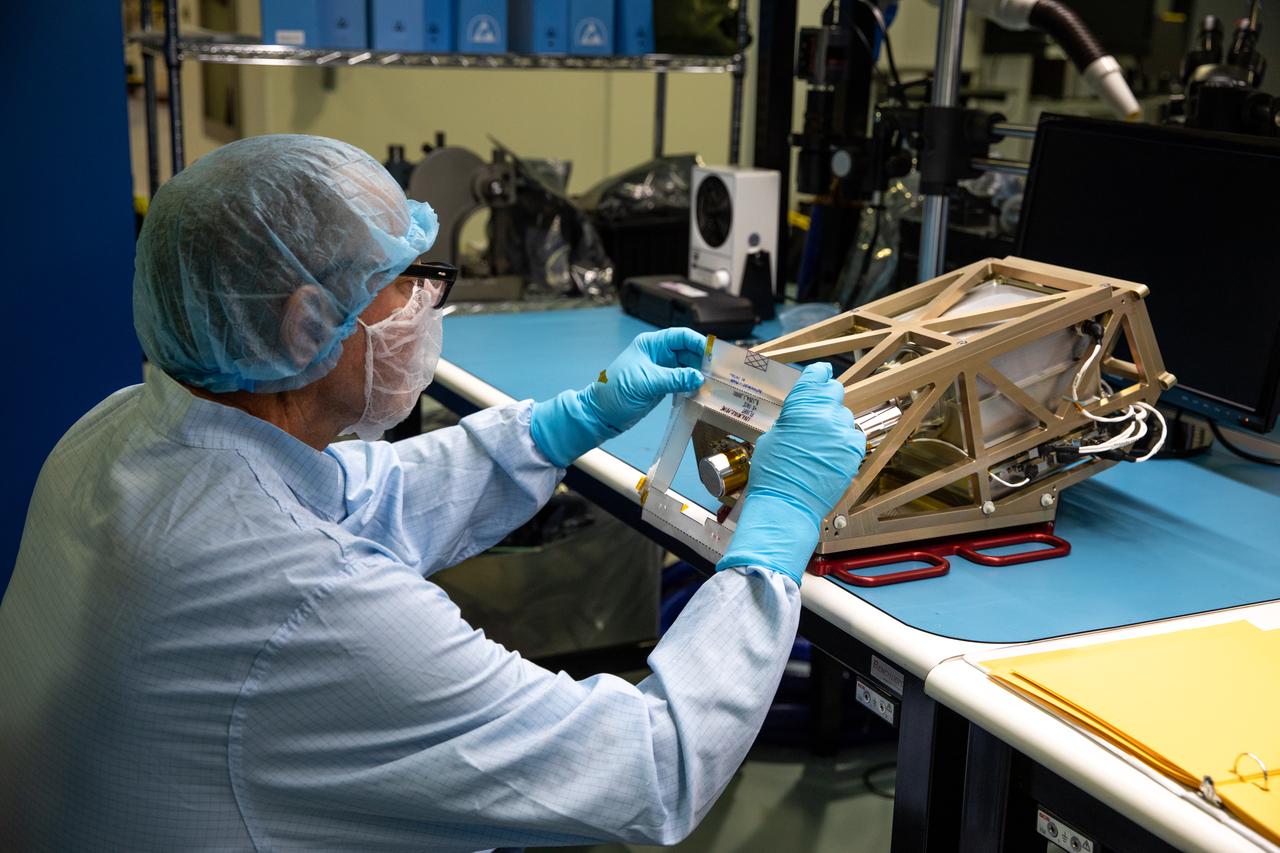
KSC · 2022-10-19 · KSC-20221019-PH-JBS01_0078
PRIME-1 MSolo MLI Install
Engineers prepare the Mass Spectrometer Observing Lunar Operations (MSolo) instrument for the multilayer insulation installation inside Kennedy Space Center’s Space Station Processing Facility on Oct. 19, 2022. The…
Inspect NASA record
Engineers prepare the Mass Spectrometer Observing Lunar Operations (MSolo) instrument for the multilayer insulation installation inside Kennedy Space Center’s Space Station Processing Facility on Oct. 19, 2022. The activity is in preparation for the Polar Resources Ice Mining Experiment-1 (PRIME-1) mission, which will be the first in-situ resource utilization demonstration on the Moon. MSolo is a commercial off-the-shelf mass spectrometer modified to work in space and will help analyze the chemical makeup of landing sites on the Moon, as well as study water on the lunar surface. Researchers and engineers are preparing MSolo instruments to launch on four robotic missions as part of NASA’s Commercial Lunar Payload Services – commercial deliveries beginning in 2023 that will perform science experiments, test technologies, and demonstrate capabilities to help NASA explore the Moon and prepare for crewed missions to the lunar surface.
- Record ID
- KSC-20221019-PH-JBS01_0078
- NASA center
- KSC
- Date
- 2022-10-19
- Credit
- NASA/Ben Smegelsky
- Keywords
- CLPS, IM-2, MLI, Moon to Mars, Msolo, NASA Tech, PRIME-1
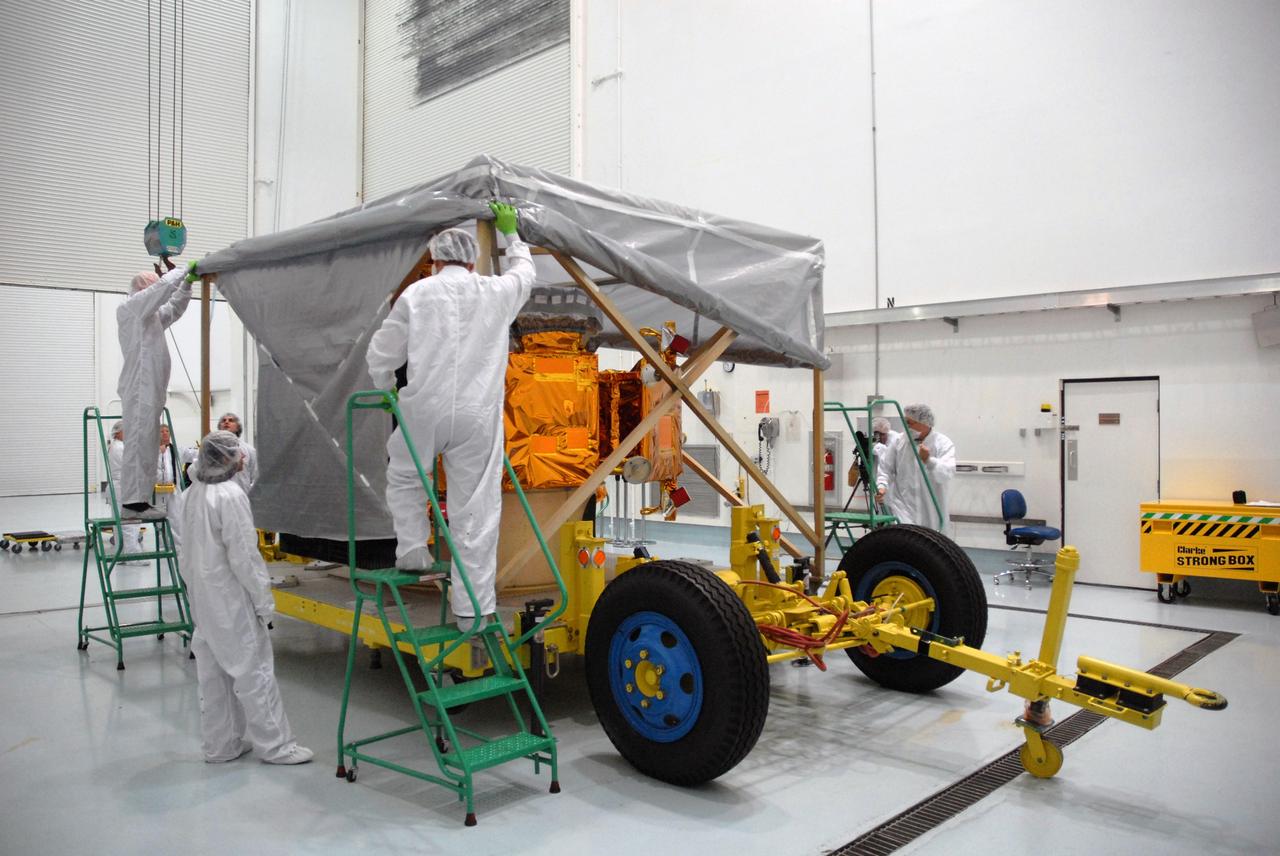
KSC · 2009-02-20 · KSC-2009-1742
KSC-2009-1742
CAPE CANAVERAL, Fla. – At the Astrotech payload processing facility near NASA's Kennedy Space Center in Florida, workers roll up the sides of the cover around NASA's Lunar…
Inspect NASA record
CAPE CANAVERAL, Fla. – At the Astrotech payload processing facility near NASA's Kennedy Space Center in Florida, workers roll up the sides of the cover around NASA's Lunar CRater Observation and Sensing Satellite, known as LCROSS. The satellite's primary mission is to search for water ice on the moon in a permanently shadowed crater near one of the lunar poles. LCROSS is a low-cost, accelerated-development, companion mission to NASA's Lunar Reconnaissance Orbiter, or LRO. At Kennedy, the two spacecraft will be integrated with an Atlas V launch vehicle and tested for final flight worthiness. LCROSS and LRO are the first missions in NASA's plan to return humans to the moon and begin establishing a lunar outpost by 2020. Launch is no earlier than April 24. Photo credit: NASA/Tim Jacobs
- Record ID
- KSC-2009-1742
- NASA center
- KSC
- Date
- 2009-02-20
- Keywords
- moon mission, LRO, LCROSS,