
Update Site (from NASA)
Explore NASA’s Image and Video Library.
Suggest one object per day for the Interstellar Minds collection. We review each suggestion before adding it.
Sign in to suggest a Marvel.
Find a NASA image ID. Open a NASA record and copy its ID from the end of the details URL.
NASA image records

KSC · 2011-04-09 · KSC-2011-2819
KSC-2011-2819
CAPE CANAVERAL, Fla. -- Workers watch the arrival of NASA's Juno spacecraft as it is moved into Astrotech's payload processing facility in Titusville, Fla. to begin final testing…
Inspect NASA record
CAPE CANAVERAL, Fla. -- Workers watch the arrival of NASA's Juno spacecraft as it is moved into Astrotech's payload processing facility in Titusville, Fla. to begin final testing and preparations for launch. The solar-powered spacecraft will orbit Jupiter's poles 33 times to find out more about the gas giant's origins, structure, atmosphere and magnetosphere and investigate the existence of a solid planetary core. Juno is scheduled to launch aboard an Atlas V rocket from Cape Canaveral, Fla. Aug. 5. For more information visit, www.nasa.gov/juno. Photo credit: NASA/Jack Pfaller It will splash down into the Atlantic Ocean where the ship and its crew will recover it and tow it back through Port Canaveral for refurbishing for another launch. The STS-124 mission is the second of three flights launching components to complete the Japan Aerospace Exploration Agency's Kibo laboratory. The shuttle crew will install Kibo's large Japanese Pressurized Module and its remote manipulator system, or RMS. Photo credit: USA/Jeff Suter
- Record ID
- KSC-2011-2819
- NASA center
- KSC
- Date
- 2011-04-09
- Keywords
- juno, atlas v, elv
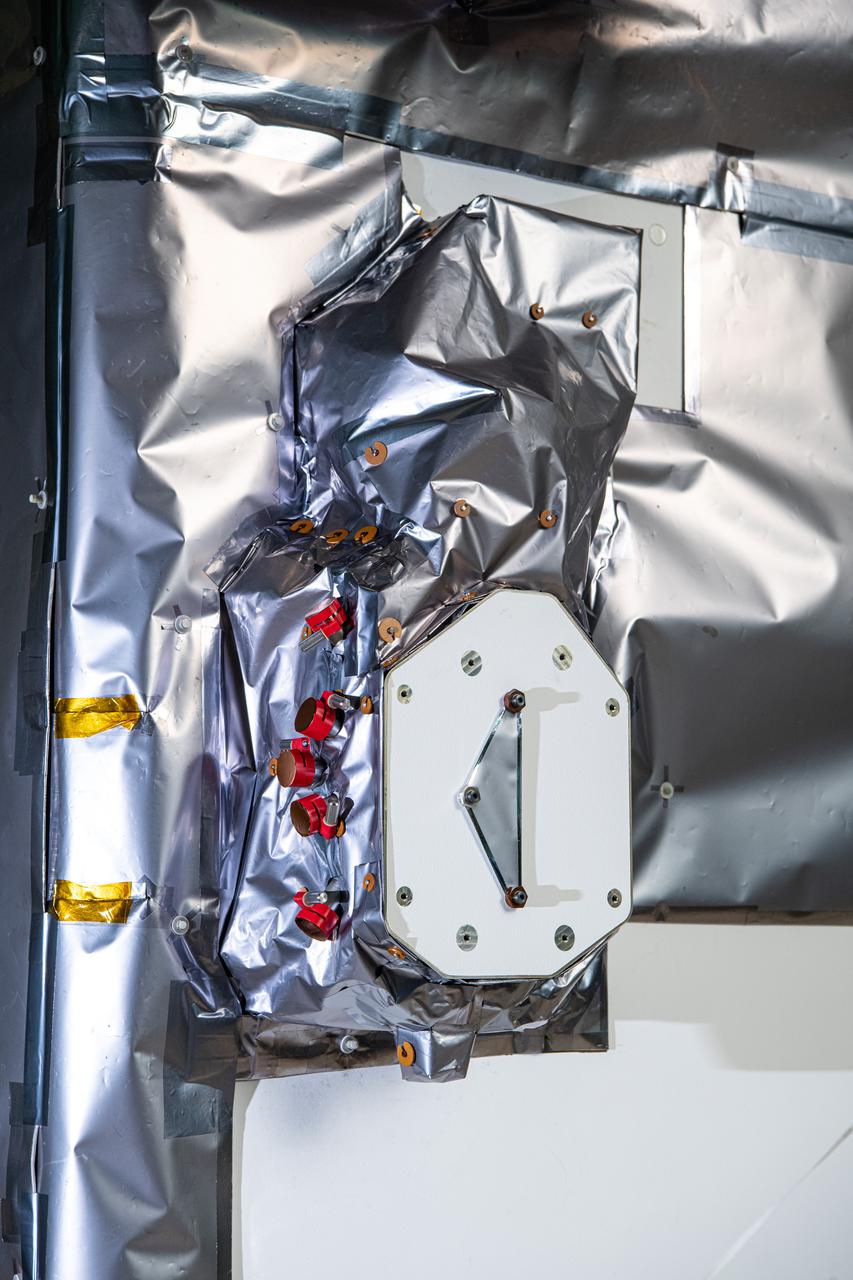
GSFC · 2023-11-02 · GSFC_20231102_PACE_030821
GSFC_20231102_PACE_030821
The SPEXone instrument on The Plankton, Aerosol, Cloud, ocean Ecosystem (PACE) in the clean room at NASA's Goddard Space Flight Center in Greenbelt, Maryland on October 31st, 2023.…
Inspect NASA record
The SPEXone instrument on The Plankton, Aerosol, Cloud, ocean Ecosystem (PACE) in the clean room at NASA's Goddard Space Flight Center in Greenbelt, Maryland on October 31st, 2023. SPEXone is one of three instruments on NASA's Plankton, Aerosol, Cloud, ocean Ecosystem (PACE) observatory and has been developed by a Dutch consortium consisting of SRON Netherlands Institute for Space Research and Airbus Defence and Space Netherlands, supported by opto-mechanical expertise from TNO. SRON and Airbus DS NL are responsible for the design, manufacturing and testing of the instrument. The scientific lead is in the hands of SRON. SPEXone is a public-private initiative, funded by the Netherlands Space Office (NSO), the Netherlands Organization of Scientific Research (NWO), SRON and Airbus DS NL. PACE's unprecedented spectral coverage will provide the first-ever global measurements designed to identify phytoplankton community composition. The mission will make global ocean color measurements, using the Ocean Color Instrument (OCI), to provide extended data records on ocean ecology and global biogeochemistry along with polarimetry measurements, using the Spectro-polarimeter for Planetary Exploration (SPEXone) and the Hyper Angular Research Polarimeter (HARP2) to provide extended data records on clouds and aerosols. The Earth-observing satellite mission, built at Goddard Space Flight Center in Greenbelt, MD, will continue and advance observations of global ocean color, biogeochemistry, and ecology, as well as the carbon cycle, aerosols and clouds.
- Record ID
- GSFC_20231102_PACE_030821
- NASA center
- GSFC
- Date
- 2023-11-02
- Credit
- NASA / Denny Henry
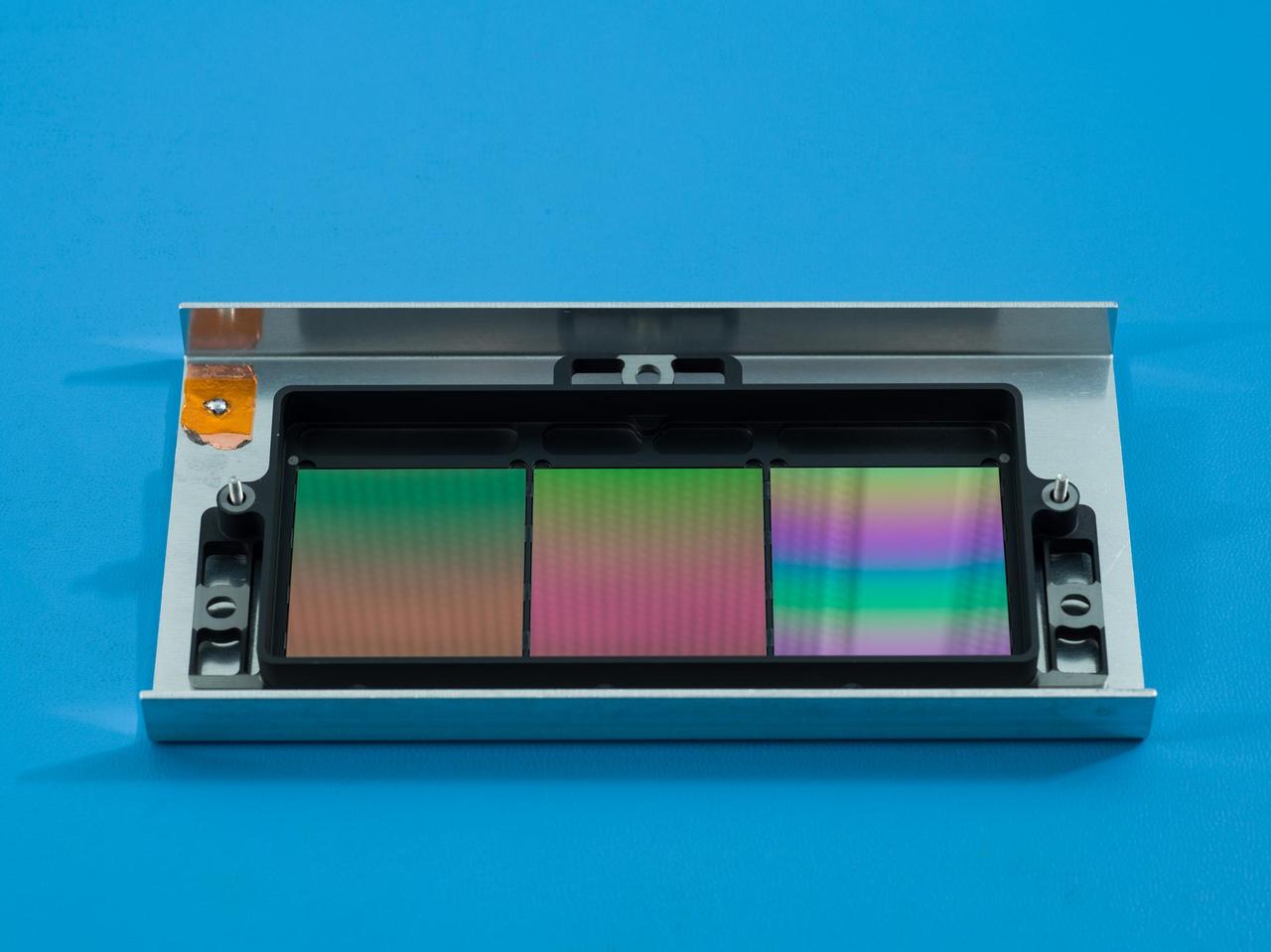
JPL · 2023-11-09 · PIA25788
SPHEREx Detector Filters
NASA's SPHEREx mission will use these filters to conduct spectroscopy, a technique that lets scientists measure individual wavelengths of light from a source, which can reveal information such…
Inspect NASA record
NASA's SPHEREx mission will use these filters to conduct spectroscopy, a technique that lets scientists measure individual wavelengths of light from a source, which can reveal information such as the chemical composition of the object or how far away it is. Each about the size of a cracker, the filters appear iridescent to the naked eye. The filters have multiple segments that block all but one specific wavelength of infrared light. Every object SPHEREx images will be observed by each segment, enabling scientists to see the specific infrared wavelengths emitted by every star or galaxy the telescope views. In total, SPHEREx can observe more than 100 distinct wavelengths. Short for Specto-Photometer for the History of the Universe, Epoch of Reionization and Ices Explorer, SPHEREx will create a map of the cosmos like no other, imaging the entire sky and gathering information about millions of galaxies. With this map, scientists will study what happened in the first fraction of a second after the big bang, the history of galaxy evolution, and the origins of water in planetary systems in our galaxy. https://photojournal.jpl.nasa.gov/catalog/PIA25788
- Record ID
- PIA25788
- NASA center
- JPL
- Date
- 2023-11-09
- Credit
- NASA/JPL-Caltech
- Keywords
- SPHEREx
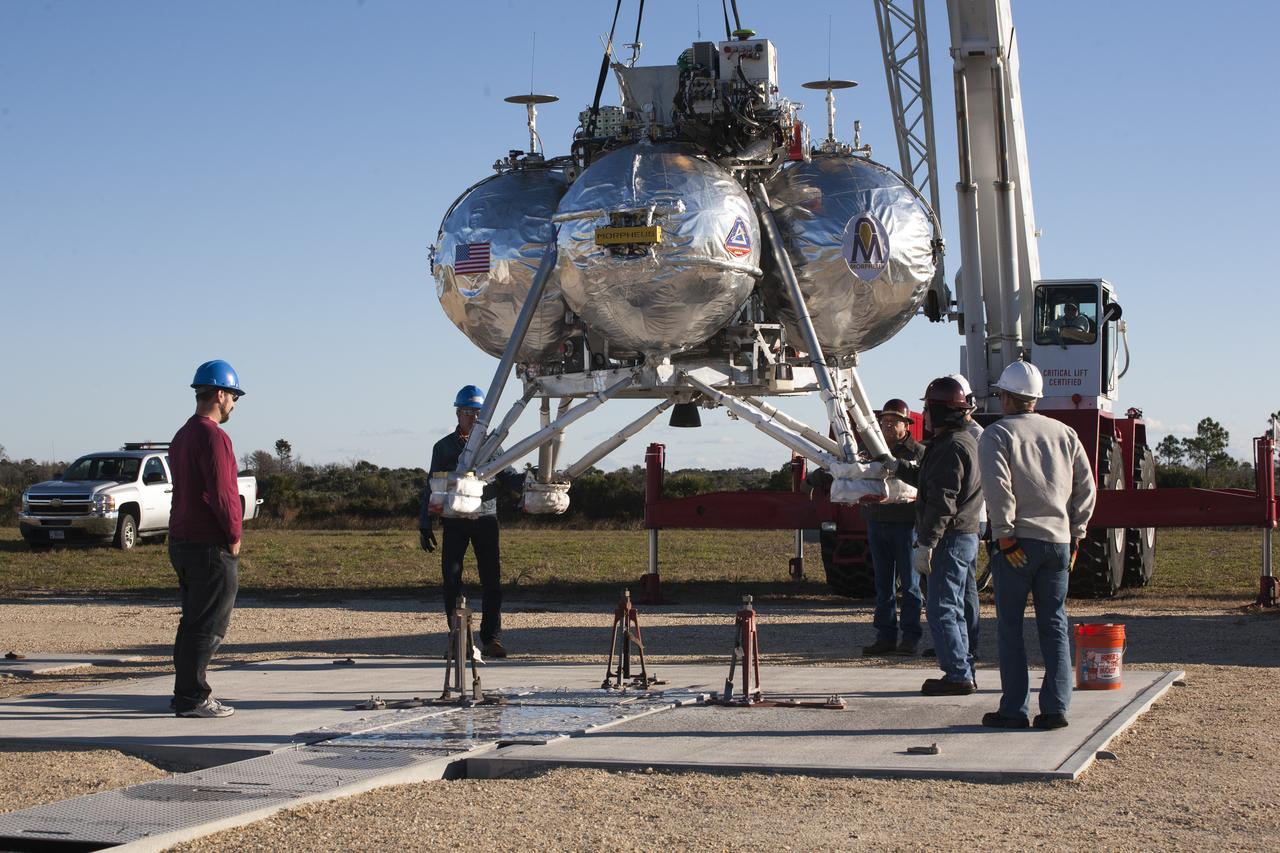
KSC · 2014-01-16 · KSC-2014-1066
Morpheus Campaign 1A Set-up and Liftoff
CAPE CANAVERAL, Fla. – Engineers and technicians monitor the progress as the Project Morpheus prototype lander is lowered onto the launch site for its third free flight test…
Inspect NASA record
CAPE CANAVERAL, Fla. – Engineers and technicians monitor the progress as the Project Morpheus prototype lander is lowered onto the launch site for its third free flight test at the north end of the Shuttle Landing Facility at NASA’s Kennedy Space Center in Florida. The 57-second test began at 1:15 p.m. EST with the Morpheus lander launching from the ground over a flame trench and ascending about 187 feet, nearly doubling the target ascent velocity from the last test in December 2013. The lander flew forward, covering about 154 feet in 20 seconds before descending and landing within 11 inches of its target on a dedicated pad inside the autonomous landing and hazard avoidance technology, or ALHAT, hazard field. Project Morpheus tests NASA’s ALHAT and an engine that runs on liquid oxygen and methane, or green propellants, into a fully-operational lander that could deliver cargo to other planetary surfaces. The landing facility provides the lander with the kind of field necessary for realistic testing, complete with rocks, craters and hazards to avoid. Morpheus’ ALHAT payload allows it to navigate to clear landing sites amidst rocks, craters and other hazards during its descent. Project Morpheus is being managed under the Advanced Exploration Systems, or AES, Division in NASA’s Human Exploration and Operations Mission Directorate. The efforts in AES pioneer new approaches for rapidly developing prototype systems, demonstrating key capabilities and validating operational concepts for future human missions beyond Earth orbit. For more information on Project Morpheus, visit http://www.nasa.gov/centers/johnson/exploration/morpheus. Photo credit: NASA/Kim Shiflett
- Record ID
- KSC-2014-1066
- NASA center
- KSC
- Date
- 2014-01-16
- Credit
- NASA/KSC - KIM SHIFLETT (IMCS)
- Keywords
- KSC-2014-1066
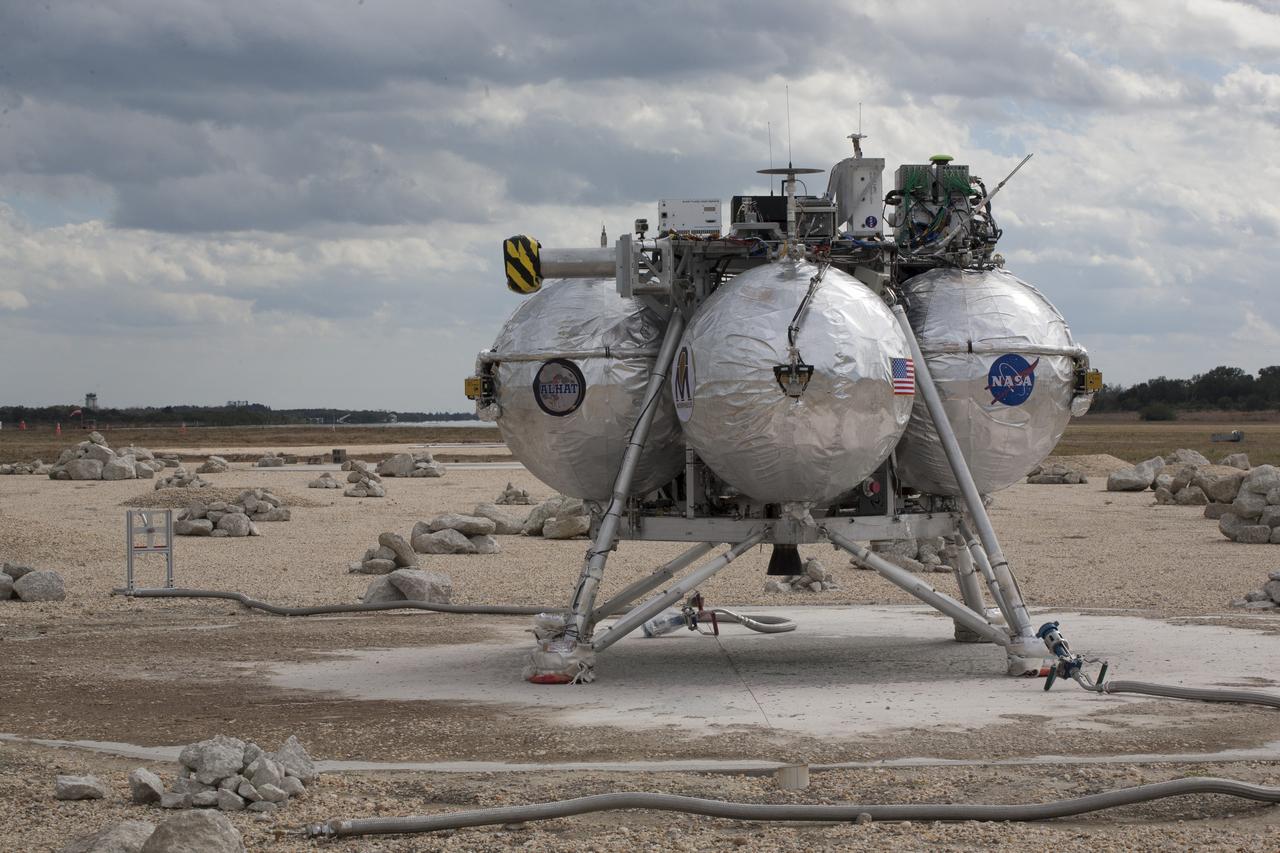
KSC · 2014-01-21 · KSC-2014-1124
Morpheus Campaign 1A Liftoff
CAPE CANAVERAL, Fla. – The Project Morpheus prototype lander touched down in the autonomous landing and hazard avoidance technology, or ALHAT, hazard field after launching on its fourth…
Inspect NASA record
CAPE CANAVERAL, Fla. – The Project Morpheus prototype lander touched down in the autonomous landing and hazard avoidance technology, or ALHAT, hazard field after launching on its fourth free flight test at the north end of the Shuttle Landing Facility at NASA’s Kennedy Space Center in Florida. The 64-second test began at 1:15 p.m. EST with the Morpheus lander launching from the ground over a flame trench and ascending about 305 feet, significantly increasing the ascent velocity from the last test. The lander flew forward, covering about 358 feet in 25 seconds before descending and landing within 15 inches of its target on a dedicated pad inside the ALHAT hazard field. Project Morpheus tests NASA’s ALHAT and an engine that runs on liquid oxygen and methane, or green propellants, into a fully-operational lander that could deliver cargo to other planetary surfaces. The landing facility provides the lander with the kind of field necessary for realistic testing, complete with rocks, craters and hazards to avoid. Morpheus’ ALHAT payload allows it to navigate to clear landing sites amidst rocks, craters and other hazards during its descent. Project Morpheus is being managed under the Advanced Exploration Systems, or AES, Division in NASA’s Human Exploration and Operations Mission Directorate. The efforts in AES pioneer new approaches for rapidly developing prototype systems, demonstrating key capabilities and validating operational concepts for future human missions beyond Earth orbit. For more information on Project Morpheus, visit http://www.nasa.gov/centers/johnson/exploration/morpheus. Photo credit: NASA/Kim Shiflett
- Record ID
- KSC-2014-1124
- NASA center
- KSC
- Date
- 2014-01-21
- Credit
- NASA/KSC - KIM SHIFLETT (IMCS)
- Keywords
- KSC-2014-1124
JPL · 2020-09-04 · PIA23965
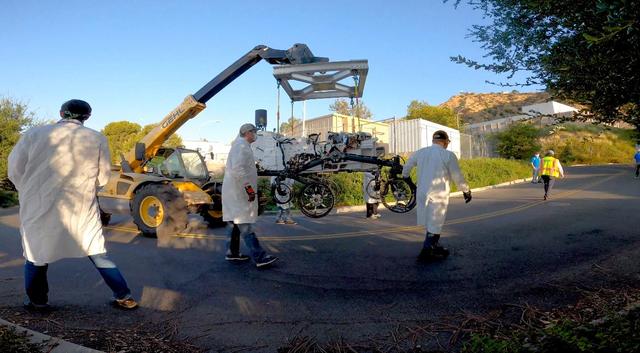
Test Rover Moves to Mars Yard
Technicians move a full-scale engineering version of NASA's Perseverance Mars rover into to its new home — a garage facing the Mars Yard at the agency's Jet Propulsion…
Inspect NASA record
Technicians move a full-scale engineering version of NASA's Perseverance Mars rover into to its new home — a garage facing the Mars Yard at the agency's Jet Propulsion Laboratory in Southern California — on Sept. 4, 2020. This vehicle system test bed (VSTB) rover was built in a warehouselike assembly room not far from the Mars Yard — an area that simulates the Red Planet's surface — and enables the mission team to test how hardware and software will perform before they transmit commands to the real rover on Mars. It also goes by the name OPTIMISM (Operational Perseverance Twin for Integration of Mechanisms and Instruments Sent to Mars). The Perseverance rover's astrobiology mission will search for signs of ancient microbial life. It will also characterize the planet's climate and geology, pave the way for human exploration of the Red Planet, and be the first planetary mission to collect and cache Martian rock and regolith (broken rock and dust). Subsequent missions, currently under consideration by NASA in cooperation with the European Space Agency, would send spacecraft to Mars to collect these cached samples from the surface and return them to Earth for in-depth analysis. The Mars 2020 mission is part of a larger program that includes missions to the Moon as a way to prepare for human exploration of the Red Planet. Charged with returning astronauts to the Moon by 2024, NASA will establish a sustained human presence on and around the Moon by 2028 through NASA's Artemis lunar exploration plans. Movie available at https://photojournal.jpl.nasa.gov/catalog/PIA23965
- Record ID
- PIA23965
- NASA center
- JPL
- Date
- 2020-09-04
- Credit
- NASA/JPL-Caltech
- Keywords
- Mars 2020
KSC · 2014-01-16 · KSC-2014-1083
Morpheus Campaign 1A Liftoff
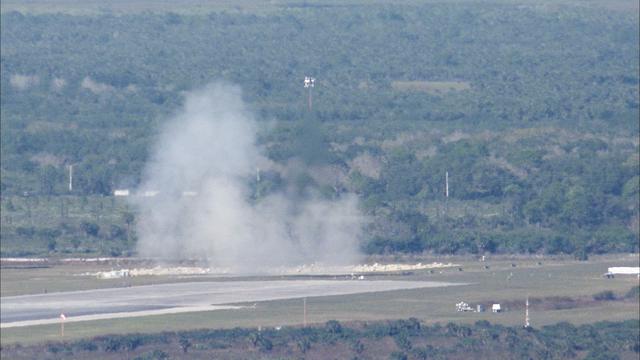
CAPE CANAVERAL, Fla. – The Project Morpheus prototype lander soars high and moves forward after launching on its third free flight test at the north end of the…
Inspect NASA record
CAPE CANAVERAL, Fla. – The Project Morpheus prototype lander soars high and moves forward after launching on its third free flight test at the north end of the Shuttle Landing Facility at NASA’s Kennedy Space Center in Florida. The 57-second test began at 1:15 p.m. EST with the Morpheus lander launching from the ground over a flame trench and ascending about 187 feet, nearly doubling the target ascent velocity from the last test in December 2013. The lander flew forward, covering about 154 feet in 20 seconds before descending and landing within 11 inches of its target on a dedicated pad inside the autonomous landing and hazard avoidance technology, or ALHAT, hazard field. Project Morpheus tests NASA’s ALHAT and an engine that runs on liquid oxygen and methane, or green propellants, into a fully-operational lander that could deliver cargo to other planetary surfaces. The landing facility provides the lander with the kind of field necessary for realistic testing, complete with rocks, craters and hazards to avoid. Morpheus’ ALHAT payload allows it to navigate to clear landing sites amidst rocks, craters and other hazards during its descent. Project Morpheus is being managed under the Advanced Exploration Systems, or AES, Division in NASA’s Human Exploration and Operations Mission Directorate. The efforts in AES pioneer new approaches for rapidly developing prototype systems, demonstrating key capabilities and validating operational concepts for future human missions beyond Earth orbit. For more information on Project Morpheus, visit http://www.nasa.gov/centers/johnson/exploration/morpheus. Photo credit: NASA/Frankie Martin
- Record ID
- KSC-2014-1083
- NASA center
- KSC
- Date
- 2014-01-16
- Credit
- NASA/KSC - FRANKIE MARTIN (IMCS)
- Keywords
- KSC-2014-1083
KSC · 2013-12-17 · KSC-2013-4372
KSC-2013-4372
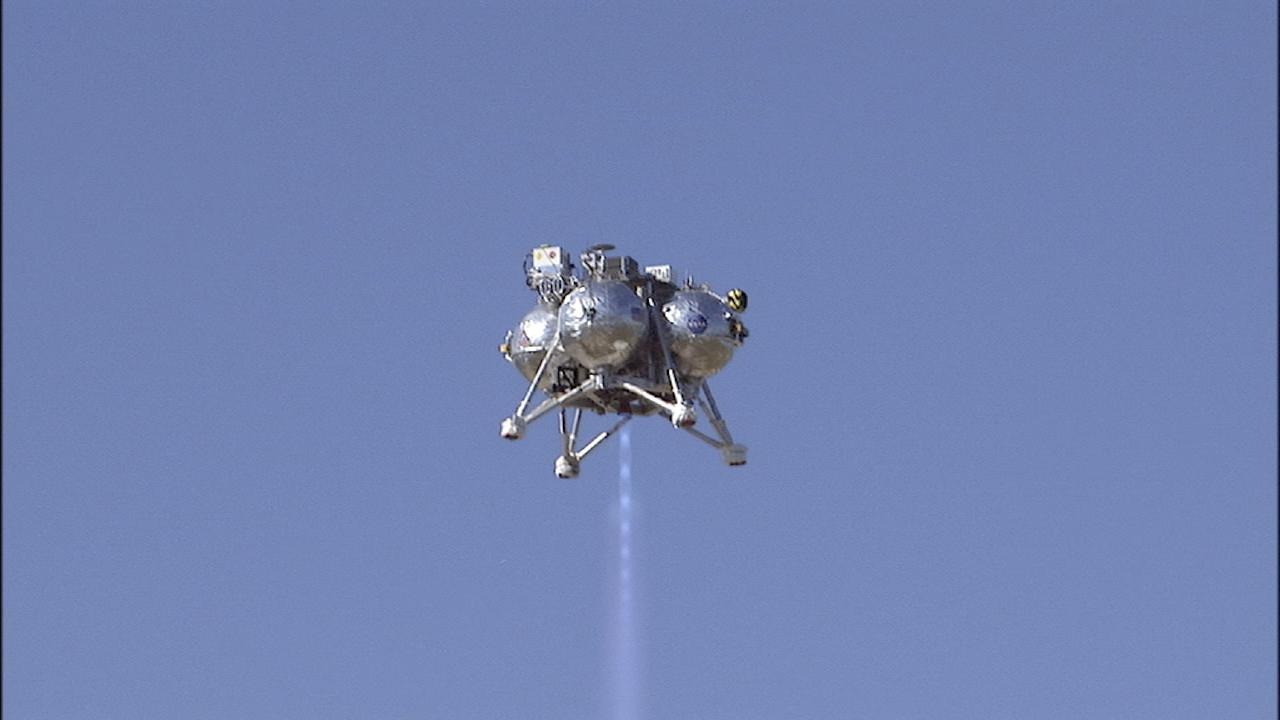
CAPE CANAVERAL, Fla. -- The second free flight of the Project Morpheus prototype lander was conducted at the north end of the Shuttle Landing Facility at NASA’s Kennedy…
Inspect NASA record
CAPE CANAVERAL, Fla. -- The second free flight of the Project Morpheus prototype lander was conducted at the north end of the Shuttle Landing Facility at NASA’s Kennedy Space Center in Florida. The 81-second test began at 1:37 p.m. EST with the Morpheus lander launching from the ground over a flame trench and ascending about 164 feet, pausing briefly at 82 feet. The lander flew forward, covering about 154 feet in 30 seconds before descending and landing on a dedicated landing pad inside the autonomous landing and hazard avoidance technology, or ALHAT, hazard field. Project Morpheus tests NASA’s ALHAT and an engine that runs on liquid oxygen and methane, or green propellants, into a fully-operational lander that could deliver cargo to other planetary surfaces. The landing facility provides the lander with the kind of field necessary for realistic testing, complete with rocks, craters and hazards to avoid. Morpheus’ ALHAT payload allows it to navigate to clear landing sites amidst rocks, craters and other hazards during its descent. Project Morpheus is being managed under the Advanced Exploration Systems, or AES, Division in NASA’s Human Exploration and Operations Mission Directorate. The efforts in AES pioneer new approaches for rapidly developing prototype systems, demonstrating key capabilities and validating operational concepts for future human missions beyond Earth orbit. For more information on Project Morpheus, visit http://www.nasa.gov/centers/johnson/exploration/morpheus. Photo credit: NASA/Chris Chamberland
- Record ID
- KSC-2013-4372
- NASA center
- KSC
- Date
- 2013-12-17
- Keywords
- SLF, ALHAT, free flight
KSC · 2014-01-21 · KSC-2014-1113
Morpheus Campaign 1A Liftoff
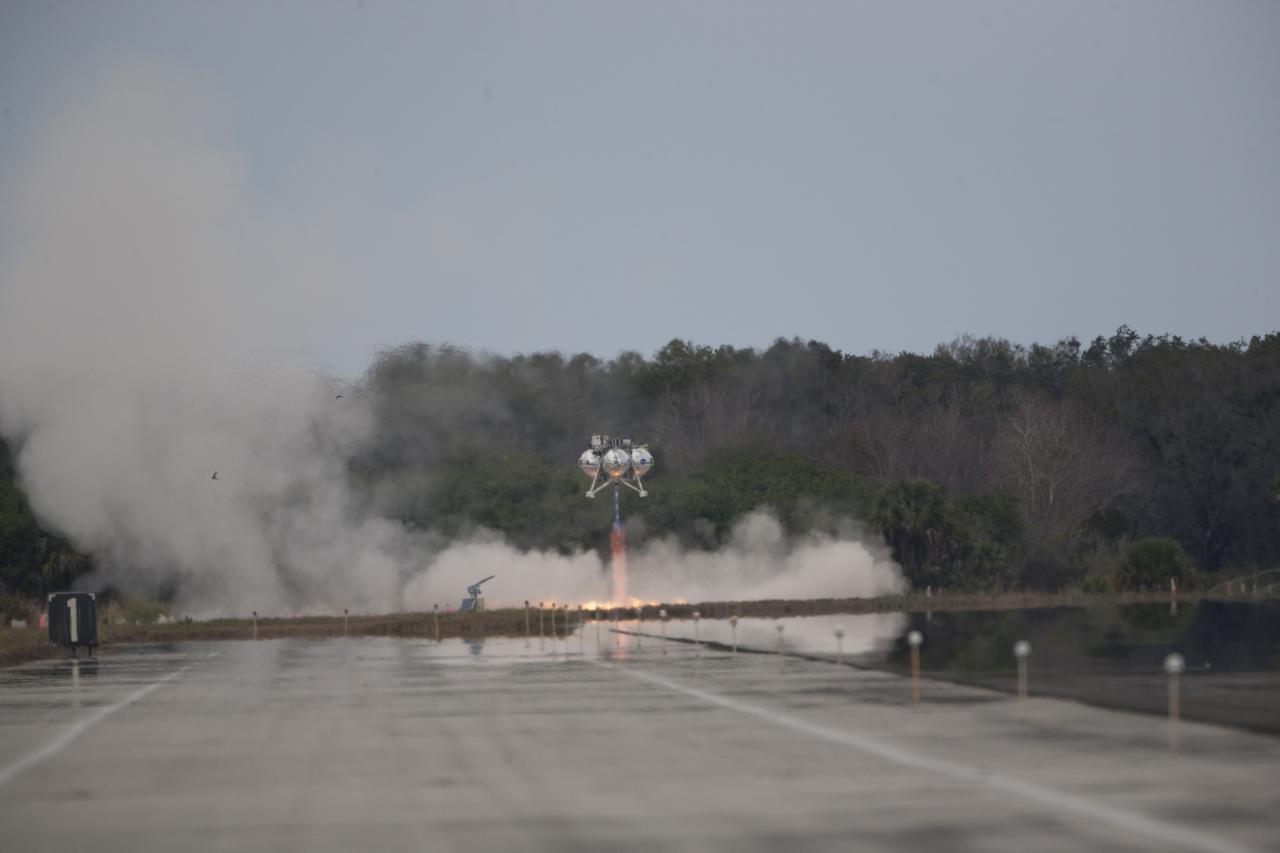
CAPE CANAVERAL, Fla. – The Project Morpheus prototype lander begins to ascend after launching on its fourth free flight test at the north end of the Shuttle Landing…
Inspect NASA record
CAPE CANAVERAL, Fla. – The Project Morpheus prototype lander begins to ascend after launching on its fourth free flight test at the north end of the Shuttle Landing Facility at NASA’s Kennedy Space Center in Florida. The 64-second test began at 1:15 p.m. EST with the Morpheus lander launching from the ground over a flame trench and ascending about 305 feet, significantly increasing the ascent velocity from the last test. The lander flew forward, covering about 358 feet in 25 seconds before descending and landing within 15 inches of its target on a dedicated pad inside the autonomous landing and hazard avoidance technology, or ALHAT, hazard field. Project Morpheus tests NASA’s ALHAT and an engine that runs on liquid oxygen and methane, or green propellants, into a fully-operational lander that could deliver cargo to other planetary surfaces. The landing facility provides the lander with the kind of field necessary for realistic testing, complete with rocks, craters and hazards to avoid. Morpheus’ ALHAT payload allows it to navigate to clear landing sites amidst rocks, craters and other hazards during its descent. Project Morpheus is being managed under the Advanced Exploration Systems, or AES, Division in NASA’s Human Exploration and Operations Mission Directorate. The efforts in AES pioneer new approaches for rapidly developing prototype systems, demonstrating key capabilities and validating operational concepts for future human missions beyond Earth orbit. For more information on Project Morpheus, visit http://www.nasa.gov/centers/johnson/exploration/morpheus. Photo credit: NASA/Kim Shiflett
- Record ID
- KSC-2014-1113
- NASA center
- KSC
- Date
- 2014-01-21
- Credit
- NASA/KSC - KIM SHIFLETT (IMCS)
- Keywords
- KSC-2014-1113
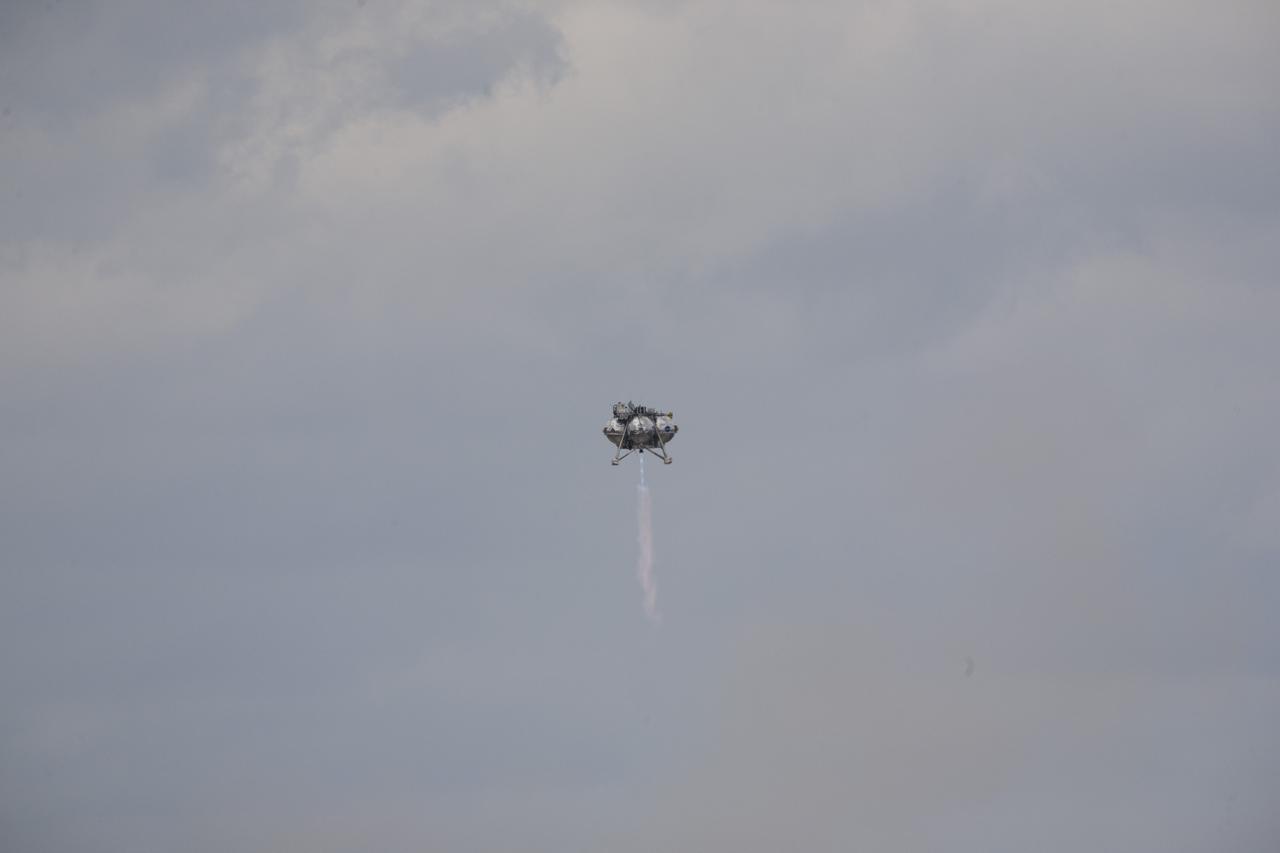
KSC · 2014-01-21 · KSC-2014-1115
Morpheus Campaign 1A Liftoff
CAPE CANAVERAL, Fla. – The Project Morpheus prototype lander soars high after launching on its fourth free flight test at the north end of the Shuttle Landing Facility…
Inspect NASA record
CAPE CANAVERAL, Fla. – The Project Morpheus prototype lander soars high after launching on its fourth free flight test at the north end of the Shuttle Landing Facility at NASA’s Kennedy Space Center in Florida. The 64-second test began at 1:15 p.m. EST with the Morpheus lander launching from the ground over a flame trench and ascending about 305 feet, significantly increasing the ascent velocity from the last test. The lander flew forward, covering about 358 feet in 25 seconds before descending and landing within 15 inches of its target on a dedicated pad inside the autonomous landing and hazard avoidance technology, or ALHAT, hazard field. Project Morpheus tests NASA’s ALHAT and an engine that runs on liquid oxygen and methane, or green propellants, into a fully-operational lander that could deliver cargo to other planetary surfaces. The landing facility provides the lander with the kind of field necessary for realistic testing, complete with rocks, craters and hazards to avoid. Morpheus’ ALHAT payload allows it to navigate to clear landing sites amidst rocks, craters and other hazards during its descent. Project Morpheus is being managed under the Advanced Exploration Systems, or AES, Division in NASA’s Human Exploration and Operations Mission Directorate. The efforts in AES pioneer new approaches for rapidly developing prototype systems, demonstrating key capabilities and validating operational concepts for future human missions beyond Earth orbit. For more information on Project Morpheus, visit http://www.nasa.gov/centers/johnson/exploration/morpheus. Photo credit: NASA/Kim Shiflett
- Record ID
- KSC-2014-1115
- NASA center
- KSC
- Date
- 2014-01-21
- Credit
- NASA/KSC - KIM SHIFLETT (IMCS)
- Keywords
- KSC-2014-1115
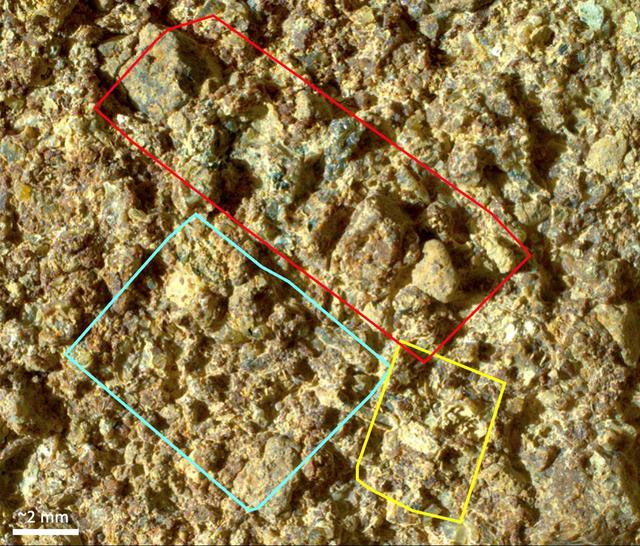
JPL · 2023-12-12 · PIA26206
PIXL Instrument on NASA's Perseverance Studies 'Ouzel Falls'
Before collecting a rock sample at a spot nicknamed "Otis Peak," NASA's Perseverance Mars rover employed an abrasion tool to wear down the rock surface and then used…
Inspect NASA record
Before collecting a rock sample at a spot nicknamed "Otis Peak," NASA's Perseverance Mars rover employed an abrasion tool to wear down the rock surface and then used the Planetary Instrument for X-ray Lithochemistry, or PIXL, to study the rock's internal chemistry. This image of the abrasion patch, dubbed "Ouzel Falls," was taken in May 2023 by WATSON (Wide Angle Topographic Sensor for Operations and eNgineering), a camera that is part of an instrument called Scanning Habitable Environments with Raman & Luminescence for Organics & Chemicals, or SHERLOC, on the end of the rover's robotic arm. Data from PIXL is laid over the image. Colored squares show different areas where PIXL's X-ray beam scanned the rock's surface. The instrument's data found the rock was rich in phosphate, a material found in the DNA and cell membranes of all known life, and which also serves as a way to store and transfer energy within living things. The Ouzel Falls scan areas contain a rich diversity of other mineral grains, including igneous minerals transported as sand and pebbles, such as olivine and spinel, and minerals crystallized from water, such as carbonates, clays, and sulfates. Each of these record unique aspects of the magmatic, climatic, and paleoenvironmental history of the ancient lake within Jezero Crater and the surrounding region. This diversity will make the Otis Peak sample a treasure trove for scientists on Earth who may study it in the future. A key objective for Perseverance's mission on Mars is astrobiology, including the search for signs of ancient microbial life. The rover will characterize the planet's geology and past climate, pave the way for human exploration of the Red Planet, and be the first mission to collect and cache Martian rock and regolith (broken rock and dust). Subsequent NASA missions, in cooperation with ESA (European Space Agency), would send spacecraft to Mars to collect these sealed samples from the surface and return them to Earth for in-depth analysis. The Mars 2020 Perseverance mission is part of NASA's Moon to Mars exploration approach, which includes Artemis missions to the Moon that will help prepare for human exploration of the Red Planet. https://photojournal.jpl.nasa.gov/catalog/PIA26206
- Record ID
- PIA26206
- NASA center
- JPL
- Date
- 2023-12-12
- Credit
- NASA/JPL-Caltech/MSSS
- Keywords
- Mars 2020, Mars
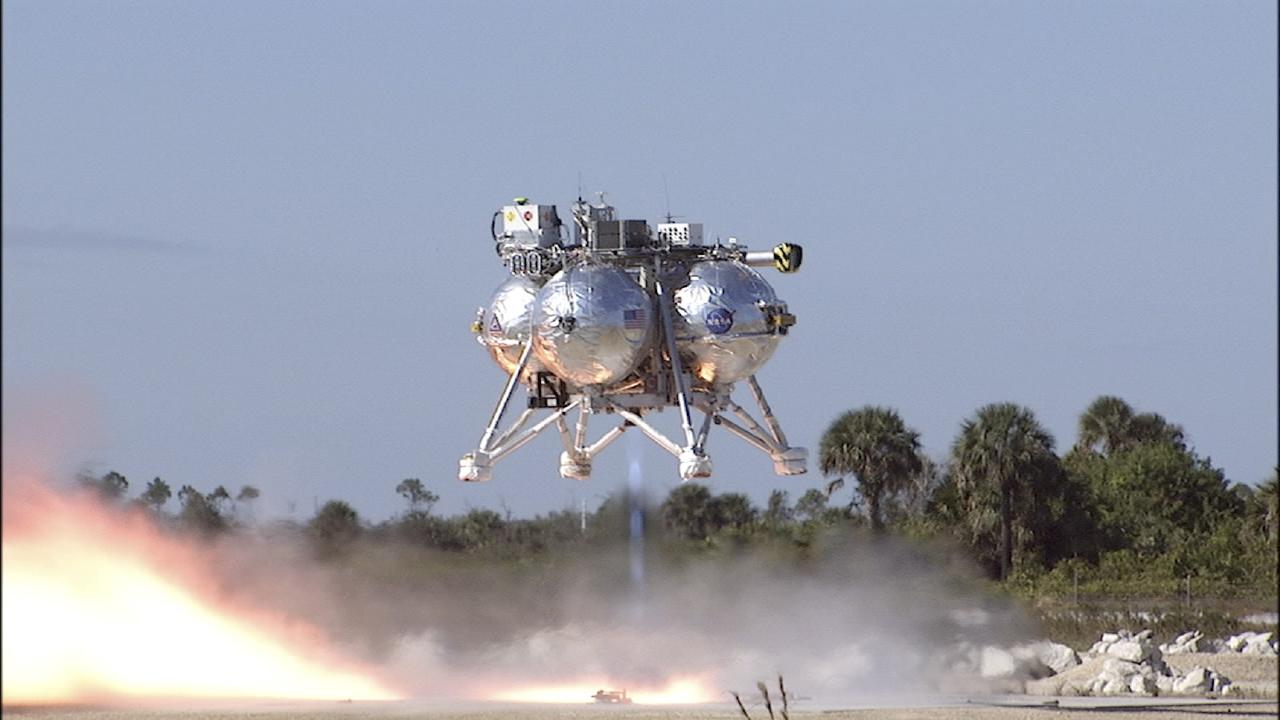
KSC · 2013-12-17 · KSC-2013-4371
KSC-2013-4371
CAPE CANAVERAL, Fla. -- The second free flight of the Project Morpheus prototype lander was conducted at the north end of the Shuttle Landing Facility at NASA’s Kennedy…
Inspect NASA record
CAPE CANAVERAL, Fla. -- The second free flight of the Project Morpheus prototype lander was conducted at the north end of the Shuttle Landing Facility at NASA’s Kennedy Space Center in Florida. The 81-second test began at 1:37 p.m. EST with the Morpheus lander launching from the ground over a flame trench and ascending about 164 feet, pausing briefly at 82 feet. The lander flew forward, covering about 154 feet in 30 seconds before descending and landing on a dedicated landing pad inside the autonomous landing and hazard avoidance technology, or ALHAT, hazard field. Project Morpheus tests NASA’s ALHAT and an engine that runs on liquid oxygen and methane, or green propellants, into a fully-operational lander that could deliver cargo to other planetary surfaces. The landing facility provides the lander with the kind of field necessary for realistic testing, complete with rocks, craters and hazards to avoid. Morpheus’ ALHAT payload allows it to navigate to clear landing sites amidst rocks, craters and other hazards during its descent. Project Morpheus is being managed under the Advanced Exploration Systems, or AES, Division in NASA’s Human Exploration and Operations Mission Directorate. The efforts in AES pioneer new approaches for rapidly developing prototype systems, demonstrating key capabilities and validating operational concepts for future human missions beyond Earth orbit. For more information on Project Morpheus, visit http://www.nasa.gov/centers/johnson/exploration/morpheus. Photo credit: NASA/Chris Chamberland
- Record ID
- KSC-2013-4371
- NASA center
- KSC
- Date
- 2013-12-17
- Keywords
- SLF, ALHAT, free flight