
Update Site (from NASA)
Explore NASA’s Image and Video Library.
Suggest one object per day for the Interstellar Minds collection. We review each suggestion before adding it.
Sign in to suggest a Marvel.
Find a NASA image ID. Open a NASA record and copy its ID from the end of the details URL.
NASA image records

JPL · 2013-01-08 · PIA16608
Anatomy of Brown Dwarf Atmosphere Artist Concept
This artist illustration shows the atmosphere of a brown dwarf called 2MASSJ22282889-431026, which was observed simultaneously by NASA Spitzer and Hubble space telescopes. The results were unexpected, revealing…
Inspect NASA record
This artist illustration shows the atmosphere of a brown dwarf called 2MASSJ22282889-431026, which was observed simultaneously by NASA Spitzer and Hubble space telescopes. The results were unexpected, revealing offset layers of material.
- Record ID
- PIA16608
- NASA center
- JPL
- Date
- 2013-01-08
- Credit
- NASA/JPL-Caltech
- Keywords
- Hubble Space Telescope,Spitzer Space Telescope

JPL · 2006-07-21 · PIA08617
Black Hole Spills Kaleidoscope of Color
This new false-colored image from NASA Hubble, Chandra and Spitzer space telescopes shows a giant jet of particles that has been shot out from the vicinity of a…
Inspect NASA record
This new false-colored image from NASA Hubble, Chandra and Spitzer space telescopes shows a giant jet of particles that has been shot out from the vicinity of a type of supermassive black hole called a quasar.
- Record ID
- PIA08617
- NASA center
- JPL
- Date
- 2006-07-21
- Credit
- NASA/JPL-Caltech/Yale Univ.
- Keywords
- Hubble Space Telescope,Spitzer Space Telescope
JPL · 2006-06-06 · PIA08516
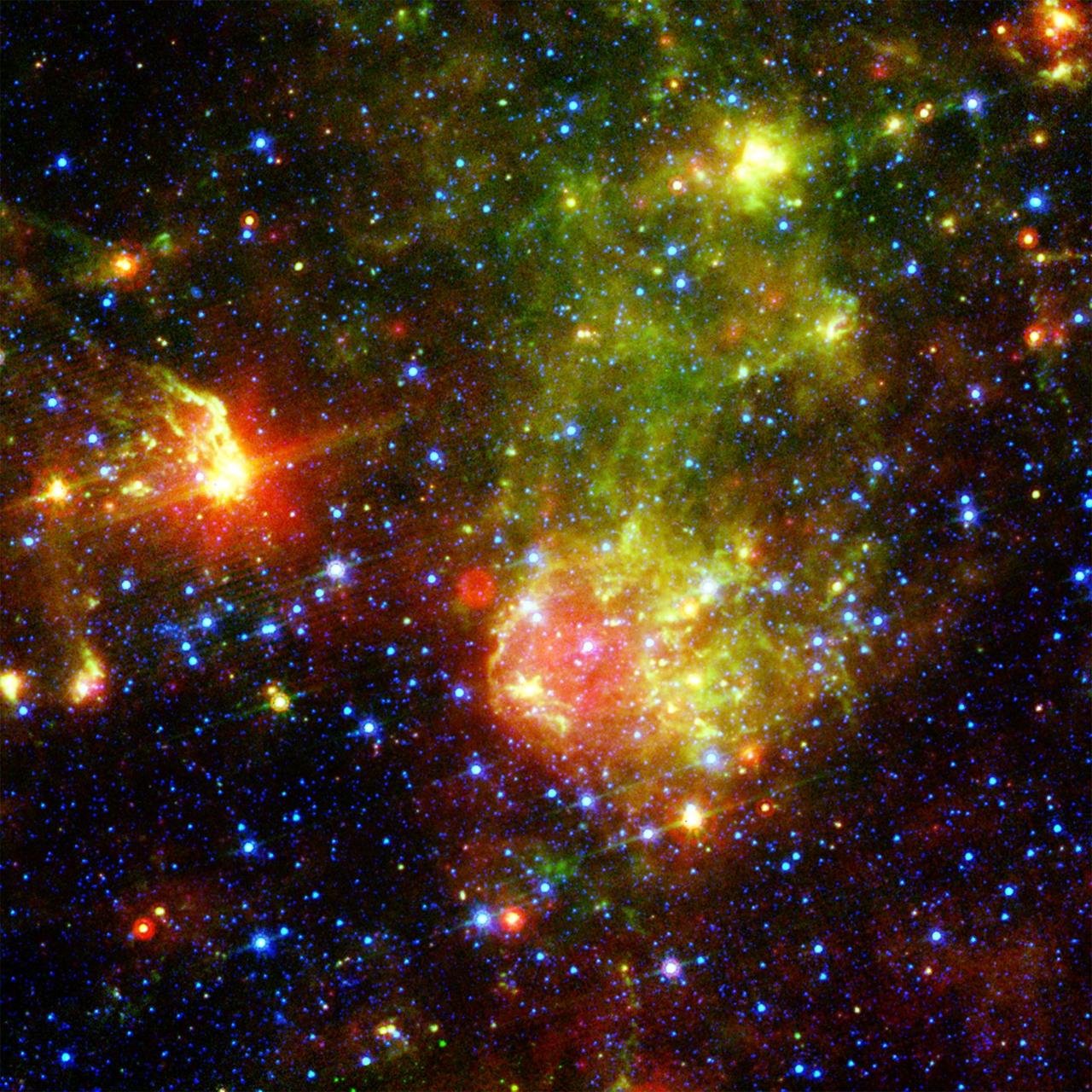
Dusty Death of a Massive Star
NASA Spitzer Space Telescope shows the supernova remnant 1E0102.2-7219 sits next to the nebula N76 in a bright, star-forming region of the Small Magellanic Cloud, a satellite galaxy…
Inspect NASA record
NASA Spitzer Space Telescope shows the supernova remnant 1E0102.2-7219 sits next to the nebula N76 in a bright, star-forming region of the Small Magellanic Cloud, a satellite galaxy to our Milky Way galaxy.
- Record ID
- PIA08516
- NASA center
- JPL
- Date
- 2006-06-06
- Credit
- NASA/JPL-Caltech/ UC Berkeley
- Keywords
- Hubble Space Telescope,Spitzer Space Telescope
JPL · 2009-10-07 · PIA12259
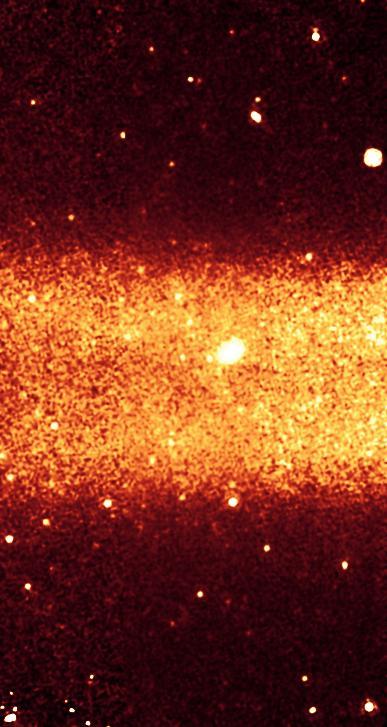
Infrared Ring around Saturn
This picture highlights a slice of Saturn largest ring. The ring red band was discovered by NASA Spitzer Space Telescope, which detected infrared light, or heat, from the…
Inspect NASA record
This picture highlights a slice of Saturn largest ring. The ring red band was discovered by NASA Spitzer Space Telescope, which detected infrared light, or heat, from the dusty ring material.
- Record ID
- PIA12259
- NASA center
- JPL
- Date
- 2009-10-07
- Credit
- Spitzer image credit: NASA/JPL-Caltech/Univ. of Virginia Hubble image credit: NASA/ESA/STScI/AURA
- Keywords
- Hubble Space Telescope,Spitzer Space Telescope

JPL · 2014-09-24 · PIA18838
A Sunny Outlook for Weather on Exoplanets Artist Concept
Scientists were excited to discover clear skies on a relatively small planet, about the size of Neptune, using the combined power of NASA Hubble, Spitzer and Kepler space…
Inspect NASA record
Scientists were excited to discover clear skies on a relatively small planet, about the size of Neptune, using the combined power of NASA Hubble, Spitzer and Kepler space telescopes.
- Record ID
- PIA18838
- NASA center
- JPL
- Date
- 2014-09-24
- Credit
- NASA/JPL-Caltech
- Keywords
- Hubble Space Telescope,Kepler,Spitzer Space Telescope
JPL · 2014-02-07 · PIA17837
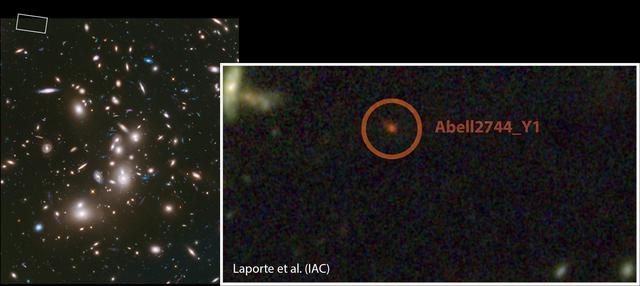
Pushing the Limits of the Observable Universe
This image of the galaxy cluster Abell 2744 was obtained with NASA Hubble Space Telescope. The zoomed image shows the region around the galaxy Abell2744_Y1, one of the…
Inspect NASA record
This image of the galaxy cluster Abell 2744 was obtained with NASA Hubble Space Telescope. The zoomed image shows the region around the galaxy Abell2744_Y1, one of the most distant galaxy candidates known.
- Record ID
- PIA17837
- NASA center
- JPL
- Date
- 2014-02-07
- Credit
- NASA/ESA/STScI/IAC
- Keywords
- Hubble Space Telescope,Spitzer Space Telescope
JPL · 2013-01-08 · PIA16609
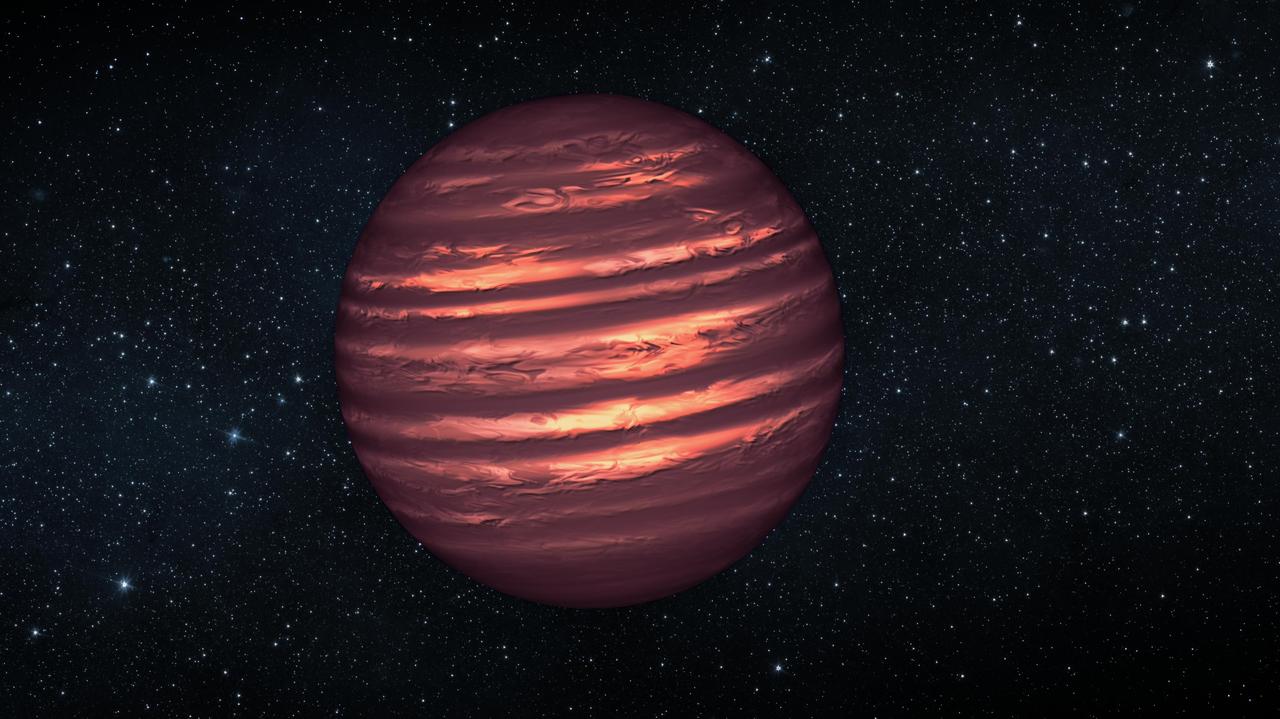
Forecast for Exotic Weather Artist Concept
This artist conception illustrates the brown dwarf named 2MASSJ22282889-431026. NASA Hubble and Spitzer space telescopes observed the object to learn more about its turbulent atmosphere.
Inspect NASA record
This artist conception illustrates the brown dwarf named 2MASSJ22282889-431026. NASA Hubble and Spitzer space telescopes observed the object to learn more about its turbulent atmosphere.
- Record ID
- PIA16609
- NASA center
- JPL
- Date
- 2013-01-08
- Credit
- NASA/JPL-Caltech
- Keywords
- Hubble Space Telescope,Spitzer Space Telescope
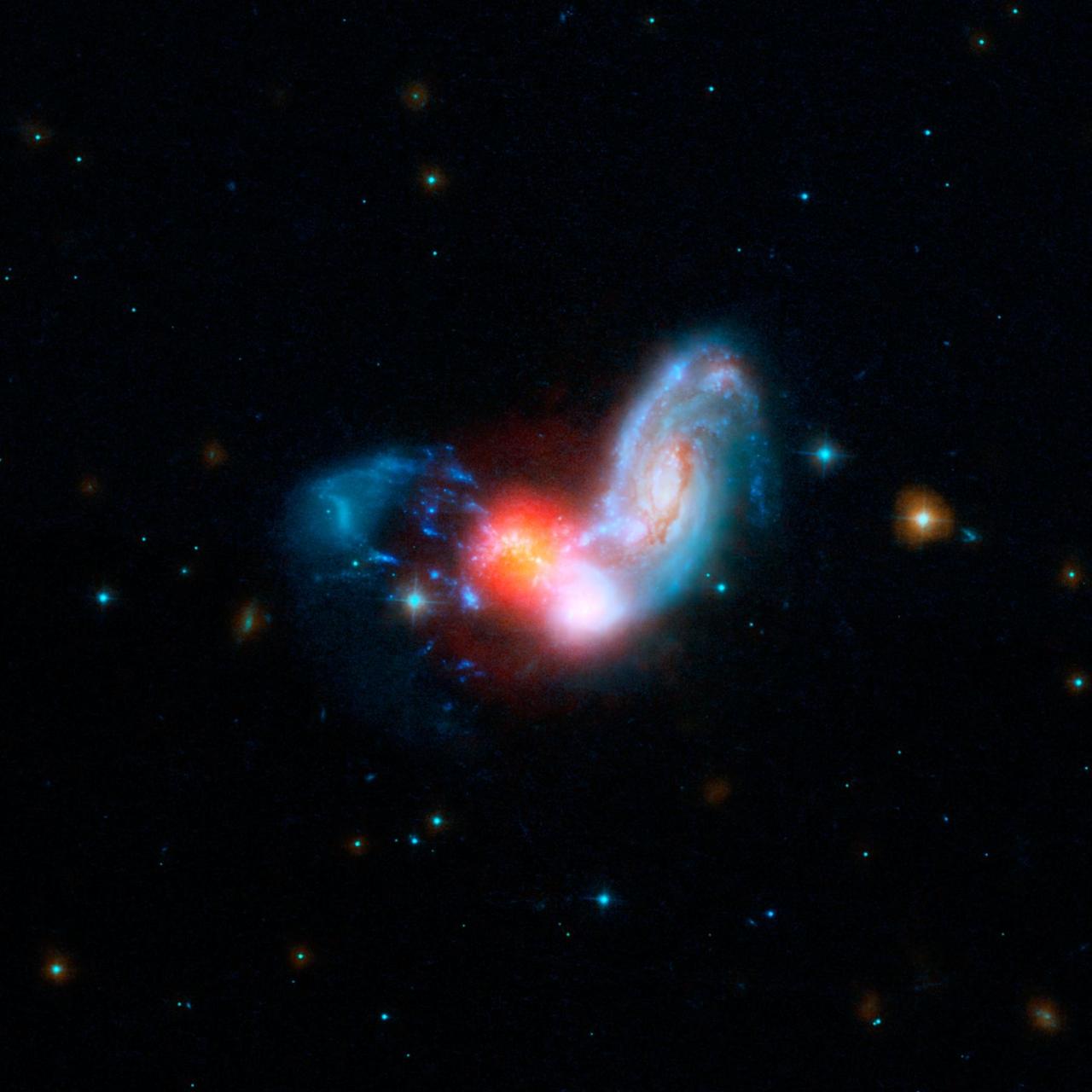
JPL · 2010-11-19 · PIA13632
Shrouded Starburst
A brilliant burst of star formation is revealed in this image combining observations from NASA Spitzer and Hubble Space Telescopes. The collision of two spiral galaxies has triggered…
Inspect NASA record
A brilliant burst of star formation is revealed in this image combining observations from NASA Spitzer and Hubble Space Telescopes. The collision of two spiral galaxies has triggered this luminous starburst.
- Record ID
- PIA13632
- NASA center
- JPL
- Date
- 2010-11-19
- Credit
- NASA/JPL-Caltech/STScI
- Keywords
- Hubble Space Telescope,Spitzer Space Telescope
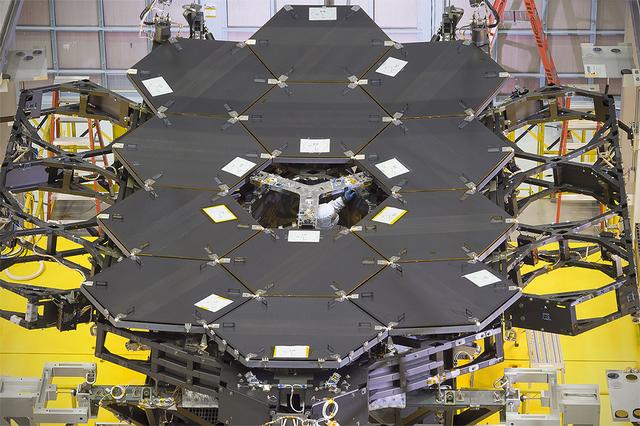
GSFC · 2017-12-08 · GSFC_20171208_Archive_e000440
By the Dozen: NASA's James Webb Space Telescope Mirrors
Caption: One dozen (out of 18) flight mirror segments that make up the primary mirror on NASA's James Webb Space Telescope have been installed at NASA's Goddard Space…
Inspect NASA record
Caption: One dozen (out of 18) flight mirror segments that make up the primary mirror on NASA's James Webb Space Telescope have been installed at NASA's Goddard Space Flight Center. Credits: NASA/Chris Gunn More: Since December 2015, the team of scientists and engineers have been working tirelessly to install all the primary mirror segments onto the telescope structure in the large clean room at NASA's Goddard Space Flight Center in Greenbelt, Maryland. The twelfth mirror was installed on January 2, 2016. "This milestone signifies that all of the hexagonal shaped mirrors on the fixed central section of the telescope structure are installed and only the 3 mirrors on each wing are left for installation," said Lee Feinberg, NASA's Optical Telescope Element Manager at NASA Goddard. "The incredibly skilled and dedicated team assembling the telescope continues to find ways to do things faster and more efficiently." Each hexagonal-shaped segment measures just over 4.2 feet (1.3 meters) across and weighs approximately 88 pounds (40 kilograms). After being pieced together, the 18 primary mirror segments will work together as one large 21.3-foot (6.5-meter) mirror. The primary mirror will unfold and adjust to shape after launch. The mirrors are made of ultra-lightweight beryllium. The mirrors are placed on the telescope's backplane using a robotic arm, guided by engineers. The full installation is expected to be completed in a few months. The mirrors were built by Ball Aerospace & Technologies Corp., Boulder, Colorado. Ball is the principal subcontractor to Northrop Grumman for the optical technology and lightweight mirror system. The installation of the mirrors onto the telescope structure is performed by Harris Corporation of Rochester, New York. Harris Corporation leads integration and testing for the telescope. While the mirror assembly is a very significant milestone, there are many more steps involved in assembling the Webb telescope. The primary mirror and the tennis-court-sized sunshield are the largest and most visible components of the Webb telescope. However, there are four smaller components that are less visible, yet critical. The instruments that will fly aboard Webb - cameras and spectrographs with detectors able to record extremely faint signals — are part of the Integrated Science Instrument Module (ISIM), which is currently undergoing its final cryogenic vacuum test and will be integrated with the mirror later this year. Read more: www.nasa.gov/feature/goddard/2016/by-the-dozen-nasas-jame... NASA image use policy. NASA Goddard Space Flight Center enables NASA’s mission through four scientific endeavors: Earth Science, Heliophysics, Solar System Exploration, and Astrophysics. Goddard plays a leading role in NASA’s accomplishments by contributing compelling scientific knowledge to advance the Agency’s mission. Follow us on Twitter Like us on Facebook Find us on Instagram
- Record ID
- GSFC_20171208_Archive_e000440
- NASA center
- GSFC
- Date
- 2017-12-08
- Keywords
- By the Dozen: NASA's James Webb Space Telescope Mirrors, mirror, nasa, primary, goddard, segments, jameswebb, jwst, jameswebbspacetelescope, nasagoddard, webbtelescope
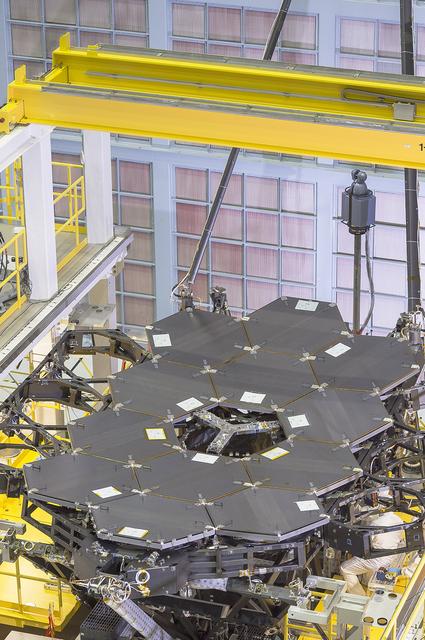
GSFC · 2017-12-08 · GSFC_20171208_Archive_e000441
By the Dozen: NASA's James Webb Space Telescope Mirrors
A view of the one dozen (out of 18) flight mirror segments that make up the primary mirror on NASA's James Webb Space Telescope have been installed at…
Inspect NASA record
A view of the one dozen (out of 18) flight mirror segments that make up the primary mirror on NASA's James Webb Space Telescope have been installed at NASA's Goddard Space Flight Center. Credits: NASA/Chris Gunn More: Since December 2015, the team of scientists and engineers have been working tirelessly to install all the primary mirror segments onto the telescope structure in the large clean room at NASA's Goddard Space Flight Center in Greenbelt, Maryland. The twelfth mirror was installed on January 2, 2016. "This milestone signifies that all of the hexagonal shaped mirrors on the fixed central section of the telescope structure are installed and only the 3 mirrors on each wing are left for installation," said Lee Feinberg, NASA's Optical Telescope Element Manager at NASA Goddard. "The incredibly skilled and dedicated team assembling the telescope continues to find ways to do things faster and more efficiently." Each hexagonal-shaped segment measures just over 4.2 feet (1.3 meters) across and weighs approximately 88 pounds (40 kilograms). After being pieced together, the 18 primary mirror segments will work together as one large 21.3-foot (6.5-meter) mirror. The primary mirror will unfold and adjust to shape after launch. The mirrors are made of ultra-lightweight beryllium. The mirrors are placed on the telescope's backplane using a robotic arm, guided by engineers. The full installation is expected to be completed in a few months. The mirrors were built by Ball Aerospace & Technologies Corp., Boulder, Colorado. Ball is the principal subcontractor to Northrop Grumman for the optical technology and lightweight mirror system. The installation of the mirrors onto the telescope structure is performed by Harris Corporation of Rochester, New York. Harris Corporation leads integration and testing for the telescope. While the mirror assembly is a very significant milestone, there are many more steps involved in assembling the Webb telescope. The primary mirror and the tennis-court-sized sunshield are the largest and most visible components of the Webb telescope. However, there are four smaller components that are less visible, yet critical. The instruments that will fly aboard Webb - cameras and spectrographs with detectors able to record extremely faint signals — are part of the Integrated Science Instrument Module (ISIM), which is currently undergoing its final cryogenic vacuum test and will be integrated with the mirror later this year. Read more: www.nasa.gov/feature/goddard/2016/by-the-dozen-nasas-jame... NASA image use policy. NASA Goddard Space Flight Center enables NASA’s mission through four scientific endeavors: Earth Science, Heliophysics, Solar System Exploration, and Astrophysics. Goddard plays a leading role in NASA’s accomplishments by contributing compelling scientific knowledge to advance the Agency’s mission. Follow us on Twitter Like us on Facebook Find us on Instagram
- Record ID
- GSFC_20171208_Archive_e000441
- NASA center
- GSFC
- Date
- 2017-12-08
- Keywords
- By the Dozen: NASA's James Webb Space Telescope Mirrors, mirror, nasa, primary, goddard, segments, jameswebb, jwst, jameswebbspacetelescope, nasagoddard, webbtelescope
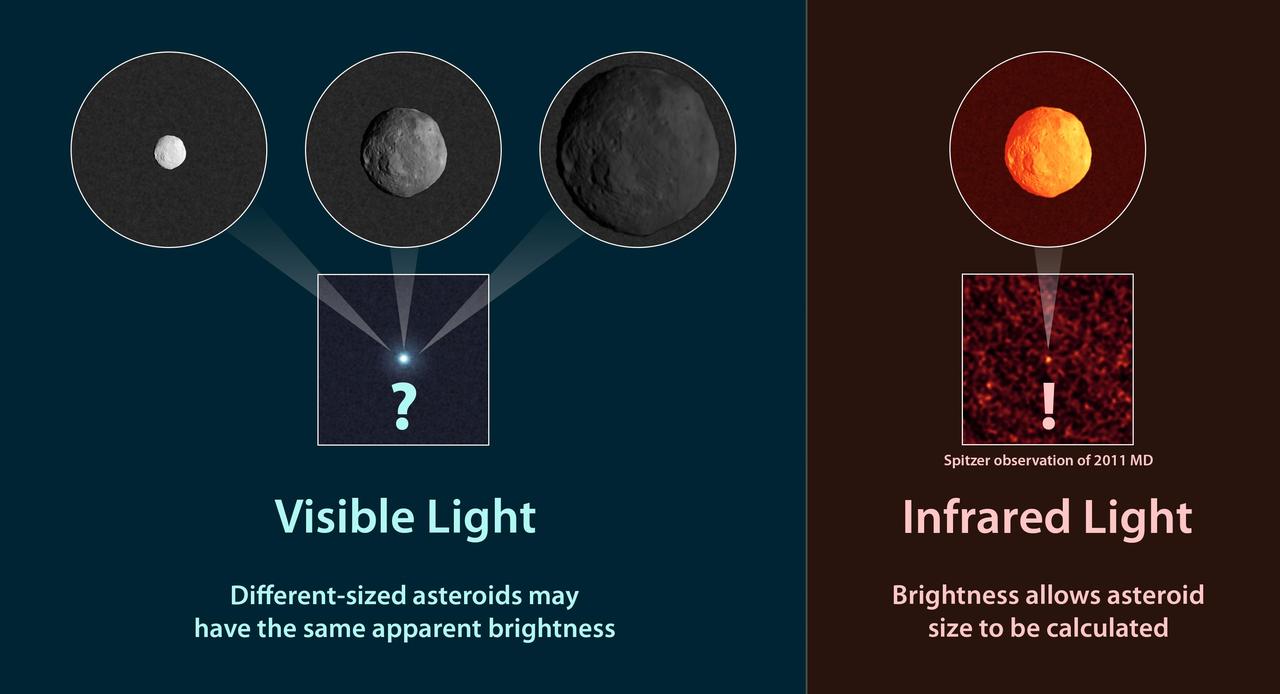
JPL · 2014-06-19 · PIA18454
How to Measure the Size of an Asteroid
Observations of infrared light from NASA Spitzer Space Telescope coming from asteroids provide a better estimate of their true sizes than visible-light measurements.
Inspect NASA record
Observations of infrared light from NASA Spitzer Space Telescope coming from asteroids provide a better estimate of their true sizes than visible-light measurements.
- Record ID
- PIA18454
- NASA center
- JPL
- Date
- 2014-06-19
- Credit
- NASA/JPL-Caltech
- Keywords
- Asteroid, Spitzer Space Telescope

JPL · 2011-05-26 · PIA14100
Cosmic Fountain of Crystal Rain
Using NASA Spitzer Space Telescope, astronomers have, for the first time, found signatures of silicate crystals around a newly forming protostar in the constellation of Orion.
Inspect NASA record
Using NASA Spitzer Space Telescope, astronomers have, for the first time, found signatures of silicate crystals around a newly forming protostar in the constellation of Orion.
- Record ID
- PIA14100
- NASA center
- JPL
- Date
- 2011-05-26
- Credit
- NASA/JPL-Caltech/University of Toledo
- Keywords
- Spitzer Space Telescope