
Update Site (from NASA)
Explore NASA’s Image and Video Library.
Suggest one object per day for the Interstellar Minds collection. We review each suggestion before adding it.
Sign in to suggest a Marvel.
Find a NASA image ID. Open a NASA record and copy its ID from the end of the details URL.
NASA image records
KSC · 2014-05-22 · KSC-2014-2668
KSC-2014-2668
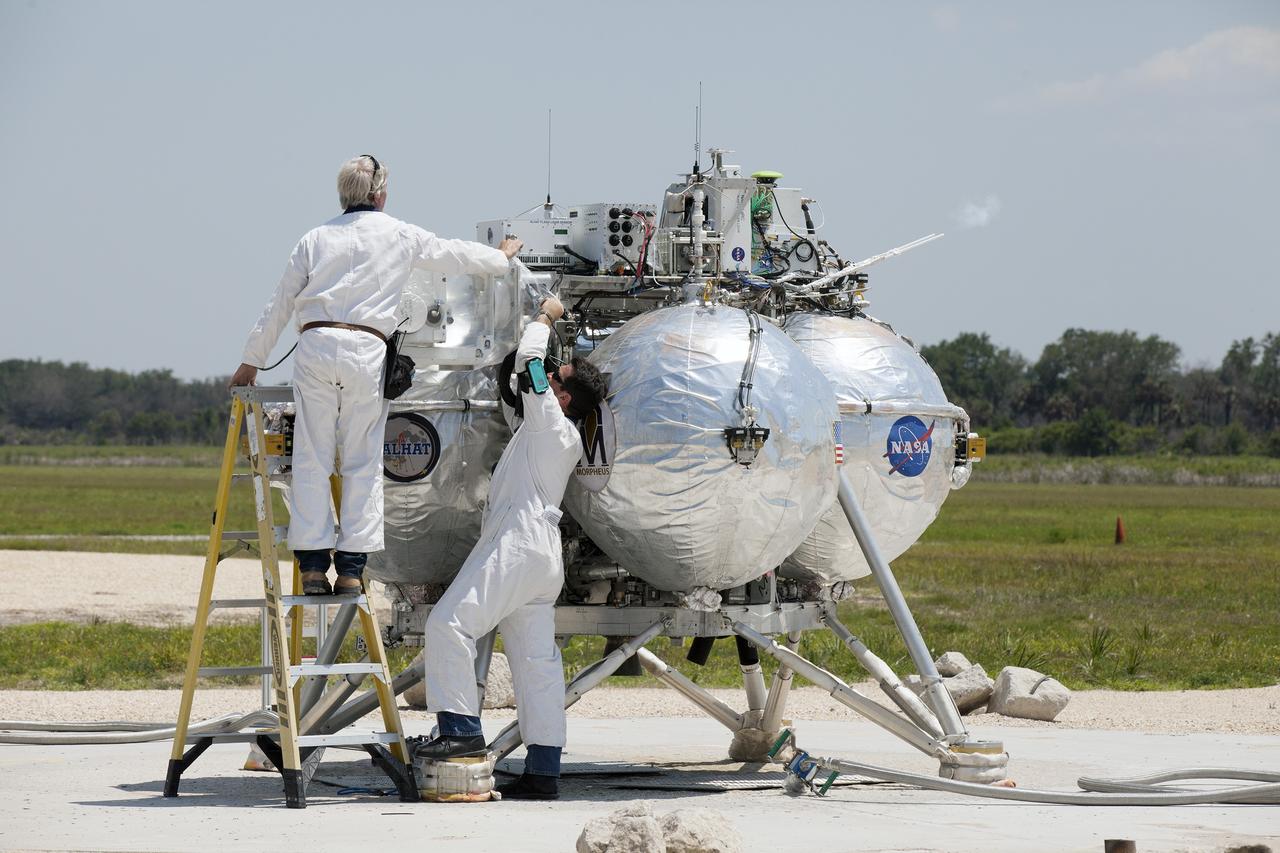
CAPE CANAVERAL, Fla. – At NASA's Kennedy Space Center in Florida, technicians check out the agency's Project Morpheus prototype lander which just touched down on a dedicated pad…
Inspect NASA record
CAPE CANAVERAL, Fla. – At NASA's Kennedy Space Center in Florida, technicians check out the agency's Project Morpheus prototype lander which just touched down on a dedicated pad inside the ALHAT hazard field near the Shuttle Landing Facility. Project Morpheus tests NASA’s ALHAT and an engine that runs on liquid oxygen and methane, which are green propellants. These new capabilities could be used in future efforts to deliver cargo to planetary surfaces. The landing facility provides the lander with the kind of field necessary for realistic testing, complete with rocks, craters and hazards to avoid. Morpheus’ ALHAT payload allows it to navigate to clear landing sites amidst rocks, craters and other hazards during its descent. Project Morpheus is being managed under the Advanced Exploration Systems, or AES, Division in NASA’s Human Exploration and Operations Mission Directorate. The efforts in AES pioneer new approaches for rapidly developing prototype systems, demonstrating key capabilities and validating operational concepts for future human missions beyond Earth orbit. For more information on Project Morpheus, visit http://morpheuslander.jsc.nasa.gov/. Photo credit: NASA/Kim Shiflett
- Record ID
- KSC-2014-2668
- NASA center
- KSC
- Date
- 2014-05-22
- Keywords
- SLF, ALHAT, launch pad, free flight test
KSC · 2013-12-17 · KSC-2013-4370
KSC-2013-4370
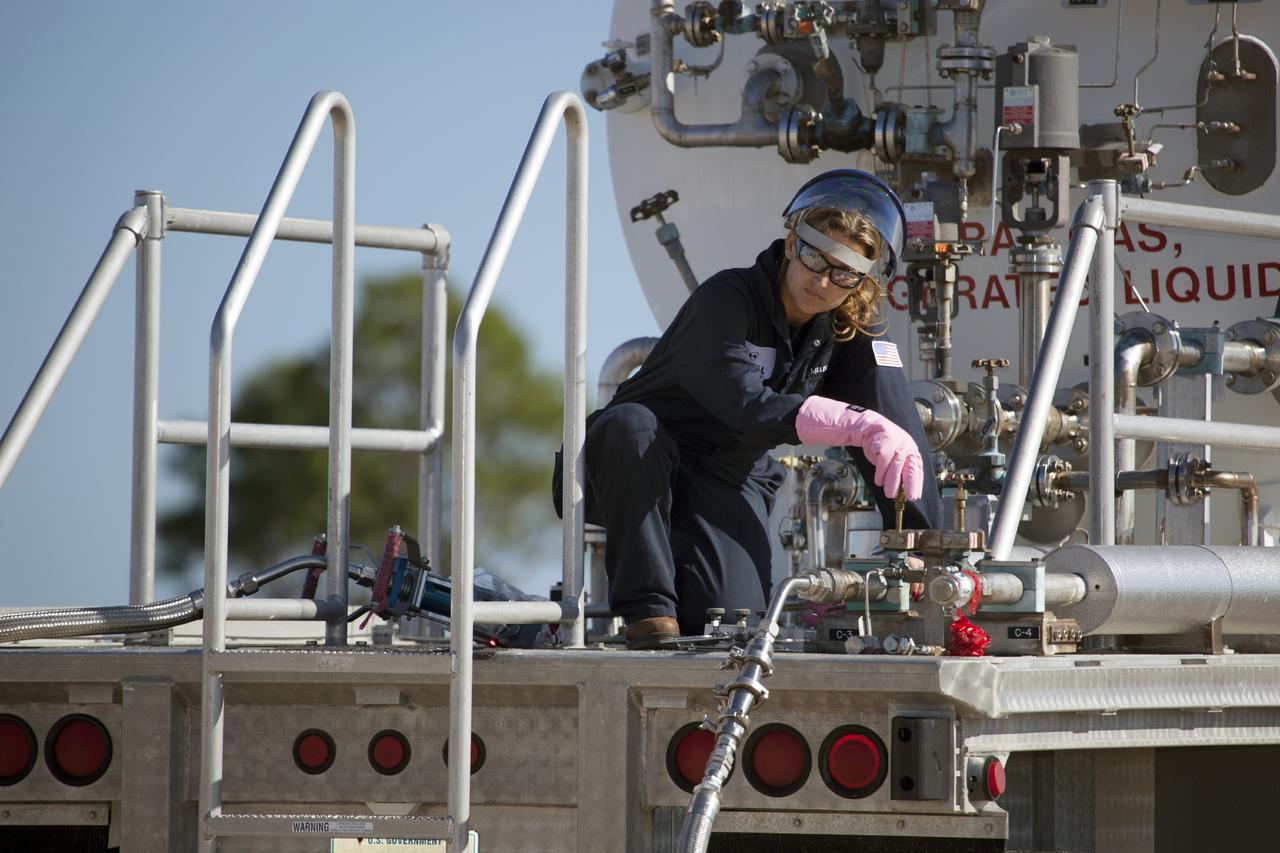
CAPE CANAVERAL, Fla. -- A technician prepares the Project Morpheus prototype lander for a second free flight test at the north end of the Shuttle Landing Facility at…
Inspect NASA record
CAPE CANAVERAL, Fla. -- A technician prepares the Project Morpheus prototype lander for a second free flight test at the north end of the Shuttle Landing Facility at NASA’s Kennedy Space Center in Florida. Testing of the prototype lander was performed at NASA’s Johnson Space Center in Houston in preparation for tethered and free flight testing at Kennedy. Project Morpheus integrates NASA’s automated landing and hazard avoidance technology, or ALHAT, with an engine that runs on liquid oxygen and methane, or green propellants, into a fully-operational lander that could deliver cargo to other planetary surfaces. The landing facility will provide the lander with the kind of field necessary for realistic testing, complete with rocks, craters and hazards to avoid. Morpheus’ ALHAT payload allows it to navigate to clear landing sites amidst rocks, craters and other hazards during its descent. Project Morpheus is being managed under the Advanced Exploration Systems, or AES, Division in NASA’s Human Exploration and Operations Mission Directorate. The efforts in AES pioneer new approaches for rapidly developing prototype systems, demonstrating key capabilities and validating operational concepts for future human missions beyond Earth orbit. For more information on Project Morpheus, visit http://morpheuslander.jsc.nasa.gov. Photo credit: NASA/Dimitri Gerondidakis
- Record ID
- KSC-2013-4370
- NASA center
- KSC
- Date
- 2013-12-17
- Keywords
- SLF, ALHAT, free flight
KSC · 2021-10-04 · KSC-20211004-PH-ANT01_0044
DART Spacecraft Removal from Shipping Container, Move to SC Doll
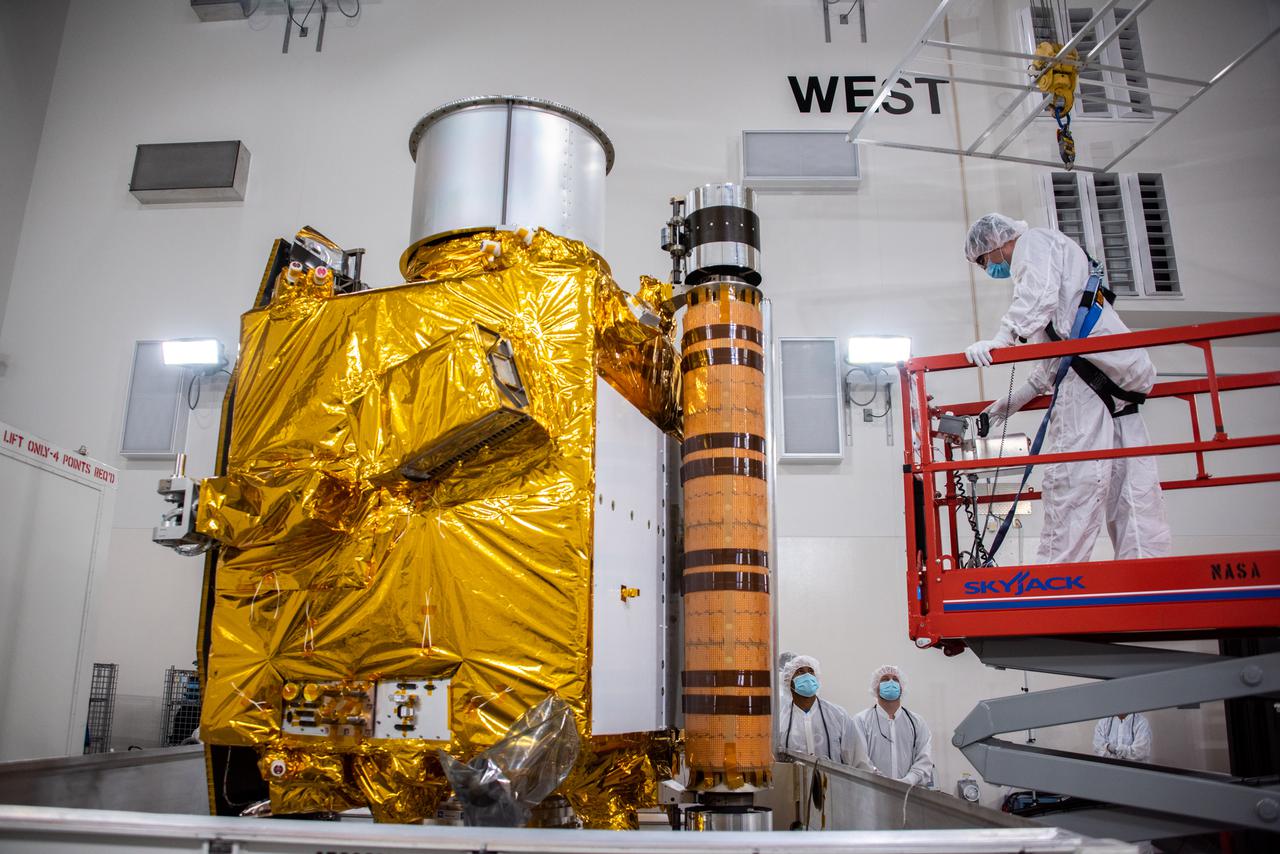
Technicians prepare to move NASA’s Double Asteroid Redirection Test (DART) spacecraft onto a work stand inside the Astrotech Space Operations Facility at Vandenberg Space Force Base in California…
Inspect NASA record
Technicians prepare to move NASA’s Double Asteroid Redirection Test (DART) spacecraft onto a work stand inside the Astrotech Space Operations Facility at Vandenberg Space Force Base in California following its arrival at the facility on Oct. 4, 2021. Once secured on its stand, the spacecraft will undergo a series of tests and checkouts to confirm it is ready for launch. DART is the first mission to test technologies for preventing an impact of Earth by a hazardous asteroid. The mission is targeted to launch on Nov. 23, 2021, aboard a SpaceX Falcon 9 rocket from Vandenberg. NASA’s Launch Services Program, based at Kennedy Space Center, America’s multi-user spaceport, is managing the launch.
- Record ID
- KSC-20211004-PH-ANT01_0044
- NASA center
- KSC
- Date
- 2021-10-04
- Credit
- USSF 30th Space Wing/Aaron Taubm
- Keywords
- DART, Double Asteroid Redirection Test, Falcon 9, LSP, Launch Services Program, Planetary Defense, Space Exploration Technologies Corp., SpaceX, VSFB, Vandenberg Space Force Base
KSC · 2021-10-04 · KSC-20211004-PH-ANT01_0028
DART Spacecraft Removal from Shipping Container, Move to SC Doll
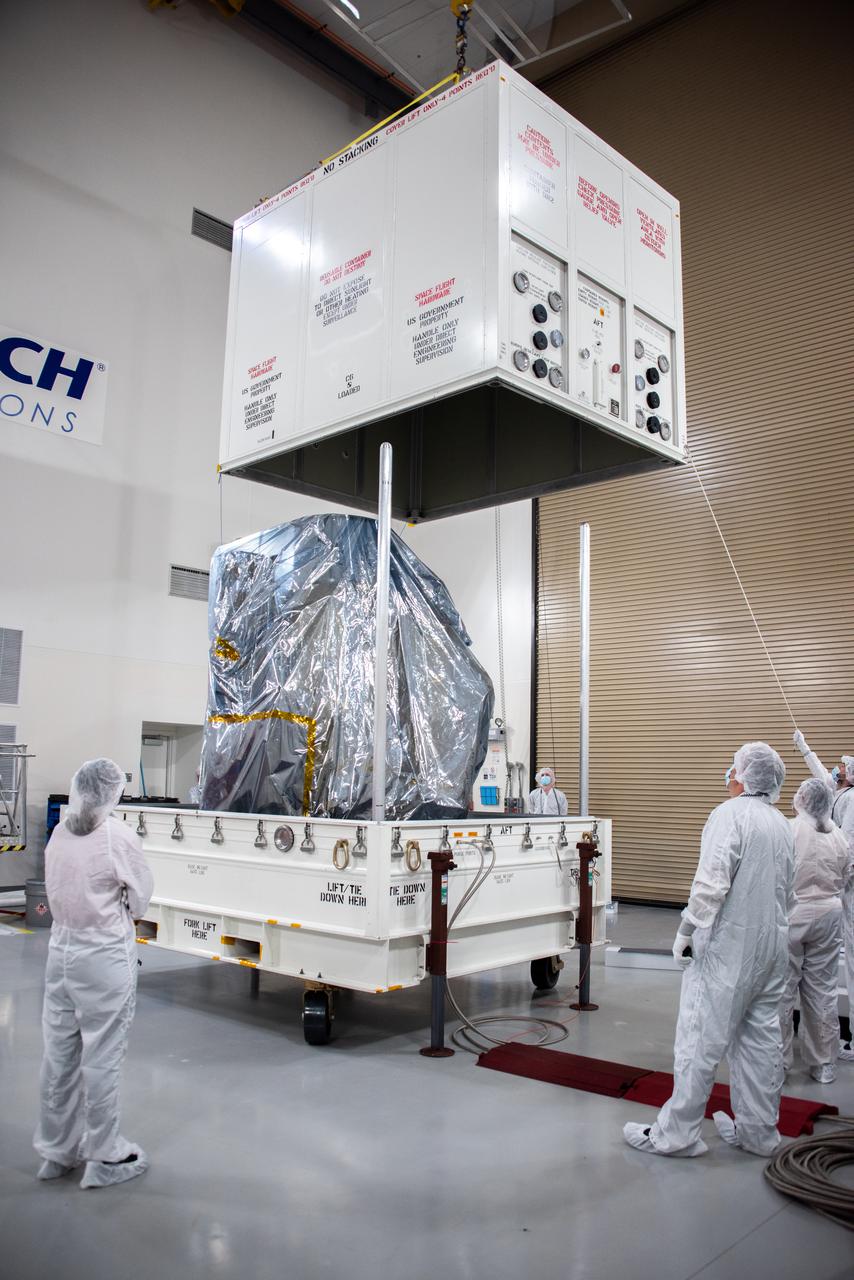
Technicians remove NASA’s Double Asteroid Redirection Test (DART) spacecraft from its shipping container inside the Astrotech Space Operations Facility at Vandenberg Space Force Base in California on Oct.…
Inspect NASA record
Technicians remove NASA’s Double Asteroid Redirection Test (DART) spacecraft from its shipping container inside the Astrotech Space Operations Facility at Vandenberg Space Force Base in California on Oct. 4, 2021. Once fully unpacked, the spacecraft will undergo a series of tests and checkouts to confirm it is ready for launch. DART is the first mission to test technologies for preventing an impact of Earth by a hazardous asteroid. The mission is targeted to launch on Nov. 23, 2021, aboard a SpaceX Falcon 9 rocket from Vandenberg. NASA’s Launch Services Program, based at Kennedy Space Center, America’s multi-user spaceport, is managing the launch.
- Record ID
- KSC-20211004-PH-ANT01_0028
- NASA center
- KSC
- Date
- 2021-10-04
- Credit
- USSF 30th Space Wing/Aaron Taubm
- Keywords
- DART, Double Asteroid Redirection Test, Falcon 9, LSP, Launch Services Program, Planetary Defense, Space Exploration Technologies Corp., SpaceX, VSFB, Vandenberg Space Force Base
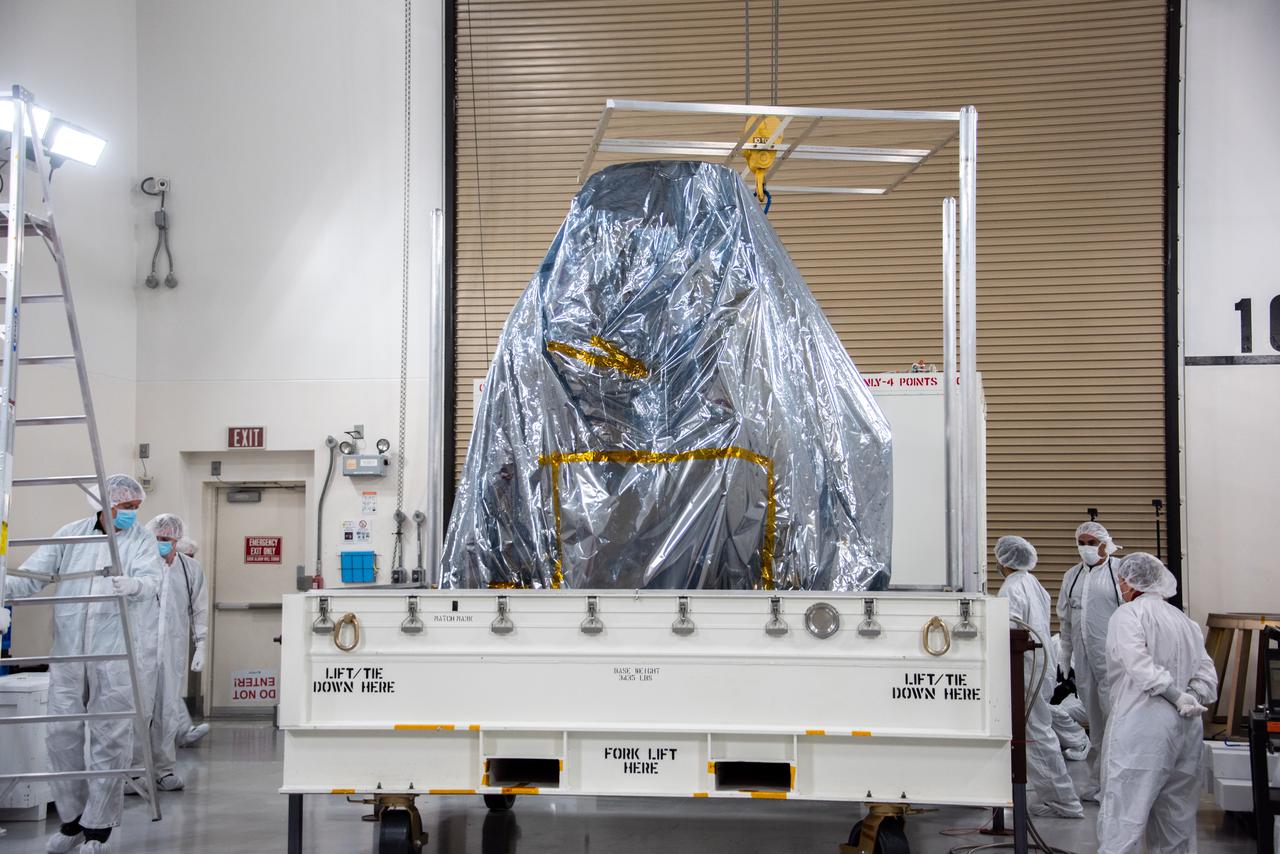
KSC · 2021-10-04 · KSC-20211004-PH-ANT01_0031
DART Spacecraft Removal from Shipping Container, Move to SC Doll
Technicians remove NASA’s Double Asteroid Redirection Test (DART) spacecraft from its shipping container inside the Astrotech Space Operations Facility at Vandenberg Space Force Base in California on Oct.…
Inspect NASA record
Technicians remove NASA’s Double Asteroid Redirection Test (DART) spacecraft from its shipping container inside the Astrotech Space Operations Facility at Vandenberg Space Force Base in California on Oct. 4, 2021. Once fully unpacked, the spacecraft will undergo a series of tests and checkouts to confirm it is ready for launch. DART is the first mission to test technologies for preventing an impact of Earth by a hazardous asteroid. The mission is targeted to launch on Nov. 23, 2021, aboard a SpaceX Falcon 9 rocket from Vandenberg. NASA’s Launch Services Program, based at Kennedy Space Center, America’s multi-user spaceport, is managing the launch.
- Record ID
- KSC-20211004-PH-ANT01_0031
- NASA center
- KSC
- Date
- 2021-10-04
- Credit
- USSF 30th Space Wing/Aaron Taubm
- Keywords
- DART, Double Asteroid Redirection Test, Falcon 9, LSP, Launch Services Program, Planetary Defense, Space Exploration Technologies Corp., SpaceX, VSFB, Vandenberg Space Force Base
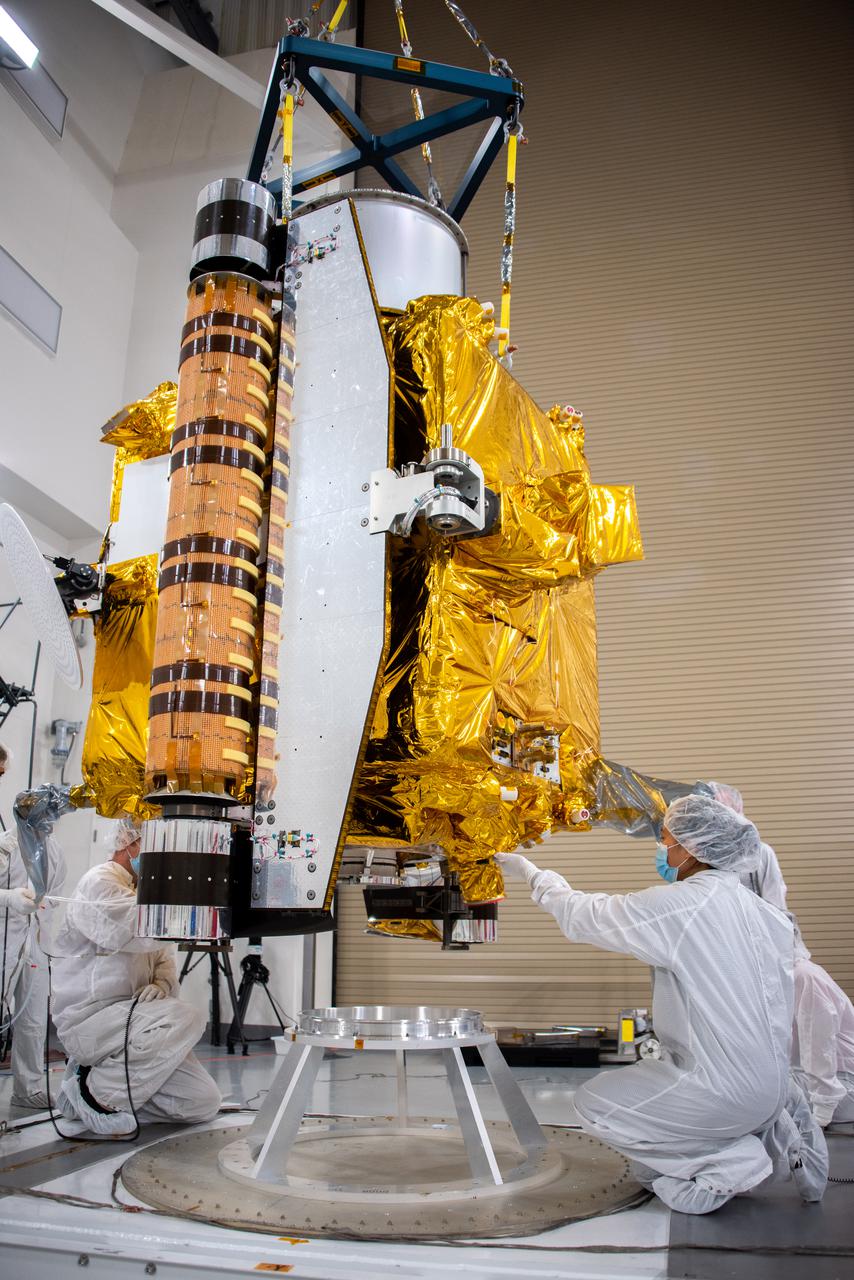
KSC · 2021-10-04 · KSC-20211004-PH-ANT01_0057
DART Spacecraft Removal from Shipping Container, Move to SC Doll
Technicians lower NASA’s Double Asteroid Redirection Test (DART) spacecraft onto a work stand inside the Astrotech Space Operations Facility at Vandenberg Space Force Base in California on Oct.…
Inspect NASA record
Technicians lower NASA’s Double Asteroid Redirection Test (DART) spacecraft onto a work stand inside the Astrotech Space Operations Facility at Vandenberg Space Force Base in California on Oct. 4, 2021. Once secured on its stand, the spacecraft will undergo a series of tests and checkouts to confirm it is ready for launch. DART is the first mission to test technologies for preventing an impact of Earth by a hazardous asteroid. The mission is targeted to launch on Nov. 23, 2021, aboard a SpaceX Falcon 9 rocket from Vandenberg. NASA’s Launch Services Program, based at Kennedy Space Center, America’s multi-user spaceport, is managing the launch.
- Record ID
- KSC-20211004-PH-ANT01_0057
- NASA center
- KSC
- Date
- 2021-10-04
- Credit
- USSF 30th Space Wing/Aaron Taubm
- Keywords
- DART, Double Asteroid Redirection Test, Falcon 9, LSP, Launch Services Program, Planetary Defense, Space Exploration Technologies Corp., SpaceX, VSFB, Vandenberg Space Force Base
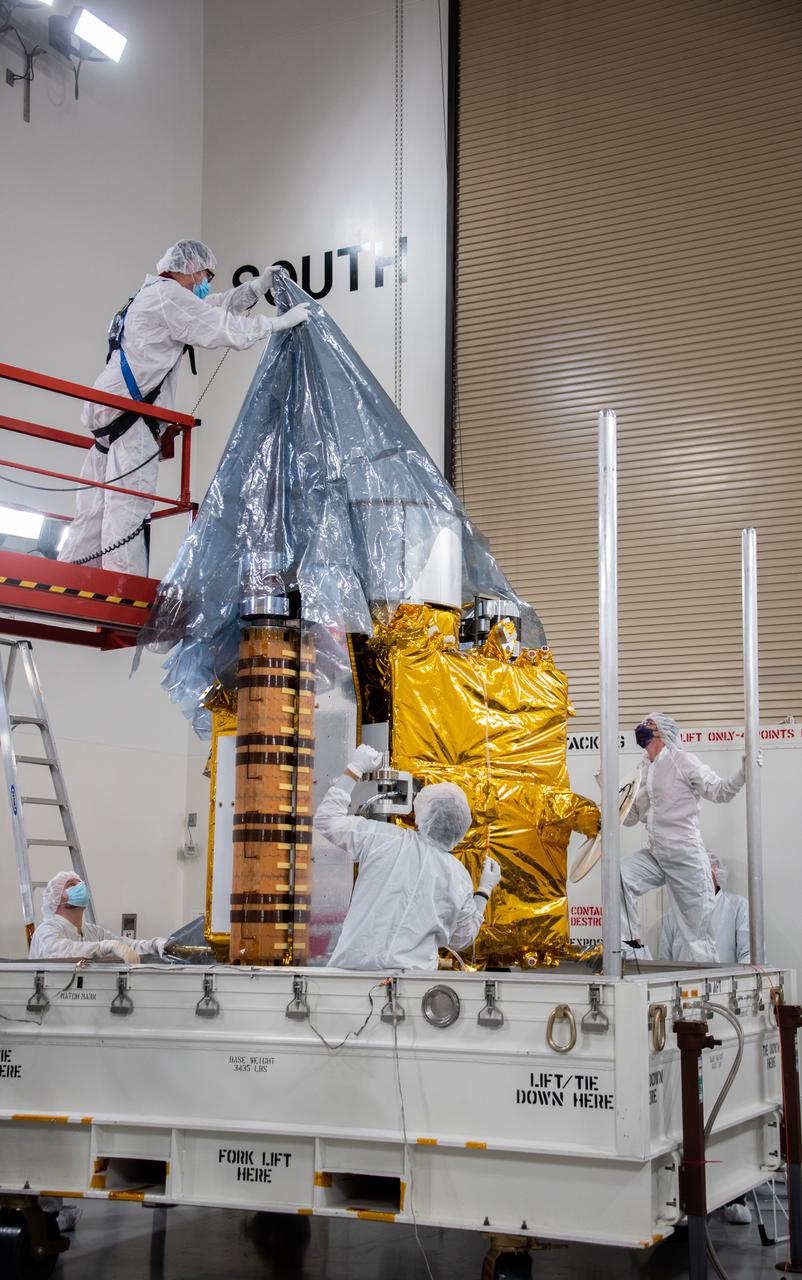
KSC · 2021-10-04 · KSC-20211004-PH-ANT01_0040
DART Spacecraft Removal from Shipping Container, Move to SC Doll
Technicians remove the wrapping from NASA’s Double Asteroid Redirection Test (DART) spacecraft that protected it during transport to the Astrotech Space Operations Facility at Vandenberg Space Force Base…
Inspect NASA record
Technicians remove the wrapping from NASA’s Double Asteroid Redirection Test (DART) spacecraft that protected it during transport to the Astrotech Space Operations Facility at Vandenberg Space Force Base in California on Oct. 4, 2021. Once fully unpacked, the spacecraft will undergo a series of tests and checkouts to confirm it is ready for launch. DART is the first mission to test technologies for preventing an impact of Earth by a hazardous asteroid. The mission is targeted to launch on Nov. 23, 2021, aboard a SpaceX Falcon 9 rocket from Vandenberg. NASA’s Launch Services Program, based at Kennedy Space Center, America’s multi-user spaceport, is managing the launch.
- Record ID
- KSC-20211004-PH-ANT01_0040
- NASA center
- KSC
- Date
- 2021-10-04
- Credit
- USSF 30th Space Wing/Aaron Taubm
- Keywords
- DART, Double Asteroid Redirection Test, Falcon 9, LSP, Launch Services Program, Planetary Defense, Space Exploration Technologies Corp., SpaceX, VSFB, Vandenberg Space Force Base
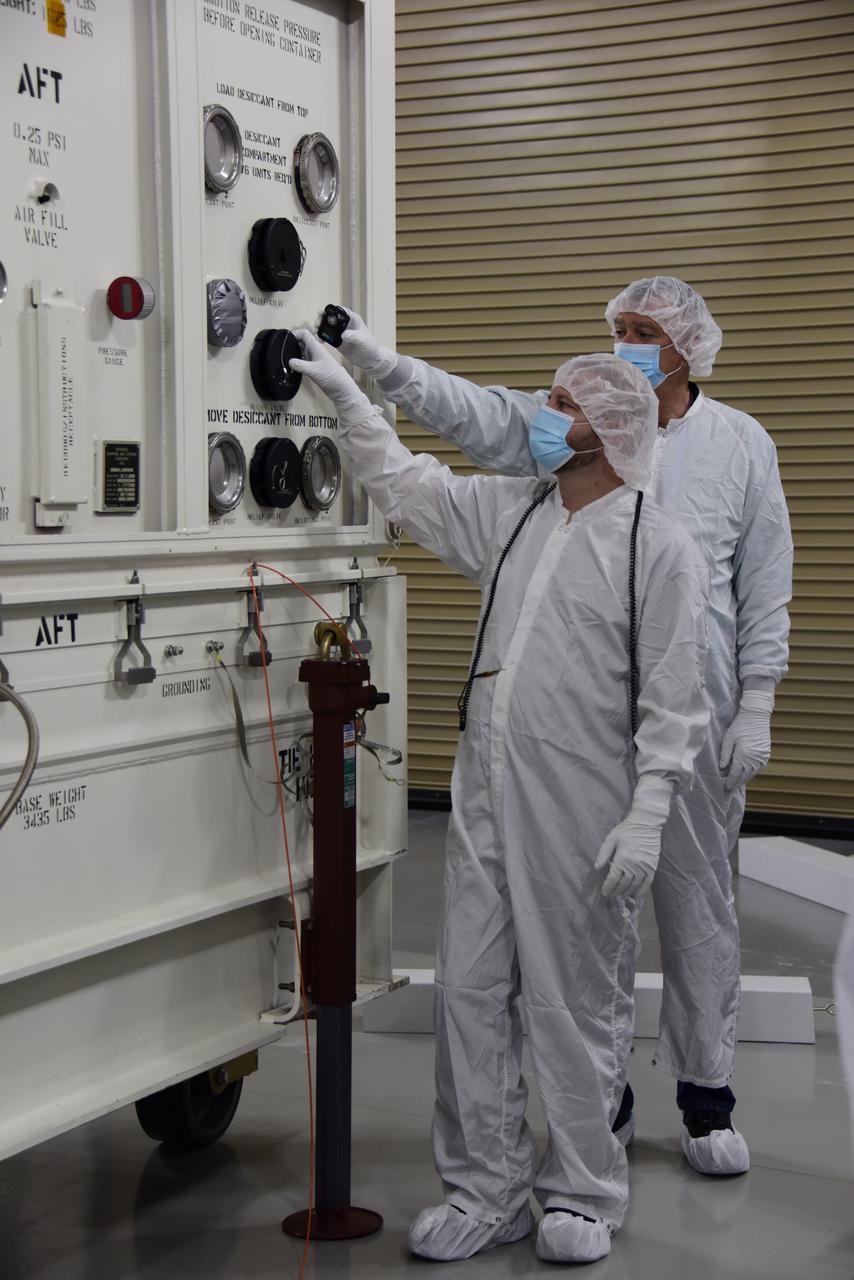
KSC · 2021-10-04 · KSC-20211004-PH-ANT01_0005
DART Spacecraft Removal from Shipping Container, Move to SC Doll
The DART spacecraft is removed from the shipping container and moved to the spacecraft dolly inside Astrotech at Vandenberg Space Force Base in California.
Inspect NASA record
The DART spacecraft is removed from the shipping container and moved to the spacecraft dolly inside Astrotech at Vandenberg Space Force Base in California.
- Record ID
- KSC-20211004-PH-ANT01_0005
- NASA center
- KSC
- Date
- 2021-10-04
- Credit
- USSF 30th Space Wing/Aaron Taubm
- Keywords
- DART, Double Asteroid Redirection Test, Planetary Defense, Launch Services Program, LSP, Space Exploration Technologies Corp., SpaceX, Falcon 9, Vandenberg Space Force Base, VSFB

JPL · 2022-12-22 · PIA25253
NEO Surveyor in an Infrared Starfield Filled With Asteroids (Illustration)
In this illustration showing NEO Surveyor, NASA's next-generation near-Earth object hunter, the spacecraft floats in an infrared starfield containing stars, star clusters, gas, and dust. More than 100…
Inspect NASA record
In this illustration showing NEO Surveyor, NASA's next-generation near-Earth object hunter, the spacecraft floats in an infrared starfield containing stars, star clusters, gas, and dust. More than 100 asteroids can be seen as red dots, with some of them visible in a track that shows how they were captured at different times as they marched across the sky. This starfield was observed by NASA's Wide-field Infrared Survey Explorer, or WISE, during its primary all-sky survey in March 2010 before it was put into hibernation a year later. In December 2013, the space telescope was reactivated to search for more asteroids as the NEOWISE mission. NASA's NEO Surveyor will build upon the successes of NEOWISE as the first space mission built specifically to find large numbers of hazardous asteroids and comets. The space telescope will launch to a region of gravitational stability between the Earth and the Sun called the L1 Lagrange point, where the spacecraft will orbit during its five-year primary mission. From this location, the space telescope will view the solar system in infrared wavelengths &ndash light that is invisible to the human eye. Because those wavelengths are mostly blocked by Earth's atmosphere, larger ground-based observatories may miss near-Earth objects that NEO Surveyor will be able to spot from space by using its modest light-collecting aperture of nearly 20 inches (50 centimeters). NEO Surveyor's cutting-edge detectors are designed to observe two heat-sensitive infrared bands that were chosen specifically so the spacecraft can track the most challenging-to-find near-Earth objects, such as dark asteroids and comets that don't reflect much visible light. In the infrared wavelengths to which NEO Surveyor is sensitive, these objects glow as they are heated by sunlight. In addition, NEO Surveyor will be able to find asteroids that approach Earth from the direction of the Sun, as well as those that lead and trail our planet's orbit, where they are typically obscured by the glare of sunlight – objects known as Earth Trojans. The mission is tasked by NASA's Planetary Science Division within the Science Mission Directorate; program oversight is provided by the PDCO, which was established in 2016 to manage the agency's ongoing efforts in planetary defense. NASA's Planetary Missions Program Office at Marshall Space Flight Center provides program management for NEO Surveyor. The project is being developed by JPL and is led by survey director Amy Mainzer at the University of Arizona. Established aerospace and engineering companies have been contracted to build the spacecraft and its instrumentation, including Ball Aerospace , Space Dynamics Laboratory, and Teledyne. The Laboratory for Atmospheric and Space Physics at the University of Colorado, Boulder will support operations, and IPAC-Caltech in Pasadena, California, is responsible for processing survey data and producing the mission's data products. Caltech manages JPL for NASA. https://photojournal.jpl.nasa.gov/catalog/PIA25253
- Record ID
- PIA25253
- NASA center
- JPL
- Date
- 2022-12-22
- Credit
- NASA/JPL-Caltech/University of Arizona
- Keywords
- NEO Surveyor, Asteroid
GSFC · 2017-12-08 · GSFC_20171208_Archive_e000675
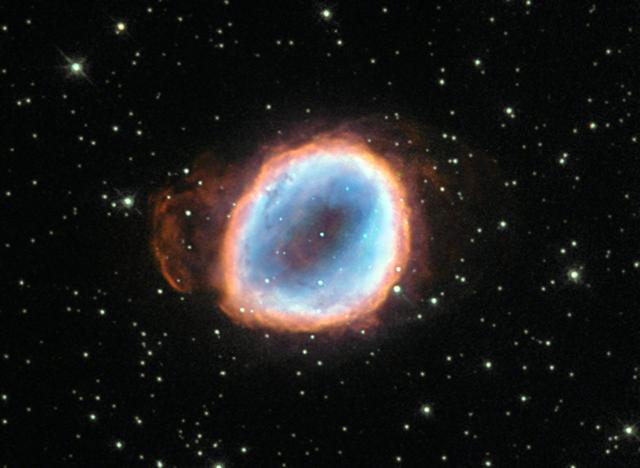
Hubble Sees a Dying Star's Final Moments
A dying star’s final moments are captured in this image from the NASA/ESA Hubble Space Telescope. The death throes of this star may only last mere moments on…
Inspect NASA record
A dying star’s final moments are captured in this image from the NASA/ESA Hubble Space Telescope. The death throes of this star may only last mere moments on a cosmological timescale, but this star’s demise is still quite lengthy by our standards, lasting tens of thousands of years! The star’s agony has culminated in a wonderful planetary nebula known as NGC 6565, a cloud of gas that was ejected from the star after strong stellar winds pushed the star’s outer layers away into space. Once enough material was ejected, the star’s luminous core was exposed, enabling its ultraviolet radiation to excite the surrounding gas to varying degrees and causing it to radiate in an attractive array of colors. These same colors can be seen in the famous and impressive Ring Nebula (heic1310), a prominent example of a nebula like this one. Planetary nebulae are illuminated for around 10,000 years before the central star begins to cool and shrink to become a white dwarf. When this happens, the star’s light drastically diminishes and ceases to excite the surrounding gas, so the nebula fades from view. Credit: ESA/Hubble & NASA, Acknowledgement: Matej Novak NASA image use policy. NASA Goddard Space Flight Center enables NASA’s mission through four scientific endeavors: Earth Science, Heliophysics, Solar System Exploration, and Astrophysics. Goddard plays a leading role in NASA’s accomplishments by contributing compelling scientific knowledge to advance the Agency’s mission. Follow us on Twitter Like us on Facebook Find us on Instagram
- Record ID
- GSFC_20171208_Archive_e000675
- NASA center
- GSFC
- Date
- 2017-12-08
- Keywords
- Hubble Sees a Dying Star's Final Moments, star, space, nasa, hubble, hubblespacetelescope, nasagoddard, ngc6565

GSFC · 2017-12-08 · GSFC_20171208_Archive_e000134
Hubble sniffs out a brilliant star death in a “rotten egg” nebula
The Calabash Nebula, pictured here — which has the technical name OH 231.8+04.2 — is a spectacular example of the death of a low-mass star like the sun.…
Inspect NASA record
The Calabash Nebula, pictured here — which has the technical name OH 231.8+04.2 — is a spectacular example of the death of a low-mass star like the sun. This image taken by the NASA/ESA Hubble Space Telescope shows the star going through a rapid transformation from a red giant to a planetary nebula, during which it blows its outer layers of gas and dust out into the surrounding space. The recently ejected material is spat out in opposite directions with immense speed — the gas shown in yellow is moving close to one million kilometers per hour (621,371 miles per hour). Astronomers rarely capture a star in this phase of its evolution because it occurs within the blink of an eye — in astronomical terms. Over the next thousand years the nebula is expected to evolve into a fully-fledged planetary nebula. The nebula is also known as the Rotten Egg Nebula because it contains a lot of sulphur, an element that, when combined with other elements, smells like a rotten egg — but luckily, it resides over 5,000 light-years away in the constellation of Puppis. Credit: ESA/Hubble & NASA, Acknowledgement: Judy Schmidt NASA image use policy. NASA Goddard Space Flight Center enables NASA’s mission through four scientific endeavors: Earth Science, Heliophysics, Solar System Exploration, and Astrophysics. Goddard plays a leading role in NASA’s accomplishments by contributing compelling scientific knowledge to advance the Agency’s mission. Follow us on Twitter Like us on Facebook Find us on Instagram
- Record ID
- GSFC_20171208_Archive_e000134
- NASA center
- GSFC
- Date
- 2017-12-08
- Keywords
- Hubble sniffs out a brilliant star death in a “rotten egg” nebula, calabashnebula, oh23184422
JPL · 2023-04-12 · PIA25833
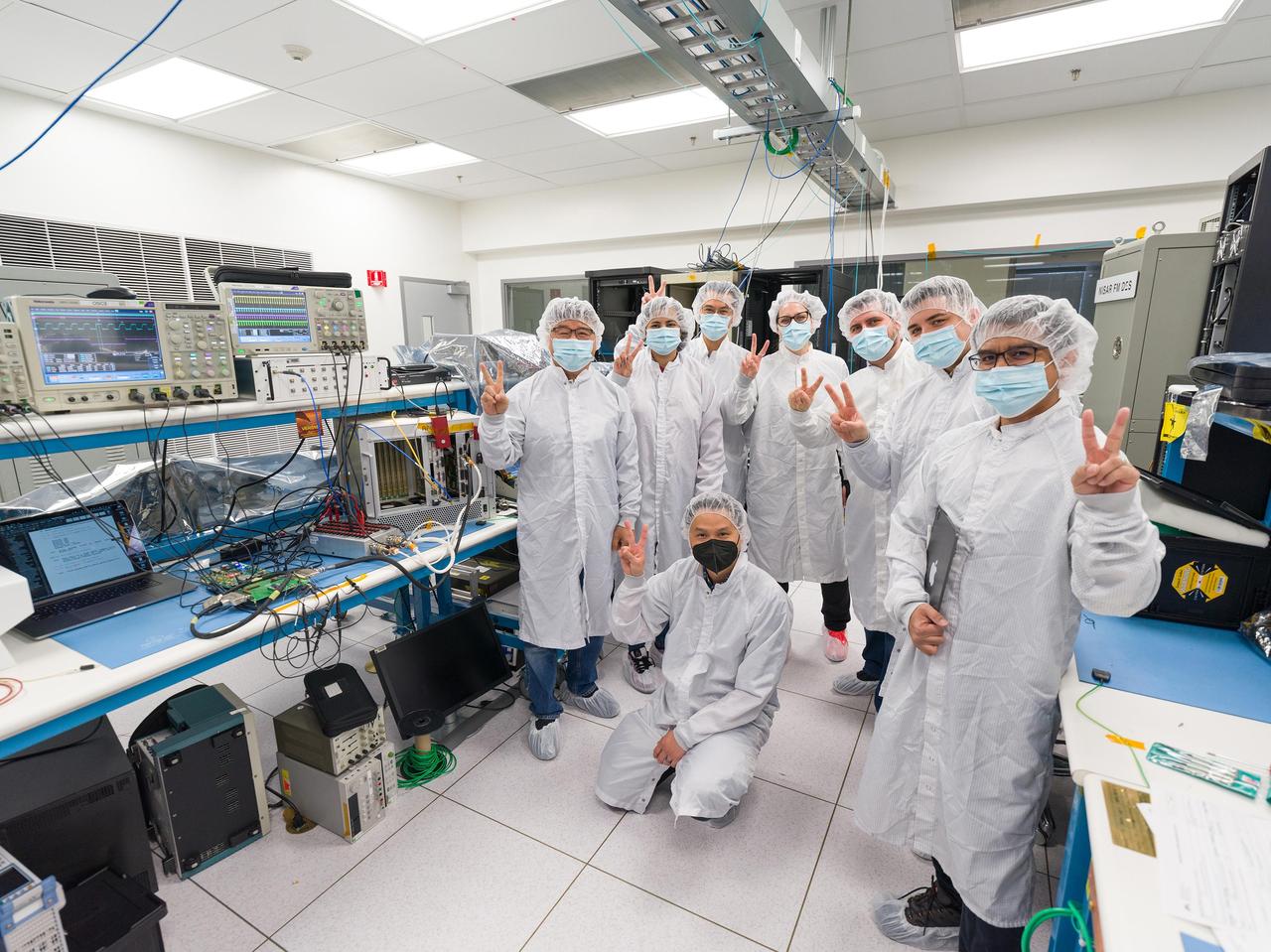
International Collaboration for Early VERITAS Prototype Hardware Tests
Seen here are members of the international team that participated in recent tests on prototype hardware for the Venus Interferometric Synthetic Aperture Radar (VISAR) at NASA's Jet Propulsion…
Inspect NASA record
Seen here are members of the international team that participated in recent tests on prototype hardware for the Venus Interferometric Synthetic Aperture Radar (VISAR) at NASA's Jet Propulsion Laboratory in Southern California. VISAR is being developed at JPL for NASA's Venus Emissivity Radio Science, InSAR, Topography & Spectroscopy (VERITAS) mission that will launch within a decade to explore Earth's twin. In March 2023, the hardware underwent early interface tests in a JPL clean room, representing the first in a series to be run by JPL and Thales Alenia Space Italy (TASI), an international partner of the VERITAS mission that is contributing hardware to the instrument. Dressed in gowns to minimize the risk of contamination with sensitive electronics, the JPL VISAR digital team and TASI engineers pose for a photograph next to the laboratory benches where the tests took place. Figure A shows the same personnel without gowns for a team photo. From left to right: Marvin Cruz (JPL), Chester Lim (JPL), Tim Noh (JPL), Hana Haideri (JPL), Luca Di Marco Napini (TASI), Ernie Chuang (JPL), Dragana Perkovic-Martin (JPL), and Gabriel Mihu (TASI). JPL's Michael Burke, Anusha Yarlagadda, Duane Clark, and TASI's Antonio Delfino also participated in the tests but are not pictured. When VERITAS arrives in orbit, it will use VISAR to create detailed 3D global maps of Venus. The spacecraft will also carry a near-infrared spectrometer to figure out what the surface is made of. Together, the instruments will offer clues about the planet's past and present geologic processes, help reveal how the paths of Venus and Earth diverged, and how Venus lost its potential as a habitable world. VERITAS is managed by JPL. VERITAS and NASA's Deep Atmosphere Venus Investigation of Noble gases, Chemistry, and Imaging (DAVINCI) mission were selected in 2021 under NASA's Discovery Program as the agency's next missions to Venus. The Discovery Program is managed by the Planetary Missions Program Office at NASA's Marshall Space Flight Center in Huntsville, Alabama, for the Planetary Science Division of NASA's Science Mission Directorate in Washington. https://photojournal.jpl.nasa.gov/catalog/PIA25833
- Record ID
- PIA25833
- NASA center
- JPL
- Date
- 2023-04-12
- Credit
- NASA/JPL-Caltech
- Keywords
- VERITAS