
Add from NASA
Explore NASA’s Image and Video Library.
Suggest one object per day for the Interstellar Minds collection. We review each suggestion before adding it.
Sign in to suggest a Marvel.
NASA image records

MSFC · 1998-01-01 · 9809529
History of Hubble Space Telescope (HST)
This photograph is a Hubble Space Telescope (HST) image of a sky full of glittering jewels. The HST peered into the Sagittarius star cloud, a narrow dust free…
Inspect NASA record
This photograph is a Hubble Space Telescope (HST) image of a sky full of glittering jewels. The HST peered into the Sagittarius star cloud, a narrow dust free region, providing this spectacular glimpse of a treasure chest full of stars.
- Record ID
- 9809529
- NASA center
- MSFC
- Date
- 1998-01-01
- Keywords
- Hubble Space Telescope, HST. Sagittarius
KSC · 2026-08-21 · KSC-20260821-PH-SER01_0005
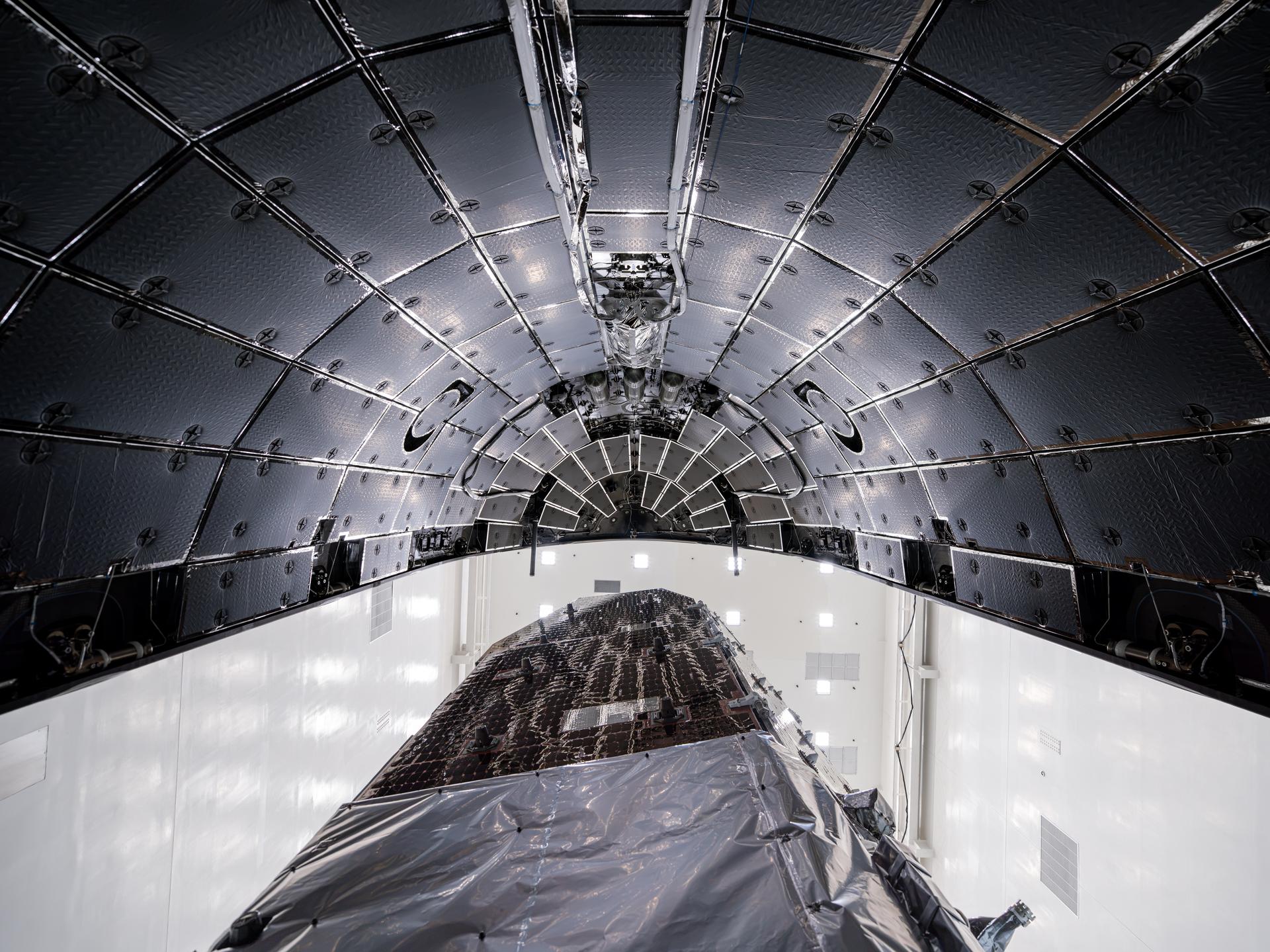
Roman Space Telescope Encapsulation
Teams inside the Payload Hazardous Servicing Facility at NASA’s Kennedy Space Center in Florida encapsulate the agency’s Nancy Grace Roman Space Telescope within the payload fairing on Friday,…
Inspect NASA record
Teams inside the Payload Hazardous Servicing Facility at NASA’s Kennedy Space Center in Florida encapsulate the agency’s Nancy Grace Roman Space Telescope within the payload fairing on Friday, Aug. 21, 2026, ahead of mating to a SpaceX Falcon Heavy rocket. Encapsulation shields the spacecraft during rollout, ascent, and the early phases of flight. Roman will investigate dark energy and dark matter, conduct a statistical census of planetary systems, and enable a broad range of additional astrophysics research. Liftoff from Launch Complex 39A at Kennedy is targeted for no earlier than Sunday, Aug. 30, 2026.
- Record ID
- KSC-20260821-PH-SER01_0005
- NASA center
- KSC
- Date
- 2026-08-21
- Credit
- NASA/Sydney Rohde (Rocz)
- Keywords
- John. F. Kennedy Space Center, Kennedy, Kennedy Space Center, KSC, Spaceport, Cape Canaveral, CCSFS, NASA, Nancy Grace Roman Space Telescope, RST, encapsulation, payload fairing
KSC · 2026-08-21 · KSC-20260821-PH-SER01_0004
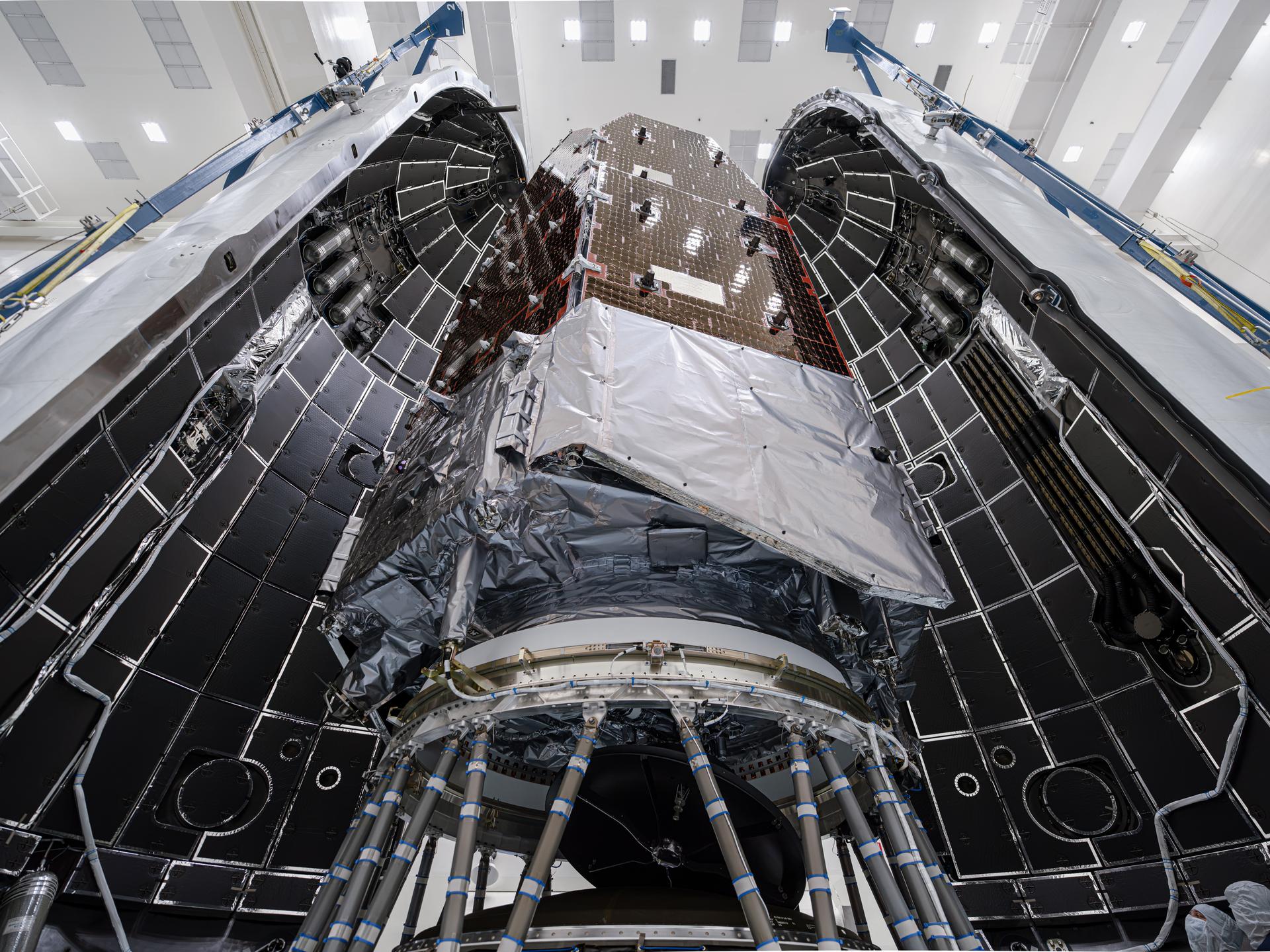
Roman Space Telescope Encapsulation
Teams inside the Payload Hazardous Servicing Facility at NASA’s Kennedy Space Center in Florida encapsulate the agency’s Nancy Grace Roman Space Telescope within the payload fairing on Friday,…
Inspect NASA record
Teams inside the Payload Hazardous Servicing Facility at NASA’s Kennedy Space Center in Florida encapsulate the agency’s Nancy Grace Roman Space Telescope within the payload fairing on Friday, Aug. 21, 2026, ahead of mating to a SpaceX Falcon Heavy rocket. Encapsulation shields the spacecraft during rollout, ascent, and the early phases of flight. Roman will investigate dark energy and dark matter, conduct a statistical census of planetary systems, and enable a broad range of additional astrophysics research. Liftoff from Launch Complex 39A at Kennedy is targeted for no earlier than Sunday, Aug. 30, 2026.
- Record ID
- KSC-20260821-PH-SER01_0004
- NASA center
- KSC
- Date
- 2026-08-21
- Credit
- NASA/Sydney Rohde (Rocz)
- Keywords
- John. F. Kennedy Space Center, Kennedy, Kennedy Space Center, KSC, Spaceport, Cape Canaveral, CCSFS, NASA, Nancy Grace Roman Space Telescope, RST, encapsulation, payload fairing
MSFC · 1983-01-01 · 8330773
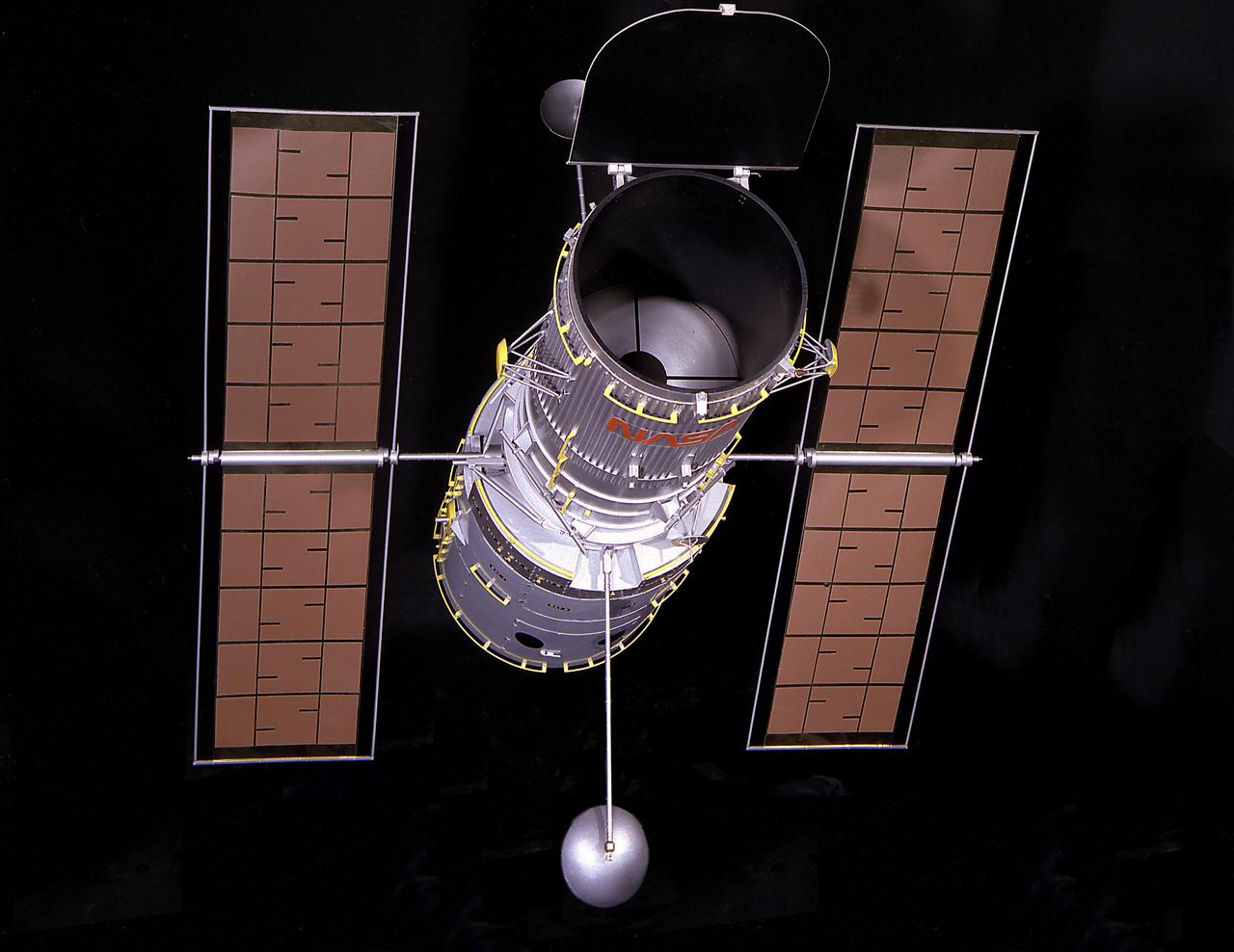
History of Hubble Space Telescope (HST)
This is a photograph of a 1/15 scale model of the Hubble Space Telescope (HST). The HST is the product of a partnership between NASA, European Space Agency…
Inspect NASA record
This is a photograph of a 1/15 scale model of the Hubble Space Telescope (HST). The HST is the product of a partnership between NASA, European Space Agency Contractors, and the international community of astronomers. It is named after Edwin P. Hubble, an American Astronomer who discovered the expanding nature of the universe and was the first to realize the true nature of galaxies. The purpose of the HST, the most complex and sensitive optical telescope ever made, is to study the cosmos from a low-Earth orbit. By placing the telescope in space, astronomers are able to collect data that is free of the Earth's atmosphere. The HST detects objects 25 times fainter than the dimmest objects seen from Earth and provides astronomers with an observable universe 250 times larger than visible from ground-based telescopes, perhaps as far away as 14 billion light-years. The HST views galaxies, stars, planets, comets, possibly other solar systems, and even unusual phenomena such as quasars, with 10 times the clarity of ground-based telescopes. The major elements of the HST are the Optical Telescope Assembly (OTA), the Support System Module (SSM), and the Scientific Instruments (SI). The HST is 42.5-feet (13- meters) long and weighs about 25,000 pounds (11,600 kilograms). The HST was deployed from the Space Shuttle Discovery (STS-31 mission) into Earth orbit in April 1990. The Marshall Space Flight Center had responsibility for design, development, and construction of the HST. The Perkin-Elmer Corporation, in Danbury, Cornecticut, developed the optical system and guidance sensors. The Lockheed Missile and Space Company of Sunnyvale, California produced the protective outer shroud and spacecraft systems, and assembled and tested the finished telescope.
- Record ID
- 8330773
- NASA center
- MSFC
- Date
- 1983-01-01
- Keywords
- Hubble Space Telescope, HST, Scale Model
MSFC · 1989-10-12 · 8913468
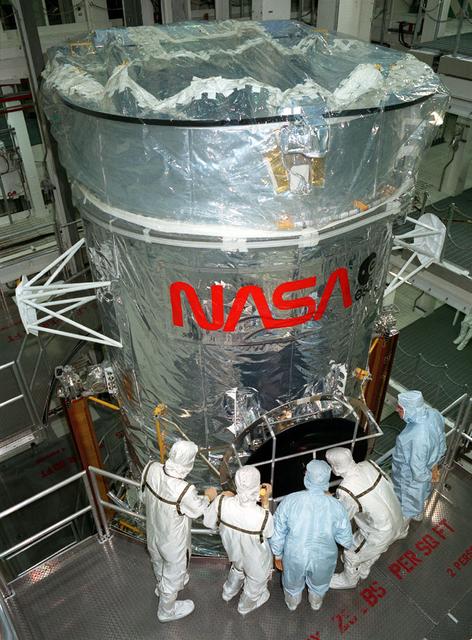
History of Hubble Space Telescope (HST)
The Hubble Space Telescope (HST) pictured in the Vertical Processing Facility (VPF) support fixture during final testing and verification at the Lockheed assembly plant.
Inspect NASA record
The Hubble Space Telescope (HST) pictured in the Vertical Processing Facility (VPF) support fixture during final testing and verification at the Lockheed assembly plant.
- Record ID
- 8913468
- NASA center
- MSFC
- Date
- 1989-10-12
- Keywords
- Hubble Space Telescope, HST, Vertical Processing Facility
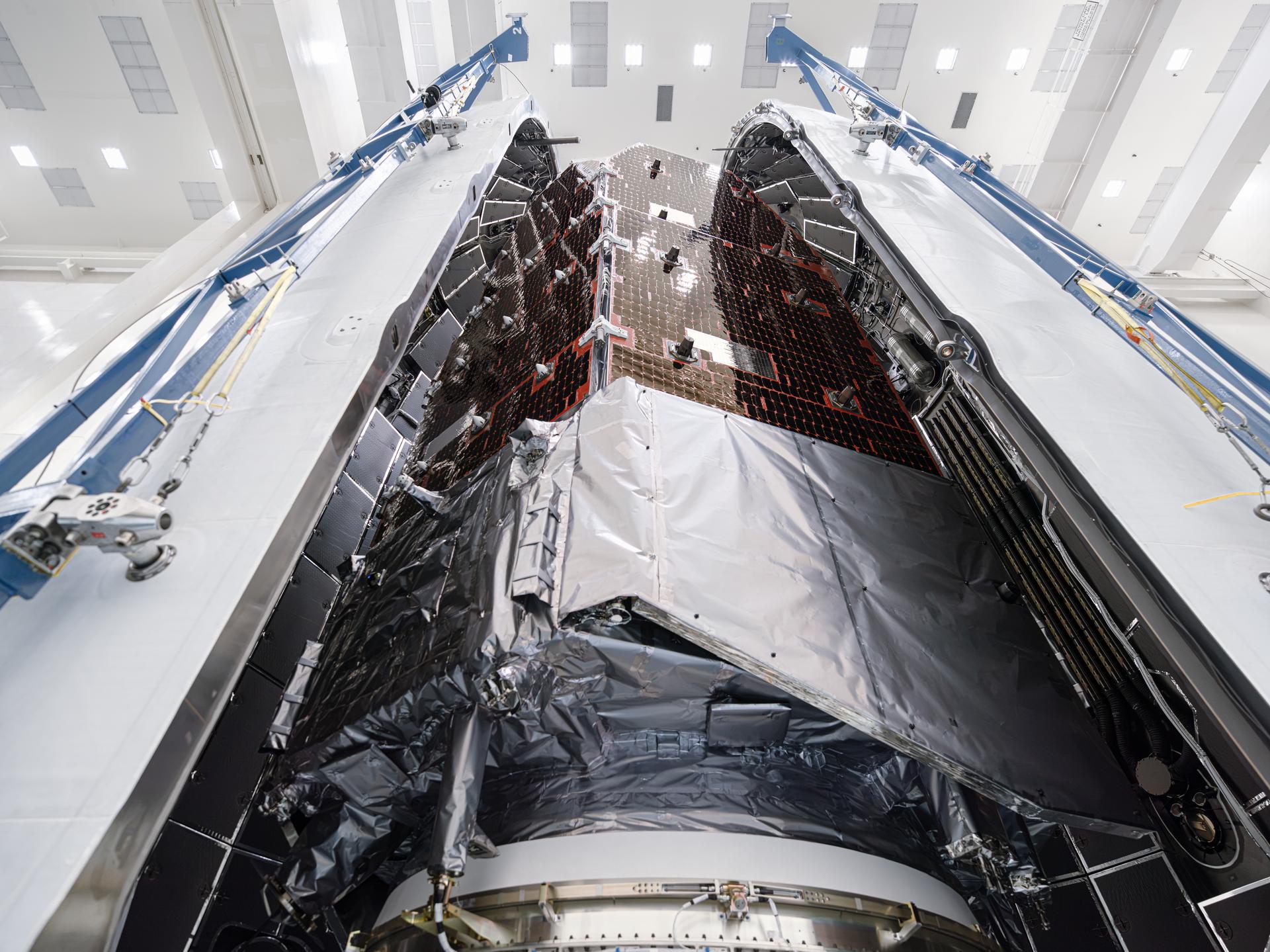
KSC · 2026-08-21 · KSC-20260821-PH-SER01_0006
Roman Space Telescope Encapsulation
Teams inside the Payload Hazardous Servicing Facility at NASA’s Kennedy Space Center in Florida encapsulate the agency’s Nancy Grace Roman Space Telescope within the payload fairing on Friday,…
Inspect NASA record
Teams inside the Payload Hazardous Servicing Facility at NASA’s Kennedy Space Center in Florida encapsulate the agency’s Nancy Grace Roman Space Telescope within the payload fairing on Friday, Aug. 21, 2026, ahead of mating to a SpaceX Falcon Heavy rocket. Encapsulation shields the spacecraft during rollout, ascent, and the early phases of flight. Roman will investigate dark energy and dark matter, conduct a statistical census of planetary systems, and enable a broad range of additional astrophysics research. Liftoff from Launch Complex 39A at Kennedy is targeted for no earlier than Sunday, Aug. 30, 2026.
- Record ID
- KSC-20260821-PH-SER01_0006
- NASA center
- KSC
- Date
- 2026-08-21
- Credit
- NASA/Sydney Rohde (Rocz)
- Keywords
- John. F. Kennedy Space Center, Kennedy, Kennedy Space Center, KSC, Spaceport, Cape Canaveral, CCSFS, NASA, Nancy Grace Roman Space Telescope, RST, encapsulation, payload fairing
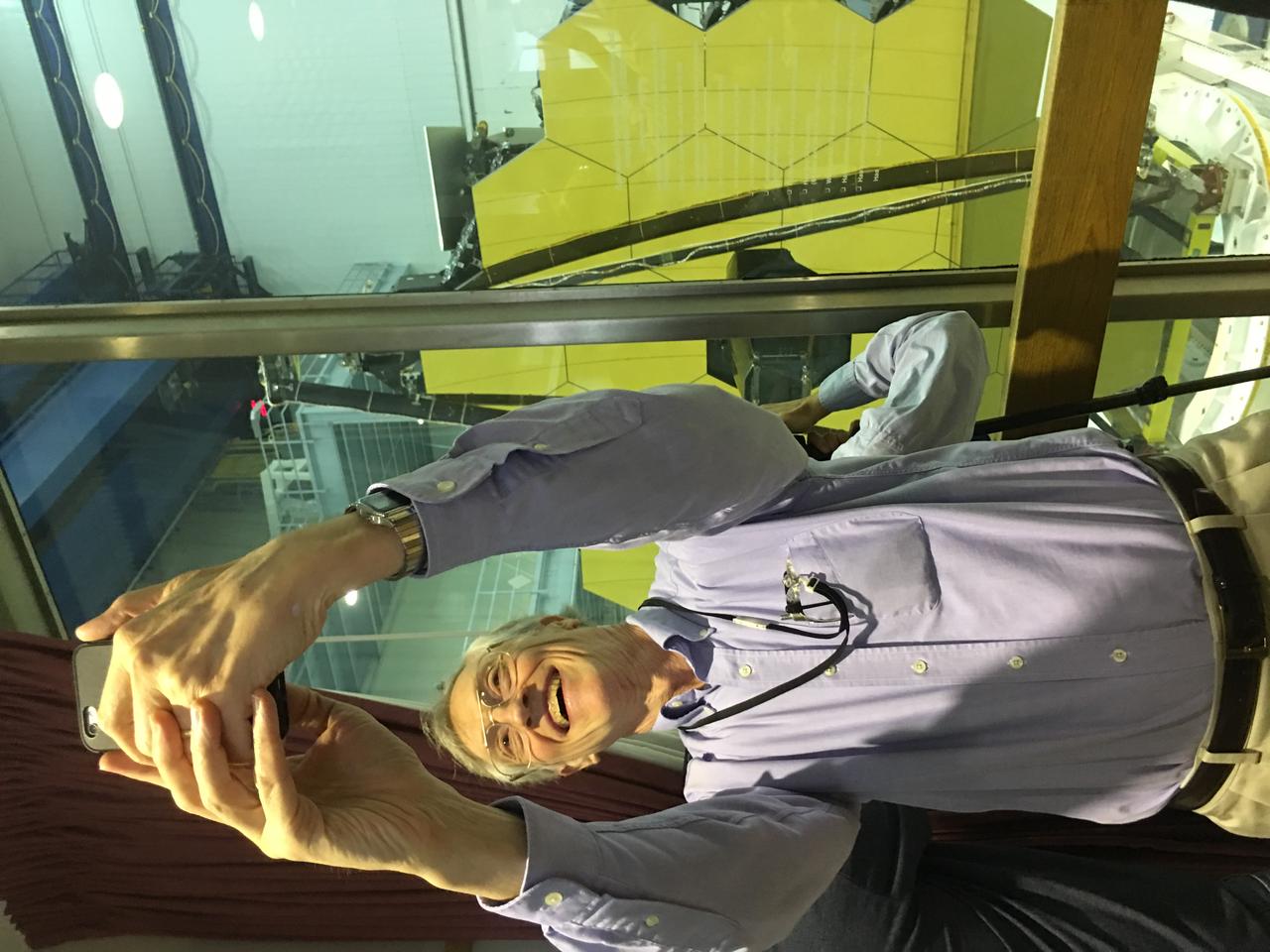
GSFC · 2017-12-08 · GSFC_20171208_Archive_e000353
Dr. John Mather and the James Webb Space Telescope
Nobel Laureate and James Webb Space Telescope project scientist Dr. John Mather takes a selfie with the telescope. May 4, 2016 was a rare day for JWST, as…
Inspect NASA record
Nobel Laureate and James Webb Space Telescope project scientist Dr. John Mather takes a selfie with the telescope. May 4, 2016 was a rare day for JWST, as it briefly faced the cleanroom observation window. The telescope was eventually rotated face-down in prep for the installation of the flight instruments. Credit: Meredith Gibb
- Record ID
- GSFC_20171208_Archive_e000353
- NASA center
- GSFC
- Date
- 2017-12-08
- Keywords
- Dr. John Mather and the James Webb Space Telescope
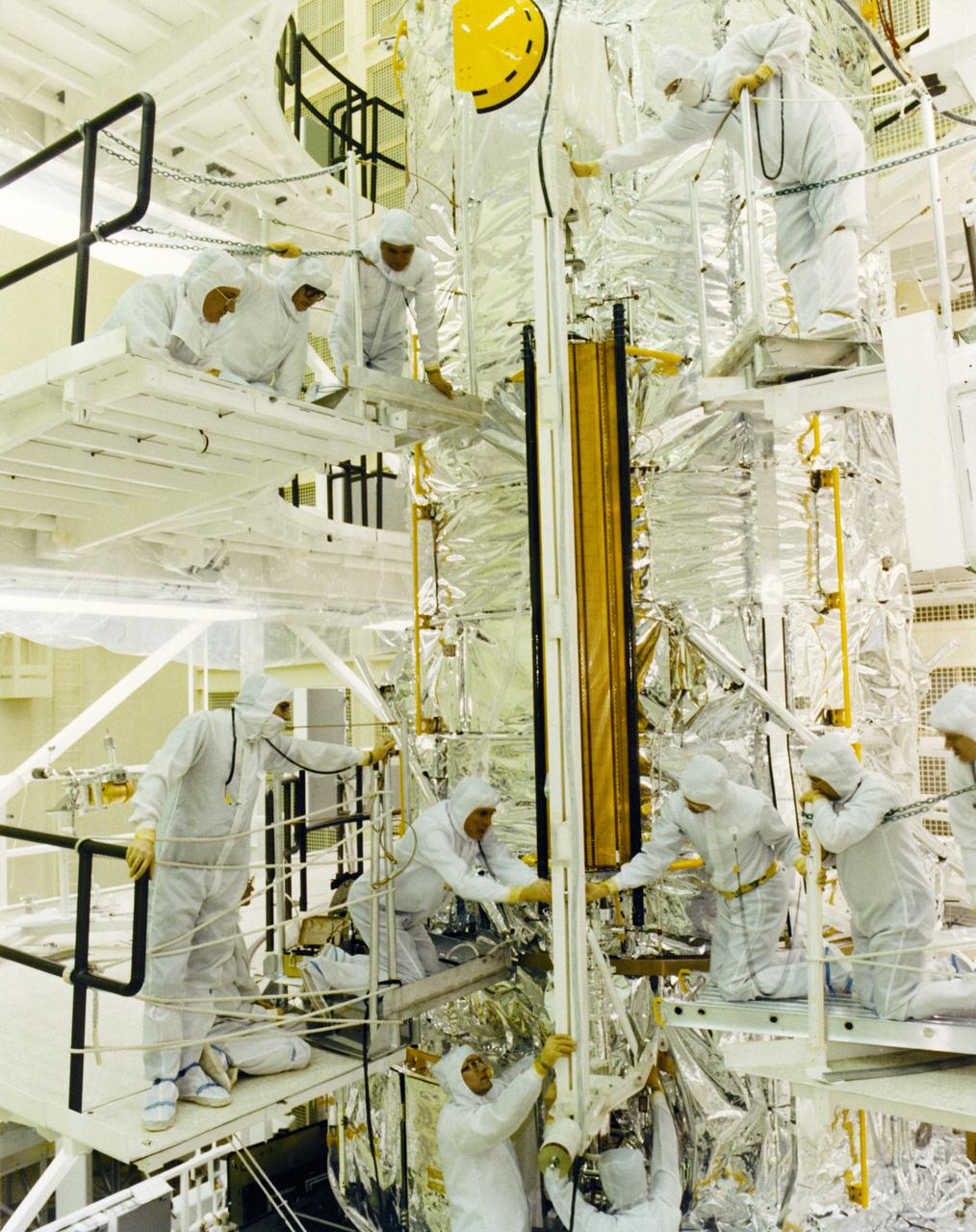
MSFC · 1986-01-01 · 8663403
History of Hubble Space Telescope (HST)
Engineers and technicians conduct a fit check of the Hubble Space Telescope (HST) Solar Array flight article in a clean room of the Lockheed Missile and Space Company.…
Inspect NASA record
Engineers and technicians conduct a fit check of the Hubble Space Telescope (HST) Solar Array flight article in a clean room of the Lockheed Missile and Space Company. The Solar Array is 40- feet (12.1-meters) long and 8.2-feet (2.5-meters) wide, and provides power to the spacecraft. The HST is the first of NASA's great observatories and the most complex and sensitive optical telescope ever made. The purpose of the HST is to study the cosmos from a low-Earth orbit by placing the telescope in space, enabling astronomers to collect data that is free of the Earth's atmosphere. The HST was deployed from the Space Shuttle Discovery (STS-31 mission) into Earth orbit in April 1990. The Marshall Space Flight Center had overall responsibility for design, development, and construction of the HST. The Perkin-Elmer Corporation, in Danbury, Cornecticut, developed the optical system and guidance sensors. The Lockheed Missile and Space Company, Sunnyvale, California, produced the protective outer shroud and spacecraft systems, and assembled and tested the finished telescope.
- Record ID
- 8663403
- NASA center
- MSFC
- Date
- 1986-01-01
- Keywords
- Hubble Space Telescope, HST, Solar Array
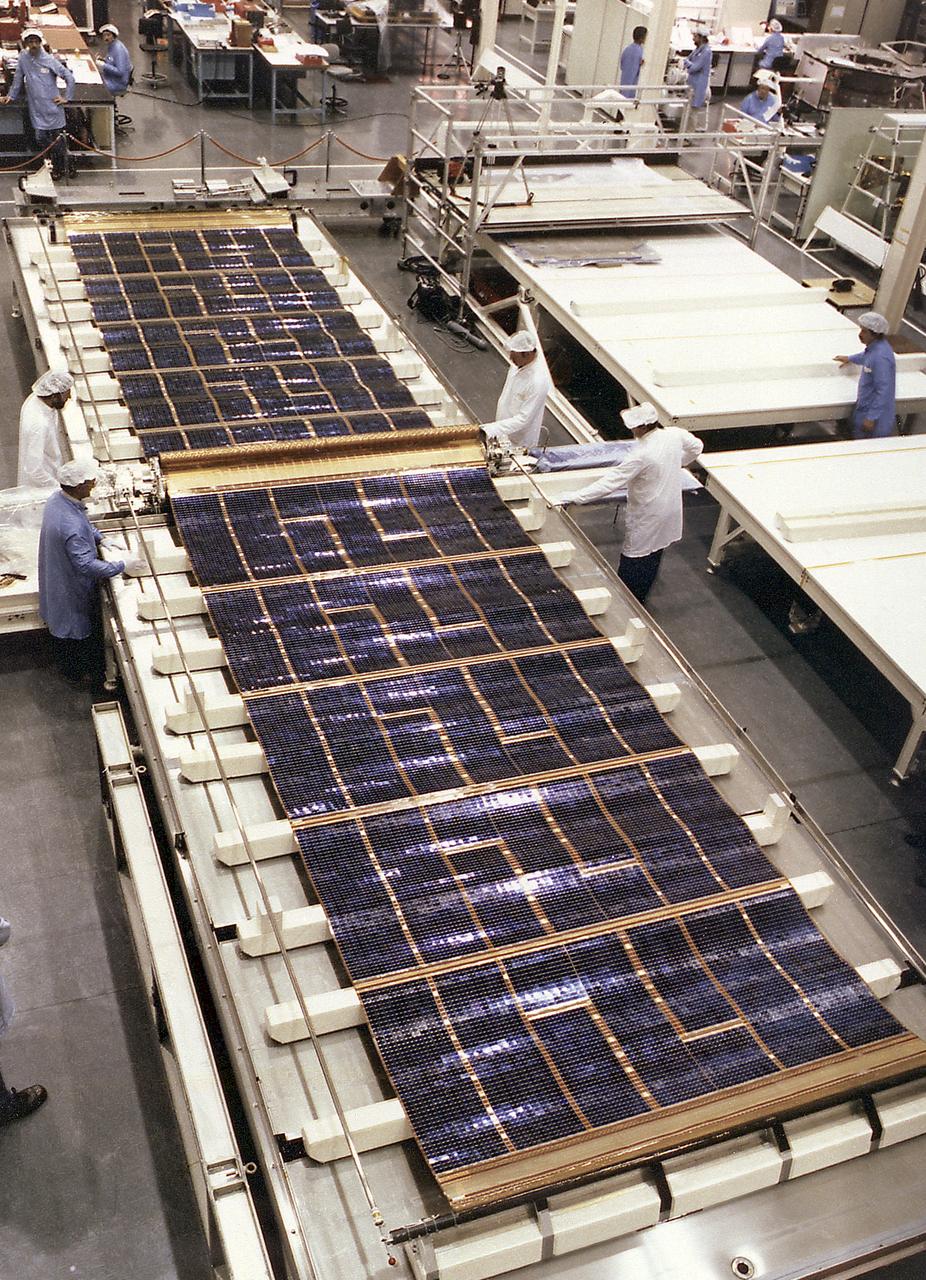
MSFC · 1985-01-01 · 8559965
History of Hubble Space Telescope (HST)
This is a view of a solar cell blanket deployed on a water table during the Solar Array deployment test. The Hubble Space Telescope (HST) Solar Arrays provide…
Inspect NASA record
This is a view of a solar cell blanket deployed on a water table during the Solar Array deployment test. The Hubble Space Telescope (HST) Solar Arrays provide power to the spacecraft. The arrays are mounted on opposite sides of the HST, on the forward shell of the Support Systems Module. Each array stands on a 4-foot mast that supports a retractable wing of solar panels 40-feet (12.1-meters) long and 8.2-feet (2.5-meters) wide, in full extension. The arrays rotate so that the solar cells face the Sun as much as possible to harness the Sun's energy. The Space Telescope Operations Control Center at the Goddard Space Center operates the array, extending the panels and maneuvering the spacecraft to focus maximum sunlight on the arrays. The purpose of the HST, the most complex and sensitive optical telescope ever made, is to study the cosmos from a low-Earth orbit. By placing the telescope in space, astronomers are able to collect data that is free of the Earth's atmosphere. The HST Solar Array was designed by the European Space Agency and built by British Aerospace. The Marshall Space Flight Center had overall responsibility for design, development, and construction of the HST.
- Record ID
- 8559965
- NASA center
- MSFC
- Date
- 1985-01-01
- Keywords
- Hubble Space Telescope, HST, Solar Array
MSFC · 1981-01-01 · 8108126
History of Hubble Space Telescope (HST)
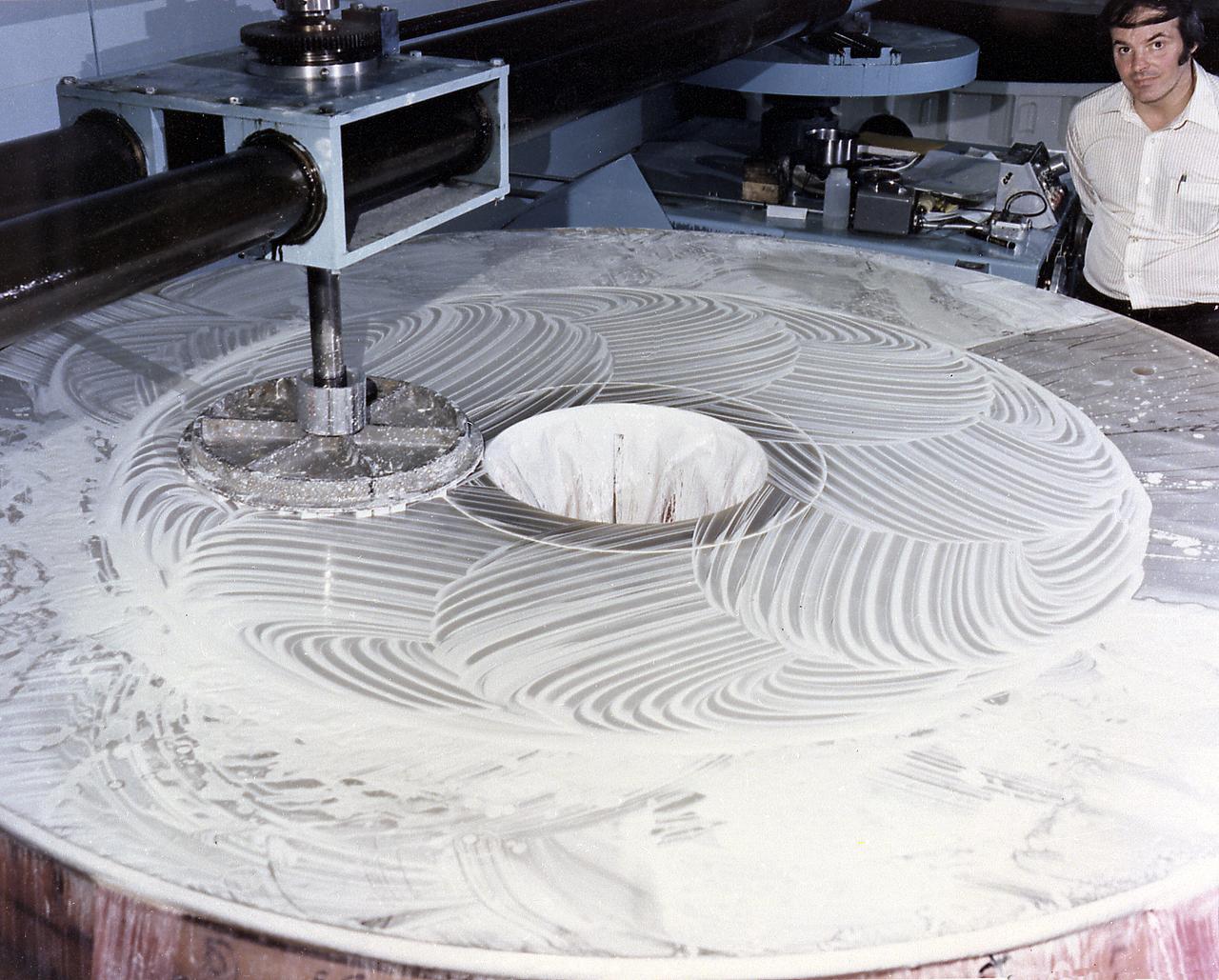
This photograph shows the Hubble Space Telescope's (HST's) Primary Mirror being polished at the the Perkin-Elmer Corporation's large optics fabrication facility. After the 8-foot diameter mirror was ground…
Inspect NASA record
This photograph shows the Hubble Space Telescope's (HST's) Primary Mirror being polished at the the Perkin-Elmer Corporation's large optics fabrication facility. After the 8-foot diameter mirror was ground to shape and polished, the glass surface was coated with a reflective layer of aluminum and a protective layer of magnesium fluoride, 0.1- and 0.025-micrometers thick, respectively. The purpose of the HST, the most complex and sensitive optical telescope ever made, is to study the cosmos from a low-Earth orbit. By placing the telescope in space, astronomers are able to collect data that is free of the Earth's atmosphere. The Marshall Space Flight Center had responsibility for design, development, and construction of the HST and the Perkin-Elmer Corporation, in Danbury, Cornecticut, developed the optical system and guidance sensors.
- Record ID
- 8108126
- NASA center
- MSFC
- Date
- 1981-01-01
- Keywords
- Hubble Space Telescope, HST, Primary Mirror
MSFC · 1981-01-01 · 8109563
History of Hubble Space Telescope (HST)
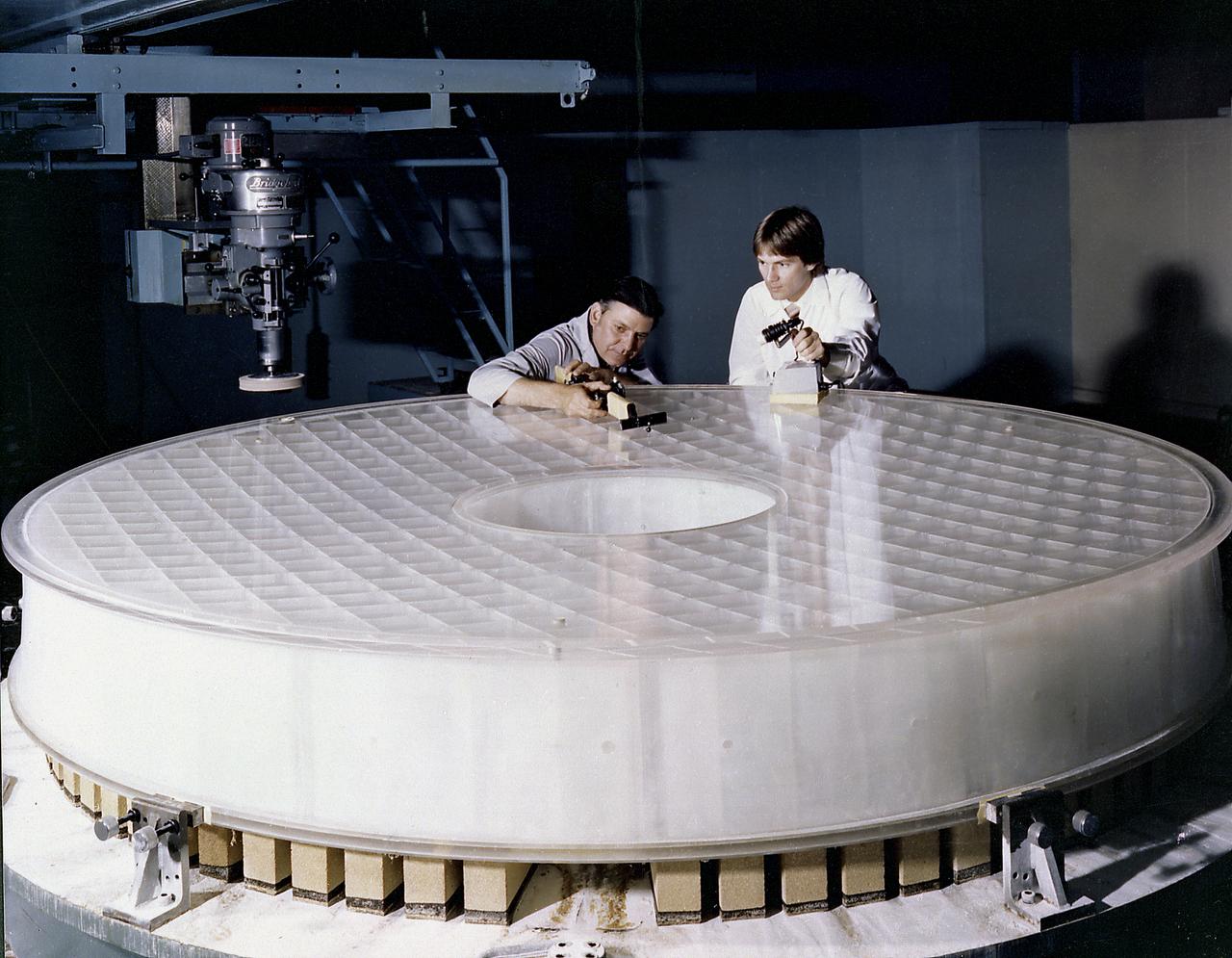
This photograph shows engineers inspecting the Hubble Space Telescope's (HST's) Primary Mirror at the Perkin-Elmer Corporation's large optics fabrication facility. After the 8-foot diameter mirror was ground to…
Inspect NASA record
This photograph shows engineers inspecting the Hubble Space Telescope's (HST's) Primary Mirror at the Perkin-Elmer Corporation's large optics fabrication facility. After the 8-foot diameter mirror was ground to shape and polished, the glass surface was coated with a reflective layer of aluminum and a protective layer of magnesium fluoride, 0.1- and 0.025- micrometers thick, respectively. The purpose of the HST, the most complex and sensitive optical telescope ever made, is to study the cosmos from a low-Earth orbit. By placing the telescope in space, astronomers are able to collect data that is free of the Earth's atmosphere. The Marshall Space Flight Center had responsibility for design, development, and construction of the HST and the Perkin-Elmer Corporation, in Danbury, Cornecticut, developed the optical system and guidance sensors.
- Record ID
- 8109563
- NASA center
- MSFC
- Date
- 1981-01-01
- Keywords
- Hubble Space Telescope, HST, Primary Mirror
MSFC · 1979-03-01 · 7995584
History of Hubble Space Telescope (HST)
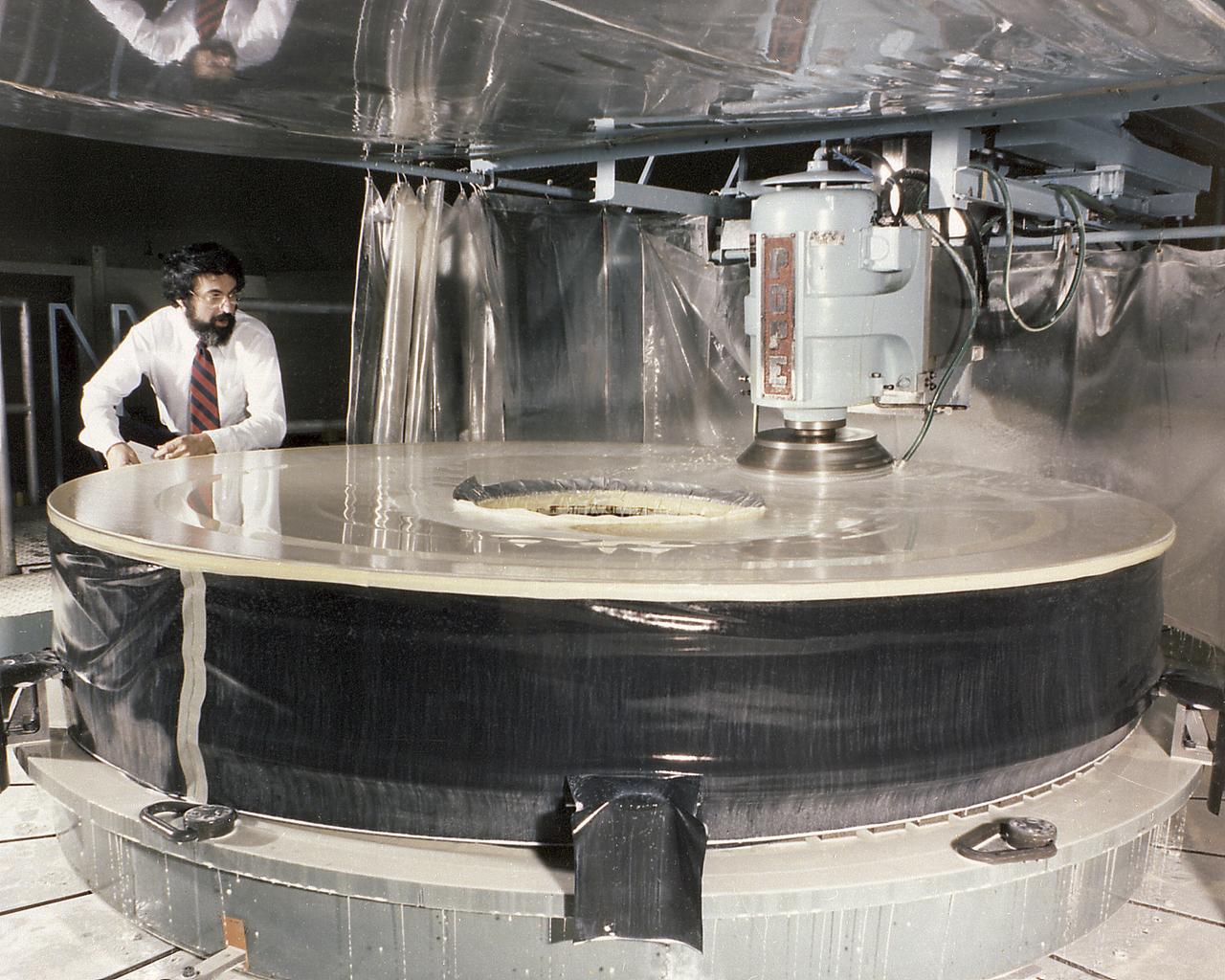
This photograph shows the Hubble Space Telescope's (HST's) Primary Mirror being ground at the Perkin-Elmer Corporation's large optics fabrication facility. After the 8-foot diameter mirror was ground to…
Inspect NASA record
This photograph shows the Hubble Space Telescope's (HST's) Primary Mirror being ground at the Perkin-Elmer Corporation's large optics fabrication facility. After the 8-foot diameter mirror was ground to shape and polished, the glass surface was coated with a reflective layer of aluminum and a protective layer of magnesium fluoride, 0.1- and 0.025-micrometers thick, respectively. The purpose of the HST, the most complex and sensitive optical telescope ever made, is to study the cosmos from a low-Earth orbit. By placing the telescope in space, astronomers are able to collect data that is free of the Earth's atmosphere. The Marshall Space Flight Center had responsibility for design, development, and construction of the HST and the Perkin-Elmer Corporation, in Danbury, Cornecticut, developed the optical system and guidance sensors.
- Record ID
- 7995584
- NASA center
- MSFC
- Date
- 1979-03-01
- Keywords
- Hubble Space Telescope, HST, Primary Mirror