
Add from NASA
Explore NASA’s Image and Video Library and suggest an object for Interstellar Minds.
New Marvel suggestions are paused.
NASA image records
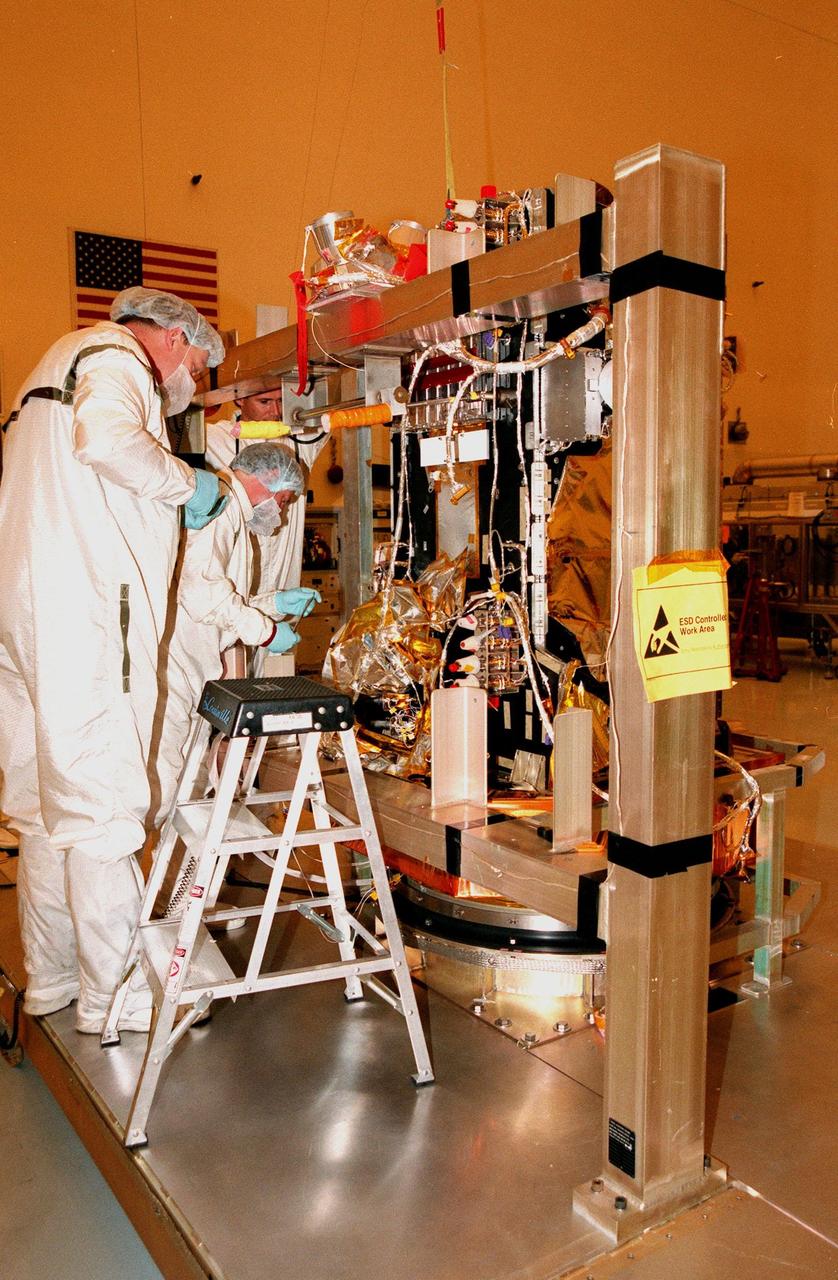
KSC · 1998-12-02 · KSC-98pc1835
KSC-98pc1835
In the Payload Hazardous Servicing Facility, workers install a science panel on the spacecraft Stardust. Scheduled to be launched aboard a Boeing Delta 7426 rocket from Complex 17,…
Inspect NASA record
In the Payload Hazardous Servicing Facility, workers install a science panel on the spacecraft Stardust. Scheduled to be launched aboard a Boeing Delta 7426 rocket from Complex 17, Cape Canaveral Air Station, on Feb. 6, 1999, Stardust will use a unique medium called aerogel to capture comet particles flying off the nucleus of comet Wild 2 in January 2004, plus collect interstellar dust for later analysis. The collected samples will return to Earth in a re-entry capsule to be jettisoned as it swings by Earth in January 2006
- Record ID
- KSC-98pc1835
- NASA center
- KSC
- Date
- 1998-12-02
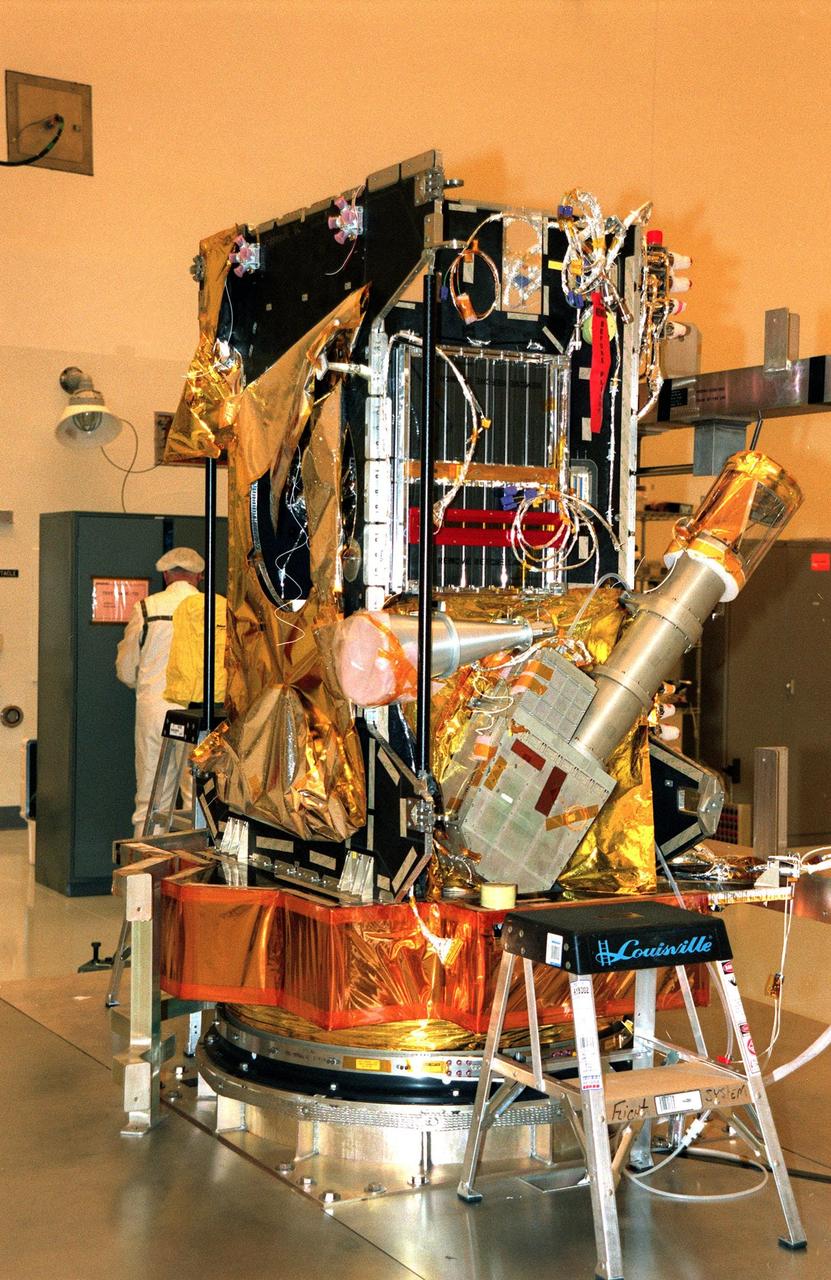
KSC · 1998-12-04 · KSC-98pc1864
KSC-98pc1864
In the Payload Hazardous Servicing Facility, the Stardust spacecraft is ready for the sample return capsule to be attached. Stardust will use a unique medium called aerogel to…
Inspect NASA record
In the Payload Hazardous Servicing Facility, the Stardust spacecraft is ready for the sample return capsule to be attached. Stardust will use a unique medium called aerogel to capture comet particles flying off the nucleus of comet Wild 2 in January 2004, plus collect interstellar dust for later analysis. The collected samples will return to Earth in the re-entry capsule to be jettisoned as it swings by Earth in January 2006. Stardust is scheduled to be launched aboard a Boeing Delta 7426 rocket from Complex 17, Cape Canaveral Air Station, on Feb. 6, 1999
- Record ID
- KSC-98pc1864
- NASA center
- KSC
- Date
- 1998-12-04
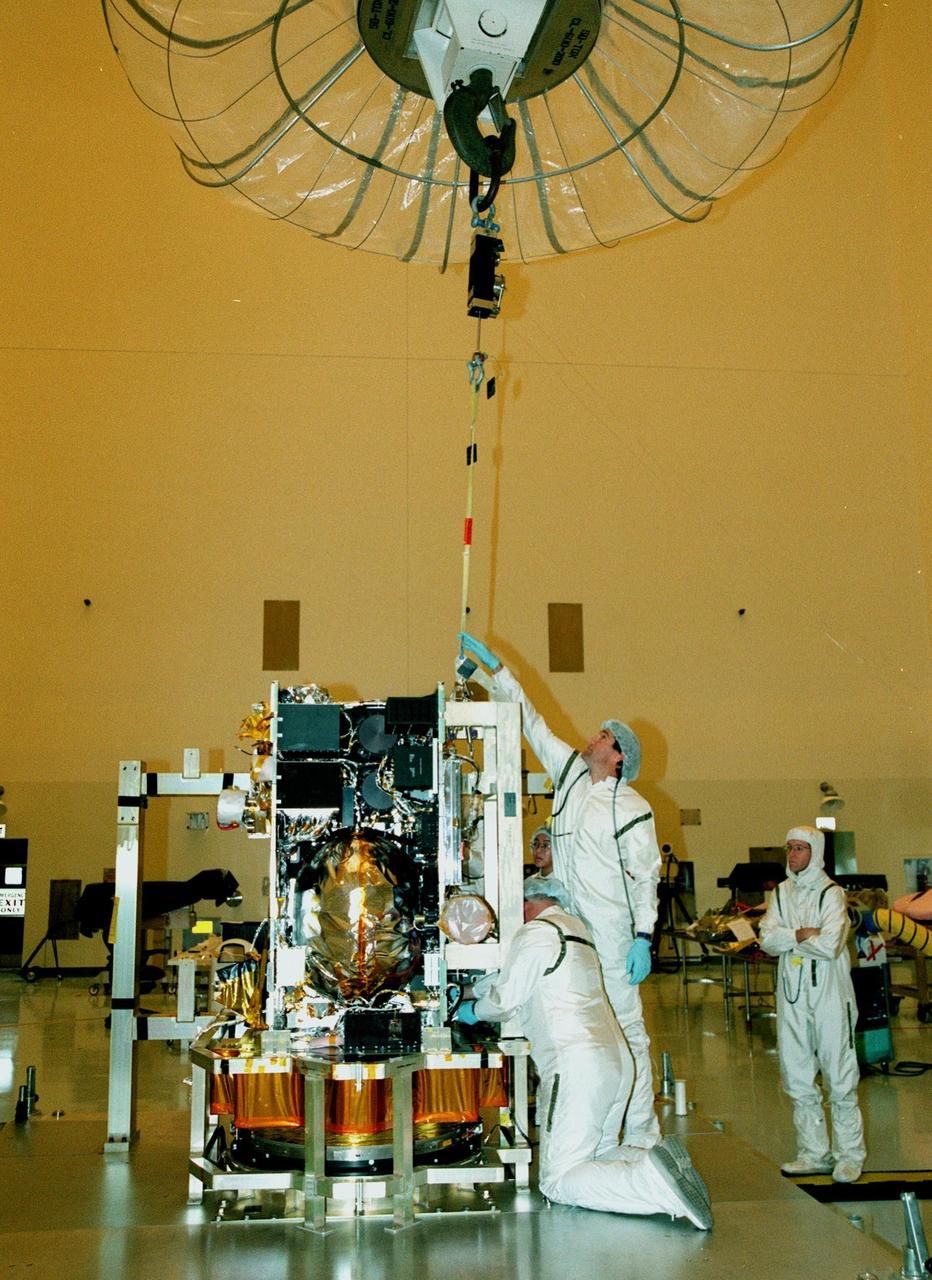
KSC · 1998-12-02 · KSC-98pc1836
KSC-98pc1836
In the Payload Hazardous Servicing Facility, workers adjust a science panel they are installing on the spacecraft Stardust. Scheduled to be launched aboard a Boeing Delta 7426 rocket…
Inspect NASA record
In the Payload Hazardous Servicing Facility, workers adjust a science panel they are installing on the spacecraft Stardust. Scheduled to be launched aboard a Boeing Delta 7426 rocket from Complex 17, Cape Canaveral Air Station, on Feb. 6, 1999, Stardust will use a unique medium called aerogel to capture comet particles flying off the nucleus of comet Wild 2 in January 2004, plus collect interstellar dust for later analysis. The collected samples will return to Earth in a re-entry capsule to be jettisoned as it swings by Earth in January 2006
- Record ID
- KSC-98pc1836
- NASA center
- KSC
- Date
- 1998-12-02
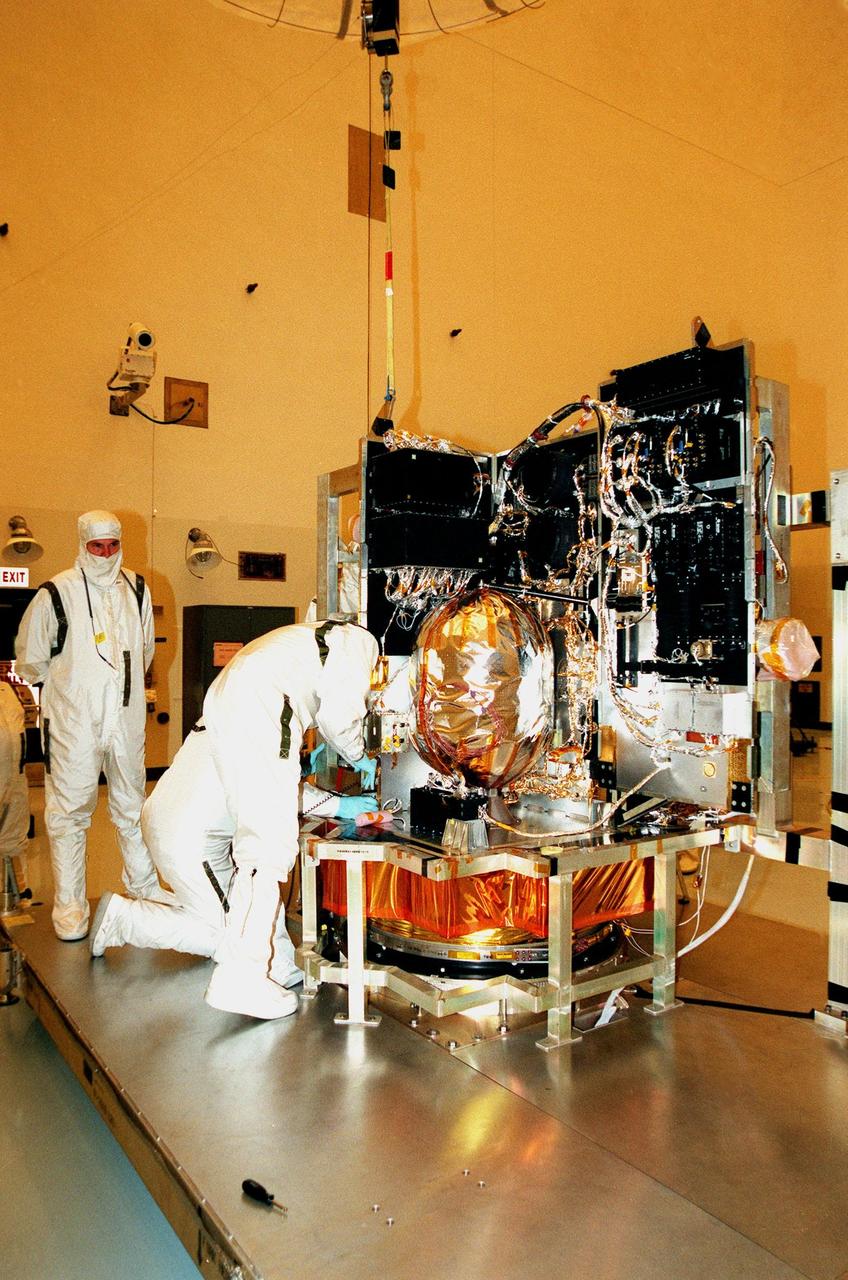
KSC · 1998-12-02 · KSC-98pc1834
KSC-98pc1834
In the Payload Hazardous Servicing Facility, workers get ready to install a science panel on the spacecraft Stardust. Scheduled to be launched aboard a Boeing Delta 7426 rocket…
Inspect NASA record
In the Payload Hazardous Servicing Facility, workers get ready to install a science panel on the spacecraft Stardust. Scheduled to be launched aboard a Boeing Delta 7426 rocket from Complex 17, Cape Canaveral Air Station, on Feb. 6, 1999, Stardust will use a unique medium called aerogel to capture comet particles flying off the nucleus of comet Wild 2 in January 2004, plus collect interstellar dust for later analysis. The collected samples will return to Earth in a re-entry capsule to be jettisoned as it swings by Earth in January 2006
- Record ID
- KSC-98pc1834
- NASA center
- KSC
- Date
- 1998-12-02
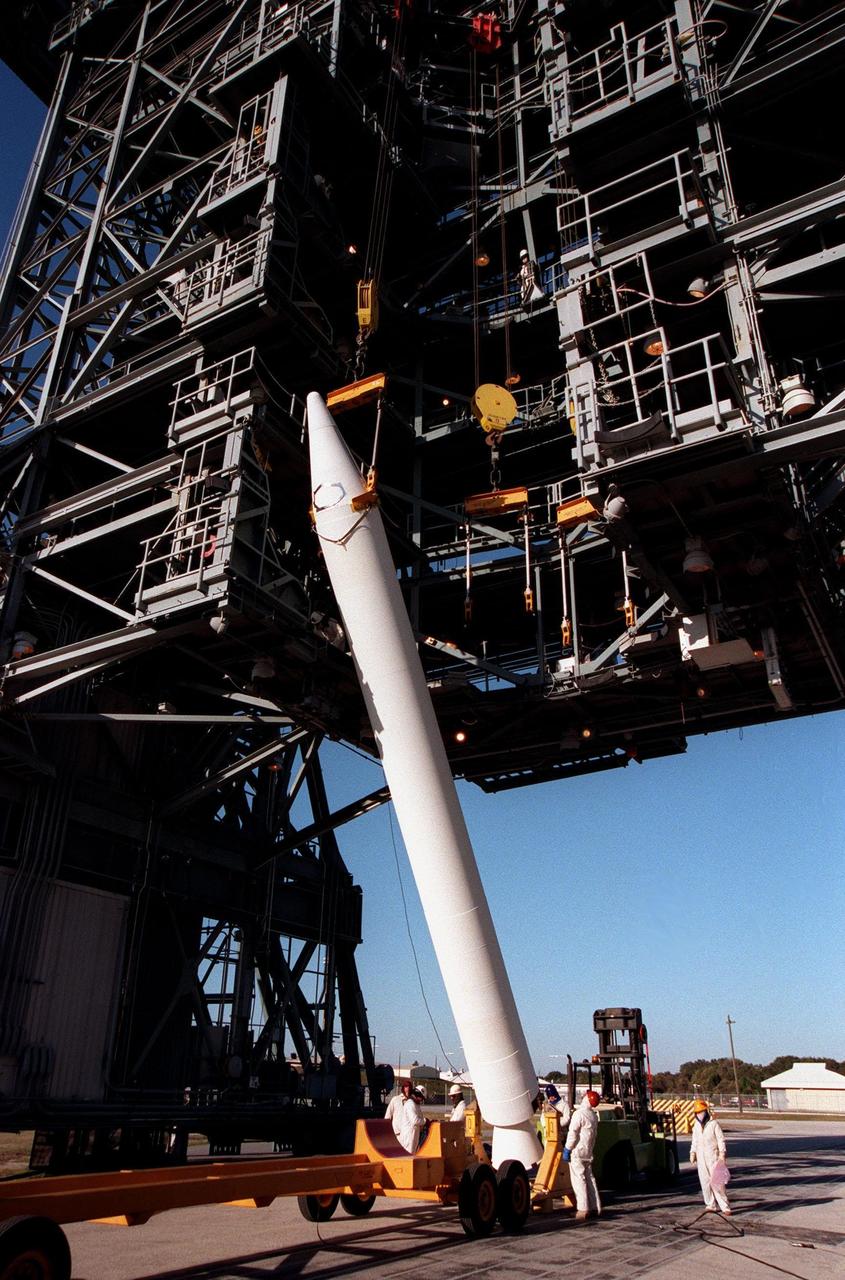
KSC · 1999-01-06 · KSC-99pc24
KSC-99pc24
A solid rocket booster is raised to a vertical position before lifting it up the mobile launch tower at Pad 17A, Cape Canaveral Air Station. It will be…
Inspect NASA record
A solid rocket booster is raised to a vertical position before lifting it up the mobile launch tower at Pad 17A, Cape Canaveral Air Station. It will be mated with a Boeing Delta II rocket that will carry the Stardust spacecraft into space for a close encounter with the comet Wild 2 in January 2004. Using a medium called aerogel, Stardust will capture comet particles flying off the nucleus of the comet, plus collect interstellar dust for later analysis. The collected samples will return to Earth in a sample return capsule to be jettisoned as Stardust swings by Earth in January 2006. Stardust is scheduled to be launched on Feb. 6, 1999
- Record ID
- KSC-99pc24
- NASA center
- KSC
- Date
- 1999-01-06
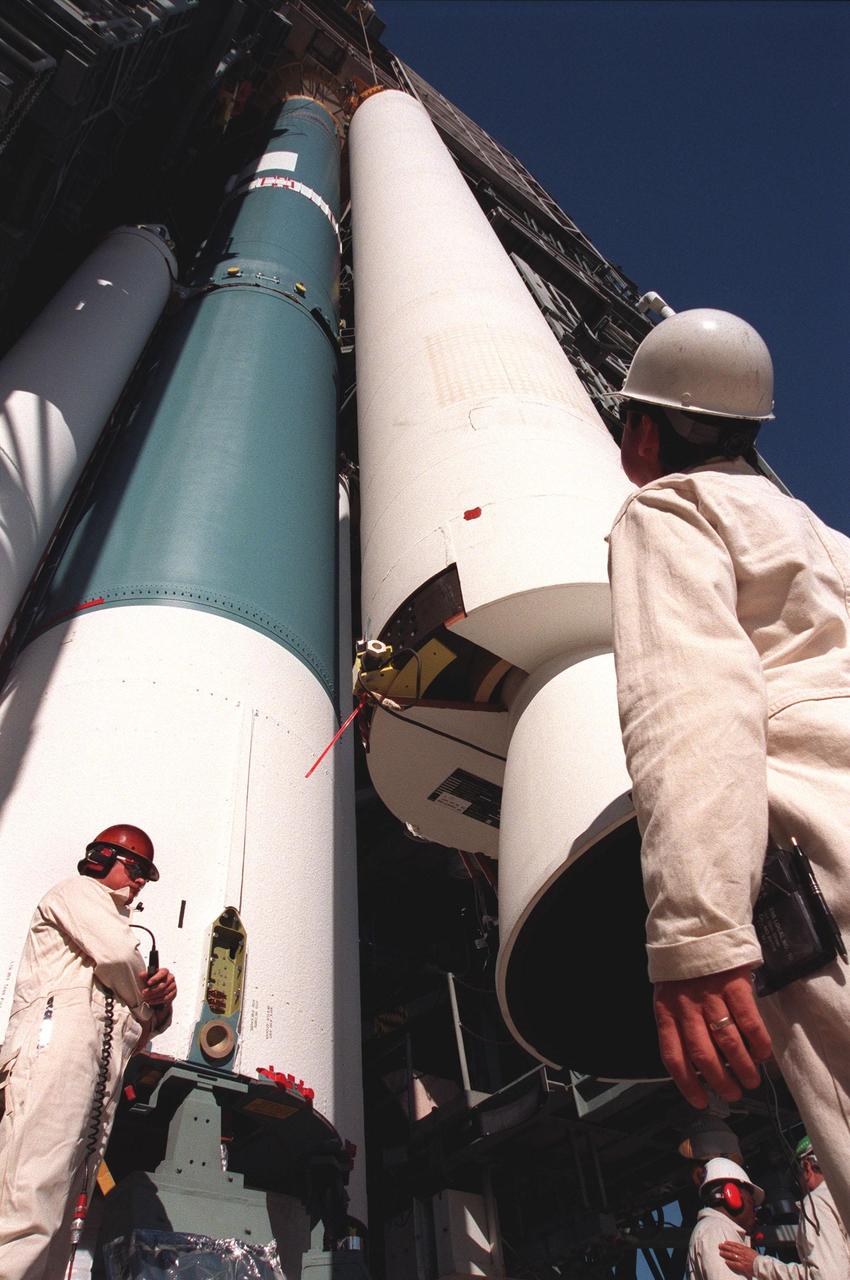
KSC · 1999-01-07 · KSC-99pc35
KSC-99pc35
At Pad 17A, Cape Canaveral Air Station, workers keep watch on the placement of the fourth and final solid rocket booster (SRB) being mated with the Boeing Delta…
Inspect NASA record
At Pad 17A, Cape Canaveral Air Station, workers keep watch on the placement of the fourth and final solid rocket booster (SRB) being mated with the Boeing Delta II rocket. The rocket will be aided by four SRBs to carry the Stardust satellite into space for a close encounter with the comet Wild 2 in January 2004. Using a medium called aerogel, Stardust will capture comet particles flying off the nucleus of the comet, plus collect interstellar dust for later analysis. The collected samples will return to Earth in a Sample Return Capsule to be jettisoned as Stardust swings by Earth in January 2006. Stardust is scheduled to be launched on Feb. 6, 1999
- Record ID
- KSC-99pc35
- NASA center
- KSC
- Date
- 1999-01-07

KSC · 1999-01-11 · KSC-99pc42
KSC-99pc42
In the Payload Hazardous Servicing Facility, the fully extended solar panels of the Stardustspacecraft undergo lighting tests. Stardust is scheduled to be launched aboard a Boeing Delta II…
Inspect NASA record
In the Payload Hazardous Servicing Facility, the fully extended solar panels of the Stardustspacecraft undergo lighting tests. Stardust is scheduled to be launched aboard a Boeing Delta II rocket from Launch Pad 17A, Cape Canaveral Air Station, on Feb. 6, 1999, for a rendezvous with the comet Wild 2 in January 2004. Stardust will use a substance called aerogel to capture comet particles flying off the nucleus of the comet, plus collect interstellar dust for later analysis. The collected samples will return to Earth in a sample return capsule to be jettisoned as it swings by Earth in January 2006
- Record ID
- KSC-99pc42
- NASA center
- KSC
- Date
- 1999-01-11
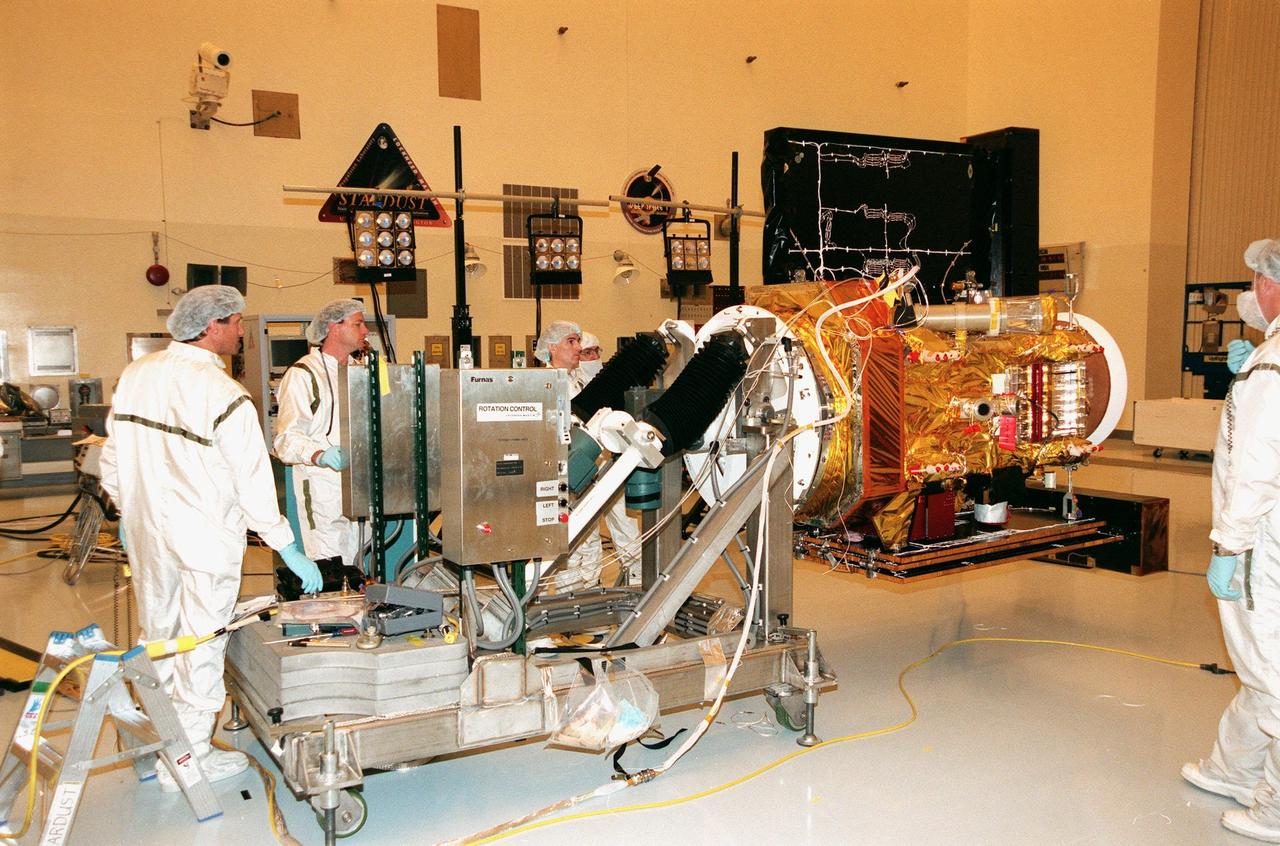
KSC · 1999-01-11 · KSC-99pc38
KSC-99pc38
Workers in the Payload Hazardous Servicing Facility deploy a solar panel on the Stardust spacecraft before performing lighting tests. Stardust is scheduled to be launched aboard a Boeing…
Inspect NASA record
Workers in the Payload Hazardous Servicing Facility deploy a solar panel on the Stardust spacecraft before performing lighting tests. Stardust is scheduled to be launched aboard a Boeing Delta II rocket from Launch Pad 17A, Cape Canaveral Air Station, on Feb. 6, 1999, for a rendezvous with the comet Wild 2 in January 2004. Stardust will use a substance called aerogel to capture comet particles flying off the nucleus of the comet, plus collect interstellar dust for later analysis. The collected samples will return to Earth in a sample return capsule to be jettisoned as it swings by Earth in January 2006
- Record ID
- KSC-99pc38
- NASA center
- KSC
- Date
- 1999-01-11
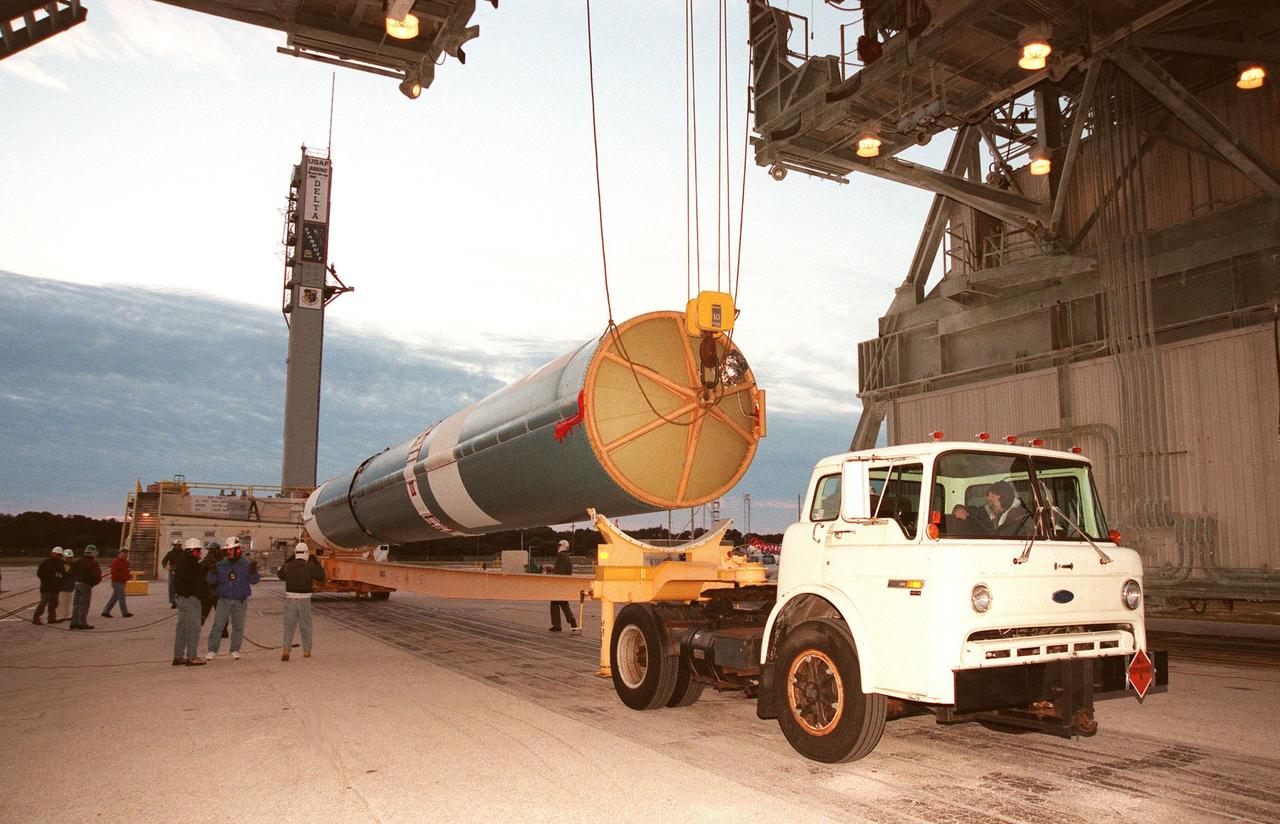
KSC · 1999-01-05 · KSC-99pc08
KSC-99pc08
The first stage of a Boeing Delta II rocket is raised off a truck bed before being lifted into place on the tower at Launch Complex 17, Cape…
Inspect NASA record
The first stage of a Boeing Delta II rocket is raised off a truck bed before being lifted into place on the tower at Launch Complex 17, Cape Canaveral Air Station. The rocket will carry the Stardust spacecraft into space for a close encounter with the comet Wild 2 in January 2004. Using a medium called aerogel, it will capture comet particles flying off the nucleus of the comet, plus collect interstellar dust for later analysis. The collected samples will return to Earth in a Sample Return Capsule to be jettisoned as Stardust swings by Earth in January 2006. Stardust is scheduled to be launched on Feb. 6, 1999
- Record ID
- KSC-99pc08
- NASA center
- KSC
- Date
- 1999-01-05
KSC · 1999-01-11 · KSC-99pc44
KSC-99pc44
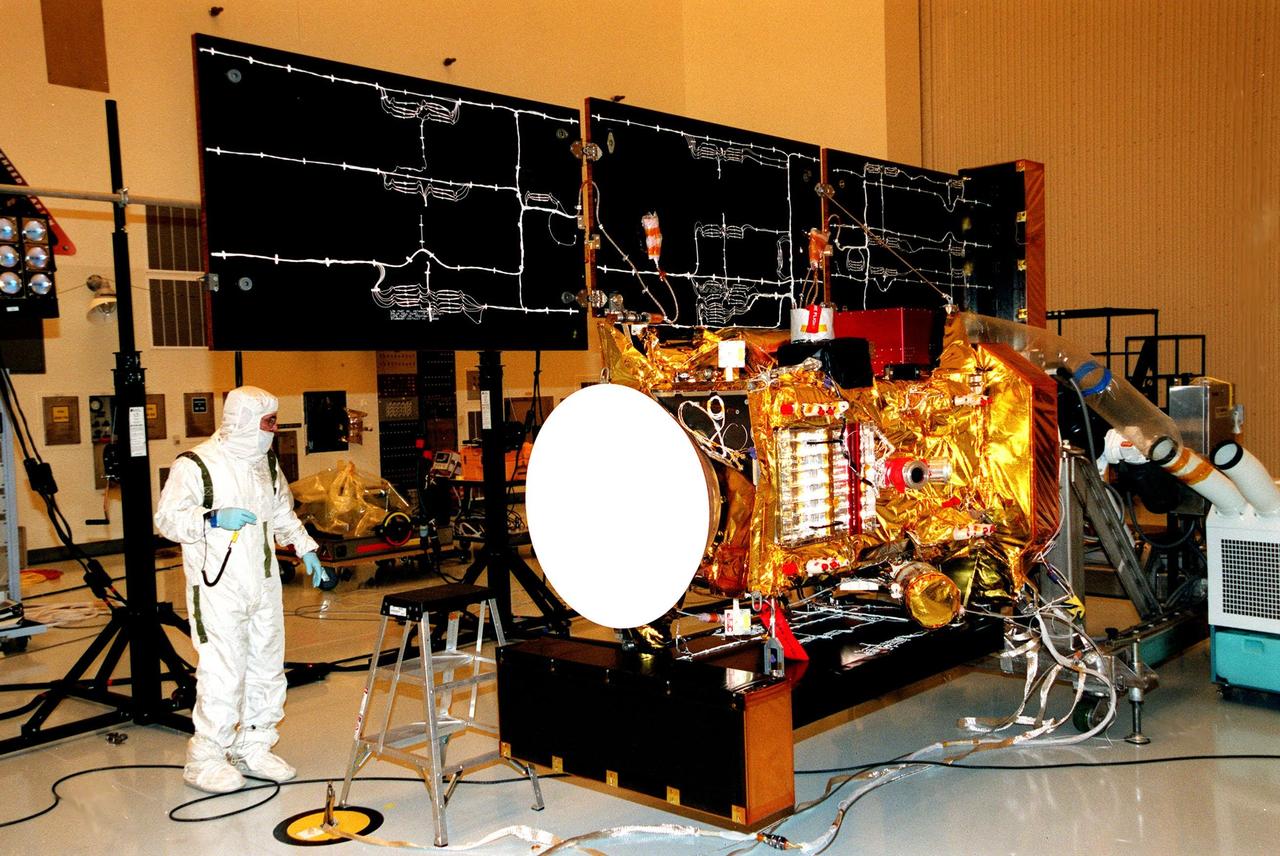
In the Payload Hazardous Servicing Facility, a worker looks over the solar panels of the Stardust spacecraft before it undergoes lighting tests. Stardust is scheduled to be launched…
Inspect NASA record
In the Payload Hazardous Servicing Facility, a worker looks over the solar panels of the Stardust spacecraft before it undergoes lighting tests. Stardust is scheduled to be launched aboard a Boeing Delta II rocket from Launch Pad 17A, Cape Canaveral Air Station, on Feb. 6, 1999, for a rendezvous with the comet Wild 2 in January 2004. Stardust will use a substance called aerogel to capture comet particles flying off the nucleus of the comet, plus collect interstellar dust for later analysis. The collected samples will return to Earth in a sample return capsule (its white cap is seen on the left) to be jettisoned as it swings by Earth in January 2006
- Record ID
- KSC-99pc44
- NASA center
- KSC
- Date
- 1999-01-11

KSC · 1999-01-05 · KSC-99pc09
KSC-99pc09
The first stage of a Boeing Delta II rocket is lifted to its vertical position on the tower at Launch Complex 17, Cape Canaveral Air Station. The rocket…
Inspect NASA record
The first stage of a Boeing Delta II rocket is lifted to its vertical position on the tower at Launch Complex 17, Cape Canaveral Air Station. The rocket will carry the Stardust spacecraft into space for a close encounter with the comet Wild 2 in January 2004. Using a medium called aerogel, it will capture comet particles flying off the nucleus of the comet, plus collect interstellar dust for later analysis. The collected samples will return to Earth in a Sample Return Capsule to be jettisoned as Stardust swings by Earth in January 2006. Stardust is scheduled to be launched on Feb. 6, 1999
- Record ID
- KSC-99pc09
- NASA center
- KSC
- Date
- 1999-01-05
KSC · 1999-01-11 · KSC-99pc49
KSC-99pc49
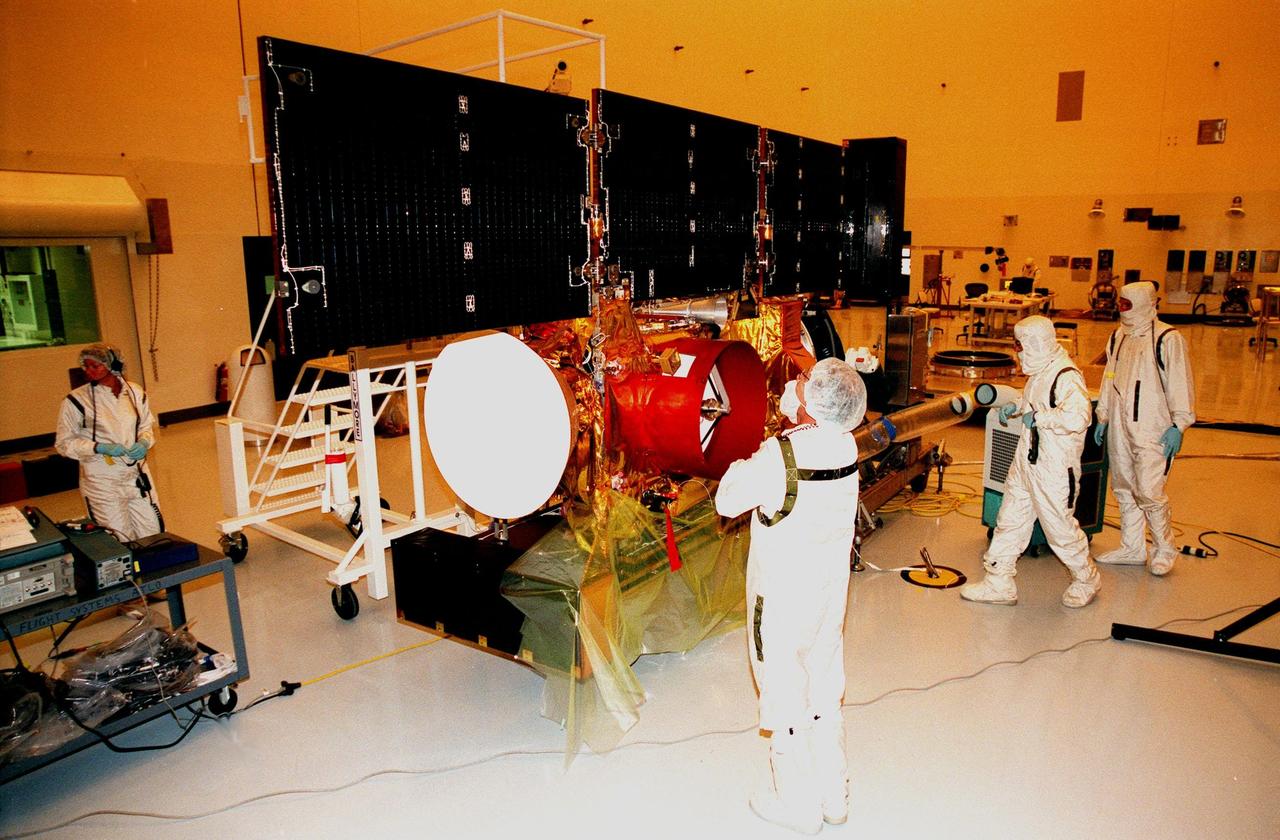
In the Payload Hazardous Servicing Facility, workers look over the solar panels on the Stardust spacecraft that are deployed for lighting tests. Stardust is scheduled to be launched…
Inspect NASA record
In the Payload Hazardous Servicing Facility, workers look over the solar panels on the Stardust spacecraft that are deployed for lighting tests. Stardust is scheduled to be launched aboard a Boeing Delta II rocket from Launch Pad 17A, Cape Canaveral Air Station, on Feb. 6, 1999, for a rendezvous with the comet Wild 2 in January 2004. Stardust will use a substance called aerogel to capture comet particles flying off the nucleus of the comet, plus collect interstellar dust for later analysis. The collected samples will return to Earth in a sample return capsule to be jettisoned as it swings by Earth in January 2006
- Record ID
- KSC-99pc49
- NASA center
- KSC
- Date
- 1999-01-11