
Update Site (from NASA)
Explore NASA’s Image and Video Library.
Suggest one object per day for the Interstellar Minds collection. We review each suggestion before adding it.
Sign in to suggest a Marvel.
Find a NASA image ID. Open a NASA record and copy its ID from the end of the details URL.
NASA image records
JPL · 2024-04-11 · PIA26292
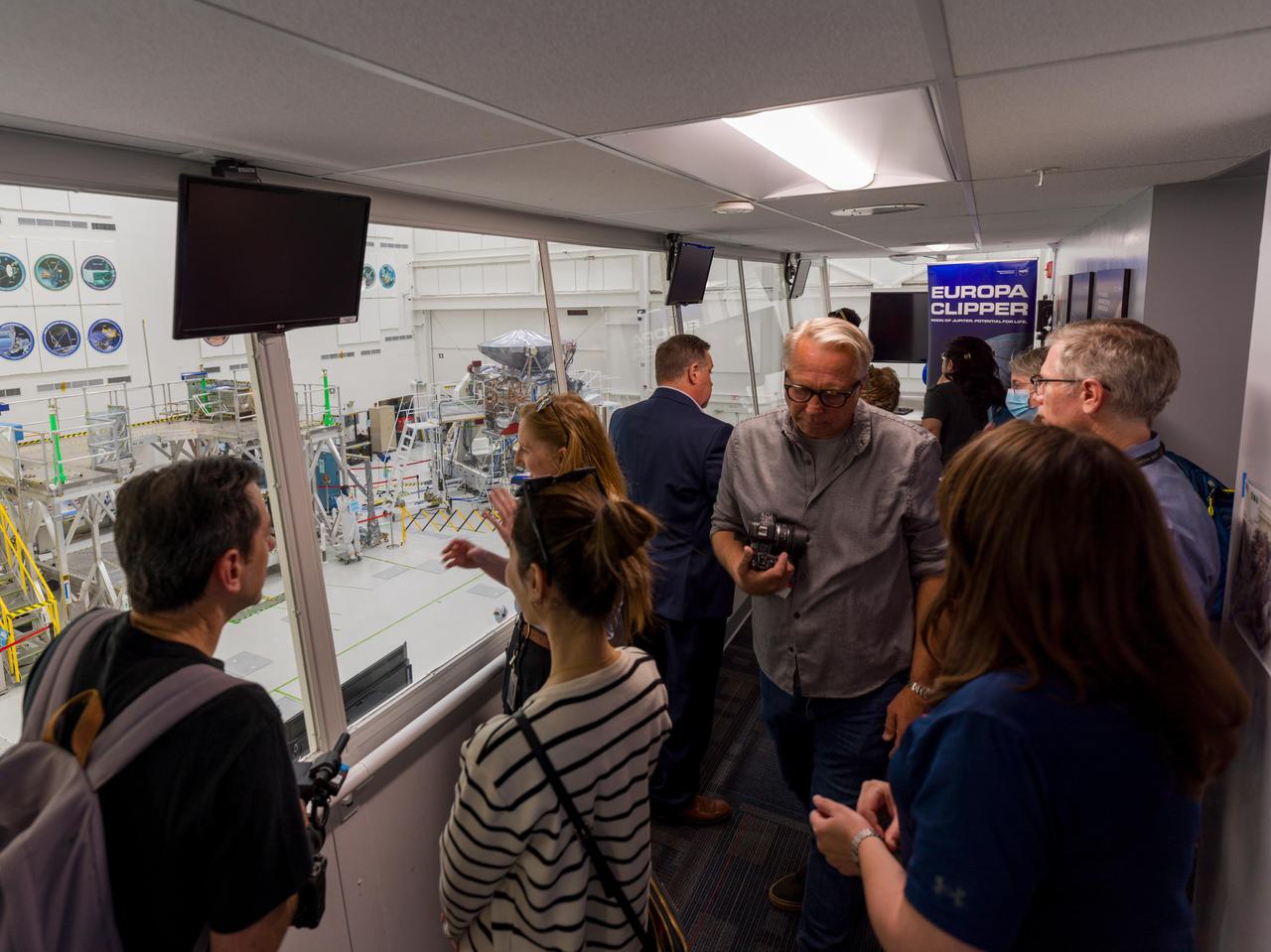
A View of Europa Clipper From Above
Members of the media observed NASA's Europa Clipper spacecraft from a viewing gallery about High Bay 1 in the historic Spacecraft Assembly Facility at the agency's Jet Propulsion…
Inspect NASA record
Members of the media observed NASA's Europa Clipper spacecraft from a viewing gallery about High Bay 1 in the historic Spacecraft Assembly Facility at the agency's Jet Propulsion Laboratory on April 11, 2024. The largest spacecraft NASA has ever built for a planetary mission, Europa Clipper is expected to launch in October 2024 on a six-year journey to the Jupiter system, where it will orbit the gas giant and study the ice-encased moon Europa. Europa Clipper's main science goal is to determine whether there are places below the surface of Jupiter's icy moon, Europa, that could support life. The mission's three main science objectives are to determine the thickness of the moon's icy shell and its surface interactions with the ocean below, to investigate its composition, and to characterize its geology. The mission's detailed exploration of Europa will help scientists better understand the astrobiological potential for habitable worlds beyond our planet. https://photojournal.jpl.nasa.gov/catalog/PIA26292
- Record ID
- PIA26292
- NASA center
- JPL
- Date
- 2024-04-11
- Credit
- NASA/JPL-Caltech
- Keywords
- Europa Clipper, Europa

JPL · 2025-01-23 · PIA26531
SPHEREx in Orbit (Artist's Concept)
NASA's SPHEREx mission will operate in low Earth orbit, detecting hundreds of millions of stars and galaxies and creating the first all-sky spectroscopic survey in the near-infrared. This…
Inspect NASA record
NASA's SPHEREx mission will operate in low Earth orbit, detecting hundreds of millions of stars and galaxies and creating the first all-sky spectroscopic survey in the near-infrared. This artist's concept shows the spacecraft and its distinctive conical photon shields, which protect SPHEREx's telescope from infrared light and heat from the Sun and Earth. Short for Spectro-Photometer for the History of the Universe, Epoch of Reionization and Ices Explorer, SPHEREx will create a map of the cosmos like no other. Using a technique called spectroscopy to image the entire sky in 102 wavelengths of infrared light, SPHEREx will gather information about the composition of and distance to millions of galaxies and stars. With this map, scientists will study what happened in the first fraction of a second after the big bang, how galaxies formed and evolved, and the origins of water in planetary systems in our galaxy. https://photojournal.jpl.nasa.gov/catalog/PIA26531
- Record ID
- PIA26531
- NASA center
- JPL
- Date
- 2025-01-23
- Credit
- NASA/JPL-Caltech
- Keywords
- SPHEREx, Sky
KSC · 1999-05-04 · KSC-99pp0496
KSC-99pp0496
Suspended by a crane in Hangar AE, Cape Canaveral Air Station, NASA's Far Ultraviolet Spectroscopic Explorer (FUSE) satellite is lowered onto a circular Payload Attach Fitting (PAF). FUSE…
Inspect NASA record
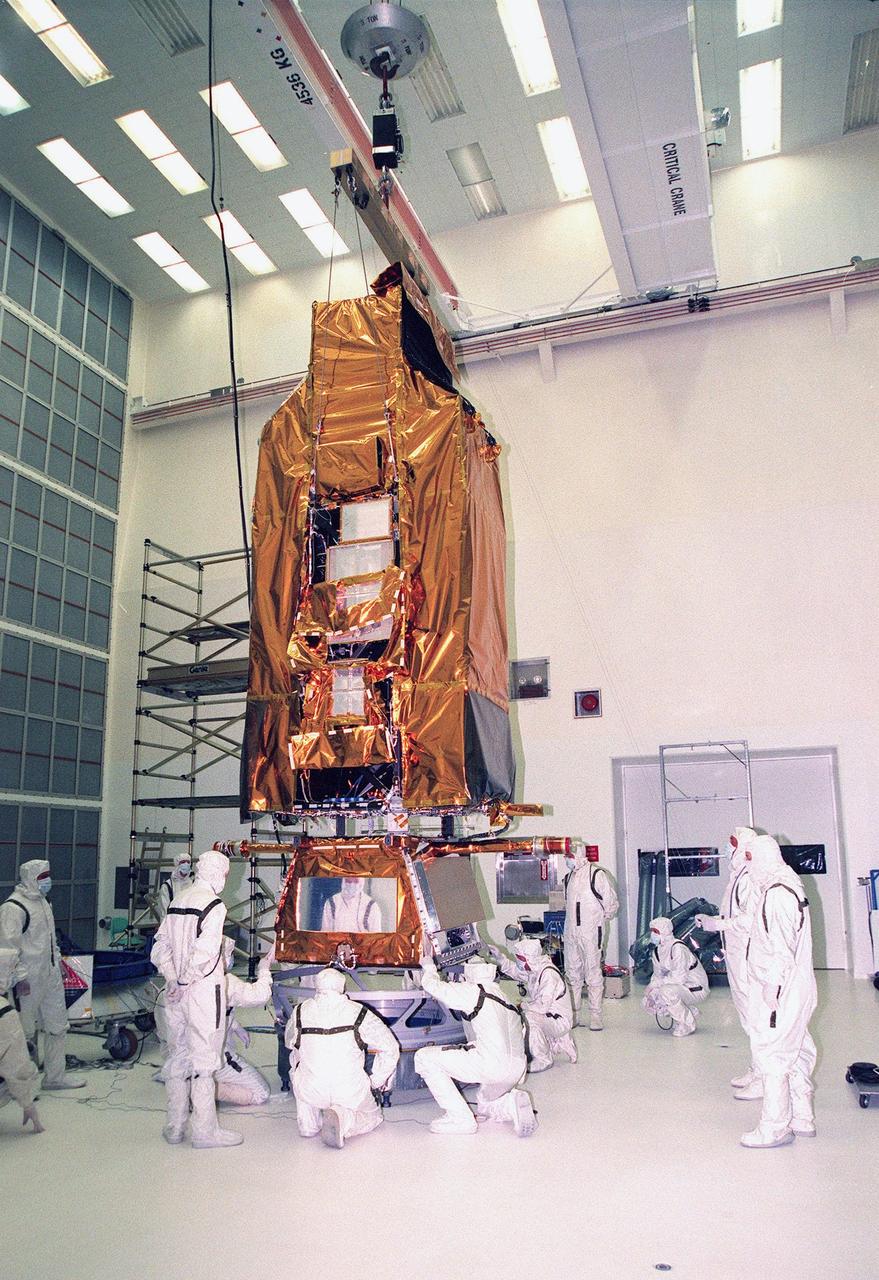
Suspended by a crane in Hangar AE, Cape Canaveral Air Station, NASA's Far Ultraviolet Spectroscopic Explorer (FUSE) satellite is lowered onto a circular Payload Attach Fitting (PAF). FUSE is undergoing a functional test of its systems, plus installation of flight batteries and solar arrays. Developed by The Johns Hopkins University under contract to Goddard Space Flight Center, Greenbelt, Md., FUSE will investigate the origin and evolution of the lightest elements in the universe hydrogen and deuterium. In addition, the FUSE satellite will examine the forces and process involved in the evolution of the galaxies, stars and planetary systems by investigating light in the far ultraviolet portion of the electromagnetic spectrum. FUSE is scheduled to be launched May 27 aboard a Boeing Delta II rocket at Launch Complex 17
- Record ID
- KSC-99pp0496
- NASA center
- KSC
- Date
- 1999-05-04
HQ · 2014-08-25 · 2001408250010HQ
NASA's New Horizons Pluto Mission: Continuing Voyager's Legacy o
New Horizons science team members: Dr. John Spencer, senior scientist at the Southwest Research Institute, left, Dr. Jeffrey Moore, senior scientist at NASA Ames Research Center, second from…
Inspect NASA record
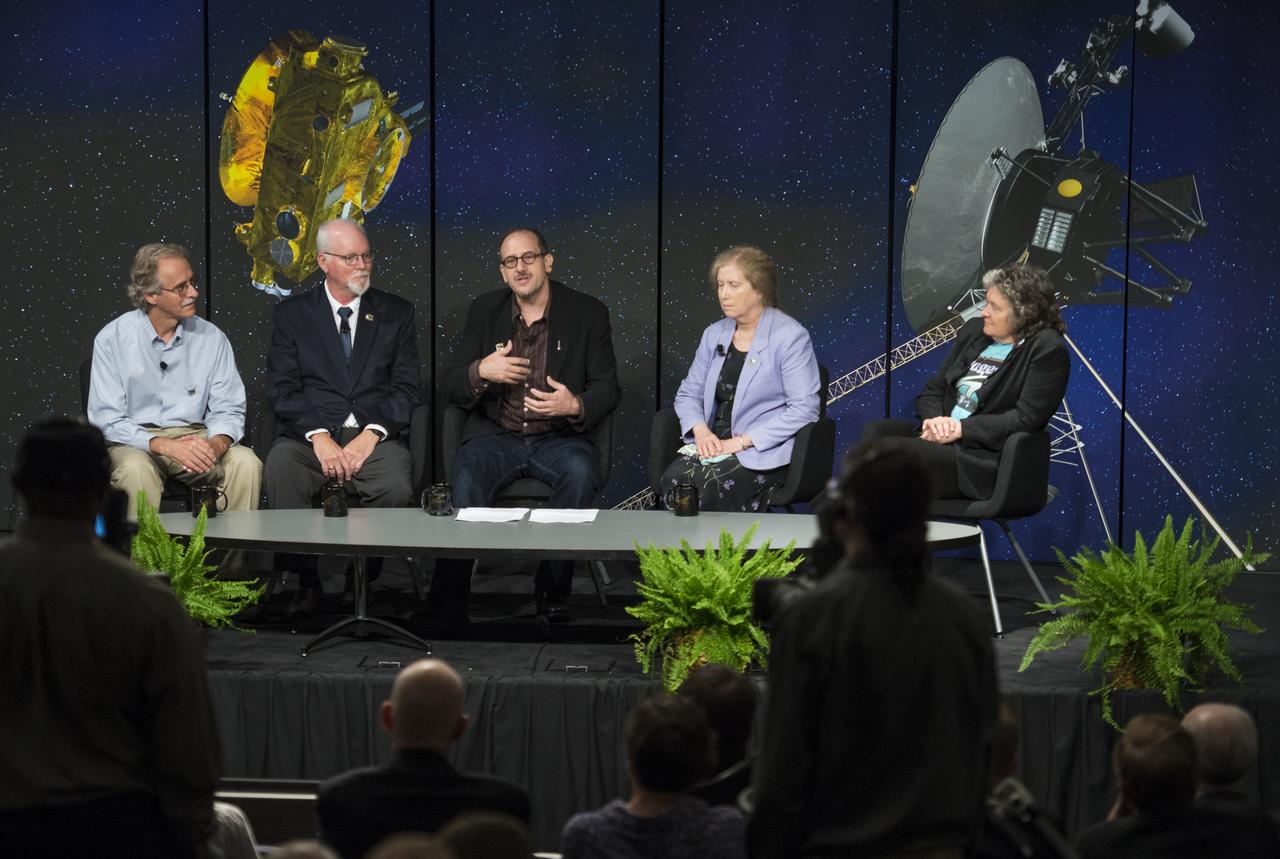
New Horizons science team members: Dr. John Spencer, senior scientist at the Southwest Research Institute, left, Dr. Jeffrey Moore, senior scientist at NASA Ames Research Center, second from left, Dr. David H. Grinspoon, senior scientist at the Planetary Science Institute, center, Dr. Bonnie Buratti, senior scientist at NASA's Jet Propulsion Laboratory, second from right, and Dr. Fran Bagenal, senior scientist at the University of Colorado, are seen during a panel discussion at the "NASA's New Horizons Pluto Mission: Continuing Voyager's Legacy of Exploration" event on Monday, August, 25, 2014, in the James E. Webb Auditorium at NASA Headquarters in Washington, DC. The panelists gave their accounts of Voyager's encounter with Neptune and discussed their current assignments on NASA's New Horizons mission to Pluto. Photo Credit: (NASA/Joel Kowsky)
- Record ID
- 2001408250010HQ
- NASA center
- HQ
- Date
- 2014-08-25
- Credit
- NASA/Joel Kowsky
- Keywords
- James E. Webb Auditorium, NASA, NASA HQ, New Horizons, Pluto, Voyager 2

KSC · 1999-06-14 · KSC-99pp0691
KSC-99pp0691
At Hangar AE, Cape Canaveral Air Station (CCAS), workers get ready to finish erecting the canister around NASA's Far Ultraviolet Spectroscopic Explorer (FUSE) satellite at left. At right…
Inspect NASA record
At Hangar AE, Cape Canaveral Air Station (CCAS), workers get ready to finish erecting the canister around NASA's Far Ultraviolet Spectroscopic Explorer (FUSE) satellite at left. At right is the last segment which will be placed on the top. The satellite will next be moved to Launch Pad 17A, CCAS, for its scheduled launch June 23 aboard a Boeing Delta II rocket. FUSE was developed by The Johns Hopkins University under contract to Goddard Space Flight Center, Greenbelt, Md., to investigate the origin and evolution of the lightest elements in the universe hydrogen and deuterium. In addition, the FUSE satellite will examine the forces and process involved in the evolution of the galaxies, stars and planetary systems by investigating light in the far ultraviolet portion of the electromagnetic spectrum
- Record ID
- KSC-99pp0691
- NASA center
- KSC
- Date
- 1999-06-14
KSC · 2016-09-07 · KSC-20160907-PH_KLS03_0029
OSIRIS-REx "Uncovering the Secrets of Asteroids" Briefing
In a panel discussion in the Kennedy Space Center’s Operations Support Building II, social media followers were briefed by NASA scientists on asteroids, how they relate to the…
Inspect NASA record
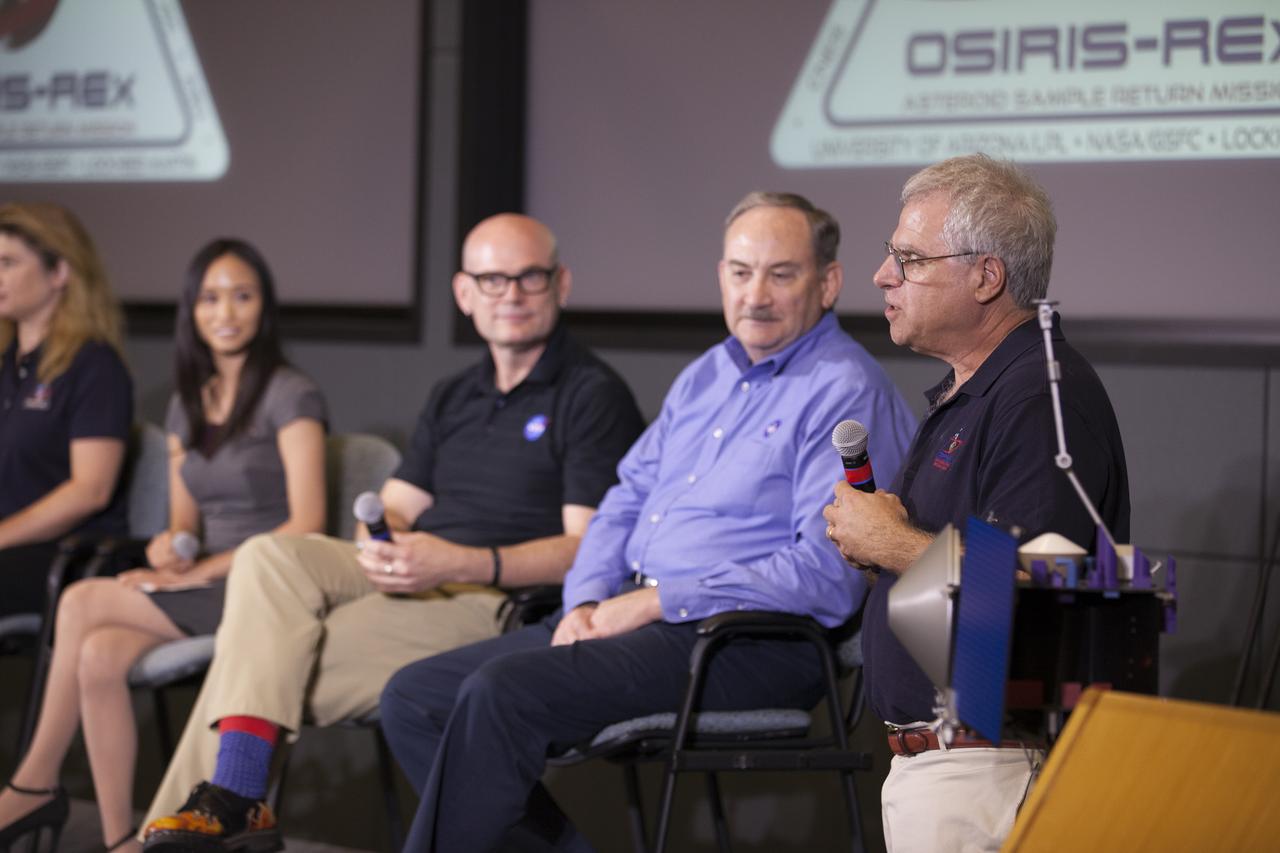
In a panel discussion in the Kennedy Space Center’s Operations Support Building II, social media followers were briefed by NASA scientists on asteroids, how they relate to the origins of our solar system and the search for life beyond Earth. The discussion took place before launch of the agency’s Origins, Spectral Interpretation, Resource Identification, Security-Regolith Explorer, or OSIRIS-REx spacecraft. Panelists in view are, from the left, Felicia Chou, NASA Communications; Alex Young, associate director for science in the Heliophysics Science Division at NASA’s Goddard Space Flight Center in Greenbelt, Maryland; and Lindley Johnson, director of the Planetary Defense Coordination Office in NASA’s Science Mission Directorate. Also participating in the panel discussion are Ellen Stofan, NASA chief scientist and Michelle Thaller, deputy director of science communications for NASA’s Science Mission Directorate.
- Record ID
- KSC-20160907-PH_KLS03_0029
- NASA center
- KSC
- Date
- 2016-09-07
- Credit
- NASA/Kim Shiflett
- Keywords
- OSIRIS-REx, ULA, NASA Social, LSP, Asteroid, Bennu
HQ · 2021-02-16 · NHQ202102160034
Mars 2020 Science Overview
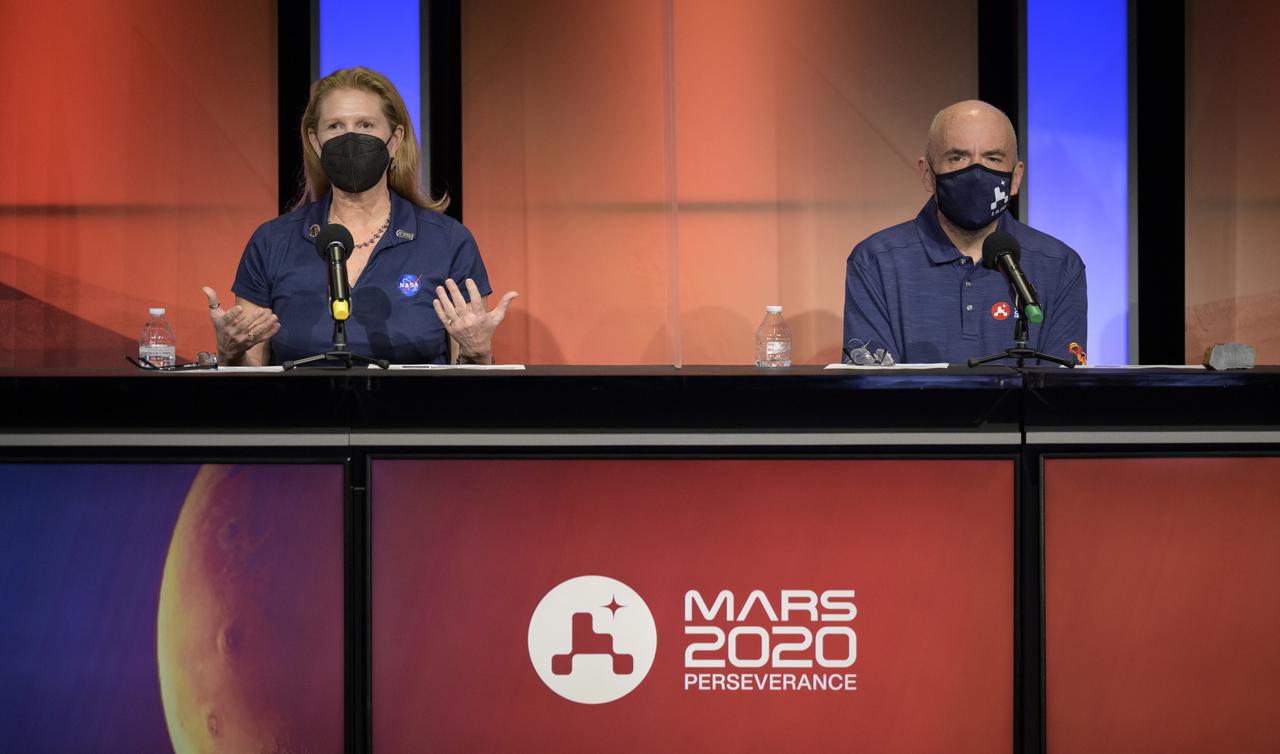
Director of NASA's Science Mission Directorate’s Planetary Science Division, Lori Glaze, , left, and Principal investigator, Scanning Habitable Environments with Raman & Luminescence for Organics & Chemicals (SHERLOC)…
Inspect NASA record
Director of NASA's Science Mission Directorate’s Planetary Science Division, Lori Glaze, , left, and Principal investigator, Scanning Habitable Environments with Raman & Luminescence for Organics & Chemicals (SHERLOC) instrument, JPL, Luther Beegle, give remarks during a NASA Perseverance rover mission science overview, Tuesday, Feb. 16, 2021, at NASA's Jet Propulsion Laboratory in Pasadena, California. The Perseverance Mars rover is due to land on Mars Thursday, Feb. 18, 2021. A key objective for Perseverance’s mission on Mars is astrobiology, including the search for signs of ancient microbial life. The rover will characterize the planet’s geology and past climate, pave the way for human exploration of the Red Planet, and be the first mission to collect and cache Martian rock and regolith. Photo Credit: (NASA/Bill Ingalls)
- Record ID
- NHQ202102160034
- NASA center
- HQ
- Date
- 2021-02-16
- Credit
- NASA/Bill Ingalls
- Keywords
- California, Jet Propulsion Laboratory (JPL), Lori Glaze, Luther Beegle, Mars 2020, Pasadena, Perseverance
KSC · 2016-09-07 · KSC-20160907-PH_KLS03_0009
OSIRIS-REx "Uncovering the Secrets of Asteroids" Briefing
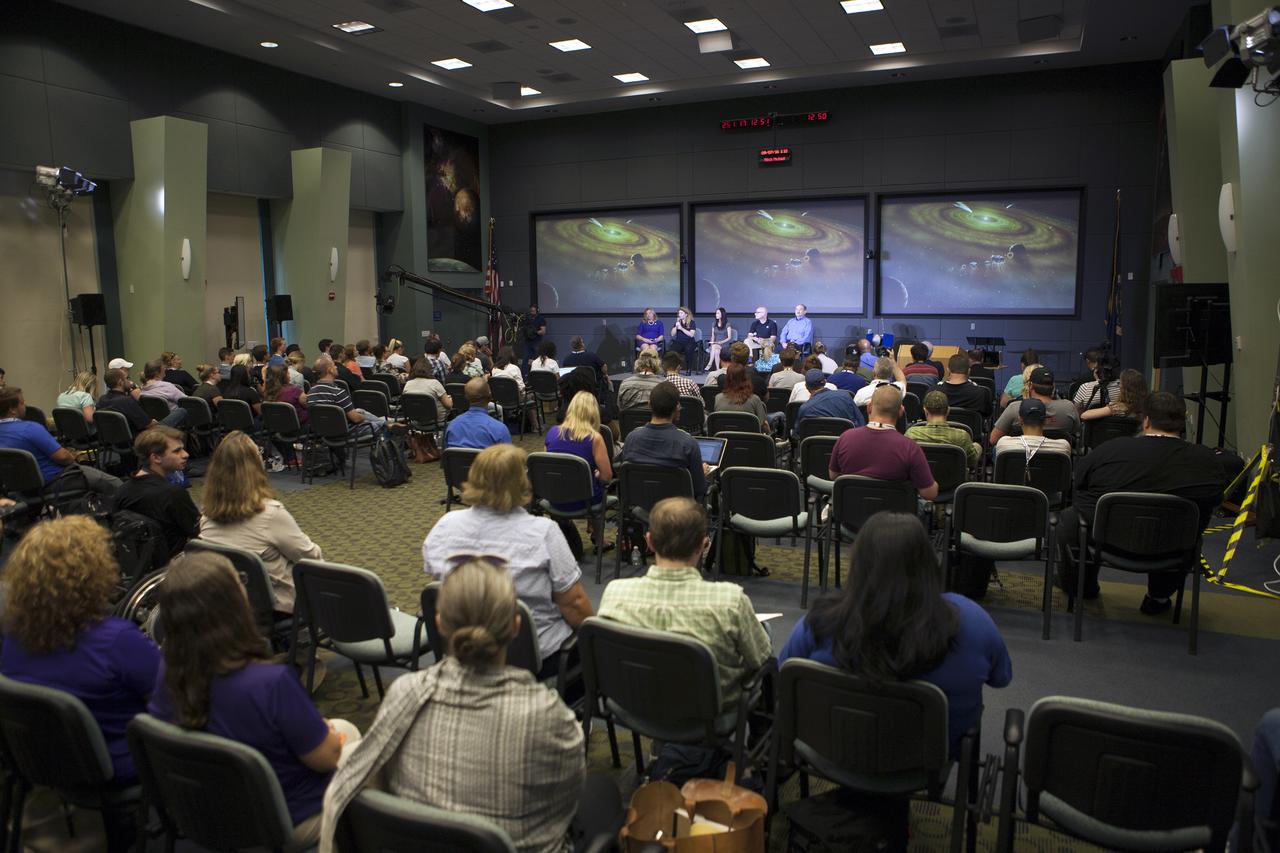
In a panel discussion in the Kennedy Space Center’s Operations Support Building II, social media followers were briefed by NASA scientists on asteroids, how they relate to the…
Inspect NASA record
In a panel discussion in the Kennedy Space Center’s Operations Support Building II, social media followers were briefed by NASA scientists on asteroids, how they relate to the origins of our solar system and the search for life beyond Earth. The discussion took place before launch of the agency’s Origins, Spectral Interpretation, Resource Identification, Security-Regolith Explorer, or OSIRIS-REx spacecraft. Panelists for this conversation are, from the left, Ellen Stofan, NASA chief scientist; Michelle Thaller, deputy director of science communications for NASA’s Science Mission Directorate; Felicia Chou, NASA Communications; Alex Young, associate director for science in the Heliophysics Science Division at NASA’s Goddard Space Flight Center in Greenbelt, Maryland; and Lindley Johnson, director of the Planetary Defense Coordination Office in NASA’s Science Mission Directorate.
- Record ID
- KSC-20160907-PH_KLS03_0009
- NASA center
- KSC
- Date
- 2016-09-07
- Credit
- NASA/Kim Shiflett
- Keywords
- OSIRIS-REx, ULA, NASA Social, LSP, Asteroid, Bennu
GSFC · 2023-06-16 · GSFC_20230616_PACE_020010
GSFC_20230616_PACE_020010
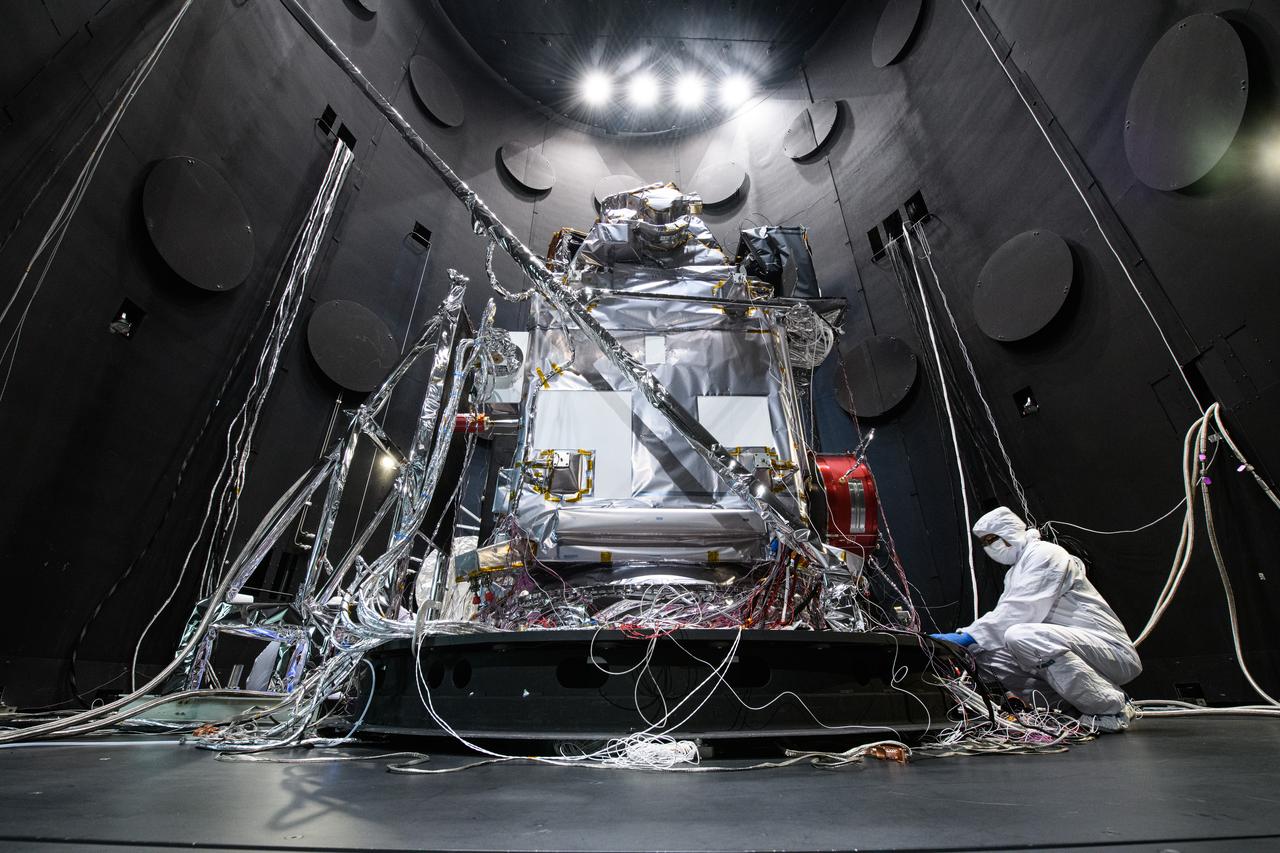
The Plankton, Aerosol, Cloud, ocean Ecosystem (PACE) Observatory inside the Space Environment Simulator (SES) thermal vacuuum chamber before thermal environmental testing at NASA's Goddard Space Flight Center in…
Inspect NASA record
The Plankton, Aerosol, Cloud, ocean Ecosystem (PACE) Observatory inside the Space Environment Simulator (SES) thermal vacuuum chamber before thermal environmental testing at NASA's Goddard Space Flight Center in Greenbelt, Maryland on June 16th, 2023. PACE's unprecedented spectral coverage will provide the first-ever global measurements designed to identify phytoplankton community composition. The mission will make global ocean color measurements, using the Ocean Color Instrument (OCI), to provide extended data records on ocean ecology and global biogeochemistry along with polarimetry measurements, using the Spectro-polarimeter for Planetary Exploration (SPEXone) and the Hyper Angular Research Polarimeter (HARP2) to provide extended data records on clouds and aerosols. The Earth-observing satellite mission, built at Goddard Space Flight Center in Greenbelt, MD, will continue and advance observations of global ocean color, biogeochemistry, and ecology, as well as the carbon cycle, aerosols and clouds.
- Record ID
- GSFC_20230616_PACE_020010
- NASA center
- GSFC
- Date
- 2023-06-16
- Credit
- NASA / Denny Henry

KSC · 1998-09-16 · KSC-98pc1094
KSC-98pc1094
The Plasma Experiment for Planetary Exploration (PEPE), one of two advanced science experiments flying on the Deep Space l mission, is prepared for installation on the spacecraft in…
Inspect NASA record
The Plasma Experiment for Planetary Exploration (PEPE), one of two advanced science experiments flying on the Deep Space l mission, is prepared for installation on the spacecraft in the Payload Hazardous Servicing Facility. PEPE combines several instruments that study space plasma in one compact 13-pound (6-kilogram) package. Space plasma is composed of charged particles, most of which flow outward from the Sun. The first flight in NASA's New Millennium Program, Deep Space 1 is designed to validate 12 new technologies for scientific space missions of the next century. The spacecraft is scheduled to launch during a period opening Oct. 15 and closing Nov. 10, 1998. Most of its mission objectives will be completed within the first two months. A near-earth asteroid, 1992 KD, has also been selected for a possible flyby
- Record ID
- KSC-98pc1094
- NASA center
- KSC
- Date
- 1998-09-16
GSFC · 2023-10-31 · GSFC_20231031_PACE_030771
GSFC_20231031_PACE_030771
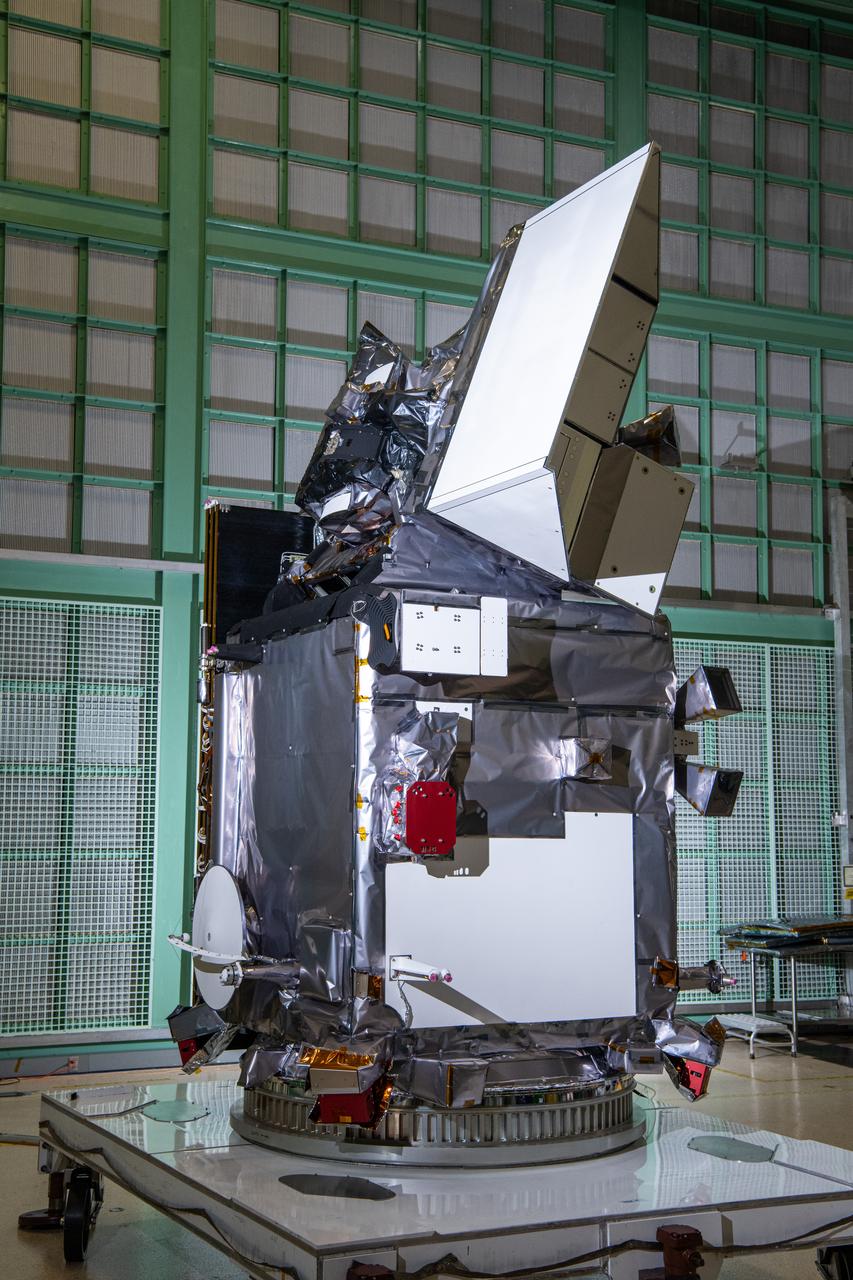
The Plankton, Aerosol, Cloud, ocean Ecosystem (PACE) in the clean room at NASA's Goddard Space Flight Center in Greenbelt, Maryland on October 31st, 2023. PACE's unprecedented spectral coverage…
Inspect NASA record
The Plankton, Aerosol, Cloud, ocean Ecosystem (PACE) in the clean room at NASA's Goddard Space Flight Center in Greenbelt, Maryland on October 31st, 2023. PACE's unprecedented spectral coverage will provide the first-ever global measurements designed to identify phytoplankton community composition. The mission will make global ocean color measurements, using the Ocean Color Instrument (OCI), to provide extended data records on ocean ecology and global biogeochemistry along with polarimetry measurements, using the Spectro-polarimeter for Planetary Exploration (SPEXone) and the Hyper Angular Research Polarimeter (HARP2) to provide extended data records on clouds and aerosols. The Earth-observing satellite mission, built at Goddard Space Flight Center in Greenbelt, MD, will continue and advance observations of global ocean color, biogeochemistry, and ecology, as well as the carbon cycle, aerosols and clouds.
- Record ID
- GSFC_20231031_PACE_030771
- NASA center
- GSFC
- Date
- 2023-10-31
- Credit
- NASA / Denny Henry
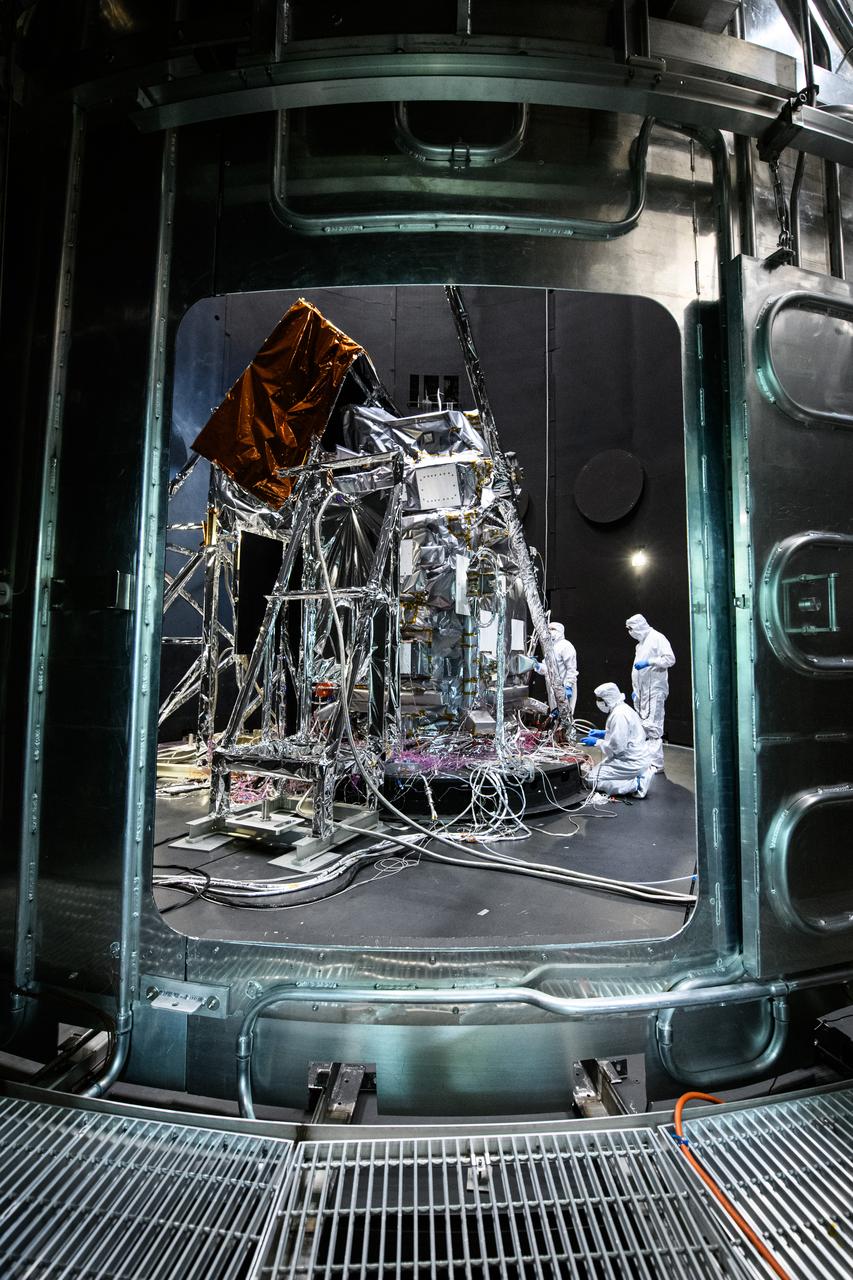
GSFC · 2023-06-16 · GSFC_20230616_PACE_020014
GSFC_20230616_PACE_020014
The Plankton, Aerosol, Cloud, ocean Ecosystem (PACE) Observatory inside the Space Environment Simulator (SES) thermal vacuuum chamber before thermal environmental testing at NASA's Goddard Space Flight Center in…
Inspect NASA record
The Plankton, Aerosol, Cloud, ocean Ecosystem (PACE) Observatory inside the Space Environment Simulator (SES) thermal vacuuum chamber before thermal environmental testing at NASA's Goddard Space Flight Center in Greenbelt, Maryland on June 16th, 2023. PACE's unprecedented spectral coverage will provide the first-ever global measurements designed to identify phytoplankton community composition. The mission will make global ocean color measurements, using the Ocean Color Instrument (OCI), to provide extended data records on ocean ecology and global biogeochemistry along with polarimetry measurements, using the Spectro-polarimeter for Planetary Exploration (SPEXone) and the Hyper Angular Research Polarimeter (HARP2) to provide extended data records on clouds and aerosols. The Earth-observing satellite mission, built at Goddard Space Flight Center in Greenbelt, MD, will continue and advance observations of global ocean color, biogeochemistry, and ecology, as well as the carbon cycle, aerosols and clouds.
- Record ID
- GSFC_20230616_PACE_020014
- NASA center
- GSFC
- Date
- 2023-06-16
- Credit
- NASA / Denny Henry