
Update Site (from NASA)
Explore NASA’s Image and Video Library.
Suggest one object per day for the Interstellar Minds collection. We review each suggestion before adding it.
Sign in to suggest a Marvel.
Find a NASA image ID. Open a NASA record and copy its ID from the end of the details URL.
NASA image records
KSC · 2011-04-25 · KSC-2011-3077
KSC-2011-3077
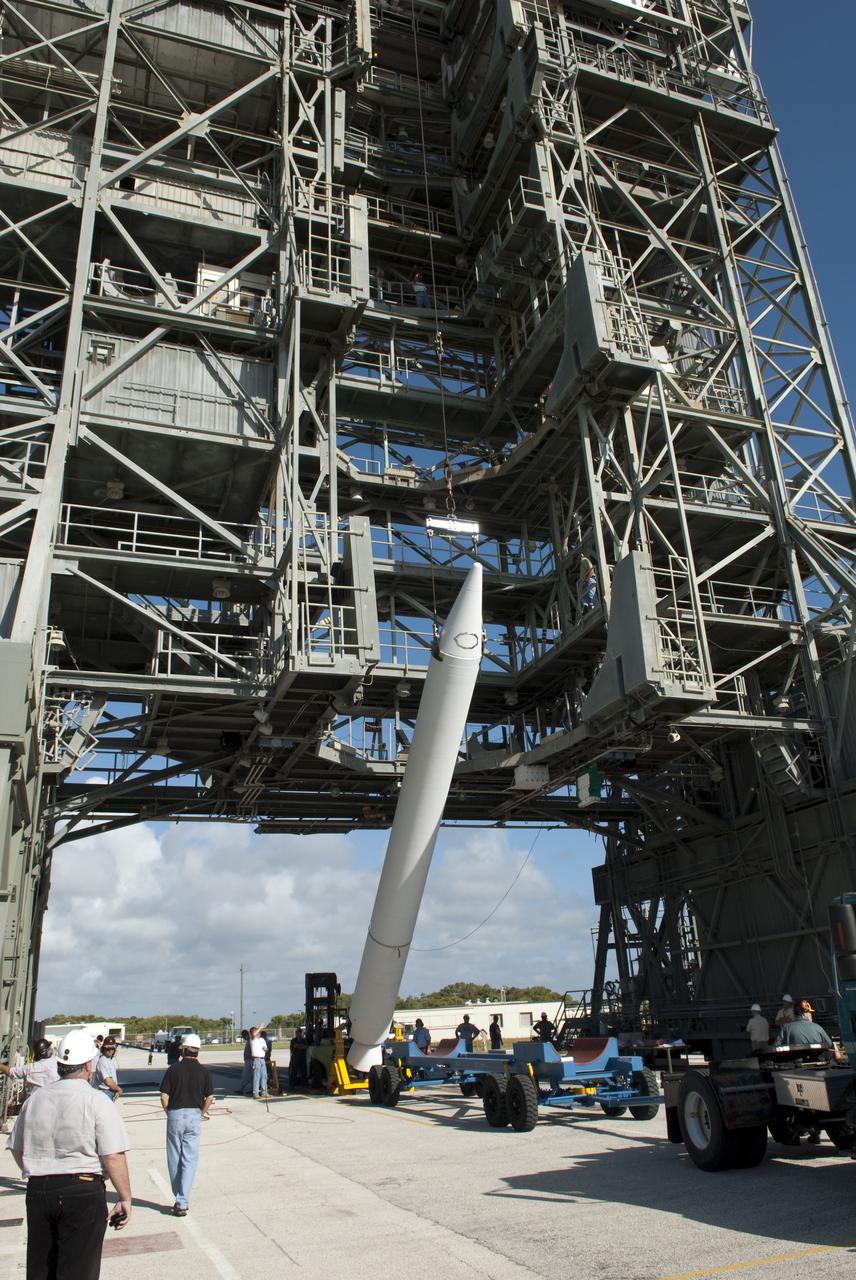
CAPE CANAVERAL, Fla. -- A solid-fueled booster is lifted off a trailer at Launch Complex 17-B at Cape Canaveral Air Force Station in Florida where a United Launch…
Inspect NASA record
CAPE CANAVERAL, Fla. -- A solid-fueled booster is lifted off a trailer at Launch Complex 17-B at Cape Canaveral Air Force Station in Florida where a United Launch Alliance Delta II is being prepared for launch. The Delta II will carry NASA's Gravity Recovery and Interior Laboratory, or GRAIL, spacecraft into lunar orbit. The GRAIL mission is a part of NASA's Discovery Program. GRAIL will fly twin spacecraft in tandem orbits around the moon for several months to measure its gravity field. The mission also will answer longstanding questions about Earth's moon and provide scientists a better understanding of how Earth and other rocky planets in the solar system formed. GRAIL is scheduled to launch September 8, 2011. For more information visit: http://science.nasa.gov/missions/grail/. Photo credit: NASA/Jim Grossmann
- Record ID
- KSC-2011-3077
- NASA center
- KSC
- Date
- 2011-04-25
- Keywords
- Delta II, ELV, science, exploration, solar system, Goddard, JPL
KSC · 2011-05-21 · KSC-2011-3918
KSC-2011-3918
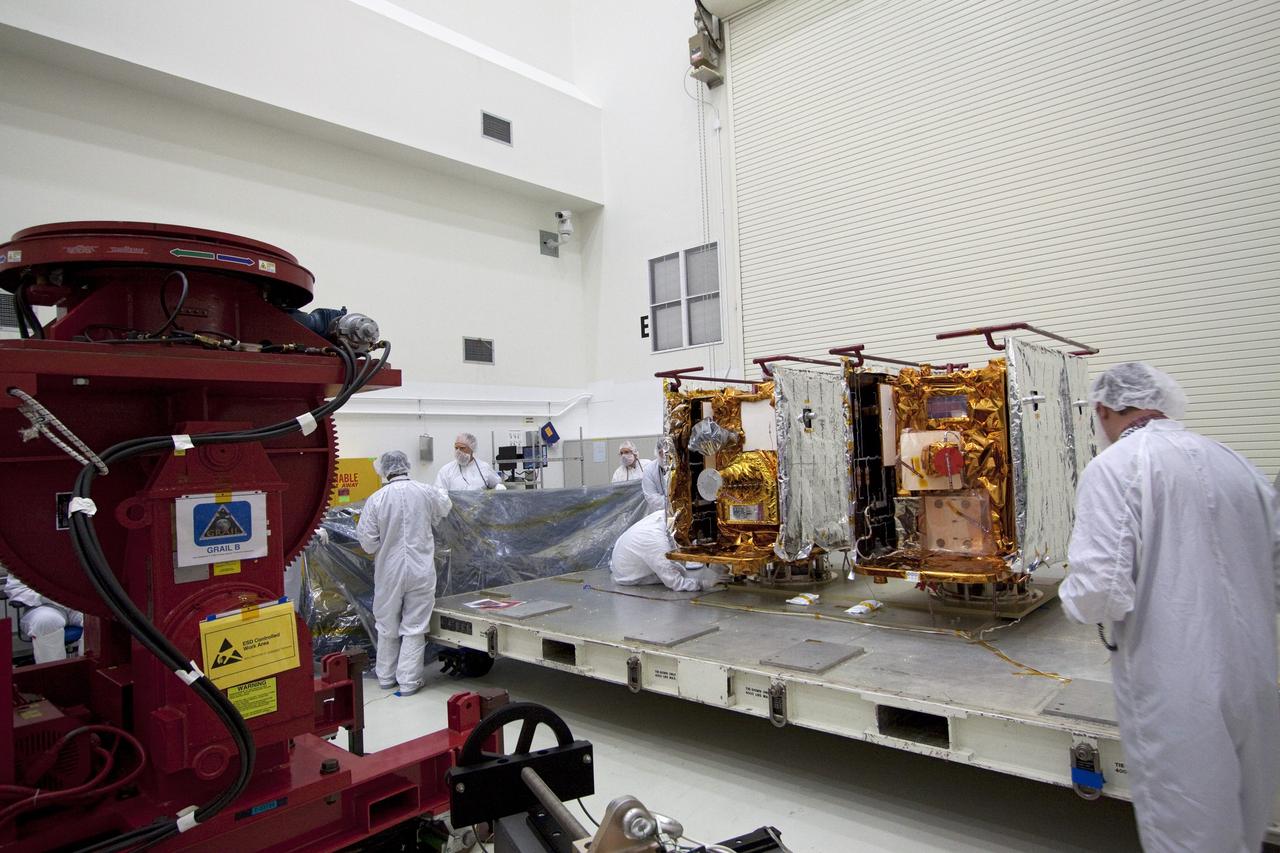
CAPE CANAVERAL, Fla. -- Technicians in the Astrotech payload processing facility in Titusville, Fla., prepare NASA's Gravity Recovery and Interior Laboratory, or GRAIL, twin spacecraft for testing and…
Inspect NASA record
CAPE CANAVERAL, Fla. -- Technicians in the Astrotech payload processing facility in Titusville, Fla., prepare NASA's Gravity Recovery and Interior Laboratory, or GRAIL, twin spacecraft for testing and processing. GRAIL was built at the Lockheed Martin plant in Denver, Colo. The United Launch Alliance Delta II rocket that will carry GRAIL into lunar orbit already is fully stacked at NASA's Space Launch Complex 17B and launch is scheduled for Sept. 8. The GRAIL mission is a part of NASA's Discovery Program. GRAIL will fly twin spacecraft in tandem orbits around the moon for several months to measure its gravity field. The mission also will answer longstanding questions about Earth's moon and provide scientists a better understanding of how Earth and other rocky planets in the solar system formed. For more information, visit http://science.nasa.gov/missions/grail/. Photo credit: NASA/Jack Pfaller
- Record ID
- KSC-2011-3918
- NASA center
- KSC
- Date
- 2011-05-21
- Keywords
- grail, delta II, elv
KSC · 2011-05-28 · KSC-2011-4162
KSC-2011-4162
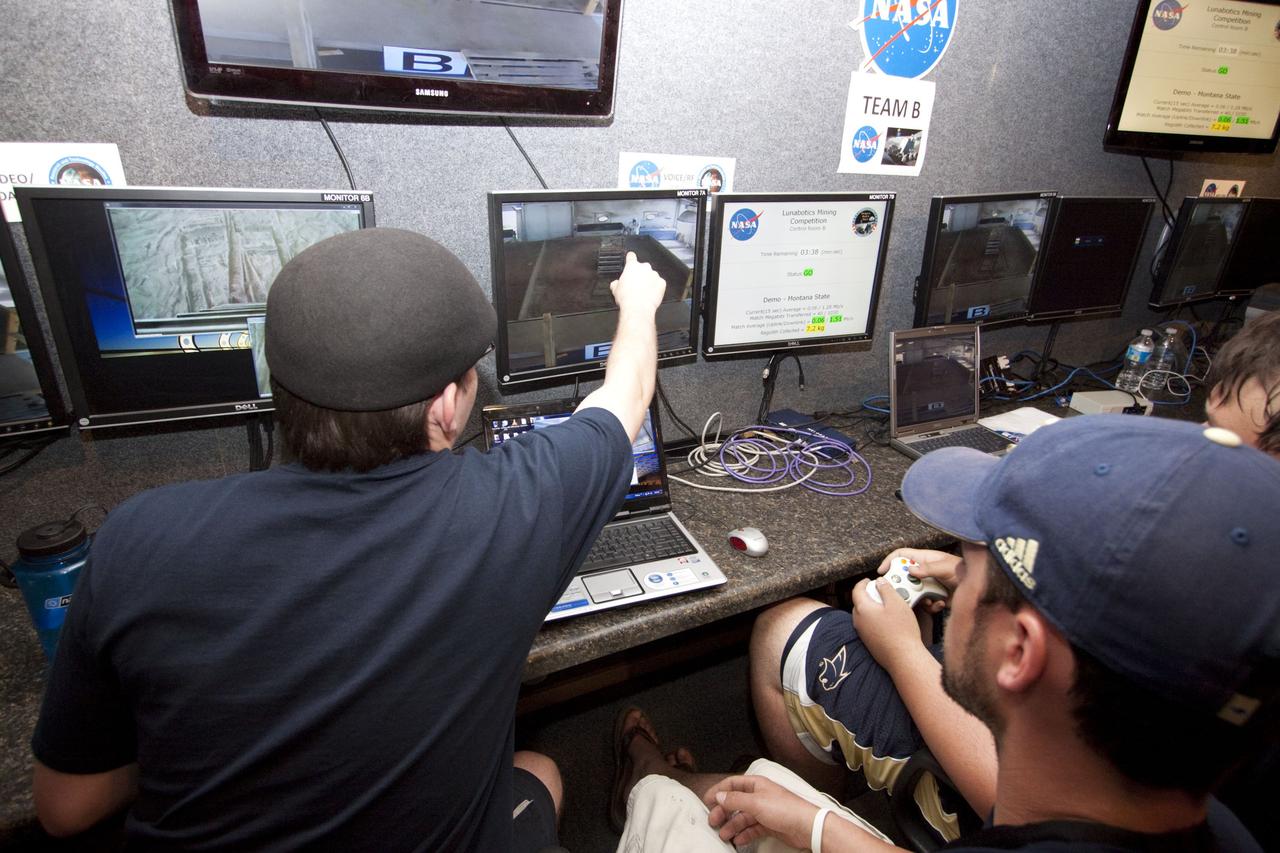
CAPE CANAVERAL, Fla. -- University students monitor their team's remote controlled or autonomous excavator, called a lunabot, as it is maneuvered in a "sand box" of ultra-fine simulated…
Inspect NASA record
CAPE CANAVERAL, Fla. -- University students monitor their team's remote controlled or autonomous excavator, called a lunabot, as it is maneuvered in a "sand box" of ultra-fine simulated lunar soil during NASA's second annual Lunabotics Mining Competition at the Kennedy Space Center Visitor Complex in Florida. Thirty-six teams of undergraduate and graduate students from the United States, Bangladesh, Canada, Colombia and India will participate in NASA's Lunabotics Mining Competition May 26 - 28 at the agency's Kennedy Space Center in Florida. The competition is designed to engage and retain students in science, technology, engineering and mathematics (STEM). Teams will maneuver their remote controlled or autonomous excavators, called lunabots, in about 60 tons of ultra-fine simulated lunar soil, called BP-1. The competition is an Exploration Systems Mission Directorate project managed by Kennedy's Education Division. The event also provides a competitive environment that could result in innovative ideas and solutions for NASA's future excavation of the moon. Photo credit: NASA/Jack Pfaller
- Record ID
- KSC-2011-4162
- NASA center
- KSC
- Date
- 2011-05-28
- Keywords
- Lunabotics, Visitor Complex, students, robotics
KSC · 2011-05-27 · KSC-2011-4145
KSC-2011-4145
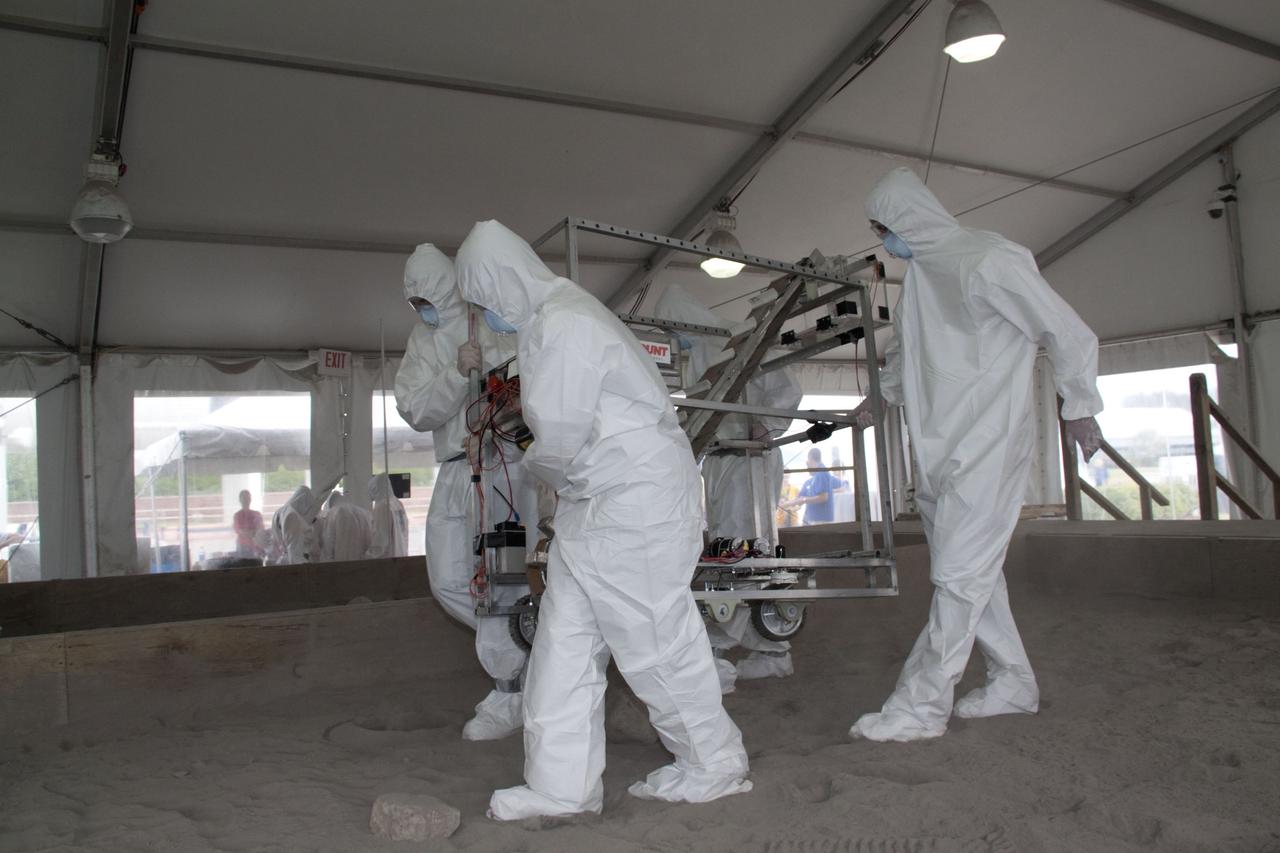
CAPE CANAVERAL, Fla. -- Inside the "Lunarena" at the Kennedy Space Center Visitor Complex in Florida, university students maneuver their remote controlled or autonomous excavators, called lunabots, in…
Inspect NASA record
CAPE CANAVERAL, Fla. -- Inside the "Lunarena" at the Kennedy Space Center Visitor Complex in Florida, university students maneuver their remote controlled or autonomous excavators, called lunabots, in a "sand box" of ultra-fine simulated lunar soil during NASA's second annual Lunabotics Mining Competition. Thirty-six teams of undergraduate and graduate students from the United States, Bangladesh, Canada, Colombia and India will participate in NASA's Lunabotics Mining Competition May 26 - 28 at the agency's Kennedy Space Center in Florida. The competition is designed to engage and retain students in science, technology, engineering and mathematics (STEM). Teams will maneuver their remote controlled or autonomous excavators, called lunabots, in about 60 tons of ultra-fine simulated lunar soil, called BP-1. The competition is an Exploration Systems Mission Directorate project managed by Kennedy's Education Division. The event also provides a competitive environment that could result in innovative ideas and solutions for NASA's future excavation of the moon. Photo credit: NASA/Jack Pfaller
- Record ID
- KSC-2011-4145
- NASA center
- KSC
- Date
- 2011-05-27
- Keywords
- stem, lunabotics, mining competition

HQ · 2018-11-29 · NHQ201811290001
Commercial Lunar Payload Services (CLPS)
NASA Administrator Jim Bridenstine, left, and NASA Associate Administrator for the Science Mission Directorate Thomas Zurbuchen, right, pose for a photograph with the representatives of the nine U.S.…
Inspect NASA record
NASA Administrator Jim Bridenstine, left, and NASA Associate Administrator for the Science Mission Directorate Thomas Zurbuchen, right, pose for a photograph with the representatives of the nine U.S. companies that are eligible to bid on NASA delivery services to the lunar surface through Commercial Lunar Payload Services (CLPS) contracts, Thursday, Nov. 29, 2018 at NASA Headquarters in Washington. The representatives of the companies are: Steve Altemus, President and CEO of Intuitive Machines; 2nd from left, Sean Mahoney, CEO, Masten Space Systems Inc; Eric Salwan, Director of Commercial Business Development, Firefly Aerospace; Jennifer Jensen, Vice President, National Security & Space, Draper; Joe Landon, VP of Advanced Programs, Commercial Civil Space, Lockheed Martin Space; Steve Bailey, Deep Space Systems Inc; Daven Maharaj, Chief Operating Officer, Moon Express Inc; John Thornton, CEO, Astrobotic Technology Inc; and Jeff Patton, Chief Engineering Advisor, Orbit Beyond Inc, 2nd from right. Photo Credit: (NASA/Bill Ingalls)
- Record ID
- NHQ201811290001
- NASA center
- HQ
- Date
- 2018-11-29
- Credit
- NASA/Bill Ingalls
- Keywords
- Commercial Lunar Payload Services (CLPS), DC, Daven Maharaj, Eric Salwan, Jeff Patton, Jennifer Jensen, Jim Bridenstine, Joe Landon, John Thornton, NASA Headquarters, Sean Mahoney, Steve Altemus
KSC · 2011-05-27 · KSC-2011-4150
KSC-2011-4150
CAPE CANAVERAL, Fla. -- University students monitor their team's remote controlled or autonomous excavator, called a lunabot, as it is maneuvered in a "sand box" of ultra-fine simulated…
Inspect NASA record
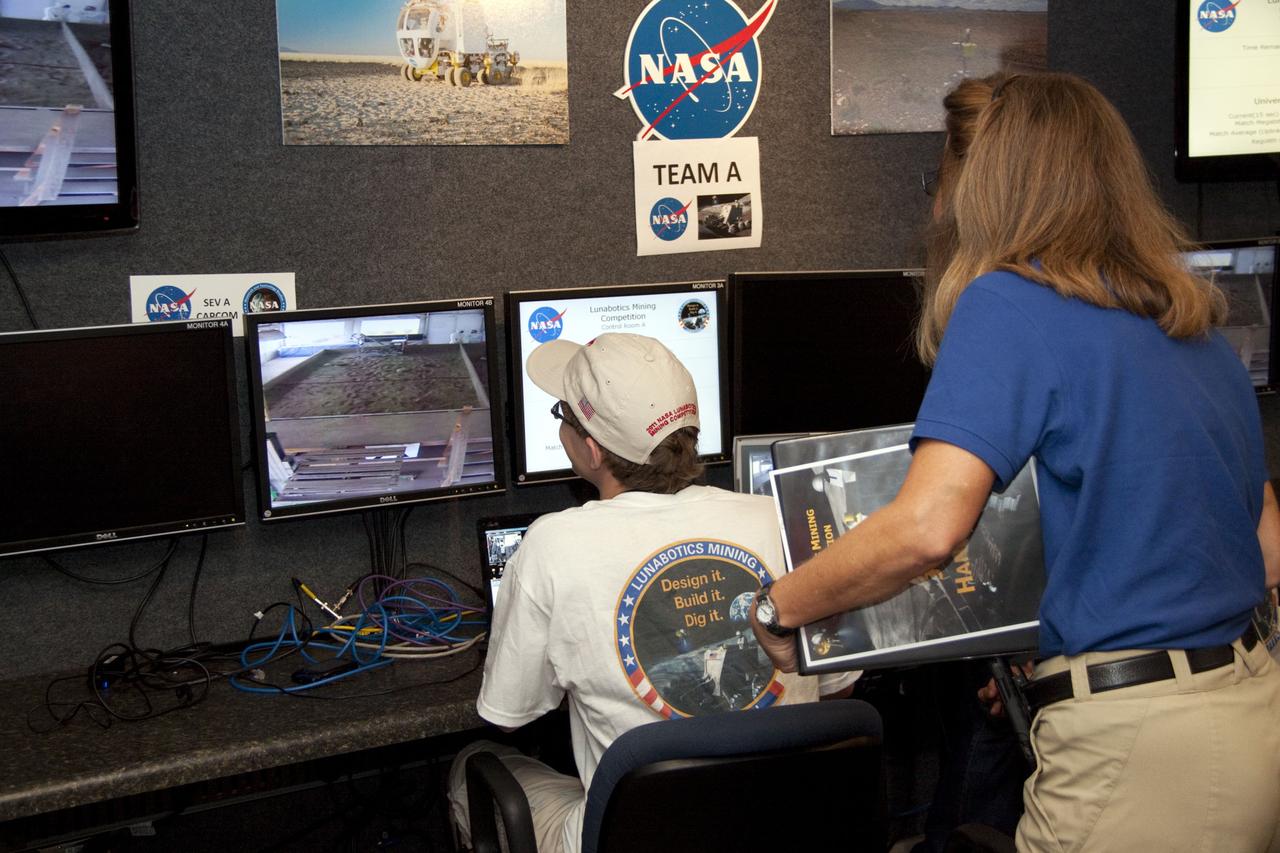
CAPE CANAVERAL, Fla. -- University students monitor their team's remote controlled or autonomous excavator, called a lunabot, as it is maneuvered in a "sand box" of ultra-fine simulated lunar soil during NASA's second annual Lunabotics Mining Competition at the Kennedy Space Center Visitor Complex in Florida. Thirty-six teams of undergraduate and graduate students from the United States, Bangladesh, Canada, Colombia and India will participate in NASA's Lunabotics Mining Competition May 26 - 28 at the agency's Kennedy Space Center in Florida. The competition is designed to engage and retain students in science, technology, engineering and mathematics (STEM). Teams will maneuver their remote controlled or autonomous excavators, called lunabots, in about 60 tons of ultra-fine simulated lunar soil, called BP-1. The competition is an Exploration Systems Mission Directorate project managed by Kennedy's Education Division. The event also provides a competitive environment that could result in innovative ideas and solutions for NASA's future excavation of the moon. Photo credit: NASA/Jack Pfaller
- Record ID
- KSC-2011-4150
- NASA center
- KSC
- Date
- 2011-05-27
- Keywords
- stem, lunabotics, mining competition
KSC · 2011-05-28 · KSC-2011-4154
KSC-2011-4154
CAPE CANAVERAL, Fla. -- A remote controlled or autonomous excavator, called a lunabot, is on display outside of the "Lunarena" at the Kennedy Space Center Visitor Complex in…
Inspect NASA record
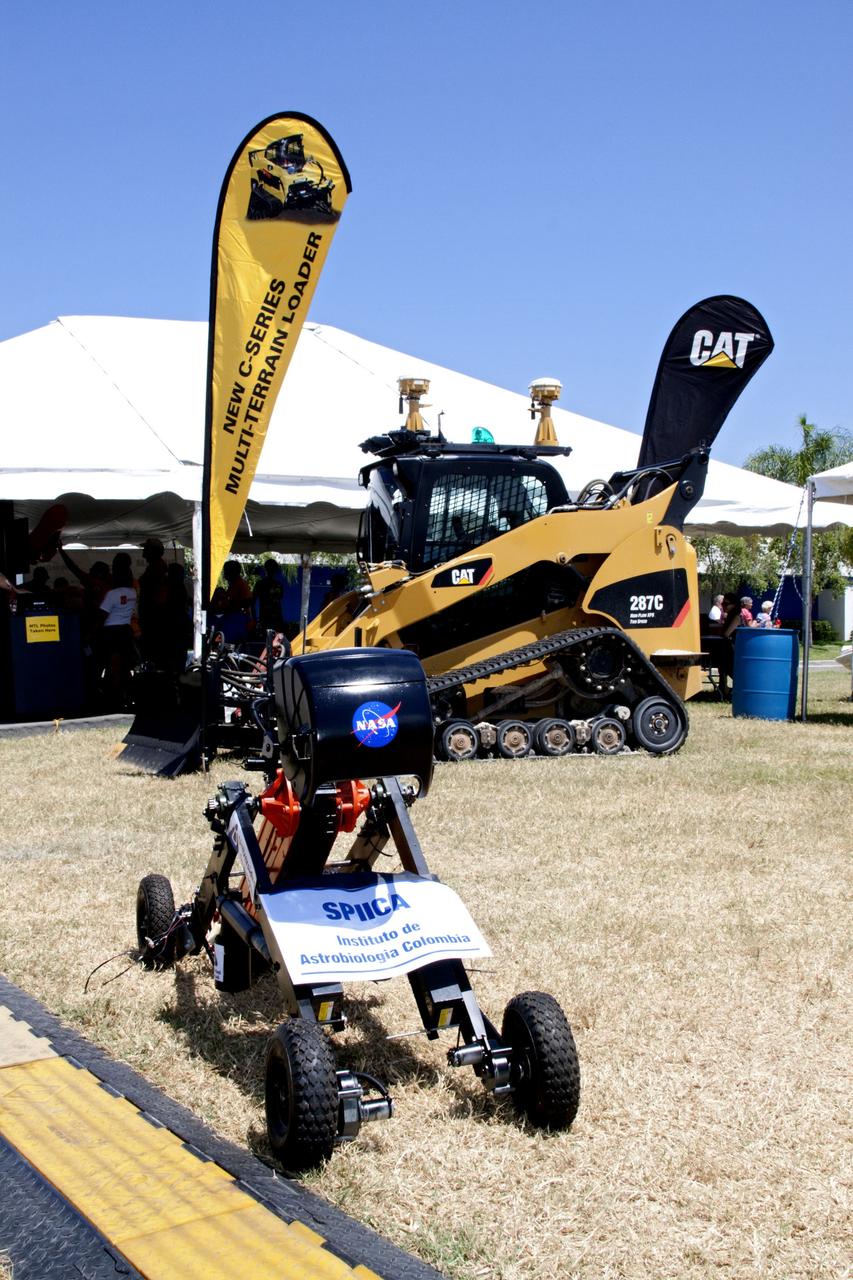
CAPE CANAVERAL, Fla. -- A remote controlled or autonomous excavator, called a lunabot, is on display outside of the "Lunarena" at the Kennedy Space Center Visitor Complex in Florida where university students maneuver their remote controlled lunabots, in a "sand box" of ultra-fine simulated lunar soil during NASA's second annual Lunabotics Mining Competition. Thirty-six teams of undergraduate and graduate students from the United States, Bangladesh, Canada, Colombia and India will participate in NASA's Lunabotics Mining Competition May 26 - 28 at the agency's Kennedy Space Center in Florida. The competition is designed to engage and retain students in science, technology, engineering and mathematics (STEM). Teams will maneuver their remote controlled or autonomous excavators, called lunabots, in about 60 tons of ultra-fine simulated lunar soil, called BP-1. The competition is an Exploration Systems Mission Directorate project managed by Kennedy's Education Division. The event also provides a competitive environment that could result in innovative ideas and solutions for NASA's future excavation of the moon. Photo credit: NASA/Jack Pfaller
- Record ID
- KSC-2011-4154
- NASA center
- KSC
- Date
- 2011-05-28
- Keywords
- Lunabotics, Visitor Complex, students, robotics
KSC · 2011-05-26 · KSC-2011-4019
KSC-2011-4019
CAPE CANAVERAL, Fla. -- University students monitor their team's remote controlled or autonomous excavator, called a lunabot, as it is maneuvered in a "sand box" of ultra-fine simulated…
Inspect NASA record
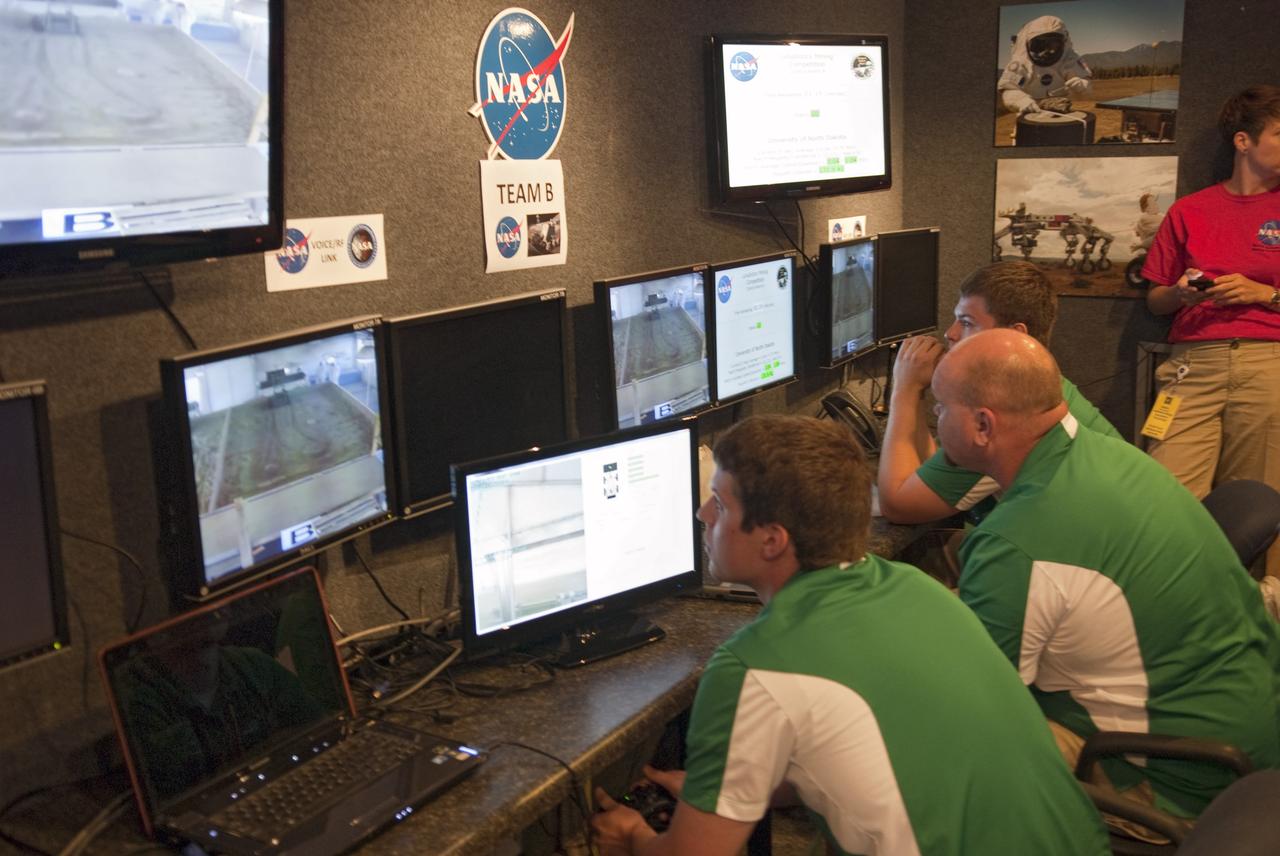
CAPE CANAVERAL, Fla. -- University students monitor their team's remote controlled or autonomous excavator, called a lunabot, as it is maneuvered in a "sand box" of ultra-fine simulated lunar soil during NASA's second annual Lunabotics Mining Competition at the Kennedy Space Center Visitor Complex in Florida. Thirty-six teams of undergraduate and graduate students from the United States, Bangladesh, Canada, Colombia and India will participate in NASA's Lunabotics Mining Competition May 26 - 28 at the agency's Kennedy Space Center in Florida. The competition is designed to engage and retain students in science, technology, engineering and mathematics (STEM). Teams will maneuver their remote controlled or autonomous excavators, called lunabots, in about 60 tons of ultra-fine simulated lunar soil, called BP-1. The competition is an Exploration Systems Mission Directorate project managed by Kennedy's Education Division. The event also provides a competitive environment that could result in innovative ideas and solutions for NASA's future excavation of the moon. Photo credit: NASA/Jim Grossmann
- Record ID
- KSC-2011-4019
- NASA center
- KSC
- Date
- 2011-05-26
- Keywords
- lunabotics, visitor complex, stem
MSFC · 1969-07-06 · 6902077
Saturn Apollo Program
The Apollo 11 mission launched from the Kennedy Space Center (KSC) in Florida via the Marshall Space Flight Center (MSFC) developed Saturn V launch vehicle on July 16,…
Inspect NASA record
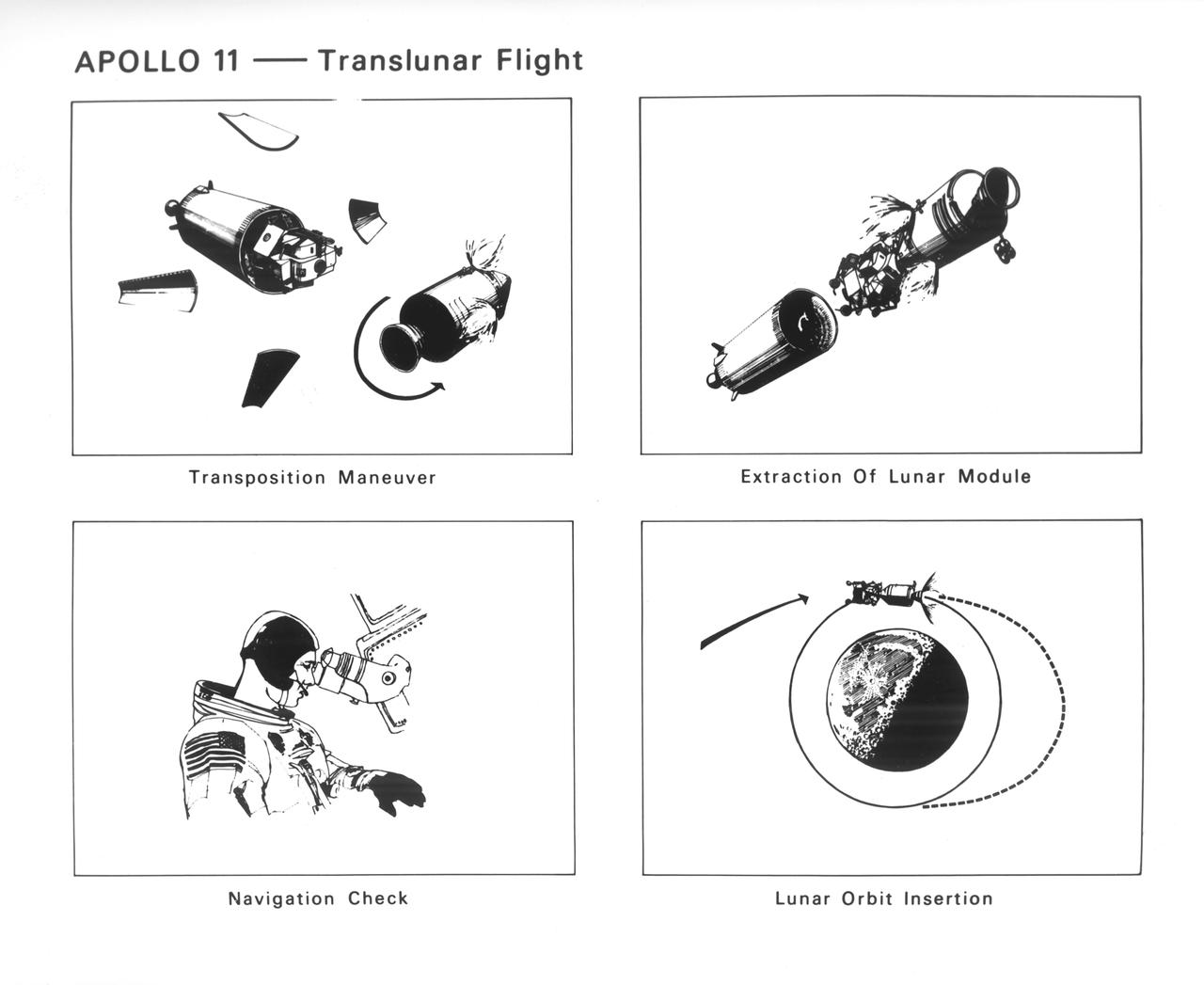
The Apollo 11 mission launched from the Kennedy Space Center (KSC) in Florida via the Marshall Space Flight Center (MSFC) developed Saturn V launch vehicle on July 16, 1969 and safely returned to Earth on July 24, 1969. Aboard the space craft were astronauts Neil A. Armstrong, commander; Michael Collins, Command Module (CM) pilot; and Edwin E. (Buzz) Aldrin Jr., Lunar Module (LM) pilot. With the success of Apollo 11, the national objective to land men on the Moon and return them safely to Earth had been accomplished. These sketches illustrate four events of the Apollo 11 spacecraft and crew enroute to the Moon. Panels housing the LM were jettisoned and the CM turned 180 degrees in the transposition maneuver. The CM docked with the LM and extracted it from the third stage instrument unit of the Saturn V launch vehicle. Astronauts performed navigation checks enroute to the moon. The service propulsion system was fired to slow the spacecraft and permitted it to enter lunar orbit.
- Record ID
- 6902077
- NASA center
- MSFC
- Date
- 1969-07-06
- Keywords
- Apollo 11, Artist Concept, Illustration, Translunar Flight
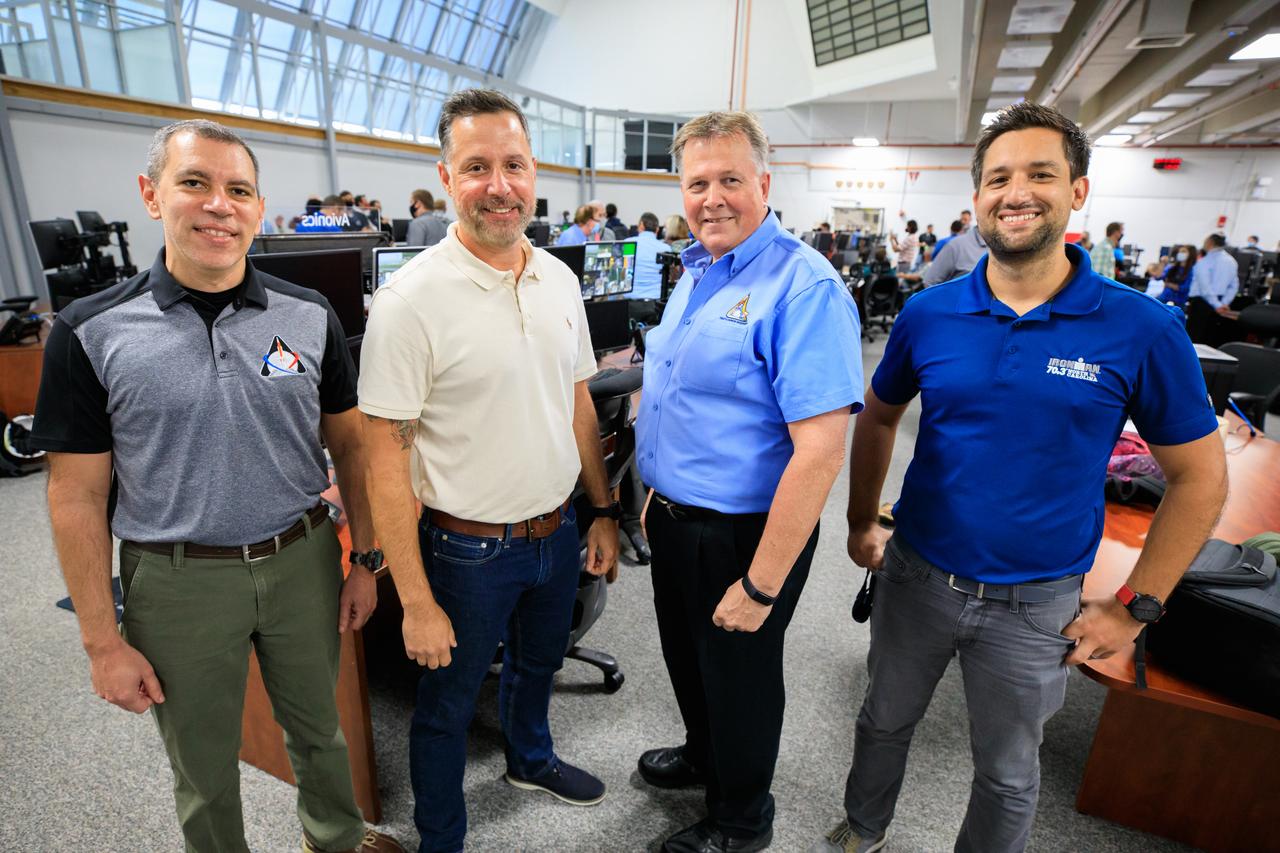
KSC · 2022-08-12 · KSC-20220812-PH-FMX01_0044
Artemis I Award Certification Ceremony Group Photos
Members of the Artemis I launch team are photographed inside Firing Room 2 of the Rocco A. Petrone Launch Control Center at NASA’s Kennedy Space Center in Florida…
Inspect NASA record
Members of the Artemis I launch team are photographed inside Firing Room 2 of the Rocco A. Petrone Launch Control Center at NASA’s Kennedy Space Center in Florida during a certification ceremony on Aug. 12, 2022. From left are NASA Test Director Danny Zeno, NASA Test Director Carlos Monge, Senior NASA Test Director Jeff Spaulding, and NASA Test Director Dan Florez. The ceremony was held to commemorate the certification of the Artemis I launch team following their launch simulation held in December 2021. During the ceremony, senior members of the launch team handed out certificates to individual team members. The first in an increasingly complex series of missions, Artemis I will test NASA’s Space Launch System rocket and Orion spacecraft as an integrated system prior to crewed flights to the Moon. Through Artemis, NASA will land the first woman and the first person of color on the lunar surface, paving the way for long-term lunar presence and using the Moon as a steppingstone before venturing to Mars.
- Record ID
- KSC-20220812-PH-FMX01_0044
- NASA center
- KSC
- Date
- 2022-08-12
- Credit
- NASA/Frank Michaux
- Keywords
- Artemis, Artemis I, KSC, Kennedy Space Center, LCC, Launch Control Center, certification, launch team
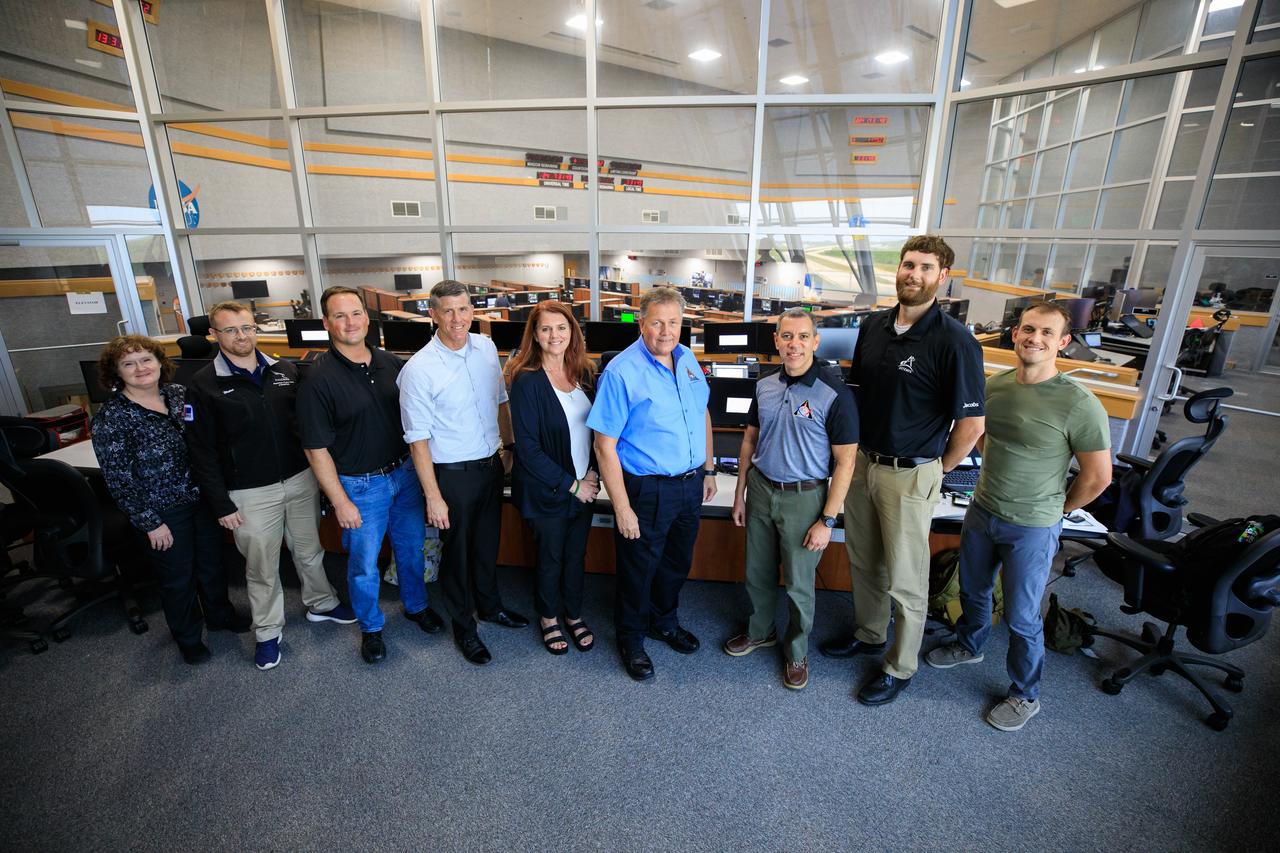
KSC · 2022-08-12 · KSC-20220812-PH-FMX01_0020
Artemis I Award Certification Ceremony Group Photos
Members of the Artemis I launch team are photographed inside Firing Room 1 of the Rocco A. Petrone Launch Control Center at NASA’s Kennedy Space Center in Florida…
Inspect NASA record
Members of the Artemis I launch team are photographed inside Firing Room 1 of the Rocco A. Petrone Launch Control Center at NASA’s Kennedy Space Center in Florida prior to a certification ceremony on Aug. 12, 2022. From left are Laurie Sally, Space Launch System (SLS) test conductor; Josh Waters, assistant ground test conductor; Wes Mosedale, technical assistant to the launch director; Jeremy Graeber, assistant launch director; Charlie Blackwell-Thompson, launch director; Jeff Spaulding, senior NASA test director; Danny Zeno, NASA test director; Lucas Vojak, assistant Orion test conductor; and Terry Woxberg, Orion test conductor. The ceremony was held to commemorate the certification of the Artemis I launch team following their launch simulation held in December 2021. During the ceremony, senior members of the launch team handed out certificates to individual team members. The first in an increasingly complex series of missions, Artemis I will test the SLS rocket and Orion spacecraft as an integrated system prior to crewed flights to the Moon. Through Artemis, NASA will land the first woman and the first person of color on the lunar surface, paving the way for long-term lunar presence and using the Moon as a steppingstone before venturing to Mars.
- Record ID
- KSC-20220812-PH-FMX01_0020
- NASA center
- KSC
- Date
- 2022-08-12
- Credit
- NASA/Frank Michaux
- Keywords
- Artemis, Artemis I, KSC, Kennedy Space Center, LCC, Launch Control Center, certification, launch team
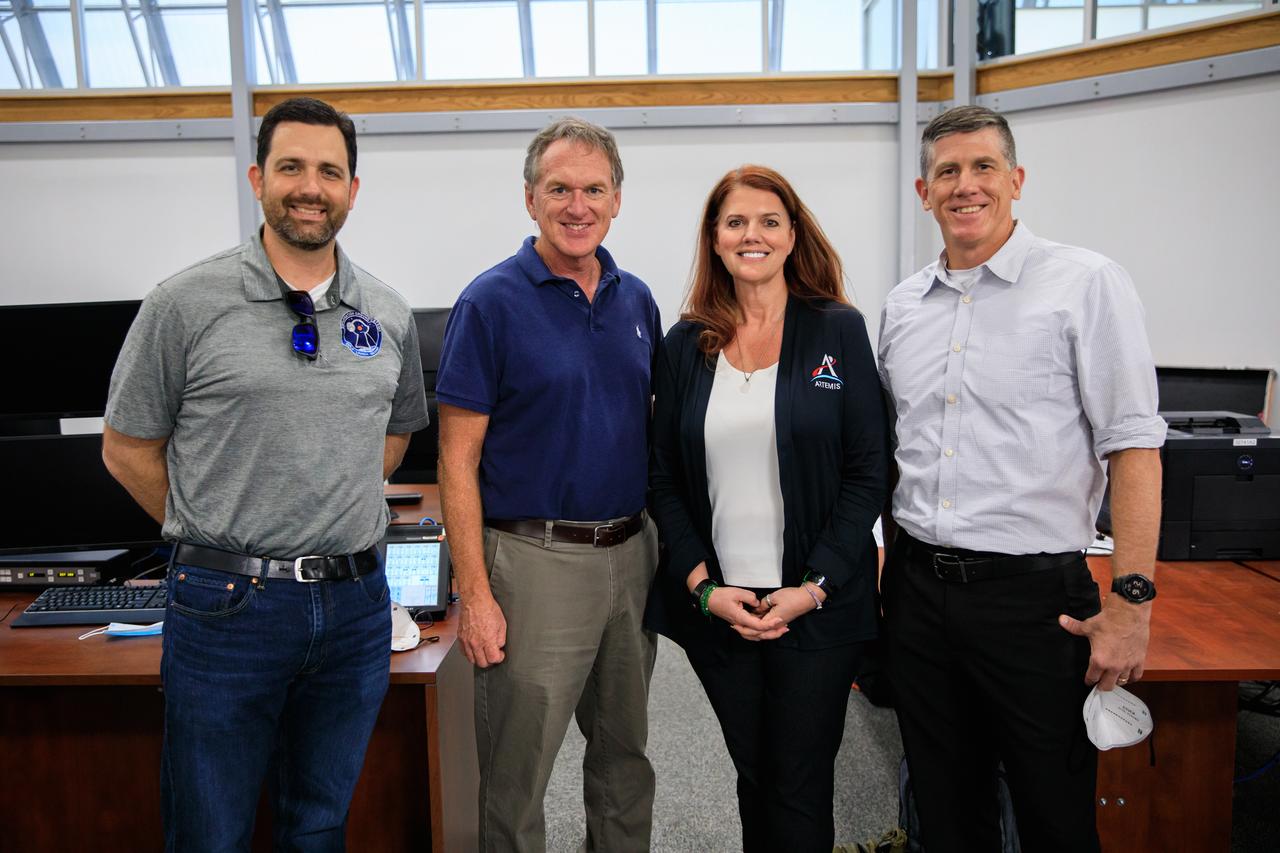
KSC · 2022-08-12 · KSC-20220812-PH-ILW01_0155
Artemis I Award Certification Ceremony
From left, NASA’s Exploration Ground Systems (EGS) Deputy Manager Jeremy Parsons, EGS Manager Mike Bolger, Artemis I Launch Director Charlie Blackwell-Thompson, and Assistant Launch Director Jeremy Graeber are…
Inspect NASA record
From left, NASA’s Exploration Ground Systems (EGS) Deputy Manager Jeremy Parsons, EGS Manager Mike Bolger, Artemis I Launch Director Charlie Blackwell-Thompson, and Assistant Launch Director Jeremy Graeber are photographed inside Firing Room 2 of the Rocco A. Petrone Launch Control Center at the agency’s Kennedy Space Center in Florida during a certification ceremony on Aug. 12, 2022. The ceremony was held to commemorate the certification of the Artemis I launch team following their launch simulation held in December 2021. During the ceremony, management staff handed out certificates to individual team members. The first in an increasingly complex series of missions, Artemis I will test NASA’s Space Launch System rocket and Orion spacecraft as an integrated system prior to crewed flights to the Moon. Through Artemis, NASA will land the first woman and the first person of color on the lunar surface, paving the way for long-term lunar presence and using the Moon as a steppingstone before venturing to Mars.
- Record ID
- KSC-20220812-PH-ILW01_0155
- NASA center
- KSC
- Date
- 2022-08-12
- Credit
- NASA/Isaac Watson
- Keywords
- Artemis, Artemis I, Award, Firing Room, KSC, Kennedy Space Center, LCC, Launch Control Center, certification, launch team