
Update Site (from NASA)
Explore NASA’s Image and Video Library.
Suggest one object per day for the Interstellar Minds collection. We review each suggestion before adding it.
Sign in to suggest a Marvel.
Find a NASA image ID. Open a NASA record and copy its ID from the end of the details URL.
NASA image records
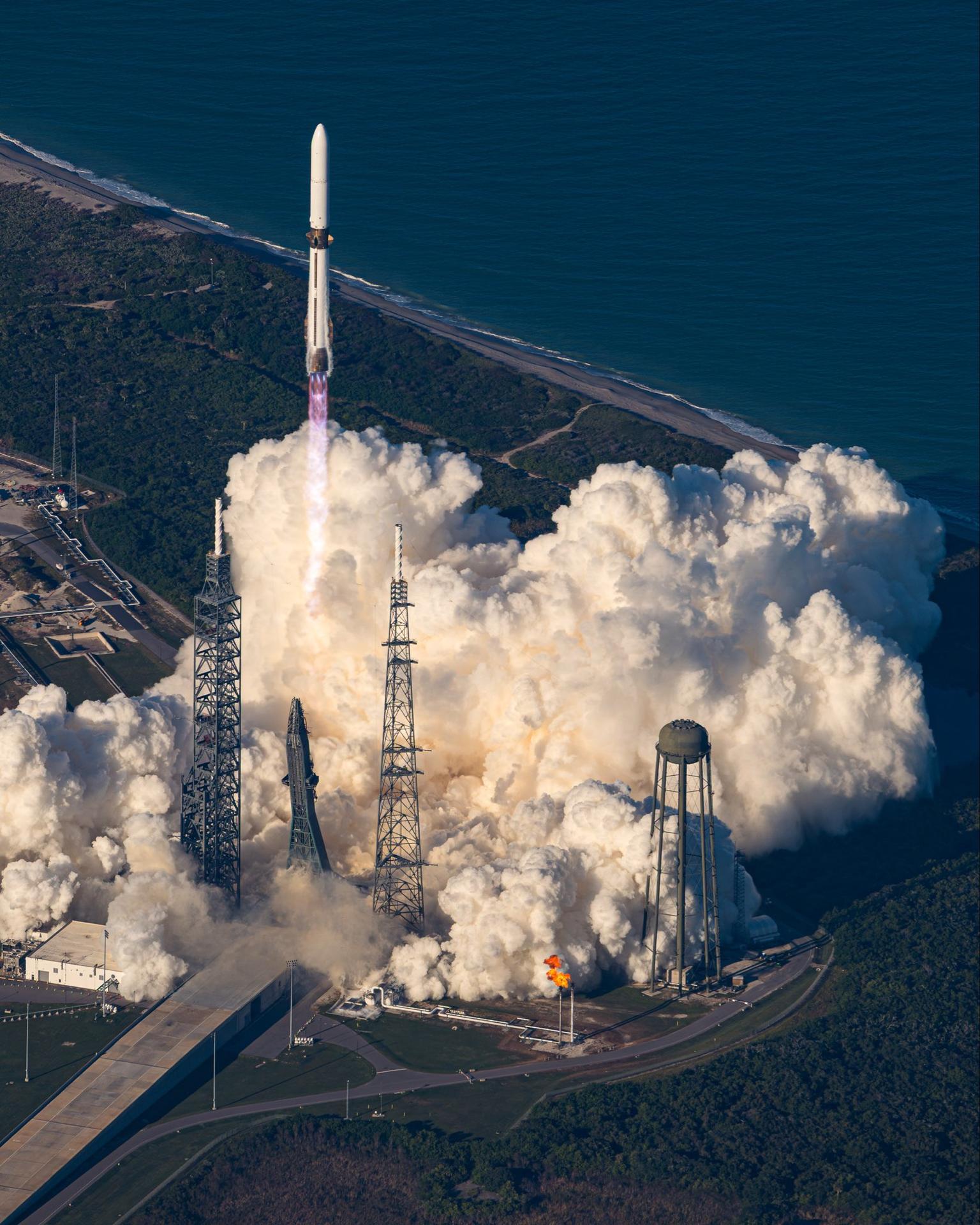
KSC · 2025-11-13 · KSC-20251113-PH-BLU01_0003
NASA's ESCAPADE Launch on Blue Origin's NG-2
Blue Origin’s New Glenn rocket carrying NASA’s twin ESCAPADE (Escape and Plasma Acceleration and Dynamics Explorers) spacecraft launches at 3:55 p.m. EST, Thursday, Nov. 13, 2025, from Launch…
Inspect NASA record
Blue Origin’s New Glenn rocket carrying NASA’s twin ESCAPADE (Escape and Plasma Acceleration and Dynamics Explorers) spacecraft launches at 3:55 p.m. EST, Thursday, Nov. 13, 2025, from Launch Complex 36 at Cape Canaveral Space Force Station in Florida. The ESCAPADE mission, built by Rocket Lab, will study how solar wind and plasma interact with Mars’ magnetosphere and how this interaction drives the planet’s atmospheric escape to prepare for future human missions on Mars.
- Record ID
- KSC-20251113-PH-BLU01_0003
- NASA center
- KSC
- Date
- 2025-11-13
- Credit
- Blue Origin
- Keywords
- ESCAPADE, Escape and Plasma Acceleration and Dynamics Explorers, Mars, heliophysics, Small Innovative Missions for Planetary Exploration (SIMPLEx), New Glenn, Blue Origin, LSP, Launch Services Program, Rocket Lab, U.C. Berkeley, magnetosphere

KSC · 2025-11-13 · KSC-20251113-PH-BLU01_0006
NASA's ESCAPADE Launch on Blue Origin's NG-2
Blue Origin’s New Glenn rocket carrying NASA’s twin ESCAPADE (Escape and Plasma Acceleration and Dynamics Explorers) spacecraft launches at 3:55 p.m. EST, Thursday, Nov. 13, 2025, from Launch…
Inspect NASA record
Blue Origin’s New Glenn rocket carrying NASA’s twin ESCAPADE (Escape and Plasma Acceleration and Dynamics Explorers) spacecraft launches at 3:55 p.m. EST, Thursday, Nov. 13, 2025, from Launch Complex 36 at Cape Canaveral Space Force Station in Florida. The ESCAPADE mission, built by Rocket Lab, will study how solar wind and plasma interact with Mars’ magnetosphere and how this interaction drives the planet’s atmospheric escape to prepare for future human missions on Mars.
- Record ID
- KSC-20251113-PH-BLU01_0006
- NASA center
- KSC
- Date
- 2025-11-13
- Credit
- Blue Origin
- Keywords
- ESCAPADE, Escape and Plasma Acceleration and Dynamics Explorers, Mars, heliophysics, Small Innovative Missions for Planetary Exploration (SIMPLEx), New Glenn, Blue Origin, LSP, Launch Services Program, Rocket Lab, U.C. Berkeley, magnetosphere
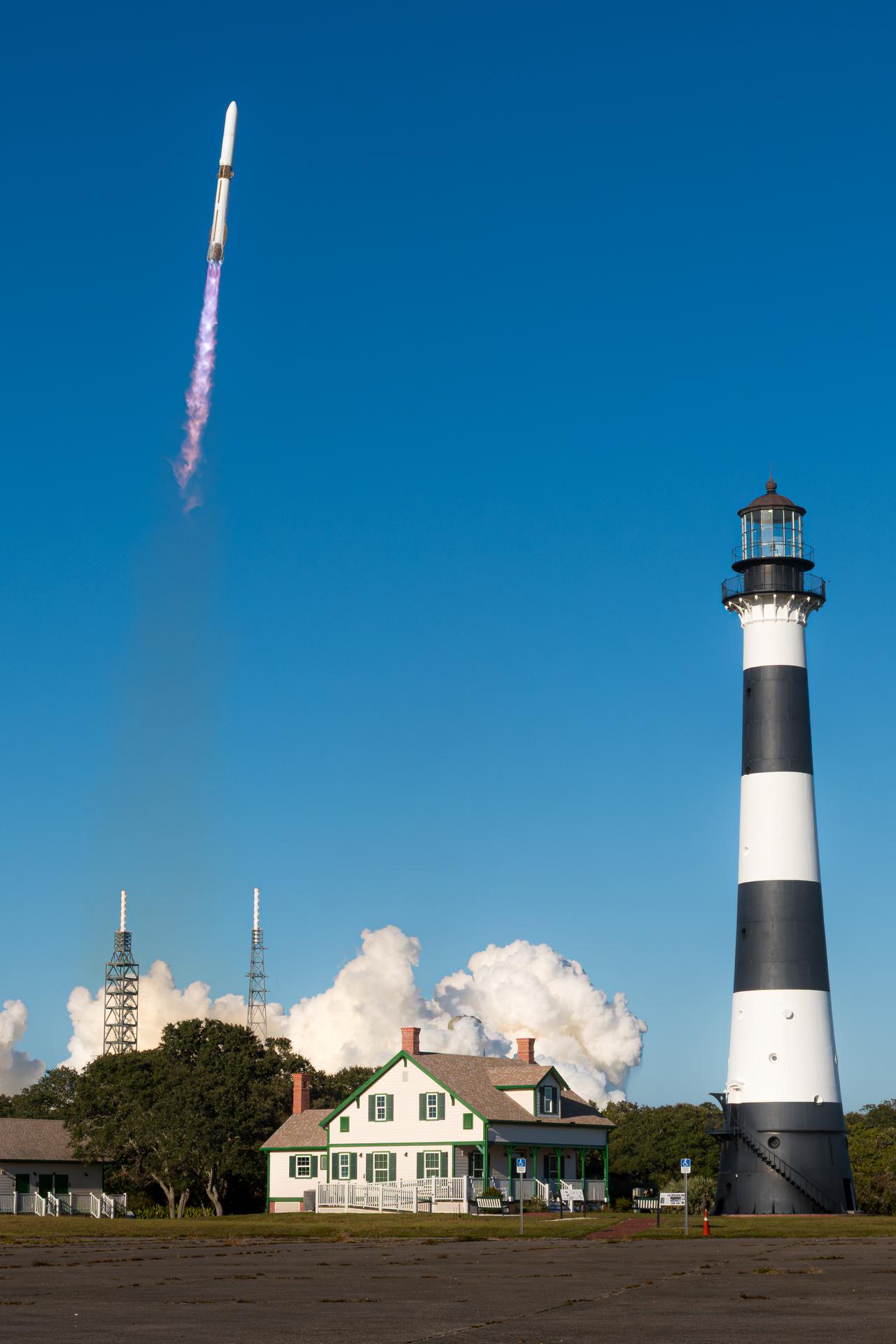
KSC · 2025-11-13 · KSC-20251113-PH-BLU01_0008
NASA's ESCAPADE Launch on Blue Origin's NG-2
Near Cape Canaveral Lighthouse, Blue Origin’s New Glenn rocket carrying NASA’s twin ESCAPADE (Escape and Plasma Acceleration and Dynamics Explorers) spacecraft launches at 3:55 p.m. EST, Thursday, Nov.…
Inspect NASA record
Near Cape Canaveral Lighthouse, Blue Origin’s New Glenn rocket carrying NASA’s twin ESCAPADE (Escape and Plasma Acceleration and Dynamics Explorers) spacecraft launches at 3:55 p.m. EST, Thursday, Nov. 13, 2025, from Launch Complex 36 at Cape Canaveral Space Force Station in Florida. The ESCAPADE mission, built by Rocket Lab, will study how solar wind and plasma interact with Mars’ magnetosphere and how this interaction drives the planet’s atmospheric escape to prepare for future human missions on Mars.
- Record ID
- KSC-20251113-PH-BLU01_0008
- NASA center
- KSC
- Date
- 2025-11-13
- Credit
- Blue Origin
- Keywords
- ESCAPADE, Escape and Plasma Acceleration and Dynamics Explorers, Mars, heliophysics, Small Innovative Missions for Planetary Exploration (SIMPLEx), New Glenn, Blue Origin, LSP, Launch Services Program, Rocket Lab, U.C. Berkeley, magnetosphere
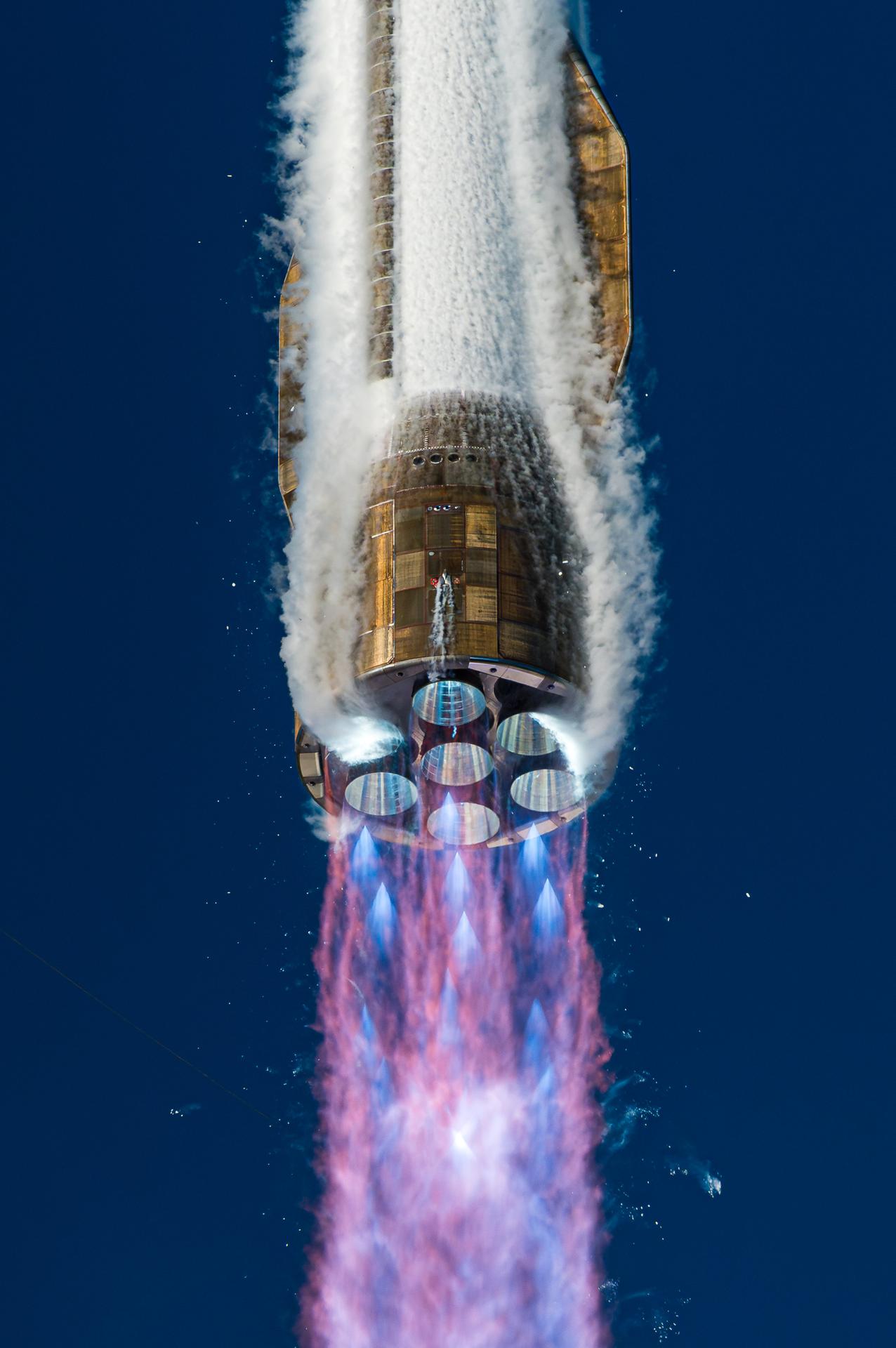
KSC · 2025-11-13 · KSC-20251113-PH-BLU01_0001
NASA's ESCAPADE Launch on Blue Origin's NG-2
Blue Origin’s New Glenn rocket carrying NASA’s twin ESCAPADE (Escape and Plasma Acceleration and Dynamics Explorers) spacecraft launches at 3:55 p.m. EST, Thursday, Nov. 13, 2025, from Launch…
Inspect NASA record
Blue Origin’s New Glenn rocket carrying NASA’s twin ESCAPADE (Escape and Plasma Acceleration and Dynamics Explorers) spacecraft launches at 3:55 p.m. EST, Thursday, Nov. 13, 2025, from Launch Complex 36 at Cape Canaveral Space Force Station in Florida. The ESCAPADE mission, built by Rocket Lab, will study how solar wind and plasma interact with Mars’ magnetosphere and how this interaction drives the planet’s atmospheric escape to prepare for future human missions on Mars.
- Record ID
- KSC-20251113-PH-BLU01_0001
- NASA center
- KSC
- Date
- 2025-11-13
- Credit
- Blue Origin
- Keywords
- ESCAPADE, Escape and Plasma Acceleration and Dynamics Explorers, Mars, heliophysics, Small Innovative Missions for Planetary Exploration (SIMPLEx), New Glenn, Blue Origin, LSP, Launch Services Program, Rocket Lab, U.C. Berkeley, magnetosphere
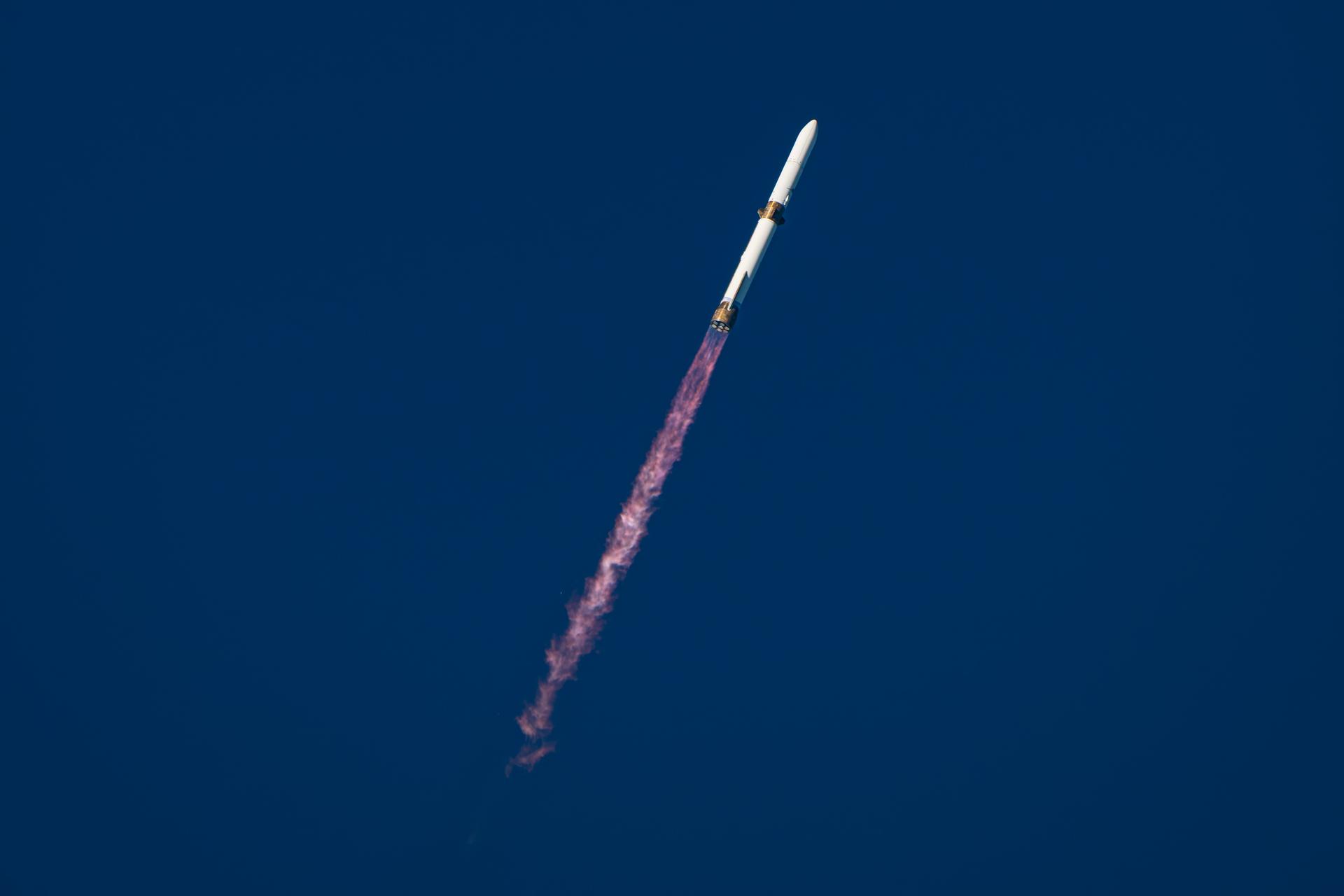
KSC · 2025-11-13 · KSC-20251113-PH-BLU01_0005
NASA's ESCAPADE Launch on Blue Origin's NG-2
Blue Origin’s New Glenn rocket carrying NASA’s twin ESCAPADE (Escape and Plasma Acceleration and Dynamics Explorers) spacecraft launches at 3:55 p.m. EST, Thursday, Nov. 13, 2025, from Launch…
Inspect NASA record
Blue Origin’s New Glenn rocket carrying NASA’s twin ESCAPADE (Escape and Plasma Acceleration and Dynamics Explorers) spacecraft launches at 3:55 p.m. EST, Thursday, Nov. 13, 2025, from Launch Complex 36 at Cape Canaveral Space Force Station in Florida. The ESCAPADE mission, built by Rocket Lab, will study how solar wind and plasma interact with Mars’ magnetosphere and how this interaction drives the planet’s atmospheric escape to prepare for future human missions on Mars.
- Record ID
- KSC-20251113-PH-BLU01_0005
- NASA center
- KSC
- Date
- 2025-11-13
- Credit
- Blue Origin
- Keywords
- ESCAPADE, Escape and Plasma Acceleration and Dynamics Explorers, Mars, heliophysics, Small Innovative Missions for Planetary Exploration (SIMPLEx), New Glenn, Blue Origin, LSP, Launch Services Program, Rocket Lab, U.C. Berkeley, magnetosphere

KSC · 2025-11-13 · KSC-20251113-PH-BLU01_0009
NASA's ESCAPADE Launch on Blue Origin's NG-2
Blue Origin’s New Glenn first stage rocket successfully lands for the first time on a drone ship in the Atlantic Ocean following the launching of NASA’s twin ESCAPADE…
Inspect NASA record
Blue Origin’s New Glenn first stage rocket successfully lands for the first time on a drone ship in the Atlantic Ocean following the launching of NASA’s twin ESCAPADE (Escape and Plasma Acceleration and Dynamics Explorers) spacecraft at 3:55 p.m. EST, Thursday, Nov. 13, 2025, from Launch Complex 36 at Cape Canaveral Space Force Station in Florida. The ESCAPADE mission, built by Rocket Lab, will study how solar wind and plasma interact with Mars’ magnetosphere and how this interaction drives the planet’s atmospheric escape to prepare for future human missions on Mars.
- Record ID
- KSC-20251113-PH-BLU01_0009
- NASA center
- KSC
- Date
- 2025-11-13
- Credit
- Blue Origin
- Keywords
- ESCAPADE, Escape and Plasma Acceleration and Dynamics Explorers, Mars, heliophysics, Small Innovative Missions for Planetary Exploration (SIMPLEx), New Glenn, Blue Origin, LSP, Launch Services Program, Rocket Lab, U.C. Berkeley, magnetosphere

GSFC · 2017-12-08 · GSFC_20171208_Archive_e000577
Hubble Sees an Aging Star Wave Goodbye
This planetary nebula is called PK 329-02.2 and is located in the constellation of Norma in the southern sky. It is also sometimes referred to as Menzel 2,…
Inspect NASA record
This planetary nebula is called PK 329-02.2 and is located in the constellation of Norma in the southern sky. It is also sometimes referred to as Menzel 2, or Mz 2, named after the astronomer Donald Menzel who discovered the nebula in 1922. When stars that are around the mass of the sun reach their final stages of life, they shed their outer layers into space, which appear as glowing clouds of gas called planetary nebulae. The ejection of mass in stellar burnout is irregular and not symmetrical, so that planetary nebulae can have very complex shapes. In the case of Menzel 2 the nebula forms a winding blue cloud that perfectly aligns with two stars at its center. In 1999 astronomers discovered that the star at the upper right is in fact the central star of the nebula, and the star to the lower left is probably a true physical companion of the central star. For tens of thousands of years the stellar core will be cocooned in spectacular clouds of gas and then, over a period of a few thousand years, the gas will fade away into the depths of the universe. The curving structure of Menzel 2 resembles a last goodbye before the star reaches its final stage of retirement as a white dwarf. Image credit: ESA/Hubble & NASA, Acknowledgement: Serge Meunier NASA image use policy. NASA Goddard Space Flight Center enables NASA’s mission through four scientific endeavors: Earth Science, Heliophysics, Solar System Exploration, and Astrophysics. Goddard plays a leading role in NASA’s accomplishments by contributing compelling scientific knowledge to advance the Agency’s mission. Follow us on Twitter Like us on Facebook Find us on Instagram
- Record ID
- GSFC_20171208_Archive_e000577
- NASA center
- GSFC
- Date
- 2017-12-08
- Keywords
- Hubble Sees an Aging Star Wave Goodbye, white, star, dwarf, nasa, nebula, constellation, hubble, nasagoddard, pk329022
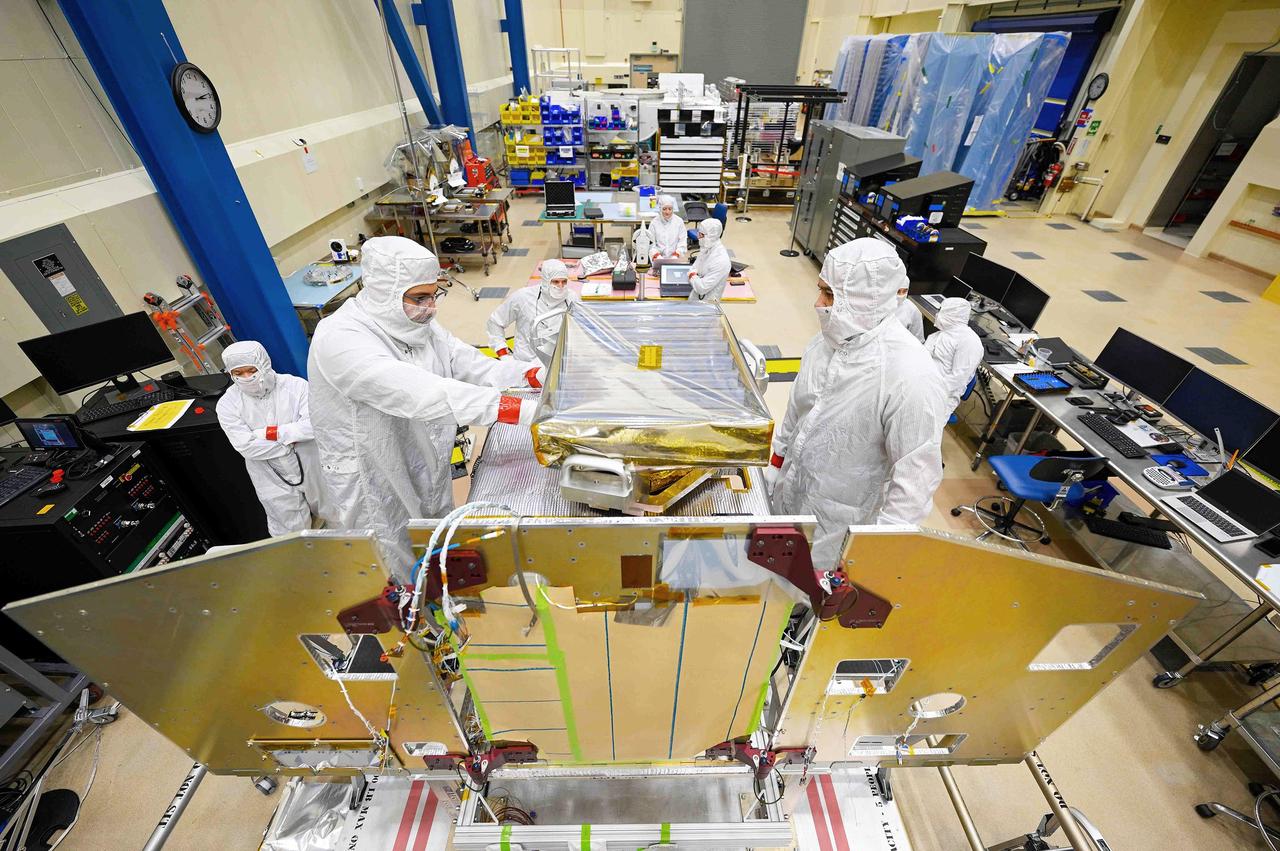
JPL · 2022-12-22 · PIA25254
Engineers Work on Lunar Trailblazer's HVM³ Imaging Spectrometer
Engineers work on the High-resolution Volatiles and Minerals Moon Mapper (HVM³) for NASA's Lunar Trailblazer spacecraft in a clean room at Lockheed Martin Space in Littleton, Colorado, shortly…
Inspect NASA record
Engineers work on the High-resolution Volatiles and Minerals Moon Mapper (HVM³) for NASA's Lunar Trailblazer spacecraft in a clean room at Lockheed Martin Space in Littleton, Colorado, shortly after the instrument was delivered there in December 2022. The large silver grate wrapped in transparent plastic in the center of the image is the radiator that will maintain the instrument's temperature when in space. HVM³ is an imaging spectrometer that was developed at NASA's Jet Propulsion Laboratory in Southern California. It was shipped from JPL to Lockheed Martin Space, where it was integrated with the spacecraft. HVM³ is one of two instruments that will be used by the mission to detect and map water on the Moon's surface to determine its abundance, location, form, and how it changes over time. Lunar Trailblazer was selected under NASA's Small Innovative Missions for Planetary Exploration (SIMPLEx) program in 2019. The Lunar Trailblazer mission is managed by JPL and its science investigation is led by Caltech in Pasadena, California. Managed for NASA by Caltech, JPL also provides system engineering, mission assurance, the HVM³ instrument, as well as navigation. Lockheed Martin Space provides the spacecraft and integrates the flight system, under contract with Caltech. SIMPLEx mission investigations are managed by the Planetary Missions Program Office at NASA's Marshall Space Flight Center in Huntsville, Alabama, as part of the Discovery Program at NASA Headquarters in Washington. The program conducts space science investigations in the Planetary Science Division of NASA's Science Mission Directorate at NASA Headquarters. https://photojournal.jpl.nasa.gov/catalog/PIA25254
- Record ID
- PIA25254
- NASA center
- JPL
- Date
- 2022-12-22
- Credit
- Lockheed Martin Space
- Keywords
- Lunar Trailblazer

GSFC · 2017-12-08 · GSFC_20171208_Archive_e000699
Hubble View of a Nitrogen-Rich Nebula
This NASA/ESA Hubble Space Telescope image shows a planetary nebula named NGC 6153, located about 4,000 light-years away in the southern constellation of Scorpius (The Scorpion). The faint…
Inspect NASA record
This NASA/ESA Hubble Space Telescope image shows a planetary nebula named NGC 6153, located about 4,000 light-years away in the southern constellation of Scorpius (The Scorpion). The faint blue haze across the frame shows what remains of a star like the sun after it has depleted most of its fuel. When this happens, the outer layers of the star are ejected, and get excited and ionized by the energetic ultraviolet light emitted by the bright hot core of the star, forming the nebula. NGC 6153 is a planetary nebula that is elliptical in shape, with an extremely rich network of loops and filaments, shown clearly in this Hubble image. However, this is not what makes this planetary nebula so interesting for astronomers. Measurements show that NGC 6153 contains large amounts of neon, argon, oxygen, carbon and chlorine — up to three times more than can be found in the solar system. The nebula contains a whopping five times more nitrogen than our sun! Although it may be that the star developed higher levels of these elements as it grew and evolved, it is more likely that the star originally formed from a cloud of material that already contained a lot more of these elements. Text credit: European Space Agency Image credit: ESA/Hubble & NASA, Acknowledgement: Matej Novak NASA image use policy. NASA Goddard Space Flight Center enables NASA’s mission through four scientific endeavors: Earth Science, Heliophysics, Solar System Exploration, and Astrophysics. Goddard plays a leading role in NASA’s accomplishments by contributing compelling scientific knowledge to advance the Agency’s mission. Follow us on Twitter Like us on Facebook Find us on Instagram
- Record ID
- GSFC_20171208_Archive_e000699
- NASA center
- GSFC
- Date
- 2017-12-08
- Keywords
- Hubble View of a Nitrogen-Rich Nebula, space, nasa, nebula, hubble, nasagoddard, ngc6153

GSFC · 2017-12-08 · GSFC_20171208_Archive_e000657
Hubble Finds a Little Gem
This colorful bubble is a planetary nebula called NGC 6818, also known as the Little Gem Nebula. It is located in the constellation of Sagittarius (The Archer), roughly…
Inspect NASA record
This colorful bubble is a planetary nebula called NGC 6818, also known as the Little Gem Nebula. It is located in the constellation of Sagittarius (The Archer), roughly 6,000 light-years away from us. The rich glow of the cloud is just over half a light-year across — humongous compared to its tiny central star — but still a little gem on a cosmic scale. When stars like the sun enter "retirement," they shed their outer layers into space to create glowing clouds of gas called planetary nebulae. This ejection of mass is uneven, and planetary nebulae can have very complex shapes. NGC 6818 shows knotty filament-like structures and distinct layers of material, with a bright and enclosed central bubble surrounded by a larger, more diffuse cloud. Scientists believe that the stellar wind from the central star propels the outflowing material, sculpting the elongated shape of NGC 6818. As this fast wind smashes through the slower-moving cloud it creates particularly bright blowouts at the bubble’s outer layers. Hubble previously imaged this nebula back in 1997 with its Wide Field Planetary Camera 2, using a mix of filters that highlighted emission from ionized oxygen and hydrogen. This image, while from the same camera, uses different filters to reveal a different view of the nebula. Image credit: ESA/Hubble & NASA, Acknowledgement: Judy Schmidt NASA image use policy. NASA Goddard Space Flight Center enables NASA’s mission through four scientific endeavors: Earth Science, Heliophysics, Solar System Exploration, and Astrophysics. Goddard plays a leading role in NASA’s accomplishments by contributing compelling scientific knowledge to advance the Agency’s mission. Follow us on Twitter Like us on Facebook Find us on Instagram
- Record ID
- GSFC_20171208_Archive_e000657
- NASA center
- GSFC
- Date
- 2017-12-08
- Keywords
- Hubble Finds a Little Gem, star, space, n, nasa, nebula, planetary, hu, ngc6818, littlegemnebula
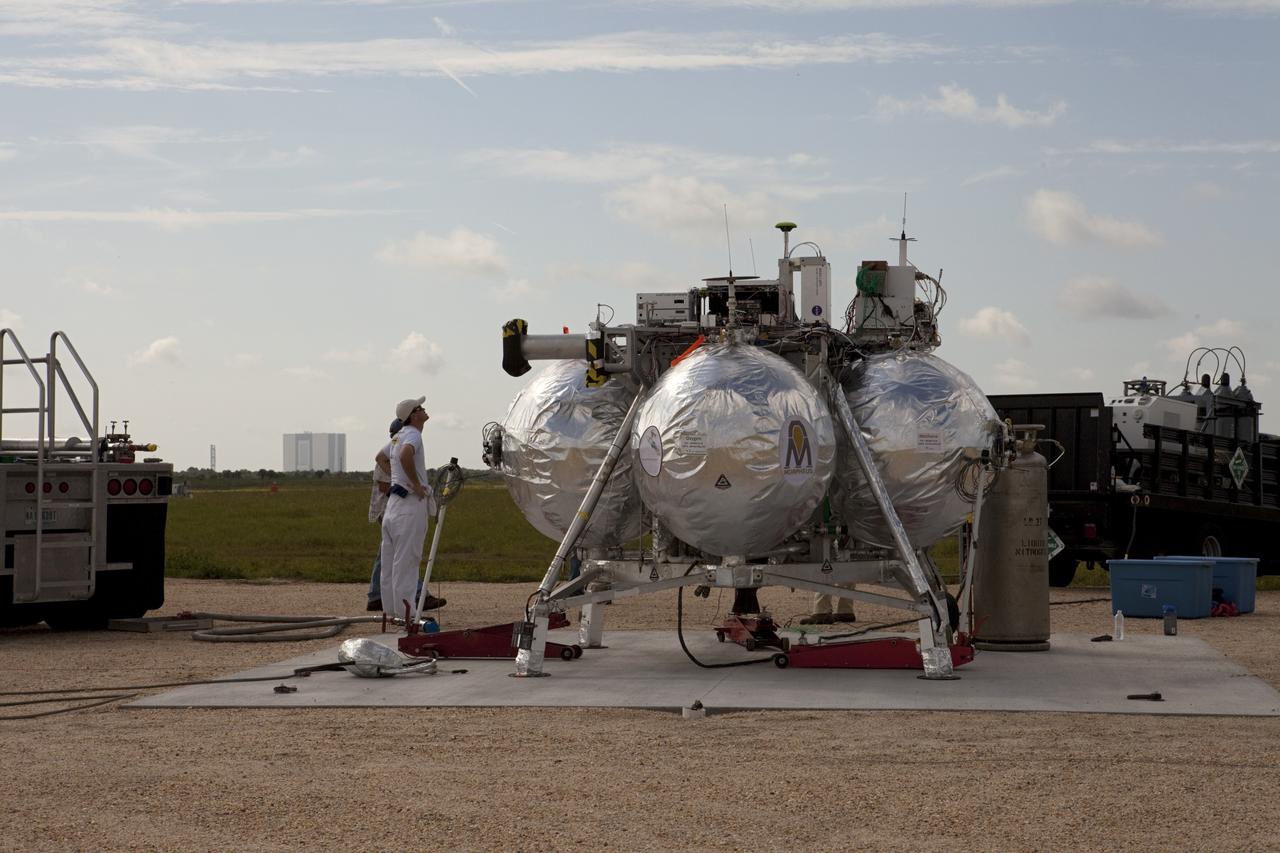
KSC · 2012-08-01 · KSC-2012-4162
KSC-2012-4162
CAPE CANAVERAL, Fla. - At the north end of the Shuttle Landing Facility, or SLF, at the Kennedy Space Center in Florida, technicians check out NASA's Morpheus lander,…
Inspect NASA record
CAPE CANAVERAL, Fla. - At the north end of the Shuttle Landing Facility, or SLF, at the Kennedy Space Center in Florida, technicians check out NASA's Morpheus lander, a vertical test bed vehicle. A rock and crater-filled planetary scape, has been built so engineers can test the Autonomous Landing and Hazard Avoidance Technology, or ALHAT, system on the Project Morpheus lander. Checkout of the prototype lander has been ongoing at NASA’s Johnson Space Center in Houston in preparation for its first free flight. The SLF site will provide the lander with the kind of field necessary for realistic testing. Project Morpheus is one of 20 small projects comprising the Advanced Exploration Systems, or AES, program in NASA’s Human Exploration and Operations Mission Directorate. AES projects pioneer new approaches for rapidly developing prototype systems, demonstrating key capabilities and validating operational concepts for future human missions beyond Earth orbit. For more information on Project Morpheus, visit http://www.nasa.gov/centers/johnson/exploration/morpheus/index.html Photo credit: NASA/Kim Shiflett
- Record ID
- KSC-2012-4162
- NASA center
- KSC
- Date
- 2012-08-01
- Keywords
- SLF, Morpheus, lander, test, ALHAT
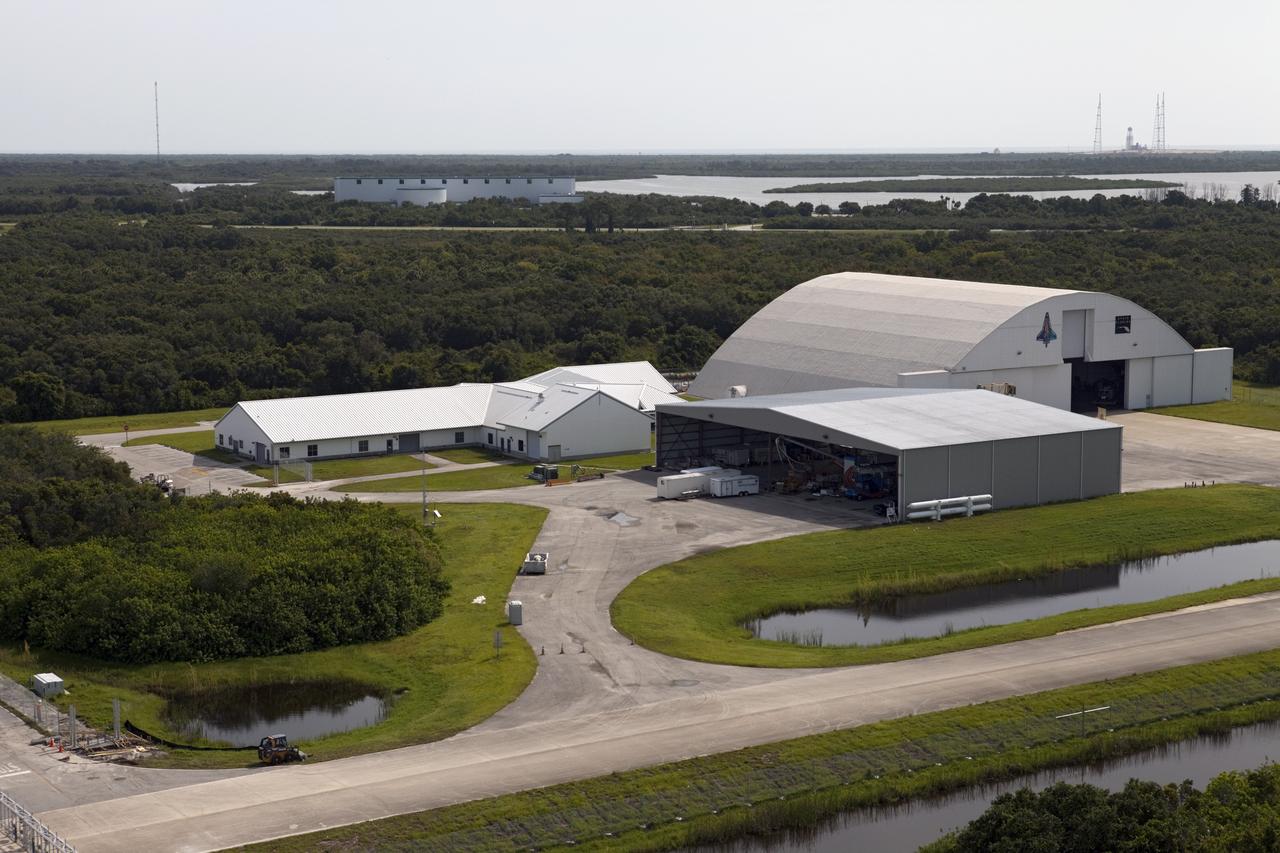
KSC · 2012-07-19 · KSC-2012-3956
KSC-2012-3956
CAPE CANAVERAL, Fla. – This aerial view shows a 50,000-square-foot hangar located on the Shuttle Landing Facility at the Kennedy Space Center, Fla., providing shelter and storage for…
Inspect NASA record
CAPE CANAVERAL, Fla. – This aerial view shows a 50,000-square-foot hangar located on the Shuttle Landing Facility at the Kennedy Space Center, Fla., providing shelter and storage for NASA and non-NASA aircraft and maintenance operations. Adjacent to the hangar is an operations building housing personnel who support operations at the 15,000-foot long concrete runway. At the north end of the runway, a rock and crater-filled planetary scape has been built so engineers can test the Autonomous Landing and Hazard Avoidance Technology, or ALHAT system on the Project Morpheus lander. Testing will demonstrate ALHAT’s ability to provide required navigation data negotiating the Morpheus lander away from risks during descent. Checkout of the prototype lander has been ongoing at NASA’s Johnson Space Center in Houston in preparation for its first free flight. The SLF site will provide the lander with the kind of field necessary for realistic testing. Project Morpheus is one of 20 small projects comprising the Advanced Exploration Systems, or AES, program in NASA’s Human Exploration and Operations Mission Directorate. AES projects pioneer new approaches for rapidly developing prototype systems, demonstrating key capabilities and validating operational concepts for future human missions beyond Earth orbit. For more information on Project Morpheus, visit http://www.nasa.gov/centers/johnson/exploration/morpheus/index.html Photo credit: NASA/Kim Shiflett
- Record ID
- KSC-2012-3956
- NASA center
- KSC
- Date
- 2012-07-19
- Keywords
- Ground systems, Morpheus, SLF