
Update Site (from NASA)
Explore NASA’s Image and Video Library.
Suggest one object per day for the Interstellar Minds collection. We review each suggestion before adding it.
Sign in to suggest a Marvel.
Find a NASA image ID. Open a NASA record and copy its ID from the end of the details URL.
NASA image records
JSC · 1972-12-13 · as17-134-20481
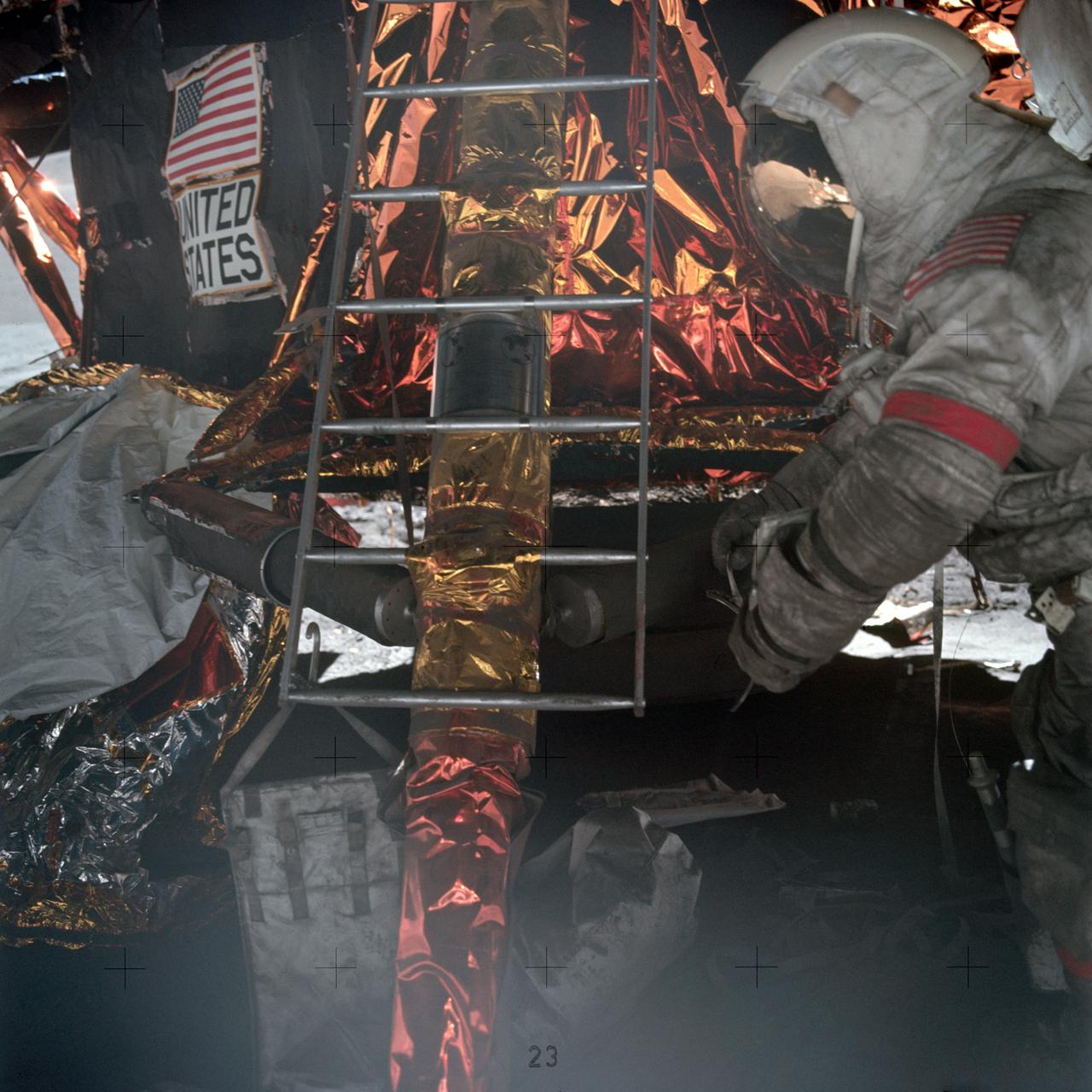
Astronaut Eugene Cernan prepares to mount ladder to lunar module ascent stage
Astronaut Eugene A. Cernan, Apollo 17 commander, prepares to mount ladder to lunar module ascent stage. Note the plaque attached to the ladder which will be left with…
Inspect NASA record
Astronaut Eugene A. Cernan, Apollo 17 commander, prepares to mount ladder to lunar module ascent stage. Note the plaque attached to the ladder which will be left with the descent stage when the mission lifts off from the lunar surface.
- Record ID
- as17-134-20481
- NASA center
- JSC
- Date
- 1972-12-13
- Keywords
- APOLLO 17 FLIGHT, APOLLO PROJECT, ASTRONAUTS, EXTRAVEHICULAR ACTIVITY, LUNAR LANDING SITES, LUNAR MODULE, LUNAR SURFACE, PLAQUES
GSFC · 2019-05-31 · GSFC_20190531_2019-17478_095_095
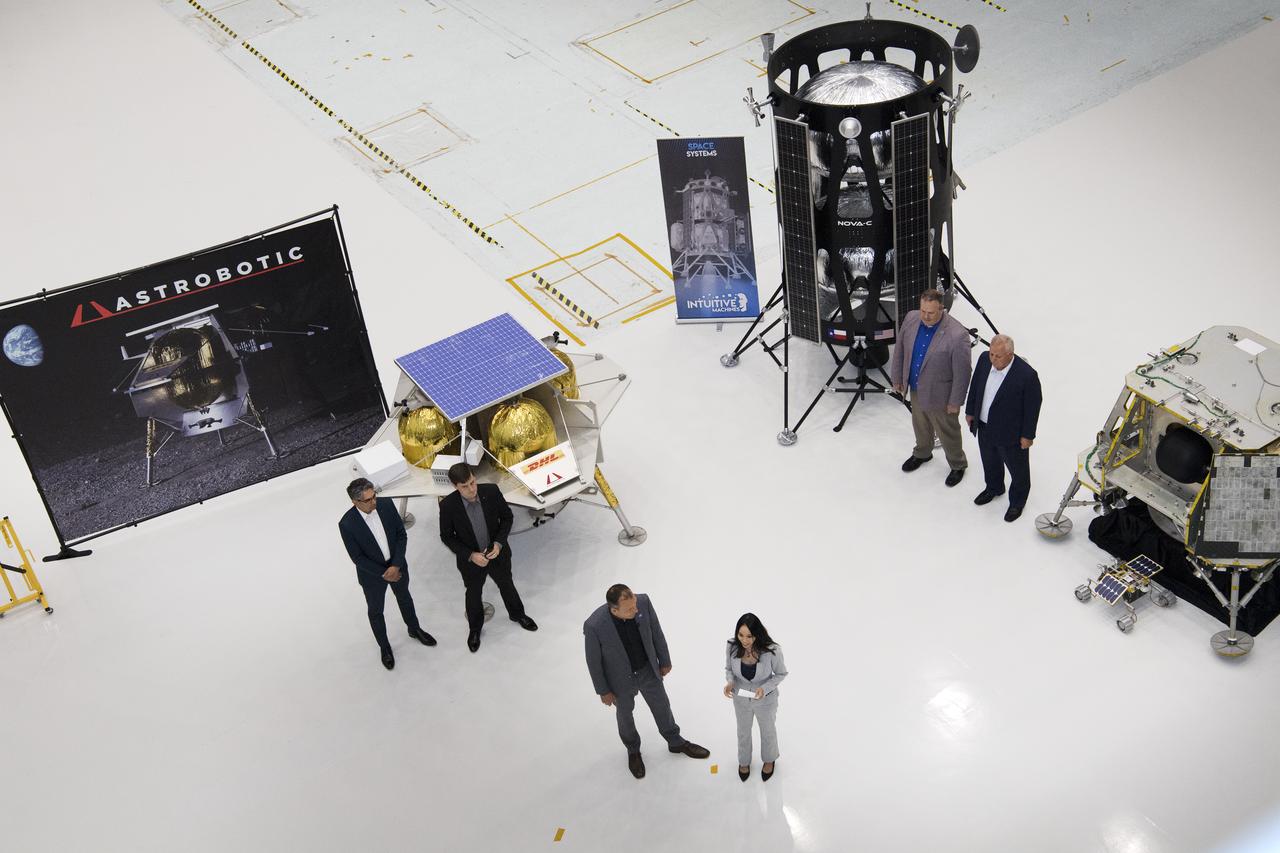
GSFC_20190531_2019-17478_095_095
Commercial Lunar Payload Services Announcemnt was made at Goddard May 31, 2019. Tom Zurbuchen- AA Science Mission Directorate, congratulated three companies for providing lunar landers for Artemis: Astrobotic,…
Inspect NASA record
Commercial Lunar Payload Services Announcemnt was made at Goddard May 31, 2019. Tom Zurbuchen- AA Science Mission Directorate, congratulated three companies for providing lunar landers for Artemis: Astrobotic, Intuitive Machines and OrbitBeyond.
- Record ID
- GSFC_20190531_2019-17478_095_095
- NASA center
- GSFC
- Date
- 2019-05-31
- Credit
- Debora McCallum
- Keywords
- Lunar announcement

JSC · 1970-08-01 · S70-45210
Astronaut Edgar D. Mitchell, Apollo 14 Lunar Module pilot
S70-45210 (14 July 1970) --- A candid portrait in civilian suit of astronaut Edgar D. Mitchell, lunar module pilot of the Apollo 14 lunar landing mission. Photo credit:…
Inspect NASA record
S70-45210 (14 July 1970) --- A candid portrait in civilian suit of astronaut Edgar D. Mitchell, lunar module pilot of the Apollo 14 lunar landing mission. Photo credit: NASA
- Record ID
- S70-45210
- NASA center
- JSC
- Date
- 1970-08-01
- Keywords
- APOLLO 14, APOLLO PROJECT, ASTRONAUTS, PORTRAIT
GSFC · 2019-05-31 · GSFC_20190531_2019-17478_092
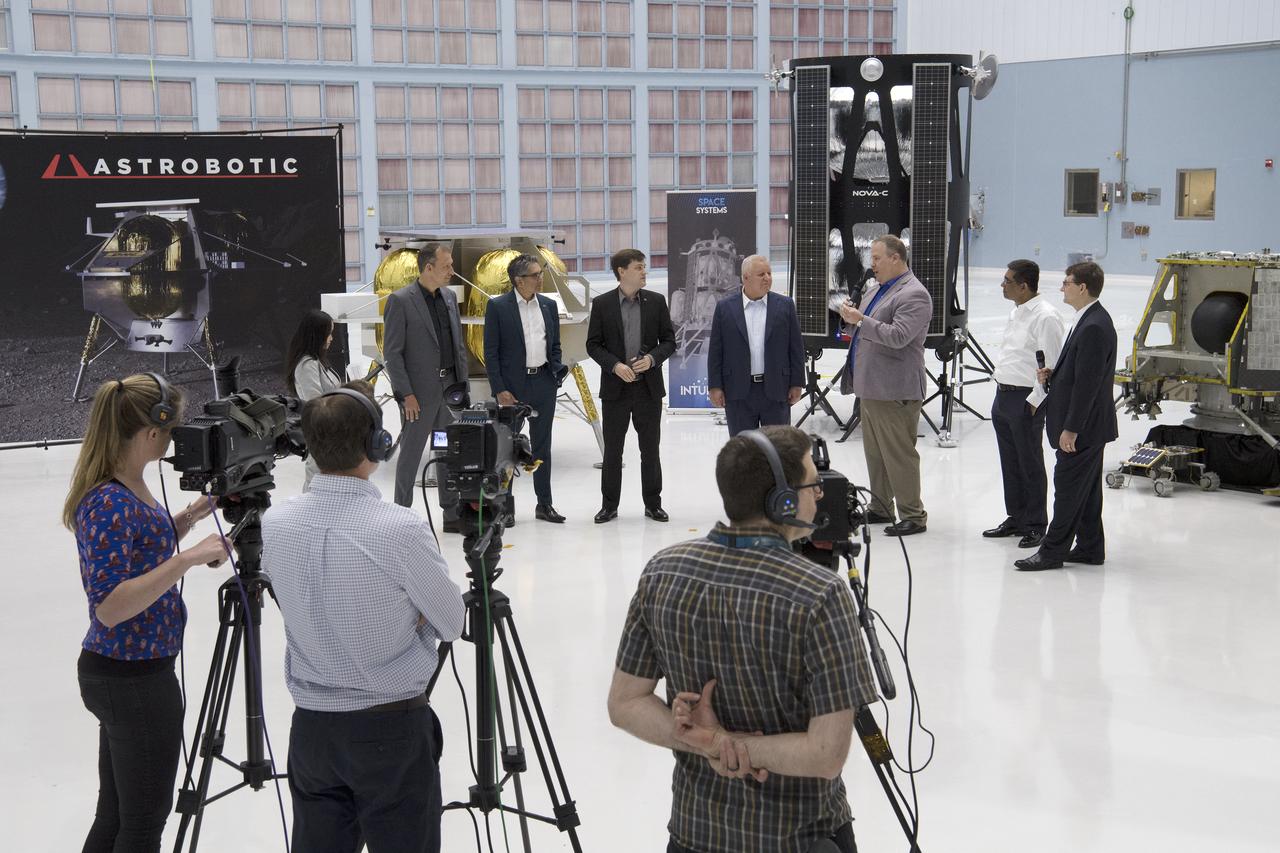
GSFC_20190531_2019-17478_092
Lunar Commericial Payload Services Announcement was made at Godddard May 31, 2019. Tom Zurbuchen, AA Science Mission Directorate congratulated three companies for providing first lunar landers for Artemis:…
Inspect NASA record
Lunar Commericial Payload Services Announcement was made at Godddard May 31, 2019. Tom Zurbuchen, AA Science Mission Directorate congratulated three companies for providing first lunar landers for Artemis: Astrobotic, Intuitive Machines and OrbitBeyond
- Record ID
- GSFC_20190531_2019-17478_092
- NASA center
- GSFC
- Date
- 2019-05-31
- Credit
- Debora McCallum
- Keywords
- Lunar Announcement
KSC · 2009-05-08 · KSC-2009-2989
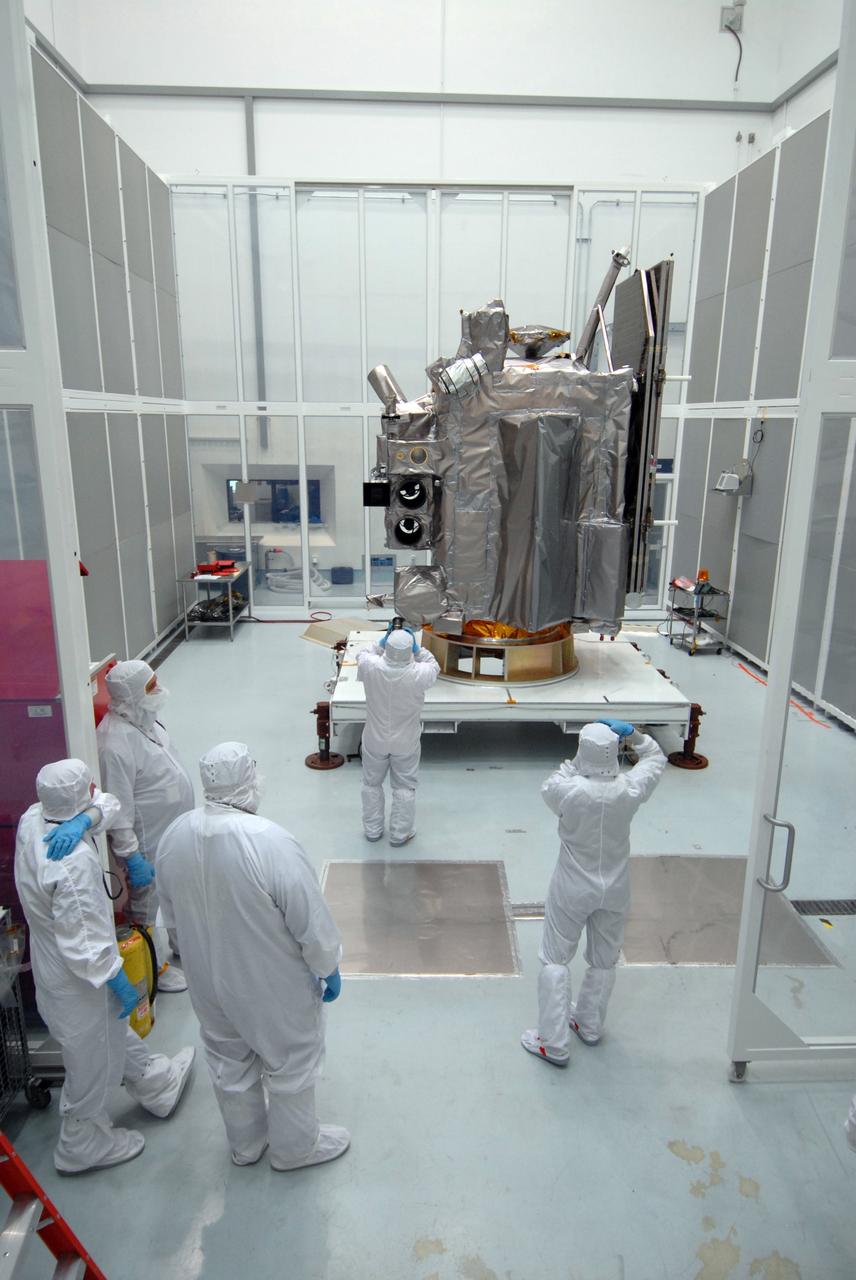
KSC-2009-2989
CAPE CANAVERAL, Fla. – At Astrotech Space Operations in Titusville, Fla., technicians photograph the Lunar Reconnaissance Orbiter, or LRO, during closeout before its mating with NASA's Lunar CRater…
Inspect NASA record
CAPE CANAVERAL, Fla. – At Astrotech Space Operations in Titusville, Fla., technicians photograph the Lunar Reconnaissance Orbiter, or LRO, during closeout before its mating with NASA's Lunar CRater Observation and Sensing Satellite, known as LCROSS, spacecraft. Instruments on the LRO include the LEND that will measure the flux of neutrons from the moon; the LROC, a narrow angle camera that will provide panchromatic images; the LOLA, which will provide a precise global lunar topographic model and geodetic grid; and top right, the DIVINER, which will measure lunar surface temperatures at scales that provide essential information for future surface operations and exploration; and at top, the CRaTER, which will characterize the global lunar radiation environment and its biological impacts. At right is the solar panel. The satellite's primary mission is to search for water ice on the moon in a permanently shadowed crater near one of the lunar poles. LCROSS is a low-cost, accelerated-development, companion mission to NASA's Lunar Reconnaissance Orbiter, or LRO. LCROSS and LRO are the first missions in NASA's plan to return humans to the moon and begin establishing a lunar outpost by 2020. Launch is targeted for no earlier than June 2 from Cape Canaveral Air Force Station in Florida. Photo credit: NASA/Jack Pfaller
- Record ID
- KSC-2009-2989
- NASA center
- KSC
- Date
- 2009-05-08
- Keywords
- LRO, LCROSS, LROC, LOLA, DIVINER, CRaTER, LEND, lunar, moon
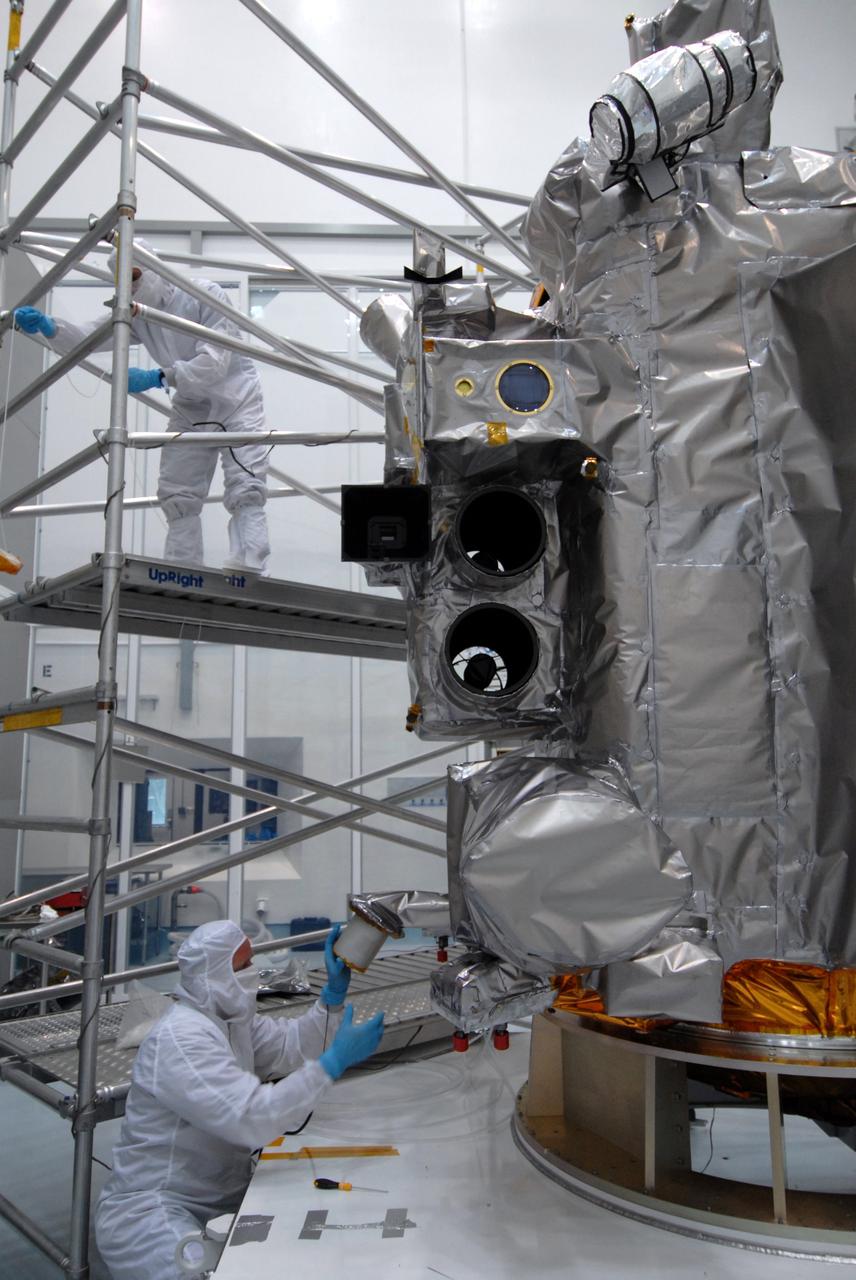
KSC · 2009-05-08 · KSC-2009-2984
KSC-2009-2984
CAPE CANAVERAL, Fla. – At Astrotech Space Operations in Titusville, Fla., technicians begin closeout on the Lunar Reconnaissance Orbiter, or LRO, before its mating with NASA's Lunar CRater…
Inspect NASA record
CAPE CANAVERAL, Fla. – At Astrotech Space Operations in Titusville, Fla., technicians begin closeout on the Lunar Reconnaissance Orbiter, or LRO, before its mating with NASA's Lunar CRater Observation and Sensing Satellite, known as LCROSS, spacecraft. Instruments seen are (from bottom), the LEND that will measure the flux of neutrons from the moon; the LROC, a narrow angle camera that will provide panchromatic images; the LOLA, which will provide a precise global lunar topographic model and geodetic grid; and top right, the DIVINER, which will measure lunar surface temperatures at scales that provide essential information for future surface operations and exploration; and at top, the CRaTER, which will characterize the global lunar radiation environment and its biological impacts. The satellite's primary mission is to search for water ice on the moon in a permanently shadowed crater near one of the lunar poles. LCROSS is a low-cost, accelerated-development, companion mission to NASA's Lunar Reconnaissance Orbiter, or LRO. LCROSS and LRO are the first missions in NASA's plan to return humans to the moon and begin establishing a lunar outpost by 2020. Launch is targeted for no earlier than June 2 from Cape Canaveral Air Force Station in Florida. Photo credit: NASA/Jack Pfaller
- Record ID
- KSC-2009-2984
- NASA center
- KSC
- Date
- 2009-05-08
- Keywords
- LRO, LCROSS, LROC, LOLA, DIVINER, CRaTER, LEND, lunar, moon
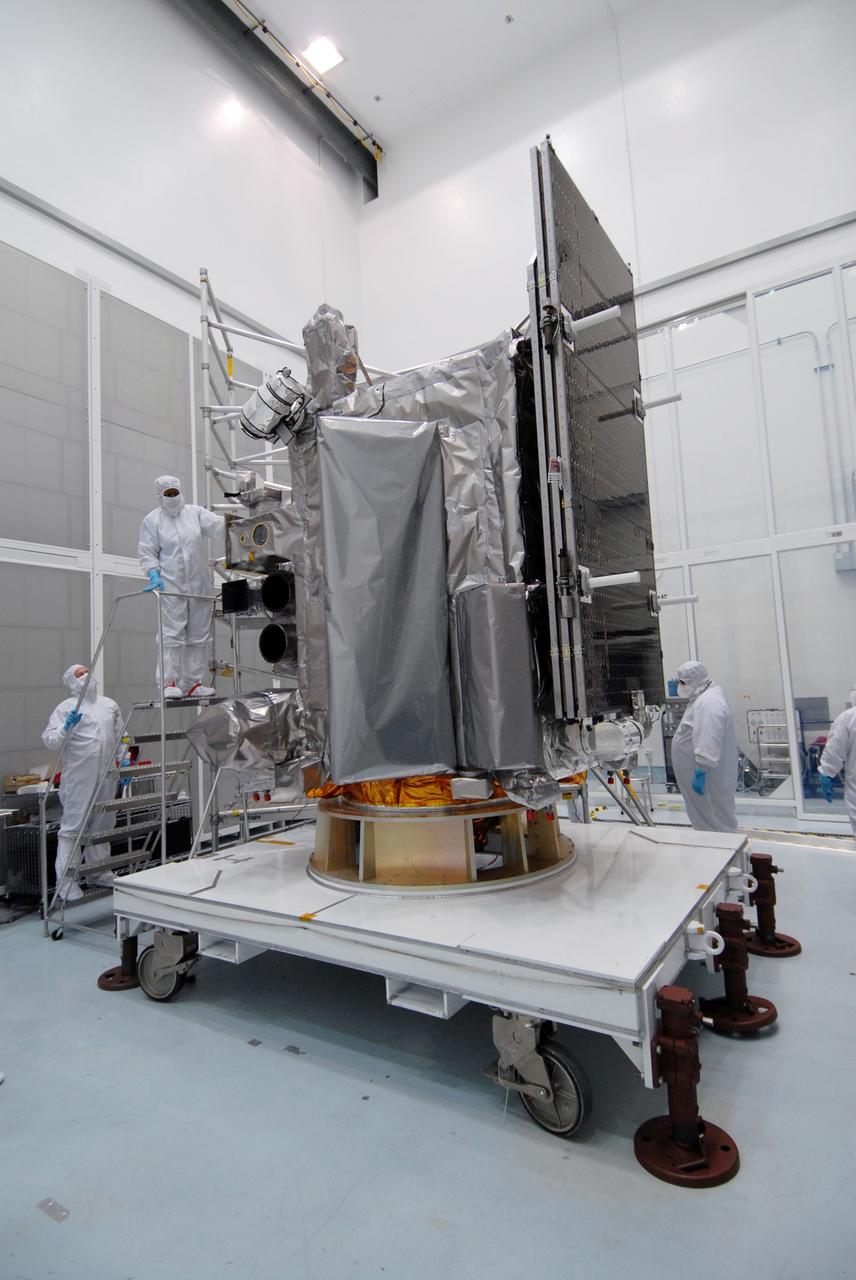
KSC · 2009-05-08 · KSC-2009-2985
KSC-2009-2985
CAPE CANAVERAL, Fla. – At Astrotech Space Operations in Titusville, Fla., technicians are closing out the Lunar Reconnaissance Orbiter, or LRO, before its mating with NASA's Lunar CRater…
Inspect NASA record
CAPE CANAVERAL, Fla. – At Astrotech Space Operations in Titusville, Fla., technicians are closing out the Lunar Reconnaissance Orbiter, or LRO, before its mating with NASA's Lunar CRater Observation and Sensing Satellite, known as LCROSS, spacecraft. Instruments seen at far left are (from bottom), the LEND that will measure the flux of neutrons from the moon; the LROC, a narrow angle camera that will provide panchromatic images; the LOLA, which will provide a precise global lunar topographic model and geodetic grid; and top right, the DIVINER, which will measure lunar surface temperatures at scales that provide essential information for future surface operations and exploration; and at top, the CRaTER, which will characterize the global lunar radiation environment and its biological impacts. The satellite's primary mission is to search for water ice on the moon in a permanently shadowed crater near one of the lunar poles. LCROSS is a low-cost, accelerated-development, companion mission to NASA's Lunar Reconnaissance Orbiter, or LRO. LCROSS and LRO are the first missions in NASA's plan to return humans to the moon and begin establishing a lunar outpost by 2020. Launch is targeted for no earlier than June 2 from Cape Canaveral Air Force Station in Florida. Photo credit: NASA/Jack Pfaller
- Record ID
- KSC-2009-2985
- NASA center
- KSC
- Date
- 2009-05-08
- Keywords
- LRO, LCROSS, LROC, LOLA, DIVINER, CRaTER, LEND, lunar, moon
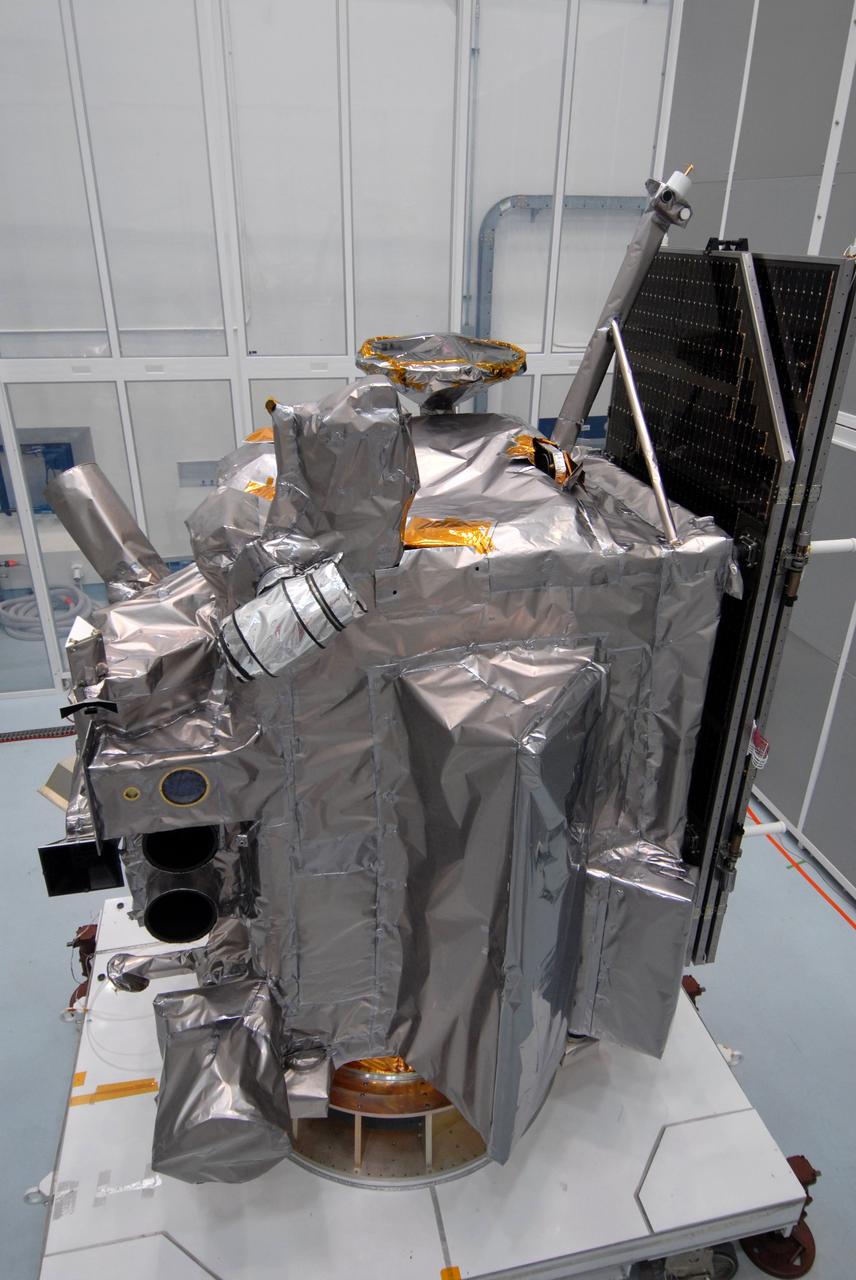
KSC · 2009-05-08 · KSC-2009-2988
KSC-2009-2988
CAPE CANAVERAL, Fla. – Another view of the Lunar Reconnaissance Orbiter, or LRO, at Astrotech Space Operations in Titusville, Fla., during closeout before its mating with NASA's Lunar…
Inspect NASA record
CAPE CANAVERAL, Fla. – Another view of the Lunar Reconnaissance Orbiter, or LRO, at Astrotech Space Operations in Titusville, Fla., during closeout before its mating with NASA's Lunar CRater Observation and Sensing Satellite, known as LCROSS, spacecraft. Instruments seen, at left, are (from bottom) the LEND that will measure the flux of neutrons from the moon; the LROC, a narrow angle camera that will provide panchromatic images; the LOLA, which will provide a precise global lunar topographic model and geodetic grid; and top right, the DIVINER, which will measure lunar surface temperatures at scales that provide essential information for future surface operations and exploration; and at top, the CRaTER, which will characterize the global lunar radiation environment and its biological impacts. At right is the solar panel. The satellite's primary mission is to search for water ice on the moon in a permanently shadowed crater near one of the lunar poles. LCROSS is a low-cost, accelerated-development, companion mission to NASA's Lunar Reconnaissance Orbiter, or LRO. LCROSS and LRO are the first missions in NASA's plan to return humans to the moon and begin establishing a lunar outpost by 2020. Launch is targeted for no earlier than June 2 from Cape Canaveral Air Force Station in Florida. Photo credit: NASA/Jack Pfaller
- Record ID
- KSC-2009-2988
- NASA center
- KSC
- Date
- 2009-05-08
- Keywords
- LRO, LCROSS, LROC, LOLA, DIVINER, CRaTER, LEND, lunar, moon
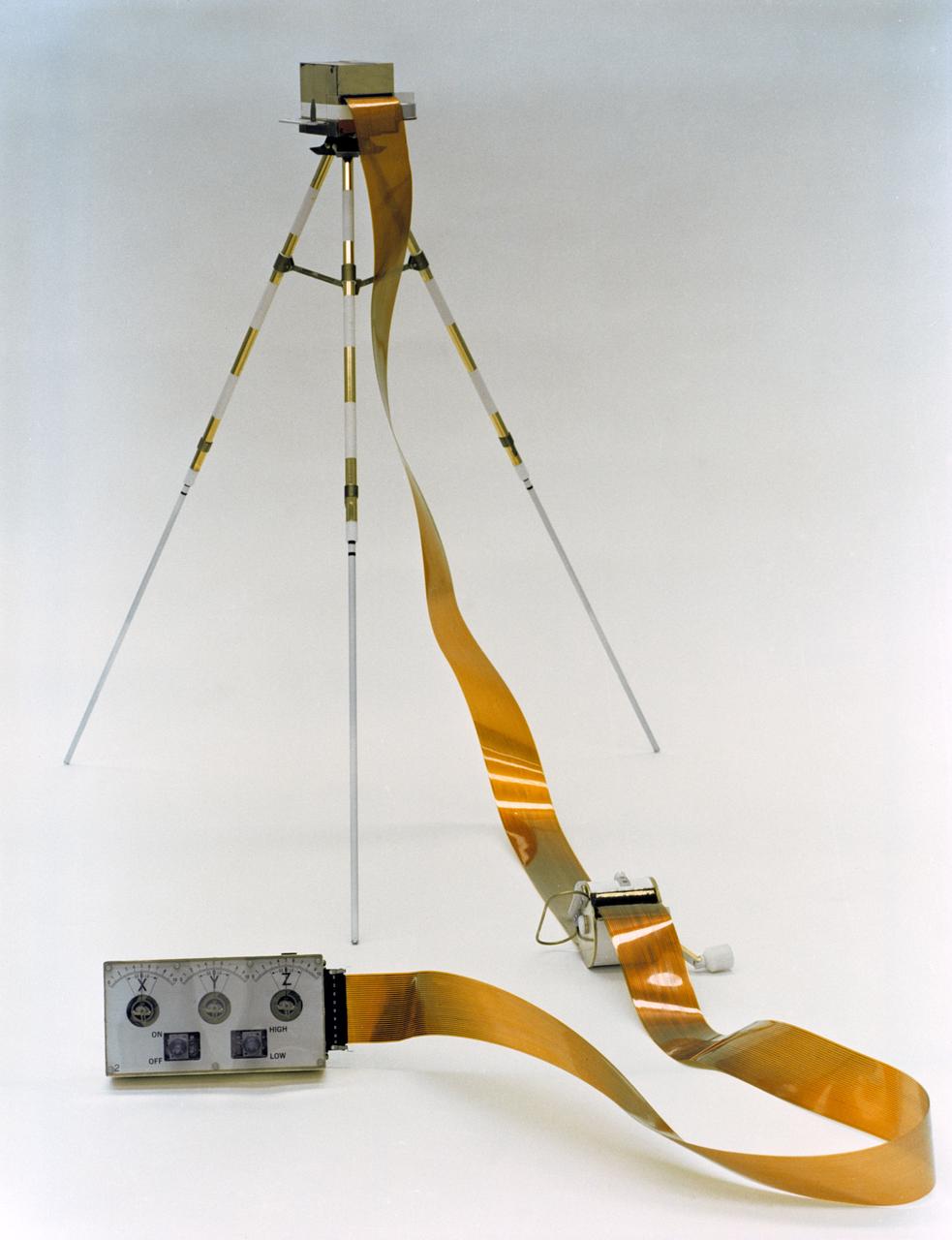
JSC · 1970-12-21 · S70-56721
View of the Lunar Portable Magnetometer (LPM)
S70-56721 (December 1970) --- A close-up view of the Lunar Portable Magnetometer (LPM), which will be used by the crew of the Apollo 14 lunar landing mission during…
Inspect NASA record
S70-56721 (December 1970) --- A close-up view of the Lunar Portable Magnetometer (LPM), which will be used by the crew of the Apollo 14 lunar landing mission during the second extravehicular activity (EVA). The LPM's components, a tripod-mounted flux-gate magnetometer sensor head and an electronics data package, connected by a 50-feet flat cable, function together to measure variations in the lunar magnetic field at several points on the geological traverse. Data gathered will be used to determine the location, strength and dimensions of magnetic sources, as well as knowledge of the local and total selenological structure. The LPM will be carried on the Modular Equipment Transporter (MET), and deployed by the lunar module pilot, who will align the sensor head at least 35 feet from the data package. The LM pilot will then return to the MET and verbally relay the LPM readouts to Earth. Astronaut Edgar D. Mitchell is the lunar module pilot for the Apollo 14 lunar landing mission.
- Record ID
- S70-56721
- NASA center
- JSC
- Date
- 1970-12-21
- Keywords
- APOLLO 14, APOLLO PROJECT, MAGNETIC FIELDS, MEASURING INSTRUMENTS, METERS, SPACEBORNE EXPERIMENTS, SPECTROMETERS
JSC · 1969-10-24 · S69-55667
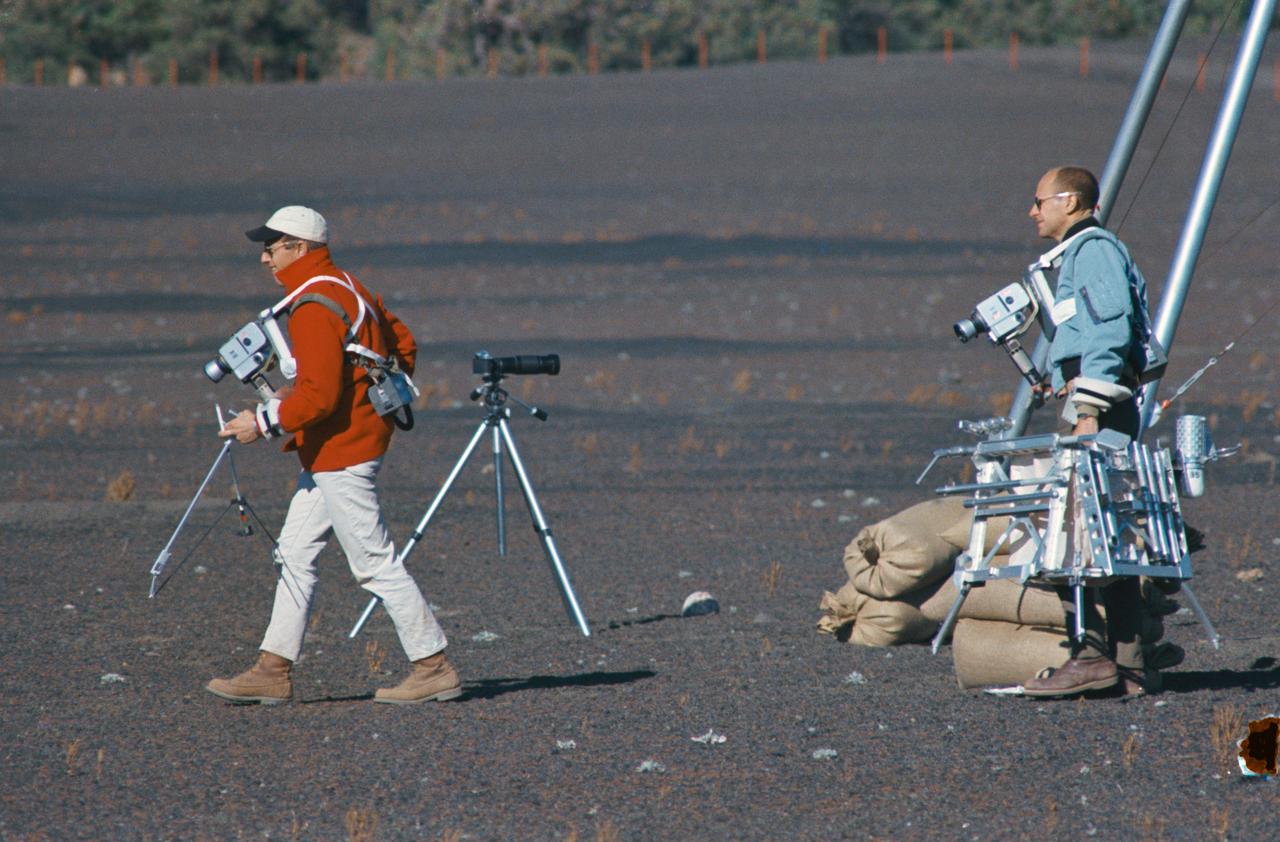
Apollo 12 - Bean - Conrad - during geological field trip
S69-55667 (10 Oct. 1969) --- Astronauts Charles Conrad Jr. and Alan L. Bean train for their upcoming Apollo 12 lunar landing mission. Here they are entering a simulated…
Inspect NASA record
S69-55667 (10 Oct. 1969) --- Astronauts Charles Conrad Jr. and Alan L. Bean train for their upcoming Apollo 12 lunar landing mission. Here they are entering a simulated lunar surface area near Flagstaff, Arizona. Both are wearing lunar surface cameras strapped to their bodies. Conrad (left), the Apollo 12 mission commander, is carrying some of the tools from the geological tool container. The geological tool container, being carried here by Bean, the lunar module pilot, is similar to the one which will be used during scheduled extravehicular activity (EVA) periods on Nov. 19 and 20, 1969, on the lunar surface. While astronauts Conrad and Bean conduct their scheduled EVA on the moon's surface, astronaut Richard F. Gordon Jr., command module pilot, will man the Command and Service Modules (CSM) in lunar orbit.
- Record ID
- S69-55667
- NASA center
- JSC
- Date
- 1969-10-24
JSC · 1971-07-26 · S71-41356
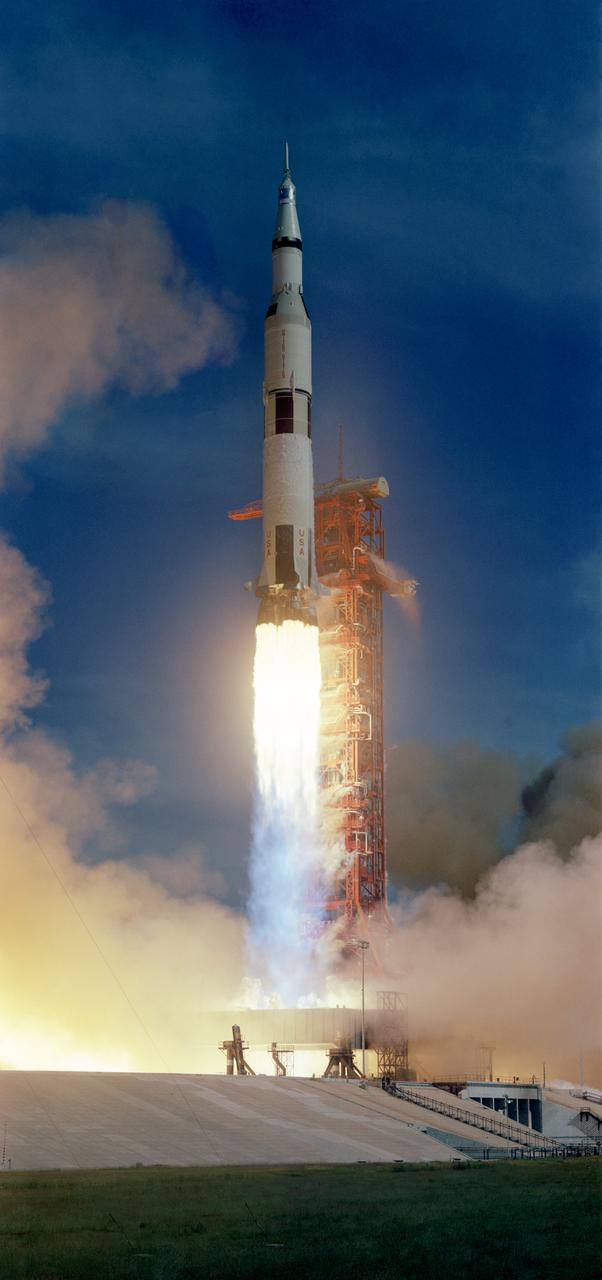
Launch - Apollo XV Space Vehicle - KSC
S71-41356 (26 July 1971) --- The huge, 363-feet tall Apollo 15 (Spacecraft 112/Lunar Module 10/Saturn 510) space vehicle is launched from Pad A, Launch Complex 39, Kennedy Space…
Inspect NASA record
S71-41356 (26 July 1971) --- The huge, 363-feet tall Apollo 15 (Spacecraft 112/Lunar Module 10/Saturn 510) space vehicle is launched from Pad A, Launch Complex 39, Kennedy Space Center (KSC), Florida, at 9:34:00:79 a.m. (EDT), July 26, 1971, on a lunar landing mission. Aboard the Apollo 15 spacecraft were astronauts David R. Scott, commander; Alfred M. Worden, command module pilot; and James B. Irwin, lunar module pilot. Apollo 15 is the National Aeronautics and Space Administration's (NASA) fourth manned lunar landing mission. While astronauts Scott and Irwin will descend in the Lunar Module (LM) to explore the moon, astronaut Worden will remain with the Command and Service Modules (CSM) in lunar orbit.
- Record ID
- S71-41356
- NASA center
- JSC
- Date
- 1971-07-26
- Credit
- N/A

JSC · 1970-03-09 · S70-30534
ASTRONAUT LOVELL, JAMES, JR. - LUNAR - PILOT - LANDING TRAINING VEHICLE (LLTV) - ELLINGTON AFB (EAFB), TX
S70-30534 (9 March 1970) --- A Lunar Landing Training Vehicle (LLTV), piloted by astronaut James A. Lovell Jr., sets down on the runway at the conclusion of a…
Inspect NASA record
S70-30534 (9 March 1970) --- A Lunar Landing Training Vehicle (LLTV), piloted by astronaut James A. Lovell Jr., sets down on the runway at the conclusion of a test flight at Ellington Air Force Base. Lovell is the commander of the Apollo 13 lunar landing mission. Lovell used the LLTV to practice lunar landing techniques in preparation for his scheduled mission. Lovell will be at the controls of the Apollo 13 Lunar Module (LM) when it lands on the moon in the highlands just north of Fra Mauro. Astronaut Thomas K. Mattingly II, command module pilot, will remain with the Apollo 13 Command and Service Modules (CSM) in lunar orbit while astronauts Lovell and Fred W. Haise Jr., lunar module pilot, descend in the LM to explore the moon. A hovering helicopter watches the LLTV landing.
- Record ID
- S70-30534
- NASA center
- JSC
- Date
- 1970-03-09