
Update Site (from NASA)
Explore NASA’s Image and Video Library.
Suggest one object per day for the Interstellar Minds collection. We review each suggestion before adding it.
Sign in to suggest a Marvel.
Find a NASA image ID. Open a NASA record and copy its ID from the end of the details URL.
NASA image records
KSC · 2022-03-15 · KSC-20220315-PH-KLS01_0033
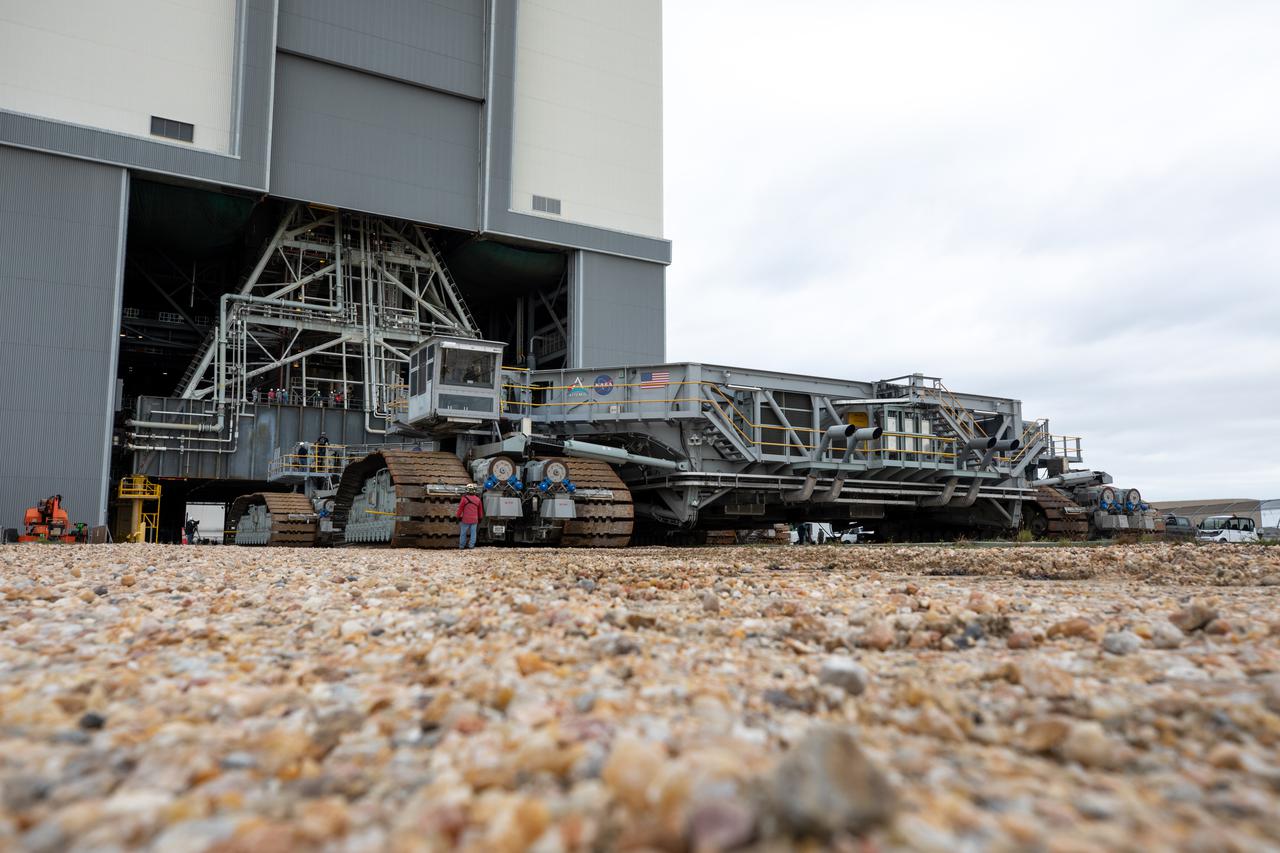
Artemis I WDR Pre-Rollout Activities - Crawler Transporter Rolls
Engineers and technicians begin to drive crawler-transporter 2 inside the Vehicle Assembly Building at NASA’s Kennedy Space Center in Florida on March 15, 2022. The crawler will slide…
Inspect NASA record
Engineers and technicians begin to drive crawler-transporter 2 inside the Vehicle Assembly Building at NASA’s Kennedy Space Center in Florida on March 15, 2022. The crawler will slide under the Artemis I Space Launch System (SLS) with the Orion spacecraft atop on the mobile launcher and carry it to Launch Complex 39B for a wet dress rehearsal test ahead of launch. Artemis I will be the first integrated test of the SLS and Orion spacecraft. In later missions, NASA will land the first woman and the first person of color on the surface of the Moon, paving the way for a long-term lunar presence and serving as a steppingstone on the way to Mars.
- Record ID
- KSC-20220315-PH-KLS01_0033
- NASA center
- KSC
- Date
- 2022-03-15
- Credit
- NASA/Kim Shiflett
- Keywords
- Artemis, Artemis I, EGS, KSC, ML, Orion, SLS, VAB, WDR, rollout, wet dress rehearsal
KSC · 1969-05-20 · KSC-69PC-0238
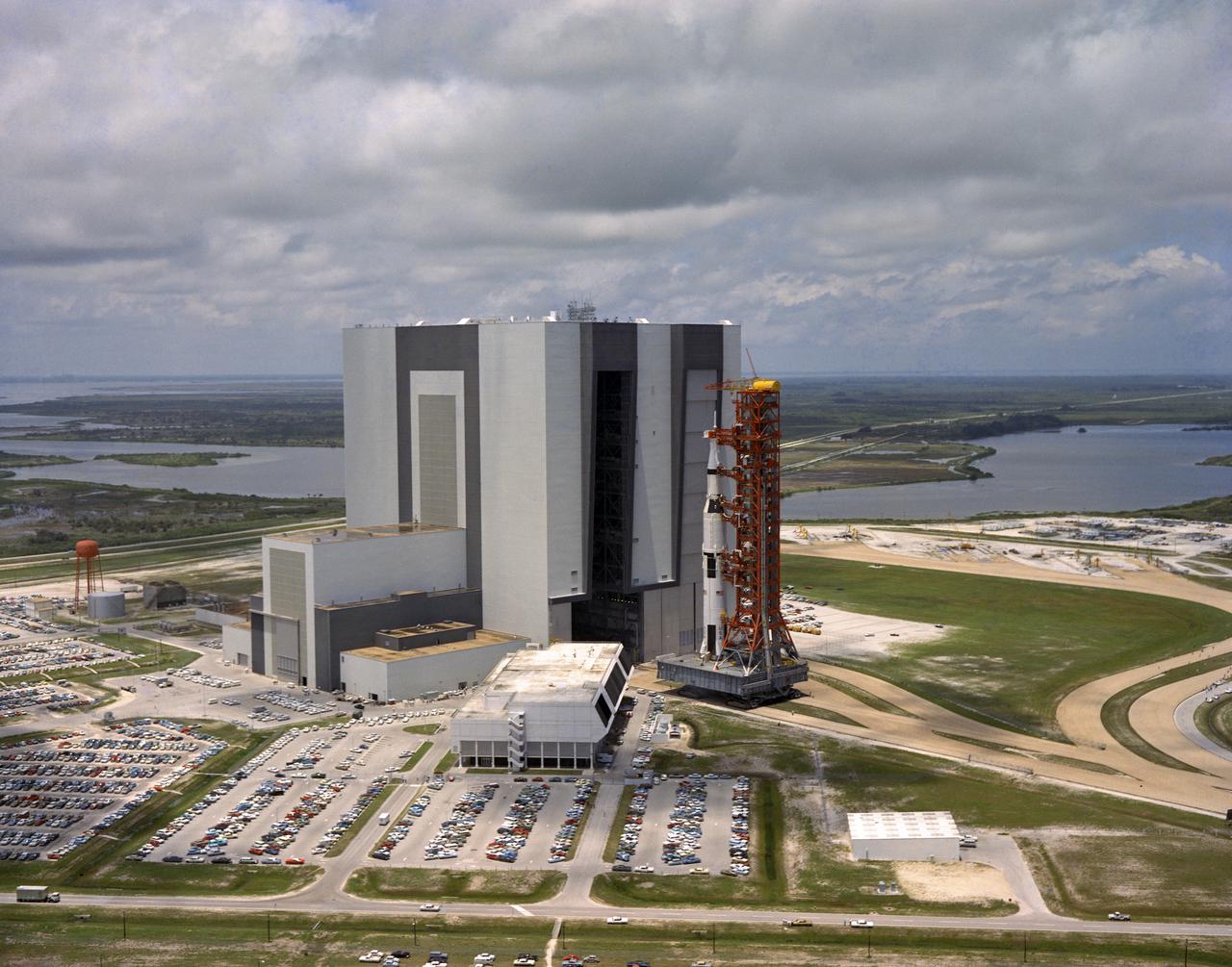
KSC-69PC-0238
CAPE CANAVERAL, Fla. -- The 363-foot-high Apollo 11 space vehicle towers over the Spaceport’s crawlerway and personnel during its rollout today from the Vehicle Assembly Building’s high bay…
Inspect NASA record
CAPE CANAVERAL, Fla. -- The 363-foot-high Apollo 11 space vehicle towers over the Spaceport’s crawlerway and personnel during its rollout today from the Vehicle Assembly Building’s high bay 1 to Launch Complex 39A. The transporter carried the vehicle and its mobile launcher along the 3.5-mile-roadway at an average speed of less than one mile per hour, arriving at the launch pad some seven hours after rollout began. The vehicle is to launch Apollo 11 astronauts Neil A. Armstrong, Michael Colins and Edwin E. Aldrin Jr. on the nation’s first manned lunar landing mission. Photo credit: NASA
- Record ID
- KSC-69PC-0238
- NASA center
- KSC
- Date
- 1969-05-20
- Credit
- NASA
MSFC · 1967-08-02 · 6756754
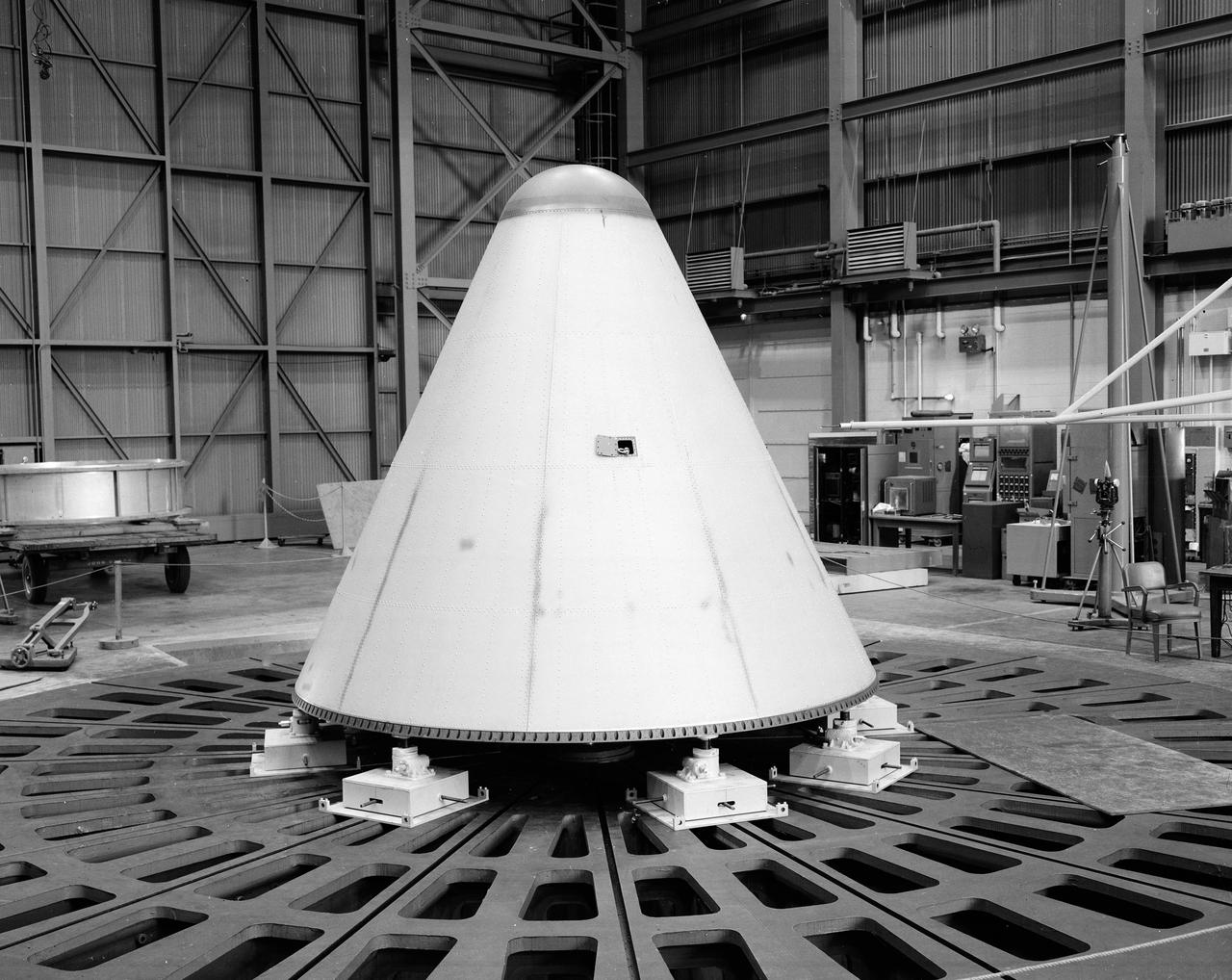
Saturn Apollo Program
Developed by the Marshall Space Flight Center (MSFC) as an interim vehicle in MSFC’s “building block” approach to the Saturn rocket development, the Saturn IB utilized Saturn I…
Inspect NASA record
Developed by the Marshall Space Flight Center (MSFC) as an interim vehicle in MSFC’s “building block” approach to the Saturn rocket development, the Saturn IB utilized Saturn I technology to further develop and refine the larger boosters and the Apollo spacecraft capabilities required for the manned lunar missions. The Saturn IB vehicle was a two-stage rocket and had a payload capability about 50 percent greater than the Saturn I vehicle. The first stage, S-IB stage, was a redesigned first stage of the Saturn I. This photograph is of the S-IB nose cone #3 during assembly in building 4752.
- Record ID
- 6756754
- NASA center
- MSFC
- Date
- 1967-08-02
- Keywords
- S-IB, Nose Cone, Assembly
KSC · 2022-04-21 · KSC-20220421-PH-JBS01_0111
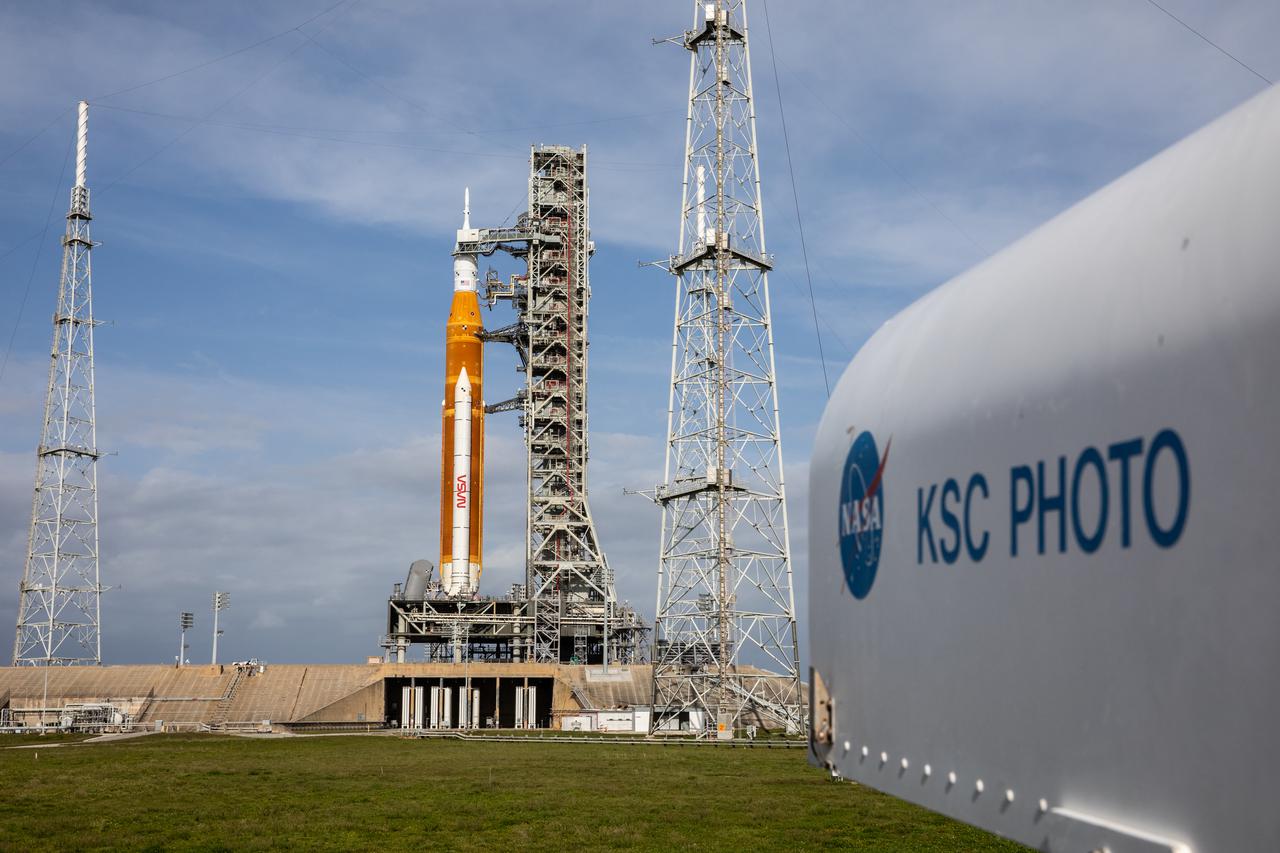
Artemis I at Pad 39B
A view of the Artemis I Space Launch System (SLS) and Orion spacecraft on Launch Pad 39B at NASA’s Kennedy Space Center in Florida on April 21, 2022.…
Inspect NASA record
A view of the Artemis I Space Launch System (SLS) and Orion spacecraft on Launch Pad 39B at NASA’s Kennedy Space Center in Florida on April 21, 2022. Also in view are two of three lightning protection towers. The SLS and Orion atop the mobile launcher were transported to the pad on crawler-transporter 2 for a prelaunch test called a wet dress rehearsal. Artemis I will be the first integrated test of the SLS and Orion spacecraft. In future Artemis missions, NASA will land the first woman and the first person of color on the surface of the Moon, paving the way for a long-term lunar presence and serving as a steppingstone on the way to Mars.
- Record ID
- KSC-20220421-PH-JBS01_0111
- NASA center
- KSC
- Date
- 2022-04-21
- Credit
- NASA/Ben Smegelsky
- Keywords
- Artemis, Artemis I, KSC, Kennedy Space Center, Launch Complex 39B, Launch Pad 39B, Moon to Mars, Orion, Pad 39B, SLS, Space Launch System
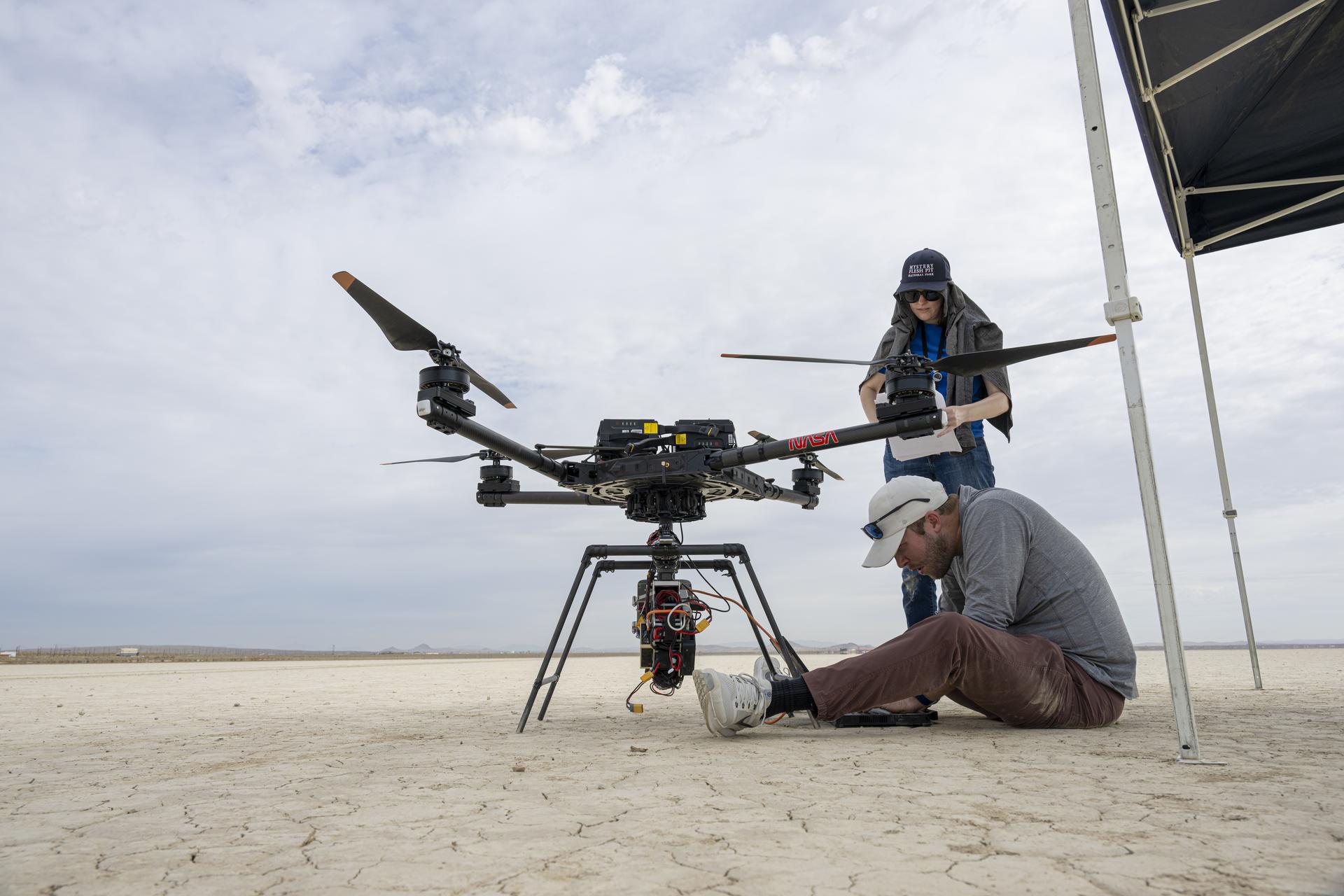
AFRC · 2026-08-27 · AFRC2026-0179-31
AFRC2026-0179-31
Davis Adams, project manager, sitting, and Jeanette Harper, flight software team member, check the guidance and navigation system known as the Safe and Precise Landing – Integrated Capabilities…
Inspect NASA record
Davis Adams, project manager, sitting, and Jeanette Harper, flight software team member, check the guidance and navigation system known as the Safe and Precise Landing – Integrated Capabilities Evolution (SPLICE) experiment on an Alta-X drone near NASA’s Armstrong Flight Research Center in Edwards, California, on Thursday, Aug. 27, 2026. Researchers at NASA’s Johnson Space Center in Houston developed SPLICE, which recently completed simulated lunar descent and landing maneuvers. SPLICE will help spacecraft land precisely and detect and avoid potential hazards, which is critical for NASA missions to the Moon and to Mars.
- Record ID
- AFRC2026-0179-31
- NASA center
- AFRC
- Date
- 2026-08-27
- Credit
- NASA/Ryan Kline
- Keywords
- NASA’s Armstrong Flight Research Center, AFRC, Dale Reed Subscale Flight Research Laboratory, Safe and Precise Landing – Integrated Capabilities Evolution e, SPLICE, Alta-X, NASA’s Johnson Space Center, Edwards Air Force Base, California, simulated lunar descent and landing maneuvers
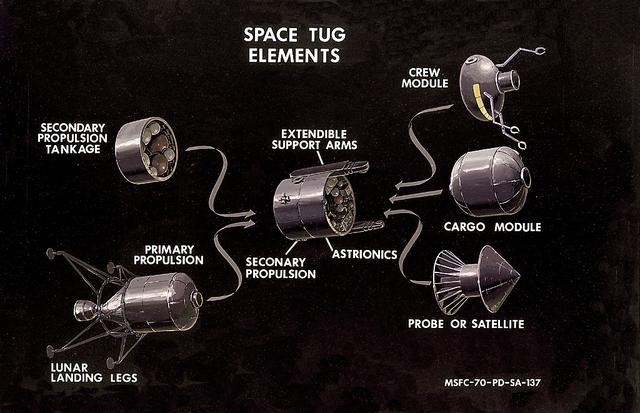
MSFC · 1970-01-01 · 9902046
Early Program Development
Managed by Marshall Space Flight Center, the Space Tug concept was intended to be a reusable multipurpose space vehicle designed to transport payloads to different orbital inclinations. Utilizing…
Inspect NASA record
Managed by Marshall Space Flight Center, the Space Tug concept was intended to be a reusable multipurpose space vehicle designed to transport payloads to different orbital inclinations. Utilizing mission-specific combinations of its three primary modules (crew, propulsion, and cargo) and a variety of supplementary kits, the Space Tug would have been capable of numerous space applications. This 1970 illustration depicts the primary modules of the Space Tug system along with some of the supplementary kits: lunar landing legs, extendable support arms, astrionics, and the satellite probe. The Space Tug program was cancelled and did not become a reality.
- Record ID
- 9902046
- NASA center
- MSFC
- Date
- 1970-01-01
- Keywords
- Space
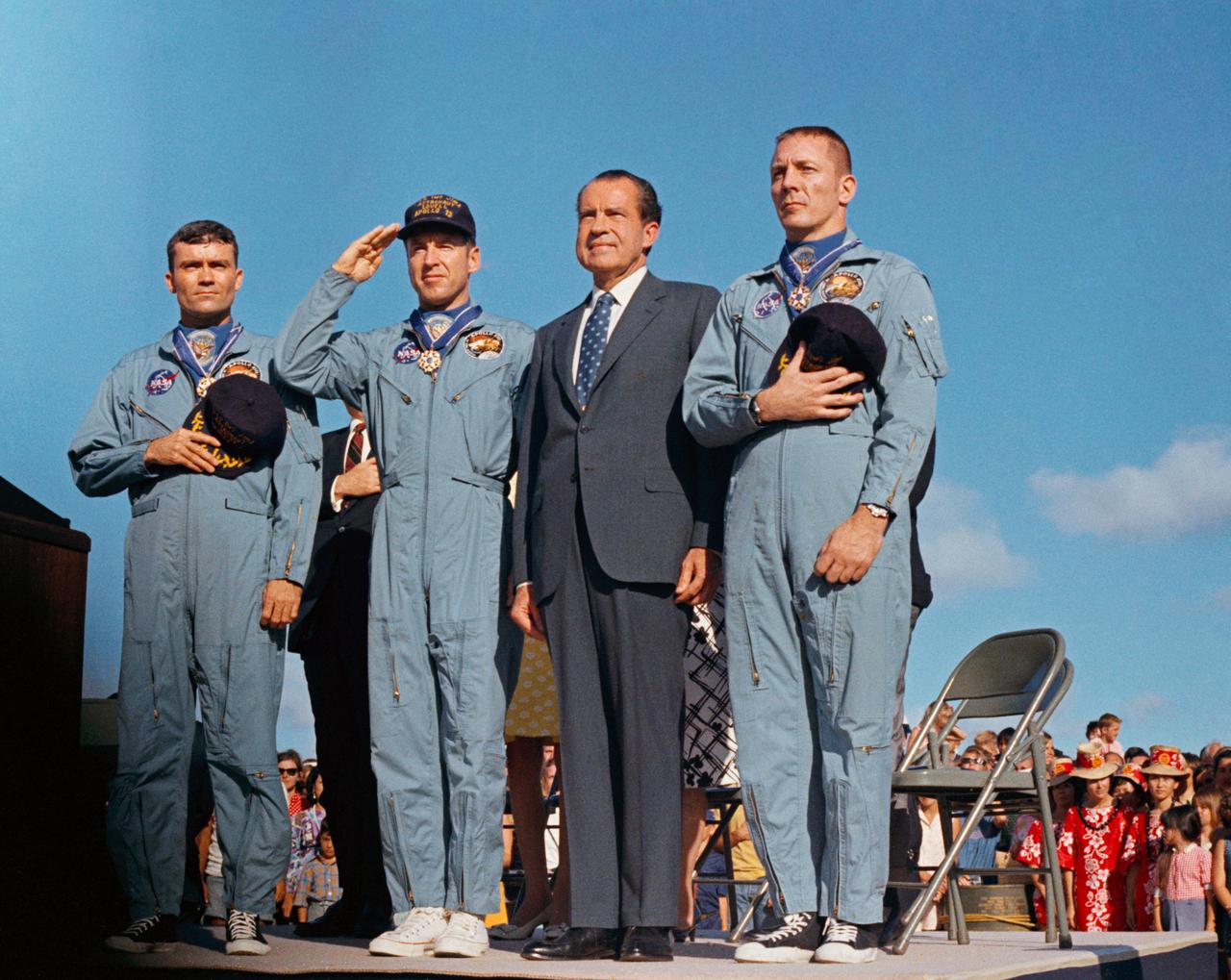
JSC · 1970-04-18 · S70-15526
President Nixon and Apollo 13 crewmen at Hickam AFB
S70-15526 (18 April 1970) --- President Richard M. Nixon and the Apollo 13 crew members pay honor to the United States flag during the post-mission ceremonies at Hickam…
Inspect NASA record
S70-15526 (18 April 1970) --- President Richard M. Nixon and the Apollo 13 crew members pay honor to the United States flag during the post-mission ceremonies at Hickam Air Force Base, Hawaii. Astronauts James A. Lovell Jr., (United States Navy Captain, salutes the flag) commander; John L. Swigert Jr., command module pilot (right); and Fred W. Haise Jr., lunar module pilot (left), were presented the Presidential Medal of Freedom by the Chief Executive. The Apollo 13 splashdown occurred at 12:07:44 p.m. (CST), April 17, 1970, about a day and a half prior to the award presentation.
- Record ID
- S70-15526
- NASA center
- JSC
- Date
- 1970-04-18
- Keywords
- ADMINISTRATION, APOLLO 13, APOLLO PROJECT, ASTRONAUTS, AWARDS, CEREMONIES, HAWAII, PUBLIC RELATIONS, PUBLIC SPEAKING

KSC · 2021-10-19 · KSC-20211019-PH-ILW01_0135
Orion Transport to VAB
The Orion spacecraft for NASA’s Artemis I mission, fully assembled with its launch abort system, has moved out of the Launch Abort System Facility at Kennedy Space Center…
Inspect NASA record
The Orion spacecraft for NASA’s Artemis I mission, fully assembled with its launch abort system, has moved out of the Launch Abort System Facility at Kennedy Space Center in Florida on Oct. 19, 2021. Orion is on its way to the Vehicle Assembly Building where it will join the already stacked flight hardware and be raised into position atop the Space Launch System rocket in High Bay 3. Launching in 2021, Artemis I will be an uncrewed test flight of the Orion spacecraft and Space Launch System rocket as an integrated system ahead of crewed flights to the Moon. Under Artemis, NASA aims to land the first woman and first person of color on the Moon and establish sustainable lunar exploration.
- Record ID
- KSC-20211019-PH-ILW01_0135
- NASA center
- KSC
- Date
- 2021-10-19
- Credit
- NASA/Isaac Watson
- Keywords
- Artemis, Artemis I, EGS, Exploration Ground System, KSC, Kennedy Space Center, LASF, Launch Abort System Facility, Moon to Mars, NASA, Orion, SLS
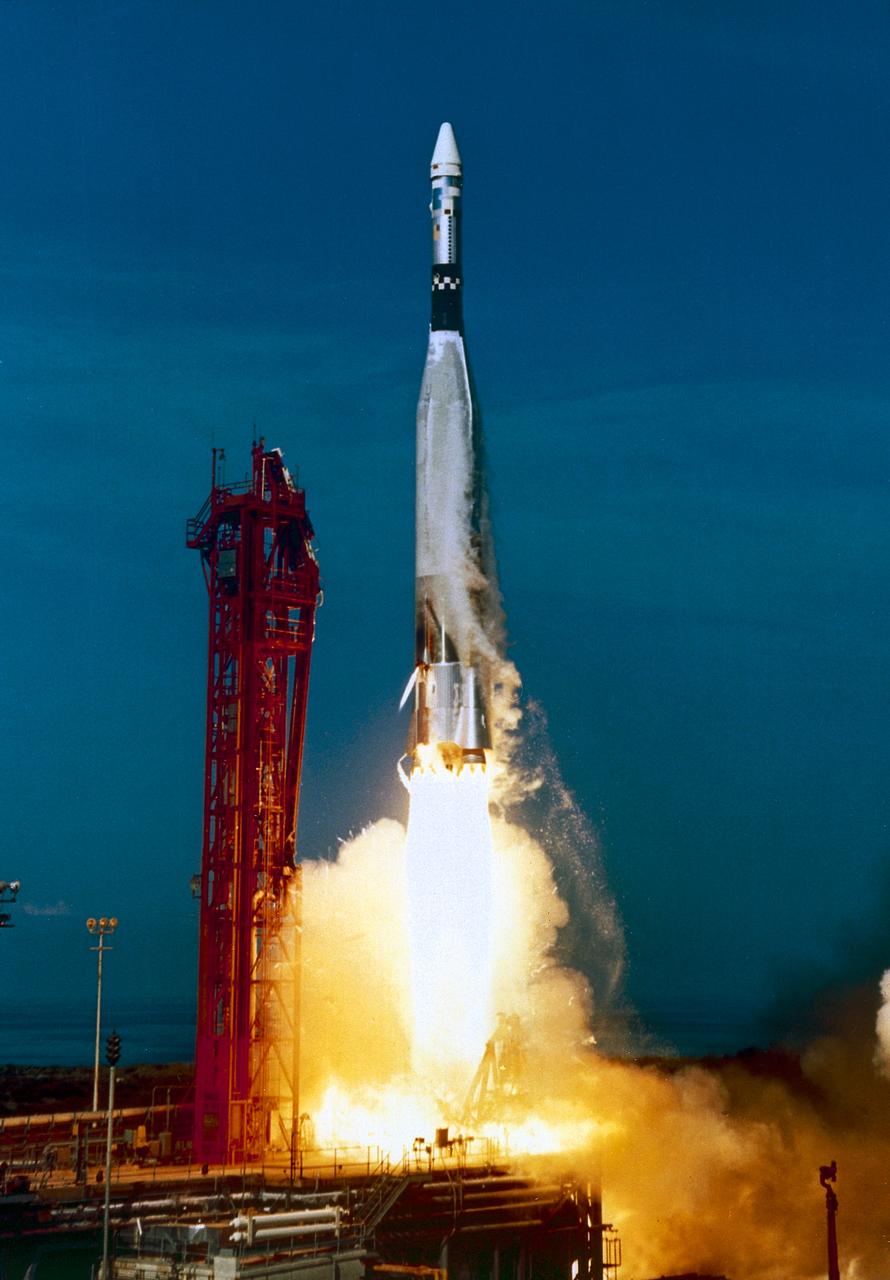
MSFC · 1966-11-11 · 9141926
n/a
Launched atop an Atlas booster, the Agena target vehicle (ATV) was a spacecraft used by NASA to develop and practice orbital space rendezvous and docking techniques in preparation…
Inspect NASA record
Launched atop an Atlas booster, the Agena target vehicle (ATV) was a spacecraft used by NASA to develop and practice orbital space rendezvous and docking techniques in preparation for the Apollo program lunar missions. This particular launch preceded the Gemini 12, which launched aboard a Titan launch vehicle one and one half hours later. The objective was for Agena and Gemini to rendezvous in space and practice docking procedures. An intermediate step between Project Mercury and the Apollo Program, the Gemini Program's major objectives were to subject two men and supporting equipment to long duration flights, to perfect rendezvous and docking with other orbiting vehicles, methods of reentry, and landing of the spacecraft.
- Record ID
- 9141926
- NASA center
- MSFC
- Date
- 1966-11-11
- Keywords
- Atlas-Agena, Gemini Program, Target Vehicle
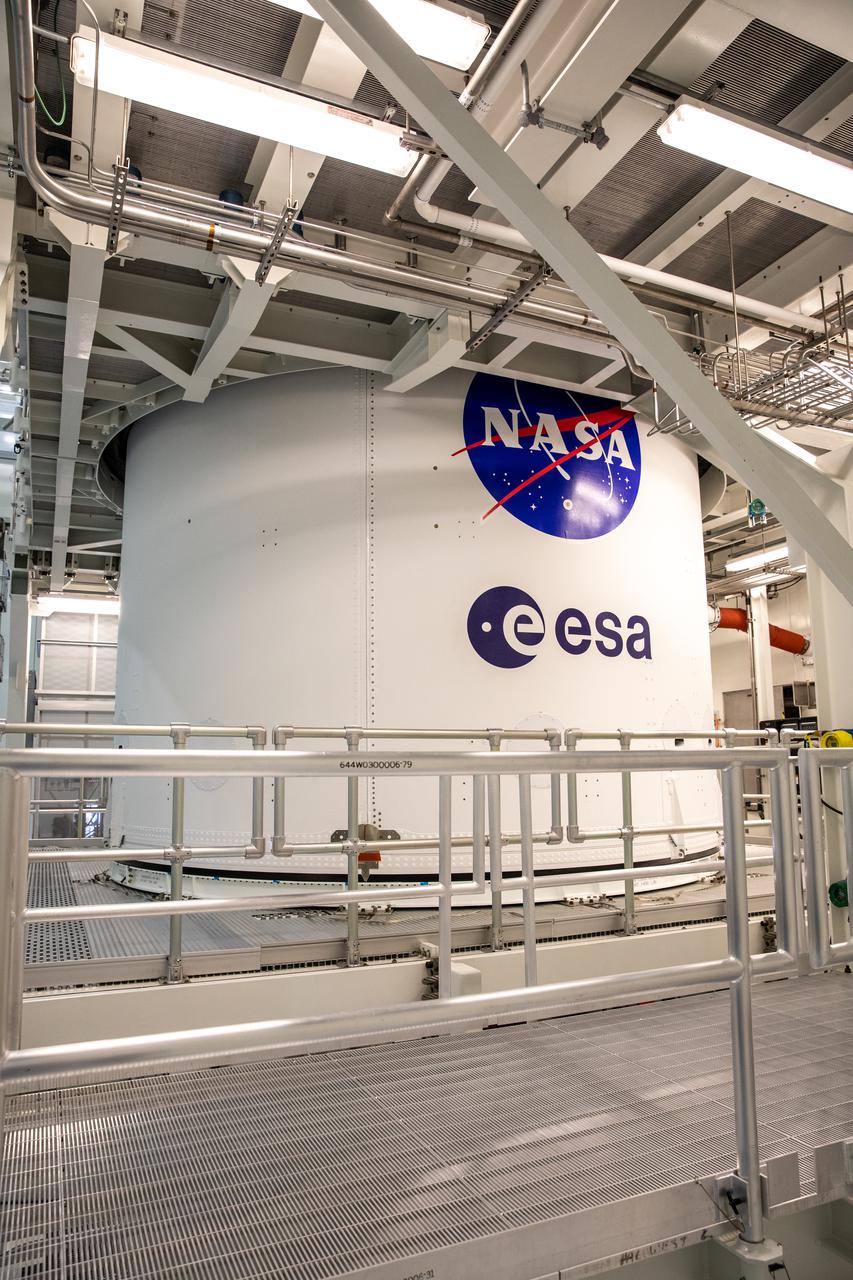
KSC · 2021-02-18 · KSC-20210218-PH-GEB02_0012
Artemis I ESA Logo Installation
Artemis I extends NASA and ESA’s (European Space Agency) strong international partnership beyond low-Earth orbit to lunar exploration with Orion on Artemis missions, as the ESA logo joins…
Inspect NASA record
Artemis I extends NASA and ESA’s (European Space Agency) strong international partnership beyond low-Earth orbit to lunar exploration with Orion on Artemis missions, as the ESA logo joins the historic NASA “meatball” insignia on the Artemis I spacecraft adapter jettison fairing panels that protect the service module during launch. Orion is currently stationed at NASA’s Kennedy Space Center in the Multi-Payload Processing Facility, where it will undergo fueling and servicing by NASA’s Exploration Ground Systems and Jacobs Technology teams in preparation for the upcoming flight test with the Space Launch System rocket under the agency’s Artemis program.
- Record ID
- KSC-20210218-PH-GEB02_0012
- NASA center
- KSC
- Date
- 2021-02-18
- Credit
- NASA/Glenn Benson
- Keywords
- Artemis I, ESA, European Space Agency, MPPF, Orion

HQ · 2021-08-23 · NHQ202108230019
Space Symposium Media Briefing
NASA Administrator Bill Nelson hosts an event to introduce media to three local Colorado companies and university partners that help make NASA’s missions possible; Justin Cyrus, CEO, Lunar…
Inspect NASA record
NASA Administrator Bill Nelson hosts an event to introduce media to three local Colorado companies and university partners that help make NASA’s missions possible; Justin Cyrus, CEO, Lunar Outpost of Golden, Colorado, left: Bradley Cheetham, CEO and president, Advanced Space of Westminster, Colorado, center: and Dr. Luis Zea, implementation project manager, BioServe Space Technologies, Smead Aerospace Engineering Sciences, University of Colorado Boulder, Monday, Aug. 23, 2021, during the 36th Space Symposium in Colorado Springs, Colorado. Photo Credit: (NASA/Bill Ingalls)
- Record ID
- NHQ202108230019
- NASA center
- HQ
- Date
- 2021-08-23
- Credit
- NASA/Bill Ingalls
- Keywords
- Bill Nelson, Broadmoor Hotel, Colorado, Colorado Springs, NASA Administrator, Space Symposium
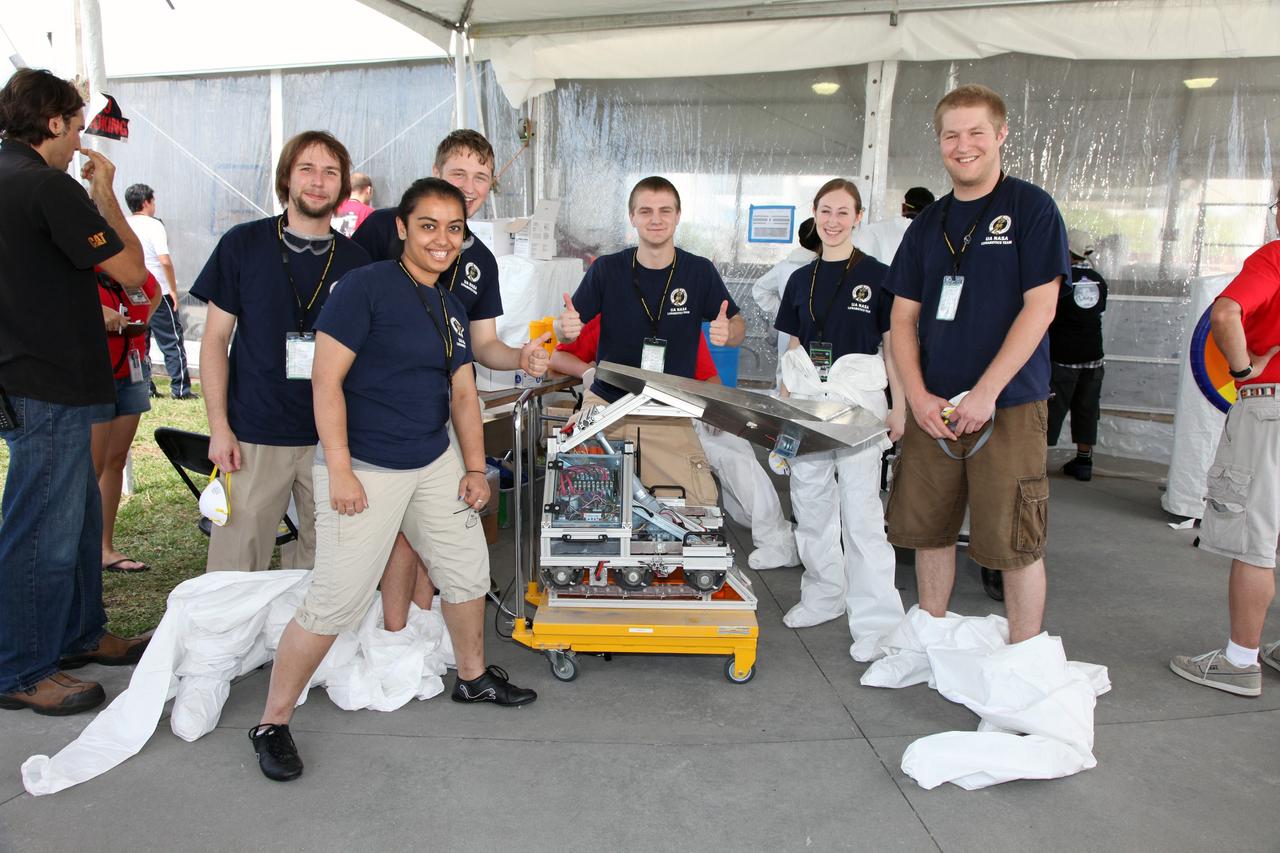
KSC · 2012-05-23 · KSC-2012-3010
KSC-2012-3010
CAPE CANAVERAL, Fla. – At NASA’s Kennedy Space Center Visitor Complex in Florida, college students from The University of Akron in Ohio prepare their Lunabot, S.T.E.V.E., for the…
Inspect NASA record
CAPE CANAVERAL, Fla. – At NASA’s Kennedy Space Center Visitor Complex in Florida, college students from The University of Akron in Ohio prepare their Lunabot, S.T.E.V.E., for the Lunarena during NASA’s Lunabotics Mining Competition. The mining competition is sponsored by NASA Kennedy Space Center’s Education Office for the agency’s Exploration Systems Mission Directorate. Undergraduate and graduate students from more than 50 universities and colleges in the U.S. and other countries use their remote-controlled Lunabots to maneuver and dig in a supersized sandbox filled with a crushed material that has characteristics similar to lunar soil. For more information, visit www.nasa.gov/lunabotics. Photo credit: NASA/Frankie Martin
- Record ID
- KSC-2012-3010
- NASA center
- KSC
- Date
- 2012-05-23
- Keywords
- Lunabotics, mining, lunar, soil