
Update Site (from NASA)
Explore NASA’s Image and Video Library.
Suggest one object per day for the Interstellar Minds collection. We review each suggestion before adding it.
Sign in to suggest a Marvel.
Find a NASA image ID. Open a NASA record and copy its ID from the end of the details URL.
NASA image records

MAF · 2022-05-10 · MAF_20220510_CS4_LoxAftLift07
Artemis IV Liquid Oxygen Tank Aft Barrel Moves to Next Phase of Production
Move crews at NASA’s Michoud Assembly Facility lift the aft liquid oxygen tank (LOX) barrel out of the Vertical Weld Center (VWC) for its next phase of production.…
Inspect NASA record
Move crews at NASA’s Michoud Assembly Facility lift the aft liquid oxygen tank (LOX) barrel out of the Vertical Weld Center (VWC) for its next phase of production. The aft barrel will eventually be mated with the forward barrel and the forward and aft domes to form the LOX tank, which will be used in the Space Launch System’s (SLS) Artemis IV mission. The LOX tank holds 196,000 gallons of super-cooled liquid oxygen to help fuel four RS-25 engines. The SLS core stage is made up of five unique elements: the forward skirt, liquid oxygen tank, intertank, liquid hydrogen tank, and the engine section. The liquid oxygen hardware, along with the liquid hydrogen tank will provide propellant to the four RS-25 engines to produce more than two million pounds of thrust to help launch NASA’s Orion spacecraft, astronauts, and supplies beyond Earth’s orbit to the Moon. Together with its four RS-25 engines, the rocket’s massive 212-foot-tall core stage — the largest stage NASA has ever built — and its twin solid rocket boosters will produce 8.8 million pounds of thrust to send NASA’s Orion spacecraft, astronauts, and supplies beyond Earth’s orbit to the Moon and, ultimately, Mars. Offering more payload mass, volume capability and energy to speed missions through space, the SLS rocket, along with NASA’s Gateway in lunar orbit, the Human Landing System, and Orion spacecraft, is part of NASA’s backbone for deep space exploration and the Artemis lunar program. No other rocket is capable of carrying astronauts in Orion around the Moon in a single mission. Photographed on Tuesday, May 10, 2022. Image credit: NASA/Michael DeMocker
- Record ID
- MAF_20220510_CS4_LoxAftLift07
- NASA center
- MAF
- Date
- 2022-05-10
- Credit
- Michael DeMocker
- Keywords
- Space Launch System, SLS, Artemis, Artemis IV, NASA, Marshall Space Flight Center, Michoud Assembly Facility, rocket science, rocket, launch vehicle, Moon, Boeing
GSFC · 2017-12-08 · GSFC_20171208_Archive_e000501
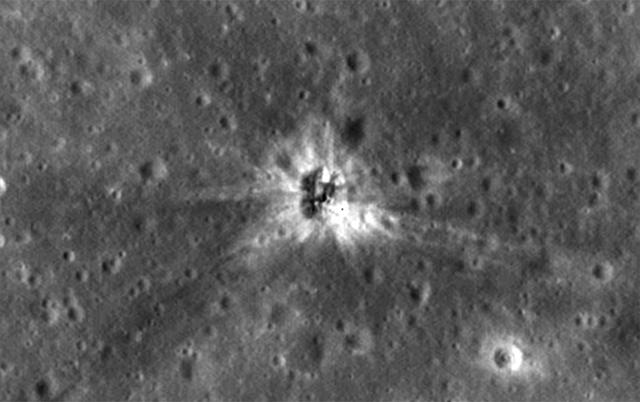
LRO Finds Apollo 16 Booster Rocket Impact Site
After decades of uncertainty, the Apollo 16 S-IVB impact site on the lunar surface has been identified. S-IVBs were portions of the Saturn V rockets that brought astronauts…
Inspect NASA record
After decades of uncertainty, the Apollo 16 S-IVB impact site on the lunar surface has been identified. S-IVBs were portions of the Saturn V rockets that brought astronauts to the moon. The site was identified in imagery from the high-resolution LROC Narrow Angle Camera aboard NASA's Lunar Reconnaissance Orbiter. Beginning with Apollo 13, the S-IVB rocket stages were deliberately impacted on the lunar surface after they were used. Seismometers placed on the moon by earlier Apollo astronauts measured the energy of these impacts to shed light on the internal lunar structure. Locations of the craters that the boosters left behind were estimated from tracking data collected just prior to the impacts. Earlier in the LRO mission, the Apollo 13, 14, 15 and 17 impact sites were successfully identified, but Apollo 16's remained elusive. In the case of Apollo 16, radio contact with the booster was lost before the impact, so the location was only poorly known. Positive identification of the Apollo 16 S-IVB site took more time than the other four impact craters because the location ended up differing by about 30 km (about 19 miles) from the Apollo-era tracking estimate. (For comparison, the other four S-IVB craters were all within 7 km -- about four miles -- of their estimated locations.) Apollo 16's S-IVB stage is on Mare Insularum, about 160 miles southwest of Copernicus Crater (more precisely: 1.921 degrees north, 335.377 degrees east, minus 1,104 meters elevation). Credit: NASA/Goddard/Arizona State University NASA image use policy. NASA Goddard Space Flight Center enables NASA’s mission through four scientific endeavors: Earth Science, Heliophysics, Solar System Exploration, and Astrophysics. Goddard plays a leading role in NASA’s accomplishments by contributing compelling scientific knowledge to advance the Agency’s mission. Follow us on Twitter Like us on Facebook Find us on Instagram
- Record ID
- GSFC_20171208_Archive_e000501
- NASA center
- GSFC
- Date
- 2017-12-08
- Keywords
- LRO Finds Apollo 16 Booster Rocket Impact Site, moon, nasa, 16, apollo, lro, apollo16, nasagoddard
GRC · 2024-09-11 · GRC-2024-C-09910
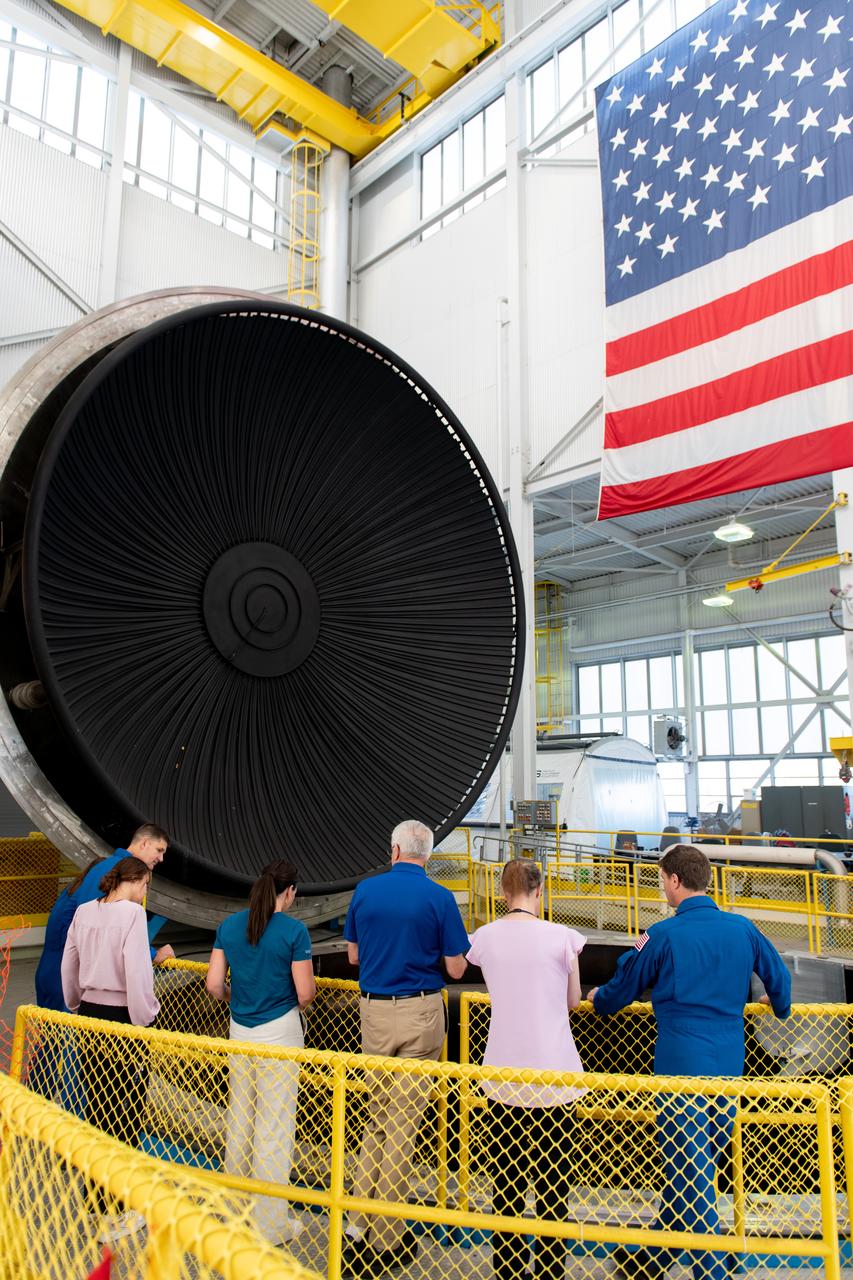
Orion Technical Visit and Tour of the In Space Propulsion Facility
Tours were given of the In Space Propulsion Facility (ISP). NASA’s Facility is the world’s only high altitude test facility capable of full-scale rocket engine and launch vehicle…
Inspect NASA record
Tours were given of the In Space Propulsion Facility (ISP). NASA’s Facility is the world’s only high altitude test facility capable of full-scale rocket engine and launch vehicle system level tests. The facility supports mission profile thermal vacuum simulation and engine firing. Pictured are Mission Specialists Christina Koch and Jeremy Hansen, Penelope Garcia-Galan, Kathryn Oriti, General David Stringer, Tiffany O'Rourke and Commander Reid Wiseman. Employees meet three of the four astronauts who will venture around the Moon on Artemis II, the first crewed flight paving the way for future lunar surface missions. Commander Reid Wiseman and Mission Specialists Christina Koch and Jeremy Hansen will be on hand to discuss their upcoming mission and participate in a Question and Answer session with employees afterward. Hansen is an astronaut with the Canadian Space Agency. Victor Glover, the pilot and fourth crew member, will not be present.
- Record ID
- GRC-2024-C-09910
- NASA center
- GRC
- Date
- 2024-09-11
- Credit
- NASA/GRC/Sara Lowthian-Hanna
- Keywords
- GRC-2024-C-09910.jpg, 188SLH_1616.JPG, Christina Koch, Jeremy Hansen, Penelope Garcia-Galan, Kathryn Oriti, David Stringer, Tiffany O'Rourke, Reid Wiseman, flag, In Space Propulsion, ISP
GRC · 2024-09-11 · GRC-2024-C-09911
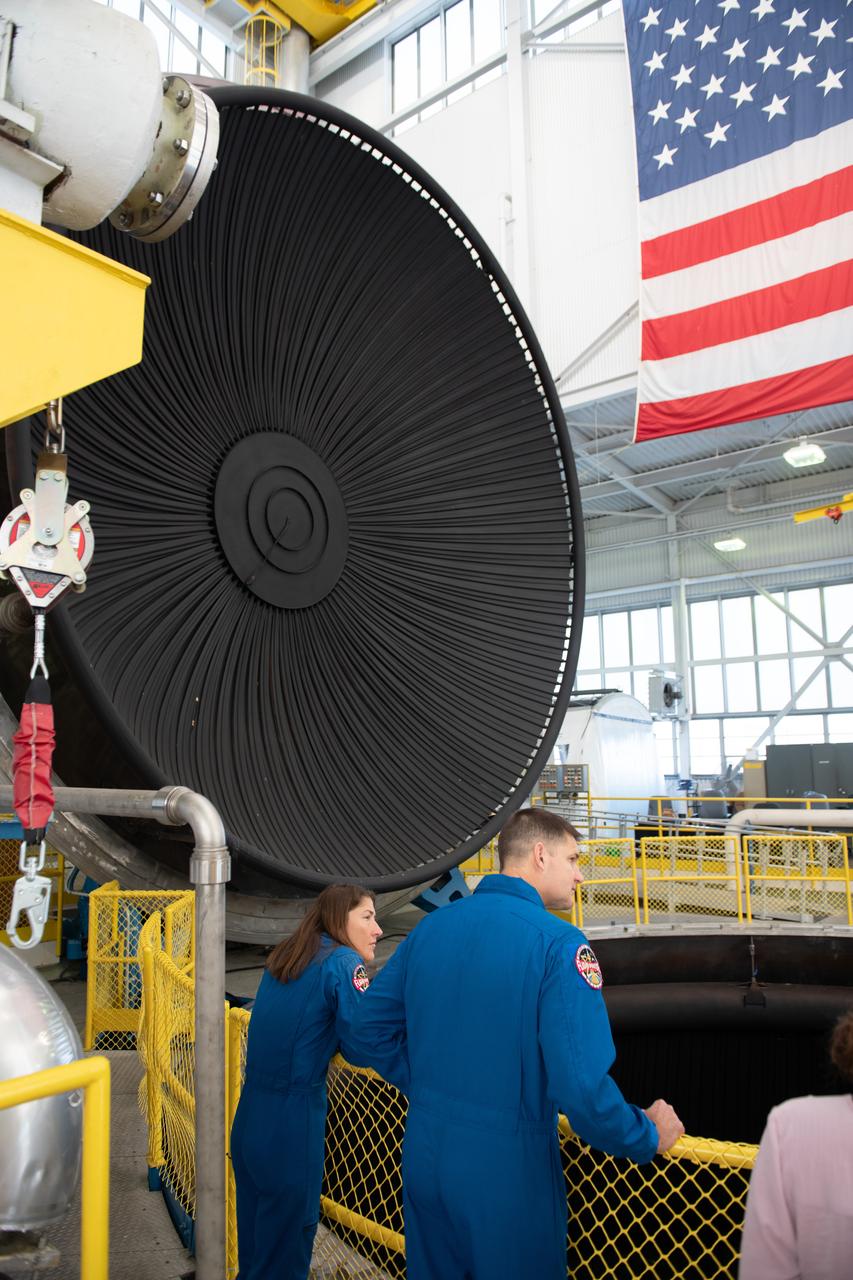
Orion Technical Visit and Tour of the In Space Propulsion Facility.
Tours were given of the In Space Propulsion Facility (ISP). NASA’s Facility is the world’s only high altitude test facility capable of full-scale rocket engine and launch vehicle…
Inspect NASA record
Tours were given of the In Space Propulsion Facility (ISP). NASA’s Facility is the world’s only high altitude test facility capable of full-scale rocket engine and launch vehicle system level tests. The facility supports mission profile thermal vacuum simulation and engine firing. Pictured are Mission Specialists Christina Koch and Jeremy Hansen. Employees meet three of the four astronauts who will venture around the Moon on Artemis II, the first crewed flight paving the way for future lunar surface missions. Commander Reid Wiseman and Mission Specialists Christina Koch and Jeremy Hansen will be on hand to discuss their upcoming mission and participate in a Question and Answer session with employees afterward. Hansen is an astronaut with the Canadian Space Agency. Victor Glover, the pilot and fourth crew member, was not present. Photo Credit: (NASA/Sara Lowthian-Hanna)
- Record ID
- GRC-2024-C-09911
- NASA center
- GRC
- Date
- 2024-09-11
- Credit
- NASA/Sara Lowthian-Hanna
- Keywords
- GRC-2024-C-09911.jpg, 189SLH_1620.JPG, Christina Koch, Jeremy Hansen, In Space Propulsion, ISP, Armstrong Test Facility, Aretemis, Flag

KSC · 2023-08-08 · KSC-20230808-PH-KLS04_0102
NASA Briefing with Artemis II Crew
NASA senior leadership and the Artemis II crew participate in a news conference on Aug. 8, 2023, at the agency’s Kennedy Space Center in Florida. Participants, from left,…
Inspect NASA record
NASA senior leadership and the Artemis II crew participate in a news conference on Aug. 8, 2023, at the agency’s Kennedy Space Center in Florida. Participants, from left, are NASA Press Secretary Jackie McGuinness; Bill Nelson, NASA administrator; Pam Melroy, NASA deputy administrator; Bob Cabana, NASA associate administrator; Jim Free, associate administrator for Exploration Systems Development Mission Directorate, NASA Headquarters; NASA astronaut Reid Wiseman, Artemis II commander; NASA astronaut Victor Glover, Artemis II pilot; NASA astronaut Christina Hammock Koch, Artemis II mission specialist; and CSA (Canadian Space Agency) astronaut Jeremy Hansen, Artemis II mission specialist. Artemis II is the first crewed mission on NASA’s path to establishing a long-term lunar presence for science and exploration under Artemis and is the first mission with astronauts to the Moon.
- Record ID
- KSC-20230808-PH-KLS04_0102
- NASA center
- KSC
- Date
- 2023-08-08
- Credit
- NASA/Kim Shiflett
- Keywords
- Artemis, Artemis II, Cape Canaveral, Christina Hammock Koch, Florida, Jeremy Hansen, John. F. Kennedy Space Center, KSC, Kennedy, Kennedy Space Center, NASA, Reid Wiseman
GRC · 2024-09-11 · GRC-2024-C-09955
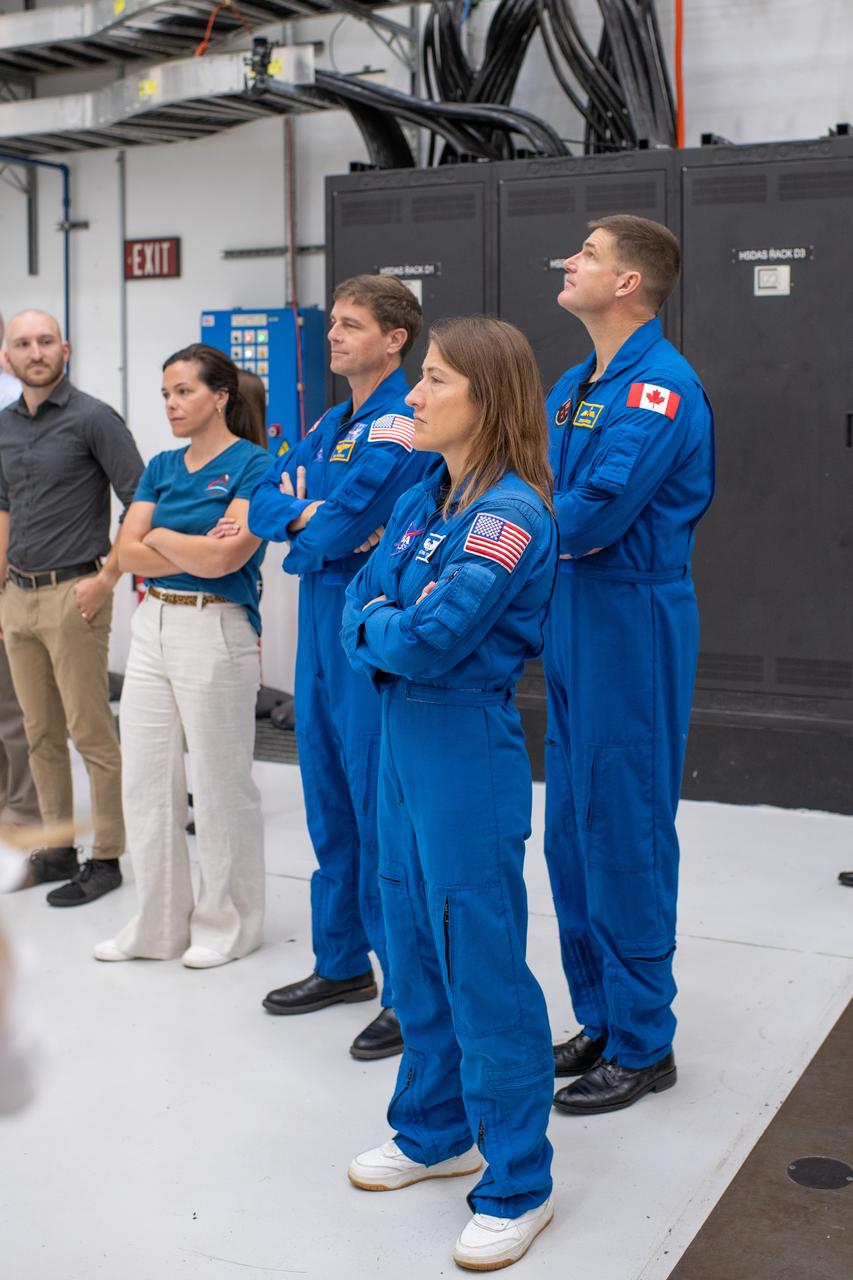
Orion Technical Visit and Artemis II All Hands
Tours were given in Sandusky, OH at Neil Armstrong Test Facility on September 11, 2024. Pictured is Josh Pawlak, Kathryn Oriti, Commander Reid Wiseman, Mission Specialist Christina Koch…
Inspect NASA record
Tours were given in Sandusky, OH at Neil Armstrong Test Facility on September 11, 2024. Pictured is Josh Pawlak, Kathryn Oriti, Commander Reid Wiseman, Mission Specialist Christina Koch and Mission Specialist Jeremy Hansen. Employees meet three of the four astronauts who will venture around the Moon on Artemis II, the first crewed flight paving the way for future lunar surface missions. Commander Reid Wiseman and Mission Specialists Christina Koch and Jeremy Hansen will be on hand to discuss their upcoming mission and participate in a Question and Answer session with employees afterward. Hansen is an astronaut with the Canadian Space Agency. Victor Glover, the pilot and fourth crew member, will not be present. Awards were given to employees that participated in Orion for Artemis I. Photo Credit: (NASA/Sara Lowthian-Hanna)
- Record ID
- GRC-2024-C-09955
- NASA center
- GRC
- Date
- 2024-09-11
- Credit
- NASA/Sara Lowthian-Hanna
- Keywords
- GRC-2024-C-09955.jpg, 233SLH_1867.JPG, Josh Pawlak, Kathryn Oriti, Reid Wiseman, Christina Koch, Jeremy Hansen, Orion, Artemis, Artemis II Crew, Armstrong Test Facility, ATF
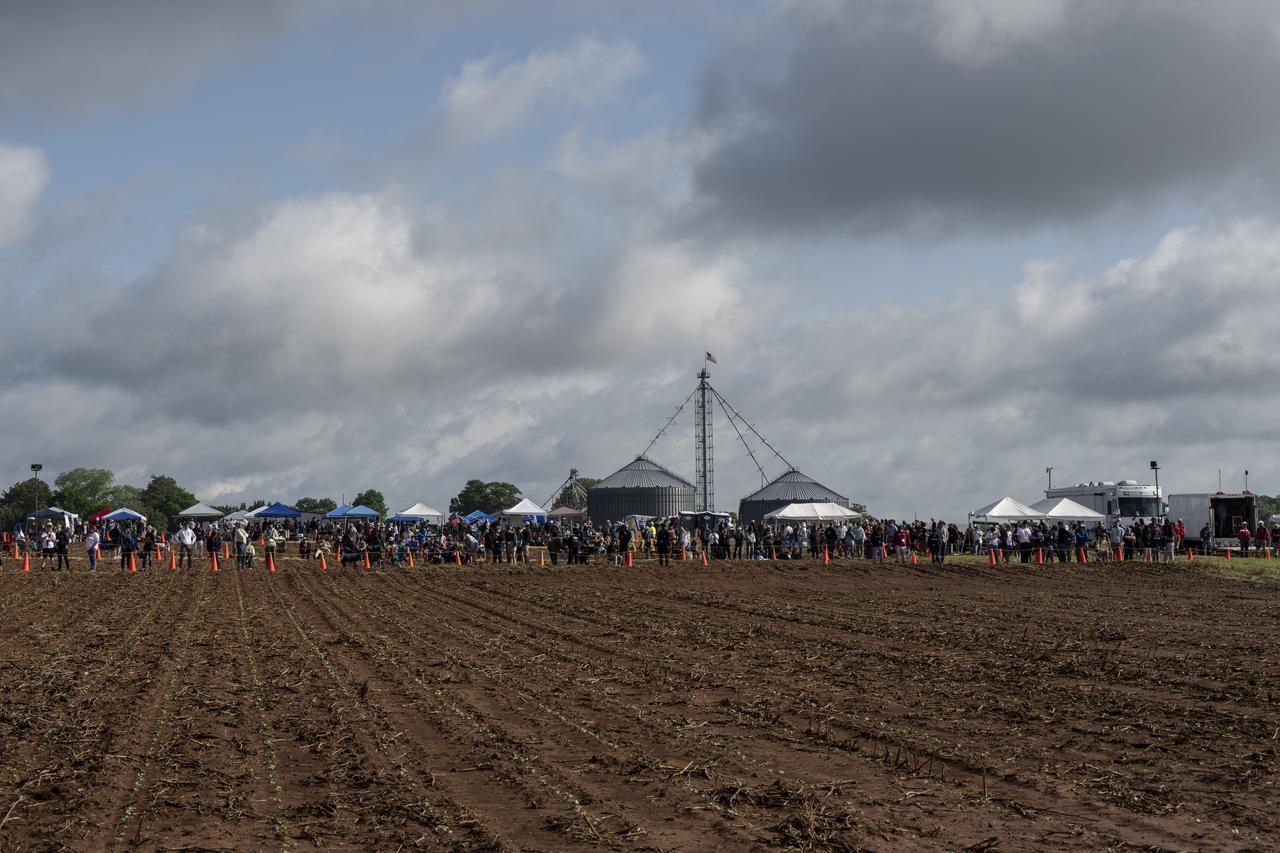
MSFC · 2025-05-04 · KAM_5175
2025 Student Launch Challenge
Over than 980 middle school, high school, and college students from across the nation launched more than 40 high-powered rockets just north of NASA’s Marshall Space Flight Center…
Inspect NASA record
Over than 980 middle school, high school, and college students from across the nation launched more than 40 high-powered rockets just north of NASA’s Marshall Space Flight Center in Huntsville, Alabama. This year marked the 25th anniversary of the competition. To compete, students follow the NASA engineering design lifecycle by going through a series of reviews for nine months leading up to launch day. Each year, a payload challenge is issued to the university teams, and this year’s task took inspiration from the agency’s Artemis missions, where NASA will send astronauts to explore the Moon for scientific discovery, economic benefit, and to build the foundation for the first crewed missions to Mars. Teams were challenged to include “reports” from STEMnauts, non-living objects representing astronauts. The STEMnaut “crew” had to relay real-time data to the student team’s mission control, just as the Artemis astronaut crew will do as they explore the lunar surface. To learn more, visit: www.nasa.gov/studentlaunch.
- Record ID
- KAM_5175
- NASA center
- MSFC
- Date
- 2025-05-04
- Credit
- NASA/Krisdon Maneke
- Keywords
- NASA, Marshall Space Flight Center, Student Launch, USLI, SLI, NASA Student Launch, STEM, Artemis Student Challenge, MSFC
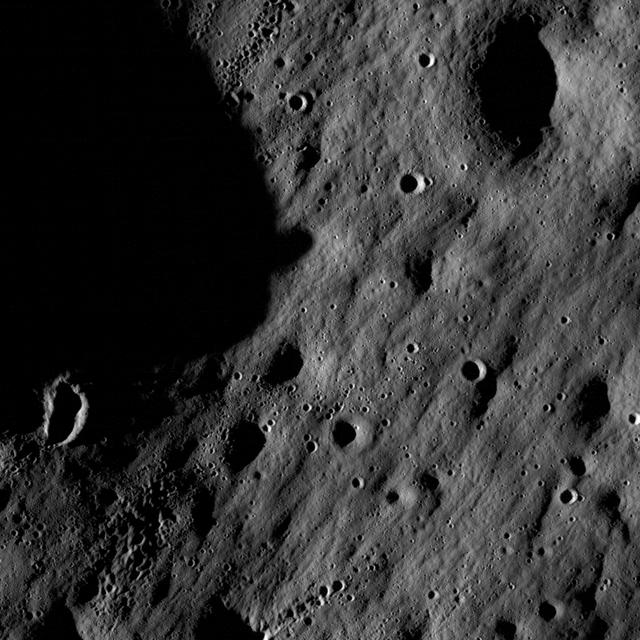
GSFC · 2017-12-08 · GSFC_20171208_Archive_e002218
First Images from NASA's New Moon Mission
These images show cratered regions near the moon's Mare Nubium region, as photographed by the Lunar Reconnaissance Orbiter's LROC instrument. Each image shows a region 1,400 meters (0.87…
Inspect NASA record
These images show cratered regions near the moon's Mare Nubium region, as photographed by the Lunar Reconnaissance Orbiter's LROC instrument. Each image shows a region 1,400 meters (0.87 miles) wide. the bottoms of both images face lunar north. The image below shows the location of these two images in relation to each other. Credit: NASA/Goddard Space Flight Center/Arizona State University
- Record ID
- GSFC_20171208_Archive_e002218
- NASA center
- GSFC
- Date
- 2017-12-08
- Keywords
- First Images from NASA's New Moon Mission, nacl000000fdtopdetailnasa, lro, lroc, mare, nubium, lunar, reconnasaince, orbiter, goddard, arizonastateuniversity, images