
Update Site (from NASA)
Explore NASA’s Image and Video Library.
Suggest one object per day for the Interstellar Minds collection. We review each suggestion before adding it.
Sign in to suggest a Marvel.
Find a NASA image ID. Open a NASA record and copy its ID from the end of the details URL.
NASA image records

KSC · 2022-09-14 · KSC-20220914-PH-NAS01_0004
Lightning Strikes at Pad 39B
A lightning strike was recorded at Launch Complex 39B at NASA’s Kennedy Space Center in Florida on Sept. 14, 2022. NASA’s Space Launch System (SLS) and Orion spacecraft…
Inspect NASA record
A lightning strike was recorded at Launch Complex 39B at NASA’s Kennedy Space Center in Florida on Sept. 14, 2022. NASA’s Space Launch System (SLS) and Orion spacecraft atop the mobile launcher are on the launch pad in preparation for the Artemis I mission. The lightning strike was recorded by cameras stationed at the pad and mobile launcher using a special filter called a “clear day frame,” which provides an overlay of the raw frame on a reference image. Artemis I will be the first integrated test of the SLS and Orion spacecraft. In later missions, NASA will land the first woman and the first woman of color on the surface of the Moon, paving the way for a long-term lunar presence and serving as a steppingstone on the way to Mars.
- Record ID
- KSC-20220914-PH-NAS01_0004
- NASA center
- KSC
- Date
- 2022-09-14
- Credit
- NASA
- Keywords
- Lightning, Lightning Strikes, Weather, KSC, Kennedy Space Center, LC-39B, LC 39B, Pad 39B, Launch Complex 39B
KSC · 2021-02-18 · KSC-20210218-PH-GEB01_0012
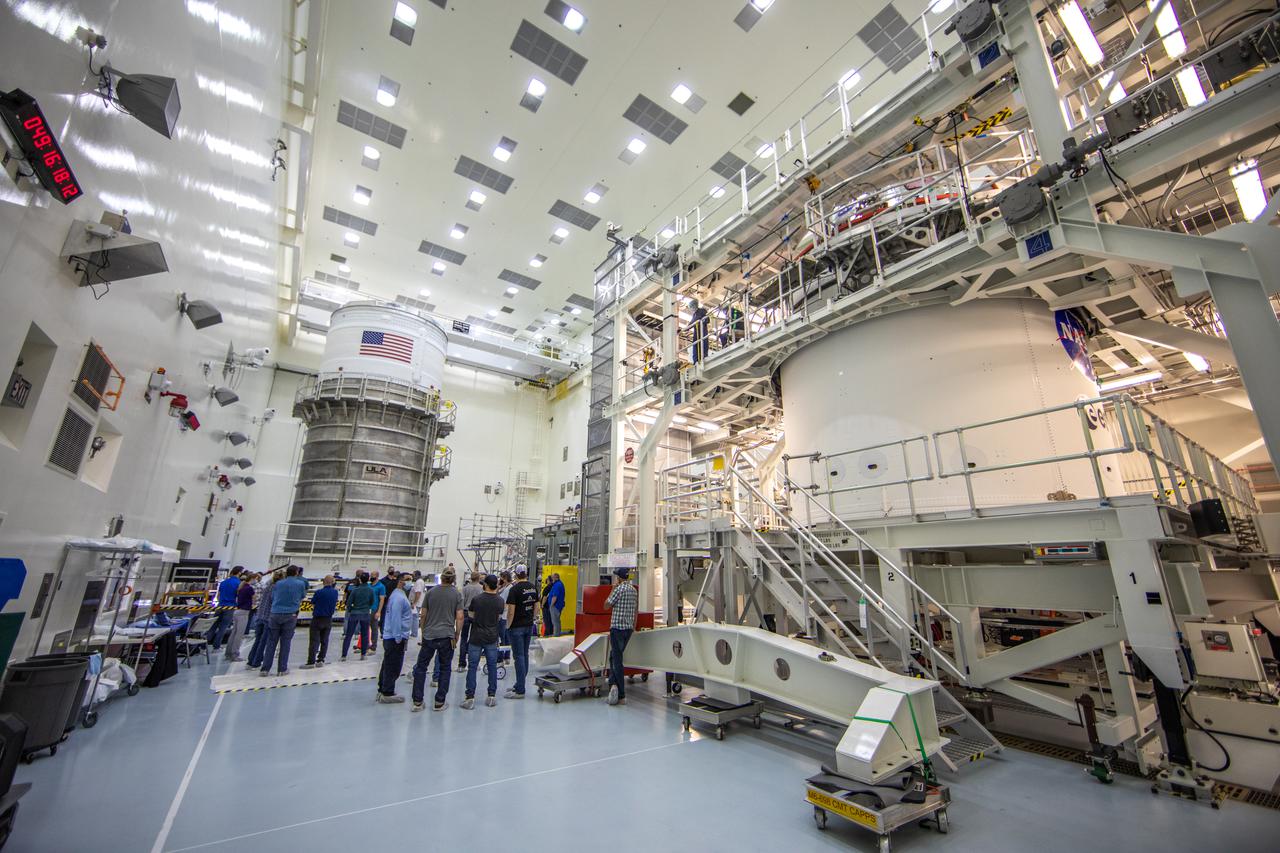
Artemis I ICPS arrival at MPPF
The Space Launch System (SLS) rocket’s interim cryogenic propulsion stage (ICPS) moved into the Multi-Payload Processing Facility February 18, 2021, at NASA’s Kennedy Space Center in Florida for…
Inspect NASA record
The Space Launch System (SLS) rocket’s interim cryogenic propulsion stage (ICPS) moved into the Multi-Payload Processing Facility February 18, 2021, at NASA’s Kennedy Space Center in Florida for the Artemis I mission. It will undergo fueling and servicing in the facility ahead of launch by teams from NASA’s Exploration Ground Systems and their primary contractor, Jacobs Technology. Artemis I will be an integrated flight test of the SLS rocket and Orion spacecraft ahead of the crewed flights to the Moon. Under the Artemis program, NASA will land the first woman and the next man on the lunar surface and establish a sustainable presence at the Moon to prepare for human missions to Mars.
- Record ID
- KSC-20210218-PH-GEB01_0012
- NASA center
- KSC
- Date
- 2021-02-18
- Credit
- NASA/Glenn Benson
- Keywords
- Orion, Artemis, Artemis I, ICPS, interim cryogenic propulsion stage, Multi-Payload Processing Facility, MPPF, Kennedy Space Center, KSC, SLS, Space Launch System, ESA
JPL · 2024-10-29 · PIA26347
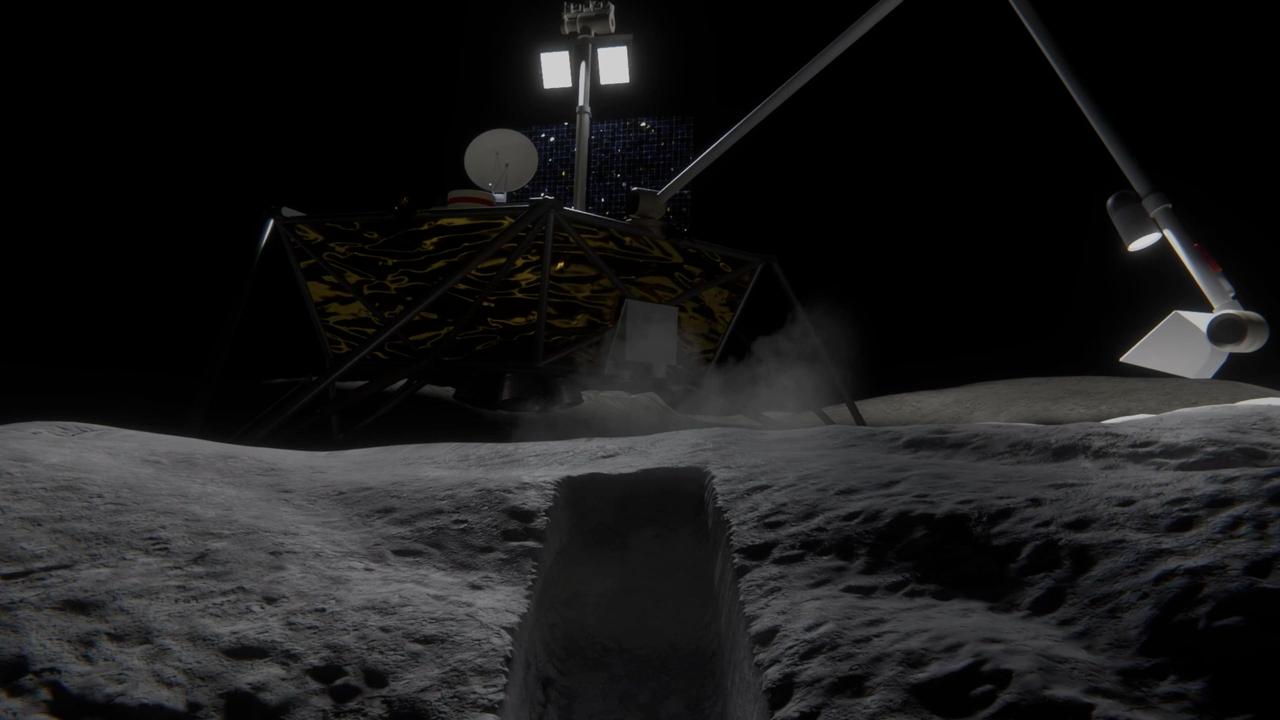
NASA's COLDArm Operating on the Moon (Animation)
NASA's Cold Operable Lunar Deployable Arm (COLDArm) robotic arm system reaches out from a lander on the Moon and scoops up regolith (broken rock and dust). Managed by…
Inspect NASA record
NASA's Cold Operable Lunar Deployable Arm (COLDArm) robotic arm system reaches out from a lander on the Moon and scoops up regolith (broken rock and dust). Managed by NASA's Jet Propulsion Laboratory in Southern California, COLDArm is designed to operate during lunar night, a period that lasts about 14 Earth days. It can function in temperatures as cold as minus 280 degrees Fahrenheit (minus 173 degrees Celsius). Frigid temperatures during lunar night would stymie the arms on current spacecraft, which must rely on energy-consuming heaters to stay warm. To operate in the cold, the 6-foot-6-inch (2-meter) arm combines several key new technologies: gears made of bulk metallic glass that require no wet lubrication or heating, cold motor controllers that don't need to be kept warm in an electronics box near the core of the spacecraft, and a cryogenic six-axis force torque sensor that lets the arm "feel" what it's doing and make adjustments. A variety of attachments and small instruments could go on the end of the arm, such as a 3D-printed titanium scoop that could collect samples from a planet's surface, similar to what's depicted here. Like the arm on NASA's now-retired InSight Mars lander, COLDArm is also capable of deploying science instruments to the surface. The arm system could be attached to a stationary lander or to a rover. Motiv Space Systems, a partner on COLDArm, developed the cold motor controllers, and also built sections of the arm and assembled it from JPL-supplied parts at the company's Pasadena, California, facility. The COLDArm project is funded through the Lunar Surface Innovation Initiative and managed by the Game Changing Development program in NASA's Space Technology Mission Directorate. Animation available at https://photojournal.jpl.nasa.gov/catalog/PIA26347
- Record ID
- PIA26347
- NASA center
- JPL
- Date
- 2024-10-29
- Credit
- NASA
- Keywords
- COLDArm, Moon
KSC · 2014-07-21 · KSC-2014-3215
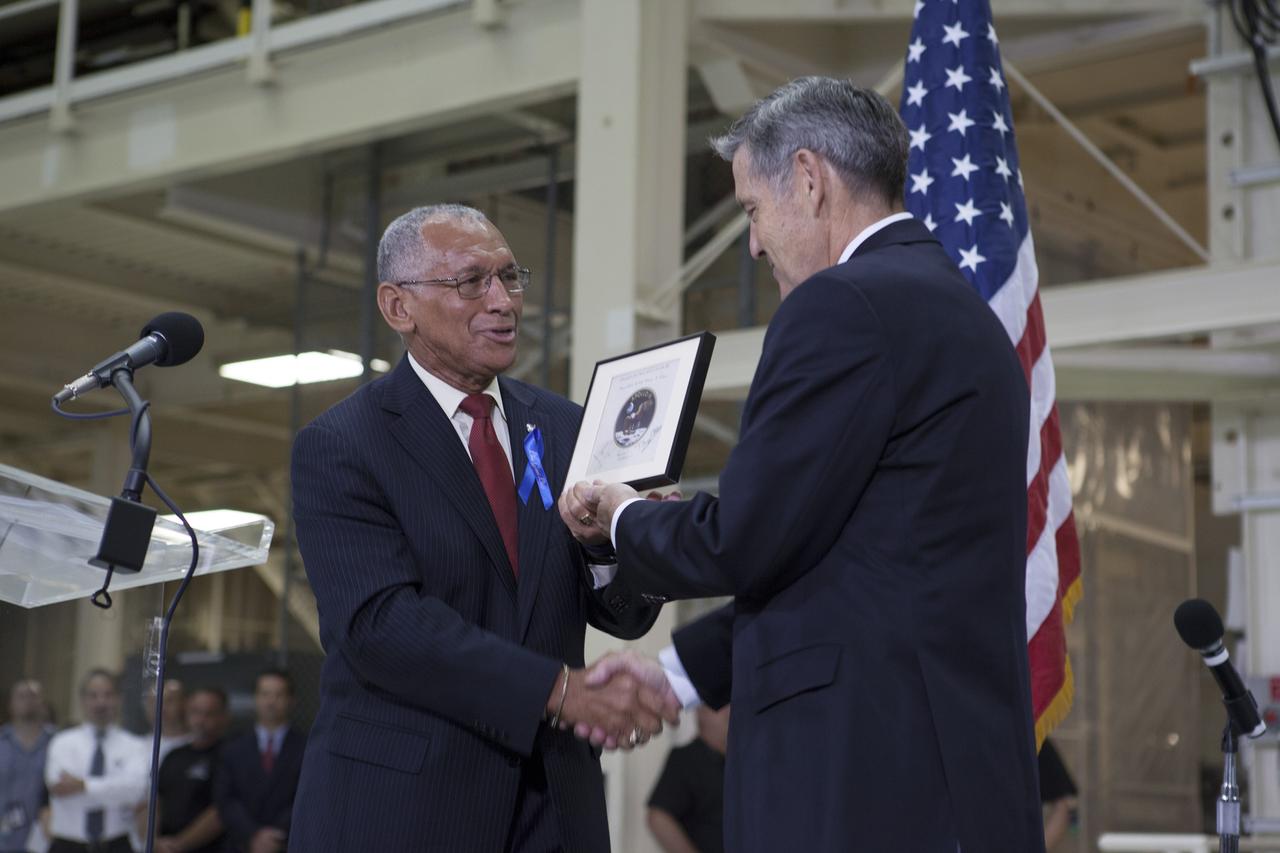
KSC-2014-3215
CAPE CANAVERAL, Fla. -- At the Kennedy Space Center in Florida, NASA Administrator Charles Bolden, left, presents Center Director Robert Cabana with an Apollo 11 patch that flew…
Inspect NASA record
CAPE CANAVERAL, Fla. -- At the Kennedy Space Center in Florida, NASA Administrator Charles Bolden, left, presents Center Director Robert Cabana with an Apollo 11 patch that flew to the moon on the Apollo 11 mission and is signed by all three Apollo 11 astronauts. The patch will remain at Kennedy until the first human spaceflight to Mars, when it will fly once again. The presentation was made during a ceremony renaming the refurbished Operations and Checkout Building for Apollo 11 astronaut Neil Armstrong, the first person to set foot on the moon. The building's high bay, in which the ceremony was held, is being used to support the agency's new Orion spacecraft and is the same spaceport facility where the Apollo 11 command/service module and lunar module were prepped for the first lunar landing mission in 1969. Orion is designed to take humans farther than they’ve ever gone before, serving as the exploration vehicle that will carry astronauts to deep space and sustain the crew during travel to destinations such as an asteroid or Mars. The ceremony was part of NASA's 45th anniversary celebration of the Apollo 11 moon landing. As the world watched, Neil Armstrong and Buzz Aldrin landed in the moon's Sea of Tranquility on July 20, 1969, aboard the lunar module Eagle. Meanwhile, crewmate Michael Collins orbited above in the command module Columbia. For more, visit http://www.nasa.gov/press/2014/july/nasa-honors-historic-first-moon-landing-eyes-first-mars-mission. Photo credit: NASA/Kim Shiflett
- Record ID
- KSC-2014-3215
- NASA center
- KSC
- Date
- 2014-07-21
- Keywords
- O&C

GSFC · 2017-12-08 · GSFC_20171208_Archive_e000600
Super Blood Moon Lunar Eclipse
A preview animation of the Super Moon Lunar Eclipse On the evening of September 27, 2015 in the Americas (early morning on September 28 in Europe and most…
Inspect NASA record
A preview animation of the Super Moon Lunar Eclipse On the evening of September 27, 2015 in the Americas (early morning on September 28 in Europe and most of Africa), the Moon enters the Earth’s shadow, creating a total lunar eclipse, the last of four visible in the Western Hemisphere in a span of 18 months. This animation shows the changing appearance of the Moon as it travels into and out of the Earth’s shadow. NASA image use policy. NASA Goddard Space Flight Center enables NASA’s mission through four scientific endeavors: Earth Science, Heliophysics, Solar System Exploration, and Astrophysics. Goddard plays a leading role in NASA’s accomplishments by contributing compelling scientific knowledge to advance the Agency’s mission. Follow us on Twitter Like us on Facebook Find us on Instagram
- Record ID
- GSFC_20171208_Archive_e000600
- NASA center
- GSFC
- Date
- 2017-12-08
- Keywords
- Super Blood Moon Lunar Eclipse, sun, moon, earth, nasa, lunareclipse, nasagoddard, superbloodmoon
MSFC · 1969-07-16 · 6900625
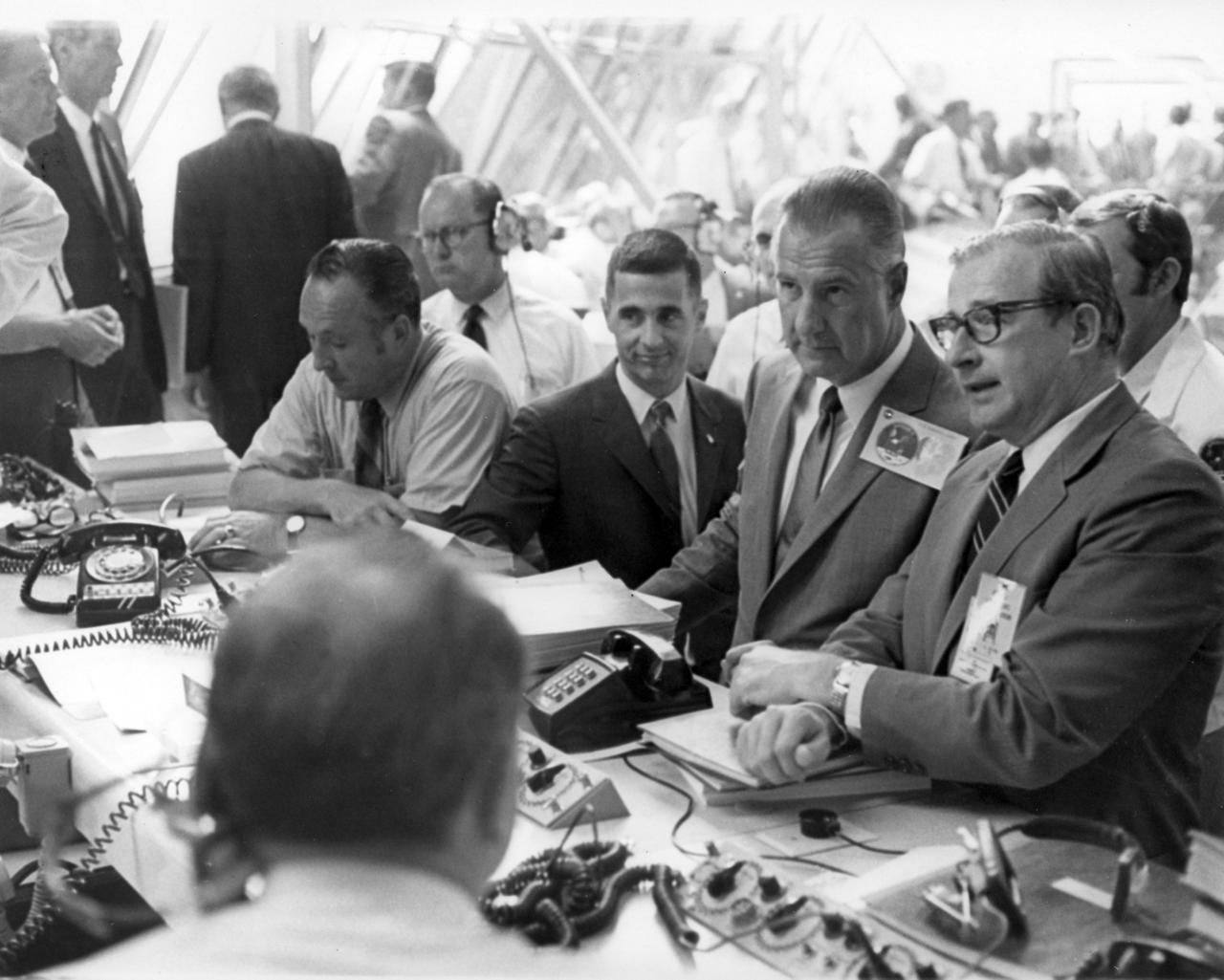
Saturn Apollo Program
From the right, NASA administrator, Dr. Thomas O. Paine talks with U.S. Vice President Spiro T. Agnew while awaiting the launch of Saturn V (AS-506) that carried the…
Inspect NASA record
From the right, NASA administrator, Dr. Thomas O. Paine talks with U.S. Vice President Spiro T. Agnew while awaiting the launch of Saturn V (AS-506) that carried the Apollo 11 spacecraft to the Moon for man’s historic first landing on the lunar surface. At center is astronaut William Anders, a member of the first crew to orbit the moon during the Apollo 8 mission. At left is Lee B. James, director of Program Management at the NASA Marshall Space Flight Center (MSFC) where the Saturn V was developed. The craft lifted off from launch pad 39 at Kennedy Space Flight Center (KSC) on July 16, 1969. The moon bound crew included astronauts Neil A. Armstrong, commander; Michael Collins, Command Module (CM) pilot; and Edwin E. Aldrin Jr., Lunar Module (M) pilot. The mission finalized with splashdown in the Pacific Ocean on July 24, 1969. With the success of Apollo 11, the national objective to land men on the Moon and return them safely to Earth had been accomplished.
- Record ID
- 6900625
- NASA center
- MSFC
- Date
- 1969-07-16
- Keywords
- Apollo 11, Moon, Lift Off, Paine, Agnew, Anders, James
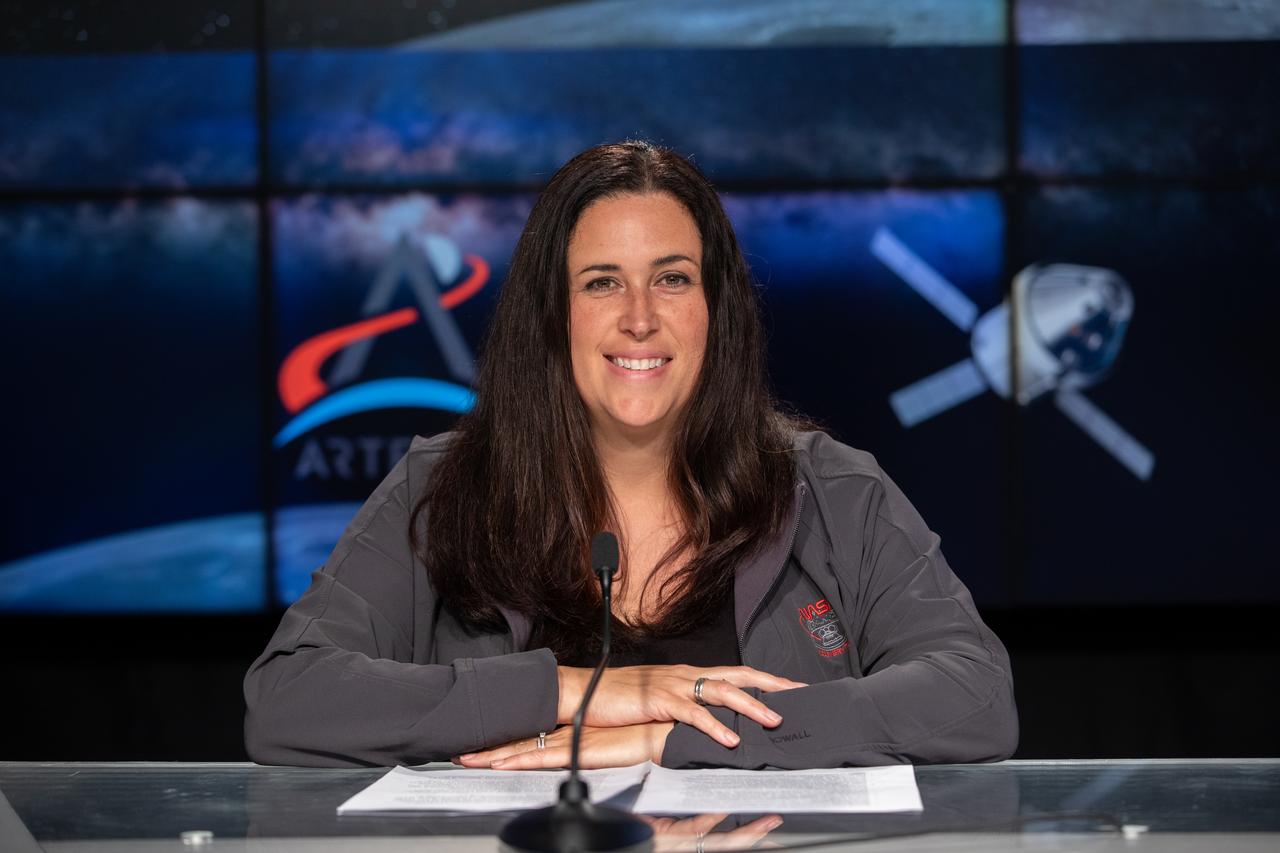
KSC · 2022-08-05 · KSC-20220805-PH-KLS01_0001
Artemis I Mission Briefing from JSC
Melissa Jones, NASA Landing and Recovery Director for Exploration Ground Systems, participates in an Artemis I detailed mission briefing inside the Press Site auditorium at NASA’s Kennedy Space…
Inspect NASA record
Melissa Jones, NASA Landing and Recovery Director for Exploration Ground Systems, participates in an Artemis I detailed mission briefing inside the Press Site auditorium at NASA’s Kennedy Space Center in Florida on Aug. 5, 2022. Jones leads the Artemis I Recovery Team partnered with the U.S. Navy that will recover the Artemis I Orion crew module from the Pacific Ocean after splashdown. Also participating in the briefing from NASA’s Johnson Space Center were Debbie Korth, Orion program deputy manager; Rick LaBrode, lead Artemis I flight director; Judd Frieling, Artemis I ascent/entry flight director; Reid Wiseman, chief astronaut; and Philippe Deloo, Orion European Service Module program manager, European Space Agency. The first in an increasingly complex series of missions, Artemis I is an uncrewed flight test to test the Space Launch System rocket and Orion spacecraft as an integrated system prior to crewed flights to the Moon. Through Artemis, NASA will land the first woman and first person of color on the lunar surface, paving the way for long-term lunar presence and serving as a steppingstone before venturing to Mars.
- Record ID
- KSC-20220805-PH-KLS01_0001
- NASA center
- KSC
- Date
- 2022-08-05
- Credit
- NASA/Kim Shiflett
- Keywords
- Artemis, Artemis I, Melissa Jones, Mission Briefing
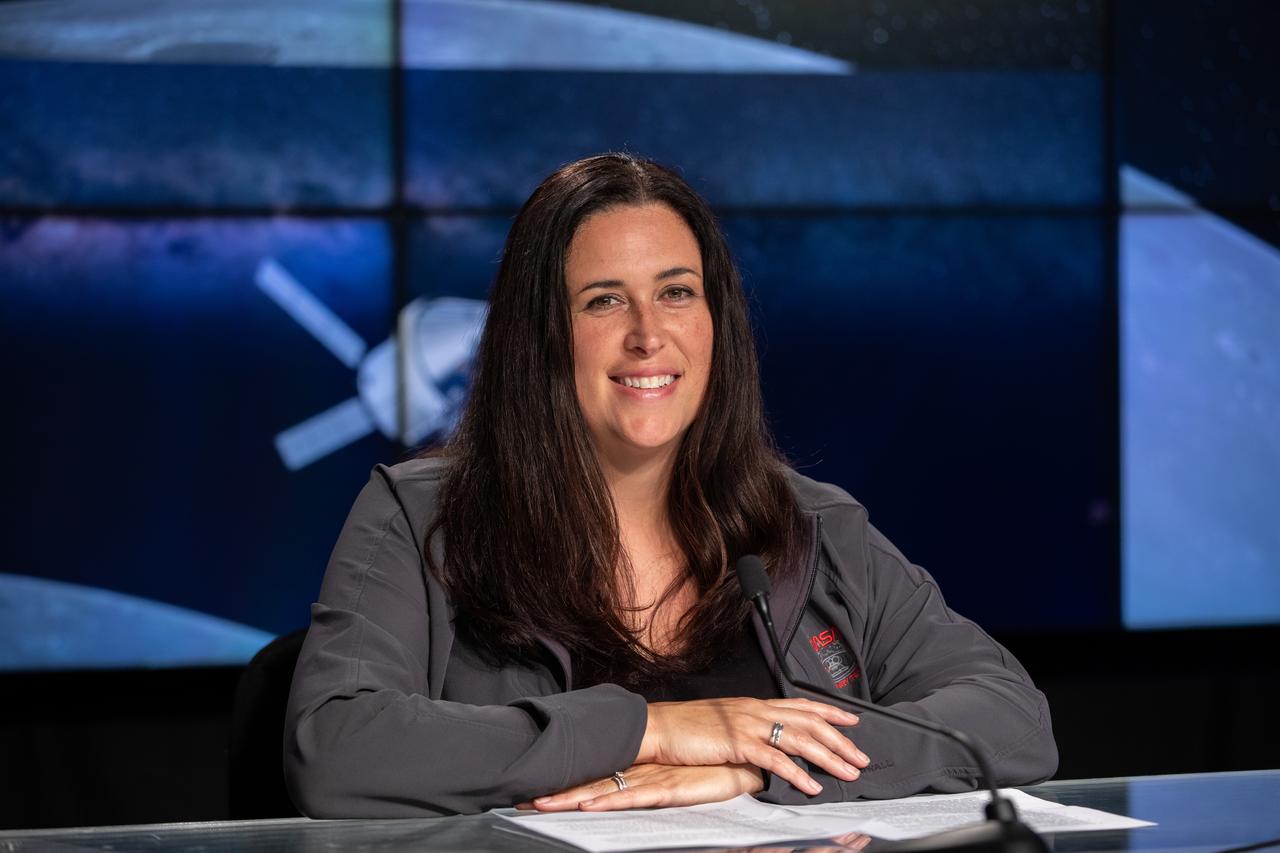
KSC · 2022-08-05 · KSC-20220805-PH-KLS01_0014
Artemis I Mission Briefing from JSC
Melissa Jones, NASA Landing and Recovery Director for Exploration Ground Systems, participates in an Artemis I detailed mission briefing inside the Press Site auditorium at NASA’s Kennedy Space…
Inspect NASA record
Melissa Jones, NASA Landing and Recovery Director for Exploration Ground Systems, participates in an Artemis I detailed mission briefing inside the Press Site auditorium at NASA’s Kennedy Space Center in Florida on Aug. 5, 2022. Jones leads the Artemis I Recovery Team partnered with the U.S. Navy that will recover the Artemis I Orion crew module from the Pacific Ocean after splashdown. Also participating in the briefing from NASA’s Johnson Space Center were Debbie Korth, Orion program deputy manager; Rick LaBrode, lead Artemis I flight director; Judd Frieling, Artemis I ascent/entry flight director; Reid Wiseman, chief astronaut; and Philippe Deloo, Orion European Service Module program manager, European Space Agency. The first in an increasingly complex series of missions, Artemis I is an uncrewed flight test to test the Space Launch System rocket and Orion spacecraft as an integrated system prior to crewed flights to the Moon. Through Artemis, NASA will land the first woman and first person of color on the lunar surface, paving the way for long-term lunar presence and serving as a steppingstone before venturing to Mars.
- Record ID
- KSC-20220805-PH-KLS01_0014
- NASA center
- KSC
- Date
- 2022-08-05
- Credit
- NASA/Kim Shiflett
- Keywords
- Artemis, Artemis I, Melissa Jones, Mission Briefing
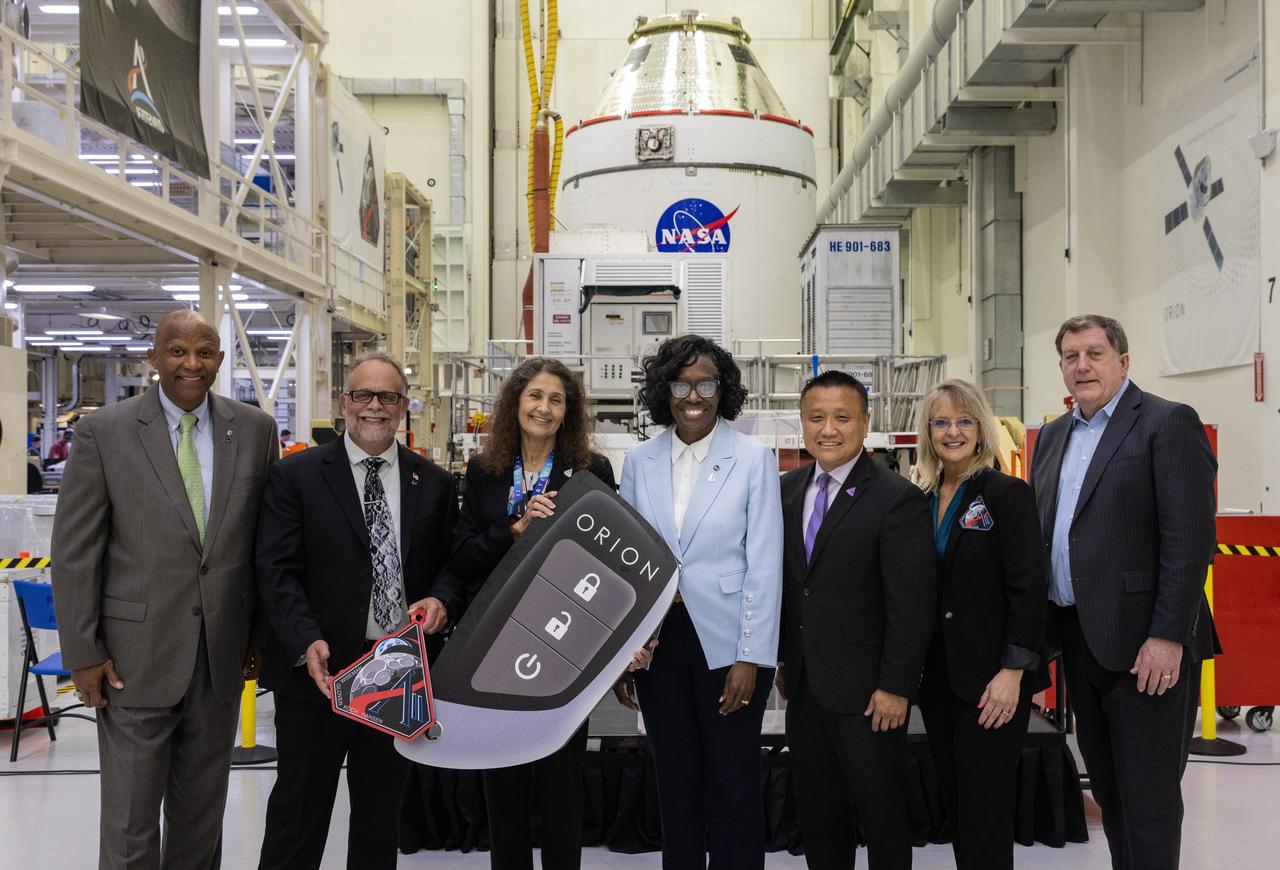
KSC · 2025-05-01 · KSC-20250501-PH-CSH01_0212
Artemis II Presentation and Group Photos
From left, Kelvin Manning, acting center director, NASA’s Kennedy Space Center; Shawn Quinn, Exploration Ground Systems program manager; Lorna Kenna, Amentum Vice President and program manager; Lakiesha Hawkins,…
Inspect NASA record
From left, Kelvin Manning, acting center director, NASA’s Kennedy Space Center; Shawn Quinn, Exploration Ground Systems program manager; Lorna Kenna, Amentum Vice President and program manager; Lakiesha Hawkins, assistant deputy associate administrator, Moon to Mars Program office; Howard Hu, Orion program manager; Debbie Korth, Orion deputy program manager; Keith Shireman Lockheed Martin Vice President of Lunar Exploration Campaign, participate in a handover ceremony of NASA’s Artemis II Orion spacecraft to crews with the agency’s Exploration Ground Systems Program at the Neil A. Armstrong Operations and Checkout Building at NASA’s Kennedy Space Center in Florida on Thursday, May 1, 2025. The spacecraft will be transported to the Multi-Payload Processing Facility to undergo fueling and processing for prelaunch operations. The Artemis II test flight is the first crewed flight under NASA’s Artemis campaign and is another step toward missions on the lunar surface and helping the agency prepare for future human missions to Mars.
- Record ID
- KSC-20250501-PH-CSH01_0212
- NASA center
- KSC
- Date
- 2025-05-01
- Credit
- NASA/Cory S Huston
- Keywords
- Orion, Artemis II, spacecraft, DD250, lockheed martin, EGS, MPPF, O&C