
Update Site (from NASA)
Explore NASA’s Image and Video Library.
Suggest one object per day for the Interstellar Minds collection. We review each suggestion before adding it.
Sign in to suggest a Marvel.
Find a NASA image ID. Open a NASA record and copy its ID from the end of the details URL.
NASA image records
HQ · 2021-12-25 · NHQ202112250024
James Webb Space Telescope Prelaunch
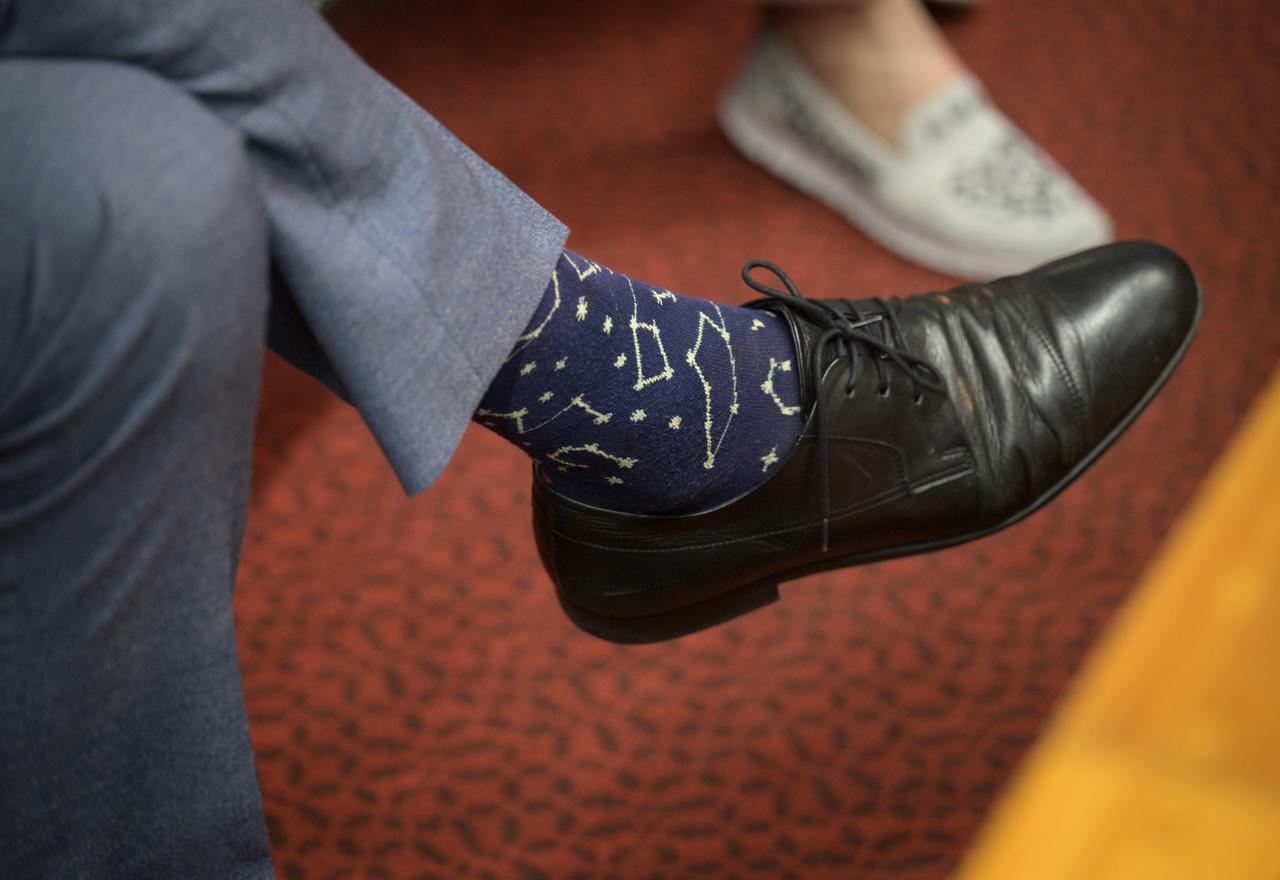
NASA Associate Administrator for the Science Mission Directorate Thomas Zurbuchen, wearing astrological themed socks, monitors the countdown to the launch of Arianespace's Ariane 5 rocket carrying NASA’s James…
Inspect NASA record
NASA Associate Administrator for the Science Mission Directorate Thomas Zurbuchen, wearing astrological themed socks, monitors the countdown to the launch of Arianespace's Ariane 5 rocket carrying NASA’s James Webb Space Telescope, Saturday, Dec. 25, 2021, in the Jupiter Center at the Guiana Space Center in Kourou, French Guiana. The James Webb Space Telescope (sometimes called JWST or Webb) is a large infrared telescope with a 21.3 foot (6.5 meter) primary mirror. The observatory will study every phase of cosmic history—from within our solar system to the most distant observable galaxies in the early universe. Photo Credit: (NASA/Bill Ingalls)
- Record ID
- NHQ202112250024
- NASA center
- HQ
- Date
- 2021-12-25
- Credit
- NASA/Bill Ingalls
- Keywords
- Ariane 5, Arianespace, Canadian Space Agency (CSA), Centre National d’Etudes Spatiales (CNES), ESA (European Space Agency), French Guiana, Guiana Space Center, James Webb Space Telescope (JWST), Jupiter Center, Kourou, NASA, Northrop Grumman

JPL · 2019-05-08 · PIA23123
A Field of Galaxies Seen by Spitzer and Hubble
This deep-field view of the sky, taken by NASA's Spitzer Space Telescope, is dominated by galaxies - including some very faint, very distant ones - circled in red.…
Inspect NASA record
This deep-field view of the sky, taken by NASA's Spitzer Space Telescope, is dominated by galaxies - including some very faint, very distant ones - circled in red. The bottom right inset shows one of those distant galaxies, made visible thanks to a long-duration observation by Spitzer. The wide-field view also includes data from NASA's Hubble Space Telescope. The Spitzer observations came from the GREATS survey, short for GOODS Re-ionization Era wide-Area Treasury from Spitzer. GOODS is itself an acronym: Great Observatories Origins Deep Survey. https://photojournal.jpl.nasa.gov/catalog/PIA23123
- Record ID
- PIA23123
- NASA center
- JPL
- Date
- 2019-05-08
- Credit
- NASA/JPL-Caltech/ESA/Spitzer/P. Oesch/S. De Barros/ I.Labbe
- Keywords
- Spitzer Space Telescope, Hubble Space Telescope
JSC · 1987-12-11 · s87-49426
Hubble Space Telescope Toolbox and Tools in the Lobby of JSC Building 7A
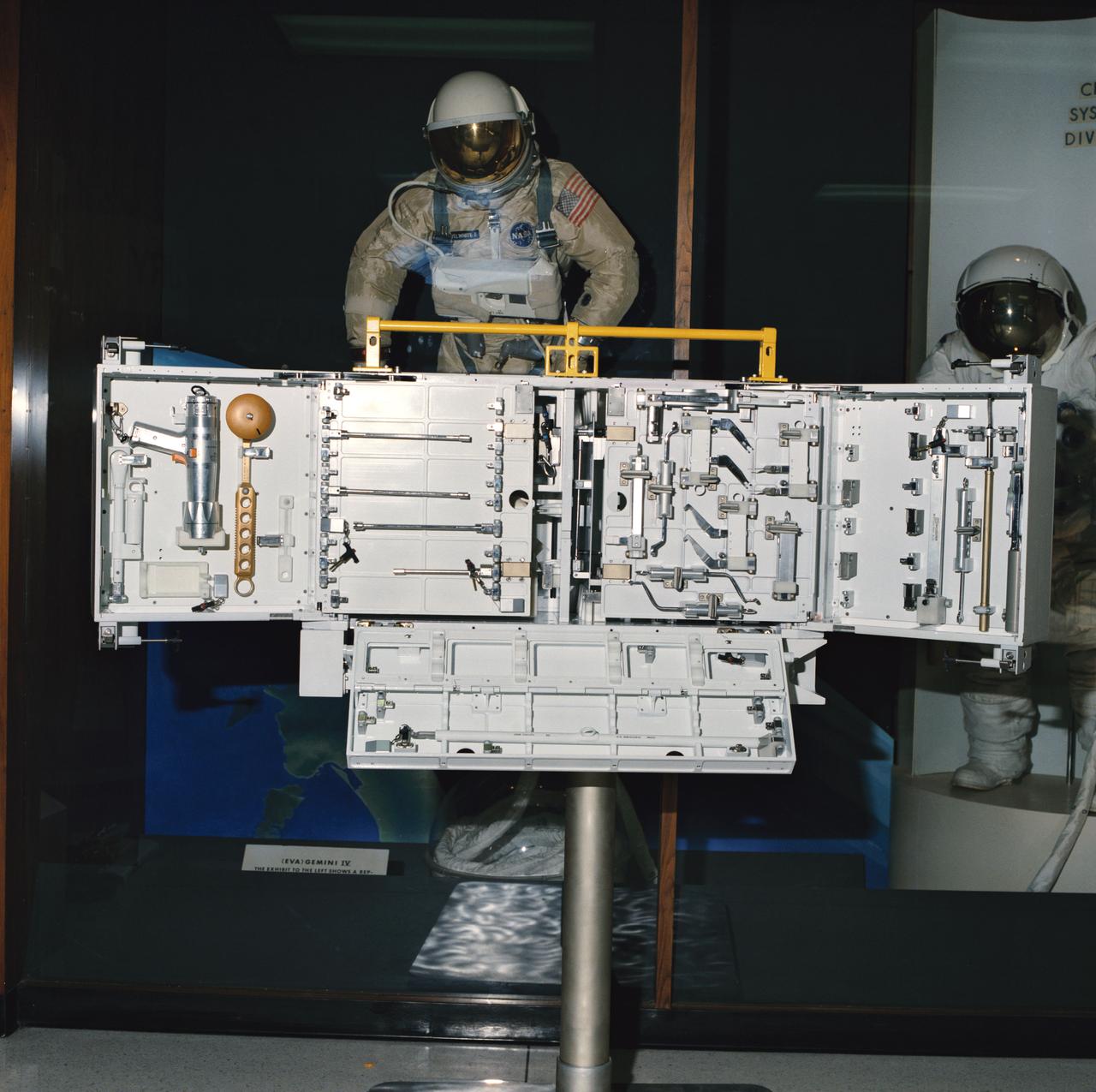
S87-49426 (1987) --- The Hubble Space Telescope (HST) tool box provides stowage of individual tools, tool boards and tool caddies required for maintenance of the telescope. The basic…
Inspect NASA record
S87-49426 (1987) --- The Hubble Space Telescope (HST) tool box provides stowage of individual tools, tool boards and tool caddies required for maintenance of the telescope. The basic box design was revised from the LEASAT (U.S. Navy) equipment stowage container. It can be mounted to a base plate or back plate depending on the mission location requirements. A four-point latching system secured with pip pins is used to latch the tool box doors for launch. Various other latches are designed into the door panels and tool mounting locations for tool retention. The box consists of aluminum sides and base, a dividing wall and deep doors. Along three sides there are handrails by which STS-61 extravehicular activity (EVA) crew members can translate themselves or brace themselves when stowing and unstowing equipment.
- Record ID
- s87-49426
- NASA center
- JSC
- Date
- 1987-12-11
- Keywords
- HUBBLE SPACE TELESCOPE, SPACE TOOLS, REPAIRING
KSC · 2026-08-24 · KSC-20260824-PH-SER01_0005
Roman Space Telescope Transport from PHSF to LC 39A
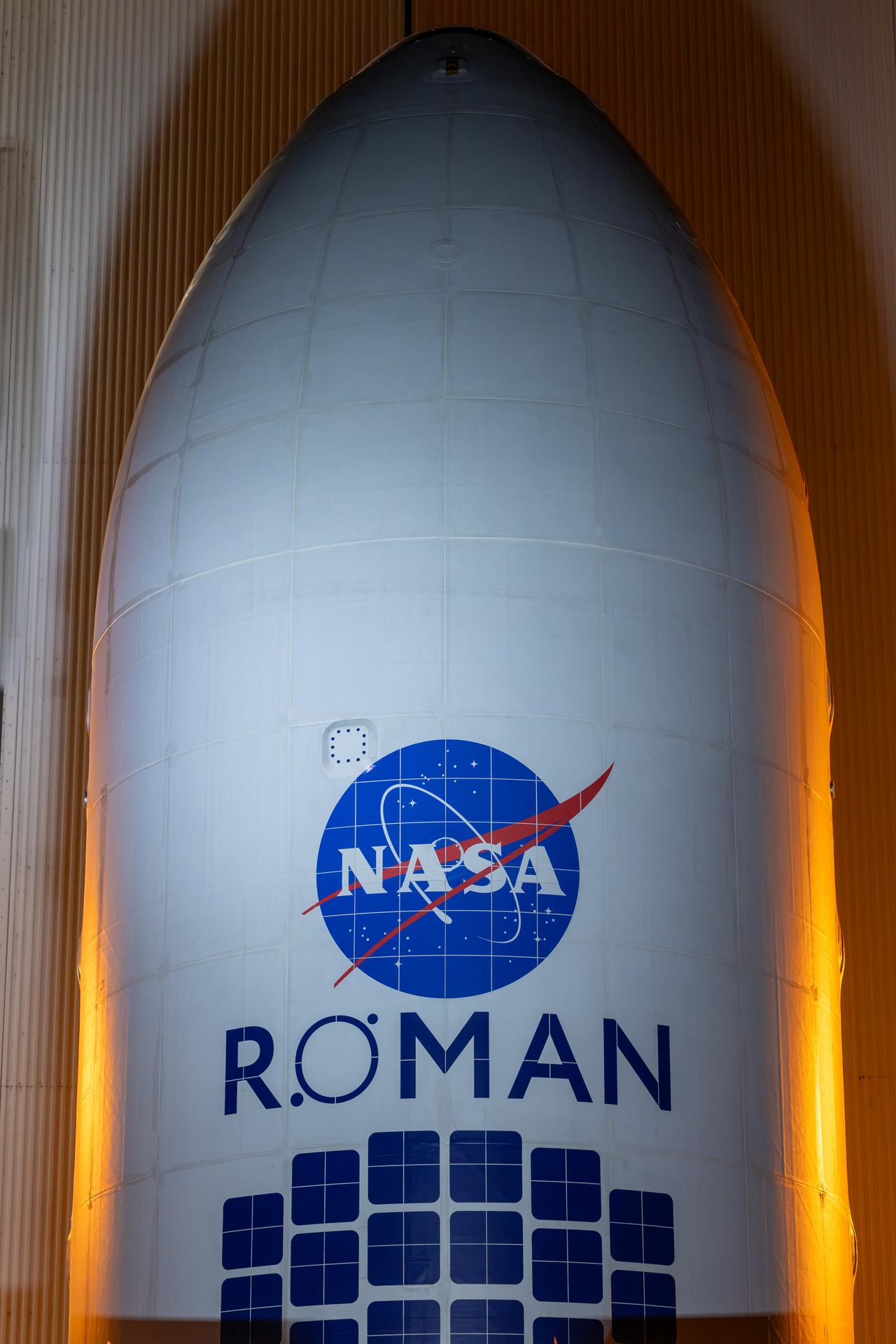
Teams inside the Payload Hazardous Servicing Facility at NASA’s Kennedy Space Center in Florida encapsulate the agency’s Nancy Grace Roman Space Telescope within the payload fairing on Friday,…
Inspect NASA record
Teams inside the Payload Hazardous Servicing Facility at NASA’s Kennedy Space Center in Florida encapsulate the agency’s Nancy Grace Roman Space Telescope within the payload fairing on Friday, Aug. 21, 2026, ahead of mating to a SpaceX Falcon Heavy rocket. Encapsulation shields the spacecraft during rollout, ascent, and the early phases of flight. Roman will investigate dark energy and dark matter, conduct a statistical census of planetary systems, and enable a broad range of additional astrophysics research. Liftoff from Launch Complex 39A at Kennedy is targeted for no earlier than Sunday, Aug. 30, 2026.
- Record ID
- KSC-20260824-PH-SER01_0005
- NASA center
- KSC
- Date
- 2026-08-24
- Credit
- Sydney Rohde (Rocz)
- Keywords
- Nancy Grace Roman Space Telescope, Roman, RST, Payload Hazardous Servicing Facility, PHSF, KSC, Kennedy Space Center, LSP, Launch Services Program, preparations, GSFC, SpaceX
JPL · 2016-01-06 · PIA20018
A Full Panel of Twins
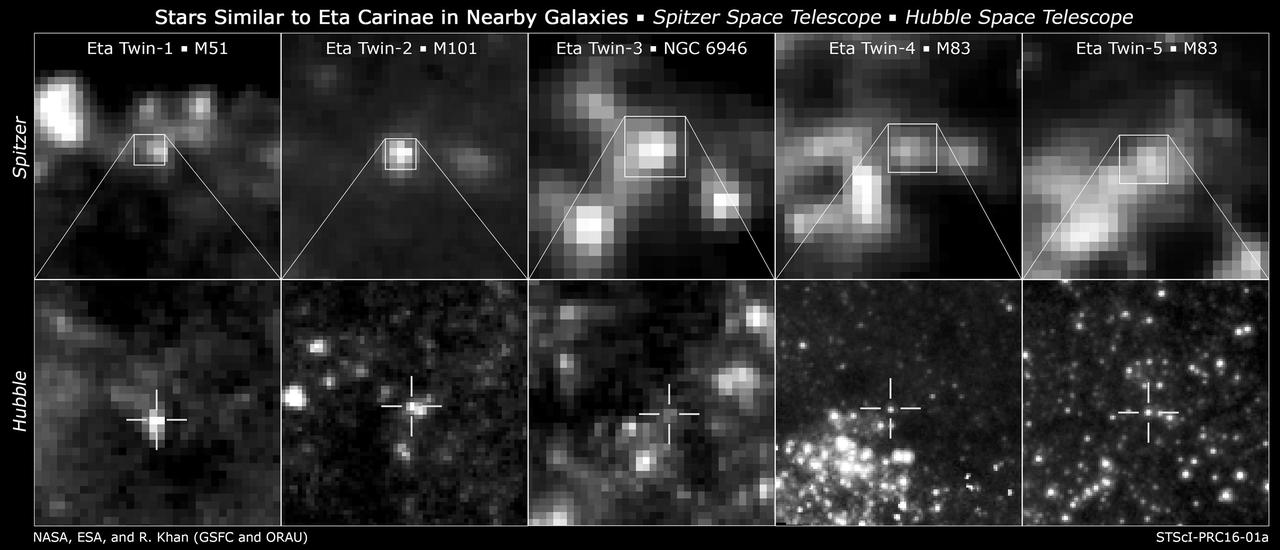
Researchers found likely twins of the giant, erupting star Eta Carinae by comparing infrared images from NASA Spitzer Space Telescope (top) and NASA Hubble Space Telescope (bottom). Astronomers…
Inspect NASA record
Researchers found likely twins of the giant, erupting star Eta Carinae by comparing infrared images from NASA Spitzer Space Telescope (top) and NASA Hubble Space Telescope (bottom). Astronomers cannot yet explain what caused the titanic eruption of star Eta Carinae in the 1840s. The discovery of likely Eta Carinae "twins" in other galaxies will help scientists better understand this brief phase in the life of a massive star. http://photojournal.jpl.nasa.gov/catalog/PIA20018
- Record ID
- PIA20018
- NASA center
- JPL
- Date
- 2016-01-06
- Credit
- NASA, ESA, and R. Khan GSFC and ORAU
- Keywords
- Eta Carinae, Hubble Space Telescope, Spitzer Space Telescope

HQ · 2022-01-08 · NHQ202201080011
James Webb Space Telescope Second Primary Mirror Deployment
NASA James Webb Space Telescope Mission Operations Manager Carl Starr monitors the progress of the Webb observatory as it’s second primary mirror wing is prepared to rotate into…
Inspect NASA record
NASA James Webb Space Telescope Mission Operations Manager Carl Starr monitors the progress of the Webb observatory as it’s second primary mirror wing is prepared to rotate into position, Saturday, Jan. 8, 2022, from NASA’s James Webb Space Telescope Mission Operations Center at the Space Telescope Science Institute in Baltimore. Webb, an infrared telescope with a 21.3-foot (6.5-meter) primary mirror, was folded up for launch and underwent an unprecedented deployment process to unfold in space. As NASA's next flagship observatory, Webb will study every phase of cosmic history—from within our solar system to the most distant observable galaxies in the early universe. Photo Credit: (NASA/Bill Ingalls)
- Record ID
- NHQ202201080011
- NASA center
- HQ
- Date
- 2022-01-08
- Credit
- NASA/Bill Ingalls
- Keywords
- Baltimore, Canadian Space Agency (CSA), Carl Starr, ESA (European Space Agency), James Webb Space Telescope (JWST), Maryland, NASA, Northrop Grumman, Space Telescope Science Institute (STScI)

HQ · 2022-01-08 · NHQ202201080030
James Webb Space Telescope Second Primary Mirror Deployment
NASA James Webb Space Telescope Mission Operations Manager Carl Starr monitors the progress of the Webb observatory as it’s second primary mirror wing is prepared to rotate into…
Inspect NASA record
NASA James Webb Space Telescope Mission Operations Manager Carl Starr monitors the progress of the Webb observatory as it’s second primary mirror wing is prepared to rotate into position, Saturday, Jan. 8, 2022, from NASA’s James Webb Space Telescope Mission Operations Center at the Space Telescope Science Institute in Baltimore. Webb, an infrared telescope with a 21.3-foot (6.5-meter) primary mirror, was folded up for launch and underwent an unprecedented deployment process to unfold in space. As NASA's next flagship observatory, Webb will study every phase of cosmic history—from within our solar system to the most distant observable galaxies in the early universe. Photo Credit: (NASA/Bill Ingalls)
- Record ID
- NHQ202201080030
- NASA center
- HQ
- Date
- 2022-01-08
- Credit
- NASA/Bill Ingalls
- Keywords
- Baltimore, Canadian Space Agency (CSA), Carl Starr, ESA (European Space Agency), James Webb Space Telescope (JWST), Maryland, NASA, Northrop Grumman, Space Telescope Science Institute (STScI)
HQ · 2022-01-08 · NHQ202201080002
James Webb Space Telescope Second Primary Mirror Deployment
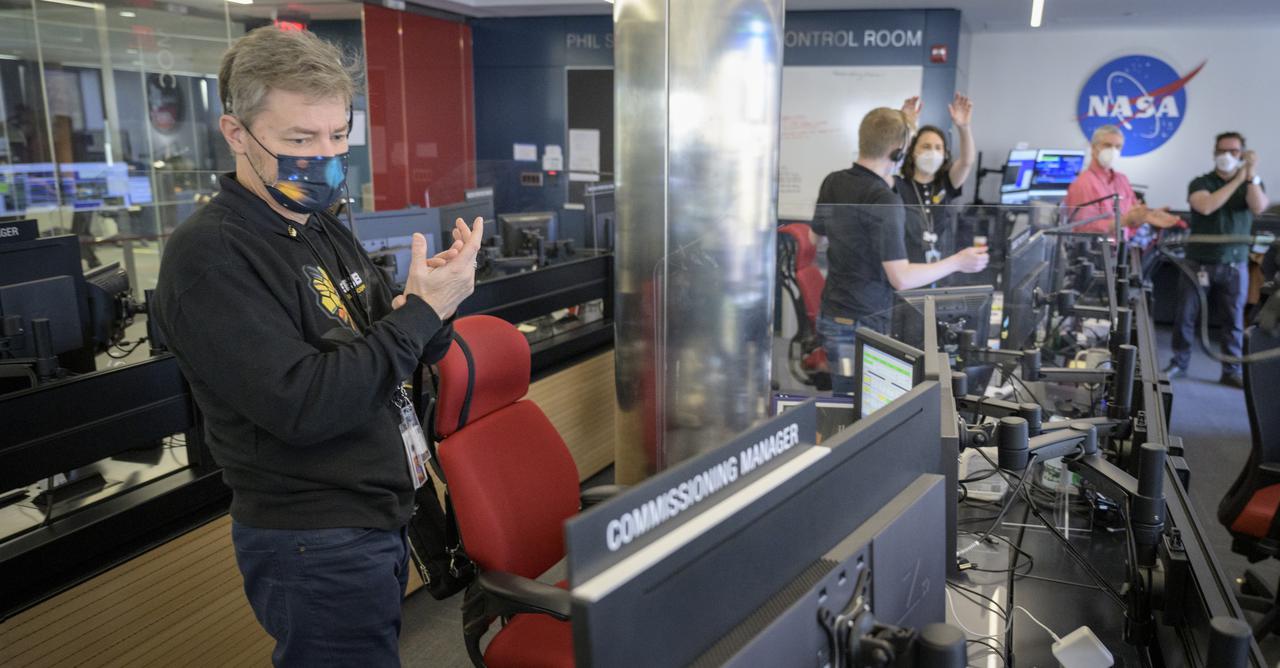
NASA James Webb Space Telescope Commissioning Manager John Durning, left, and engineering teams celebrate at the Space Telescope Science Institute in Baltimore as the second primary mirror wing…
Inspect NASA record
NASA James Webb Space Telescope Commissioning Manager John Durning, left, and engineering teams celebrate at the Space Telescope Science Institute in Baltimore as the second primary mirror wing of NASA’s James Webb Space Telescope unfolds, before beginning the process of latching the mirror wing into place, Saturday, Jan. 8, 2022. When fully latched, the infrared observatory will have completed its unprecedented process of unfolding in space to prepare for science operations. Webb will study every phase of cosmic history—from within our solar system to the most distant observable galaxies in the early universe. Photo Credit: (NASA/Bill Ingalls)
- Record ID
- NHQ202201080002
- NASA center
- HQ
- Date
- 2022-01-08
- Credit
- NASA/Bill Ingalls
- Keywords
- Baltimore, Canadian Space Agency (CSA), ESA (European Space Agency), James Webb Space Telescope (JWST), John Durning, Maryland, NASA, Northrop Grumman, Space Telescope Science Institute (STScI)
JPL · 2005-03-01 · PIA07395
Fingerprints in the Light
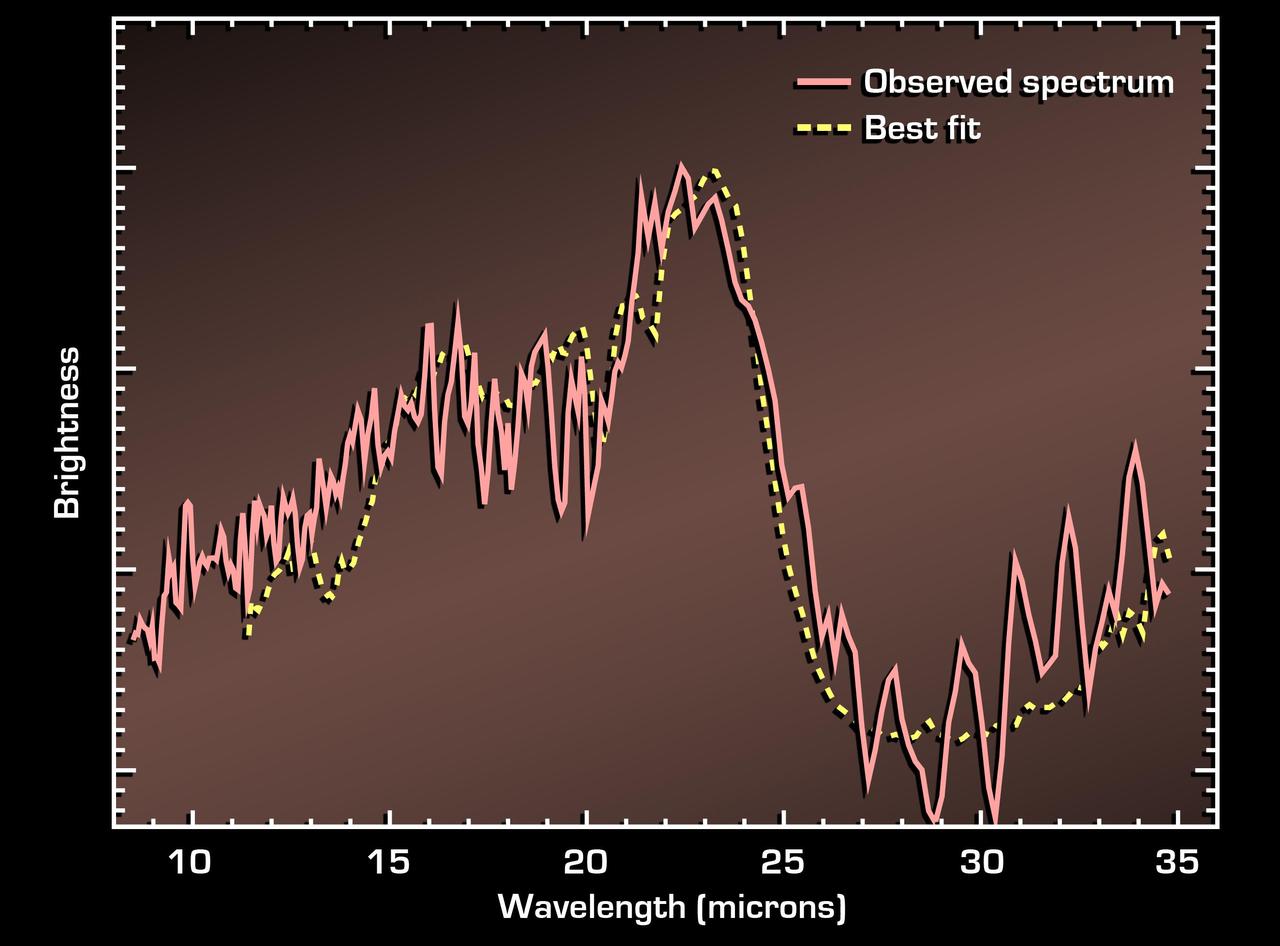
This spectrum shows the light from a dusty, distant galaxy located 11 billion light-years away. The galaxy is invisible to optical telescopes, but NASA Spitzer Space Telescope captured…
Inspect NASA record
This spectrum shows the light from a dusty, distant galaxy located 11 billion light-years away. The galaxy is invisible to optical telescopes, but NASA Spitzer Space Telescope captured the light from it and dozens of other similar galaxies.
- Record ID
- PIA07395
- NASA center
- JPL
- Date
- 2005-03-01
- Credit
- NASA/JPL-Caltech/Cornell
- Keywords
- Spitzer Space Telescope

JPL · 2006-12-08 · PIA09071
Stellar Debris in the Large Magellanic Cloud
This is a composite image of N49, the brightest supernova remnant in optical light in the Large Magellanic Cloud; the image combines data from the Chandra X-ray Telescope…
Inspect NASA record
This is a composite image of N49, the brightest supernova remnant in optical light in the Large Magellanic Cloud; the image combines data from the Chandra X-ray Telescope blue and NASA Spitzer Space Telescope red.
- Record ID
- PIA09071
- NASA center
- JPL
- Date
- 2006-12-08
- Credit
- NASA/CXC/STScI/JPL-Caltech/UIUC/Univ. of Minn.
- Keywords
- Spitzer Space Telescope
JPL · 2013-10-25 · PIA17551
Ghostly Boomerang
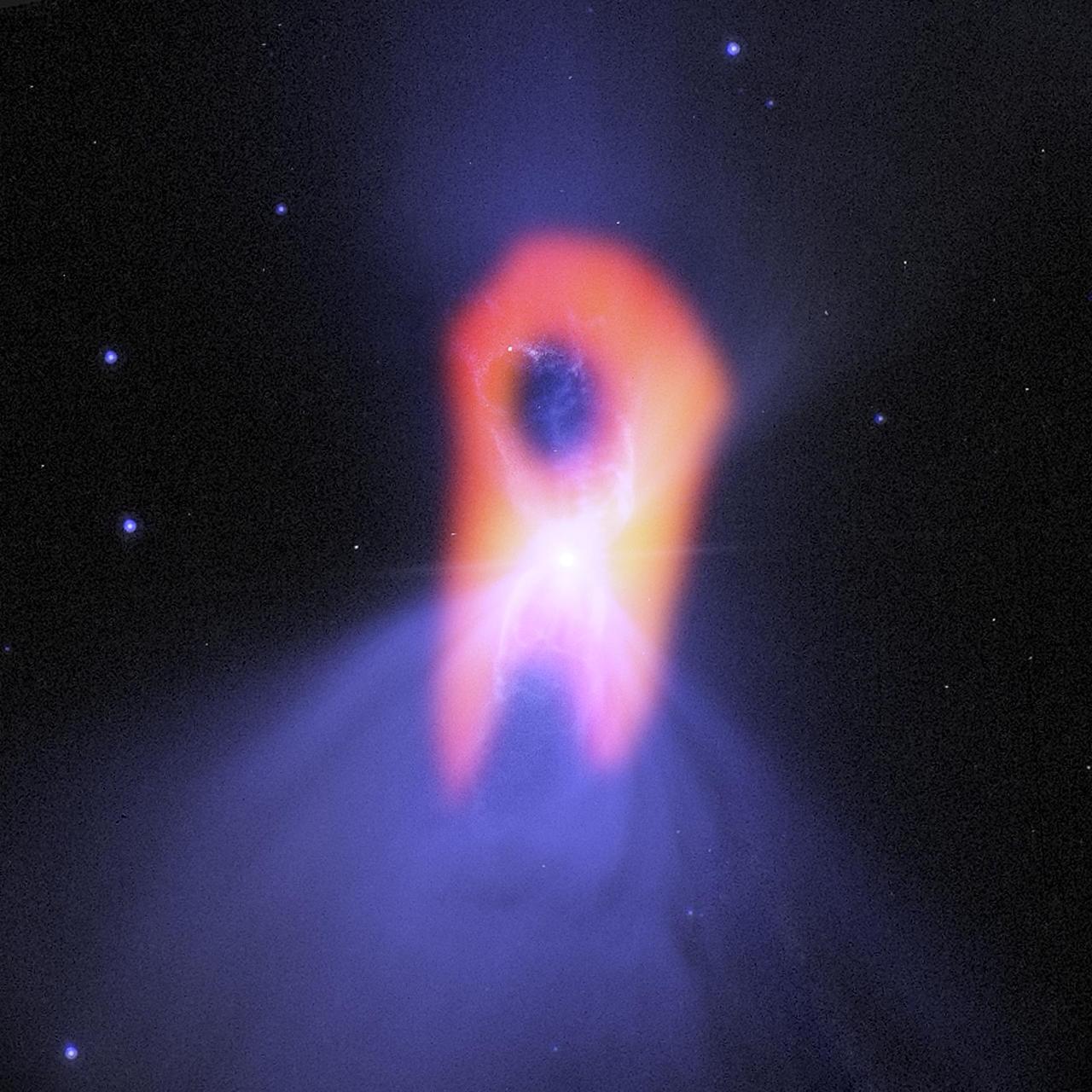
The Boomerang nebula, called the coldest place in the universe, reveals its true shape to the Atacama Large Millimeter/submillimeter Array ALMA telescope. The background blue structure, is seen…
Inspect NASA record
The Boomerang nebula, called the coldest place in the universe, reveals its true shape to the Atacama Large Millimeter/submillimeter Array ALMA telescope. The background blue structure, is seen in visible light by NASA Hubble Space Telescope.
- Record ID
- PIA17551
- NASA center
- JPL
- Date
- 2013-10-25
- Credit
- NRAO/AUI/NSF/NASA/STScI/JPL-Caltech
- Keywords
- Hubble Space Telescope
JPL · 2008-07-10 · PIA10932
Super Starburst Galaxy
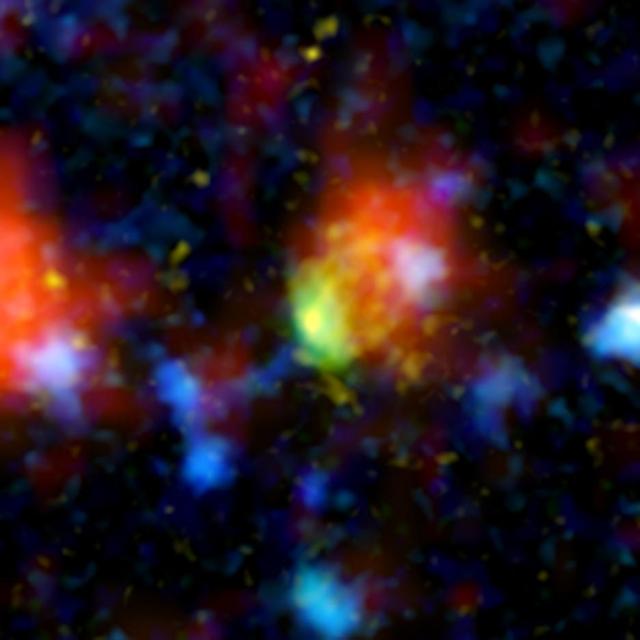
The green and red splotch in this image is the most active star-making galaxy in the very distant universe. Nicknamed Baby Boom, it was spotted 12.3 billion light-years…
Inspect NASA record
The green and red splotch in this image is the most active star-making galaxy in the very distant universe. Nicknamed Baby Boom, it was spotted 12.3 billion light-years away by a suite of telescopes, including NASA Spitzer Space Telescope.
- Record ID
- PIA10932
- NASA center
- JPL
- Date
- 2008-07-10
- Credit
- NASA/JPL-Caltech/Subaru/STScI
- Keywords
- Spitzer Space Telescope