
Update Site (from NASA)
Explore NASA’s Image and Video Library.
Suggest one object per day for the Interstellar Minds collection. We review each suggestion before adding it.
Sign in to suggest a Marvel.
Find a NASA image ID. Open a NASA record and copy its ID from the end of the details URL.
NASA image records
LRC · 1967-04-28 · LRC-1967-B701_P-04026
LRC-1967-B701_P-04026
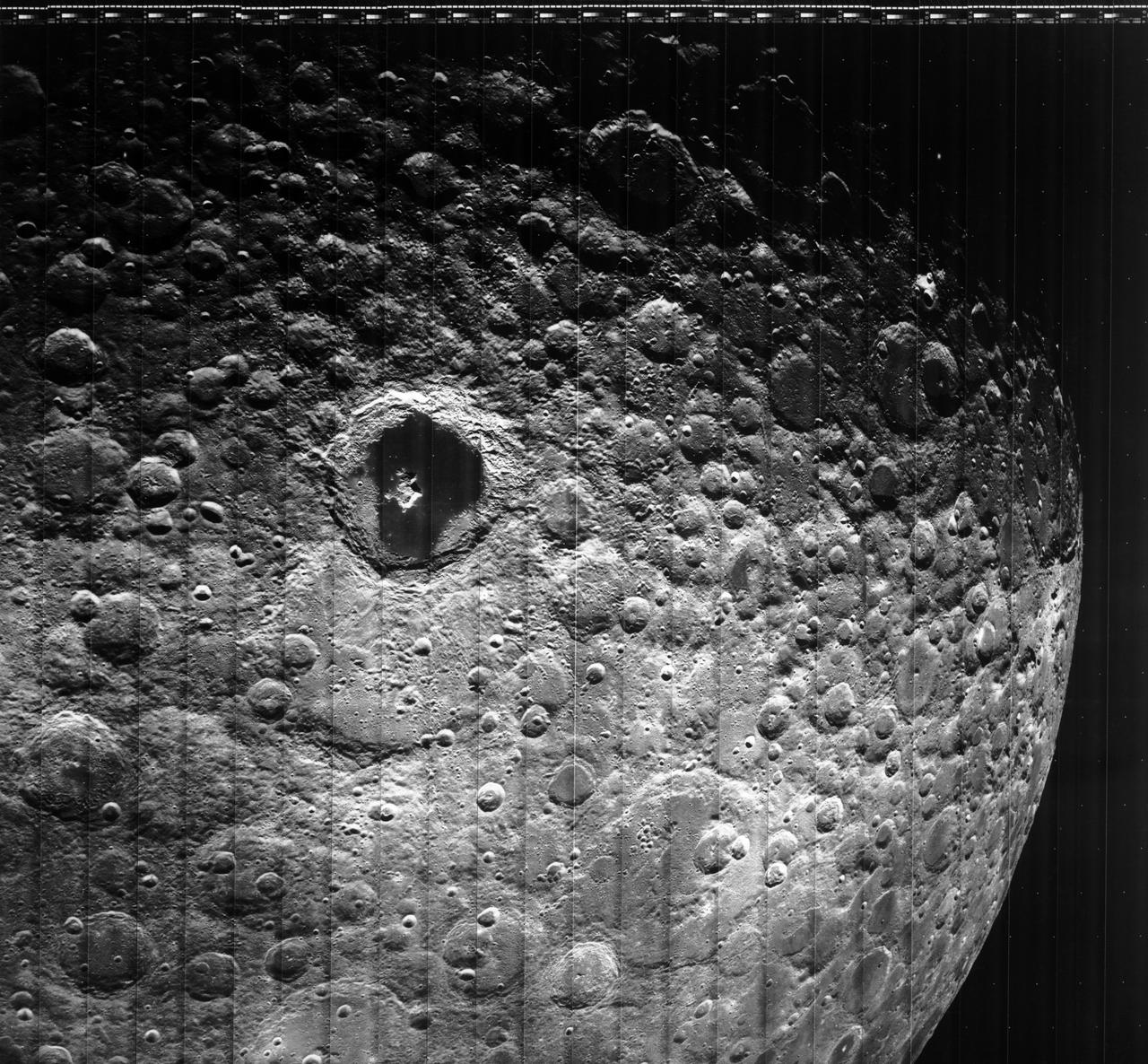
Moon Lunar Orbiter-Lunar Orbiter III: The hidden or dark side of the Moon was taken by Lunar Orbiter III During its mission to photograph potential lunar-landing sites for…
Inspect NASA record
Moon Lunar Orbiter-Lunar Orbiter III: The hidden or dark side of the Moon was taken by Lunar Orbiter III During its mission to photograph potential lunar-landing sites for Apollo missions. -- Photograph published in Winds of Change, 75th Anniversary NASA publication (page 94), by James Schultz. Photo Number:67-H-328 is 1967-L-04026
- Record ID
- LRC-1967-B701_P-04026
- NASA center
- LRC
- Date
- 1967-04-28
- Credit
- NASA
KSC · 2024-08-30 · KSC-20240830-PH-FMX01_0027
IPEx Testbed Filming
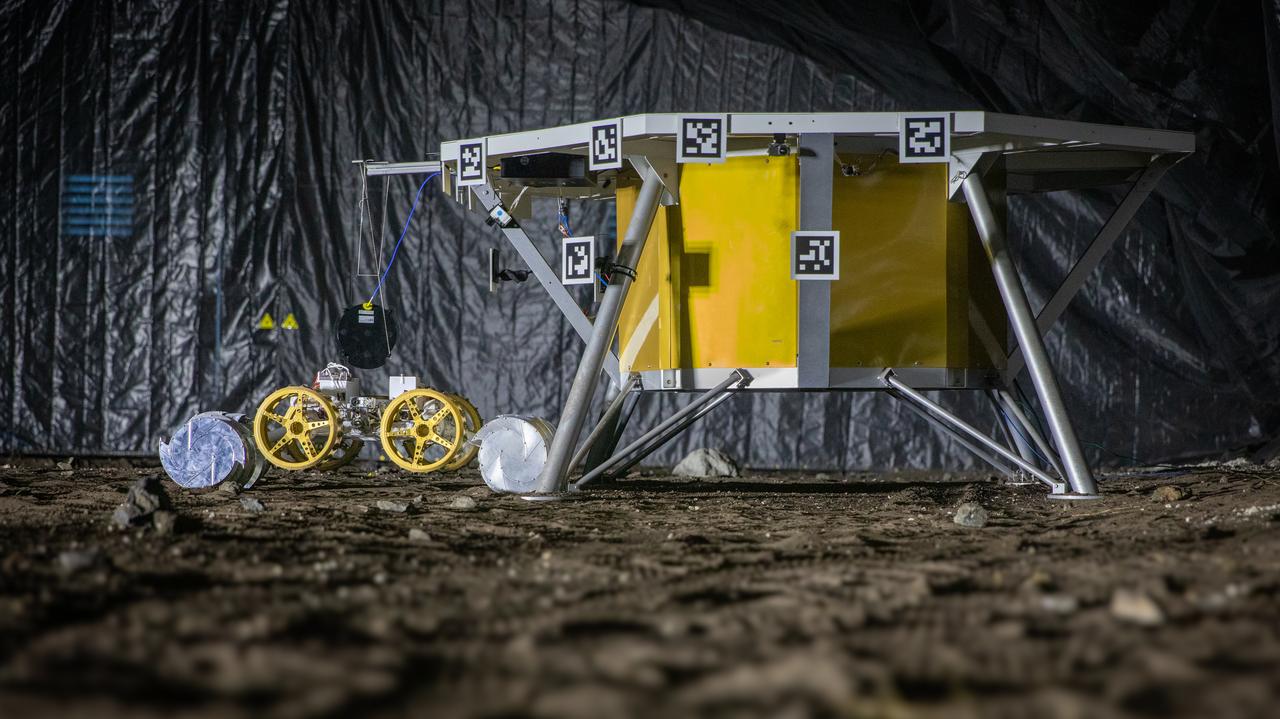
NASA’s ISRU Pilot Excavator (IPEx) performs a simulated lunar mission in a testbed at the agency’s Kennedy Space Center on Friday, Aug. 30, 2024. IPEx functions as both…
Inspect NASA record
NASA’s ISRU Pilot Excavator (IPEx) performs a simulated lunar mission in a testbed at the agency’s Kennedy Space Center on Friday, Aug. 30, 2024. IPEx functions as both an excavator and a dump truck to mine and transport lunar regolith, the loose rocky material on the Moon’s surface, which is crucial for future lunar missions and In-Situ Resource Utilization (ISRU) processes. This dual capability makes IPEx an indispensable tool for sustainable lunar exploration.
- Record ID
- KSC-20240830-PH-FMX01_0027
- NASA center
- KSC
- Date
- 2024-08-30
- Credit
- NASA/Frank Micheaux
- Keywords
- NASA, KSC, Kennedy Space Center, Swamp Works, IPEx, moon, moon surface, crawler
KSC · 2024-08-30 · KSC-20240830-PH-FMX01_0147
IPEx Testbed Filming
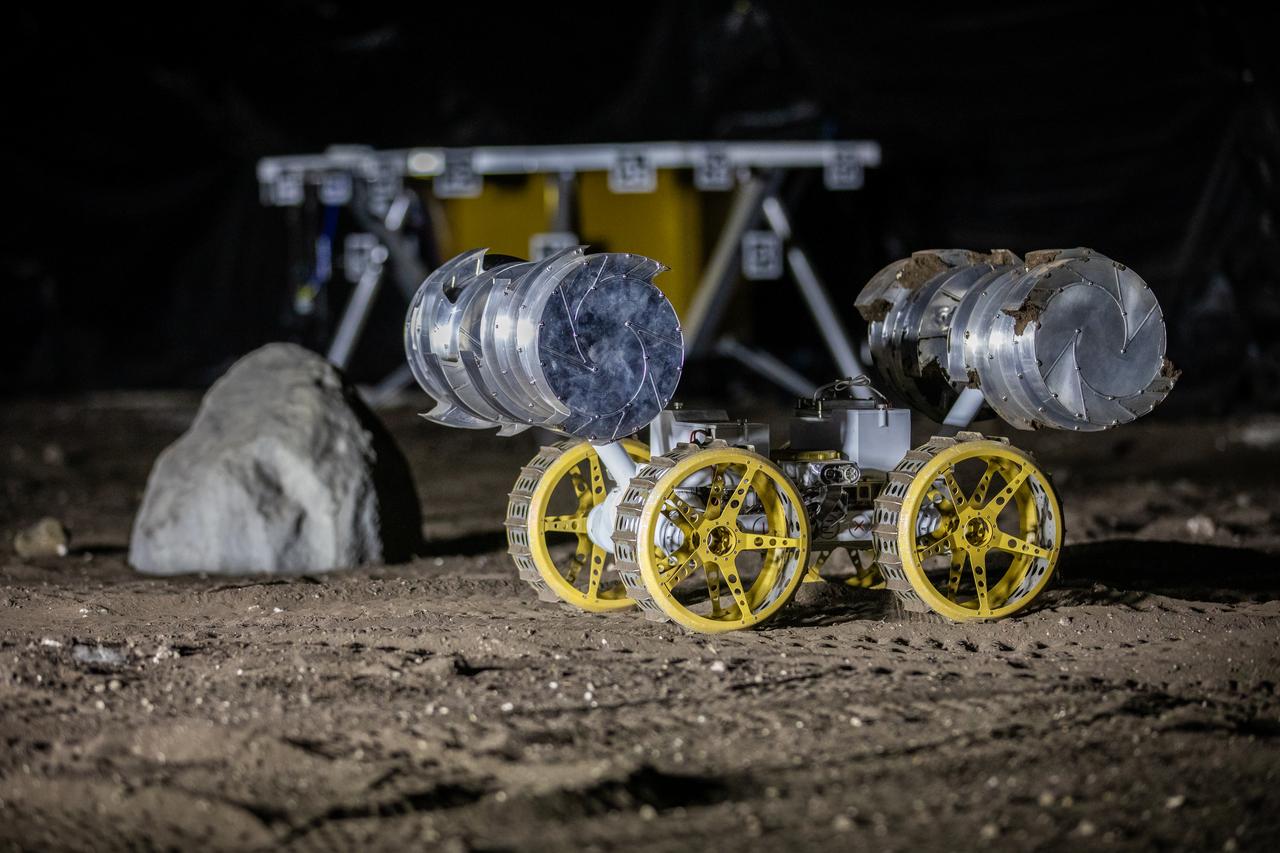
NASA’s ISRU Pilot Excavator (IPEx) performs a simulated lunar mission in a testbed at the agency’s Kennedy Space Center on Friday, Aug. 30, 2024. IPEx functions as both…
Inspect NASA record
NASA’s ISRU Pilot Excavator (IPEx) performs a simulated lunar mission in a testbed at the agency’s Kennedy Space Center on Friday, Aug. 30, 2024. IPEx functions as both an excavator and a dump truck to mine and transport lunar regolith, the loose rocky material on the Moon’s surface, which is crucial for future lunar missions and In-Situ Resource Utilization (ISRU) processes. This dual capability makes IPEx an indispensable tool for sustainable lunar exploration.
- Record ID
- KSC-20240830-PH-FMX01_0147
- NASA center
- KSC
- Date
- 2024-08-30
- Credit
- NASA/Frank Micheaux
- Keywords
- NASA, KSC, Kennedy Space Center, Swamp Works, IPEx, moon, moon surface, crawler
JSC · 2013-09-11 · s70-56415
s70-56415
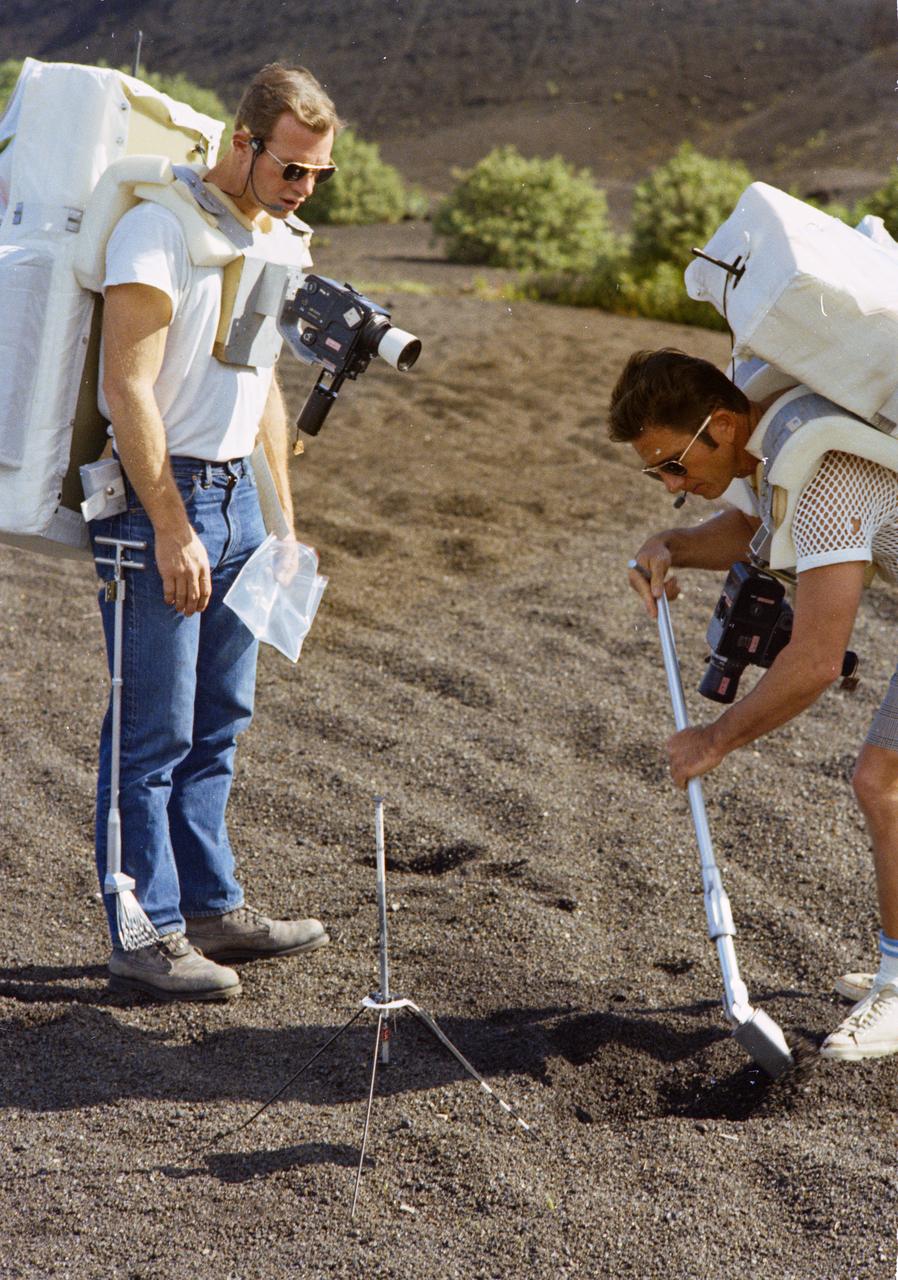
S70-56415 (December 1970) --- At Kapoho, Hawaii, astronauts David R. Scott (left), commander of the Apollo 15 lunar landing mission, and James B. Irwin, lunar module pilot, train…
Inspect NASA record
S70-56415 (December 1970) --- At Kapoho, Hawaii, astronauts David R. Scott (left), commander of the Apollo 15 lunar landing mission, and James B. Irwin, lunar module pilot, train at a designated lunar surface simulation area for their upcoming lunar landing mission. Wearing street clothes, but equipped with a Portable Life Support System (PLSS), the two rehearse for a selenological traverse. Here, they are inspecting a grapefruit-sized rock. Photo credit: NASA
- Record ID
- s70-56415
- NASA center
- JSC
- Date
- 2013-09-11
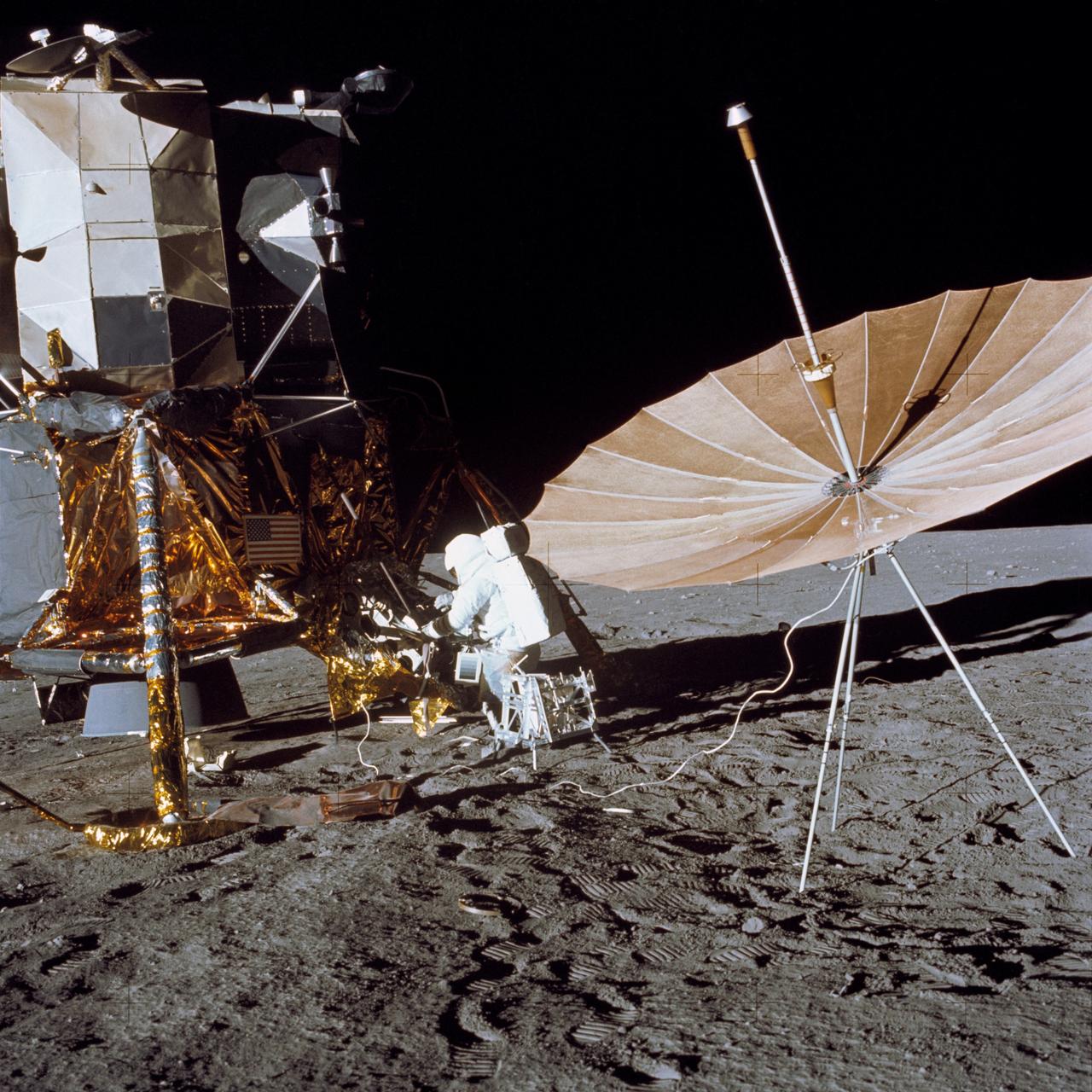
JSC · 1969-11-19 · as12-47-6988
Astronaut Charles Conrad stands at Modular Equipment Stowage Assemble
AS12-47-6988 (19 Nov. 1969) --- Astronaut Charles Conrad Jr., commander of the Apollo 12 lunar landing mission, stands at the Module Equipment Stowage Assembly (MESA) on the Lunar…
Inspect NASA record
AS12-47-6988 (19 Nov. 1969) --- Astronaut Charles Conrad Jr., commander of the Apollo 12 lunar landing mission, stands at the Module Equipment Stowage Assembly (MESA) on the Lunar Module (LM) following the first Apollo 12 extravehicular activity (EVA) on the lunar surface. The erectable S-band antenna is already deployed at right. The carrier for the Apollo Lunar Hand Tools (ALHT) is near Conrad. While astronauts Conrad and Alan L. Bean, lunar module pilot, descended in the LM to explore the lunar surface, astronaut Richard F. Gordon Jr., command module pilot, remained with the Command and Service Modules (CSM) in lunar orbit.
- Record ID
- as12-47-6988
- NASA center
- JSC
- Date
- 1969-11-19
- Keywords
- ANTENNAS, APOLLO 12 FLIGHT, APOLLO PROJECT, ASTRONAUTS, LUNAR MODULE, EXTRAVEHICULAR ACTIVITY, LUNAR SURFACE, STOWAGE (ONBOARD EQUIPMENT)
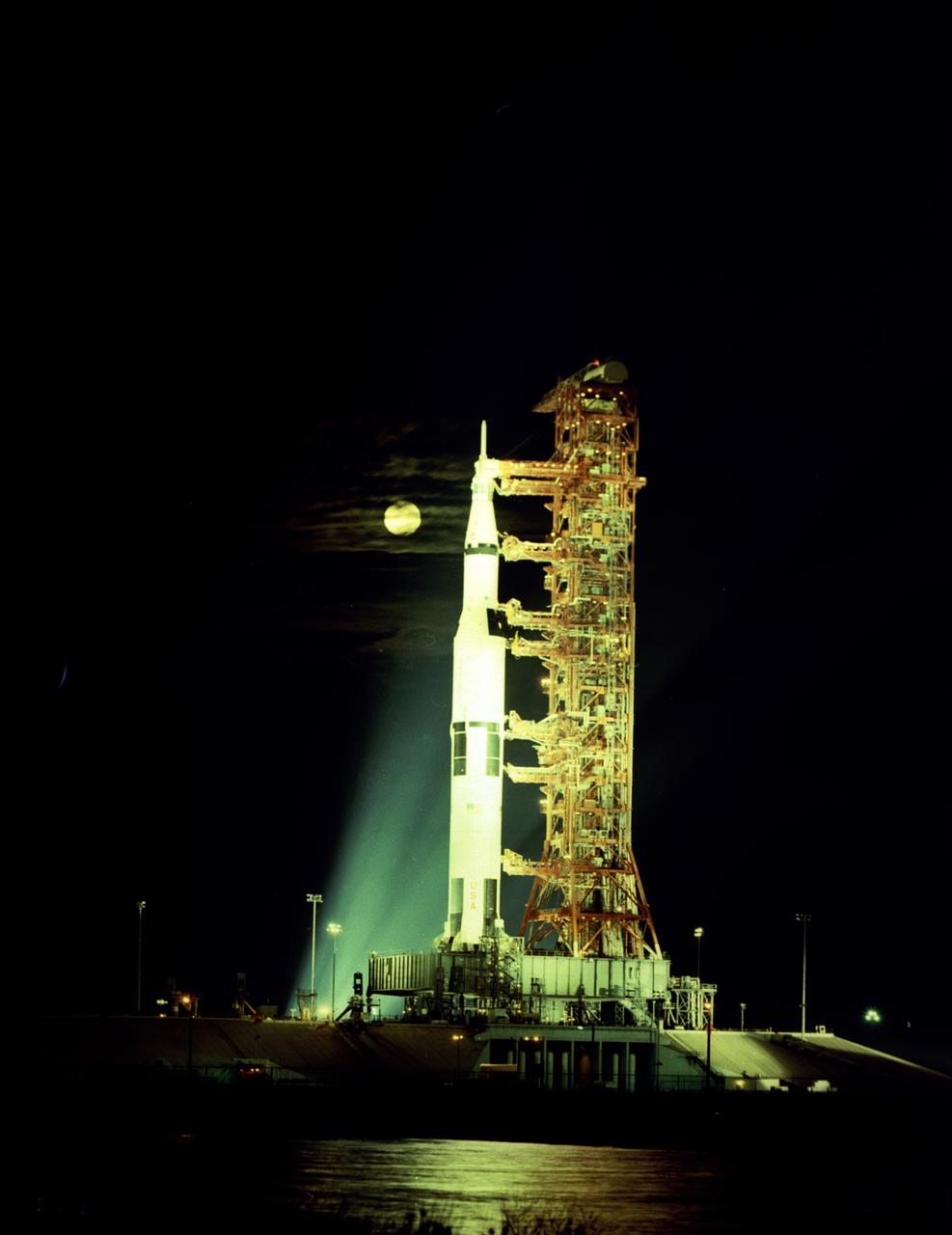
MSFC · 1972-12-18 · 7004739
Saturn Apollo Program
This is a breathtaking moonlit view of Apollo 17 on the Launch Pad at Kennedy Space Flight Center (KSC). The seventh and last manned lunar landing and return…
Inspect NASA record
This is a breathtaking moonlit view of Apollo 17 on the Launch Pad at Kennedy Space Flight Center (KSC). The seventh and last manned lunar landing and return to Earth mission, the Apollo 17, carrying a crew of three astronauts: Mission Commander Eugene A. Cernan, Lunar Module pilot Harrison H. Schmitt, and Command Module pilot Ronald E. Evans, lifted off on December 7, 1972. The basic objective of the Apollo 17 mission was to sample basin-rim highland material and adjacent mare material, and investigate the geological evolutionary relationship between these two major units. The mission marked the longest Apollo mission, 504 hours, and the longest lunar surface stay time, 75 hours, which allowed the astronauts to conduct an extensive geological investigation. They collected 257 pounds (117 kilograms) of lunar samples with the use of the Marshall Space Flight Center designed Lunar Roving Vehicle (LRV). The mission ended on December 19, 1972
- Record ID
- 7004739
- NASA center
- MSFC
- Date
- 1972-12-18
- Keywords
- Apollo 17, Launch Pad
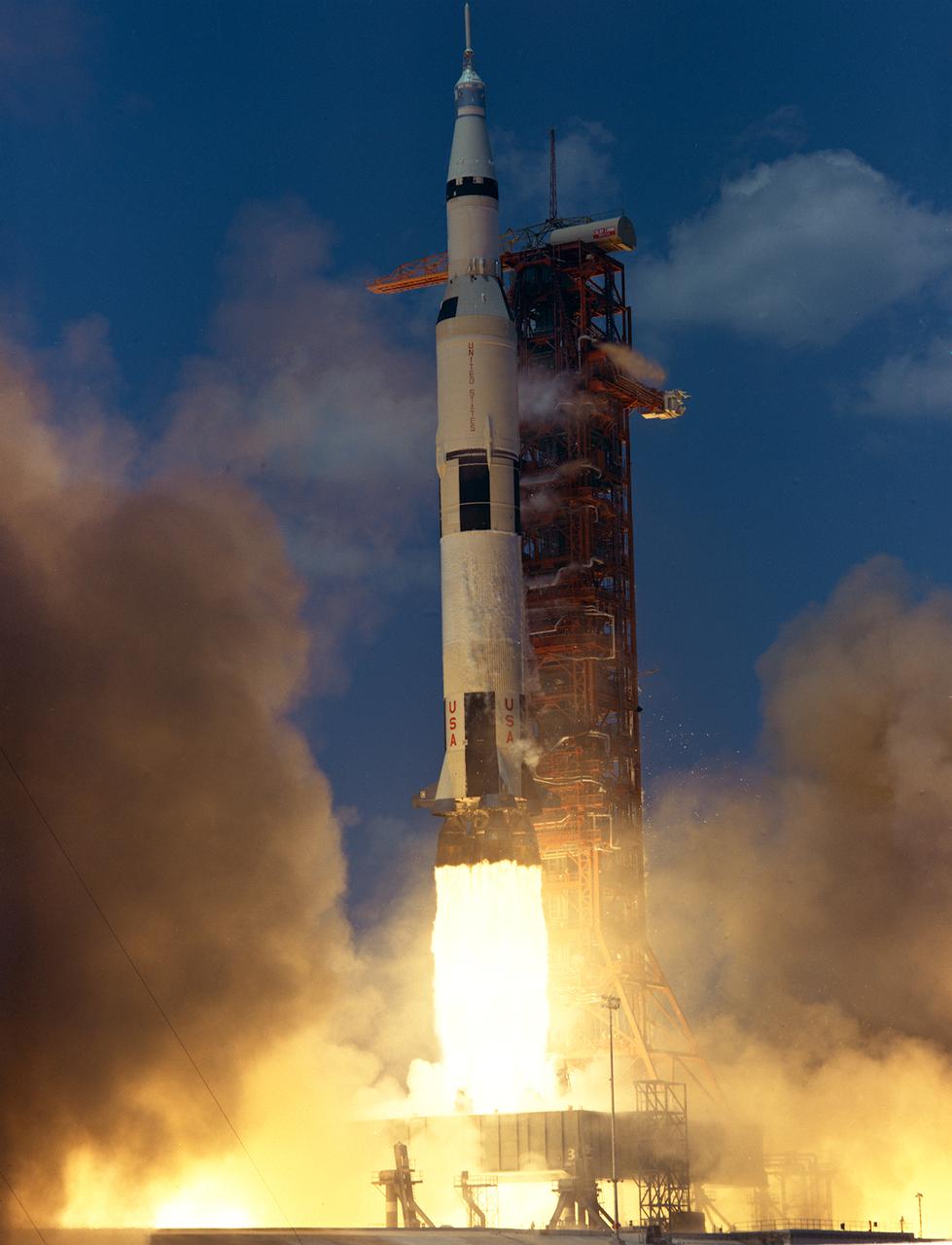
MSFC · 1972-04-16 · 7029784
Saturn Apollo Program
The sixth marned lunar landing mission, the Apollo 16 (SA-511), carrying three astronauts: Mission commander John W. Young, Command Module pilot Thomas K. Mattingly II, and Lunar Module…
Inspect NASA record
The sixth marned lunar landing mission, the Apollo 16 (SA-511), carrying three astronauts: Mission commander John W. Young, Command Module pilot Thomas K. Mattingly II, and Lunar Module pilot Charles M. Duke, lifted off on April 16, 1972. The Apollo 16 continued the broad-scale geological, geochemical, and geophysical mapping of the Moon's crust, begun by the Apollo 15, from lunar orbit. This mission marked the first use of the Moon as an astronomical observatory by using the ultraviolet camera/spectrograph. It photographed ultraviolet light emitted by Earth and other celestial objects. The Lunar Roving Vehicle was also used. The mission ended on April 27, 1972.
- Record ID
- 7029784
- NASA center
- MSFC
- Date
- 1972-04-16
- Keywords
- Apollo 16, Launch, Manned Lunar Landing, Young, Mattingly, Duke
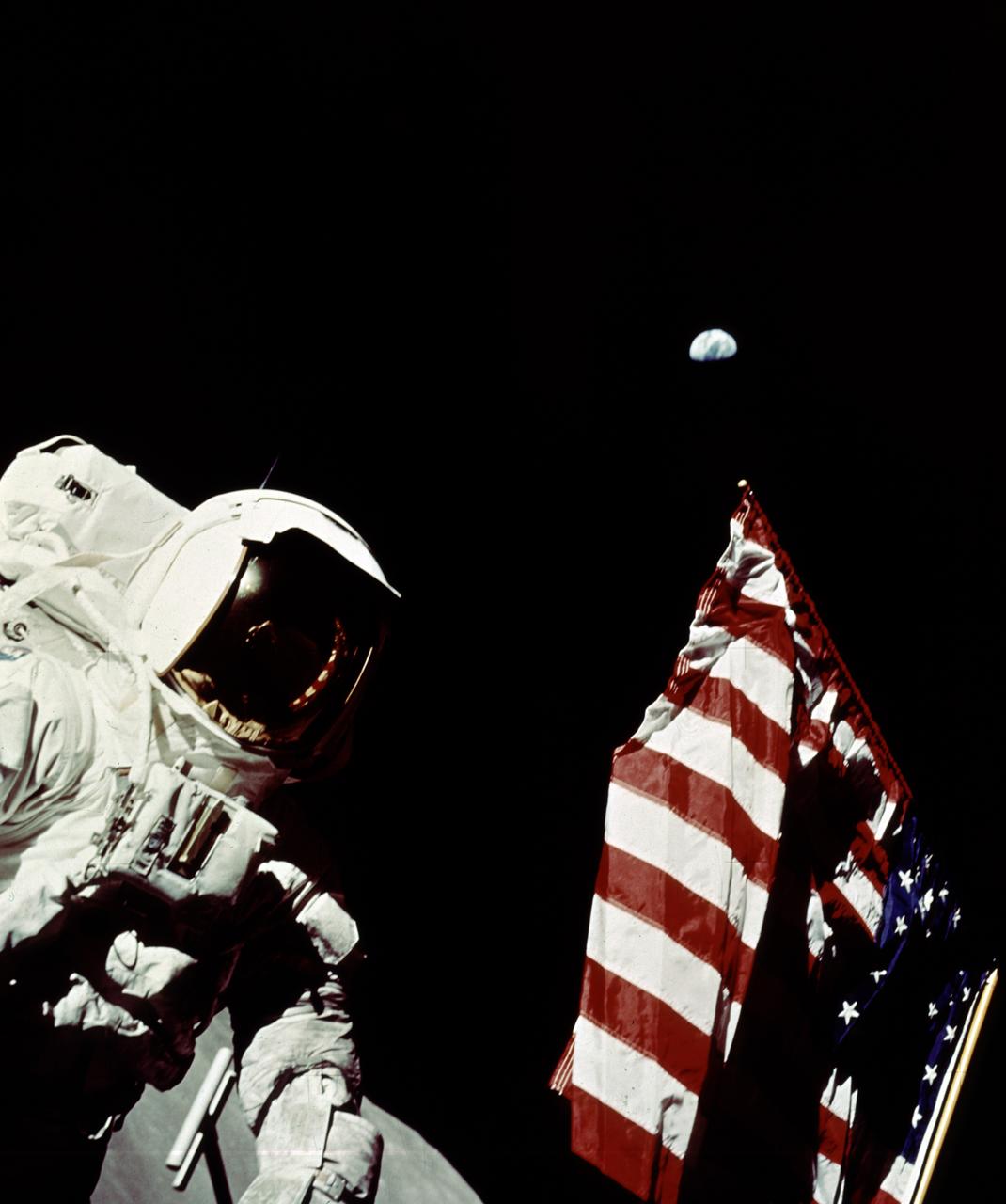
MSFC · 1972-12-12 · 7036672
Saturn Apollo Program
In this Apollo 17 onboard photo, Mission Commander Eugene A. Cernan adjusts the U.S. flag deployed upon the Moon. The seventh and last manned lunar landing and return…
Inspect NASA record
In this Apollo 17 onboard photo, Mission Commander Eugene A. Cernan adjusts the U.S. flag deployed upon the Moon. The seventh and last manned lunar landing and return to Earth mission, the Apollo 17, carrying a crew of three astronauts: Cernan; Lunar Module pilot Harrison H. Schmitt; and Command Module pilot Ronald E. Evans, lifted off on December 7, 1972 from the Kennedy Space Flight Center (KSC). Scientific objectives of the Apollo 17 mission included geological surveying and sampling of materials and surface features in a preselected area of the Taurus-Littrow region, deploying and activating surface experiments, and conducting in-flight experiments and photographic tasks during lunar orbit and transearth coast (TEC). These objectives included: Deployed experiments such as the Apollo lunar surface experiment package (ALSEP) with a Heat Flow experiment, Lunar seismic profiling (LSP), Lunar surface gravimeter (LSG), Lunar atmospheric composition experiment (LACE) and Lunar ejecta and meteorites (LEAM). The mission also included Lunar Sampling and Lunar orbital experiments. Biomedical experiments included the Biostack II Experiment and the BIOCORE experiment. The mission marked the longest Apollo mission, 504 hours, and the longest lunar surface stay time, 75 hours, which allowed the astronauts to conduct an extensive geological investigation. They collected 257 pounds (117 kilograms) of lunar samples with the use of the Marshall Space Flight Center developed LRV. The mission ended on December 19, 1972
- Record ID
- 7036672
- NASA center
- MSFC
- Date
- 1972-12-12
- Keywords
- Apollo 17, Cernan, U.S. Flag, Lunar Surface
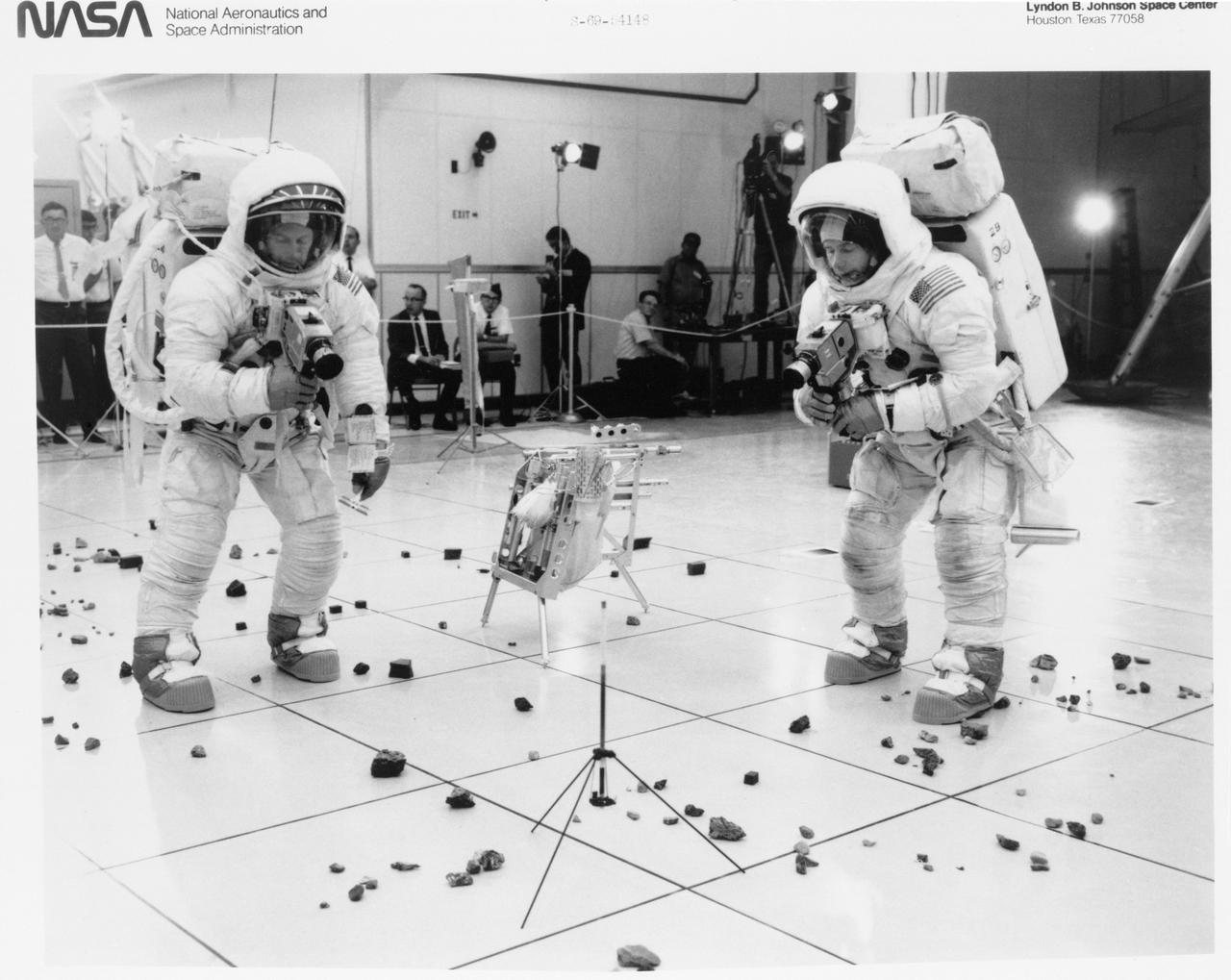
JSC · 1969-10-09 · S69-54148
Apollo XII - EVA CREW SIMULATIONS - KSC
S69-54148 (October 1969) --- Two members of the Apollo 12 lunar landing mission participates in lunar surface extravehicular activity (EVA) simulations in the Kennedy Space Center's (KSC) Flight…
Inspect NASA record
S69-54148 (October 1969) --- Two members of the Apollo 12 lunar landing mission participates in lunar surface extravehicular activity (EVA) simulations in the Kennedy Space Center's (KSC) Flight Crew Training Building. Here, astronauts Charles Conrad Jr. (on left), commander, and Alan L. Bean, lunar module pilot, simulate the photographic documentation of lunar rock samples. The simulations were part of a run-through of the Apollo 12 lunar surface "timeline".
- Record ID
- S69-54148
- NASA center
- JSC
- Date
- 1969-10-09
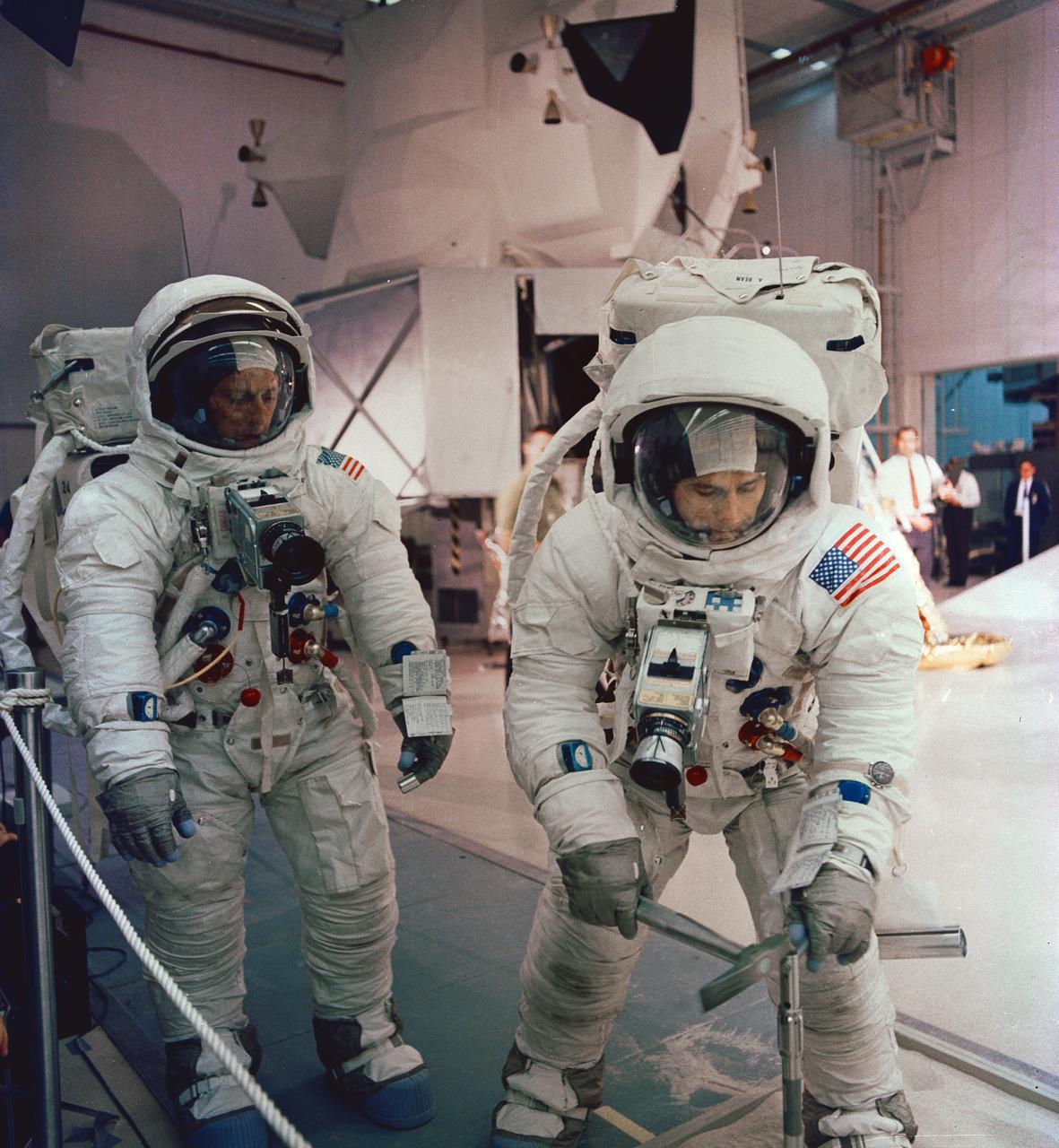
JSC · 1969-10-06 · s69-55362
Apollo 12 crewmembers participate in lunar surface extravehicular simulations
S69-55362 (6 Oct. 1969) --- The two assigned moon-walking crew members for the Apollo 12 lunar landing mission participate in lunar surface extravehicular activity simulations in the Kennedy…
Inspect NASA record
S69-55362 (6 Oct. 1969) --- The two assigned moon-walking crew members for the Apollo 12 lunar landing mission participate in lunar surface extravehicular activity simulations in the Kennedy Space Center's Flight Crew Training Building. Here, astronaut Alan L. Bean, lunar module pilot, simulates driving core tube into lunar surface to obtain a sample. Astronaut Charles Conrad Jr., commander, looks on. A Lunar Module mock-up is in the center background. Photo credit: NASA or National Aeronautics and Space Administration
- Record ID
- s69-55362
- NASA center
- JSC
- Date
- 1969-10-06
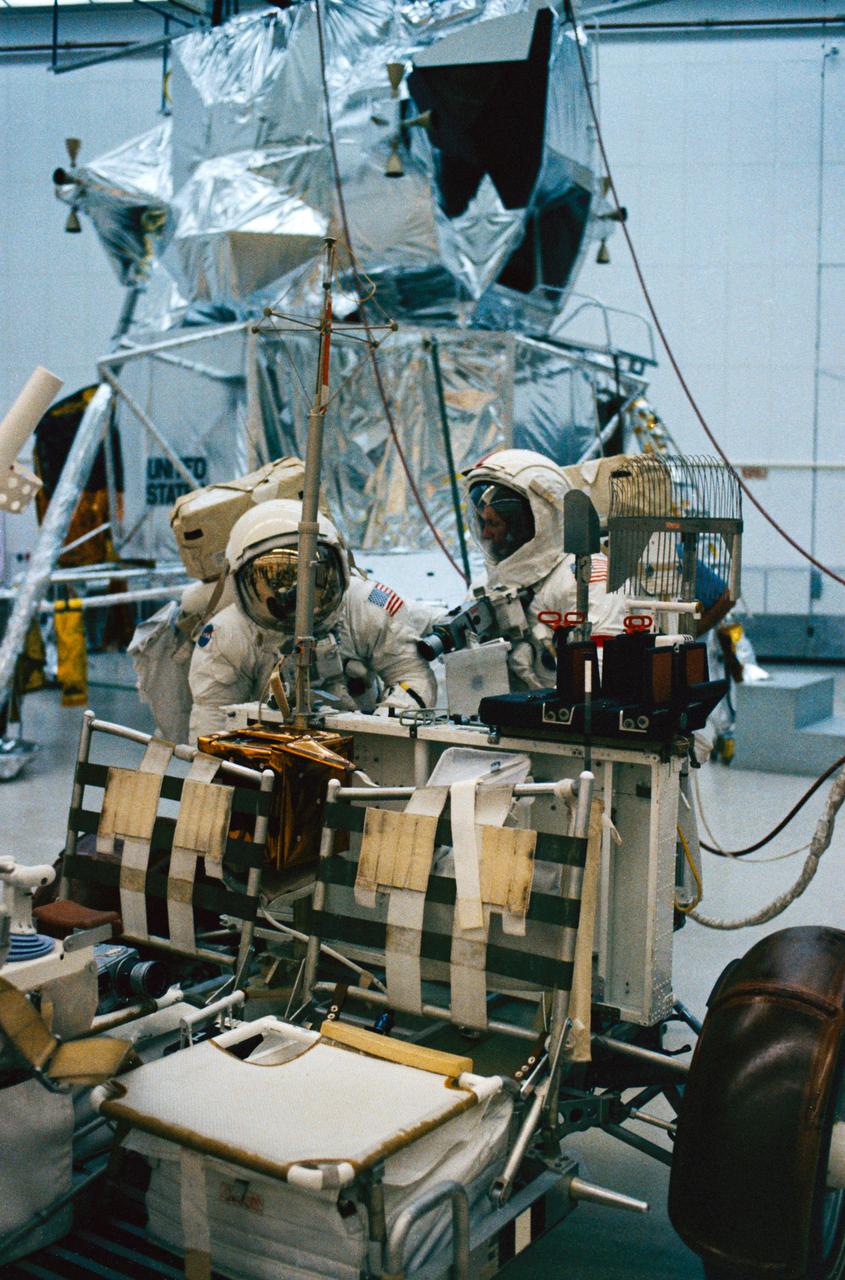
JSC · 1972-09-13 · S72-48887
S72-48887
S72-48887 (September 1972) --- Astronaut Eugene A. Cernan (right), commander, and scientist-astronaut Harrison H. Schmitt, lunar module pilot, work at the aft end of a Lunar Roving Vehicle…
Inspect NASA record
S72-48887 (September 1972) --- Astronaut Eugene A. Cernan (right), commander, and scientist-astronaut Harrison H. Schmitt, lunar module pilot, work at the aft end of a Lunar Roving Vehicle trainer during lunar surface extravehicular activity simulation training at the Kennedy Space Center (KSC), Florida. Astronauts Cernan, Schmitt, and Ronald E. Evans, command module pilot, are the prime crewmen of the Apollo 17 lunar landing mission. A Lunar Module mock-up can be seen in the background.
- Record ID
- S72-48887
- NASA center
- JSC
- Date
- 1972-09-13
- Credit
- 1996-98 AccuSoft Inc., All right
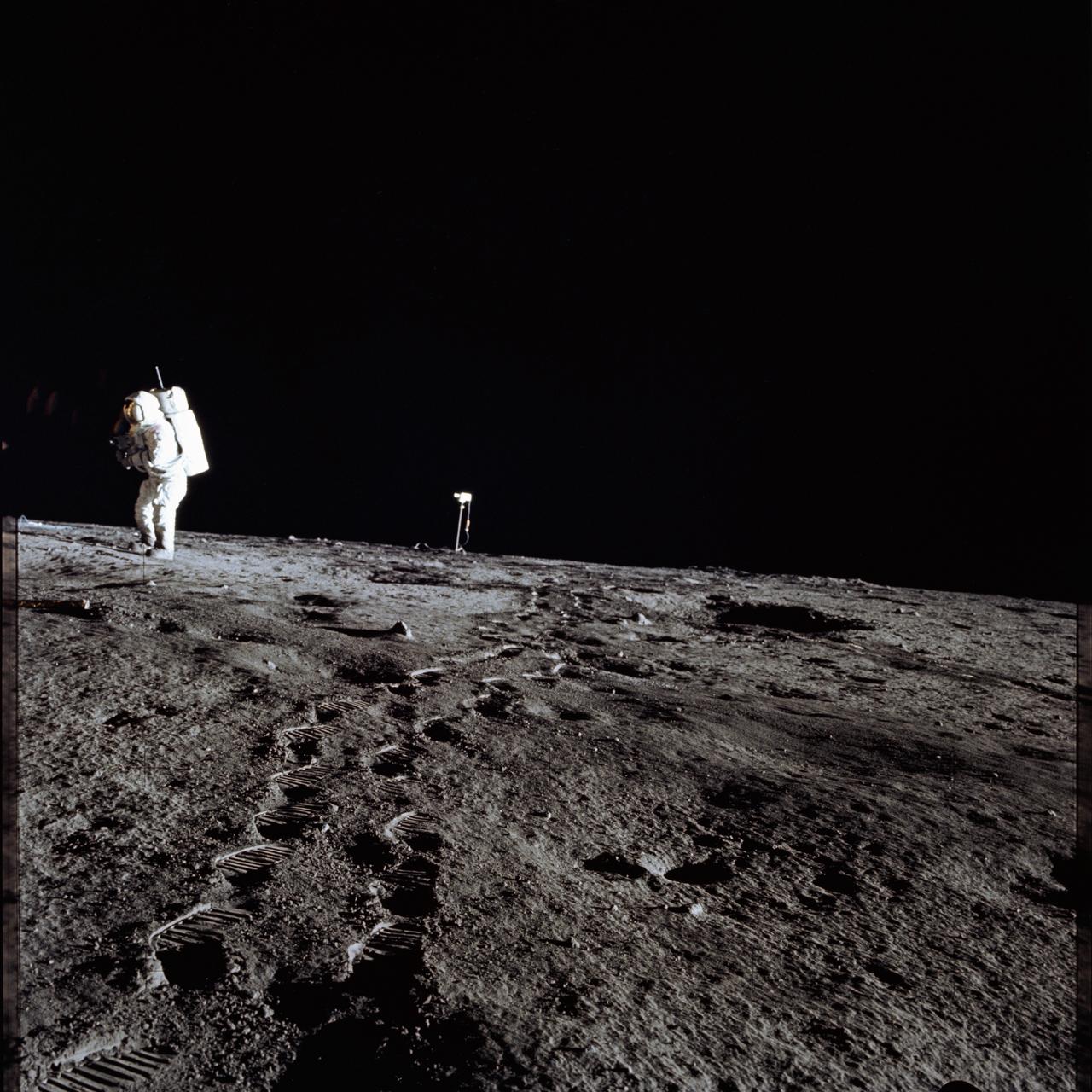
JSC · 1969-11-19 · AS12-46-6780
Apollo 12 Mission image - Photo of Al Bean and the TV taken from just inside the rim of Surveyor Crater
AS12-46-6780 (19 Nov. 1969) --- Astronaut Alan L. Bean, lunar module pilot for the Apollo 12 lunar landing mission, walks from the color lunar surface television camera (center)…
Inspect NASA record
AS12-46-6780 (19 Nov. 1969) --- Astronaut Alan L. Bean, lunar module pilot for the Apollo 12 lunar landing mission, walks from the color lunar surface television camera (center) toward the Apollo 12 Lunar Module (LM - out of frame). The photograph was taken by astronaut Charles Conrad Jr., commander, during the first extravehicular activity (EVA) of the mission. While astronauts Conrad and Bean descended in the LM "Intrepid" to explore the Ocean of Storms region of the moon, astronaut Richard F. Gordon Jr., command module pilot, remained with the Command and Service Modules (CSM) "Yankee Clipper" in lunar orbit.
- Record ID
- AS12-46-6780
- NASA center
- JSC
- Date
- 1969-11-19
- Keywords
- Apollo, Apollo 12, Moon