
Update Site (from NASA)
Explore NASA’s Image and Video Library.
Suggest one object per day for the Interstellar Minds collection. We review each suggestion before adding it.
Sign in to suggest a Marvel.
Find a NASA image ID. Open a NASA record and copy its ID from the end of the details URL.
NASA image records
HQ · 2013-09-06 · 201309060006HQ
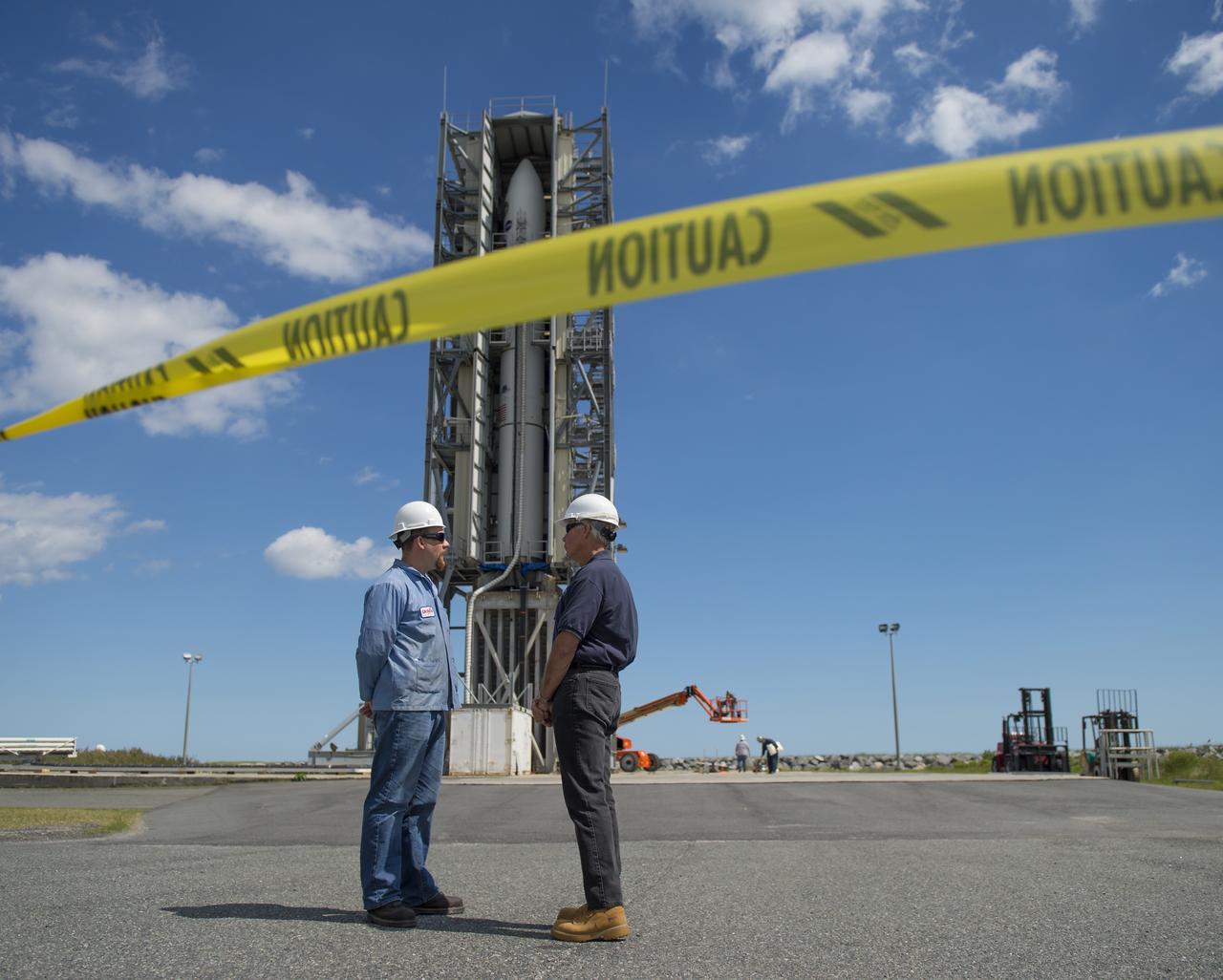
LADEE/Minotaur V Rocket
The doors of the gantry support structure are opened to reveal the Minotaur V rocket on Pad 0B at the Mid-Atlantic Regional Spaceport (MARS) at NASA's Wallops Flight…
Inspect NASA record
The doors of the gantry support structure are opened to reveal the Minotaur V rocket on Pad 0B at the Mid-Atlantic Regional Spaceport (MARS) at NASA's Wallops Flight Facility, Friday, Sept. 6, 2013 in Virginia. The Minotaur V will launch NASA's Lunar Atmosphere and Dust Environment Explorer (LADEE). LADEE is a robotic mission that will orbit the moon where it will provide unprecedented information about the environment around the moon and give scientists a better understanding of other planetary bodies in our solar system and beyond. LADEE is scheduled to launch at 11:27 p.m. Friday, Sept. 6, from NASA's Wallops Flight Facility. Photo Credit: (NASA/Carla Cioffi)
- Record ID
- 201309060006HQ
- NASA center
- HQ
- Date
- 2013-09-06
- Credit
- NASA/Carla Cioffi
- Keywords
- Launch Pad 0B, Mid-Atlantic Regional Spaceport (MARS), Minotaur V, NASA Wallops Flight Facility (WFF), Wallops Island
HQ · 2012-06-15 · 201206150001HQ
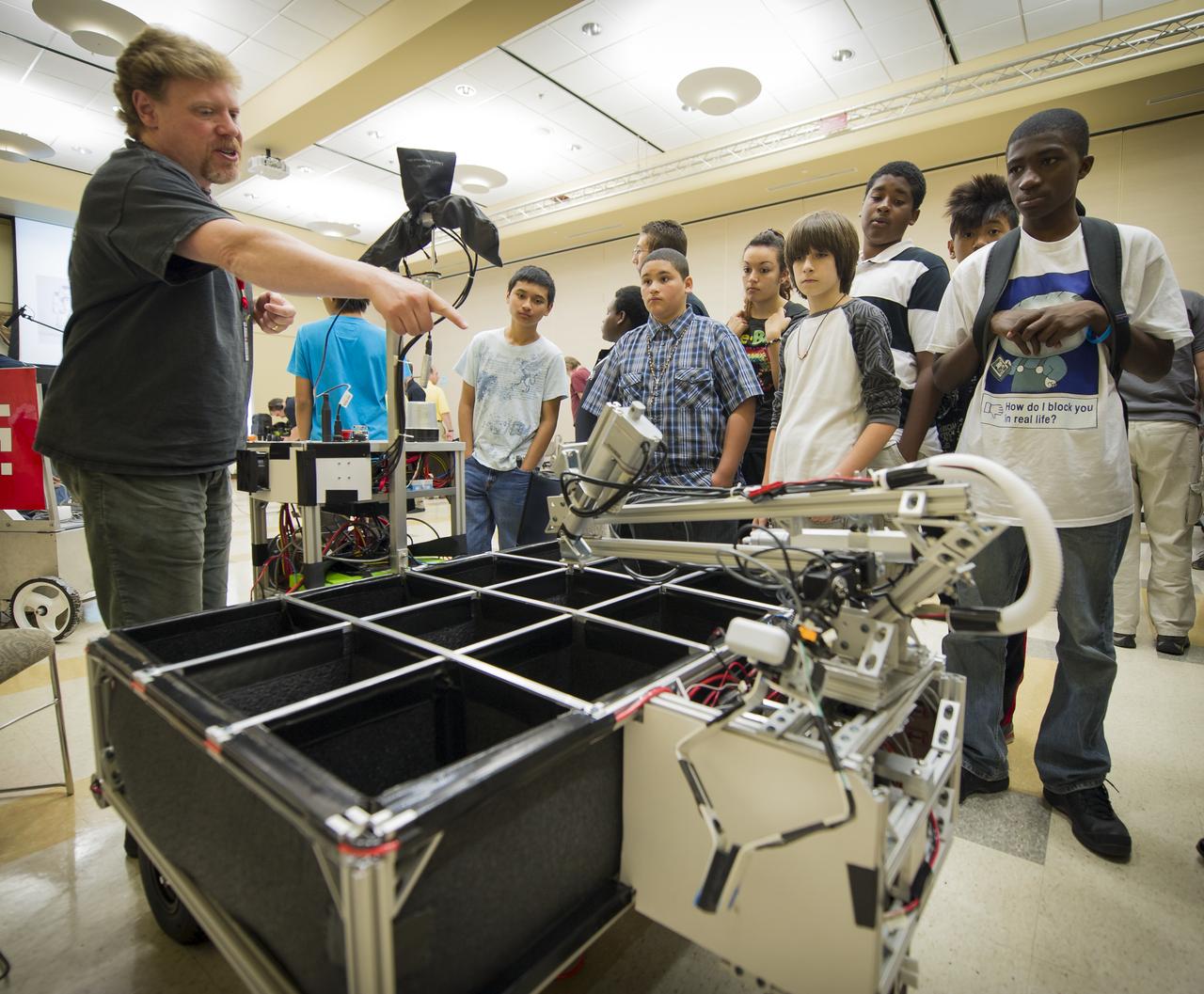
Sample Return Robot Centennial Challenge
Wunderkammer Laboratory Team leader Jim Rothrock, left, answers questions from 8th grade Sullivan Middle School (Mass.) students about his robot named "Cerberus" on Friday, June 15, 2012, at…
Inspect NASA record
Wunderkammer Laboratory Team leader Jim Rothrock, left, answers questions from 8th grade Sullivan Middle School (Mass.) students about his robot named "Cerberus" on Friday, June 15, 2012, at the Worcester Polytechnic Institute (WPI) in Worcester, Mass. Rothrock's robot team will compete for a $1.5 million NASA prize in the NASA-WPI Sample Return Robot Centennial Challenge at WPI. Teams have been challenged to build autonomous robots that can identify, collect and return samples. NASA needs autonomous robotic capability for future planetary exploration. Photo Credit: (NASA/Bill Ingalls)
- Record ID
- 201206150001HQ
- NASA center
- HQ
- Date
- 2012-06-15
- Credit
- NASA/Bill Ingalls
- Keywords
- Cerberus, Jim Rothrock, Massachusetts, Robot, Sample Return Robot Challenge, Worcester, Worcester Polytechnic Institute (WPI)

HQ · 2021-02-16 · NHQ202102160035
Mars 2020 Science Overview
Director of NASA's Science Mission Directorate’s Planetary Science Division, Lori Glaze, gives remarks during a NASA Perseverance rover mission science overview, Tuesday, Feb. 16, 2021, at NASA's Jet…
Inspect NASA record
Director of NASA's Science Mission Directorate’s Planetary Science Division, Lori Glaze, gives remarks during a NASA Perseverance rover mission science overview, Tuesday, Feb. 16, 2021, at NASA's Jet Propulsion Laboratory in Pasadena, California. The Perseverance Mars rover is due to land on Mars Thursday, Feb. 18, 2021. A key objective for Perseverance’s mission on Mars is astrobiology, including the search for signs of ancient microbial life. The rover will characterize the planet’s geology and past climate, pave the way for human exploration of the Red Planet, and be the first mission to collect and cache Martian rock and regolith. Photo Credit: (NASA/Bill Ingalls)
- Record ID
- NHQ202102160035
- NASA center
- HQ
- Date
- 2021-02-16
- Credit
- NASA/Bill Ingalls
- Keywords
- California, Jet Propulsion Laboratory (JPL), Lori Glaze, Mars 2020, Pasadena, Perseverance
HQ · 2018-10-31 · NHQ201810310004
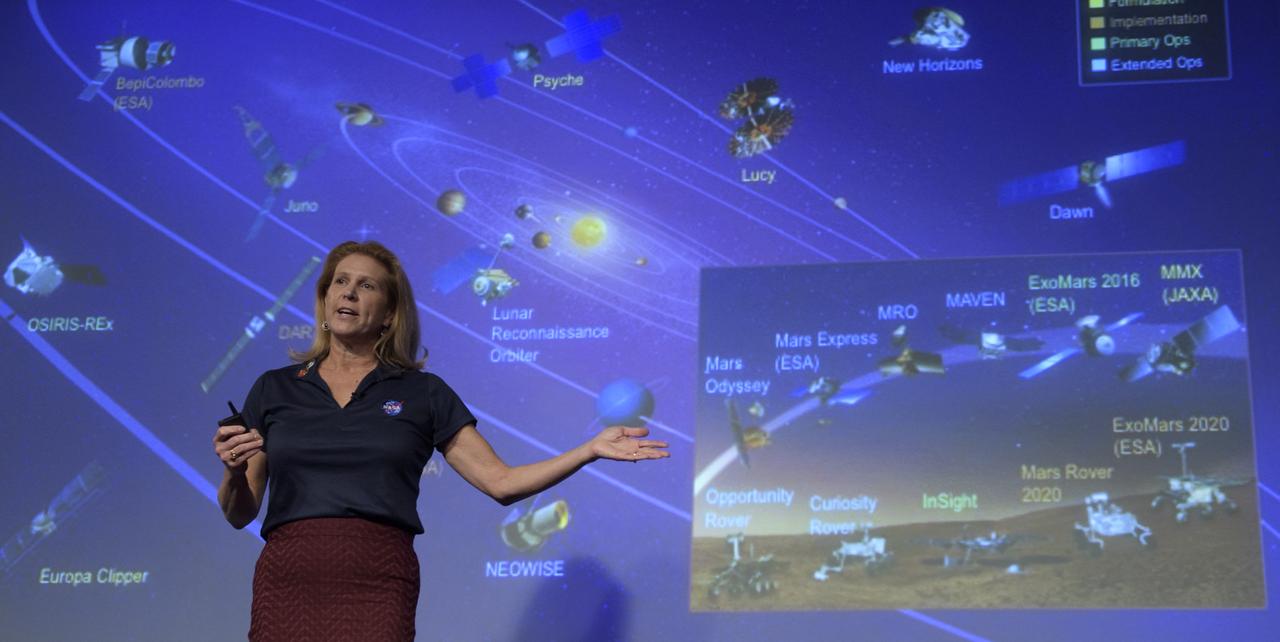
InSight Media Briefing
NASA Headquarters acting director of the Planetary Science Division Lori Glaze gives remarks during the NASA InSight Mars Lander (Interior Exploration using Seismic Investigations, Geodesy and Heat Transport)…
Inspect NASA record
NASA Headquarters acting director of the Planetary Science Division Lori Glaze gives remarks during the NASA InSight Mars Lander (Interior Exploration using Seismic Investigations, Geodesy and Heat Transport) media briefing, Wednesday, Oct. 31, 2018 at NASA Headquarters in Washington. InSIght will land on the Red Planet at approximately 3 p.m. EST (noon PST) Monday, Nov. 26. InSight will study the deep interior of Mars to learn how all celestial bodies with rocky surfaces, including Earth and the Moon, formed. The lander’s instruments include a seismometer to detect marsquakes and a probe to monitor the flow of heat in the planet's subsurface. Photo Credit: (NASA/Bill Ingalls)
- Record ID
- NHQ201810310004
- NASA center
- HQ
- Date
- 2018-10-31
- Credit
- NASA/Bill Ingalls
- Keywords
- DC, Lori Glaze, Mars Interior Exploration using Seismic Investigations Geodesy a, NASA Headquarters, Washington

KSC · 1999-06-12 · KSC-99pp0665
KSC-99pp0665
At Hangar AE, Cape Canaveral Air Station (CCAS), workers check the installation of a solar panel on NASA's Far Ultraviolet Spectroscopic Explorer (FUSE) satellite. FUSE was developed by…
Inspect NASA record
At Hangar AE, Cape Canaveral Air Station (CCAS), workers check the installation of a solar panel on NASA's Far Ultraviolet Spectroscopic Explorer (FUSE) satellite. FUSE was developed by The Johns Hopkins University under contract to Goddard Space Flight Center, Greenbelt, Md., to investigate the origin and evolution of the lightest elements in the universe hydrogen and deuterium. In addition, the FUSE satellite will examine the forces and process involved in the evolution of the galaxies, stars and planetary systems by investigating light in the far ultraviolet portion of the electromagnetic spectrum. FUSE is targeted for launch June 23 from Launch Pad 17A, CCAS, aboard a Boeing Delta II rocket
- Record ID
- KSC-99pp0665
- NASA center
- KSC
- Date
- 1999-06-12
KSC · 1999-06-14 · KSC-99pp0693
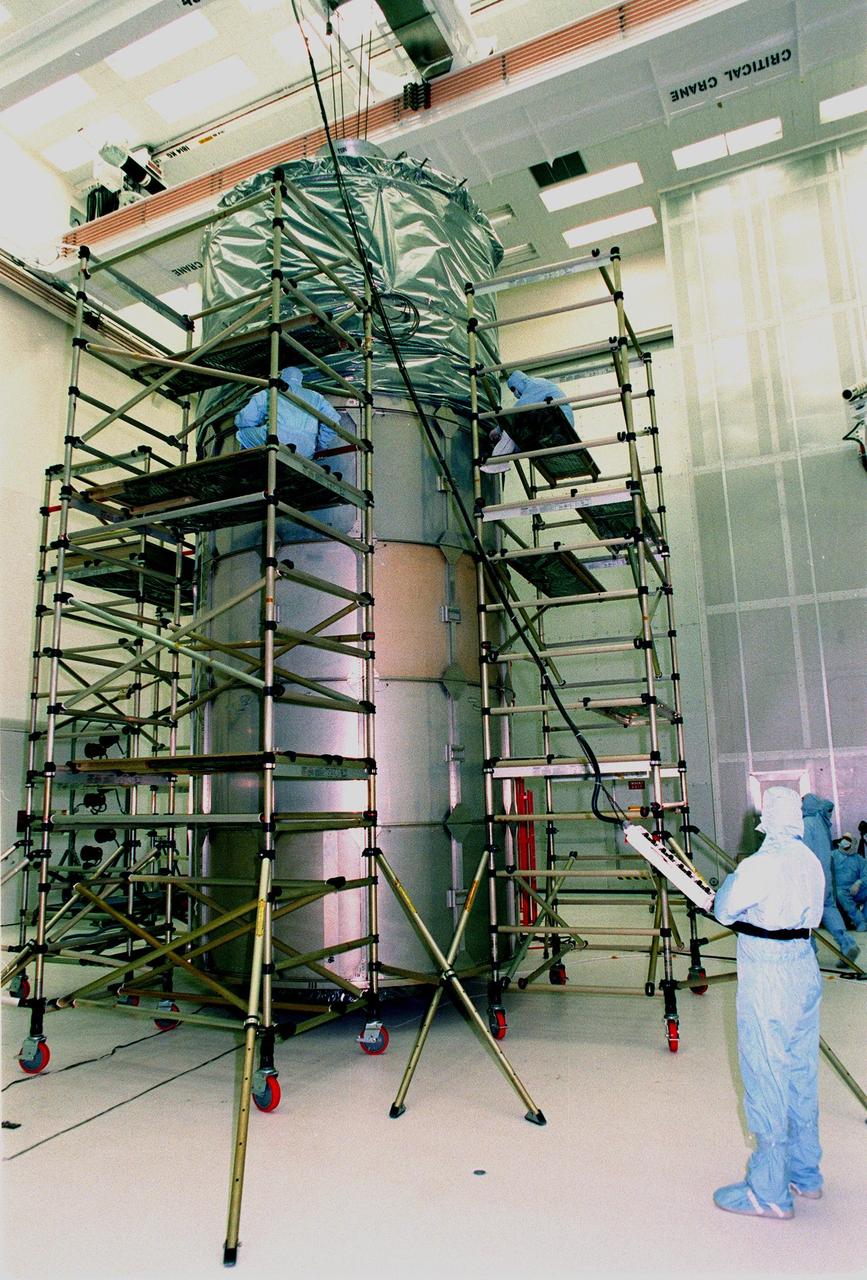
KSC-99pp0693
At Hangar AE, Cape Canaveral Air Station (CCAS), workers on scaffolding pull down a weather-proofing cover over the canister surrounding NASA's Far Ultraviolet Spectroscopic Explorer (FUSE) satellite. The…
Inspect NASA record
At Hangar AE, Cape Canaveral Air Station (CCAS), workers on scaffolding pull down a weather-proofing cover over the canister surrounding NASA's Far Ultraviolet Spectroscopic Explorer (FUSE) satellite. The satellite will next be moved to Launch Pad 17A, CCAS, for its scheduled launch June 23 aboard a Boeing Delta II rocket. FUSE was developed by The Johns Hopkins University under contract to Goddard Space Flight Center, Greenbelt, Md., to investigate the origin and evolution of the lightest elements in the universe hydrogen and deuterium. In addition, the FUSE satellite will examine the forces and process involved in the evolution of the galaxies, stars and planetary systems by investigating light in the far ultraviolet portion of the electromagnetic spectrum
- Record ID
- KSC-99pp0693
- NASA center
- KSC
- Date
- 1999-06-14

KSC · 1999-06-03 · KSC-99pp0647
KSC-99pp0647
At Launch Pad 17A, Cape Canaveral Air Station (CCAS), the first stage of a Boeing Delta II rocket is moved into the tower. The rocket is targeted to…
Inspect NASA record
At Launch Pad 17A, Cape Canaveral Air Station (CCAS), the first stage of a Boeing Delta II rocket is moved into the tower. The rocket is targeted to launch NASA's Far Ultraviolet Spectroscopic Explorer (FUSE), developed by The Johns Hopkins University under contract to Goddard Space Flight Center, Greenbelt, Md. FUSE will investigate the origin and evolution of the lightest elements in the universe ¾ hydrogen and deuterium. In addition, the FUSE satellite will examine the forces and process involved in the evolution of the galaxies, stars and planetary systems by investigating light in the far ultraviolet portion of the electromagnetic spectrum. FUSE is scheduled to be launched June 23 at CCAS
- Record ID
- KSC-99pp0647
- NASA center
- KSC
- Date
- 1999-06-03
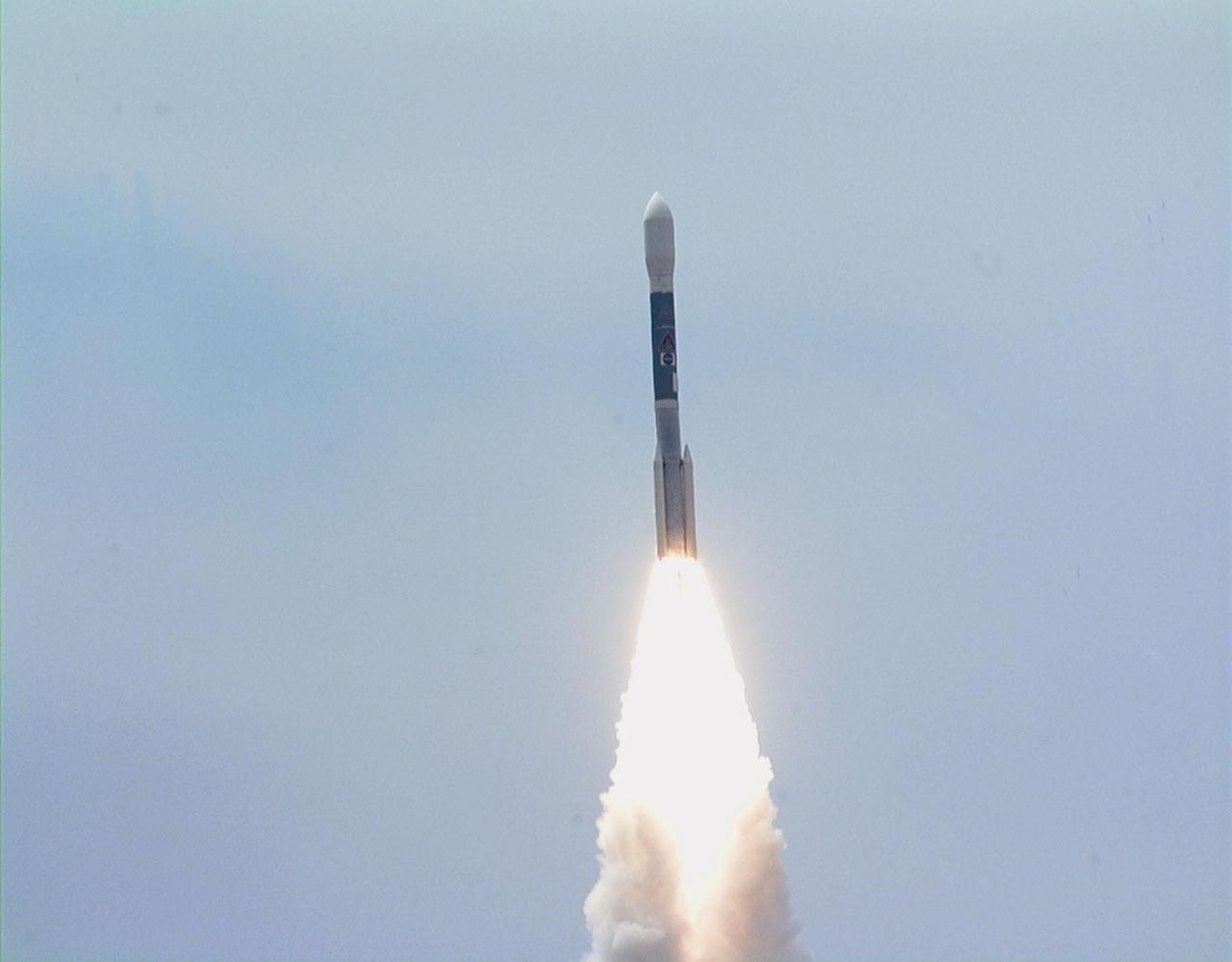
KSC · 1999-06-24 · KSC-99padig003
KSC-99padig003
KENNEDY SPACE CENTER, FLA. -- Against a light summer sky, the Boeing Delta II rocket carrying NASA's Far Ultraviolet Spectroscopic Explorer (FUSE) satellite roars into the atmosphere after…
Inspect NASA record
KENNEDY SPACE CENTER, FLA. -- Against a light summer sky, the Boeing Delta II rocket carrying NASA's Far Ultraviolet Spectroscopic Explorer (FUSE) satellite roars into the atmosphere after liftoff at 11:44 a.m. EDT from Launch Pad 17A, Cape Canaveral Air Station. FUSE was developed to investigate the origin and evolution of the lightest elements in the universe hydrogen and deuterium. In addition, the FUSE satellite will examine the forces and process involved in the evolution of the galaxies, stars and planetary systems by investigating light in the far ultraviolet portion of the electromagnetic spectrum
- Record ID
- KSC-99padig003
- NASA center
- KSC
- Date
- 1999-06-24
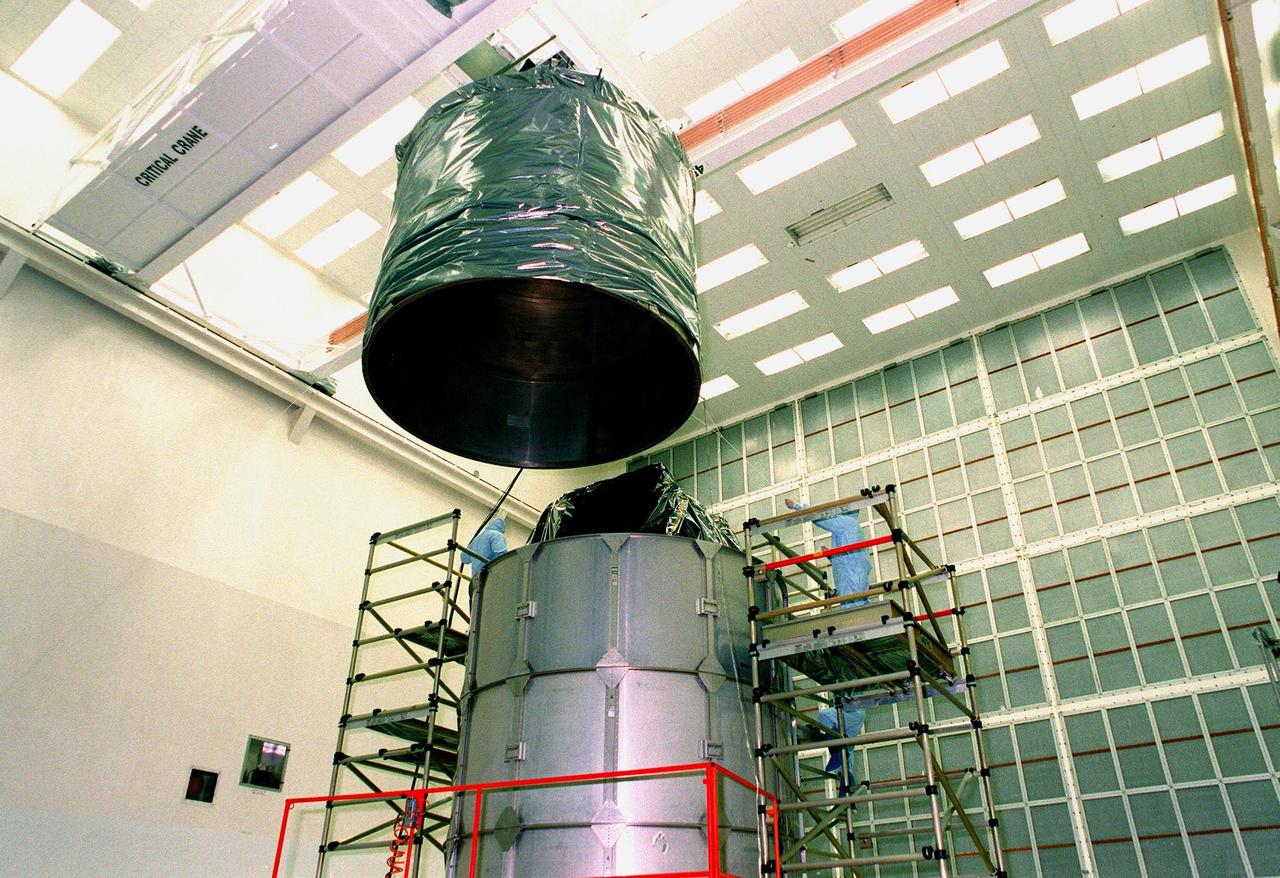
KSC · 1999-06-14 · KSC-99pp0692
KSC-99pp0692
At Hangar AE, Cape Canaveral Air Station (CCAS), the last segment is lifted over the top of NASA's Far Ultraviolet Spectroscopic Explorer (FUSE) satellite already encased in a…
Inspect NASA record
At Hangar AE, Cape Canaveral Air Station (CCAS), the last segment is lifted over the top of NASA's Far Ultraviolet Spectroscopic Explorer (FUSE) satellite already encased in a protective canister. The satellite will next be moved to Launch Pad 17A, CCAS, for its scheduled launch June 23 aboard a Boeing Delta II rocket. FUSE was developed by The Johns Hopkins University under contract to Goddard Space Flight Center, Greenbelt, Md., to investigate the origin and evolution of the lightest elements in the universe hydrogen and deuterium. In addition, the FUSE satellite will examine the forces and process involved in the evolution of the galaxies, stars and planetary systems by investigating light in the far ultraviolet portion of the electromagnetic spectrum
- Record ID
- KSC-99pp0692
- NASA center
- KSC
- Date
- 1999-06-14

HQ · 2013-09-05 · 201309050003HQ
LADEE NASA Social
A participant at a NASA Social on the Lunar Atmosphere and Dust Environment Explorer (LADEE) mission asks NASA Associate Administrator for the Science Mission Directorate John Grunsfeld a…
Inspect NASA record
A participant at a NASA Social on the Lunar Atmosphere and Dust Environment Explorer (LADEE) mission asks NASA Associate Administrator for the Science Mission Directorate John Grunsfeld a question, Thursday, Sept. 5, 2013 on Wallops Island, VA. Fifty of NASA's social media followers are attending a two-day event in support of the LADEE launch. Data from LADEE will provide unprecedented information about the environment around the moon and give scientists a better understanding of other planetary bodies in our solar system and beyond. LADEE is scheduled to launch at 11:27 p.m. Friday, Sept. 6, from NASA's Wallops Flight Facility. Photo Credit: (NASA/Carla Cioffi)
- Record ID
- 201309050003HQ
- NASA center
- HQ
- Date
- 2013-09-05
- Credit
- NASA/Carla Cioffi
- Keywords
- John Grunsfeld, NASA Social, NASA Wallops Flight Facility (WFF), Virginia, Wallops Island

JPL · 2025-01-23 · PIA26542
SPHEREx in Horizontal Orientation
NASA's SPHEREx observatory is oriented in a horizontal position, revealing all three layers of photon shields as well as the telescope. This photo was taken at BAE Systems…
Inspect NASA record
NASA's SPHEREx observatory is oriented in a horizontal position, revealing all three layers of photon shields as well as the telescope. This photo was taken at BAE Systems in Boulder, Colorado, in April 2024. Short for Spectro-Photometer for the History of the Universe, Epoch of Reionization and Ices Explorer, SPHEREx will create a map of the cosmos like no other. Using a technique called spectroscopy to image the entire sky in 102 wavelengths of infrared light, SPHEREx will gather information about the composition of and distance to millions of galaxies and stars. With this map, scientists will study what happened in the first fraction of a second after the big bang, how galaxies formed and evolved, and the origins of water in planetary systems in our galaxy. https://photojournal.jpl.nasa.gov/catalog/PIA26542
- Record ID
- PIA26542
- NASA center
- JPL
- Date
- 2025-01-23
- Credit
- NASA/JPL-Caltech/BAE Systems
- Keywords
- SPHEREx, Sky

HQ · 2021-02-18 · NHQ202102180029
Mars 2020 Post-Landing Briefing
Director of NASA's Science Mission Directorate’s Planetary Science Division, Lori Glaze, gives remarks during a NASA Perseverance rover mission post-landing update, Thursday, Feb. 18, 2021, at NASA's Jet…
Inspect NASA record
Director of NASA's Science Mission Directorate’s Planetary Science Division, Lori Glaze, gives remarks during a NASA Perseverance rover mission post-landing update, Thursday, Feb. 18, 2021, at NASA's Jet Propulsion Laboratory in Pasadena, California. A key objective for Perseverance’s mission on Mars is astrobiology, including the search for signs of ancient microbial life. The rover will characterize the planet’s geology and past climate, pave the way for human exploration of the Red Planet, and be the first mission to collect and cache Martian rock and regolith. Photo Credit: (NASA/Bill Ingalls)
- Record ID
- NHQ202102180029
- NASA center
- HQ
- Date
- 2021-02-18
- Credit
- NASA/Bill Ingalls
- Keywords
- California, Jet Propulsion Laboratory (JPL), Lori Glaze, Mars 2020, Pasadena, Perseverance